





































In his new memoir, former President Barack Obama shines a light on tensions with the Israeli premier and AIPAC


 Add JewishInsider on Google
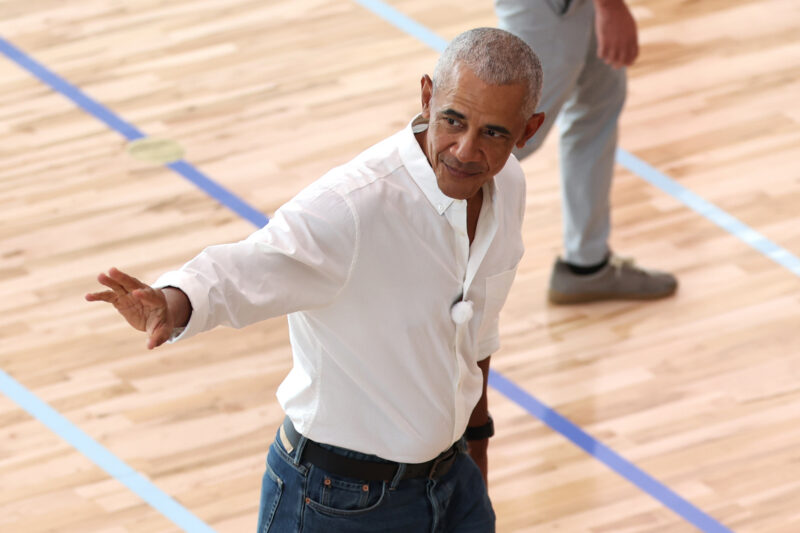
In a new book looking back at his eight years in the White House, former President Barack Obama details his sometimes turbulent relationship with Israeli Prime Minister Benjamin Netanyahu going back to 2009, when both world leaders took office. A Promised Land, the first of two memoirs the former president is writing about his time in office, is set to be released on Tuesday.
Obama describes Netanyahu as “smart, canny, tough and a gifted communicator” who could be “charming, or at least solicitous” when it benefited him, Obama writes in the book, a copy of which was reviewed in advance by Jewish Insider.
Obama points to a conversation the pair had in a Chicago airport lounge in 2005, shortly after Obama was elected to the Senate, in which Netanyahu was “lavishing praise” on him for “an inconsequential pro-Israel bill” the newly elected senator had supported when he served in the Illinois state legislature. But when it came to policy disagreements, Obama observed, Netanyahu was able to use his familiarity with U.S. politics and media to push back against efforts by his administration.
Netanyahu’s “vision of himself as the chief defender of the Jewish people against calamity allowed him to justify almost anything that would keep him in power,” Obama wrote.
The former president writes that his chief of staff at the time, former Chicago Mayor Rahm Emanuel, warned him when he took office, “You don’t get progress on peace when the American president and the Israeli prime minister come from different political backgrounds.” Obama said he began to understand that perspective as he spent time with Netanyahu and Palestinian Authority President Mahmoud Abbas.
Looking back, Obama wrote, he sometimes wondered whether “things might have played out differently” if there was a different president in the Oval Office, if someone other than Netanyahu represented Israel and if Abbas had been younger.
In the book, the former president also grumbles about the treatment he received from leaders of the American Israel Public Affairs Committee (AIPAC), who questioned his policies on Israel. Obama wrote that as Israeli politics moved to the right, AIPAC’s broad policy positions shifted accordingly, “even when Israel took actions that were contrary to U.S. policy” and that lawmakers and candidates who “criticized Israel policy too loudly risked being tagged as ‘anti-Israel’ (and possibly anti-Semitic) and [were] confronted with a well-funded opponent in the next election.”
Obama writes that he was “on the receiving end” of a “whisper campaign” that portrayed him as being “insufficiently supportive — or even hostile toward — Israel” during his 2008 presidential run. “On Election Day, I’d end up getting more than 70 percent of the Jewish vote, but as far as many AIPAC board members were concerned, I remained suspect, a man of divided loyalties; someone whose support for Israel, as one of [David Axelrod’s] friends colorfully put it, wasn’t ‘felt in his kishkes’ — ‘guts,’ in Yiddish.”
Obama wrote that former deputy national security advisor Ben Rhodes, who worked as a speechwriter for the 2008 campaign, told him that the attacks against him were a result of him being “a Black man with a Muslim name who lived in the same neighborhood as Louis Farrakhan and went to Jeremia Wright’s church” and not based on his policy views that were aligned with the positions of other political candidates.
The former president writes that while in college, he was intrigued by the influence of Jewish philosophers on the civil rights movement. He noted that some of his “most stalwart friends and supporters” came from the Chicago’s Jewish community and that he had admired how Jewish voters “tended to be more progressive” on issues than any other“ethnic group. Obama writes that a feeling of being bound to the Jewish community by “a common story of exile and suffering” made him “fiercely protective” of the rights of the Jewish people to have a state of their own, though these values also made it “impossible to ignore the conditions under which Palestinians in the occupied territories were forced to live.”

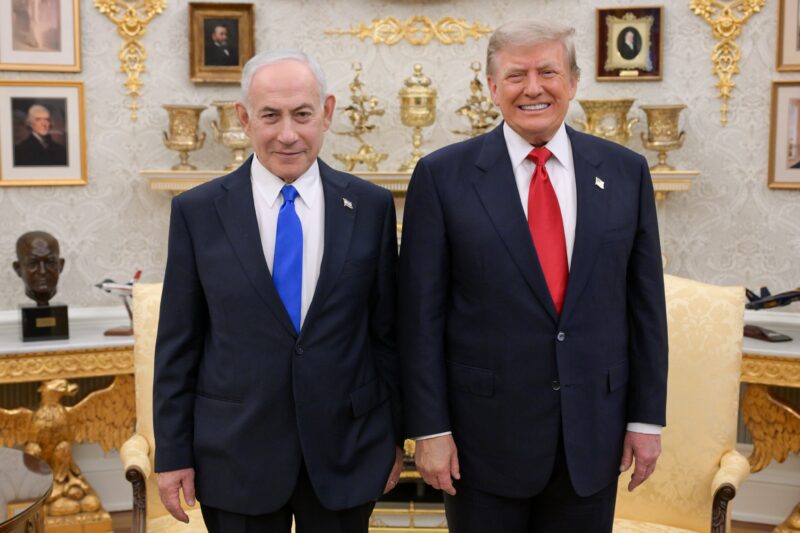
President Barack Obama talks with Israeli Prime Minister Benjamin Netanyahu, center, and White House Chief of Staff Rahm Emanuel in the Oval Office Monday, May 18, 2009.
According to Obama, while Republican lawmakers cared less about the right of Palestinians to have a state of their own, Democratic members of Congress — who represented districts with sizable Jewish populations — were reluctant to speak out about the matter because they were “worried” about losing support from AIPAC’s key supporters and donors and imperiling their reelection chances.
In the memoir, Obama recalled his visit to the Western Wall as a presidential candidate in the summer of 2008 and the publication of the prayer note he stuffed into the cracks of the wall by an Israeli newspaper. The episode was a reminder of the price that came with stepping onto the world stage, he wrote. “Get used to it, I told myself. It’s part of the deal.”
The book provides an inside look into the political jockeying between the Israeli government and the administration over the Israeli-Palestinian conflict. Obama maintains that he thought it was “reasonable” to ask for Israel, which he viewed as the “stronger party,” to take a “bigger first step” and freeze settlements in the West Bank. But “as expected,” Netanyahu’s response was “sharply negative.” That was followed by an aggressive pressure campaign by the prime minister’s allies in Washington.
“The White House phones started ringing off the hook,” Obama recounts, as his national security team fielded calls from lawmakers, Jewish leaders and reporters “wondering why we were picking on Israel.” He wrote that Rhodes once arrived late for a staff meeting “looking particularly harried” after a lengthy phone call with a “highly agitated” liberal Democratic congressman who pushed back against the administration’s attempt to stop settlement activity.
Obama accused Netanyahu of an “orchestrated” effort to put his administration on the defensive, “reminding me that normal policy differences with an Israeli prime minister exacted a domestic political cost” that didn’t exist in relations with other world leaders.
In 2010, when Netanyahu visited Washington to attend the annual AIPAC policy conference, media reports claimed that Obama deliberately “snubbed” Netanyahu by walking out from a tense meeting and leaving the Israeli leader and his aides in the Roosevelt Room until they came up with a solution to the impasse in peace talks.
But in the book, Obama insists he suggested to Netanyahu to “pause” their meeting and reconvene after he returned from a previously scheduled commitment. The discussion, the former president said, ran well over the allotted time, and “Netanyahu still had a few items he wanted to cover.” Netanyahu said “he was happy to wait,” Obama writes, and the second meeting ended on “cordial terms.” However, the next morning, Emanuel “stormed into” the Oval Office citing the media reports that he humiliated Netanyahu, “leading to accusations” that the president had allowed his personal feelings to damage the U.S.-Israel relationship. “That was a rare instance when I outcursed Rahm,” Obama writes, referencing Emanuel’s well-known use of profanity.
Klain is the first announced senior staffer for the incoming administration

Adam Schultz
In his first appointment since declaring victory last week, President-elect Joe Biden named longtime aide Ronald “Ron” Alan Klain as incoming White House chief of staff on Wednesday evening.
Klain, a Harvard Law School graduate, served as chief of staff to former Vice President Al Gore and later as chief of staff to Biden during his first term as vice president. In 2014 he was appointed as President Barack Obama’s Ebola response coordinator.
For the last eight months, Klain has played a key role in drafting Biden’s plan to address COVID-19.
Born and raised in Indianapolis, Klain, 59, grew up in a Jewish household. His father, Stanley Klain, was a building contractor. His mother, Sarann Warner, is a retired travel agent. Klain shared in a recent interview that he had his bar mitzvah at Indianapolis’s Congregation Beth-El Zedeck postponed because his mother became sick just before the event and “I had to learn my Torah portion a second time.”
In an interview with The New York Times in 2007, Klain said that when he married his wife, Monica Medina, who is not Jewish, they agreed that their three children — Daniel, Hannah and Michael — would be raised in the Jewish faith, but that the family would celebrate Christmas. Every year, the couple would wait to put up a Christmas tree at their home in Chevy Chase, Md. until after his mother had already come for a visit — and left. “I grew up in Indiana, with a decent-size Jewish community, but we were a distinct minority,” Klain shared with the Times. “Not having a Christmas tree was very much part of our Jewish identity in a place where everyone else did.”
In a Zoom call with members of his childhood congregation earlier this year, Klain said that 2020 was the first year he couldn’t attend his mother’s Passover Seder. On the call, he said he drew inspiration from the story of Passover. “The tenth plague — the slaying of the firstborn — was probably some kind of infectious disease. And so this Exodus is the first example of social distancing. The Jews are instructed on the night of the plague to put blood over their doors, but to stay in their homes,” Klain said. “When people say, ‘Well, we’ve never seen one of these stay-at-home orders.’ There’s a stay-at-home order in the Torah in the face of a plague. And that reminds us that throughout human history we’ve been dealing with these kinds of challenges. Our people have been dealing with these kinds of challenges and we’ve overcome [them].”
Klain, who occasionally weighs in on Middle East politics, also told the group that while it was “heartwarming” that Israelis and Palestinians were working together to combat the coronavirus in the early months of the pandemic, he expressed his concern that “as things get more dire in a place, as resources get squeezed, sometimes those exacerbate conflicts.”
Klain — an active Twitter user — once criticized Israeli Prime Minister Benjamin Netnayahu for his warm relationship with President Donald Trump. ”[The] Prime Minister of Israel apparently had no trouble with Trump embracing nazis chanting ‘Jews will not replace us,’” Klain tweeted on March 17, 2018.
Former Israeli Ambassador to the U.N. Danny Danon suggests Israel ‘will have to recalculate’ its approach if Biden returns to the JCPOA

Israel's Mission at the UN
Amb. Danny Danon
As the Biden-Harris transition team begins to build out its incoming administration and speak with foreign leaders, Israeli political observers caution that an immediate return to the 2015 Joint Comprehensive Plan of Action (JCPOA) with Iran — while renegotiating the agreement’s terms — could put the Biden administration and the Israeli government on a collision course.
“I believe that on most issues, we will be able to work with the new administration. But I think the key question is the Iranian issue,” former Israeli Ambassador to the United Nations Danny Danon said in an interview with Jewish Insider. “This is a crucial issue for Israel. We heard Joe Biden speak about re-entering the JCPOA with some amendments. And the question is how it will look at the end. If the U.S. returns to an agreement that will be similar to the [previous] agreement, it means that Israel will have to recalculate its approach regarding Iran.”
Danon suggested that if a new Iran deal were to have the same outcome, just “with different titles,” Israel would be obligated to oppose the deal and “take the necessary steps to ensure Iran will never obtain nuclear capabilities.”
The former Israeli diplomat, who is a member of Israeli Prime Minister Benjamin Netanyahu’s Likud Party, said that Israel will have to “carefully” examine the Biden administration’s approach to the Middle East and engagement with international organizations as it shifts away from President Donald Trump’s policies. Danon, who represented Israel at the U.N. during the last year of former President Barack Obama’s second term and for most of Trump’s time in office, said that while he expects some changes to Israel’s standing at the U.N. — especially if the new administration rejoins the Human Rights Council and reinstates currently frozen U.S. funds to the U.N. body that supports Palestinian refugees — “I think we will still have the support of the U.S., but it will require more effort from our side.”
Danon added that if Biden is “supportive of Israel, he will gain the trust and support of Israelis very fast.”
Israeli author Yossi Klein Halevi suggested that the two sides will “inevitably come into conflict” over the Iranian issue, predicting a “tough fight” for Israel to keep the U.S. from returning to the terms of the 2015 deal.
“The Palestinian issue is not going to cause a major rupture between Israel and America,” explained Klein Halevi, a senior fellow at the Shalom Hartman Institute in Jerusalem. “Biden isn’t Obama. He’s not going to go to war for a two-state solution. He is a seasoned enough politician to understand what Obama did not understand, which is that you don’t go for broke on an issue that you don’t have sufficient leverage on for both sides.”
But on the Iranian threat, he argued, Israel has more leverage than it had in 2015. In the wake of the recently signed normalization agreements with the United Arab Emirates and Bahrain, Klein Halevi suggested, Israel now has “a shared strategic structure to confront the international community.”
On Tuesday, Netanyahu pushed back against the notion that strained ties between Israel and the Democratic Party in recent years would undercut a good working relationship with the Biden administration. “What I see before my eyes is not Democrats and not Republicans. It is just the State of Israel,” Netanyahu said during a speech at the Knesset. “I am committed to stand behind the interests that are crucial to our future and our existence and this is how I will continue even with the next American administration.”
In his remarks, Netanyahu pointed to his decades-long relationship with Biden and the personal moments they shared “that are beyond politics and beyond diplomacy.”
The Israeli premier said that over the last four years, he has met with 134 Democratic members of Congress — of the 292 who have visited Israel since 2017 — including House Speaker Nancy Pelosi (D-CA) and House Majority Leader Steny Hoyer (D-MD), as well as Vice President-elect Kamala Harris. Netanyahu said the meetings occurred “because I believe that strengthening the bipartisan support for Israel is a basic foundation of our foreign policy.”
Netanyahu noted that even amid tension with the Obama administration, Israel and the U.S. signed a record $38 billion memorandum of understanding of security assistance. “That’s how a prime minister in Israel must act,” he said. “Not by submitting or groveling and also not arrogantly but with the wisdom, courage, dignity of a person who fights for his people, for his land and for his country.”
Shimrit Meir, an Israeli analyst and commentator, told JI that Netanyahu’s defense “was mainly about domestic politics at the moment.” According to Meir, Netanyahu needs to position himself as “a strong experienced prime minister” who is able to handle relations with the U.S. regardless of which party controls the White House.
Meir noted that while Netanyahu speaks perfect English, “I don’t think he speaks their language.”
Klein Halevi concurred: “Bibi has burned most bridges with the Democrats.”
'To confuse politics for absolute truth is how societies unravel'

Following President-elect Joe Biden’s victory, we asked JI readers about the future of U.S. politics and American civil discourse in the wake of a bruising election campaign.
Yossi Klein Halevi, senior fellow of the Shalom Hartman Institute: “What worries me is the contempt that has been coming out the last few days. Certainly there are those voices that are calling for reconciliation and generosity, but you also have many voices calling for a kind of political revenge. The person who summed up that mean-spirited approach was [Rep. Alexandria Ocasio-Cortez (D-NY)], who called for the creation of an enemies list of all those in positions of authority who supported [Donald] Trump. That rhetoric of, ‘We won’t forget, we won’t forgive’ is how society self destructs. I worry about an America that treats politics like theology. Politics is not or shouldn’t be religion. Politics is an approximation of truth. It’s not true itself. Politics is dealing with a flawed world on its own terms, of trying to make it a little better. But to confuse politics for absolute truth is how societies unravel.”
Former Rep. Steve Israel (D-NY): “Joe Biden took the first step by extending an olive branch and acknowledging that we have to lower the temperature and listen to one another again. I’ve called him the conciliator-in-chief. He has demonstrated an ability to bring people together and to bridge gaps. That makes me feel hopeful that we’re going to return to some form of respectful discourse. It won’t be easy because there is bias. There are some people who will reject compromise. But Biden has been saying that we’ve got to stop yelling at each other and begin talking with one another, and he’s got the skill set to address it meaningfully.”
Former U.S. Ambassador to Israel Martin Indyk: “I am optimistic at the fact that the Democrats will control the White House and the House, while the Republicans will control the Senate. Rather than being a recipe for further division, I’m hopeful that it will work as a recipe for coming together. Everybody has had enough of the complete craziness of the last four years and they’re anxious to try to find ways to come together. God knows there’s enough common ground when it comes to the pandemic and the economy… there’s potential for coming together.”
Former national director of the Anti-Defamation League Abe Foxman: “It can’t get worse. It will get better. How quickly, how soon, how [much will] people be willing to reach out to each other, even though they disagree? Time will tell. But certainly, I think, at the head of this country will be someone whose voice and whose neshamah (soul) is to embrace everybody. It starts from the top. So I hope it will quickly filter down to the nation.”
Former U.S. Ambassador Daniel Kurtzer: “Halevai (if only), as they say, but I am fearful that because we will have a split presidency and Congress that we’re going to run into the same partisanship, particularly on appointments and on some of the core issues that Biden does believe in, like health care, immigration reform and race relations. I think there will be constant tension between the administration and Senate that’s still run by Mitch McConnell on those issues. I hope I’m wrong, but I am not persuaded that I’ll be wrong.”
J Street President Jeremy Ben-Ami: “The Jewish people have thrived on debate over the centuries. The differences in views within our community — both in this country and globally — are real and meaningful. There are starkly different views on the best path forward for the U.S., Israel and the Jewish people. We’ll continue to argue and fight in the political arena here and in Israel. What I hope is that we can do it with a spirit of respect and with empathy and an understanding that while we may never agree with each other, we are stronger as a people when we work our differences out civilly, respect the rule of law and value the worth of every individual.”
Holocaust historian and author Deborah Lipstadt: “I think, at the very least, we will have a leader of the country who will unequivocally condemn antisemitism and extremism, and will unequivocally say this is not right. My fear is that after four years of being given dog whistles, wink-wink nod-nod, it’s not going to go away. I am very concerned. I’m a little bit more sanguine than I would have been otherwise, but we are facing very difficult days because we have four years of these groups feeling that they had a friend in the White House. And whether they had it or not, they had someone there who was not willing to really take them on. They feel they’ve gotten a green light and they’re going to run with it.”
Rabbi Avi Shafran: “The devolution in American society of civility, and the seeming loss of the ability to respectfully disagree with one another, have been tragic consequences of recent years. Blame can be placed on both sides of the political divide, but pointing fingers is pointless. I hope that a President Biden will indeed, as he pledged during the campaign, make the bringing of Americans together a major goal. And that doesn’t mean a dearth of dialectic. It simply means that disagreements will be able to be voiced without rancor or insult. Halevai.”
Nathan Diament, the Orthodox Union’s executive director for public policy: “I think anybody has to be worried. But I think the worry has to be translated into action and effort. We shouldn’t want to keep living in this hyper-polarized environment. But to focus on the Jewish community, in particular, we should be placing a lot of value on community, our appreciation for the fact that in the broader Jewish community there’s more that unites us than divides us. Even if we have disagreements about political issues, we need to make efforts to reduce polarization.”
Aaron David Miller, a senior fellow at the Carnegie Endowment for International Peace: “What did these elections show? Trump was rejected, but he was not repudiated. And I think that’s the real difference. It would not surprise me at all if Biden were a one-term president and the game is thrown wide open again in 2024 with people like Tom Cotton, Mike Pompeo, and especially if Trump remains on the scene. I don’t think we are anywhere near the kind of reset for civility in our politics. Our national nightmare might be ending, but it’s going to be a long, painful goodbye.”
Sheila Katz, CEO of the National Council of Jewish Women: “NCJW always seeks to advocate for the issues we believe in with respect and civility, and we believe the Biden/Harris administration will only help restore productive discourse in our nation.”
Ben Wikler's core strategy in the lead-up to the presidential election, he said, was 'to take no one for granted, leave no one behind'

Wikicommons
Wisconsin Democratic Party Chair Ben Wikler
When Joe Biden took a narrow lead over President Donald Trump in the battleground state of Wisconsin at around 4:30 a.m. on Wednesday, November 4, Ben Wikler was seated at his kitchen table, wide awake, apprehensively watching the results trickle in. “I think I was eating some leftover Thai food, and my shoulders just went down about three inches,” he recalled in an interview with Jewish Insider on Monday. “It was just like a wave of tension escaping my body.”
Wikler, the 39-year-old chair of the Democratic Party of Wisconsin, had reason to feel a sense of accomplishment as the mail-in tally in Milwaukee, Green Bay and Kenosha helped vault Biden — now the president-elect — to a decisive victory in the Badger State. “We were recalculating and recalculating spreadsheets throughout the night,” Wikler said. “It was a wave of relief, a real sense that everything had mattered, and that it had all worked.”
Things could easily have gone sideways. Before the election, polling suggested that Biden was safely ahead in Wisconsin, with one survey giving the former vice president a 17-point advantage over Trump, who won the state by a narrow margin of approximately 23,000 votes against Hillary Clinton in 2016. With the results of the last election still fresh in their minds, Wikler said, local Democratic organizers chose to ignore the polls this year and assume they were operating at a disadvantage.
“The risk is that if a survey tells you you’re ahead, you think you can slack off a little bit, and this time, no Democrat fell into that trap,” said Wikler, who also canvassed for Clinton four years ago in Wisconsin. “Everyone added shifts and added more shifts, conscious that polls got it wrong in 2016. If anyone had been lulled into complacency by the polls, then we would have lost our state, and it’s because people refused to be lulled into a false sense of security that voters and organizers and activists pulled out all the stops.”
Biden flipped the Badger State by just 20,500 votes so far this cycle. It was one of the first battlegrounds to turn in his favor on election night — a pivotal win foreshadowing the former vice president’s successful effort to rebuild the “blue wall” of Rust Belt states that Democrats had counted on before Trump claimed them last cycle. Biden also won Michigan and Pennsylvania, the results of which were called by all major media outlets on Saturday, handing him a victory over Trump.
“Wisconsin was long predicted to be the hardest of the ‘blue wall’ states to win back, and it’s probably going to turn out to be the closest,” Wikler said. “Yet we won here first, and that was a tremendous credit to the poll workers and municipal clerks and election administrators all over the state who spent months and months preparing so that they could deliver a result as quickly as possible with tremendous care and accuracy and transparency.”
Wikler, who previously worked as the Washington director for the progressive group MoveOn, came back to his home city of Madison, Wisconsin’s capital, in December 2018. “I knew I wanted to try to help turn my state blue,” he said, noting that he had spent several months in Wisconsin that year volunteering for Wisconsin’s Democratic governor, Tony Evers, and Sen. Tammy Baldwin (D-WI).
His plan was to stay at MoveOn, but when Martha Laning retired from her position leading the Democratic Party of Wisconsin, Wikler saw an opportunity. “I jumped in, ran in the spring and was elected June 2, 2019, as chair of the state party,” he said. “And I have been working around the clock.”
Wikler’s core strategy in the lead-up to the presidential election, he said, was “to take no one for granted, leave no one behind, write no one off, to organize in red communities and deep blue communities, across lines of race, across language, across geography, even in areas where Democrats have recently lost enormous ground.”
Under normal circumstances, Democratic organizers’ primary tactic would have been knocking on doors. But as the coronavirus pandemic took hold in the state — where cases are now surging — Wikler adapted, using a spring Supreme Court election in Wisconsin as a kind of “dress rehearsal” for the fall.
“We decided to take a huge gamble and switch to a 100% virtual organizing strategy, 100% focused on absentee ballots,” he said. “Most Wisconsinites had never voted absentee at that point. This is new. This is a state that votes in person, traditionally, and it’s hard to vote by mail here.”
“You have to upload a photo of your voter ID to request an absentee ballot, which obviously pushes out anyone who doesn’t have a voter ID,” Wikler added. “One county clerk told me they had hundreds of selfies that seniors had sent in thinking that that counted.”
So, while there was a “massive, record-breaking number of absentee ballots cast, we also learned a ton about what can go wrong,” Wikler said. “That became, for us, an obsession for the fall,” he added, “to help voters figure out how to navigate this hostile system and to mobilize, to help people get their ballots in early so that if there were problems they could be flagged and addressed.”
Not that he ever felt as if the presidential race was by any means a lock. “I was telling people that the polling average on election day in 2016 had Clinton six-and-a-half points up in Wisconsin,” he said, “and this time, it had Biden 6.3 points up. So we just had to keep both feet on the gas all the way through.”
Roy Bahat, the Bay Area venture capitalist who moved to Wisconsin in September to help get out the vote, told JI that Wikler “set an inspiring example for many of us” in his effort to shore up Democratic support in the state.
“He plunked himself back home, planned ahead on how to bring change to life and then pulled us all along with him to execute his plan,” Bahat said. “I mean, the guy brought the ‘Princess Bride’ cast back together. “If he can do that, surely he can change the country. If we had 1,000 more Ben Wiklers the country would be in a much better place.”
During the campaign season, Wikler was responsible for organizing a live-streamed reunion of “Princess Bride” cast members to raise money for Wisconsin’s state Democratic Party. His fundraising efforts also included bringing together actors from “Superbad,” “Veep” and “Parks and Recreation” for virtual events.
Wikler is now in the process of buying his childhood home from his mother and has no plans to leave his home state. His term as Wisconsin’s Democratic Party chair ends in June, but he said he would run for reelection.
His work, he told JI, is far from complete. “It’s clear that the fight is going to continue,” he said. “Wisconsin is almost perfectly divided between Democrats and Republicans at this point, and 2022 is going to be an extraordinarily important year. Wisconsin might determine the balance of power in the Senate. And we have a governor’s reelection campaign against Republican opposition that is determined to undermine him even at the expense of public health.”
“While we’re celebrating and debriefing and learning everything we can from what just happened,” he added, “the work for next cycle is starting already.”
Rep. Alexandria Ocasio-Cortez has blamed candidates who did not mount an aggressive digital campaign

Ståle Grut/NRKbeta
Rep. Alexandria Ocasio-Cortez (D-NY) at SXSW 2019.
Moderate and progressive House Democrats continued to trade blame over the party’s Election Day losses in critical swing districts across the country, after numerous vulnerable members of the party were ousted and the Democrats failed to flip most of their swing-state targets.
Contentious call: Tensions within the House Democratic caucus spilled into the public through extensive leaks from a caucus call on Thursday, in which Rep. Abigail Spanberger (D-VA) and Majority Whip James Clyburn (D-SC) raised concerns that key progressive issues like socialism, Medicare for All and the defunding of the police had hurt the party in the general election. Progressives including Reps. Pramila Jayapal (D-WA) and Rashida Tlaib (D-MI) fired back, arguing that progressive policies appeal to the party’s base.
Speaking out: After the call, Rep. Alexandria Ocasio-Cortez (D-NY) blamed the party’s House losses on under-spending on digital campaigning and door-knocking in the final stretch of the campaign. “I’ve looked through a lot of these campaigns that lost, and the fact of the matter is, if you’re not spending $200,000 on Facebook with fundraising, persuasion, volunteer recruitment, get-out-the-vote the week before the election, you are not firing on all cylinders,” Ocasio-Cortez told The New York Times. She also said that the party has failed to accept the help and advice that progressive activists could provide.
Out of the game: Ocasio-Cortez also told the Times that she is not sure if she will remain in politics, due to perceived hostility from her party. “I don’t even know if I want to be in politics. You know, for real, in the first six months of my term, I didn’t even know if I was going to run for reelection this year,” she said. The New York congresswoman added that President-elect Joe Biden’s administration needs to bring in progressives, rather than Republicans and other conservatives who campaigned for him.
Pushback: In his own interview with the Times, Rep. Conor Lamb (D-PA), whom Ocasio-Cortez singled out for criticism, said: “She doesn’t have any idea how we ran our campaign, or what we spent,” and argued that that Ocasio-Cortez was not a consistent “team player” during the presidential race. He also made the case that “completely unrealistic… false promises” like defunding the police and banning fracking frustrated swing voters and led to the House Democrats’ electoral struggles. “The rhetoric and the policies and all that stuff — it has gone way too far. It needs to be dialed back. It needs to be rooted in common sense, in reality, and yes, politics. Because we need districts like mine to stay in the majority and get something done for the people that we care about the most,” he said.
Big tent: Clyburn reiterated in an NBC interview Sunday that candidates must be allowed to “represent their districts,” and that candidates like Jaime Harrison and Rep. Joe Cunningham (D-SC) were hampered by progressive rhetoric. He added that labels, including “progressive” and “conservative,” can be counterproductive. “I just want us to be Democrats in a big tent,” he said.
Fallout: The tension within the caucus could foreshadow a tough leadership battle for House Speaker Nancy Pelosi (D-CA), who officially announced her bid for reelection as speaker last week. Ocasio-Cortez, who was reluctant to back Pelosi in 2019, has not committed to voting for her in January.
Mace was one of a handful of Republican women who won their races in competitive districts nationwide

South Carolina State Rep. Nancy Mace joined a wave of Republican women who won critical House races across the country on Tuesday, unseating first-term Rep. Joe Cunningham (D-SC) — despite indications that the race had slipped away from her in the final days of the campaign.
In conversation with Jewish Insider on Thursday, Mace attributed her victory to high voter turnout around the district. She echoed other Republicans who won competitive races across the country Tuesday night, suggesting that if the Republican Party wanted to be successful in future races, party leaders should recruit a diverse slate of “fresh voices and fresh faces.”
“We’ve got to be looking for folks that are diverse,” she said. “Our conservative policies are compassionate policies, and we need to find candidates who can articulate that message in a way that resonates with voters on both sides of the aisle. And Republicans for years now have done a poor job of that.”
Mace — the first Republican woman ever elected to Congress from South Carolina — emphasized that the election was a landmark one for women in her party.
“It’s not just Democrat women who are breaking glass ceilings. Republican women are doing it and we’re doing it in big numbers this year,” she said. “We just basically doubled the number of Republican women that will be in the House. That’s huge for us and I’m just honored to be a part of that history making.”
More than 20 Republican women won seats in the House in the election, putting the GOP conference on track for its highest-ever number of female legislators.
Cunningham, a member of the Problem Solvers Caucus, had received accolades for his efforts to work across the aisle, and was one of 20 members to receive the U.S. Chamber of Commerce’s Jefferson-Hamilton Award for Bipartisanship in June. Mace touted her own bipartisan credentials, and said her experience in the state house would serve her well in Washington.
“Generally when I’m drafting legislation, I don’t do it with just Republicans in mind, I do it with everybody in mind,” she said. “And the way that I operate is I always reach across the aisle to get input and feedback from members of the other party.”
“I believe it’s really important, no matter who’s in the majority, that we reach across the aisle. Even in the Republican-majority Senate and State House and General Assembly in South Carolina, I didn’t have to reach across the aisle to get bills passed, but I did it because it was the right thing to do,” Mace added. “And I will continue that posture in Congress, nothing will change.”
Headed to Washington in two months, Mace plans to prioritize issues impacting her district, including unemployment, support for small businesses, infrastructure, transportation and the environment. She also pledged to address health care, an issue on which she claimed both parties have fallen short. “Republicans and Democrats have just fumbled the health care issue, both sides of the aisle.”
While determinations on committee assignments won’t be made for some time, Mace — the first woman to graduate from The Citadel — is hoping to serve on the House Committee on Transportation and Infrastructure, as well as the Veterans Affairs Committee.
Mace, who previously told JI she’s a staunch supporter of President Donald Trump’s approach to Israel and the Middle East, also said she’s hoping to visit the Jewish state during her first term. She had planned to travel to Israel on an AIPAC-affiliated trip in 2019, but pulled out when she realized the trip’s schedule would conflict with preparations to announce her congressional run.
“Charleston and the 1st congressional district has a strong Jewish community and I think it’s very important that I learn as much as I can and that I express and show that support in every way possible,” she said.
Mace beat Cunningham by just under 2 percentage points, a fact that is not lost on her as she prepares to head to Washington.
“My door is always going to be open for those voters that were not with us in the general election,” she said. “I’m just asking for a chance to prove that I will be a good listener, that I will be an independent thinker and a compassionate leader.”
Raphael Warnock, the Democratic Senate candidate in Georgia’s special election, signed a statement last year comparing Israel to 'previous oppressive regimes'

Raphael Warnock/Flickr
Georgia Senate candidate Rev. Raphael Warnock
Rev. Raphael Warnock, the Democratic Senate candidate who on Tuesday advanced to a January runoff in Georgia’s hotly contested special election, last year signed his name to a statement likening Israeli control of the West Bank to “previous oppressive regimes” such as “apartheid South Africa” and suggesting that “ever-present physical walls that wall in Palestinians” are “reminiscent of the Berlin Wall.”
The statement, published on the website of the National Council of Churches, was signed by several Christian faith leaders who traveled to Israel and the Palestinian territories in late February and early March of 2019 as part of a joint delegation including representatives of “historic black denominations of the National Council of Churches” as well as “heads of South African church denominations of the South African Council of Churches.”
The Progressive National Baptist Convention also released the same statement but included additional resolutions, one of which calls on the United States to end military aid to the Jewish state “and to work in cooperation with the United Nations to demand,” among other things, that Israel “cease the building of new, or expansion of existing, illegal Israeli settlements, checkpoints and apartheid roads in the occupied Palestinian territories.”
In the National Council of Churches statement, the faith leaders did not go so far as to call for an end to military aid but expressed hope for “an end of weapons sales and proliferation to all sides in the conflict and, indeed, to the entire region.”
Describing their trip as a “religious pilgrimage,” the faith leaders said in the statement that they had traveled to the Middle East “in the hope of meeting Israeli and Palestinian citizens” and to “better understand the realities on the ground, particularly related to the Occupied Palestinian territories” including East Jerusalem, the West Bank and the Gaza Strip.
“We came as people with a shared history of racial segregation, victims of injustice, people who have been dehumanized and marginalized,” the statement says. “We came as people who stand against racism, against antisemitism, against Islamophobia.”
On their trip, the religious leaders visited Yad Vashem and held a Bible study session with a rabbi. “We heard the Jewish perspective that proposes a continuum from the biblical lands of Israel taken from the Canaanites, and the present-day political State of Israel,” they wrote.
They also toured Palestinian communities, a refugee camp and “met with families who are fighting to keep their homes from being taken for Jewish settlements and developments.”
“We saw the patterns that seem to have been borrowed and perfected from other previous oppressive regimes,” the statement says, citing the “ever-present physical walls that wall in Palestinians in a political wall reminiscent of the Berlin Wall” and a “heavy militarization of the West Bank, reminiscent of the military occupation of Namibia by apartheid South Africa.”
The faith leaders returned from their trip “with heavy hearts” and “a forlorn sense” that the conflict would continue for many generations if appropriate action is not taken. “We are shocked,” the statement said, “at what appears to be an unstoppable gobbling up of Palestinian lands to almost render the proposed two-state solution unworkable.”
“We realize that there is little or no space for the Palestinian story to be heard by the ordinary Israelis,” they wrote, “and for the Israeli story to be heard by ordinary Palestinians.”
Warnock is senior pastor of the Ebenezer Baptist Church in Atlanta, where Martin Luther King, Jr., previously served as a co-pastor. In a statement to Jewish Insider, Terrence Clark, a spokesman for Warnock’s campaign, said that Warnock does not support ending military aid to Israel and that he values the longstanding relationship between the United States and Israel.
“Reverend Warnock has deep respect for the invaluable relationship the United States has with Israel and how Georgia continues to benefit from that friendship,” Clark said. “The reservations he has expressed about settlement activity do not change his strong support for Israel and belief in its security — which is exactly why he opposes ending direct military aid to such a strong ally. Reverend Warnock is proud to be a part of interfaith communities that model respect and work to seek unity instead of division, he believes people of faith working together is essential to making progress on the issues important to our families, from access to affordable health care to creating a peaceful and secure world.”
Warnock came in first with more than 32% of the vote in Georgia’s Senate special election on Tuesday. On January 5, he will face off against Republican Sen. Kelly Loeffler (R-GA), who was appointed to replace retiring Sen. Johnny Isakson at the beginning of the year and is now vying to serve out the remaining two years of his term.
This article was updated at 1:30 a.m. ET on Nov. 6 to include a statement from the Warnock campaign.
The Jewish Federations of North America president called on the next administration to provide additional COVID-19 relief

Courtesy/JFNA
CEO and President of the Jewish Federations of North America and former Congressman Eric Fingerhut
While Americans anxiously awaited the outcome of the presidential election, Eric Fingerhut, CEO and president of the Jewish Federations of North America and a former U.S. representative, called on the next administration and Congress to provide additional pandemic relief to “ailing non-profits” and increase funding for non-profit organizations’ security needs.
In an interview with Jewish Insider, Fingerhut — who represented Ohio’s 19th congressional district from 1993 to 1995 — said that at a time of deep divisions, he views the way that North America’s 146 Jewish federations function as a model for all Americans.
“Leaders of our community, many members of JFNA’s board and at most federations, are on both sides of this election,” he said. “This has always been the case.”
On Tuesday night, past JFNA board chair Kathy Manning flipped a redistricted House seat and will represent North Carolina’s 6th congressional district as a Democrat. Detroit oil and real estate magnate Max Fisher, a major philanthropist to Jewish causes until his death in 2005 and a member of JFNA’s board, served as an advisor to Republican presidents on Israel and Jewish concerns. Current JFNA board chair Mark Wilf, who co-owns the Milwaukee Bucks franchise, is a longtime Democratic donor who in March contributed $21,250 to the Biden Victory Fund.
“We have always had people on both sides of the political aisle, and always been a model of how we’ve worked together on matters of common concern for Jewish life, Israel and the Jewish people around the world,” said Fingerhut. “We have maintained that unity on that common agenda even as we’ve disagreed politically and worked against each other vigorously. We will continue to, no matter the outcome of this election.”
Fingerhut also noted that the Jewish community is “disproportionately deeply engaged in the civic affairs of the United States as candidates, campaign workers and as supporters of the democratic process, like as poll workers.” The community’s effort, he said, “reflects both our caring for the health and welfare of the country and our appreciation for the unbelievable welcoming and prosperity and success the Jewish community has achieved in this open, democratic society.”
JFNA has representatives in Washington who lobby Congress and the administration on a wide range of issues, including funding for human services — most Jewish federations fund or manage facilities for senior citizens and the mentally and physically disabled — but usually refrains from commenting on specific policies. Earlier this year, the organization worked with the Orthodox Union, the Union for Reform Judaism, Agudath Israel of America, the Anti-Defamation League and other groups to push legislators to provide relief to faith-based charities and religious nonprofits struggling from the economic impact of the COVID-19 pandemic.
Fingerhut was hopeful that the next president will sign into law the International Holocaust Remembrance Alliance’s working definition of antisemitism, and ensure that Medicaid and Medicare programs are extended.
Fingerhut was quick to point out that today’s political climate bears resemblance to other tumultuous times in modern American history.
His 2004 run for Senate coincided with former President George W. Bush’s campaign for a second term, and the country, he said, was terribly split over the Iraq war. His state, Ohio, a swing state, was “deeply divided. The rhetoric was very acute.”
“We have had very close elections in our recent past, have been very divided over very contentious issues, and we’ve gotten through,” Fingerhut told JI, adding that Jewish values have something to teach all of America at this tense time.
“One of the things we have in our Jewish tradition is a commitment to civility and respect for differences of opinion. We need to exemplify that in our own behavior, and insist on it in others in public life.”
Bloomberg Beta’s Roy Bahat recently relocated to the crucial swing state with his wife and two kids to help ensure that every vote is counted

Courtesy
Bloomberg Beta's Roy Bahat
Not too long ago, the venture capitalist Roy Bahat — who runs Bloomberg Beta in San Francisco and is active in Democratic politics — concluded that the stakes were too high this election season for him to sit back and watch the proceedings from the comfortable vantage point of a dependably blue state. So in September he packed up his belongings and moved with his wife and two kids to Whitefish Bay, a suburb of Milwaukee, to help get out the vote.
His decision to relocate to the Badger State for three months or so may seem peculiar given that Wisconsin is now experiencing a massive spike in coronavirus cases and is not widely known for its inviting autumn weather. Couldn’t Bahat have set up shop in another battleground state with a more temperate climate, like Florida or Arizona? But no, Wisconsin made the most sense. Bahat’s wife, Sara Fenske Bahat, a Milwaukee native who chairs the MBA program at the California College of the Arts, has long been active in supporting the Democratic Party of Wisconsin — and this cycle, the couple felt it was imperative to get involved on the ground.
“We just realized that our time is better spent in a swing state than it is in California,” Bahat, whose fund is backed by Bloomberg L.P., told Jewish Insider in a phone interview on Monday. “Once we started talking about that, we realized that if we thought about doing it, talked with our kids about it, decided not to do it, and then the worst happens, shame on us for the example we’d be setting for our children. So we decided to go for it.”
Wisconsin has always been a key swing state courted by Democrats and Republicans alike. But this cycle, it carries some extra weight. While former Vice President Joe Biden, the Democratic presidential candidate, is favored to win the state, President Donald Trump has put Democrats on edge thanks to his narrow victory over Hillary Clinton in Wisconsin four years ago. Adding to the sense of urgency was a decision last week in which the Supreme Court ruled against counting absentee ballots in Wisconsin received after the election.
Since he arrived in Wisconsin about a month and a half ago with his family — his kids have been able to attend school remotely, a consequence of the pandemic — Bahat has been busy fundraising for Wisconsin Democrats and working to help re-erect the blue wall of Rust Belt states that Democrats had relied on before Trump obliterated it in 2016.
Bahat has also been active in another effort at “last-minute organizing,” volunteering for Walk the Vote, a nationwide grassroots endeavor that encourages voters to join local “parades” so they can safely and securely deliver their ballots to nearby drop boxes amid concerns that votes will not be counted if they are not submitted on time.
“You can do as many of them as you want in New York and California,” said Bahat, who voted in Wisconsin this year. “You’re not going to change who wins the national office.”
Bahat made sure to point out that his advocacy on behalf of the Democratic Party is independent of his Walk the Vote work because the group is nonpartisan.
The experience of living in a crucial swing state in the weeks leading up to one of the most consequential elections in American history has been eye-opening for Bahat.
“It’s obviously a very different feel than being in a coastal city,” he told JI. “This is a place that has struggled economically and is now doing well. It’s a place where the struggles over race and wealth inequality are front and center. And it’s a rare place where you see Biden and Trump signs lawn next to lawn, and people who are friends and neighbors feeling really differently about this race. So in that way, it’s kind of emblematic of what’s happening in America.”
“I’d also say it’s a place where the political traditions in the Jewish community are very deeply interwoven,” Bahat added. “It’s not something we’ve had a chance to engage with deeply since getting here. But one of the things that I grew up believing is that, as Jews, we’re responsible for engaging civically in our time. I went to the Abraham Joshua Heschel School, and the iconic image in my head is him marching with Martin Luther King. It just feels like we’ve had the beginnings of a return to that in this election.”
On Sunday, Bahat helped organize a Walk the Vote event in Whitefish, where he currently lives. The crowd was thin, but he saw that as a promising development. “Very few people showed up because 91% of mailed-out ballots have already been cast,” he said, referring to the situation in Milwaukee County. “That’s a great sign.”
Across the state, approximately 1.9 million voters have cast their ballots before Election Day, according to a Monday morning count. The number amounts to 63% of the state’s turnout in 2016.
For Bahat, the biggest issue this election is “the stability of our democracy,” he said with an air of gravity. “We need that in order to do anything else.” Assuming democracy is preserved, however, Bahat said that as a venture capitalist who invests in startups focused on the future of work he is also thinking about issues of economic justice as unemployment levels have skyrocketed.
“How do we handle support for the new gig economy?” he said. “How do we handle disparities around race and gender and other forms of difference? Those are mostly issues I’m focused on.”
The pandemic has only made work-related concerns all the more pressing, but Bahat noted that such matters have varied depending on socioeconomic status. “It’s certainly reshaped how we work for people who, like you and me, deal in information,” Bahat told JI. But, he added, it has “less reshaped how we’ve worked, unfortunately, for people who are essential workers.”
Bahat declined to offer his views on Biden’s prospects in Wisconsin. “I’ve intentionally not thought about likelihoods because it does not matter to my actions,” he said. “My main effort is making sure every vote gets out and gets counted. I do not have any special view on the odds.”
Bahat predicted that he will be in Wisconsin until at least the end of January. By that point, it is safe to assume that, no matter which way the election goes, he will be ready to escape Wisconsin’s winter weather and make his retreat to San Francisco’s more clement environs.
“It snowed a week ago today,” Bahat said with only a slight sense of alarm. Still, he has made the calculation that his efforts have been worth the trouble. “We’re paying the price with our fingertips,” he told JI. “But that’s OK.”
Rep. Max Rose (D-NY) and Nicole Malliotakis are locked in a tight race for New York’s 11th congressional district

Nicole Malliotakis (courtesy) and Rep. Max Rose (D-NY) Photo: Kathy Willens/AP
In an email to supporters this week, Rep. Max Rose’s (D-NY) campaign manager admitted that the first-term congressman’s seat in New York’s 11th congressional district is in danger of flipping.
“In the past few weeks alone, political experts at Roll Call, CNN, and now the National Journal have singled Max out as one of the most vulnerable incumbents anywhere in the country,” read the message. A similar email, sent out by the campaign of Nicole Malliotakis read, “Roll Call named Max Rose the 3rd most vulnerable member of the House.”
The emails underscore just how close the race has become in recent weeks ahead of Rose’s first reelection battle. The 11th district is considered the most conservative part of New York City — won by President Donald Trump in 2016 by 10 points — and one of the couple dozen districts the Cook Political Report rates a “toss-up.”
A NBC4/Marist poll released on Monday showed a neck-and-neck race, consistent with polling in recent weeks.
***
In a recent interview with Jewish Insider, Rose, a Purple Heart recipient and National Guard veteran of the war in Afghanistan, said he tries not to pay attention to the polls, instead choosing to focus on serving “the interests of my community, according to my own values and according to my never-ending commitment to give everything for this country, including my life. I will give my life to this country. I’m a patriot through and through.”
Ultimately, Rose believes that Republican and Democratic voters alike will appreciate that, despite his membership in the Democratic caucus, he “has been willing to stand up to both parties” when he thinks things in Washington are heading in the wrong direction.
Rose also prides himself on standing up for what he believes is right, regardless of which party originated the idea or legislation. He pointed to his support of Trump’s executive order to combat antisemitism on campus, issued last December, and his approval of the targeted killing of Qassim Soleimani, the commander of Iran’s elite Quds Force, earlier this year, as instances where he chose values over politics.
An elected official “can’t be thinking about parties, the polls, the next election and what your donors want,” Rose explained. “That very false commitment is why people hate politics. And when we talk about changing politics, that’s what we have to change.”
Malliotakis contested Rose’s effort to portray himself as an independent by highlighting his vote to impeach Trump as well as backing he received from a super PAC aligned with House Speaker Nancy Pelosi (D-CA). “It’s very disingenuous to tell the community that you are independent when you turn around and go to Washington and vote [96%] of time with Nancy Pelosi, including for the most partisan measure we’ve seen in years — which is the impeachment vote against the president,” Malliotakis told JI.
She further suggested Pelosi’s investment on behalf of Rose — who voted against Pelosi in her bid for House speaker last year — is an attempt to “save him because she wants to keep him as a rubber stamp” in Washington.
Outside political groups have been pouring millions into the race for the swing-district seat — adding to the string of attack ads the two candidates have aired. Rose outraised his opponent 3-to-1, raking in about $8.3 million, according to recent FEC filings.
In the interview with JI, Rose avoided attacking his opponent — a pivot away from campaign ads and viral campaign clips that targeted Malliotakis. “Service is a privilege for me,” Rose explained. “I count my lucky stars for the love and the support of my family and the commitment that the community has shown towards building a better country, and I just strive to be there for them. That brings great joy and a great sense of fulfillment.”

Rep. Max Rose (D-NY) and his wife, Leigh, pose for a photo atop Masada.
***
Both candidates have strong ties to the Jewish community and enjoy a nearly even amount of support among members of the large Sephardic segment of the community in the portion of the district that lies in Brooklyn, according to conversations with a handful of constituents.
For Rose’s supporters, his record speaks for itself. In his short time in Congress, the Democratic congressman has stood out as a staunch supporter of Israel and an important voice in the effort to combat rising antisemitism, which has included speaking out against controversial language used by members of his own party.
Rose has also earned points in the Orthodox Jewish community — which has aligned more with the Republican Party in recent years — by supporting the president’s executive order to protect Jewish college students, inviting the administration’s antisemitism envoy to the district and being openly critical of New York City Mayor Bill de Blasio.
Jack Ashkenazie, a community activist in Brooklyn, told JI that as a member of Congress, Rose “has shown his support for the issues that are important to us, and it’s prudent for us to support moderate Democrats who share our values.”
Ashkenazie, a registered Republican, said that the community is split in its support for Rose, largely because of his vote on impeachment. While the Sephardic Community Federation, based in South Brooklyn, endorsed a number of candidates for state office, it chose not to endorse either Rose or Malliotakis. Similarly, it did not make an endorsement in the presidential race.
But Ashkenazie said he’d vote for Rose as the incumbent, calling him “a staunch leader within his own party on the issues that affect us.”
“I can vote for President Trump, and I can also vote for Max Rose,” Ashkenazie told JI, “because it’s the right thing to do.”
Malliotakis has represented parts of Brooklyn and Staten Island in the New York State Assembly since 2010. She also ran for mayor in the 2017 election, losing to De Blasio by nearly 40 points, but winning her home borough. Malliotakis first visited Israel in 2019 with former Arkansas Gov. Mike Huckabee.
Former New York Assemblyman Dov Hikind told JI that he chose to endorse Malliotakis to take a stance against the rise in antisemitism, because when it comes to support for Israel, both candidates are on the same page. Hikind — who is not a resident of the district — suggested the incumbent hasn’t been forceful enough, just “fulfilling the most minimum requirements” to challenge the progressive members of his party.
“These days are different from normal days. During a time of unprecedented antisemitism, when people are concerned about their future, we need people who are dedicated and devoted to fight antisemitism and hate,” he explained. “And especially someone like Rose, with his background — he’s no pushover. He has a strong personality, he could have done so much more within the Democratic Party to take a stand against the hate that exists in that party.”
Malliotakis criticized Rose for not condemning Rep. Alexandria Ocasio-Cortez’s (D-NY) comments last year comparing ICE’s detention facilities to concentration camps. “To this day, I have not heard him condemn that,” Malliotakis told JI, adding that last year, Rose called Rep. Ilhan Omar (D-MN), whose controversial comments about pro-Israel legislators drew widespread ire and sparked a congressional resolution condemning antisemitism, a “friend” with whom he “shares values.”
“Voters in this district deserve to know what values he’s referring to,” she said.

Nicole Malliotakis visits the Western Wall in Jerusalem. (Facebook)
In a statement to JI, Rose said, “No one should compare anything to the atrocities of the Holocaust,” adding, “Nicole [Malliotakis] lacking the self-awareness to realize how offensive it is to lecture a Jew about the Holocaust demonstrates exactly who she is and why she doesn’t belong anywhere near Congress.”
In a recent letter of support for Rose, more than two dozen prominent members of the Jewish community in Brooklyn — including a number of Republicans — noted that “electing a Republican to Congress will guarantee that our voice remains in the minority for the coming years. Max unequivocally supports every piece of legislation promoting the US-Israel relationship, and we should support those who are fighting to keep the Democrat party firmly pro-Israel.”
But for some, Rose doesn’t deserve credit for the diplomatic successes of the Trump administration when it comes to Israel.
“To give him any credit for anything that happened to Israel in the last two years, while Trump was in office, it would be akin to thanking Pharaoh for letting the Jews out of Egypt,” Morris Benun, a local activist supporting Malliotakis, told JI.
In his interview with JI, Rose maintained that his support for Israel is absolute, regardless of who sits in the White House or has a majority in the House, pointing out that he’s a lead sponsor of a bipartisan House resolution that expresses support for the recently signed Abraham Accords. “It’s got to be ‘country first.’ You cannot be blinded by partisanship,” he explained. “When we change those two things, we will dramatically fix our politics for the better. And I believe with all my heart and soul, that that is the direction we’re gonna take this country.”
“That’s why I’m in Congress to focus on things like this. This is why I’m there,” Rose added.
***
Rose has put his bipartisan credentials on display as a member of the Problem Solvers Caucus, a group of 50 Republican and Democratic legislators who meet regularly and work to craft legislation that can garner support from both parties.
Asked whether she would join the bipartisan panel if elected to Congress, Malliotakis was noncommittal. “I’ll certainly look into it, but I have to learn more about every caucus and what they stand for” before making a decision, she said.
But she was quick to point out that as a minority member of the New York State Assembly, “I’ve been willing to cross party lines and work with my colleagues to achieve positive things, but at the same time, I’m going to hold anybody who is going to be hurting the people in my district accountable.”
Malliotakis was also reluctant to point to instances where she would stand with a future President Joe Biden if they are both elected next month. “We haven’t really heard much from Joe Biden, other than he is not going to support law and order fully, and that he’s going to raise taxes. But I think one example, both [candidates] said they want to preserve [health care] coverage for pre-existing conditions. That’s something that I agree with,” she said.
Rose told JI he does not regret the positions he’s taken during his first term in office, even if he loses his reelection bid. “You have got to do what’s right for the country, you have to do what’s right for the community, you have to uphold your values, and you have to uphold the Constitution.”
The move comes after an independent EHRC report on antisemitism found ‘unlawful acts of harassment and discrimination’ during his tenure

House of Commons/PA Wire
Labour leader Jeremy Corbyn speaks during Prime Minister's Questions in the House of Commons, London. Wednesday July 10, 2019.
Former U.K. Labour leader Jeremy Corbyn was suspended by the party on Thursday for rejecting the findings of a long-awaited report by the Equality and Human Rights Commission (EHRC) that found “unlawful acts of harassment and discrimination for which the Labour Party is responsible.”
The report detailed numerous instances of unlawful behavior, examining at least 70 complaints of antisemitism made since 2016.
In a press conference following the release, current Labour leader Keir Starmer accepted the findings, calling the report “comprehensive, rigorous and thoroughly professional.” Apologizing to the Jewish community, Starmer admitted: “I found this report hard to read and it is a day of shame for the Labour Party… On behalf of the Labour Party, I am truly sorry for all the pain and grief that has been caused.”
The EHRC report, which concluded the party “at best, did not do enough to prevent antisemitism and, at worst, could be seen to accept it,” directed a series of changes to Labour’s reporting and investigation process. Under U.K. law, the mandates of the non-departmental government agency are legally enforceable.
In a statement, Gideon Falter, CEO of the Campaign Against Antisemitism (CAA), which submitted one of the first complaints to the EHRC, called the report “groundbreaking.”
“The EHRC’s report utterly vindicates Britain’s Jews who were accused of lying and exaggerating, acting as agents of another country and using their religion to ‘smear’ the Labour Party. In an unprecedented finding, it concludes that those who made such accusations broke the law and were responsible for illegal discrimination and harassment,” Falter continued. “The debate is over. Under Jeremy Corbyn’s leadership, the Labour Party became institutionally antisemitic. It drove almost half of British Jews to consider leaving the country.”
In addition to finding a persistent culture accepting antisemitism, the report found that the party had a “practice or policy of Political Interference” in responding to internal reports of antisemitism. This included efforts to “smear” complaints as fake, incidents which the EHRC found to have violated the Equality Act of 2010.
Complaints of antisemitism first emerged not long after Corbyn’s election as Labour leader in 2015. A left-leaning longtime backbencher, Corbyn rose swiftly through the party’s ranks following the resignation of former leader Ed Milliband. The allegations of antisemitism continued through Corbyn’s time as opposition leader, resulting in the resignation of numerous high-ranking Labour MPs, who accused him of harboring antisemitic views and protecting others accused of antisemitism. The controversy was a major campaign issue during the 2019 parliamentary election, which Labour lost. Corbyn eventually resigned following Labour’s landslide defeat.
Starmer, who previously served in Corbyn’s shadow government, skirted calls to punish the former party leader after succeeding him earlier this year. On Thursday, Starmer, in response to repeated media questions, again refused to criticize his predecessor, calling the findings of the EHRC a “collective failure of leadership.”
Corbyn, however, appeared far less accommodating. In a statement released on Facebook, Corbyn — while denouncing antisemitism — claimed “the scale of the problem was also dramatically overstated for political reasons by our opponents inside and outside the party, as well as by much of the media.”
The comment appeared to be the last straw for the Labour leaders who were already found by the EHRC to have unlawfully smeared and minimized complaints of antisemitism. Shortly after Starmer finished answering media questions — and reportedly after the Labour leadership failed to persuade Corbyn to retract his statement — a party spokesperson announced the suspension of the former leader pending an investigation.
The suspension sent shockwaves across the U.K. and U.S., where progressive politicians, including Sen. Bernie Sanders (I-VT) and Rep. Alexandria Ocasio-Cortez (D-NY), had previously praised Corbyn. Neither Sanders or Ocasio-Cortez responded to a request for comment, but shortly after news of the suspension, the Democratic Socialist Party, of which the New York representative is a member, tweeted a message of support for Corbyn.
In his remarks, Starmer urged Jewish Labour members, including Louise Ellman and Luciana Berger, to return to the party after having been “driven out.” Neither Ellman nor Berger, who acknowledged speaking personally with Starmer, indicated if they would rejoin the party.
In a statement, Ellman called the report “devastating.” Calling for the party to create an independent investigations system and adopt the IHRA’s working definition of antisemitism, the former MP added, “It is only by facing up to the enormity of what has happened and adopting these measures that the Labour party can be a safe place for Jewish people and a truly anti-racist party.”
If elected, Strickland would be the first Korean-American woman in Congress and the first Black representative from the Pacific Northwest

Courtesy
Marilyn Strickland
In Washington’s 10th congressional district, two Democratic candidates are competing to succeed outgoing Rep. Denny Heck (D-WA) in a race that is viewed as representative of the growing ideological rift between moderates and progressives.
Marilyn Strickland, the former mayor of Tacoma, has earned establishment support from local and national leaders, among them two former Washington governors as well as Reps. Jim Clyburn (D-SC) and Hakeem Jeffries (D-NY). Most recently, she was CEO of the Seattle Metropolitan Chamber of Commerce, where she led the opposition to a head tax on businesses that her opponent holds up as evidence of Strickland’s fealty to corporate interests.
Meanwhile, Beth Doglio, a community organizer and climate activist who serves in the Washington House of Representatives, has pulled in endorsements from labor groups along with progressive stalwarts like Sen. Bernie Sanders (I-VT) and Rep. Alexandria Ocasio-Cortez (D-NY).
“We are running a very good campaign that highlights the differences between myself and my opponent,” Doglio, 55, told Jewish Insider in a recent interview, arguing that her support for such progressive policies as Medicare for All and the Green New Deal stands in contrast to Strickland’s more measured approach to healthcare and the environment.
But in conversation with JI, Strickland rejected the notion that she is on the moderate end of a binary that many have put forth, she suggested, to create false distinctions.
“We love labels because it makes it easy,” Strickland, 58, said in a phone interview earlier this month. “As a woman who is Black and Korean, I’ve been labeled my entire life, or people have been trying to assign a label to me. My lane is left-of-center. There are times when I am very progressive on issues, and there are times when I’m more moderate — it really depends on the needs of the people that I want to represent.”
On Israel and the Middle East, however, both candidates seem to hold relatively similar views that are common among the vast majority of Democrats. Strickland and Doglio both support rejoining the Iran nuclear deal and back a two-state solution to the Israeli-Palestinian conflict. Neither candidate has been to Israel, but each expressed a strong desire to visit if elected to Congress. Both say that they do not support the Boycott, Divestment and Sanctions movement, though the candidates speak differently about the reasoning behind their decisions.
While Strickland worries that BDS could cause damage to Israel’s economy, she believes that it has failed to gain enough traction to do so. Her larger concern is that the movement “paints an inaccurate picture of Israeli life,” she told JI. “It’s antisemitic.”
For her part, Doglio also firmly renounced the movement. “I don’t support what BDS stands for because it would eliminate the Jewish state, which is not a two-state solution,” she said matter-of-factly. Still, Doglio noted that even though she won’t back the movement, she respects BDS as an organizational effort given her background in community activism. “It’s hard for me to take tools out of the toolbox for people who feel strongly about something,” she said.
According to Doglio, many activists in the Evergreen State are supportive of BDS, which she described as a “tough issue” in her community because of a young Washington native, Rachel Corrie, who in 2003 was killed by an Israeli military bulldozer while defending Palestinian homes in the Gaza Strip. Though a court ruled in 2012 that Israel was not at fault for Corrie’s death — and an appeal also was later rejected — Doglio said the issue is still a raw one at the local level.
“There’s a strong BDS presence in Washington because of that,” she told JI.
Doglio said she has had several discussions with community members as part of an evolving effort to better understand the Israeli-Palestinian conflict. “There is not a consensus around what a solution looks like,” she said. “The range of views on that within the Jewish community is big, and so I’ve been taking that in and learning as much as I can.”
Doglio, whose Jewish husband has family in Israel, described her “strong connection” to the Jewish state despite never having visited. Doglio said she met with AIPAC about the possibility of going this past December but wasn’t able to make it happen. She told JI that it would be a priority if she is elected.

Washington State Representative Beth Doglio and her family. (Courtesy)
Strickland, though, is the candidate who appears to have garnered more support from the pro-Israel community. Last month, she earned an endorsement from the grassroots advocacy group Pro-Israel America, whose executive director, Jeff Mendelsohn, described Strickland as a “strong champion of the U.S.-Israel relationship” in a statement to JI. “There has never been a more critical moment to elect officials to Congress who support clear and consistent pro-U.S.-Israel policies.”
In her interview with JI, Strickland made clear that she was committed unequivocally to such policies, which she came to support after having spent time with members of the Jewish community in Washington who are pro-Israel. “It has just given me the opportunity to learn a lot more about the history,” she said.
“I have an understanding now that the U.S. and Israel have a deep and abiding commitment to supporting democracies around the world,” she said. “This is a very special relationship between the two nations, and it’s important to strengthen this relationship, to partner, to ensure that we are sharing our goals of peace and free speech and democracy.”
Her own identity as a Black and Korean woman, she added, has led her to feel a “shared experience of bigotry and prejudice” with the Jewish people as antisemitism is on the rise. “We just want to make sure that, as I have the chance to serve in Congress, my door will always be open,” she said, “and I’m going to be a friend of Israel and a friend of people who want to support Israel.”
“At the end of the day, we all want peace and prosperity, and that is both for Israel and for the Palestinians,” Strickland said, noting that that she was currently reading Yossi Klein Halevi’s Letters to My Palestinian Neighbor to gain more insight into the Israeli-Palestinian conflict.
Jessyn Farrell, a member of Seattle’s Jewish community and a former state representative, said that Strickland brought a similar sense of care to her position as Tacoma’s mayor. “She’s been a real leader on issues that Jewish community leaders have focused on,” said Farrell, who has endorsed Strickland.

Former Tacoma Mayor Marilyn Strickland. (Courtesy)
According to Farrell, gun violence is a major concern among Washington Jews after a deadly shooting at the Seattle Jewish Federation in 2006 — and as mayor, Strickland passed a resolution supporting universal background checks that Farrell found reassuring. Shortly after President Donald Trump’s election, Farrell recalled, Strickland also reintroduced a resolution to reaffirm Tacoma’s commitment to diversity and inclusion.
“It was important to me to make sure that the people of the city I represented understood that we were not going to waver on treating all people with respect and dignity,” Strickland said.
Doglio, who lives in Olympia, has served as a state legislator since 2017 and for the past 13 years has been a senior advisor and campaign director for Climate Solutions, a nonprofit advocating for clean energy. She announced her bid for Congress in February, joining a crowded primary election.
Strickland would be the first Black representative from the Pacific Northwest and also the first Korean-American woman in Congress if she prevails on November 3. Born in Seoul, Strickland moved to Tacoma with her family in the late 1960s. She was on the Tacoma City Council before being elected as the city’s mayor in 2010 and served in that role until 2018. She announced her candidacy in December 2019, shortly after the incumbent, Denny Heck, said he would retire.
The candidates are vying to represent a district in the western portion of the state that includes the capital of Olympia. There is scant polling in the race, though one internal survey conducted in late August for Strickland’s campaign suggests that she is the favorite, leading Doglio by a margin of 21 percentage points.
“I feel like, win or lose, we’ve raised really, really important issues,” Doglio told JI.
Michael McCann, a professor in the department of political science at the University of Washington, said that Doglio’s support from organized labor has helped her stand apart from Strickland, whose ties to business when she led the Seattle Chamber of Commerce have been an issue in the race.
“That said, the difference on policy issues and ideology are not great,” McCann told JI in an email, “a moderate progressive vs. more progressive.”
Rep. Josh Gottheimer expressed hope Biden would extend the Trump administration’s actions to project Jewish students

Lt. Col. Angela Wallace
Rep. Josh Gottheimer
As the presidential election draws near, at least one House Democrat — Rep. Josh Gottheimer (D-NJ) — is hopeful that a potential Biden administration will maintain protections for Jewish college students, introduced by President Donald Trump in a 2019 executive order on antisemitism.
Speaking during a webinar on antisemitism alongside State Department Special Envoy Elan Carr on Tuesday, Gottheimer expressed support for continued action from the executive branch to address antisemitism and the Boycott, Divestment and Sanctions (BDS) movement, which has become widespread on U.S. college campuses.
“As a policy matter, whether it’s through executive action or other forms of standing up to the BDS movement, I would hope that the next administration continues that effort, because the BDS movement is antisemitic,” said Gottheimer, who attended the executive order’s signing ceremony last year.
In December 2019, Trump signed an executive order adding antisemitism to a list of punishable offenses included in the Civil Rights Act of 1964. The executive order originated as guidance in the George W. Bush and Barack Obama Departments of Education, but was made official by the president’s signature.
Since the executive order’s implementation, one school — New York University — has reached a settlement with the Education Department over its handling of antisemitism on the campus. It was announced last week that a similar complaint had been filed against the University of Illinois, Urbana-Champaign, due to years of unchecked antisemitic activity at the school.
Gottheimer also spoke about legislative efforts to address antisemitism, emphasizing that the 2019 House resolution condemning the BDS movement received broad bipartisan support, which he believes will serve as a signal to a potential Biden administration.
“I would hope, given the strength of that message and that resolution, that it would be carried forth as policy in the next administration,” he continued. “I think it’s very important that we remain vigilant. Regardless of who is the next president, I believe this must continue in force… I wouldn’t see any reason why we wouldn’t continue that posture in the years ahead.”
Few congressional Democrats have explicitly praised the executive order, but many legislators who have spoken to JI indicated that they hope more will be done to address the uptick in antisemitism around the country
In a statement to JI, Sen. Jacky Rosen (D-NV) skirted directly addressing the administration’s executive order, but highlighted the importance of applying the International Holocaust Remembrance Alliance’s working definition of antisemitism in the Department of Education.
Rosen pointed to the Anti-Semitism Awareness Act, which she is cosponosoring, that would codify the Department of Education’s use of the IHRA definition. “To protect Jewish students and others on campus from antisemitic hate, we must have the tools to enforce federal antidiscrimination laws in education,” she said.
The legislation comes in response to Iran’s purported progress toward a nuclear bomb

Tom Williams/CQ Roll Call via AP Images
Rep. Josh Gottheimer (D-NJ) holds a news conference in the Capitol on Wednesday, December 4, 2019.
Reps. Josh Gottheimer (D-NJ) and Brian Mast (R-FL) are expected to introduce bipartisan legislation this week that would seek to provide Israel with the largest non-nuclear bomb in the U.S. arsenal, with the ability to strike at Iran’s well-protected nuclear facilities, a source familiar with the legislation told Jewish Insider.
The bill would open the possibility of transferring the Massive Ordnance Penetrator (MOP) — the largest non-nuclear bomb in the U.S. arsenal, designed to take out targets deep underground — to Israel if Iran accelerates its nuclear program and reaches a breakout moment.
“We must ensure our ally Israel is equipped and prepared to confront a full range of threats, including the threat of a nuclear-armed Iran. That is why I’m proud to introduce this bipartisan bill to defend Israel from Iran and Hezbollah and reinforce our historic ally’s qualitative military edge in the region with ‘bunker buster’ munitions,” Gottheimer said in a statement to JI. “Iran and its terrorist proxies throughout the region must never be able to threaten the U.S. or Israel with a nuclear weapon.”
The measure would require the Department of Defense to confer with Israeli officials and report to Congress on Israel’s deterrence abilities, as well as the strategic benefits of a transfer. It also re-emphasizes U.S. support for Israel’s qualitative military edge and Israel’s security in the face of the Iranian threat.
Gottheimer plans to introduce the text of the bill, which is still being finalized, during a pro forma House session on Friday.
The Virginia senator called the Abraham Accords 'good for Israel and good for the Middle East'

Mark Warner/Flickr
Sen. Mark Warner (D-VA)
In a highly polarized political environment, the divides between Republicans and Democrats can at times seem insurmountable. But according to Sen. Mark Warner (D-VA), there is a great deal of collaboration happening behind the scenes on Capitol Hill.
“I think there is a lot more bipartisanship in Washington than what people acknowledge,” Warner told Jewish Insider while traveling between campaign stops in Virginia’s Northern Neck Peninsula and Hampton Roads. “I’ve got 55 bills and they are all bipartisan.”
Warner pointed to “growing consensus” around the need to confront China, backing the semiconductor industry and support for Israel as issues that have remained relatively bipartisan. “You get sometimes, at the leadership level, sniping back and forth, but where real legislation is passed it’s almost always bipartisan,” the Democratic senator explained. “It’s like the people who get the most news are not often the people who pass the most laws.”
Warner, who was a venture capitalist and founder of investment banking firm Columbia Capital Corp before entering politics and becoming governor of Virginia in the early 2000s, said that coming from the business world, “you measure what you get done.”
The two-term incumbent is being challenged by Iraq War veteran Daniel Gade. Warner described life on the campaign trail as “living the dream.” A new Washington Post/Schar School poll shows Warner leading his Republican opponent by 18 points — 57% to 39% — while also outperforming Democratic presidential nominee Joe Biden in the commonwealth.
It’s a much more comfortable margin than Warner had in his first reelection bid in 2014, when the senator eked out a thin 0.8-percentage point win over former Republican National Committee Chair Ed Gillespie.
Warner — who is the ranking member of the Senate Intelligence Committee and on a path to become chair of the high-profile committee if the Democrats win back the majority of the Senate in November — told JI he has been working “with a lot of Democrats and Republicans about how America needs to reassert its leadership in technology legislation and building technology-related alliances,” which is something he feels he has made “a lot of progress on” in his second term.
Warner has also led the charge against the QAnon conspiracy theory movement, pushing social media platforms to impose new restrictions to prevent the group from gaining support. In the interview with JI, Warner suggested that “this kind of nonfact-based hatred is often reinforced by the Trump administration,” pointing to President Donald Trump’s “both sides” statement following the 2017 Charlottesville protests and his refusal to condemn the far-right Proud Boys group during the first televised presidential debate last month. “I think all Americans should be concerned when they see QAnon move from a crazy fringe to a quasi-movement,” he said.
Warner welcomed the recently signed Abraham Accords, calling the agreements “good for Israel and good for the Middle East.”
Regarding the possible sale of F-35 jets to the United Arab Emirates, Warner said he would like to see the administration be transparent about the talks and would want the input of Israel and its supporters before backing such a measure. “I think Israel should maintain military superiority. I need a much better brief on how much of that military superiority would be eroded by that deal,” he stated.
Despite his comfortable lead, Warner told JI: ”I don’t take anything for granted. It ended up being much closer in 2014 than anyone expected. So I don’t presume anything at this point.”
The Florida congressman argues the administration’s plans are politically-motivated and counterproductive to combatting antisemitism

YouTube
Rep. Ted Deutch (D-FL)
Rep. Ted Deutch (D-FL) condemned the Trump Administration’s reported plans to label the human rights groups Amnesty International, OxFam and Human Rights Watch as antisemitic, in a statement provided to Jewish Insider Friday morning.
Rather than a legitimate attempt to fight antisemitism, the move reflects “a continuation of this Administration’s sorry withdrawal from international leadership on human rights and humanitarian assistance throughout the world,” Deutch said.
Deutch, who founded the House Bipartisan Task Force for Combating Antisemitism as well as an international Inter-Parliamentary Task Force to address online antisemitism, accused the Trump administration of “misapplying” the International Holocaust Rememberance Alliance (IHRA) definition of antisemitism to these organizations to advance its own political agenda in a way that ultimately hampers the fight against antisemitism.
“Misapplying the IHRA definition of antisemitism to politicize antisemitism and retreat from our historic defense of human rights throughout the world would weaken our ability to promote democracy and free speech, strengthen the rights of women, and prevent crimes against humanity,” he continued. “We should use the IHRA definition the way it is intended… not to take action which would weaken vital efforts to stand up to autocrats who do not share our commitment to human rights.”
'The Iranians understand how to manipulate the American media better than almost any U.S. adversary,' posits FDD's Richard Goldberg

AP Photo/Charlie Neibergall
Princess Walker of Des Moines votes in Iowa's primary election at the Polk County Central Senior Center on Tuesday, June 2, 2020.
Director of National Intelligence John Ratcliffe’s announcement late Wednesday that the Iranian government, posing as members of the far-right Proud Boys group, was responsible for a voter intimidation campaign directed at swing-state Democrats set off waves of concern, confusion, and in some cases, suspicion.
National security officials believe Iran has been conducting a broader campaign to undermine President Donald Trump and prevent his reelection. But some experts told Jewish Insider that, although the emails encouraged targets to vote for Trump, the threats fit with Iran’s broader goals.
“The Iranians understand how to manipulate the American media better than almost any U.S. adversary,” Richard Goldberg, a senior advisor at the Foundation for Defense of Democracies — and a former member of Trump’s National Security Council — told JI. “The intent here is not to actually stop Biden supporters from voting but rather to generate negative media coverage about President Trump feeding off the Proud Boys controversy from the first debate.”
But Senate Majority Leader Chuck Schumer (D-NY) said yesterday — following a classified briefing — that he was not convinced the efforts were aimed at discrediting Trump.
“I can’t discuss the details but I can tell you one thing it was clear to me, that the intent of Iran in this case, and Russia in many more cases is to… basically undermine confidence in our elections,” he said. “This action, I do not believe was aimed — from my surmise — was aimed at discrediting President Trump.”
Behnam Ben Taleblu, a senior fellow at FDD, noted that the emails would help Iran sow chaos and distrust in the U.S. electoral system.
“In my view, this opposite message is not in favor of the president, this opposite message is designed to press on existing fault lines in society that already may have doubts in an election, or that are already hyperpartisan, or that already may be able to be deterred from voting,” Ben Taleblu told JI.
Ben Taleblu cautioned that Iran has appeared to become increasingly bold in its influence operations in recent years, particularly in trying to manipulate partisan divides in American public discourse. He expects Iran will continue to intensify its efforts up to and beyond Election Day.
“The ultimate goal of any of these actors,” he said, “is to have Americans perceive their neighbors to be the enemy, is to have America divided at home, and America rendered impotent to act abroad.”
In the face of further interference efforts, Goldberg urged Americans to be both cautious and proactive.
“Don’t be a passive collector of information; question what you see and hear,” he said. “On an individual level, practice good common-sense cyber security to safeguard your personal information — and ask questions of your local, state and federal leaders as to what steps they are taking to be proactive in your defense.”

Flickr
Rep. Lee Zeldin (R-NY) speaks at the U.S. Institute of Peace in May, 2019.
A second Donald Trump administration would “do even more to strengthen the relationship between the United States and Israel,” Rep. Lee Zeldin (R-NY) said in a pitch to participants at a virtual candidate forum hosted by the Orthodox Union on Wednesday, highlighting the administration’s Mideast policy achievements.
Zeldin praised the Trump administration’s record on Israel, contrasting it with the way the Obama administration handled the U.S.-Israel relationship since he entered Congress in 2015.
“Finally our country was starting to treat Israel like Israel and Iran like Iran, and I do not want to go back to my experience of my first term,” Zeldin, who is running for reelection in New York’s 1st congressional district,, told the group. “I would love to see us build on his progress.”
“Israelis know that President Trump has had their back every step of the way,” Zeldin continued “Just think of the possibilities if President Trump has four more years in office. Because, with President Trump, he does not wake up the next day and look to just move on to the next unrelated battle. When he scores a win, he asks himself and asks his advisors, ‘What else can we do?’ That’s why we’ve had so many successes in strengthening the U.S.-Israel relationship — because the president wakes up the next day saying that he wants to accomplish even more.”
Earlier this week, the OU hosted a conversation with surrogates from former Vice President Joe Biden’s presidential campaign.
In a separate Zoom call hosted by the Biden campaign on Wednesday, Israeli-American mogul Haim Saban said Trump’s moves on Israel were largely symbolic. He compared the Jerusalem embassy move to a “bar mitzvah,” noting that only one country, Guatemala, followed the U.S. lead and moved its embassy to Jerusalem.
Another Central American country, Honduras, is expected to move its embassy from Tel Aviv to Jerusalem before the end of the year, according to a social media post from Honduran President Juan Orlando Hernández last month.
Saban was also skeptical that the president’s withdrawal from the Iran deal had bolstered Israel’s security.
“In the test of results — where are we from a security standpoint — we have Iran opening a new front against Israel from Syria and we have Iran with three times more enriched uranium,” Saban explained. “You draw your own conclusion.”
Saban, who has maintained close ties with Trump’s son-in-law and White House senior advisor Jared Kushner and reportedly helped broker the recent normalization deal between Israel and the United Arab Emirates, suggested that the president was only a participant of a “photo op” and did not deserve credit for the Abraham Accords. “All the credit should really be going here to Jared Kushner and [Mideast peace envoy] Avi Berkowitz, who worked really hard on it,” Saban said.
After staying on the sidelines during the 2020 Democratic presidential primary, Saban, a major Democratic donor and bundler, endorsed Biden in September, hosting a virtual fundraiser in support of the Democratic nominee.
Highlighting Biden’s longstanding support for Israel, Saban said, “The facts speak for themselves. Facts, you know, are a very stubborn thing. Look at the track record. Andall Jews in America [who] care about the U.S.-Israel alliance know that they can sleep peacefully as far as Israel’s security goes under a Biden presidency.”
‘Joe Biden would never compromise the security of Israel, or the basic commitments that we've made towards Israel’s security’

Michael Brochstein/AP
Senator Ben Cardin (D-MD) speaking about the Clean Economy Act of 2020.
Sen. Ben Cardin (D-MD) assured members of the Orthodox Jewish community on Monday that Democratic presidential nominee Joe Biden would be a “true trusted ally” who would use his long-standing relationships and credibility amongst world players to “always stand by Israel. Cardin was speaking as a campaign surrogate at a virtual candidate forum hosted by the Orthodox Union, one of two events hosted by the group this week featuring representatives from the presidential campaigns.
A poll, conducted for the American Jewish Committee between September 9 and October 4 with a margin of error of ±4.2%, showed Jewish voters — by a margin of 75-22 — favor Biden over President Donald Trump in the presidential race. The survey, however, showed Trump earning the support of 75% of Orthodox Jews, with Biden receiving only 18%.
Asked how a Biden administration would differ from the Obama administration, Cardin told the group that the former vice president “will never be a mystery” to the pro-Israel community. In a Biden-Harris administration, the Maryland senator suggested, “there will never be a question about U.S. support for Israel. But there will be candid discussions as to what are the best strategies in order to keep [the U.S.-Israel] relationship strong and to protect Israel’s security.”
According to the AJC poll, which was conducted by phone and had a sample size of 1,334, American Jews believe Biden would be better suited to strengthen the U.S.-Israel relationship by a margin of 12%. Still 42% approve of Trump’s handling of relations with the Jewish state.
“I’m sure he will disagree with some decisions made by the State of Israel, but Joe Biden would never compromise the security of Israel, or the basic commitments that we’ve made towards Israel’s security — I am convinced about that,” Cardin stressed. “Joe Biden has said so, and Joe Biden is a person of his word. When Joe Biden tells you something, you know, that he’ll live by those words. His credibility, his honesty is beyond any question. And you’ll have a true friend in the White House.”
Cardin, who voted against the nuclear deal with Iran in 2015, defended Biden’s current position on the Iranian threat, saying that he’s right in pointing out that Trump’s withdrawal from the international accord has made the U.S. “less safer.” Cardin said that by leaving the JCPOA, the U.S. “lost a key vote in the United Nations on the [arms] embargo against Iran.”

On the Zoom call, Rep. Grace Meng (D-NY) pointed to the rise in antisemitism, saying that “Biden is committed to continuing to protect our Jewish communities, whether through nonprofit security grants… establishing a faith-based law enforcement program dedicated to preventing attacks against houses of worship, strengthening prosecutions of hate crimes, or combating antisemitism abroad.”
The OU will hold a call with a Trump campaign surrogate Wednesday evening.
The internal poll puts Mace two points ahead of Joe Cunningham

Mace for Congress
A new internal poll shows Republican state Rep. Nancy Mace and incumbent Rep. Joe Cunningham (D-SC) in a statistical tie in South Carolina’s 1st congressional district, despite some indications that the race has been trending toward Cunningham.
The poll of 400 likely voters, conducted by landline and cellphone calls between Oct. 14 and 16, showed Mace with support from 47% of likely voters, compared to Cunningham’s 45%. The poll had a margin of error of 4 percentage points.
This poll is a welcome sign for Mace compared to another internal poll three weeks ago, which showed Mace 6 points behind Cunningham, according to a polling memo shared with JI. Yet another poll, commissioned by the Democratic Congressional Campaign Committee released last week, gave Cunningham a whopping 13-point lead.
Gibbs Knotts, a political science professor at the College of Charleston, told Jewish Insider last week that he expects the final race to be close, predicting a single-digit margin of victory for Cunningham.
The new polling numbers also arrive shortly after Mace announced strong third-quarter fundraising, beating Cunningham by $500,000 and giving her a $500,000 cash-on-hand advantage heading into the race’s final weeks.
Republican challenger Nancy Mace leads the incumbent Joe Cunningham in fundraising in run-up to the election

AP Photo/Meg Kinnard
U.S. Rep. Joe Cunningham addresses the South Carolina Democratic Party's convention on Saturday, June 22, 2019, in Columbia, S.C. In 2018, Cunningham became the first Democrat to flip a South Carolina congressional seat in decades.
Republicans had high hopes that the party would be able to take back South Carolina’s first congressional district this election. They had a candidate with an impressive resume and solid financial support, a district that President Donald Trump won by 12 points and a first-term incumbent who had been elected by just 1.4 points.
But three weeks out from Election Day, Rep. Joe Cunningham (D-SC) appears to have secured a solid lead over Republican state Rep. Nancy Mace.
A new poll commissioned by the Democratic Congressional Campaign Committee found Cunningham leading Mace by 13 points, and race handicappers including the Cook Political Report and Sabato’s Crystal Ball have moved the race from “Tossup” to “Lean Democratic” in recent weeks.
Gibbs Knotts, a political science professor at the College of Charleston, credited Cunningham’s fundraising and “really effective commercials” for his success in widening the polling gap between himself and Mace.
“[He’s] somebody who’s really about not being super ideological,” Knotts told Jewish Insider. “That message has been able to get out, and he’s been able to tell that story a bit more.”

State Rep. Nancy Mace
Cunningham’s advertising has emphasized bipartisanship, Knotts continued, and highlighted votes in which he has bucked the party line. Several of Cunningham’s ads point to the freshman legislator’s fight against a congressional pay raise proposed by Democratic leaders. “There’s nothing I won’t do in D.C. to put the Lowcountry first,” Cunningham says in one ad.
Cunningham even received praise from Sen. Lindsey Graham (R-SC) for his position on coronavirus-related unemployment benefits in a recent senatorial debate.
Nevertheless, Knotts cautioned that the DCCC-commissioned poll may somewhat overstate Cunningham’s lead. “It’s going to be close even with a strong candidate like Joe Cunningham,” he said. “I expect it to remain in the single digits.”
Mace’s campaign disputed the results of the DCCC’s poll.
“Right on cue, after blockbuster Q3 fundraising that breaks national records for amount raised over D incumbents, the DCCC comes out with a polling memo that defies science,” Mace campaign manager Mara Mellstrom told JI. “This race is a toss-up and all interested parties are acting accordingly… Believe your eyes — not a selectively leaked hack poll designed to scare money away at the close.”
Mace raised $2.3 million in the third quarter of 2020, while Cunningham raised $1.8 million. This gives Mace a cash on hand advantage going into the final month of the election — Mace has $1.7 million on hand compared to Cunningham’s $1.2 million, The State reported.
Knotts characterized Mace as having failed to “articulate her clear vision,” according to Knotts.
“She did not have a breakout moment in the debates,” Knotts said. “She had some bright spots… [but] I think Cunningham certainly held his own.”
Knotts also noted that Cunningham has solidified his support among college-educated suburbanites in the district, who are proving to be a key constituency for Democrats nationwide this cycle.
This support also “bodes well” for Democratic Senate candidate Jaime Harrison and Vice President Joe Biden in this year’s surprisingly competitive statewide races, Knotts said.
The retired Nevada senator predicts a blue wave this cycle as Republicans have struggled to distance themselves from Trump

Premier UNLV fireworks held on the North Field on August 26, 2010 /UNLV Photo Services / GERI KODEY
Since he retired from the Senate four years ago, Harry Reid has watched with dismay as the chamber he inhabited for three decades has deteriorated into what he regards as a cauldron of incivility.
The 80-year-old Nevada-born Democrat, who ended his run in 2017 as his party’s leader in the Senate— and served for eight years, from 2007 to 2015, as Senate majority leader — blames the Republican Party.
“I don’t think it was bad when I left,” he told Jewish Insider in a recent phone interview from his home in Las Vegas, where he now lives with his wife, Landra Gould. “What has happened is Republican senators have been dismal failures, as far as I’m concerned, because they’re lap dogs for [President Donald] Trump.”
Still, Reid sees an upside to this dynamic as November 3 comes into view. “It’s going to be a change election,” he predicted, charging that the GOP has badly damaged its reputation in cozying up to the president, whose popularity has waned as he goes up against Democratic nominee Joe Biden. “I think Trump’s going to be beaten.”
The former senator, who has kept a close eye on the national political scene notwithstanding his absence from Washington, envisions a Democratic sweep in which the party maintains control of the House and picks up a majority in the Senate.
“You’re going to see many down-ballot races decided in favor of Democrats,” Reid said, “just because people don’t like Trump.”
He believes that Sen. Cory Gardner (R-CO) will fall in Colorado, as will Sen. Thom Tillis (R-NC) in North Carolina, Sen. Steve Daines (R-MT) in Montana and Sen. Martha McSally (R-AZ) in Arizona. He is optimistic, too, that Sen. David Perdue (R-GA) will lose his seat in Georgia and that Dan Sullivan (R-AK) will be vanquished in Alaska.
As for Sen. Lindsey Graham (R-SC), who is currently engaged in a fight for his political life as Jaime Harrison, his Democratic challenger, outraises him at every turn?
“I hope he loses,” Reid said.
The outspoken Democrat and former amateur pugilist who is a member of the Nevada Boxing Hall of Fame has never been one to pull his punches. “People always know where I stood,” Reid said, “and where I stand.”
And in conversation with JI, Reid was in a spirited mood, despite the occasional cough, as he discussed the upcoming election. In 2015, Reid suffered an exercise accident that left him blind in his right eye, followed three years later by a pancreatic cancer diagnosis.
He says that he is now cancer-free, but according to a spokesperson, Reid is still undergoing chemotherapy treatment to keep the disease at bay. Nevertheless, he is staying busy. “I’m doing fine,” said Reid, who now co-chairs a public policy institute at the University of Nevada, Las Vegas, with former House Speaker John Boehner (R-OH).
Reid’s partnership with Boehner underscores his conviction that Democrats should reach across the aisle, along with his faith in a “strong, two-party system.” To this day, he maintains ties with his former colleague, Sen. Richard Shelby (R-AL), as well as the billionaire GOP donor Sheldon Adelson.
“I’ve known him so long, I knew him when he was a Democrat,” Reid said of Adelson, who is one of Trump’s most deep-pocketed backers. “I understand his politics have changed. I accept that. We have an agreement where he respects what I do, and I respect what he does. I don’t get involved in his politics, and I appreciate him staying out of mine. So I still keep in touch with him.”
But the senator is less forgiving of those who currently represent the GOP in D.C., even as some Republicans have sought to distance themselves from the president.
“Mitch McConnell’s had his arm wrapped around Trump pretty tightly for many years now,” Reid said of the Kentucky senator. The Senate majority leader recently said that he had not visited the White House since August 6 in an apparent effort to separate himself from the president’s haphazard approach to the coronavirus pandemic.
For Reid, such statements are insufficient. “We’re less than three weeks before the election,” he said of McConnell, “and he can’t unwrap his arm.”
Either way, Reid added his belief that the Republican Party could rebuild itself after the election, noting that such groups as the Lincoln Project — the political action committee made up of former Republican strategists who oppose the president — have given him hope for the future of the party post-Trump.
“Republicans are going to get rid of him,” he said, “and reestablish the brand.”
Reid believes his own party, on the other hand, is in good shape. Tom Perez, the chairman of the Democratic National Committee, has done a “remarkably good job,” and Sen. Chuck Schumer (D-NY) will make a fine majority leader if the Democrats take control of the upper chamber, according to Reid.
“He’s done a wonderful job leading the Democrats since I left,” Reid said of his successor in the Senate. “I have nothing but good things to say about Chuck Schumer. He’s a unique individual. People don’t realize how smart he is. He got a perfect score on his SAT, perfect score on his LSAT exam. He’s extremely smart. He knows the Senate. I think he’ll do just fine.”
The senator said that he had no advice to impart to Schumer. “He doesn’t need my words of wisdom,” Reid said. “I taught him everything I know.”
As for Biden, Reid said that he will make a good president who may even be able to instill a sense of normalcy in the legislative branch. “That’s not going to happen overnight,” he said, while suggesting that Biden is a “peacemaker” who could help bring about a shared sense of cooperation between the two parties if he is elected. “I think that it could turn out to be like the old Senate.”
He declined to reveal his views on court packing as pundits and politicians alike have speculated whether a Biden administration would seek to expand the Supreme Court bench in response to the Republican effort to rush the nomination of Judge Amy Coney Barrett before the November election.
“This is something that should not be done lightly,” he said. “I think it’s a terribly important decision to make. Certainly, everyone knows it can be done with a simple majority vote in the Senate and the House. But I think I think we should wait and see how the elections turn out.”
A staunch supporter of Israel, Reid is unworried by some progressive Democrats in Congress who have expressed views that are critical of the Jewish state. “That’s just a very small group,” he said. “That’s not the Democratic Party in any way.”
“Democrats have always stood up for Israel,” he added, “and they’ll continue to do so in the future.”
Reid, who is Mormon, said he had no special insight into the views of religious voters, remarking that he has always tried to separate his religious views from his political convictions. “I try not to wear religion on my sleeve,” he said.
He provided one insight, however, when asked about his views on the similarities and differences between Mormon and Jewish voters. “I think that there are more Democrats who are Jewish than Republicans,” he said, “and there are more Republicans who are Mormons than Democrats.”
Reid is concerned about the rise of antisemitism, citing recent incidents in which swastikas were painted on a stairwell at the University of Nevada, Reno.
“White supremacists have risen their ugly heads,” he said. “I think antisemitism is a real issue that we need to understand. It’s alive and well.”
Reid was instrumental in launching an effort that culminated in Trump’s recent executive order on antisemitism, which penalizes colleges and universities for ignoring antisemitic behavior.
Though Reid demurred when asked if he thought Biden would enforce the order, he said that the presidential nominee was in a good position to address antisemitism. “He’s well-equipped to understand and handle the antisemitism that has risen its ugly head,” Reid told JI.
Despite his antipathy toward the president, Reid did reserve one bit of praise for Trump, giving a nod to his role in brokering peace deals between Israel and the United Arab Emirates and Bahrain. “I think it’s one of the highlights of the Trump administration,” Reid said, characterizing the effort as “commendable.”
Not that he thinks such diplomacy has indemnified the president from what Reid regards as an otherwise abysmal run in public office — one he believes will soon come to an end.
“Instead of giving him a D-,” Reid said, “I guess we’ll give him a D+.”
Check out in-depth interviews and candidate questionnaires in some of the most highly watched matchups this November

JI
Jewish Insider's interactive election map.
With three weeks until the 2020 general election, the Jewish Insider elections team has created a short guide to the key Senate and House races to watch in the wildest election year of our time. Read through interviews, in-depth looks at races across the country and candidate questionnaires with answers to some of the questions that matter most to JI readers. Daily Kickoff updates on these races will continue over the next three weeks.
House:
New York 22nd: Former Rep. Claudia Tenney (R-NY) held her seat for just one term before losing to Rep. Anthony Brindisi (D-NY) by less than 2 percentage points in 2018. A recent poll shows Brindisi in the lead in this year’s rematch.
New York 11th: Freshman Rep. Max Rose (D-NY) faces a tough reelection against New York Assembly Member Nicole Malliotakis in a Staten Island district Trump won by 10 points.
New York 2nd: Following the retirement of Rep. Peter King (R-NY), Democrat Jackie Gordon and Republican Andrew Garbarino are fighting to win the toss-up seat in this Long Island district.
New York 1st: Rep. Lee Zeldin (R-NY), one of two Jewish Republicans in Congress, is facing a challenge from Democrat Nancy Goroff in this Long Island swing district that the GOP expects to hold on to in November.
California 50th: After losing to then-incumbent Rep. Duncan Hunter (R-CA) in 2018, Ammar Campa-Najjar — who grew up in Gaza — is mounting a second bid for Congress in the district. Due to Hunter’s resignation and arrest, Campa-Najjar this time faces former Rep. Darrell Issa (R-CA), who served in Congress in a neighboring district for nearly 20 years. An early September poll showed the two in a statistical tie.
California 53rd: San Diego City Council President Georgette Gómez has the backing of the pro-Israel community — as well as progressives like Sen. Bernie Sanders (I-VT) and Rep. Alexandria Ocasio-Cortez (D-NY) — in her race against Qualcomm heiress and fellow Democrat Sara Jacobs. A late September poll found Jacobs with a solid lead, but nearly 40% of voters said they were still undecided.
Pennsylvania 7th: Freshman Rep. Susan Wild (D-PA) appears to have shot ahead of Republican challenger Lisa Scheller. A poll in late September found Wild more than 10 points ahead of Scheller, and the Cook Political Report recently moved the district from “Leans Democratic” to “Likely Democratic.”
Pennsylvania 10th: Freedom Caucus member Rep. Scott Perry (R-PA) is fending off a challenge from Auditor General Eugene DePasquale, who appears to have the momentum in the final weeks of the race. Perry recently faced scrutiny from the Republican Jewish Coalition, which endorsed him, for being one of the few lawmakers to vote against a resolution condemning the QAnon conspiracy theory.
Georgia 7th: After losing by less than 500 votes in 2018, Democrat Carolyn Bourdeaux is making another bid for this seat. The GOP is hoping that political newcomer Rich McCormick, a veteran and doctor, can keep the seat in Republican hands, despite a “Lean Democratic” rating from the Cook Political Report.
New Jersey 2nd: Recent polling shows Democrat Amy Kennedy leading Rep. Jeff Van Drew (R-NJ), a former Democrat who voted against impeachment, switched parties and pledged his “undying support” for the president in late 2019.
Virginia 2nd: In a rematch of the 2018 race, first-term Rep. Elaine Luria (D-VA) and former Rep. Scott Taylor (R-VA) are working to win over undecided voters. Their military-heavy district has increasingly tipped toward Democrats in recent years, but the race remains a tossup, according to the Cook Political Report.
Virginia 5th: Virginia’s 5th district was initially considered a relatively reliable Republican seat. But with religious conservative Bob Good’s primary win over incumbent Republican Denver Riggleman (R-VA), Democrat Cameron Webb is surging in a race the Cook Political Report recently rated as a tossup.
Indiana 5th: With early backing from the Democratic Congressional Campaign Committee, State Rep. Christina Hale has maintained a lead in most polls over State Sen. Victoria Spartz, who self-funded her campaign to break through a crowded Republican primary field. Both candidates have heavily emphasized their bipartisan credentials.
Michigan 8th: Although first-term Rep. Elissa Slotkin (D-MI) is running in a Republican stronghold and has established a reputation as a Trump administration critic on national security issues, she is favored to win reelection. Slotkin and her allies have attacked opponent Paul Junge for advertisements they say are antisemitic.
Minnesota 7th: Former Lt. Gov. Michelle Fischbach has a solid shot at unseating Rep. Collin Peterson (D-MN), a rare Democrat in a conservative-leaning district. While Peterson has maintained a reputation as a centrist and is popular with the agriculture industry, Republicans believe Fischbach may give them a chance to flip this seat.
North Carolina 11th: Political newcomer Madison Cawthorn nabbed a surprise victory in the runoff to succeed former Rep. Mark Meadows (R-NC), who departed the seat for a job as the president’s chief of staff. The paraplegic 25-year-old’s campaign has been riddled with controversy, including social media posts about Adolf Hitler, and he’s found a formidable challenger in retired Air Force Colonel Moe Davis.
Nebraska 2nd: After narrowly losing to Rep. Don Bacon (R-NE) in 2018, Kara Eastman is again neck-and-neck with the incumbent congressman in her second bid to unseat him. Bacon’s campaign has sought to paint the progressive Eastman as too far left for the district.
New Mexico 2nd: Despite struggling through a bruising Republican primary, State Rep. Yvette Herrell has managed to remain neck-and-neck with Rep. Xochitl Torres Small (D-NM) in this rematch of their 2018 faceoff. Torres Small defeated Herrell by less than 2 percentage points in 2018, and Herrell has continued to insist the election was stolen.
Texas 10th: After a narrow loss in 2018 to incumbent Rep. Mike McCaul (R-TX) in the Austin-area district, attorney Mike Siegel is again challenging the longtime Republican congressman. An early September poll commissioned by Siegel’s campaign had McCaul with a two-point lead over Siegel.
(Check out JI’s interactive election map for more profiles, questionnaires, results and endorsements.)
Senate
Georgia: Much of the recent polling in Georgia — once a Republican stronghold — shows Sen. David Perdue (D-GA) in a dead heat with Democratic challenger Jon Ossoff, although one survey gave Perdue an edge.
Georgia special election: With no candidate close to 50% in the polls, the race to replace former Sen. Johnny Isakson (R-GA), who retired in late 2019 amid health concerns, appears headed to a runoff. Republicans Sen. Kelly Loeffler and Rep. Doug Collins are neck-and-neck in most recent surveys, although Loeffler seems to hold a slight edge. Meanwhile, Democrats worry that Matt Lieberman — son of former Sen. Joe Lieberman (D-CT) — could serve as a spoiler and prevent Rev. Raphael Warnock, who is currently leading the Democratic pack, from making the runoff ballot.
Arizona: Democrat Mark Kelly leads Sen. Martha McSally (R-AZ) in recent polling in Arizona, which appears to be shifting increasingly toward Democrats, given a growing population of Latino voters and shifts among college-educated whites and opposition to President Donald Trump within the state.
Maine: Sen. Susan Collins (R-ME) — one of the most moderate Republicans in Congress — is looking to save her seat in a tough matchup against speaker of the Maine House of Representatives Sara Gideon. With both candidates statistically tied in recent polls, the race will come down to the wire in a seat considered vital to Democrats’ chances of retaking the Senate.
Colorado: Former Gov. John Hickenlooper appears poised to unseat Sen. Cory Gardner (R-CO) as their state turns increasingly blue. Gardner’s campaign seems to have been hampered by Trump’s unpopular reputation within the state.
South Carolina: Sen. Lindsey Graham is scrambling to hold onto his Senate seat amid a fierce challenge from Jaime Harrison, who has shattered fundraising records and pulled even in recent polls. As the campaign approaches its finish line, Graham also finds himself chairing Amy Coney Barrett’s confirmation hearings, reneging on a promise he made in 2016 not to support a confirmation in an election year.
Kansas: Although some Democrats had written off the Kansas Senate race as a lost cause after Rep. Roger Marshall (R-KS) defeated controversial immigration hardliner Kris Kobach, state Sen. Barbara Bollier has delivered a strong campaign, with recent polls indicating that the race will come down to the wire.
Michigan: Sen. Gary Peters (D-MI) is locked in a tight race with veteran and businessman John James. James lost a 2018 challenge to Sen. Debbie Stabenow (D-MI), but has risen in the polls against Peters in the final weeks of the campaign. A poll released Monday found Peters and James virtually tied.
Alaska: The Senate race in Alaska is tightening, with Al Gross — a Democratic-backed independent — closing the gap with incumbent Sen. Dan Sullivan (R-AK). Both parties are pouring money into the state, in a race that has turned out to be unexpectedly competitive.
The legislation reaffirms U.S. support for Israel’s qualitative military edge

Bill Clark/CQ Roll Call/AP
Rep. Brad Schneider (D-IL) walks up the House steps on April 4, 2019.
As the Trump administration reportedly nears a deal to sell F-35 fighter jets to the United Arab Emirates, a group of Democratic and Republican members of Congress are reaffirming their commitment to Israel maintaining its qualitative military edge (QME).
On Friday, Rep. Brad Schneider (D-IL) introduced a bill, with 17 cosponsors, reaffirming U.S. support for Israel’s QME and adding new requirements, including mandating the president consult with Israeli government officials before making any arms sales in the Middle East that could affect the QME. The bill’s cosponsors include Reps. Ted Deutch (D-FL), Brian Fitzpatrick (R-PA) and Debbie Wasserman Schultz (D-FL). Rep. Brad Sherman (D-CA), who is vying for chairmanship of the House Foreign Affairs Committee, is also a cosponsor.
The bill would also require the president to submit an assessment to Congress of the impact such a deal would have on Israel’s QME within 60 days of notifying Congress of a Middle East arms deal.
While Schneider’s bill does not specifically mention the F-35 sale to the UAE, he stressed to Jewish Insider that the issue was the impetus for the legislation.
“I thought it was important to reiterate that the United States has a commitment to ensure Israel’s qualitative military edge,” Schneider told JI. “God willing, there’ll be peace, not just with the UAE and Bahrain, but with all of Israel’s Arab neighbors. That doesn’t change the fact that Israel always needs to have that qualitative military advantage, because things change. Just look at Turkey.”
Although House Democrats have been more vocal in their opposition to the F-35 sale, Schneider believes that support for Israel remains bipartisan.
“I think that’s reflected in the fact that this was a bill introduced with Republican and Democratic support,” he said. “And I have no doubt that my Republican colleagues are just as committed to Israel’s security as my Democratic colleagues.”
Schneider added that he is concerned that an F-35 sale to the UAE would create a precedent and lead other Arab nations to seek the aircraft as well.
“We’ll look for the president to take whatever steps necessary to comply with the law and protect our ally,” Schneider said.

Michael Brochstein/Sipa USA via AP Images
Yousef Al Otaiba, Ambassador of the United Arab Emirates to the United States, at the United Against Nuclear Iran (UANI) 2018 Iran Summit in New York City, New York on September 25, 2018
During Tuesday’s Jewish Insider webcast conversation with United Arab Emirates Ambassador to the U.S. Yousef Al Otaiba, Israeli-American businessman Haim Saban, and former White House deputy national security advisor Dina Powell McCormick, live viewers were treated to some bonus content in Zoom’s comments section. Al Otaiba pulled an impressive feat of multitasking as he generously engaged with attendees and their questions while fully participating in the panel conversation.
Below are some of the highlights from Al Otaiba’s brief responses to JI readers’ questions during the live event. (The questions and responses have been lightly edited for clarity.)
Question: “How much credit goes to the Trump administration for this agreement between the UAE and Israel and between Bahrain and Israel?”
Al Otaiba: “A lot of credit!”
Question: “What challenges did you face when coming up with the [2019 op-ed] piece and subsequently drafting the Abraham Accords?”
Al Otaiba: “Domestic Israeli politics.”
Question: “Do you see UAE citizens visiting Jerusalem and the Islamic holy sites….What if the Palestinans object?”
Al Otaiba: “Honestly, not sure yet. It’s something we will discuss.”
Question: “The initial Palestinian reaction notwithstanding, does the UAE see a role for itself — in concert with others or otherwise — in prepping the PA/PLO for eventual negotiations?”
Al Otaiba: “If it’s part of a team effort, possibly.”
Question: “When do you think flights start?”
Al Otaiba: “Hopefully within a few months.”
Question: “Some on the Jewish right have been critical of streets in Sharjah that are named for who they perceive to be Palestinian terrorists as well as Intifada roads, and that because of that Israelis and Jews should be skeptical of the UAE. How does the UAE respond to this criticism?”
Al Otaiba: ”We’re moving in the right direction. This is a process of evolution. And the best sign of that forward progress is the Abraham Accords.”
Question: “How can U.S. and Israeli venture capitalists and entrepreneurs collaborate with the UAE on potential investments? Can the embassy help in any way?”
Al Otaiba: “We can always help entities find the right partners. We can be guides.”
Question: “According to you what are the future possible agreements which will be signed by UAE and Israel as this agreement is a framework for future relations?”
Al Otaiba: “Technical agreements on civil aviation, investment, trade, finance, research, technology among others.”
(Watch a complete recording of the conversation here.)
New Jersey State Senate Minority Leader Tom Kean, Jr., is challenging first-term Rep. Tom Malinowski in the state’s 7th congressional district

Courtesy
Tom Kean, Jr.
It would be unlikely to find a New Jersey voter over the age of 40 who hasn’t heard of the Kean family. Tom Kean, Jr., who has served as minority leader in the New Jersey State Senate since 2008, is part of the newest generation of one of the state’s oldest political dynasties.
His family’s legacy in public service extends as far back as the country’s founding, when Kean’s great-great-great-great-grandfather, John Kean, served in the Continental Congress.
And now, Kean is hoping to be the next in his family to hold a seat in the U.S. Congress.
In pursuing a life in politics, Kean is an outlier among his siblings, both of whom chose careers away from politics — his twin brother, Reed, is a realtor and his sister Alexandra is an educator. But Kean is used to being in the minority — it’s where, he told Jewish Insider, he has felt most able to find common ground with those with whom he disagrees and achieve tangible results.
The son of former New Jersey Gov. Thomas Kean, grandson of former Rep. Robert Kean (R-NJ) and great-grandson of former Sen. Hamilton Fish Kean (R-NJ), the junior Kean is challenging first-term incumbent Rep. Tom Malinowski (D-NJ) for his seat representing New Jersey’s 7th congressional district.
As part of the “blue wave” in 2018 that saw Democrats take control of the House of Representatives, Malinowski defeated five-term Republican Rep. Leonard Lance by four points. The district — one of 25 Republican-held House districts that Hillary Clinton won two years earlier in the 2016 presidential election — is considered “lean Democratic” by the Cook Political Report, and rated as a “toss-up” by Politico. A poll conducted in March by Basswood Research showed the two in a statistical tie. So far this cycle, Malinowski has outraised Kean two to one, according to the most recent FEC filings.
In a recent sit-down interview with Jewish Insider at his campaign headquarters in Westfield, N.J., Kean said though his parents never directed him to seek public office, watching them giving back to their community had inspired him not just to enter public service after graduating from college, but also to work across the aisle to find common ground with Democratic legislators and seek solutions that benefited everyone.
Kean said his parents didn’t raise their kids to seek public service. “They were always focused on giving back,” he said. “Whether it was in a volunteer capacity as a camp counselor, or as a volunteer firefighter, or whether it was working in a food bank, they always thought it’s very important to give back and help your neighbor.”
***
He first entered public service and politics, immediately after graduating from college, was serving as a special assistant at the U.S. Environmental Protection Agency in the George H. W. Bush administration. When Bush lost his reelection bid, Kean remained in Washington, where he got a job, focusing on constituent service, in the office of the late Rep. Bob Franks (R-NJ).
“In each step of the progression, growing up and that experience at the executive branch as well as in the congressional branch, I witnessed in real-time that you can have a huge positive impact on people’s lives by being in public service — by listening to people’s stories, by understanding where they came from,” Kean explained. “And what fascinated me was the ability to listen to people, find the common definitions, and therefore be able to find the solution in a way that helps people. Being able to do that, as a public servant, has been incredible.”
After an unsuccessful run for Congress in 2000, Kean was appointed to New Jersey’s General Assembly, the lower house of the state legislature, where he replaced Alan Augustine, who left office in March 2001 for health reasons. Kean was elected to a full term that fall. One of his early bills, which he pushed as a member of the legislature’s majority, extended voting hours on Election Day. Kean co-sponsored the legislation with Democrat Albio Sires, who now represents the state’s 8th congressional district. “I’ve made sure that the very first step, you always get the best possible solutions trying to find common ground to get things done,” Kean said.
In early 2003, Kean was again tapped for a new role — this time in New Jersey’s upper chamber to represent the State Senate’s 21st district after a decision by State Sen. Richard Bagger to vacate the seat. The following year, he was elected to be the party’s minority whip, and has held leadership positions in the body ever since..
***
Now, Kean says he wants to bring the model of bipartisanship to help constituents in New Jersey’s 7th congressional district. Malinowski, he suggested, is not in tune with the needs of the district. “[Malinowski] spent 25 years in Washington D.C. and I am sure that it has an impact on his thought process, on the way he approaches decisions, and that approach is one that’s much more Washington D.C.-focused than New Jersey-focused,” Kean said.
Kean charges Malinowski is beholden to the Democratic Party’s leadership and priorities, and that it’s kept him from fighting for the needs of his constituents. “When you go down to Washington, D.C., you have to recognize that there are people on both sides of the aisle that can actually work together on the priorities of their district, and he just has not shown that,” Kean explained.

State Sen. Loretta Weinberg, left, D-Teaneck, listens as Senate Republican leader Sen. Thomas H. Kean Jr., R- Westfield, addresses a Senate committee hearing proposals to reform the Port Authority of New York and New Jersey, Thursday, Jan. 14, 2016, in Trenton, N.J.
In a recent interview with Jewish Insider, Malinowski maintained that he worked to deliver on his campaign promises and be present in the district — he noted that he has held more than 50 town halls since he took office — and is “focused on the needs” of his district. “I have not shied away from taking a clear stance on the big moral questions facing our country, especially democracy, which I was doing what I think my constituents required me to — to check misconduct by this president and protect what I consider to be our country’s foundational values,” he said.
If elected, Kean said he would immediately join the House Problem Solvers Caucus, a group of Democrats and Republicans who focus on finding bipartisan solutions to top policy issues, chaired by Reps. Josh Gottheimer (D-NJ) and Tom Reed (R-NY). “That’s the type of model you need to get down in Washington, DC, as an individual who can achieve things, work with both sides of the aisle, and understand that a handshake is important,” Kean said, noting that Malinowski chose not to follow his predecessor’s path and join the bipartisan group.
***
If victorious in November, Kean would be the first in his family to represent the 7th district in Congress, but not the first Kean to represent a New Jersey district. His grandfather Robert served ten terms in the House of Representatives representing New Jersey’s 12th district.
In the late 1930s, Robert Kean became the first member of Congress to speak about the Holocaust on the House floor and in 1943 called for the U.S. to admit Jewish refugees. He was also an early advocate for U.S. recognition of Israel’s independence. Kean told JI that his grandfather was motivated to act because he felt a sense of duty to speak out on behalf of his constituents, many of whom were Jewish.
Robert’s son, Bob Kean Sr., soon after taking office as governor of New Jersey in 1982, signed an executive order creating the New Jersey Advisory Council on Holocaust Education in memory of his late father. A year later, he was invited by the Israeli government to attend a special ceremony at Yad Vashem to mark the 40th anniversary of his father’s plea to rescue Jews from extermination by the Nazis.
In October 1988, the younger Kean — then 20 years old — visited the Auschwitz-Birkenau concentration camp in Poland to pay his respects to those perished in the Holocaust. At the time, Kean was studying in nearby Budapest, Hungary, and some friends were planning a trip to Poland. “Because I knew the things that my grandfather had done, and the things that my father had done, I said that if we’re going to Poland we have to go by Auschwitz,” Kean recalled.
Two months later, Kean met up with his father, who was visiting the Soviet Union to meet with Jewish refuseniks he had symbolically adopted, among them Boris Klotz. Kean recalled that his father had been told by refuseniks that they wanted to immigrate to Israel out of fear that the KGB would try to kill them.
In a phone interview with Jewish Insider, Kean Sr. explained that he used his position as an American politician to save refuseniks whose lives were at risk. Kean said former President Ronald Reagan had an understanding with Mikhail Gorbachev, then the president of the Soviet Union, that during meetings he would slip the Soviet leader a piece of paper with the names of prominent activists that should be allowed to flee to Israel. “I would give [Reagan] names to put on that piece of paper so those people would then be able to get to Israel,” the elder Kean revealed.
***
Kean told JI his visit to Auschwitz and his experience in Moscow stayed with him for his “entire approach to public service, especially my entire approach towards the State of Israel.” Kean first visited Israel in 2006 as part of a state delegation, and later traveled to Israel again in 2007 with The Aspen Institute.
In the state legislature in 2012, Kean sponsored legislation denying public contracts to contractors that do business in Iran, and also backed a measure that would prohibit state pension and annuity funds from being invested in companies that support the Boycott, Divestment and Sanctions movement against Israel. Last year, Kean co-led the effort, with Demorcratic Senate Majority Leader Loretta Weinberg, to deny state investments in Airbnb after the company announced it would not list Israeli homes located in the West Bank. After several months, Airbnb reversed its decision.
A supporter of the two-state solution and the Trump administration’s peace plan, Kean welcomed the recently signed Abraham Accords between Israel and the United Arab Emirates and Bahrain, calling the agreements “a meaningful change” in how Israel is viewed by other countries in the region.
***
During the interview, Kean repeatedly sought to highlight and describe Malinowski’s background as a lifelong Washington insider, noting that the congressman previously served as a lobbyist for Human Rights Watch and briefly worked at the State Department under President Barack Obama.
“You cannot have individuals that change their positions depending on the positions they hold. When he was in the Obama administration, he was a strong advocate for the Iran nuclear deal, and is still supportive. And when you look at issues related to Israel, he has not been where he needed to be,” Kean charged.
Malinowski defended his work with the United Nations Human Rights Council in his role as assistant secretary of state for democracy, human rights, and labor, to which he was confirmed in 2014. “I’m realistic about the U.N. It’s not as if strong American leadership alone would instantly cure the anti-Israel bias that exists in a lot of the U.N.’s voting bodies. But we were certainly in a much better position to fight against it when we were present and we are in no position to fight against it when we’re absent,” Malinowski told JI. “Our ability to defend Israel against unfair attacks is tangibly diminished by the administration’s withdrawal from the Human Rights Council,” he added.
The first-term incumbent explained that his transition from diplomat to politician was natural. “All the values that I fought for on behalf of my country as a diplomat are now being debated within our country, and I felt that the most useful thing I could do was to throw myself into that debate,” he said.

N.J. Senate Minority Leader Sen. Thomas H. Kean Jr., R-Union addresses members of the Senate after they were sworn in for the new session Tuesday, Jan. 8, 2008, in Trenton, N.J.
“I have a strong pro-Israel record in Congress, and as a representative of our country during my State Department days,” Malinowski maintained.
Kean disagrees and argues that Malinowski has been less vocal on issues relating to Israel in recent years because the current U.S. has a friendlier relationship with the Israeli government. “I believe that your past is your future,” he said. “When an individual has positions, that all the way up until about a year ago was facing in one direction, and then only over the course of the last year in a different direction, I’m concerned that if there’s a new executive with a different policy focus then the current one in the executive branch, that he would go back to where his course was charted in the first instance.”
Malinowski, who traveled to Israel during last summer’s August recess on a trip to Israel sponsored by the American Israel Education Foundation, an affiliate of AIPAC, contended that “the Democratic Party stands by Israel despite all the turmoil in America and all the turmoil in Israel. But at the same time, we still believe that a two-state solution is the best way for Israel to remain secure as a Jewish and democratic state.”
“Any efforts to turn Israel into a partisan issue in my district are going to rebound against anybody who is seen as doing that,” Malinowski declared.
***
Earlier this month, Malinowski and Rep. Denver Riggleman (R-VA), who was defeated by a primary challenger and will wrap up his term in January, introduced a bipartisan resolution condemning the QAnon conspiracy theory, after Marjorie Taylor Greene, who has promoted QAnon ideas, won the Republican nomination in Georgia’s 14th congressional district in August. While several Republican leaders — including House Minority Leader Kevin McCarthy (R-CA) — have condemned QAnon, many Republicans, including McCarthy, have declined to distance themselves from Greene, who also received the backing of President Donald Trump.
Pointing to his record in speaking out against antisemitism as head of the Repulbican Senate delegation in New Jersey, Kean said that if elected he will be “absolutely” be forceful in speaking out against members of his own caucus who engage in and support hateful rhetoric and activities. “I think Kevin McCarthy has been very strong against [defeated Rep.] Steve King (R-IA) when he deprived him of committee assignments, and King ultimately lost the primary,” Kean said of the controversial Iowa congressman. “And I think it’s important to stand up. I think that we need to have around the country a very strong conversation — in both parties — about the importance of getting rid of antisemitism, of making sure that people should understand we have a shared common future. And both parties need to do better job policing that and stepping up.”
Kean attempted to shift the spotlight back onto Malinowski, suggesting that the Democratic Congressman had failed to speak out forcefully against antisemitism on the far-left.
Malinowski told JI that lawmakers “have a responsibility to speak out when people on our side cross the line.” He insisted that while in the Democratic Party, those voices are “on the fringes — people without significant power and influence in the party,” in the Republican Party, “this nonsense isn’t just coming from their fringes, it’s coming from the very top. And they have a harder time standing up to them because taking a principled stand comes with a cost.”
***
Kean Sr., who delivered the keynote speech at the Republican National Convention in 1988, told JI he didn’t encourage any of his children to follow his path in politics, “but [Kean Jr.] chose it. He likes to do it, he likes helping people.”
Both father and son support the Trump’s reelection bid, although the younger Kean says he doesn’t expect the president to campaign for him.
“I agree with Trump on some things, I disagree with him on a number of things, and I think Tom will say the same thing that he will vote for him but he has some reservations,” Kean Sr. told JI.
The elder Kean doesn’t have those same reservations about his son. He believes Congress is in need of leaders who are willing to compromise and work together to get things done. “[Tom Kean Jr.] can bring people together. He understands how to talk to people about his beliefs in a way that brings them in and not keeps them out,” Kean said of his son. “These problems we have are all created by people, and the only way we’re going to solve them is through people. You can’t solve them if you are going to yell at each other the way they yell at each other now.”
Rabbi Yehuda Sarna said hundreds of thousands of Israeli and Jewish tourists could soon be visiting Dubai and Abu Dhabi

Screenshot
Rabbi Yehuda Sarna
United Arab Emirates Chief Rabbi Yehuda Sarna predicted during a Jewish Insider webcast yesterday that the small Jewish community in Dubai and Abu Dhabi could soon number in the thousands.
“It would not surprise me if in a number of years, if we’re not looking at 1,000 Jews in the UAE, but we’re looking at something closer to 10,000 — and we’re looking at hundreds of thousands of Israeli and Jewish tourists a year,” Sarna said.
When Sarna was named the inaugural chief rabbi of the UAE in March 2019, the announcement made waves around the world. But, said UAE Ambassador to the United Nations Lana Nusseibeh during the JI virtual event, the appointment marked an important moment in relations between Israel and the UAE, and more broadly, between Jews and Muslims across the globe.
“I think what it demonstrated to colleagues at the U.N. is that this is what is at stake in our work every day in multilateral diplomacy and these agreements that we sign, that ultimately they are about the people-to-people connection,” Nusseibeh said.
Sarna first visited the UAE after New York University — where he has served as a university chaplain since 2002 — opened a campus in Abu Dhabi in 2008.
“When I received the invitation from [then NYU] President John Sexton to come to Abu Dhabi, truth is I’d never heard of it before, I could not have pointed to it on a map and knew nothing of its history or heritage,” Sarna admitted.
“From that first moment when I landed in the airport in Abu Dhabi and was just treated like everyone else, was treated with such a sense of welcoming and hospitality. But [what] it almost immediately did is it began pulling apart my own stereotypes. Even though I had been the one working to combat Islamophobia, nevertheless, there were still remnants, which I had to come to terms with on my own.”
And the recent UAE-Israel peace accord, Sarna said, will have a major global impact.
“I think what we’re looking at is really a tipping point in Muslim-Jewish relations worldwide,” Sarna added. “There is a tremendous, tremendous enthusiasm, curiosity, energy, excitement, about building out not just the political dimensions of the accord, but building out everything else that it’s giving a platform to.”

UAE Ambassador to the United Nations Lana Nusseibeh
Nusseibeh agreed, telling the webcast: “I don’t find it surprising that I spent Yom Kippur yesterday speaking to a synagogue in Rye, [New York].”
Both panelists agreed that the normalization process could serve as a model for future relationships in the region.
“Our foreign minister announced today that we would be seeking election to the U.N. Security Council, the highest body for peace and security,” Nusseibeh shared. “The vote will happen in June next year. And I think it’s an opportunity for us to demonstrate everything that we have been discussing here today about our model, our perspective for the region, a perspective of openness, tolerance, integration, working to find regional solutions.”
Beyond the political and cultural impacts of the normalization agreement, both Nusseibeh and Sarna expressed optimism for the economic opportunities afforded by the normalization of two growing economies.
“Jews who are living in the UAE came, for the most part, because they feel safe there. And for economic opportunity, whether they’re coming from Europe or South Africa, or the United States, or Canada, or Syria, or Lebanon or Tunisia,” Sarna explained. “With rising antisemitism in several countries, and with economies in certain countries not being as strong, they felt like there was opportunity.”
Nusseibeh echoed that sentiment. “I think, on the people-to-people level, everyone is looking for the opportunities for growth,” she said. “We understand we have a massive youth demographic, we need to provide opportunities for that youth demographic around our region. And we’re looking at ways to innovate startups, AI, and all these other industries.”
“What struck me is that while we’re witnessing a moment and an opportunity,” she continued, “we’re also taking on a responsibility, all of us who witnessed that, who supported that, who thought it was the right step for the region. And I think that responsibility is to make this work, to realize this vision for peace in our region.”
Sarna shared with the webcast that he spent Rosh Hashanah in Abu Dhabi this year. He said he met Israelis who had already moved to the UAE in the weeks since the Abraham Accords were announced. And he believes the free movement between the countries will have a long-lasting effect.
“I think one unforeseen consequence of this is that a deeper engagement between Israelis and Emiratis will actually challenge, for many Israelis, their notion of what does it mean to be Arab,” Sarna concluded. “And I think that will very much have a bit of a moderating effect on the Israeli political spectrum.”
The UAE ambassador to the U.S. discussed the deal on a Jewish Insider webcast with Haim Saban and Dina Powell McCormick

Screenshot
Dina Powell McCormick (left), Haim Saban (top), and Yousef Al Otaiba (bottom).
United Arab Emirates Ambassador to the United States Yousef Al Otaiba on Tuesday hailed the Trump administration for working to finalize a normalization agreement between the UAE and Israel, which he said came as a result of Emirati efforts to halt Israel’s planned annexation of parts of the West Bank.
During a Jewish Insider webcast alongside Israeli-American businessman Haim Saban — moderated by former White House deputy national security advisor Dina Powell McCormick — Al Otaiba described the behind-the-scenes efforts that culminated in the groundbreaking Abraham Accords.
One of the first steps in the process, Al Otaiba said, came when he asked Saban to help him publish an op-ed aimed at the Israeli public during the time that annexation was being considered. “Haim told me where it should be placed, when it should be placed and, the most important piece of advice on this was, you have to do it in Hebrew,” the ambassador said. “If you really want to speak to the Israelis, it has to be translated in Hebrew.”
“I remember a subsequent conversation with [Saban], asking, ‘Hey, do you think this article made an impact?’” Al Otaiba recalled. “He started laughing at me, like laughing loudly. He’s like, ‘You have no idea how much impact this article had.’ And it was shortly after the article we then started thinking of actual concrete ideas to avoid annexation.”
Al Otaiba said he remembered “having a really serious conversation with [White House Mideast peace envoy] Avi Berkowitz on July 2, right after he returned from Israel, and figuring out what we can do to prevent [annexation], how do we trade this? How do we give something better?”
The deal, which was formally signed earlier this month during a ceremony on the White House South Lawn, jump-started the normalization of relations between the two countries in exchange for Israel’s commitment to shelve a planned annexation of West Bank territory.
The panelists noted that while the threat of annexation may have brought the sides to the negotiating table, there was little doubt that the larger threat posed by Iran was also a driving force. “There is no question that when you have a common enemy that is, basically, a cancer in the region, you unite forces against that enemy,” remarked Saban, who explained that “people have realized that there is much more upside, aligning with Israel, and forming a front against Iran.”
Both Saban and Al Otaiba credited U.S. leadership for helping to manage the negotiation process and deliver on the agreements. “I think the United States government came through every single time,” Al Otaiba said. “And that’s the reason we had the signing ceremony two weeks ago at the White House.”
The Emirati ambassador lauded Berkowitz, Jared Kushner and Brig. Gen. Miguel Correa for their efforts. “I spoke and talked to them and met with them, probably more in that four weeks than I did with anybody else, including my own family. If it wasn’t for them, I’m not sure this deal would be done,” Al Otaiba said, adding: “for anything like this to happen, it takes an incredible amount of trust.”
Saban, a longtime donor to Democratic candidates and causes, including the presidential campaign of former Vice President Joe Biden, also praised Kushner, Al Otaiba, UAE Foreign Minister Abdullah Bin Zayed, Emirati Crown Prince Mohamed Bin Zayed and Mossad director Yossi Cohen for paving the way for the deal. The Israeli-American businessman called the agreement “game-changing,” explaining: “There was no precedent for public commitment to normalization… Israelis would give their right arm to have peace with all its Arab neighbors.”
Al Otaiba echoed a similar interest in bilateral peace on the Emirati side, telling the webcast: “People always think we do not pay attention to public opinion inside the Emirates because we’re not a democracy. And it’s actually quite the opposite. Because we’re not a democracy, we have to be very in tune with what our people want, and what the streets feel. And people really wanted this. This is not something that we are forcing against the popular will of the parties that live in the country. There is a genuine energy, that people are excited about this.”
The three participants also sought to emphasize the economic benefits of the recent agreement.
Powell McCormick, who serves on Goldman Sachs’s management committee, noted that “we’re already having clients call us and ask about investment opportunities.”
Al Otaiba said he thinks “people forget about the immediate benefits that we’re going to have once you have direct commercial flights and tourism, about trade, investment, research, development, COVID research.” The ambassador added: “It is not a coincidence that when Jared Kushner came from Tel Aviv to Abu Dhabi on that historic flight, the first set of MOUs that we submitted to the United States to get done were on consular affairs, civil aviation, trade, prevention of double taxation, protection of investments — what we feel is the foundation, the infrastructure for any healthy relationship, so we can have mutual wins, so you can have trade investment R&D.”
Saban said at least five Israeli entrepreneurs have reached out to him with ideas to invest in the UAE. “Even my chief investment officer and the head of my VC division, they came to me and they said, ‘We have an idea that we can do with the Emiratis.’”
Al Otaiba noted how much has already occurred in just the few weeks since the accord was announced.
“We’ve already seen MOUs on AI, on COVID research, on health care and just today, a very prominent soccer club in Dubai bought an Israeli soccer player,” he noted. “Once an Emirati investor feels that he can invest in Israel safely, and an Israeli investor feels that he can invest in the UAE safely and not get taxed twice… I think the stars are the limit.”
‘We know that what may begin as online threats in the virtual world can lead to violence in the real world,’ Rep. Ted Deutch tells JI
YouTube
Rep. Ted Deutch (D-FL)
A bipartisan group of members of Congress will announce on Tuesday the creation of a new global inter-parliamentary task force to combat digital antisemitism.
Members of the task force include Reps. Ted Deutch (D-FL), Debbie Wasserman Schultz (D-FL), Chris Smith (R-NJ) and Mario Diaz-Balart (R-FL), along with elected officials from major parties in Canada, the U.K. and Australia. Another member of the panel is member of Knesset Michal Cotler-Wunsh from Israel’s Blue and White Party, the daughter of former Canadian Justice Minister Irwin Cotler. In July, Cotler-Wunsh challenged a Twitter spokesperson during a Knesset hearing over the company’s decision not to delete or flag a post by Iran’s Ayatollah Ali Khamenei that she said was “calling for genocide.” In a May tweet, Khamenei called for “firm, armed resistance” to bring about the “elimination of the Zionist regime.”
In an interview with Jewish Insider, Deutch said the lawmakers coalesced around the issue of online antisemitism because as social media continues to grow, “it’s unfortunately more and more being used to spread hatred and antisemitism. And we know that what may begin as online threats in the virtual world can lead to violence in the real world.”
Deutch said conversations about combatting global antisemitism began when he attended the World Holocaust Forum at Yad Vashem in Jerusalem earlier this year, and felt “compelled to move forward” with more action after social media platforms — including Twitter, Facebook, TikTok and Google — failed to counter it. “We are aware that there are efforts by multiple groups, and non-governmental organizations who are trying to address this,” Deutch said. “We think that it’s important for elected officials from countries that are experiencing concerning and really upsetting increases in antisemitism to speak out.”
The goals set by the task force, as reviewed by Jewish Insider, include raising awareness about online antisemitism and establishing a consistent message in legislatures across the world to hold social media platforms accountable. The group will also work to adopt and publish transparent policies related to hate speech.
“Always and at this time in particular as we stand united in fighting a global pandemic, another virus rages that requires global collaboration and cooperation,” Cotler-Wunsh said in a statement. “By working with multi-partisan allies in parliaments around the world, we hope to create best practices and real change in holding the social media giants accountable to the hatred that exists on their platforms.”
Deutch maintained that “the power of having a group of elected officials” from different parties across the globe come together on this issue “will highlight the need for action by the companies and the need for action by our respective legislative bodies.” He added: “And most importantly, we hope this will help advance the conversation that’s premised upon the fundamental understanding that we just shouldn’t accept this spread of antisemitism that we’ve seen on social media platforms.”
The Florida congressman told JI that as the group gains traction, its organizers will look to expand “into many more countries.”
Resolution honors Teaneck, N.J., resident Sara Duker — killed in a Jerusalem bus bombing in 1996
Tom Williams/CQ Roll Call via AP Images
Rep. Josh Gottheimer (D-NJ) holds a news conference in the Capitol on Wednesday, December 4, 2019.
A resolution introduced on Tuesday by Rep. Josh Gottheimer (D-NJ) criticizes the Palestinian Authority for payments to terrorists and honors a woman from his district killed in a suicide bombing.
“I think you need to keep a spotlight on this until the Palestinian Authority comes out and renounces martyr payments to terrorists,” Gottheimer told Jewish Insider. “And I just don’t understand why that hasn’t happened. And we need to keep the pressure on to get them to do that.”
Sara Duker, 22, of Teaneck, N.J., was killed in a bus bombing in Jerusalem on February 25, 1996, which also took the lives of 25 other people. Two other Americans were also killed in the attack, and are referenced in the bill, which is cosponsored by Reps. Tom Reed (R-NY) and Max Rose (D-NY).
Gottheimer linked the bill to this week’s divestment referendum at Columbia University. Duker graduated from Barnard College the year before her death.
“The BDS movement, which many, like me, believe is antisemitic, are trying to praise and trying to make it as if the Palestinian Authority is being attacked,” he said. “But actually the Palestinian Authority is the one that continues, as we see in this case, to reward terrorists with payments.”
Gottheimer said he sees a “double standard” at play in this incident and other scenarios involving the Boycott, Divestment and Sanctions movement, which he said turns “a complete blind eye on rewarding terrorists.”
“The reality is there’s still so much that we must stand up to when it comes to the [Palestinian Authority],” he continued, “and this is just an example of that.”
The resolution calls on the international community to condemn Palestinian Authority payments to terrorists and reaffirms the penalties for such activity as laid out in the Taylor Force Act.
“I think you’ve got to continue to shine a spotlight on the behavior,” Gottheimer said. “And the fact that this individual, this terrorist who killed Sarah Duker — the family’s still getting money every single month while in jail because of the pay schedule. I don’t think people realize that.”
Pennsylvania Auditor General Eugene DePasquale and Rep. Scott Perry are in a close race to represent the state’s 10th congressional district

Courtesy
The Harrisburg, Penn., Jewish community was shook in early August when the Kesher Israel synagogue was vandalized with a pair of swastikas painted on its entryway.
Following the incident, community members and local officials came together to offer their support. Among those who offered their help to the synagogue were Pennsylvania Auditor General Eugene DePasquale and Rep. Scott Perry (R-PA), who are in the midst of a tight congressional race in the state’s 10th district, which includes Harrisburg.
DePasquale told Jewish Insider that he was angered by the incident, describing his reaction as a “surprise on one hand, but on the other hand not completely shocked.”
“This stuff tragically happens. And sometimes it happens in your own backyard,” DePasquale, who is not Jewish but grew up in a Jewish neighborhood in Pittsburgh, said. “We have to do our best to root it out.”
Kesher Israel’s Rabbi Elisha Friedman said that both DePasquale and Perry expressed outrage after the incident.
“That’s exactly the kinds of people that you do want to make sure that they’re very concerned about it and you want them speaking out against it, but on a practical level it was being handled by other government agencies,” he said.
Perry did not respond to JI’s request for comment.
***
DePasquale’s congressional run comes after a long career in state-level elected office. He first ran for the state legislature in 2006 on a platform of governmental reform, alternative energy and education reform — DePasquale and Perry entered the Pennsylvania House of Representatives the same year, and both concluded their terms in 2013.
DePasquale emphasized that he has pushed for government accountability throughout his career — he said he was the first legislator to post his expenses online, and, as auditor general, helped clear a backlog of untested rape kits and improved child protection services.
DePasquale is running on a moderate platform against Perry, a member of the conservative Freedom Caucus. The House Freedom Fund PAC has contributed nearly $200,000 to Perry’s campaign.
“My style of leadership [is] needed at [the] Capitol. Being tough and fair on both parties,” DePasquale said. “Certainly I’m a proud Democrat, but… I’ve looked out for what is right, not necessarily just what’s right for the Democratic Party. And I thought our nation could use some of that right now.”

Rep. Scott Perry (R-PA) (Perry for Congress)
He drew a stark contrast between himself and Perry, who he described as “an ideologue that is more focused on representing an extreme ideology as opposed to representing the district.”
Many of the issues on which DePasquale is campaigning are personal to him. His family was never able to obtain health insurance for his younger brother while he struggled with — and ultimately died of — muscular dystrophy.
“At least through all [the Affordable Care Act’s] strengths and weaknesses, that type of situation will not happen for a family member again,” he said. “[Perry] actually voted to take away those protections for people with pre-existing conditions. This fight on healthcare is personal for me.”
The devastation of his brother’s death was compounded by other family tragedies. DePasquale’s father, a Vietnam War veteran, became addicted to painkillers prescribed for gunshot wounds he suffered during the war. To finance his addiction, he sold drugs, eventually landing in prison.
“He actually had to come to my brother’s funeral in shackles,” DePasquale said. “So criminal justice reform, treating drug addiction — these are also high priorities for me.”
***
DePasquale visited Israel on a trip with the Philadelphia Jewish Coalition in 2019, while he was in the state legislature. In Israel, the group met with members of the Knesset, military and security officials, small business owners and environmental leaders, among others, in Tel Aviv and Jerusalem. The group also visited areas bordering Gaza and the West Bank.
DePasquale described the trip as “life changing” and “eye opening.”
“I don’t think you can truly appreciate Israel’s challenges until you’re there and you see how close everything is,” he said.
DePasquale added that he also took time away from the group to visit local spots. “Just talking to average everyday folks, whether they were Palestinian or Jewish or whomever else may have been there… the people there desire peace. And they’re exhausted by this and they want it to change,” he said.
DePasquale supports a two-state solution, and believes the United States has a major role to play in brokering such a deal. “The United States needs to make clear not only are we a friend of Israel, but we’ve got to be a fair negotiator among both sides to reestablish credibility,” he said, “so that we can get these sides to the table and try to negotiate.”
DePasquale expressed concern that the U.S.’s credibility as a negotiator has been undermined in recent years by “unilateral actions” that go “well beyond political parties.”
“Our friendship and alliance with Israel is non-negotiable,” he continued. “That doesn’t mean we can’t sit at the table and try to make sure that everyone is negotiating fairly.”

Pennsylvania Auditor General Eugene DePasquale. (Courtesy)
DePasquale said he works in all aspects of his life — both with his family and in his position as Auditor General — to consistently push back against hate and extremism of all kinds, including antisemitism.
As a member of Congress, he said he would continue these efforts by reiterating his support for Israel and speaking out against those who express antisemitism.
Perry voted in favor of last year’s House resolution condemning antisemitism, but also criticized it at the time, saying it had been watered down.
Members of the local Jewish community praised DePasquale’s stance on Middle East issues, and said he’s been very open to discussing these issues, as well as other topics, with members of the Jewish community.
“I came away being very impressed with his views and his knowledge of the Middle East and Israel issues,” said Arthur Hoffman — a Harrisburg, Pa., attorney who organized a fundraiser for DePasquale. “He’s willingly spoken and been open to anyone approaching him with concerns.”
Both Hoffman and Harvey Freedenberg, another Harrisburg attorney backing DePasquale, praised him as a centrist and as more representative of the district than Perry.
“He is somebody who is very much committed to representing all the people of the district, as opposed to the incumbent, who I think has a very narrow ideology… [that] I think is really out of step with a growing number of people in the district,” Freedenberg told JI.
Democratic Jewish Outreach Pennsylvania, a local PAC, also endorsed DePasquale during the primary. “We know he cares deeply about the Jewish community,” Jill Zipin, the PAC’s chair, told JI. “From our view, DePasquale is a man of integrity, he is a man of character, and he is a man who cares about the constituents of [the 10th district.]”
Eric Morrison, a longtime Perry supporter, praised DePasquale’s work as auditor general, but will be supporting Perry again this cycle.
“I’ve known [DePasquale] for a while as well… I hold him in high esteem,” Morrison told JI. “My concern is when you go to Washington, in the House or Senate, you tend to fall into the majority leader, speaker of the house platform regardless.”
Morrison praised Perry’s stance on Israel issues and said Perry has a “fantastic” relationship with the local Jewish community.
“He is very much involved in listening to AIPAC and we have meetings with him, he always avails himself, he wants to listen, he wants to learn,” he said. “He’s a tremendous advocate and ally for issues pertaining to Israel.”
Elliott Weinstein, a member of AIPAC’s national council, likewise described Perry as strong on Israel issues.
“He’s a friend of all of the things that we support,” Weinstein told JI. “He understands the issues that we bring forward to him.”
***
Recent polling indicates a tight race heading toward election day in the 10th district, which the Cook Political Report rates as a tossup.
A late August and early September York Dispatch poll of 1,100 voters showed Perry leading DePasquale 44.7% to 38.4%, but 10% of voters said they were undecided. But a poll of 500 voters by GBAO Strategies found the two in a statistical tie, with DePasquale at 50% and Perry at 46%, with a margin of error of 4.4 points.
Monetarily, the candidates are fairly evenly matched — Perry had banked $1.9 million and DePasquale had raised $1.6 million by the end of the June. Both had approximately $990,000 in the bank as of the end of June.
But DePasquale is optimistic.
“We’ve been on the air for three and a half weeks and his first ad went on the air as a negative ad, and we’ve been positive,” he said. “So that lets me know that they know they’re in trouble.”
‘I guess there are not many Jewish girls from Alabama who go to the Naval Academy and then end up in Congress,’ said the freshman Democrat

Courtesy
One of the most frequent questions Rep. Elaine Luria (D-VA) receives from constituents in Virginia’s 2nd congressional district is: “Is it as crazy in Washington as we see on TV?”
Her typical answer, Luria told Jewish Insider,,is that while it might seem like there is no real opportunity for positive change in Congress, she has managed to find common ground with members across the political spectrum to pass legislation that matters to all.
And while she is only a freshman member in Congress, Luria had the third highest number of bills signed into law by President Donald Trump among her colleagues on Capitol Hill last year. “It kind of shows that the process can work, and that there are lots of things that we can do that are not controversial where we can find common ground,” Luria told JI in a recent interview. “So when I talk to people about that, the bipartisan work I’ve done is hopefully somewhat reassuring.”
Born and raised in Birmingham, Alabama, Luria spent 20 years in the U.S. Navy, ultimately rising to the rank of commander. She served on six different ships and was deployed six times, operating nuclear reactors and on aircraft carriers.
Luria, 45, was first elected in 2018 as part of a blue wave that flipped districts that had voted for President Donald Trump in 2016, beating first-term incumbent Republican Rep. Scott Taylor with 51% of the vote. This year, her district is considered a toss-up, according to the Cook Political Report, and she will once again face Taylor.
While Luria voted for Trump’s impeachment last year, she has aligned herself with the president when it comes to his policy on Israel and — as a member of the House Bipartisan Task Force For Combating Anti-Semitism — she has been an outspoken critic of the far-left wing of the Democratic Party. Luria was one of 12 House Democrats who broke party ranks last year to vote in favor of a Republican motion to recommit on anti-BDS legislation that would allow state and local governments to adopt laws to divest public funds from entities that boycott Israel.
She is also only one of a handful of Democrats who have attended Trump White House events, including the signing of Trump’s executive order to combat antisemitism on campus, and more recently, the Abraham Accords signing ceremony between Israel and the United Arab Emirates, along with Bahrain. “I was honored to join President Trump at the signing ceremony of the Abraham Accords, marking a new era in regional security and cooperation in the Middle East,” Luria told JI after the event. “I commend President Trump on his leadership to make this milestone a reality,” she added.
While Luria claims she does not agree with everything Trump has done, she noted she is “willing to literally stand behind him on the stage while he does support an effort that I do agree with.” Luria added she would love “to see more bipartisanship and more opportunity to work together to get the things done that we all agree on.”

Rep. Elaine Luria
In an interview last year, Luria told The Washington Post that her Jewish faith inspired her to take a position on impeachment and to speak up in defense of Israel and against antisemitism.
“I did not necessarily anticipate going in to be a representative in the House that I would need to be as vocal about these things,” Luria told JI. Her debut speech on the House floor was during a debate over a resolution against hate, widely considered to be watered-down, following Rep. Ilhan Omar’s (D-MN) comments regarding lawmakers’ support for Israel. Luria quipped that her remarks, decrying the dual loyalty label by pointing to her faith and past experience, sounded like an adapted version of the Passover song “Dayenu.” While she felt “discouraged” that the measure was diluted in the process, Luria said she felt it was important for her to use that opportunity to “speak up against antisemitism.”
Luria maintained that with the retirement of longtime Democratic members like Reps. Nita Lowey and Eliot Engel of New York, and the addition of some newly successful far-left candidates, “I think that it’s much more important that I stay and come back to Congress as a strong voice to counter people who certainly speak up with different views than mine.”
Last year, Luria reached out to Omar to discuss Israel and antisemitism. And while those meetings were not “as productive as I hoped for, I will always continue to try to do that,” Luria said, adding that she will “redouble” her efforts to engage with new members about issues of importance to the Jewish community.
Luria is also one of the few House Democrats who didn’t sign on to letters expressing opposition to possible Israeli annexation of parts of the West Bank. A House letter sent to Israeli leaders, signed by 191 House Democrats and backed by House Speaker Nancy Pelosi (D-CA), warned that annexation would undermine the two-state solution. Luria told JI she “deliberately chose to not sign on to that letter,” because she believes it’s not the job of a member of Congress to be weighing in on Israeli government decisions, or to be “doing anything that would erode the very strong relationship that we have between the U.S. and Israel.”
Luria was an early supporter of Democratic presidential nominee Joe Biden, endorsing the now-Democratic nominee back in January. “I know that Joe Biden is a very strong supporter of Israel. He stood up to antisemitism during his very long career serving in the Senate and he believes in standing up against the BDS movement,” she said. The only place she differs with her party’s standard-bearer is on his commitment to rejoin the 2015 nuclear deal with Iran. “I know that that is something that I’m not 100% aligned with him on, but I think that overwhelmingly his positions, both for domestic policy and support of the U.S.-Israel relationship, [are] something I do align with.”
Luria, along with fellow freshmen Reps. Max Rose (D-NY) and Elissa Slotkin (D-MI), are part of the “Gang of Nine,” moderate Democrats with national security backgrounds.
In 2018, during a campaign stop, Sen. Tim Kaine (D-VA) introduced Luria and expressed in amazement how “this Jewish girl from Alabama,” who served 20 years in the Navy, commanding a combat unit of 400 sailors, was going to be a congresswoman. Recalling that moment, Luria laughed that she might indeed be an unusual candidate for office. “I guess there are not many Jewish girls from Alabama who go to the Naval Academy and then end up in Congress,” she said. “But I feel it’s just a continuation of my service, and I feel a great responsibility to preserve my heritage and serve my constituents well.”
Jewish Voices for Trump, co-chaired by Sheldon and Miriam Adelson, will promote the president’s record on Israel and antisemitism

White House
President Donald Trump’s reelection campaign will launch a Jewish outreach team on Wednesday aimed at promoting the Trump administration’s record on Israel and efforts to combat the rise in antisemitism ahead of the November presidential election.
The group, named Jewish Voices for Trump, will be co-chaired by Las Vegas casino mogul Sheldon Adelson and his wife, Dr. Miriam Adelson, along with Republican Jewish Coalition board member Wayne Berman, former Trump White House aide Boris Epshteyn and Julie Strauss Levin, wife of TV and radio personality Mark Levin.
Trump reportedly scolded Adelson in a phone call last month for not spending enough on his reelection. Adelson “chose not to come back at Trump,” Politico reported. Axios later reported that Adelson has signaled he is poised to spend big to support the president’s reelection.
“President Trump has fought against antisemitism in America and throughout the world while continuing to ensure the long-term success and security of the Jewish state,” Epshteyn, a senior advisor to the Trump campaign, told Jewish Insider. Citing the relocation of the U.S. Embassy from Tel Aviv to Jerusalem, the U.S. withdrawal from the 2015 nuclear deal with Iran and the recently signed peace accords between Israel and the United Arab Emirates and Bahrain, Epshteyn said, “Trump’s record on Israel and the Middle East can be summed up in four words: promises made, promises kept.”
A number of prominent Jewish Republicans sit on the group’s advisory board, including former Mideast peace envoy Jason Greenblatt, Houston-based GOP donor Fred Zeidman, Chairman of the Commission for the Preservation of America’s Heritage Abroad Paul Packer, CEO of Miller Strategies Jeff Miller, Fox Paine & Company CEO Saul Fox, Boca Raton-based investor Marc Goldman, CEO of Hudson Bay Capital Sander Gerber, MizMaa Ventures co-founder Yitz Applbaum, nursing home operator Louis Scheiner, Blackstone’s Eli Miller, Mark Levenson, Dr. Jeffrey Feingold, and Haim Chera, son of the late Stanley Chera, among others.
“Never before have we seen an American president more dedicated to uplifting and protecting the Jewish people at home and around the world,” a Trump campaign official noted about the group’s launch.
In addition to highlighting the administration’s Israel policy and the measures signed by the president to combat antisemitism, the group will also focus on Trump’s economic and trade policies.
Epshteyn stressed that Trump’s record stands in stark contrast to the Democratic Party, which he referred to as the “radical hateful Democrats.”
The 'New Yorker' satirist discusses what’s on his mind heading into the presidential election

James Patrick Cooper for The Washington Post
Comedian Andy Borowitz photographed at Grand Central Terminal in New York City on November 23, 2011.
Andy Borowitz is tired of writing about the president.
“Trump has gotten so boring,” the satirist groaned in a recent phone interview with Jewish Insider. “Who wants to hear more of this guy? We’ve given this malignant narcissist his wish, which is to pay attention to him all the time. Enough already! It’s time to move on.”
Borowitz will, of course, find out whether he gets his wish in November, though he isn’t necessarily banking on an outcome in which Joe Biden — his preferred candidate — emerges victorious. “I think it will either be a close election one way or the other — either Trump wins or Biden wins — or it will be a Biden landslide,” Borowitz mused. “But I don’t think it will be a Trump landslide.”
The 62-year-old humorist’s output has increased since Trump took office nearly four years ago, though Borowitz, who writes satirical news dispatches for his eponymous newsletter, published by The New Yorker, said he has had to slow his pace on occasion out of concern that he will demoralize his readers with depressing material.
“There’ll be days where I’ve already done two things and then Trump does some crazy briefing at five o’clock and I have a joke and I just can’t do it,” Borowitz said. “I just feel like, first of all, I’m kind of tired of doing it, and secondly, I just don’t want to wear people out.”
“Most of the top stories have involved Trump because he’s — and I don’t mean this ironically — supremely talented at getting attention,” Borowitz said.
That doesn’t mean that Borowitz thinks satire is dead, as some pundits have postulated. “I remember after 9/11, Graydon Carter, the editor of Vanity Fair, said that irony was dead,” Borowitz recalled. “We would never be able to make ironic jokes again, because 9/11 had somehow made us all grow up very rapidly, and that did not turn out to be the case. I think irony is alive and well.”
Still, Borowitz acknowledged that it has become more challenging, over the past four years, to write satire that won’t be mistaken for real news.
“It’s much more of a minefield because it is such a thin line between coming up with the most idiotic idea you might have and something that then Trump will wind up doing two minutes after you write it, and that has happened to me,” Borowitz said. “I think it’s also happened to The Onion. That’s why, to some extent, sometimes I don’t make up really fanciful stories. I mean, sometimes I do. I will make up things that are clearly fictitious scenarios. But sometimes it is really more a question of just reporting what is actually going on and taking it very much at face value.”
Borowitz cites a recent headline — “Trump’s Agreeing to Talk to Woodward Shows Downside of Never Having Read a Book in Entire Life” — as evidence for his case. “It’s actually not a fanciful headline,” he said. “I’m actually saying something that’s 100% true, which is, he’s not a reader. And then, in fact, at a press conference later in the day, he pretty much confirmed that my headline was true because he said he had never read any of Woodward’s books.”
Borowitz believes that his headlines, which he writes himself, are the most important part of his job. He wonders if his fans even read past them. “That’s actually the most important thing I do because the headline is 99% of the joke,” Borowitz said. “I don’t really know what the statistics are for people who click through and actually slog through the remaining 200 words.”
He writes most of his articles on his iPhone and then cuts and pastes them into an email he sends to his editor — a practice that has served him particularly well during the coronavirus pandemic. “I have a very low overhead for my office here. I don’t actually even need a desk. My process has not in any way been disrupted by COVID-19,” said Borowitz, a longtime New Yorker who now lives in Hanover, New Hampshire, where he moved in June with his family.
“We’re now going to actually be participating in the electoral college,” Borowitz quipped, “unlike all those years when we were in New York adding our meaningless vote to the tally.”
Borowitz, who averages around 100 stories a year, mostly uses Google News to gauge the national mood. “I think because I write about current events, people sometimes presume that I am much more knowledgeable than I am, which I’m not,” he said. “What I tend to do is get a sense of what the main topic that most people are thinking about is.”
Though he maintains a Twitter account, Borowitz quit looking at the site years ago after his wife alleged that it had become a “third party” in their relationship. “It can just be an incredible time suck,” he said, adding, “A lot of what’s on Twitter, people are sort of diluted into thinking that it passes for news, and it’s not really news, it’s just some drunk person coming out of a club and typing something, and then it’s amplified by genuine or semi-genuine media outlets who, in an act of supreme laziness, just cut and paste tweets and turn that into an article.”
“I think an impressive headline would be ‘Trump says something and Twitter very deliberately crafts a reasoned response,’” he continued. “That would be an unusual headline, and you’ll never never see that happen.”
Borowitz said he is crossing his fingers for a Biden presidency, both as a “citizen of the planet” and as a humorist.
“Biden is like a golden retriever puppy who’s just sort of out of control and shits all over your rug, but you kind of like him anyway,” he said, chuckling at the image. “But we haven’t seen that Biden this time around, partially because of the coronavirus, because he’s been under wraps and also, I think, because he’s got really smart people working with him, and it’s like, if he can just not talk, we’ll be golden. And by the way, I’m saying this as a Biden supporter. I think that he will be a good president. But I think that as a target for comedy, he’ll be fantastic.”
Borowitz is hopeful that current tensions will subside. “I think we’ll get to a point where somebody or some group of people will be able to create some kind of movement that brings people together at least to the extent that we’re not in open warfare with each other the way we are now,” he said. “I don’t know who that will be. It certainly won’t be me because I’m part of the problem. I’m a divider, not a uniter.”
Not that he’s too attached to that role. “If everybody stopped fighting with each other and I had nothing to write about, that would be an amazingly great development, as far as I’m concerned,” Borowitz said. “I could do something else with my time.”
Signatories include Kevin McCarthy, Lee Zeldin, David Kustoff, and Steve King

Gage Skidmore
U.S. Congressman Jeff Duncan speaking with attendees at the Conservative Review Convention at the Bon Secours Wellness Arena in Greenville, South Carolina.
Twenty-six Republican members of Congress signed onto Rep. Jeff Duncan’s (R-SC) letter to Secretary of State Mike Pompeo urging the State Department to pressure the government of Ukraine to allow Jewish pilgrims to visit the town of Uman for the holiday of Rosh Hashanah.
The announcement of the final list of signatories comes after a two-day extension of the signing deadline. Among the letter’s signatories are House Minority Leader Rep. Kevin McCarthy (R-CA), Foreign Relations Committee Ranking Member Rep. Joe Wilson (R-SC) andRep. Steve King (R-IA) — who was sidelined within the Republican caucus after controversial comments regarding white supremacy. Reps. Lee Zeldin (R-NY) and David Kustoff (R-TN), the only two Jewish Republicans in Congress, also signed onto the letter.
Duncan told Jewish Insider that he took up the pilgrims’ cause out of a desire to protect religious freedom.
“I have a deep respect for all people of faith, and I believe Ukraine had good intentions in crafting their travel restrictions,” he said in a statement. “But I also believe they need to find creative ways to accommodate people of faith in a safe and commonsense manner. Governments don’t have to choose between allowing religious expression and public safety, and believe this letter makes it clear that common sense steps can be taken to achieve both goals.”
“Even during times of uncertainty, governments should continue to allow maximum flexibility for religious expression and practice,” he added.
None of the other signatories responded to requests for comment.
The political consulting firm Stonington Global had circulated the letter around Capitol Hill to gather additional signatures from other members of Congress.
Stonington founder and Republican lobbyist Nick Muzin has deep ties to South Carolina, Duncan’s home state.
Muzin, an Orthodox Jew, previously served as a policy advisor and chief of staff for Sen. Tim Scott (R-SC), beginning more than a decade ago when the senator was a congressional candidate. Muzin advised Scott during his tenure in the House, and stayed with him after his appointment to the Senate in 2013. Muzin was also previously married to Andrea Zucker, whose mother, Intertech Group CEO Anita Zucker, is the wealthiest individual in the state of South Carolina.
“This is a religious freedom issue, and Jeff Duncan has always been a champion of religious freedom and Judeo-Christian values,” Muzin explained to JI.
Muzin dismissed health concerns raised by Ukrainian and Israeli government officials over this year’s pilgrimage.
“These travelers have offered to adhere to every health precaution that others who have been granted exemptions by the Ukrainian government are taking, so we hope that even in these challenging times, the Ukrainian government will respect American citizens’ right to worship,” he said.
The ads are part of a six-figure digital ad spend by JDCA leading up to Election Day

screenshot
A screenshot from a new JDCA ad criticizing Republican Senate candidate in Michigan John James.
The Jewish Democratic Council of America is set to launch two digital ads aimed at Jewish voters in the states of Michigan and Georgia, targeting Republican senatorial candidates in close races ahead of the November 3 elections.
The ads, which were shared in advance with Jewish Insider, accuse Sen. David Perdue (R-GA) and John James, who is challenging Sen. Gary Peters (D-MI), of employing antisemitic tropes in attacks against their rivals. The ads are part of JDCA’s six-figure digital ad spend leading up to Election Day.
The 15-second video targeting James highlights a 2018 campaign ad in which a swastika briefly appears on screen — James later apologized for the symbol’s inclusion in the ad — and comments made by the candidate in June suggesting that the political establishment was “genuflecting” for the Jewish community.
Recent polling in the Michigan Senate race shows James beginning to close the gap with Peters, who is serving his first term in the upper chamber.

A screenshot from the JDCA ad featuring candidate Jon Ossoff.
The ad targeting Perdue, who is fighting a challenge from Jon Ossoff, spotlights a July Facebook ad promoted by the Georgia senator, which included an image of Ossoff with an enlarged nose — a classic antisemitic stereotype. Perdue took down the ad after coming under fire for the image.
JDCA executive director Halie Soifer told JI that she expected Jewish support for Ossoff and Peters to increase as a result of allegations that the two Republican candidates “have invoked antisemitic language, imagery, and tropes in their campaigns.”
“There’s a reason these two ads are similar — sadly, Republicans are using antisemitism and other forms of bigotry as part of their political strategy in 2020,” she said.
In a candidate questionnaire submitted to JI last month, Perdue, who has maintained a slight lead on Ossoff in recent polling, touted his fight against antisemitism as a top priority. “I’ve been a friend of Israel and the Jewish community since I was very young,” the Republican senator averred. “Since I got to the U.S. Senate, I’ve made fighting antisemitism and all forms of bigotry a top priority.”
After winning her Republican primary, Julia Coleman is all but assured to enter the Minnesota State Senate

Courtesy
Julia Coleman hasn’t been involved in campus advocacy for a number of years now. But Coleman still carries many of the lessons she learned during her time working as a field representative for the Leadership Institute, a conservative youth organizing group, touring colleges in the mid-Atlantic region.
“One of our demonstrations was we would take a SodaStream and we would set up a little booth,” Coleman recalled in a recent interview with Jewish Insider, referring to the popular soda machine, which is headquartered in Israel and is a frequent target of Boycott, Divestment and Sanctions campaigns. “While we’re showing them this amazing apparatus, we would talk about the innovations coming out of Israel and the importance of having a free, democratic state in the Middle East and protecting Israel. And it opened up a lot of students’ eyes.”
Such discussions were, incidentally, also good practice for Coleman in her personal and political future as a young Republican. She is now the daughter-in-law of Norm Coleman, the former Minnesota senator and current chair of the Republican Jewish Coalition. “You can’t be in my home and not have those conversations,” the former senator said matter-of-factly in a phone conversation with JI.
Now that she is vying to represent Minnesota’s 47th district in the state Senate, Coleman — who currently serves as a city council member in Chanhassen, a suburb of Minneapolis — is acutely aware that some of the same issues she faced on campuses will also be present in higher office. Coleman defeated Victoria Mayor Tom Funk in the 47th district Republican primary in August.
She says she is ready for the challenge. “I would like to let the Jewish community in Minnesota know that they do have an ally in me,” she said.
Coleman, 28, says she entered the race to replace Scott Jensen, a Republican retiring at the end of his term, because she believes the state has been co-opted by progressives like Rep. Ilhan Omar (D-MN), the freshman congresswoman who is highly critical of Israel and has been accused of antisemitism. “She definitely has yanked that entire party further left and has really created quite a radical base here in Minnesota,” Coleman declared weeks after Omar’s resounding primary victory over a more moderate challenger.

Julia Coleman during her swearing-in ceremony.
“I will fight antisemitism, whether it’s coming from Ilhan or members of the state legislature or the public, whether it’s coming from movements like BDS,” promised Coleman, who characterizes herself as “a strong, Zionist, pro-Israel supporter.”
It may seem, at first glance, that a down-ballot candidate such as Coleman wouldn’t have much of an opportunity to effect change at the state level. But her father-in-law avers that it is just as important to have pro-Israel candidates locally as it is to have them in Congress.
“To have somebody who, in their core, understands the importance of these issues, I think, really makes a difference because the battles are being fought on the local level,” he said.
Dan Rosen, a lawyer in Minneapolis who is involved in pro-Israel causes at the state and national levels, agreed. “Even here in Minnesota, the Jewish community has to be on its guard,” he told JI. “Anti-Israel advocates are active at our capitol, where pro-Israel legislators have passed anti-BDS legislation and thwarted efforts to force divestment from Israel. Accordingly, we are grateful when legislative candidates, like Julia, are committed to fighting those that would single out Jewish and pro-Israel interests for attack.”
Coleman, who was raised Catholic, has developed a strong affinity for Judaism since she married Jacob Coleman — an account executive at a Minneapolis insurance company and a volunteer fireman in Chanhassen — in 2018. They have decided to raise their 10-month-old son, Adam, in both religious traditions, just as Jacob, whose mother is Catholic, grew up.
“We’ll do Christmas and Hanukkah, we’ll do Easter and Passover,” she said, “and it has helped me to not only appreciate the Jewish people and their faith, but also it has taught me so much about my own because we share that Old Testament. I think that it is so important for Christians to really get to know their Jewish brothers and sisters and their faith, because it helps us to understand our own even better.”

Coleman with her husband, Jacob, a volunteer fireman in Chanhassen.
Coleman said she has learned much about Judaism as well as the U.S.-Israel bond through her relationship with her father-in-law. “He did my first Seder,” she told JI, “and it was just such a beautifully eye-opening experience into the Jewish faith, as well as my own, because that’s part of our background.”
“You learn simply by being around him,” Coleman added, noting that she attended the RJC convention at his behest in 2019. “That was such a great experience. I’ve always been pro-Israel, but to hear the president speak and to get to meet hundreds of people who are Jewish and Israel supporters, and to share why this issue matters to them on a personal level, and to hear Norm speak to them and hear their stories — you learn so much.”
Coleman — who has never been to Israel but wants to visit — was raised in Minnesota. Her father is a Ramsey County deputy sheriff, and her mother is an executive consultant. She graduated from the University of Minnesota, Twin Cities, and was Miss Minneapolis in 2014. (Her platform, she said, was suicide prevention.) She “gave up” her “crown,” as she jokingly put it, to spend a year with the Leadership Institute, but returned to her home state to work for Charlie Kirk’s conservative nonprofit student organization, Turning Point USA.
“I got kicked off of college campuses more than I care to admit,” she said.
Soon after, she was hired as a reporter and anchor for Alpha News, a partisan media startup in the Gopher State. But Coleman found that being in front of a camera was unfulfilling, so she moved on to a new position as a public relations manager at Medical Alley Association, a trade group advocating on behalf of Minnesota’s health technology community.
She currently holds that job while serving on the Chanhassen City Council, a position she has occupied since 2018, the same year she married her husband — who five years ago ran for the Senate seat she is gunning for, but lost the Republican endorsement to Jensen.
“My dad was thrilled when I married Norm’s son, because Norm brought the Wild to Minnesota, and my dad is a die-hard Wild fan,” said Coleman, alluding to Minnesota’s professional hockey team. “I don’t think my husband had to put up too hard of a fight to ask for permission, although my dad was on duty and armed when Jake asked for permission, so, brave guy.”

Coleman sits with her father, a Ramsey County deputy sheriff.
Though Coleman is only two years into her term as a city council member, she believes that she is ready for a promotion to the State Senate.
“I felt compelled to run in order to preserve the freedoms that I got to grow up with and the opportunities I had,” she said, emphasizing that she takes Omar’s statements personally in large part because of her son.
“My son has Jewish heritage,” she told JI. “I’m just blown away by Ilhan Omar’s rhetoric, and when people think of a female politician from Minnesota, I want them to think about someone who’s pro-Israel and supportive of the Jewish community.”
Support for BDS, Coleman added, has become commonplace among left-leaning politicians in Minnesota, a development she regards as troubling. “It is just antisemitism at its finest,” she told JI.
Coleman, who is all but assured a seat in the solidly conservative district as she goes up against Democrat Addie Miller in November, swats away questions about her ambitions beyond state office.
“I always say the same thing when I was on council,” she said. “I have to prove I can do a good job here before I’ll even think that far ahead.”
In the meantime, she is looking forward to taking on more substantive issues assuming she is elected to the State Senate — a return of sorts to her days advocating for conservative causes on campuses in her early 20s.
“You really don’t talk about hot button issues on council,” Coleman told JI. “You talk about zoning, you talk about the local levy, the fire department. In the State Senate, issues like BDS will come before me. Issues like abortion and the Second Amendment will come before me. Issues that are going to affect every single Minnesotan will be discussed and debated. And so I do believe that, if elected in November, I will be incredibly blessed to fight for the people of Minnesota and, hopefully, leave behind a state that is better than the one I grew up in for the next generation of Minnesotans.”
Wildlife conservationist Merav Ben-David is running on a platform focused on climate change

Courtesy
In every sense of the word, Merav Ben-David is an outlier in Wyoming politics.
A Jewish Israeli immigrant who speaks with an accent, Ben-David is running for Senate as a Democrat with a platform focused on climate change in a state that has not elected a Democrat to a federal office since 1976, has a minuscule Jewish population and is heavily economically reliant on resource extraction.
But despite the hurdles in her path, Ben-David believes her message is one that will resonate with Wyoming voters, as long as she’s able to reach them.
“I think the vision that I’m offering Wyoming is much more compelling to many,” she told Jewish Insider. “I’m not saying it’s gonna be easy. We knew that when we started, but I think that a lot of people were ready to hear a different message.”
Ben-David acknowledges, however, that she needs more money in order to disseminate her message to voters. Having spent most of the $81,000 she raised during the primary, she had just $22,000 on hand at the end of July, compared to the $413,000 her Republican opponent, former Rep. Cynthia Lummis (R-WY) had in the bank at the time.
Ben-David and Lummis are competing to replace longtime Sen. Mike Enzi (R-WY), who is retiring.
In an interview with JI, Ben-David laid out her vision to help bolster Wyoming’s economy, which includes shifting miners and oil workers to other fields, creating more work opportunities for young people and attracting remote workers to the state. She also backs several progressive policy priorities, including a federal jobs guarantee and universal healthcare.
But the issue Ben-David emphasized most — which lies at the heart of her campaign — was climate change. This topic, and Ben-David’s observations and research on its impact through her work as an ecologist and zoologist, spurred her to run for office.
“It’s not enough. I need to do more. That was the main motivation. I need to do more in terms of making sure that our younger generations have a livable planet,” she said. “But also specifically to the state that has become my home, to make sure that we are not reliant on an industry that is on the way out.”
Ben-David got her start in the sciences at Tel Aviv University — after completing her IDF service amid the 1982 Lebanon War — and earned a bachelor’s degree in biology in 1984 and a master’s degree in zoology in 1988.
She went on to spend five years as a wildlife tour guide in Kenya before making a drastic shift and relocating to Fairbanks, Alaska, to pursue a PhD in wildlife management.
“I just packed a few things in my suitcase and made it from the equator to nearly the North Pole in one week,” she said.
Despite moving from one of the world’s hottest regions to one of its coldest, Ben-David said she adjusted quickly, and quickly fell in love with winter sports.
“I really enjoyed living in Alaska,” she said. “The cold is something that is really easy to deal with. You just dress warmly, and have heating in your home. It’s the short days in the winter that are difficult to deal with.”
After earning her PhD, Ben-David remained in Alaska for several years and applied for permanent residency in the U.S. Her contributions to wildlife conservation in Alaska earned her support from Sen. Lisa Murkowski (R-AL), then-Sen. Ted Stevens (R-AL) and then-Gov. Tony Knowles for her residency application.

Senate Candidate Merav Ben-David at Vedauwoo Recreation Area on March 31, 2020. (Courtesy)
Ben-David said that, once she realized that work would keep her in the U.S., it was critical to begin the process to become a U.S. citizen.
“I’ve been engaged civically since I was a teenager in Israel, when we had all kinds of changes in Israel back in the 70s. I’ve been involved as a citizen,” she said. “You can’t let other people make decisions for you. If you want to be influential, if you want to make sure that things you believe in have a voice, then you have to be engaged.”
In 2000, Ben-David accepted a faculty position at the University of Wyoming. She explained that she settled in the state in part so that she could continue to enjoy winter sports. Around this time, she applied for citizenship, and became a naturalized U.S. citizen in 2009.
Ben-David has also cemented herself within Wyoming’s Jewish community, which has one of the smallest Jewish populations of any state — just 1,150 people, or .2% of the total state population in 2019.
“I think we all know each other personally,” Ben-David said of the state’s Jewish community, remarking that she usually makes matzoh balls for the local community Seders.
***
Having grown up in Israel, with family still living in the country, Ben-David would bring a unique perspective on the Israeli-Palestinian conflict to the halls of Congress should she be elected — for one thing, she would be the only person with Israeli citizenship ever elected to the Senate. Ultimately, she would like to see a two-state solution, including a shared capital in Jerusalem, she said in responses to JI’s candidate questionnaire.
Ben-David is an outspoken critic of current Israeli policies, which she said make a peace agreement more difficult to achieve.
“Expansion of West Bank settlements, unilateral annexation of Palestinian lands, demolitions of houses, forced relocations of Palestinian families, and continued violence contribute to escalation of the conflict,” she wrote in the questionnaire. “I believe peace can only be achieved if the Palestinian people are treated with dignity, provided with financial assistance to develop a sustainable economy, and their human rights and wishes for self-governance in their own country is guaranteed.”
She added that the Trump administration has likewise undermined peace efforts, and has “made support for Israel needlessly partisan.”
(Read Ben-David’s complete answers and those of other candidates on JI’s interactive map.)
If elected, Ben-David said she would work to engage both sides to pursue a peace agreement. She predicts that the imminent global climate crisis will serve as an impetus to force parties in the Middle East to come together to form agreements, as the impacts of climate change will be devastating for the region.
“It’s not anymore a question of Palestinians versus Israelis. It’s not Saudi Arabia versus Iran. It’s not Turkey versus Egypt anymore,” she said. “If we don’t work together as a humanity to solve our climate crisis, nothing else will matter.”
“Mother Nature doesn’t care about what we think or feel,” she continued. “It is happening right now… I think a lot of people are starting to pay attention. They have no choice. We have no choice.”
In the questionnaire, Ben-David called out increasing antisemitism across the U.S., both in terms of increasing hate crimes and antisemitic political rhetoric, including in her own primary race — where one of her opponents referred to her as a “fake Jew.”
“When antisemitism is virulent and explicit, we must immediately condemn it. When it is organized and violent, we must prosecute it,” she wrote. “But when it is inadvertent, education and compassion will be more effective.”
Ben-David added that she sees antisemitism as part of the broader issue of racism in the U.S.
“Jews should also stand in solidarity with other groups facing oppression,” she said. “We can’t fight antisemitism without also fighting other forms of racism — and we can’t fight racism without also fighting antisemitism.”
Should Ben-David be elected, she would join several outspoken critics of Israel in the halls of Congress, some of whom have called to condition aid to Israel or expressed support for a one-state solution.
She told JI that she would tell those who support such measures that U.S. pressure has historically been an ineffective tool to change countries’ behavior, and that only diplomacy will be effective.
“We, the United States, have failed miserably in all attempts to force our vision on other countries. It doesn’t matter if you look at it from the war on drugs or involvement in Vietnam, Korea, Afghanistan, Iraq,” she said. “We failed because we did not use diplomacy as the main approach.”
She highlighted the 2015 nuclear deal with Iran as the government’s most prominent success in recent years.
“If we are willing and have learned how to exert influence through diplomacy with an enemy called Iran, there’s absolutely no reason why we can’t do that with our ally, Israel,” she continued.
Ben-David speculated that, if the U.S. sanctioned or conditioned aid to Israel, Israel would instead turn to the U.S.’s geopolitical opponents.
But Ben-David disputed the idea espoused by some in the American pro-Israel community that criticizing Israel is inherently antisemitic.
“I criticize the government. My family members in Israel criticize the Israeli government… That is legitimate criticism. Just like American citizens criticizing our own government. This is democracy,” she said. “I wouldn’t say there is no antisemitism. I wouldn’t say that antisemitism is not a motivating factor in some of those discussions. But you can’t take every single criticism of a government and immediately call it antisemitism. I think we need to look more deeply into the motivation for it.”
Ukrainian and Israeli officials say the annual gathering at the gravesite of Rabbi Nachman of Breslov on Rosh Hashanah could become a hotspot for coronavirus
Gage Skidmore
U.S. Congressman Jeff Duncan speaking with attendees at the Conservative Review Convention at the Bon Secours Wellness Arena in Greenville, South Carolina.
Rep. Jeff Duncan (R-SC) has begun to circulate a letter among his House colleagues calling for the Trump administration to pressure the Ukrainian government into allowing religious exemptions for Jews looking to make their annual pilgrimage to Uman, Ukraine, for the Jewish holiday of Rosh Hashanah. The move comes amid a strict border closure by Ukraine designed to stop the spread of the coronavirus in the country.
The House letter is addressed to Secretary of State Mike Pompeo and asks him to “consider advocating on behalf [of] a group of American citizens whom find this annual pilgrimage extremely important.”
Duncan’s office distributed the letter, obtained by Jewish Insider, to other Capitol Hill offices for signatures late Friday afternoon. His office did not immediately respond to a request for comment.
The Ukrainian border closure extends through September 28, Yom Kippur. The letter references a number of exceptions in the current order, and states that all of the visitors would pay to test themselves upon arrival and would quarantine apart from the local population.
“The Ukrainian government could add a limited religious exception allowing for a small fraction of the regular attendees (not to exceed 2000 people) to enter the country for a total of five days,” the letter to Pompeo reads.
In recent years, as many as 30,000 Orthodox Jews have made the annual trek to Uman to visit the gravesite of Rabbi Nahman Breslov around the Rosh Hashanah holiday.
Israel’s coronavirus commissioner, Ronni Gamzu, has been vocally opposed to this year’s pilgrimage, predicting that it could prompt a major spike in coronavirus infections. Gamzu asked Ukrainian President Volodymyr Zelensky last week to ban Israeli pilgrims from entering the Eastern European nation, prompting public clashes between Gamzu and several ultra-Orthodox politicians in Israel.
The pilgrimage has already become a flashpoint between local Ukrainian residents and visitors, with a scuffle breaking out between residents, local authorities and pilgrims earlier on Friday. Following Ukraine’s border closure, some pilgrims also found themselves stranded at Ukrainian airports on Friday.
The controversial New York city councilmember says he has 'no regrets' about his failed run for Congress

AP/Mike Groll
State Sen. Ruben Diaz (D-Bronx), speaks during a charter school rally at the Legislative Office Building on Wednesday, Jan. 20, 2016, in Albany, N.Y.
In the lead-up to New York’s June 23 primary, it looked as if Rubén Díaz, Sr., the brash Pentecostal minister and city councilmember, was in a strong position to defeat his Democratic opponents in the crowded race to represent the 15th congressional district, which includes most of the South Bronx.
The prospect of Díaz in Congress filled Democrats with dread, due in large part to his opposition to gay marriage and his comparison of abortion to the Holocaust. The 77-year-old, Puerto Rican-born city politician, who is perhaps most closely identified by his trademark cowboy hat, has also expressed positive views on President Donald Trump.
But when the votes were finally tallied, it seemed that Díaz was less popular in the district than had been assumed. Coming in third, he lost by a resounding 18 points to Ritchie Torres, the 32-year-old progressive city councilman, who has characterized Díaz as “the Donald Trump of the Bronx.” Torres, an openly gay man who identifies as Afro-Latino, declared victory in mid-July and was ruled the official winner three weeks ago.
In many ways, Torres’s win functioned as a symbolic rebuke of Díaz and the views he represents. Díaz appeared visibly shaken on primary night when an NY1 reporter, Juan Manuel Benítez, tried to interview him live on the air. The city councilmember, dressed flamboyantly in a red cowboy hat and bolo tie, refused to answer Benítez’s questions, pointing an accusatory finger at his interlocutor and calling him “bad.”
But in a recent phone interview with Jewish Insider, Díaz — who has largely avoided the limelight since the election — adopted a care-free tone in discussing his loss. “I have no regrets,” he said. “No regrets.”
“Anyone that runs for public office — anybody — anyone is excited to win,” he told JI. “People don’t want to lose. Somebody has to lose.”

Ruben Diaz, Sr.
“I did what I had to do. I congratulate Ritchie Torres,” said Díaz, adding that he had not spoken with his former opponent, who is all but assured a seat in Congress in the sapphire-blue district.
Still, the city councilman sounded somewhat aggrieved in assessing the reasons he believes he failed to garner a plurality of the vote.
He blames Trump.
Or, rather, he blames Torres’s apparently successful effort — along with the efforts of other candidates in the race — to link Díaz with the president. “I thought people would not believe it, but they did,” said Díaz.
“People should know me,” he added.
Díaz — who admitted in a March interview with Jewish Insider that he did little campaigning in his district — averred that there was nothing he would change if he had the chance to do his campaign over, implying that his record stands on its own. “No elected official does more activity for that community than me,” he declared. “No one.”
“I do a Christmas party, the biggest Christmas party in the Bronx,” he told JI. “I do street fairs. I do back-to-schools. I’m telling you, I do so much activity.”
Díaz seemed surprised that his enthusiasm for Trump’s first presidential campaign — “I do like Donald Trump,” he told The Washington Post in the spring of 2016 — might have hampered his prospects in the Bronx. “I have supported Republicans in the past, and I have no problem with that,” he said. “Most likely, I will do it in the future.”
When asked who he would vote for in the upcoming election, Díaz put forth a roundabout response. “I’m not voting for Biden,” he said matter-of-factly. “No. I’m not voting for him. Definitely not, because I’m not voting for him. I’m in America. You’re free to choose whoever you want to choose.”
So who did he plan to vote for?
“I don’t know who I’m going to vote for,” Díaz shrugged. “I don’t know.”
What about Trump?
“I don’t know,” Díaz said. “I might vote for Trump, who knows? Hey, I’m deciding. I’m probably — I’m a Democrat. I am a Democrat. And I might be voting for Biden, yes. I’m just joking with you. I think that I am a Democrat.”
JI pointed out that it did not sound as if Díaz was joking.
“I tell you what you want to hear,” he said with an impish chuckle. “You want to play games, then I’ll play games with you.”
Finally, he clarified that he would probably not vote for Biden, but that if he did, it would be because he likes Sen. Kamala Harris (D-CA), Biden’s vice presidential running mate. “She’s good,” he said, without elaborating any further.

Diaz during a campaign stop in the Bronx. (Matthew Kassel)
Díaz told JI that he will retire from the city council at the end of his current term in 2022. “Next year I’m not running,” he said. “I’m out of politics.”
“What do you want me to do, die there?” said the reverend, who previously served in the New York State Senate and has been a city councilmember since 2018.
Díaz suggested he might not have served his term in Congress if he had won the primary. At first, he said he would only have served one term if elected. But then he added, “Who knows, maybe I wouldn’t even serve. Maybe I would have resigned before I was sworn in.”
“I was trying to prove something,” he concluded.
What he was trying to prove, however, Díaz failed to explain. “There were those plans of how long I was going to serve,” he said. “Should I serve if I win? I just wanted to run and see.”
Though his experiment didn’t seem to yield the result he would have liked, Díaz said he has nevertheless been keeping busy in his current capacity as a city official.
His district office is open, he told JI, pointing out that he has been working to serve his community amid the coronavirus outbreak.
“Everybody has to worry about the virus. Everybody. Everybody has to worry about that,” he said. “That’s something that’s dangerous, so people have to wear their masks, and I’ve been giving masks here and there, and helping different groups, and now I’m planning to give back-to-school book bags.”
“This is my last year and that’s it,” he added. “But I’m going to keep doing what I always did.”
Did he plan to stay in the Bronx after his term is up?
“I’m not moving,” said Díaz, who has been in the borough since 1965. “I will die here in New York.”
New Jewish Insider poll gives incumbent Rep. Richard Neal a nine-point advantage over his opponent with less than a week before the primary

Don Treeger/The Republican via AP
Rep. Richard E. Neal (right) bumps elbows with his challenger, Holyoke Mayor Alex B. Morse, before their debate on Aug. 17, 2020.
Rep. Richard Neal (D-MA) leads his progressive challenger, Alex Morse, by nine points ahead of the heavily contested September 1 Democratic primary in Massachusetts’s 1st congressional district, according to a new Jewish Insider poll.
The poll, based on 518 voter surveys conducted by RABA Research on August 23 and 24, puts Neal on relatively comfortable footing with 49% of the vote, placing him outside the ±4.3% margin of error. Morse pulled in 40% of the vote among those surveyed, with 12% of likely voters reporting that they were “not sure” who they would choose.
At the same time, Neal’s failure to clear the 50% threshold could be a sign of trouble for him, as incumbents polling below 50% are often considered at risk of defeat.
In recent weeks, the contentious race has gained national attention as Morse, who is gay, became embroiled in a sexual misconduct scandal that nearly ended his run. But he was vindicated after the allegations put forth in a letter by the College Democrats of Massachusetts appeared to have been part of a scheme to derail Morse’s campaign in coordination with the state’s Democratic Party. Neal has denied any knowledge of such plans.
The controversy seems to have given Morse a boost, said Robert Boatright, a professor in the department of political science at Clark University in Worcester. “A lot of people outside Massachusetts rallied to his side on that, so the story got him more visibility, and my guess would be it helped him more than it hurt him,” he told JI.
“But at the same time, the district is not really favorable to him,” Boatright added, predicting that Neal’s blue-collar base would likely give him an edge next week.
Still, Boatright speculated that left-leaning enthusiasm for another candidate in Massachusetts, Sen. Ed Markey (D-MA) — who is running against a younger challenger, Rep. Joe Kennedy (D-MA), but has been backed by progressives in and outside of the district — could perhaps buoy Morse in his own race.
According to the JI poll, Kennedy leads Markey 44% to 37% among Democratic and independent voters in Massachusetts’s 1st congressional district. Nineteen percent of respondents said they were undecided.
Morse, the 31-year-old Holyoke mayor, entered the race to unseat Neal last summer, riding a progressive grassroots wave that, this election season, has swept away a number of long-serving legislators including Reps. Eliot Engel (D-NY), Dan Lipinski (D-IL) and William Lacy Clay (D-MO).
Among the many issues demonstrating the political divide in the race, Neal and Morse have divergent views on aid to Israel. Morse, who is Jewish, believes the U.S. should condition aid to Israel in order to pressure the Israeli government to change its policies towards the Palestinians. Neal opposes conditioning security assistance to Israel.
According to the poll, a plurality of voters in the district — 48% — think aid to Israel should be conditioned, while 34% want assistance to continue without conditions. Eighteen percent — including 29% of voters who identified as “very liberal” — were not sure or expressed no opinion on the matter.
Morse said he does not support the Boycott, Divestment and Sanctions movement, but opposes efforts to legislate against BDS.
Neal is backed by a number of pro-Israel groups including Pro-Israel America and Democratic Majority for Israel (DMFI), which last week poured more than $100,000 into anti-Morse advertising.
Over the past year, Morse has built a formidable campaign operation, raising more than $1.3 million, according to the latest filings from the Federal Election Commission.
While the polling indicates Morse has been gaining momentum, he’ll still have to overcome the gap if he wants to pull off an upset in the district, which includes a large swath of western and central Massachusetts.
Morse, who is backed by Justice Democrats, picked up another key endorsement on Tuesday from Courage to Change, the political action committee founded by Rep. Alexandria Ocasio-Cortez (D-NY). The endorsement was not reflected in the poll because it occurred after the surveys were conducted.
Neal, who entered Congress in 1989 and serves as the powerful chairman of the tax-writing Ways and Means Committee, has vastly outraised his opponent, raking in nearly $3.8 million in his reelection effort.
Neal, 71, has also benefited from considerable outside spending. In addition to the money spent by DMFI, the American Working Families super PAC poured more than $500,000 in advertising into the race in an effort to boost Neal.
Even if Neal manages to defend his seat, his falling short of 50% in the poll signals a tough political environment for established longtime members of Congress.
“If this were an isolated phenomenon, it wouldn’t be a big deal, but there have been a bunch of these races,” Howard J. Gold, a professor of government at Smith College in Northampton, told JI. “This fits into a really well established and growing pattern, and the old guard, the Democratic establishment, has to be really, really, careful. They can’t rely on politics as it used to be.”
Jacob Kornbluh and Marc Rod contributed to this report.
The Minneapolis city councilman — and son of Keith Ellison — is hoping he can go back to his old job painting murals when his time in local government comes to an end

Courtesy
Ellison speaks at a Minneapolis City Council press conference
Before he was elected to the Minneapolis City Council in 2017, Jeremiah Ellison had carved out a niche for himself as a freelance muralist and aspiring comic book artist for schools and businesses in the city. The last mural he painted — a job overlapping with the tail end of a grueling campaign — was for a pediatric dental practice called Camp Smile, which, to Ellison, evoked “the name of a dentist-themed horror movie.”
Because he was so short on time, Ellison showed up to the gig without having planned out what he would draw and rendered a series of creepy vignettes, scattering a few anthropomorphic electric toothbrushes with arms, legs and wings around a giant toothpaste tube unfurling a colorful striped ribbon. “It came out really weird,” Ellison, 30, recalled in a series of interviews with Jewish Insider this summer. “I knew the client didn’t like it.”
Still, Ellison found the experience of unloading his ideas directly onto the final surface to be a refreshing change from the usual process of coming up with a design beforehand and then getting it approved. “It always feels really dynamic on the page,” he mused, “and then it loses something in translation when you get it up onto the wall.”
In a way, Ellison could also have been talking about his time as a city councilman representing Minneapolis’s Fifth Ward, where he was born and raised. The activist-turned-politician came to prominence as a public figure five years ago, when he appeared in a viral photo while protesting the police killing of a young, unarmed Black man, Jamar Clark. Though Ellison once defiantly addressed city councilmembers with his back to them, he has taken a somewhat more measured approach since joining their ranks in 2018.
Not that Ellison is new to politics by any means. As the son of Keith Ellison — Minnesota’s attorney general and a former congressman — he is attuned to the vicissitudes of governance. But it is one thing to watch from afar and quite another to do it day in and day out. When he was elected, Ellison hoped to focus on housing equality and economic development at the hyperlocal level. “That’s sort of where I really wanted to stake my claim,” he said.
But he has shifted his priorities as the pandemic has taken its toll — his grandmother died from the coronavirus — and as mass protests against George Floyd’s murder have set off a national reckoning over the role of the police. In Minneapolis, Ellison has led the charge to introduce a charter amendment that would replace the city’s police department with a new public safety system, but those plans were put on hold when the city’s charter commission blocked the proposal from appearing on the ballot until next year.
His activism notwithstanding, Ellison rejects the notion that he is seeking to eradicate the police. “Abolishing the police department is certainly the goal of activists in the community,” he said. “Not that I’m against that concept. I just don’t think it’s what the council is doing at the moment. I don’t even think it’s anywhere close to that.”
Ellison describes the effort in different terms. “We are looking to reimagine how public safety happens in our city,” he said. “But the simple fact is law enforcement, at least for the foreseeable future, is still going to be, probably, a significant part of that.”

Jeremiah Ellison speaks during the North Minneapolis City Council Candidate Forum on February 16, 2017. (Tony Webster)
Ellison talks about this issue with a fluency that suggests he was made to address the policing crisis. But in conversation with JI, he also appeared to be exasperated by some of the structural challenges ahead of him, such as qualified immunity and arbitration statutes that have protected police officers from wrongdoing.
“These are things that will drive you to a point of frustration pretty quickly when you’re realizing that you can’t hold people accountable in the way that they deserve to be held accountable,” Ellison said with a sigh, lamenting the lack of control he once possessed with a paintbrush. “I don’t necessarily feel made for this moment in any kind of way. But I do feel like it’s important that I answer the call when I’m being asked to keep my community as safe as possible.”
Despite that goal, Ellison also expressed a strong and persistent desire to give it all up and return to his old vocation, even if he is the scion of one of the most powerful politicians in Minnesota politics. In the art world, at least, his ideas would be unadulterated by the vexing challenge of legislation. “Certainly, when I’ve wrapped here, my plan, my hope,” he said matter-of-factly, “is that I can go back to drawing comics.”
***
Ellison has always defined himself as an artist, which his parents encouraged from a young age. “When he was a little kid, he used to paint and draw on the walls,” Keith Ellison told JI in a phone conversation. “We had to tape paper up on the walls so he would write on the paper and not the walls. This was when he was a tiny little boy, like two or three years old. He just kept doing it, and so we put him in an arts class.”
The class was with Juxtaposition Arts, a prominent non-profit visual arts organization in North Minneapolis. “He was our youngest student,” said Roger Cummings, a co-founder of Juxtaposition, adding that Ellison, who joined at age six, learned to develop his analytical faculties by critiquing and interpreting his classmates’ works before he had reached adolescence.
Ellison was also taught that making a mural was as much an artistic statement as it was an exercise in community engagement. “What we try to do is give different levels of responsibility to young people,” Cummings explained, mentioning such extra-artistic tasks as securing the wall, talking to the business owner and creating a design that takes into account those who live and work in the area.
Even with that civic-minded training, Ellison was not immediately moved to go into public service. “When we were younger — 16, 17 — he was really adamant that he did not want to go into politics,” said Michael Lee, who is one of Ellison’s best friends from high school, noting that Ellison’s father had been elected to Congress the year after they got to know each other. Still, Lee added that Ellison had changed his mind when they spoke years later. “His understanding of public service and politics comes out of his orientation toward art and storytelling.”
Ellison, who dropped out of college after about one semester, has brought that sensibility to the city council. “He’s not locked into convention,” his father told JI. His mother, Kim Ellison, who chairs the Minneapolis Board of Education, agreed. “If he didn’t have blank paper and pencil in front of him, he wasn’t focused — that was part of everything he did or any space he was in,” she told JI. “Even now, in his office or in his house, he’ll have a whiteboard. He’s got to write down his thoughts and be able to see them.”
Lisa Goodman, a city councilmember who sits next to Ellison on the dais whenever the council meets in person — which isn’t often these days — described Ellison as a “creative, nervous doodler” who could often be seen scribbling away on a piece of paper during council presentations. “He lets out his anxiety and energy through art,” she said.
Though Ellison and Goodman disagree on several policy issues — including the police — Goodman said that she has managed to find common ground with her young colleague despite their differences.

Jeremiah Ellison speaks with constituents in Minneapolis. (Courtesy)
In the fall of 2019, Goodman, who is Jewish, invited Ellison, a Muslim, to a Friday night service at Temple Israel, a Reform synagogue she regularly attends in Minneapolis. “In Minnesota, Jews and Muslims are not the predominant religion, and so I found commonality with him in that, and I was really honored that he agreed to come with me to synagogue,” she told JI. “He immediately accepted my invitation, showed up on time and sat with me and prayed.”
Ellison, who serves a section of Minneapolis that was once home to a sizable Jewish population, recalled the service with a sense of appreciation. “It was very social justice–centered, and there was this strong sense of solidarity that I felt, especially sitting next to Lisa Goodman, who I had been told would be an intense political enemy.”
Ellison believes Judaism and Islam are “incredibly compatible,” given, for one, that they are both Abrahamic religions. “I also think that, politically, the two religions sort of exist under a certain level of threat in America,” he said. “It can be difficult to recognize that when you have prominent sort of, quote unquote, Islamic figures who are openly antisemitic.”
He was referring, in large part, to the Nation of Islam leader Louis Farrakhan, who is widely viewed as an antisemite. But Ellison’s appraisal is complicated by the fact that his father once supported Farrakhan and defended him in law school newspaper columns.
Though Keith Ellison — who was the first Muslim to serve in Congress in 2007 — has since renounced Farrakhan, his affiliation with the controversial leader, as well as some of his past statements on Israel, have come back to haunt him, particularly when, in 2016, he ran for chair of the Democratic National Committee. While Sen. Chuck Schumer (D-NY) endorsed Ellison, Haim Saban, the powerful Democratic donor, refused to get behind him, characterizing Ellison as “an anti-Semite and anti-Israel individual.”
***
Ellison is, of course, aware of his father’s uneasy relationship with some high-profile members of the Jewish community, but he doesn’t feel constrained by it. “I think, personality-wise, my dad is a bit extroverted,” he said. “I’m more introverted, which is probably the only reason that I don’t have a bunch of controversial things that people know I said when I was in my early 20s.”
“I don’t feel any pressure because of my relationship with my dad,” he added. “I have a level of urgency to remember that I don’t know everything. At 21, I probably would have very decidedly spoken about my support for Palestine, which I still hold, without much regard for any understanding of antisemitism. Now, I’m building relationships with people in my community. I’m building relationships with my colleagues who are helping me consider things that I just quite honestly hadn’t considered before.”
Steve Fletcher, another Jewish Minneapolis city councilmember who was elected the same year as Ellison, is one of those colleagues. He described Ellison as a strong ally who was capable of detecting instances of antisemitism when they entered the public discourse.
“I’m an advocate for smart housing and density in the urban core, and every once in a while somebody who opposed adding more dense housing would say to me, ‘Go back to New York,’ and I’m not from New York,” Fletcher recalled. “It just felt a little coded. It was something that I noticed, and that Jeremiah noticed. He picked up on it right away.”
Still, Ellison acknowledged that he has approached the issue with a learning curve. “There have been points where elected leaders who I’m fond of, who I have a good relationship with, have said things that I didn’t understand to be antisemitic,” he said, “and it’s been through conversations with people like Lisa and Steve Fletcher, in particular, where I feel like I have come to understand antisemitism a lot better than I think I really did.”
“I’m Muslim, so solidarity with people in Palestine is something that has been a crucial part of my politics,” Ellison elaborated. “I think that understanding where that line is and when you do cross that line between being critical of the way a government functions versus assigning these characteristics, these caricatures, to a religion, a people, I think that I needed to grow in understanding what that line was myself. And I think that I have grown.”
Ellison declined to name names when asked which elected leaders he had in mind. But Rep. Ilhan Omar (D-MN), who inherited Keith Ellison’s seat in Minnesota’s 5th congressional district when he ran for attorney general, is a friend of the young city councilman and has been accused of making antisemitic remarks.
“Ilhan has had to learn the hard way what that line is between being, I think, appropriately critical of a government’s policies versus saying things that are antisemitic,” he said of the congresswoman, who endorsed Ellison during his run for City Council when she was a member of the Minnesota House of Representatives. “While I still unequivocally support Ilhan and her reelection, and want to support her in her growth as a young congressperson, I also think I understand that there’s probably still some learning and a little bit of remedy that needs to occur between her and a lot of folks of Jewish faith here in Minnesota.”
For his part, Ellison said he is still working out some of his beliefs when it comes to Israel. He declined to take a stand, for instance, regarding the Boycott, Divestment and Sanctions movement.
“To be fully honest, I wouldn’t condemn the BDS movement just because I understand, I think, the impulses of a lot of the people I know who are participating in it and who do believe in it,” he said, adding, “I would want to make sure that I fully understand the ways in which that movement could be interpreted as antisemitic, whereas I gotta acknowledge right now, I don’t fully understand where that line is as it pertains to BDS.”
Still, he expressed a strong desire to visit Israel as well as the Palestinian territories, if given the chance to do so. “It’s just an important part of the world to engage with,” he said, “and I think it’s important to sort of be on the ground. I think that you always learn more on the ground.”

Jeremiah Ellison speaks in front of a mural at a Minneapolis skate park.
***
For the moment, though, Ellison appears intent on staying put in his home city, where, as a member of the Minnesota Democratic-Farmer-Labor Party, his first term ends in 2022. While his tone suggested that he would most likely run for a second term, he also indicated he would be happy to pass the mantle to another public servant when he felt the time was right. He certainly has no intention of running for higher office, he said. “I don’t want to be mayor.”
Though such statements should be taken with a grain of incredulity — he is a politician, after all — Ellison appeared genuinely intent on getting back in touch with his artistic side and abandoning politics altogether when the time is right.
“Without putting a date on it, I think me deciding to wrap up this position will have less to do with whether or not I think I’m ready, and I think it’ll have more to do with how good of a job I do in fostering new political talent that centers the work more than the title, that centers the community more than their own advancement,” he said. “Those are the things I care about. I’m gonna be doing well either way. I made a living as a muralist.”
Ellison regards his muraling as separate from his political endeavors. He quotes a role model, the Chicago artist Theaster Gates, to bolster his point: “I would never make a mural to solve a social problem.”
“I think muraling is really important, but I also think that there’s a real limitation to murals that doesn’t really dishonor them,” he said. “I still think that murals are really necessary, but the thing that I always found as a mural artist was that murals are often like pins on a map. I think the best murals maybe tell a story of a neighborhood — and certainly murals that ignite that activist sort of impulse tell a story and they point to an issue.”
In his time on the city council, Ellison has nevertheless made efforts to marry his past life as an artist with his current role as an elected official, but he hasn’t yet found a spare moment to do so effectively. “I will tell you, there have been times where I’ve tried to pick up a project,” he told JI. “I’ve thought about doing almost, like, a very relatable local government explainer via comic. It gets so hard to actually sit down and write and draw when you’re in the day-to-day of this job.”
For now, Ellison is focused on the day-to-day. “I just try to do my job,” he said. “My job is to keep people safe. The police murdered George Floyd and then the police also escalated tensions with protesters until things obviously got untenable. And so that’s my focus.”
Susan Segal, who was recently appointed chief judge of the Minnesota Court of Appeals and who previously served as Minneapolis’s city attorney, told JI Ellison had been a thoughtful councilman during the brief time she worked with him. “He asked questions and wanted information, and he’s a good listener, so I really enjoyed my time working with him,” said Segal, who hosted Ellison and his father for a Passover Seder not too long ago. “He was a good client in the sense that he asked for legal advice and he followed it.”
But it remains to be seen how long being a public servant will be his focus. “A few years ago, he was happy painting, doing graphic novels, painting murals, part of the whole Minneapolis art scene,” Keith Ellison told JI. “He’s been painting murals since he was literally three years old. And it’s his passion. It’s what he really is here to do.” He added, “I think Jeremiah could do more things in politics. But the question is, does he want to? And so I think, at this point in his life, he’s happy to do public service, but I think his real heart is in the arts world.”
Ellison isn’t denying his father’s assessment. “I’ll tell you, as much as I am honored to do this job,” he said, “I do like painting murals more.”
The New York legislator said ‘We shouldn't have double standards, we shouldn't have moral equivalencies’
Flickr
Rep. Lee Zeldin (R-NY) speaks at the U.S. Institute of Peace in May, 2019.
Rep. Lee Zeldin (R-NY) defended the Republican Party against allegations of antisemitism in its ranks during a web event Monday held in conjunction with the Republican National Convention, which kicked off today in Charlotte, N.C.
“I, personally, haven’t encountered any antisemitism within the Republican Party,” Zeldin, who is one of two Jewish Republican members of Congress, said. “From a personal perspective, I can tell you — from kindergarten through 12th grade, college, law school and four years of active duty, I never once experienced antisemitism at all.”
The New York congressman said during Monday’s call, which was hosted by the American Jewish Committee, that he’s only faced antisemitism in recent years, something he attributes to the current political atmosphere. He estimated “several thousand” instances of being called a Nazi or a Nazi sympathizer but added, “I’m not aware of any of it coming from within the Republican Party.”
Zeldin instead assigned blame to the Democratic Party, pointing in particular to comments made by Rep. Ilhan Omar (D-MN) in 2019. ”I spent four years in the New York State Senate, and through my first four years in the U.S. House of Representatives, I didn’t experience it inside the actual chamber until the beginning of 2019,” Zeldin said. “That became an issue within the House Democratic Caucus in the first half of 2019.” He recalled that the House of Representatives passed a watered-down resolution against hate following Omar’s comments regarding AIPAC and lawmakers’ support for Israel. Zeldin noted that a few months earlier, in January 2019, the House voted in near unanimous fashion on a resolution to condemn Rep. Steve King (R-IA) following comments from the congressman that appeared to defend white nationalists and white supremacists. Republicans “named names, there was a resolution that passed, that member lost his committee assignments,” said Zeldin. “We shouldn’t have double standards, we shouldn’t have moral equivalencies.”
Zeldin suggested that if Omar’s statements had been made by a Republican legislator, “I guarantee you that we would have passed a resolution that singularly, emphatically and forcefully condemned antisemitism. There would have been no moral equivalencies, that member would have been removed from her committee assignments, and it would have been basically a unanimous effort in doing so.”
A number of Republican candidates have faced criticism this cycle for promoting antisemitic stereotypes. Georgia Senator David Purdue, who is facing a tough reelection challenge from Jon Ossoff, came under fire last month for a campaign advertisement that appeared to enlarge Ossoff’s nose. In the state’s 14th congressional district, Marjorie Taylor Greene, who has made claims about George Soros and the Rothschilds, won her party’s runoff and is all but guaranteed a seat in the next Congress.
Zeldin also suggested that the reason there’s not a major shift in support for President Donald Trump among Jewish voters is because Israel is “not popping at the top of their list” of priorities. “I’ll talk to a Jewish voter, and it’s possible that if I ask them for their top 15 issues, they might just not mention Israel,” he explained.
In candidate questionnaires, the two Senate candidates offered their takes amid accusations of antisemitism against Perdue

Bill Clark/CQ Roll Call via AP Images
UNITED STATES - JUNE 18: Democratic candidate for Georgia's 6th Congressional district Jon Ossoff speaks to campaign workers and volunteers at his campaign office in Chamblee, Ga., on Sunday, June 18, 2017. Ossify is facing off against Republican Karen Handel in the special election to fill the seat vacated by current HHS Secretary Tom Price will be held on Tuesday.
Sen. David Perdue (R-GA) has strong words against antisemitism.
“Antisemitism has no place in society, period,” he told Jewish Insider in a candidate questionnaire. “It’s horrifying any time you see hate perpetrated against Jewish people in the United States or anywhere around the world.”
Despite his emphatic beliefs, Perdue’s opponent in Georgia’s upcoming Senate election, former journalist Jon Ossoff — who is Jewish — has argued that Perdue himself has recently perpetrated antisemitic hatred.
In late July, Perdue’s campaign tactics came under scrutiny when the first-term Republican senator published a Facebook ad that enlarged Ossoff’s nose — a classic antisemitic stereotype. A spokesman for Perdue told The Forward, which first reported on the image, that the edit was “accidental” and the ad would be removed from the site.
But Ossoff wasn’t buying it. “This is the oldest, most obvious, least original antisemitic trope in history,” the 33-year-old Democratic candidate wrote in a Twitter statement when the ad was publicized by national media outlets. “Senator, literally no one believes your excuses.”
(Read the complete Perdue and Ossoff questionnaires, along with many others on JI’s interactive election map.)
Perdue did not mention the ad in his responses to the JI questionnaire, which includes a question asking candidates whether they believe there is a concerning rise of antisemitism, including in their own party.
“I’ve been a friend of Israel and the Jewish community since I was very young,” the senator averred. “Since I got to the U.S. Senate, I’ve made fighting antisemitism and all forms of bigotry a top priority. Unfortunately, we saw this issue at the forefront in 2017 after a string of bomb threats at Jewish Community Centers across the country. That was unacceptable, and I worked with national security officials in the Trump administration to make sure there would be a long-term strategy to protect these JCCs and other places of worship.”
For his part, Ossoff also chose to not directly address Perdue’s controversial ad in responding to JI’s questionnaire, despite his previous caustic statement directed at the incumbent.
“Sectarianism and racism often increase at moments of great social, economic, and political stress — especially when dangerous political demagogues like Donald Trump deliberately inflame mistrust, resentment, and hatred to gain power,” Ossoff told JI. “Racism, anti-Semitism, and xenophobia have increased in America as President Trump has deliberately pitted Americans against Americans, stirring up conflict within our society rather than uniting us to move forward together as one people.”
But Ossoff’s answer could also have been regarded as an implicit critique of Perdue’s reelection tactics. “I learned about public and political leadership from my mentor, Congressman John Lewis, who taught me to focus on our shared humanity above our racial, religious and cultural differences,” Ossoff continued, referring to the Georgia representative and civil rights leader who endorsed Ossoff before his death on July 17.
“My state, our country and all humanity will only achieve our full potential and build the Beloved Community [a term coined by Lewis] by recognizing that we are all in this together, that our interests are aligned and that hatred, prejudice and discrimination only hold us back.”
Despite the tension between the two candidates, both emphasized their support for a two-state solution to the Israeli-Palestinian conflict.
“Any peace deal should protect the political freedom and human rights of all people in the region and ensure Israel’s security as a homeland for the Jewish people without threat of terrorism or invasion,” Ossoff declared. “The aim of the peace process should be secure and peaceful coexistence, political freedom and prosperity for people of all faiths and nationalities in the Middle East.”
“Obviously there is no simple fix but a two-state solution would be the best outcome for both sides,” Perdue told JI. “However, that won’t happen unless the Palestinians are willing to come to the table, negotiate in good faith and cut ties with terrorist groups like Hamas and Hezbollah. The Palestinian Authority has to end their practice of providing stipends for known terrorists. It’s ridiculous and the reason I support the Taylor Force Act. We’ve got to make sure the United States isn’t sending foreign aid until these payments end. Israel has made it clear that they are open to living in peace with the Palestinians. You’ve seen a willingness by Israel to begin negotiations. The Palestinians must do the same in order to solve this issue.”
Perdue and Ossoff also both expressed their commitment to ensuring that Israel maintains its security edge in the Middle East.
“The special relationship between the U.S. and Israel is deeply rooted and strategically important to both countries, but it cannot be taken for granted,” Ossoff told JI. “Security cooperation, trade and cultural ties enrich and strengthen both countries. The U.S. Congress, with strong bipartisan support, should play an essential role in maintaining and strengthening healthy and open relations between the U.S. and Israel.”
“The U.S.-Israel relationship is both special and strategic,” Perdue said, while noting that his first foreign trip as a senator was to Israel. “It is special because we share the common values of freedom and democracy, and it’s strategic because Israel is America’s strongest ally in the Middle East.”
“President Trump has shown that Israel is and will continue to be a priority,” Perdue added. “By moving our U.S. Embassy to Jerusalem, the president recognized the historic and modern reality that Jerusalem is the center for the Jewish people and all parts of Israeli government. Jerusalem is unquestionably Israel’s capital.”
Still, Perdue and Ossoff differ when it comes to the Iran nuclear deal, known as the Joint Comprehensive Plan of Action (JCPOA).
Perdue supports Trump’s decision to pull out of the agreement. “President Obama’s Iran deal was an unmitigated disaster,” he told JI. “It’s very clear that the Obama-Biden Administration’s weak foreign policy only emboldened Iran and made the world less safe. Trusting Iran to change was not only naive, but it also created a national security risk for our ally Israel.”
Ossoff disagrees, with qualifications. “Nuclear weapons proliferation is one of the gravest threats to U.S. and world security,” he said. “I support robust efforts to prevent the spread of nuclear weapons anywhere. An Iranian nuclear weapons capability would pose an existential threat to Israel and other U.S. allies and would pose a critical threat to U.S. national security.”
“I opposed the Trump administration’s unilateral U.S. withdrawal from the JCPOA,” he added. “In the Senate, I will support U.S. participation in an agreement that prevents Iran from developing nuclear weapons, whether based on the JCPOA, another multilateral agreement or a desperately needed new global nuclear arms reduction and nonproliferation treaty.”
Ossoff, who narrowly lost a 2017 congressional bid, is hoping he can best Perdue in November’s election as the Democrats are strategizing to flip the Senate. The Cook Political Report has rated the race a “toss-up.”
Speakers say support for Israel is incompatible with Democratic Party

AAI/Zoom
Dr. James Zogby, Arab American Institute founder and president, speaks during a panel discussion organized by AAI.
Longtime Palestinian activists expressed their disappointment at the language in the Israel plank of the 2020 Democratic National Committee platform during a webinar hosted by the Arab American Institute on Tuesday.
James Zogby, AAI’s president, who has been involved in the drafting process of the party’s platform for decades, said this year’s process was markedly more friendly to Palestinian activists and their supporters than in prior election cycles, but still expressed frustration that the 2020 platform did not reference “occupation,” condemn all Israeli settlements or support conditioning U.S. aid to Israel.
Zogby accused party leaders of caving to pressure from the pro-Israel community for political reasons. “It’s not about policy, ever. It’s really about politics,” he asserted. “And it’s sort of a power pull. It’s a question of who can make who jump through hoops… We were always on the downside of that debate. In this case, they did it again, they wouldn’t let those words in the platform just to show who’s boss.”
Zaha Hassan, a human rights lawyer and visiting fellow at the Carnegie Endowment for International Peace, called this year’s platform drafting process “difficult to understand” and “not very transparent,” adding that Palestinian-American delegates were disappointed with the results. She also decried the party for failing to explicitly support “equality” between Israelis and Palestinians, not using the word “sovereignty” in discussing Palestinian statehood and including language calling for Israel to remain a Jewish state.
Zogby praised the platform’s language regarding the Boycott, Divestment and Sanctions movement, which says the party opposes “any effort to unfairly single out and delegitimize Israel, including at the United Nations or through the Boycott, Divestment, and Sanctions Movement, while protecting the constitutional right of our citizens to free speech.” Zogby said he sees the second clause as essentially nullifying the previous anti-BDS language and as a disavowal of the state-level anti-BDS legislation that has been adopted by 30 states.
Jewish Currents editor-at-large Peter Beinart, who recently sent shockwaves through the Jewish community with a column arguing that liberal Zionists should abandon hope for a two-state solution, claimed that there is no longer a viable argument in support of Israel from a Democratic perspective.
“One of the things that I think we see more and more clearly is it’s not really possible to cordon off the Israel-Palestinian debate from all of the other debates… People have a set of values and principles,” he said. “In the Republican Party that is not such a problem because those principles fundamentally are not about equality.”
“But in the Democratic Party,” he continued, “the move that people who want the United States to support the Israeli government… is essentially to kind of cordon off, or try to defend the Israeli policies in the language of progressivism, which really doesn’t work when you have a government that’s denying millions of people basic rights because of their ethno-religious status.”
Hassan noted that the platform does not use language seen in previous platforms about “shared values” between the U.S. and Israel — recognition, she said, of this dynamic.
Beinart partly blamed Prime Minister Benjamin Netanyahu’s government for this shift.
“We’ve had an Israeli prime minister now for 11 years who is very American, and who often looks to many progressive Americans as a kind of Israeli version of the Republicans that we like least domestically,” he said. “That makes it so easy for Americans to understand why the values that he represents are so anathema to us.”
Despite his criticisms of the platform, Zogby went on to downplay its significance, noting that it often does not reflect how the party, and its members, actually behave in practice.
“I dare say most people never even read the damn thing after it’s done,” he said. “Secondly, I think it’s important to see that the platform is never adhered to even by Democratic administrations… So I’m not going to make much right now of where [Joe] Biden and [Kamala] Harris are going to be.”
The Colorado governor cited the number of presidential candidates with Jewish backgrounds

Colorado Gov. Jared Polis, who was elected in 2018 as the state’s first Jewish governor, celebrated the increasing number of Jewish Americans involved in politics, with some rising through the ranks of the Democratic Party.
“It is very heartening to see the increasing visibility of Jewish Americans throughout politics,” Polis said during a virtual event on Tuesday for Jewish Democrats hosted by the Democratic National Committee during the 2020 Democratic National Convention. “This year, several of the candidates for president of the United States were of Jewish heritage. And of course, with the selection of [Sen.] Kamala Harris, our soon-to-be second gentleman of the U.S., Douglas Emhoff, is Jewish.”
Polis noted Emhoff’s possible role is “another reason” why Joe Biden’s selection of Harris as his running mate “was not just outstanding, but, frankly, groundbreaking.”
“These are milestones and speak well of the inclusive nature of our nation and of the Democratic Party,” said the Colorado Democrat.
Los Angeles Mayor Eric Garcetti, who participated in a follow-up panel focused on American Jewish voters, said he was deeply moved to watch “a Jew named Bernie Sanders give, I think, the most enthusiastic speech about a nominee in the nomination that he competed for and came in second place, of any second-place finisher I’ve ever heard.”
On the webcast, Polis also highlighted President Donald Trump’s comments on the campaign trail on Monday, suggesting that he “moved the capital of Israel to Jerusalem… for the evangelicals.”
“For once, President Trump was honest about his motives. It wasn’t because of a belief that Jerusalem is the capital of the State of Israel. It wasn’t because of any deeply held belief in the Jewish state. It was simply what he said it was: an appeal to evangelical voters,” Polis stressed. “I have friends on both sides of when or how, or if the embassy should be moved. But it should not be moved — I think we would all agree — simply because evangelical voters in America want it. It should be situated because of where we can best support the peace process, the stability and survival of the Jewish State of Israel.”
The far-right candidate is banking on a win in the Republican primary, but the general election will be more of a challenge in a solidly blue South Florida district

Loomer for Congress
Laura Loomer shot to fame in far-right circles as a kind of viral stunt performer who seemed unusually intent on staging random acts of provocation. Three years ago, the 27-year-old conservative agitator disrupted a “Julius Caesar” production — heavy on Trump allusions — in Central Park, and was promptly removed by security officers. In 2018, Loomer handcuffed herself to Twitter’s New York headquarters after she was kicked off the site for tweeting, among other things, that Rep. Ilhan Omar (D-MN) was “anti Jewish.” The list goes on.
“I’m literally the most censored person in the world,” claimed Loomer, adding that she has been banned from virtually every mainstream social media platform, including Instagram, Facebook and Periscope, as well as other services like Uber, Lyft and PayPal.
Now, Loomer is hoping she can pull off what may be her biggest stunt yet: running for Congress in South Florida’s solidly blue 21st congressional district, which includes President Donald Trump’s official Palm Beach residence, Mar-a-Lago. The seat is currently held by four-term incumbent Rep. Lois Frankel (D-FL).
Despite Loomer’s fringe status, experts in Florida state politics believe that she has a solid chance of winning the Republican primary today. Loomer, who entered the race last August, has racked up endorsements from the likes of Rep. Matt Gaetz (R-FL) and Roger Stone. Though Trump has not made an endorsement, he has tweeted in support of the candidate. And Loomer has outraised all of her opponents, having pulled in nearly $1.2 million, according to the latest filings from the Federal Election Commission.
Loomer has taken donations from some high-profile contributors on the right, including the deplatformed conspiracy theorist Alex Jones; Lydia Brimelow, who is married to the founder of the white nationalist website VDARE; Home Depot co-founder Bernie Marcus; and former U.S. ambassador Eric Javits.
“When I filed to run, people were mocking me on the left and the right because, I guess you could say, I’ve been a controversial figure, and a lot of people have very strong feelings about me because of the way that big tech and the media have demonized me,” Loomer told Jewish Insider in a recent interview, adding: “Now they just have egg on their face because I’m the frontrunner.”
Still, Loomer’s war chest is not a sure sign of voter support, as many of the donations she has received have come from outside the state, according to former Florida Congressman Ron Klein, who chairs the Jewish Democratic Council of America. “People think she’s a viable candidate, but that’s not necessarily the case,” he told JI. “If she was raising money in the district, it would mean she had more momentum.”
“Her game is to be the shock candidate,” Klein added. “She says things that will shock the conscience, and that’s what makes it newsworthy.”
Born and raised in Arizona, Loomer attended Barry University in Miami Shores. Previously, she worked for James O’Keefe’s guerilla journalism outfit, Project Veritas, as well as Rebel Media, a right-wing Canadian news operation. Loomer moved to Palm Beach, she said, about two-and-a-half years ago after a stint in New York.
Loomer, who is active on right-wing social media sites like Parler and Gab, decided to run for Congress because of her experiences being booted from online platforms. “I do believe that big tech censorship is the most pressing issue this election cycle, along with restoring law and order,” said Loomer, who alleges, without evidence, that social media sites including Twitter and Facebook have enabled protest movements like Black Lives Matter, which she describes as antisemitic, while silencing its critics.
Loomer, who is Jewish, said she feels a strong sense of connection with her faith. “I’m not a hyper-religious person,” she said. “I’m Jewish, but for me, it’s an identity. You know, being Jewish is also — it’s cultural, it’s political, and it’s a race. They classify being Jewish as a race now. And so you’re ethnically Jewish.”
Her grandfather, the late Harry Loomer, was a pioneering psychiatrist who was born in Brooklyn and earned his medical degree in Vienna, where he witnessed the Nazi annexation of Austria in 1938 and was arrested by the Gestapo only to be released when the U.S. consulate intervened.
Loomer describes herself as an “open Zionist” and has been to Israel, she estimated, five times — first on a Birthright trip in college and subsequently with the United West, a Florida-based nonprofit that the Southern Poverty Law Center has classified as an “active anti-Muslim group.”
“What we do is we take people to Israel to learn about national security and Zionism,” said Loomer, adding that last year’s trip was focused on border security.

Loomer poses with Roger Stone (Loomer Campaign)
Loomer is one of several far-right Republican candidates this cycle who have emerged as contenders in congressional elections, including Marjorie Taylor Greene, a QAnon believer who recently won her runoff in Georgia’s 14th district and is expected to claim victory in the general election.
Joseph Uscinski, an associate professor of political science at the University of Miami who specializes in conspiracy theories, said that candidates like Greene and Loomer have been able to harness support by taking advantage of low-turnout elections. “These alt-right and QAnon people can win because primaries attract very few voters,” he told JI.
But even if Loomer advances beyond her primary, she will have a hard time defeating Frankel in a district rated “solid Democratic” by The Cook Political Report. “In that district, it’s almost impossible to see how Loomer pulls it off,” said Rick Wilson, a former Republican strategist and so-called “Never Trumper,” who is based in Florida.
Loomer’s incendiary comments will also likely alienate her from voters in the district, according to Steven Tauber, a professor of political science at the University of South Florida. “Loomer certainly has supporters,” he said, “but she is extremely divisive because of her bigoted statements against Muslims and her outrageous claims that mass shootings, including Parkland, were staged.”
Steven Schale, a Democratic strategist in Florida, was more emphatic in his appraisal of Loomer’s chances. “Do I think a candidate whose views and public statements are so absurdly loony that she’s even been banned by basically every platform imaginable — she can’t even get food delivered by Uber Eats — do I think she can beat Lois Frankel?” he said. “Let’s just say I have a better chance of being named the starting quarterback for the Jaguars.”
Loomer disagrees that she won’t be able to harness support should she make it to November, citing an internal poll that she claims gives her a nine-point lead over Frankel in the general election. When JI requested the poll in a text message, Loomer replied with a link to a Breitbart report but did not go into specifics about the manner in which the poll was conducted.
A separate poll from an outside firm puts Loomer four points behind Frankel in a hypothetical matchup.
Polls aside, Karen Giorno, Loomer’s campaign manager, who previously served as Trump’s chief Florida strategist during the 2016 election, believes her candidate should not be underestimated. “Is it a blue district? Yes,” she said. “Is it unflippable? No.”
Giorno told JI that she came out of retirement to help Loomer get elected. “She is kind of a political celebrity in her own right, but she reminds me very much of a little mini Donald Trump,” Giorno enthused. “You know, she doesn’t sleep; he doesn’t sleep. They work off of four hours a night, if that. They are a bundle of energy.”
For her part, Frankel seems unconcerned by the prospect of going up against a young conservative rabble-rouser with no experience in government. “With COVID-19 still rampant in Florida, I am focused on saving lives and livelihoods,” the congresswoman told JI through a spokesperson.
The former head of Boston’s Jewish Federation has endorsed Joe Kennedy but is staying mum on who he’s backing in Kennedy’s congressional district

Courtesy
The Senate primary matchup in Massachusetts between Rep. Joe Kennedy (D-MA) and Sen. Ed Markey (D-MA) has made for some curious dynamics. While progressive Democrats are throwing their support behind the 74-year-old Markey, a co-author of the Green New Deal who has held elected office for nearly 50 years, the local pro-Israel community has largely rallied behind Kennedy, the 39-year-old political scion who gave up his seat in the state’s 4th congressional district to run against a member of his own party.
In a recent letter, more than 75 Jewish community leaders in Massachusetts endorsed the young congressman over Markey, though the two elected officials seem to share similar views. “At a time when some work overtime to delegitimize Israel, Joe has been unyielding in making Israel’s case to those who may be reluctant to listen to it,” read the letter, which was published earlier this month. “He has never ducked and run when it comes to support for Israel.”
Barry Shrage, a professor in the Hornstein Jewish Professional Leadership Program at Brandeis University and the former president of the Combined Jewish Philanthropies of Greater Boston, was one of those who signed onto the letter, and in a recent interview with Jewish Insider, he explained his reasons for backing Kennedy.
“I support him because I think that, at the end of this particular era of politics, after the next election, we’re going to be trying to figure out who’s going to lead the Democratic Party into the future,” Shrage said. “I’m 73 myself. I’m not against older people. They’re all great. We’re all great. Baby boomers are my favorite. But on the other hand, the future of the Democratic Party, as everyone knows, is not Joe Biden, it’s not [House Speaker Nancy] Pelosi. These are all fine people, but they’re not going to be in a position to actually lead the party. So the question is going to be, ‘Who is going to lead the party?’”
Shrage is worried that the answer to that question could be such left-wing Democrats as Rep. Alexandria Ocasio-Cortez (D-NY), a rising star who has endorsed Markey and whose political views are inhospitable to Israel. “It troubles me,” Shrage said, pointing out that Markey has also been endorsed by a local nonprofit organization, Massachusetts Peace Action, which supports the Boycott, Divestment and Sanctions movement.
Not that Shrage is implying Markey necessarily holds the same views of those who have backed him. “I’m not saying that’s Ed Markey. I’m not,” said Shrage, who added that Markey has a solid record when it comes to Israel. “But I’m saying that all that support from those places makes me concerned.”
“Whether Markey will feel beholden to them or not, I do not know,” Shrage added. “I assume that he will continue to be a supporter of Israel as he has been in the past. But I still worry about the future of the party and maintaining a bipartisan sense of support for Israel.”
“It’s a big deal for me as a Jewish person,” Shrage concluded.
Though Shrage publicly supports Kennedy, he declined to reveal who he would be voting for in the district Kennedy is leaving behind to run for Senate. (He has donated $350 to local legislator Becky Grossman, according to the Federal Election Commission.) The crowded Democratic primary contest includes nine candidates who are vying to represent a portion of southeastern Massachusetts in Congress.
Shrage believes that most of the candidates would do a fine job representing the 4th district, reserving criticism for Ihssane Leckey, a young progressive who has been endorsed by Jewish Voice for Peace and If Not Now Boston. Leckey, Shrage said, “really doesn’t understand the nature of Israel, its political systems, its strengths.”
A recent poll released by Leckey’s campaign put her in third with 11% of the vote, behind Newton City Councilor Jake Auchincloss at 16% and Grossman at 19%. The numbers suggest that some of the contenders could split the vote, giving Leckey the edge in a packed race.
“There’s no way to know how the vote is going to split,” Shrage said. “The best thing we can do is to make sure that people do come out for the candidate of their choice.”
With that in mind, Shrage said he has been doing his part to educate Jewish voters in the district about their options. He has helped distribute letters to synagogues and Jewish organizations exhorting Jewish community members to participate in online forums so they can decide for themselves who they like.
The hope, he explained, is that even if the vote splits, Leckey will fail to garner enough support to advance to the primary.
“What I want the Jewish community to know is that this is an extremely important race that deserves their time, attention and their engagement in order to make the best possible choice and avoid a situation where a district that’s always been balanced, liberal, progressive and also pro-Israel goes in a totally different direction,” Shrage averred. “It would be, what we used to say in Yiddish, a shanda.”
Greene has a history of promoting antisemitic conspiracy theories, including on the campaign trail

Marjorie Greene (Greene for Congress)
Controversial congressional candidate Marjorie Taylor Greene appears to be headed for Washington following her victory on Tuesday in the Republican runoff in Georgia’s 14th congressional district. Her win raises concerns among Jewish organizations who have sounded the alarm over her candidacy for months. The district’s overwhelmingly Republican make-up all but ensures that Greene will win the general election in November.
Greene has been a vocal promoter of the QAnon conspiracy theory — which alleges that President Donald Trump is working to take down a network of Democratic politicians and celebrities who practice satanism, pedophilia and cannibalism — and has posted Facebook videos expressing antisemitic, racist and Islamophobic views.
Even after launching her campaign, Greene continued to unapologetically propagate antisemitic conspiracy theories, including falsely accusing Democratic megadonor and Holocaust survivor George Soros of “turning people over to Nazis where they were burned in offices” in a recent television interview. She also dismissed questions about a photo she took with a former Ku Klux Klan leader who described her as a “friend.”
“Ms. Greene has a history of propagating antisemitic disinformation,” Allison Padilla-Goodman, Southern division vice president of the Anti-Defamation League, said in a statement to Jewish Insider. “ADL previously called on Ms. Greene to disavow her relationship with a prominent white supremacist leader and retract past antisemitic statements. ADL said that ‘failure to do so is a moral failure and unbecoming of someone seeking elected office.’ Ms. Greene’s continued insistence on propagating such antisemitism shows she has decided to double down on hate, which, to say the least, is deeply problematic.”
Republican leaders spoke out against Greene after her Facebook videos surfaced, but only House Minority Whip Steve Scalise (R-LA) actively worked to boost her opponent, physician John Cowan, frustrating some House Republicans, according to Politico. Scalise, House Minority Leader Kevin McCarthy (R-CA) and the National Republican Campaign Committee did not respond to requests for comment.
The Republican Jewish Coalition opposed Greene during the runoff and endorsed Cowan.
“We are really proud to have endorsed John Cowan. We do not endorse Greene and we think she is the antithesis of what our party stands for,” RJC communications director Neil Strauss said in a statement to JI. “We can hold our heads up high tonight for standing up to Greene, just like we did when we stood up to [Rep.] Steve King by supporting Randy Feenstra.”
Rabbi Abraham Cooper, associate dean of the Simon Wiesenthal Center, said he was hopeful that Republican leaders would continue to distance themselves from Greene.
“During the primary campaign, top national Republican leaders in Congress, led by the House Minority Leader, denounced her bigotry with good reason. Some even endorsed her opponent. Yet she will likely be elected to Congress this fall,” Cooper said in a statement to JI.
Cooper called on Republican leaders to marginalize Greene within the Republican caucus as they did with King after he questioned why white supremacy was considered offensive.
“If Ms. Green[e] doesn’t change course,” Cooper said, GOP leaders “may have to apply [the] same standards to her.”
In Georgia’s deep red 9th district, State Rep. Matt Gurtler, who also refused to apologize for taking a photo with the same former KKK leader, lost his runoff race against gun store owner and Navy veteran Andrew Clyde.
Legislation would require the State Department to annually report anti-normalization efforts in Arab states.

Mark C. Olsen
U.S. Sen. Cory Booker addresses family, friends, elected officials, and New Jersey National Guard leadership during the farewell ceremony for more than 180 New Jersey Army National Guard Soldiers from Alpha and Charlie Companies, 2nd Battalion, 113th Infantry Regiment, at the Prudential Center, Newark, N.J., Feb. 4, 2019.
In a bipartisan effort to ease decades of tensions between Israel and Arab states, Sens. Cory Booker (D-NJ) and Rob Portman (R-OH) introduced legislation on Thursday that would require the State Department to provide an accounting of countries that punish individuals for engaging with Israel.
The bill, “Strengthening Reporting of Actions Taken Against the Normalization of Relations with Israel Act of 2020” would require the State Department to include a status report on anti-normalization laws in countries covered by the department’s Bureau of Near Eastern Affairs in its annual Report on Human Rights Practices. The requirement would run from 2021 to 2026.
(Read the full text of the bill, S.4482 – “Strengthening Reporting of Actions Taken Against the Normalization of Relations with Israel Act of 2020”.)
The legislation includes a provision stating that the Arab League “has maintained an official boycott of Israeli companies and Israeli-made goods since the founding of Israel in 1948.”
A number of Arab countries have laws punishing citizens for interacting with Israeli citizens and businesses. The Arab League first issued a formal boycott of Jewish businesses in 1945, three years prior to the formation of Israel. Afterwards, the League modified the ban to include secondary businesses affiliated or trading with Israel.
In a statement to Jewish Insider, Portman said, “I am proud to join Senator Booker on this bipartisan legislation which supports our ally Israel and the longstanding US policy that encourages Arab League states to normalize their relations with Israel.”
“Anti-normalization laws in the region continue to be a barrier toward communities, people, NGOs and business coming together. In my visits to the region, I’ve seen the deep and abiding friendships that exist, and they are essential to building a long term peace,” Portman continued. “This bill will discourage those Arab League states that continue to enforce anti-normalization laws and support efforts like those proposed by the Arab Council that encourage and defend community engagement amongst Arabs and Israelis.”
“Since my time in the Senate, I have consistently supported Arab-Israeli engagement,” Booker said in a statement. “The need for people-to-people engagement between these communities is not only a critical tool for diplomacy but also important for peace and economic prosperity in the region. Our bill will strengthen America’s commitment to pursuing peace by supporting and encouraging dialogue between Arab and Israeli citizens.”
The bill cites a number of organizations and groups working in support of normalizing relations.
The Arab Council for Regional Integration, one group praised in the bill, applauded Sens. Booker and Portman for sponsoring the legislation. “We are gratified that at a time of turmoil around the world, two prominent U.S. Senators have decided to stand with advocates of people-to-people engagement between Arabs and Israelis,” Arab Council co-founder Mostafa El-Dessouki told JI. “Civil society has always been the ‘missing piece’ in efforts to forge a just and lasting peace in our region. This bill will empower the many bridge-builders among us to move forward toward a ‘peace between peoples.’”
On Sunday, the leadership for the Conference of Presidents of Major American Jewish Organization released a statement praising Portman and Booker. “This bipartisan measure takes action against [anti-normalization] policies and promotes the process of further regional normalization with Israel, which is critical to achieving a genuine and lasting peace between the Jewish state and its Arab neighbors.”
The two Republicans are competing in a bitter race ahead of Georgia’s special election for Senate

AP Photo/Alex Brandon
Sen. Kelly Loeffler, R-Ga., departs after the impeachment acquittal of President Donald Trump, on Capitol Hill, Wednesday, Feb. 5, 2020 in Washington. (AP Photo/Alex Brandon)
Sen. Kelly Loeffler (R-GA) and Rep. Doug Collins (R-GA) are locked in an acrimonious battle ahead of the U.S. Senate special election in Georgia on November 3. Collins, who represents a portion of northeastern Georgia, entered the race to compete against Loeffler shortly after she assumed office in early January, having been appointed by Gov. Brian Kemp against the objections of President Donald Trump, who favored Collins for the seat.
But when it comes to Israel, the two Republican candidates hold virtually indistinguishable views, according to questionnaires solicited by Jewish Insider and filled out by the candidates.
Loeffler and Collins both support a two-state solution to the Israeli-Palestinian conflict, endorse Trump’s Middle East peace plan, back continued foreign aid to the Jewish state and believe that the administration was right to pull out of the 2015 Iran nuclear deal brokered by former President Barack Obama.
“We knew from the beginning that any deal negotiated by the Obama Administration would not go far enough to keep Iran from acquiring a nuclear weapon or to protect Israel from a nuclear Iran,” Collins wrote in response to questions from JI, echoing Loeffler, who said that Iran had “only become more emboldened in its efforts to attack U.S. interests and U.S. allies like Israel” during the time that the deal was in place.
(Read the Collins and Loeffler questionnaires, and many others, on Jewish Insider’s interactive election map.)
On the Israeli-Palestinian conflict, Loeffler and Collins — both of whom have positioned themselves as Trump loyalists — hold harmonious views.
“I agree with President Trump that, especially given Israel’s agreement to terms for a potential Palestinian state, a two-state solution is a pragmatic approach that respects the validity of Israel and its people while giving Palestinians the opportunity to self-govern and remain in their communities,” Collins wrote. “Within a two-state solution, it is imperative that Israel remain the ultimate guardian of holy sites and Jerusalem to ensure all who want to worship in these sacred places will continue to have the opportunity to do so. It is also imperative that, in any agreement, Israel has defensible borders to continue to protect themselves from any future attacks.”
The senator’s response was similar. “It has become increasingly clear that a two-state solution is the best path to peace in the Middle East, and I support President Trump’s historic efforts to deliver Israel the security and autonomy it needs to prosper,” she said. “Like President Trump, I believe that any path to peace must recognize undivided Jerusalem as the capital and territory of Israel.”
Loeffler added that “any Palestinian nation must be strictly policed to ensure that the violence perpetuated by Palestinians (especially through Hamas) comes to an end so that both the Palestinians and the Israeli people can fully prosper.”
Both candidates cited their records on the Hill supporting aid to Israel. Collins, for his part, pointed to legislation he introduced in 2013 to bolster Israel’s defense interests, while Loeffler noted that she was a co-sponsor of the United States-Israel Security Assistance Authorization Act, “which will send additional funds to Israel in order to upgrade its military equipment, improve its ground force, strengthen its missile defense system, and expand the U.S. weapons stockpile in Israel.”
The candidates also agree that there is a concerning rise of antisemitism in the U.S., but reserve judgement only for the Democratic Party. “Sadly, we have witnessed this rising tide of antisemitism in Congress over the last several years,” Collins said, “with a growing number of members in the Democratic Caucus voicing their support for the BDS movement, which attacks Israel’s very right to exist.”
Loeffler went a step further in her questionnaire, calling out Rep. Ilhan Omar (D-MN) who, according to the senator, “has repeatedly called Israel evil and openly called for the dissolution of the nation state of Israel.” She was also critical of the Black Lives Matter movement, which, she wrote, “continually endorses the BDS movement and has called Israel an ‘apartheid state.’”
Loeffler and Collins are running in a competitive special election that includes two formidable Democratic opponents: Raphael Warnock, senior pastor of Ebenezer Baptist Church in Atlanta, and Matt Lieberman, son of former Sen. Joe Lieberman (I-CT).
Should no candidate clear 50% of the vote on November 3, then the top two candidates will advance to a runoff to be held in January.
Rep. Anthony Brindisi is facing a tough challenge against the congresswoman he unseated two years ago

Brindisi for Congress
For Rep. Anthony Brindisi (D-NY), the hardest part of his job is leaving his family behind at the beginning of each week to head to Washington. But as a public servant, the father of two has found a way to ease those departures. On the flight from New York to Washington, D.C., Brindisi — who has represented New York’s 22nd congressional district since 2019 — writes a note to his 13-year-old son and 9- year-old daughter about why he’s going to Congress that week.
“Hopefully, they can look back at that later on and understand that daddy was trying to make the world a better place,” the first-term congressman told Jewish Insider in a recent interview, “and that’s why he had to go to Washington every week.”
For Brindisi, 41, the notes don’t just add up to a collection that his kids will have to look at later in life, but also for himself, as a lawmaker, to “document and remember all the things that have been happening this last year and a half.”
Born and raised in Utica, New York, Brindisi earned his law degree from Albany Law School after graduating from Siena College. After graduation, he joined the law firm founded by his father, Brindisi, Murad, Brindisi & Pearlman. In 2011, he ran for a State Assembly seat, succeeding former Assemblywoman RoAnn Destito (D) in a special election to represent Oneida County.
In 2018, encouraged by Senate Minority Leader Chuck Schumer (D-NY), Brindisi ran for Congress and beat first-term Rep. Claudia Tenney (R-NY) by less than 2 percentage points. Now, the roles are flipped: Tenney is challenging Brindisi in November, hoping to take back the seat she lost.
“It has been a crazy time and an exciting first year and a half,” Brindisi said of his time in Washington. “There’s been so many history-making moments that have happened since 2018, and it’s interesting to have a front row seat to all of them.”
***
The 22nd district is considered a toss-up, according to The Cook Political Report. In 2016, President Donald Trump won the district by more than 15 points and it remains a top target for the GOP.
Brindisi co-chairs the whip role for the Blue Dog Coalition, a group of Democratic lawmakers who identify as fiscally responsible, and is a member of the Problem Solvers Caucus, which is made up of Democrats and Republicans looking for bipartisan solutions to Washington’s biggest challenges.
Brindisi boasts about being one of the few freshman members of Congress who has had four pieces of legislation signed by President Donald Trump, among them bills on veteran affairs and health care matters. “It was not an easy thing to do, especially when you’re in divided government right now,” he told JI. “But I believe in bipartisanship and trying to solve problems.”
Working in a bipartisan manner “has really been my recipe for success,” Brindisi said. “I spent a lot of time trying to build relationships with other members of Congress on both sides of the aisle. And when you take the time to listen to other members, sometimes you can find consensus and then work together to solve a problem.”
Brindisi believes this approach is greatly appreciated by his constituents. “The one thing I hear over and over again from constituents is, ‘We don’t care if you’re a Democrat or Republican. We just want you getting things done.’ And that’s what I focused on in my first couple of years, in addition to being visible in the district,” he stressed.
***
At the age of four, Brindisi lost his mother after a protracted battle with cancer. Brindisi told JI that his three older sisters, who he credits with raising him, instilled in him the values that he feels guide his work as a public servant.
“One of the lessons that always stuck out was, don’t be a bystander. When you see something wrong, you have to do something about it,” Brindisi said, adding that those words “were in the back of my head” when he first ran for Congress. “I didn’t like seeing what was happening in Washington and people not working together to solve big problems. I guess I could have sat back and stayed in the state legislature, but I decided to run for Congress in a seat that traditionally isn’t held by Democrats to do something to change that.”
“I’ve always enjoyed public service,” Brindisi continued. “It has its moments — it definitely has its ups and downs. But when you can help a constituent who’s trying to get health insurance or if you can pass substantive legislation that’s going to improve the lives of people in your district and across the country, to me, it makes up any of the low points.”
***
Victor Pearlman, executive director at the Jewish Community Federation of the Mohawk Valley, is married to Brindisi’s older sister Eva. “[Anthony] is an amazing young man with an innate ability who understood my Jewish upbringing and my values like I don’t even think many Jews could understand,” Pearlman told JI in a phone interview. “He has participated in Passover Seders, he has come to shul to read passages at my children’s bar and bat mitzvahs.”
Although the Jewish community is relatively small in Utica, Pearlman said that the local Jewish community “supports [Brindisi] almost to a person.”
Brindisi first visited Israel in 2016 on a delegation of New York assembly members. He described the trip as “remarkable” and said it had a significant impact on how he views the U.S.-Israel relationship as a member of Congress. “I think being able to see firsthand the strong bond between our two countries and the shared values was important and has helped shape and strengthen my view of why we need to support our ally Israel and maintain a strong bond between our two countries,” Brindisi said.
Pearlman told JI that following his brother-in-law’s trip to Israel, “one of the first things he said to me was, ‘I felt like I was in America, and I didn’t expect that because I was in the Middle East.’ And all I said to him was, ‘I told you so.’”
***
The New York Democrat supported Trump’s decision to move the U.S. Embassy from Tel Aviv to Jerusalem and the U.S. withdrawal from the 2015 nuclear deal with Iran. Brindisi was also one of 12 House Democrats who broke party ranks last year to vote in favor of a Republican motion to recommit on anti-BDS legislation that would allow state and local governments to adopt laws to divest public funds from entities that boycott Israel.
But Brindisi maintained that his record on Israel is “more in line with the long-standing principles” of the Democratic Party.
“Although there are those in my party that may not feel as strongly as I do about the relationship between the U.S. and Israel, to me, supporting Israel should not be a partisan issue,” he stressed. “It is a relationship that has existed for several decades, and we need to maintain that strong, unbreakable bond for the future.”
Brindisi is one of almost two dozen Democrats who didn’t sign onto House letters publicly expressing opposition to potential Israeli annexation of parts of the West Bank. A House letter sent to Israeli leaders, signed by 191 House Democrats and backed by House Speaker Nancy Pelosi, warned that annexation would undermine the two-state solution. Another letter, signed by 12 progressive members and addressed to Secretary of State Mike Pompeo, threatened to condition aid to Israel over annexation.
Brindisi told JI he did not sign onto the more mainstream letter against annexation because it didn’t strongly oppose conditioning military aid to Israel. “My concern with the letter is that I believe it’s important that we reiterate and make it very clear that it’s in America’s national security interests to maintain our commitment to security assistance to Israel without conditions,” he said. “That’s a red line for me.”
Brindisi added that he has “concerns” with the prospect of unilateral annexation of territory in the West Bank because he favors direct negotiations between the parties. “What is most important to me is the long-standing permanent relationship between our two countries,” he said. “The security aid that we provide is not symbolic. In my mind, it saves lives, and we need to reiterate that commitment to make sure that it’s clear.”
Pearlman told JI, “I like to hope that part of his love of Jews and Israel might have been slightly influenced by me. I can say to my Jewish friends: You won’t find a better supporter of Israel [than Brindisi].”
***
Brindisi is confident that he will win a second term in November, but acknowledged that it’s “going to be a tough race” given the challenge posed by the GOP in a presidential year. “But I feel that people in the district, by and large, don’t want to turn back the clock. They want to continue the progress we’ve made.”
And it’s his accomplishments as a freshman that Brindisi wants voters to judge him on, drawing a clear contrast with the more progressive wing of his party. “There’s a lot of members that prefer to make noise on social media, but don’t accomplish a whole lot when they come to Washington,” Brindisi told JI. “My goal is to deliver results for the people that elected me, and that means sometimes working quietly behind the scenes.”
DNC host committee finance chair and Bucks SVP Alex Lasry believes his adopted city is on its way up despite the scaled-down presidential nominating convention

Courtesy
Alex Lasry
For Alex Lasry, 2020 was supposed to be the year of Milwaukee.
The 33-year-old had high hopes for his adopted city, scheduled to host the Democratic National Convention — the bid for which he chaired — beginning August 17. On top of that, the Milwaukee Bucks clinched the playoffs in February, giving hometown pride to Milwaukeeans who haven’t celebrated a basketball championship since 1971. Lasry, who serves as the Bucks’ senior vice president, was riding high.
Then the pandemic hit, and everything changed. The NBA is now finishing out its postseason in a tightly sealed Orlando bubble, while the Bucks’ Fiserv Forum, where the DNC was set to take place, is a virtual ghost town as the downsized presidential convention has been relocated to a smaller venue.
“It sucks,” Lasry declared bluntly in an interview with Jewish Insider. “There’s no way around it, but there are bigger issues and bigger concerns.”
Despite the setbacks, Lasry is hopeful that the DNC — during which former Vice President Joe Biden is expected to accept the Democratic presidential nomination — will at least help bring attention to Milwaukee, the Rust Belt enclave that is perhaps more often associated with “Laverne & Shirley” reruns than a destination city. “I’m sure there’s a lot of really antiquated thoughts about Milwaukee, and that’s what the point of this bid was,” said Lasry.
“We wanted to reintroduce Milwaukee to the world and to show people that Milwaukee is a top-tier city,” he added, “one that can compete with cities like Houston, Miami, Chicago and New York.”
Bucks president Peter Feigin praised Lasry’s effort to lure the convention to Milwaukee. “He really spearheaded that whole campaign,” Feigin told JI, adding that Lasry’s accomplishment was “beyond an awesome feat.”
Lasry, the DNC host committee’s finance chair, previously worked in former President Barack Obama’s administration under senior advisor Valerie Jarrett. A New York native, he moved to Milwaukee six years ago when his father, the billionaire hedge fund manager and Democratic bundler Marc Lasry, became a co-owner of the Bucks.
“I didn’t know a ton about Milwaukee before I moved here, but once I got here, I fell in love with the city,” Lasry enthused. “There’s an incredible local food scene. A great local sports scene. It’s got everything you want in a city. Plus, it’s affordable, and you can’t beat the summer weather. I just think there’s so much to Milwaukee that people don’t know about. And that’s what, I think, this convention is hopefully going to start doing — which is getting the word out.”
He also found love of another sort. Lasry proposed to Lauren Markowitz, the interim chief of staff at Planned Parenthood of Wisconsin — who previously worked as a spokeswoman for former Chicago Mayor Rahm Emanuel — last May, shortly after Milwaukee was chosen to host the DNC.
They were scheduled to get married on March 28 of this year at the American Museum of Natural History in New York, but were forced to postpone their wedding until 2021 due to the pandemic.
Lasry said he found out his wedding would be postponed the same day he learned the NBA season had been suspended. “That was an especially crappy day,” he told JI.
Lasry’s love for Milwaukee, basketball and Democratic politics collided when he led the charge to host the DNC, and he has been trying to stay focused on those things as he works from home during the coronavirus crisis.
He is still trying to raise money for the DNC, he said, and would like to attend, though the four-day convention, which will still run from August 17-20, is a mostly virtual affair. “If I can go, then I’ll be there,” he said, “but I’ll listen to the security precautions and the health precautions of whatever the [Democratic National Convention Committee] wants.”
As for basketball, Lasry told JI that he plans to head down to Orlando to see his team, and that he will most likely stay there for the entirety of the playoffs.
“There’s still a lot to do,” he said, looking beyond the present moment. “There’s still an offseason we have to prepare for.” What does a potentially scaled-down arena look like, he wondered, or even an arena with no fans at all? “It’s a lot different scenario-planning.”
More than anything, Lasry wants viewers who tune into the DNC to witness the Milwaukee that he has come to appreciate over the past half-decade.
“Ever since I moved here, it’s been a city that I love, that I’ve made my home,” he said. “And I just want people to see the Milwaukee that I see, and I want the entire country to know that Milwaukee can play on the same level as, really, any city in this country.”
Get to know the leading candidates, including Democrat Hillary Scholten and Republicans Peter Meijer and Lynn Afendoulis
Gage Skidmore
Rep. Justin Amash (L-MI)
Rep. Justin Amash (L-MI) was once a popular figure in Michigan’s 3rd congressional district. He represented the district for a decade, winning by wide margins in several elections. Attention turned to the seat in 2019, when Amash announced he was leaving the Republican Party, and intensified when Amash declared a short-lived presidential bid in the spring. In July, he announced he would not seek reelection, leaving both major parties hopeful that they might win the seat.
Even before Amash made his announcement last month, half a dozen candidates had entered the race to represent the district, which is made up of counties in the western portion of the state, including Grand Rapids. With Amash’s departure from the race, the Cook Political Report has pushed the district from “toss-up” to “lean Republican.”
Democratic candidate Hillary Scholten, who served in the Justice Department during the Obama administration, is running unopposed in the primary, and has already picked up the backing of the Democratic Congressional Campaign Committee’s Red to Blue program and JStreetPAC.
But the five-person Republican primary, scheduled for August 4, is a heated competition, with Iraq veteran Peter Meijer — scion of the Midwestern Meijer grocery chain — and State Representative Lynn Afendoulis leading the field.
And as Amash has alienated voters on both sides of the aisle, the leading candidates are taking steps to distance themselves from the congressman.
“I’d rather focus on the future than dwell on the past,” Meijer told JI. “For a lot of candidates, it’s tempting to define themselves based off of being the ‘pro-this’ or ‘anti-that.’ And I’ve always been focused on not defining myself relative to others but saying we need to be looking forward.”

Peter Meijer (Meijer for Congress)
Afendoulis had strong words for Amash, who left the Republican Party last July.
“Justin Amash looks at the role differently than I do,” she said. “He has had a constituency of one. And he has represented his own needs and his own beliefs and his own agenda, rather than the agenda of the district… He has not been able to move the ball forward anywhere because he sees things black and white, and he cannot work with others.”
Although Scholten praised Amash for advocating for Trump’s impeachment, she was skeptical of his overall record.
“I really think that Congressman Amash wasn’t doing enough for our district,” Scholten told JI, pointing to his overall voting record, highlighting his votes against the Affordable Care Act, environmental protections and anti-lynching legislation. “I raised my hand to run because I realized that the congressman was not representing our values on so many crucial issues.”
***
Meijer is the current Republican frontrunner, according to Michigan State University politics professor Corwin Smidt, although Afendoulis may still have a shot at the nomination.
Meijer and Afendoulis have adopted starkly different tones on the campaign trail. Meijer has avoided the aggressive pro-Trump rhretoric many Republican congressional candidates have embraced this cycle — noting obliquely in a recent interview that “the easiest way to win the primary is the easiest way to lose the general.” This stance, and a past donation to an anti-Trump group, have led Afendoulis’s campaign to label Meijer as a “never Trumper.”
In an interview with Jewish Insider, Meijer pushed back against the attack.
“A lot of those same opponents behind closed doors have accused me of being too supportive of the president and not distancing myself enough,” he said. “So it’s not surprising that folks who are looking for simple political advantage will talk out of both sides of their mouth.”
Meijer leads the field in fundraising, with $1.5 million raised, $325,000 of which is self-funded. Scholten is second, with just over $1 million, but she has nearly $200,000 more in the bank than Meijer at the moment, and outraised all of her Republican challengers in the second quarter. Afendoulis has raised approximately $900,000 overall.
The well-known Meijer name has also been a boon for his campaign, Smidt said. His family’s grocery chain is prominent in the region, and his family is also involved in philanthropic work in and around the district. In his interview with JI, Meijer drew a direct line between the grocery business and Congress.
“The mantra in our company is that the customer’s always right… We want to make sure that we are providing the assortment of items and that level of customer service,” he told JI. “Frankly, I want to do the same thing in Congress. Every stage of this campaign, it’s been a very simple message. It’s been about talking to the community and making sure that we are focused on how to continue to make west Michigan a great and strong place.”
Heading into the general election, Smidt said Meijer’s wealth and fundraising edge could serve as strong assets against Scholten. He added that Amash’s decision not to seek reelection on the libertarian line dealt a major blow to Scholten’s congressional aspirations.
“At first, I thought the advantage would be for Scholten in a three-way race if Amash was going to run as a libertarian. Amash would effectively split the Republican votes among those in the 3rd district who are anti-Trump and those who are pro-Trump,” he said. “I’m not so convinced now that Scholten has as easy of a case now with Amash not running.”
***

Lynn Afendoulis (Michigan House Republicans)
Meijer served as an intelligence officer in Iraq and later worked with an NGO in Afghanistan supporting aid workers within the country. He said his experiences in the Middle East are foundational to his congressional aspirations.
“[I] saw that our political polarization and a lack of understanding of the realities of our conflicts was really hampering our ability to have long-term strategic solutions,” Meijer said. “So I wanted to come back, get more engaged, make sure I could take the experiences that I had in Iraq and Afghanistan… and use that not only to make sure that we as a country are heading on a better path but also return a sense of strong, stable and effective representation to west Michigan.”
His time working in conflict zones also changed his views on U.S. military engagement abroad, making him a committed advocate for ending the wars in both Iraq and Afghanistan.
“I definitely came in as a hawk,” he said. “I came away that, when we lead with a military-first international engagement, it doesn’t make us more secure. It doesn’t make us safer. And it only increases risks and dangers for our allies throughout the world. I want us to be leading with a diplomacy and intelligence-first approach.”
“When I was in Iraq, we were driving around in million-dollar armored vehicles that can be destroyed by a $200 bomb, and I’m tired of American forces being on the wrong end of that cost-benefit equation,” he added.
Meijer also favors a diplomatic approach to the Israeli-Palestinian conflict, with the U.S. acting as a “mediating force,” but stopped short of endorsing any specific plan. “I vastly prefer not to go into any negotiation with a preset outcome,” he said.
He added that he saw the JCPOA nuclear agreement with Iran as “well intended but… very flawed,” and said he personally dealt with the consequences of Iranian hostility while fighting Iranian-backed militias in Iraq.
“We would confiscate artillery rounds that were stamped ‘made in Iran’ within a few months of their production,” he recounted. “[The JCPOA] was too narrowly targeted and was sufficiently toothless to really hem in a lot of the malign foreign influence that Iran has been projecting.”
Afendoulis avoided discussing specifics about the Mideast peace process, saying she needs to study the issue further, but emphasized that she supports a “secure, vibrant Israel.”

Hillary Scholten (Scholten for Congress)
Scholten, however, was clear in her support for a two-state solution.
“I think the U.S. should play a role of independent and neutral mediator or arbiter,” she said. “I don’t think the United States should insert itself in a way that puts the thumb on the scale of the very necessary two-state solution process that we need to eventually reach peace.”
In pursuit of that, Scholten said she supports restoring aid to the Palestinian Authority, and did not rule out conditioning or reducing U.S. aid to Israel.
“I think it’s very circumstance-dependent,” she said. “And I think that the United States should continue its very helpful and supportive role to Israel. I think that we absolutely need to make sure that we are continuing to give aid in a way that supports a neutral position and supports and enhances a two-state solution.”
Scholten said she does not support the Boycott, Divestment and Sanctions movement, explaining “it’s very clear the BDS movement has deep roots in antisemitic sentiment and rhetoric.”
The Democratic candidate added that she does not see antisemitism as unique to any particular political perspective, but emphasized that she thinks Trump has stoked antisemitism by aligning himself with domestic extremists.
Meijer agreed that antisemitism appears within fringe political movements of all stripes, but specifically mentioned BDS and Nation of Islam leader Louis Farrakhan as concerning.
Afendoulis emphasized the importance of tough conversations and strong leadership in combating antisemitism and other forms of extremism.
“Leaders in our communities, leaders in our nation have to set examples,” she said. “And we have to show that we are people of compassion, and that we respect the rule of law, and that we respect each other and that we are interested in engaging in conversations that will get us to better understandings.”
Members of the community described the senator as an advocate for Israel

American Federation of Government Employees
Sen. Tammy Duckworth (D-IL)
With the Democratic National Convention just weeks away, speculation over Joe Biden’s running mate selection has hit a fever pitch. Biden told reporters on Tuesday that he’ll likely announce his pick next week, and one name reportedly on the shortlist is Illinois Sen. Tammy Duckworth (D-IL).
Members of Chicago’s Jewish community largely described Duckworth — a former Army combat helicopter pilot who lost both legs in Iraq — as a popular and well-respected senator who has a strong relationship with the local Jewish community.
“Senator Duckworth has been a great friend to the Jewish community and a champion on the issues they care about, from helping the widow, orphan and stranger, to ensuring a safe and secure Israel as a democratic, Jewish state,” Rep. Brad Schneider (D-IL), who is Jewish, told Jewish Insider.
Steve Sheffey, a Democratic activist in Chicago, echoed Schneider’s sentiments.
“She’s been absolutely outstanding on issues of concern to the Jewish community,” Sheffey told JI. “She’s very supportive of a strong U.S.-Israel relationship, she’s open, she’s got a great voting record on Israel.”
Alan Solow, a national co-chair of the 2012 Obama-Biden reelection campaign and the former chair of the Conference of Presidents of Major American Jewish Organizations, told JI that Duckworth’s relationship with the Jewish community has been harmonious.
“There have been no issues,” Solow said. “It’s been what one would expect in a state like Illinois, where we have a tradition of political leaders here hav[ing] strong, affirmative relationships with the Jewish community, and she’s done the same thing.”
Lauren Beth Gash, a former member of the Illinois House of Representatives and the vice chair of the Illinois Democratic Party, said she has known Duckworth for more than 15 years, since Duckworth’s first run for office. In 2006, Duckworth was the Democratic nominee in the race to replace retiring Rep. Henry Hyde (R-IL), but lost 51-49 to Peter Roskam, then a state senator.
“One of the reasons that I have supported Tammy is because she truly shares our values and the value of tikkun olam,” Gash told JI. “Personally, I feel as an American Jew that she is the kind of leader we can trust to fight for Israel, and that matters to me.”
Duckworth is largely in line with the Democratic mainstream on Israel — she supports a two-state solution, backed the JCPOA nuclear agreement with Iran, opposes BDS and supports continued U.S. military aid to Israel.
In the House, Duckworth co-sponsored a resolution condemning antisemitism and comparisons between Israel and Nazi Germany, as well as a bill providing resources to social services agencies to assist Holocaust survivors.
Recently, Duckworth has been vocal in her opposition to Israel’s potential unilateral annexation of parts of the West Bank. She signed a letter, along with 18 other Democratic senators, criticizing annexation as a “dramatic reversal of decades of shared understandings between the United States, Israel, the Palestinians and the international community.” She also co-sponsored a Senate resolution that said annexation would “jeopardize prospects for a two-state solution.”
Local supporters described Duckworth as well-informed about issues relating to Israel and the U.S. Jewish community.
“I’ve personally talked to her about Israel, and I have no doubt that she understands the issue and that she’s a good friend of both the Jewish community and the pro-Israel community,” Sheffey said.
Gash agreed, noting that Duckworth’s military service has given her a particularly keen understanding of Israel’s security needs.
“When you listen to her give a speech or just talk, you can tell that it’s real, and you can tell that she shares our values, and you can tell that it comes from a deep place of caring and concern, and not just someone who’s just running for office,” she said. “Tammy is the real deal, and that’s not as common as I’d like to to be.”
Gash told JI that Duckworth speaks frequently to local Jewish organizations, as well as national groups including J Street and AIPAC. Duckworth’s positions have earned her an endorsement from J Street PAC.
“The J Street Chicago chapter is proud to have a very strong relationship with Senator Duckworth and her staff,” J Street’s Midwest Regional Director Sam Berkman said in an email to JI. “The Senator has proven herself time and again to be a true friend of the pro-Israel, pro-peace movement.”
Duckworth has received criticism, however, from Republicans in the state.
“There’s a lot of fluff around her in the media, and most of that is because of the story of her service and sacrifice, which is all honorable, but if you actually were to put her on a national stage and have scrutiny, it would not go well for Biden in my view,” a GOP operative from Illinois told JI.
“On issues in the Jewish community [she’s been] absent or on the wrong side,” the Republican added, pointing to her opposition to annexation and endorsement from J Street.
While the Democrats who spoke to JI avoided endorsing any individual as Biden’s running mate, they agreed that Duckworth would be a strong choice.
“If Vice President Biden selected Senator Duckworth, I would enthusiastically support that,” said Solow — who added that he knows most of the individuals who are reported to be in consideration. “I’m sure she would do an excellent job if she were called upon to assume the duties of the presidency,” he added.
Dayan described his final months in office and the virtual goodbye parties due to COVID-19 as “bittersweet”

Dani Dayan didn’t envision ending his four-year term as Israel’s consul general in New York with a series of Zoom calls. Since becoming Israel’s chief diplomat in the Big Apple in the summer of 2016, Dayan could often be spotted at Jewish events across the city and was a frequent visitor to nearby states. Over the past two months, due to coronavirus-imposed restrictions, Dayan worked the phones to assist with matters related to the virus and participated in dozens of Zoom calls to bid farewell to the Jewish organizations, members of Congress and other groups with whom he has built close ties during his tenure.
In a Zoom call with Jewish Insider days before his departure, Dayan described his final months in office and the virtual goodbye parties as “bittersweet.”
“I feel like I was riding a train at 300 miles per hour and suddenly someone pulled the brakes,” he said about the last few months of his posting. “It prevented me from bidding farewell to the city and to the area.”
As someone who made an effort to immediately visit the scenes of antisemitic attacks and console the community in times of grief, Dayan said it was “extremely frustrating” not to be able to physically show solidarity with the Jewish community heavily affected by the coronavirus. “It was a sad and frustrating period,” he told JI.
Despite that, the first-time diplomat, who previously served as chairman of the Yesha Council, an umbrella organization of Jewish West Bank settlements, said he leaves satisfied and believes he had made “a positive difference” in the role he served.
Dayan was two years into his posting when a domestic terrorist interrupted Shabbat morning services at the Tree of Life synagogue in Pittsburgh, killing 11 congregants. Dayan traveled to Pittsburgh to offer support to the community shortly afterward. “When I was nominated [to be consul general], it was clear for me that a large part of my activity will be related to the Jewish community,” he said. “But in my worst nightmares I didn’t expect that antisemitism would take such a large and important part of my time.”
Dayan described the Pittsburgh shooting as the most significant moment of his term. Prior events — including the 2017 Unite the Right rally in Charlottesville, Va. and cemetery desecrations across the U.S. — had shown Dayan the dangers of extremism in the U.S. “But nothing prepared me for Pittsburgh,” he said. “This was something that I couldn’t imagine I would experience in this country.”
Dayan said that, for the first time, he is worried about American Jewry. “I must admit that I sometimes thought that antisemitism is mainly a fundraising tool for Jewish organizations. But I was wrong. It is real and we have to be extremely attentive to the issue,” he explained.
Months after Dayan arrived in New York, Donald Trump was elected president. Dayan described the U.S.-Israel relationship as “extremely strong” under Trump, but noted that his job — as Israel’s representative in a Democratic-controlled state — became more challenging. “I remember on election night in 2016, it was clear to me that the job of my colleague, Ron Dermer, in Washington became easier and my job in New York became more difficult,” he told JI.
Still, Dayan said he refuses to “share the doomsday scenarios” often expressed by pundits and community leaders that Israel might cease to be a bipartisan issue in the U.S. “I long ago realized that the positions of Americans towards Israel are more influenced by socio-political current events than by what Israel does or does not do,” he opined. ”In many instances, I see the signs of domestic politics having nothing to do with the issue itself or with Israel itself.”
Pointing to the recent Democratic primary for New York’s 15th congressional district in the South Bronx, where, despite a small Jewish population, five of the leading six candidates — including winner Ritchie Torres — were vocally pro-Israel, Dayan argued that ”the stance for retaining Israel as bipartisan is a winnable one.”
As for his own political ambitions, Dayan told JI he has no concrete plans for his next endeavor — after he completes his mandatory 14-day quarantine at his home in Ma’ale Shomron. “All the good things in my life happened by surprise, including this position,” he said. Dayan, who joined the Likud Party after an attempted run for the Knesset on the Bayit Yehudi slate in the 2015 elections, was initially tapped by Netanyahu to become Israel’s ambassador to Brazil, but was rejected by the Brazilian government.
“In some sense, I return to Israel the same person I arrived here,” Dayan said. “In some sense I changed because my commitment to the bond between Israel and American Jewry is much stronger now than it was when I came here. I assume I will be involved in those matters.” But Dayan said he’s not sure he’s ready to run for office given the current political climate. “But I assume that I will probably be in a position of influence on the matters that I cherish.”
As for another diplomatic position, Dayan said there aren’t many opportunities left for him given that the positions that he would aspire to — such as Washington, London, and the U.N. — have recently been filled.
“I won’t miss New York,” Dayan concluded the Zoom call on Tuesday. “But I will miss New Yorkers.”
The House Judiciary Committee's majority counsel details the behind-the-scenes discussions and deliberations during the Trump impeachment trial

Andrew Harrer/Pool via AP
Rep. Hank Johnson, D-Ga., speaks as staff attorney Norm Eisen listens during a House Judiciary Committee markup of the articles of impeachment against President Donald Trump, on Capitol Hill in Washington, Thursday, Dec. 12, 2019.
Norm Eisen describes himself as an optimist. It’s that positive thinking, he believes, that kept him from deep disappointment after President Donald Trump was acquitted by the Senate in early February on two articles of impeachment resulting from issues of foreign interference in the 2016 presidential election.
Eisen, the White House special counsel for ethics and government reform under President Barack Obama, wasn’t surprised by the decision to acquit the president on charges of abuse of power and obstruction of Congress. But he does take comfort in the idea that the vote — which presented a unified Democratic front, and a bipartisan effort on the charge to remove Trump from office — presented a strong case for voters to consider when they head to the polls in November.
In a new book out today, A Case for the American People: The United States v. Donald J. Trump, Eisen offers an exclusive look at the behind-the-scenes discussions and deliberations — as well as his conversations with Sen. Mitt Romney (R-UT), the only Republican to side with the Democrats on one of the charges — he had as the majority counsel for the House Judiciary Committee during the impeachment trial.
“One of the few things that everyone agreed on in the impeachment trial was that whether to convict or to acquit the president was up to the American people,” Eisen said in a recent interview with Jewish Insider. “The House managers and we, the lawyers, felt that the Senate should have taken that responsibility. But since they didn’t, it was now a case for the American people. And that is why I wrote the book, so that the job that I helped begin can be completed when all Americans vote on the president’s behavior in November.”
Eisen, a lifelong Democrat, goes to great lengths to illustrate that he was originally hoping he could be an asset. Eisen details the help he provided to Chris Christie in the summer of 2016, when the former New Jersey governor served as head of the Trump transition team, as well as to the senior team at Trump Tower after the November election. “I was doing my part to help Donald Trump prepare to take the reins of our government, and side by side with my sadness, I felt some measure of hope that he might do a good job,” he writes.
“I was not a ‘Never Trumper,’” Eisen told JI, using the term to describe Republicans who refused to support Trump’s candidacy, even after he was declared the party’s nominee. “I tried to help. I have had dinner with the president. I found him to be personable and engaging at the time. I am acquainted with his daughter [Ivanka] and his son-in-law [Jared Kushner]. Once he was elected, he was going to be the president of all of us, and I was prepared as a patriotic American to do what I could to help.”
The gesture blew up in Eisen’s face as he watched the first post-election press conference, in which Trump declared he would not divest from his businesses. “That press conference was the moment when my hope for the Trump presidency was lost,” he writes. From then on, Eisen was a vocal critic of the president and his family over ethical transparency and conflict of interest matters. “That was the breaking point for me,” he said.
Over the course of the Trump presidency, Eisen has seen a spike in Twitter followers — now at 271,000 — attributable to his frequent media appearances and outspokenness on rule of law. “But I would gladly go back to 5,000 Twitter followers to get rid of [Trump],” Eisen told JI.
In February 2019, Eisen, who was a senior fellow in governance studies at the Brookings Institution, was hired as the House Judiciary Committee’s special counsel building the case for the impeachment of Trump. Eisen questioned witnesses in committee hearings, helped to draft the articles of impeachment, and assisted Reps. Jerry Nadler (D-NY) and Adam Schiff (D-CA) and other House managers during the Senate trial.

Eisen reveals in the book that, working with Nadler and co-counsel Barry Berke, the team had prepared 10 articles of impeachment against Trump, but in the end settled on just two in order to get the requisite support from legislators. “I believe that gave the country a structure to understand Trump’s bad actions,” Eisen told JI. “Often I get asked, wasn’t it a mistake to do impeachment since he was acquitted? Absolutely not, because you wouldn’t have the third stage of the rocket most fundamentally, you wouldn’t have the American people fully understanding what’s happening now.”
The decision to move toward impeachment following the 2019 Ukraine scandal, Eisen told JI, wasn’t a rushed one. While he was disappointed with the outcome of former FBI director Robert Mueller’s investigation into allegations of Russian interference in the 2016 election, Eisen believes the Mueller findings helped the House committees demonstrate a pattern of presidential misconduct. According to Eisen, 135 Democrats supported impeachment by the end of the August recess, up from 95 following Mueller’s hearing in front of the House Judiciary Committee in July.
“Think of the impeachment as a rocket that has three stages. There was the booster rocket — the Mueller report. Ukraine was the second stage that pushes you further along, and this book and the national debate that the nation is having now about the president’s response to coronavirus is the third stage,” he explained. “But all three stages are the same. Instead of working for American interests, to save American lives and help our country, it’s all about what’s good for the president’s personal and political interests.”
Eisen, who served as ambassador to the Czech Republic from 2011 to 2014, said that he was very careful to avoid contact with foreign officials and with some of his colleagues in the diplomatic corps during the trial. But now that the trial is over, “many people around the world have said to me, ‘America is so strong because you can still hold your president accountable.’ A president cannot do this kind of thing and just get away with it like in other countries,” he said. “Foreign leaders were very impressed with the effort.”
“So even though the work is not done yet, it will be finished,” Eisen said, with hope in his voice. “It won’t be a success unless it has the right outcome of impeaching him, the people impeaching him in November.”
In the book, Eisen describes Nadler as a ‘mensch’ and details the close friendship the pair developed in recent years, including a shiva call in the fall of 2018 when Eisen mourned the death of his brother. “For all his haimish (down-home) ways, from our earliest conversations it struck me that Jerry was exactly the man to take down Trump for his constitutional violations, if anyone could,” Eisen writes.
“This book has the most Yiddish in it of any impeachment book ever written; maybe the most Yiddish book ever written about the inner workings of the American government,” Eisen quipped, “because Jerry Nadler and I are shtemming from similar roots.”
In the interview, Eisen used a unique Yiddish term to describe Nadler’s overall approach: yo yo, nisht nisht — which translates to “you either do it or you don’t.”
“He’s not ‘waffly,’” Eisen told JI of the longtime New York congressman. “He makes up his mind, what is the right thing. If it’s right, yes. if it’s wrong, no — and he drives forward. I felt comfortable with that kind of a strong moral compass. He’s a straight shooter. I felt at home.”
Among the details of the impeachment process, the book is also a reflection of Eisen’s personality. Throughout the book, Eisen details his own thinking and offers a personal look into his work. “The book is full of my own mistakes,” he said. “I think you should not write a book that talks about other people unless you write about yourself. You should be toughest on yourself [out] of everybody.”
Eisen said that as a public figure taking on Trump, he felt targeted for being Jewish. He pointed to comments made by Rep. Greg Steube (R-FL) during an inquiry hearing last December, referring to Berke as a “New York lawyer,” which was perceived at the time as an antisemitic dog whistle. Eisen said the remark had “a demeaning effect that caused me to stiffen. That can be a common code word, as in ‘New York Jewish lawyer.’ I shrugged it off the first time, but when he did it again my temper flared up,” he writes.
Eisen, who along with Nadler and some of the House managers are Jewish, suggested that “the mere presence of any single Jew, no matter how large the crowd is, the antisemites are always going to seek him or her out, and that happened.” Eisen said.
“That being said, in this beautiful mosaic of America, there is a role for the Jewish people,” he said. “Baruch Hashem we have a very active [role] to play in America and that is, we make a big contribution. I’m very proud of that. I am proud of my Jewish identity.”
Looking back, Eisen believes Romney’s vote for one of the articles of impeachment made the Senate vote on Trump’s impeachment a truly historic moment for the county. “I did not feel sad,” Eisen said of the president’s acquittal. ”I don’t think people would be awake the way they are to what’s happening without all of the warnings.” But he added that it took Trump’s handling of the coronavirus pandemic for public opinion to turn dramatically against the president. Eisen compared the situation to a person waking up only after the third alarm rings in the morning.
Commenting on the 2020 presidential race, Eisen said Jewish voters shouldn’t judge Trump just by his pro-Israel record, particularly given Biden’s longstanding support of Israel. “I feel that the president’s pathological selfishness also represents a danger to the State of Israel, because this is somebody who’s fundamentally interested in only himself,” he explained. “So for the moment, Israel suits his interests and serves his interests, but he could turn in a moment. Look how he’s turned off some of the people around him. If he felt it turns against his interest, I believe he would sacrifice Israel in a heartbeat.”
This spring, Jacob Frey saw his city become the epicenter of mass protests against the killing of George Floyd

Lorie Shaull/Flickr
Minneapolis Mayor Jacob Frey
It hasn’t been an easy few months for Jacob Frey.
The 38-year-old Minneapolis mayor, a member of the Minnesota Democratic-Farmer-Labor Party, saw his city unravel this spring as demonstrators took to the streets en masse to protest the killing of George Floyd. Frey, who is more than two years into his first term, ran on a campaign to reform the police department, and he supports the structural changes that activists have called for.
But on a Saturday in early June, he was booed out of a public demonstration in a tense moment that made national news. Asked by a woman standing on a stage before him if he would commit to defunding the police, Frey, in a baseball tee and a black mask hanging loosely on his face, shook his head. “I do not support the full abolition of the police department,” he said quietly to a hushed crowd which, with prodding from his interlocutor, erupted in anger.
“Go home, Jacob, go home!” the protestors yelled in unison as Frey exited the throng, his arms hanging limply at his sides. “Shame, shame, shame!” they yelled later. Reflecting on the episode a month later, Frey seemed calm and composed during his interview with Jewish Insider. “These issues are controversial and they’re tough,” he said. “But that’s what I love.”
The following interview has been edited and condensed for clarity.
What’s going on in your world?
As mayor, the days are always incredibly busy. But when you have one crisis sandwiched on top of another sandwiched on top of another, it’s all around the clock. So now we’ve got, obviously, a homeless crisis on top of an economic downturn, a budgetary crisis on top of a public health emergency, and then, of course, George Floyd, so it’s all of those things kind of compounded on one another.
The mood in the city was pretty tense not too long ago. What does it feel like now?
There is a sense of urgency to see clear action on everything from economic inclusion to deep structural reform to our police department to addressing our housing crisis. I have that sentiment along with them. There’s a lot of pain and anger and frustration that is not limited to the killing of George Floyd, but obviously includes it. And it’s our task now to harness all of that energy and channel it to something productive, which is what we’re working toward right now.
The Minnesota state legislature just announced some police accountability measures. Do you think they go far enough?
No, not at all. We can go through all sorts of different policy reforms, but culture eats policy for breakfast, and we need a massive culture shift in how our police department, and, frankly, police departments around the country, operate. Culture is about people; it’s about personnel. And so what we need is to have the ability to bring in the officers who have the right mentality, who are subscribing to our chief’s notion of integrity and service and compassion. We need the ability to get out officers that do not have that mentality, and right now we have major impediments in the form of the collective bargaining agreement and the police union contract.
But for purposes of the state legislature, most importantly, there’s an arbitration provision which requires [that] instances of termination or discipline get appealed up to this arbitration. And around 50% of the cases get returned right back to our police department. So we can terminate and discipline someone, but that person oftentimes gets sent right back to the police departments to continue damaging trust with the community. We need the ability to terminate and discipline, and this is a major impediment. So that was the big thing that they did nothing on.
Where do you stand on police reform now? Do you still think that defunding the police is a bad idea?
When people say the word defunding, there are some who actually want to get rid of all police and there are some who just want to have changes where we have safety beyond policing. So here’s where I am: If we’re talking about safety beyond policing, I’m all on board. If we’re talking about having mental health co-responders respond to calls as opposed to officers, or with officers, I’m all on board with that, and in fact, we have a mental health co-responder program citywide. If we’re talking about social workers, to the extent we can have social workers take some of the calls that police would otherwise do — assuming the incident is safe — absolutely. If we’re talking about decriminalizing addiction, again, I’m on board. But if we’re talking about just abolishing all police, all law enforcement — no, I’m not. That’s not something that — I mean, we still do need law enforcement to address and to respond to serious and dangerous incidents that take place in our city.
Can you give a rundown of what happened in June, from your perspective?
There was a group of protesters that came to my home, and they asked me to come out. I came out to sit with them — and, of course, I’m very supportive of deep structural change. I called for the termination of the officers and for the charging of Derek Chauvin, I did that right away — and then at some point they called me up front. They asked me, would I commit to defunding the police, and I asked — you can watch the video — I asked what they mean by that because I wanted to make sure that I was being clear. And the response was, “We don’t want police. No more police. Get the police off the streets. We want no more police in our neighborhoods ever.” That was the response. And I answered honestly. These are difficult times and my first responsibility is to be honest and to do the right thing, and as difficult as it was, it was the right thing to do.
What was going through your head in that moment? Were you frightened, or nervous?
No. I mean, obviously, it was a tense moment. But no, I stand by my values, and I tell the truth no matter who I’m talking to. And I did. And if you can ground yourself in that, that’s all you can do. It’s what you do. And by the way, since then, the support I’ve gotten has been constant. The support from telling the truth, in that particular event, especially from our Black community, has been overwhelming.
Were you surprised when they started chanting “shame!” at you? It seems so medieval.
As mayor, you’re frequently a focal point and a target from all sides. The top two criticisms that you get are too much force/not enough force, or too many police/not enough police. In Minneapolis, we have a very activist-oriented and engaged community, so it’s not the first time I’ve been protested and it certainly won’t be the last. I don’t know about surprised. I mean, I was calm. I told the truth. I was calm and I told the truth. By the way, I didn’t leave either. I was there for 45 minutes afterward answering every last question that any reporter or activist had for me. I do not hide from difficult situations just because the optics are tough.
Did you sleep well that night?
Yeah, I did.
Any nightmares?
I’ll tell you what, I would not have slept well had I tried to obfuscate or avoided the question or lied. If you tell the truth, you try and do the right thing, you hold your head high and you can sleep at night — and that’s what I did. And sure, it was tough. It’s tougher for your family and friends to see a video like that. But the response that we’ve gotten from the vast majority of my constituents has been very clear, which is, you know, ‘thank you for telling the truth.’ What we hear is people are appreciative of the willingness to go into some of these situations and still be honest.
What was it like inside your house when you were called out?
I was talking with Sarah, my wife — she was also at our home at the time — and she is just a backbone of steel. She’s so tough and courageous and loving. And we were just discussing, all right, what should we do? We don’t presently have security right now. Or at least in any number. What should we do? And she’s like, you do what you always do. You go out there, you listen, you’re compassionate, and you tell the truth.
You and your wife are expecting a baby in September. How does it feel to be bringing a child into this moment in history?
As unfatherly as this may sound, my focus over the last couple of months has very much been on our city. Not only is Sarah pregnant — she’s working full-time, [and] she’s taking the bar exam in a week. And so she’s been studying non-stop, and I’ve been obviously working around the clock as well. Babies usually bring a sense of optimism, of hope, that the next generation will do things better than we have. And that hope, that sense of optimism, is clearly in the back of my head right now, but front of mind is getting through these crises, with a complete transformation to how our city does business.
Rahm Emanuel famously said you should never let a crisis go to waste.
In a way, yes, it is an opportunity to do things differently: to center Black and brown voices, to see through to true economic inclusion. If we utilize both this opportunity and the energy to reshape a system for the better, that’s an outcome that we can be proud of.

Minneapolis Mayor Jacob Frey speaks on July 10, 2020 at a protest by the Oromo people over the unrest in Ethiopia. (Chad Davis/Flickr)
How do you unwind? You’re a runner, right?
I run. Ideally, I’d like to get out the door five times a week or so. I used to run professionally, like as my job, and now it’s really for emotional and physical well-being. Ideally, I get out the door five times a week or so. Not long, but enough to breathe and to sweat, and that certainly helps. I think better, I feel better, I make better decisions when I’m able to get out for runs.
What kind of precautions are you taking to avoid getting the virus, aside from wearing a mask? Do you get tested?
I’m actually going to get tested fairly shortly here. Some of our police administration got the virus — quite a bit of our police administration got COVID-19 — and so I intend to get tested myself. Right now, I’m one of the only people in the office. Much of our connection is done remotely through [Microsoft] Teams or Skype or whatever. And we have a plan that’s instituted at the office for how we still remain relatively socially distant. I’ll say that through certain courses of the pandemic, full social distancing was not possible. And so the likelihood of exposure was almost definite.
Are you saying you were exposed to the virus?
I don’t know that to be the fact. I’m just saying that, during a crisis like the one we faced, you do come into contact with people, inevitably. There were instances where, yes, we had to be closer together.
Like during the protests?
A protest would have been one example, to operating through the emergency operation center, or in the office. Yes, I did come into contact with people. Just to be clear, I’m not saying I was exposed. I’m saying the likelihood is high.
You attend two Reform synagogues in Minneapolis. Are you a regular, and if so, has it been difficult not being able to go to services recently?
I didn’t go to Shabbat services every week or anything. My wife converted about a year and a half ago. She’s serious. She’s into it. I mean, I’m obviously proud of her and proud to have her as a member of the tribe, but it was not like any sort of pressure from either me or my family. She did so because she wanted to, and she’s informed, she’s well-read, and is very grounded in Jewish thought and philosophy, which I find pretty cool. And so, if anything, she’s been the one to encourage me to attend more often.
It seems to happen sometimes that people who convert become more devout than their spouses.
That’s definitely the case here.
You’re the second Jewish mayor of Minneapolis, yes?
That is correct. I had previously for a little while thought I was the first, but no, Art Naftalin was also Jewish. Minneapolis, sadly, has a fairly antisemitic history. We have maps to the city that quite literally designate North Minneapolis as a slum for Blacks and Jews. This is dating back, you know, 70 years ago. And Minneapolis is not unique to this, but many law firms in the city — for instance, I believe, including the one that I worked for when I first came out here — previously did not allow Jews.
Do you feel self-conscious about being a Jewish mayor of a city with that kind of history?
It’s funny. Before, I would say, last year, I had not thought of myself as much as a Jewish mayor. That’s just not how I would have thought of myself. Now, over the last year, the number of antisemitic attacks that we’ve been subjected to has been through the roof, whether it’s from the far right or the far left. Usually, it’s from some of these Donald Trump supporters. Most of them don’t live in Minneapolis. Minneapolis, as you know, is a very progressive city. But the uptick in antisemitic hatred, especially after I asked for Donald Trump to pay his bill, was through the roof.
So that’s changed your perception of yourself?
It has. I don’t know that it’s necessarily changed how I go about my day. I grew up, I would say, quite culturally Jewish but not very religious. You know, I’m not even convinced that my mom believes in God, but she believes firmly in bagels and lox on Sundays. You were there for bagels and lox on Sundays without excuse. And that sort of ethnic and cultural identity, I think, has come to the forefront more over the last year for me personally. I don’t know that it’s really had an impact on my governance, but certainly on a personal level, it has had an impact.
You came to Minneapolis in 2009, and you seem pretty settled there. But could you ever see yourself moving back to your native East Coast? Would you ever want to run for Congress?
I love Minneapolis. God bless congressmembers, and thank you for them, but that’s not my interest. One, because you can kind of work hand-in-hand with the community around a common idea, and it’s complex, it’s controversial. Oftentimes, the most difficult issues get left for cities to handle. And we’re seeing that right now, not just in Minneapolis, but around the country. I mean, you’ve got mayors just getting pummeled. They’re doing their very best — you see it in the news all the time, and these issues are controversial and they’re tough. But that’s what I love. Not to mention, I wouldn’t want to be in Congress just because we’re having a baby, and I don’t want to be flying back and forth between D.C. and Minneapolis. I want to be with my daughter and my wife.
It’s your birthday on Thursday. What are you planning to do?
Right now, nothing. You know, if I could grab a socially distanced beer with a few friends, I’d certainly welcome that. It’s not anything beyond that, though. I mean, 39 is not really a marker, you know? Gosh, before COVID-19 and before all of this — the summers in Minneapolis are extraordinary — and before all this, I was certainly looking forward to enjoying the full scope of summer, with events and activities and Pride Parade and Aquatennial, these big celebrations that we have, and just having this last summer where I don’t have a child and having any freedoms that are associated with that. And it clearly has not worked out that way.
The letter also indirectly referenced a second communique, sent by 12 House Democrats, calling for conditioned aid to Israel

Zeevveez
A group of 41 Israeli former senior security officials have sent a letter of appreciation to Reps. Jan Schakowsky (D-IL), Brad Schneider (D-IL), Ted Deutch (D-FL) and David Price (D-NC), the authors of a letter signed by 191 House members and sent to Israeli leaders expressing opposition to annexation.
“We commend you on building such a broad coalition of Members of Congress to join you in signing this letter,” the Israeli officials wrote in a letter sent to congressional offices Monday and obtained by Jewish Insider. “We consider it a further manifestation of the broad-based support for the kind of Israel we have fought for on the battlefield and continue to strive for, one that is strong and safe, maintains a solid Jewish majority for generations to come, all while upholding the values of democracy and equality as enshrined in our Declaration of Independence.”
The signatories include former Mossad chiefs Tamir Pardo, Danny Yatom and Shabtai Shavit; former Shin Bet heads Ami Ayalon and Yaakov Peri; former Deputy Defense Minister Efraim Sneh, and former top IDF officials. Many of the signatories sent a similar letter to Congress last year expressing appreciation for the passage of H. Res. 246, which affirmed “strong support for a negotiated solution to the Israeli-Palestinian conflict resulting in two states.”
The former officials indirectly referenced a letter sent by 12 progressive Democrats threatening to condition aid to Israel if the government moves forward with a plan to annex portions of the West Bank. “Any perceived erosion, however misconstrued, in these relations and in the ironclad U.S. commitment to the durability of security assistance risks undermining our deterrence,” they wrote in the letter.
'Texas Tribune' political correspondent Patrick Svitek provides his take on the contests of note

Clockwise from top left: Mike Siegel, Pritesh Gandhi, Kathaleen Wall and Troy Nehls.
There are a number of intriguing races to watch in Texas’s primary runoffs today. Patrick Svitek, a political correspondent for the Texas Tribune, ran through some of the most noteworthy matchups in a recent interview with Jewish Insider. Here’s what he’s keeping an eye on as votes are tallied today:
Senate runoff: At the top of the ticket is the Democratic primary runoff for the United States Senate. M.J. Hegar, a veteran of the U.S. Air Force, is going up against Royce West, a veteran state politician who has served in the Texas Senate for close to three decades. Though West has trailed Hegar in the polls, he has slightly closed the gap in recent weeks as mass protests against police brutality have swept the nation. But West, who is African American, isn’t exactly an upstart progressive along the lines of Charles Booker, who came close to defeating Amy McGrath in Kentucky’s recent Senate primary race.
“I don’t think it’s an explicit moderate-versus-progressive matchup,” Svitek said of the West-Hegar contest. “And I think it may be tempting for folks from outside the state to kind of put it through that lens.” Svitek believes that Hegar — who is backed by the Democratic Senatorial Campaign Committee and has outraised her opponent — is the ultimate favorite in the race. Whether she will be able to defeat Sen. John Cornyn (R-TX) in November, however, is another story. Hegar is still something of a long shot, according to Svitek, but Trump’s sagging poll numbers may bode well for her. “I think she’s increasingly coming on the radar because of how close the presidential race is looking in the state,” Svitek said.
TX-13: In Texas’s 13th congressional district, Ronny Jackson, Trump’s former doctor, is going up against Josh Winegarner, a cattle industry lobbyist, in the open-seat race to replace outgoing Rep. Mac Thornberry (R-TX). Svitek described the race as the “most contentious” in the state. Jackson, who has been endorsed by the president, has accused his opponent of being anti-Trump, while Winegarner has attacked Jackson for only recently moving to the district. As of a week ago, Svitek said, it looked as if Jackson had the edge, but more recently, the race has tightened. “That’s one to watch, for sure,” he told JI.
TX-10: In 2018, Mike Siegel, a progressive Democrat, came within just four percentage points of beating Rep. Mike McCaul (R-TX) in the state’s 10th congressional district, a historically conservative swath between Austin and Houston. He is trying again this cycle, but first, Siegel will have to defeat Pritesh Gandhi, a well-known doctor in the district. “Gandhi is not as progressive as Siegel,” Svitek said, “but has run a pretty strong race, been the top fundraiser, brings a really interesting story as a physician here in Austin for a community health clinic, and he’s obviously benefited from being in the spotlight on the frontlines of the coronavirus.”
Still, Svitek added, Siegel has built-in name recognition from his last attempt at the seat, which may give him an advantage in the runoff. Regardless of who wins, it will be a competitive race in the general election in a district that has been trending purple in recent years. “The challenge with McCaul is that he has been able to prepare for this race since January 2019,” said Siegel, adding, “He’s also incredibly independently wealthy, and while he has been fine fundraising on his own so far, he could write himself a $5 million check tomorrow and kind of take this race off the grid.”
TX-17: Former Rep. Pete Sessions, who lost to a Democrat in 2018 in the state’s 32nd district, is trying to make his way back to the House in the open-seat contest to replace retiring Rep. Bill Flores in Texas’s 17th congressional district, which includes the city of Waco. But Sessions may have some trouble regaining entry given that Flores has endorsed the other candidate in the race local businesswoman Renee Swan.
“It’s been a unique race in that the outgoing incumbent, I think, has really played an outsized role in trying to shape the field and the battle lines,” said Svitek. “He wanted someone with stronger roots in the district than some guy who just represented Dallas for a long time.” Svitek told JI that Sessions may be the slight favorite in the district given his name recognition. “But I think it’s going to be a close race, regardless.”
TX-24: Two Democrats are running in a competitive district for the chance to succeed Rep. Kenny Marchant (R-TX), who is retiring at the end of his term. Kim Olson, a former military pilot, is something of a “mini-celebrity” in the state thanks to her run for Texas agricultural commissioner two years ago, said Svitek. “It looked like she was going to be the candidate to beat in this current race,” he said. Candace Valenzuela, a young progressive candidate of color, got into the race a little later than Olson and had a pretty slow fundraising start.
But then Valenzuela picked up the endorsement of the Congressional Hispanic Caucus and Emily’s List, as well as Sens. Kamala Harris (D-CA) and Cory Booker (D-NJ) and Rep. John Lewis (D-GA). Although Olson has been the top fundraiser in the race, Svitek said, Valenzuela has caught up with her and surpassed her in the most recent period. “Valenzuela has really built considerable momentum in this runoff,” he told JI.
TX-22: Two far-right candidates — Kathaleen Wall and Troy Nehls — are vying to succeed Republican Rep. Pete Olson, who isn’t seeking re-election, in this district in the Houston suburbs. Wall, a wealthy Repulican donor, is almost exclusively self-funding her campaign, Svitek pointed out. Nehls, a sheriff in Fort Bend County — which Svitek said contributes to about 70% of the vote in the district — has struggled to raise money, but has a solid base of support. “He just seems to cultivate loyalty among his followers,” Svitek told JI.
Wall, for her part, lost her bid for Congress last cycle in a separate district in Texas. “It was kind of an embarrassing loss for her,” Svitek said. And Nehls has some “vulnerabilities in his law enforcement background” that may put him at risk in the general election. Whoever emerges victorious will face stiff competition from Sri Kulkarni, the Democratic opponent who won his primary outright and lost to Olson by less than 5 percentage points last cycle. “If you look at the competitive districts in Texas, on paper, that one is maybe middle of the pack, but I think because of the current dynamic there, where you have a really strong candidate who’s already won his primary in Kulkarni, and you have this very messy runoff between these two candidates with unique flaws, I think that that district has kind of moved up the ranking.”
The freshman congresswoman overcame the odds to flip a historically red district in 2018. Will she hold on to her seat?

Rep. Mikie Sherrill (D-NJ) has often been characterized as a moderate Democrat ever since she was elected to Congress in 2018, flipping a traditionally conservative enclave of northern New Jersey in the open-seat contest to succeed outgoing Republican congressman Rodney Frelinghuysen.
But in a recent conversation with Jewish Insider, Sherrill bristled at the notion that her politics were in any way straight down the middle. “Somehow moderate sounds sort of tepid,” she lamented. “I don’t feel in any way moderate about the need to create a different future for this country, to make sure that we’re investing in our economy so that everybody has a chance to get into the middle-class.”
However her politics may be described — she often eschews ideology in favor of more practical concerns like infrastructure and taxes — they have appealed to voters in the 11th congressional district, which includes parts of Essex, Morris, Passaic and Sussex counties.
The 48-year-old former Navy helicopter pilot and federal prosecutor now appears to be comfortably ensconced in her seat, despite a rocky start when she grappled with her decision to support the impeachment of President Donald Trump at the risk of alienating some constituents.
Sherrill, who is now running unopposed in New Jersey’s July 7 Democratic primary, will likely face Rosemary Becchi, a tax policy lawyer and the sole Republican in the race, come November. But experts say Sherrill is the frontrunner.
“It’s a pretty safe bet that she’s not going to have a rough ride to re-election,” said Krista Jenkins, a professor of political science at Fairleigh Dickinson University. “You certainly can’t paint her as a progressive firebrand, and I think that’s what a lot of voters in her district are going to want to see.”
“Mikie is safe,” Alan Steinberg, a columnist for Insider NJ, said in an email. “An excellent center-left Democrat.”
For her part, Sherrill isn’t taking anything for granted. “I don’t really feel safe,” she told JI. “I feel like this district is a district where there’s so many different opinions and certainly some people feel very supportive of different pieces of what I do, and some of those same people are very against some of the other things I do. So it feels like given any issue, there’s a wide variety of opinions.”
Regardless, Sherrill appears to have become more comfortable expressing her disapproval of Trump’s policies as she wraps up her first term in Washington, even if her criticism is somewhat restrained.
“What I think this administration has done poorly is sort of politicize some of how we respond to this,” she said of the president’s efforts to curb the spread of the coronavirus.
The freshman congresswoman also takes aim at Trump’s foreign policy approach. “Right now there’s just a lack of true strategy,” said Sherrill, adding that the targeted assassination of Iranian Gen. Qassim Soleimani in January was a strategic error. “We had seen massive protests in Iran against leadership, which — I would have loved to foment more of that,” Sherrill told JI. “Instead, we sort of consolidated support for Iran’s leadership with our actions.”

Still, Sherrill appeared hesitant to come down firmly on one side when asked if she supported rejoining the Iran nuclear deal, which Trump pulled out of two years into his presidency. In a 2017 position paper, Sherrill seemed to express half-hearted approval of the Iran nuclear deal brokered by former President Barack Obama, writing that “Congress must remain vigilant in the enforcement of the agreement and be prepared to take immediate action should violations occur.”
“U.S. foreign aid and missile defense cooperation are critical to the defense of Israel, especially as we begin to understand the broad implications of implementing the Iran nuclear agreement,” Sherrill wrote, adding: “The seeming grey area in the deal surrounding ballistic missile testing leaves underlying questions as to whether Iran can be trusted to act in good faith and observe the full terms of the deal.”
In the paper, Sherrill also worried about rising incidents of antisemitic violence in the United States.
“A major concern of mine is the increase in the antisemitic rhetoric and actions that have occurred since the 2016 election,” Sherill wrote, adding that she “will always support Israel’s right to exist as a Jewish state, will work to ensure that our long-standing relationship with Israel remains strong, and will stand up to acts of hate here at home.”
Rabbi David Levy, regional director of the American Jewish Committee in New Jersey, said Sherrill has stuck to her campaign pledges and has been responsive when it comes to addressing the concerns of Jewish community members in the district.
“When the shootings happened in Jersey City,” he said, “she was one of the people, in 24 hours, who was on the phone calling me directly, finding out how the Jewish community was doing.”
Rabbi Richard Kirsch, a faculty member at Rae Kushner Yeshiva High School in Livingston, agreed with Levy’s assessment, noting that Sherrill was receptive to engaging with students in particular and had at one point welcomed them into her office during AIPAC’s annual conference in Washington.
“The students really like her because she connects with them,” he said.
Howard Tepper, a plastic surgeon in Livingston who is heavily involved with the district’s Jewish community, said, “for me, personally, she was an unknown before she came into her position, and she was very open to meeting with us, to hearing our concerns.” He added: “We were very active in encouraging her to make her first trip to Israel.”
In November 2019, Sherrill visited Israel for the first time on a bipartisan women’s trip led by Rep. Debbie Wasserman Schultz (D-FL) and sponsored by the AIPAC-affiliated American Israel Education Foundation. “I told my district it was a priority of mine, so I wanted to go and fulfill that commitment,” Sherrill said.
During the visit, she travelled to Erez, a kibbutz on the border with Gaza that is a sister community of the Jewish Federation of Greater MetroWest NJ, which sits in Sherrill’s district. The congresswoman, who brought her mother on the trip, said the experience shifted her perception of the Jewish state.
“The changing nature of the kibbutz in Israel is fascinating to me because as a young person growing up in America, you hear about the kibbutz experience, that’s sort of part of your image of Israel,” she said, observing that a new generation of Israelis seemed to be making an effort to reinvigorate the kibbutz tradition.

Rep. Mikie Sherrill when she was a helicopter pilot in the U.S. Navy.
Sherrill, who supports a two-state solution to the Israeli-Palestinian conflict, is optimistic that a younger guard of Israelis will lead the charge in bringing stability to the region.
“You speak to the younger generation and you get the sense that they can solve anything, that this innovative culture is so cutting-edge that there is no problem they can’t solve,” she said. “So I have to say my hope is with the young people.”
She was doubtful, however, that the current Israeli and Palestinian leadership will be able to come to any sort of compromise. “That did not feel as hopeful,” said Sherrill, who met with Israeli Prime Minister Benjamin Netanyahu as well as the chief of staff to Palestinian Authority President Mahmoud Abbas during her visit. “That felt almost intractable, like the problems were too great to be solved.”
Sheri Goldberg, chair of the Community Relations Committee of the Jewish Federation of Greater MetroWest NJ, said Sherrill came back from her trip with a newfound ability to speak much more fluently on matters related to Israel and its relationship with the United States.
According to Goldberg, Sherrill has been a strong advocate for the Jewish community, noting that she was quick to denounce Rep. Ilhan Omar (D-MN) last February for invoking an antisemitic stereotype.
Omar, of course, is a de facto member of the so-called “Squad,” the quartet of progressive stalwarts including freshmen Reps. Ayanna Pressley (D-MA), Rashida Tlaib (D-MI) and Alexandria Ocasio-Cortez (D-NY) who were elected in the same election cycle as Sherrill.
The New Jersey congresswoman — who strongly believes in bipartisanship as a means of achieving legislative results for her constituents — is unlikely to be seen as a member of that left-leaning clique.
But she still thinks the dichotomy between progressives and so-called moderates, or centrists, is overblown, suggesting to JI that ideological battles are less important than getting bills passed.
“I don’t think there’s an appreciation of some of the important work that Congress is doing,” Sherrill averred.
Besides, she argued, what’s progressive in one district may not be seen as progressive in hers. “In my state,” she told JI, “getting rid of the state and local tax deduction cap is a progressive value.”
The 39-year-old Iraq War veteran may be the GOP’s best hope of picking up a Senate seat as Democrats try to flip the upper chamber

Courtesy James for Senate
Two summers ago, during his first bid for the Senate, John James was backstage at a Ted Nugent concert at the DTE Energy Music Theatre in Clarkston, Michigan, about 40 minutes northwest of Detroit. Following an impassioned introduction in which Nugent described James as a “blood brother” and, more emphatically, a “shit-kicker,” the conservative activist and rock star called the Republican Senate candidate before the audience.
“Ladies and gentlemen, our Constitution is under attack!” James bellowed in a T-shirt and jeans, a black cowboy hat perched atop his head. “Our Second Amendment is under attack, ladies and gentlemen,” the Iraq War veteran-turned-businessman added, to impassioned applause. “I understand what it’s like to keep Americans safe because I’ve done it before, and I’ll tell you, this is a battleground state again,” James said. “I’ll tell you,” he said, “when I get to Washington, we’re going to make our families great again, we’re going to make Michigan great again, and we’re going to make America great again!”
“He got fired up, man,” said David Farbman, CEO of Healthrise, who brought James to the show. “He looked like he had just won a frickin’ NBA championship — he was just going nuts, it was awesome.”
James may now be more reluctant to invoke the rallying cry of the Trump administration at a moment in which the president’s popularity in the swing state is flagging. But he also thinks the political landscape has transformed since 2018, giving him an opening. “This world has changed probably three or four times in 2020,” he told Jewish Insider in a recent interview. “I mean, this is not 2018 at all.”
***
In many ways, this should be James’s moment. The 39-year-old Detroit native is now mounting his second Senate bid after failing to dethrone Debbie Stabenow (D-MI) in 2018. This time around, he is trying to unseat first-term Sen. Gary Peters (D-MI) at a time when mass protests against systemic racism have brought questions about Black representation to the forefront. James, who is African American, says he is all too familiar with sentiments expressed by demonstrators who have taken to the streets since the police killing of George Floyd a month ago in Minneapolis.
“I grew up listening to NWA and Tupac and now Kendrick Lamar and Donald Glover,” James said, name-checking hip-hop artists who are far removed from any pantheon that would include Nugent in its ranks. “You listen to Sam Cooke talk about ‘change is gonna come’ — well, what kind of change? We’ve been talking about this for generations, and the politicians that we continue to send back to Lansing and Washington have done precious little to fix the situation that we find ourselves in right now as a people.”
James doesn’t go nearly so far as to advocate for defunding the police, an idea he dismisses as “‘stupid’ — that’s as plainly as I can put it.” Instead, he argues in favor of community policing along with increased accountability for law enforcement officials. “I’m looking forward to having the opportunity representing my state, taking those next steps not just to end police brutality,” he told JI, “but also to end the elements of racism that have plagued African Americans since 1619.”
But as progressive Democrats of color have found success in recent weeks — including Jamaal Bowman, Ritchie Torres and Mondaire Jones — it remains to be seen if James will be able to ride the same wave. He is competing as a member of the Republican Party and has expressed enthusiastic support for President Donald Trump, whose own re-election prospects have worsened in recent weeks. Polling suggests Trump is 11 percentage points behind presumptive Democratic presidential nominee Joe Biden in the battleground state of Michigan.
James is now trailing Peters by about 10 points, according to a recent poll, putting him in slightly better position than the president. Experts predict that Trump’s sagging numbers, should they persist into the fall, could bring down other GOP candidates. “My main impression is that the president is in significant trouble in Michigan and that will put James at a significant disadvantage,” said Thomas Ivacko, interim director of the Center for Local, State and Urban Policy at the University of Michigan.
For his part, James has demonstrated a willingness to criticize the president, even if he is somewhat cautious in his appraisals. “We need to make sure that we are staying focused and recognizing that there are issues that are facing Michiganders regardless of race, color, creed,” he said, “that affected us before [Trump] came to office and will affect us after he leaves if we don’t get our act together and put better leadership in Washington.”

In conversation with JI, he positioned himself as “an independent thinker” with a conservative bent who happens to be running as a Republican. “I’m running in the Republican Party not because the Republican Party is perfect or because they blow my skirt up,” he said. “I’m running in the Republican Party because the platform aligns most closely with my economic and moral values.”
GOP strategists believe the Republican upstart has a decent shot of pulling off an upset in November. A victory for James would be a crucial win for the Republican Party as Democrats look to flip the Senate this cycle. Norm Coleman, who chairs the Republican Jewish Coalition, said that James’s Senate bid represents one of his party’s best chances to pick up a seat in the general election and fend off a Democratic majority.
***
In 2018, James lost by just 6.5 points in the general election to the long-serving Stabenow. James, who is running unopposed in Michigan’s August 4 primary, now seems emboldened as he looks to depose Peters in November.
“The last race, I couldn’t get my story out there. I couldn’t get people to know who I was,” James told JI. “Now, I’ll have the opportunity to share my heart, to share my plan and let other people understand how both will positively affect their lives both now and in the future — and, basically, force my opponent to make the case for why he’s been in a position to help Michiganders for 30 years as a politician — 10 years in Washington, six years in the Senate — and half the state had no clue who he was until the election year.”
James thinks his story is deserving of attention now, particularly in the Republican Party. “It’s so important to consider African Americans to make sure that we force both parties to earn our vote,” he said.
Still, as he works to get his own message out, James has occasionally stumbled. Two years ago, his first TV ad came under scrutiny for including an image of a swastika, for which he later apologized. And on Sunday, in an interview with a local news channel in Detroit, he stirred up controversy when he clumsily suggested that the political establishment was “genuflecting for working-class white males and for college-educated women and for our Jewish friends” in a comment whose broader point was that both Republicans and Democrats have long neglected the interests of Black people.
In a statement on Sunday afternoon, Michigan Democratic Jewish Caucus chair Noah Arbit took aim at James’s comment. “At a time in which Americans are confronting the legacy of generations of racism and experiencing unprecedented levels of antisemitic rhetoric and violence, it is reprehensible and deeply offensive that James would think to describe the Republican and Democratic Parties as ‘genuflecting… to our Jewish friends.’”
Despite James’s weekend blunder, he is attuned to the legacy of antisemitism. His Michigan home was built in 1960 by a Jewish family, and the stained glass panes in his front door are believed to have been salvaged from a now-destroyed synagogue in Poland.
The knowledge that those stained-glass panels may have come from a European synagogue has had a sobering effect on James, according to Bryce Sandler, a political consultant who works on James’s campaign. Every time James walks in and out of his house, Sandler said James has told him, the Army vet is reminded of the enemies he fought as an Apache helicopter pilot during the Iraq War.
***
The West Point graduate’s experiences as a veteran have also informed his views on foreign policy in the Middle East. He was against the Iran nuclear deal and believes that Trump made the right move by pulling out.
“I would have opposed the Iran deal point blank,” said James, who also backed Trump’s decision to assassinate Iranian Gen. Qassim Soleimani in early January. “I, in my personal experience, have suffered at the hands and seen the suffering at the hands of an Iranian-trained militia that stoked sectarian violence in Baghdad when I was deployed in Operation Iraqi Freedom,” James said. “The Iranian regime has blood on its hands.”
“Radical extremist governments like Iran’s must not be allowed to become nuclear powers,” James elaborates in a position paper his campaign provided to JI. “Iran has a history of attacking its neighbors, kidnapping American diplomats and supporting terrorist activity. Iran has made no secret of its position calling for the destruction of Israel and spending massive resources to try to achieve that goal, at the expense of its own population. The United States and the international community have a moral imperative to thwart any such attempt by ensuring Iran does not become a nuclear power.”
Some members of Michigan’s Jewish community expressed disappointment to JI that Peters had backed the Iran deal in 2015. “There was a lot of concern in the community about that,” said Sheldon Yellen, a prominent businessman in Detroit, adding, “John has a pretty good understanding of what I think the issues are.”
In a statement to JI, C.J. Warnke, a Peters campaign spokesman, defended the senator’s record. “Gary Peters has always been a steadfast ally of the Jewish community and a strong supporter of the U.S.-Israel relationship,” Warnke said. “As the ranking member on the Senate Homeland Security and Governmental Affairs Committee, Gary Peters is a leader in fighting antisemitism, of exposing the growing threats of white nationalism, and of championing increased security funding for synagogues.”

James has never been to Israel, but told JI that he has long wanted to go and plans to visit if elected to the Senate.
“It would be an honor,” he said, “not just from a personal standpoint with respect for my Judeo-Christian roots, but also as a matter of, from a political and an economic standpoint, I think there’s a lot more that the United States and Israel can do to cooperate for the mutual benefit of both our lands.”
James endorsed Trump’s Middle East peace proposal, describing the plan as a “solid step in the right direction.”
“But supporting a two-state solution is something that requires two willing partners,” he added. “One of the biggest barriers that we continue to see is that Israel continues to be a willing partner, but the Palestinian Authority fails to demonstrate a willingness for a peaceful two-state solution, and they’ve rejected peace proposals time after time.”
Though James supports a two-state solution to the Israeli-Palestinian conflict, he said he would defer to Israel regarding potential annexation of parts of the West Bank, which Israeli Prime Minister Benjamin Netanyahu has indicated could occur as early as this week.
James also expressed his support of the Taylor Force Act, which cuts off U.S. aid to the Palestinian Authority until it ceases payments to families of terrorists.
“Only if the Palestinian Authority commits to not allowing U.S. aid to go to terrorist operations or salaries should the U.S. consider restoring aid,” he said.
***
As James gears up to take on Peters ahead of the November election, he is hoping that his story will appeal to voters of all stripes. He insists that his status as a veteran and as a businessman have made him uniquely qualified for a seat in the Senate. After serving in the military, he became president of his father’s logistics and supply chain management company.
“I believe bringing that balance, making sure that we have a seat at both tables, regardless of who’s the majority or who’s in the White House,” he said, “I believe that’s a stronger position.”
The coronavirus crisis and the killing of George Floyd have torn the “mask off the socioeconomic immobility and the racial plight experienced by, disproportionately, African Americans that have just gone unnoticed and uncared about by a majority of this nation’s population,” he told JI. “And folks were forced to look at it in the face, and I hope they hold our elected officials accountable if, for nothing else, their complicity and their failure to do anything about it over the past few decades.”
Whether his support for Trump will hobble his Senate prospects is an open question, but he is confident that this is his moment. “Better representation is very important for the state of Michigan,” James concluded, invoking a different sort of rallying cry than that of the Trump administration. “I believe it is constitutionally required, and right now, my opponent is the only thing standing between the state and not only its first Black senator but fair representation for 100% of the state, not just the ones who agree with him.”
The gaffe-prone former Colorado governor and presidential aspirant is facing a stiff primary challenge from a dark-horse candidate

Gage Skidmore
Former Colorado Governor John Hickenlooper
Until recently, it looked as if John Hickenlooper’s bid to unseat Colorado’s first-term Republican senator, Cory Gardner, was all but assured.
Hickenlooper, the 68-year-old former governor of the Centennial State, who briefly entered the presidential race last year before dropping out after five months, garnered early support from the Democratic Senatorial Campaign Committee and has notched a slew of high-profile endorsements as the party takes aim at flipping the Senate this fall. On top of that, polls suggested that Hickenlooper could handily beat his GOP opponent in the general election.
But a series of late-stage missteps — including two racially insensitive gaffes and a couple of ethics violations — have imperiled Hickenlooper’s prospects heading into Tuesday’s primary, where observers say his nomination may be in doubt. “He did not have a good June,” mused Kyle Saunders, a professor of political science at Colorado State University.
Hickenlooper now finds himself on the defensive as he goes up against Andrew Romanoff, a 53-year-old veteran state politician with a history of running longshot campaigns for federal office. Romanoff is still the designated underdog, experts note. But he has gained on Hickenlooper over the past several weeks, with his own internal polling, released in mid June, putting him 12 points behind the frontrunner.
“People underestimate him,” said political strategist Joe Trippi, who worked on Romanoff’s primary campaign against Sen. Michael Bennet (D-CO) a decade ago. Romanoff, who sold his house to finance his previous Senate run, came within just eight points of defeating his opponent in 2010, even as Bennet had the backing of then-President Barack Obama. “He ran very strong against a sitting U.S. senator,” Trippi recalled. “People forget that, but he did.”
Romanoff has long been regarded as a “thorn in the side of the Democratic establishment,” according to Tyler Sandberg, a GOP consultant. But he added that Romanoff had not run a particularly aggressive campaign until a few weeks ago, when it became clear that Hickenlooper’s mistakes might cause lasting damage.
Late last week, Romanoff, who has raised close to $3 million relative to Hickenlooper’s $12.6 million, released a scathing attack ad taking Hickenlooper to task for recent comments likening politicians to slaves as well as his connections with the oil and gas industry. “We can’t take this kind of risk if we’re going to beat Cory Gardner,” a voice-over says. “So vote Andrew Romanoff for a fresh, progressive voice in the Senate.”
Romanoff is campaigning as a progressive — he supports Medicare for All and the Green New Deal — placing himself to the left of the more moderate Hickenlooper.
“It’s hard to know where John stands on anything,” Romanoff told Jewish Insider in a recent interview, noting that Hickenlooper had skipped a number of candidate forums where he would have been able to make his positions known. “On healthcare, the climate crisis, on any of these issues, he has been largely in hiding.”
In spite of his insurgent status, Romanoff was at one point known for his centrism — when he served as speaker of the Colorado House of Representatives from 2005 to 2008, during which time he led the first Democratic majority in decades. He also helped pass a now-controversial immigration bill that was repealed in 2013 and has been criticized for being overly punitive.

Andrew Romanoff
Still, while Romanoff appears to have calibrated further left, the shift may be because he has more latitude to do so as a Senate candidate during a year in which progressive values are becoming more mainstream. Seth Masket, a political scientist at the University of Denver, points out that Romanoff was in a “compromise-oriented position” in the State House, yet one that earned him respect from both sides of the aisle. “He knew how to put together coalitions and be bipartisan.”
Before he entered the race, Romanoff spent four years as president and CEO of Mental Health Colorado, a position he took on after losing his bid for a House seat in 2014. Earlier in his career, he worked at the Southern Poverty Law Center, where he helped research the Ku Klux Klan. “By the way, I did not expect to be having the same fight 30 years later,” Romanoff said wryly, alluding to a rise in white nationalism across the nation.
Romanoff, who is Jewish, said his religion influences his approach to life and politics. “I think a lot about the teachings of our faith,” he said. He has been to Israel three times, the first with his grandfather to attend the Maccabiah Games. The other two, he said, were through fellowships sponsored, respectively, by the Aspen Institute and the Wexner Foundation. On his visits, Romanoff was struck by the “vibrancy” of Israel’s economy as well as its “ability to make the desert bloom.”
“I’d like to take a page from Israel and other countries that have accelerated their use of clean energy,” Romanoff said. “I’d like to shift from oil and gas to solar and wind and other renewables.”
As a progressive candidate, Romanoff is aware that anti-Israel sentiment emanates from his party’s left flank, but he seeks to set himself apart. “I don’t take the view that Israel can do no wrong or that it should be immune from criticism from its friends,” he said. “I think most people in both the Democratic and Republican Party share an understanding that Israel has a right to exist and to defend itself and, I think, also a desire to see a homeland for the Palestinian people. So I’d like to advance that consensus.”
In a position paper he provided to JI, Romanoff elaborates on his views regarding Israel and the Middle East. He supports a two-state solution to the Israeli-Palestinian conflict, opposes annexation of parts of the West Bank and advocates for renewing aid to the Palestinian Authority as well as United Nations agencies that support Palestinian refugees.
Romanoff also believes that the United States should rejoin the Iran nuclear agreement. While he regards Iran as “the leading state sponsor of terrorism” and doesn’t rule out military force as a means to counteract it, he characterizes President Donald Trump’s decision to abandon the deal as a “dangerous and short-sighted mistake.”
For his part, Hickenlooper also advocates for a two-state solution as well as resuming U.S. participation in the Iran nuclear deal. He has the support of a number of pro-Israel organizations, including J Street, Democratic Majority for Israel and the Jewish Democratic Council of America.
“John has an excellent record of job creation and economic progress, expanding Medicare access, combating climate change and enacting gun safety measures,” Halie Soifer, executive director of the JDCA, told JI in a statement. “His agenda is aligned with that of Jewish voters and we look forward to him winning the primary next week and the election in November.”

Senator Cory Gardner (R-CO)
In a recent interview, Gardner touted his pro-Israel bonafides, telling JI that he had visited the Jewish state a number of times. “I’ve built a good relationship with Prime Minister [Benjamin] Netanyahu and actually have had the chance to work with [Alternate Prime Minister and Defense Minister] Benny Gantz as well,” he said.
Gardner endorses Trump’s decision to pull out of the Iran deal while tentatively praising the president’s Middle East peace plan. “Look, we’ve got a long ways to go,” he said. “I certainly welcome the ideas that more people have to try to find a solution. I think it’s got more work to do, and we have to keep trying.”
As enthusiasm for Trump has waned nationwide, experts say that Gardner, an avid supporter of the president, may be at a disadvantage in a state that has been trending blue and in a moment when a progressive wave is sweeping the country. Gardner acknowledges that he has a challenging contest ahead of him as his first term comes to an end. “Colorado was always tough, there’s no doubt about that.” he said. “But I feel very good about what we have done for the people of Colorado.”
The incumbent seemed emboldened by Hickenlooper’s recent indiscretions. “While I’ve been busy passing the Great American Outdoors Act,” the senator said, “John Hickenlooper was busy ignoring a legally binding subpoena.”
Dick Wadhams, a Republican political consultant in Colorado, told JI that Gardner is in a better position than he was a few weeks ago. “I think Cory Gardner’s definitely in the game now,” he said. Wadhams added that Hickenlooper will be “limping” out of the primary if he manages to defeat Romanoff — a question mark at the moment. “A month ago, I would have said there’s no way Romanoff has any shot at this, but today I’m saying he’s got a shot.”
That Hickenlooper — whose campaign declined repeated requests for an interview with JI — is facing a serious primary challenger may come as a surprise to the Senate hopeful, who has “led a charmed political life,” according to Masket. “He’s honestly not faced that many serious competitors, and part of that is because a lot of Republicans have feared running against him, but he has always been very good at managing to get Democratic constituencies on his side while not scaring off moderates.”
Laura Chapin, a Democratic political consultant in Colorado, has faith in Hickenlooper’s chances, having voted early for him in the primary because of his record on reproductive rights, which she supports. She believes the ethics issues — charges that, as governor, Hickenlooper accepted gifts including a private jet ride — have been overblown.
Still, Romanoff believes he can beat Hickenlooper and then vanquish Gardner in November. “A lot of voters are reevaluating their decisions,” he said.
Though Romanoff announced that he had left the state on Tuesday to be with his dying father — preventing him from campaigning, at least for a few days, in the last week before the primary — he will return to Colorado today, according to a spokeswoman for his campaign.
In conversation with JI, he appeared to be energized by the prospect of finally fulfilling his ambition to move beyond state politics.
“For me, the opportunity here is not just to point out all the places where Gardner and Trump have gone wrong,” Romanoff said, “but to paint a picture of what the world might look like if you put a different group of people in charge.”
The candidates are aiming to take back a district that’s has become solidly blue in recent years

Dove for Congress
Jeff Dove
Two military veterans in Virginia are hoping that serving in Congress will become their next mission.
Victory this November will be an uphill battle for the winner of the Republican primary in the state’s 10th congressional district, which was flipped blue when Rep. Jennifer Wexton unseated two-term incumbent Rep. Barbara Comstock (R-VA) in 2018. Now Republicans in the district are looking to reclaim the seat.
Jeff Dove, who deployed to Iraq as an Army chemical operations specialist, and Rob Jones, who deployed to Iraq and Afghanistan as a Marine combat engineer tasked with identifying IEDs, are considered top contenders for the nomination. Both men said their military service has shaped them, and their political aspirations, in fundamental ways.
“In the Marine Corps, I learned to be a person that took responsibility for the things that are important to them,” Jones, who lost both legs above the knee in an IED explosion and went on to become a paralympian and advocate for disabled veterans, told Jewish Insider. He said that after studying Wexton’s background and record, “I set my sights on a new mission to return conservative leadership back to my home on behalf of my home and on behalf of my family.”
Dove told JI that “one of the things that I learned while serving in Iraq was, don’t take anything for granted.” He recounted memories of distributing school supplies to Iraqi schoolchildren. “Going to Iraq and going and being in war makes me think twice about reasons why we go and fight. I don’t necessarily think that we should be getting involved in every single conflict out there.”
This is not Dove’s first congressional run — in 2018, he challenged longtime Rep. Gerry Connolly (D-VA) in the neighboring 11th district, losing by nearly 44 points. Despite that loss, Dove said going toe-to-toe with a prominent Democrat like Connolly, who has won by significant margins against Republican opponents since redistricting in 2010 turned the district solidly blue, helped him identify his party’s weaknesses in campaigning, and prepared him to discuss and debate major issues.
Wexton won by more than 10 points in 2018, has stronger name recognition than either Republican and is better funded than her opponents. Jones has $77,000 on hand and Dove has $41,000, while Wexton has $1.8 million. Jones and Dove have both spent hundreds of thousands of dollars on their primary campaigns.
Given that the district is a long shot with an expensive media market, neither Republican should expect much additional investment in his campaign, John McGlennon, a professor of government at Virginia’s College of William & Mary, told JI.
“That district has been trending Democratic at a very fast pace, and I don’t see it turning around in this election,” he said.
But this is not Jones’s first battle against difficult circumstances — he fought to survive a gruesome injury and remain physically active and mobile following the amputation of his legs.

Rob Jones (Jones for Congress)
“When I first got wounded, a lot of people would struggle with that, with this drastic change in their life circumstances,” he said. “But one of the things I realized early on was my mom was going to be devastated, and so what was best for her was that I be fine, that I be okay with my injury. Because of that, I think it forced me to rise to the occasion.”
Since leaving the military, Jones has become an activist for wounded veterans, raising money through athletic achievements. He bicycled across the country, from Maine to San Diego, in 2013 and 2014, and ran 31 marathons on 31 consecutive days in different cities around the world in 2017.
“I was in this position where I felt this desire to continue to serve my fellow Marines and continue to serve my country in some capacity,” he said of the marathons. “I didn’t see any of the stories [in the media] where there was this kind of post-traumatic growth after coming back from the war. And so I wanted to make sure that both sides of that coin were told.”
Dove would also bring a unique perspective to Congress if he is elected. With Rep. Will Hurd (R-TX) retiring, Dove could become the only black Republican in the House.
Dove is sharply critical of the way Democratic politicians address the black community. “It’s a shame that politicians on the Democratic side feel they need to do something… to show that they’re so called ‘down with the struggle,’” he said, referencing the announcement made by Democrats last week regarding a police reform package, which the party’s leaders made while wearing stoles with a traditional Ghanaian pattern.
“And also they seem to like to talk to us in a certain way to make it seem like we’re not intelligent enough to handle normal English speech,” Dove added, focusing on Joe Biden’s controversial appearance on “The Breakfast Club” radio show. “It’s all pandering and it’s ridiculous. We don’t want to be talked at. The black community wants to be talked to, and heard.”
Dove blames the controversial 1994 crime bill for many of the issues regarding policing in black communities, noting that law enforcement became more aggressive toward black Americans following the legislation’s introduction into law. “When I was in high school, that legislation was first put in place,” he said. “And we could see the difference in how police reacted to us.”
Dove added that, although he has personally had negative experiences with police, including being pulled over and handcuffed, he does not see all police officers as an issue. “I think 99.9% of law enforcement is here to protect and serve us like they’re supposed to,” he said.
Dove praised the bipartisan First Step Act, which reformed federal prisons and sentencing, as a positive move toward meaningful criminal justice reform, and added that he wants to see more portions of the 1994 crime bill repealed. He also said he wants police to be better integrated into the communities they serve, rather than holding what he called an “us versus them mentality.”
He suggested that relations between law enforcement and communities could be strengthened with more direct outreach that brings police closer to the communities they serve.
It’s a mindset that can also be applied to his views on the Israeli-Palestinian conflict. Dove suggested that the parties need to directly engage in order to move forward.
Dove said he supports a two-state solution, but, “it’s ultimately not going to be our decision. It’s going to be the parties involved… They’re going to have to come together at some point and end this fighting. Because it’s not beneficial for either side to continue.”
Still, the Army veteran sees a role for the U.S. in the peace process — as a mediator in the conflict “making sure that both sides are at the table and continuing discussions and making sure no one is taking too much advantage of the other.”
Jones largely agrees. He also supports a two-state solution, and said the U.S. should “help them come to a solution between the two of them that both of them can be happy with.”
Republicans in the 10th district will pick their nominee at a drive-through convention this Saturday at Shenandoah University, where only pre-registered delegates will be permitted to vote. Also in the race are Matthew Truong, who emigrated from Vietnam at age 12 and built a career in the tech world, and Marine veteran Aliscia Andrews. The convention was originally scheduled for May 30, but delayed due to the coronavirus. A similar convention last Saturday in Virginia’s 5th district has raised significant controversy, but Saturday’s convention in Winchester is expected to go smoothly.
Jones, who announced his candidacy on the ninth anniversary of the attack that took his legs, is confident that delegates will pick the best person for the job — and that he is that person.
“I think the biggest thing is selflessness, acting on the best interests of people that you care about, places that you care about, things that you care about,” he said. “[That] is the key to overcoming anything and accomplishing anything in life.”
“From Judea, Stop the BDS Movement” reads the wine description from Rep David Trone’s company

Rep. David Trone (D-MD), the co-founder of Total Wine & More, has a long and noteworthy record when it comes to philanthropy.
He is believed to be one of the only sitting members of Congress who is an AIPAC “minyan” donor, which requires a minimum annual gift of $100,000 and is the highest membership level in the pro-Israel group. Trone has also donated millions to the American Civil Liberties Union, establishing the Trone Center for Justice and Equality.
But in recent years, Trone, who represents Maryland’s 6th congressional district, has had to choose between the two groups because of his vehement opposition to the Boycott, Divestment and Sanctions movement. While AIPAC supports legislation that bars companies from participating in boycotts targeting Israel, the ACLU opposes such efforts on free speech grounds.
Trone, who voted last year in favor of a House resolution condemning BDS, disagrees with the ACLU. “We’re categorically opposed to BDS,” said the 64-year-old freshman congressman, who is a staunch supporter of the Jewish state and regards the movement as antisemitic. “A company shouldn’t be coerced into boycotting Israel.”
For Trone, such statements are hardly theoretical. Total Wine, which operates more than 200 stores across 24 states, is the largest retailer of Israeli wine in the U.S., according to the congressman, and its website makes clear that it opposes BDS as much as Trone does personally. “From Judea, Stop the BDS Movement,” reads a description below some wines that are produced in the West Bank.
The company has “worked hard to have one of the best selections in the country of Israeli wines,” Trone said, praising the wineries in the Golan, a region he characterized as an up-and-coming wine destination akin to Austria’s Wachau Valley. “And not just kosher, but Israeli wines themselves, some of which are kosher.” Despite his enthusiasm for Israeli wine, Trone was reluctant to name a favorite. “That’s just fraught with problems,” the freshman congressman said diplomatically after a brief pause.
Trone has long supported Jewish causes — at least since he married his wife, June Trone, who is Jewish and insisted their four children be raised in the religion. The family attends two synagogues in Maryland: Temple Beth Ami, which is Reform, and B’nai Israel Congregation, a Conservative synagogue June attends regularly.
“I told him, I want to raise my family Jewish, so if that was something that he wasn’t interested in, we shouldn’t pursue this,” June recalled to JI in a rare interview, adding that there was never any discussion about her husband converting. “He said that was fine with him, and of course he’s been extremely supportive of my being Jewish, and the kids.”

Ralph Grunewald, the executive director of the Jewish Federation of Howard County, who worked as Trone’s liaison to the Jewish community during his last campaign, described the congressman, who was raised Lutheran, as an “honorary Jew.”
“I’ve told him that many times,” said Grunewald, who took Trone on his second trip to Israel in February 2018 and solicited the congressman’s donation to AIPAC. “He just gets it in his kishkes.”
Trone said he was intimately attuned to the recent uptick in antisemitic violence in the United States. He lived in Pittsburgh for 15 years, and his oldest daughter, Michelle, received her Hebrew name at the Tree of Life Congregation, the site of a 2018 shooting that killed 11 people.
“We need to be there to support Israel, and that’s something that we are happy to do both in our personal capacity and in our official capacity,” said Trone, who serves as vice chair of the Middle East, North Africa and International Terrorism subcommittee.
Andrew Friedson, a Montgomery County councilmember who sits on Trone’s Jewish community advisory group, backed up that assertion. “David has been a very strong advocate for the U.S.-Israel relationship,” he said.
Robert Stillman, a Maryland doctor who sits on the local board of the American Jewish Committee, agreed. “He’s co-sponsored every piece of legislation in Congress since he’s been there, that I’m aware of, regarding the safety and security of the U.S.-Israel relationship,” Stillman said. “He hasn’t just been a vote,” Stillman added. “He’s been a collector of votes, an influencer.”
Trone is safely ensconced in Washington after handily winning his primary on June 2 — and he is in good shape to defend his seat come November. But his path to Congress was by no means seamless.

A failed run for Congress four years ago cost him more than $13 million of his own money, according to Federal Election Commission filings. Last cycle, he poured approximately $18 million more into his successful campaign to represent Maryland’s 6th district, which includes the state’s northwestern portion. Trone is enlivened by his congressional service, he said, despite a tumultuous first term that has included a global pandemic as well as mass protests against police brutality.
“I created a great, wonderful company, but I found I couldn’t move the needle enough to help those that don’t have a voice,” said Trone.
During his time in Congress, Trone has been focused on addressing mental health issues as well as opioid addiction. In May, the congressman — whose nephew died of a fentanyl overdose four years ago — was appointed by House Speaker Nancy Pelosi (D-CA) to a commission that will address the opioid crisis in the U.S.
“It’s really an opportunity to create legislation that’s going to save tens and tens of thousands of lives in addiction,” he said, “so I’m excited about that.”
Trone — who is aware that he is fortunate to have self-funded both of his campaigns — also wants to help out other aspiring candidates during a year in which the Democrats are hoping to flip the Senate while maintaining their hold on the House.

Not that political donations are anything new for the wine mogul. But Trone said there was an added urgency to his mission as the coronavirus crisis has upended traditional campaigning.
“It’s very hard for them, in today’s environment, to hold fundraisers and really get the money that it takes to run a campaign,” he told JI. “So if we’re able to step up because we’ve been fortunate financially, and help them out, that’s certainly, I think, the right thing to do.”
Trone is dispersing his money among more than 40 candidates, according to his wife, who is also making donations. Those candidates include Senate hopefuls Theresa Greenfield in Iowa, Sara Gideon in Maine, Mark Kelly in Arizona and John Hickenlooper in Colorado — all of whom are running in battleground states.
“They’re the ones who will have the tougher elections,” she told JI.
In late April, Trone gave his most sizable personal donation in 2020 — nearly $250,000 — to the Democratic Congressional Campaign Committee.
“He wants to now give back,” said Grunewald, comparing the congressman to other wealthy politicians of generations past such as former Sens. Frank Lautenberg (D-NJ) and Howard Metzenbaum (D-OH), who moved into public service later in life.
It is clear that Trone is hoping for a long tenure in politics as he tackles the issues that mean the most to him, while working to assist Democratic congressional and senatorial candidates in their effort to make it to Washington — which he knows, from personal experience, can be a difficult task.
“It’s crucial to be there to help,” he said.
This story has been updated for clarity.
Former Florida Rep. Peter Deutsch has been out of Congress for 15 years — but he has plenty of views on his former colleague Bernie Sanders
Amy Spiro
For several years, then-Congressmen Bernie Sanders (I-VT) and Peter Deutsch (D-FL) had lockers side-by-side at the House of Representatives gym in the basement of the Rayburn House Office Building.
“I actually know him reasonably well,” Deutsch told Jewish Insider about the 2020 hopeful in a recent interview in his Ra’anana home. “I served with him for many years — his locker in the gym was actually next to mine and we both worked out a lot. And we’re both sort of New York Jews, so I was always very friendly with him.”
In fact, when Sanders ran for the Democratic presidential nomination in 2016, Deutsch said he and his entire family voted for the Vermont senator. That decision, he said, was in part because “no one thought he had any chance,” and also because he viewed former Secretary of State Hillary Clinton as deeply “inauthentic” and “incredibly transactional.”
The last time Deutsch saw Sanders — approximately two years ago — the two men embraced, although Deutsch was quick to add “he’s not a huggy kind of guy.” Deutsch recalls telling Sanders, “‘listen, my whole family voted for you in the primary,’ and Sanders, in all seriousness, said to me: ‘Well, next time you better have a bigger family.’”
Fast forward just a few years, and Deutsch doesn’t take the chance of Sanders winning the presidential nomination as lightly. “Sanders would just be absolutely horrific for the world,” he said. “As a person, he’s a lovely person,” Deutsch said, though he’s “just as ornery as he always seems.”
But the senator, he warned, “is not a socialist. He’s a Trotskyite… I think his agenda is actually to have a confederation of the United States, China and Russia, so there won’t be any wars.” If Sanders were elected president, Deutsch predicted, he would stop not just aid to Israel, but even “spare parts,” and demand Israel open its borders with Gaza and the West Bank.
Deutsch, who left Congress 15 years ago after losing his bid to win the Democratic nomination for Senate in Florida, says he is only nominally active in politics these days. But several months ago, he reached out to the Michael Bloomberg campaign to offer his support, telling JI, “I could not live with myself if I didn’t do something to try to prevent Bernie Sanders from being the nominee.”
Today, Deutsch, 62, lives a very different existence from the 12 years he spent serving in the House of Representatives. The former congressman spends about half his time living in Israel with his wife and children, while frequently travelling back and forth to Florida.
Clad in a black suede yarmulke, jeans and a hooded sweatshirt, Deutsch is casual and relaxed in his modern, air-filled apartment on the 13th floor of a Ra’anana skyrise. His wife, Lori, and their son, Jonathan, pop in and out of the kitchen, chiming in with memories of his time in politics and their more recent adventures in Israel. His demeanor on a recent Sunday morning seems worlds away from the reputation he gained in office as aggressive, ambitious and brash. After all, he’s close to 6,000 miles away from his former life in Washington.
For the past 14 years, Deutsch has essentially split his time between south Florida and Ra’anana, while his immediate family is largely based in Israel. Neither he or his wife have become Israeli citizens, but his children both made aliya, and his first grandchild is a proud sabra.
“I don’t have a set schedule,” he says of his constant travels. “I try not to be away [from Israel] more than two Shabboses.”

Rep. Peter Deutsch announces his candidacy for the U.S. Senate in Fort Lauderdale in 2004.
A native of the Bronx, Deutsch was elected at age 36 to Congress, representing Florida’s 20th congressional district, in 1992, after a 10-year stint in the Florida House of Representatives. While in office, he distinguished himself during the investigation of the Enron scandal, through efforts to improve human rights in Cuba and a strong push for a recount in Florida following the 2000 presidential election. In 2004, Deutsch ran for the open U.S. Senate seat in Florida. After a bitter campaign, he lost the Democratic primary race to Betty Castor, who went on to lose the general election to Republican Mel Martinez.
Deutsch was replaced in Congress by Rep. Debbie Wasserman Schultz (D-FL), who began her political career as an aide to Deutsch when he was a state legislator. At Deutsch’s urging, she ran for his vacated seat in the Florida House of Representatives in 1992 and won, then later followed in his footsteps again into Congress.
“We’re in touch occasionally,” Deutsch said of Wasserman Schultz. “She’s actually served in Congress longer than me at this point. She is having a very distinguished career.”
But Deutsch is largely uninvolved in politics today. He spends the bulk of his professional work, while in both Florida and Israel, working on the network of Hebrew charter schools, Ben Gamla, that he founded in 2007. The school system — which now includes five elementary schools and one high school — is public, strictly non-religious and government-funded, but teaches Hebrew, Jewish history and culture to approximately 2,000 students of all backgrounds and religions in south Florida.
“What we’re doing is incredible, and the impact on kids is amazing,” Deutsch said of the schools, where he serves as a pro bono attorney. During the recent holiday of Purim, Deutsch noted, there was “some sort of celebration — not in a religious way, but in a cultural-historical way” in the Ben Gamla schools. “And it’s possible those will be the only public schools in America where there’s any acknowledgment of that.”
After 13 years in operation, Deutsch said the schools are still “very much in the startup phase,” but they’re discussing and planning how to scale up, and whether there is a market nationwide for additional Hebrew charter high schools.

Students participate in activities at the Ben Gamla Hebrew charter school in Hollywood, Florida.
With his focus almost entirely on the Ben Gamla schools, Deutsch said that, “in the last 14 years, I really only got involved in one issue politically” — his lobbying efforts in 2015 against the Iran nuclear deal, as a member of Citizens for a Nuclear Free Iran.
And, just a couple of weeks ago, Deutsch did something he said he hadn’t done in 14 years. “I did a fundraiser for a political person,” freshman Rep. Max Rose (D-NY) in Florida: “I think he’s the real deal, I think he’s a good guy.”
Deutsch said he reached out to Rose’s office last year, after he was troubled when Congress watered down a bill intended to condemn antisemitism, ultimately condemning “hateful expressions of intolerance.”
During that period, just a few months into Rose’s first term, Deutsch found the young congressman’s comments to be “probably the most insightful statements of any member of that time.” During a trip to Washington soon after, he reached out to Rose’s office and asked to sit down with the congressman — and ended up “having dinner for a couple hours.” Both men, Deutsch said, were at one point the youngest Jewish members of Congress, and both captains of their high school wrestling teams at rival New York City prep schools.
As for the other Deut(s)ch in Congress from Florida, Rep. Ted Deutch (D-FL), they’re not related, but Deutsch jokes that “he owes all his success to me.” However, their similar names and home states have led to a fair share of confusion. House Majority Leader Steny Hoyer, Deutsch said, still purportedly calls Ted Deutch, “Peter.” And approximately a year and a half ago, Peter Deutsch’s phone rang — it was former Vice President Joe Biden, thinking he had reached Ted Deutch. When Peter realized the error, he passed along Ted’s cellphone number to Biden.
During his dozen years in Congress, Deutsch was an outspoken supporter of the close relationship between Jerusalem and Washington. And while he’s critical of and concerned by President Donald Trump’s “erratic nature,” he notes that the president “has done some amazing things for Israel.” It was therefore disappointing, he said, to see the reaction from fellow Democrats following the administration’s decision to move the U.S. embassy to Jerusalem. Deutsch said he was invited to the embassy opening by Ambassador David Friedman, and wanted to attend, but had to be out of the country at the time. “Had I gone, I would have been the only [former or current] Democratic elected official there,” he noted.
Deutsch says the recent Trump peace plan is more realistic than most people want to admit. “At the end of the day, if there were a settlement, it would sort of look like this,” he said. “There might be a few changes… but, here’s reality. If you don’t want reality, that’s fine. But this is reality.”
Israel has demonstrated for many years, he says, that it can operate without a final-status agreement in place. “Israel can live with the ambiguity of not having final-status,” Deutsch said. “Israel has thrived in the last 14 years.” But, he warned, it’s still politically risky — “if someone like Bernie Sanders gets elected president” — and the BDS movement gains influence within the United States.
“It’s not outside the realm of possibility that the United States, at some point in time, could join the boycott of Israel. It could happen in a nanosecond, who else would stop it? And then where would Israel be — economically and socially?”
Constantly on the go between Israel and the United States, Deutsch considers himself uniquely positioned to fight for the future of Jewish continuity.
“Most Jews in America, at this point in time, choose to be on the outside” of the Jewish community, he noted. “And that’s why the community is in the state that it’s in. But I don’t feel like I’m on the outside. I feel like I’m in the movie… and everyone has that choice,” he said. “I’m pretty blessed.”
The 33-year-old political scion has had to balance his allegiance to Trump with fealty to his family’s more traditional conservatism

On a trip to Israel in October 2012, Pierce Bush visited Masada, the ancient desert fortress where, according to ancient scholars, a band of beseiged Jewish rebel soldiers chose to commit suicide rather than surrender to Roman troops. Though Bush was a long way from his native Houston, the story reminded him of a similar tale back home — that of the Alamo, the famous site of a protracted battle in which a group of Texian revolutionaries died defending the stronghold from Mexican soldiers.
“From a cultural standpoint,” Bush told Jewish Insider, “it spoke to me.”
There may be another reason why the legend of Masada resonates with Bush, the 33-year-old political scion — grandson of the late George H. W. Bush and nephew to George W. Bush, respectively the 41st and 43rd U.S. presidents — who is now running for office in Texas’s 22nd congressional district, a suburban swath of southwest Houston.
Ahead of the primary on March 3, more than a dozen candidates are vying to succeed Republican Rep. Pete Olson, who announced last summer that he would not seek re-election.
In recent years, the Bush name has come under siege in the Republican Party, representative of a kind of genteel conservatism that seems to have been negated in the age of Donald Trump. The Bush family has a strained relationship with the president, who notoriously mocked Jeb Bush as “low-energy” during the 2016 election cycle, in which H.W. — snubbing the GOP — cast his vote for Hillary Clinton instead of Trump.
Any Bush who wants to enter politics now must contend with this history. While Texas Land Commissioner George P. Bush has embraced Trump wholeheartedly, his cousin Pierce seems to have chosen a different and somewhat more cautious route. Rather than surrendering completely to the Trumpian impulses of the modern Republican party, experts say Bush is straddling a delicate line.
Mark P. Jones, a professor in the department of political science at Rice University in Houston, described Bush as a moderate at heart whose core values gravitate to the conservative center.
“But he knows that that doesn’t play in today’s current Texas Republican primary electorate,” Jones told Jewish Insider. So in an effort to survive on the campaign trail, Jones said, Bush has veered further to the right — particularly on issues like immigration — and pledged his allegiance to Trump.
To do otherwise would, perhaps, be a form of political suicide.
***

Pierce Bush, grandson of former President George H.W. Bush, speaks during the unveiling ceremony of the Forever Stamp honoring Bush in June 2019, in College Station, Texas.
Bush’s pedigree is, of course, still an asset in the 22nd district, which was represented by former House Majority Leader Tom DeLay from 1985 to 2006. But he is up against a number of hard-edged candidates who have complicated his prospects.
Republican donor and candidate Kathaleen Wall, who has spent more than $3 million of her own money in the primary, is a frontrunner in the race who has aligned herself with Trump’s policies — vowing, for instance, to stop illegal immigration and build a wall along the border with Mexico. Another serious contender is Troy Nehls, a Fort Bend sheriff who is popular in the district.
Bush has managed to hold his own, raising more money than Wall and Nehls combined — more than $1 million, according to the Federal Election Commission — and notching endorsements from Olson as well as the Houston Chronicle.
In his December announcement video, Bush cast himself as a kindhearted, benevolent leader, touting his role as CEO of Big Brothers Big Sisters Lone Star, a Texas affiliate of the nonprofit youth mentorship organization, while warning of the evils of socialism.
At the same time, he has put forth some views that echo the president’s, vowing in one ad to “stop the cartels” and “deport criminal illegals” — policy points that have created some tension in his messaging.
Moving beyond domestic issues, Bush discusses foreign policy in a manner reminiscent of his uncle’s aggressive, post-9/11 approach.
“We need to be a shining light for the rest of the world in terms of foreign policy and stand for freedom,” Bush told Jewish Insider by phone Friday morning from a polling station in Cinco Ranch, a suburb of Houston, where he was greeting constituents on the last day of early voting. “I think freedom works.”
But he is also quick to praise the man who now occupies the Oval Office. “President Trump is doing a good job on foreign policy — I’d like to be on the record as saying that,” Bush said. “He intervenes when America’s interests are at stake, but he’s also kind of a non-interventionist and he’s shown to be someone willing to go have discussions with people and try to negotiate things in a favorable way for the United States.”
Bush defended Trump’s controversial decision to assassinate Iranian General Qassim Soleimani in early January, a move that critics said could destabilize the Middle East.
“I think it’s his responsibility to make tough calls,” Bush said, speaking more broadly about the president’s prerogatives as commander-in-chief. “I’ve been close to two presidents who had to make those calls. In a strategic way, it makes sense to me, because it’s his decision and it’s on his watch. And it’s a huge responsibility. The world is better without Soleimani, no doubt about it.”
He was equally complimentary of Trump’s Middle East peace plan, released in late January and overseen by Jared Kushner. “I think Jared’s a really smart guy,” Bush told JI. “And I’m sure whatever plan he presents is a good one, because I know he cares deeply about finding a peaceful solution and about our partnership [with Israel].”
Having visited Israel twice in the past decade, Bush told JI he believes the country shares similar values with the U.S., and he regards the Jewish state as a “tremendous partner.” His affinity for Israel — along with his vocal opposition to antisemitism — goes beyond politics. His sister Lauren is married to a Jewish man — David Lauren, son of fashion designer Ralph Lauren.
“My two nephews are being raised in the tradition,” Bush told JI. “And so of course I think we need to stand up to antisemitism. This is a compassionate country and our compassion has to be built around inclusivity and tolerance — and I personally don’t have time for antisemitism at all.”
He added, “I’m blessed to have friends in the Jewish culture, and it’s a rich culture, and it makes our country better. So, believe me — it alarms me, because there are people I love who are Jewish.”
***
In conversation, Bush is warm, engaged and affable, qualities that would seem to be at odds with some of the more hardline beliefs he has adopted. Such views have the potential to alienate voters in a district that is home to a number of immigrants and includes most of Fort Bend, one of the most diverse counties in the country — though they may redound to his benefit in the primary.

Pierce Bush, his wife Sarahbeth and Winston-Moose.
Still, Bush speaks with a sense of awe about his district — where he recently settled with his wife, Sarahbeth, and their golden retriever, Winston-Moose — that suggests a more inclusive brand of conservative politics.
“It’s a pretty amazing place,” he told JI, later adding: “You could say it’s a microcosm of what the country will be like in 20 years.”
Since the primary is so crowded, experts predict the frontrunners will split the vote in Tuesday’s primary, resulting in a runoff election on May 26 between the top two candidates.
“I would be surprised if Pierce Bush would not be in that runoff,” said Cal Jillson, an expert on Texas politics and a professor at the Dedman College of Humanities and Sciences at Southern Methodist University in Dallas.
Should he win the runoff, Bush may still have a fight ahead of him in a district — and a state — that has been shading purple in recent years. Though the 22nd is a historically Republican district, in 2018, Olson beat his Democratic opponent, Sri Kulkarni — who is running again this primary season — by a margin of just five percentage points.
Abhi Rahman, director of strategic communications for the Texas Democratic Party, told JI that he believes Bush will lose if he makes it through to the general election.
“Pierce Bush’s fate,” he said, “proves that the Trump name is stronger than the Bush name among Texas Republicans.”
The more immediate question, as the primary looms, is whether Bush’s name will function more as an asset or as a liability in a political climate that seems to favor brash Republican populism over the traditional conservatism that defines the Bush family.
“The Bush name still has sway with many Republicans,” said Brandon Rottinghaus, a professor of political science at the University of Houston, “but the challenge for Bush is to walk the line between an accessible conservatism associated with the family name and the more strongly conservative leanings of modern Republican primary voters.”
For his part, Bush is optimistic ahead of Tuesday’s vote. “I feel like momentum is on our side,” he told JI. “I think our message is resonating.”
It will be up to voters, then, to decide if Bush’s message is more Trump’s or his own — and, ultimately, if one matters more than the other.

Some politicians are driven by ego and ambition to seek higher office. Others are driven by a mission to shake up the establishment and challenge the status quo. But for Allison Fine, it was the moment itself that called for her to step up and enter the race to succeed longtime Rep. Nita Lowey (D-NY).
Bio: Fine, 55, has a diverse resume. She is the past president of Temple Beth Abraham in Tarrytown, N.Y., a former chairwoman of the national board of NARAL Pro-Choice America Foundation, and a member of the advisory board of the Weschester branch of UJA-Federation of New York.
District details: Fine is one of seven Democrats — including State Senator David Carlucci, former Obama administration official Eveln Farkas, and Mondaire Jones, one of a few progressive candidates seeking to make history as the first black, gay member of Congress — who have announced their candidacy in New York’s 17th district. Lowey, whose district includes Westchester and Rockland counties, announced last month that she would retire next year after serving 32 years in Congress.
Now is the time: “This is not a business-as-usual moment in our country’s history,” Fine explained in an interview with Jewish Insider. “In every government that has more women at the table, they generally have fewer extreme partisan splits and they get more stuff done for people and for their families. I bring a really deep knowledge [of] technology and community service, and I bring both a passion [for] and a deep knowledge [of] women’s equality. This is a woman’s seat and I think it should stay a woman’s seat.” Fine didn’t plan to run for Congress, but, citing women’s equality and economics as key issues in the race, told JI, “This moment and time is too important to be sitting on the sidelines.”
Big shoes to fill: Fine said that she “can’t replace” Lowey, the current chair of the powerful House Committee on Appropriations and head of the subcommittee on State, Foreign Operations, and Related Programs. “But I do want to build on her legacy, in particular on her strong support for Israel, on her deep desire to want to reduce hate in all of its forms, and to support women’s equality and women’s health.”
Frequent traveler: “I have been to Israel five times,” Fine tells JI. “I’m hoping to go on the sixth time next year. I did my junior year in Tel Aviv, I have family there, and it is always such a moving experience to be in Israel.”
From shul to the halls of Congress: Fine pointed to her past role as president of her synagogue as something the may have prepared her to walk the halls of Congress and deal with partisan politics. “I think anybody who can do a good job as president of a synagogue is well-qualified to go to Congress,” she said. “People are really passionate about their congregations and they’re very vocal. It’s not an easy job at all.” Fine suggested that her ability to adapt to meet the demands of a changing environment has prepared her for Washington, noting that during her tenure as synagogue president, “We were the first synagogue to move from dues to a donation model — he idea of remaking communities without the barriers that came last century, in terms of what it meant to be a member in our community. We tried very hard to take down the walls of our synagogue to make sure everyone felt that they were a full member of the community regardless of their financial means, and made it a much more inviting place.”
Fine with The Squad: The newly declared candidate was reluctant to express her opinion on some of the outspoken freshmen members in the Democratic party, in particular Reps. Rashida Tlaib (D-MI), Ilhan Omar (D-MN) and Alexandria Ocasio-Cortez (D-NY). “I’ll just say this: I am delighted that we have so many women and so many women of color who are stepping up to run for office, and I think it is a huge benefit to the country to have this happen,” she said. “I think we need to support women once they are in office because the level of harassment that elected women receive is far larger than what men receive. And it’s a very difficult job to be a woman in public life. The amount of abuse and hate and harassment aimed at all women in public life is outrageous and they are at risk. And it certainly doesn’t help when people like the president aim their hate at such members.”
Please log in if you already have a subscription, or subscribe to access the latest updates.
 Continue with Google
 Continue with Apple


