























































Haley Stevens explains her ‘decision of conscience’ to endorse Rogers
Stevens traced her decision to antisemitism surrounding El-Sayed’s campaign and its supporters and his decision to disregard her and her voters
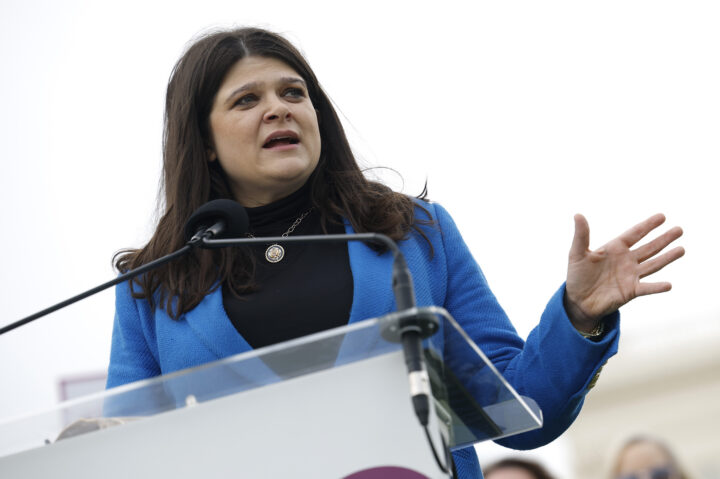
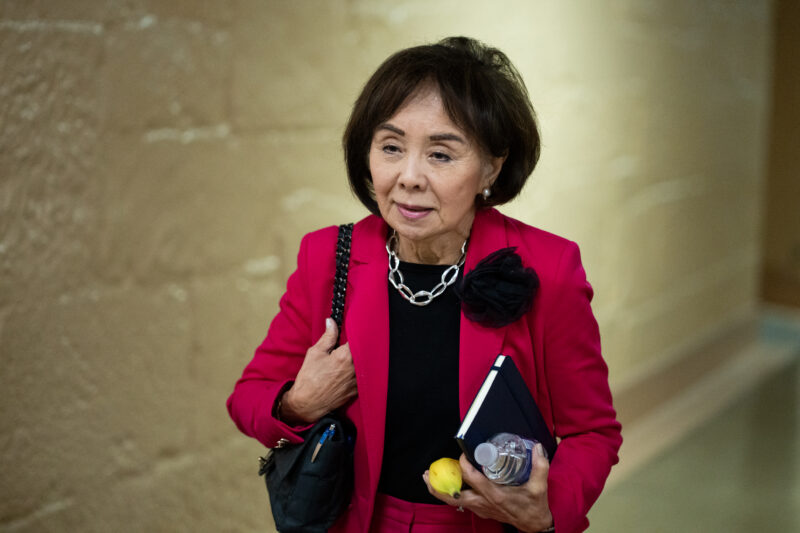
Kevin Dietsch/Getty Images
Rep. Haley Stevens (D-MI) speaks at a National Breast Cancer Coalition rally outside the U.S. Capitol on May 06, 2025 in Washington, DC.


 Add JewishInsider on Google
In a new statement posted Monday evening, Rep. Haley Stevens (D-MI) traced her decision to endorse Republican Mike Rogers and oppose Democrat Abdul El-Sayed in Michigan’s Senate race to antisemitism surrounding El-Sayed’s campaign and its supporters, as well as what she described as his decision to disregard her and her supporters.
Stevens described her choice as “a decision of conscience” that she made on her own, and not impulsively.
She said that she felt she had done the right thing after the primary by endorsing El-Sayed in the interest of putting the party first and moving forward together, but instead found herself — and the voters who supported her —”shut out” and ignored. Stevens narrowly lost the primary by a single percentage point.
“I was prepared to accept that. I had work to do serving Michigan, and I didn’t need a role in anyone else’s campaign,” she said. “Then came the ads.”
She said she heard directly from Black and Jewish voters concerned about the Rebellion PAC ad supporting El-Sayed’s campaign that linked rising grocery prices to U.S. military assistance for Israel, and El-Sayed’s campaign ad featuring Tucker Carlson.
“Reasonable people can disagree about Israel, Gaza, and American foreign policy. But blaming Israel for the price of eggs and elevating Tucker Carlson are not the way to build trust or bring people together,” she continued.
She said she had “asked Abdul to reject [antisemitic] rhetoric clearly. I wasn’t asking him to change his platform. I was offering him an opportunity to reassure people, reject division, and demonstrate the leadership required of a United States Senator.”
She also emphasized El-Sayed’s decision to campaign alongside Hasan Piker, “whose rhetoric about Jewish Americans has been deeply disturbing,” on college campuses, and “to tell our youth that Iran is not our enemy.”
She said that even though El-Sayed condemned Piker’s most recent provocations — comparing Jewish voters in West Bloomfield, Mich., to the Ku Klux Klan — “his decision to embrace Piker in the first place raised serious questions about his judgment and his ability to bring people together.”
And she said that though El-Sayed ultimately condemned the Rebellion PAC ad, he also disinvited her from future campaign events, which she described as a further rejection of her primary supporters.
“That experience raised a bigger question. If a candidate cannot make room for people who supported his primary opponent, how will he represent an entire state filled with people who disagree with him?” Stevens said.
She acknowledged significant disagreements with Rogers as well, but said that the state ultimately must pick between one of the two men.
“Michigan has to elect a senator and there is no neutral choice that absolves me of responsibility. Once I concluded that Abdul El-Sayed is not fit to serve in the United States Senate, I had to confront who should,” Stevens said. “I chose Mike Rogers, with the hope that he can serve in the tradition of John McCain: a senator willing to put country before party and stand up to his own side when conscience requires it.”
Stevens, in the statement, also took significant umbrage with claims that her fiancé, who is Jewish, or others were responsible for her decision, having pressured or forced her into rejecting El-Sayed.
“That is sexism dressed up as political analysis,” she said. “My fiancé has his own views. I have mine. I made this decision, and I am proud of it. Do not question my independence simply because you disagree with my conclusion.”
She said she was also deeply troubled by Democrats’ reaction to her decision: “Instead of asking why a lifelong Democrat reached this point, some leaders rushed to condemn me, question my motives, and push me out.”
Stevens said she wants to “help lead [the] effort” to build a “stronger, more welcoming, more courageous Democratic Party” and heal her state, her party and the country.
She said that the Democratic Party “cannot preach inclusion while punishing dissent. We cannot promise to heal a divided country if we cannot tolerate disagreement among ourselves. And we cannot build a lasting majority by making Americans feel their concerns are unwelcome. Loyalty to a party should never require abandoning your values or judgment.”
The party cannot achieve its “promise” through “loyalty tests and demands for blind obedience,” she continued.
“It will require true leadership. Leaders who listen, even when it is uncomfortable. Leaders who stand against hatred without calculating the political cost. Leaders who understand that bringing people together is more important than forcing them into line,” Stevens said.
More Stories
ALLIES APART
Competing Middle East frameworks put U.S. allies on rival tracks, experts say
TWO PATHS DIVERGED
Haley Stevens fiancé says he’s voting for Mike Rogers

BLIND SPOT
New study finds younger Americans struggle to recognize antisemitism on social media
HAWKEYE HANGUP
Top Democratic recruit in Iowa balances support of Israel with criticism of war in Gaza
MENDING FENCES
Haley Stevens to campaign for El-Sayed after fiancé backs Rogers
BIG APPLE BEEF
Lawler blasts Schumer for supporting ‘vile antisemite’ El-Sayed
Please log in if you already have a subscription, or subscribe to access the latest updates.
 Continue with Google

 Continue with Apple