









































































Campus antisemitism crackdown faces uncertain future after Democratic sweep, Dhillon exit
Amid the reshuffle, advocates say the big uncertainty is whether the administration will continue prioritizing the issue at all
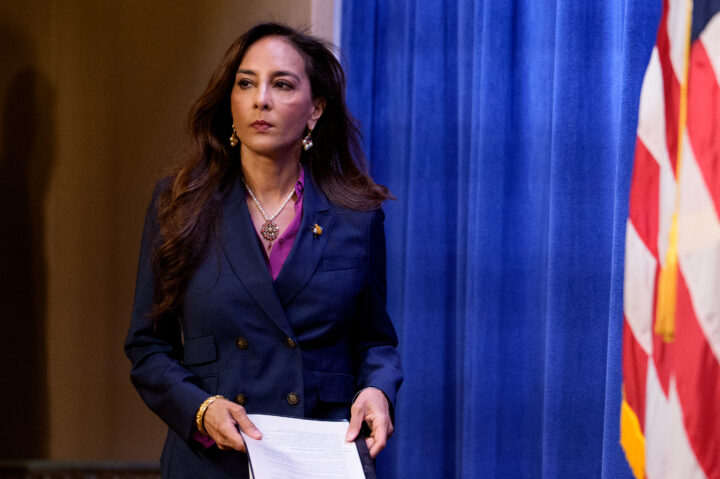
Andrew Harnik/Getty Images
Assistant Attorney General for Civil Rights Harmeet Dhillon arrives for a news conference at the Justice Department on September 29, 2025 in Washington, DC.


 Add JewishInsider on Google
The Trump administration’s campaign against campus antisemitism may be entering a new phase, Jewish advocates and a former administration official told Jewish Insider — one complicated by a Democratic takeover of the House, the departure of a key Justice Department official and growing questions about the White House’s commitment to enforcement.
One key enforcer of the Justice Department’s efforts to crack down on campus antisemitism, Assistant Attorney General for Civil Rights Harmeet Dhillon, resigned from the agency on Thursday, just as Sen. Bernie Sanders (I-VT) is set to return as chairman of the Senate Health, Education, Labor and Pensions (HELP) Committee, the committee with jurisdiction over universities.
During his previous tenure as chairman, Sanders repeatedly declined requests from then-ranking member Sen. Bill Cassidy (R-LA) to hold a full committee hearing on antisemitism on college campuses. (A spokesperson for Sanders did not respond to a request for comment from JI.)
But amid the reshuffle, advocates say the big uncertainty is whether the administration will continue prioritizing the issue at all.
A former Trump administration Department of Education official who spoke to JI on the condition of anonymity due to sensitives over their current job expressed skepticism that the administration’s enforcement efforts would regain momentum, regardless of the midterm election results.
“I don’t think the election will have much effect on enforcement [of Title VI of the Civil Rights Act],” the official said. “The department’s enforcement priorities are set by the White House, and the White House has deprioritized antisemitism. Dozens of investigations were opened in early 2025 and appear to have been abandoned. It’s hard to see the midterm results changing that.” Some liberals have argued that the Trump administration used the issue as a cudgel to advance its culture war against elite universities.
Despite concerns about the administration’s commitment to enforcement, Jewish campus leaders point to signs of progress since the height of campus protests in 2024 over the Gaza war. Adam Lehman, president and CEO of Hillel International, said the organization has tracked “significant improvements in the number of antisemitic incidents on campus since the peak in 2024.”
“We expect to have continued opportunities moving forward to partner with university leaders and policymakers alike to ensure a welcoming and safe campus environment for Jewish students and all students,” Lehman told JI.
Ken Marcus, founder of the Louis D. Brandeis Center for Human Rights Under Law, which represents students filing antisemitism complaints against their universities, said a Democratic takeover of the House could shift congressional attention away from universities and toward the administration itself.
“Congressional Democrats will be tempted to change their focus from investigating antisemitism to investigating the Trump administration’s approach to antisemitism,” Marcus told JI, adding that he hopes efforts to ensure universities comply with civil rights laws will remain bipartisan.
The prospect of increased Democratic scrutiny comes as some party members have already challenged the administration’s campus antisemitism investigations.
Rep. Jamie Raskin (D-MD) has drawn criticism from some Jewish community leaders for launching a probe into the investigations, citing whistleblower allegations that the administration’s cases against universities were predetermined. Raskin has maintained that antisemitism is a serious problem on campuses but argued that the administration must conduct investigations in accordance with the law and factual evidence.
Marcus warned that increased congressional oversight could distract administration officials from ongoing antisemitism investigations. “We can anticipate that many of those officials will become increasingly distracted by congressional investigations, hearings and subpoenas,” he said. “That’s going to reduce their bandwidth at a time when we need their attention.”
Marcus also praised Dhillon’s record at the Justice Department, saying she had pursued antisemitism complaints more aggressively than her predecessors, but argued that her departure would not necessarily derail the administration’s efforts. “She is certainly not the only one in the Trump administration or DOJ who feels as she does,” he said, adding that other officials could step in to continue the work.
More Stories
PRIME-TIME PUSHBACK
El-Sayed defends harsher criticism of Israel than Saudi Arabia in ‘60 Minutes’ interview

TURTLE BAY TUSSLE
Ideological divide surfaces between two emerging contenders to lead the United Nations
RACES TO WATCH
Jewish Insider’s scorecard for the 2026 midterms
EL-SAYED'S TEST
Haley Stevens conditions support for El-Sayed on his condemnation of antisemitic ads
DEEP BLUE WAVE
Far-left challenger ousts Rep. Jimmy Gomez, as others lag in Dem-on-Dem races

LEADING THE PACK
Rebeca Grynspan gains ground in latest U.N. secretary-general straw poll
Please log in if you already have a subscription, or subscribe to access the latest updates.
 Continue with Google

 Continue with Apple