



































































Jewish groups split over Trump’s announcement ending Israel aid
RJC said the move was expected, while AIPAC said it supports the current MOU and JDCA, DMFI and ZOA all expressed concern

Scott Olson/Getty Images
American and Israeli flags sit on the stage during an Israeli Independence Day celebration


 Add JewishInsider on Google
Jewish and pro-Israel groups offered mixed reactions on Tuesday to President Donald Trump’s Election Day announcement that the U.S. and Israel had agreed months ago to wind down U.S. aid by the end of the year, with several expressing concerns or reservations about the premature termination of the 10-year memorandum of understanding on U.S. aid to Israel.
The implications of Trump’s announcement are somewhat unclear, particularly for the 2027 appropriations bills currently making their way through Congress, which include the expected $3.8 billion in aid and cooperative missile defense funding to Israel.
AIPAC said in a statement on Tuesday that it continues to support the current U.S.-Israel MOU, indicating that the pro-Israel group — for which supporting aid to Israel is a central policy goal — is not in favor of terminating the agreement early.
“As negotiations continue, we support the current MOU, which is set to expire next year. By working closely together, the two democratic allies help keep each nation secure, promote regional peace and stability, and grow both economies,” AIPAC said in a statement.
The group indicated that it wants to see discussions of ending aid incorporated into broader negotiations around the next MOU. “We support the ongoing discussions between the United States and Israel on a new Memorandum of Understanding (MOU) that would further strengthen the U.S.-Israel partnership that benefits both countries.”
Trump’s announcement could complicate passage of the 2027 appropriations bills, but could avert a fiery debate in a potentially Democratic-controlled Congress next year over funding for the final year of the MOU.
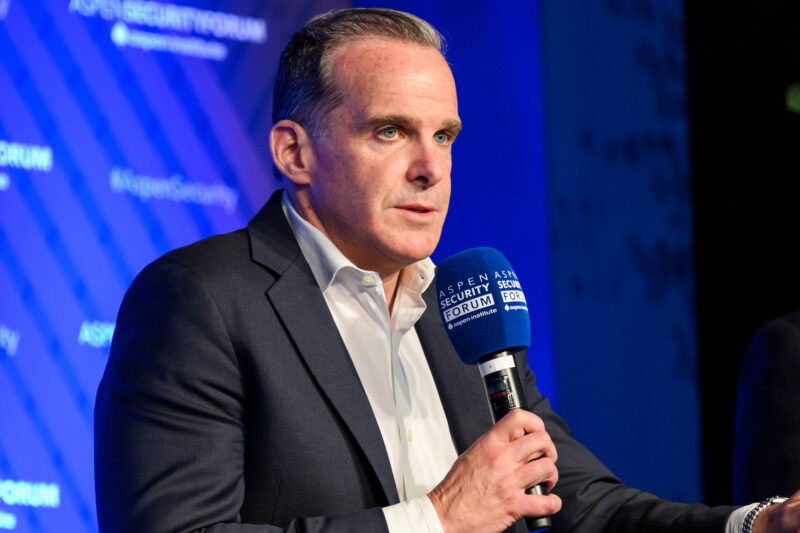
Republican Jewish Coalition CEO Matt Brooks said that the announcement did not come as a surprise.
“The U.S.-Israel relationship, under President Trump’s leadership, is stronger than ever. The process of [weaning] foreign military assistance to Israel is not unexpected and is something that has been openly discussed in partnership and coordination between the governments of the United States and Israel,” Brooks said. “Ultimately what will come out of this will be to the benefit of both countries and strengthen our cooperation even further.”
Brian Romick, CEO of Democratic Majority for Israel, said that Trump’s announcement ending the MOU two years early “with no details and no plan before Congress, captures everything unserious about this administration’s approach to the world.”
“For decades, America’s word meant something. When we made a commitment to a partner, we kept it. Serious countries don’t run foreign policy by phone-in,” he said.
Romick said that, since Congress is responsible for appropriating aid, “any possible change should be put in front of Congress as a real plan, debated in the open and put to a vote.”
He drew links between the announcement and the U.S.’ withholding of aid to Ukraine and Taiwan, describing it as a signal to U.S. adversaries. He also described the end of aid as potentially harmful for the American economy, given that Israel is required to spend the funding it receives in the U.S.
Jewish Democratic Council of America CEO Halie Soifer suggested that the announcement had caught Israeli officials off guard and that Republicans should speak out against the move.
“For those who do claim [the election is] about Israel, however, where’s the outrage that he surprised Israeli officials by announcing on Election Day that he’s ending all US aid — which has always been the litmus test for being ‘pro-Israel’ — before the MOU expires?” Soifer said. “Republican silence and hypocrisy in the face of Trump’s erratic policymaking, including on Israel, tells you how compromised they are in terms of values.”
Mark Dubowitz, CEO of the hawkish Foundation for Defense of Democracies, said the decision doesn’t serve American interests.
“Imagine cutting military aid to a vital ally that delivers enormous security and strategic benefits to America — all to appease the far left and far right,” Dubowitz wrote on X. “First Israel. Then Jordan and Egypt. Next, the billions we spend maintaining American forces in South Korea, Japan, and Europe. This is American retreat. And Iran, China, Russia, North Korea, and the Muslim Brotherhood regimes in Turkey and Qatar are cheering.”
The right-wing Zionist Organization of America, which has generally been strongly supportive of Trump, said in a statement that it is “concerned” about Trump’s announcement and the premature termination of aid, as well as why the U.S. would terminate aid to Israel but not to Egypt, Jordan, Pakistan, Lebanon or the Palestinian Authority.
ZOA President Mort Klein also said the group is concerned the announcement will harm the U.S. defense industry as well as national security, and urged Trump to reconsider.
“We very much appreciate that President Trump also said today that the U.S. would help Israel if the country needed assistance. But we are concerned that ad hoc aid may not adequately substitute for agreed aid under the MOU,” Klein said. “We are concerned that the early aid cutoff sends a message to Jew-haters that their outrageous, false condemnations of the Jewish state pay dividends and influence U.S. policy. We cannot allow campaigns of hate to have any impact on our policy.”
The announcement itself is consistent with comments by Prime Minister Benjamin Netanyahu over the past year, but experts told Jewish Insider that the timing of it in connection to the midterm elections was cause for frustration and concern.
Capitol Hill reactions to the announcement, which came on Election Day, have been minimal. Rep. Abe Hamadeh (R-AZ), who is cosponsoring a resolution calling for the end of U.S. aid to Israel, said in a statement, “President Trump is right: the future of our relationship with Israel has to be Trade, not Aid.”
Rep. Ro Khanna (D-CA), who has become a major opponent of U.S. aid to Israel, said, “Trump, desperate to stave off a Blue tsunami, now says zero aid to Israel. Establishment Dems, who lost to him twice, told us that was too radical.”
He credited a series of mostly Democratic Socialists of America-affiliated lawmakers and candidates expected to win on Tuesday for “showing us the way.”
Rep. Thomas Massie (R-KY) downplayed Trump’s announcement as a “desperate Election Day lie” and the funding as “pennies on the dollar” in light of U.S. spending on the Iran war “on behalf of Israel.” He also said that “[t]he same American taxpayer funds will just flow through as military assistance/coordination instead of as a separate line item in the appropriations bills.”
Victoria Coates, vice president of the Heritage Foundation, which was an early advocate for phasing out U.S. aid, said, “However the process is structured it’s a good idea for the relationship between the U.S. and Israel to mature from patronage to partnership, which will be to our mutual benefit!”
Coates noted that Heritage had suggested a structured phase-out that would initially surge aid before winding it down.
Meanwhile, anti-Israel voices on the far left and far right who’ve called for an end to U.S. aid to Israel say that the announcement doesn’t go nearly far enough, while also claiming credit for the decision.
“Selling American weapons to a foreign government engaged in war crimes is just as immoral and illegal as giving those weapons away for free,” the Council on American-Islamic Relations said in a statement. “Because federal law prohibits providing weapons to foreign militaries engaged in human rights abuses, ending free military aid is not enough. Our nation must completely stop arming and otherwise enabling the Israeli government’s unjust wars and crimes against humanity.”
Others such as the IMEU Policy Project, TrackAIPAC, A New Policy, Code Pink and Matt Duss, a former advisor to Sen. Bernie Sanders (I-VT), dismissed the announcement as a smokescreen that would actually lead to increased aid to Israel through joint military development projects.
Democracy for the Arab World Now said that Congress needs to act immediately to strip any funding for Israel from the 2027 appropriations bills, as well as to ensure that the U.S. ends any arms transfers to Israel, beyond U.S.-financed aid.
Joe Kent, the former director of the National Counterterrorism Center who resigned in protest of the Iran war, described the announcement as an effort to absolve the U.S. of responsibility if Israel uses a nuclear weapon against or targets civilian infrastructure in Iran.
More Stories
On the hill
House report finds American Psychological Association leadership ‘repeatedly failed to confront antisemitism’
RACES TO WATCH
Jewish Insider’s scorecard for the 2026 midterms
POLL POSITION
Israeli exit polls: opposition bloc holds early edge

carlson's claim
Carlson’s claim of Israeli push for nuclear strike on Iran gains traction among liberal figures

DEM DIVIDE
Fetterman: Haley Stevens holding El-Sayed accountable for his ‘fixation with Jewish money’

DOHA DISPATCH
CNN editor-in-chief effusively praises Qatar despite lack of press freedoms
Please log in if you already have a subscription, or subscribe to access the latest updates.
 Continue with Google

 Continue with Apple