






























































ICJ’s Myanmar genocide ruling draws scrutiny for implications for Israel case
The court’s first finding of state responsibility for genocide kept its high bar for proving intent — but experts disagree on what its reasoning means for South Africa’s case against Israel

Pierre Crom/Getty Images
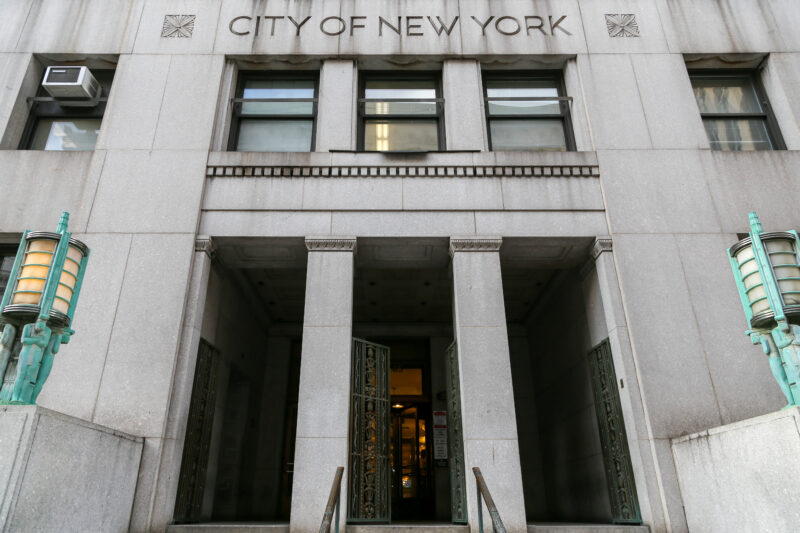
The exterior of the International Court of Justice on November 19, 2026 in The Hague, Netherlands.


 Add JewishInsider on Google
Experts have been closely watching the International Court of Justice’s case against Myanmar for clues about how the court will handle South Africa’s separate genocide case against Israel, to discern whether Thursday’s historic ruling — the first time the ICJ has ever found a state responsible for genocide — could carry significant implications for the Gaza proceedings.
The ICJ ruled 9-6 on Thursday that Myanmar committed genocide against the Rohingya during its military’s 2017 clearance operations in northern Rakhine state, finding that the military acted with intent to destroy a substantial part of the ethnic minority. The Gambian government brought the case in November 2019 under the 1948 Genocide Convention.
The ruling has raised concern and speculation about its potential impact on South Africa’s genocide case against Israel, which it filed in December 2023 alleging that Israel’s military campaign in Gaza violated the Genocide Convention. Israel has rejected the allegations, maintaining that its military operations have been directed at Hamas. The ICJ has issued three rounds of provisional measures but has not ruled on the merits. Israel submitted its written defense in March 2026, with South Africa’s next filing due Nov. 22, 2027, and Israel’s response due May 22, 2029.
Experts told Jewish Insider that the ruling could cut both ways for Israel, reaffirming the ICJ’s high threshold for establishing genocidal intent while offering guidance on how the court may evaluate competing military objectives and evidence in South Africa’s case against Israel. The decision could also have broader implications for how the court views the scale of violence, United Nations reporting and Israeli government accounts in the pending proceedings.
Alan Baker, the former legal advisor and deputy director-general of Israel’s Foreign Ministry and head of the International Law Program at the Jerusalem Center for Security and Foreign Affairs, told Jewish Insider, “I don’t think one has to exaggerate the implications of this Gambia-Myanmar ruling.”
“In principle, theoretically, there should not be any implications, because Israel has never had any intention of committing genocide against the people of Gaza,” he said. “Of course there are stupid statements by stupid ministers … but the court itself has said that to determine intent for genocide one has to judge actions, so theoretically, this shouldn’t influence the court’s ruling on Israel.”
A source who held international law positions in Israel’s government told JI that “the picture is mixed, even if [the Myanmar] decision is problematic. … The dissent was solid.”
The former government source pointed out that a decision on the Gaza case is unlikely before 2030 or even 2031 and that the court’s composition will be significantly different then.
Similarly, Baker explained that South Africa asked for an 18-month extension to try to find more evidence for its claim that Israel committed genocide, and as a result, Israel also received an 18-month extension.
“Who knows what will happen by then?” he said.
Still, Baker said one must “take into consideration that the court is a U.N. body and … the judges usually voice the political positions of the countries that appoint them. So despite the fact that it’s called the International Court of Justice, the elements of justice and it being a court is dependent on the positions the judges are ordered to take by their countries.”
In the ICJ, each side in a case may appoint an ad-hoc judge, and the Gambia chose Navi Pillay for its case against Myanmar. Pillay, this year’s Nobel Peace Prize laureate and former U.N. high commissioner for human rights, has courted controversy for years with anti-Israel statements, most recently accusing Israel of committing genocide in an interview with Haaretz. Pillay claimed that Israel killed 73,000 civilians, a figure that critics note includes combatants, and argued that the Oct. 7 attack was not genocidal.
Baker said that “all of [Pillay’s] efforts in this case have been to try to weaken the criteria for determining a genocidal intent with the ulterior motive of using it against Israel. Her whole career in recent years has been directed towards accusing Israel of genocide.”
Rebecca Hamilton, a professor of law at American University, said the ruling reaffirms the legal standard previously established by the court in cases brought by Bosnia and Croatia against Serbia, while offering additional details about the factors judges can consider in determining whether genocidal intent exists. The judgment also addresses how the court evaluates cases in which evidence points to both genocidal and non-genocidal intentions.
“The fact that non-genocidal intentions (such as quashing an insurgency) can be inferred from the evidence does not preclude a finding of genocide per se, so long as ‘the totality of the evidence can only be explained by the perpetrator’s genocidal intent,’” Hamilton told JI.
The court’s treatment of Myanmar’s argument that its military operations were aimed at countering an insurgency is particularly significant, Hamilton said, because the existence of a military objective does not necessarily rule out genocidal intent. She noted that genocide has historically occurred during armed conflicts, and that the Genocide Convention recognizes that it can take place in both wartime and peacetime.
“Indeed, most genocides, historically, have been conducted in the midst of armed conflict, so if fighting an armed enemy or countering an insurgency precluded a finding of genocide, then genocide would never be found,” Hamilton said. “The Genocide Convention itself foresees that genocide can be committed in both peacetime and wartime, so the finding of a wartime intent alongside intent to commit genocide is unremarkable.”
“The question, then, is not whether an intent like countering an insurgency exists, it is whether, even when it is present, it remains the case that only genocidal intent alone can explain the totality of the evidence,” she added.
That reasoning could be relevant to South Africa’s case against Israel, where Israel has maintained that its military campaign in Gaza is aimed at defeating Hamas. The Myanmar judgment underscores that the existence of a military objective does not, by itself, resolve the question of genocidal intent. In the Israel proceedings, the court would have to evaluate the evidence in that separate case to determine whether Israel’s stated military objectives explain its conduct or whether the evidence supports a finding of genocidal intent.
David May, a senior research analyst at the Foundation for Defense of Democracies, said the ruling was closely watched by both supporters and critics of Israel for what it could signal about the court’s pending case against the country. He argued that the most consequential aspect of the decision was that the ICJ retained its high threshold for establishing genocidal intent: that it must be the only reasonable inference from the evidence.
“Israel’s supporters and detractors eagerly awaited the outcome of the Myanmar case — years in the making — to see how it would affect South Africa’s case against Israel. Most significantly, the International Court of Justice decided not to lower its high threshold for determining genocide: that genocidal intent must be the only reasonable inference,” May told JI. “A lower threshold would have made a genocide ruling in Gaza more likely.”
May said the court’s explanation of how it evaluates competing explanations for a state’s conduct nevertheless has implications for Israel, clarifying that the presence of non-genocidal intentions does not automatically preclude a finding of genocide if the totality of the evidence supports genocidal intent as the only reasonable inference.
“However, the court wrote that even when there are non-genocidal explanations for some actions, if ‘the totality of the evidence can only be explained by the perpetrator’s genocidal intent, the only reasonable inference standard is met,’” he said. “The ICJ seems to have shifted the standard rather than shattering it.”
Beyond the legal threshold, May said, the ruling carries broader implications for how genocide is understood and how the court may assess evidence in the Israel proceedings.
“The ICJ ruling still has major implications for Israel. This is the first time the court found a state responsible for committing genocide, removing the taboo,” May said. “The low number of killed in the events in question, well below Hamas’ estimates of civilian casualties in Gaza, reinforces the notion that genocide does not depend on scale alone and shifts the perception of genocide away from comparisons to the Holocaust, Cambodia or Rwanda.”
May also pointed to the court’s reliance on U.N. reporting in the Myanmar case and how it treated reports produced by the Myanmar government, arguing that the court could similarly scrutinize Israeli government accounts.
“In the Myanmar case, the court relied heavily on U.N. reporting, which does not bode well for Israel, and treated Myanmar government reports with caution,” May said. “While the reporting standards within the democratic state of Israel are in no way comparable to those of the despotic regime ruling Myanmar, the court will likely discount Israeli government reports as well.”
May cautioned against treating the two military campaigns as directly comparable, pointing to what he described as significant differences in Israel’s efforts to limit civilian harm during its operations in Gaza.
“Israel’s many efforts to minimize civilian deaths and harm, including advanced warning, moving noncombatants out of harm’s way, calling off strikes, and facilitating aid into Gaza stand in stark contrast to Myanmar’s widespread killing, rape, removal, and replacement of civilians,” he said.
More Stories

PENTAGON PITCH
Deputy Defense Secretary Feinberg to brief Republicans on defense funding playbook

DELAYED REACTION
Rabb belatedly addresses bike rally targeting Jewish-owned businesses in Philly

CHAPLAIN COMPLAINT
Jewish lawmakers warn chaplain provisions in NDAA could enable proselytizing

THREAT ASSESSMENT
Senate Republicans unsurprised by Iranian ‘dirty bomb’ plot, urge vigilance

PLAYING TO HIS BASE
Van Hollen targets Schumer over opposition to Obama’s Iran deal in Senate leadership fight

HOLDING THE LINE
Rubio offers sustained defense of Iran war at Federalist Society: ‘Iran can never have a nuclear weapon’
Please log in if you already have a subscription, or subscribe to access the latest updates.
 Continue with Google

 Continue with Apple