







































































Democrats sweep control of House, Senate in historic landslide
But far-left lawmakers will have decidedly less leverage in the new Congress, outnumbered by the numerous red-state and red-district Democrats who won tough races by appealing to moderates

(RONALDO SCHEMIDT / AFP via Getty Images)
Democratic US Senate candidate James Talarico waves as he celebrates after winning the Texas race during a midterm election night watch party at the Long Center for the Performing Arts in Austin, Texas, on November 3, 2026.


 Add JewishInsider on Google
Fueled by voter frustration over the economy, high gas prices, ongoing military operations against Iran and the Trump administration’s corruption and overreach, Democrats won a landslide in Tuesday’s midterm elections, winning back both the House and Senate, and electing lawmakers from some of the reddest states and districts on the political map.
The Democratic rout was thorough. Democrats are expected to win at least eight Senate seats, and over 250 House seats — beyond party leaders’ wildest expectations. They won a Senate seat in Kansas for the first time since before FDR’s New Deal. They ended the GOP’s decades-long winning streak in Texas, electing Sen.-elect James Talarico (D-TX) and ousting longtime GOP Gov. Greg Abbott. Democrats won in ruby-red South Carolina, with Democrat Annie Andrews defeating Sen. Darline Graham (R-SC), the sister of the late Sen. Lindsey Graham (R-SC). And after several election cycles in which she won tough races against the odds, Sen. Susan Collins (R-ME) finally fell to Democrat Troy Jackson.
The scale of victory was just as sweeping in the House. Battle-tested swing-district Republicans, such as Reps. Brian Fitzpatrick (R-PA) and Mike Lawler (R-NY), were swept away in the wave. Rep. Mike Turner (R-OH), one of the party’s leading foreign policy voices, is trailing in a reliably Republican district. Even the chairman of the House Republicans’ campaign committee, Rep. Richard Hudson (R-NC), couldn’t hang on to his gerrymandered seat. There’s a long list of seemingly entrenched GOP members who didn’t see the Democratic landslide coming.
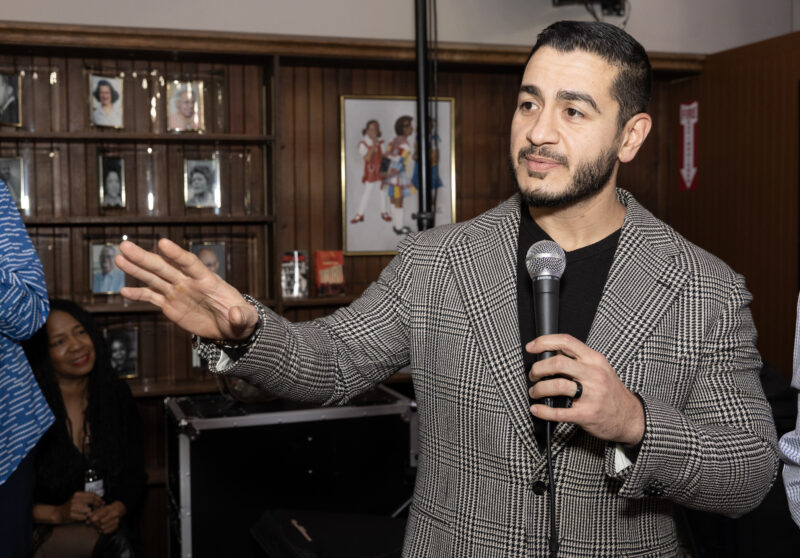
The size of the wave was even able to carry weaker and ideologically extreme candidates: In Michigan, far-left Senate nominee Abdul El-Sayed prevailed, even as his margin of victory was smaller than many of the Democrats running in much redder states. William Lawrence, a Democratic Socialists of America member, narrowly ousted Rep. Tom Barrett (R-MI) in a Michigan swing district. Many of the victorious Democratic House candidates flew under the radar, and were considered longshots to win.
El-Sayed’s victory in Michigan, along with the election of several far-left, virulently anti-Israel candidates in the House, will be a warning sign for American Jews and pro-Israel voters alarmed by the Democratic Party’s chilliness towards the Jewish state and tone-deafness towards rising antisemitism.
But given how many Democrats won on conservative turf, the far-left lawmakers will have decidedly less leverage in the new Congress, and will be outnumbered by the numerous red-state and red-district Democrats who won tough races by appealing to moderate voters. Democratic Majority for Israel celebrated the long list of pro-Israel moderates who won, including Reps.-elect Elaine Luria (D-VA), Cait Conley (D-NY), Marni von Wilpert (D-CA) and Bobby Pulido (D-TX).
How the incoming Democratic congressional majorities deal with the rising anti-Israel sentiment in the party and how forcefully they speak out against extreme views and associations of some of their far-left colleagues will go a long way in determining the Democratic Party’s health. Moderates may have the numbers, but several of the incoming far-left members will have powerful megaphones — especially on social media. The battle for the future of the party in the run-up to the 2028 presidential primaries is just beginning.
The GOP message on Israel and the outreach to Jewish voters will also be complicated in the months ahead, given that some party strategists are blaming the war with Iran as a major factor in the Republican party’s defeat, combined with the pre-election interview Trump gave where he announced he would be winding down U.S. aid to Israel — a move that was met with criticism from leading pro-Israel groups.
While there are many reasons for the historic Democratic rout beyond the Iran war — from Trump’s tariffs raising prices to executive branch abuses targeting the president’s critics to immigration enforcement abuses, among others — the faction of isolationists within the administration will likely be trying to pin the GOP’s problems predominantly on Trump’s Middle East policy in the political gamesmanship ahead. That fight will loom large as Republicans prepare to figure out who Trump’s successor will be.
Given the scale of the public rebuke against Trump, there will now likely be an opening for a Republican who’s kept some distance from the president — like Florida Gov. Ron DeSantis or former Virginia Gov. Glenn Youngkin. Sen. Ted Cruz (R-TX) could also be a candidate for this role, though the Democratic sweep in his home state may hurt his political stock.
Major midterm wins are awfully common for the party out of power — and many, like the GOP’s landslide wins in 1994 and 2010 and the Democrats’ overperformance in 2022 — aren’t predictive of the victors’ chances in the next presidential election.
But the historic nature of the Democratic victory Tuesday night will force a lot of rethinking about the political future. Given the country’s deepening polarization, it looked impossible for any party to overcome the partisan deficits that Democrats faced in red states — until that happened across the map on Tuesday night. That fact alone suggests that a lot of time-tested political truisms could get punctured in the run-up to the 2028 presidential campaign.


Please log in if you already have a subscription, or subscribe to access the latest updates.
 Continue with Google

 Continue with Apple