


-
Two Iranian nationals were charged Friday with preparing a terrorist attack targeting Manchester’s Jewish community, British counterterrorism police said, alleging the men acquired bomb-making materials, researched potential targets and communicated with an overseas third party who may be in Iran. The Telegraph previously reported that the pair traveled to Manchester to carry out the alleged plot around Yom Kippur, one year after the deadly attack at the city’s Heaton Park synagogue.
-
The FlyDubai co-pilot who stabbed the captain of an Israel-bound flight had previously been barred from flying by Oman over concerns about his radical ideological views, The Wall Street Journal reports, citing people familiar with the matter. FlyDubai later hired the Omani national and assigned him to the Dubai-Tel Aviv route.
-
Secretary of State Marco Rubio discussed Friday with Jordanian King Abdullah II implementing the trilateral framework between Lebanon, the U.S. and Israel, disarming Hezbollah and promoting stability in Syria, according to a State Department readout.
-
Jared Kushner pushed back on a CNN investigation that linked his Middle East diplomacy to his private equity firm’s holdings in an Israeli financial group with stakes in Israeli defense companies, calling the story “deeply misleading” and noting CNN’s own finding that his diplomatic work didn’t affect the investments. Kushner argued that the firm in question, Phoenix Financial, is not a defense company but one of Israel’s largest regulated financial institutions — managing some $220 billion in retirement savings for millions of Israelis, akin to Vanguard or Fidelity.
-
aj rodriguez Jared Kushner pushed back on a CNN investigation that linked his Middle East diplomacy to his private equity firm’s holdings in an Israeli financial group with stakes in Israeli defense companies, calling the story “deeply misleading” and noting CNN’s own finding that his diplomatic work didn’t affect the investments. Kushner argued that the firm in question, Phoenix Financial, is not a defense company but one of Israel’s largest regulated financial institutions — managing some $220 billion in retirement savings for millions of Israelis, akin to Vanguard or Fidelity.,
-
Israeli officials are expected to question the Omani co-pilot accused of trying to crash flydubai Flight FZ1073 after he was transferred from Saudi Arabia to the UAE on Thursday, Reuters reports. An Israeli government official said Israeli investigators will participate in the UAE-led probe as authorities examine the co-pilot’s motives, background and whether he acted under anyone else’s direction.
-
Anwar Gargash, an advisor to Emirati President Mohammed bin Zayed, became the first senior Emirati official to publicly describe the attempted downing of flydubai Flight 1073 as terrorism on Friday, calling it a “dangerous terrorist act.”
-
Saudi Arabia is planning an offensive against the Houthis in Yemen aimed at retaking control of the Bab el-Mandeb Strait, with options ranging from a focused coastal operation to a broader multi-front assault, Reuters reports. The operation would be led by Saudi-backed Yemeni forces with Saudi air support, and officials said more than 100,000 Yemeni troops could be mobilized depending on its scope.
-
Iraq said Friday that Iranian airlines will be allowed to operate 40 daily flights to and from Najaf International Airport after Baghdad secured a U.S. sanctions exemption, Reuters reports. Mahan Air remains excluded from the arrangement; flights between Iran and Iraq had been suspended last week because of U.S. sanctions.
-
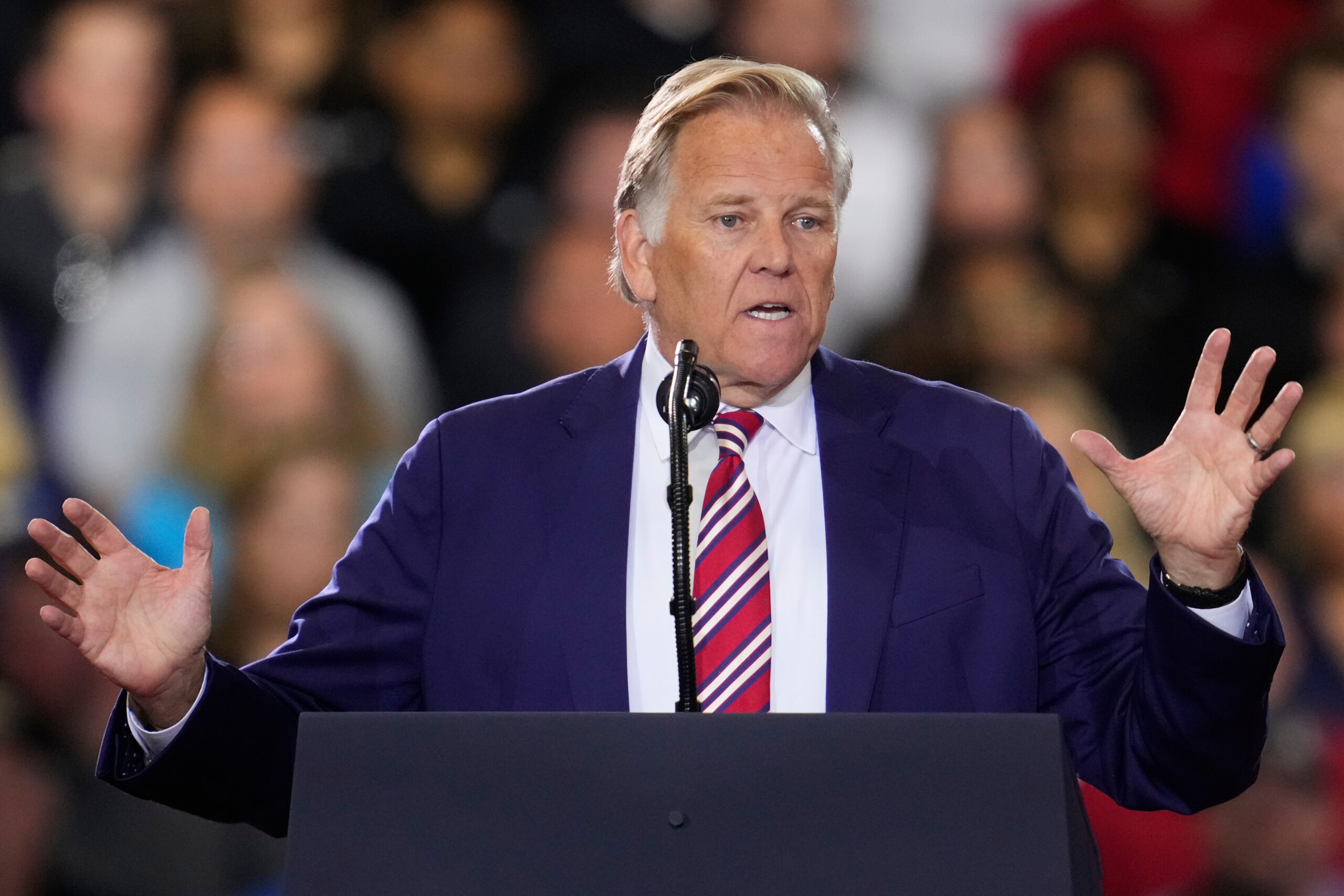
Former Rep. Mike Rogers (R-MI), the GOP nominee for Senate in Michigan, released a new campaign ad featuring Iman Dashti, the University of Michigan student who confronted Democratic Senate candidate Abdul El-Sayed over his stance on Iran and the Islamic Revolutionary Guard Corps at a town hall last week. In the ad, Dashti, whose family fled Iran, argues that El-Sayed has failed to adequately stand up to the Iranian regime.
-
AIPAC is conducting a strategic review of its political operations and considering how to adapt to a transformed political landscape, The New York Times reports, a process the group undertakes regularly. Its leaders say its super PAC and heavy spending on political campaigns will remain a central part of its strategy going forward.
-
Israeli Ambassador to the U.S. Yechiel Leiter said his son is “still on life support,” after he was critically injured last week in a car-ramming attack in the West Bank. “Perhaps next Simchat Torah he will be able to rejoice together with his darling wife and children,” Leiter continued, ahead of the start of the Jewish holiday.
-
The U.K.’s Royal College of Nursing cut ties with Teva, one of the largest drug suppliers to the U.K.’s National Health Service, and will not allow the Israeli pharmaceutical company to take part in an upcoming summit on migraines and headaches, citing Teva’s Israeli military ties and concerns over past price-fixing and corporate abuse.
-
Israeli President Isaac Herzog criticized the U.K.’s recent ban on settlement products and services, describing the move as “unfair and politically motivated” interference in the upcoming Israeli election.
Live Briefing
An on-demand briefing on what insiders are talking about now
Last updated October 2, 2026 - 4:52 PM ET
Paul Sancya/AP
Republican Senate candidate Mike Rogers speaks before President Donald Trump at an event at the General Motors Proving Ground Monday, July 27, 2026, in Milford, Mich.

Worthy Reads
Articles and items across the web that are worth reading
-
Strait Man
Bloomberg’s Alex Dooler, Dinesh Nair and Laura Gardner Cuesta spotlight Abu Dhabi Crown Prince Sheikh Khaled bin Mohamed Al Nahyan as the Emirati official, who helms a $300 Abu Dhabi billion sovereign wealth fund, looks to find alternatives to the Strait of Hormuz amid tensions with Iran. “He is known to lean heavily on a small group of Emirati officials, some childhood friends and others who have steered Abu Dhabi’s economy for decades. … According to one former teacher, a young Sheikh Khaled was at ease even in a class of students who went on to become top political scholars in Middle Eastern geopolitics. He’s known to prefer to observe before offering careful interventions.”

-
Midair Melee
The Atlantic’s Graeme Wood considers the political implications of yesterday’s attack on a FlyDubai flight to Israel. “The next step will involve determining whether the pilot acted alone — not a good look for Flydubai, to have suicidal or terrorist pilots — or at someone’s behest. The latter possibility could, if confirmed, have serious implications, depending on who directed the attack. Many have a motive: Sunni jihadists (al-Qaeda or the Islamic State), Hamas, and of course Iran and its proxies.”
-
‘Inconceivable,’ Indeed
In The Atlantic, author Jamie Kirchick unpacks an interview with actor Wallace Shawn — who has argued that Israel is worse than the Nazis — to demonstrate how declaring Israel committed genocide has become a “litmus test on the left.” “The notion that Jews might have an equally valid claim to the land, or that the land ought to be divided between the two peoples, is anathema to Shawn. President Woodrow Wilson ‘was wrong to say that each people should have their own state,’ he says. ‘That hasn’t turned out to be that great, this idea that each ethnic group should have its own state.’ And yet, Shawn’s supposed opposition to ethnic-based statehood makes a curious exception for Palestinians, whose right to self-determination he supports.”
 Continue with Google
 Continue with Apple