








































































Unity talk, scorched earth: Netanyahu’s Knesset speech blows up first Likud-Yashar meeting
Following Netanyahu's speech, Yashar canceled a meeting between the parties’ negotiating teams scheduled for Wednesday
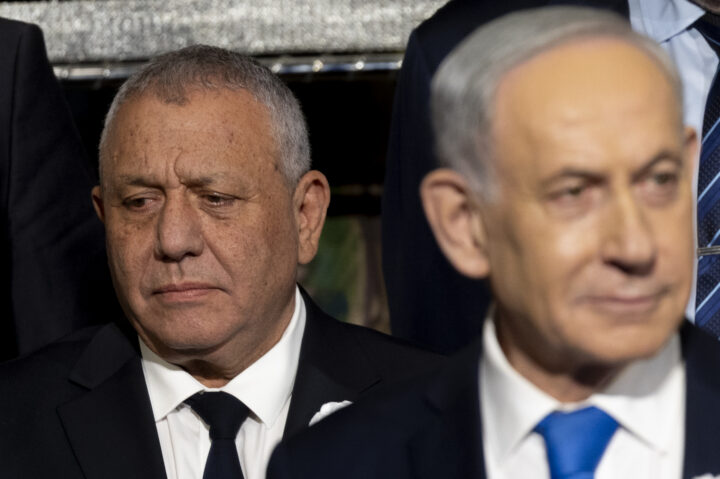
(Amir Levy/Getty Images)
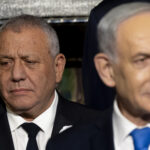
Israeli Prime Minister, Benjamin Netanyahu (R) and Yashar Party leader, Gadi Eisenkot (L) are seen during a ceremony at the Israeli parliament, the Knesset, on November 10, 2026 in Jerusalem.


 Add JewishInsider on Google
One of the most popular songs in Israel in recent years claims that “he who believes does not fear.” Yet time and again, Israeli politicians walk a path where they both believe and fear. Tuesday’s swearing-in ceremony for the 26th Knesset was a case in point.
On one side stood Prime Minister Benjamin Netanyahu. In a lengthy speech that resembled a defiant campaign address far more than an official, unifying address, he again underscored the threat posed by Iran as it “works to revive” its nuclear program.
On the other side was President Isaac Herzog, who appealed to the Knesset members’ better angels, noting that the Israeli public elected them “in the hope that you will advance Israeli society for the better.” Herzog, maintaining his optimism, pushed for the formation of a national unity government that would translate, as he said on Tuesday, “these forces into cooperation, unifying dialogue and active listening.”
In his own speech, Netanyahu similarly called on lawmakers to “put all other considerations aside and establish a national unity government.” Yet moments later, he launched a fierce attack on the Knesset’s Arab parties, declaring: “To those considering forming a government that includes, or relies upon, supporters of terrorism who hate Israel, what do you think their true goal is? … You fail to understand what they really seek to achieve and what their national aspirations are.”
They were concerns that appeared not to bother Netanyahu when he courted the support of Mansour Abbas, chairman of the Ra’am party, as he attempted to form a government in 2021. On Tuesday, Abbas revealed in an interview with Channel 12 that during Operation Guardian of the Walls in May 2021, Netanyahu invited him to a meeting at the prime minister’s official residence in Jerusalem. There, according to Abbas, Netanyahu told him that he and Yahya Sinwar, Hamas leader and architect of the Oct. 7 terror attacks that would come two years later, “understood one another.” Likud denied the claim, but Abbas asserted he was willing to undergo a polygraph test in order to prove its veracity.
Netanyahu’s remarks in the Knesset on Tuesday had perhaps the most impact on Gadi Eisenkot’s Yashar party, days after the former IDF chief of staff received the mandate to form a government. Following Netanyahu’s speech, Yashar canceled a meeting between the parties’ negotiating teams scheduled for Wednesday. The meeting was meant to mark the first formal sit-down between Likud and the Yashar party, whose raison d’être is to replace Netanyahu.
What exactly were they expected to discuss? Likud sources claim the meeting was a prepackaged media stunt: After receiving the mandate from Herzog, Yashar reached out to all political factions to negotiate a government based on Eisenkot’s core principles (recognizing Israel as a Jewish and democratic state, adopting the values of the Declaration of Independence, universal national service and recognizing Hamas as a terrorist organization that must be stripped of its military and governing capabilities).
Likud realized that officially rejecting the invitation would undermine the promise of unity outlined by Netanyahu. Yashar, meanwhile, insists that Netanyahu has no interest in unity, citing his scathing speech as further proof. Yet among all available options, it remains unclear whether anyone can assemble a viable coalition.
The opposition’s “change” bloc has two primary options. The first is to establish a narrow government supported by the Arab parties to ensure the Netanyahu camp lacks a majority (a move that could leave Avigdor Liberman’s Yisrael Beiteinu party out of the coalition if he sticks to his campaign pledge that he won’t sit in a coalition supported by Arab parties). Sources suggest this is Eisenkot’s preferred path. The second option is to form a coalition with the Haredi parties, or at least one of them, by reaching a compromise on the legislation regarding Haredi enlistment.
Yossi Tatika of Tatika Consulting & Research, an advisor to several Israeli political figures, told Jewish Insider that from Likud’s perspective, this second option represents the nightmare scenario. “Its establishment would signal the collapse of the historic right-wing bloc and likely jeopardize the prime minister’s political future,” Tatika noted, adding a caveat: “Netanyahu is experienced enough to try to exploit ideological rifts within the change bloc to prevent this.” This is why on Tuesday Netanyahu spent hours meeting with Ya’akov Asher, chairman of the United Torah Judaism party, one of the Haredi parties, which is seen as a potential candidate for cooperation with Netanyahu’s opponents — even after UTJ refused to recommend Netanyahu, or any candidate, to receive the mandate.
Senior officials within the change bloc report significant behind-the-scenes progress toward forming a government, pointing to an agreement to replace the Knesset speaker next week with their consensus candidate, MK Matan Kahana from Yashar.
“The negotiations look positive, and we are confident that we will be able to form a government,” a senior official told JI. “Netanyahu’s behavior since Election Day has only served to sharpen the minds of all party leaders regarding the importance and urgency of a new government.”
Yet as is often the case in Israel, there is always an alternative: another round of elections. Political analysts assess that this is precisely what Netanyahu is aiming for. But can Israel afford another election cycle? Herzog is convinced it cannot and that such an outcome must be avoided. One prevailing theory in political circles is that the person to break the political deadlock will be none other than President Donald Trump.
U.S. Ambassador to Israel Mike Huckabee was pressed on Kan, Israel’s public broadcaster, on Tuesday over whether the administration would actively intervene to help form a government in Israel. “I never want to say what could or couldn’t happen,” Huckabee said. Regarding the possibility of a formal White House invitation for Eisenkot and Netanyahu, he reiterated that he had “not heard of that,” but added: “I’m not saying it hasn’t been considered.”
Thus, it may well be that, just as with the wars in Gaza and Iran, Trump could ultimately be the one to untangle Israel’s political knot.
More Stories
STAYING THE COURSE
Arkansas Gov. Sanders distances herself from Vance, underscores moral importance of close U.S.-Israel relationship
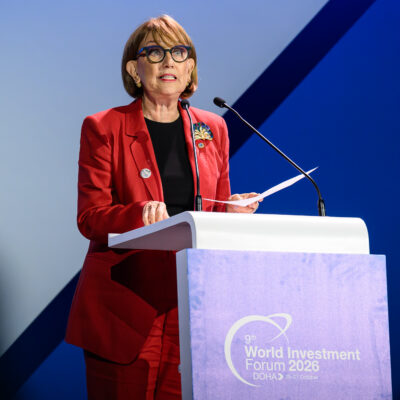
LEADING THE PACK
Rebeca Grynspan gains ground in latest U.N. secretary-general straw poll
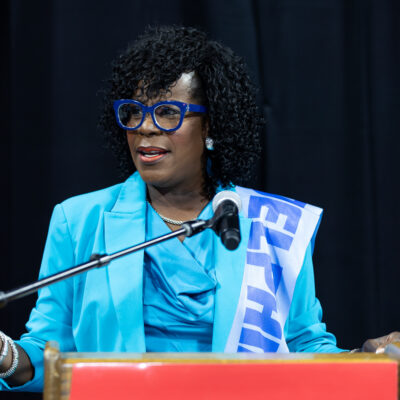
PHILLY PUSHBACK
Philly officials join Shapiro in denouncing antisemitic boycott of Jewish businesses
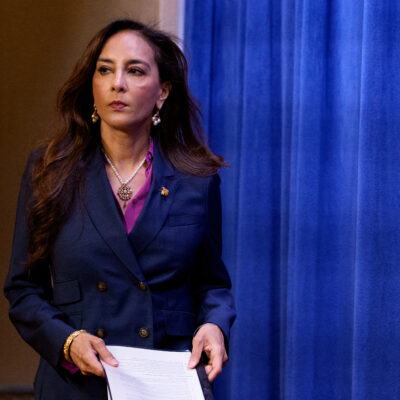
CAMPUS CROSSROADS
Campus antisemitism crackdown faces uncertain future after Democratic sweep, Dhillon exit
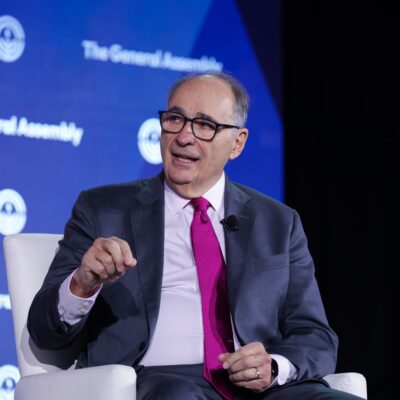
DEM DIRECTION
David Axelrod downplays DSA ascendance within Democratic Party
EDUCATION LEGISLATION
Contender to lead House education committee pushes to repeal education tax credit
Please log in if you already have a subscription, or subscribe to access the latest updates.
 Continue with Google

 Continue with Apple