













































































Democratic sweep raises questions for U.S.-Israel ties and Iran war
Analysts say the incoming majorities could push to link arms sales to Israeli conduct and move quickly on war powers to end the conflict

Kevin Carter/Getty Images
U.S. Capitol building on July 12, 2026 in Washington, DC.


 Add JewishInsider on Google
Democrats’ sweeping victories in Tuesday’s midterm elections have raised questions about the future of the U.S.-Israel relationship and President Donald Trump’s approach to the war with Iran, as the incoming Democratic majorities in both chambers prepare to wield greater influence over American foreign policy.
The election comes as Democratic lawmakers increasingly scrutinize the U.S.-Israel relationship, advocating for restricting American arms sales and military assistance. JI reported in September that Democrats have been preparing a range of legislative proposals that could significantly alter U.S. policy toward Israel, including restrictions on military assistance and arms sales and sanctions targeting settlement activity and settler violence in the West Bank.
Dan Shapiro, a former U.S. ambassador to Israel, told Jewish Insider that in the next Congress, some Democrats will seek to impose greater pressure on Israel over such issues. But he also emphasized that the incoming majorities include a larger number of moderate-minded lawmakers who could temper the party’s approach.
“These are big majorities. They include people from moderate swing areas of the country, people who are not as focused on this issue, and that will give the leadership some ability to help define a constructive way of making changes to the relationship,” he said.
Matt Kenney, vice president of government affairs at the Jewish Institute for National Security of America, said he expects Democrats will “exert pressure” on Israel in the pursuit of “priorities like reigning in violence in the West Bank, opposing the annexation of the E1 corridor and providing humanitarian assistance to Gaza.”
“Pro-Israel Democrats like Florida’s Debbie Wasserman Schultz, expected to chair the House Foreign Affairs Committee’s MENA subcommittee, and returning Virginia congresswoman Elaine Luria will push to maintain strong U.S. support for Israel, but against increasing political headwinds within the caucus,” he added.
Chuck Freilich, a former Israeli deputy national security advisor and an associate fellow at the Middle East Institute, warned that the Democratic victories could deepen existing “severe strains” in the relationship.
“There may be direct linkages between, let’s say, how Israel pursues policy, especially in Gaza, but towards the West Bank in general, the whole Palestinian issue in general, and arms sales,” he said.
“I think at best we’ll go back to the 1970s, when every arms sale was deeply contested, when Israel had to come and beg and really make a difficult case,” he continued. “For the last few decades, arms sales have been basically automatic. The linkages, the conditionality, could become worse.”
Meanwhile, Trump’s announcement on Election Day that he plans to end military aid to the Jewish state by the end of the year and Vice President JD Vance’s post-election blame on the U.S.-Israel relationship and the Iran war as top factors in the GOP’s defeat have underscored shifting attitudes toward Israel within elements of the Republican Party as well.
The new congressional balance of power could give Democrats greater influence over negotiations concerning the future of U.S. security assistance to Israel, Kenney said, particularly as the current 10-year memorandum of understanding, signed under former President Barack Obama, approaches its scheduled expiration in 2028 — if it isn’t already terminated by Trump at the end of 2026.
Trump indicated that Israel would be allowed to continue purchasing American weapons, while also framing the assistance as a political liability for the GOP amid growing Democratic criticism of the funding.
Freilich warned, however, that changes to the bilateral relationship could extend beyond military assistance and weapons transfers.
“We may see less support for Israel in the U.N. and other international organizations, and critically in the Security Council,” he said. “Even a limited change has critical ramifications for Israel, because the relationship with the U.S. is one of the most important pillars of Israeli national security.”
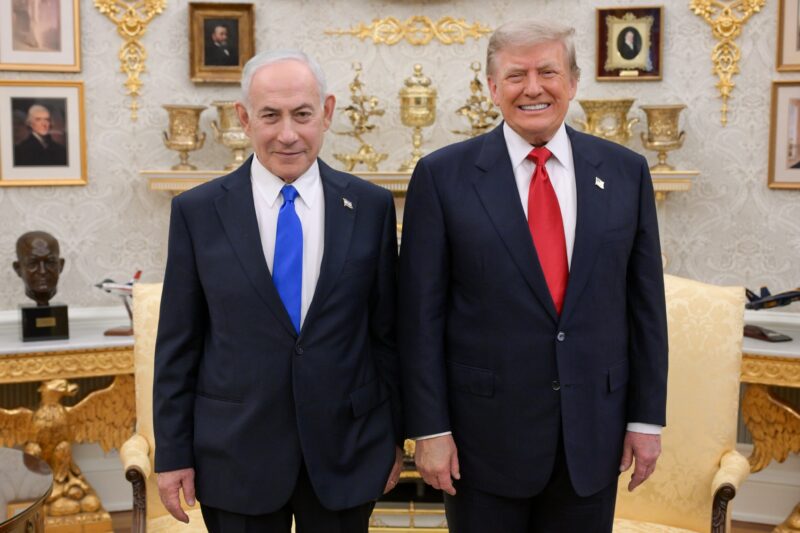
The Iran war has also become a major source of strain in American attitudes toward Israel, analysts argued, particularly amid perceptions that Netanyahu persuaded Trump to enter the conflict.
“A lot of people bought the line that Netanyahu talked Trump into it. I think that was a grossly overstated, misleading narrative,” Freilich said. “But it has a lot of support in the U.S. A lot of people believe it, and not just progressives. A lot of centrist Democrats and Republicans believe it.”
The conflict, now in its eighth month, emerged as an issue in the midterms primarily as a driver of high fuel prices. Shapiro offered a sharply critical assessment of Washington’s position in the conflict following the election.
“I think Iran feels like they don’t need to be flexible in negotiations. They feel like the pressure is on the United States to get out of the war,” Shapiro said. “They feel like they will be able to reassert control of the Strait of Hormuz once we conclude our operations.”
“[Iran has] given nothing on the nuclear negotiations until now, and I think they have gained the upper hand here by the United States pursuing a fruitless war that it should never have pursued, and now by the demonstration that the American people want to end it,” he continued.
Elliott Abrams, who served as special representative for Iran during Trump’s first administration, offered a similar assessment of how Tehran could interpret the midterms.
“Iran will probably be emboldened by the election results, thinking of them as a defeat for Trump and a statement of public opposition to his Iran policy,” Abrams said. “That will make negotiations harder, or perhaps make the terms of any deal better for Iran if the administration badly wants a deal.”
Analysts said the incoming Democratic majorities could use their power to force an end to the war by enforcing already passed war powers resolutions and by withholding government funding.
Senate Minority Leader Chuck Schumer (D-NY) claimed on Wednesday that Democrats “have some Republicans” already willing to crossover to pass a war powers resolution.
Shapiro agreed, “If the war is still going on when the Democrats take the majority in January, I expect very quick action on war powers and conceivably on ending funding to support the war.”
“I can’t say for sure, and I’m sure those decisions haven’t been made. And there’s still time for the war to wind down before they’re sworn in. But yes, this will be as high a priority as anything — is ending this war ASAP.”
Kenney similarly assessed that Democrats will pursue an end to the Iran war as a top priority and also suggested that the party “will kick-start that effort by seeking to run Secretary of War Pete Hegseth out of town.”
Democratic lawmakers swiftly signaled plans to target and investigate the Trump administration following Tuesday’s victories, with several posting messages on social media suggesting that subpoenas and other congressional oversight actions would be forthcoming under Democratic control.
Michael Koplow, chief policy officer at the Israel Policy Forum, also anticipated congressional efforts to restrict the administration’s military operations, but warned that Democratic majorities alone would not guarantee their success.
“There are practical limitations in both cases” of war powers and funding “since they will not have veto-proof majorities and [the Department of Defense] will be able to shift funding around without a real concern that Democrats will refuse to fund the department entirely,” he continued. “The administration has also routinely ignored Congressional spending directives, and I don’t expect that to change overnight.”
Abrams also questioned how far the incoming Democratic majorities could go in challenging the administration without sufficient Republican support.
“Democrats in Congress may try to constrain Trump, but it will be difficult,” Abrams said. “They do not have the votes to override vetoes; it’s hard to see a dozen Republicans joining them in the Senate on something like a bill stopping supply of certain weapons systems to Israel.”
More Stories

analysis
Vance’s post-election political dance underscores his 2028 vulnerabilities

CAMPAIGN CURVEBALL
Haley Stevens endorses Mike Rogers: ‘I do not stand with Hasan Piker’
RACES TO WATCH
Jewish Insider’s scorecard for the 2026 midterms
PHILLY PUSHBACK
Philly officials join Shapiro in denouncing antisemitic boycott of Jewish businesses

Blue York
New York’s top Democrats shrug off GOP challengers

LAYING DOWN THE LAW
Four new defendants charged in plot targeting Jewish groups, University of Michigan leaders
Please log in if you already have a subscription, or subscribe to access the latest updates.
 Continue with Google

 Continue with Apple