




































































Gov. Spanberger reverses decision to opt Virginia into federal education tax credit
The commonwealth’s former governor, Glenn Youngkin, began the process of enrolling the state into the program that could provide scholarships for Jewish day schools
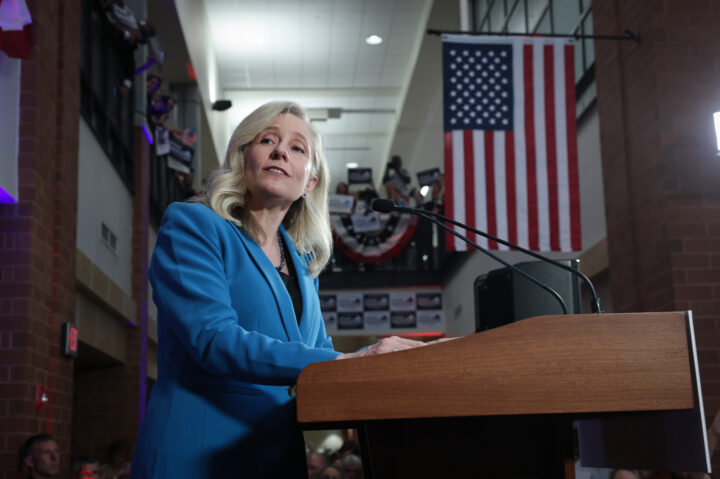
Win McNamee/Getty Images
Gov. Abigail Spanberger speaks to supporters during a campaign rally on June 16, 2025 in Henrico County, Virginia.


 Add JewishInsider on Google
Virginia Gov. Abigail Spanberger opted against enrolling her state in a federal school tax credit that would have provided scholarships to students for a variety of K-12 public and private education expenses, including private school tuition, transportation and tutoring.
Reversing the effort of her predecessor, Republican Gov. Glenn Youngkin, to join the school choice tax credit program, Spanberger’s administration said it will not finish the enrollment process, The Washington Post reported Friday.
A source in Youngkin’s political office told Jewish Insider that as governor, he completed all the necessary paperwork at the time to enroll Virginia into the program. The IRS did not open the Federal Scholarship Tax Credit State Portal for state authorities until last month, nine months after Youngkin left office.
As a result, the final step — submitting a list of approved scholarship-granting organizations — was left to the incoming Spanberger administration.
Part of President Donald Trump’s 2025 flagship policy package, the tax credit provides a dollar-for-dollar tax credit — up to $1,700 annually — for donations to approved Scholarship Granting Organizations.
The Jewish Federations of North America, Orthodox Union and Agudath Israel have been major champions of the program, working to educate governors about the first-of-its-kind supplemental federal funding that could help pay for Jewish day school and yeshiva education.
Spanberger’s office told the Post her administration did not believe the program would benefit public school students, and that Virginia would instead monitor its effects in other states before reconsidering participation. Spanberger would monitor the program to “assess its impacts on students, families, and schools in other states,” her spokesperson told the Post.
Spanberger’s spokesperson did not respond to a request for comment from JI.
Spanberger’s decision runs counter to that of several Democratic governors in blue states who recently opted into the program. Colorado Gov. Jared Polis was an early champion of the federal tax credit, while New York Gov. Kathy Hochul more recently signed on, despite the opposition of teachers unions in her state. New Mexico Gov. Michelle Lujan Grisham was the other Democratic governor who recently opted in, while most have remained on the sidelines in the run-up to the deadline.
Jewish education advocates and other supporters of the tax credit have been emphasizing that it can provide resources to public school students, including funding for tutoring, special-needs services and after-school programs.
Youngkin urged Spanberger to complete the enrollment process. “1.4 million Virginia students are counting on you,” the former Virginia governor wrote on X, adding, “Stop standing in the way of educational freedom and opportunity.”
Zack Roday, a Youngkin advisor, told JI that “Spanberger’s apparent reluctance to bring this opportunity to life for 1.4 million Virginia K-12 students is a betrayal to her voters. Groups —- including organizations prioritizing public school kids — are ready for her to file the official State SGO list, which is the final step in the process. She can and should do that today.”
Several prominent leaders of Jewish advocacy groups called on Spanberger to reconsider her decision.
“The Orthodox Union is disappointed with Gov. Spanberger’s announcement that she intends to not have Virginia’s students and families benefit from the federal scholarship tax credit,” Nathan Diament, executive director of the Orthodox Union Advocacy Center, told JI.
“No matter the misleading statements of some in the media and elsewhere, this program is not a ‘voucher’ nor will it only benefit private schools. It opens the door to millions of dollars in private donations that can benefit students in public, private and parochial schools at no cost to Virginia’s budget.”
A.D. Motzen, Agudath Israel of America’s national director of government affairs, told JI that Spanberger was “poorly advised and misled,” arguing that her claim that the program would not benefit public school students “contradicts the conclusions of several of her fellow Democratic governors and ignores the plain text of the law.”
Sydney Altfield, CEO of Teach Coalition, a project of the Orthodox Union, told JI that Spanberger’s decision would effectively opt “Virginia’s children out of an estimated $1.5B worth of scholarship dollars that would fund educational resources for [the state’s] kids.”
Treasury Secretary Scott Bessent also criticized Spanberger’s decision, arguing that it would deny Virginia families access to federal scholarship funding for a range of educational services, including for public school students.
In a post on X, Bessent wrote that “Governor Spanberger is slamming the door on education scholarships for Virginia children, including students in PUBLIC schools,” and urged her to “certify the scholarship organizations” rather than “play politics with children’s futures.”
Spanberger’s decision has also drawn criticism from an education policy expert who previously worked in the Obama administration, underscoring that opposition to the governor’s move extends beyond Republicans and school choice advocates.
Chad Aldeman, a former Obama administration education official who has been working to establish a Virginia-based scholarship-granting organization focused on public school students, argued that Spanberger’s decision will prevent public school children from accessing potential funding for tutoring and other educational services.
In a Saturday essay, Aldeman wrote that the governor’s suggestion that the program would not benefit public school students was “factually incorrect,” adding that the law and Treasury regulations explicitly provide for their participation.
If Spanberger reverses course, she would need to send the IRS the list of qualifying SGOs by Feb 15, 2027. To date, only Alaska has filed its approved organization list.
More Stories

Daily Overtime
Haifa left Huang-ing?
Daily Overtime
GOP senators reject Vance’s Iran war blame

DERMER'S DISPOSITION
Ron Dermer: Israel has responsibility to expose foreign actors fomenting antisemitism
analysis
Jewish voters stuck with Democrats in 2026 — but were the only group to drift right
WORDS OF WARNING
Karl Rove says JD Vance ‘should not be president’ over Israel, Middle East stance

EXCLUSIVE
Republican AGs highlight case of antisemitic university professor in Supreme Court brief
Please log in if you already have a subscription, or subscribe to access the latest updates.
 Continue with Google

 Continue with Apple