

































The suspension ends a key commercial lifeline, though analysts said Iran's sanctions-evasion networks and enforcement uncertainty limit how decisive a blow it will be

Stringer/Anadolu via Getty Images
A view from the Dubai International Financial Centre (DIFC) on March 03, 2026 in Dubai, United Arab Emirates.


 Add JewishInsider on Google
The United Arab Emirates’ decision to sever trade and financial ties with Iran could deliver a major blow to Tehran’s economy, regional analysts said, disrupting a commercial lifeline that Iran has relied on for years. But experts cautioned that Tehran is likely to turn to existing workarounds to keep money flowing and that the UAE’s full implementation of the move is not completed.
In a statement released on Tuesday, Afra Al-Hameli, a spokesperson for the UAE Ministry of Foreign Affairs, announced that Abu Dhabi had suspended all trade activity, commercial exchanges and financial transactions with Iran “until further notice.” The UAE — which serves as Tehran’s second-largest commercial partner — issued the declaration after its Defense Ministry reported detecting two Iranian ballistic missiles that were “targeting maritime navigation” before falling into the sea. Iran’s Foreign Ministry denied launching the missiles.
Since the Iran war began in late February, the UAE has been the country most heavily targeted by Tehran’s missile and drone attacks, with strikes damaging airports, ports, energy facilities, financial centers and other critical infrastructure.
Regional experts told Jewish Insider that given the UAE’s history as a vital commercial conduit and financial hub for Iran, cutting those links would deal a heavy blow to Tehran’s already fragile economy.
“Dubai in particular has been a key hub for Iranian finance, and if that role ends, Iran’s economy will be hurt,” Elliott Abrams, who served as special envoy for Iran during the first Trump administration, told JI. “And while Iran will scramble to find alternatives, that will be difficult and take time — and meanwhile their weak economy will suffer even more.”
Abrams added that ensuring the UAE acts as “a full ally” rather than a neutral observer is essential to President Donald Trump’s strategy of exerting maximum economic pressure against Tehran.
Anne Dreazen, vice president of the American Jewish Committee’s Center for a New Middle East, similarly described the UAE’s declaration as “significant,” emphasizing that sustained enforcement would restrict Iran’s commercial access and financial liquidity.
“This move by the UAE sends an important message to Iran that it can’t continue to attack Gulf commerce with impunity while continuing to rely on the Gulf as one of its principal economic lifelines,” Dreazen said. “If this suspension is sustained and enforced, it will make it more difficult for Iran to conduct commerce and move money.”
However, Dreazen pointed out that Tehran’s economic resilience and pre-existing sanctions evasion networks mean the move will not act as a “silver bullet.”
“Iran is resilient, and a lot of Iran-UAE trade has already been disrupted due to the war. I therefore don’t expect this move to be a silver bullet — Iran will devise workarounds and can probably withstand this move,” Dreazen continued. “However, it will cause significant additional economic pain for Iran at a time when Iran cannot really afford more economic pressure.”
Jason Greenblatt, who served as White House Middle East envoy during the first Trump administration, voiced strong support for the decision, framing it as a necessary measure against Iranian aggression.
“It also strengthens President Trump’s effort to choke the Iranian regime economically and stop its threats to the region and the United States,” Greenblatt told JI. “The more nations that join, the greater the pressure on Tehran and the better the chance of changing its behavior.”
Conversely, Kristin Diwan, a senior resident scholar at the Arab Gulf States Institute in Washington, expressed skepticism over whether Abu Dhabi will follow through with full execution or that neighboring Gulf nations will replicate the move.
“Dubai is the safety valve for the Iranian economy. Losing that outlet would unquestionably be punishing, but it will hurt Dubai as well,” Diwan said. “I’m skeptical that this will be fully executed or that other Gulf states will follow the UAE on this path. While the U.S. is now focusing on punishing Iran economically, many Gulf partners are looking for ways to deescalate, and those tools may also be economic.”
Plus, Trump puts Oman in the crosshairs

Shalev Shalom
Israeli President Isaac Herzog meets with Jared Kushner at the President's Residence in Jerusalem on Aug. 17, 2026.
Good Monday afternoon.
This P.M. briefing is reserved for our premium subscribers like you — offering a forward-focused read on what we’re tracking now and what’s coming next.
Today’s Daily Overtime was curated by JI U.S. Editor Danielle Cohen-Kanik.
📡On Our Radar
Notable developments and interesting tidbits we’re tracking
President Donald Trump confirmed to Fox News this morning that the White House is communicating directly with the Islamic Revolutionary Guard Corps and said that Tehran should “raise the white flag of surrender,” as the 60-day memorandum of understanding between the U.S. and Iran — which was intended to lead to the creation of a permanent peace agreement but was quickly deemed moot by both parties — officially expired today without a deal in sight.
Jared Kushner separately told Fox News about the status of talks with Iran that Trump is “focused on economic pressure” but is still open to reaching an agreement, adding that dialogue between the White House and “different areas of the Iranian government” is “probably more robust than it’s maybe ever been” and that the conversations are “positive”…
Trump also threatened in his interview to “bomb the sh*t out of” Oman if the country “gets in the way,” amid Muscat’s negotiations with Tehran over the Strait of Hormuz.
Speaking later to reporters in the Oval Office, Trump said he doesn’t think Oman “behave[s] very well” and that the U.S. would “handle them very easily.” He also reaffirmed his recent claim that he intends to declare the strait a U.S. territory, saying he “think[s] it’s a great idea”…
Responding to Trump’s threat, Sen. Tim Kaine (D-VA) announced he intends to introduce a war powers resolution when the Senate returns from recess to prohibit U.S. military action against Oman…
Israeli Prime Minister Benjamin Netanyahu’s office said he had “deep and constructive discussions” with Board of Peace head Nickolay Mladenov and Kushner in Jerusalem today, where the parties agreed to establish two working groups: one on the “disarmament and demilitarization of Gaza,” which they agreed should happen before “any reconstruction,” and a second on sanitation and public health concerns in the enclave.
Israeli President Isaac Herzog also met with the group and said he was “impressed that Israel’s security interests are an important and central element of their plan”…
After the meetings, Kushner told Fox News that he predicts there will be progress in starting to demilitarize Gaza “in as little as 30 days” and beginning to fill in Hamas’ terror tunnels “in the next 60 to 90 days.”
Despite Trump stating in his interview that Israel should not be conducting any more strikes in Gaza, Kushner said the Board of Peace would “not restrict Israel’s right to defend itself” and that if Hamas doesn’t follow through on its commitments, Israel will “have a lot more support from the U.S.” to “finish the job.” He called his Sunday meeting with Hamas leaders “cordial” and said they “said all the right things” but that they are “hard to trust”…
Trump said today it’s “most appropriate” that he “stay out of” Israel’s upcoming elections but added that he “may endorse somebody” anyway….
Iranian Foreign Minister Abbas Araghchi disputed claims by Masrour Barzani, prime minister of the region of Kurdistan, that his office was attacked by Iranian drones: “Kurdish friends should be vigilant against false-flag ploys to sow discord between neighbors,” Araghchi said on X, claiming that Iran has historically “protected” the Kurds. It was a striking characterization given that Iran has repeatedly struck Kurdish opposition bases in Iraqi Kurdistan, including during the current war, and has a decades-long history of suppressing its own Kurdish population…
New York City leaders are condemning a series of inflammatory posters opposing a new housing development in Chelsea that use antisemitic, racist and homophobic language, including a call to “stop Zionist occupation of Manhattan,” tying the project to “foreign wealth dirty zionist money” and claiming that “Talmudists are trained to cheat.”
City Hall called the posters “vile” and claimed the rhetoric “has absolutely no place in our city’s political discourse,” while Mark Treyger, CEO of the Jewish Community Relations Council of New York, said, “Disagreement over housing policy is legitimate. Dehumanizing your neighbors is not”…
Reps. Pramila Jayapal (D-WA) and Dan Goldman (D-NY) continued to spar this week over the University of Washington’s decision to cancel a planned speech by antisemitic influencer Hasan Piker, Jewish Insider’s Marc Rod reports.
After Goldman argued initially against Jayapal’s denunciation of the school, the congresswoman said she “completely disagree[s] with [Goldman’s] analysis of free speech”; Goldman responded that students have ample access to “Piker’s racist and anti-American views,” but the university has a responsibility to prevent discriminatory conduct or a hostile environment for Jewish students that could interfere in their ability to participate on campus…
⏩ Tomorrow’s Agenda, Today
An early look at tomorrow’s storylines and schedule to keep you a step ahead
Keep an eye on Jewish Insider for a look at AIPAC’s involvement in tomorrow’s special election in California’s 14th Congressional District, where state Sen. Aisha Wahab is facing off against former Dublin, Calif., Mayor Melissa Hernandez, who is backed by the pro-Israel group.
Florida will also hold its primary elections tomorrow, where several pro-Israel and Jewish candidates are facing off against far-right and far-left extremists. Read more on the races and their implications here.
The Sephardic Rabbinical Conference will conclude in New York with speakers including Israeli Consul General Ofir Akunis; Daniel Rosenthal, vice president for government relations at UJA-Federation of New York; Rabbi Elie Buechler, director of programs at the Orthodox Union Advocacy Center; and rabbis from around the world.
Stories You May Have Missed
SENATOR SITDOWN
Rick Scott: We have to ‘fight, fight fight’ antisemites running in the Republican Party
The senator told JI he was worried that fringe ideas could gain momentum if Republicans don’t aggressively push back
SEPHARDIC SUMMIT
Sephardic rabbis and leaders gather in New York to build a stronger voice in Jewish institutional life

The second annual Sephardic Rabbinic Conference, backed by the Orthodox Union and UJA-Federation, will bring together around 150 participants from a dozen countries to address leadership gaps and Diaspora institution-building
Plus, CA considers making Jews an ethnicity
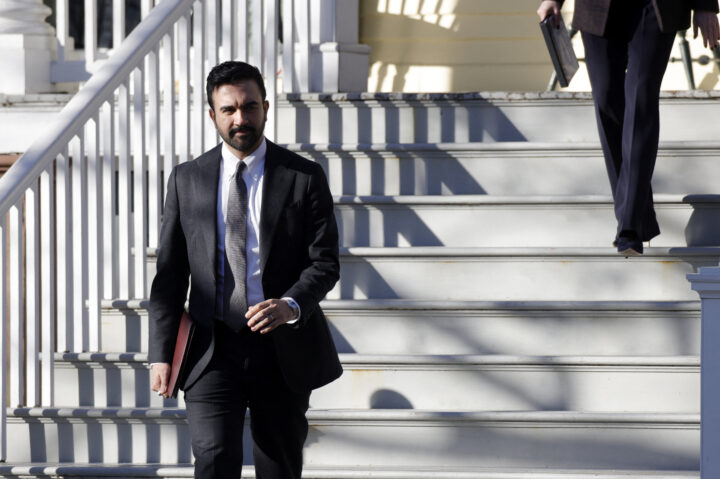
Leonardo MUNOZ / AFP via Getty Images
New York City Mayor Zohran Mamdani arrives for a news conference at Gracie Mansion in New York City on March 9, 2026.
Good Thursday afternoon.
This P.M. briefing is reserved for our premium subscribers like you — offering a forward-focused read on what we’re tracking now and what’s coming next.
Today’s Daily Overtime was curated by JI U.S. Editor Danielle Cohen-Kanik.
📡On Our Radar
Notable developments and interesting tidbits we’re tracking
New York City Mayor Zohran Mamdani announced today that his Office to Combat Antisemitism will be releasing a municipal plan to combat antisemitism, Jewish Insider’s Will Bredderman reports.
The mayor marketed the plan as the “first-in-the-nation,” even as former Mayor Eric Adams already released a “blueprint” for combating antisemitism on his last day in office, which included the city adopting the International Holocaust Remembrance Alliance’s working definition of antisemitism — a policy that Mamdani repealed on his first day.
The move comes days after Mamdani hosted a roundtable with rabbis in the city who asked the mayor to back off his attacks on Israel, a request that Mamdani did not reference or commit to addressing in his remarks…
The California state Legislature is considering a bill to require state agencies to include “Jewish” as an ethnicity option on all forms that collect demographic data. The move would make California the first state to officially consider Judaism as more than a religion for identification purposes…
A federal judge dismissed a lawsuit yesterday brought by the Trump administration against Harvard University alleging that the school showed “deliberate indifference” to antisemitism on campus in the aftermath of the Oct. 7, 2023, Hamas terror attacks.
The judge ruled that the few campus incidents cited by the administration were “too isolated and episodic” to find “any institutionalized noncompliance with Title VI persists at Harvard to this day”…
Rep. Pramila Jayapal (D-WA), former chair of the Congressional Progressive Caucus, said on X today that she had communicated her “concerns” to the University of Washington about its decision to cancel an appearance by far-left, antisemitic streamer Hasan Piker, and encouraged student groups who “want to hear from Mr. Piker to work with the University to ensure they can proceed.”
Piker had earlier this week denounced Democrats who didn’t “speak out against this clear violation” of the First Amendment due to his “position as a prominent critic of Israel”…
Former Democratic Maine Senate nominee Graham Platner is expected to headline a Labor Day rally for the Hancock County Maine Democrats next month, his first public appearance since dropping out of the Senate race after he was accused of rape by a former romantic partner…
White House advisor Jared Kushner is planning a trip to Israel next week with Board of Peace head Nickolay Mladenov to meet with Israeli Prime Minister Benjamin Netanyahu and other officials to discuss the Hamas disarmament deal, Axios reports…
CENTCOM announced today it is undertaking efforts to establish the “first-ever multi-domain, multinational attack drone task force,” including consulting with and inviting regional partners to join, that will work to utilize unmanned, one-way attack drones “from above, on, and below the sea” in the Middle East…
The U.S. has lost roughly a quarter of its fleet of MQ-9 Reaper drones in the war with Iran, sources told The Washington Post, as the armed drones have been targeted by Tehran and its proxies in Yemen and Iraq…
The Pentagon is sending the USS George Washington aircraft carrier to replace the USS Abraham Lincoln in the Middle East, as reports and lawmakers indicate that conditions aboard the ship are deteriorating after a record 200 days without a port call; Defense Secretary Pete Hegseth dismissed the concerns about the Abraham Lincoln today as “completely misrepresented”…
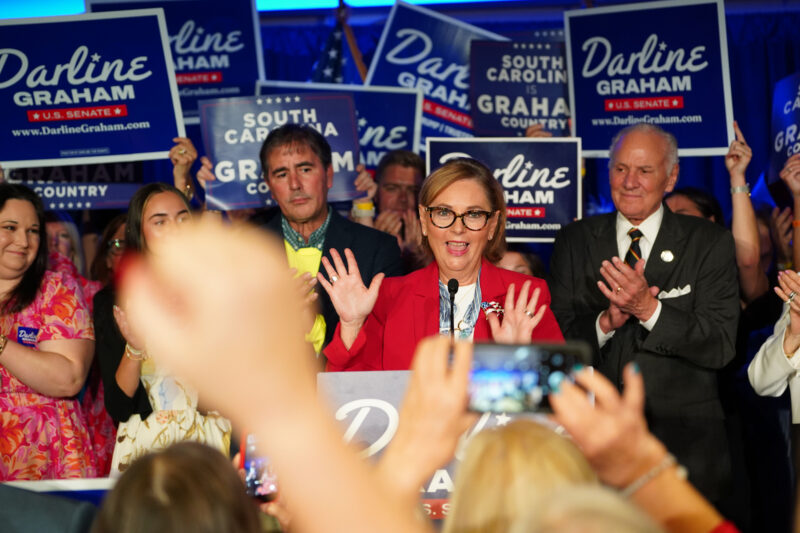
Sen. Darline Graham (R-SC), facing a runoff special election to be the GOP nominee for her late brother’s Senate seat, announced she is co-sponsoring the Jewish American Security Act, the U.S.-Israel FUTURES Act, a bill on Iran sanctions and a bill on Iranian human rights and internet access…
⏩ Tomorrow’s Agenda, Today
An early look at tomorrow’s storylines and schedule to keep you a step ahead
Keep an eye on Jewish Insider for a look at how Rep. Nancy Pelosi (D-CA) is avoiding contending with the anti-Israel turn of her preferred successor, San Francisco Supervisor Connie Chan, in her race against state Sen. Scott Wiener.
President Donald Trump will appear with Nassau County Executive Bruce Blakeman, the GOP candidate for New York governor, at an event on Long Island honoring law enforcement officials.
Rep. Rashida Tlaib (D-MI), a member of the Squad, will appear at a rally in Fort Lauderdale, Fla., alongside anti-Israel progressives running against Jewish Democrats Reps. Jared Moskowitz (D-FL) and Debbie Wasserman Schultz (D-FL), as well as socialist Colorado Democratic congressional nominee Melat Kiros.
We’ll be back in your inbox with the Daily Overtime on Monday. Shabbat shalom!
Stories You May Have Missed
NEW BATTLEGROUND
Jewish leaders build up local grassroots organizing to counter radical forces in politics

There’s widespread interest within the Jewish community to develop efforts to counter the growing populist rage and anti-Jewish hate, city by city
SCOUT’S HONOR
Scouting America offers ‘safe space’ for Jewish campers to hold Shabbat services

The group’s new national chair, Ricky Mason, is believed to be the first national chair to receive an aliyah at the Scouts’ Torah service
Plus, Josh Kushner and Bob Iger ball out
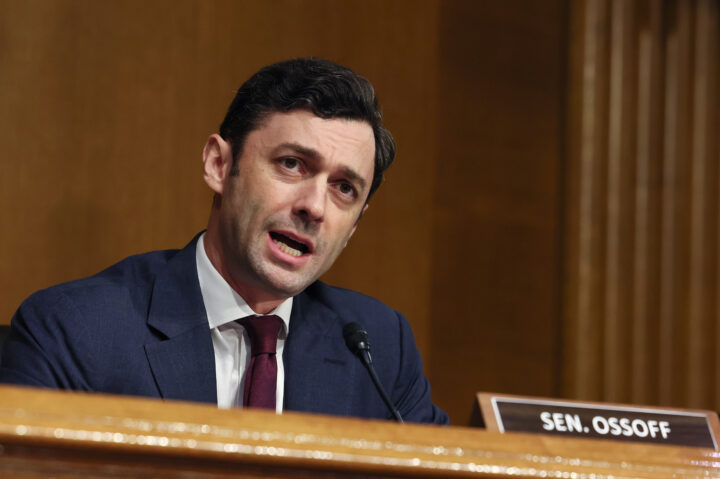
Jemal Countess/Getty Images for Breakthrough T1D)
Sen. Jon Ossoff (D-GA) questions witnesses during a hearing held to examine a future without Type 1 Diabetes with a focus on accelerating breakthroughs and creating hope at the Dirksen Senate Office Building on July 09, 2025 in Washington, DC.
Good Wednesday afternoon.
This P.M. briefing is reserved for our premium subscribers like you — offering a forward-focused read on what we’re tracking now and what’s coming next.
Today’s Daily Overtime was curated by JI U.S. Editor Danielle Cohen-Kanik.
📡On Our Radar
Notable developments and interesting tidbits we’re tracking
A State Department official pushed back on Israeli Defense Minister Israel Katz’s comments in southern Lebanon today, where he said the IDF would remain deployed in a security zone, contrary to the agreement signed between Washington, Jerusalem and Beirut.
“The United States expects all parties to act in a manner consistent with the Framework they agreed to, and Israel clearly stated that it has no territorial ambitions in Lebanon. A permanent military presence in South Lebanon is not consistent with the commitments made in the Framework, or the long-term peace and security of both states,” the official told Axios…
Sources told Reuters that Israel and Lebanon have agreed that countries including Britain, Italy, Switzerland and Indonesia could contribute troops to an international force meant to oversee Hezbollah’s disarmament; an Israeli official denied any decisions had been made on the issue…
President Donald Trump continued to boast about the success of the U.S. campaign against Iran, stating again in a post on Truth Social today that the U.S. “has total control over the Strait of Hormuz” and that the Islamic Revolutionary Guard Corps is “decimated and fleeing.”
Meanwhile, out of the 166 ships that have transited the strait so far this month — a significant decrease from the average before the war — only two are known to have used the U.S.- and Oman-backed route, according to The Wall Street Journal…
In a rare interview with Western media, top IRGC advisor Mohammad Reza Naqdi told “PBS News Hour” that Iran is prepared to continue hostilities through the end of Trump’s term and accused the U.S. of waging a “war without strategy”…
The New York Times documents the efforts being made by Gulf countries to construct routes to move oil out of the region that do not rely on the Strait of Hormuz…
Board of Peace head Nickolay Mladenov denied in a post in Hebrew today that there is any financial agreement between the board and Hamas, refuting a report by Israeli public broadcaster Kan that the board would cover Hamas’ debts up to $400 million.
The disarmament roadmap states that the new Palestinian technocratic government will “assess the legitimate commitments to suppliers, contractors and other parties — up to a total amount of no more than $400M — and address them”; Mladenov said in his post that such processes “are not channeled through Hamas” and that “all accounts are open to full scrutiny by the donor governments”…
The publisher of the Atlanta Jewish Times, Michael Morris, penned an open letter to Sen. Jon Ossoff (D-GA) today pressing the senator over his repeated votes to block U.S. military sales to Israel, Jewish Insider’s Marc Rod reports.
“I apologize for being blunt, but please, stop lying to me and your constituents. I hear you claim, over and over again, that you support Israel — that your support is ‘ironclad.’ It is not,” Morris wrote…
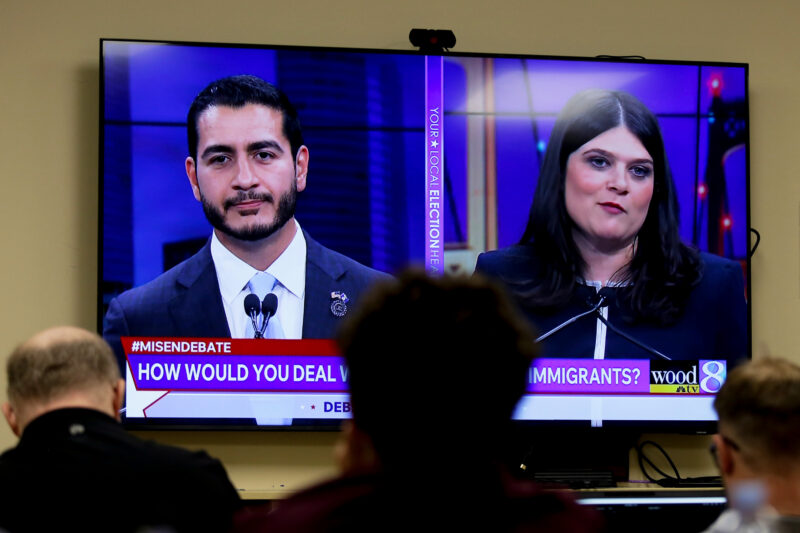
Rep. Haley Stevens (D-MI) denied today that the more than $30 million of support she received from AIPAC’s super PAC in her failed run for U.S. Senate backfired, saying on CNN that those who criticize AIPAC “maybe don’t understand what the group is” and that she’s “proud of the friendships and the relationships I have there [and] the really good Americans” who make up its membership…
White House Press Secretary Karoline Leavitt is stepping away from her role at the end of the month, Trump announced today, in order to spend more time with her family. The president said Leavitt will now serve as “one of my top outside advisors”…
Josh Kushner, managing partner of the venture capital firm Thrive Capital, and former Disney CEO Bob Iger have agreed to purchase a controlling interest in the Los Angeles Lakers for a record-breaking price of $12.5 billion, JI’s Matthew Shea reports…
⏩ Tomorrow’s Agenda, Today
An early look at tomorrow’s storylines and schedule to keep you a step ahead
Keep an eye on Jewish Insider for a look at local Jewish political organizing efforts in major cities across the country.
The Hudson Institute will hold an event examining the state of the ongoing conflicts in the Gulf with the Foundation for Defense of Democracies’ Behnam Ben Taleblu and Hudson’s Michael Doran, Ludo Hood and Zineb Riboua.
Stories You May Have Missed
TRUST, BUT VERIFY
Rabbis hope ‘open, honest dialogue’ with Mamdani brings belated change in Israel rhetoric
Mamdani’s antisemitism czar invited a cross-section of rabbis and Jewish leaders broadly sympathetic to the mayor for the candid conversation
BALLIN’ OUT
Josh Kushner, Bob Iger purchase Los Angeles Lakers for record $12.5 billion
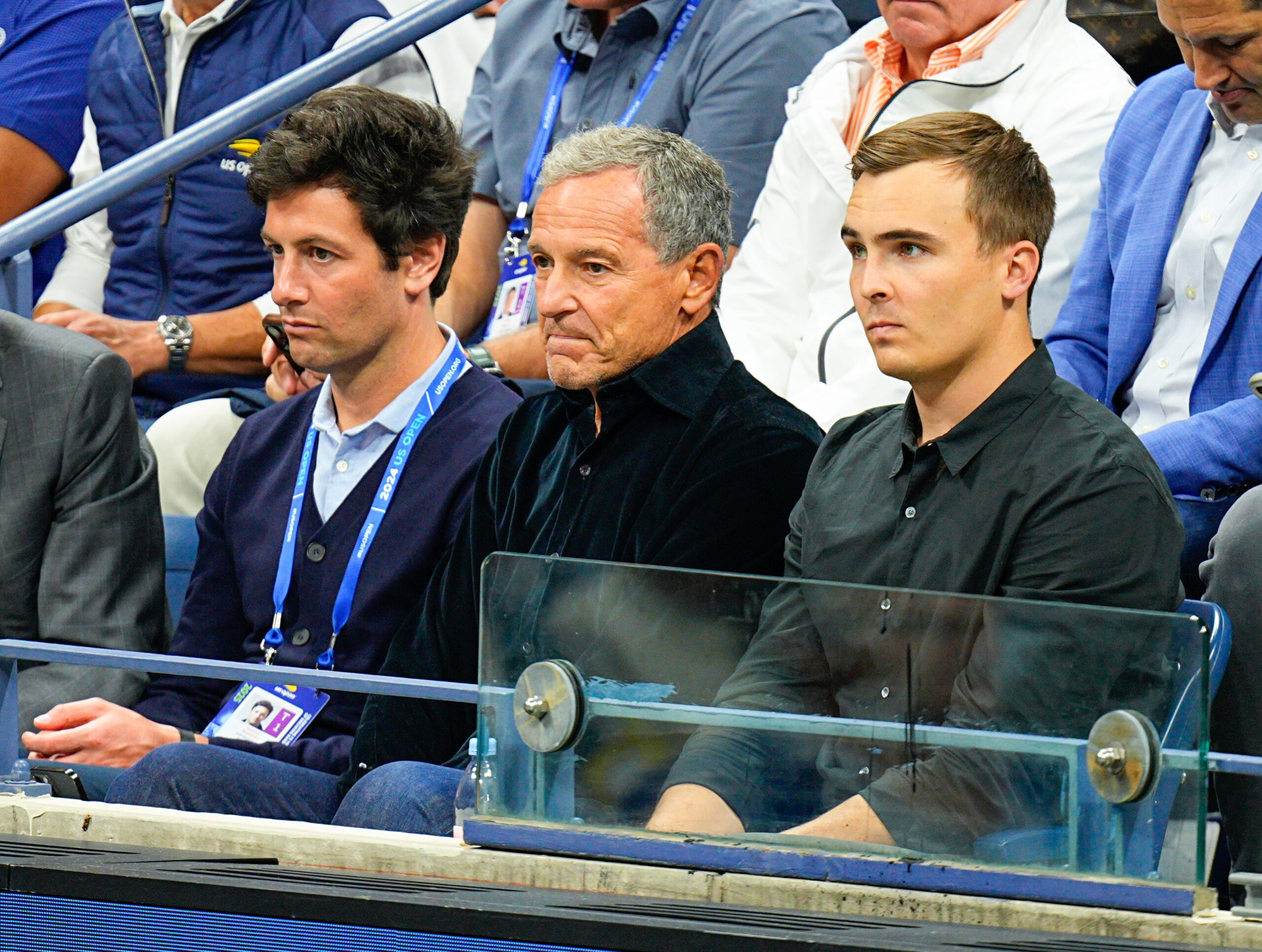
The sale is the largest purchase price for any sports team in American history
Analysts say Iran and the U.S. remain too far apart on compensation demands and Washington's military posture in the region for a deal

AFPTV / AFP via Getty Images
A cargo ship anchoring near the Strait of Hormuz off the eastern coast of the United Arab Emirates on July 12, 2026.
Talks to reopen the Strait of Hormuz appear unlikely to produce an agreement, analysts told Jewish Insider this week, with little sign that Washington and Tehran can bridge their competing demands over the waterway. The Trump administration is more likely to pursue continued economic pressure than return to military confrontation, the experts suggested — but that strategy may not be enough to force Tehran to back down.
Reports indicate that an agreement between Iran and Oman on managing traffic through the strait is imminent, but a final deal has failed to materialize despite days of negotiations. Mohsen Rezaei, secretary of Iran’s Supreme National Security Council, insisted on Tuesday that any agreement reached between the two countries is separate from Tehran’s broader closure of the waterway, which will only be lifted once the U.S. accedes to Tehran’s demands, including full compensation for its war costs.
Trump has also applied conditions of his own, stating the U.S. would also seek compensation from Iran for the current conflict as well as previous ones. Experts maintained to JI that a broader agreement between Washington and Tehran over the strait appears increasingly unlikely, with both sides seeking to preserve the leverage they have gained.
“Iran is unlikely to give up control of the strait anytime soon, having spent years threatening to choke the waterway and finally proving it can with relatively few cheap missiles and drones,” Ari Cicurel, associate director of foreign policy at the Jewish Institute for National Security of America, told JI. “The mere threat of attacks remains Iran’s best leverage after a war that gutted its economy, which is why its demands for reopening [the strait] center on Washington lifting the blockade and pulling back forces, the two things that give the United States its own leverage, leaving the two sides’ positions increasingly incompatible.”
Steven Cook, a senior fellow at the Council on Foreign Relations, said his “sense is that we are going to have a long and drawn-out contest of wills over the strait.”
“The president has toggled between threatening force, using force and negotiating. He seems to like the idea of economic pressure, but of course there is no way of knowing that the resulting economic pain will dislodge the regime,” he continued.
Michael Koplow, chief policy officer at the Israel Policy Forum, similarly noted the Trump administration is more likely to continue pursuing economic pressure than return to military hostilities, citing American munitions shortages, the war’s unpopularity with the public and Congress and the approaching midterm elections.
“Given the extreme unlikelihood of any successful negotiation between the U.S. and Iran, the two plausible scenarios are either a continuation of the status quo, or Trump using an Iran-Oman agreement on Hormuz to declare victory and extricate himself from the situation altogether,” Koplow said. “Trump’s preferred option is economic pressure … The economy has priced in the Hormuz closure, so if the U.S. keeps up economic pressure without returning to war, Trump can at least count on no drastic changes on inflation or public opinion, even if neither improves before the election.”
Elliott Abrams, who served as Iran envoy in the first Trump administration, said Washington has caused “great economic damage” to Iran by maintaining its blockade on oil exports, something he called “the right policy now.” He noted that Iran’s inflation rate “is just under 90 percent and it loses hundreds of millions of dollars a day in oil revenue.”
Cicurel cautioned, however, that economic pressure may not be enough to force Tehran to surrender its leverage over the strait, pointing to the Iranian regime’s history of passing along economic hardships to the country’s citizens while continuing to direct resources toward its military. He suggested Washington could instead seek to weaken Iran’s control over the strait by establishing “protected windows of time” for commercial vessels to transit and offering financial backing to shipping companies and insurers.
“The Iranian regime has long shown it can absorb immense economic pressure at the expense of the Iranian people while funneling resources into the military programs that have now handed it this leverage,” Cicurel said. “Neither economic pressure nor the limited tit-for-tat strikes over the past few weeks have changed Tehran’s calculus on leverage it waited years to gain.”
Additionally, Abrams indicated that the decision may not be entirely up to Trump should Tehran grow impatient under increased economic pressure.
“The problem for Trump is that Iran may decide not to allow him to sit and wait. It is a vicious and brutal tyranny, but the rulers know that they risk another uprising as the economy worsens. That may lead them to attack Gulf Arab states, Israel and U.S. bases again,” Abrams said. “At some point Trump will have to hit back. The decision to return to war is really in the Ayatollah’s hands right now.”
Cook also noted that the economic pressure strategy “has costs for Americans too.”
“So far, prices at the pump have generally been manageable, but that cannot go on forever,” Cook said. “Americans have also been helped by the fact that experts undercounted how much oil is in storage around the globe. That’s a good problem to have, but it doesn’t change the fact that less oil (and other products like fertilizers and aluminum) is flowing through the strait. At some point, the laws of economics are going to catch up with us.”
Plus, City Hall and NYPD clash over Rama Duwaji's travel plans

Javier Campos/NurPhoto via Getty Images
A woman waves a Venezuelan flag during a march in amid the COVID-19 pandemic, in Caracas, Venezuela on May 25, 2021. (Photo by )
Good Tuesday afternoon.
This P.M. briefing is reserved for our premium subscribers like you — offering a forward-focused read on what we’re tracking now and what’s coming next.
Today’s Daily Overtime was curated by JI U.S. Editor Danielle Cohen-Kanik.
📡On Our Radar
Notable developments and interesting tidbits we’re tracking
Mohsen Rezaei, secretary of Iran’s Supreme National Security Council, insisted today that any agreement reached between Iran and Oman on administering the Strait of Hormuz is separate from Tehran’s broader closure of the waterway, which will only be lifted once the U.S. accedes to Iran’s demands.
Meanwhile, Pakistani Interior Minister Mohsin Naqvi, a key mediator between the U.S. and Iran, met today with Iranian Foreign Minister Abbas Araghchi in Tehran. Islamabad’s defense minister, Khawaja Asif, told Bloomberg that developments are “shaping up again in favor of a peace arrangement”…
CENTCOM said it disabled a Panama-flagged cargo ship sailing toward Iranian ports today by firing two Hellfire missiles into the vessel’s engine room, the third such incident since the U.S. blockade began…
Ed Miliband, who last month was appointed by new U.K. Prime Minister Andy Burnham to be foreign secretary, said he had a “frank and constructive first call” with Israeli Foreign Minister Gideon Sa’ar today, during which the British diplomat raised the issues of settler violence, settlement expansion and the humanitarian situation in Gaza, among others.
The discussion came a day after Miliband met with British Jewish community leaders, who said they were “impressed” by the foreign secretary’s “longer-term commitment to maintaining the conversation”…
Sa’ar announced that Israel and Venezuela have agreed to renew consular relations — establishing a coordination mechanism to provide consular services to each country’s citizens — in the first official channel between the two since Caracas severed diplomatic ties in 2009. The move builds on the Israeli aid delegation dispatched to Venezuela after the June 24 earthquakes…
The Palestinian technocratic committee meant to govern Gaza convened a joint coordination meeting with several U.N. agencies — including the World Food Program, UNICEF and the World Health Organization — as well as representatives from the Board of Peace and former U.K. Prime Minister Tony Blair’s Institute for Global Change to coordinate on humanitarian aid and reconstruction issues…
Former Mossad head Yossi Cohen said at a conference in Israel today that Israeli operatives have “toured” Iran’s Fordow nuclear facility “many times” in order to “understand” it, and called the U.S. operation to bomb the site during the 12-day war in June 2025 “the fulfillment of all my dreams”…
The NYPD denied that its officers will be accompanying New York City First Lady Rama Duwaji on a trip to Lebanon and Syria next month after City Hall said that, “upon the strong recommendation of the NYPD, the First Lady’s security detail will be joining her” on the trip.
“The NYPD does not send officers to countries with level four travel advisories for discretionary reasons,” the NYPD said today, referring to the State Department’s ranking system that currently designates the two countries as “do not travel” locations. Mayor Zohran Mamdani later said the diverging statements stemmed from a “miscommunication,” and that when his wife makes the trip “it will be without any NYPD detail”…
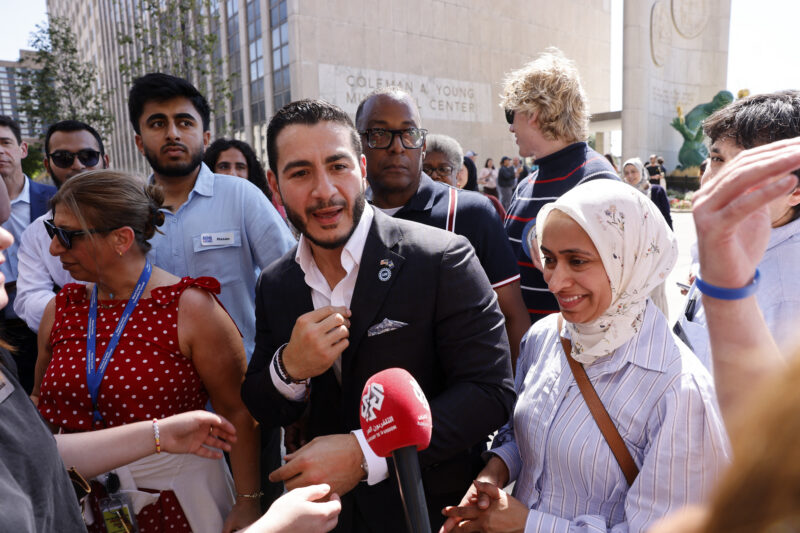
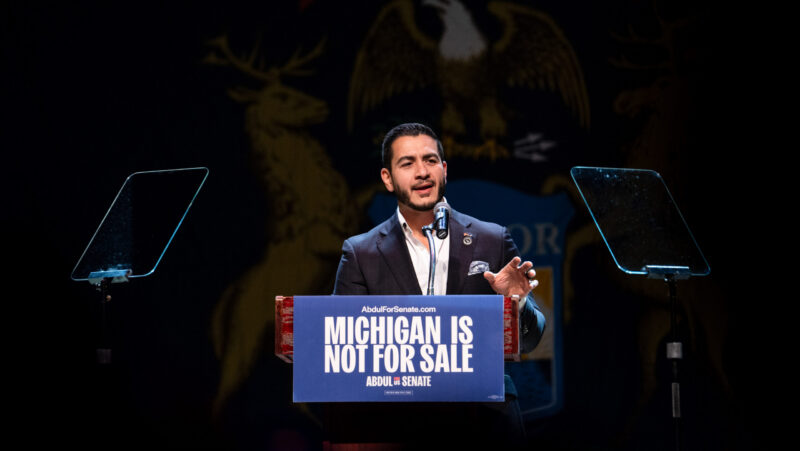
Democratic Michigan Senate nominee Abdul El-Sayed has made private over 100 YouTube videos from his time as a podcaster and commentator, CNN reports, including videos in which he lambasted fireworks on the Fourth of July, floated replacing the Second Amendment and voiced support for prison abolition…
The Democratic Congressional Campaign Committee added Brian Poindexter, the Democratic nominee in Ohio’s 7th Congressional District, to its “Red to Blue” program as he aims to unseat Rep. Max Miller (R-OH). Democratic leadership will offer Poindexter strategic support as the district, previously considered a long shot for Democrats given its GOP leanings, is now seen as a key flip opportunity as Miller navigates accusations of domestic violence by his ex-wife…
The campaign of Francesca Hong, the socialist seen as the front-runner in today’s Democratic primary election for governor of Wisconsin, was rebuffed by Sen. Bernie Sanders (I-VT) as she sought his endorsement due to her perceived weaknesses as a candidate, Politico reports; her campaign is planning to overhaul its staff to address such issues if she proceeds to the general…
⏩ Tomorrow’s Agenda, Today
An early look at tomorrow’s storylines and schedule to keep you a step ahead
Keep an eye on Jewish Insider for results from key primaries taking place today in Minnesota, South Carolina, Connecticut and Wisconsin.
Stories You May Have Missed
THE CAPITAL’S KOSHER CONUNDRUM
D.C. has a kosher restaurant problem. Owners say to blame the math

D.C. has a kosher restaurant problem. Owners say to blame the math
DSA UNFILTERED
DSA co-chair calls Oct. 7 attacks ‘largely inevitable,’ says she would have attended Oct. 8 rally
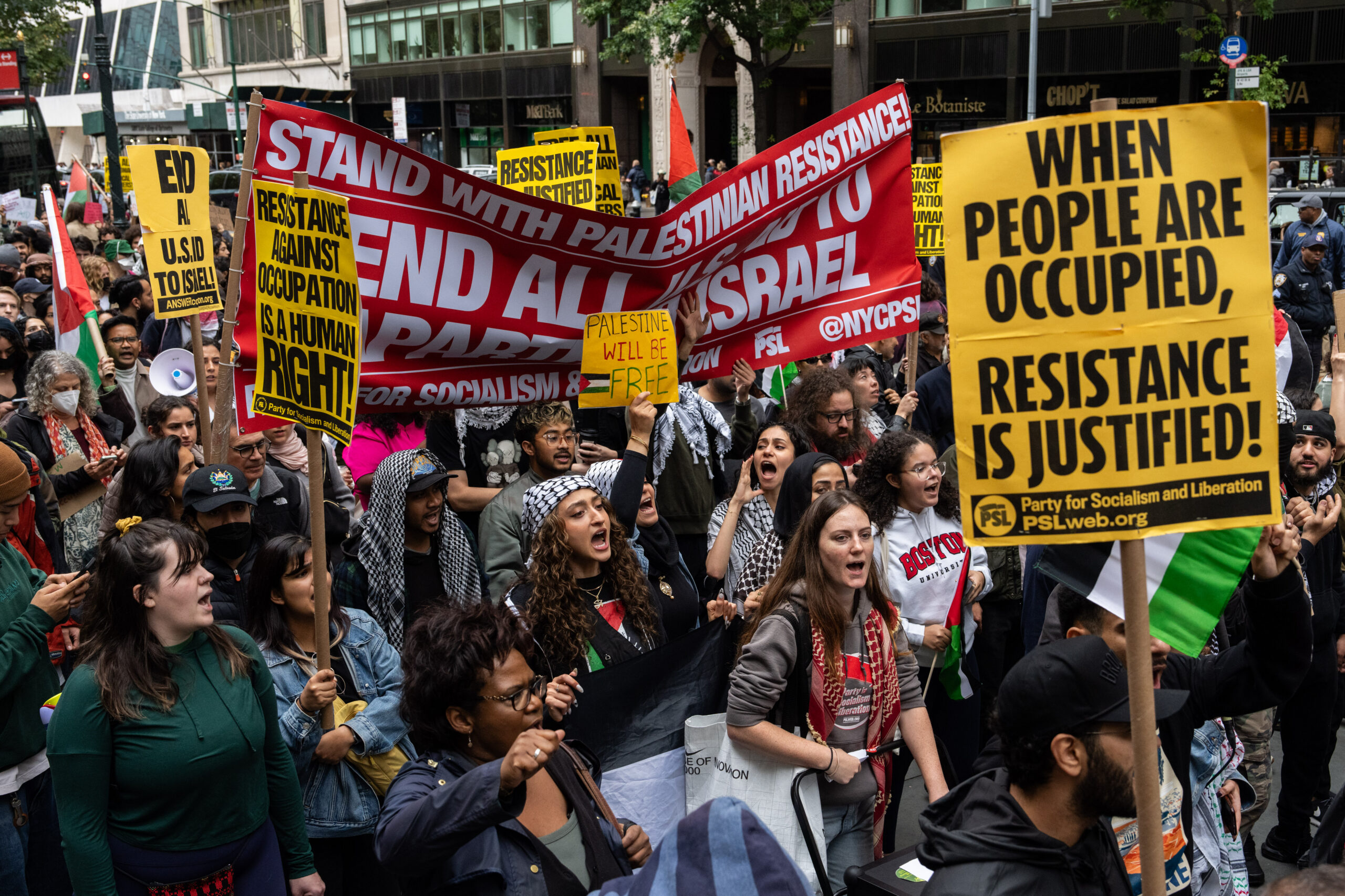
‘If you put people in an open-air concentration camp … you have to expect that they are going to not take that for that long,’ Megan Romer said of the Oct. 7 attacks
Plus, new app offers Shabbat experience ‘with training wheels’
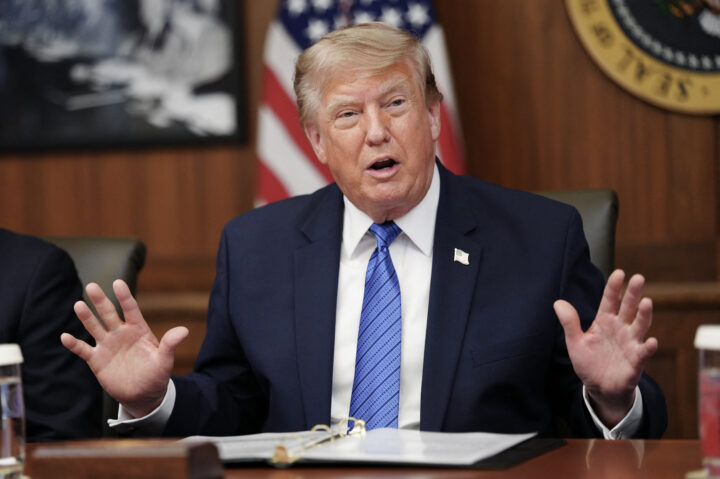
(Aaron Schwartz / AFP via Getty Images)
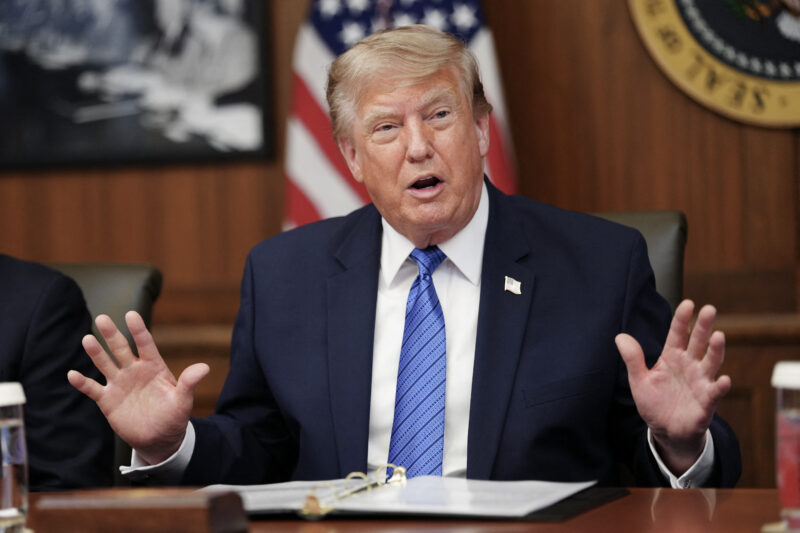
US President Donald Trump speaks during a Cabinet meeting at Camp David in Maryland, on July 31, 2026.
Good Monday afternoon.
This P.M. briefing is reserved for our premium subscribers like you — offering a forward-focused read on what we’re tracking now and what’s coming next.
Today’s Daily Overtime was curated by JI U.S. Editor Danielle Cohen-Kanik.
📡On Our Radar
Notable developments and interesting tidbits we’re tracking
Responding to a recent demand from Iran that the U.S. fully compensate it for its war costs in order to reopen the Strait of Hormuz, President Donald Trump issued his own demand today that Tehran compensate the U.S. “for all of the people that they have killed and gravely wounded with their roadside bombs and many conflicts,” as well as pay reparations to the “families of the hundreds of thousands of innocent protestors that Iran has killed over the last 50 years.” Trump said he instructed U.S. representatives to “put this firmly into any, and all, future negotiations” with Tehran…
Shortly after Israeli Prime Minister Benjamin Netanyahu said yesterday that Israel rejects the Hamas disarmament deal, Board of Peace head Nickolay Mladenov told Israel’s Channel 12 that the deal is “the only way” that “guarantees” that the Hamas attacks of Oct. 7, 2023, “will not occur again.”
“Nobody is required to do anything — last of all Israel — before we actually have verified steps on the ground,” Mladenov said, referring to the IDF’s eventual withdrawal from Gaza after all of Hamas’ weapons are “stored, and ultimately rendered unusable,” by the Palestinian technocratic government…
The International Atomic Energy Agency will remove nuclear material stored at a secret site in Syria tied to the fallen Assad regime, Axios reports, per an agreement reached between Trump, Jerusalem and Damascus…
Megan Romer, a national co-chair of the Democratic Socialists of America, said in a podcast interview last week that the Oct. 7 attacks were “largely inevitable” — “If you put people in an open-air concentration camp and you deprive them of rights, of dignity, of food, of the ability to live in safety, you have to expect that they are going to not take that for that long,” she said — and that she would have attended the anti-Israel Times Square rally on Oct. 8 had she been in the area, Jewish Insider’s Gabby Deutch reports…
Michigan Attorney General Dana Nessel said on MS NOW today that Abdul El-Sayed, the state’s Democratic nominee for Senate, should “tone down his rhetoric” about Israel and AIPAC in order to help combat antisemitism in the Democratic Party.
“Not everything is about AIPAC, not everything is about Israel. … Even if we wiped Israel off the face of the earth tomorrow, you know, everyday Michiganders’ lives wouldn’t be better on” issues such as housing and healthcare, Nessel said…
The University of Washington on Friday reversed its decision to host far-left, antisemitic influencer Hasan Piker, citing a flawed planning process, JI’s Haley Cohen reports.
The event listing, which has since been removed from the university website, described Piker as a “journalist and wildly popular content creator” who has “become an authoritative voice for millennials and Gen Z,” and as someone who is “armed with sharp analysis and an irreverent wit”…
The new conservative government in Colombia, which recently returned its ambassador to Israel, today recognized Israeli sovereignty over the Golan Heights, becoming the second country to do so after the U.S.
Colombia’s Foreign Ministry announced the move shortly after a powerful earthquake struck the country, killing over 100 people…
A new app called Sabbath is selling an ancient pitch to a modern, phone-addicted crowd: lock technology away for one sacred day a week. The app — which founder Ben Springwater calls “Shabbat with training wheels” — is “trying to make a bigger tent, get more people to experience some of the benefits and virtues of what Shabbat offers,” he told JI’s Haley Cohen, by allowing users to block certain apps from sundown to sundown on either Saturday or Sunday…
The Cook Political Report updated its rating of Rep. Max Miller’s (R-OH) district from “Likely Republican” to “Toss Up” after the deadline passed for Miller to drop out of his reelection race, which he declined to do despite facing serious domestic abuse allegations. Miller has denied the accusations levied against him by his ex-wife and her father, Sen. Bernie Moreno (R-OH)…
Politico explores how Rep. Nancy Pelosi (D-CA) is using her political clout to boost her preferred successor, San Francisco Supervisor Connie Chan, over Chan’s opponent, state Sen. Scott Wiener, including lining up endorsements and hosting major fundraisers…
“Fauda” star Lior Raz announced that the fifth season of the series, set two years after the Oct. 7 attacks, is coming to Netflix on Sept. 8…
⏩ Tomorrow’s Agenda, Today
An early look at tomorrow’s storylines and schedule to keep you a step ahead
Keep an eye on Jewish Insider for a look at D.C.’sever-evolving kosher food scene.
Connecticut, Minnesota, Vermont and Wisconsin will hold primary elections tomorrow, with South Carolina and Alabama holding special elections as well.
We’ll be watching the outcomes in Minnesota’s Senate race, where Rep. Angie Craig (D-MN) and Lt. Gov. Peggy Flanagan are neck-and-neck, as well as the Wisconsin governor’s race, where democratic socialist Francesca Hong is favored to win the Democratic nomination.
In the South Carolina special Republican Senate primary, Sen. Darline Graham (R-SC) is trying to hold her late brother’s seat in a race widely expected to head to an Aug. 25 runoff. And in Connecticut’s 1st District, longtime Rep. John Larson (D-CT) faces his first serious primary challenge in decades from former Hartford Mayor Luke Bronin.
Kenneth Marcus, the chairman of the Louis D. Brandeis Center for Human Rights Under Law, will testify before a hearing of the Equal Opportunity Employment Commission tomorrow, urging the commission to repeal rules requiring employers to keep and submit yearly reports breaking down their workforce by race, sex and ethnicity.
Marcus argued to JI that the practice has “created the impression that the agency is pushing them to use racial preferences in order to improve their numbers.” He said the situation has left Jews either “invisible because we’re not counted, or potentially stigmatized because we are,” and that “counting by race or ethnicity has never been helpful for the Jewish people and has sometimes been dangerous.” He said that eliminating these requirements would allow the EEOC to focus more fully on specific complaints of alleged discrimination.
Stories You May Have Missed
GOPHER BROKE
The latest Senate showdown between the center and the left set in Minnesota

Left-wing Lt. Gov. Peggy Flanagan’s anti-Israel message is being complicated by her outreach to AIPAC earlier in the campaign
CONNECTICUT COMPETITION
Longtime Connecticut congressman faces primary challenger making generational case for change
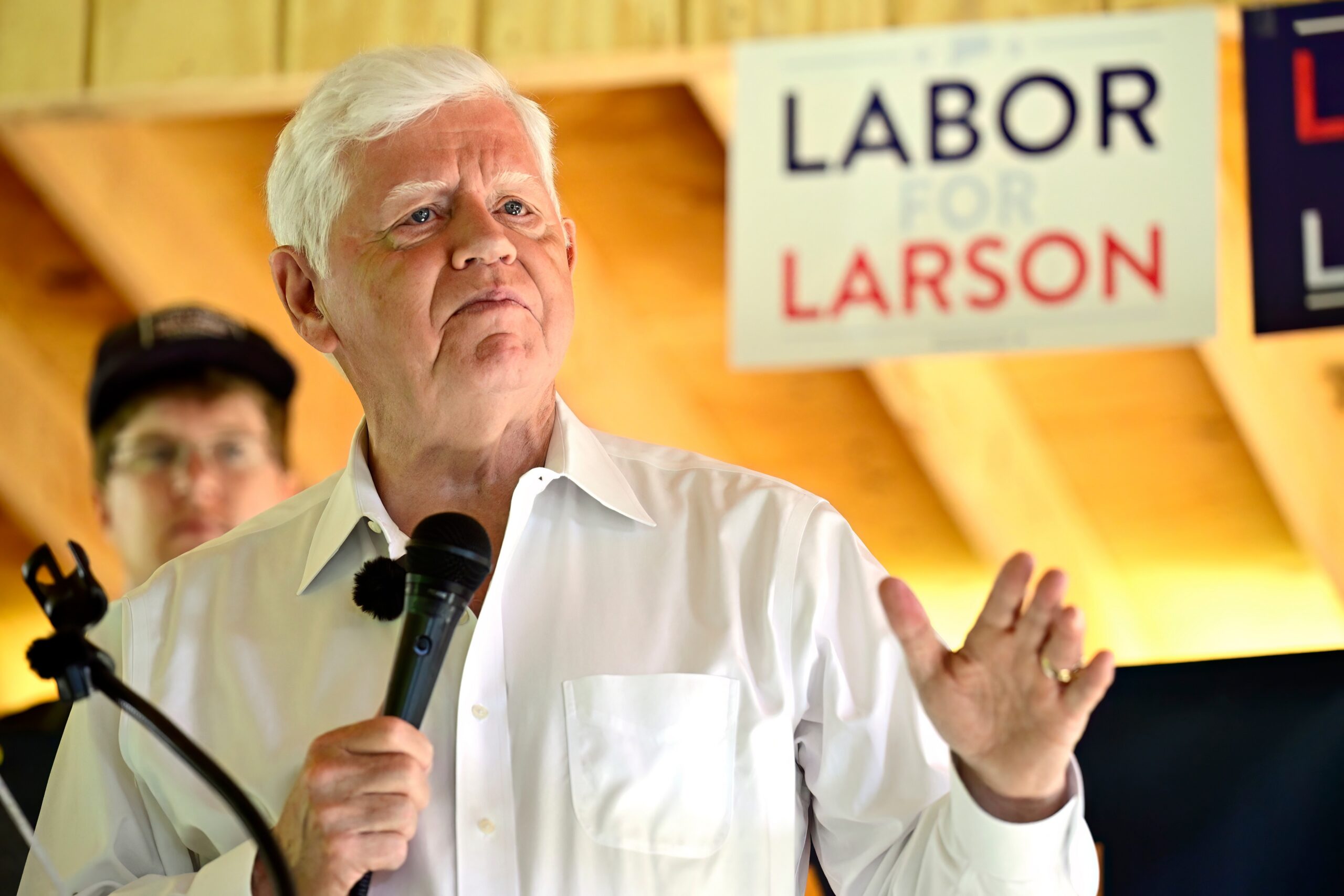
Rep. John Larson, a Democrat, supports continued U.S. aid to Israel, while former Hartford Mayor Luke Bronin has said he would not back further offensive aid but does support Iron Dome
Plus, Israel and Turkey trade barbs over Syria
Tom Williams/CQ-Roll Call, Inc via Getty Images
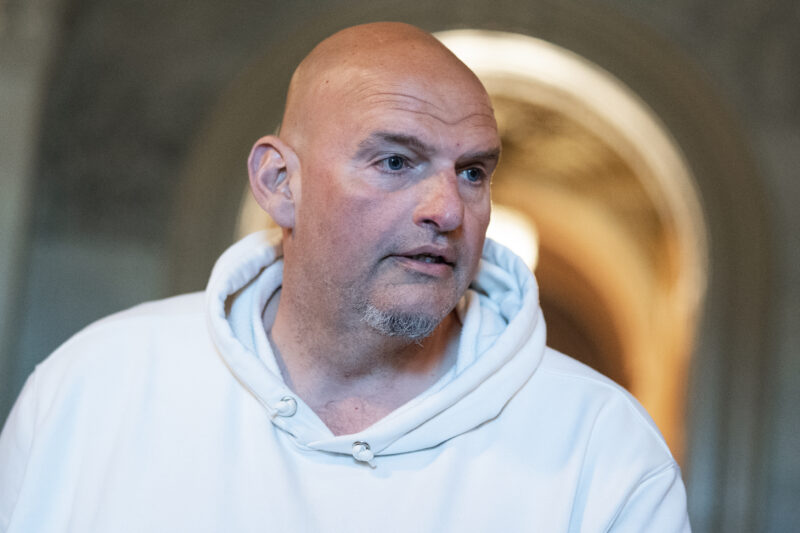
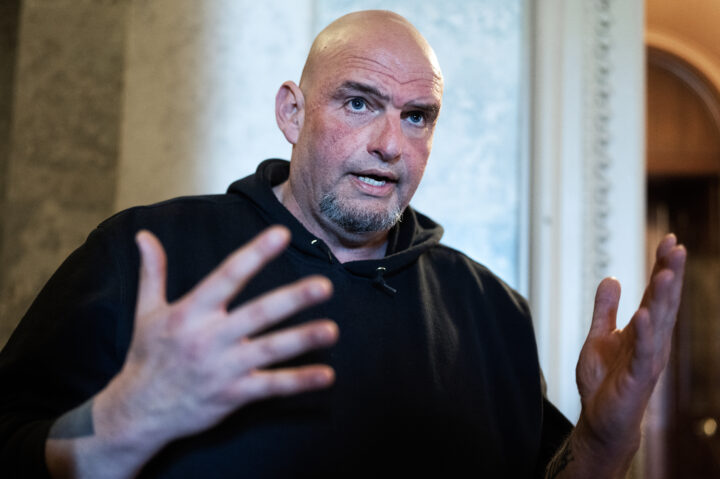
Sen. John Fetterman (D-PA) talks with reporters after the Senate luncheons in the U.S. Capitol on Tuesday, March 11, 2025.
Good Thursday afternoon.
This P.M. briefing is reserved for our premium subscribers like you — offering a forward-focused read on what we’re tracking now and what’s coming next.
Today’s Daily Overtime was curated by JI U.S. Editor Danielle Cohen-Kanik.
📡On Our Radar
Notable developments and interesting tidbits we’re tracking
President Donald Trump disputed reports that the U.S. is running low on critical munitions as a result of the Iran war, claiming on Truth Social last night that the country has “massive amounts of ‘munitions,’ especially of certain types” and that more are being manufactured and shipped to the U.S. “as needed”…
The IDF struck several targets in southern Lebanon again today “in response to the incident yesterday” during which two IDF soldiers were killed and four severely injured in an explosion that the army attributed to Hezbollah.
The strikes came during the last day of Israel-Lebanon talks in Rome, which a State Department official said were “productive on the technical and expert levels” and brought the parties “a lot closer on what needs to be done to advance and expand the pilot zone process”…
Jonathan Cowan, president of the center-left group Third Way, told The New York Times that the group plans to spend $15 million ahead of the 2028 presidential election to target the Democratic Socialists of America after Abdul El-Sayed’s primary win in the Michigan Senate race. “It is deeply troubling to see radical, far-left candidates winning in places that are potentially presidential swing states,” Cowan said. El-Sayed was not endorsed by the DSA, though he was championed by the far left…
Sen. John Fetterman (D-PA) told Jewish Insider’s Emily Jacobs that he believes El-Sayed’s victory has put Michigan in play for Republicans to win in November. “[El-Sayed] will quickly discover a primary is a much different situation in this state [than the general election], when you’re accountable for winning the other side. I can’t wait to see him campaign for the general. I have got my popcorn for that,” Fetterman said…
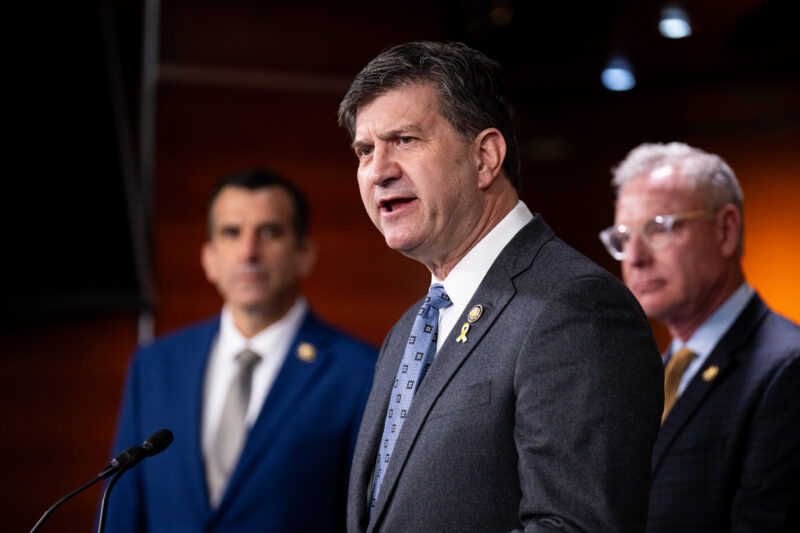
Sen. Elissa Slotkin (D-MI) joined Sen. Ted Cruz (R-TX) and Reps. Brad Knott (R-NC) and Tom Suozzi (D-NY) today in introducing the Right to Worship Act, a federal bill that would ban activity that knowingly disrupts or impedes access to scheduled religious services within 100 feet of the entrance of a house of worship, JI’s Marc Rod reports…
California Gov. Gavin Newsom appointed Lele Yutzy as the state’s first director of its Office of Civil Rights, which was created under a bill enacted last year that acknowledged the prevalence of antisemitism in the state’s public schools and pledged to tackle discrimination. The office is also required to appoint an antisemitism prevention coordinator…
Sen. Jon Husted (R-OH) joined Sen. Bernie Moreno (R-OH) in calling on Rep. Max Miller (R-OH), Moreno’s former son-in-law, to drop out of his reelection race and resign from Congress amid growing scrutiny of domestic violence allegations made against Miller, JI’s Marc Rod reports…
New Jersey Gov. Mikie Sherrill‘s Mission to Deliver PAC endorsed a series of Democratic candidates with national security or military backgrounds, including Rep. Seth Moulton (D-MA) in his primary campaign to oust Sen. Ed Markey (D-MA).
Asked in a debate on local news earlier this week if Israel committed war crimes in Gaza, Markey answered an emphatic “yes” and called to end all military aid to Israel, while Moulton called the conflict an “absolute moral atrocity” and highlighted his rejection of AIPAC’s support but did not answer in the affirmative…
Sen. Mitch McConnell (R-KY) said in a statement today that he has been discharged from the hospital after a fall in Juneand will continue his recovery at home, without indication of when he will return to Capitol Hill…
The feud between Jerusalem and Ankara continued today as Turkish Foreign Minister Hakan Fidan claimed Israel’s “attacks targeting Syria’s sovereignty and territorial integrity” are “among the greatest threats to the country’s stability.”
Israeli Foreign Minister Gideon Sa’ar in turnaccused Fidan of hypocrisy, arguing that Turkey currently occupies 5% of Syria while the IDF holds a buffer zone “that comprises just one-tenth of one percent of Syrian territory”…
An extremist Israeli settler, Yinon Levi, was charged by the Israeli State Attorney’s Office with reckless homicide over the July 2025 killing of Palestinian activist Awdah Hathaleen, who had been featured in the Oscar-winning documentary “No Other Land” about home demolitions in the West Bank…
The Yemeni Defense Ministry said the Houthis attacked the internationally recognized government’s military forces in several locations — reportedly killing dozens of soldiers — and that the military would retaliate against the terror group “at the appropriate time and place.”
The hostilities mark Yemen’s latest potential slide back towards its brutal civil war that devastated the country from 2014 until the Houthis and the Saudi-backed government reached a ceasefire in 2022…
The United Arab Emirates has successfully transported more oil through the Strait of Hormuz in the last two months than any other country despite ongoing military hostilities in the area, Bloomberg reports, by utilizing tankers that switch off their transponders during the risky crossing…
⏩ Tomorrow’s Agenda, Today
An early look at tomorrow’s storylines and schedule to keep you a step ahead
Keep an eye on Jewish Insider for a look at the special election to replace former Rep. Eric Swalwell (D-CA), where AIPAC’s United Democracy Project super PAC is working to boost Dublin, Calif., Mayor Melissa Hernandez over state Sen. Aisha Wahab.
A deal to reopen the Strait of Hormuz may still emerge, though its reported contours are raising concerns among experts that it could grant Tehran unprecedented oversight over the international shipping route, Jewish Insider’s Matthew Shea reports.
In the latest development, Iranian state media reported today that the country’s parliament is considering a preliminary bill to bar American, Israeli and other “hostile” vessels from utilizing the strait.
We’ll be back in your inbox with the Daily Overtime on Monday. Shabbat shalom!
Stories You May Have Missed
MICHIGAN MALAISE
Jewish Democrats in Michigan weigh crossing party lines after El-Sayed’s Senate primary win
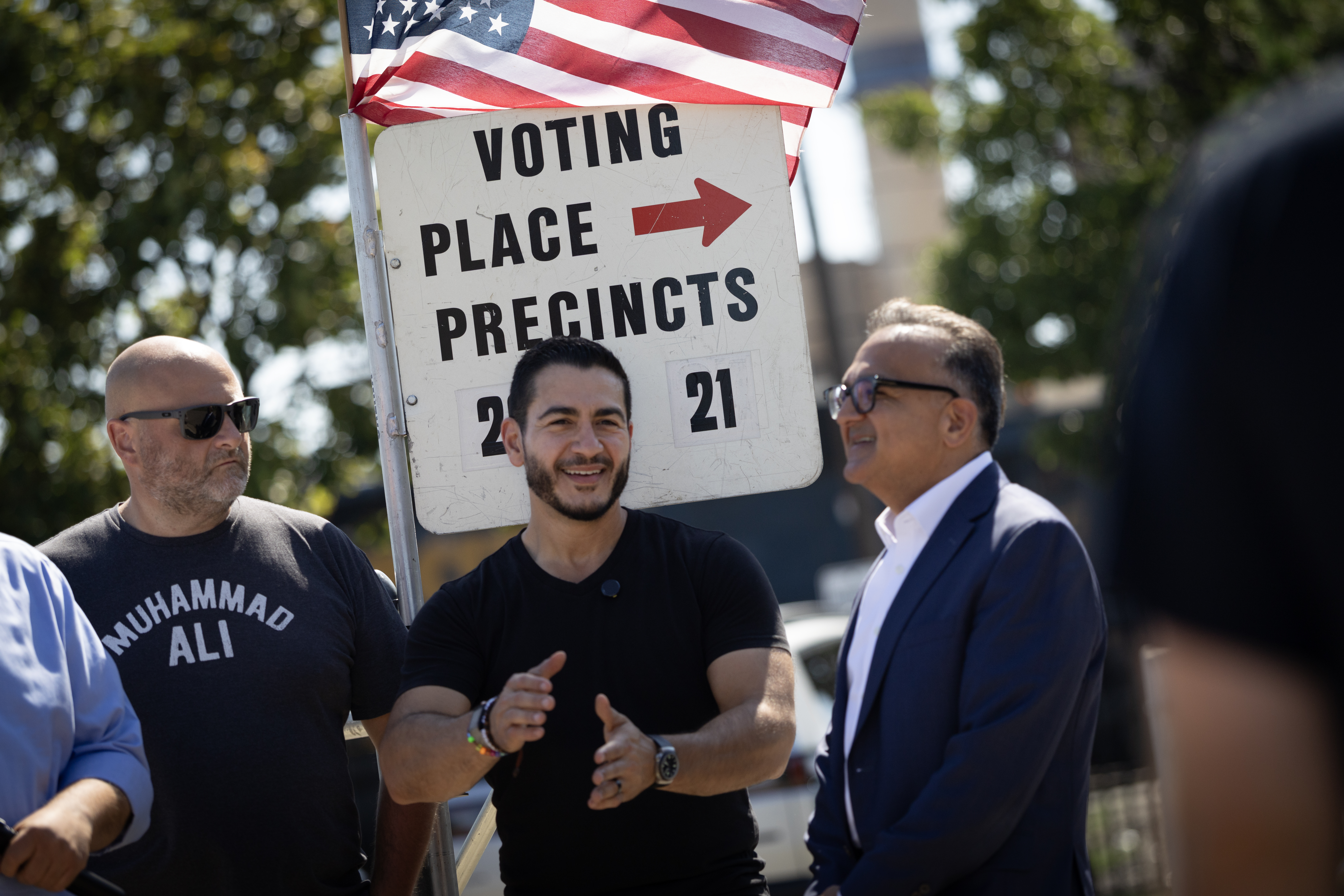
Several Jewish Democrats in the battleground state are now indicating that they will break with a party they have long called home and instead vote for the Republican nominee, Mike Rogers, in the November election
CASE STUDY
Generational challenge threatens Ed Case in Hawaii’s under-the-radar primary
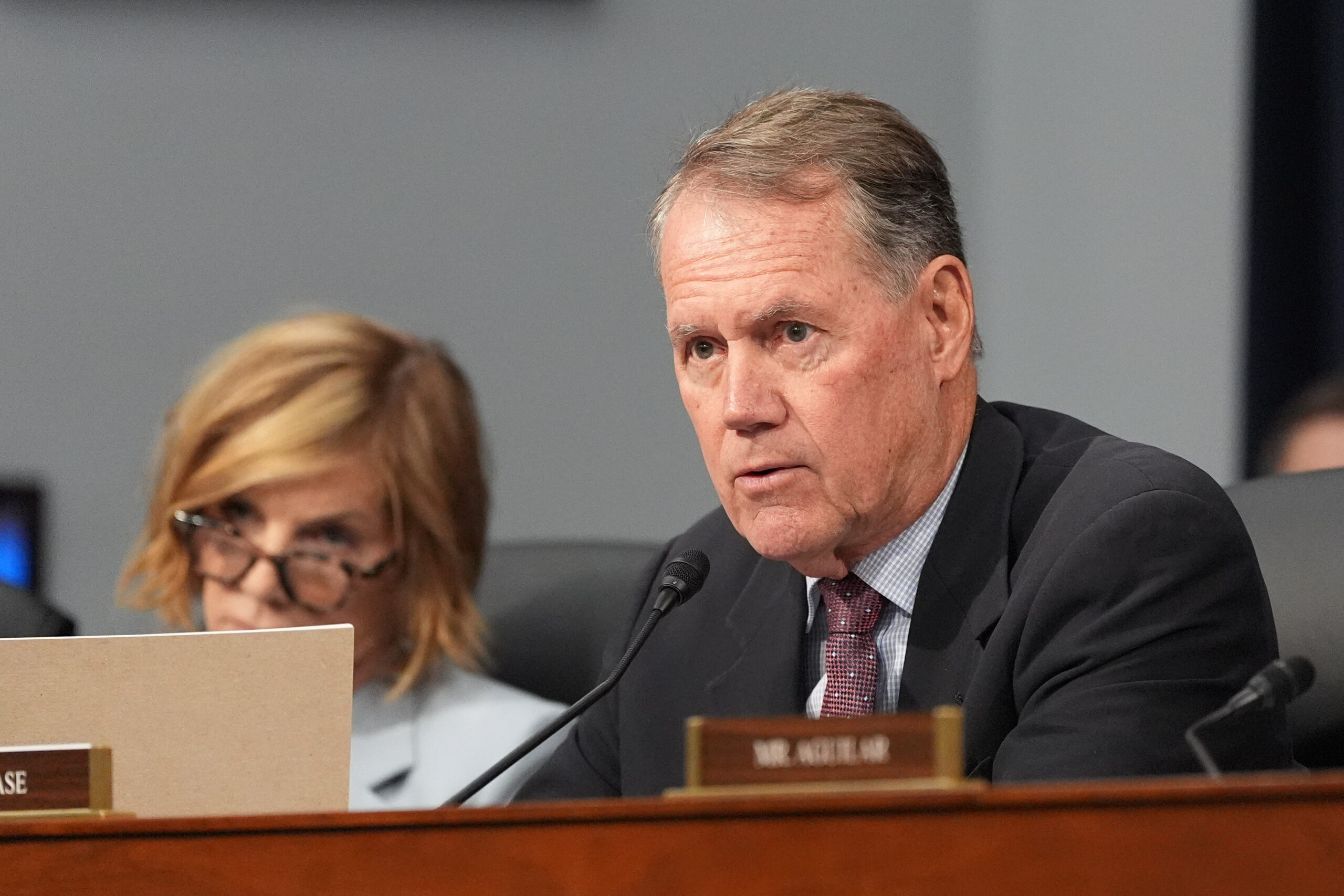
A 42-year-old progressive state senator has quietly closed the gap on the 73-year-old pro-Israel incumbent, with internal polls showing a tightening race before Saturday’s vote
Plus, Israel-Lebanon talks wrap early after IDF strikes
Sarah Rice/Bloomberg via Getty Images
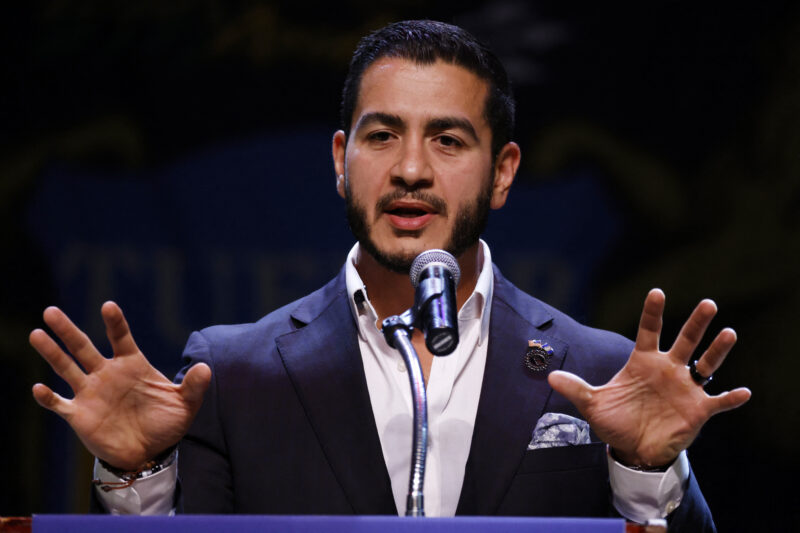
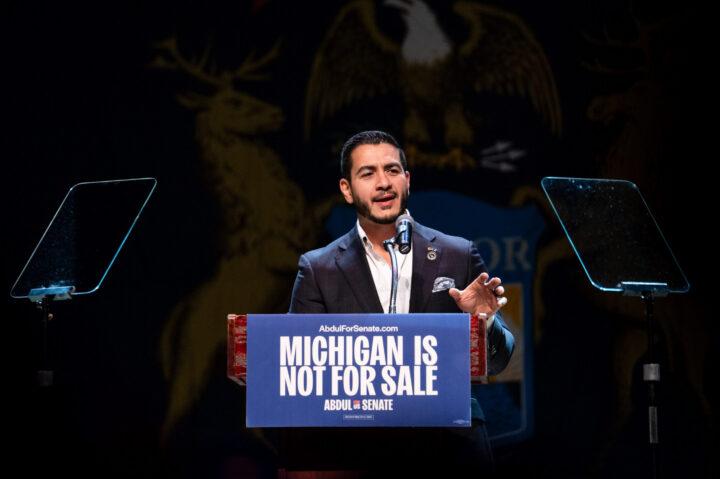
Abdul El-Sayed speaks during a primary election night watch party at The Majestic Theatre in Detroit, Michigan early on Aug. 5, 2026.
Good Wednesday afternoon.
This P.M. briefing is reserved for our premium subscribers like you — offering a forward-focused read on what we’re tracking now and what’s coming next.
Today’s Daily Overtime was curated by JI U.S. Editor Danielle Cohen-Kanik.
📡On Our Radar
Notable developments and interesting tidbits we’re tracking
Abdul El-Sayed’s victory today in the Democratic primary for U.S. Senate in Michigan rattled Jewish groups, who raised concerns about his rhetoric on Israel and the broader rise of the far left, Jewish Insider’s Marc Rod reports.
The Jewish Democratic Council of America congratulated El-Sayed but said it was “disappointed” by the result and stopped short of endorsing him, while AIPAC said its members “remain determined to ensure that voters reject Dr. El-Sayed and his radical anti-Israel agenda in November”…
The Republican Jewish Coalition is urging Jewish Democrats to support the GOP nominee, former Rep. Mike Rogers (R-MI), in the general election, calling El-Sayed “a direct threat to Michigan’s Jewish community.”
A Democratic fundraiser in Michigan told JI’s Matthew Kassel it is “absolutely certain” that “several large Jewish Democratic donors” will be backing Rogers. “I would guarantee there will be fundraisers for him hosted by high-profile Jewish Democrats,” they said…
Shortly after his win, El-Sayed previewed his evolving message to Jewish voters, saying he welcomes the opportunity to “break bread with you at Seder” and to “worship with you at shul.” He spoke of his “sisters and brothers who said, you know, ‘I want to join this movement because AIPAC doesn’t speak for me’” and vowed he would prioritize Jewish safety…
But just before he was declared the victor, El-Sayed appeared on MS NOW where he called Israel “bloodthirsty,” JI’s Danielle Cohen-Kanik reports. He said that “we’ve been talking about an illegal apartheid regime” in reference to Israel since before Prime Minister Benjamin Netanyahu came to power, though “Netanyahu is a big reason why they’ve gotten so aggressive and frankly so bloodthirsty”…
Democrats, meanwhile, are quickly coalescing behind the new Senate nominee, JI’s Marc Rod reports. El-Sayed’s opponent, Rep. Haley Stevens (D-MI), promptly endorsed him upon conceding the race; Senate Minority Leader Chuck Schumer (D-NY) and Democratic Senatorial Campaign Committee Chair Sen. Kirsten Gillibrand (D-NY) offered their joint support; and former Vice President Kamala Harris is fundraising for El-Sayed’s campaign alongside her PAC.
New York City Mayor Zohran Mamdani is also backing his ideological ally and left open the possibility that he’ll travel to Michigan to campaign with El-Sayed ahead of the general election, per JI’s Will Bredderman…
In another consequential Michigan race, pro-Israel Rep. Shri Thanedar (D-MI) was ousted in his primary, losing to state Rep. Donavan McKinney, a democratic socialist who cross-endorsed with El-Sayed, campaigned alongside him and Sen. Bernie Sanders (I-VT) and ran on ending U.S. military aid to Israel…
Talks between Israel and Lebanon ended several hours early today “due to events on the ground,” the State Department said, but were “extremely productive” and are slated to restart tomorrow. The move came after the IDF conducted strikes in southern Lebanon due to what it said were “blatant violations“of the ongoing ceasefire by Hezbollah.
An Israeli source told The Times of Israel that the talks were cut off after Israeli Ambassador to the U.S. Yechiel Leiter accused Lebanese representatives of leaking false information to the media…
The Israeli Foreign Ministry denounced a joint statement adopted by Arab states who convened in Jordan today to discuss Israel’s policies over Muslim and Christian sites in Jerusalem, which asserted that Israel “has no sovereignty” over the city and accused Israel of “altering the Arab Islamic and Christian identity of occupied Jerusalem.”
The countries also pledged to launch a “media platform to document and expose Israeli violations against the holy sites and worshipers” and hold a meeting at the U.N. General Assembly to further discuss the issue. Israel said the statement was “built on false accusations, historical distortions, and a complete disregard for the facts”…
The Conference of Presidents of Major American Jewish Organizations sent a letter to Secretary of State Marco Rubio today renewing its call for the Trump administration to press Jordan to honor its extradition treaty obligations and send Ahlam Aref Ahmad al-Tamimi to the United States.
Al-Tamimi was convicted in Israel for her role in the 2001 bombing of the Sbarro pizzeria in Jerusalem, which killed 16 people, including three Americans. She has been charged by the Justice Department and remains on the FBI’s Most Wanted list…
⏩ Tomorrow’s Agenda, Today
An early look at tomorrow’s storylines and schedule to keep you a step ahead
Keep an eye on Jewish Insider for a look at Rep. Ed Case‘s (D-HI) reelection race, a primary that has largely flown under the radar but could pose a threat to one of the House’s more reliably pro-Israel moderates. While the contest has not centered on Middle East policy, it reflects the pattern seen in several recent Democratic primaries where well-established pro-Israel incumbents have faced increasingly competitive challenges from their left.
It remains to be seen if a deal will materialize between Iran, Oman and the U.S. to reopen the Strait of Hormuz (again), after Iranian Foreign Ministry spokesperson Esmaeil Baghaei said today that Tehran and Muscat were finalizing a bilateral agreement without Washington. The latest reporting indicates that such an agreement would preclude any fees or tolls for a temporary period of time.
Tennessee will hold its primary elections tomorrow, where Sen. Marsha Blackburn (R-TN) and Rep. John Rose (R-TN) are the front-runners for the open governorship, Sen. Bill Hagerty (R-TN) is expected to win renomination and Rep. Andy Ogles (R-TN) is running in the redrawn 5th Congressional District.
Stories You May Have Missed
BOOKSHELF
Dara Horn’s shocking new title hides a serious argument about fighting antisemitism

Five years after ‘People Love Dead Jews,’ the novelist’s new book reframes Jewish hatred as a lie about destruction — and tells Jews they don’t have to accept it
MISSILE MATH
As Iran war depletes U.S. missile stocks, experts warn deterrence is at risk
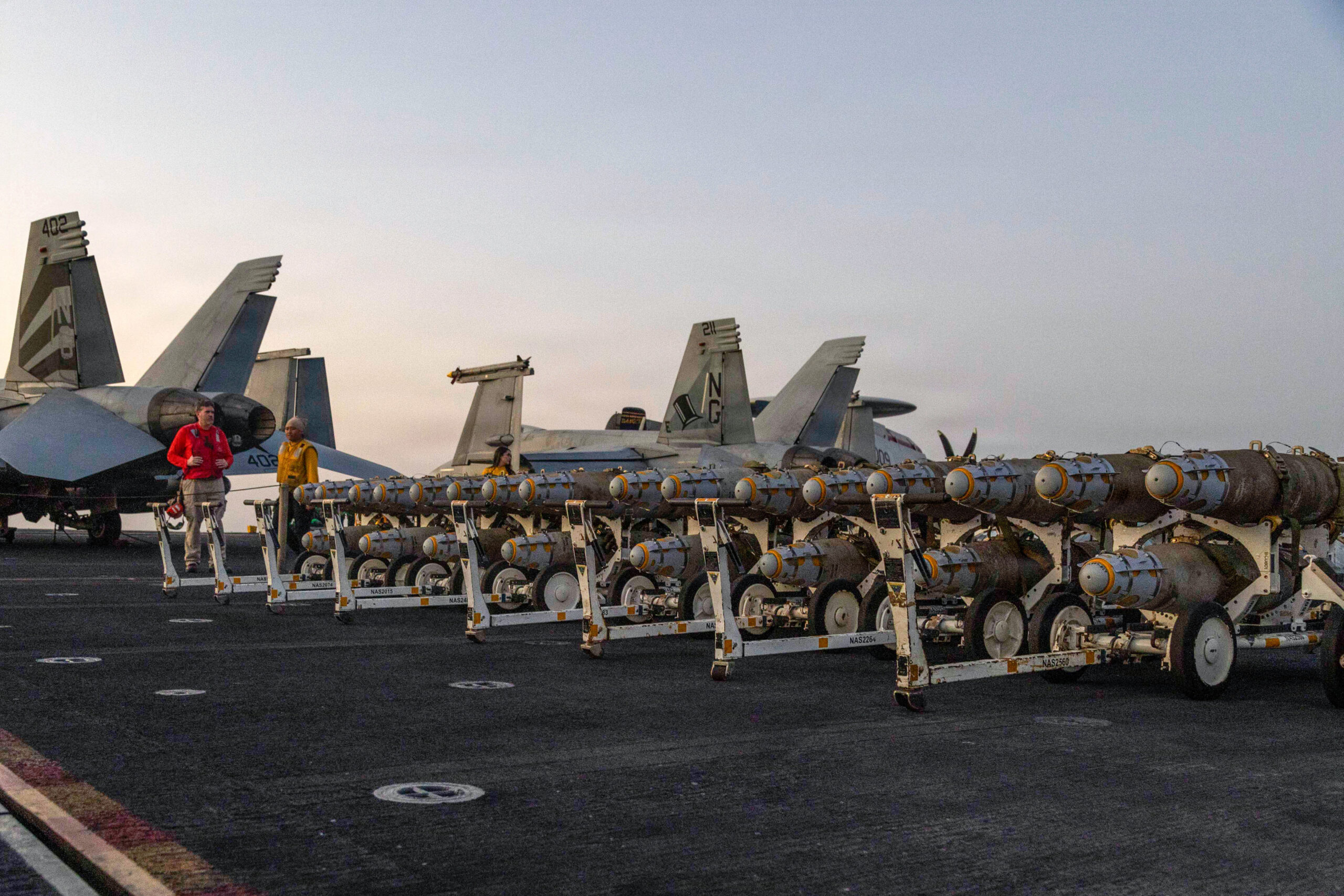
The drawdown in U.S. stockpiles could complicate future efforts to defend Israel while deterring China, Iran and other adversaries
Plus, Mamdani's anti-Bibi video features in synagogue vandal's feed

Nathan Howard-Pool/Getty Images
Delegation staff members meet in the lobby during a quadrilateral meeting between the U.S., Iran, Pakistan, and Qatar at the Lake Lucerne Summit, aimed at advancing a deal to end the Middle East conflict at the Buergenstock Resort, Lake Lucerne on June 21, 2026 near Stansstad, Switzerland.
Good Tuesday afternoon.
This P.M. briefing is reserved for our premium subscribers like you — offering a forward-focused read on what we’re tracking now and what’s coming next.
Today’s Daily Overtime was curated by JI U.S. Editor Danielle Cohen-Kanik.
📡On Our Radar
Notable developments and interesting tidbits we’re tracking
Israeli Prime Minister Benjamin Netanyahu affirmed today that the IDF will “not withdraw from the current lines in Gaza until Hamas is completely disarmed.” President Donald Trump “thinks, and his team thinks, that Hamas can be totally disarmed and Gaza demilitarized. We’re looking into it,” Netanyahu continued in a video posted to Facebook in Hebrew. “They sent us a draft, we didn’t agree. It wasn’t our draft. We sent our responses”…
Evoking a sense of déjà vu, U.S. and Iranian officials are signaling a deal over the Strait of Hormuz is near at hand: Treasury Secretary Scott Bessent said on CNBC this morning that “there is a chance” the U.S. and Iran “may have a deal today or tomorrow to open” the strait, while Qatari Foreign Ministry spokesperson Majed al-Ansari told reporters that talks are in “very progressive stages” and that draft agreement language has been “circulated among the parties.”
Trump called Qatari Emir Tamim bin Hamad Al Thani this afternoon to discuss “ongoing efforts to deescalate tensions” between Washington and Tehran, the emir’s office said, in order “to bring their views closer together”…
Reuters reports that the U.S. Army has depleted“virtually all” of its long-range surface-to-surface missiles in the course of the war with Iran, raising concerns about readiness for future conflicts and the potential need to carry out riskier missions if hostilities with Iran escalate. The White House disputed the report, with Trump insisting that the U.S. has “far more munitions than anyone in the world”…
A brewery in Michigan apologized for hosting an event last night for Rep. Haley Stevens’ (D-MI) campaign for Senate ahead of today’s primary election due to her support for Israel, Jewish Insider’s Gabby Deutch reports.
“We DO NOT endorse Haley Stevens,” Pux Taphouse wrote on Instagram, claiming it was not aware the event was being hosted by the campaign. “We are heartbroken as we pride ourselves on being not only a queer friendly space but also have advocated and continue to call for a Free Palestine,” the company said…
A Florida man accused of hurling a brick through the front window of a Sarasota Chabad house shared New York City Mayor Zohran Mamdani’s video labeling Netanyahu a “war criminal” just days before the crime, JI’s Will Bredderman reports.
The Sarasota Police Department stated that the alleged perpetrator, Brayton Laschinger, had admitted to targeting the synagogue in an attack last week “because it was a Jewish place of worship” — and had blamed “propaganda on social media” for enraging him in the hours before the vandalism. An Instagram account bearing Laschinger’s name, and featuring photos of him dating back more than a decade, reposted the clip, which Mamdani had published the week prior to the attack…
The Anti-Defamation League called out far-left streamer Hasan Piker for promoting a conspiracy theory claiming Israel is behind the recent migration crisis in Ceuta, Spain, going as far as to claim on his Twitch stream that Israel is working to make the antisemitic text The Protocols of the Elders of Zion“come true.”
“Saying Israel looks at those conspiracy theories and decides to make them ‘come true’ shifts responsibility for antisemitism onto the Jewish state,” the ADL said…
The Colorado Democratic Party called on Victor Marx, the GOP nominee for governor, and other state Republicans to denounce an image that Marx and others have boosted of Phil Weiser, the state’s Jewish attorney general who is Marx’s opponent, depicting Weiser with devil horns, which critics have said evokes a classic antisemitic trope.
Montrose County Commissioner Sean Pond, who created the image, claimed he was unaware Weiser is Jewish and said, “Weiser does not receive immunity from political satire because of a personal fact I did not even know”…
Supreme Court Justice Sonia Sotomayor declined a request by the Palestinian Authority and Palestine Liberation Organization to pause a $656 million judgment won by families of American victims of Palestinian terror attacks during the Second Intifada. The PA and PLO had argued that paying the sum now would “destabilize” government services in the West Bank as the bodies appeal the ruling…
Ellen Germain ended her five-year tenure as the State Department’s special envoy for Holocaust issues last week; it remains unclear if someone else will be tapped to lead the office — which deals with issues including restitution of Holocaust-era assets, Holocaust remembrance and combating Holocaust denial around the world — or if its remit will be wrapped into the Office of the Special Envoy to Monitor and Combat Antisemitism, currently headed by Rabbi Yehuda Kaploun. Jewish communal organizations have advocated both for and against the prospect of the consolidation…
Paramount Skydance CEO David Ellison spoke out in a New York Times op-ed against those who oppose Paramount‘s ongoing acquisition of Warner Bros. Discovery, which he argued is at its core a concern about his own political views. “I have regularly voted for candidates of both parties; I hold some views that would be called conservative and others that would be called liberal, just like most Americans; and when it comes to our news operations, I do not aspire to lead these companies to bend their newsrooms to my views,” he wrote…
⏩ Tomorrow’s Agenda, Today
An early look at tomorrow’s storylines and schedule to keep you a step ahead
Keep an eye on Jewish Insider for election results from key races taking place today in Michigan and Missouri.
Talks between Israel and Lebanon will continue in Rome, where technical teams are working to advance the pilot zone process, Hezbollah’s disarmament and the IDF’s redeployment from southern Lebanon, the State Department said today.
Democrats on the Senate Judiciary Committee’s Federal Courts subcommittee are planning to boycott a hearing tomorrow set to examine Muslim Brotherhood networks in the United States, Jewish Insider’s Marc Rod reports, calling the hearing a “political creepshow” designed to attack Muslims broadly.
The Senate Foreign Relations Committee will receive a classified update on the ongoing civil war in Sudan.
Stories You May Have Missed
SOUTH CAROLINA STATE OF PLAY
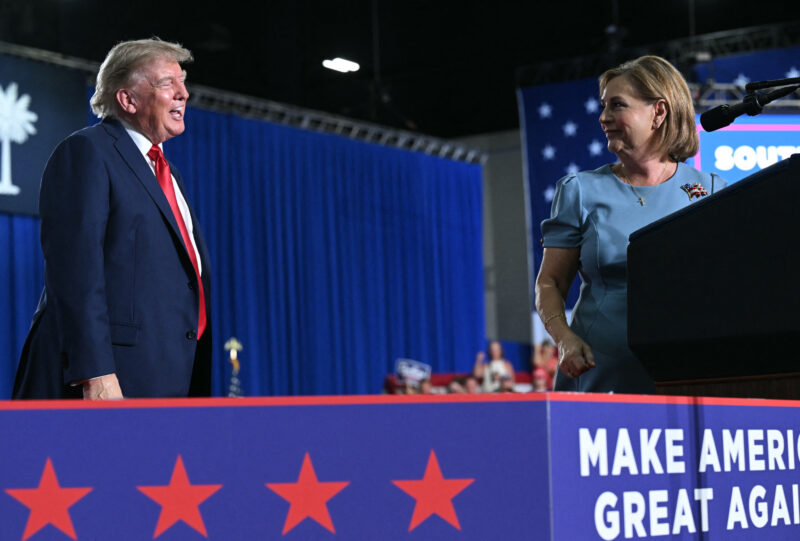
Darline Graham, backed by Trump, still faces obstacles in bid to succeed brother in the Senate
Polls show she’s largely unknown to South Carolina voters as she struggles to win a majority of Republican support
MONEY MATTERS
Nonprofit groups requested more than $1.3 billion in security aid in 2025, five times the amount available

Only 20% of the more than 8,000 institutions that requested funding ultimately received it
Plus, Iran’s ‘unbelievably duplicitous’ leaders irk Trump
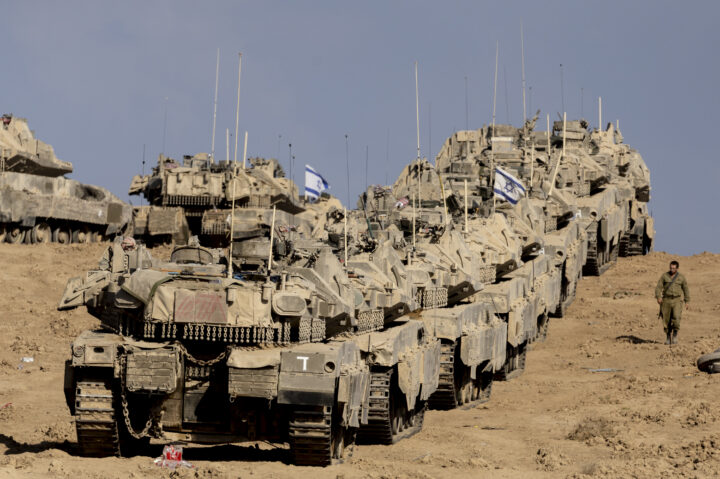
Amir Levy/Getty Images
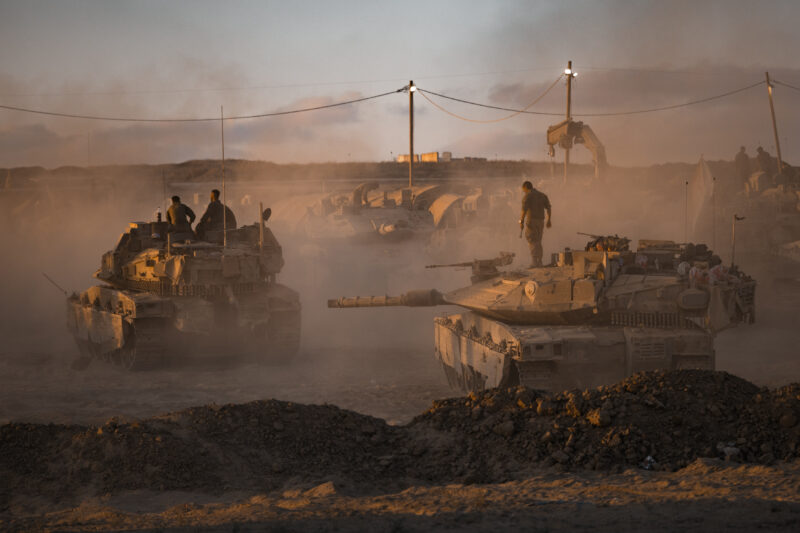
Israeli tanks stationed near the border with the Gaza Strip on September 17, 2025 in southern Israel.
Good Monday afternoon.
This P.M. briefing is reserved for our premium subscribers like you — offering a forward-focused read on what we’re tracking now and what’s coming next.
Today’s Daily Overtime was curated by JI U.S. Editor Danielle Cohen-Kanik.
📡On Our Radar
Notable developments and interesting tidbits we’re tracking
President Donald Trump lambasted Iranian leadership today, calling the regime “unbelievably duplicitous” for contradicting his claim that Washington and Tehran are currently conducting negotiations, after Iranian Foreign Ministry spokesperson Esmail Baghaei said that Tehran was only in discussion with Oman about the Strait of Hormuz and had no plans to speak to the U.S.
Trump claimed in his Truth Social post that the regime had “begged” for a meeting, “with more scheduled in the immediate future,” adding, “whether Iran wants to admit it or not, we are, in fact, talking of a solution to a problem that they have caused, for decades.” Trump later told reporters that the talks were “a last chance for Iran to sign a good document” and that he wants to give Iran “every last chance before decapitation”…
Board of Peace head Nickolay Mladenov held a “constructive and detailed” meeting with Israeli Prime Minister Benjamin Netanyahu today, the board said, after the IDF continued to strike targets in Gaza over the weekend — in contravention of the Board of Peace’s Hamas disarmament plan, which called for the immediate cessation of hostilities in the enclave.
The board clarified that the IDF’s withdrawal beyond the yellow line in Gaza “will take place only once decommissioning [of Hamas’ weapons] is complete,” including all light and heavy weapons as well as terror tunnels. Netanyahu has yet to officially comment on the deal, but a senior Israeli spokesman said earlier today that the agreement “does not reflect Israel’s positions” and another Israeli official declared that the IDF “will not withdraw from the current line in the Gaza Strip”…
Israeli President Isaac Herzog received the credentials of the new ambassadors from Chile and Honduras today; the two Latin American countries had pulled their ambassadors from the Jewish state shortly after the Oct. 7, 2023, Hamas terror attacks in protest of the war in Gaza but have since elected new conservative governments that have sought to strengthen ties with Jerusalem…
Education Secretary Linda McMahon sent a letter to every university in the country today asking their leadership to publish by the end of the year a statement committing to principles including transparency in admissions, free speech, diversity of thought and keeping foreign influence out of academics.
Yeshiva University President Rabbi Ari Berman applauded the initiative, which came after most universities rejected a compact from the Trump administration last year that had asked them to agree to a set of ideological principles in order to receive federal funding, and said YU would participate in the effort to rebuild public trust of higher education…
Brown University President Christina Paxson announced today that she will step down at the end of the 2026-27 academic year, concluding her 15-year tenure at the Ivy League, during which the school increased Jewish student enrollment even as most peer institutions experienced significant drops, Jewish Insider’s Haley Cohen reports…
As the Israel on Campus Coalition’s National Summit continues in Washington, Noah Pollak, a senior advisor at the Education Department, debated Jonathan Rauch, a senior fellow at the Brookings Institution, on whether the Trump administration’s crackdown on campus antisemitism has protected or threatened America’s liberal norms. After the debate, where Pollak argued in favor of the policy and Rauch argued against, students who were polled in the audience shifted their views to align more with Rauch, JI’s Haley Cohen reports…
New hate crime data released by the NYPD shows an uptick of 8.5% in hate crimes against Jews in New York City this year so far, accounting for more than half of all hate crimes in the city, despite Jewish New Yorkers only accounting for 10% of the city’s population…
A New York man was indicted on hate crimes charges on Friday for repeatedly vandalizing a kosher bagel shop, weeks after he was indicted for manslaughter for killing a prominent Jewish community member in a car crash…
Author Alyssa Rosenheck pushed back on arguments raised by Bell Bird Books, a local bookstore in Nashville, Tenn., that canceled a book launch event for Rosenheck’s White. Blond. Jew.,which the bookstore claimed was due to security concerns. Rosenheck said she had personally paid for a private firm to secure the event and was told there were no outstanding security concerns, alleging that the event was canceled “because I’m an unapologetic Jewish voice … and it provokes an online mob of hate”…
Trump is considering removing Jeanine Pirro, the U.S. attorney for the District of Columbia, according to CNN, after he said today that she “folded like an umbrella” when she withdrew a case against an alleged vandal of the Reflecting Pool and instead blamed the Interior Department for its botched renovation…
⏩ Tomorrow’s Agenda, Today
An early look at tomorrow’s storylines and schedule to keep you a step ahead
Keep an eye on Jewish Insider for a look at Sen. Darline Graham’s (R-SC) bid for a full term in the Senate, where she is facing headwinds despite having secured President Donald Trump’s endorsement.
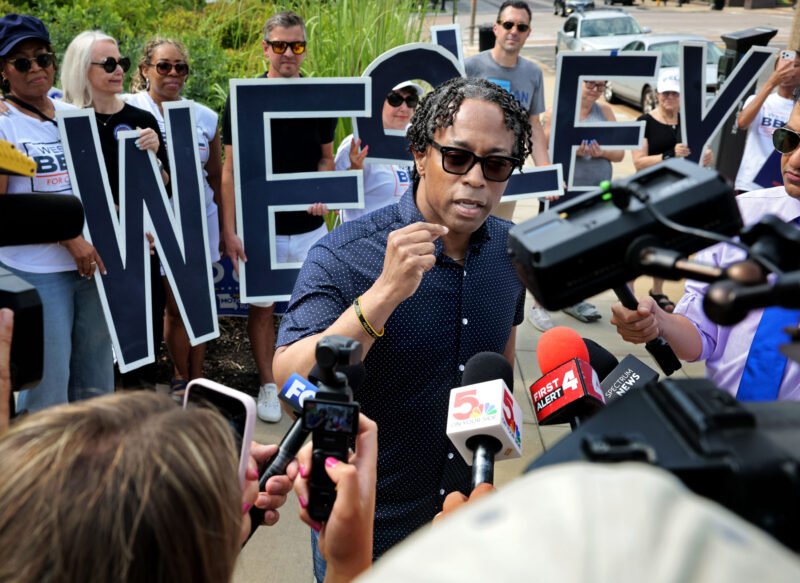
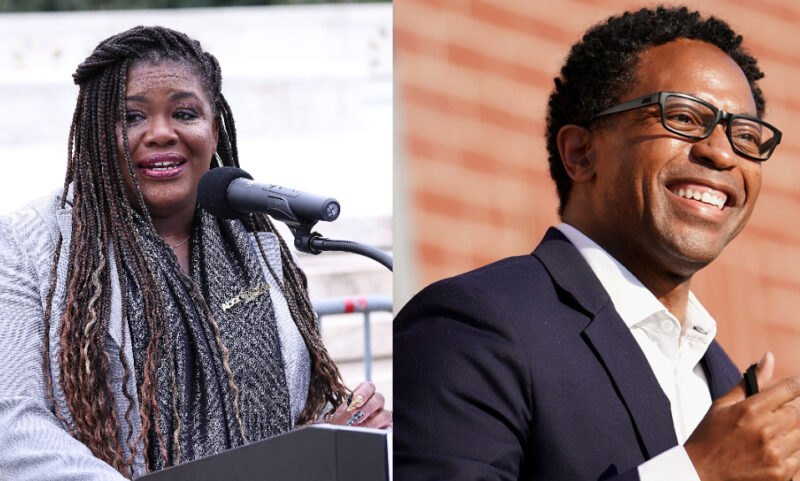
We’ll be watching tomorrow’s Democratic primaries in Michigan and Missouri — the sharpest tests yet of the party’s divide over Israel. In Michigan’s Senate race, far-left Abdul El-Sayed seems the favorite in recent polling over Rep. Haley Stevens (D-MI); in Missouri, Rep. Wesley Bell (D-MO) faces a rematch with former Rep. Cori Bush (D-MO). Also on the Michigan ballot: the battleground 7th District, where DSA-backed William Lawrence is the front-runner, and the 11th District, where Jewish state Sen. Jeremy Moss is running to succeed Stevens. Kansas, Virginia and Washington state will also hold their primaries tomorrow.
Israeli and Lebanese representatives will meet tomorrow to begin another round of U.S.-led negotiations in Rome. U.S. Ambassador to Lebanon Michel Issa sounded a cautious note today on the ongoing trilateral agreement, as the Lebanese Armed Forces and the IDF continue to work toward establishing the fragile pilot zones in southern Lebanon: “A great deal of technical work remains to ensure civilian safety on the ground,” Issa said. “There is a meaningful difference between drafting an agreement on paper and implementing it responsibly — moving too quickly risks jeopardizing the very civilians this process is meant to protect.”
The Senate Judiciary Committee is set to vote tomorrow on whether to advance acting Attorney General Todd Blanche‘s nomination to lead the Justice Department, after Sens. John Cornyn (R-TX) and Thom Tillis (R-NC) dropped their opposition to his nomination when the administration agreed to rescind its $1.8 billion “anti-weaponization” fund.
Stories You May Have Missed
MICHIGAN MOVES
Republicans betting Jewish voters swing Rogers’ way if El-Sayed wins primary
For many Jewish Democrats in Michigan who have long called the party home, the bruising lead-up to the primary on Tuesday has been difficult to experience
CAMPUS CLIMATE
Not better, just different: Students seek tools to address changed campus environment at ICC summit
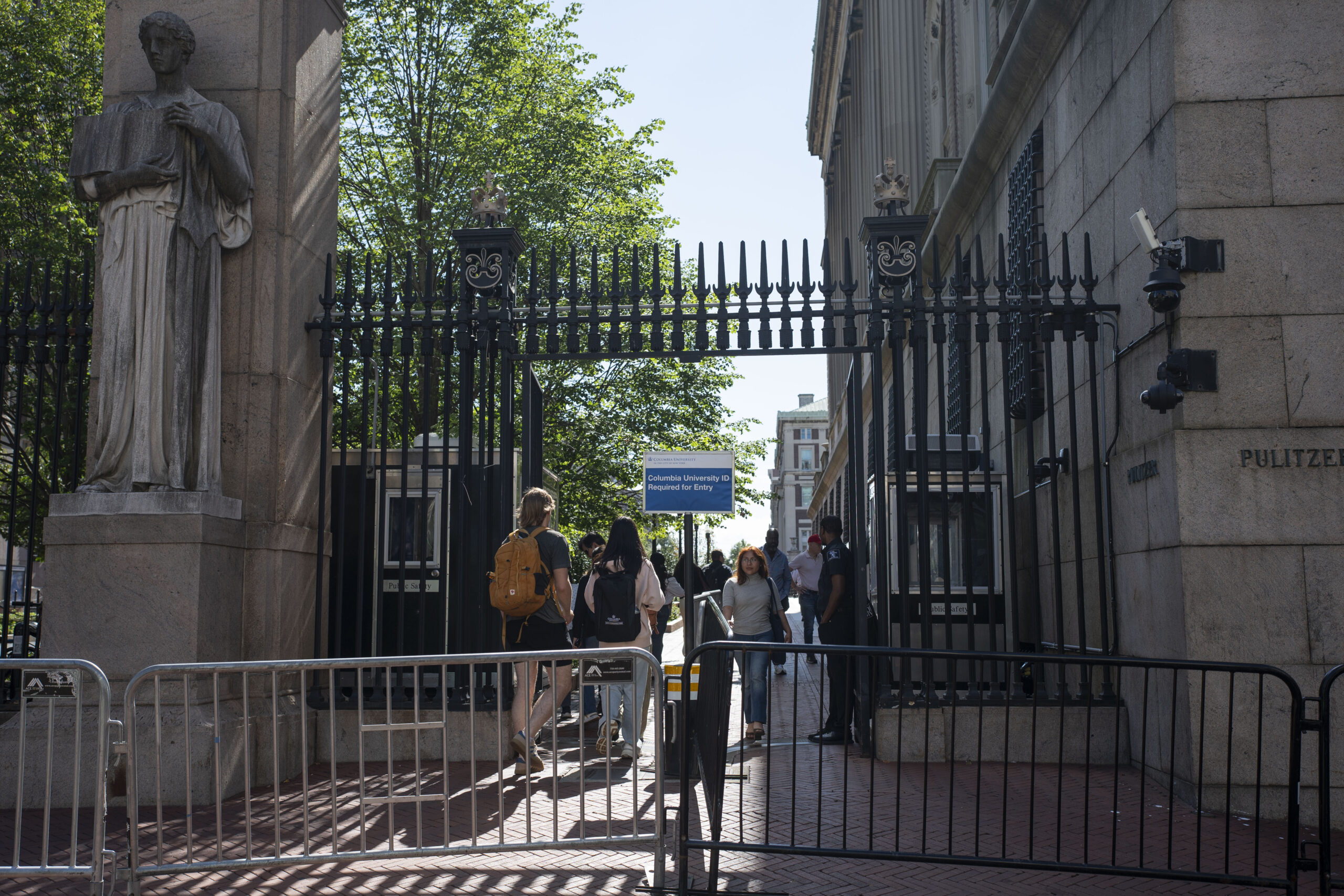
‘The assumption is that it’s better by virtue of there being no encampments right now, there’s no buildings being sieged. But that being the bar is ridiculous,’ Columbia student Noah Lederman said of the challenges on campus
‘They are talking to us right now. They’d love to make a deal. … I don’t think it’s time yet, but I’m willing to listen,’ the president said at the White House Correspondents' Dinner
Mandel NGAN/AFP via Getty Images
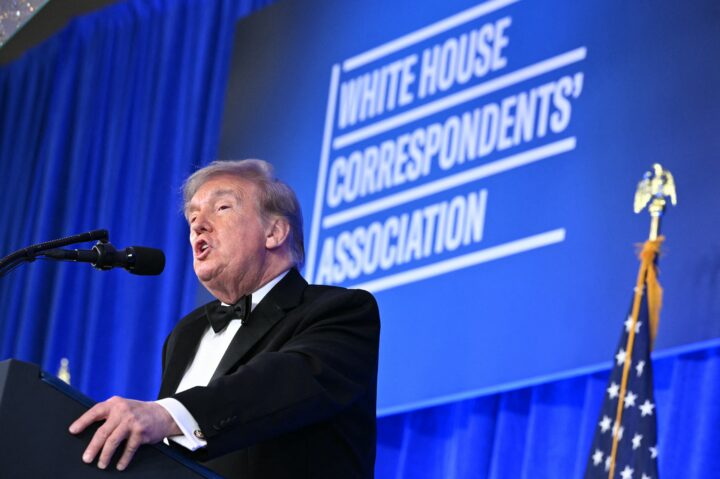
President Donald Trump speaks during the 2026 White House Correspondents' Association Dinner at the Waldorf Astoria in Washington, D.C., on July 24, 2026.
President Donald Trump said in remarks at the White House Correspondents’ Dinner on Friday that the U.S. is continuing to negotiate with Tehran even amid U.S. strikes on Iran, but added that he didn’t think that Iranian leaders were ready to make a deal.
“They are talking to us right now. They’d love to make a deal. I don’t think they’re ready to. I don’t think it’s time yet, but I’m willing to listen,” Trump said at the dinner, held at Washington’s Waldorf Astoria after being rescheduled following a shootout at the annual April dinner between a lone gunman and Secret Service agents at the Washington Hilton.
Trump added that if Iran were to obtain a nuclear weapon, the country “would use it,” potentially targeting the U.S., Israel or elsewhere in the Middle East.
For now, Israel’s restraint is less about hesitation, and more of a calculation that deterrence, rather than direct military engagement, will serve Jerusalem’s interests in the long term
AFPTV / AFP via Getty Images
A cargo ship anchoring near the Strait of Hormuz off the eastern coast of the United Arab Emirates on July 12, 2026.
In recent weeks, following the collapse of the memorandum of understanding between Washington and Tehran and the closure of the Strait of Hormuz, Iran has fired dozens of times on Jordan, Saudi Arabia, Iraq, Bahrain, Kuwait, Qatar and the United Arab Emirates.
At the same time, it has sustained fire from the U.S., whose military bases across the region have been targeted by the Islamic Republic, with several service members killed. And all the while, Tehran has targeted commercial ships transiting through the strait.
But as focus on the conflict with Iran has shifted from addressing the Islamic Republic’s nuclear ambitions to the Strait of Hormuz, Israel has stayed out of the fighting — despite Iranian threats earlier this month to target the Jewish state if the U.S. attacks did not cease.
There is no upside for Israel to reenter the fight, especially when the issue of the Strait of Hormuz falls outside of the objectives set by Israel at the start of the war earlier this year. (This, despite the widespread sentiment among Israelis that this year’s war did not improve Israel’s security situation, according to polling last month from the Israel Democracy Institute.)
Key among the goals laid out by Israel was degrading Iran’s ballistic missile program and setting back elements of its nuclear program. Reopening Hormuz is an American objective, not an Israeli one. With Israel having made the calculus that the most immediate Iranian threats have been blunted — at least in the short term — the current mission has become an American one.
“Israel’s best move is to not move — yet,” Mark Dubowitz, the CEO of the Foundation for Defense of Democracies, told Jewish Insider this morning. “Washington does the striking. Israel keeps its fire and its threats in reserve, waiting for one of two triggers: a U.S. request to join, or an Iranian regime foolish enough to hit Israel and invite the reprisal that has been promised.”
Despite Iran’s threats to target Israel, such a move would likely be a strategic misstep for the Islamic Republic. Iran’s blockade of the strait and its attacks on Arab and Gulf states are an attempt to reassert its dominance over the region and demonstrate its ability to impact the global energy market. Tehran also appears to be betting that sustained attacks across the region will push Arab states to pressure the U.S. to accept an agreement to reopen the strait, handing the Islamic Republic a win.
In that sense, Tehran is calibrating its escalation according to the expected retaliation, knowing that Arab states are, unlike Israel, hesitant to respond with military action.
One week ago, Israeli Prime Minister Benjamin Netanyahu, speaking in Dimona, drew a line in the sand. “I have one message for Iran’s leaders: Do not count on there being calm if you attack us,” Netanyahu said. “Do not expect a repeat of what happened before, because there will be no repeat. The previous response was powerful enough, but any further attempt to harm us will be met with a different response — far more powerful.”
Thus far, the Arab states have shown little indication that they intend to escalate to match Iran’s attacks, and will not retaliate with a proportional response (or even a disproportionate response). But with the intermittent fire, Iran keeps the region on edge and Hormuz closed for business.
The question many Israelis are asking is how much longer the domestic quiet will continue. But unless Iran directly strikes Israel or acts in a way that compromises Jerusalem’s interests, there is little appetite in Israel to transform what has become a U.S. effort to reopen shipping routes into another round of intensive fighting between Iran and Israel. For now, Israel’s restraint is less about hesitation, and more of a calculation that deterrence, rather than direct military engagement, will serve Jerusalem’s interests in the long term.
Plus, Vance alleges Israeli influence campaign to extend Iran war
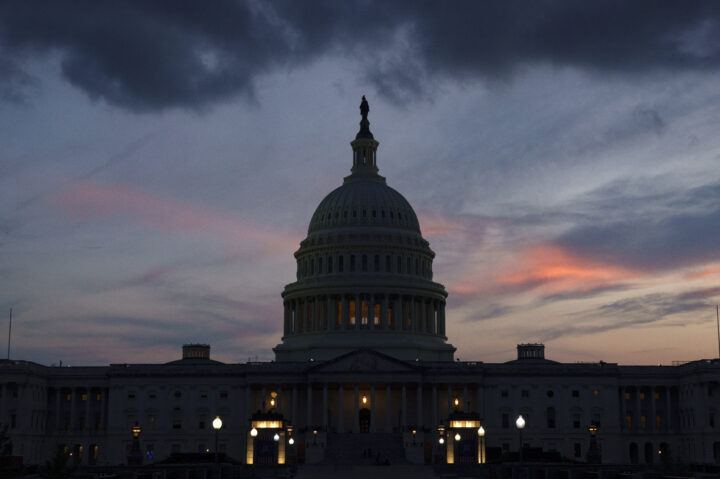
Photo by Kevin Carter/Getty Images
The sun sets behind the U.S. Capitol Building on July 8, 2026 in Washington, D.C.
Good Wednesday afternoon.
This P.M. briefing is reserved for our premium subscribers like you — offering a forward-focused read on what we’re tracking now and what’s coming next.
Today’s Daily Overtime was curated by JI U.S. Editor Danielle Cohen-Kanik.
📡On Our Radar
Notable developments and interesting tidbits we’re tracking
More than 100 House Democrats, about half of the caucus, voted in favorof Rep. Thomas Massie’s (R-KY) amendment to strip all U.S. aid to Israel out of the State Department appropriations bill this afternoon, including several leaders of the caucus such as Rep. Katherine Clark (D-MA), the No. 2 House Democrat, and former House Speaker Nancy Pelosi (D-CA).
While the amendment was overwhelmingly defeated, 314-104, the large segment of Democrats supporting the measure indicates a growing shift away from the party’s historic support for Israel…
Vice President JD Vance, in an episode of “The Joe Rogan Experience” released today, stated repeatedly that Israeli actors are engaged in a “very discreet, very well-funded” influence campaign to extend the war in Iran: “There are some people within their system we know beyond a shadow of a doubt who are manipulating and trying to change American public opinion to keep the war going on indefinitely. Again, not towards any objective, but just indefinitely,” he alleged.
Vance also said that the late disgraced financier Jeffrey Epstein “clearly had connections to the highest levels of Israeli intelligence” and to “elements of the Israeli deep state that were left of center”…
The U.S., Israel and Lebanon, wrapping up talks in Rome this week, agreed on the structure and guidelines for implementing the two pilot zones the parties agreed to create in southern Lebanon, a State Department official said today, without specifying a timeline for the IDF’s withdrawal. The parties will now engage in expanded technical talks to implement the trilateral agreement reached in the last round of negotiations…
CENTCOM began another round of strikes against Iran this afternoon; coming after strikes earlier in the day, the pace of the operations appears to be gaining momentum. President Donald Trump is reportedly considering expanding U.S. military efforts to include more airstrikes, utilizing ground forces and targeting nuclear sites again, according to The Wall Street Journal…
Three senior U.S. officials connected to the Board of Peace, the Trump-led body created to resolve the conflict in Gaza, have been meeting with congressional offices this week to request $200 million for the International Stabilization Force, two people with knowledge of the meetings told Jewish Insider’s Gabby Deutch. The meetings mark the first time that Board of Peace representatives have approached Congress with a funding request…
Ahead of today’s deadline, candidates have begun releasing their fundraising reports for the second quarter. In Georgia, where some in the Jewish community have felt torn between two less-than-ideal options in Sen. Jon Ossoff (D-GA) and his opponent, Rep. Mike Collins (R-GA), Ossoff holds a commanding fundraising advantage: The senator reported raising$20 million this quarter with $42 million in the bank, while Collins raised $2.1 million, leaving him with $2.2 million in cash on hand…
Meanwhile, Michigan Senate candidate Abdul El-Sayed released his 2025 tax returns, which he is not legally obligated to do but was pressured to do by his opponent in the Democratic primary, Rep. Haley Stevens (D-MI). El-Sayed’s reported total income was over $680,000, nearly $300,000 of which was unspecified as to its source…
The anti-Israel American Priorities super PAC made an initial investment of $375,000 to boost El-Sayed in the race; El-Sayed has repeatedly railed against super PAC involvement in politics — particularly that of AIPAC’s United Democracy Project, which is spending heavily in favor of Stevens…
Rep. Hilary Scholten (D-MI), speaking to Semafor about electability concerns in the Democratic Party, criticized progressives who “prop up other candidates who have said really problematic things.” The moderate congresswoman added that El-Sayed, who has been criticized for comments about Stevens seen as misogynistic, “has a problematic record with women”…
A new Quinnipiac poll of Pennsylvania voters found Gov. Josh Shapiro leading his Republican opponent in his reelection race by 13 points, 53-40%, with a 56% overall approval rating. Sen. John Fetterman (D-PA) had a 77% approval rating among Republicans, but only 19% among voters in his own party. Nearly half (49%) of voters said the Democratic Party has moved too far to the left, while 42% said the Republican Party has moved too far to the right…
Former White House senior official Brett McGurk is releasing a book, Brink: Inside the Race to Free the October 7 Hostages, on his role leading U.S. efforts under former President Joe Biden to secure the release of hostages held by Hamas after the Oct. 7, 2023, attacks, due out on Oct. 6 to coincide with the third anniversary of the attacks…
The New York Times examines the role that Hollywood superagent Ari Emanuel could play in the potential presidential run of his brother, former Chicago Mayor Rahm Emanuel, as politicians increasingly seek access to media as part of their campaigns; among those close to Ari Emanuel are the UFC’s Dana White, commentator Joe Rogan, pundit Stephen A. Smith as well as Elon Musk…
⏩ Tomorrow’s Agenda, Today
An early look at tomorrow’s storylines and schedule to keep you a step ahead
Keep an eye on Jewish Insider for a look at what this afternoon’s vote on Massie‘s amendment to cut all U.S. aid to Israel means for the future of Israel policy in the Democratic Party.
At least eight Democratic candidates vying to replace former nominee Graham Platner on the ballotfor U.S. Senate in Maine will take the debate stage tomorrow evening in their first chance to pitch themselves to voters, ahead of the state Democratic Party’s nominating convention later this month.
President Donald Trump will give an address to the nation in the evening, which he has said will largely focus on American election security.
The American Federation of Teachers’ annual convention will kick off in Washington. The second largest teachers’ union in the U.S., the AFT has previously featured anti-Israel resolutions at its gatherings.
The Aspen Security Forum continues with several panels on the Middle East, including speakers such as Akif Çağatay Kılıç, top advisor to Turkish President Recep Tayyip Erdoğan; Ayman Safadi, Jordan’s foreign minister; Sen. Chris Murphy (D-CT); Ted Deutch, CEO of the American Jewish Committee; Dan Shapiro, former U.S. Ambassador to Israel; Rahm Emanuel; Anne Neuberger, former deputy national security advisor; and Salam Fayyad, former prime minister of the Palestinian Authority.
Stories You May Have Missed
SPACE MAN
The Israeli scientist at the center of Trump’s search for answers on UFOs

Harvard professor Avi Loeb believes his research, which propelled him to the White House, could usher in a ‘new messianic era’
LITMUS TEST
Khanna pressed to support Oct. 7 attacks in Drop Site interview
The congressman angered Drop Site co-founder Jeremy Scahill by refusing to condone the attacks; Scahill accused Khanna of promoting a ‘double standard’
Plus, meet Trump’s Jewish UFO czar
Aspen Security Forum
Former Secretary of State Condoleezza Rice speaks at the Aspen Security Forum on July 17, 2025.
Good Wednesday morning.
In today’s Daily Kickoff, we report on former Secretary of State Condoleezza Rice’s suggestion that the U.S. forgo diplomacy with Iran and continue to pressure Tehran, and cover a meeting this week between the Board of Peace’s Nickolay Mladenov and Aryeh Lightstone and the executive board of the Alliance of Rabbis in Islamic States. We report on the House’s passage of a bill opposed by some Orthodox Jewish groups that would permanently institute daylight saving time, and interview Harvard astrophysicist Avi Loeb, who is now serving as the Trump administration’s UFO czar. Also in today’s Daily Kickoff: Michael Diamond, Elena Kagan and George Deek.
We have also launched a new on-demand Live Briefing that you can access throughout the day via our new app (on Apple and Android) and on our website.
Today’s Daily Kickoff was curated by JI Executive Editor Melissa Weiss and Israel Editor Tamara Zieve, with assists from Danielle Cohen-Kanik and Marc Rod. Have a tip? Email us here.
What We’re Watching
- President Donald Trump is slated to speak at the Pennsylvania Defense and Innovation Summit, organized by Sen. Dave McCormick (R-PA), at the U.S. Army War College today. Additional speakers include Army Secretary Dan Driscoll, U.S. Ambassador to the U.N. Mike Waltz, CIA Director John Ratcliffe and JPMorgan Chase CEO Jamie Dimon.
- A vote on Rep. Thomas Massie’s (R-KY) legislation to strip all U.S. aid to Israel out of the 2027 State Department appropriations bill could come for a vote as soon as today. House Minority Leader Hakeem Jeffries (D-NY) said in a “Dear Colleague” letter on Tuesday that he opposes the legislation, but also argued for “urgent change” in the U.S.-Israel relationship, including changes to U.S. aid going forward. Read more here.
- The Senate Intelligence Committee will hold its rescheduled confirmation hearing for Jay Clayton, the Trump administration’s nominee to be director of national intelligence. Originally slated to testify before the committee last month, Clayton heeded a directive from Trump not to appear as the president battled Congress on voter-ID legislation.
- The Hudson Institute is hosting a fireside chat this morning with Rep. Mike Lawler (R-NY).
- The Aspen Security Forum continues today in Colorado, with sessions focused on a range of issues including China, Europe and trade challenges. Later in the day, the American Enterprise Institute’s Danielle Pletka and Marc Thiessen will record an episode of their “What the Hell Is Going On” podcast with former Under Secretary of Defense for Policy Michèle Flournoy and former National Security Advisors Stephen Hadley and Robert O’Brien.
What You Should Know
A QUICK WORD WITH JI’S GABBY DEUTCH
As Maine Democrats pick up the pieces of Graham Platner’s failed Senate campaign and quickly try to find a replacement for the scandal-tarred candidate on the ballot, moderate Democrats in Michigan, where a primary is fast approaching, are in a race against time to prevent another far-left Senate candidate from capturing a valuable nomination.
The final three weeks of the Michigan primary will be 2026’s most consequential test yet for the power the party establishment still holds, particularly in a pivotal swing state. After socialist candidates scored a number of surprise victories in heavily blue districts in New York City, Philadelphia and Denver, party leaders are fighting with renewed vigor to rally behind Rep. Haley Stevens (D-MI) in the primary against her left-wing challenger, Abdul El-Sayed.
Retiring Sen. Gary Peters (D-MI) endorsed Stevens on Monday, a pivot from his announcement in May that he planned to stay out of the race, joining Senate Minority Leader Chuck Schumer (D-NY), who had already backed the congresswoman. The party’s left flank — including Sens. Bernie Sanders (I-VT) and Chris Van Hollen (D-MD) — is backing El-Sayed.
“The change of heart is we just know that we have to hold Michigan,” Peters said on “Morning Joe” on Tuesday of his decision to endorse, with Stevens sitting beside him. “She’s an outstanding candidate and I certainly hope that folks get behind her around the country and understand that she’s the right person to be the next senator from the state of Michigan.”
There are fresh signs that the late push for Stevens from Democratic leaders — along with millions in ad spending from pro-Stevens outside groups — has given the congresswoman momentum in the closing stretch of the race. A new poll commissioned by the Detroit News found Stevens pulling ahead of El-Sayed by seven points, 48-41%, after she trailed in most public polls this year.
LITMUS TEST
Khanna pressed to support Oct. 7 attacks in Drop Site interview
Rep. Ro Khanna (D-CA), fresh off a trip to the West Bank where he alleges he was unjustly detained by Israeli settlers and Israeli military forces, faced a barrage of criticism in a Drop Site News interview on Tuesday for refusing to endorse Hamas’ Oct. 7, 2023, attack on Israel, Jewish Insider’s Marc Rod reports.
Back-and-forth: In the lengthy exchange, Drop Site co-founder Jeremy Scahill repeatedly questioned Khanna, a 2028 presidential hopeful, on why he would not express support for Hamas attacks on Israeli soldiers. Scahill framed the Oct. 7 attacks as primarily targeting Israeli military bases and soldiers, despite the fact that the group attacked many civilian communities and fired thousands of rockets at civilian centers. Further angering Scahill, Khanna said he believed Israel had a right to go after Hamas terrorists “who killed the civilians” on Oct. 7, “but not in the way they went about it, which I said is genocide.”
WAR WORRIES
Amid Iran war concerns, Democrats pump brakes on Senate defense bill
Citing concerns about the Iran war and the administration’s elevated defense funding request, Senate Democrats voted in lockstep on Tuesday evening to block a procedural motion to open debate on the 2027 National Defense Authorization Act, despite the bill passing out of the Armed Services Committee with bipartisan support, Jewish Insider’s Marc Rod reports.
Why it matters: The decision to block the start of debate on the NDAA — an annual must-pass bill which typically garners strong bipartisan support — is a rare and significant step by Democrats signaling significant frustrations with the Trump administration’s ongoing war against Iran. Some anti-Israel voices have sought to cast the vote as a rejection of a provision in the bill expanding U.S.-Israel military cooperation but only a handful of Democrats have cited that as part of their reasoning for opposing the bill.
Trade-off: President Donald Trump on Tuesday walked back his announcement, made the previous day, that the U.S. would institute a 20% fee on cargo transiting the Strait of Hormuz, saying the toll would be replaced by trade deals with Gulf states, but providing no details, JI’s Christina Sher reports.
HEARD AT ASPEN
Condoleezza Rice warns against any Iran deal, urges to keep the pressure on
Former Secretary of State Condoleezza Rice on Tuesday opposed any nuclear deal with Iran, arguing that the U.S. should continue pressure on Iran’s economy and “see what happens,” Jewish Insider’s Marc Rod reports from the Aspen Security Forum.
Assessment: Meanwhile, former Secretary of Defense Mark Esper, speaking alongside Rice on a panel, suggested that the U.S. had potentially overestimated its capabilities in the war, agreeing that continued economic pressure and a renewed blockade are the best strategy going forward. Both also offered strong criticisms of U.S. allies for not joining with and even attempting to obstruct the U.S. campaign against Iran. “I would not buy a nuclear agreement under any circumstances. I’d let them sit there and stew in their lousy economy … and let’s just see what happens,” Rice said.
DST DEBATE
House passes permanent daylight saving time bill, concerning Orthodox Jewish groups

In a bipartisan vote pushed in part by President Donald Trump, the House passed the Sunshine Protection Act, making daylight saving time permanent, a situation that raises concerns for Orthodox Jewish groups that have long warned that such a move would have negative impacts for Jewish morning prayer and potentially raise dangers for school children who have to travel to school before daybreak, Jewish Insider’s Marc Rod reports.
State of play: The bill passed the House by a 308-117 vote, with 95 Democrats and 22 Republicans voting no. The issue has been a priority for Trump, and lawmakers have also included the same legislation in a must-pass transportation bill, with near unanimous support in committee. Orthodox groups now say they’re placing their hopes on the Senate to stop the bill from passing, where the policy has some vocal opponents.
SPACE MAN
The Israeli scientist at the center of Trump’s search for answers on UFOs
President Donald Trump has a border czar, a government official leading the crackdown on undocumented immigrants — whom the White House calls “illegal aliens” — crossing the southern border. The president, who likes to go big, now also has a UFO czar, a Harvard astrophysicist who is scanning the cosmos in search of aliens of the science-fiction variety, Jewish Insider’s Gabby Deutch reports.
From farm to universe: It’s a stunning if improbable career highlight for Avi Loeb, the grandson of a Holocaust survivor who fled Nazi Germany and settled in a communal farm in central Israel. As a child, Loeb had a lot of time alone with his thoughts — walking around to collect eggs from the chickens, or driving a tractor to the surrounding hills, where he would sit and read philosophy books. “I was deeply interested in the most fundamental questions of our existence,” Loeb told JI in a recent interview.
BRUSSELS BUNCH
Mladenov, Lightstone meet with Middle East rabbis in Brussels
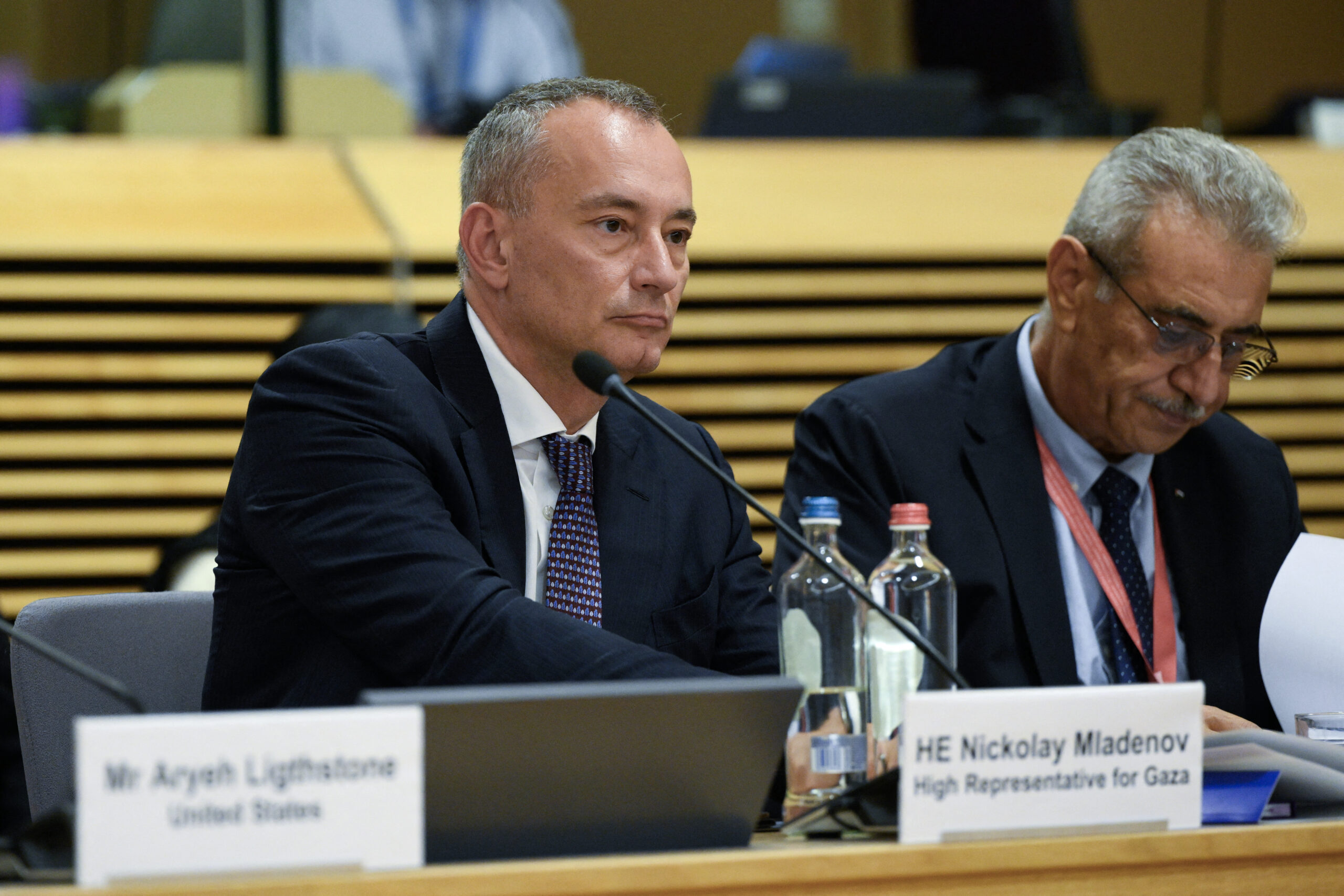
Nickolay Mladenov and Aryeh Lightstone, respectively the high representative for the Board of Peace and the body’s senior advisor, met in Brussels earlier this week with rabbis representing Jewish communities across the Islamic world, Jewish Insider’s Melissa Weiss reports.
Money for Gaza: Mladenov and Lightstone met with the executive board of the Alliance of Rabbis in Islamic States at the group’s annual two-day board meeting. On Monday, the two also attended the second convening of the EU-backed Palestine Donor Group, as the collective of some 65 delegations launched a billion-dollar initiative to begin the economic recovery of the Gaza Strip. Jared Kushner joined the donor conference by video. Among those in attendance at the board meeting were rabbis from Morocco and Turkey.
Worthy Reads
Stroke of the PEN: In The Wall Street Journal, author Meg Keene addresses a recent article from PEN America that detailed the isolation of Israeli and Jewish writers following the Oct. 7, 2023, Hamas terror attacks, the publication of which prompted the resignation of the organization’s president. “The article acknowledges that the accounts reveal ‘blatant hostility, discrimination, and hate.’ That should have been the thesis, not an aside. PEN can see the discrimination; it struggles to name it when the targets are Jews and Israelis and the method is anti-Zionist exclusion. PEN America’s article claims to describe a silent moratorium. Its president’s resignation broke that silence. The scandal, apparently, wasn’t the marginalization of Jewish and Israeli writers; it was PEN’s willingness to acknowledge, even tentatively, that it is going on.” [WSJ]
Don’t Chase the Iranians: The Washington Post’s David Ignatius suggests that President Donald Trump should not rush diplomacy with Iran, arguing that Tehran is headed toward eventual collapse. “I’m usually an enthusiast for diplomacy, but for now, we should stop chasing the Iranians — through the front channel, back channel or anything in between. Let’s wait and see. The Iranian government is obviously split. … A genuine peace with Iran ‘will come in two weeks, or two months, or two years,’ as one U.S. negotiator puts it. Trying to rush that timetable hasn’t worked. But I think the Iranian regime is still on a one-way street to an eventual demise, however long that takes.” [WashPost]
Beyond the Startup Nation: In Time, Frayda Leibtag looks at the economic impact of nearly three years of war on Israelis who work outside the country’s high-tech bubble. “The high-tech sector driving the headline numbers is small. It employs only about one in nine Israeli workers, pays them close to three times the average wage in the rest of the economy, and earns most of its revenue from customers abroad, who keep paying when the sirens sound. The other eight out of nine Israeli workers make their living in shops, farms, and one-person businesses that depend on local customers, the ones who stay home and lose a day’s income every time the fighting flares up. Those Israelis have borne much of the toll of the war.” [Time]
A larger selection of Worthy Reads is available in our Live Briefing.
Word on the Street
President Donald Trump held a Situation Room meeting on Tuesday night ahead of a fresh bombing campaign targeting Iran this morning, including rare daylight strikes…
Following a complaint by the U.S., Israel lifted its restriction on the number of American refueling jets permitted at Ben Gurion Airport, a day after Transportation Minister Miri Regev announced that no more than 20 refuelers would be permitted to land at the airport due to overcrowding that threatened to cancel commercial flights in the coming weeks…
Trump reportedly told Israeli Prime Minister Benjamin Netanyahu last week that Israel should begin redeploying its troops currently stationed in southern Syria, suggesting that the IDF’s presence threatens to escalate tensions in the area; Trump also said that the IDF should withdraw its troops from southern Lebanon to avoid a similar escalation there…
Israeli media reports that Netanyahu is planning to travel to the U.S. this weekend, and will attend the funeral of late Sen. Lindsey Graham (R-SC), expected to be held on Tuesday…
Trump hosted five Holocaust survivors in the Oval Office on Tuesday; the group also met with Secretary of State Marco Rubio and Jared Kushner…
White House Special Envoy Steve Witkoff and Kushner were spotted in the Senate chambers during the swearing-in of Graham‘s sister, Darline Graham, who was appointed to fill the remainder of her brother’s Senate term following his death over the weekend…
Supreme Court Justice Elena Kagan, who along with Justice Amy Coney Barrett testified on Capitol Hill yesterday about the Supreme Court’s budget request, reflected on her now-viral exchange with Graham during her 2010 confirmation hearing, during which he asked her how she spent Christmas and she responded that she spent the day “like all Jews … probably at a Chinese restaurant”; testifying on Tuesday, Kagan said, “Many people have talked about how funny Senator Graham was… What I remember about that hearing was that somehow Senator Graham made me look funny, which is a harder thing entirely”…
Former Columbia University graduate student Mahmoud Khalil, a leader of the school’s anti-Israel protests, is suing the federal government, the Heritage Foundation, Canary Mission and Betar, alleging a coordinated campaign targeting student activists who organized against Israel in the wake of the Oct. 7, 2023, Hamas terror attacks and ensuing war in Gaza…
The New York Times spotlights Michael Diamond — known to Beastie Boy fans as Mike D — ahead of the release of the performer’s first solo album following the 2012 death of bandmate Adam Yauch…
An 82-year-old Israeli man who was wounded in an Iranian missile attack that struck his apartment building in Haifa in April died of his injuries earlier today…
The Israeli government announced the allocation of $431 million to fund the construction of several dozen new West Bank settlements over the next four years…
The Wall Street Journal reports on allegations from human rights groups that the treatment of Palestinian prisoners in Israel significantly deteriorated following Hamas’ Oct. 7, 2023, attacks…
Gabe Stutman has joined Inside Political Money as a senior reporter…
Leonard Abramson, who pioneered the industry of HMOs following his creation of U.S. Healthcare, died at 93…
Pic of the Day
George Deek, who serves as Israel’s special envoy to the Christian world, on Tuesday inaugurated a new trauma center at the English Hospital in Nazareth, Israel, that had been funded by the International Fellowship of Christians and Jews.
Birthdays

Immediate past board chair of The Jewish Federations of North America, Julie Beren Platt (pictured with her husband, Marc, and Barbra Streisand)…
Member of the British House of Lords, he is a professor, medical doctor, scientist, television anchor and Labour party politician, Baron Robert Maurice Lipson Winston turns 86… Israeli composer and conductor, he composed and conducted the winning entry at the 1979 Eurovision Song Contest, Kobi Oshrat turns 82… Professional sports bettor and poker player, he is a four-time winner of World Series of Poker bracelets, Mickey Appleman turns 81… Physician and life fellow of the American Psychiatric Association, Dr. David Harris Lippman… Co-rosh yeshiva of Beth Medrash Govoha in Lakewood, N.J., one of the largest yeshivas in the world, Rabbi Dovid Schustal turns 79… Congresswoman from Florida for 30 years ending in 2019, Ileana Ros-Lehtinen turns 74… Senior fellow at the Aspen Institute, Elliot Gerson… Israel’s ambassador to the U.S. from 2021-2025, Michael “Mike” Herzog turns 74… Retired California-based appellate attorney, Feris M. Greenberger… Executive director of Friends of OU (Orthodox Union) Israel, Miriam Baron “Mimi” Jankovits… Professor at the UCLA School of Law, Richard Harold Steinberg turns 66… Former political news director at Bloomberg, Jodi Schneider… Member of Congress (D-RI) until 2023, his mother is Sabra née Peskin, David Nicola Cicilline turns 65… Anchorage, Alaska-based attorney, a member of the Alaska House of Representatives since 2012, Andrew Lewis “Andy” Josephson turns 62… Former U.K. Labour party MP including three years as foreign secretary, now CEO of NYC-based International Rescue Committee, David Miliband turns 61… Co-founder and chief investment officer of Toronto-based EdgeStone Capital Partners, one of Canada’s leading private equity firms, Gilbert S. Palter… Israeli actor and singer, she is the 1991 and 1998 winner of the Ophir Award (Israel’s Academy Award) for best actress, Dafna Rechter turns 61… Senior advisor at investment bank Greif & Co., he was the CFO of Jewish Family Service of Los Angeles, David S. Felman… Senior business development representative at Atera, he served for eight years as the Florida synagogue initiative director of AIPAC, Sam Kalmowicz… Senior correspondent at New York magazine, she is a co-author of Notorious RBG: The Life and Times of Ruth Bader Ginsburg, Irin Carmon turns 43… Israeli actor, he played Boaz in Season 1 of “Fauda,” Tomer Kapon turns 41… Filmmaker and co-founder of the Square Peg film production company, Ari Aster turns 40… Managing editor of the U.S. deals team at Bloomberg, Liana Baker… Deputy assistant secretary for travel and tourism at the U.S. Department of Commerce during the Biden administration, now CEO of the FIFA World Cup 26 NYNJ host committee, Alexander Lasry turns 39… SVP of campus solutions at Hillel International, Jonathan Steven “Jon” Falk… Independent journalism consultant, Ariel Zirulnick… Senior NFL reporter at Yahoo Sports, she is also the author of a biography of a Holocaust survivor, Jori Epstein…
Plus, Dem leaders split on Israel aid
Photo by Win McNamee/Getty Images
Rep. Ro Khanna (D-CA) questions U.S. Secretary of Defense Pete Hegseth as he testifies before the House Armed Services Committee April 29, 2026.
Good Tuesday afternoon.
This P.M. briefing is reserved for our premium subscribers like you — offering a forward-focused read on what we’re tracking now and what’s coming next.
Today’s Daily Overtime was curated by JI U.S. Editor Danielle Cohen-Kanik.
📡On Our Radar
Notable developments and interesting tidbits we’re tracking
Israeli Prime Minister Benjamin Netanyahu issued a warning to Iranian leaders, as military hostilities escalate between Iran and the U.S.: “Do not count on there being calm if you attack us,” Netanyahu addressed Tehran, while speaking today at a conference in southern Israel. “Do not expect a repeat of what happened before, because there will be no repeat. … Any further attempt to harm us will be met with a different response — far more powerful”…
Meanwhile, President Donald Trump walked back his announcement that the U.S. would institute a 20% toll on all cargo passing through the Strait of Hormuz, saying in a post on Truth Social that Middle East leaders had agreed to additional trade and investment deals with the U.S. to replace the fee…
CENTCOM announced it began launching an additional round of strikes against Iran this afternoon “to continue degrading Iranian capabilities used to attack commercial shipping” in the strait, and officially reinstated a blockade on Iranian ports. The Islamic Revolutionary Guard Corps said it launched missile and drone attacks in retaliation against bases in Kuwait and Bahrain…
House Minority Leader Hakeem Jeffries (D-NY) said he would oppose an amendment led by Rep. Thomas Massie (R-KY) to strip all aid to Israel out of the 2027 State Department appropriations bill, Jewish Insider’s Marc Rod reports. But Jeffries also argued for “urgent change” to the U.S.-Israel relationship, including suggesting that direct U.S. military aid to Israel should end when the current memorandum of understanding expires.
Progressive Caucus Chair Rep. Greg Casar (D-TX), on the other hand, said he plans to vote yes on Massie’s amendment, writing in a “Dear Colleague” letter that the “American people are crying out for an end to US tax dollars subsidizing Israel’s military”…
Israeli Transportation Minister Miri Regev announced today that the U.S. will only be permitted to station 20 military refueling aircraft at Ben Gurion Airport, while the rest must be parked at Israeli Air Force bases, in order to facilitate commercial travel for Israelis over the summer…
U.N. official Ramiz Alakbarov accused Hamas forces of interfering at a humanitarian aid distribution site in Gaza, saying armed men had entered a warehouse and “endangered humanitarian personnel,” leading the organization to suspend its operations at the site. “These incidents are not isolated. They are completely unacceptable and reflect an increasingly dangerous pattern of intimidation, violence and obstruction,” Alakbarov said…
Trump asked Netanyahu in a phone call last week to pull IDF forces back from Syria and Lebanon, Axios reports; the Prime Minister’s Office said Netanyahu in turn emphasized Israel’s need for security zones along its borders…
The Jewish Community Relations Council Bay Area issued a statement today on Rep. Ro Khanna’s (D-CA) recent encounter in the West Bank, where he claims he was detained by violent settlers as well as the IDF. The group said it has “conveyed our concerns to the Congressman in how he is representing the district and our community on foreign policy issues” and called on Khanna “to exercise the same urgency he has brought to criticizing Israel to address the hostile climate many Jewish Americans face every day”…
Pressed repeatedly by writers with the Hamas-sympathetic outlet Drop Site News to offer support for the Oct. 7, 2023, terror attacks and Palestinians’ “right to kill Israeli soldiers,” Khanna said he is “not for violence in any way”…
Asked about legislation imposing sanctions on Russia that was championed by the late Sen. Lindsey Graham (R-SC), Trump said in the Oval Office today that lawmakers “may be adding Iran to it … They may add Hezbollah, too.” He said there’s a “good chance” it will pass “in honor of Lindsey”…
White House Special Envoy Steve Witkoff and Jared Kushner were spotted in the Senate chamber during the swearing-in this afternoon of Darline Graham Nordone to fill Graham’s seat…
The AIPAC-linked United Democracy Project super PAC sent direct mail to voters in Michigan highlighting far-left Senate candidate Abdul El-Sayed’s refusal to condemn extreme rhetoric from antisemitic streamer Hasan Piker and El-Sayed’s efforts to “rationalize” the attack on Michigan’s Temple Israel earlier this year…
Columbia University anti-Israel protest leader Mahmoud Khalil filed a civil rights lawsuit against Trump administration officials, the Heritage Foundation and pro-Israel groups Canary Mission and Betar, alleging they “sought to terrorize” him to “intimidate and silence the growing movement for Palestinian rights”…
⏩ Tomorrow’s Agenda, Today
An early look at tomorrow’s storylines and schedule to keep you a step ahead
Keep an eye on Jewish Insider for an interview with Avi Loeb, the Israeli Harvard scientist leading Trump’s search for answers that may be out of this world.
Trump will headline the last day of Sen. Dave McCormick’s (R-PA) Pennsylvania Defense and Innovation Summit at the U.S. Army War College, with additional remarks from Army Secretary Dan Driscoll, U.S. Ambassador to the U.N. Mike Waltz, CIA Director John Ratcliffe and JPMorgan Chase CEO Jamie Dimon.
The Aspen Security Forum in Colorado will feature fireside chats with former Navy Secretary John Phelan and Trade Representative Jamieson Greer. Also on tomorrow’s agenda: a live taping of the “What the Hell is Going On?” podcast hosted by the American Enterprise Institute’s Danielle Pletka and Marc Thiessen, in conversation with former National Security Advisors Stephen Hadley and Robert O’Brien as well as Michèle Flournoy, former under secretary of defense for policy.
Jay Clayton will appear before the Senate Intelligence Committee for his confirmation hearing to be director of national intelligence, after Trump abruptly canceled his hearing originally scheduled for last month.
Rep. Mike Lawler (R-NY) will speak at the Hudson Institute on the future of U.S. foreign policy in the Middle East..
Stories You May Have Missed
MICHIGAN MATTERS
Mainstream Democrats rally to block far-left candidate from nomination in swing Mich. district

William Lawrence, who has won support from progressive lawmakers and groups, has been under fire for his comments attacking Kamala Harris and denigrating Black political leadership
PEACH STATE PROBLEMS
In Georgia’s Senate race, tough choices ahead for the state’s Jewish community
Top contributors to Florida gubernatorial candidate James Fishback are also bankrolling Rashida Tlaib, Ilhan Omar, Abdul El-Sayed and Andre Carson
The analysis by the Jewish Institute for National Security of America found that Tehran made 47% more in the three weeks following the MOU than it normally did in a month before the war

Photo by AFP via Getty Images
A cargo ship is pictured off coast of the Khor Fakkan Container Terminal, the only natural deep-sea port in the region, along the Gulf of Oman on June 28, 2026.
Iran netted nearly $5 billion in the 22 days after Washington and Tehran signed their memorandum of understanding on June 17, according to a new report from the Jewish Institute for National Security of America.
The findings come as President Donald Trump announced on Monday that the U.S. would reimpose its naval blockade on Iranian ports effective July 14 at 4 p.m. ET, with an added 20% U.S. toll on all shipping through the strait.
The U.S. had lifted the blockade last month upon the signing of the MOU with Iran, at which time the Trump administration also issued a waiver that allowed the sale of Iranian oil. That waiver was revoked last week in response to Iranian attacks on shipping vessels in the strait, but the damage, JINSA says, was already done.
The JINSA report, published on July 8, found that once the initial maritime blockade was lifted mid-June, the Iranian regime “rushed to export its oil at the first opportunity.” Shipping data analyzed in the report indicates that Iran exported 50 million barrels of crude within the first two weeks after the blockade was lifted. By early July, total exports under the temporary truce topped 55 million barrels, netting the regime more than $4.5 billion.
Before the conflict, Iran typically exported between 47 million and 50 million barrels in a single month, averaging roughly $3.05 billion in revenue, according to the report. Because the U.S. waiver allowed Iran to sell its crude at standard market prices rather than the heavily discounted rates it usually relied on to bypass international sanctions, the regime pulled in 47% more cash in the 22 days following the MOU than it normally did in an entire month before the war.
Tehran has simultaneously maintained a tight grip on the Strait of Hormuz that has severely constrained broader global shipping, in what the report describes as a “bad omen for the future of maritime security in the Middle East — and U.S. deterrence of Iran.”
Daily global transit through the Strait of Hormuz fell from 15 million barrels of crude oil per day before the war to 4.8 million barrels per day during the first week after the MOU was reached — less than a third of normal volumes. By contrast, Iran managed to export 5 million barrels of its own crude oil per day during that same week.
Beyond standard oil sales, the report notes that Iran maintained an aggressive financial squeeze on foreign vessels transiting the region. Citing Israeli media reports, the report said Iranian authorities blocked commercial oil tankers from passing through the Strait of Hormuz unless they paid a transit fee of up to $2 million per vessel.
Tracking data from the shipping analytics firm Kpler suggests that these unauthorized checkpoints generated roughly $300 million in extra revenue for Tehran, directly violating the agreement’s terms guaranteeing free passage for international trade.
Plus, Graham's Senate seat kept in the family

Shady Alassar/Anadolu via Getty Images
Commercial vessels and oil tankers preparing to transit through the Strait of Hormuz maintain their wait in the Gulf of Oman, on June 17, 2026.
Good Monday afternoon.
This P.M. briefing is reserved for our premium subscribers like you — offering a forward-focused read on what we’re tracking now and what’s coming next.
Today’s Daily Overtime was curated by JI U.S. Editor Danielle Cohen-Kanik.
📡On Our Radar
Notable developments and interesting tidbits we’re tracking
President Donald Trump declared today that the U.S. will take control of the Strait of Hormuz and will institute a 20% fee on all cargo passing through the waterway “for any and all costs necessary to do the job of providing safety and security to this very volatile section of the World,” Jewish Insider’s Christina Sher reports. The move comes after Trump and his administration insisted for months that no country is permitted to charge fees to transiting ships…
Trump also announced he is reinstating a blockade of Iranian ports, which was lifted when the two countries signed a memorandum of understanding last month. CENTCOM said the blockade will resume tomorrow at 4 p.m. ET and will be enforced “against vessels transiting to or from Iranian ports and coastal areas.”
CENTCOM also revealed that it successfully deployed sea drones in combat operations for the first time yesterday, using the unmanned vessels to strike an Iranian submarine at the Bandar Abbas Naval Base…
Trump notified Congress on Friday that fighting with Iran officially resumed last week, further stoking tensions between the executive and legislative branches as lawmakers already approved a war powers resolution calling for an end to American operations in Iran.
Trump’s letter to congressional leadership said U.S. “ground forces are not involved in these strikes” — which he described as “limited, measured, planned, and executed in a manner designed to minimize civilian casualties” — and said he is acting “pursuant to [his] constitutional authority as Commander in Chief”…
The Mossad spent years grooming former Iranian President Mahmoud Ahmadinejad as an intelligence asset to be installed as Iran’s leader after a post-Khamenei regime change, including paying for his housing and travel and arranging a meeting with then-Mossad chief David Barnea under cover of a climate conference in Budapest in 2024, American and Iranian officials told The New York Times.
As the Iran war broke out on Feb. 28, Mossad operatives rescued Ahmadinejad from an Israeli airstrike on his Tehran compound and took him to a safe house, but he balked and left — Ahmadinejad is now reportedly under house arrest by the Islamic Revolutionary Guard Corps…
The Houthis accused Saudi Arabia of bombing Yemen’s international airport today, with a spokesperson saying the action “will not go unanswered,” threatening a tenuous truce enacted several years ago between the terror group and the Saudis. A spokesperson for the internationally recognized Yemeni government, which is backed by Riyadh, said the Houthis subsequently fired ballistic missiles into Saudi Arabia…
U.K. Home Secretary Shabana Mahmood announced on Monday that the country designated the IRGC as a terror organization, with those found guilty of supporting the group facing up to 14 years in prison. The government also banned the Islamic Movement of Companions of the Right, which No. 10 Downing St. said was behind a number of attacks on British Jewish sites…
South Carolina Gov. Henry McMaster announced at a press conference this afternoon that he is appointing Darline Graham Nordone, the late Sen. Lindsey Graham’s (R-SC) sister, to serve out the rest of Graham’s term. Trump had voiced his support for Nordone, who shared an exceptionally close bond with her brother, as “a fabulous tribute to Lindsey.” Fox Newsreported that Nordone could be sworn in as soon as Wednesday…
The Trump administration plans to launch a major diplomatic offensive against the International Criminal Court, Secretary of State Marco Rubio announced today, the latest move in the White House’s longtime battle against the international organization.
The push appears to be rooted in concerns that the ICC will seek to prosecute American servicemembers, JI’s Gabby Deutch reports. Such actions would not only be “a grave overreach of its purported authorities,” Rubio wrote in a Wall Street Journal op-ed, “it would mean the death of the U.S. as a sovereign and independent nation”…
New York City Mayor Zohran Mamdani vowed that he would maintain ties with Morris Katz, the controversial political operative behind Mamdani’s own victory as well as the imploded campaign of former Maine Senate candidate Graham Platner, JI’s Will Bredderman reports, despite calls from members of the Democratic Socialists of America to boycott the consultant’s services…
Rep. Ilhan Omar (D-MN), a member of the Squad and a vocal detractor of Israel, endorsed far-left Michigan Senate candidate Abdul El-Sayed today, joining fellow Squad members Reps. Alexandria Ocasio-Cortez (D-NY), Rashida Tlaib (D-MI), Summer Lee (D-PA) and Delia Ramirez (D-IL) in backing him less than a month before the primary…
⏩ Tomorrow’s Agenda, Today
An early look at tomorrow’s storylines and schedule to keep you a step ahead
Keep an eye on Jewish Insider for a look at the surging anti-Israel candidate in the Democratic primary for Michigan‘s swing 7th Congressional District.
The sixth round of talks between Israel and Lebanon are slated to begin tomorrow in Rome, despite Beirut’s reported threat not to attend if the IDF did not vacate two pilot zones in southern Lebanon before the discussions. Israeli media reported that this week’s talks will focus on the timeline for the withdrawal.
The Aspen Security Forum, the high-profile annual gathering of national security leaders, policymakers and foreign policy experts, begins tomorrow afternoon in Colorado. Former Secretary of State Condoleezza Rice, former Defense Secretary Mark Esper and former Commerce Secretary Penny Pritzker will speak on a panel on the “state of the world.”
The two-day Pennsylvania Defense and Innovation Summit, hosted by Sen. Dave McCormick (R-PA), will kick off at the U.S. Army War College in Carlisle, Pa., with a keynote address from Joint Chiefs Chairman Gen. Dan Caine.
Some House Republicans were invited to a dinner tomorrow night with Defense Secretary Pete Hegseth, according to Punchbowl News, as the Trump administration is seeking more than $67 billion for the Pentagon in its supplemental funding request.
Stories You May Have Missed
REMEMBERING
Tributes pour in after death of Lindsey Graham, Israel’s staunch defender in the Senate
Trump, Cruz, Fetterman, Coons and Jewish organizations remembered the South Carolina Republican, who died suddenly at 71
FOLLOW THE MONEY
Radical GOP governor hopeful got cash from backers of far-left Dems
Top contributors to Florida gubernatorial candidate James Fishback are also bankrolling Rashida Tlaib, Ilhan Omar, Abdul El-Sayed and Andre Carson
Plus, Labour's leftward turn on Israel

Israeli Ministry of Defense/Anadolu via Getty Images
Israeli Defense Minister Yisrael Katz holds a security situation assessment meeting with IDF Chief of Staff Lt. Gen. Eyal Zamir and other senior commanders in Tel Aviv, Israel, on March 07, 2026.
Good Thursday afternoon.
This P.M. briefing is reserved for our premium subscribers like you — offering a forward-focused read on what we’re tracking now and what’s coming next.
Today’s Daily Overtime was curated by JI U.S. Editor Danielle Cohen-Kanik.
📡On Our Radar
Notable developments and interesting tidbits we’re tracking
Appearing on CNN this morning, Israeli Ambassador to the U.S. Yechiel Leiter said Jerusalem is “supportive of the position of the United States” regarding renewed strikes on Iran, and said Israel would “fly alongside U.S. aircraft” if called on to do so.
He added that Iran had violated its “only obligation” under the memorandum of understanding — to keep the Strait of Hormuz open — and that if the Iranians “persist in their malign intentions,” the war could resume “in full swing”…
Israeli military leaders are also hinting at potential Israeli involvement: At an Israeli Air Force graduation ceremony, Defense Minister Israel Katz said the IDF is prepared to carry out independent strikes “to remove threats” in Iran. Lt. Gen. Eyal Zamir, the IDF’s chief of staff, told the graduates that “new plans” are “on the drawing board” and that “major operations are still expected to lie ahead of us. Be prepared”…
Israeli Prime Minister Benjamin Netanyahu’s office said he spoke with President Donald Trump today and was updated by the president “on American moves in the Gulf.” According to a statement from the PMO, Netanyahu again raised the issue of Turkish President Recep Tayyip Erdoğan‘s hostile rhetoric toward Israel…
The Wall Street Journal examines the “root of the dispute” over the Strait of Hormuz — the “poorly worded” fifth article in the U.S.-Iran memorandum of understanding that says Tehran will “make arrangements” to restore shipping in the waterway and then work with Oman on a plan to administer it going forward.
“Notably, the paragraph says nothing about the U.S. making arrangements for the safe passage of vessels, which Iran has seized on to attack ships that use a U.S.-coordinated route,” a U.S. official told the outlet…
Rep. Ro Khanna (D-CA) is in Israel and the West Bank this week while Congress is in recess, according to two individuals with knowledge of the trip. Khanna has not posted publicly about his visit, which is scheduled to conclude tonight, JI’s Melissa Weiss reports…
While wrapping up his trip, Khanna, who was one of Senate candidate Graham Platner’s most vociferous defenders until a rape allegation was made against the Maine Democrat earlier this week, told MS NOW that he’s endorsing former state Sen. Troy Jackson to take Platner’s place on the ballot. Jackson, who previously ran for governor, is a progressive seen as aligned with Platner…
But Platner’s potential replacements will have to wait a few more days: The candidate told campaign staff he intends to wait until the very last day — Monday — to officially file his paperwork to drop out of the race, Axios reports…
The Journal profiles Cheyenne Hunt, the progressive influencer and activist who played a key role in bringing to light the sexual assault and misconduct allegations that ultimately saw the ouster of Platner and the resignation of former Rep. Eric Swalwell (D-CA)…
Rep. Carlos Gimenez (R-FL) withdrew as co-chair of the Congressional Friends of Spain Caucus due to what he called Madrid’s “escalating, hostile crusade” against Israel…
Andy Burnham, widely expected to become Britain’s next prime minister, told The Guardian that the response of his Labour party to Israel’s military actions in Gaza “has too often not been good enough” and that the U.K. has “got to do more to put pressure on the Israeli government,” including sanctions and potentially banning trade in goods from Israeli settlements in the West Bank.
Burnham also said there is “increasing evidence” that Israel committed war crimes, though he did not use the word genocide, and said the determination should be left to international courts. His comments mark a shift to the left of Labour’s outgoing leader, Keir Starmer, who was slower than other European leaders to back a ceasefire and recognize Palestinian statehood…
Among those speaking at the closed-door Allen & Company retreat in Sun Valley, Idaho, today were Jared Kushner, UAE Ambassador to the U.S. Yousef Al Otaiba, former Israeli Prime Minister Naftali Bennett, Sens. John Fetterman (D-PA) and Dave McCormick (R-PA) as well as Ken Griffin, the hedge fund manager and GOP megadonor.
Asked whether he would support Vice President JD Vance or Secretary of State Marco Rubio in the 2028 presidential election, Griffin said he’d be inclined to back Rubio…
⏩ Tomorrow’s Agenda, Today
An early look at tomorrow’s storylines and schedule to keep you a step ahead
Keep an eye on Jewish Insider for a look at Platner’s potential replacements, as a handful of Maine Democrats are already jockeying for the position less than 24 hours after Platner announced he intends to drop out of the race for U.S. Senate.
We’ll be watching to see if U.S. and Iranian strikes continue into the weekend, or if the current flare-up has run its course. Prior to the outbreak in hostilities, Saudi media had reported that talks between Washington and Iran would restart on July 11, after the dayslong funeral of late Supreme Leader Ayatollah Ali Khamenei wraps up today. Trump said this morning that the Iranians had called and “want to make a deal so badly,” but it’s unclear whether the two sides intend to meet.
We’ll be back in your inbox with the Daily Overtime on Monday. Shabbat shalom!
Stories You May Have Missed
SCOOP
New Ted Cruz-aligned organization takes aim at right-wing antisemitism
Allies of the Texas senator are launching The Front Line, a 501(c)(4) nonprofit aimed at making antisemitism ‘disqualifying’ for GOP candidates
BELL BOUY
Wesley Bell sees surge of outside spending ahead of rematch with Cori Bush
As of this week, UDP has reserved $865,000 in ad time for the race and New Democrat Majority has reserved $500,000, ahead of the Aug. 4 primary
Plus, Rahm Emanuel on the ‘moral bankruptcy’ of far-left Dems
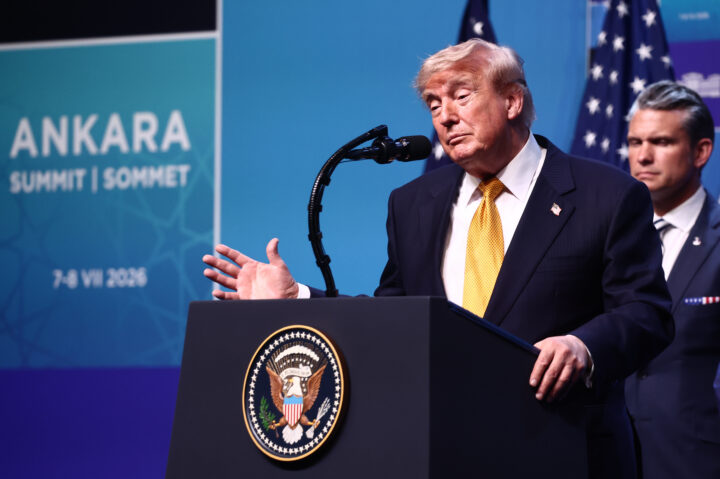
Jakub Porzycki/NurPhoto via Getty Images
President Donald Trump during the press conference at the NATO Summit in Ankara, Turkiye on July 8, 2026.
Good Wednesday afternoon.
This P.M. briefing is reserved for our premium subscribers like you — offering a forward-focused read on what we’re tracking now and what’s coming next.
Today’s Daily Overtime was curated by JI U.S. Editor Danielle Cohen-Kanik.
📡On Our Radar
Notable developments and interesting tidbits we’re tracking
CENTCOM began conducting additional strikes against Iran this afternoon, after President Donald Trump continued to escalate his rhetoric against the regime in his remarks today at the NATO summit in Ankara, Turkey.
Trump said he wasn’t sure he wanted to make a deal with the Iranians any longer and reiterated his threat to “finish the job,” but still denied the strikes mark a return to full-scale war: “I think anything that happens is going to be over very quickly,” he said…
Israeli Prime Minister Benjamin Netanyahu confirmed that Defense Secretary Pete Hegseth had scrapped a planned trip to Israel, saying in an interview that the defense chief had been “called back home” from the summit in Ankara. Meanwhile, Israeli media reports that American military refueling planes have begun to return to the region…
Trump is likely to face pushback from lawmakers over the renewed strikes: Rep. Greg Meeks (D-NY), the ranking member of the House Foreign Affairs Committee, said he’s already “in conversations with the Senate to explore any and all legal pathways to hold Trump accountable,” given that both chambers of Congress already passed a war powers resolution seeking an end to U.S. military action in Iran…
Trump also informed Congress today that he intends to rescind Syria’s designation as a State Sponsor of Terrorism following a 45-day pre-notification period, Secretary of State Marco Rubio announced, shortly after Trump held a friendly meeting with Syrian President Ahmad al-Sharaa on the sidelines of the NATO summit…
Former Chicago Mayor Rahm Emanuel, speaking to Jewish Insider’s Melissa Weiss prior to his speech at Tel Aviv University today, criticized the “moral bankruptcy” of “those that paraded, celebrated and cheered” in the aftermath of Hamas’ Oct. 7, 2023, attacks on Israel.
Responding to a question about Democrats who did so — including New York City congressional candidate Darializa Avila Chevalier, who attended an anti-Israel rally in Times Square on Oct. 8, 2023 — Emanuel said, “I have no place for the moral bankruptcy of those that found Oct. 8 as the day to cheer 1,200 people not only killed but sexually abused, and for taking hostage 250 people”…
In an interview on Israel’s Channel 12, Emanuel confirmed he’s “thinking about” running for president in 2028 and said he believes Americans could elect a Jewish president. “I believe people will evaluate me based on my character and my background,” he said…
Maine Democratic Senate candidate Graham Platner still remains in the race two days after Politico published an account from a former romantic partner accusing him of rape, though the candidate’s feud with the Maine Democratic Party continues. Platner’s campaign manager, Ben Chin, sent a message to supporters today accusing the MDP of allowing the national Democratic Senatorial Campaign Committee to orchestrate Platner’s replacement “behind closed doors.”
In response, the MDP, which was reportedly set to hold a meeting on the issue this afternoon, said Platner’s campaign is “distracting from the job of defeating [Sen.] Susan Collins (R-ME) in November with false accusations” and pledged to develop “a representative, transparent and inclusive process to select a new nominee when he chooses to withdraw from the race”…
A new Politico survey of Democratic primary voters in Michigan, conducted in the two days after state Sen. Mallory McMorrow dropped out of the race for U.S. Senate, found the two remaining candidates — Rep. Haley Stevens (D-MI) and Abdul El-Sayed — in a statistical tie at 42-41%, with nearly 20% of voters undecided…
Kentucky Gov. Andy Beshear sent a letter to Sen. Mitch McConnell (R-KY) requesting that he “fully update Kentuckians regarding the current status of your health,” as McConnell has been hospitalized for nearly a month…
A new poll from the Associated Press-NORC Center for Public Affairs Research found that 44% of American Jews hold a favorable view of New York City Mayor Zohran Mamdani — a higher percentage than Netanyahu, who received a 32% favorability rating…
Jewish groups — including the Jewish Council for Public Affairs, Anti-Defamation League, American Jewish Committee, Conference of Presidents of Major American Jewish Organizations, Hadassah and StandWithUs — celebrated several steps taken at the National Education Association’s Representative Assembly, which wrapped up yesterday in Denver, including the Jewish Affairs Caucus’ work in advancing three amendments to the NEA Constitution and a resolution on Jewish education…
Bertrand Benoit, The Wall Street Journal’s bureau chief in Germany, explores what it means for Germany’s identity as its citizens begin to lose their living connection to the Holocaust, including how the fading of survivor testimony, rising antisemitism and challenges from both the political right and left are reshaping the country’s culture of remembrance…
⏩ Tomorrow’s Agenda, Today
An early look at tomorrow’s storylines and schedule to keep you a step ahead
Keep an eye on Jewish Insider for a look at the choice ahead for Georgia’s Jewish community in the race between Sen. Jon Ossoff (D-GA) and his opponent, Rep. Mike Collins (R-GA).
The Contemporary Antisemitism conference at the University of Haifa will wrap up with a keynote speech by philosopher and author Bernard-Henri Lévy.
Stories You May Have Missed
SANCTIONS STANDOFF
Lawmakers divided over Trump’s plan to lift sanctions on Turkey

Members from both parties warned lifting penalties would reward Erdoğan’s destabilizing actions, while senators at NATO summit said Turkey could rejoin F-35 program if concerns over Russian S-400 system are resolved
CHATBOT FAIL
AI models more lax with antisemitism when engaging in Persian, new ADL study finds

The antisemitism watchdog tested ChatGPT, Claude, Gemini and Grok and found Persian responses hedged or missed antisemitic framing that English responses rejected outright
Plus, progressives pull the plug on Platner

Photo by Elke Scholiers/Getty Images
Crude oil tankers, bulk carriers and vessels sit anchored around Qaboos Port on June 22, 2026 in Muscat, Oman.
Good Tuesday afternoon.
This P.M. briefing is reserved for our premium subscribers like you — offering a forward-focused read on what we’re tracking now and what’s coming next.
Today’s Daily Overtime was curated by JI U.S. Editor Danielle Cohen-Kanik.
📡On Our Radar
Notable developments and interesting tidbits we’re tracking
The fallout from a rape allegation made against Maine Senate candidate Graham Platner intensified today as Sens. Bernie Sanders (I-VT) and Chris Van Hollen (D-MD) — some of the Democrat’s most prominent progressive backers — rescinded their support of Platner and called on him to drop out. New York City Mayor Zohran Mamdani, who shares a top consultant with Platner, also advised the candidate to drop his bid.
Platner’s campaign has canceled all in-person fundraising events scheduled for the coming days and put holds on its social media ads, according to Politico. The candidate reportedly told his campaign staff in a call last night that a decision on the future of his race is forthcoming…
Several prominent Maine Democrats have begun to signal interest in replacing Platner on the general election ballot, should he withdraw by the deadline of July 13. Among those hinting at a run are Troy Jackson, a former state Senate president who has already filed with the Federal Election Commission to explore a bid; former U.S. House candidate Jordan Wood; former gubernatorial candidate Nirav Shah; and Platner’s former primary opponent David Costello.
Maine Democratic Party officials are considering holding a pop-up convention around July 25 or holding a statewide caucus to choose Platner’s replacement, sources told The New York Times…
As the heated Democratic Senate primary in Michigan enters its final stretch, far-left candidate Abdul El-Sayed told CNN this week that he does not believe that a politician’s support for Israel could be about anything other than money, Jewish Insider’s Gabby Deutch reports. “Not if you’re a Democrat and you believe in human rights,” El-Sayed told CNN when asked about such a distinction…
The Treasury Department revoked the waiver it issued last month lifting sanctions on Iranian oil, after Iran reportedly struck another vessel in the Strait of Hormuz today, marking the third such attack in the last 24 hours.
“As President [Donald] Trump and the administration have repeatedly affirmed, the [memorandum of understanding] in effect with Iran is entirely performance-based. Iran will only reap benefits if they exhibit good behavior,” a U.S. official told JI’s Matthew Shea. “Iran’s actions in the Strait were wholly unacceptable to the United States and will be met with consequences. Our negotiators continue to work in good faith towards a final deal”…
Qatar’s Foreign Ministry summoned Iran’s deputy ambassador in the Gulf stateto express its “strong condemnation and denunciation” of Tehran’s strike yesterday on a Qatari tanker, after Doha sent a delegation of officials to the funeral of Supreme Leader Ayatollah Ali Khamenei in an apparent diplomatic olive branch…
Saudi Arabia is considering increasing the capacity of its East-West oil pipeline in order to bypass the Strait of Hormuz and facilitate oil exports out of the Red Sea, Reuters reports…
Trump announced today that his administration is preparing to lift congressionally mandated sanctions on Turkey as he weighs moving forward with the sale of F-35 fighter jets to Ankara, JI’s Matthew Shea reports.
“It’s time to do that. We don’t want to sanction friends,” the president said. Defense experts and lawmakers previously told JI that Turkey still maintains the Russian air-defense system that prompted the sanctions in 2020, which makes lifting the sanctions legally complicated…
Israeli Prime Minister Benjamin Netanyahu again voiced his opposition to Trump’s overtures to Ankara, telling CNN that Turkish President Recep Tayyip Erdoğan is “not exactly a model ally of the United States” as he “threatens to destroy my country, the one and only Jewish state.”
Israeli Diaspora Affairs Minister Amichai Chikli went further in his rhetoric, calling Erdoğan a “grotesque hybrid of Hitler and [late Hamas leader Yahya] Sinwar” and a “pathetic blood-soaked zero” in a post on X yesterday…
The Israeli Consulate in New York was evacuated from its Midtown Manhattan building after a nearby high-rise building under construction showed signs of collapsing, prompting evacuations across the area…
⏩ Tomorrow’s Agenda, Today
An early look at tomorrow’s storylines and schedule to keep you a step ahead
Keep an eye on Jewish Insider for coverage of tonight’s debate between Michigan Senate Democratic primary candidates Abdul El-Sayed and Rep. Haley Stevens (D-MI), with less than a month to go until the election.
The NATO summit in Ankara will conclude with the main working session of all 32 member states as well as a press conference from NATO Secretary-General Mark Rutte. A bipartisan delegation of U.S. lawmakers is set to attend a dinner tonight on the sidelines of the summit with Treasury Secretary Scott Bessent and U.S. Ambassador to Turkey Tom Barrack.
Former U.S. Ambassador to Japan Rahm Emanuel will deliver a speech at Tel Aviv University, where he is set to lay out his vision for the future of the U.S.-Israel relationship as he prepares for a potential 2028 presidential run. Emanuel met today with Israeli President Isaac Herzog and visited the Yad Vashem Holocaust museum.
The Contemporary Antisemitism conference will continue at the University of Haifa.
Stories You May Have Missed
SORE SPOT
Wasserman Schultz’s reelection bid ignites tensions within Democratic Party
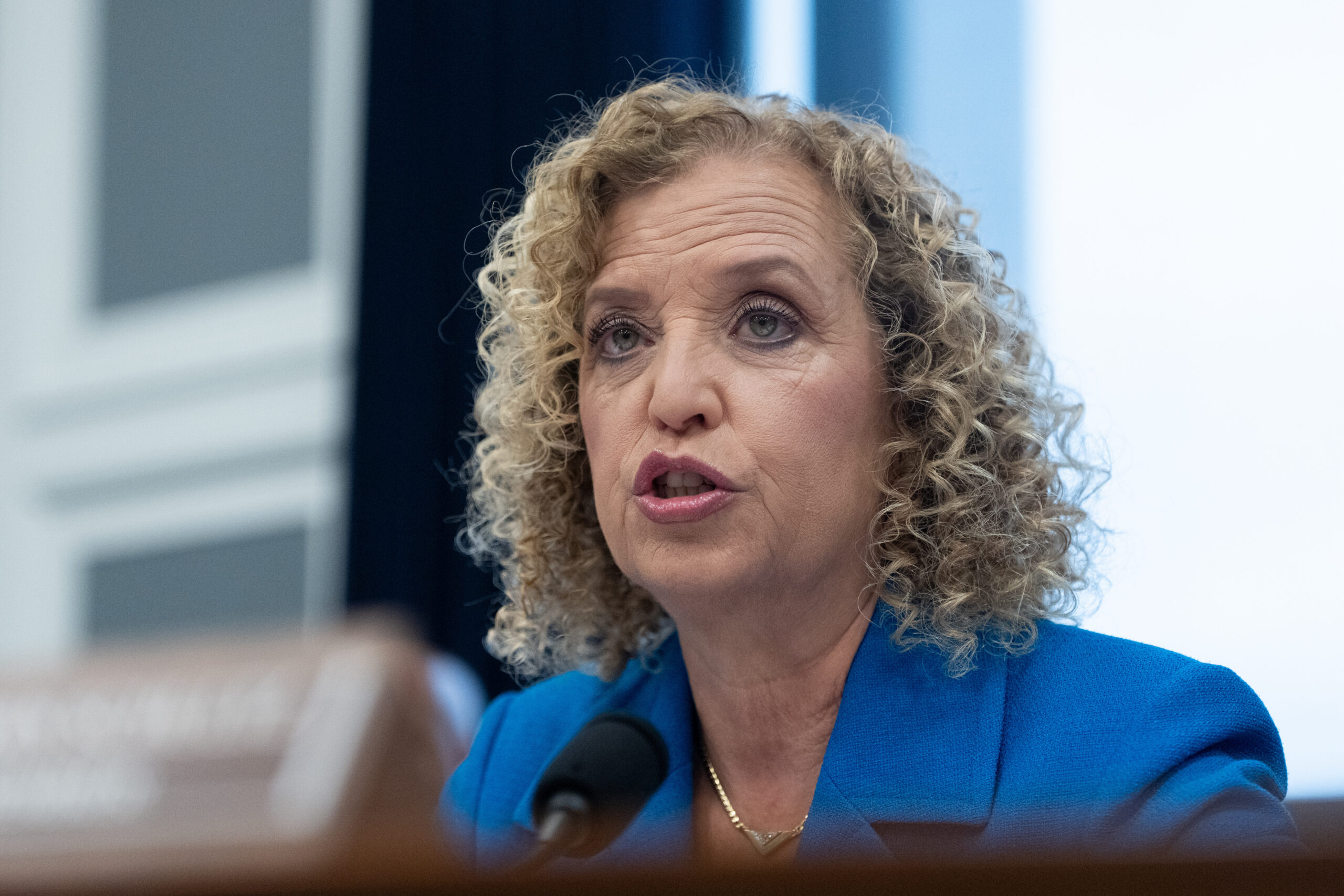
Black leaders in the district have failed to unite behind a single challenger, leaving the Jewish congresswoman favored in a plurality race but potentially vulnerable down the road
DEAL DISPUTE
Israeli Ambassador Leiter says Israel, Lebanon agreement supersedes Iran MOU
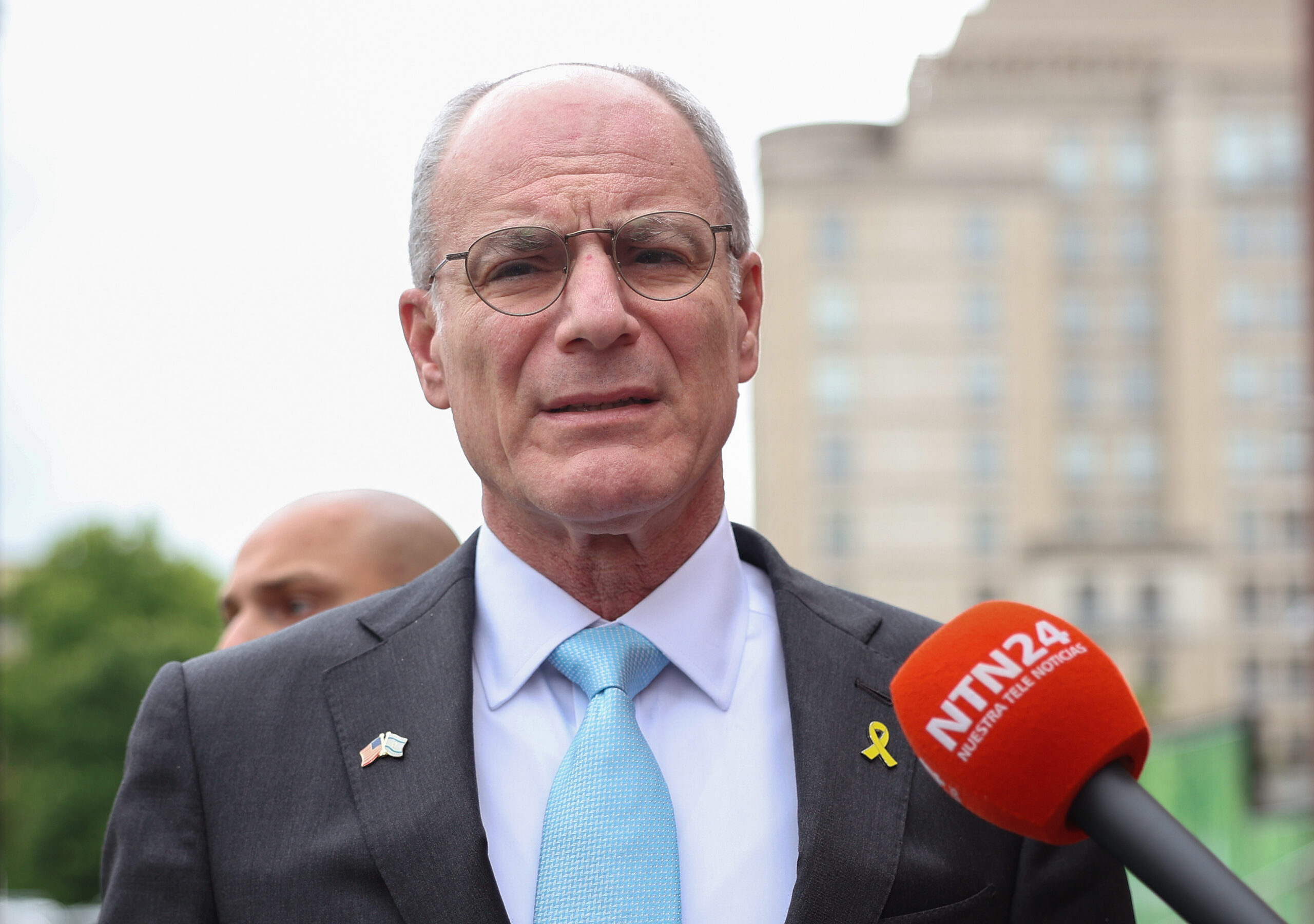
The ambassador announced that the next round of Israel-Lebanon negotiations will take place next week in Rome
A U.S. official called Iran's actions ‘wholly unacceptable’ but said negotiators continue to work ‘in good faith’ toward a final deal
Photo by Elke Scholiers/Getty Images
Crude oil tankers, bulk carriers and vessels sit anchored around Qaboos Port on June 22, 2026 in Muscat, Oman.
A brief window of U.S. sanctions relief for Tehran closed on Tuesday as the Trump administration revoked a waiver that allowed the sale of Iranian oil in response to continued Iranian attacks on shipping vessels in the Strait of Hormuz.
Last month, the Treasury Department lifted sanctions on Iranian oil sales by issuing a 60-day license, a decision experts told Jewish Insider risked providing Tehran with significant revenue for malign activity. Treasury Secretary Scott Bessent had said the temporary license was issued due to Iran’s commitments under the memorandum of understanding, including guaranteeing safe passage through the Strait of Hormuz and inviting international nuclear inspectors back into the country — a claim that Iran swiftly denied. The license allowed Iran to produce, deliver and sell oil, including to U.S. importers, through Aug. 21.
But since the agreement was signed, Iran has since continued its attacks on commercial vessels navigating the Strait of Hormuz, including strikes on three commercial tankers since the beginning of the week, which a U.S. official called “wholly unacceptable.”
“As President [Donald] Trump and the administration have repeatedly affirmed, the MOU in effect with Iran is entirely performance-based. Iran will only reap benefits if they exhibit good behavior,” the official told JI. “Iran’s actions in the Strait were wholly unacceptable to the United States and will be met with consequences. Our negotiators continue to work in good faith towards a final deal.”
An Iranian Foreign Ministry spokesperson had warned that commercial vessels using routes outside of Iranian control could face consequences and said that Iran was “diligently fulfilling its commitments” within the MOU to manage the strait, according to Axios.
Plus, Rahm Emanuel says Israel support should come with strings
Joe Raedle/Getty Images
Democratic U.S. Senate candidate Graham Platner speaks at a “Fighting Oligarchy” tour stop held by Sen. Bernie Sanders (I-VT) at the Collins Center for the Arts on the University of Maine campus on May 24, 2026 in Orono, Maine.
Good Monday afternoon.
This P.M. briefing is reserved for our premium subscribers like you — offering a forward-focused read on what we’re tracking now and what’s coming next.
Today’s Daily Overtime was curated by JI U.S. Editor Danielle Cohen-Kanik.
📡On Our Radar
Notable developments and interesting tidbits we’re tracking
A woman who dated Maine Senate nominee Graham Platner alleged in a series of interviews with Politico that the Democrat sexually assaulted her in 2021, an account the outlet backed up with her correspondence and other interviews.The woman, Jenny Racicot, said Platner came into her home uninvited while intoxicated and forced himself on her despite her repeated objections.
In a video statement, Platner denied the accusation outright but said he’s “mindful of the political reality it will inflict” and would be “taking the time to reflect on the best path forward for the state that I love,” a different tone than Platner has struck in the aftermath of his previous controversies. The Maine Democratic Party can only choose a replacement nominee for the general election ballot if Platner voluntarily withdraws by July 13…
Israeli Prime Minister Benjamin Netanyahu voiced opposition today to the Trump administration’s sale of jet engines and potential sale of F-35 fighter jets to Turkey, hours before President Donald Trump was set to depart for the NATO summit in Ankara, Jewish Insider’s Christina Sher reports.
Netanyahu suggested on “Fox & Friends” that such moves “will upset the power balance in the Middle East, which is ultimately guaranteed by Israeli air superiority” and U.S. posture in the region. Axios reports that Netanyahu relayed the same message directly to Trump in a phone call last week and asked him to help address Turkish President Recep Tayyip Erdoğan‘s escalating anti-Israel rhetoric…
The percentage of Jewish Israelis who believe Israel’s security is a central consideration for Trump has reached a record low of 26%, according to a new survey from the Israel Democracy Institute, JI’s Matthew Shea reports. The figure marks a 15-point decrease from a month ago, during which time the Trump administration signed its memorandum of understanding with Iran…
Hamas spokesperson Hazem Qassem announced at a press conference in Gaza today that the terror group’s Emergency Committee — the administrative body that has governed the enclave for more than two decades — is dissolving and that its civil servants, who will remain in their roles, stand ready to work under the new technocratic government established by the Board of Peace.
The BoP expressed skepticism about the announcement, JI’s Emily Jacobs and Matthew Shea report, saying its “assessment will be guided by actions, not promises” and calling for a “genuine transfer of authority” and for Hamas to disarm. Israeli Foreign Minister Gideon Sa’ar dismissed the move outright, calling it a “trick … designed to prevent [Hamas’] own disarmament”…
Israeli Ambassador to the U.S. Yechiel Leiter said both Israel and Lebanon see the agreement signed between Jerusalem, Beirut and Washington earlier this month as “superseding” the first clause of the U.S.-Iran MOU, which calls for the end of hostilities on all fronts. “Whether or not the United States does, you’ll have to ask an administration spokesman,” Leiter said at an event with the Council on Foreign Relations.
Leiter also said he “can’t imagine that any ultimate agreement with Iran would be absent a clause limiting the development of ballistic missiles,” though the MOU did not mention Iran’s ballistic missile program…
In a preview obtained by Politico of the speech former U.S. Ambassador to Japan Rahm Emanuel is set to deliver at Tel Aviv University on Wednesday, the prospective 2028 presidential candidate is set to say that the U.S. has spent too long “averting its eyes” from what he views as Israel’s misadventures, calling for “significant changes and a new direction” in the bilateral relationship.
“Going forward, Emanuel plans to say, Israelis should regard U.S. support as expressly contingent: On reviving a serious commitment to Palestinian sovereignty; On rejecting dreams of asserting dominion beyond official borders in pursuit of ‘Greater Israel’; On abandoning a security strategy that emphasizes brutally effective military force with scant attention to diplomacy or credible what-next plans in Gaza and Iran,” the outlet reported…
French President Emmanuel Macron became the first major Western head of state to visit Syria since the fall of dictator Bashar al-Assad in 2024, landing in Damascus today for meetings with Syrian leaders. Syrian President Ahmad al-Sharaa is also expected to meet with Trump on the sidelines of the NATO summit in Turkey this week…
⏩ Tomorrow’s Agenda, Today
An early look at tomorrow’s storylines and schedule to keep you a step ahead
The two-day NATO summit begins in Turkey tomorrow with leaders of all 32 NATO countries expected to attend, as well as a congressional delegation comprised of Sens. Dick Durbin (D-IL), Jeanne Shaheen (D-NH), Thom Tillis (R-NC), Chris Coons (D-DE) and Mike Rounds (R-SD) and Rep. Mike Turner (R-OH). At the top of the agenda are increasing defense investments, as Trump continues to press NATO allies to shoulder a greater share of the alliance’s defense burden and threatens to draw down U.S. troops from Europe, and continuing to support Ukraine in its war with Russia.
Rep. Haley Stevens (D-MI) and Abdul El-Sayed, now the only remaining candidates in Michigan’s Democratic U.S. Senate primary, will participate in a televised debate on local news tomorrow night, their first head-to-head matchup since state Sen. Mallory McMorrow suspended her campaign yesterday.
The annual Contemporary Antisemitism conference, which bills itself as the largest annual academic conference on contemporary antisemitism, will kick off tomorrow at the University of Haifa. The three-day summit will feature hundreds of academics and experts, with a keynote speech tomorrow from former State Department antisemitism envoy Deborah Lipstadt and a lifetime achievement award presented to Tel Aviv University professor emerita Dina Porat.
Stories You May Have Missed
NO FLIGHT PLAN
House Democrats introduce legislation to block sale of jet engines to Turkey

Rep. Dina Titus is leading the Joint Resolution of Disapproval against the Trump administration’s $700 million sale of F110 jet engines to Turkey despite legal restrictions on U.S. military sales to the country
TEACHING MOMENT
NEA adopts new rules ahead of convention — but union members are reserving judgment

Some Jewish Affairs Caucus leaders say they weren’t consulted about the changes, which are meant to prevent issues around antisemitism that occurred at last year’s assembly
Plus, Israel ally draws the line at Syria
Andrew Harnik/Getty Images
Rep. Yassamin Ansari (D-AZ) speaks during a news conference on Capitol Hill on November 13, 2025 in Washington, DC.
Good Thursday afternoon.
This P.M. briefing is reserved for our premium subscribers like you — offering a forward-focused read on what we’re tracking now and what’s coming next.
Today’s Daily Overtime was curated by JI U.S. Editor Danielle Cohen-Kanik.
📡On Our Radar
Notable developments and interesting tidbits we’re tracking
In their indirect talks in Doha this week, the U.S. offered Iran access to some of its$100 billion in frozen funds in exchange for Tehran not instituting a toll on the Strait of Hormuz, but Iranian officials have continued to signal they plan to proceed with the move. Continued fighting between Israel and Hezbollah in Lebanon also caused tension during the discussions, The Wall Street Journal reports…
U.S. officials told The New York Times that Washington believed Israel was plotting to assassinate Iran’s top negotiators — Foreign Minister Abbas Araghchi and parliament speaker Mohammad Bagher Ghalibaf — as they were engaged in recent talks with the U.S. over the memorandum of understanding…
Arizona Jewish and pro-Israel leaders told Jewish Insider’s Matthew Kassel that they feel misled by Rep. Yassamin Ansari (D-AZ), whom they supported in her contested 2024 primary but who has since turned away from the pro-Israel views she espoused during the campaign — including now rejecting support from Democratic Majority for Israel, which backed her with a surge of spending in 2024…
The AIPAC-linked United Democracy Project super PAC is up with its first negative ad against far-left Michigan Senate candidate Abdul El-Sayed, JI’s Marc Rod reports, hitting the Democrat in the initial $2 million ad buy for his “long history of disrespecting women.” Meanwhile, El-Sayed picked up a high-profile endorsement today from Rep. Alexandria Ocasio-Cortez (D-NY), her first in a contested Senate race this cycle.
UDP also made $400,000 in advertising reservations to support Rep. Wesley Bell (D-MO) as he faces a comeback primary challenge from former Rep. Cori Bush (D-MO), whom UDP helped Bell defeat in 2024…
Colorado Attorney General Phil Weiser, the Democratic nominee for governor, criticized his party’s socialist congressional nominee, Melat Kiros, for her refusal to describe the deadly firebombing of a Boulder, Colo., hostage awareness march last year as an act of antisemitism, JI’s Marc Rod reports…
New York City congressional nominee Brad Lander published a response to Rabbi Elliot Cosgrove’s letter earlier this week in which Cosgrove predicted that Lander’s hostility to Israel would not be enough to protect him from being targeted by the far left. Lander argued in his response that criticism of Israel — including describing its war in Gaza as a genocide — is consistent with Jewish values and that excluding anti-Zionist Jews weakens the Jewish community…
New polling data shows that a sizable majority of Jewish voters disapprove of New York City Mayor Zohran Mamdani’s job performance and fear he is pushing the Democratic Party too far to the left, in contrast with non-Jewish voters who hold a largely favorable view of the democratic socialist, JI’s Matthew Kassel reports…
A bipartisan group of House lawmakers, led by Reps. Mike Lawler (R-NY) and Brad Sherman (D-CA), wrote to President Donald Trump today to “express deep concern about any effort” to sell F-35 fighter jets to Turkey, JI’s Marc Rod reports, after Trump and Vice President JD Vance indicated they were looking into it last week…
Rep. Joe Wilson (R-SC), the founder of the Republican Israel Caucus and a reliable ally of the Jewish state, called Israel’s “continuing aggressive operations” in Syria “deeply disturbing,” “counterproductive” and “irresponsible.” Wilson accused Israel of “taking Syrian land and attacking Syrian cities,” saying the operations “need to end immediately”…
Wilson, along with Sens. Jeanne Shaheen (D-NH) and Elizabeth Warren (D-MA), also sent a letter to Secretary of State Marco Rubio urging the administration to remove Syriafrom the State Sponsor of Terrorism list…
Israel marked 1,000 days today since the Oct. 7, 2023, Hamas terror attacks, with memorials and protests taking place around the country…
Far-right commentator Tucker Carlson told the Columbia Journalism Review that he plans to help start a new political party — after saying last month he was renouncing the Republican Party — but does not plan to run as a candidate. He repeatedly railed against Israel in the interview and accused it of “taking over my political system and destroying my country”…
Fanatics CEO Michael Rubin hosted his annual White Party at his Hamptons estate yesterday featuring a host of high-profile attendees, including Ivanka Trump, New England Patriots owner Robert Kraft, former quarterback Tom Brady, actor Leonardo di Caprio and more…
⏩ Tomorrow’s Agenda, Today
An early look at tomorrow’s storylines and schedule to keep you a step ahead
Keep an eye on Jewish Insider for a look at Rep. Debbie Wasserman Schultz’s (D-FL) contentious primary race in Florida’s 20th Congressional District.
Fourth of July celebrations in the nation’s capital are kicking off with a bang (literally — the fireworks show on the National Mall could break world records). President Donald Trump is slated to give a speech on the Mall ahead of the fireworks show on Saturday night, followed by a military flyover debuting the new Qatari-gifted Air Force One jet.
Iran is slated to hold a massive, dayslong funeral procession for the late Supreme Leader Ayatollah Ali Khamenei beginning on Saturday in Tehran and including cities across Iran and Iraq. Pakistan’s Foreign Ministry said Prime Minister Shehbaz Sharif, a top mediator between the U.S. and Iran, will attend the memorial, alongside officials from dozens of other countries.
Christians United for Israel’s annual summit in Washington will begin on Sunday. Speakers over the three-day confab include State Department antisemitism envoy Rabbi Yehuda Kaploun; former Auburn University basketball coach Bruce Pearl; Malcolm Hoenlein, vice chair of the Conference of Presidents of Major American Jewish Organizations; Georgia state Rep. Esther Panitch; and former Israeli hostage Yair Horn.
We’ll be back in your inbox with the Daily Overtime on Monday. Shabbat shalom and happy Fourth of July weekend!
Stories You May Have Missed
LAND OF THE FREE
Even in a fraught moment, American Jews embrace patriotism at the nation’s 250th

Rabbis, historians and communal leaders told JI that the nation’s semiquincentennial offers an opportunity to celebrate America’s promise even as they confront the antisemitism and political currents challenging Jewish life today
CAMPAIGN CONTROVERSY
DSA candidate for Wisconsin governor appears with streamer who called Jews ‘demonic’
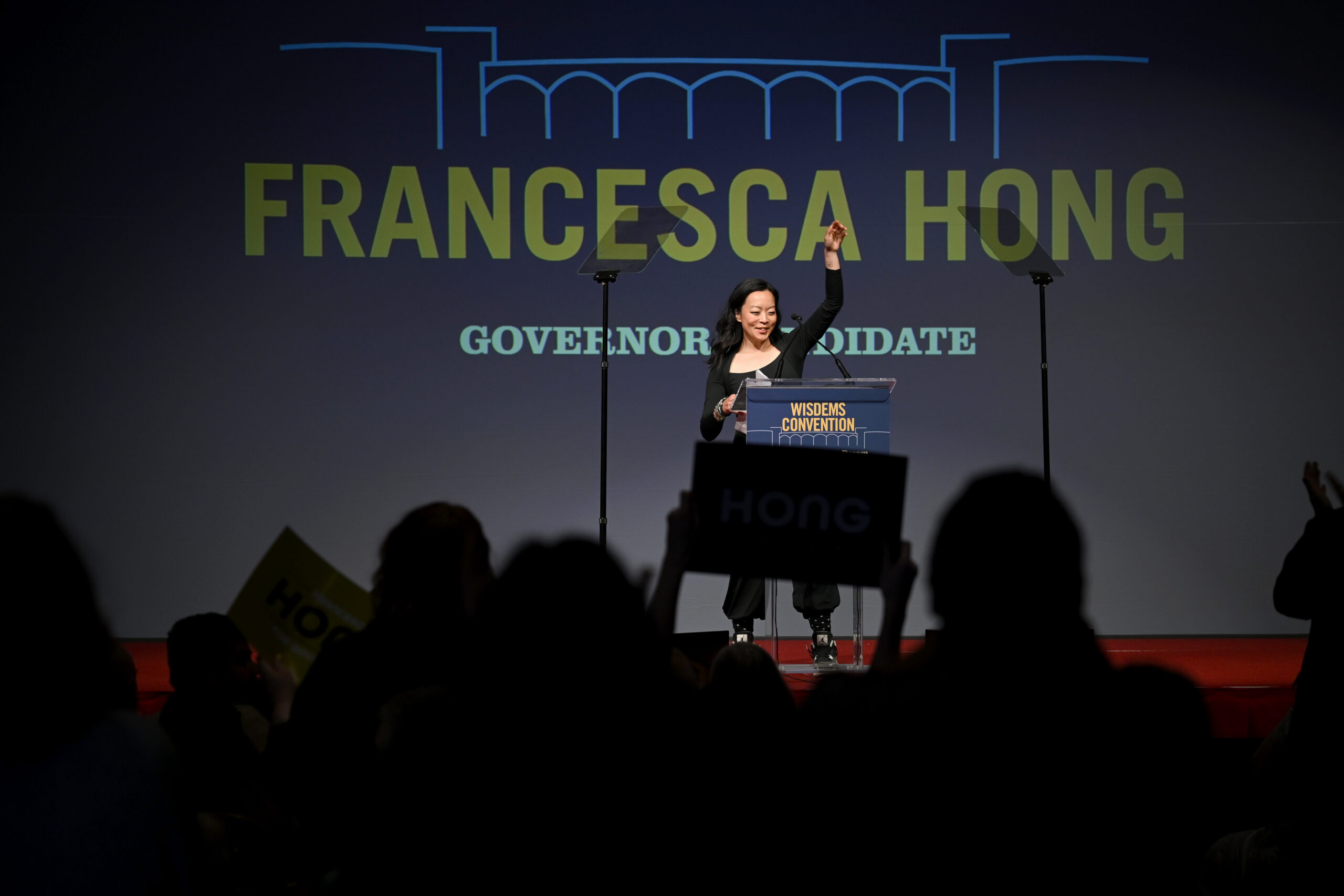
The same day Francesca Hong appeared on the livestream of antisemitic conspiracy theorist ‘Mike From PA,’ she also joined Hasan Piker’s Twitch show
Plus, NEA cracks down on antisemitism chaos

Amirhossein KHORGOOEI / ISNA / AFP via Getty Images
Vessels are pictured anchored in the Strait of Hormuz off Bandar Abbas in southern Iran on May 5, 2026.
Good Wednesday afternoon.
This P.M. briefing is reserved for our premium subscribers like you — offering a forward-focused read on what we’re tracking now and what’s coming next.
Today’s Daily Overtime was curated by JI U.S. Editor Danielle Cohen-Kanik.
📡On Our Radar
Notable developments and interesting tidbits we’re tracking
Talks in Doha about the U.S.-Iran memorandum of understanding have concluded, Iranian Deputy Foreign Minister Kazem Gharibabadi announced, with the countries agreeing to create a communication channel “by tomorrow” in order to address MOU violations.
The U.S. and Iran also agreed to “keep things quiet for the coming week,” a U.S. official told Axios, while Washington is reportedly continuing to press Tehran to abandon its plan to charge tolls in the Strait of Hormuz and “think bigger” on a nuclear deal. The sums Iran could generate from freely selling oil without sanctions under such a deal “would be 100 times more valuable to them,” the official said…
New York Times/Siena polls of the six Senate battleground states — Alaska, Iowa, Maine, North Carolina, Ohio and Texas — found that Democrats have a path, albeit an uphill one, to retake the chamber in November. All of the races are within the margin of error except in North Carolina, where former Democratic Gov. Roy Cooper leads Michael Whatley, former chair of the Republican National Committee, with the largest margin of seven points…
Poetica Coffee, the Brooklyn cafe that banned Rep. Dan Goldman (D-NY) last week over his support of Israel, claimed in an Instagram post today that Goldman intentionally “smear[ed]” the business in talking about his experience “possibly for election-eve media exposure”…
Rep. Adam Smith (D-WA), ranking member of the House Armed Services Committee, told CNN yesterday that some democratic socialist candidates have views that are “vastly more radical” than where the “Democratic coalition” stands, saying their support for communism, open borders and defunding the police represents “a fundamental attack on America itself”…
Asked about Republicans viewing him as easier to beat in a general election than his more-moderate primary opponents, far-left Michigan Democratic Senate candidate Abdul El-Sayed told Semafor, “The number of times I’m gonna define and redefine Mike Rogers!” referring to the GOP Senate front-runner and former Michigan representative. “By the time I’m done, his best friends are gonna look at him and think what I think, say what I say. I’m gonna define him into eternity”…
The National Education Association adopted new policies ahead of its convening this weekend in Denver after its Jewish Affairs Caucus and the Jewish Council for Public Affairs advocated for such changes, JCPA said, in response to last year’s assembly which grew contentious over antisemitism issues. The new changes include stronger conduct enforcement for delegates, electronic voting to reduce shouting on the floor during resolution votes, de-escalation training for NEA staff and repeated public reminders of the rules…
Loay Abdelfattah Alnaji was sentenced to one year in jail and two years of probation yesterday after pleading guilty to involuntary manslaughter and battery in the death of Paul Kessler, a 69-year-old Jewish man who died after Alnaji struck him with a megaphone at a protest in California shortly after the Oct. 7 Hamas attacks. The Anti-Defamation League’s California regional offices decried the sentence as “little more than a slap on the wrist” and expressed concern at the judge’s dismissive demeanor during sentencing…
A New York woman was arrested yesterday by the FBI for allegedly providing material support to the Palestinian Islamic Jihad, including over $30,000 in cryptocurrency. The woman is a leader of an extremist organization called the Direct Action Movement for Palestinian Liberation, according to the FBI, and had communicated with a person claiming to be a PIJ fighter in Gaza, whom she told she “wish[es] every day were October 7th”…
Speaking at the Herzliya Conference in Israel, Maj. Gen. (res.) Amir Baram, director general of the Israeli Ministry of Defense, addressed Israeli public criticism of the U.S.’ foreign policy, Jewish Insider’s Matthew Shea reports: “What some in Israel perceive as weakness or folly, an apparent disregard for every warning sign on the ground, is viewed in Washington as cold, calculated and clear-eyed risk management in an era of shifting global attention.”
“For us, Iran is an existential threat; for the United States, it is a chronic regional challenge,” Baram said of the countries’ differing priorities. “We think Tehran, they think Taiwan”…
U.S. Ambassador to Israel Mike Huckabee and Israeli Foreign Minister Gideon Sa’ar held a ceremony to sign the lease for the permanent new complex of the U.S. Embassy in Jerusalem; Huckabee handed Sa’ar a $1 bill as symbolic payment for the 99-year lease…
The New York Times looks at President Donald Trump’s insistence that Syria take over fighting Hezbollah in Lebanon from Israel, an idea that has been shot down by Syrian President Ahmad al-Sharaa and raised alarm across the Middle East…
CENTCOM hosted a regional security dialogue alongside the Bahrain Defense Force with participation from Egypt, Jordan, Kuwait, Lebanon, Oman, Qatar, Saudi Arabia, Syria, the UAE and Yemen — “the first time military leaders from Syria and Lebanon participated in a regional defense conference led by the United States,” CENTCOM said…
The U.S. Navy is searching for a missing aircrew member after a Sea Hawk helicopter made an emergency water landing in the Arabian Sea, with three of the four crew members rescued in stable condition. There’s no indication any hostile action was involved, the Navy’s 5th Fleet said…
⏩ Tomorrow’s Agenda, Today
An early look at tomorrow’s storylines and schedule to keep you a step ahead
Keep an eye on Jewish Insider for a look at how Jewish leaders are approaching America’s 250th birthday — and why many see the milestone, coming at a fraught moment, as a chance to reaffirm both their Jewish identity and their faith in the American experiment.
The Maccabiah Games, which kicked off today in Jerusalem with a grand opening ceremony, begin in earnest tomorrow as about 5,000 athletes — including 900 from the U.S. — compete in more than 30 sports over the next two weeks.
Stories You May Have Missed
PLATFORM PUNT
Top Democrats won’t commit to supporting Israel’s security in party platform

House Minority Leader Hakeem Jeffries and Reps. Alexandria Ocasio-Cortez and Greg Casar were noncommittal when pressed by JI
RED SCARE
Democratic leaders brush off Avila Chevalier’s posts praising communism, say she’s changed

Jeffries said Avila Chevalier has ‘walked away from many of the things that have been unearthed’ following a CNN report on her past sympathetic posts about communism and Soviet figures
Plus, Menin's measured rebuke of antisemitic Brooklyn Dem

Jabin Botsford/The Washington Post via Getty Images
Rep. Rashida Tlaib (D-MI) speaks during a hearing on Capitol Hill on Wednesday, Dec. 01, 2021, in Washington, D.C.
Good Tuesday afternoon.
This P.M. briefing is reserved for our premium subscribers like you — offering a forward-focused read on what we’re tracking now and what’s coming next.
Today’s Daily Overtime was curated by JI U.S. Editor Danielle Cohen-Kanik.
📡On Our Radar
Notable developments and interesting tidbits we’re tracking
Nearly all House Democrats voted in favor of a war powers resolution this afternoon that aimed to block U.S. support for Israeli operations against Hezbollah in Lebanon, Jewish Insider’s Marc Rod reports, though the legislation failed to secure a House majority, with nearly all Republicans and 22 Democrats voting against the measure…
White House Special Envoy Steve Witkoff and Jared Kushner are in Doha, Qatari Foreign Ministry spokesperson Majed al-Ansari confirmed, where they were set to meet with Qatari Prime Minister Sheikh Mohammed bin Abdulrahman Al Thani and other mediators, but did not hold talks with Iranian officials. It’s a step back from the direct negotiations that took place in Switzerland just a week ago…
Al-Ansari said further that the $6 billion in frozen Iranian assets has not yet been released to Tehran. “Whether the funds are transferred depends on the agreement of both parties and the progress of negotiations, which has not yet occurred,” he announced at a press briefing today…
Meanwhile, Oman has submitted a proposal to the U.S. for Muscat and Tehran to collect service fees from shipping companies seeking to transit the Strait of Hormuz, The New York Times reports. One of Iran’s deputy foreign ministers, Kazem Gharibabadi, said yesterday if Iran was unable to come to an arrangement with Oman it would move forward on its own…
A small group of House Republicans, led by Rep. Don Bacon (R-NE), is threatening not to support the Trump administration’s $88 billion Iran war supplemental funding request unless the White House replaces more than 4,000 U.S. troops who were pulled out of Poland last month, Politico reports. The effort could hold up the supplemental, already expected to face a tough fight, given the GOP’s razor-thin majority in the chamber…
A 20-year-old U.S. citizen living in Jerusalem is set to be charged by Israeli prosecutors for spying on Iran’s behalf. The suspect, arrested earlier this month, was allegedly paid to take pictures and videos of “sensitive sites” in Israel over several months…
Iranian Foreign Minister Abbas Araghchi met with Iraqi leaders in Baghdad today as both countries prepare for a “mass funeral” for the late Iranian Supreme Leader Ayatollah Ali Khamenei, Araghchi said, after Khamenei was killed in February in a joint U.S.-Israeli operation…
The Israeli Ministry of Defense and defense manufacturer Rafael completed a successful test integrating the Iron Beam laser system into the Iron Dome missile-defense array, marking a “major breakthrough,” Rafael announced…
Ellie Cohanim, who served as deputy special envoy to monitor and combat antisemitism in President Donald Trump’s first term, recently joined his administration as a senior policy advisor to U.S. Ambassador to the U.N. Mike Waltz, Waltz announced today…
A New York Times/Siena poll of the race for U.S. Senate in Texas found Republican Attorney General Ken Paxton and Democratic state Rep. James Talarico in a dead heat, 47-47%, among likely voters. The seat, once considered a long shot for Democrats in the deep-red state, has emerged as a top-tier pickup opportunity, given Paxton’s ethical and legal baggage…
New York City Council Speaker Julie Menin — the first Jewish person to hold her role — slammed a newly elected Brooklyn Democrat’s promotion of antisemitic conspiracy theories, but declined to call her commentary disqualifying, JI’s Will Bredderman reports…
After a monthslong unexplained absence from Congress, Rep. Tom Kean Jr. (R-NJ) returned to the House floor today to disclose that he had been hospitalized for depression. Kean faces a competitive reelection race against Democratic nominee Rebecca Bennett in a key battleground district in Democrats’ bid to retake the House…
Prominent pro-Israel activist Arsen Ostrovsky, who was injured in the Bondi Beach Hanukkah shooting in Sydney last year, testified before Australia’s Royal Commission on Antisemitism about how he faced “relentless” and “vicious” harassment online after the attack, including AI-altered images of his injuries and accusations that he was a crisis actor…
In a series of high-profiledecisions today, the Supreme Court sided with Vice President JD Vance in a case he brought as a Senate candidate, along with other plaintiffs, and lifted federal limits on coordinated spending between political parties and candidates.
The court also struck down Trump’s attempt to end birthright citizenship — a move that garnered praise from Jewish groups including the American Jewish Committee, the Union for Reform Judaism and the Jewish Council for Public Affairs…
⏩ Tomorrow’s Agenda, Today
An early look at tomorrow’s storylines and schedule to keep you a step ahead
Keep an eye on Jewish Insider for a look at Democrats’ ongoing divisions over an effort to cut aid to Israel led by Rep. Thomas Massie (R-KY).
Technical delegations from the U.S. and Iran are expected to meet separately with Qatari and Pakistani mediators in Doha — still with no direct talks planned.
Hard-line Republicans upended business on the House floor for the second week in a row, blocking the procedural measure that would have teed up consideration of the 2027 State Department funding bill and the 2027 National Defense Authorization Act. After a final vote this evening, the House will head to recess early, until July 13.
The Herzliya Conference continues in Israel: Among the many top national security and political officials speaking are former Prime Ministers Naftali Bennett and Yair Lapid; former Israeli Ambassadors to the U.S. Danny Ayalon and Michael Herzog; former U.S. Ambassador to Israel Dan Shapiro; EU Ambassador to Israel Michael Mann; Yashar party leader Gadi Eisenkot; Yisrael Beiteinu party leader Avigdor Liberman; Democrats party leader Yair Golan; Ra’am party leader Mansour Abbas; and Nadav Tamir, executive director of J Street Israel.
President Donald Trump is set to take his first trip on the jumbo jet gifted to him by Qatar as he travels to an event in North Dakota.
Stories You May Have Missed
PRIDE AND PREJUDICE
California Democrats divided over calling harassment of Scott Wiener antisemitic

Wiener said the incident where he was accosted at a pride march was ‘absolutely’ antisemitic; only a few California elected officials said the same
WESTWARD BOUND
Former CENTCOM chief backs basing U.S. assets in Israel to counter Iran

Gen. Frank McKenzie revealed that CENTCOM had previously proposed a similar western contingency plan to the Biden administration which was shot down
Plus, Susie Wiles' Iran strike skepticism
Nathan Howard-Pool/Getty Images
Delegation staff members meet in the lobby during a quadrilateral meeting between the U.S., Iran, Pakistan, and Qatar at the Lake Lucerne Summit, aimed at advancing a deal to end the Middle East conflict at the Buergenstock Resort, Lake Lucerne on June 21, 2026 near Stansstad, Switzerland.
Good Monday afternoon.
This P.M. briefing is reserved for our premium subscribers like you — offering a forward-focused read on what we’re tracking now and what’s coming next.
Today’s Daily Overtime was curated by JI U.S. Editor Danielle Cohen-Kanik.
📡On Our Radar
Notable developments and interesting tidbits we’re tracking
The U.S. and Iran offered conflicting reports about whether talks will be heldthis week as the countries attempt to deescalate after a weekend exchange of military strikes: President Donald Trump claimed today that Iran had requested a meeting that would take place in Qatar on Tuesday, Jewish Insider’s Matthew Shea reports, while Iranian Foreign Ministry spokesperson Esmaeil Baghaei denied any scheduled meetings with the U.S…
White House Special Envoy Steve Witkoff and Secretary of State Marco Rubio briefed Congress this afternoon on the memorandum of understanding signed with Iran earlier this month, in the first member-wide update on the agreement…
CENTCOM head Adm. Brad Cooper met with Lebanese Armed Forces chief Gen. Rodolphe Haykal in Beirut today to discuss “implementing the security annex” to the Israel–Lebanon framework agreement signed on Friday, the LAF said in a statement. CENTCOM said Cooper also met with “senior civilian and military leaders” in Israel…
White House Chief of Staff Susie Wiles joined Vice President JD Vance in initially voicing skepticism to Israeli Prime Minister Benjamin Netanyahu’s pitch to Trump in February 2025 that the U.S. join Israel in striking Iran’s nuclear facilities, according to a new book by New York Times journalists Maggie Haberman and Jonathan Swan. Wiles feared that any involvement from the U.S. military could “spiral into an Israeli regime-change war,” the authors write…
The IDF’s Military Intelligence Directorate and Southern Command told Lt. Gen. Eyal Zamir, the IDF chief of staff, that Hamas is reconstitutingin order to resume war against Israel, according to Israeli media. The report indicates the IDF is urging a return to its campaign against the terror group, but the U.S. is opposed as it seeks to move forward with Trump’s Board of Peace…
Nika Soon-Shiong, the publisher of the Hamas-sympathetic outlet Drop Site News, claimed she was removed from the board of the Committee to Protect Journalists, sharing a letter she had written to the board objecting to CPJ’s announcement that it would audit its database of members of the media killed during the Israel-Hamas war. The move was undertaken after Hamas and Palestinian Islamic Jihad identified individuals CPJ listed as journalists as members of the terrorist groups…
In the lead-up to this summer’s primary elections, endorsement season is in full swing: In its first-ever endorsement, Jewish Voice for Peace Action, the political arm of the anti-Israel advocacy group, is backing far-left Abdul El-Sayed in the Democratic primary for U.S. Senate in Michigan. The Detroit Free Press, Michigan’s largest newspaper, endorsed one of his opponents, state Sen. Mallory McMorrow.
In Minnesota, Minneapolis Mayor Jacob Frey is backing Rep. Angie Craig (D-MN) for U.S. Senate against her more-progressive primary opponent, Lt. Gov. Peggy Flanagan, and in Massachusetts, Sen. Bernie Sanders (I-VT) endorsed Sen. Ed Markey (D-MA) as he fends off a generational primary challenge from Rep. Seth Moulton (D-MA)…
A new New York Times/Portland Press Herald/Siena poll shows Democratic candidate Graham Platner and Republican Sen. Susan Collins in a statistical tie, 49-47%, among likely voters in the Maine Senate race. The close margin reflects Platner’s struggles to consolidate Democratic support — 10% of voters who say they want Democrats to control the Senate indicated they plan to vote for Collins anyway.
Platner and the Democratic National Committee sent a joint fundraising email today, after Democratic leadership had hesitated to support him during the primary…
New York state Democratic Party Chairman Jay Jacobs acknowledged to The New York Post that the “Israel-Palestinian issue had an impact” in the state’s recent primary elections, where several socialist candidates prevailed. “It hurt establishment Democrats,” he said, including “people who may have voted against [Democratic incumbent Reps. Adriano] Espaillat and [Dan] Goldman because of it”…
Yair Rosenberg, a longtime journalist and commentator on American Jewry, is joining The New York Timesas a reporter covering Jewish American life, the Times announced today, amid criticism over the outlet’s alleged bias in covering antisemitism and Israel.
In the latest such incident, noted by Gabe Stutman, the former editor of J. The Jewish News of Northern California, the Times’ reporting on antisemitic harassment targeting California state Sen. Scott Wiener failed to mention Wiener is Jewish…
⏩ Tomorrow’s Agenda, Today
An early look at tomorrow’s storylines and schedule to keep you a step ahead
Keep an eye on Jewish Insider for a look at how California politicians are responding to the repeated harassment targeting Wiener, who is running to replace retiring Rep. Nancy Pelosi (D-CA) in Congress.
Witkoff and Jared Kushner are headed to Qatar in order to represent the U.S. in talks with Iran, White House spokesperson Karoline Leavitt told Fox News, as the status of the negotiations remains unclear.
The technical talks on the memorandum of understanding meant to be taking place separately are also up in the air — Iran’s Baghaei said an Iranian technical delegation will be in Doha this week but will not be meeting with American officials.
Colorado voters will head to the polls in tomorrow’s Democratic primaries, where moderate incumbents are fearing a far-left sweep similar to that of New York City’s primaries earlier this month. Internal polling from the campaigns of longtime state Democratic leaders Sen. Michael Bennet — who is running for governor — and Rep. Diana DeGette shows much tighter races than expected for the established politicians.
Russell Vought, director of the Office of Management and Budget, will testify before the House Appropriations Committee where he is expected to address the White House’s $88 billion supplemental funding request for the war with Iran and FY2027 budget request.
The Israeli Embassy in Washington will hold a “Zionist LGBTQ+ celebration” on the last day of Pride Month in memory of slain embassy staffer Sarah Milgrim’s allyship.
Reichman University’s Herzliya Conference kicks off in Israel, focusing this year on national security and national resilience. Israeli President Isaac Herzog will address the confab, as well as U.S. Ambassador to Israel Mike Huckabee; Amos Hochstein, who served as a Middle East envoy under former President Joe Biden; former Mossad chief Tamir Pardo; former Israeli National Security Advisor Tzachi Hanegbi; journalist Barak Ravid; and Aliyah Minister Ofir Sofer.
Stories You May Have Missed
WALK-BACK
Top Armed Services Democrat flips on U.S.-Israel cooperation provision in defense bill
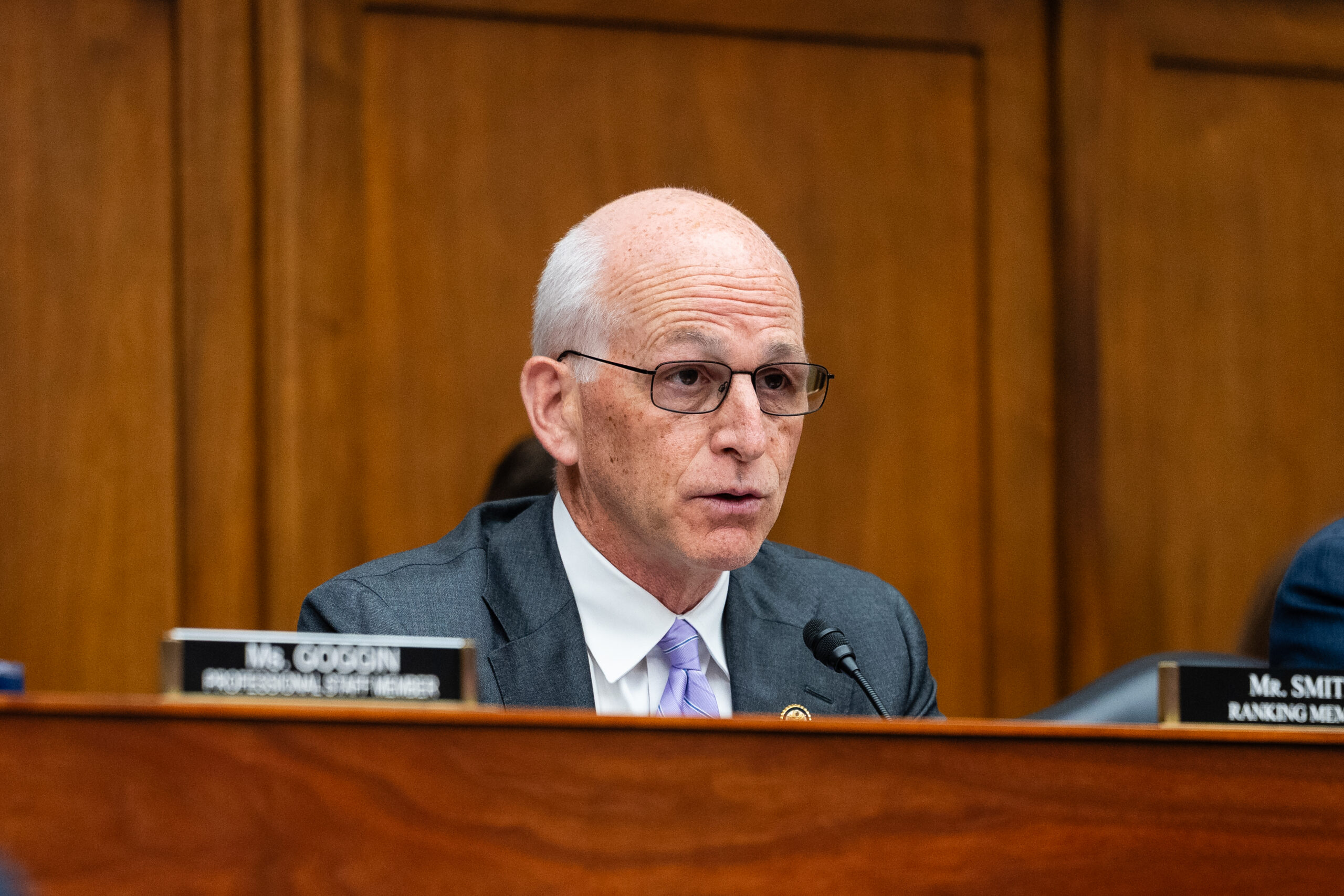
Adam Smith, a reliable supporter of Israel, said he would now join progressives in his party to oppose a provision bolstering a close U.S.-Israel alliance
POLICY PERSPECTIVE
At Aspen Ideas, Robert Kagan says U.S.’ Israel support was ‘never for strategic reasons’

In conversation with Biden foreign policy officials Jake Sullivan and Jon Finer, Kagan said, ‘Israel’s vision for the Middle East has never been a vision that the United States should sign up to’
Plus, David Harris' message for Dems

Morteza Nikoubazl/NurPhoto via Getty Images
Islamic Revolutionary Guard Corps (IRGC) military personnel stand guard on an avenue in downtown Tehran during a rally commemorating the International Quds Day, also known as the Jerusalem day, on April 29, 2022.
Good Thursday afternoon.
This P.M. briefing is reserved for our premium subscribers like you — offering a forward-focused read on what we’re tracking now and what’s coming next.
Today’s Daily Overtime was curated by JI U.S. Editor Danielle Cohen-Kanik.
📡On Our Radar
Notable developments and interesting tidbits we’re tracking
Vice President JD Vance said in an interview released todaythat U.S. military officials are going to “hang out” with representatives of the Islamic Revolutionary Guard Corps, a U.S.-designated terror organization, in Qatar in an effort to establish a conflict-reduction mechanism, Jewish Insider’s Danielle Cohen-Kanik reports.
“[Iran was] like, ‘OK, fine, we’ll send somebody from the IRGC to go hang out in Doha with somebody from CENTCOM,’ and that’s how we’re going to settle a lot of these disputes,” Vance said. He added that officials from the UAE — “by far the most hawkish, by far the most pro-Israel country in the [Gulf Cooperation Council]” — are also in touch directly with the IRGC…
Meanwhile, the IRGC reportedly attacked a cargo ship in the Strait of Hormuz today after issuing a warning to commercial vessels “to strictly refrain from any movement outside the designated routes.”
Iranian officials are further considering a plan to charge for security and environmental services in the strait that would generate $40 billion a year, sources told The Wall Street Journal. Tehran is seeking buy-in from other countries bordering the waterway and offering to share the revenue…
Secretary of State Marco Rubio, speaking to reporters in Bahrain as he wrapped up his Middle East tour today, said that U.S., Israeli and Lebanese representatives meeting for their last day of negotiations in Washington were “very close in our hopes of getting a commitment of intent” — a formal document typically used to outline preliminary terms between parties…
Rubio also spoke at a meeting of GCC foreign ministers where he vowed that Washington would not strike a deal with Iran that undermines “the security, the stability or the prosperity of any of our partners in the Gulf region”…
Iranian parliament speaker and top negotiator Mohammad Bagher Ghalibaf denied President Donald Trump’s claim that the funds received by Iran under the memorandum of understanding will be used to buy American agricultural products. “The only crop we’re harvesting is what you planted: decades of mistrust,” Ghalibaf wrote on X, adding, “apparently the US only exports GMO soybeans, broken promises and trash talks”…
A new Quinnipiac University poll released yesterday found 48% of American voters say the U.S. is too supportive of Israel — the highest level since the survey started posing the question in 2017 — including 66% of Democrats and 20% of Republicans.
Fifty-nine percent of voters said they are “not so confident” or “not confident at all” that Trump’s deal with Iran will work, while 37% said they are “very” or “somewhat” confident…
The New York Times reports on a February meeting between Carl Heastie, speaker of the New York State Assembly, and officials from the New York City Democratic Socialists of America chapter, where Heastie reiterated his request that the group stop targeting incumbent Democrats.
“We told him then, and we’ll tell him now: That’s not something we can do. We have to continue to grow our numbers and grow our influence, and that means challenging incumbents,” recalled Grace Mausser, an NYC-DSA co-chair…
Nassau County Executive Bruce Blakeman, the long-shot GOP candidate for New York governor, lashed out at congressional candidate Brad Lander on Wednesday night, telling Newsmax that the Jewish nominee is “antisemitic” and “would be a camp guard in the concentration camp if he could.” Blakeman, who is also Jewish, dialed back his remarks somewhat in a subsequent statement, saying, “Maybe camp guard was too strong, but certainly collaborator.”
Lander responded, “We named our son after Marek Edelman, a leader of the Warsaw ghetto uprising. That’s how seriously I take the legacy of Jews who fought Nazis”…
Sen. Chris Van Hollen (D-MD) became the second senator to endorsefar-left Michigan Senate candidate Abdul El-Sayed today, after Sen. Bernie Sanders (I-VT) became an early backer of the physician’s campaign. El-Sayed, who has drawn criticism for his heated anti-Israel rhetoric and campaigning with antisemitic streamer Hasan Piker, has previously advocated for Van Hollen to replace Senate Minority Leader Chuck Schumer (D-NY) as the Democratic leader in the Senate, due to Schumer’s continued support for U.S. aid to Israel…
Andy Burnham, the presumptive next prime minister of the U.K., has tapped as his chief of staff James Purnell, a former member of Parliament and lobbying executive who previously served as head of Labour Friends of Israel more than 20 years ago. Purnell also served as a Cabinet minister under former Prime Minister Tony Blair, who is now leading efforts on the Board of Peace for Gaza…
MIT professor Yossi Sheffi talks to the NYT about his forthcoming book on antisemitism at the elite school in the aftermath of the Oct. 7 Hamas attacks: Unsafe at M.I.T.: A Chronicle of a Campus War on the Jews. Sheffi said his book takes the place of an official study and report on campus antisemitism, which many universities undertook after the disruptive student protests of 2023-2024, but MIT did not…
Some Texas Jewish leaders are objecting to proposals under consideration by the State Board of Education that would require public school students to read Bible passages in class, saying they misrepresent Jewish tradition, despite their supporters touting the promotion of “Judeo-Christian” values…
⏩ Tomorrow’s Agenda, Today
An early look at tomorrow’s storylines and schedule to keep you a step ahead
Keep an eye on Jewish Insider for an interview with David Harris, the longtime former CEO of the American Jewish Committee, about his book, Antisemitism: What Everyone Needs to Know.
Harris’ view: “Every Jewish organization looking for a Democrat from Washington lines up to invite Sen. John Fetterman (D-PA). If he’s not available, they’re all baffled as to who else to invite from the contingent of Democrats in the U.S. Senate.”
Amid gridlock on the House floor driven by some Republicans’ frustration with the Senate’s failure to pass President Donald Trump’s signature voter ID bill, the House canceled many of its expected votes this week, including those on the 2027 State Department budget and an effort to cut U.S. aid to Israel. The chamber will return next week with plans to work on the 2027 National Defense Authorization Act.
The Aspen Ideas Festival in Colorado continues, including a session on higher education with Princeton University President Chris Eisgruber and a live recording of “The Long Game” with former National Security Advisor Jake Sullivan and his deputy Jon Finer, the podcast’s co-hosts, with Brookings senior fellow Robert Kagan.
We’ll be back in your inbox with the Daily Overtime on Monday. Shabbat Shalom!
Stories You May Have Missed
TORRES TACTICS
How Ritchie Torres dodged the DSA wave in New York City

The pro-Israel congressman raised early campaign cash, defined his opponent aggressively and prioritized strong constituent services
ON THE HILL
Senate blocks effort to advance war powers resolution in reversal after heated GOP meeting with Trump
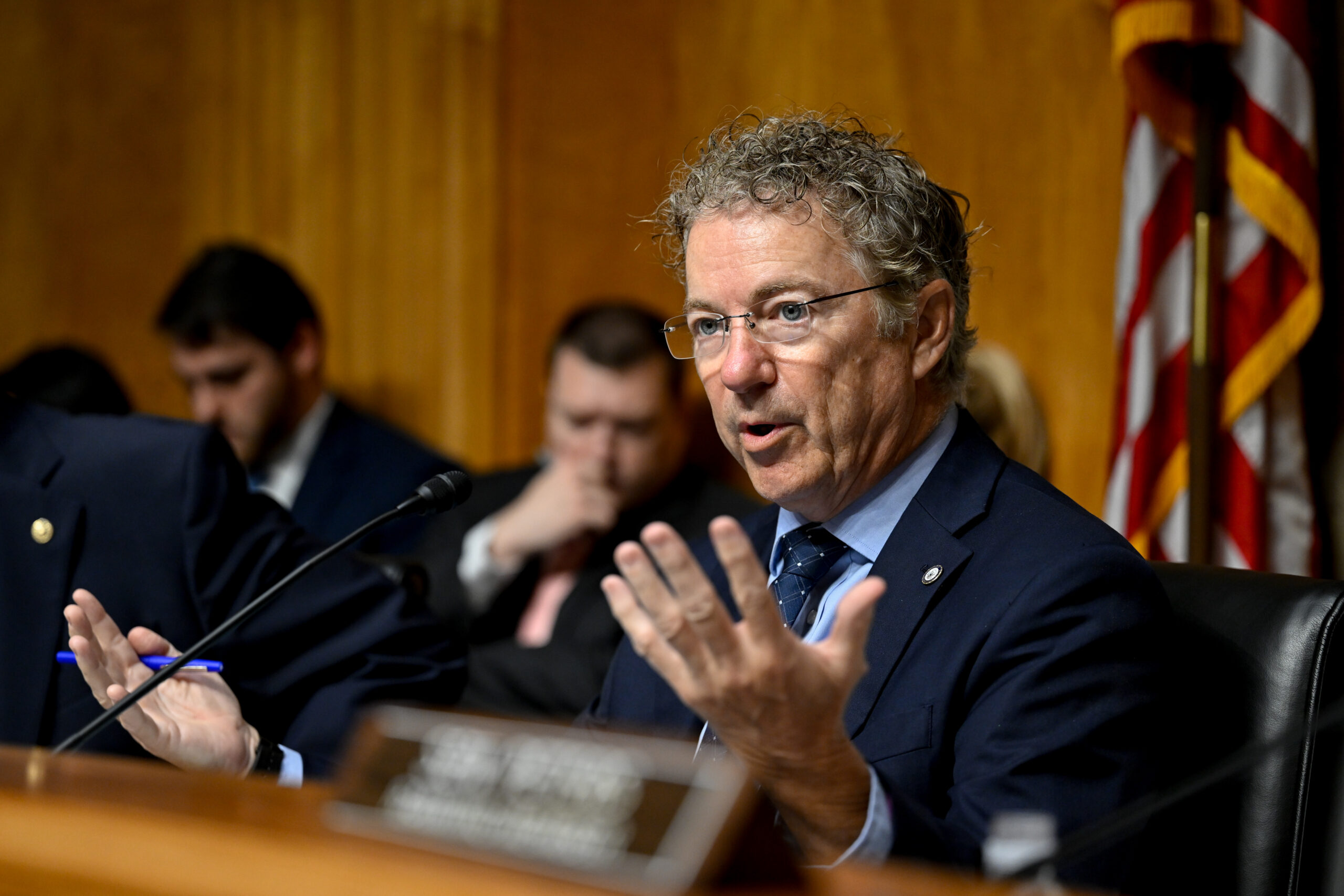
Sens. Bill Cassidy and Rand Paul, supporters of previous war powers efforts, changed their votes on the resolution, which had previously passed a procedural hurdle
Plus, Trump brings the heat to Capitol Hill
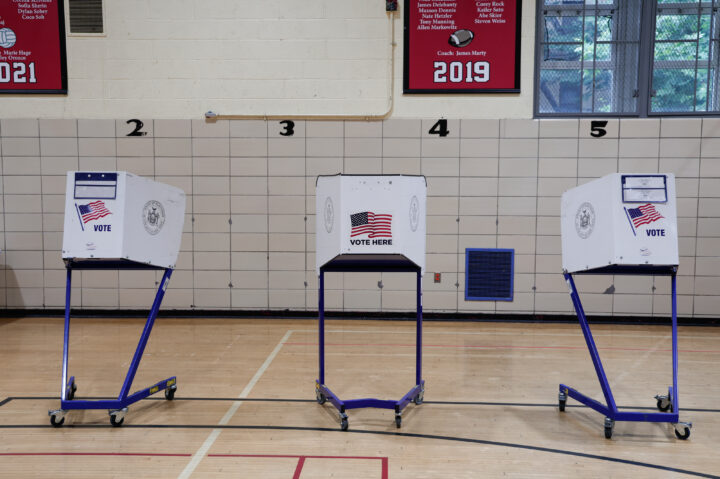
John Lamparski/Bloomberg via Getty Images
Voting booths at a polling location during a primary election in New York on June 23, 2026.
Good Wednesday afternoon.
This P.M. briefing is reserved for our premium subscribers like you — offering a forward-focused read on what we’re tracking now and what’s coming next.
Today’s Daily Overtime was curated by JI U.S. Editor Danielle Cohen-Kanik.
📡On Our Radar
Notable developments and interesting tidbits we’re tracking
Moderate House Democrats were shaken by the success of several Democratic Socialists of America-backed candidates in New York City primaries last night, and particularly the ouster of two incumbents by their left-wing challengers. “People who do not support the DSA wring their hands at cocktail parties, while the DSA is organizing,” Rep. Tom Suozzi (D-NY) told Axios. “You can’t win with these guys by playing patty cake,” another centrist House Democrat said…
Jewish leaders also expressed dismay at the election results: Rabbi Ammiel Hirsch of the Reform Stephen Wise Free Synagogue, an outspoken critic of New York City Mayor Zohran Mamdani, told The New York Times that “a lot of American Jews” woke up today to “a sense of sadness, a sense that we’re losing something important.”
Rabbi Andy Bachman, a former rabbi at Congregation Beth Elohim in Brooklyn, said the “most disturbing” thing about the election results was that “if you declare genocide in Gaza, despite a distinct lack of experience compared to people that you’re running against, it can win you an election”…
Fresh off his election night victories, Mamdani announced today he would be meeting with House Minority Leader Hakeem Jeffries (D-NY), Jewish Insider’s Will Bredderman reports.
Jeffries said earlier that he and Mamdani “agree to strongly disagree about some of his endorsements,” after the mayor helped unseat two New York City Democrats: Reps. Dan Goldman and Adriano Espaillat. “He’s got work to do in terms of the conversations that he’s going to have with members of Congress moving forward,” Jeffries said of Mamdani…
After blindsiding lawmakers today when he abruptly canceled a bill signing for a widely supported bipartisan housing bill, President Donald Trump attended a tense GOP Senate luncheon where he railed against the Senate’s passage of an Iran war powers resolution yesterday and got into a shouting match with Sen. Bill Cassidy (R-LA), who voted in favor.
When Trump asked why any Republican would have supported the measure, Cassidy, who was recently defeated by a Trump-backed challenger, recalled, “I stood and said, ‘You have not told the American people what’s going on’”…
Secretary of State Marco Rubio met with UAE President Sheikh Mohamed bin Zayed in Abu Dhabi this morning, where Rubio said he “thanked the UAE leadership for their unparalleled support, praised their courage and resilience in the face of Iran’s attacks, and reaffirmed our commitment to Emirati security”…
Pictured sitting next to the secretary of state in a working lunch with MBZ was Michael Boulos, Trump’s son-in-law whose father serves as a senior advisor to the president on the Middle East. Rubio said later that his “good friend” Boulos was not involved in the policy discussions…
Rubio then traveled to Kuwait, where he told reporters that technical talks with Iran are slated to resume next week and dismissed speculation that Israel is attempting to undermine the memorandum of understanding: “The Israelis exactly know what we’re working on. All of our partners in the region know what we’re working on”…
Yesterday’s discussions between Israeli and Lebanese representatives for their fifth round of negotiations at the State Department ended without progress and at some points became “ugly,” Axios reports, as military officials from both countries presented conflicting plans for the IDF’s withdrawal from southern Lebanon.
Rubio told reporters that Jerusalem and Beirut are still working to establish pilot zones under the control of the Lebanese Armed Forces where the IDF will pull back, saying, “The more of that area that the LAF is able to secure, the less of it is in Hezbollah’s control, the less Israel will be in Lebanon.” But Israeli Defense Minister Israel Katz stated today that the IDF will not withdraw from southern Lebanon “even if there is an American demand”…
Rubio also presided over the official reopening of the U.S. Embassy in Kuwait City after it was shuttered for security reasons several months ago amid the Iran war…
Iranian parliament speaker and chief negotiator Mohammad Bagher Ghalibaf called the agreement signed with the U.S. “a declaration of America’s defeat,” saying at a conference in Azerbaijan that it was reached as a “result of the resistance and authority” of Iran…
The Trump administration is planning to approve the sale of dozens of jet engines worth more than $700 million to Turkey, according to Reuters, ahead of the NATO summit in Ankara next month. The move comes despite reported security concerns from Congress…
FBI Director Kash Patel met with Qatari Interior Minister Sheikh Khalifa bin Hamad Al-Thani in Washington…
CENTCOM announced that the U.S. killed senior ISIS leader Ali Husayn al-‘Ulaywi in an airstrike in northwest Syria on Friday…
Iranian negotiators are consulting Trump’s book, The Art of the Deal, and psychologists in order to navigate the president’s shifting tone in negotiations, sources told The Wall Street Journal…
⏩ Tomorrow’s Agenda, Today
An early look at tomorrow’s storylines and schedule to keep you a step ahead
Keep an eye on Jewish Insider for a look at how Rep. Ritchie Torres (D-NY) avoided a similar fate to his pro-Israel House colleagues who were ousted from their seats as he overwhelmingly defeated a left-wing challenger who made Torres’ support for Israel central to his attacks.
The House Committee on Education and Workforce will mark up Rep. Randy Fine’s (R-FL) No Antisemitism in Education Act.
Homeland Security Secretary Markwayne Mullin will testify at an oversight hearing in the House Appropriations Committee.
The State Department will begin its two-day Pax Silica Summit at the U.S. Institute of Peace, hosted by Under Secretary of State for Economic Affairs Jacob Helberg, focused on strengthening cooperation in AI supply chains, critical minerals, energy and more. The event will be attended by representatives from the Pax Silica signatory countries — which include Israel, Qatar, the UAE, India, Germany and the U.K., among others — and senior business executives.
The Texas Democratic State Convention begins tomorrow, featuring remarks over the three-day event from Sens. Cory Booker (D-NJ) and Bernie Sanders (I-VT), Texas U.S. Senate candidate James Talarico, Illinois Gov. JB Pritzker and Democratic National Committee Chair Ken Martin. Activists will consider close to 20 resolutions critical of Israel — some of which condemn AIPAC and DMFI — introduced by seven individuals at a party convention in June.
The annual Aspen Ideas Festival will kick off in Colorado, bringing together leading figures from politics, business, media and academia for a week of discussions on global challenges including AI, economic policy and national security.
Stories You May Have Missed
MAMDANI MAM-ENTUM
Socialist sweep in New York as Mamdani candidates prevail
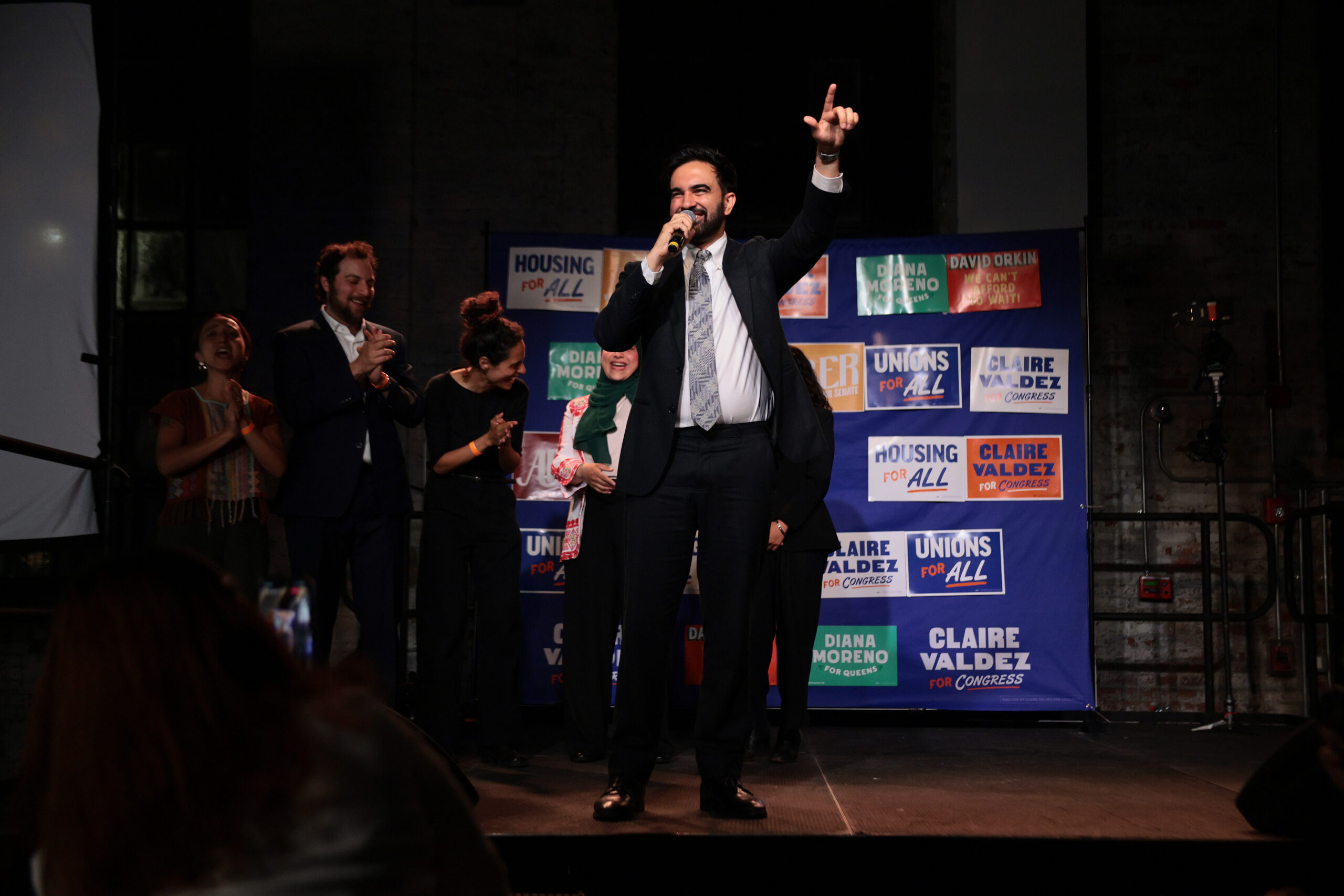
The mayor flexed his political muscle as Brad Lander, Claire Valdez and Darializa Avila Chevalier triumphed in their congressional primaries
2028 WATCH
Prospective 2028 Democrats rally against Trump’s Iran agreement
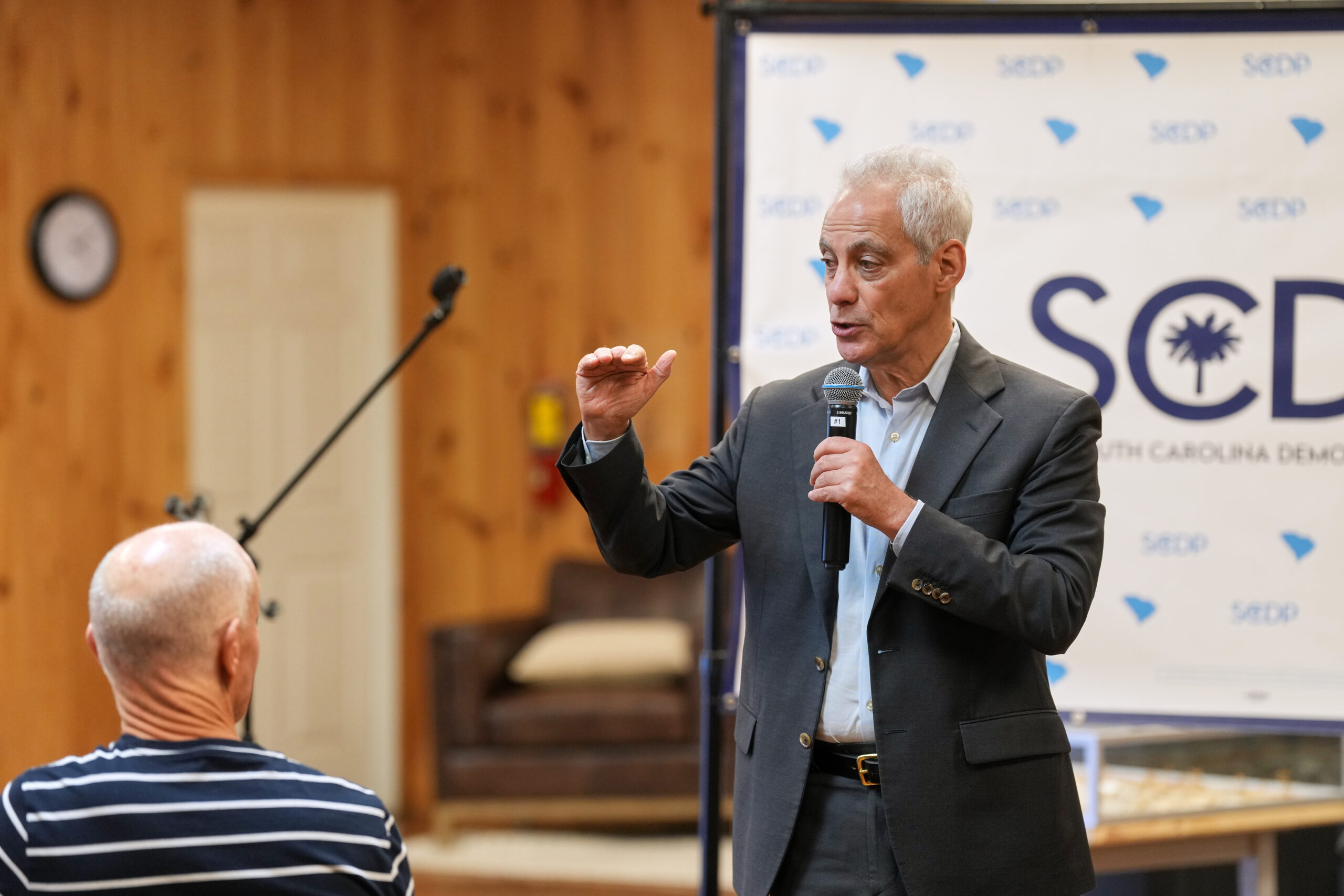
Several Democrats considering presidential bids have cast the Iran agreement as evidence of weak leadership, arguing that Trump has been outmaneuvered by Tehran
Plus, NYC first lady snubs Brad Lander on primary day
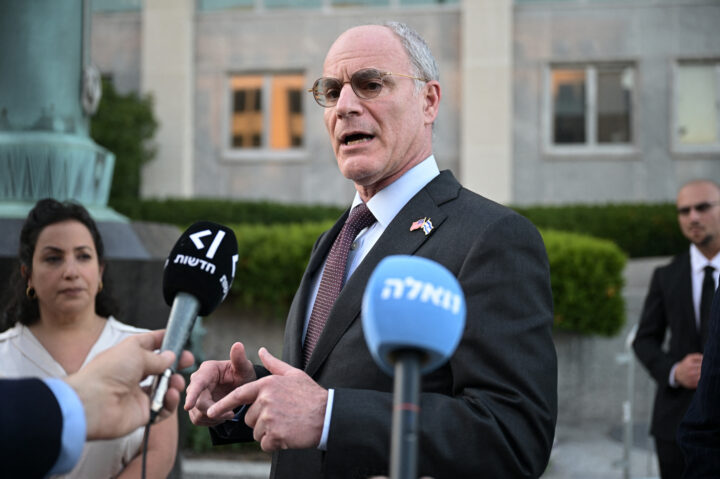
Oliver Contreras / AFP via Getty Images
Israel's Ambassador to the U.S. Yechiel Leiter speaks to reporters after a meeting between Israeli and Lebanese delegations hosted by the United States at the State Department in Washington, DC, on June 3, 2026.
Good Tuesday afternoon.
This P.M. briefing is reserved for our premium subscribers like you — offering a forward-focused read on what we’re tracking now and what’s coming next.
Today’s Daily Overtime was curated by JI U.S. Editor Danielle Cohen-Kanik.
📡On Our Radar
Notable developments and interesting tidbits we’re tracking
The U.S. and Iran continued to offer conflicting accounts of the agreement reached over the weekend: President Donald Trump posted on Truth Social this morning that Iran “fully and completely agreed to highest level Nuclear inspections long into the future,” without which “there would be no further negotiations.” But Iranian Foreign Ministry spokesperson Esmail Baghaei said it was untrue and that the parties had not discussed any nuclear issues.
About Tehran’s denial, Secretary of State Marco Rubio said the U.S. “know[s] what [Iran] agreed to do, and now they’ll either do it or they won’t. And if they do, the process moves forward. And if they don’t, the president will have some decisions to make”…
Trump also said in his post that the funds received by Iran through the deal will go “into escrow, controlled by the U.S.A., and will be used for the purchase of food and medical supplies.” Yet the Treasury Department’s waiver of Iranian oil sanctions contains no such language and the text of the memorandum of understanding says unfrozen Iranian assets “shall be made fully usable” for “any ultimate beneficiary designated by the Central Bank of the Islamic Republic of Iran”…
Meanwhile, Iranian Parliament Speaker Mohammad Bagher Ghalibaf and Foreign Minister Abbas Araghchi were in Muscat speaking with Omani leaders about the Strait of Hormuz: In a joint statement, the parties said their foreign ministries will work towards an agreement on the “future administration” of the strait, the “services that will be provided in this regard and the costs associated with them,” as the Trump administration has repeatedly stated it will not accept any tolls placed on transit through the key waterway…
Iranian President Masoud Pezeshkian was also abroad, meeting in Islamabad with Pakistani Prime Minister Shehbaz Sharif, where Pezeshkian said Iran’s ballistic missile program “will never be” up for negotiation with the U.S…
Jerusalem is publicly expressing concern about the Lebanon deconfliction mechanism established by the U.S. and Iran for the first time, Jewish Insider’s Emily Jacobs reports: At the opening of Israel and Lebanon’s fifth round of direct talks taking place in Washington today, Israeli Ambassador to the U.S. Yechiel Leiter claimed the parties are “heading towards a train wreck.”
Leiter said he’s “concerned the concept of deconfliction is misplaced” because “Israel is not in conflict with Lebanon,” and that Israel had assumed “the central issue was Lebanon and Hezbollah — not the extent to which Iran could restrain Hezbollah. That is not Iran’s role”…
Rubio, arriving in Abu Dhabi, said the U.S.-Iran and Israel-Lebanon tracks “are separate because Lebanon is a sovereign country,” and that the U.S. is “going to negotiate a deal directly with the Lebanese government,” without mentioning Israel.
Rubio also made clear that Iran is responsible for much of the terror activity in the Middle East, striking a different tone than that of Vice President JD Vance, JI’s Danielle Cohen-Kanik reports, after Vance said yesterday the U.S. is counting on Iran to “rein in” Hezbollah…
The Senate passed a war powers resolution this afternoon directing the administration to withdraw U.S. forces from Iran, 50-48, with GOP Sens. Rand Paul (R-KY), Lisa Murkowski (R-AK), Susan Collins (R-ME) and Bill Cassidy (R-LA) voting in favor with Democrats,JI’s Marc Rod reports.
The resolution, now passed by both chambers, came as a concurrent resolution — meaning it will not be submitted to the president and, based on past court precedent, is not seen as carrying the force of law…
A manifesto allegedly left by the gunman behind yesterday’s rampage in Côte-des-Neiges, a heavily Jewish neighborhood in Montreal, repeatedly targeted Jews and Zionists, specifically identifying “influential Zionists” among his intended victims, JI’s Haley Cohen reports…
New York City First Lady Rama Duwaji posted an Instagram story today flashing an “I Voted” sticker and encouraging her followers to support two congressional candidates endorsed by Mayor Zohran Mamdani and the Democratic Socialists of America: Assemblymember Claire Valdez and doctoral candidate Darializa Avila Chevalier. Not receiving a mention was the only Jewish congressional candidate endorsed by her husband: former New York City Comptroller Brad Lander, JI’s Will Bredderman reports…
Ammar Campa-Najjar, a DSA-backed candidate who was recently defeated in his run for a California congressional seat, launched a new PAC called Democratic Majority for America — a counter to Democratic Majority for Israel, which organized against him in the June primary — to support progressive candidates who want to end aid to Israel, Politico reports.
The PAC, which Campa-Najjar said has about $100,000 in cash on hand, has already endorsed California congressional candidate Randy Villegas and far-left Michigan Senate candidate Abdul El-Sayed…
AIPAC’s super PAC, the United Democracy Project, has spent more than $38 million backing candidates this election cycle so far through direct and indirect spending, according to Politico, surpassing the $26 million it spent on the 2022 midterms…
The Blue Square Alliance Against Hate, headed by New England Patriots owner Robert Kraft, announced the formation of its inaugural advisory board, including Bank of America CEO Brian Moynihan, Dentons CEO Kate Barton, Salesforce CEO Marc Benioff, former Secretary of State Condoleezza Rice and Warner Bros. CEO David Zaslav…
⏩ Tomorrow’s Agenda, Today
An early look at tomorrow’s storylines and schedule to keep you a step ahead
Keep an eye on Jewish Insider for primary results from key races in New York and Maryland, as well as a postmortem on New York City Mayor Zohran Mamdani’s ability to wield his political capital in the three congressional races where he endorsed progressive candidates.
President Donald Trump is expected to attend a GOP Senate luncheon as he remains at odds with his party over several legislative efforts and as some Republicans speak out against his efforts to curb Israeli operations against Hezbollah.
In the afternoon, Trump will hold a rally on the National Mall to kick off his Great American State Fair in the lead-up to the country’s 250th anniversary.
Defense Secretary Pete Hegseth is slated to brief House Republicans tomorrow as the Pentagon gears up for a contentious fight over an expected $80 billion supplemental funding request tied largely to the Iran war.
The House Appropriations Committee will mark up the 2027 defense spending bill.
Sen. Jacky Rosen (D-NV) will speak in conversation with Jewish Council for Public Affairs CEO Amy Spitalnick as well as leaders from other religious groups, including the Union for Reform Judaism and Orthodox Union, about the Jewish American Security Act.
Stories You May Have Missed
ACROSS THE POND
Starmer’s resignation puts Burnham’s record on Israel, antisemitism in the spotlight

Jewish leaders view Andy Burnham as an ally in the fight against antisemitism, but his expected bid for the premiership is renewing scrutiny of his views on Israel and Labour’s post-Corbyn direction
RABBI ROADBLOCK
Another Mamdani primary election test: Keeping a rabbi out of the state Legislature

The mayor has inserted himself in the costly fight between Rabbi Stephanie Ruskay and lawyer Eli Northrup, spurning a key Jewish ally in the process
‘Why do we just get promises while they get billions?’ former Trump Iran envoy Elliott Abrams said

Jonathan Raa/NurPhoto via Getty Images
The Brent crude oil price chart is displayed on a mobile screen on March 2, 2026.
Former White House officials and Middle East experts are expressing concern over the Trump administration’s move to lift sanctions on Iranian oil sales through August, warning that Tehran will gain significant revenue it could use for malign activities before it demonstrates concrete progress on its diplomatic commitments.
On Monday, the U.S. Treasury Department issued a temporary 60-day license authorizing the production, delivery and sale of Iranian oil, lifting decades-old sanctions. The move was made in response to Tehran’s agreement to open the Strait of Hormuz and allow international nuclear inspectors into the country following weekend talks in Switzerland, according to Treasury Secretary Scott Bessent, a claim which Iranian officials have denied.
Under the memorandum of understanding signed last week between Washington and Tehran, the U.S. agreed to authorize waivers allowing the export of Iranian crude oil, petroleum products and related derivatives, as well as associated services such as banking transactions, insurance and transportation.
The temporary license is set to expire on Aug. 21 and represents a historic pivot in U.S. policy. It marks the first time since Washington imposed strict energy sanctions on Iran in the wake of the 1979 Islamic Revolution that Iranian oil can be legally imported into the U.S. and purchased using U.S. dollars. The 2015 Joint Comprehensive Plan of Action suspended certain secondary sanctions, allowing foreign companies to purchase Iranian oil, but it did not authorize imports of Iranian oil into the U.S.
Tehran has previously relied on a “shadow fleet” of aging oil tankers to move its crude abroad, funneling most of it to Chinese refineries. Under the new license, the Treasury Department said Iran may now lawfully sell oil from these previously sanctioned vessels, temporarily legitimizing that clandestine network. The waiver also shields Iranian entities, including the Central Bank of Iran, from nonnuclear sanctions tied to terrorist activity.
When asked whether the Iranians could use the profits from oil sales for malign activity, President Donald Trump said “they’re not supposed to be doing that,” and that Tehran is meant to use the income to purchase agricultural goods from the U.S.
“We’ll see, but they’re supposed to use the money to buy food for their people,” Trump told reporters in the Oval Office on Monday. “They’re buying it exclusively from us … all that money is coming back [to the U.S.] in the form of purchase of food … largely to our farmers.”
Meanwhile, foreign policy experts told Jewish Insider that Iran could use the money for malign activity, also expressing concern that Tehran is receiving revenue before proving it will fulfill its long-term obligations under the deal.
“It doesn’t take a lot of imagination to guess what this oil revenue will be used for,” Dan Shapiro, a former U.S. ambassador to Israel under President Barack Obama, told JI. “It won’t be used to benefit the Iranian people. This early concession is just further evidence of how badly the United States conceded leverage to Iran in Trump’s misguided war. We are paying dearly now just to get the Strait of Hormuz reopened.”
Elliott Abrams, who served as special envoy for Iran during the first Trump administration, similarly indicated that the regime would likely use the funds in ways contrary to U.S. interests.
“Why give them the money to stabilize the regime and start rebuilding their military before they have done anything at all on their nuclear program?” Abrams asked. “Why do we just get promises while they get billions?”
Miad Maleki, a former senior Treasury official, said that the sanctions relief “could be an economic lifeline for the Islamic Republic,” in a post on X on Monday. Maleki said the move “theoretically unlocks” around 67 million barrels of oil that are stranded in the Gulf, which he estimated would be worth roughly $8-9 billion, as well as another $10-15 billion in potential relief through the sale of petrochemical tons.
“The license explicitly allows buyers to pay Iran — including the Iranian government and blacklisted Iranian entities — directly for the oil. This isn’t just permission to sell. It’s permission to get paid,” Maleki wrote. “And the payments can be made in U.S. dollars. The dollar is the backbone of global finance, and Iran has been largely locked out of it for years. Handing the regime dollar revenue restores access that sanctions were specifically designed to deny.”
He also noted that the Treasury Department’s authorization will allow Tehran’s “shadow market” to operate “cheaper, faster, and [be] dollar-denominated.”
“While major Western and new-market buyers won’t be rushing to do business with Iran, the license authorizes far more than Iran can currently produce, and there are more than enough willing buyers in China and across Asia to absorb every barrel and petrochemical ton Iran can move,” he wrote.
Abrams also took issue with Iran appearing to gain notable benefits without yet complying with all the U.S. demands.
“The benefits for Iran in the MOU seem to be frontloaded,” Abrams said. “That’s a mistake because to the extent that they benefit now, they have less and less incentive to comply with what we want.”
Abrams maintained that U.S. sanctions should continue even after the lifting of the U.S. naval blockade and the reopening of the Strait of Hormuz.
Shapiro told JI he held similar concerns, particularly regarding how Iran is securing immediate relief without any concessions on its nuclear program and noted that the agreement “doesn’t even mention Iran’s ballistic missile program or support for terrorist proxies.”
Jonathan Ruhe, a fellow at the Jewish Institute for National Security of America, argued that the move provides Iran “upfront sanctions relief,” while simultaneously requiring “fewer concessions” than the JCPOA signed in 2015 under Obama.
AIPAC similarly compared the agreement to the JCPOA, which the group spearheaded efforts to oppose when it was signed.“This license is broader than the terms detailed in the MOU or what was included in the JCPOA,” AIPAC wrote on X on Monday. “Waiving sanctions on production will allow Iran to increase its output and gain increased revenues under the terms of the MOU.”
Ruhe noted that such a move sidesteps mandatory congressional oversight by granting immediate waivers before lawmakers have had a chance to formally review or vote on the arrangement.
“It also runs afoul of the Iran Nuclear Agreement Review Act (INARA), which prohibits any sanctions relief until Congress can review the deal,” Ruhe said. “Iran’s regime should get sanctions relief only in exchange for meaningful concessions on its nuclear program, which it has not made, and congressional review of the deal, which has not happened.”
Plus, the White House amplifies Al Jazeera
Jonathan Raa/NurPhoto via Getty Images
The Brent crude oil price chart is displayed on a mobile screen on March 2, 2026.
Good Monday afternoon.
This P.M. briefing is reserved for our premium subscribers like you — offering a forward-focused read on what we’re tracking now and what’s coming next.
Today’s Daily Overtime was curated by JI U.S. Editor Danielle Cohen-Kanik.
📡On Our Radar
Notable developments and interesting tidbits we’re tracking
Three people were killed in a shooting attack today in Côte-des-Neiges, a heavily Jewish neighborhood in Montreal, Jewish Insider’s Haley Cohen and Tamara Zieve report. A civilian, a police officer and the suspect were confirmed dead by Montreal police, while one other police officer was seriously injured but in stable condition. Police said the suspect’s motive is still under investigation. Stay updated on this developing story with JI’s What We’re Watching briefing…
After the U.S. and Iran agreed to create a “deconfliction cell” for military operations in Lebanon during their negotiations yesterday, Vice President JD Vance said at a press conference today that the U.S. will be counting on Iran to “rein in” Hezbollah — without acknowledging that Tehran offers material backing to its proxy in Lebanon, JI’s Matthew Shea reports.
Vance called Hezbollah’s attacks on northern Israel and the IDF’s retaliation “a bit of a chicken and egg problem, that you’ve got a junior guy who fires a drone that didn’t have approval from the high command. Of course Israel has to respond to that,” he acknowledged, “but … we could actually have a better and more peaceful situation if Israel responds in the context of a conversation that’s ongoing between Hezbollah, Lebanon, Israel and other partners in the region”…
Israeli Prime Minister Benjamin Netanyahu appeared to push back on Vance’s framing, saying in a video statement this morning that his directive to the IDF “has not changed: Our fighters in southern Lebanon have full freedom of action to thwart any direct or developing threat to them or to the residents of the north. The IDF has no restrictions on this matter,” he said, while the tenuous ceasefire with Hezbollah appeared to hold today…
Vance also announced Iran had agreed to let U.N. nuclear inspectors back into the country, and President Donald Trump wrote on Truth Social that “everybody is fully aware” Iran will agree to “have Major Weapons Inspections in order to ensure ‘Nuclear Honesty’ long into the future,” but Esmail Baghaei, Iran’s foreign ministry spokesperson, told state media that Iran made “no new commitments” regarding inspections…
Pursuant to the agreement reached between the U.S. and Iran over the weekend, the Treasury Department issued a waiver lifting decades-old U.S. sanctions on Iranian oil for the next 60 days, permitting imports of Iranian oil directly to the U.S. and paying for the goods in U.S. dollars.
Asked this afternoon in the Oval Office if he can ensure that Iran won’t use the funds for military purposes, Trump said, “They’re not supposed to be doing that, so we’ll see, but they’re supposed to use the money to buy food for their people.” AIPAC described the waiver as “broader than the terms detailed in the MOU or what was included in the JCPOA”…
The White House’s “Rapid Response” X account boosted an Al Jazeera video interview about the negotiations with Qatari Prime Minister Sheikh Mohammed bin Abdulrahman Al Thani, calling it “the real story from people actually in the room”…
Avigdor Liberman, head of Israel’s Yisrael Beiteinu party and a leading opponent of Netanyahu, wrote in The Wall Street Journal that the “deal between Washington and Tehran won’t stop Iran from becoming a nuclear power. It will guarantee it.” He called for Jerusalem to “inform Washington that Israel won’t accept any linkage between Iran and Lebanon” and end its reliance on U.S. missile systems, preparing to attack key Iranian infrastructure if Tehran strikes Israel…
Asked about her stance on Israel in a rare nationally televised interview on Fox News today, Sen. Susan Collins (R-ME) said she “remain[s] a very strong supporter of Israel” despite rising hostility to Israel and AIPAC among the American public, which she said “sadly reflects rising antisemitism in our country that” her opponent, Democratic nominee Graham Platner, “certainly is part of.”
“It’s important to recognize that AIPAC is made up of Americans who care deeply about our relationship with Israel. Platner makes it sound like this is some sort of evil foreign influence and that is absolutely wrong,” Collins continued…
New York City Mayor Zohran Mamdani doubled down on his rhetorical assault on AIPAC today, JI’s Will Bredderman reports, after Jewish groups over the weekend criticized his comments about the pro-Israel organization at a rally last week that they argued evoked classic antisemitic tropes.
Mamdani defended naming AIPAC among the “monsters who move dark money” as a reference to a widely known misquote of 20th-century Marxist philosopher Antonio Gramsci, and backed up his argument with statistics from the Hamas-controlled Gaza Health Ministry alleging that the IDF has killed more than 1,000 Palestinians since the ceasefire last fall…
JI’s Christina Sher looks at the state of tomorrow’s Democratic primary for executive of Montgomery County, Md., as all three of the front-runners — County Councilmembers Will Jawando, Andrew Friedson and Evan Glass — have been outspoken against antisemitism, but diverge in their policy positions and views on Israel…
Three men killed in asmall plane crash in Bowie, Md., on Saturday night have been identified as Israeli citizens, JI’s Haley Cohen reports: Yoav Bomrind, 26, David Rabinovitz, 19, and Elad Neidik, 20, boarded the single-engine plane in Ocean City, N.J., for a training flight before it crashed just outside Washington, D.C…
Alan Greenspan — the influential economist who led the Federal Reserve across four presidencies and whose track record guiding economic growth earned him status as an economic “maestro” — died today at 100, JI’s Haley Cohen reports…
⏩ Tomorrow’s Agenda, Today
An early look at tomorrow’s storylines and schedule to keep you a step ahead
Keep an eye on Jewish Insider for a look at how pro-Israel groups’ intervention in the race to replace retiring Rep. Steny Hoyer (D-MD) — where they are supporting state Delegate Adrian Boafo — revealed a more proactive strategy for taking on the left than the one the groups have employed in New York City’s Democratic primaries, as voters in both states head to the polls tomorrow.
Israeli and Lebanese representatives are expected to meet in Washington to continue their direct negotiations, as the U.S. and Iran seek to intervene in ending military operations in Lebanon.
Secretary of State Marco Rubio will embark on a three-day trip to the United Arab Emirates, Kuwait and Bahrain to discuss issues including the memorandum of understanding with Iran and transit through the Strait of Hormuz.
Orthodox Union Advocacy will hold its annual lobbying day on the Hill, including a luncheon with senators from both parties and a speech by Israeli Ambassador to the U.S. Yechiel Leiter.
The Jerusalem News Syndicate’s policy summit continues in Jerusalem with remarks from former Israeli Prime Minister Naftali Bennett, former Defense Minister Benny Gantz, Foreign Minister Gideon Sa’ar, Diaspora Affairs Minister Amichai Chikli, Netanyahu advisor Michael Eisenberg and Magen David Adom President Gilad Erdan.
Stories You May Have Missed
WASHINGTON WATCH
D.C. Jewish leaders taking wait-and-see approach to Lewis George’s expected mayoralty
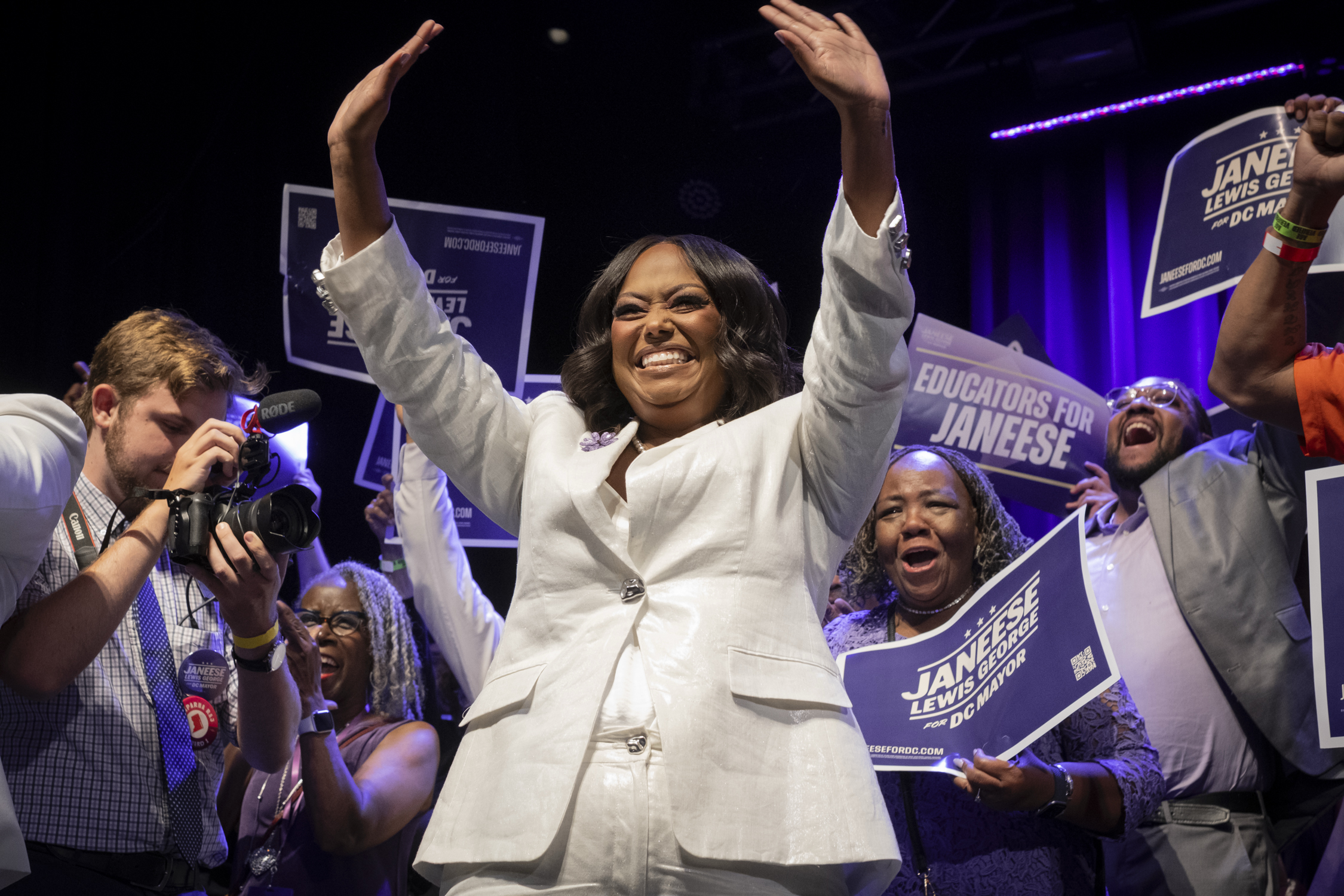
JCRC CEO Ron Halber said he hopes to work with the DSA member, despite his strident criticism of the group, while remaining vigilant
BLAME GAME
Israelis overwhelmingly believe Iran won the war, survey finds
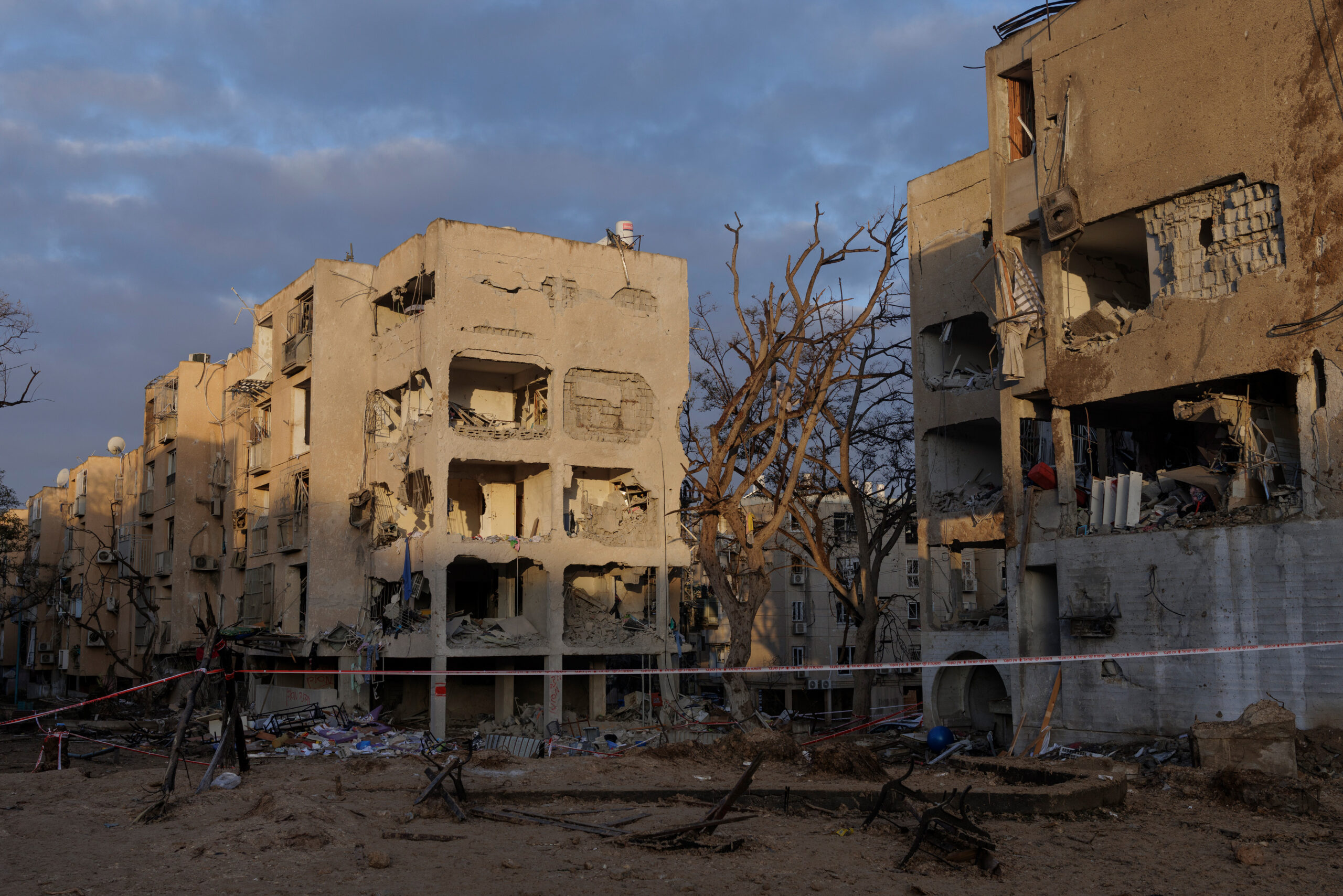
Nearly all Israelis surveyed said they believed Tehran was the victor, while 70% rated Trump’s management of the war as a failure or poor
Plus, Albania blames Iran for stoking Kushner-unrest
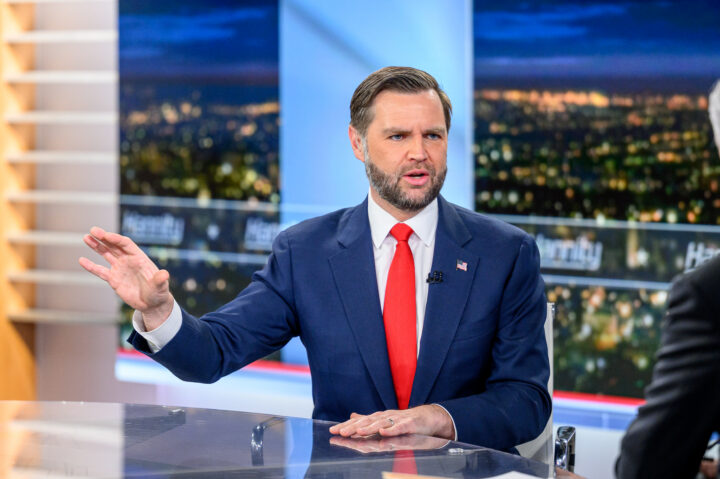
Roy Rochlin/Getty Images
Vice President JD Vance
Good Thursday afternoon.
This P.M. briefing is reserved for our premium subscribers like you — offering a forward-focused read on what we’re tracking now and what’s coming next.
Today’s Daily Overtime was curated by Senior National Correspondent Gabby Deutch.
📡On Our Radar
Notable developments and interesting tidbits we’re tracking
As the White House continues to promote the memorandum of understanding that will end the war with Iran and start negotiations between Washington and Tehran, Vice President JD Vance is out with a message that sounds strikingly familiar — at least to anyone who followed former President Barack Obama’s pitch on the 2015 nuclear deal with Iran, Jewish Insider’s Gabby Deutch reports.
“If you think this is a bad deal, what is your alternative?” Vance said in an interview this week with New York Times columnist Ross Douthat.
Obama used nearly identical phrasing at a 2015 White House press conference: “I’m hearing a lot of talking points being repeated about ‘this is a bad deal,’” he said. “What I haven’t heard is, what is your preferred alternative?”
Watch a side-by-side look at Vance and Obama here…
Vance also delivered a tough message to Israeli officials who have criticized the MOU, telling reporters on Thursday that Israel’s government should be careful not to alienate the only friend it has left: President Donald Trump, JI’s Emily Jacobs reports.
“Donald J. Trump is the only head of state in the entire world who is sympathetic to the nation of Israel at this moment in time and he happens to be the head of state of the world’s superpower. If I was in the Cabinet of the Israeli government, I might not be attacking the only powerful ally that I have anywhere left in the entire world,” said Vance…
Trump also had a word of caution for Israeli Prime Minister Benjamin Netanyahu, two days after he said Netanyahu was too “vicious” in his approach to fighting Hezbollah in Lebanon. Asked by a reporter for Israel’s Kan News if he will support Netanyahu in this year’s Israeli elections, Trump said he most likely would, but did not commit.
“I’ll have to look at who’s running, but I like Bibi very much. I would be most likely to endorse him,” said Trump. “He’s doing a very good job, he’s got to be a little bit more rational”…
United Against Nuclear Iran, an advocacy group that rallied opposition to the 2015 Joint Comprehensive Plan of Action, said on Thursday that it “cannot endorse the MoU in its current form”…
AIPAC released a policy memo on Thursday that said the MOU “raises significant questions,” and called on Congress to “play a critical role in ensuring a final deal meets President Trump’s stated objectives for the war”…
In a Thursday speech at the FII Priority summit in Rome, Albanian Prime Minister Edi Rama blamed Iran for “ruthless” cyberattacks against the country, claiming that Tehran has sought to sow unrest about a preliminarily approved luxury development project in the country from Ivanka Trump and Jared Kushner, Trump’s daughter and son-in-law, JI’s Matthew Shea reports…
Janeese Lewis George defeated Kenyan McDuffie in the Democratic primary for mayor of Washington, D.C., with the Associated Press calling the race on Thursday afternoon. Democratic socialist Lewis George leads McDuffie 53% to 36%…
American Priorities, a super PAC created as a progressive counterweight to AIPAC, has received $250,000 from a tech executive whose firm is developing AI data centers in New York State — while boosting two democratic socialist House candidates who oppose efforts to expand data centers, JI’s Matthew Kassel reports…
Rep. Tom Kean Jr. (R-NJ), who has been absent from Congress since March due to an unexplained personal health issue, plans to return to Washington on June 30…
Israel and Syria are expected to resume direct talks soon due to pressure from the U.S., the Israeli network Kan reports…
The FBI announced that it charged San Diego resident Reda Mazen Rida Sabassi with conspiring to provide material support to Hamas after he allegedly raised approximately $600,000 through fraudulent charitable campaigns and funneled a portion to the terrorist organization…
Former Presidents Joe Biden, George W. Bush and Bill Clinton attended the grand opening of the Obama Presidential Center in Chicago on Thursday afternoon.
Guests included a litany of ex-Obama administration staffers, including former White House liaison to the Jewish community Matt Nosanchuk and former U.S. Ambassador to Israel Dan Shapiro, who was spotted chatting with Obama…
⏩ Tomorrow’s Agenda, Today
An early look at tomorrow’s storylines and schedule to keep you a step ahead
Keep an eye on Jewish Insider for a look at how Jewish Republicans are feeling about the U.S.-Iran memorandum of understanding that was signed this week.
Vice President JD Vance plans to travel to Switzerland this weekend for talks with Iran, though the plans are not yet finalized, he told reporters on Thursday.
Bill Pulte, the director of the Federal Housing Finance Agency, will become the acting director of national intelligence on Friday after the confirmation of DNI nominee Jay Clayton was delayed this week at President Donald Trump’s request.
We’ll be monitoring the final days of the heated congressional primary campaigns in New York, where Israel and Gaza remain hot topics for progressive candidates.
We’ll be back in your inbox with the Daily Overtime on Monday. Shabbat Shalom!
Stories You May Have Missed
Transferring responsibilities
‘The single best diaspora experience’: Jewish leaders mark America’s 250th with open letter
The letter urges American Jews to ‘double down’ on civic values as the country marks its 250th
BEHIND THE CURTAIN
Old Mamdani foe teams up with teachers union to defeat DSA congressional contenders

Multiple sources identified Scott Stringer as a driving force behind two PACs spending to beat Mayor Zohran Mamdani’s House candidates
Plus, Qatar complicates Israel-VW deal
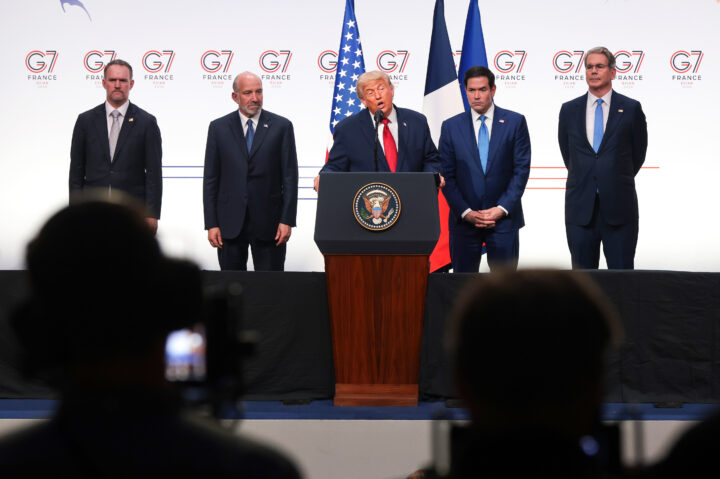
Photo by Anna Moneymaker/Getty Images
U.S. President Donald Trump is joined by (L-R) U.S. Trade Representative Jamieson Greer, U.S. Commerce Secretary Howard Lutnick, U.S. Secretary of State Marco Rubio and U.S. Treasury Secretary Scott Bessent as he speaks at a press conference during the G7 Leaders' Summit on June 17, 2026 in Evian-les-Bains, France.
Good Wednesday afternoon.
This P.M. briefing is reserved for our premium subscribers like you — offering a forward-focused read on what we’re tracking now and what’s coming next.
Today’s Daily Overtime was curated by Senior National Correspondent Gabby Deutch.
📡On Our Radar
Notable developments and interesting tidbits we’re tracking
After days in which President Donald Trump, Vice President JD Vance and other senior officials boosted the U.S.-Iran memorandum of understanding — and amid calls from Capitol Hill and beyond to make public the agreement’s details — the White House on Wednesday shared the text of the document that the Trump administration said will end the war against Tehran. Jewish Insider’s Emily Jacobs obtained the text of the MOU, which was read aloud to reporters during a call with a senior administration official.
The MOU states that the two nations “and their respective allies in the current war” will permanently end military operations — including against Lebanon, a stipulation that suggests the deal is meant to suspend Israel’s retaliatory strikes against Hezbollah, a provision for which Israel has not yet expressed approval. Iran “reaffirms” in the MOU that it will not “procure or develop nuclear weapons”…
The MOU text also reveals that the U.S. plans to issue a sanctions waiver to Iran so that it can sell oil, a major policy shift away from Trump’s use of sanctions against Iran. If a final deal is reached, the U.S. committed to ending all sanctions on Iran. Trump said earlier in the day at the G7 summit in France that the U.S. will not invest in Iran but would not stop other countries from doing so, JI’s Matthew Shea reports.
One new piece of information Trump shared on Wednesday that was not directly addressed in the MOU: a nuclear deal between Washington and Tehran would not prohibit the Iranians from possessing ballistic missiles, JI’s Matthew Shea reports. “I mean, they have to have some, because other people have some … It doesn’t work that way. And missiles aren’t the problem,” Trump said at the G7.
The agreement does not address Iran’s ballistic missiles or support for terrorist proxies. At the beginning of the war, the Trump administration said eliminating the ballistic missile threat from Iran was a key war aim…
The MOU asserts that a final deal will be negotiated within 60 days, unless both countries agree to extend the deadline. Iran’s naval blockade on the Strait of Hormuz must be lifted within 30 days.
When talking to reporters after landing in Paris this afternoon, Trump said he does not view the 60-day deadline as a hard deadline. “Just as long as they’re behaving, I really don’t care that much,” Trump said.
Vance, not Trump, will be signing the MOU in Switzerland on Friday. “This way if it works out, I’m going to take the credit. If it doesn’t work out, I’m blaming JD,” Trump said during the G7…
Some Republican senators criticized the MOU, with retiring Sen. Bill Cassidy (R-LA) calling it “the worst foreign policy blunder in decades,” JI’s Marc Rod reports…
Dario Amodei and Sam Altman, the CEOs, respectively, of Anthropic and OpenAI, joined Trump and the other G7 leaders for lunch on Wednesday, along with Salesforce CEO Marc Benioff and Google DeepMind CEO Demis Hassabis…
The planned Senate confirmation hearing for Jay Clayton, Trump’s nominee to serve as director of national intelligence, was scuttled on Wednesday morning after a last-minute Truth Social post from the president saying that the hearing would be canceled, prompting frustration from both Republican and Democratic lawmakers, JI’s Marc Rod reports…
As a major shareholder in Volkswagen, Qatar’s sovereign wealth fund is complicating talks between the German automaker and the Israeli state-owned defense company Rafael over Rafael’s intention to buy a plant from Volkswagen to manufacture components for Israel’s Iron Dome missile-defense systems…
The anti-Israel advocacy group TrackAIPAC, which attacks lawmakers who have received support from pro-Israel groups and donors who have supported Israel-related causes, endorsed Rep. Ro Khanna (D-CA), who once was targeted by TrackAIPAC before moving sharply to the left on Israel in recent months…
After eight people were indicted last week for allegedly threatening University of Michigan leaders and their families as part of an anti-Israel pressure campaign, former Michigan Democratic Party Chair Lon Johnson called on the party’s current leadership to review the actions of five of the suspects who were members of the Michigan Democratic Party…
The Department of Health and Human Services’ Office for Civil Rights announced on Wednesday that it is opening an antisemitism investigation into the American Psychological Association, the nation’s largest professional organization for mental health professionals. JI’s Gabby Deutch reported on the APA’s handling of antisemitism last summer…
⏩ Tomorrow’s Agenda, Today
An early look at tomorrow’s storylines and schedule to keep you a step ahead
Keep an eye out in Jewish Insider for a look at how some of the country’s most prominent Jewish communal leaders are marking America’s 250th birthday this July Fourth.
Sen. Joni Ernst (R-IA) will be speaking in the morning at a fireside chat at the Hudson Institute focused on “diplomacy, defense and debt.”
We’ll be monitoring the results of Tuesday’s mayoral primary election in Washington, D.C., which still has not been called, even as Janeese Lewis George leads Kenyan McDuffie 53% to 37%, with 68% of the vote counted.
Stories You May Have Missed
Transferring responsibilities
Education Department to hand civil rights investigations to Justice Department

The move marks a major step in the White House’s efforts to dismantle the Education Department and significantly reduce or distribute its work
TRUST ISSUES
Republicans doubt Iran will follow through on nuclear commitments

Senators on both sides of the aisle say they’re eager to see the text of the agreement, but the administration has not yet made plans to brief Congress
The president told Fox News that Washington is nearing a decision on additional strikes against Iran, arguing that Tehran has dragged out negotiations and must now ‘pay the price’

Getty Images
A large plume of smoke rises over Tehran after explosions were reported in the city during the night on March 28, 2026 in Tehran, Iran.
President Donald Trump said on Wednesday morning that the U.S. could soon launch additional strikes against Iranian power plants and bridges, raising the prospect of a broader military campaign against Tehran as he accused Iran of dragging the U.S. along in diplomatic negotiations.
The president’s comments to Fox News’ Trey Yingst came hours after the U.S. military announced it had targeted Iranian air defense, ground control and surveillance radar sites in response to Iran downing a U.S. Army helicopter on Monday. Iranian state media, meanwhile, claimed attacks on U.S. military facilities in Bahrain, Kuwait and Jordan.
Trump said in a post on Truth Social on Wednesday morning that Iran had “taken too long to negotiate a deal that would have been great for them” and warned that Tehran would now “have to pay the price.”
Trump made similar threats regarding targeting Iranian power plants and bridges as a way to escalate hostilities when he was unsatisfied with negotiations in April, though such strikes were not carried out.
Trump also disclosed new details about the incident that precipitated the latest U.S. action: According to the president, an Iranian drone became lodged between the two pilots of a U.S. Apache helicopter who guided the helicopter into the sea, where they were rescued “for the first time in U.S. military history” by an unmanned sea drone.
The president also said on ‘Meet the Press’ that U.S. forces could be deployed into Iran to retrieve and destroy the regime's stockpile of enriched uranium
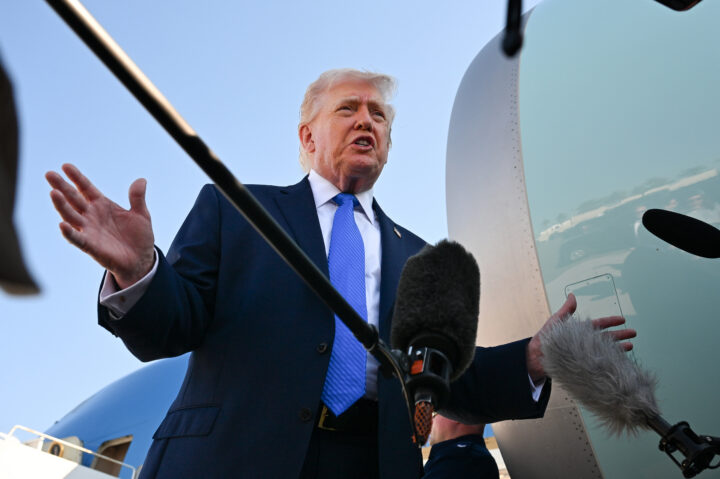
Roberto Schmidt/Getty Images
President Donald Trump speaks to reporters before boarding Air Force One at Palm Beach International Airport on March 23, 2026 in West Palm Beach, Florida.
Appearing on NBC’s “Meet the Press” on Sunday, President Donald Trump said his red line for resuming military action in Iran would be if he didn’t believe the parties could reach a deal in a timely manner, and said U.S. forces could be deployed into Iran to retrieve and destroy the regime’s stockpile of enriched uranium.
Trump continued to assert that Iran is desperate for a deal, even as negotiations appear largely deadlocked and as Esmaeil Baghaei, Iran’s Foreign Ministry spokesperson, told CNN in Tehran on Sunday that the primary obstacle to an agreement is Washington’s changing and “contradictory” positions. Meanwhile, U.S. and Iranian forces continue to exchange strikes nearly daily around the Strait of Hormuz.
Trump ruled out the prospect of unfreezing any Iranian assets or offering upfront sanctions relief to secure a breakthrough, maintaining that compliance must precede concessions.
“If they behave, if they do a good job, we start talking,” Trump said. But should Iran walk away from the table or drag out the timeline, the president emphasized he would not rule out a return to hostilities.
“My red line would be if I think I wasn’t going to make a deal, or if I wasn’t going to make a deal fast enough,” Trump said of resuming military action, noting that if Iran were to kill additional Americans — more than a dozen U.S. troops have already been killed in the current conflict — that would be “something that I would think about very seriously.”
“We’re having very good negotiations with the people that are leading the country now. It’s the third group that we’ve been dealing with. And they are different. And you could say it’s regime change actually because these are very different people. I find them to be more rational, very smart,” he added.
Trump specifically noted that he considers Supreme Leader Mojtaba Khamenei — the son of the late Supreme Leader Ayatollah Ali Khamenei — a more “rational” negotiating partner.
“I think [he is] more rational. He’s pretty badly injured. So there’s a certain bravery there,” Trump said. “A lot of people, if they were injured that badly, they wouldn’t be talking about, you know, ‘How are we doing with the United States?’ They’d have other things on their mind. So there’s a certain bravery there. But he is very seriously injured.”
The president further said U.S. forces could be sent into Iranian territory to secure the regime’s nuclear stockpiles, claiming that Washington knows exactly where the material is stored.
“The way you do it is if we make a deal now, we’re friendly, we’ll all go together. It’ll be our equipment. We’ll take it out and destroy it, whether it’s onsite or whether we take it offsite,” Trump explained. “We will be at peace. And we will go with them, or without them. But we won’t have people shooting at us, okay?”
He added: “Now, if we don’t make a deal, then we’re going to take them out militarily very harshly. And we’ll wait until we do that before we go, in which case we’ll have safety either way.”
Trump further claimed that the U.S. possesses highly specific data on Iran’s remaining military capabilities, including the locations of its drones, manufacturing plants, remaining missiles and launch sites. While the president stated that the majority of Iran’s production facilities “have been knocked out,” he acknowledged that Tehran still maintains some of its arsenal.
“I know almost the number, and we know where they are too, and we know where their drones are, and we know where their drone factories are,” Trump said. “Most of the drone factories have been knocked out, most of the launching pads have been knocked out and most of the missile manufacturing areas have been knocked out. But they still have capacity. They have some missiles, they have some drones. I would say percentage wise, maybe 21-22% of their missiles. It’s a lot of missiles, but it’s not what it was when we first attacked.”
Turning to the broader regional landscape, Trump clarified that he is “not demanding” that Lebanon be included in a peace deal with Iran, as Tehran has requested, though he expressed a desire to see “a more surgical” approach to combating Hezbollah
“I’d like to see Lebanon have a better life,” Trump said. “I’d like to see a more surgical attack on Hezbollah. I think it should be more surgical,” he added, but did not reference Israel or its recent military actions against the terror group.
They said, however, it’s unlikely the rift with Tehran will engender any goodwill towards Israel
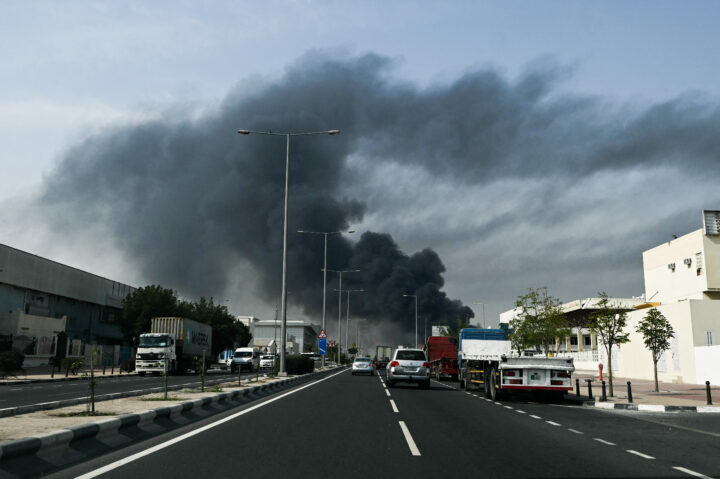
Mahmud HAMS / AFP via Getty Images
Motorists drive past a plume of smoke rising from a reported Iranian strike in the industrial district of Doha on March 1, 2026.
Iranian attacks on Qatar could prompt Doha to reassess its regional alignment and relationship with Tehran, experts said, though they expressed skepticism that the strikes would change Qatar’s antagonistic posture toward Israel, its funding of anti-Israel media or its harboring of Muslim Brotherhood-aligned groups.
Prior to the Iran war, Doha and Tehran maintained close and pragmatic diplomatic relations centered on economic cooperation. In the leadup to hostilities, Qatar aimed to balance its ties with Iran and the U.S., however the conflict has brought to light the difficulty of this balancing act.
Qatar has suffered severe damage to its civilian, energy and military infrastructure from Iranian strikes, launched as Tehran has targeted American allies in the region amid the war with the U.S. and Israel, including over $20 billion in lost revenue caused by a strike on Qatar’s liquified natural gas facility.
“Iran’s strikes have created real fissures,” said Natalie Ecanow, a senior research analyst at the Foundation for Defense of Democracies. “For example, Qatar expelled Iran’s military and security attachés and cracked down on IRGC cells within its borders. Notably, Qatar’s prime minister called Iran’s strikes ‘a big sense of betrayal,’ which is language typically reserved for friends or partners, not foes. That tells you something about Qatar’s mindset before the war.”
Kristan Diwan, a senior resident scholar at the Arab Gulf States Institute, told Jewish Insider that the rift will likely push Doha closer to other countries in the region with aligned interests.
“I think we will see Qatar working even more closely in concert with the new ‘Sunni’ regional coalition led by Saudi Arabia with Turkey, Pakistan and perhaps Egypt and other Arab players,” Diwan said. “While not identical, their interests align,” Diwan added, on Syria, Lebanon and the Palestinian territories. “Working together will increase their impact while lessening the burden on any one state.”
But Diwan said that while Doha may distance itself from Tehran, it should not be mistaken for a more favorable posture toward Israel. She said the emerging coalition “shares a belief that the current Israeli government represents a threat to regional stability.”
“Unlike the UAE, these countries are likely to take up positions confronting both Iran and Israel,” Diwan continued. “This will allow for a more accommodating posture on Muslim Brotherhood-aligned groups and perhaps even a recalibration of hostilities toward other radical movements such as the Houthis and Hezbollah.”
Other experts warned that Qatar’s significant financial losses during the war are unlikely to alter Doha’s ideological posture toward Israel or its funding of anti-Israel antagonism.
“Frankly it’s hard to imagine Qatar ever becoming less ideological or antagonistic toward Israel,” Jonathan Ruhe, a fellow at the Jewish Institute for National Security of America, told JI. “Despite the Iran war’s economic toll, Doha still can afford to propagate anti-Israel, anti-Western extremism through Al Jazeera, the Muslim Brotherhood and other actors. And it still has every incentive to support Islamist groups and media to buttress its own credibility in the Arab and Muslim worlds.”
Additionally, Ruhe said there is little external pressure forcing Qatar to change course, pointing to the Trump administration’s favorable posture toward Doha.
“The war has not altered the Trump administration’s reliably favorable attitude toward Qatar,” Ruhe said. “Qatar’s relationship with Tehran is now severely damaged, but it can compensate through stronger ties with Turkey and Saudi Arabia, both of whom have been propagating anti-Israel rhetoric, and possibly Pakistan, too.”
But Ecanow said the prospect of a full break between Qatar and Iran remains complicated by geography and shared economic interests. Qatar’s wealth is tied to the world’s largest natural gas reservoir, which it shares with Iran.
“Qatar’s wealth flows from sitting on the world’s largest natural gas reservoir — one it shares with Iran. That ostensibly gives Doha an economic interest in the regime’s survival because a regime that’s down but not out poses little competition for Qatar’s liquefied natural gas exports. Regime change may not be an immediate U.S. objective, but this dynamic inherently puts Qatar’s interests at odds with those of the United States,” Ecanow said.
The South Carolina senator’s comments came after Tehran struck the UAE on Monday — the first such attack since the ceasefire took effect

Photo by Kevin Dietsch/Getty Images
Sen. Lindsey Graham (R-SC) speaks during a news conference at the U.S. Capitol on July 30, 2021 in Washington, DC.
Sen. Lindsey Graham (R-SC) said he would support “big, strong and short” U.S. military action against Iran following Tehran’s latest strikes on the United Arab Emirates on Monday — the first such attack on the critical American ally since the fragile U.S.-Iran ceasefire took hold in early April.
On Monday, Iran launched 15 missiles and four drones at the UAE and targeted key infrastructure and maritime assets. Authorities in Fujairah reported a fire at the Fujairah Oil Industry Zone after a suspected Iranian drone strike.
Additionally, the U.K. military’s Maritime Trade Operations Center said it received reports of a commercial vessel on fire off the UAE coast and warned nearby ships to keep a “safe distance.” The UAE’s Ministry of Foreign Affairs also condemned an Iranian drone attack on a tanker belonging to the state-owned ADNOC energy company as it attempted to pass the Strait of Hormuz as an “act of piracy.”
Graham, a staunch ally of President Donald Trump and supporter of the war effort, said that Iran’s “attack against UAE’s vital infrastructure and continued attacks on international shipping … justifies a big, strong and short response to inflict further damage on Iran’s war machine” in a statement on X.
“A forceful response on behalf of our ally, UAE, will reinforce that America is back as a reliable ally, helping to further wash away the damage caused by the Biden administration on this front,” Graham continued. “The UAE has been a champion ally in this fight, doing everything that’s being asked of them and beyond. Iran’s recent brazen attack against the UAE tells me a lot about who’s in charge in Iran and the chance of a diplomatic solution any time soon.”
Trump has said the U.S. would help guide and protect commercial ships navigating the strait in what he called “Project Freedom,” telling Fox News on Monday that Iran will be “blown off the face of the earth” if it tries to interfere – while also writing on Truth Social that Iran has already done so.
U.S. Ambassador to the U.N. Mike Waltz said on Monday that Washington is working with Bahrain and other Gulf allies to draft a U.N. Security Council resolution aimed at “holding Iran to account” for its actions in the Strait of Hormuz.
Plus, Dems concerned over fraying Israel-Europe ties

Daniel Torok/The White House via Getty Images
President Donald Trump and Secretary of State Marco Rubio (R) sit in the Situation Room as they monitor the mission that took out three Iranian nuclear enrichment sites, at the White House on June 21, 2025 in Washington, DC.
This P.M. edition is reserved for our premium subscribers — offering a forward-focused read on what we’re tracking now and what’s coming next. Please don’t hesitate to share your thoughts and feedback by replying to this email.
📡On Our Radar
Notable developments and interesting tidbits we’re tracking
President Donald Trump announced this afternoon, with the status of negotiations with Iran up in the air and the expiration of the ceasefire quickly approaching, that he is indefinitely extending the ceasefire at the request of Pakistani negotiators (despite having said, as recently as this morning, that he was not inclined to do so).
“Based on the fact that the Government of Iran is seriously fractured … we have been asked to hold our Attack … until such time as their leaders and representatives can come up with a unified proposal,” Trump wrote on Truth Social. “I have therefore directed our Military to continue the Blockade and, in all other respects, remain ready and able, and will therefore extend the Ceasefire until such time as their proposal is submitted, and discussions are concluded, one way or the other”…
Talks were meant to begin shortly in Islamabad, but Vice President JD Vance’s trip was reportedly put on hold and he remains in Washington. Vance, Special Envoy Steve Witkoff and Jared Kushner were all spotted arriving at the White House for meetings this afternoon.
Iran also had not committed to sending its own delegation — Iranian Foreign Minister Abbas Araghchi accused the U.S. of violating the ceasefire through its blockade of Iranian ports and seizure of an Iranian-flagged cargo ship, calling it an “act of war. … Iran knows how to neutralize restrictions, how to defend its interests, and how to resist bullying,” he wrote…
U.S. forces boarded an oil tanker in the Indian Ocean that had been sanctioned for working with Iran which defense officials said was currently carrying Iranian oil, in a further escalation of the U.S. campaign against Tehran-aligned assets and actors outside of the Middle East.
The Treasury Department also announced sanctions on 14 individuals and entities in Iran, Turkey and the United Arab Emirates for “their involvement in procuring or transporting weapons or weapons components on behalf of the Iranian regime”…
Six weeks after he was announced as Iran’s new supreme leader after the assassination of his father, Mojtaba Khamenei has still not been seen in public, raising speculation he is incapacitated from injuries sustained in a U.S.-Israeli airstrike or has been smuggled abroad…
Senate Foreign Relations Committee Chairman Jim Risch (R-ID) endorsed Sen. Roger Wicker’s (R-MS) view that the U.S. should reconsider its funding for the Lebanese Armed Forces in light of its continued inaction to disarm Hezbollah, in addition to the Lebanese government’s failure to “follow through on long-promised economic reform. The era of complacency & unconditional bailouts must come to end,” Risch said…
Sen. Chris Murphy (D-CT) clarified that his post calling it “awesome” that several Iranian oil tankers had bypassed the U.S. blockade — reporting that has been disputed as Iranian propaganda — was written as sarcasm. “[O]bviously Trump’s bungled mismanagement of this war is not ‘awesome.’ As I have said a million times here, it’s a disaster and he should end the war immediately,” Murphy wrote on X…
Democratic lawmakers are expressing concern over Israel’s fracturing relationship with key European allies, while experts say the shifting dynamics could carry longer-term economic and political risks for Jerusalem, even if Israel weathers threats to unwind largely symbolic defense agreements, Jewish Insider’s Matthew Shea reports.
Among other recent moves, Spain and Ireland led a push today to suspend the EU’s association agreement with Israel. The initiative stalled as member states remained divided on the issue; still, Rep. Josh Gottheimer (D-NJ) called the developments “deeply alarming.”
“NATO allies like Spain, France and Italy are turning their backs on Israel, a key democratic partner that is actively fighting on the front lines against Iran,” Gottheimer said. “Singling out Israel represents a double standard”…
The arsonist who pleaded guilty to attacking a North London synagogue on Saturday night was released on bail by the Westminster Magistrates’ Court today, JI’s Haley Cohen reports. The 17-year-old boy who threw a bottle containing accelerant through the window of Kenton United Synagogue must live and sleep at his home address and not enter any synagogue, the judge said. It was the third such attack on a Jewish institution in London within a week…
Rep. Sheila Cherfilus-McCormick (D-FL) resigned from Congress this afternoon, half an hour before her House Ethics Committee sanctions hearing was due to begin. Having lost jurisdiction in the matter, the committee canceled the hearing…
The Board of Peace is reportedly in discussion with the UAE-owned DP World logistics company about managing supply chains and humanitarian aid in Gaza, including potentially building a new port and developing a free-trade zone, according to Financial Times, as part of the Trump administration’s vision of privatizing much of Gaza’s services and infrastructure…
⏩ Tomorrow’s Agenda, Today
An early look at tomorrow’s storylines and schedule to keep you a step ahead
Keep an eye out in Jewish Insider for a look at how Jewish Democrats in Michigan are making sense of their place in the party in the wake of a state convention where pro-Israel voices were shouted down and a pro-Hezbollah candidate won the party’s nomination for a statewide race.
The House Financial Services Committee will hold a hearing evaluating the effectiveness of U.S. sanctions.
A vote on the fifth Iran war powers resolution in the Senate, expected today, has been pushed to tomorrow.
92NY will host a discussion on the future of New York’s Jewish community with New York City Council Speaker Julie Menin, Manhattan Borough President Brad Hoylman-Sigal and New York City Comptroller Mark Levine.
The New York City Council’s Task Force to Combat Antisemitism will hold its first hearing. The task force was established by Menin in January, shortly after her election, to make recommendations and work towards her five-point plan to combat antisemitism.
Robert Kraft’s Blue Square Alliance Against Hate will host a unity dinner in partnership with the NFL, Hillel International, United Negro College Fund and the Pittsburgh Steelers for Black and Jewish college students from the Pittsburgh area. The event will include a fireside chat featuring Kraft, Pennsylvania Gov. Josh Shapiro and former Pittsburgh Steelers quarterback Charlie Batch.
Washington, D.C., mayoral candidate Kenyan McDuffie will hold a meet-and-greet with young Jewish professionals.
Rep. Elise Stefanik (R-NY) will speak in conversation at Yeshiva University with its president, Rabbi Ari Berman, about her new book, Poisoned Ivies: The Inside Account of the Academic and Moral Rot at America’s Elite Universities.
Stories You May Have Missed
IRON DOME DECISIONS
J Street accelerates leftward shift as progressives move to end Iron Dome funding

J Street’s Ilan Goldenberg said the surge in far-left calls to cut off missile-defense aid ‘stirred up the conversation a little more’ but says the group was moving that way regardless
CAMPAIGN CLASH
Sue Altman accuses challenger in N.J. race of ‘cheerleading’ the ‘deaths of Israeli children’

Adam Hamawy said on Hasan Piker’s show that he does not support Israel’s Iron Dome missile-defense system, arguing that it insulates Israel from the consequences of war
Plus, Israel-Lebanon talks to continue Thursday
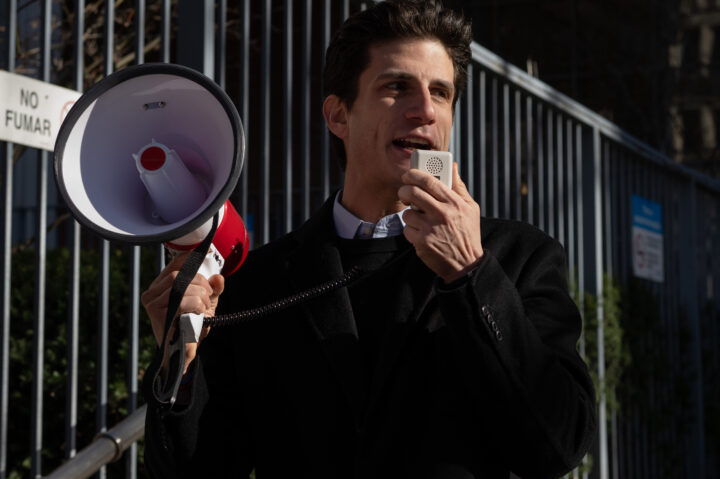
Edna Leshowitz/Getty Images
Jack Schlossberg, grandson of former President John. F Kennedy who is currently running for Congress, on Jan. 12, 2026 in New York City.
This P.M. edition is reserved for our premium subscribers — offering a forward-focused read on what we’re tracking now and what’s coming next. Please don’t hesitate to share your thoughts and feedback by replying to this email.
📡On Our Radar
Notable developments and interesting tidbits we’re tracking
Iranian officials have signaled they will attend talks with the U.S. in Islamabad, Pakistan, this week, with Vice President JD Vance, White House Special Envoy Steve Witkoff and Jared Kushner expected to depart for the meeting tomorrow (despite President Donald Trump’s claim that they were already in transit this morning).
Negotiators are up against a running clock, as Trump said today that his two-week ceasefire with Iran will end “Wednesday evening Washington time” and it’s “highly unlikely that I’d extend it” if no deal is reached…
In a series of heated social media posts, Trump again denied that Israel dragged the U.S. into war with Iran: “[T]he results of Oct. 7th, added to my lifelong opinion that IRAN CAN NEVER HAVE A NUCLEAR WEAPON,” were his motivation, he wrote on Truth Social.
Trump also boasted that the deal under negotiation will be “far better” than the 2015 Iran nuclear deal. “If a Deal happens under ‘TRUMP,’ it will guarantee Peace, Security, and Safety, not only for Israel and the Middle East, but for Europe, America, and everywhere else,” he wrote. Lashing out at the media, Trump insisted, “I’m winning a War, BY A LOT, things are going very well,” claiming the U.S. blockade, “which we will not take off until there is a ‘DEAL,’ is absolutely destroying Iran”…
The State Department confirmed that the U.S. will host the second round of ambassador-level talks between Israel and Lebanon on Thursday, as the 10-day ceasefire between the two countries that began last Thursday, after the first round of talks, continues to hold…
Republican operatives and strategists are growing increasingly concerned that the GOP may lose the Senate in the midterm elections, several told Politico, as rising gas prices and unease around the war with Iran create a poor national environment for Trump’s party.
The New York Times’ Nate Cohn argues that Democrats have a “realistic chance” to flip the four seats they need to win back the chamber because “they’ve recruited unusually strong candidates in three states that supported Mr. Trump three times: North Carolina, Ohio and Alaska.”
“In all three states, the Democrats’ likely nominees are popular recent statewide office holders. They either won their last campaign or were highly competitive in losing re-election under less favorable political conditions. So far, the polls show those Democrats running well ahead of what one might otherwise expect,” Cohn writes…
Kennedy scion Jack Schlossberg’s shifting views on Israel policy and decision to skip two upcoming Jewish community candidate forums are raising eyebrows in New York’s heavily Jewish 12th Congressional District, Jewish Insider’s Matthew Kassel reports.
During a candidate forum at 92NY last week, for example, Schlossberg rejected continued U.S. funding for offensive weapons to Israel amid the war in Iran — even as he emphasized support for boosting the Iron Dome missile-defense system, which he described as a “critical” technology…
Minnesota’s Democratic Party is poised to endorse progressive Lt. Gov. Peggy Flanagan for U.S. Senate at its convention next month, Flanagan’s campaign said, after the lieutenant governor secured support from over 90% of Democratic-Farmer-Labor Party local conventions held statewide. The party endorsement, however, will not determine the nominee, as Democratic voters are set to choose their candidate in the Aug. 11 primary election.
The campaign of Rep. Angie Craig (D-MN), Flanagan’s primary opponent and the favorite of pro-Israel activists, called on the DFL last week to launch a formal investigation into a series of alleged instances of antisemitic activity among its delegates. One instance at a local convention last month reportedly saw an unnamed delegate argue that “we should nuke” Israel…
The Wall Street Journal reports on the growing feud between Defense Secretary Pete Hegseth and Army Secretary Dan Driscoll, which “spilled out into public view on Thursday, when Driscoll described to lawmakers his fondness for the Army’s former top general, Randy George, whom Hegseth fired as the service’s chief of staff on April 2 while Driscoll was on vacation”…
A Washington Post investigation found that, since January 2025, neo-Nazi influencer Nick Fuentes has made nearly $900,000 through paid messages on his livestreams from roughly 11,000 fans. His top 500 donors are responsible for almost half of that amount…
The UAE has asked the U.S. to consider offering it financial assistance amid the war with Iran, as the Gulf country has borne the brunt of Iran’s drone and missile strikes, taking a heavy toll on its oil, economic and tourism industries. Emirati officials raised the idea of a currency-swap line, which would allow Abu Dhabi inexpensive access to U.S. dollars…
European officials hosted two meetings on Gaza reconstruction today — one gathering, led by EU representative Kaja Kallas and Norway, centered on coordinating aid with the U.S.-led Board of Peace, where White House advisor Josh Gruenbaum requested international assistance in rebuilding the enclave. The other forum, led by Kallas and Belgium, focused on a two-state solution and was attended by Palestinian Authority Prime Minister Mohammad Mustafa…
In response to Israeli Foreign Minister Gideon Sa’ar’s condemnation of an IDF soldier found to have desecrated a statue of Jesus in southern Lebanon, Radosław Sikorski, Poland’s deputy prime minister and foreign affairs minister, accused the IDF of committing war crimes.
“Lessons should also be drawn regarding the way they are being trained,” Sikorski wrote on X. “IDF soldiers themselves admit to war crimes. They killed not only civilian Palestinians but even their own hostages”…
Incoming Hungarian Prime Minister Peter Magyar affirmed that his country is bound by rules of the International Criminal Court to arrest those sought under its warrants, including Israeli Prime Minister Benjamin Netanyahu; Magyar said he intends to prevent Hungary from leaving the ICC, a move his predecessor, Prime Minister Viktor Orban, had initiated.
Responding to questions about Netanyahu’s claim that Magyar had invited him to the country for a ceremony marking the 70th anniversary of the Hungarian Uprising, Magyar responded, “Every leader is welcome to attend this important commemoration,” but “we have a legal obligation to enforce the court’s rulings, and I’m sure [Netanyahu] knows this”…
Apple CEO Tim Cook announced this afternoon that he will step down from the helm of the tech giant and become its executive chairman in September. Succeeding Cook is John Ternus, head of the company’s hardware engineering…
⏩ Tomorrow’s Agenda, Today
An early look at tomorrow’s storylines and schedule to keep you a step ahead
Keep an eye out in Jewish Insider for an interview with Rachel Goldberg-Polin on the release of her book, When We See You Again, which debuts tomorrow.
The Senate Committee on Banking, Housing and Urban Affairs will hold a nomination hearing for Kevin Warsh, son-in-law of Jewish philanthropist Ronald Lauder, to be chairman of the Board of Governors of the Federal Reserve. Democrats intend to press Warsh on his personal fortune, which he has only partially disclosed thus far.
The House Ethics Committee will hold a public hearing to determine whether to apply sanctions to Rep. Sheila Cherfilus-McCormick (D-FL), after finding last month that she had committed serious ethics violations and campaign finance misconduct.
The U.S. Helsinki Commission will hold a hearing on Iran’s support for Russia amid its war with Ukraine.
The Senate Foreign Relation Committee’s subcommittee on Africa will hold a hearing on U.S. approaches to counterterrorism on the continent.
Stories You May Have Missed
LATIN LINKS
Milei, Netanyahu launch ‘Isaac Accords’ to encourage Israel, Latin America engagement

An Israeli diplomatic source told JI that Ecuador and Paraguay are expected to join the Isaac Accords
MICHIGAN MOMENT
Michigan Dems nominate lawyer who praised Hezbollah for UMich regent over Jewish incumbent

Platner, in Reddit post on Hamas terrorist attack: ‘From a strictly professional standpoint, this was a damn fine looking and successful raid against a superior opponent’
Plus, Vance courts pro-Israel donors ahead of 2028

Adri Salido/Getty Images
The Lebanese capital is seen from a viewpoint after U.S. President Donald Trump announced a ceasefire between Israel and Lebanon that would commence at midnight local time on April 16, 2026 in Beirut, Lebanon.
This P.M. edition is reserved for our premium subscribers — offering a forward-focused read on what we’re tracking now and what’s coming next. Please don’t hesitate to share your thoughts and feedback by replying to this email.
📡On Our Radar
Notable developments and interesting tidbits we’re tracking
President Donald Trump announced the start of a 10-day ceasefire between Israel and Lebanon to begin at 5 p.m. ET today, after he held phone calls with Lebanese President Joseph Aoun and Israeli Prime Minister Benjamin Netanyahu earlier in the day.
Trump added that he will be inviting Aoun and Netanyahu to the White House for “meaningful talks,” later telling reporters such a meeting could happen in the “next week or two.”
The text of the agreement released by the State Department indicates the ceasefire is a “gesture of goodwill” on Israel’s part “intended to enable good-faith negotiations” toward a permanent agreement. The temporary pause in hostilities could be extended if Lebanon “effectively demonstrates its ability to assert its sovereignty” and prevent Hezbollah from carrying out attacks against Israel…
Trump again indicated further talks with Iran could take place this weekend and said the two sides are “very close to making a deal,” telling reporters this afternoon that Iran has already agreed to “give us back the nuclear dust,” referring to its highly enriched uranium.
Hours earlier, Secretary of Defense Pete Hegseth warned at a press briefing that U.S. forces are “maximally postured” to return to military operations against Iran if negotiations are unsuccessful, and will look to attack “infrastructure, power and energy”…
The House narrowly voted to block a Democratic resolution to force an end to the war in Iran by a vote of 214-213-1, with all but one of the four Democrats who opposed a similar effort in March changing their votes to support today’s measure, Jewish Insider’s Marc Rod reports.
Reps. Greg Landsman (D-OH), Juan Vargas (D-CA) and Henry Cuellar (D-TX), who voted last month against a similar resolution, flipped their votes to support the war powers effort. But Rep. Jared Golden (D-ME), who is retiring at the end of his term, voted no again. On the Republican side, Rep. Warren Davidson (R-OH), who voted for the war powers resolution last time, switched his vote to “present.” Rep. Thomas Massie (R-KY) was the only Republican who voted for the resolution…
Vice President JD Vance, the first vice president to serve simultaneously as finance chair of his party, is building donor relationships that may prove useful should he choose to run for president in 2028, The New York Times reports, including attempting to woo some pro-Israel donors who have otherwise been wary of his ties to far-right commentator Tucker Carlson.
Among others, Vance has developed relationships with Jewish philanthropists Miriam Adelson, whom he spent New Years Eve with at Trump’s Mar-a-Lago resort, and Paul Singer; has appeared as the guest of honor at a dinner hosted by Palantir and 8VC co-founder Joe Lonsdale; and has been featured at a Republican National Committee event hosted by tech executive Keith Rabois, who is married to Under Secretary of State Jacob Helberg…
With less than six weeks to go until the Texas primary runoff election, Sen. John Cornyn (R-TX) is defending his seat against Texas Attorney General Ken Paxton with a significantly larger war chest: As the first quarter of 2026 closed, Cornyn had more than $8 million in cash on hand (including a small donation from former President George W. Bush), while Paxton had $2.6 million in the bank. Whoever clinches the GOP nomination will face state Sen. James Talarico, who has nearly $10 million on hand…
Josef Palermo, who was the first curator of visual arts and special programming at the Kennedy Center until his dismissal last month, recounts his experience as Trump and the center’s then-President Richard Grenell initiated an overhaul of the building, a process Palermo describes as “cronyism, incompetence, and a series of bizarre moves.”
Palermo recounts an exhibition he organized commemorating the Oct. 7 Hamas attacks in the building’s Israeli Lounge: “Speaking at the opening reception, Grenell warned the mostly Jewish audience that unless donors came forward to sponsor the space and pay for renovation costs, the lounge would be given away to a new donor. … Such a strong-armed fundraising pitch, at an event commemorating a pogrom, struck many of us in the room as inappropriate. I was mortified”…
Asked for his perspective on antisemitic streamer Hasan Piker’s reach on his platform, Twitch CEO Daniel Clancy said at the Semafor World Economy summit in Washington today that “one of the challenges is when you’re livestreaming you say a lot … you might say a lot of things that are over the top. … If you violate [community guidelines] then we take enforcement actions and we suspend you — it’s designed not to kick you off forever.”
“Whenever Hasan has stepped over the line, we’ve taken action … Folks will get worked up from both the right and the left on this because we have also conservative people that are saying certain things that some people don’t like. … In general, we think it is important for us to allow people to express themselves,” Clancy said…
⏩ Tomorrow’s Agenda, Today
An early look at tomorrow’s storylines and schedule to keep you a step ahead
Keep an eye out in Jewish Insider for a temperature check on support for Israel within the Democratic Party, in light of 85% of Democratic senators voting in favor of a Sen. Bernie Sanders (I-VT)-led measure to block military sales to the Jewish state.
France and the U.K. will co-host a conference tomorrow focused on restoring freedom of navigation through the Strait of Hormuz, with leaders from several European, Asian and Gulf countries participating via video.
Michigan’s Democratic Party will hold its endorsement convention on Sunday, where party activists will nominate their two preferred candidates for the University of Michigan’s Board of Regents. The election has reignited the campus’ debate over Israel, as candidate and anti-Israel activist Amir Makled seeks to unseat Jewish regent Jordan Acker, who became the target of antisemitic vandalism and harassment in the aftermath of the Oct. 7 Hamas attacks. (The SEIU labor union recently pulled its endorsement of Makled over his past support of Hezbollah.)
National party leaders including former Vice President Kamala Harris and Sen. Cory Booker (D-NJ) will appear at events in Detroit ahead of the convention.
We’ll be back in your inbox with the Daily Overtime on Monday. Shabbat Shalom!
Stories You May Have Missed
CAPITAL CONTEST
D.C. mayoral candidate Kenyan McDuffie courts Jewish voters as DSA-endorsed rival Lewis George faces communal backlash
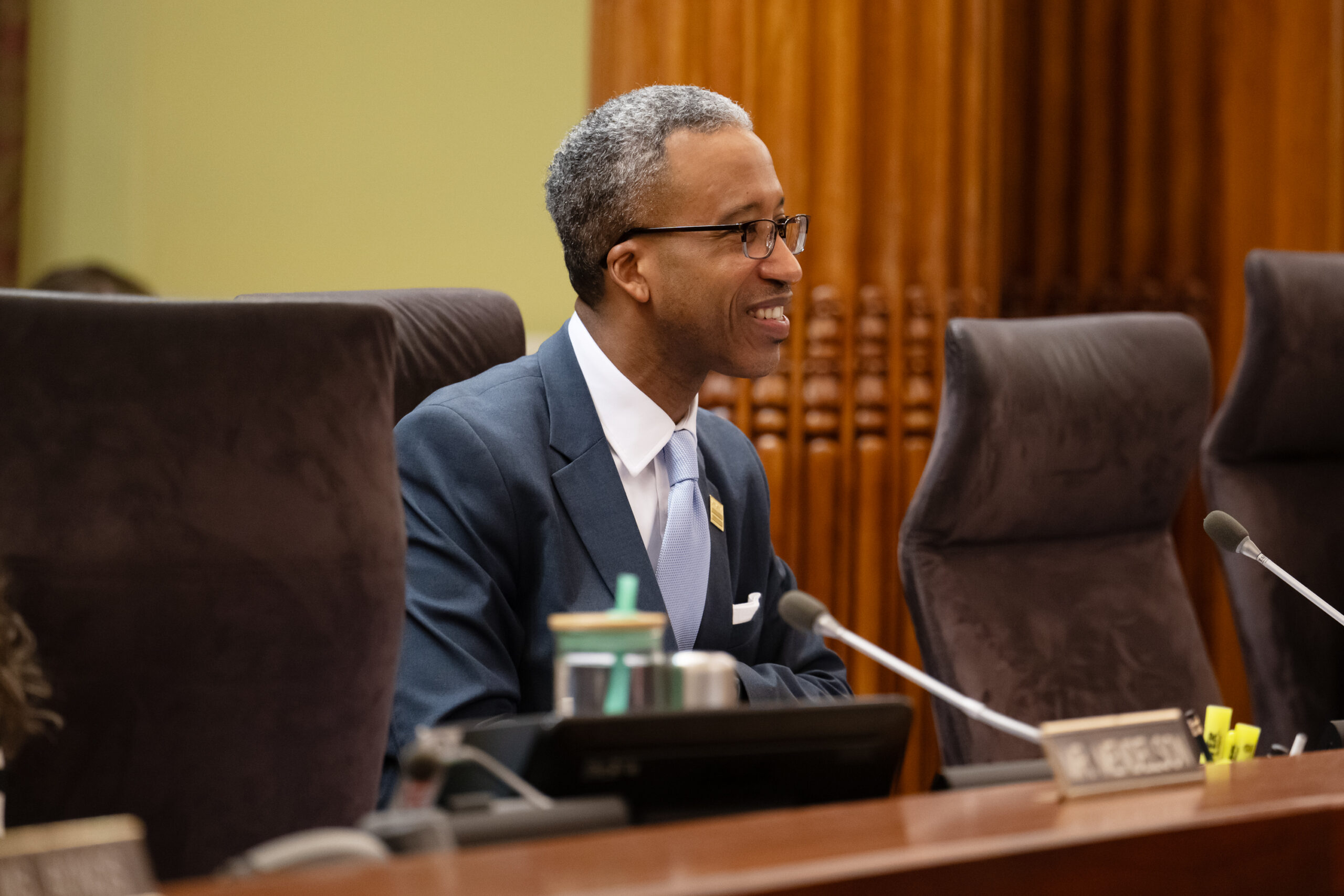
‘I didn’t seek, nor would I accept, the endorsement of Democratic Socialists of America,’ McDuffie told JI in an interview
SCOOP
‘I dig it’: Graham Platner praised Hamas tactics in 2014 graphic video of killings of Israeli soldiers
Platner, in Reddit post on Hamas terrorist attack: ‘From a strictly professional standpoint, this was a damn fine looking and successful raid against a superior opponent’
Plus, Senate Dems dominate 2026 fundraising

Kevin Dietsch/Getty Images
Rep. Ilhan Omar (D-MN) speaks at a press conference on committee assignments for the 118th U.S. Congress, at the U.S. Capitol Building on January 25, 2023, in Washington, D.C.
This P.M. edition is reserved for our premium subscribers — offering a forward-focused read on what we’re tracking now and what’s coming next. Please don’t hesitate to share your thoughts and feedback by replying to this email.
📡On Our Radar
Notable developments and interesting tidbits we’re tracking
A war powers resolution brought by Senate Democrats to force an end to the war in Iran was blocked by Republicans yet again this afternoon, the fourth failed attempt mounted by Senate Democrats since the war began in late February, Jewish Insider’s Marc Rod reports.
Nevertheless, top Senate Democrats have said they intend to continue forcing such votes weekly (they have nine more resolutions already filed) in the hopes that more Republicans will change their votes as the war drags on…
Texas state Sen. James Talarico announced he raised $27 million in the first quarter of 2026 in his run for U.S. Senate, a massive haul that his campaign claimed is the largest amount ever raised by a Senate candidate in the first quarter of an election year. Democrats hope the funds will put Texas in play as Talarico seeks to challenge either Sen. John Cornyn (R-TX) or Texas Attorney General Ken Paxton, who are still locked in their own hotly contested primary.
The top Senate fundraisers behind Talarico this quarter were also Democrats: Sen. Jon Ossoff (D-GA) brought in $14 million — breaking the record for first-quarter fundraising in Georgia — former North Carolina Gov. Roy Cooper raised $13.8 million and former Sen. Sherrod Brown (D-OH) raised $12.5 million…
Rep. Tom Kean Jr. (R-NJ) said he raised $1.1 million in this year’s first quarter, bringing his total to $4.4 million raised — more than any other House incumbent or candidate in New Jersey this cycle, according to the New Jersey Globe — as he defends his swing seat from several well-funded Democratic challengers.
But even as he’s pulled in plenty of support, Kean has missed a month’s worth of votes on Capitol Hill due to an unspecified medical issue, with his staff declining to say when he will return…
Rep. Ilhan Omar (D-MN) in an interview on the “Pod Save America” podcast praised former Rep. Marjorie Taylor Greene (R-GA) — once a vocal Omar foe who called for the congresswoman’s deportation while they were both in the House — and far-right influencer Candace Owens over the pair’s break with President Donald Trump, JI’s Marc Rod reports.
“I believe the thing that has been very fascinating, especially about Marjorie and Candace, is that … they’re saying, ‘This action is wrong,’ right? They’re saying, ‘I am done with you.’ We should give them credit for that, the fact that they’ve had this wake-up call to finally seeing this con man, this corrupt, chaotic man for what he is,” Omar said…
Sebastian Gorka, the White House senior director for counterterrorism and a deputy assistant to the president, is reportedly angling for the position of director of the National Counterterrorism Center, which was recently vacated by Joe Kent amid Kent’s opposition to the Iran war. Gorka has been a staunch defender of Trump and backed his war with Iran, as well as repeatedly praised Israel amid its war in Gaza…
Israeli Prime Minister Benjamin Netanyahu spoke with Péter Magyar, the presumptive next prime minister of Hungary, for the first time today, calling the conversation “warm” and saying that Magyar indicated he will continue the close relationship the countries enjoyed under his predecessor, outgoing Prime Minister Viktor Orbán…
New York Gov. Kathy Hochul defended her proposal to bar demonstrations of more than two people from occurring within 25 feet of a house of worship today, JI’s Will Bredderman reports, legislation that has drawn legal scrutiny over its creation of a new felony offense for violators.
“I believe I have the right to protect people’s constitutional right to free exercise of religion,” Hochul told reporters when asked if she had concerns that the legislation might provoke challenges on First Amendment grounds. “So if that means we test it in court, bring it on”…
After holding its final public hearing earlier this week, the White House Religious Liberty Commission is now preparing a set of recommendations to be presented to the president next month. Ambiguity and confusion about the commission’s mandate has left commissioners unsure if they’ll continue to meet — their first year on the panel was marred by the firing of one commissioner over her disruption of a hearing on antisemitism…
Progressive media organization More Perfect Union is launching More Perfect University, an effort aimed at college students to act as an alternative to the conservative Turning Point USA, with a focus on urging young people to share left-wing political and economic messaging through social media. Faiz Shakir, the head of More Perfect Union who is also chief political advisor to Sen. Bernie Sanders’ (I-VT) campaign, said he hopes to jump-start “an economic populist movement for the next generation”…
Duke University’s Students for Justice in Palestine chapter has been suspended as a student group and had its funding frozen after it posted virulently antisemitic imagery depicting Israel and the U.S. as pigs frothing at the mouth on its Instagram page, prompting student complaints to campus administration…
University of Michigan President-elect Kent Syverud announced today he has been diagnosed with brain cancer and will no longer assume the presidency, leaving the future of the school’s leadership in question. Jewish leaders had praised Syverud’s appointment as a positive development for UM, which had seen rampant anti-Israel activity in the aftermath of the Oct. 7, 2023, Hamas attacks…
⏩ Tomorrow’s Agenda, Today
An early look at tomorrow’s storylines and schedule to keep you a step ahead
Keep an eye out in Jewish Insider for a preview of a first-of-its-kind antisemitism conference taking place tomorrow at Harvard, created as an outcome of last year’s settlement of a Title VI lawsuit against the school.
New Jersey’s 11th Congressional District will hold its special election for the remainder of Gov. Mikie Sherrill’s congressional term, where progressive Analilia Mejia is expected to prevail against Republican Joe Hathaway.
The Senate Foreign Relations Committee will hold nomination hearings for John Breslow to be U.S. ambassador to Cyprus, Todd Steggerda to be U.S. representative to the U.N. in Geneva and Preston Wells to be U.S. representative to the International Atomic Energy Agency, among others.
The Shalom Hartman Institute will host a discussion at the Capitol Jewish Museum in Washington with Jeffrey Goldberg, editor-in-chief of The Atlantic, on American Jewry ahead of the 250th anniversary of the founding of the United States.
The House Appropriations Committee will hold a budget hearing on the Department of Homeland Security, including the Federal Emergency Management Agency, which oversees the Nonprofit Security Grant Program.
Stories You May Have Missed
SCOOP
Zohran Mamdani’s video chief lauded Hamas chief Yahya Sinwar

The Oct. 7 mastermind died in ‘heroic’ style, according to Donald Borenstein, director of video for the Mamdani campaign and City Hall
DEM DIVIDES
Inside the DNC working group at the center of Democrats’ Israel fight
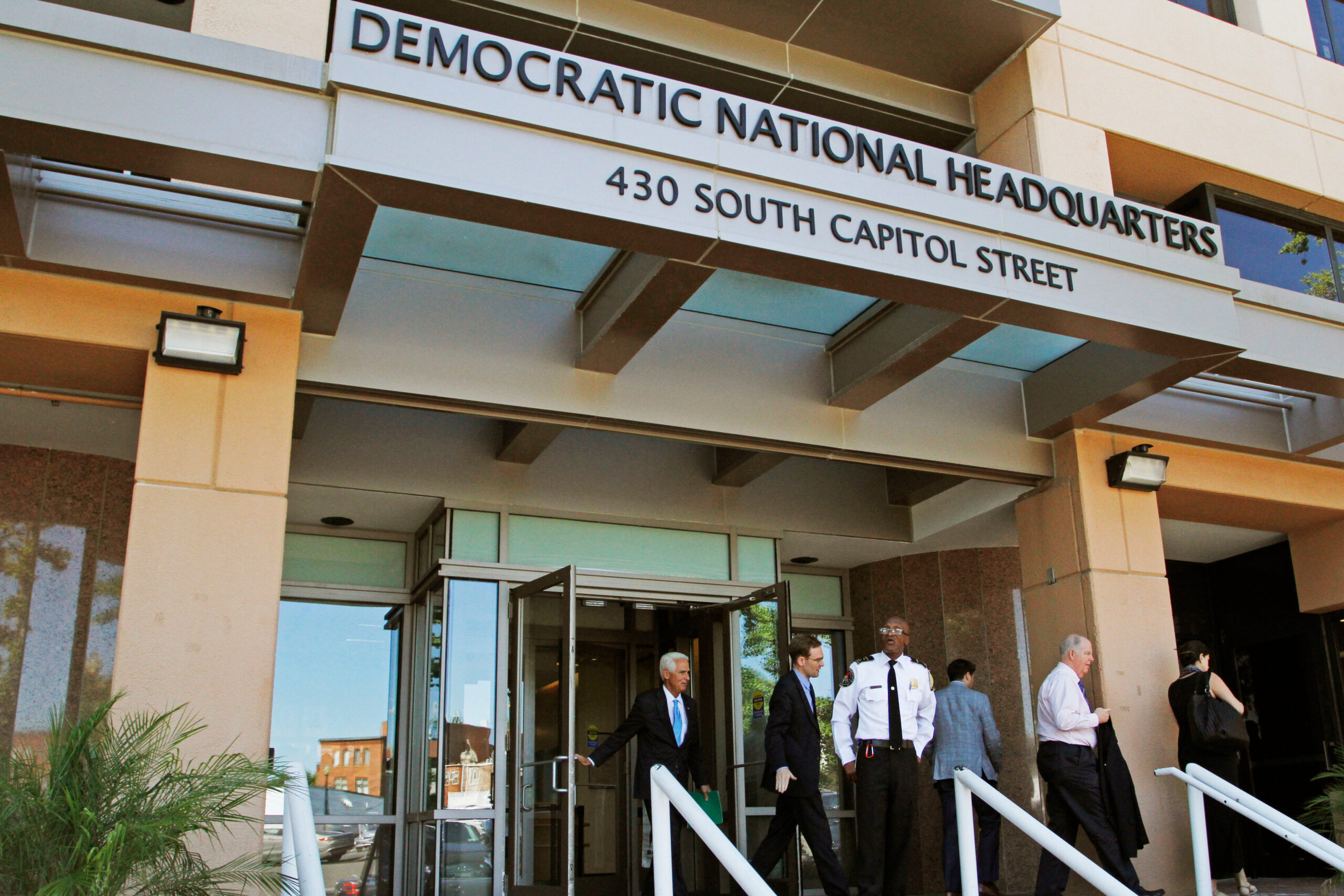
The question facing the Middle East working group’s members is whether they will actually be able to agree on anything — or if the group is simply a way to push the issue off until 2028
Plus, positive readouts from Israel-Lebanon talks in D.C.

Stefano Costantino/SOPA Images/LightRocket via Getty Images
Italian Prime Minister Giorgia Meloni addresses the Italian Chamber of Deputies in Rome.
This P.M. edition is reserved for our premium subscribers — offering a forward-focused read on what we’re tracking now and what’s coming next. Please don’t hesitate to share your thoughts and feedback by replying to this email.
📡On Our Radar
Notable developments and interesting tidbits we’re tracking
U.S.-Iran talks could restart in the next two days, President Donald Trump told the New York Post. “[S]omething could be happening over the next two days, and we’re more inclined to go [back to Islamabad, Pakistan]” rather than a different mediating country, he said in an interview today.
Trump also indicated he wasn’t happy with reports that his own negotiating team had offered Iran a 20-year pause on its ability to enrich uranium. “I’ve been saying they can’t have nuclear weapons, so I don’t like the 20 years,” he said…
CENTCOM announced that no ships made it past the U.S. blockade of the Strait of Hormuz in its first 24 hours, and six merchant ships “complied with direction from U.S. forces to turn around”…
Saudi Arabia is reportedly pressuring the U.S. to end the blockade, fearing retaliation and disruption to other trade routes. Iran has threatened to mobilize the Houthis in Yemen to close off the Bab al-Mandeb Strait, which Riyadh utilizes to move its oil exports out of the Red Sea…
European countries are drafting a plan to restore freedom of navigation in the Strait of Hormuz after the war ends, possibly without the participation of the U.S. As part of this effort, French President Emmanuel Macron announced that France and the U.K. will co-host a conference on Friday of “non-belligerent countries ready to contribute” to the “multilateral and purely defensive mission”…
The Treasury Department said it will not renew a waiver set to expire later this week that temporarily lifted sanctions on Iranian oil — the waiver had drawn condemnation from some lawmakers who had worked to institute those sanctions…
Secretary of State Marco Rubio emphasized at the outset of negotiations between Israel and Lebanon in Washington this morning that the talks are a “process” that will “take time,” and that the objective of today’s meeting was to “outline a framework upon which a permanent and lasting peace can be developed” and bring a “permanent end to Hezbollah’s influence” in the region.
The State Department said after the meeting, the highest-level talks between Jerusalem and Beirut in over 30 years, that the sides “agreed to launch direct negotiations at a mutually agreed time and venue,” though it did not indicate when or where further talks may take place. Israeli Ambassador to the U.S. Yechiel Leiter told reporters that the parties “discovered today that we’re on the same side of the equation. That’s the most positive thing we could have come away with”…
Italy is suspending its defense agreement with Israel, Italian Prime Minister Giorgia Meloni said today, declining to renew the agreement “in consideration of the current situation.” Italy had grown critical of Israel’s war in Gaza and has been noncooperative in the war with Iran, reportedly not allowing U.S. aircraft to land at its bases.
Trump railed against Meloni, who has thus far been an ally of his, in an interview with an Italian outlet today, saying he’s “shocked by her. I thought she was brave, but I was wrong,” and claiming she’s “no longer the same person” after she called the president’s attack on Pope Leo XIV yesterday “unacceptable.” “It’s her who’s unacceptable, because she doesn’t care if Iran has a nuclear weapon and would blow up Italy in two minutes if it had the chance,” Trump said…
Hamas has rejected the U.S.-led Board of Peace’s disarmament proposal, according to the BBC. The parties seem to once again be at an impasse, as Hamas tells mediators it will not continue onto the second phase of the ceasefire until it feels Israel has complied completely with the first phase, while Israel says it will not move forward until there is progress on disarming Hamas…
The New York Times details a tense event held by Rep. Mike Lawler (R-NY) in his Hudson Valley-based swing district where the lawmaker was pressed by constituents demanding answers and accountability on the Iran war; it’s seen as a harbinger of the growing discontent some Republicans will have to contend with around the largely unpopular war in the lead-up to the midterms…
The Union for Reform Judaism released a statement yesterday voicing concern about “efforts to single out AIPAC as a particularly malign influence in campaign finance. … [T]he harsh language being used by some to denigrate and vilify AIPAC borders on — and in some cases crosses over into — antisemitism.”
“Until such time as [C]ongress reforms the nation’s broken campaign finance system overall — an effort we would enthusiastically welcome — to single out AIPAC’s activity will continue to raise questions of antisemitic motivation,” the organization wrote, in a sign of how the demonization of pro-Israel donors and groups is raising alarms across the Jewish political and religious spectrum…
California state Sen. Scott Wiener, a progressive Jewish legislator running to fill Rep. Nancy Pelosi’s (D-CA) seat, was accused at a campaign event earlier this week of taking $50,000 from AIPAC by a constituent citing the far-left group TrackAIPAC. “I just want to be clear, I’m not accepting any support from AIPAC,” Wiener responded. “There are people who are gonna list out all my Jewish donors and say that. I’m not taking any support from AIPAC and I support the Block the Bombs Act”…
The Michigan arm of the powerful SEIU labor union announced today that it had rescinded its endorsement of Amir Makled, a candidate for the University of Michigan board of regents, in light of Makled’s deleted social media posts praising the terrorist group Hezbollah, Jewish Insider’s Gabby Deutch reports.
Makled is a Dearborn attorney who represented an anti-Israel protester who was arrested during the 2024 anti-Israel encampments at UM’s flagship Ann Arbor campus. A Detroit News report found that Makled had deleted posts praising Hezbollah’s leaders and retweets of antisemitic messages from the far-right influencer Candace Owens, as he now seeks to unseat Jewish regent Jordan Acker…
The relationship between New York City Mayor Zohran Mamdani and City Council Speaker Julie Menin appears to be growing increasingly acrimonious as Menin publicly distances herself from some of the mayor’s policies, Politico reports, including apparently helping to plan a protest outside Mamdani’s speech marking his first 100 days in office…
France is exploring legal options to bar rapper Kanye West from entering the country to perform at a concert in Marseille in June, after he was similarly banned and prevented from performing in the U.K. earlier this month. “I refuse to let Marseille be a showcase for those who promote hatred and unapologetic Nazism,” the city’s mayor, Benoit Payan, wrote on social media…
⏩ Tomorrow’s Agenda, Today
An early look at tomorrow’s storylines and schedule to keep you a step ahead
Keep an eye out in Jewish Insider for a look into the work of the Democratic National Committee’s Middle East working group, established last summer, including how it’s approaching intraparty divides over Israel policy.
Two of Sen. Bernie Sanders’ (I-VT) three joint resolutions of disapproval seeking to halt $658.8 million in sales of munitions to Israel are expected to receive a vote in the Senate tomorrow. Sanders and other progressive Democrats have forced votes on similar efforts to block arms sales to Israel on three previous occasions since the war in Gaza began, with a majority of the Democratic caucus — 27 lawmakers — voting to block at least one arms sale in July of last year, a significant jump in support from similar efforts in November 2024 and April 2025.
Sen. Tim Kaine (D-VA) told reporters Democrats will likely force a vote tomorrow on another Iran war powers resolution, the third such vote after the previous two failed largely along party lines.
The Senate Foreign Relations Committee will hold a hearing on reforming the U.N. with U.S. Ambassador to the U.N. Mike Waltz and U.S. Representative for U.N. Management and Reform Jeff Bartos.
The Stephen Wise Free Synagogue in Manhattan will host an antisemitism town hall with Senior Rabbi Ammiel Hirsch and Anti-Defamation League CEO Jonathan Greenblatt.
Israel’s Sheba Medical Center will unveil ARC Landing Boston, its first health care accelerator based in the U.S., at an event featuring Democratic Massachusetts Gov. Maura Healey.
Stories You May Have Missed
MINNESOTA MATTERS
Angie Craig calls on Minnesota Democrats to investigate antisemitism ahead of state party convention
Delegates are expected to take up divisive anti-Israel resolutions at the convention being held next month
HUNGARY FOR MORE
Analysts expect continued pro-Israel slant from new Hungarian government under Magyar

Economic ties and broader European alliances are likely to preserve the bilateral relationship, even as the expected prime minister-elect moves to rejoin the ICC and potentially pivot back towards the EU
Plus, Hasan Piker calls Hamas 'orphan children'

Jacquelyn Martin - Pool/Getty Images
Vice President JD Vance arrives for talks with Iranian officials on April 11, 2026 in Islamabad, Pakistan.
This P.M. edition is reserved for our premium subscribers — offering a forward-focused read on what we’re tracking now and what’s coming next. Please don’t hesitate to share your thoughts and feedback by replying to this email.
📡On Our Radar
Notable developments and interesting tidbits we’re tracking
The U.S. blockade of the Strait of Hormuz began this morning, with more than 15 American warships involved in the operation intended to pressure Iran into concessions after this weekend’s failed negotiations.
President Donald Trump said hours later that the U.S. was “called this morning by the right people, the appropriate people, and they want to work a deal.” Mediators including Pakistan, Egypt and Turkey are also reportedly attempting to revive talks between the parties…
One reported sticking point in the negotiations is a U.S. request that Iran agree not to enrich uranium for 20 years. The 2015 Iran nuclear deal was highly criticized for its sunset clauses, which lifted limits on activity including uranium enrichment after 15 years.
Israeli Prime Minister Benjamin Netanyahu invoked a similar timeframe at a Cabinet meeting today, saying he spoke with Vice President JD Vance yesterday who told him that the U.S. aims to ensure “there is no more enrichment in the coming years, and that could be in decades, no enrichment within Iran.”
Sen. Lindsey Graham (R-SC) took issue with the timeline: “If this reporting is accurate, the idea that we would agree to a moratorium on enrichment rather than a ban on enrichment would be a mistake in my view. Would we agree to a moratorium for al Qaeda to enrich? No,” he wrote on X. “No enrichment means no enrichment”.…
Six additional Senate Democrats plan to file new war powers resolutions this week to halt the war in Iran, a move that would allow Democrats to continue forcing votes on the war for the foreseeable future, Jewish Insider’s Marc Rod reports.
Previously, a different group of six Democrats introduced similar resolutions, and Democrats have called up two of them thus far, with plans to call up a third this week. The latest group of lawmakers spans from staunch progressives and critics of Israel to generally more pro-Israel members, including Sens. Jeff Merkley (D-OR), Kirsten Gillibrand (D-NY), Chris Van Hollen (D-MD), Mark Kelly (D-AZ), Raphael Warnock (D-GA) and Andy Kim (D-NJ)…
Citing an “increasingly sour national environment for Republicans,” the Cook Political Report shifted its ratings for four key Senate races in Democrats’ favor: The North Carolina and Georgia races now lean Democratic, the Ohio race is a toss-up and the Nebraska race is likely Republican, rather than solidly. Democrats would need to flip four seats to take back the chamber…
In another heated Senate race where Democrats hope to pick up a seat, former Rep. Mary Peltola (D-AK) raised nearly $9 million in the first quarter of 2026, four times the amount her opponent, Sen. Dan Sullivan (R-AK), pulled in. The GOP super PAC Senate Leadership Fund has pledged to spend $15 million in the race, as polls show Peltola with a slight lead…
In an appearance on the “Pod Save America” podcast released yesterday, antisemitic streamer Hasan Piker said he “stands by” his statement made in January that “Hamas is a thousand times better than a fascist settler-colonial apartheid state,” referring to Israel.
“I would vote for Hamas over Israel every single time,” he said on the podcast, claiming Hamas is “entirely comprised … of orphan children that have had their parents killed by an apartheid state that has been dominating the lives of Palestinians for 80 years at this point. … Hamas’ tactics, which I oppose at times, or its like internal governance issues are secondary to this conversation”…
Sen. Rick Scott (R-FL) called for the federal government to “immediately” pull funding from Yale University over Yale Political Union’s decision to host Piker, who previously suggested that the senator should be killed. Piker is scheduled to speak on campus tomorrow for a debate titled “Resolved: End the American Empire.”
For Scott, Piker’s incendiary language is personal: the streamer was briefly suspended from Twitch last year after urging his followers to “kill Rick Scott.” “An elite private university that hosts an antisemite who says a Senator should be killed, capitalists should be killed, and the U.S. deserved 9/11, shouldn’t get ONE CENT from taxpayers,” Scott wrote on X on Friday…
J Street is seeking to “set the record straight” after the group backed the growing calls among far-left lawmakers to end U.S. support for Israel’s missile-defense systems, including Iron Dome, despite its own criteria for its endorsees stating otherwise.
In a new FAQ, the group called Iron Dome “a critically important defense system” which it “supports and consistently lobbies for.” After the end of the Memorandum of Understanding between the U.S. and Israel, which runs through Fiscal Year 2028, however, “financial subsidies to Israel should be rapidly and responsibly phased out. … Israel should pay for these systems”…
More Jews were killed in antisemitic incidents outside of Israel in 2025 than any year in the past three decades, according to a report from Tel Aviv University. Twenty Jews were killed last year in attacks in countries including Australia, the U.S. and the U.K., while the previous record was set in 1994 with the AMIA bombing, which killed 85 people in Buenos Aires, Argentina…
⏩ Tomorrow’s Agenda, Today
An early look at tomorrow’s storylines and schedule to keep you a step ahead
Keep an eye out in Jewish Insider for a look at a new poll assessing the partisan divide emerging among American Jews over pro-Israel political engagement.
The U.S. Holocaust Memorial Museum will host a Yom HaShoah remembrance event at the Capitol, with a keynote address delivered by Commerce Secretary Howard Lutnick. Other speakers include several Holocaust survivors as well as House Speaker Mike Johnson (R-LA), House Minority Leader Hakeem Jeffries (D-NY), Sen. Kirsten Gillibrand (D-NY) and Reps. Joe Wilson (R-SC) and Lois Frankel (D-FL).
Amid the International Monetary Fund and World Bank Group’s spring meetings being held in Washington this week, Jacob Helberg, under secretary of state for economic affairs, will speak at an event with the Atlantic Council about U.S. economic leadership in the Middle East, including utilization of the India-Middle East-Europe Corridor, which has been floated as an alternative trade route to the volatile Strait of Hormuz.
Stories You May Have Missed
THE VIEW FROM ISRAEL
Israelis uncertain if Iran war made them safer after ceasefire brings combat to an inconclusive halt

After the ceasefire went into effect, there was a pervading feeling in Israel that the war with Iran was not complete, and the return to routine life may be short-lived
COMFORT FOOD
From trauma to table: An Israeli duo uses food therapy and song to foster connection

A traveling program called ‘Soul and Roll’ by singer Hananel Edri and Foodish CEO Merav Oren tells the Jewish story through an immersive culinary and musical experience
Plus, Joe Kent amplifies Iranian propaganda
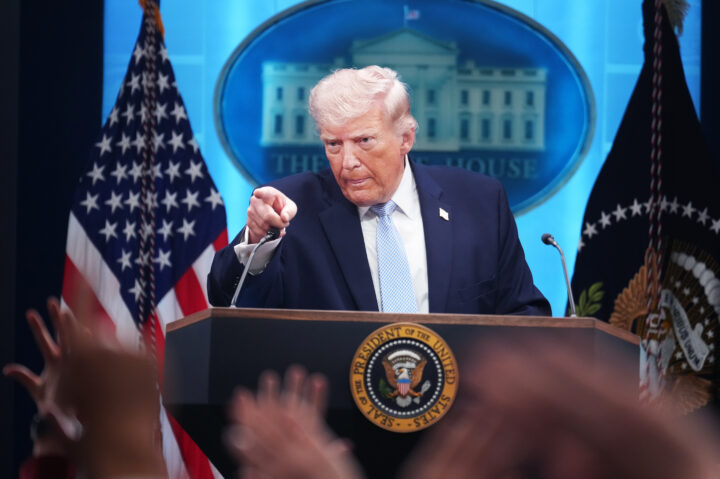
Tom Williams/CQ-Roll Call, Inc via Getty Images
President Donald Trump conducts a news conference in the White House briefing room about the war in Iran on Monday, April 6, 2026.
This P.M. edition is reserved for our premium subscribers — offering a forward-focused read on what we’re tracking now and what’s coming next. Please don’t hesitate to share your thoughts and feedback by replying to this email.
📡On Our Radar
Notable developments and interesting tidbits we’re tracking
Amid reports that Iran has rejected the U.S.’ ceasefire framework, President Donald Trump told reporters Tehran has made its own “significant” proposal, though it is “not good enough.”
Asked if he may push the deadline again for Iran to reopen the Strait of Hormuz or face increased U.S. military action — as he has already done three times — Trump said, “Highly unlikely. They’ve had plenty of time.”
Trump also claimed the U.S. had “sent guns, lot of guns” into Iran. “They were supposed to go to the people so they could fight back against these thugs. You know what happened? The people that they sent them to kept them, because they said, ‘What a beautiful gun. I think I’ll keep it,’” he said…
At a press conference this afternoon, Defense Secretary Pete Hegseth said today would mark “the largest volume of strikes since Day 1” of the Iran war, with more to come tomorrow.
Trump doubled down on his threats, warning that all of Iran “can be taken out in one night, and that night might be tomorrow night.” If Tehran does not acquiesce by his 8 p.m. ET deadline tomorrow, Trump said, “they’re going to have no bridges. They’re going to have no power plants. Stone ages.”
The president also floated the possibility of charging U.S. tolls to ships transiting the Strait of Hormuz once it is reopened and potentially seizing Iran’s oil. Trump and defense officials further detailed the harrowing rescue of a fighter jet pilot, who reportedly treated his own wounds while scaling mountainous terrain to evade capture after being downed over Iran…
Israeli Prime Minister Benjamin Netanyahu said he spoke yesterday with Trump, who thanked him for Israel’s assistance in rescuing the pilot…
Joe Kent, the former director of the National Counterterrorism Center who resigned over his opposition to the Iran war, shared a post on social media on Saturday spreading false claims from Iranian state-linked media and Drop Site News that the U.S. was attempting to kill the servicemember whose fighter jet was shot down over Iran prior to him being rescued, Jewish Insider’s Matthew Shea reports.
The initial statement from Drop Site, a far-left news outlet sympathetic to Hamas and totalitarian regimes, cited a report by Tasnim News, which is linked to the Islamic Revolutionary Guard Corps, claiming that the U.S. had “lost hope” of recovering the airman and was instead “attempting to kill him”…
Rep. Pat Fallon (R-TX), who previously served in the Air Force, predicted that the U.S. will deploy ground troops into Iran: “I just don’t see any other way,” he said on Fox News. “I personally think it’s going to be boots — at least special ops, American special operators — on the ground, with allies in the region and air cover,” he said…
The U.S.-led Board of Peace is pressing Hamas to finalize a Gaza demilitarization agreement by the end of the week, The New York Times reports, which would require the terror group to give up its weapons and maps of its tunnel network in the enclave. Negotiators from both sides are expected to meet in Cairo, Egypt, tomorrow…
Democratic Michigan state Sen. Mallory McMorrow announced she raised more than $3 million in the first quarter of 2026 in her bid for U.S. Senate. “There was not a dime of corporate PAC donations, not a dime of AIPAC donations,” she said in a video. The pro-Israel group was the only organization she named.
While McMorrow’s opponents have not yet publicized their latest fundraising figures, her haul surpassed those of last quarter, when Rep. Haley Stevens (D-MI) led the pack with $2.1 million raised in the final quarter of 2025…
The Senate Leadership Fund, the Senate GOP’s top super PAC, revealed its $350 million plan to retain control of the upper chamber, focusing on defending incumbents in Ohio, North Carolina, Maine, Iowa and Alaska and seeking to flip seats in Michigan, Georgia and New Hampshire.
The funds will largely be used for ad campaigns, with the most money being spent to defend Sen. Jon Husted (R-OH), who must win his first Senate election for the remainder of his term against the likely Democratic nominee, former Sen. Sherrod Brown (D-OH)…
Ukrainian President Volodymyr Zelensky received a grand welcome upon touching down in Damascus yesterday for his first meeting with Syrian President Ahmad al-Sharaa. The two leaders “explored avenues for strengthening economic cooperation and the exchange of expertise,” al-Sharaa said…
Sovereign wealth funds from Saudi Arabia, Qatar and the UAE have signed equity commitments to the tune of $24 billion to back Paramount’s acquisition of Warner Bros. Discovery, The Wall Street Journal reports…
⏩ Tomorrow’s Agenda, Today
An early look at tomorrow’s storylines and schedule to keep you a step ahead
Keep an eye out in Jewish Insider for a preview of tomorrow’s special election runoff in Georgia’s 14th Congressional District, where Republican military veteran and Israel supporter Clay Fuller is expected to win the ruby-red seat of former Rep. Marjorie Taylor Greene (R-GA).
Defense Secretary Pete Hegseth and Gen. Dan Caine, chairman of the Joint Chiefs of Staff, will hold another press briefing on the Iran war tomorrow morning.
Michigan Senate candidate Abdul El-Sayed will host rallies tomorrow at Michigan State University and the University of Michigan with guests including Rep. Summer Lee (D-PA) and antisemitic streamer Hasan Piker, a move which has drawn condemnation from some Democrats and sparked a broader debate about the mainstreaming of Piker within the party.
The Democratic National Committee will begin its five-day meeting in New Orleans tomorrow, where its resolutions committee will consider several resolutions condemning AIPAC and Israel, including calls for conditions on or a suspension of U.S. military aid to the Jewish state.
NATO Secretary-General Mark Rutte will meet with Trump and administration officials in Washington on Wednesday, as the president continues to slam the organization for its refusal to engage in the Iran war.
In observance of Passover, we’ll be back in your inbox with the Daily Overtime on Monday, April 13. Chag Pesach Sameach!
Stories You May Have Missed
ALTERED LIVES
They survived the Temple Israel attack. They can’t escape what followed

The foiled attack at the Michigan synagogue is being called a miracle — but those who were inside now face the lasting impact of trauma and a search for safety
O CANADA
As antisemitic attacks mount, Canadian Jews ask whether they still belong

After a series of targeted attacks in Toronto and beyond, Jewish leaders are raising the alarms on Canada’s failure to properly protect its Jews amid ‘systemic’ antisemitism
Plus, judge rules against UPenn in antisemitism investigation
Haidar Mohammed Ali/Anadolu via Getty Images
Mourners carry the coffin of Kata'ib Hezbollah member on March 2, 2026 amid Kata'ib Hezbollah flags.
This P.M. edition is reserved for our premium subscribers — offering a forward-focused read on what we’re tracking now and what’s coming next. Please don’t hesitate to share your thoughts and feedback by replying to this email.
📡On Our Radar
Notable developments and interesting tidbits we’re tracking
President Donald Trump lashed out at European countries this morning for their posture during the war in Iran: He wrote on Truth Social that France is prohibiting planes with military supplies destined for Israel from flying over its territory, calling Paris “VERY UNHELPFUL … The U.S.A. will REMEMBER!”
Trump also named the U.K. among the countries “which refused to get involved in the decapitation of Iran” and are now struggling to acquire fuel due to the effective closure of the Strait of Hormuz. “[G]o to the Strait, and just TAKE IT. You’ll have to start learning how to fight for yourself, the U.S.A. won’t be there to help you anymore, just like you weren’t there for us,” the president warned…
Trump told the New York Post about reports that he’s willing to end the war without reopening the Strait of Hormuz: “I don’t think about it, to be honest. My sole function was to make sure that they don’t have a nuclear weapon. They’re not going to have a nuclear weapon. When we leave the strait will automatically open.”
He similarly said to CBS News about removing Iran’s enriched uranium, “I don’t even think about it. I just know that, you know, that’s so deeply buried it’s gonna be very hard for anybody. … It’s pretty safe. But, you know, we’ll make a determination”…
During a press briefing this morning, Defense Secretary Pete Hegseth revealed that he took a secret trip to the Middle East in recent days to meet with U.S. servicemembers, including Air Force intelligence analysts, Army troops and pilots.
CENTCOM also confirmed that Adm. Brad Cooper visited Israel earlier this week where he met with Defense Minister Israel Katz and Lt. Gen. Eyal Zamir, the IDF’s chief of staff…
Israel is ending all arms purchases from France and “replacing it with domestic Israeli procurement or purchases from allied countries,” the Israeli Ministry of Defense said today, adding that there will be “no new professional engagement with the French military” in the latest rift in the deteriorating relationship between Jerusalem and Paris…
A week after Lebanon declared Iran’s ambassador to Beirut persona non grata and expelled him from the country, the ambassador has still refused to leave the embassy compound, and Iran has stated that the embassy remains open…
China and Pakistan, which has been the intermediary for indirect negotiations between the U.S. and Iran, put forward a ceasefire proposal that would see the immediate cessation of hostilities, the safeguarding of nonmilitary targets and the restoration of transit through global shipping lanes…
American journalist Shelly Kittleson was kidnapped in Baghdad, Iraq, today, according to the Iraqi interior ministry, reportedly by Kataib Hezbollah, the same group that held researcher Elizabeth Tsurkov for over 900 days. Kittleson is a freelance journalist primarily based in Europe who has written for outlets including Al-Monitor and Foreign Policy.
Dylan Johnson, assistant secretary of state for global public affairs, said in a statement that the State Department “is aware of the reported kidnapping” and had “previously fulfilled our duty to warn this individual of threats against them.” Johnson said an “individual with ties” to Kataib Hezbollah “has been taken into custody” in connection with the kidnapping and that the department will coordinate with the FBI to secure Kittleson’s release…
New York City Mayor Zohran Mamdani attended a dinner for Eid last week where he spoke with antisemitic streamer Hasan Piker, a conversation that Piker called “very productive” on a recent Twitch stream.
“No, he did not disavow me,” Piker said in response to a listener’s question. “‘Did you tell him to tune out the bad faith haters?’ I did,” Piker continued. Mamdani appeared on Piker’s Twitch for an interview during the mayoral campaign but has not met with him publicly since…
“Nope,” Rep. Josh Gottheimer (D-NJ) said in response to a video of Sen. Bernie Sanders (I-VT) claiming that, “in many respects,” Piker “is doing a very good job.” “Hasan Piker is a proud antisemite … His voice should have no place in our political discourse and all elected officials should condemn his rhetoric,” Gottheimer wrote…
Michigan Attorney General Dana Nessel, a Jewish Democrat, shared an image of a sign which read, “A Jewish data center has no home here,” displayed outside a town hall she held yesterday urging caution around the approval of data centers. “If you think antisemitism isn’t a problem in Michigan, think again,” Nessel wrote…
A new poll commissioned by former Maine state Sen. Troy Jackson, now a Democratic candidate for governor, found oyster farmer Graham Platner — whom Jackson is backing — nearly 40 points ahead of Gov. Janet Mills in the state’s Senate race (66-28%) among likely Democratic primary voters. The survey was conducted after Mills had started running ads against Platner based on his past controversial statements, a sign that her line of attack may not be persuading voters…
And another poll commissioned by the Senate Majority PAC, a Democratic group, found Texas Attorney General Ken Paxton leading in the heated Republican primary runoff for Senate against incumbent Sen. John Cornyn (R-TX), 47-42%…
A federal judge ruled that the University of Pennsylvania must comply with a subpoena from the Trump administration that seeks information about Jewish university affiliates, which the university had said resembled nefarious efforts by governments over history to gather lists of Jews…
⏩ Tomorrow’s Agenda, Today
An early look at tomorrow’s storylines and schedule to keep you a step ahead
Keep an eye out in Jewish Insider for a report from West Bloomfield, Mich., where JI’s Gabby Deutch sat down with community members still reeling from the attack on Temple Israel earlier this month.
Democrat Analilia Mejia and Republican Joe Hathaway will participate in a debate tomorrow evening ahead of the April 16 special election in New Jersey’s 11th Congressional District, after Mejia eked out a surprise victory in last month’s primary. While this race will decide who serves out the rest of Gov. Mikie Sherrill’s House term, the progressive Mejia is also running essentially unopposed by other Democrats for the full term.
In observance of Passover, we’ll be back in your inbox with the Daily Overtime on Monday, April 6. Chag Pesach Sameach!
Stories You May Have Missed
COMMUNITY TIGHTROPE
In Michigan Senate primary, McMorrow balances Jewish fears and Arab outreach after attack
In an interview with JI, the state senator described herself as someone who supports the U.S.-Israel relationship, but not unconditionally
DECISION TIME
Trump at a crossroads on Iran: Will he or won’t he send in troops?

As the president touts progress in talks with Tehran while escalating military pressure, analysts say the administration is keeping its options open — but will need to make a move soon
Plus, one AI rabbi down but more pop up

Emily Elconin/Getty Images
Caution tape near the front entrance of Temple Israel a day after an active shooter incident on March 13, 2026 in West Bloomfield, Michigan.
This P.M. edition is reserved for our premium subscribers — offering a forward-focused read on what we’re tracking now and what’s coming next. Please don’t hesitate to share your thoughts and feedback by replying to this email.
📡On Our Radar
Notable developments and interesting tidbits we’re tracking
President Donald Trump doubled down on threats to escalate the war in Iran while simultaneously heralding the success of ongoing negotiations: He claimed on Truth Social this morning that the U.S. is in “serious discussions” with a “new” and “more reasonable” Iranian regime and that “great progress has been made.”
“But,” he added, “if for any reason a deal is not shortly reached, which it probably will be, and if the Hormuz Strait is not immediately ‘Open for Business,’ we will conclude our lovely ‘stay’ in Iran by blowing up and completely obliterating all of their Electric Generating Plants, Oil Wells and Kharg Island (and possibly all desalinization plants!)”…
Trump confirmed to the New York Post that the U.S. is engaging with Iranian parliament speaker Mohammad Bagher Ghalibaf and assessing whether he’s a reliable partner: “We’re gonna find out. I’ll let you know that in about a week.” He also said the U.S. believes new Supreme Leader Mojtaba Khamenei is “probably” alive “but in extraordinarily bad shape” after he was injured in an airstrike…
Treasury Secretary Scott Bessent claimed in a Fox News interview that the U.S. is “going to retake control of the straits and there will be freedom of navigation, whether it is through U.S. escorts or a multinational escort”…
A series of surveys released today reveal how Jews and Israelis are perceiving the war in Iran: A poll conducted by the Mellman Group found 55% of American Jews oppose the war while 32% are in favor. Another poll of American Jews, solicited by J Street, found 60% of respondents opposed and 40% in support.
In Israel, meanwhile, a poll released by the Israel Democracy Institute found that the war is losing some support among Israelis, Jewish Insider’s Lahav Harkov reports. In the first week of the war, 93% of Jewish Israelis supported continuing it, while in the latest poll — conducted nearly a month into the war — 78% support it. Nearly three times as many Israeli Jews (12%) now oppose the war as did at the beginning of March (4%)…
The FBI announced findings that the attack on Temple Israel in suburban Detroit earlier this month was “a Hezbollah-inspired act of terrorism purposely targeting the Jewish community and the largest Jewish temple in Michigan.” The brother of the assailant was a Hezbollah commander who had been killed in Lebanon by the IDF the week before the attack…
Michigan Democratic Senate candidate Abdul El-Sayed told campaign staff that he did not want to take any public position on the killing of former Iranian Supreme Leader Ayatollah Ali Khamenei at the beginning of the war because “there are a lot of people in Dearborn who are sad,” according to meeting audio obtained by The Washington Free Beacon.
If asked by reporters, El-Sayed said his strategy would be to “go straight to pedophilia, frankly. I’ll just be like, ‘Pedophile president decides that he doesn’t like the front page news, so he decides to take us into another war’”…
Allies of New York City Mayor Zohran Mamdani told Politico that the mayor’s dismissal of criticisms of his wife, Rama Duwaji, for her past extreme rhetoric and social media posts — calling her “a private person” — doesn’t comport with Duwaji’s very public profile.
“‘She is the first lady of New York City. She has a police detail and a government staff,’ said one of the elected officials, who believes Duwaji should explain herself publicly. ‘She would need to do an interview, better explain herself, and have her do some visits and meetings with key constituencies, like Jewish museums’”…
An AI-generated Instagram account, which featured a fake Orthodox rabbi spreading antisemitic conspiracies to its more than 1.4 million followers, was taken offline over the weekend following major backlash from Jewish groups and one Democratic lawmaker — yet several similar, hate-peddling accounts have emerged with little to no public action from Meta, JI’s Haley Cohen reports.
Several new Rabbi Goldman accounts started posting similar videos within the past two weeks — two of which already have followings of 18,500 and 10,000. Both remain active on Instagram and their bios state, “only Backup account for @rabbigoldman” and “old account got banned”…
The Knesset passed a controversial law today allowing courts to impose the death penalty on convicted terrorists found guilty of murder, JI’s Lahav Harkov reports.
The law, championed by National Security Minister Itamar Ben-Gvir, applies in military courts to non-Israeli residents of the West Bank — meaning, in the vast majority of cases, Palestinians. In civilian courts, the law permits applying the death penalty to those who “intentionally cause the death of a person with the aim of denying the existence of the State of Israel” — language which would also likely exclude Jewish assailants. Critics say it will likely be struck down by the High Court…
The Times of Israel breaks down the legislative maneuver used in Knesset by the coalition that caused opposition members to accidentally vote in favor of allocating 800 million shekels (~$250 million USD) to Haredi schools as they passed the state budget this morning…
In an interview on Israel’s Channel 12, Ukrainian President Volodymyr Zelensky said he has barely spoken to Israeli Prime Minister Benjamin Netanyahu since their last meeting at the United Nations General Assembly in September 2023…
⏩ Tomorrow’s Agenda, Today
An early look at tomorrow’s storylines and schedule to keep you a step ahead
Keep an eye out in Jewish Insider for a look at the resolution coming under consideration by the Democratic National Committee that explicitly criticizes AIPAC’s political spending.
The House and Senate left for recess until mid-April, after failing to come to an agreement to fund the Department of Homeland Security, which has now reached its longest-ever shutdown. Calls have already begun from at least one Republican senator to bring Congress back into session sooner, but prospects for an early return are currently unclear.
Sen. Cory Booker (D-NJ) will speak at Temple Emanu-El in New York City tomorrow about his new book, Stand, on the one-year anniversary of his delivery of the longest-ever speech on the Senate floor.
Stories You May Have Missed
SEAT SHAKE-UP
Sheila Cherfilus-McCormick’s scandal could send another Israel critic to Congress
The lawmaker, who may soon be expelled from the chamber, is already in a heated primary race with Elijah Manley, a young far-left candidate endorsed by TrackAIPAC
PHONE A FRIEND
Family of China-allied tech mogul embedded in Zohran Mamdani’s movement
The sister, niece and brother-in-law of Maoist magnate Neville ‘Roy’ Singham have gained influence in New York’s ascendant socialist movement
Plus, fake AI rabbis peddle antisemitism
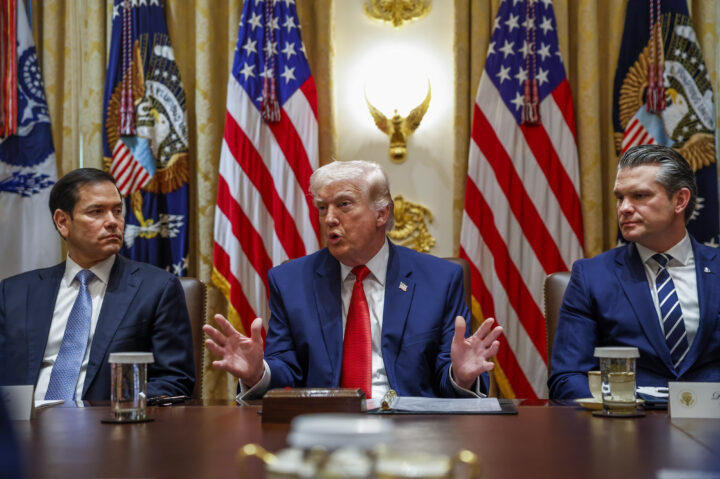
Will Oliver/EPA/Bloomberg via Getty Images
Secretary of State Marco Rubio, President Donald Trump and Defense Secretary Pete Hegseth during a Cabinet meeting at the White House in Washington, DC, US, on Thursday, March 26, 2026.
This P.M. edition is reserved for our premium subscribers — offering a forward-focused read on what we’re tracking now and what’s coming next. Please don’t hesitate to share your thoughts and feedback by replying to this email.
📡On Our Radar
Notable developments and interesting tidbits we’re tracking
President Donald Trump announced this afternoon that he’s extending his original five-day delay on strikes on Iran’s energy sector, which was set to expire tomorrow, by another 10 days. “As per Iranian Government request … I am pausing the period of Energy Plant destruction by 10 Days to Monday, April 6, 2026, at 8 P.M., Eastern Time,” he wrote on Truth Social, adding that negotiations continue and are “going very well”…
At a Cabinet meeting earlier today, Trump revealed that the “present” Iran had provided the U.S. earlier this week was allowing eight Pakistani-flagged oil tankers to pass safely through the Strait of Hormuz, which he said proved the U.S. was speaking with the “right people” in Iran with the authority to make such decisions.
Special Envoy Steve Witkoff, meanwhile, confirmed reports that the U.S. had presented Iran with a “15-point action list” as a starting offer in peace talks between the two countries, and that Pakistan is acting as mediator…
Speaking at the FII Priority summit in Miami, Jared Kushner said that, during his negotiations with Iran prior to the war, “We basically saw that there was no seriousness, and that they were trying to play different games to just get beyond President Trump in order to preserve their capabilities and pathway to get to a nuclear weapon in a way that would have been very, very hard to be stopped in the future”…
CENTCOM applauded an Israeli strike that killed Alireza Tangsiri, the commander of the IRGC Navy, and warned all IRGC Navy members to “immediately abandon their post and return home.” Tangsiri had been named a Specially Designated Global Terrorist by the U.S. in 2019 and was leading Iran’s efforts to shutter the Strait of Hormuz…
Even as U.S.-Iran negotiations continue, the U.S. is considering diverting weapons for Ukraine to the Middle East, The Washington Post reports, including air-defense interceptor missiles.
Ukraine has proved a stalwart ally to the Gulf as it comes under attack from Iran — around 200 Ukrainian military personnel have been deployed around the Middle East to help defend against Iranian drones and President Volodymyr Zelensky arrived in Saudi Arabia today for a surprise visit…
Resources are also being redirected to Gaza — the Trump administration has reportedly pulled $1.25 billion from international peacekeeping and disaster assistance programs for the Board of Peace’s operations, for which Trump had pledged $10 billion in U.S. funding…
An AI-generated Instagram account portraying an Orthodox-looking rabbi is pushing antisemitic conspiracy theories to its more than 1.4 million followers, and it’s not the only one, according to a study published Wednesday by Combat Antisemitism Movement.
Jewish Insider’s Haley Cohen reports: Researchers identified 12 AI-generated “rabbis” with a combined following of 2.1 million Instagram users, all of which promote classic antisemitic stereotypes. The “Rabbi Goldman” account features many of these, including one video in which the “rabbi,” wearing a tuxedo and seemingly seated in a luxury airplane, claims that Jews utilize empty private jets to evade taxes…
A new Emerson College poll of the Maine Senate race found oyster farmer Graham Platner with a nearly 30 point lead over Gov. Janet Mills (55-28%) in the Democratic primary. Both Platner and Mills lead Sen. Susan Collins (R-ME) in the general election matchup, 48-41% and 46-43%, respectively…
California Gov. Gavin Newsom again reaffirmed his support for Israel in an interview with The Bulwark, likening his love for the country but strong disapproval of its current government with how he feels about the U.S…
Democrat Analilia Mejia and Republican Joe Hathaway will participate on April 1 in what is likely to be the only debate of the New Jersey 11th Congressional District’s special election, after the far-left Mejia won the Democratic nomination in a hotly contested primary last month. The New Jersey Globe, which is hosting the debate, acknowledged it had chosen to do so on the first night of Passover, in a district with a sizable Jewish population…
The College Republicans chapter at the University of Florida is suing the school, after a photo of one of its members doing what appeared to be a Nazi salute led to the chapter’s ban from campus.
The chapter argues that the ban violated its First Amendment rights as the member “expressed a viewpoint off-campus that was alleged by some to be anti-Semitic,” and claims it was deactivated in part because it recently hosted James Fishback, a candidate for Florida governor who has expressed antisemitic and anti-Israel views…
⏩ Tomorrow’s Agenda, Today
An early look at tomorrow’s storylines and schedule to keep you a step ahead
Keep an eye out in Jewish Insider for comments from Michigan state Sen. Mallory McMorrow on Israel and antisemitism as she seeks the Democratic nomination for U.S. Senate against Rep. Haley Stevens (D-MI) and Abdul El-Sayed.
President Donald Trump will provide closing remarks at the FII Priority summit in Miami tomorrow afternoon.
Texas Attorney General Ken Paxton will headline CPAC’s Ronald Reagan Dinner. His primary opponent, Sen. John Cornyn (R-TX), will not be making an appearance, despite the confab taking place in his home state and calls from its leadership for him to attend.
Secretary of State Marco Rubio is traveling to France to attend a meeting of G7 foreign ministers where he is expected to press allies on the Iran war — he told reporters as he departed today, echoing a line from Trump, that the countries involved “get far more of their fuel from” the Strait of Hormuz “than we do.”
Stories You May Have Missed
TROUBLE IN THE NEIGHBORHOOD
Gulf states slam Arab League countries for tepid response to Iranian aggression

Frustrated UAE leaders are questioning the ‘impotence’ of countries like Egypt — and warn that silence on Iranian aggression will push the Gulf closer to U.S., Israel
MICHIGAN MOMENT
Elissa Slotkin, Haley Stevens criticize El-Sayed over rallies with Hasan Piker
Stevens said that by associating with Piker, El-Sayed is ‘choosing to campaign with someone who has a history of antisemitic rhetoric’
Former CENTCOM head Gen. Frank McKenzie: ‘If you are sitting down at CENTCOM right now, you are satisfied with where you are’

Tolga Akbaba/Anadolu via Getty Images
A view shows explosions lighting up the skyline amid ongoing US-Israel attacks in Tehran, Iran, on March 25, 2026.
Former U.S. Central Command head Gen. Frank McKenzie said Wednesday that the U.S. military is “in the heart of the plan” in its war against Iran, pointing to major military achievements against Tehran’s missile and military capabilities, while cautioning that the conflict remains a grinding, long-term campaign.
As the conflict between the U.S., Israel and Iran nears the one-month mark, officials say Iran’s capabilities have been severely degraded, while President Donald Trump has asserted that the war is nearly over and that its objectives have largely been achieved.
At the same time, reports indicate that Iran has rejected Trump administration proposals to negotiate an end to the conflict, while the Pentagon is deploying the military’s highly specialized 82nd Airborne Division to the Middle East — raising fresh questions about the trajectory of the war and the broader strategy.
During a webinar hosted by the Jewish Institute for National Security of America, McKenzie said the U.S. is “accomplishing the objectives that we set out. CENTCOM is executing a long-prepared campaign plan. This is not something that we’ve drawn up on the back of the envelope day-to-day. These are things that have been studied and refined for many years. If you are sitting down at CENTCOM right now, you are satisfied with where you are.”
McKenzie said one of the clearest indicators of success is that Iran has been unable to generate the kind of large ballistic missile salvos that U.S. military planners had long feared.
“Iran has not been able to mount massive volleys against Israel. Have they been able to fire some number of missiles against our targets? Yes, but not the massive volleys that we thought would make it hard for us to defend,” McKenzie said, attributing that in part to Iran’s own strategic miscalculation.
“The Iranians made a mistake in designing their ballistic missile force. They mistook hardening and burying for security,” McKenzie said. “The truth of warfare today is this: if you can see it, you can hit it. If you can hit it, you can kill it. And even if you dig yourself deep underground with these beautiful missile cities, that just makes it easier for us to strike and destroy these missiles wholesale rather than retail.”
Yaacov Ayish, former head of the IDF’s general staff, also said that “significant progress” has been made. He noted that Iran’s ballistic missile capabilities have subsided.
“When I’m thinking about the amount of ballistic missiles launched by the Iranians compared to what they had planned, I think they are in a very very bad place, and this is due to the fact that not only their command control capabilities were shattered since day one of this war, but also because we [the IDF] are, together with the U.S., hunting their launching capabilities.”
McKenzie said the U.S. is also making progress against Iran’s drone threat, though he acknowledged that it remains an evolving challenge. Throughout the conflict, Tehran has launched over 2,000 low-cost, easy-to-produce drones at targets across the Middle East.
“We are still absorbing how to employ and defend against drones, as is really everybody else,” he said. “The best way to do that is going to be by striking where the drones are manufactured, where they’re launched. The worst way to do it is to defend them in the terminal area.”
McKenzie also addressed the conflict over the Strait of Hormuz, where Iran has effectively blocked one of the world’s most critical oil routes. He said the U.S. has already struck Iran’s major naval assets and is now focused on “preparatory steps in order to clear” it.
“What that means is first clearing those craft, getting rid of Iranian submarines, looking at the fast-attack craft, the small cigarette-boat type vessels that can swarm out from the northern to the southern coast of Iran … to affect shipping in the region,” McKenzie said. “CENTCOM is busy on a program of doing that. I think there’s probably some days left ahead of work to finish that. But it’s progressing.”
He said Iran also retains a “large and capable stack of mines,” and suggested CENTCOM has likely been targeting both the mines and the vessels used to lay them.
“You don’t have to clear the whole Strait of Hormuz,” McKenzie said. “You’ve got to clear a route that you’re going to bring vessels through.”
Ayish noted that he sees “two ways to solve” the tension at the strait.
“One is the diplomatic channel that is under discussion between the U.S. and the Iranians via certain mediators, and there is the military option,” Ayish said. “When you are analyzing the achievements that were achieved, it seems like both options are viable, and I think the major reason for the Iranians to go into this negotiation is because they know that it’s very imminent. Both options are seriously on the table.”
When asked whether CENTCOM had failed to adequately prepare for what had unfolded in the strait, McKenzie rejected that premise.
“I’m not sure I’d agree with that assertion,” he said. “You build your plan off the forces that you have. We’ve always thought there’d be a struggle over this. The nature of warfare is you can’t get everything you want. Sometimes it takes a little while to get that. I think we’re working toward that end right now.”
McKenzie also declined to rule out the possibility of U.S. boots on the ground, an outcome many Democrats and some Republicans have strongly opposed.
“I think it’s certainly something we want the Iranians to worry about,” McKenzie said. “I would certainly leave that on the table, and then I wouldn’t share what I was going to do. I think we want them to be very worried about that.”
Meanwhile, while Ayish noted a goal of achieving “a situation that will allow a regime change in the future in Iran,” McKenzie said the U.S. is not directly pursuing regime change in Tehran, even if it could emerge as a consequence of the campaign, even as Trump told reporters Tuesday that regime change had already been achieved.
“The United States is not pursuing regime change directly. It may be a product of what we’re doing,” McKenzie said. “We’d like to get to a point where there’s going to be some entity in Tehran that will negotiate the objectives we want for this campaign, whether it’s a completely new regime or a version of this regime that is so affected by pressure that they’re willing to make these concessions.”
Plus, is Stevens losing steam in Michigan Senate race?
Anna Rose Layden/Getty Images
House Armed Services Committee Chairman Mike Rogers (R-AL) speaks to the press at the U.S. Capitol on October 17, 2025 in Washington, DC.
This P.M. edition is reserved for our premium subscribers — offering a forward-focused read on what we’re tracking now and what’s coming next. Please don’t hesitate to share your thoughts and feedback by replying to this email.
📡On Our Radar
Notable developments and interesting tidbits we’re tracking
White House Press Secretary Karoline Leavitt downplayed reports that Iran has rejected President Donald Trump’s ceasefire proposal, saying in a press briefing today that “talks continue” and “are productive.” She further confirmed, while cautioning against speculation, that there are “elements of truth” to the 15-point plan that has been reported.
About potential face-to-face negotiations, which International Atomic Energy Agency head Rafael Grossi said could take place in Pakistan as soon as this weekend, Leavitt said she “would not get ahead of our skis on reporting about any talks this weekend until you hear directly from us”…
Emerging from a classified House Armed Services Committee briefing on Iran, Chairman Mike Rogers (R-AL) expressed frustration that the administration isn’t forthcoming enough about its war plans. “We want to know more about what’s going on, what the options are and why they’re being considered, and we’re just not getting enough answers on those questions,” Rogers told reporters.
And Senate Armed Services Committee Chairman Roger Wicker (R-MS), asked about his House colleague’s comments, said, “Let me put it this way: I can see why he might have said that.” It’s the latest sign of cracks in the GOP nearly a month into the war effort…
For the first time since the start of the war, the UAE — which has faced the brunt of Iran’s attacks — reported zero Iranian ballistic missile attacks today, raising questions about the Islamic Republic’s potentially dwindling supplies.
Yousef Al Otaiba, the Emirati ambassador to the U.S., called for a “conclusive outcome” to the war, as opposed to a “simple cease-fire.” Writing in The Wall Street Journal, he argued that “building a fence around the problem and wishing it goes away isn’t the answer. It would simply defer the next crisis”…
European authorities are investigating whether a new group that has claimed responsibility for several recent terror attacks on Jewish institutions across Europe, the Islamic Movement of the Righteous Companions, is a front for Iran, which has likely recruited people online to carry out the attacks on its behalf…
The Journal profiles Iranian parliament speaker Mohammad-Bagher Ghalibaf as he emerges as a potential leader and negotiating partner for the U.S., with one expert calling him a “wannabe strongman” who simultaneously has “the necessary credentials to deliver a potential deal with the Trump administration”…
An internal poll from the campaign of Michigan state Sen. Mallory McMorrow shows her leading the pack in the Democratic primary for U.S. Senate, followed by the far-left Abdul El-Sayed with Rep. Haley Stevens (D-MI) trailing in third place, a sign her campaign is struggling to build momentum. A fifth of potential primary voters still identified themselves as undecided.
Stevens’ campaign then released its own internal poll that showed her in first place, followed closely by El-Sayed with McMorrow in third, though the survey was conducted in mid-February…
As the Trump administration sues Harvard — again — over alleged civil rights violations and failure to address campus antisemitism, Rabbi Hirschy Zarchi, president of Harvard Chabad, told The Harvard Crimson that the school is in fact “taking the issue” of antisemitism “very seriously.”
“While there is much more to be done, the only plausible characterization of Harvard’s current leadership is as principled and effective in confronting and removing the intolerance which had taken root on campus over more than a decade,” added Jason Rubenstein, executive director of Harvard Hillel…
Asked at a recent event at Harvard’s Kennedy School whether the Biden administration could have done more to save lives in the war in Gaza, former Secretary of State Tony Blinken said, “Could we, should we have done things differently such that the suffering that people endured, the loss of the children you just listed and so many others could have been averted? The short answer is: Maybe yes.”
Blinken also called on people not to be “binary” in their thinking about the Middle East, Jewish Insider’s Gabby Deutch reports. With the Gaza war, he said, “Where did we start? We started with Oct. 7. We started with the most horrific massacre of Jews since the Holocaust. It’s very easy to say, ‘Oh, yeah, that’s a given.’ Except it wasn’t a given for Israelis and Israeli society”…
⏩ Tomorrow’s Agenda, Today
An early look at tomorrow’s storylines and schedule to keep you a step ahead
Keep an eye out in Jewish Insider for a look at the growing divide in the Democratic Party over engagement with antisemitic streamer Hasan Piker — and the questions it raises about the meaning of progressivism in the current political landscape.
The Atlantic Council and U.S.-Syria Business Council will host a symposium on Syria’s energy sector with keynote remarks from U.S. Special Envoy to Syria Tom Barrack. Also speaking are several oil executives and Jacob McGee, the State Department’s deputy assistant secretary for Israeli-Palestinian affairs.
The FII Priority Summit continues in Miami; among other sessions tomorrow, Jared Kushner will speak on U.S.-Gulf investment and Zach Witkoff, co-founder of World Liberty Financial and son of Special Envoy Steve Witkoff, will discuss crypto.
CPAC, which President Donald Trump is seemingly not attending for the first time in a decade, continues in Dallas. GOP candidates who are in attendance include Brandon Herrera, the far-right influencer running in Texas’ 23rd District; Michael Whatley, the front-runner in North Carolina’s open Senate race; Rep. Mike Collins (R-GA), running in a competitive primary to challenge Sen. Jon Ossoff (D-GA); Rep. Kevin Hern (R-OK), seeking the Senate seat vacated by new Homeland Security Secretary Markwayne Mullin; and Nate Morris, running to succeed retiring Sen. Mitch McConnell (R-KY).
The House Ethics Committee will hold a rare public hearing on Rep. Sheila Cherfilus-McCormick’s (D-FL) alleged ethics violations, including her laundering of funds from a FEMA-backed contract for her family business into her congressional campaign.
Stories You May Have Missed
STRAIT TALK
Senate Republicans express confidence, but say they haven’t heard plan for reopening Strait of Hormuz
Some disagree on who should claim ultimate responsibility for the strait — the U.S. or other countries in the region
GUARDING THE GATES
Rep. Brad Schneider, New Dems chair, urges Democrats to disavow Hasan Piker
Schneider called Piker ‘an unapologetic antisemite’ and warned ‘Democrats risk losing our credibility to condemn those on the right who traffic in bigotry’ if they continue to embrace him
Plus, media misdirection over AIPAC money

Shauna Clinton/Sportsfile for Web Summit Qatar via Getty Images
Hasan Piker during day two of Web Summit Qatar 2026 at the Doha Exhibition and Convention Center in Doha, Qatar.
This P.M. edition is reserved for our premium subscribers — offering a forward-focused read on what we’re tracking now and what’s coming next. Please don’t hesitate to share your thoughts and feedback by replying to this email.
📡On Our Radar
Notable developments and interesting tidbits we’re tracking
Rumblings of a potential peace summit between Washington and Tehran have begun — sources told Axios that the U.S. and several mediating countries are waiting for Iran to respond to a proposal for peace talks this Thursday, while President Donald Trump reposted a message from Pakistan offering to “be the host to facilitate meaningful and conclusive talks”…
Trump told reporters in the Oval Office this afternoon that “we’re dealing with the right people” in Iran because they “gave us a present, and the present arrived today. It was a very big present worth a tremendous amount of money,” but would only tease that it was “oil and gas related.” Asked if he is negotiating over who will control the Strait of Hormuz, Trump said, “No … we’ll have control of anything we want”…
Saudi Crown Prince Mohammed bin Salman has encouraged Trump to continue the campaign against Iran and push towards toppling the regime, The New York Times reports, believing that Iran’s threat to the Gulf will only be removed through the transition of its government and not if the war results in a failed state. MBS has reportedly argued in favor of striking Iran’s energy infrastructure and putting U.S. troops on the ground…
The Pentagon is expected to announce the deployment of about 3,000 soldiers from the military’s 82nd Airborne Division to participate in the campaign against Iran, The Wall Street Journal reports, a move that opens the possibilities for boots on the ground, as the division is trained to parachute into hostile territory…
Israeli Defense Minister Israel Katz said today that the IDF will now maintain control over a security zone south of the Litani River in Lebanon and prevent the return of Lebanese residents who have been evacuated from the area “until the security of northern [Israeli] residents is assured”…
Lebanese Minister of Foreign Affairs Youssef Raggi declared Iran’s ambassador to Beirut persona non grata and expelled him from the country, as Iranian proxy Hezbollah continues to fire on Israel against the Lebanese government’s orders.
Shortly after, an Iranian ballistic missile was launched towards Beirut for the first time — it was reportedly intercepted by a “foreign naval vessel,” presumably the U.S., though fragments struck Lebanese towns…
Secretary of State Marco Rubio is being dispatched to France later this week to discuss the Iran war, among other issues, with the U.S.’ G7 allies, including Britain, Canada, France, Germany, Italy and Japan, countries that have all declined to participate in the war effort…
Majed al-Ansari, spokesperson for the Qatari foreign ministry, said today that Qatar is not involved in mediating any U.S.-Iran negotiations, a shift for the country that has traditionally played the part of go-between. Al-Ansari said there has been no communication between Doha and Tehran since a phone call early in the conflict when Qatar made clear its anger with Iranian strikes on its territory…
Politico reports that several 2028 Democratic presidential hopefuls said they wouldn’t or haven’t taken money from AIPAC, including Sen. Cory Booker (D-NJ), California Gov. Gavin Newsom, Sen. Ruben Gallego (D-AZ), Kentucky Gov. Andy Beshear, Illinois Gov. JB Pritzker, Pennsylvania Gov. Josh Shapiro, Sen. Elissa Slotkin (D-MI) and former Chicago Mayor Rahm Emanuel.
But while framing the statements as rejections of AIPAC and Israel, the outlet buried or declined to mention Booker’s rebuke of the Democratic Party’s singling out of the pro-Israel group, several respondents’ inability to accept funds from AIPAC since it only participates in congressional elections and Newsom’s own about-face on Israel, where in the same publication he walked back critical comments he’s made and said he’s “proud to support the state.”
AIPAC said in response that it has “never given to a presidential campaign” and that “singling out and excluding millions of pro-Israel Democrats” who are AIPAC members “is wrong and undemocratic”…
Michael Sacks — a prominent Democratic donor and supporter of former President Barack Obama who chaired the 2024 Democratic National Convention host committee — denounced Democratic criticism of AIPAC as a “thinly disguised effort to make support for Israel politically toxic in the Democratic Party, to chase Jews and their allies out of our big tent coalition.”
Sacks wrote in the Chicago Tribune, “Real leadership recognizes that we can hold complicated views about the Israeli government and still refuse to make Jewish identity and pro-Israel sentiment a political disqualifier in our party. We can defend the big tent when it is inconvenient, not just when it is easy”…
Jonathan Cowan, president of the moderate Democratic think tank Third Way, condemned far-left Michigan Senate candidate Abdul El-Sayed for his upcoming rallies with antisemitic streamer Hasan Piker, Jewish Insider’s Danielle Cohen-Kanik reports.
“It is morally repugnant and strategically self-defeating for Democrats like Abdul El-Sayed and Members of Congress like Summer Lee to cozy up to antisemitic extremists like Hasan Piker,” Cowan said in a statement. “Anyone eager to campaign with Hasan Piker is, at best, comfortable overlooking his antisemitic and anti-American extremism and, at worst, endorsing it”…
El-Sayed stood by his controversial statement about the shooting attack at Temple Israel in suburban Detroit earlier this month, in which he condemned the attack but blamed Israel’s military campaign in Lebanon for the perpetrator’s actions (the attacker’s brother was a Hezbollah commander).
The statement “was a risk,” El-Sayed said on an internal campaign call, per Punchbowl News, “but leadership is being willing to say the thing if you believe it to be true that nobody else is going to say”…
⏩ Tomorrow’s Agenda, Today
An early look at tomorrow’s storylines and schedule to keep you a step ahead
Keep an eye out in Jewish Insider for coverage of another war powers resolution expected to receive a vote this evening in the Senate.
President Donald Trump will give the keynote speech at the National Republican Congressional Committee’s annual President’s Dinner in Washington.
The House Homeland Security Committee will hold a hearing assessing the impact of the Department of Homeland Security shutdown, as lawmakers make progress on negotiations to fund the agency.
D.C. councilmember and mayoral candidate Janeese Lewis George will rally alongside other members of the Democratic Socialists of America including Squad-member Rep. Rashida Tlaib (D-MI), days after Lewis George held a private meeting with Jewish leaders to apologize for saying in a DSA questionnaire she would boycott events “promoting Zionism” and avoid the “Zionist lobby.”
Scholar of Jewish literature Ruth Wisse will deliver the annual Jefferson Lecture in the Humanities, the highest honor the federal government gives for intellectual achievement in the humanities, at the Kennedy Center in Washington.
The FII PRIORITY Summit, a high-profile investment and policy conference, will kick off in Miami, with speakers over the rest of the week including Trump; Donald Trump Jr.; Jared Kushner; White House Special Envoy Steve Witkoff; Dina Powell McCormick, president of Meta; Saudi Ambassador to the U.S. Princess Reema Bandar Al Saud; former Treasury Secretary Steve Mnuchin; Massad Boulos, senior White House advisor on the Middle East; and many more.
The Conservative Political Action Conference, known as CPAC, also begins tomorrow in Dallas.
The Jewish Book Council will hold the 75th National Jewish Book Awards Gala, hosted by entertainer Jonah Platt, at Temple Emanu-El in New York City.
Stories You May Have Missed
SECOND ACT
Former Rep. Jamaal Bowman finds work with Track AIPAC

The ousted New York lawmaker consulted for the far-left PAC, which is partially funded by Don Henley of The Eagles
PAIN TO POWER
From WhatsApp chats to City Hall, a new Jewish activism is born

In the wake of Oct. 7, some in the Jewish community turned to faith, philanthropy or federal advocacy. Others set their sights closer to home, organizing to shape school boards and influence city councils
Gabbard also said Tehran has the ‘intention to rebuild’ its nuclear capabilities that were ‘obliterated’ in last summer’s strikes
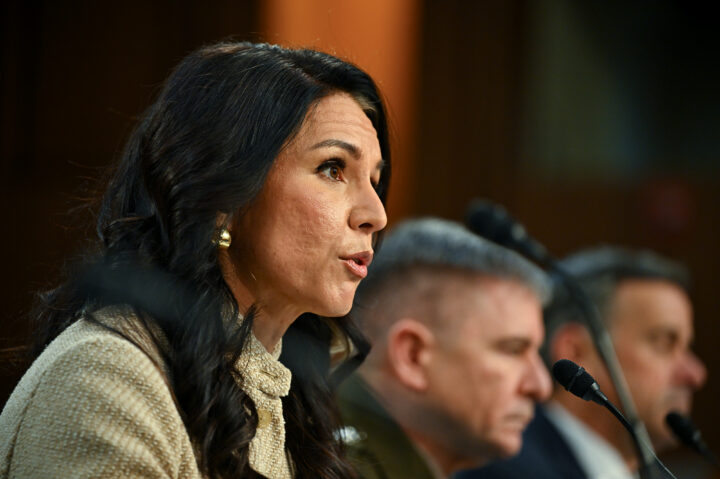
Graeme Sloan/Bloomberg via Getty Images
Tulsi Gabbard, director of National Intelligence, speaks during a Senate Intelligence Committee hearing on worldwide threats in Washington, DC, US, on Wednesday, March 18, 2026.
Director of National Intelligence Tulsi Gabbard said that the U.S. and Israeli operations against Iran have largely destroyed Tehran’s “power projection capabilities” in the region, but that the regime remains standing, if weakened.
“The [intelligence community] assesses that Operation Epic Fury is advancing fundamental change in the region that began with Hamas’ attack on Israel on Oct. 7, 2023, and continued with the 12-day war last year, resulting in weakening Iran and its proxies,” Gabbard said at a hearing of the Senate Intelligence Committee on worldwide threats on Wednesday.
“The IC assesses the regime in Iran appears to be intact but largely degraded due to attacks on its leadership and military capabilities,” she continued. “Its conventional military power projection capabilities have largely been destroyed, leaving limited options. Iran’s strategic position has been significantly degraded.”
If the Iranian regime survives the current war, Gabbard said that it would “seek to begin a yearslong effort to rebuild its military, missiles and UAV forces.”
She further said that, if the regime remains standing, internal tensions and resistance to the regime inside Iran are likely to increase as the country’s economy continues to struggle under U.S. and international sanctions.
Gabbard said in her opening statement that Iran “was trying to recover from the severe damage to its nuclear infrastructure sustained during the 12-day war, and continued to refuse to comply with its nuclear obligations” to the International Atomic Energy Agency.
Democratic senators pressed her throughout the hearing on apparent differences between those comments and her written remarks provided to the committee before the hearing, in which Gabbard said that Iran’s nuclear enrichment program was “obliterated” and that it had made “no efforts since then to try to rebuild” its enrichment capacity.
Under questioning, Gabbard affirmed that stance, but said Iran “maintained the intention to rebuild” its nuclear capabilities. She said she had omitted those remarks from her oral testimony for time reasons.
CIA Director John Ratcliffe throughout the hearing appeared to take a more aggressive and assertive stance on Iran than Gabbard, an isolationist and longtime opponent of war with Iran, offering a clear explanation and justification for the U.S. strikes.
Ratcliffe said that Iran was continuing its nuclear and ballistic missile development, and that he disagreed with an assessment by former National Counterterrorism Center Director Joe Kent that Iran did not pose an imminent threat, which Kent alleged in his resignation letter.
“I think Iran has been a constant threat to the United States for an extended period of time, and posed an immediate threat at this time,” Ratcliffe said.
Ratcliffe said that the U.S. operation was “detailed” and “thoughtful” with specific goals to address a long-running and growing threat.
He said that Iran was continuing to build and develop missiles “at alarming rates” such that its offensive capabilities were on track to outpace and overwhelm the U.S.’ ability to build defensive weaponry.
At the same time, Ratcliffe said the U.S. strikes last summer were a “wild success” and that Iran was “unwillinging and incapable” of enriching uranium to 60% purity since those strikes.
Gabbard, meanwhile, repeatedly declined to say whether the intelligence community had assessed Iran to be an imminent threat to the United States, asserting that only the president has the ability to determine whether any threat is imminent, to the frustration of committee Democrats.
In her opening statement, Gabbard also said that Iran’s space launch capabilities would allow it to develop an intercontinental ballistic missile by 2035, if Iran decided to pursue that, though that assessment is pending updates after U.S. military operations.
Sen. Tom Cotton (R-AR), the chair of the Intelligence Committee, suggested in his question that the timeline was much shorter, and that Iran actually could have had an ICBM that could threaten the homeland in six months.
Ratcliffe did not explicitly confirm that timeline, but emphasized that Iran’s missile program was a present and growing threat, which “if left unimpeded … would have the ability to range missiles to the continental U.S.”
“It’s one of the reasons why degrading Iran’s missile production capabilities that is taking place right now in Operation Epic Fury is so important to our national security,” Ratcliffe continued.
Pressed repeatedly by Democrats on whether the intelligence community had warned the President Donald Trump of the likelihood — as previously assessed by intelligence officials — that Iran would attack Gulf states and close the Strait of Hormuz in the event of a war, Gabbard and Ratcliffe both emphasized that the administration was aware of and had taken steps to prepare for those threats, despite comments by Trump that such moves by Iran were unanticipated.
Gabbard also described “the spread of Islamist ideology, in some cases, led by individuals and organizations associated with the Muslim Brotherhood” as “a fundamental threat to freedom and the foundational principles that underpin Western civilization.”
She said that Islamists are using such ideologies to recruit and solicit financial support for terrorism globally, and that such activity has been increasing in Europe.
Gabbard called the Trump administration’s designation of certain Muslim Brotherhood branches as terrorist organizations, “a mechanism to secure Americans.”
Ratcliffe said the CIA is “very focused” on counterterrorism, including the Muslim Brotherhood, and that the administration has had significant success, which he could share further in a classified setting.
Eighteen-year legal fight over the Iran-tied Alavi Foundation ends with a new group with similar leadership taking over its assets — and NYC skyscraper

Cem Ozdel/Anadolu Agency/Getty Images
The 650 Fifth Avenue building, a 36-story office tower, located on 52nd Street near Rockefeller Center is seen on April 20, 2014 in New York City.
As tensions intensified between the U.S. and Iran amid the regime’s violent repression of protesters in January, and as Tehran vowed itself “prepared for war,” a long-running battle with the Islamic Republic’s forces in Manhattan came to an end.
The final stages of the conflict between the Justice Department and the New York-based Alavi Foundation, which since 2008 has faced allegations of acting under Iranian direction, took place in secrecy — with scores of legal documents sealed and even vaulted away.
But materials filed on Jan. 12 with the New York State Charities Bureau revealed its ultimate outcome: a settlement that will provide compensation for numerous American and Israeli victims of Tehran-backed terror, but also enable a successor organization to recoup control of the foundation’s vast assets, including its 36-story crown jewel skyscraper on Fifth Avenue.
The final deal — which a filing this month shows came together confidentially in the last days of the Biden administration, and has just begun to go into effect — will officially dismantle the Alavi Foundation and strip it of hundreds of millions of dollars. Formed as the Pahlavi Foundation in 1973 during its namesake shah’s reign, Alavi was later commandeered and rechristened by figures tied to the regime of the mullahs, and the federal government accused it of conspiring with an Iranian state-owned bank to evade taxes and sanctions.
The settlement of the suit brought by the federal government compels payouts totaling $318 million to the U.S. government and a wide array of people Iran and its proxies have harmed: in the 1983 bombing of the U.S. Marine barracks in Beirut, in the 1996 Khobar Towers attack in Saudi Arabia, in multiple 1990s and 2000s suicide attacks against Israel, in the torture and murder of an Iranian dissident, and in the 1990 assassination of Rabbi Meir Kahane.
In exchange, a new non-governmental organization, the Amir Kabir Foundation, will rise in Alavi’s place. Named for a historic Persian imperial administrator, the new group will take full possession of 650 Fifth Ave., appraised at $435 million, plus bank and investment accounts holding more than $87.6 million, and properties from Queens to California worth tens of millions more and home to various Shia religious and educational facilities.
Records show that the Amir Kabir Foundation shares Alavi’s old address and even its phone number, and that three of the five members of the Alavi Foundation’s board of directors are part of the new group’s six-person leadership team. This includes Dr. Hamid Yazdi, who has served as Alavi’s president since 2013, and whose name appears on registration paperwork for the Amir Kabir Foundation. Yazdi did not respond to requests for comment.
And although by-laws for the new group require it to remain “independent from any national or international agencies,” it will continue to provide funding and support for at least one longtime Alavi affiliate: the Qoba Foundation of Carmichael, Calif., which occupies an Alavi-owned property that the feds sought to seize in the early days of the case and which bears the name of a politically significant Iranian mosque.
The news that the Amir Kabir Foundation shared much of Alavi’s leadership team and would regain access to the huge rental revenues from 650 Fifth Avenue and the network of religious facilities lodged at the old organization’s properties alarmed longtime Iran-watchers.
“This is the Iranians playing anti-sanctions, anti-accountability three-card monte. They are treating the U.S. Department of Justice and the courts as if they are fools,” asserted Dr. Michael Rubin of the American Enterprise Institute. “Iran’s only concern is maintaining the property. It’s lucrative and, in theory, can help undermine U.S. security from within. If the CIA owned a skyscraper in Tehran, would they be so willing to give it up, or would they just shuffle the acronyms around and hope no one notices?”
The news also worried Lara Burns, head of terrorism research at George Washington University’s Program on Extremism. Burns highlighted her own contributions to a report that found Alavi-backed groups had promoted anti-American, pro-ayatollah extremist rhetoric, and noted the group’s history of violating sanctions, as documented in the federal case. She suggested “government fatigue” with the lengthy and expensive litigation process may have contributed to the federal decision to settle.
A former FBI agent, Burns further argued financial penalties like those in the settlement can at times serve effective “punitive and deterrent functions” — but not in this case.
“I do not believe restitution and fines serve either purpose in the case of Alavi Foundation, who has shown a willingness to continue its behavior at all costs and the fiscal ability to maintain that agenda,” she argued to Jewish Insider. “Allowing Alavi to obfuscate their identity and basically start with a clean slate creates risks related to a continued foreign influence campaign on behalf of a regime that has called for the death of U.S. leaders and who has blatantly stated its intent to cause America harm through a variety of nefarious activities.”
But Alavi’s longtime attorney, Daniel Ruzumna, maintained that the new foundation would in no way serve as an alter ego to the old. He noted that the Alavi Foundation’s board had completely turned over during the yearslong legal fight, and stated that all members of the Amir Kabir Foundation’s leadership had submitted to interviews with the federal government and received no objection.
Further, he pointed to language in the document filed in New York subjecting the Amir Kabir Foundation to a five-year term of oversight from the state Attorney General’s office, and said that it would operate under the “close supervision” of the Justice Department.
“AKF and its board members have no relationship to the Government of Iran, no connection to the Government of Iran, and have never been accused of having a relationship with Iran — zero, nothing,” Ruzumna said. “Any suggestion otherwise is categorically false.”
The office of the U.S. Attorney for the Southern District of New York, which handled the case, declined to comment for this story.
Tehran is ‘timing their attacks overnight, but fewer missiles per launch,’ JINSA’s Ari Cicurel found

Amjad Kurdo / Middle East Images / AFP via Getty Images
A view of an Iranian missile after it fell near Qamishli International Airport, near the Turkish border in the Qamishli district of Hasakah, Syria, on March 4, 2026, amid the U.S.-Israeli conflict with Iran.
Despite a recent escalation in Iranian missile attacks targeting Israel, experts remain confident that Tehran’s military capabilities have been significantly degraded by the U.S. and Israel.
U.S. and Israeli officials have touted that Iran’s missile capabilities have been severely reduced, with CENTCOM Commander Adm. Brad Cooper saying Wednesday that Iran’s ballistic missile attacks have “dropped drastically.”
That may not feel like the reality for Israelis — after four consecutive days of declining missile fire, Iran briefly increased its launches to 46 missiles on Wednesday, a roughly 70 percent increase from the 27 missiles fired the previous day. That included a seemingly coordinated operation between Iran and Hezbollah, as well as a missile barrage directed toward the Old City of Jerusalem on Thursday that caused prayer at holy sites to be suspended.
But the data shows and analysts remain confident that Iran’s stockpiles are being degraded.
Ari Cicurel, the associate director of foreign policy at the Jewish Institute for National Security of America, told Jewish Insider that the escalated attacks might actually be a “reflection of Iran’s degrading capabilities.”
“[Iran is] launching more attacks throughout the day, but the overall size of the attacks, the number of missiles they’re launching, is substantially down from the first day of the war,” Cicurel said. “What I see them doing is trying to use all of their resources to fight a psychological war against Israel and to keep the Israelis under constant fire for as long as they can without as many missile launchers because the U.S. and Israel have degraded their launcher capabilities.”
Since the beginning of the war, Iran has launched 1,158 ballistic missiles and 28 cruise missiles across the region. As of March 12, at least 80 percent of Iran’s capacity to launch missiles at Israel has been eliminated, a mark officials expect could rise to 95 percent “within a week.”
“Instead [Iran is] firing more frequent attacks. They’re timing their attacks overnight, but fewer missiles per launch, because they have lost those capabilities,” he added.
Cicurel said it “tracks with the U.S. and Israeli claims that their launch capacity is substantially down,” adding that Wednesday night’s supposedly coordinated strikes on Israel from Iran and Hezbollah is also evidence of this, arguing it is a sign that “as Iran continues to lose its own capabilities, it is going to have to increasingly rely on proxies.” Experts stressed that Hezbollah’s arsenal is different from Iran’s and that the terrorist group “has its own supply.”
“Iran loses capacity, Hezbollah is weakened, and so that’s why you see them joining the war,” Cicurel said. “Iran really has a few main proxies left. Hezbollah, despite Israel severely degrading it over the past few years, still remains a threat with rockets and missiles, but [Iran is] relying on Hezbollah to launch the mass amount of fire, and then Iran is sending a handful of missiles alongside that.”
Dan Shapiro, a deputy assistant secretary of defense under the Biden administration, U.S. ambassador to Israel under the Obama administration and senior fellow at the Atlantic Council, told JI that the latest wave of attacks from Iran and Hezbollah was “not unexpected.” He said the attacks, however, could suggest that Hezbollah “has been able to rebuild and recover, maybe more than had been understood,” adding that it is possible that Iran’s remaining capabilities could be slightly underestimated.
“It’s definitely possible,” Shapiro said. “I’m sure there has been success in eliminating and degrading significant portions of the Iranian missile attack capability, both in terms of missiles in storage and launchers, but I would be cautious about triumphal claims that the threat has been nearly eliminated, because it’s very likely Iran retains some capability and will continue to be able to use it if the war continues.”
Shapiro, however, agreed that Iran’s stockpile and launching of missiles has appeared to decline. He suggested Iran will likely conduct reduced attacks moving forward, referencing Israeli claims that 70 to 75 percent of Iranian launchers have been eliminated. “If that’s true, the degradation of the launcher inventory is important, and that reduces the ability of the Iranians to fire as many missiles as they did in the early days of the war.”
“I think the likelihood is that they [Iran] will continue to fire at lower levels than they did in the early days of the war, both because of reduced capacity and in order to preserve their remaining capability, but be able to sustain some attack presence on any given day,” Shapiro added. “That’s the most likely trend, if the war continues — sustained fire at reduced levels from the early days.”
Both experts expressed that, while it is unlikely that the U.S. and Israel will completely deplete Iran’s missile arsenal, Washington and Jerusalem could still maintain a successful operation should Tehran’s capabilities be severely degraded.
“They [the U.S. and Israel] may not fully remove all Iranian capabilities and capacity in this war, but the amount of degradation they’ve done to Iran and the lost capabilities could leave it in a bad enough position that the regime no longer has the capacity to launch a massive effort,” Cicurel said. “It also puts the regime in a place where internal dynamics take over and that leads to internal regime collapse. I think that’s the main effort.”
Cicurel also said that while the U.S. and Israel were initially focusing their attacks on military sites and missile launchers, both partners have “shifted” to going after Iran’s stockpiles of missiles and production capabilities.
“I think part of the objective is to severely degrade their [Iran’s] ability over the long term so you don’t see a situation like after the 12-day war, where Israel severely degraded Iran’s missile stockpile and then it was quickly rebuilt back to pre-war levels when this current war started.”
Cicurel added that Iran has “very little capability to be rebuilding” its stockpiles during the ongoing conflict; however, he cautioned that Iran could be attempting to “seek Russian or Chinese support over the long term.”
“Ultimately, [the U.S. and Israel] have to contain the threat during the war and then reach a stable endpoint to the war … and then, when the fighting stops, you have to have a diplomatic strategy to put guardrails around any rebuild of the program,” Shapiro said. “I don’t think there is such a thing as removing the threat completely, but it has to be reduced and it has to be defeated.”
President Donald Trump confirmed the news, calling Khamenei ‘one of the most evil people in history’

Iranian Leader Press Office / Handout/Anadolu via Getty Images
Iranian Supreme Leader Ayatollah Ali Khamenei makes remarks in Tehran, Iran, on May 20, 2025.
President Donald Trump confirmed on Saturday that Ayatollah Ali Khamenei, the supreme leader of Iran and the country’s highest political and religious authority, was killed during Israeli and U.S. strikes in the country.
“Khamenei, one of the most evil people in History, is dead. This is not only Justice for the people of Iran, but for all Great Americans, and those people from many Countries throughout the World, that have been killed or mutilated by Khamenei and his gang of bloodthirsty THUGS,” Trump wrote.
Israeli media reported he was killed in an Israeli strike on his compound in Tehran. He was 86.
Khamenei had led Iran since 1989, succeeding Ayatollah Ruhollah Khomeini, who took over the country as part of his Islamic Revolution in 1979. Over more than three decades in power, he oversaw major shifts in Iran’s domestic politics, military posture and regional strategy, moves that resulted in the Islamic Republic becoming the world’s leading exporter of terrorism through proxies such as Hamas and Hezbollah.
As supreme leader, Khamenei exercised ultimate authority over the armed forces, judiciary, state broadcasting and key political appointments. He maintained final say over defense and foreign policy, including Iran’s nuclear program, and appointed top commanders of the Islamic Revolutionary Guard Corps.
The IRGC became the primary instrument of Khamenei’s rule. He cultivated and empowered it for decades, and the IRGC in turn underwrote his domestic authority and Iran’s regional ambitions across Iraq, Syria, Lebanon, Yemen and Gaza through what he called the “Axis of Resistance.”
His foreign policy was defined by two poles of opposition: the United States, which he called Iran’s “No. 1 enemy,” and Israel, whose destruction he repeatedly called for in rhetoric that mixed geopolitical calculation with antisemitic tropes. Under his leadership, Iran became what the U.S. State Department designated the world’s foremost state sponsor of terrorism.
No successor has been publicly named, and with much of the IRGC’s senior leadership also reported killed in Saturday’s strikes, the question of who fills the vacuum left by Khamenei will mark a pivotal moment in Iran’s history.
Plus, an anti-Israel Republican could win pivotal Texas primary
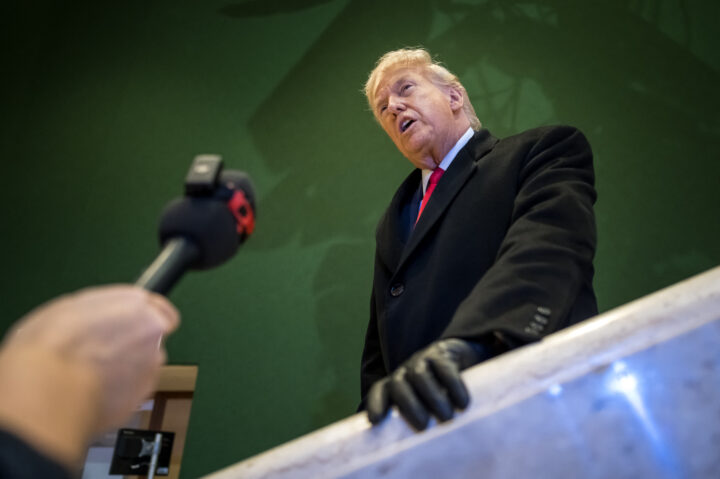
Fabrice COFFRINI / AFP via Getty Images
President Donald Trump as he leaves the World Economic Forum (WEF) annual meeting in Davos on January 21, 2026.
👋 Good Thursday morning!
In today’s Daily Kickoff, we preview today’s Board of Peace gathering in Washington as the Trump administration mulls military action against Tehran, and cover an effort by Reps. Ro Khanna and Thomas Massie to force a vote on a resolution blocking the Trump administration from conducting strikes on Iran. We report on the GOP primary in Texas’ 23rd District, where Rep. Tony Gonzales, who is facing allegations he had an affair with a staffer who has since died by suicide, is facing a challenge from a far-right influencer with a history of antisemitic social media activity, and talk to former Jersey City Mayor Steve Fulop about his new role leading the Partnership for New York City. Also in today’s Daily Kickoff: Bari Weiss, Roddie Edmonds and Amb. Mike Huckabee.
Today’s Daily Kickoff was curated by JI Executive Editor Melissa Weiss and Israel Editor Tamara Zieve, with assists from Danielle Cohen-Kanik and Marc Rod. Have a tip? Email us here.
What We’re Watching
- The Trump administration is convening its Board of Peace today in Washington. Among those attending the gathering are Argentine President Javier Milei, Indonesian President Prabowo Subianto, Hungarian Prime Minister Viktor Orban, Bahraini King Hamad bin Isa Al Khalifa, Azerbaijani President Ilham Aliyev, Israeli Foreign Minister Gideon Sa’ar, Emirati Foreign Minister Sheikh Abdullah bin Zayed, Belarus Foreign Minister Maxim Ryzhenkov and Turkish Foreign Minister Hakan Fidan. More below.
- Jewish Federations of North America CEO Eric Fingerhut will deliver the inaugural “State of the Jewish Union” address at the organization’s Washington headquarters.
- The U.S. Commission on Civil Rights is holding a daylong public briefing today on antisemitism on campus. Speakers include Jewish Council for Public Affairs CEO Amy Spitalnick, Louis D. Brandeis Center founder Kenneth Marcus, National Jewish Advocacy Center CEO Mark Goldfeder, law professor Eugene Volokh and The George Washington University Law School’s Matt Nosanchuk.
- The National Governors Association kicks off its annual Washington summit today.
- Minister of Economic Affairs at the Israel Embassy in Washington Noach Hacker is speaking at the Hudson Institute today, where he will sit with Hudson’s Mike Doran for a conversation about U.S.-Israel economic ties.
- French President Emmanuel Macron, Indian Prime Minister Narendra Modi, Google CEO Sundar Pichai, OpenAI CEO Sam Altman and Anthropic CEO Dario Amodei are attending the AI Impact Summit in New Delhi, India, that kicked off earlier today.
What You Should Know
A QUICK WORD WITH JI’S MELISSA WEISS
High-level foreign officials, top diplomats and heads of state will gather in Washington today for the first in-person convening of the Trump administration’s Board of Peace — as U.S. military assets flow into the Middle East and President Donald Trump mulls a potentially weekslong sustained military campaign in Iran.
The gathering, ostensibly focused on the disarmament of Hamas and the establishment of a peace-aligned administration in the Gaza Strip, comes as the U.S. moves dozens of fighter jets and support aircraft to the region — reportedly the largest buildup in military air power since the 2003 invasion of Iraq.
It’s a split screen befitting the president — who said at his inauguration last year that his “proudest legacy will be that of a peacemaker,” and who has claimed success in negotiating an end to numerous conflicts, as well as the release of the remaining Israeli hostages from Gaza last year — even as the U.S. has used force to enact political change, such as in Venezuela.
But a U.S. operation in Iran would differ significantly from what took place in Venezuela last month. In the place of ousted President Nicolás Maduro is Delcy Rodríguez, the former vice president who is now working with the Trump administration. No such natural successor to Iranian Supreme Leader Ayatollah Ali Khamenei exists. Behind the supreme leader is a laundry list of equally — if not more — radical hard-liners eager to take the ailing Khamenei’s place. Reza Pahlavi, the son of the deposed shah of Iran, who has spent most of his life living in exile, has sought to return to Iran to usher the Islamic Republic into a new democratic era — but does not appear to have the on-the-ground support as well as enough legitimacy among Iran’s vast diaspora community.
The Trump administration continues to signal publicly that it wants to find a diplomatic resolution to the situation in Iran, with White House Press Secretary Karoline Leavitt saying as much at yesterday’s press briefing.
But the White House is continuing to move forward with preparations for a military confrontation, which could include anything from targeted strikes on Iran’s nuclear facilities to a move toward regime change. Trump met on Wednesday with Secretary of State Marco Rubio, White House Special Envoy Steve Witkoff and Jared Kushner to discuss options for Iran.
TEHRAN TENSIONS
‘Don’t change your weekend plans,’ experts say amid media frenzy over possible Iran strikes

Tensions in Israel continued to rise over possible missile strikes from Iran, as signals increased that President Donald Trump is ready to order a strike on the Islamic Republic, possibly within days. Yet experts told Jewish Insider’s Lahav Harkov on Thursday that, despite the constant flow of reports that Trump favors a military response as negotiations with Iran falter, an American strike and Iranian retaliation against Israel are likely not imminent. In a moment that went viral in Israel and sparked hundreds of phone calls to the IDF Home Front Command, former IDF intelligence chief Amos Yadlin told Israel’s Channel 12 on Wednesday that while he went to the Munich Security Conference last week, “I would think twice about flying [abroad] on the coming weekend.”
On alert: IDF Spokesperson Effie Defrin, however, said that “there is no change in the situational assessment, and if there will be, we will update [the public]. There is no need to panic.” Defrin also noted that “there are negotiations, and the IDF has long been prepared for maximum defense. If we are attacked, we will respond forcefully.” However, while Israel’s leadership and the IDF’s assessment is that the U.S. will warn them before a strike, they plan to prepare quietly and not alert the public in advance, in order to increase the chances of success, Israel’s Kann News reported on Wednesday. Raz Zimmt, director of the Iran Program at Tel Aviv University’s Institute for National Security Studies, quipped to JI in reference to Yadlin’s remarks: “Don’t change your weekend plans.”
Central target: Home Front Command chief Maj.-Gen. Shay Klapper told the Knesset Foreign Affairs and Defense Committee on Wednesday that “the Home Front Command will be a central arena in relevant operational scenarios and is a significant component of Israeli society’s resilience and ability to save lives.”
ON THE AGENDA
What to watch for at the Board of Peace’s first meeting in D.C.
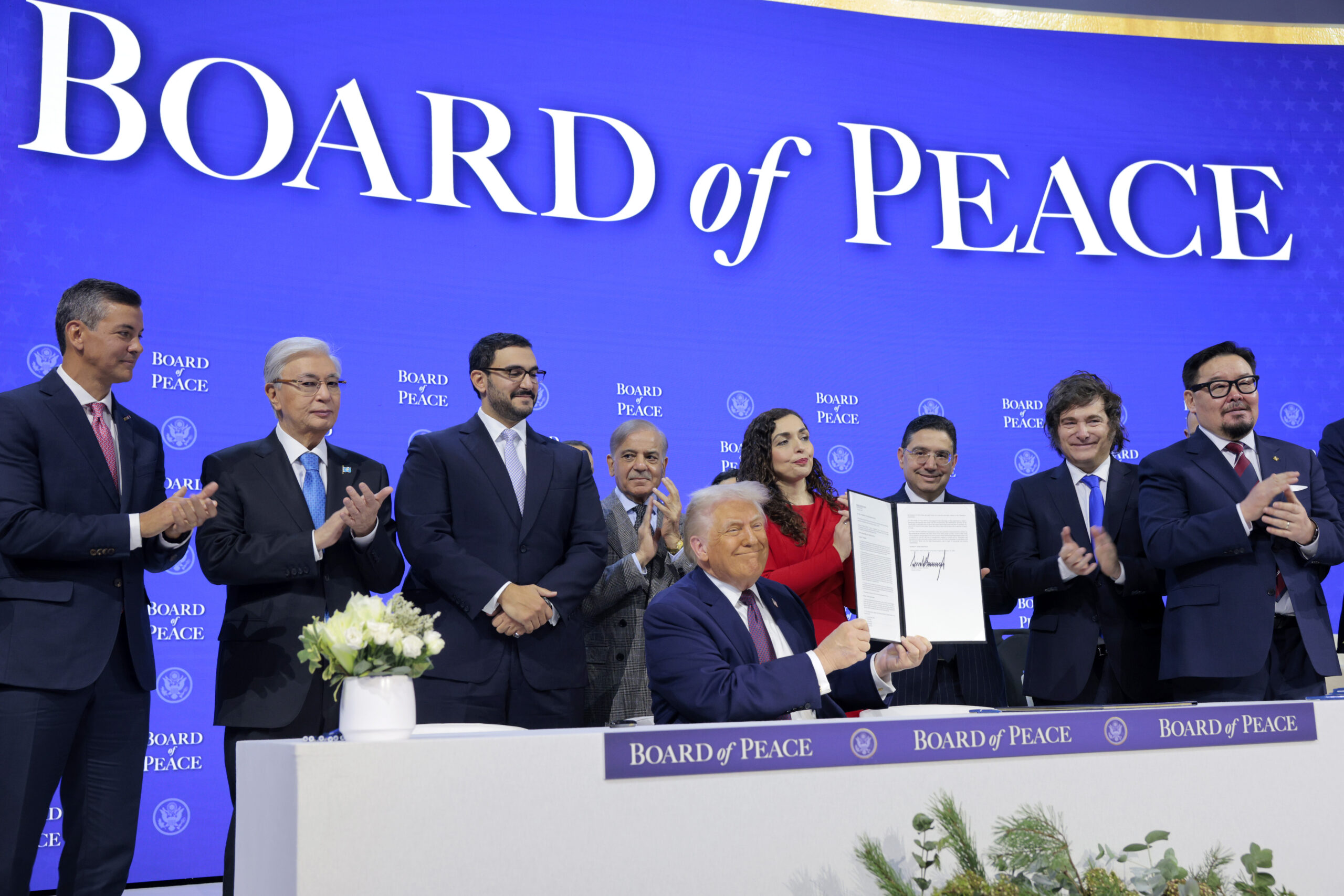
After a splashy debut at the World Economic Forum in Davos, Switzerland, last month, President Donald Trump’s Board of Peace will convene for its first meeting on Thursday in Washington. The new international body now faces a test of its ability to operationalize its goals: Observers will be watching whether the board makes any significant announcements toward its goal of implementing Phase 2 of Trump’s peace plan, which is focused on rebuilding Gaza and securing the enclave, Jewish Insider’s Gabby Deutch and Matthew Shea report.
Expected substance: A source familiar with Thursday’s meeting told JI that it is “not just pomp and circumstance,” and that they expect discussion about topics including humanitarian aid and the Palestinian technocratic government in Gaza. “It’s not window dressing at all,” the source said of the board’s work. According to a senior Trump administration official, speakers at the event will include Trump, Secretary of State Marco Rubio, Jared Kushner, former U.K. Prime Minister Tony Blair, U.S. Ambassador to the U.N. Mike Waltz, White House Special Envoy Steve Witkoff and Nickolay Mladenov, the former U.N. Middle East envoy now serving as the high representative for Gaza on the Board of Peace. Little has been shared publicly about what the format will be.
TEXAS TROUBLE
How an anti-Israel Republican with an antisemitic history could get elected in Texas

An unfolding scandal implicating Rep. Tony Gonzales (R-TX) could catapult an anti-Israel social media influencer with a history of antisemitic posts to Congress in Texas’ upcoming 23rd District Republican primary, Jewish Insider’s Marc Rod reports. Brandon Herrera, who ran against Gonzales in 2024, came under fire from Gonzales and Jewish and pro-Israel groups in the previous election cycle over a series of his YouTube videos replete with imagery, music and jokes about the Nazi regime and the Holocaust. He also expressed opposition to U.S. aid to Israel.
Shake-up: But Tuesday evening, corroborating a long-running rumor, the San Antonio Express News reported that Gonzales had been having an extramarital affair with a female staffer who died by suicide last year. The paper reported that the relationship was allegedly well-known and cited multiple sources close to the woman, including a former colleague, and a text message she sent confirming the relationship prior to her death.
FULOP’S FIGHT
Former Jersey City Mayor Steve Fulop brings the fight against antisemitism to NYC’s business community

As he settles into his role leading the Partnership for New York City, a prominent business advocacy group, Steve Fulop, the former longtime mayor of Jersey City, N.J., has a few major issues on his mind, chief among them countering the rise of antisemitism. For Fulop, a Jewish Democrat who assumed his new job last month, just five days after he left office on Jan. 15, such efforts are not only personal as a former yeshiva student who was also the grandson of Holocaust survivors. They are directly connected, he explained to Jewish Insider’s Matthew Kassel, to promoting a friendlier climate where businesses can feel safe and welcome in the city.
Should I stay or should I go: Many of the Partnership’s Jewish board members, representing some of the city’s most powerful firms in finance, real estate and other leading sectors, also share his sense of urgency, Fulop said, as do many of the 800,000 employees who make up his group’s core constituency. “They often say of the tax conversation that we could talk about whether people stay or go, if they migrate elsewhere,” Fulop said of his conversations with members in an interview with JI on Tuesday at his fifth-floor office in the Financial District, which looks out on Jersey City. “But if you continue on a trend where it feels like antisemitism is increasing and quality of life is decreasing, that is a trigger for people to leave very, very fast.”
CUBA CAMPAIGN
Nearly half of New York City Council joins JVP, CODEPINK in pro-Cuba appeal

A raft of Democrats — including 23 members of the 51-seat New York City Council, multiple state lawmakers and four candidates for Congress — have joined forces with a Beijing-aligned tech tycoon to bail out the fuel-starved dictatorship in Cuba. The officials in question lent their names to the “Let Cuba Live” campaign, which denounces President Donald Trump’s oil embargo on the island nation and seeks to triage solar panels and generators to defray the crippling impact on its energy production, Jewish Insider’s Will Bredderman reports.
Who’s involved: All donations for the effort run through the People’s Forum, a Manhattan-based nonprofit established and financed by Shanghai-based magnate Neville “Roy” Singham, part of his sprawling web of organizations promoting the interests of China and its allies Russia and Iran. Let Cuba Live’s website reveals the involvement of other Singham-linked groups, including CODEPINK — co-founded by his wife, Jodie Evans — and the ANSWER Coalition, both of which spearheaded anti-Israel protests beginning the day after the Oct. 7, 2023, Hamas attacks on Israel. Jewish Voice for Peace and the Democratic Socialists of America are also signatories, along with well-known left-wing celebrities such as Susan Sarandon and Roger Waters who have long been vocally hostile to Israel.
WAR POWERS RUSH
Reps. Ro Khanna, Thomas Massie plan to force vote on resolution blocking Iran strikes
Reps. Ro Khanna (D-CA) and Thomas Massie (R-KY) plan to introduce and attempt to force a vote on a war powers resolution blocking military action against Iran without congressional authorization, as the Trump administration appears to be moving closer to military action against the Islamic Republic, Jewish Insider’s Marc Rod reports.
What they’re saying: Khanna framed the legislation as an attempt to block a “disastrous war” with Iran. “Like the votes before the Iraq war, this could be one of the most consequential votes in the history of Congress,” Khanna said. “Are we going to stop another endless dumb foreign war? Or will the neoconservatives mislead us once again?” Once introduced, there will be a waiting period of 15 House session days before the lawmakers can force a vote on the resolution.
Worthy Reads
School of Hope: The New York Times’ David Halbfinger and Bilal Shbair spotlight the Academies of Hope network of private schools operating in Gaza, the brainchild of a Palestinian American doctor that is primarily funded by Jewish donors, which provides peace-focused education for 9,000 Palestinian students across five campuses. “Operating schools in any war zone is hard enough, and schools across the enclave are struggling to rebuild. But Dr. Hasan has compounded his challenges. He revamped a much-criticized national curriculum and worked to keep Hamas from endangering his schools. He also verifies that none of his staff have ties to militant groups, a charge Israel has leveled against the United Nations agency caring for Palestinians in Gaza and some international aid groups.” [NYTimes]
Poison PEN: In Tablet, Ari Ingel, executive director of the Creative Community for Peace, raises concerns about PEN America’s commitment to free speech, weeks after the literary organization walked back its condemnation of the cancellation of an event by an Israeli comedian. “The pattern has been consistent: They listen, offer no meaningful response, and then double down on a hostile anti-Zionist and anti-Israel posture. In doing so, PEN America has helped legitimize antisemitic discrimination at a moment when antisemitism in the United States is at historic levels. This is not an isolated failure of judgment, but a structural rot in the organization, one that reflects leadership choices, institutional culture, and a governing board that has failed to intervene.” [Tablet]
Sports Talk: The Hollywood Reporter’s Steven Zeitchik reflects on the recent sports successes of Israeli NBA star Deni Avdija and Israel’s first Olympic bobsled team, juxtaposed with the pushback they’ve faced from Israel critics. “But the sight of a Jew excelling in sports is even more than a bit of representational inspiration. So much of antisemitism, historic and resurgent, is bound up with demeaning Jews as genetically inferior — at the top line with Hitler and those infamous Olympics 90 years ago but also much more casually, in easy jokes and schoolyard assumptions, in the implication that genetic makeup makes Jews less athletic.” [HollywoodReporter]
Word on the Street
U.S. Ambassador to Israel Mike Huckabee and the Israel Airports Authority disputed Tucker Carlson‘s claim that he was detained and interrogated by Ben Gurion Airport security while at the airport for an interview with the ambassador; the IAA said that “Carlson and his party were politely asked a few routine questions, in accordance with standard procedures applied to many travelers” and that the questioning took place “in a separate room within the VIP lounge solely to protect their privacy and to avoid conducting such a discussion in public”…
Democratic Majority for Israel’s PAC announced its endorsement of 11 congressional candidates, including Cait Conley in NY-17, Scranton Mayor Paige Cognetti in PA-8, Janelle Stelson in PA-10, and former Rep. Elaine Luria (D-VA) in VA-2; the group also announced it is backing Cook County Commissioner Donna Miller in IL-2 and former Rep. Melissa Bean in IL-8, but is staying out of the contentious IL-9 Democratic primary, where AIPAC’s super PAC is backing state Sen. Laura Fine…
A Tennessee man who saved more than 200 Jewish soldiers under his command at a Nazi POW camp in Germany will be posthumously awarded the Medal of Honor by the White House for his efforts; Roddie Edmonds, who was taken captive during the Battle of the Bulge, famously refused to identify Jewish troops when asked by the camp’s commandant, saying, “We are all Jews here”…
An effort to expel Israel from the International Federation of Social Workers failed on Wednesday in a closed-door Zoom meeting; a second vote, on suspending Israel, also failed, Jewish Insider’s Gabby Deutch reports…
American, Israeli and African officials gathered with little fanfare but big plans on Wednesday, coming together in Rwanda for the trilateral Kigali Security Summit on issues including technology, innovation and national security, Jewish Insider’s Danielle Cohen-Kanik reports…
MS NOW inked an agreement with Crooked Media that will create a new weekly show, titled “Crooked on MS NOW,” that will compile content from the podcast and media company’s shows, including “Pod Save America” and “Pod Save the World”…
Bari Weiss withdrew from the University of California, Los Angeles’ upcoming annual Daniel Pearl Memorial Lecture, reportedly citing security concerns…
Chicago and DePaul University police are investigating an incident that occurred at a cafe in the city’s Lincoln Park neighborhood in which students from three Chicago-area schools said they were harassed while at a meetup for Jewish students at the Olive & Oak Cafe near DePaul’s campus…
An Australian man who pleaded guilty to publicly inciting hatred for antisemitic remarks he made last month at a Sydney rally against immigration was sentenced to a year in jail, with the chance for parole in October…
The U.S. is withdrawing its remaining 1,000 troops from Syria, with plans for the U.S.’ decade-long presence to fully end over the next two months…
Pic of the Day
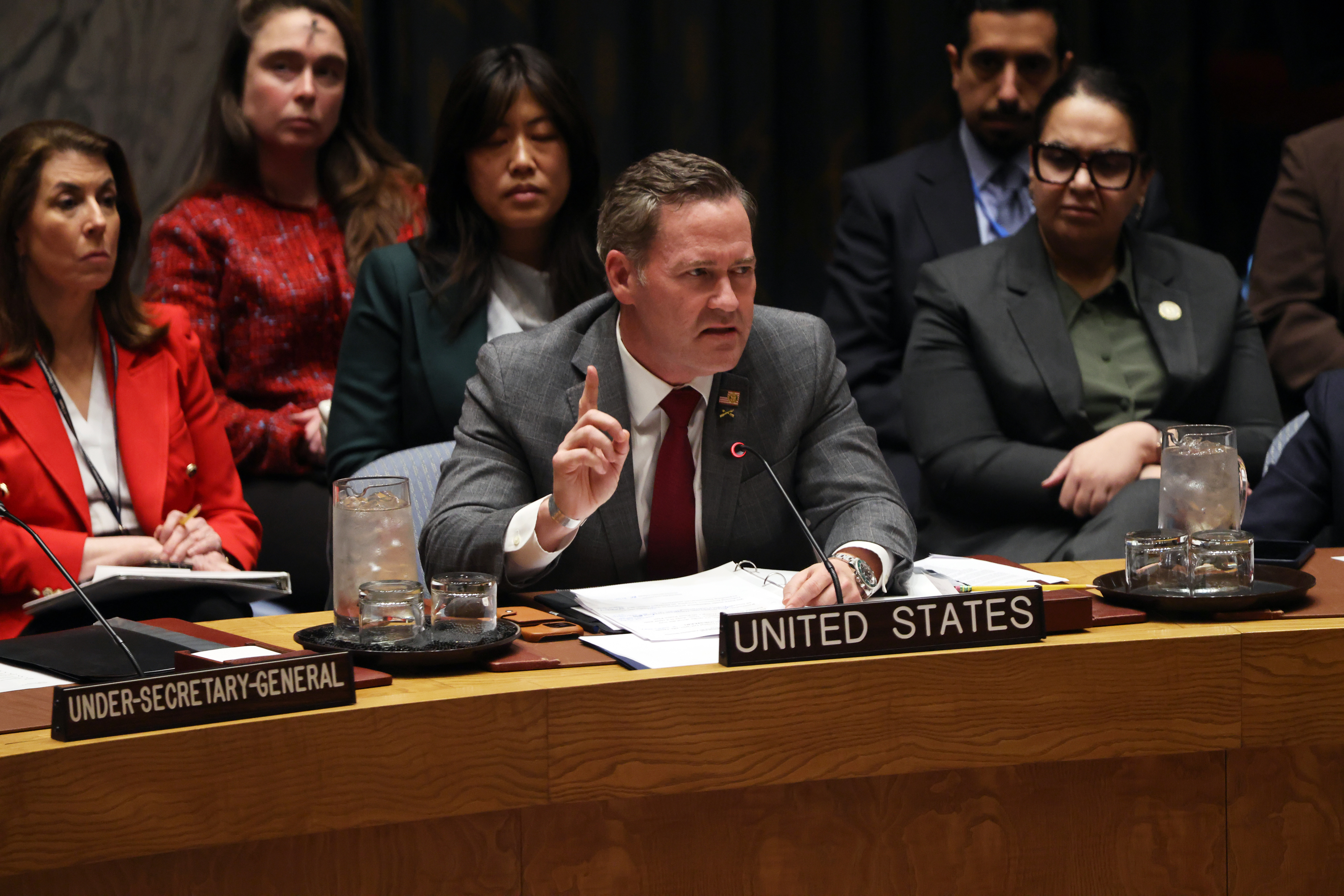
U.S. Ambassador to the U.N. Mike Waltz attended a Security Council meeting on Israel and the Palestinian territories on Wednesday, during which he defended President Donald Trump’s Board of Peace, a day ahead of the board’s gathering.
Birthdays

Actor who played the young autistic Jacob “Jake” Bohm in the Fox TV series “Touch,” later portraying a young Bruce Wayne in another Fox series “Gotham,” David Mazouz turns 25…
2004 Nobel Prize laureate in physics, he is a professor at the University of California Santa Barbara, David Jonathan Gross turns 85… Former chairman of the board and CEO of Sony Corporation, chairman of the board of trustees of the American Film Institute, Sir Howard Stringer turns 84… Retired co-founder of integrated digital marketing agency Hawkeye / Mosaic, now known as Publicis Hawkeye, Sharon Edelman… President of the Technion Israel Institute of Technology from 2009 until 2019, Peretz Lavie turns 77… Founder and president of the eponymous Laurie M. Tisch Illumination Fund, she is on the boards of the NFL’s NY Giants, Lincoln Center for the Performing Arts and the Aspen Institute, Laurie M. Tisch… and also the birthday of her first cousin once removed, co-founder and CEO of Atria (a private medical institute in NYC), Alan Tisch… Managing partner of Encino, Calif.-based Hager Pacific Properties, Adam Tuvia Milstein turns 74… Former Goldman Sachs partner and then a senior executive at JPMorgan Chase, he now serves on various corporate and nonprofit boards, Barry L. Zubrow turns 73… International CEO of Taglit Birthright Israel since 2008, Gidi Mark turns 70… Novelist, essayist and short story writer, he was a winner of a 2005 MacArthur genius fellowship, Jonathan Allen Lethem turns 62… Retired U.S. district court judge, he was a law clerk for Supreme Court Justice Anthony Kennedy (1993-1994) alongside future justices Neil Gorsuch and Brett Kavanaugh, Gary Scott Feinerman turns 61… SVP of government relations at Las Vegas Sands Corp., Andy Abboud… Co-founder of the band Phish where he is the lead drummer and frequent songwriter, Jon Fishman turns 61… Communications director for 27 years for Sen. Lindsey Graham (R-SC), now a consultant, Kevin D. Bishop… Chairman of the World Zionist Organization, Yaakov Hagoel turns 55… Canadian media personality, conservative political activist, writer and broadcaster, Ezra Levant turns 54… Partner at InfraStrategies and senior fellow at the UCLA Institute for Transportation Studies, Joshua Levi Schank, Ph.D…. Founder of The New York Times‘ “DealBook” and co-creator of Showtime’s “Billions,” Andrew Ross Sorkin turns 49… Hollywood writer and producer, best known for “The Newsroom” (2012) and “Quantico” (2015), Gideon Yago turns 48… Jewish rapper, part of the alternative hip hop group Darshan, better known by his stage name Eprhyme (pronounced “E-Prime”), Eden Daniel Pearlstein turns 46… Writer of the “In the Know” gossip column for The Hill newspaper in Washington, where she covers Congress, D.C.’s social scene, celebrities and politics, Judy Kurtz Altscher… Founder of a Middle East NGO, Regional Organization for Peace, Economics & Security (ROPES), Ben Birnbaum… Former MLB pitcher for the Phillies (2011-2012), he now runs Big League Advance, a company that invests in minor league players in exchange for a percentage of their future MLB earnings, Michael Schwimer turns 40… Samantha Zalaznick… Tight end for the NFL’s Kansas City Chiefs, he played college football at Harvard, Anthony Firkser turns 31… Daniel Blum…
The parties concluded a second round of talks with the Iranians expected to produce 'detailed proposals' in the next two weeks

EVELYN HOCKSTEINAMER HILABI/POOL/AFP/AFP via Getty Images
US Middle East envoy Steve Witkoff after a meeting with Russian officials at Diriyah Palace, in Riyadh, Saudi Arabia, on February 18, 2025 (L)/ Iran's Foreign Minister Abbas Araghchi speaking to AFP during an interview at the Iranian consulate in Jeddah on March 7, 2025.
Iranian Foreign Minister Abbas Araghchi indicated that the second round of negotiations between Tehran and Washington produced agreements on several “guiding principles” for a potential deal on Tuesday, though U.S. officials took a more muted position, with one describing the talks as proceeding “as expected.”
Araghchi told Iranian state media that talks with White House Special Envoy Steve Witkoff and Jared Kushner, which took place in Geneva and was mediated by Omani Foreign Minister Badr Albusaidi, were more “serious, constructive and positive” than previous discussions, but he acknowledged that major gaps remain and that an agreement will not be reached quickly.
“Progress was made in the talks with Iran, but there are still a lot of details to discuss,” the U.S. official told Axios. “The Iranians said they would come back in the next two weeks with detailed proposals to address some of the open gaps in our positions.”
Albusaidi said that the parties “left with clear next steps before the next meeting,” though no date had been set for a third round of talks. Araghchi said both sides agreed to work on draft language, exchange texts and then determine the timing of a date for the next round of negotiations.
“Today’s negotiations between Iran and the U.S. in Geneva have concluded with good progress towards identifying common goals and relevant technical issues,” Albusaidi said in a post on X on Tuesday. “The spirit of our meetings was constructive. Together we made serious efforts to define a number of guiding principles for a final deal.”
Those principles and the parameters of a potential deal remain unclear — as the talks were underway, Iranian Supreme Leader Ayatollah Ali Khamenei wrote on X, “The Americans say, ‘Let’s negotiate over your nuclear energy, and the result of the negotiation is supposed to be that you do not have this energy!’ If that’s the case, there is no room for negotiation; but if negotiations are truly to take place, determining the outcome of the negotiations in advance is a wrong and foolish act.”
Parallel to the diplomatic track, both sides are indicating that military options remain on the table: The U.S. has dispatched a second aircraft carrier strike group to the region in recent days as well as additional F-35, F-22 and F-16 fighter jets.
“The Americans constantly say that they’ve sent a warship toward Iran,” Khamenei said on Tuesday in response to the deployment. “Of course, a warship is a dangerous piece of military hardware. However, more dangerous than that warship is the weapon that can send that warship to the bottom of the sea.”
At the start of discussions Tuesday, Iran said it would close the Strait of Hormuz to conduct live-fire military exercises, and had previously threatened to retaliate against U.S. bases in the region should Washington carry out an attack.
On Tuesday, the UN elected Abbas Tajik of the Islamic Republic of Iran as vice chair of its Commission for Social Development
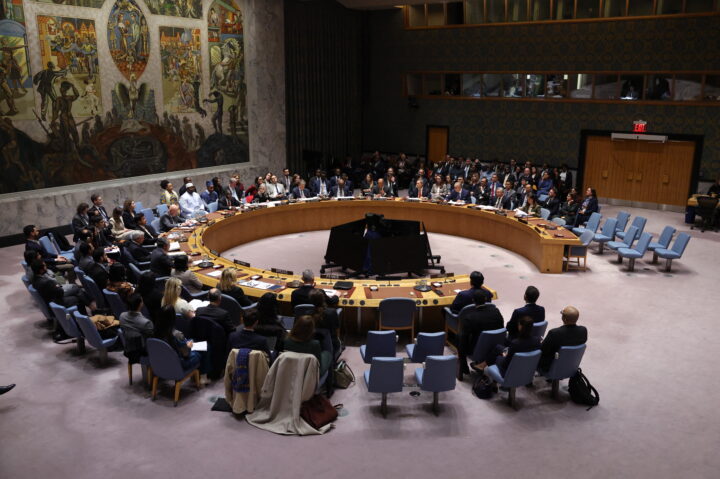
ANGELA WEISS/AFP via Getty Images
Ambassadors and representatives to the United Nations meet at the U.N. Security Council to vote on a U.S. resolution on the Gaza peace plan at the U.N. Headquarters in New York City, Nov. 17, 2025.
The United Nations this week elevated an Iranian official to a senior leadership role and publicly congratulated Tehran on the anniversary of the Islamic Revolution — moves that former Trump administration officials and Middle East policy analysts say reflect a troublingly conciliatory posture by the international body toward a regime accused of violently repressing its own people.
On Tuesday, the UN elected Abbas Tajik of the Islamic Republic of Iran as vice chair of its Commission for Social Development, a body tasked with advancing policies on poverty eradication, employment and social inclusion. The commission recently adopted resolutions focused on social justice, gender equality and combating gender-based violence — issues critics note remain acute inside Iran, where legal, social and cultural restrictions continue to limit women’s rights and political freedoms.
The following day, UN Secretary-General António Guterres congratulated Iran on the anniversary of the 1979 Islamic Revolution — the founding moment of the regime now facing widespread domestic unrest — weeks after authorities violently suppressed nationwide protests, imposed internet blackouts and oversaw a crackdown that, according to human rights groups, has resulted in thousands of deaths.
Guterres’ message was condemned by Israel’s Foreign Ministry, which posted on X that the gesture represented a “moral failure.”
“History will not remember your speeches. It will remember the regimes you chose to honor,” the statement read. “Sending congratulations to the Islamic Revolution regime — a state built on repression and terror — is not neutrality.”
Critics argue that the juxtaposition of congratulatory gestures and leadership appointments raises broader questions about institutional coherence and moral clarity — particularly as Iran continues to face internal unrest and international scrutiny.
Jason Greenblatt, a former White House Middle East envoy under President Donald Trump, told Jewish Insider that Iran’s latest promotion “tells you all you need to know about what the UN stands for.”
“It’s a bloated, broken, perhaps irredeemable system, and a colossal waste of money,” said Greenblatt.
Elliott Abrams, the former U.S. special representative for Iran during the first Trump administration, agreed, calling the UN a “morally bankrupt institution.”
“The secretary general congratulating the Iranian regime just days after it murdered thousands of its citizens is another example,” said Abrams.
However, Abrams also described the situation as more nuanced, noting that other parts of the UN have taken a firmer stance.
He pointed to a Jan. 26 resolution adopted by the UN Human Rights Council condemning the Iranian regime’s crackdown. During that session, Sara Hossain, chair of the U.N.’s fact-finding mission on Iran, described unfolding events in Tehran as “the deadliest crackdown against the Iranian people since the 1979 revolution.”
“The violent repression of the Iranian people doesn’t solve the country’s problems,” UN High Commissioner for Human Rights Volker Türk said at the time. “On the contrary, it creates conditions for further human rights violations, instability, and bloodshed.”
Still, several foreign policy analysts argued that the UN’s repeated elevation of Iran is misguided and at odds with the intended goals of the organization. David May, a senior research analyst at the Foundation for Defense of Democracies, suggested the UN’s actions are a pattern of hypocrisy, noting that the organization has previously elected Tehran to committees despite its poor track record on human rights.
In 2023, Tehran was elected to the UN Committee on Disarmament and International Security. However it was during the same time that Iran was significantly accelerating its nuclear weapons program.
Tehran was also elected by the UN Economic and Social Council (ECOSOC) in 2021 to the Commission on the Status of Women (CSW), a group responsible for empowering women and promoting gender equality. Former Vice President Kamala Harris supported a U.S-led effort in 2022 to oust Iran from the committee, calling out its “denial of women’s rights and brutal crackdown on its own people.”
Experts said the UN’s latest elevation of Tehran was not unexpected. Still, they argued that the continuation of this pattern is deeply troubling and reflects a broader institutional posture toward the Iranian regime.
“All of this would be laughably absurd if it wasn’t so actively counterproductive, both in terms of isolating Iran’s regime and, more fundamentally, what the UN supposedly stands for in founding documents like the UN Charter and Universal Declaration of Human Rights,” said Jonathan Ruhe, a fellow at the Jewish Institute for National Security of America.
Ruhe argued that the UN treats Iran as a “normal” member in “good standing,” creating what he described as a “dangerous equivalence between Tehran and Washington.”
“Promoting Iran to vice chair, and inviting its foreign minister to address the UN Human Rights Council, bestows a veneer of legitimacy on a regime that just brutally violated its citizens’ right to peaceful protest — a core right recognized in the Universal Declaration of Human Rights,” Ruhe said. “The UN is extending olive branches that rehabilitate Tehran at the exact moment it should be a pariah on par with North Korea.”
David May, a senior research analyst at the Foundation for Defense of Democracies, similarly argued that the UN has become a venue for Iran and other authoritarian governments to “launder their human rights records.”
“People are noticing the absurdity of the UN secretary-general congratulating the Islamic Republic on the anniversary of seizing power because it comes one month after the Tehran regime killed as many as tens of thousands of protesters,” May said.
He added that “when the spotlight is not on Tehran’s tyranny, the United Nations treats Iran like any other country.”
“If the United Nations wants to escape its reputation as a den of dictators, it should disinvite Iran’s foreign minister from addressing the opening of the Human Rights Council on February 23,” May said. “Otherwise, this will provide another opportunity for a human rights abuser to mask its violations by launching attacks against the United States and its allies.”
The ayatollah is ‘never going to stop killing his people and drinking their blood out of a boot, and he’s never going to stop funding Hamas and Hezbollah,’ Sen. John Kennedy said
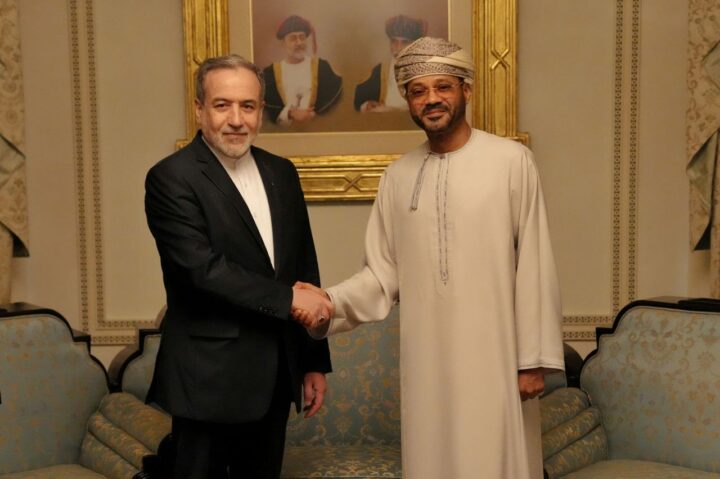
Iranian Foreign Ministry / Handout /Anadolu via Getty Images
Iranian Foreign Minister Abbas Araghchi (L) meets with Omani Foreign Minister Sayyid Badr Hamad Al Busaidi (R) to exchange views on how to advance US-Iran talks scheduled to be held later in the day, in Muscat, the capital of Oman, on February 06, 2026.
Republicans lawmakers continued to dismiss this week the idea that a nuclear deal with Iran is achievable, despite comments by President Donald Trump over the weekend.
Trump said that the talks with Iran, held in Oman last Friday, had been “very good,” that Tehran “wants to make a deal very badly” and that he is in “no rush” to move ahead. He also said that the Iranian demand that the talks be only focused on nuclear weapons “would be acceptable” — an apparent softening of the U.S. position that any potential agreement should also address Iran’s ballistic missile stockpiles and its support for regional terror proxies. The talks did not appear to touch on the Islamic Republic’s recent violent crackdown on nationwide protests.
Asked about Trump’s comments about a nuclear-only deal, Republicans largely dismissed the idea that any deal would actually be forthcoming.
“Iran’s not going to make a deal with us. They’re going to stall and re-stall to buy time, but they’re not going to make a deal,” Sen. John Kennedy (R-LA) told Jewish Insider. “The ayatollah is [as] crazy as a bed bug. And he’s never going to give up any hope that he has of nuclear weapons. He’s never going to stop killing his people and drinking their blood out of a boot, and he’s never going to stop funding Hamas and Hezbollah.”
Kennedy predicted that military action is both necessary and forthcoming.
“You’re going to have to give them a curbstomping, but you don’t want to start a regional war doing it,” Kennedy continued. “My guess is that’s what the president is talking to [Secretary of State Marco] Rubio and the military guys with a bunch of their flags in their office [about] right now.”
Sen. Rick Scott (R-FL) agreed that the Iranian regime is not genuinely interested in making an agreement with the United States.
“There won’t be a deal,” Scott told JI. “They’re not going to do a deal.”
Sen. James Lankford (R-OK) said he hadn’t seen Trump’s comments but he does not “trust the word of the regime, at all.”
“They have not proven trustworthy with their word in the past, and so you have to have a way to be able to verify everything,” Lankford continued.
Sen. Tim Kaine (D-VA), meanwhile, told JI on Monday that he would delay a vote on a war powers resolution he introduced with Sen. Rand Paul (R-KY) blocking military action against Iran pending the ongoing talks with the regime.
The resolution would theoretically be eligible for votes by the full Senate later this week, should Kaine and Paul wish to call it up.
The Virginia senator told JI that he and Paul are in discussions about timing for votes, and that he hasn’t yet made a decision on when to call the bill up.
“We have to check each day to see where [the talks] are. I don’t think calling it up in the middle of discussions that have some chance to it — that’s not the right time — but we’ll just see where we are,” Kaine said.
Ahead of nuclear negotiations, the president said the U.S. discovered Iranian officials were ‘thinking about starting a new site in a different part of the country’
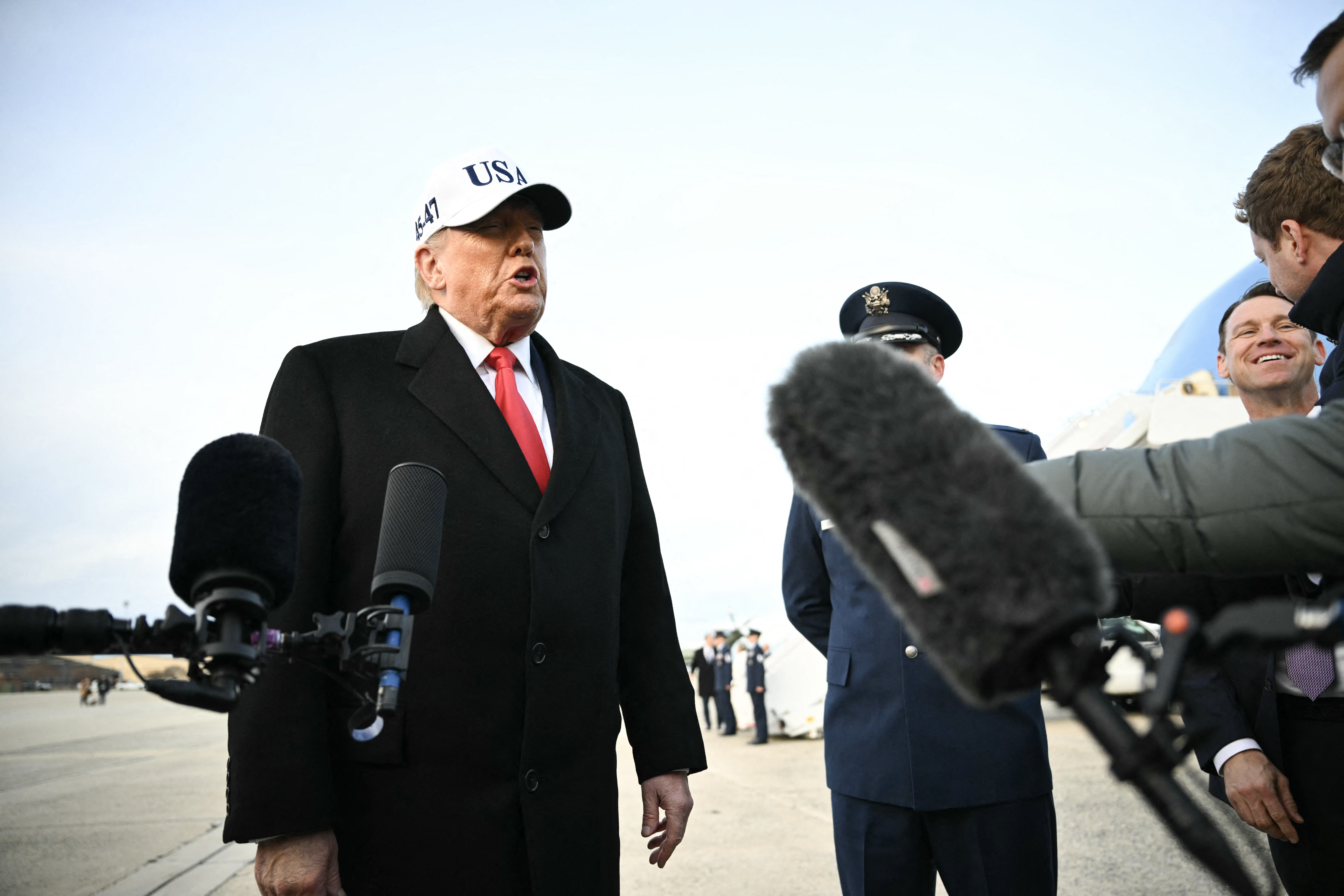
Mandel NGAN / AFP via Getty Images
President Donald Trump speaks to the press upon returning to Joint Base Andrews in Maryland on January 13, 2026.
President Donald Trump on Wednesday warned Iranian Supreme Leader Ayatollah Ali Khamenei that he should be “very worried” ahead of planned nuclear talks, as the president weighs military action amid rising tensions and signs Tehran may be trying to revive its nuclear program.
“I would say he should be very worried, yeah, he should be,” Trump told NBC News when asked whether Khamenei should be concerned. “As you know, they are negotiating with us.”
U.S. and Iranian officials are slated to meet Friday in Oman, which Iranian Foreign Minister Abbas Araghchi confirmed Wednesday. Iran pushed for the discussions to be moved from Turkey and has insisted they remain limited to its nuclear program. The United States has sought to broaden the agenda to include Tehran’s ballistic missile capabilities and support for regional proxy groups.
Experts told Jewish Insider that despite upcoming discussions, military intervention remains on the table. On Tuesday a U.S. F-35 fighter jet shot down an Iranian drone near the USS Abraham Lincoln in the Arabian Sea. Later that day, Iran’s Islamic Revolutionary Guard Corps attempted to stop and board a U.S.-flagged commercial tanker in the Strait of Hormuz before a U.S. destroyer intervened and escorted the vessel to safety.
During an interview on the Megyn Kelly Show, Vice President JD Vance said Wednesday that Trump “will try to achieve what he can through non-military means, but if he feels that the military option is the only option, he is going to choose that option.”
Several Arab and Muslim leaders reportedly lobbied the Trump administration not to walk away from the discussions after Iran demanded to change the venue and format. The administration “told the Arabs we will do the meeting if they insist,” one U.S. official told Axios, but added that they are “very skeptical.”
Satellite images released last week by Planet Labs PBC have also fueled speculation over whether Iran intends to restart its nuclear program after U.S. strikes on several sites in June. Trump confirmed that Iran was “thinking about starting a new site in a different part of the country,” but said the U.S. “found out about it.”
“I said, ‘You do that, we’re going to do very bad things to you,’” Trump warned, stating that in the event Iran continued to pursue its nuclear ambitions, the U.S. would respond as it did before. “If they do, we’re going to send” B-2 bombers “right back and do the job again.”
Last month the president had cancelled meetings with Iranian officials and vowed on social media that Tehran would “pay a big price” for its violent crackdown on protesters in early January, stating that “help is on its way.”
When pressed on whether the U.S. continues to back Iranian protesters, Trump said the administration’s position has not changed.
“We’ve had their backs,” said Trump. “If we didn’t take out” Iran’s nuclear sites, “we wouldn’t have peace in the Middle East, because the Arab countries could have never done that.”
U.S.-Iran negotiations scheduled are ‘likely a diplomatic box-checking exercise and smokescreen,’ FDD’s Andrea Stricker said, while JINSA’s Jonathan Ruhe said U.S. military action is ‘unlikely for the moment’
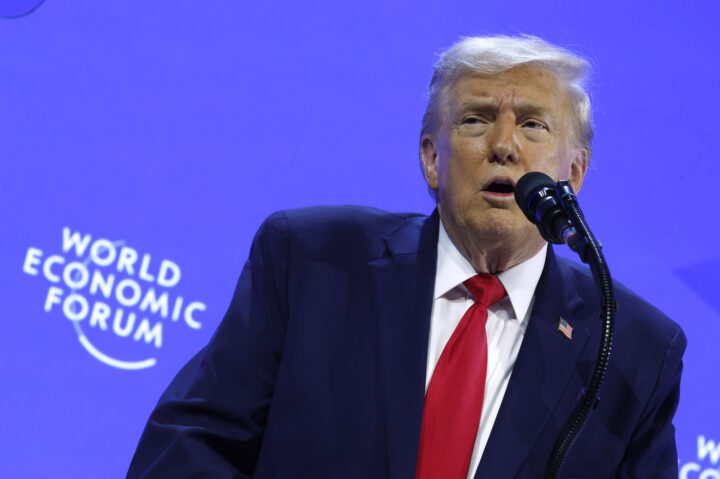
Chip Somodevilla/Getty Images
U.S. President Donald Trump gives a speech at the World Economic Forum (WEF) on January 21, 2026 in Davos, Switzerland.
Despite the Trump administration’s willingness to diplomatically engage with Iranian officials, leading Middle East experts told Jewish Insider on Monday that military action against Tehran still remains a very real possibility.
“I can’t tell you what I’m going to do,” President Donald Trump told reporters on Monday evening when asked about the threshold for an Iran strike.
“We have a tremendous force going there [to the Middle East], just like we did in Venezuela,” said Trump. “I’d like to see a deal negotiated. But right now, we’re talking to [Iran] and if we could work something out, that’d be great. If we can’t, probably bad things will happen.”
White House Special Envoy Steve Witkoff and Iranian Foreign Minister Abbas Araghchi are expected to meet in Istanbul on Friday to discuss a potential new nuclear agreement, according to reports. Jared Kushner, who has played a key role in recent high-profile diplomatic negotiations, is also expected to attend, alongside the foreign ministers of Turkey, Qatar, Egypt, Oman, Saudi Arabia and Pakistan, in the first meeting between the U.S. and Iran since U.S. strikes on Iranian nuclear facilities last June.
The planned talks come as the administration continues to exert pressure on Tehran — in response to Iran’s violent crackdown on protesters last month, Trump has publicly weighed the possibility of U.S. military intervention, ordering the movement of additional military assets into the region and issuing a series of stark warnings on social media indicating that U.S. forces are “ready, willing and able to rapidly fulfill [their] mission, with speed and violence” should a deal fail to be made.
While the administration has emphasized diplomacy as its preferred path, analysts caution that negotiations do not necessarily signal that the U.S. will not strike.
“Military intervention remains likely in light of President Trump’s demonstrated willingness to use force and the U.S. military buildup in the region,” said Michael Koplow, chief policy officer at the Israel Policy Forum. “Given the gulf between the American and Iranian positions and the general hard-line position of the Iranian regime on nuclear issues, it is hard to tag a nuclear deal as a likely outcome.”
Andrea Stricker, a research fellow at the Foundation for Defense of Democracies, told JI that a strike does remain on the table. She said that a deal could be difficult to reach and the upcoming meeting in Istanbul is unlikely to yield meaningful results or concessions from Iran.
“The planned meeting is likely a diplomatic box-checking exercise and smokescreen to enable a continued U.S. military buildup before Trump authorizes strikes,” Stricker said. “The administration’s demands that Iran abandon nuclear enrichment, cap its missile program, and halt support for regional proxies and terrorism, as well as stop executing its people, are nonstarters for the regime.”
Koplow said the administration’s “mixed signals” on whether it will seek diplomacy or take military action are likely “not a ruse or a diversion,” but instead a signal that Trump “has not actually made up his mind” and is “unsure what his end goal is.”
Jason Greenblatt, who served as White House Middle East envoy in the first Trump administration, asserted that “there’s no mixed signals,” arguing that the president’s messaging has been clear.
“President Trump has made the choice clear: a real, enforceable deal that ends Iran’s nuclear and missile threats and protects the U.S., our allies, and the Iranian people — or decisive action,” said Greenblatt, who emphasized that while Trump is reluctant to engage in war, the president will not accept an agreement he views as insufficient.
“He is not a war president,” Greenblatt said, “but he will not accept a weak deal. Iran’s leadership should understand by now that President Trump means exactly what he says.”
Stricker also noted that Trump has consistently sought to avoid prolonged conflict, but argued that Iran’s internal repression and continued nuclear advances may push the president toward decisive action. On Saturday, satellite images revealed new activity at Iranian nuclear sites, a potential sign that Tehran is aiming to salvage remaining materials from the June strikes.
“President Trump favors stability and prioritizes ending violence in global affairs,” she said. “After achieving the defanging of Tehran’s nuclear program, the regime has shown it remains a threat — the ongoing massacre is too much for Trump to tolerate as the leader of the free world.” “The president will likely ensure the regime pays a price, but whether the price is regime change remains to be seen,” she added.
When detailing what potential U.S. military intervention could look like, Koplow said that it would likely be “limited” in scope.
“Any U.S. action is likely going to fall short of what the Israelis would like to see, which is a campaign that doesn’t stop until the regime has fallen,” said Koplow. “Trump seems to favor quick strikes, and he is also facing wall-to-wall opposition from Arab states regarding the prospects of a long campaign that destabilizes the region and damages prospects for trade, investment, and growth.”
However, other analysts read the shift to negotiations as a signal that intervention is increasingly unlikely. Jonathan Ruhe, a senior fellow at the Jewish Institute for National Security of America told JI that U.S. military action is “unlikely for the moment.”
“An even bigger concern now is that military action could be off the table indefinitely, in a way it wasn’t just a day or two ago, as renewed talks now seem more likely,” said Ruhe.
Ruhe also noted that a key indicator of Trump’s intentions will be “how long he keeps the ‘armada’ within striking distance,” referring to the U.S. military assets in the region. He added that negotiating with Tehran will likely result in an unfavorable outcome for the U.S.
“Negotiating with Iran is absolutely the worst possible option for the United States now, because Iran’s regime will go from being on the ropes to thinking it prevailed,” said Ruhe, noting that Tehran is unlikely to agree to an “acceptable deal,” instead using the “prospect of talks to stave off military threats.”
“[Iran] is trying to do what it always does, playing for time and seeing what concessions it can wrangle without ever giving up anything itself,” Ruhe added. “This leaves zero upside for the U.S., since Iran is too emboldened to agree to serious concessions. There’s plenty of downside, too, since U.S. credibility would be dangerously eroded in Tehran’s eyes if Trump fails to fulfill his earlier threats.”
Koplow said Jerusalem is also concerned about a potential nuclear deal and is likely to perceive Iran’s willingness to enter talks as a way of “dragging out the process indefinitely.”
“[The Israelis] are concerned that Trump will back off his threats to take action or end up signing a deal that falls short of addressing the entire basket of issues — nuclear, missiles, and proxies,” said Koplow.
Ali Shamkhani, a senior adviser to Iranian Supreme Leader Ali Khamenei, had said Tehran would strike Israel in response to any U.S. military action, in an interview with the Lebanese-based Al Mayadeen.
Stricker warned that any agreement that falls short of dismantling the regime’s power structure and fails to address key issues would be problematic not only for the U.S. and Israel, but for the Iranian public.
“Any deal with the Islamic Republic would represent a historic betrayal of the Iranian people,” Stricker said. “The only negotiation America should entertain with Tehran is the exit of top regime officials from Iran and their relinquishing of power prior to an orderly transition to democracy.”
Dan Diker, president of the Jerusalem Center for Security and Foreign Affairs, told JI that Trump is engaged in ‘maximum pressure negotiations,’ that are ‘setting up the regime to say no.’
Daniel Torok/The White House via Getty Images
President Donald Trump and Secretary of State Marco Rubio (R) sit in the Situation Room as they monitor the mission that took out three Iranian nuclear enrichment sites, at the White House on June 21, 2025 in Washington, DC.
President Donald Trump, over the last week, has gradually amped up threats of a military strike against Iran, pivoting away from talk of diplomatic negotiations amid continued intransigence from Tehran.
On Wednesday, Trump wrote on Truth Social that “a massive Armada is heading to Iran … ready, willing, and able to rapidly fulfill its mission, with speed and violence if necessary. Hopefully, Iran will quickly “Come to the Table” and negotiate a fair and equitable deal – NO NUCLEAR WEAPONS – one that is good for all parties. Time is running out, it is truly of the essence!”
The president warned that “the next attack will be far worse” than last June’s Operation Midnight Hammer. “Don’t make that happen,” he added.
The regime’s mission to the United Nations responded with Trump-esque capitalization that “Iran stands ready for dialogue based on mutual respect and interests—BUT IF PUSHED, IT WILL DEFEND ITSELF AND RESPOND LIKE NEVER BEFORE!”
Ali Shamkani, an advisor to Iranian Supreme Leader Ali Khamenei who was severely injured in an Israeli airstrike on Iran last June, threatened — in Arabic, English, Hebrew, Russian and Mandarin — that “any military action by [the] US … will be considered the start of [a] war and its response will be immediate, all out and unprecedented, targeting [the] heart of Tel Aviv and all those supporting the aggressor.”
Then, amid widespread reports of secret talks between Washington and Tehran through Omani mediators came the news that they made no progress on limiting the Iranian nuclear and ballistic missile programs, and that Trump was once again weighing military action, according to CNN.
Dan Diker, president of the Jerusalem Center for Security and Foreign Affairs, told Jewish Insider that Trump is engaged in “maximum-pressure negotiations,” which are “setting up the regime to say no.”
Nadav Pollak, a lecturer at Reichman University and Israeli intelligence veteran, told JI that the latest developments were significant in that “Trump laid out terms for a deal and Iran said no, or didn’t say anything. It’s not surprising, because his terms — no nuclear program, no ballistic missiles over a certain range, no support for its proxies — are a surrender without concessions [from the U.S.], something the supreme leader can’t do.”
At the same time, Diker said, “Iran is desperate to cut a deal. … The Iranians are reaching out to cut a deal, like they always do when they feel cornered. Regime survival is the top priority of the regime.”
“I think it’s fair to assess that Trump senses he has a lot of leverage and a lot of power — and he does — and I think he’s applying maximum pressure on the regime. He knows the regime is weak, but it’s like a rabid dog … that can do anything, which can be very dangerous. They still have a lot of missiles,” he said.
Diker argued that 30 years after Israeli Prime Minister Benjamin Netanyahu first warned about the Iranian threat in a joint session of Congress, “the stars aligned in terms of Trump and Netanyahu, and they could finally get rid of this regime, but it will come at a price. … The Iranian proxies will put us in a terrible position.”
Israel is not the only country exposed to those dangers, Diker pointed out. “There is pressure on Trump from the Saudis, the Qataris, the Turks and others across the Middle East not to attack because of the distinct fear the regime will start firing rockets, missiles and drones everywhere. … Iranians will just be throwing stuff all over the Middle East, is the fear.”
In Pollak’s assessment, U.S. military action is likely: “Trump, with all his language and rhetoric, climbed too high not to do anything. He also pushed U.S. assets into the region, similar to what he did in Venezuela. …The scope of a strike is unclear. That’s anyone’s guess right now.”
The shift in Trump’s rhetoric in recent days from focusing on the anti-regime protests to stopping Iran’s nuclear program shows that he is “trying to build legitimacy for a strike,” Pollak said. “The protests against the regime was a trigger for him, but he has other objectives in mind.”
Pollak said that Shamkani’s multilingual social media posts were the first public, direct military threat from Iran towards Israel, something he said Israel’s security establishment surely took note of.
“If it wasn’t certain until yesterday that Israel will get targeted, now it is, even if it’s one barrage,” Pollak said.
Whether Israel will take part in the strikes on Iran remains an open question, Pollak said, but assessed that it is likely to happen. He pointed out that IDF Military Intelligence chief Maj.-Gen. Shlomi Binder was in Washington this week, reportedly to share information about possible targets in Iran.
Pollak pointed out that a month ago, in a press conference with Netanyahu at Mar-a-Lago, Trump said he would support Israel striking Iran if it continues to produce ballistic missiles, and if Iran tries to rebuild its nuclear weapons program, he would back Israel striking “fast.”
“I think [Netanyahu] for sure would want to take the opportunity to finish some of what we didn’t finish in June,” he said. “The question is whether Trump will let him or not.”
Diker said that “Netanyahu has been hyper-focused on ridding Israel and the world of this regime for 30 years … When Netanyahu says Trump is the best friend Israel ever had, he’s not talking about the Abraham Accords. He’s talking right now about ending the Iranian regime. Netanyahu’s eyes are on that ball.”
‘If Iran restarts their nuclear ambitions, I fully support bombing them until they get the message,’ the Pennsylvania senator told JI
Tom Williams/CQ-Roll Call, Inc via Getty Images
Sen. John Fetterman (D-PA) talks with reporters after the Senate luncheons in the U.S. Capitol on Tuesday, March 11, 2025.
Sen. John Fetterman (D-PA) said on Thursday that he would support the U.S. striking Iran’s nuclear facilities again to prevent Tehran from rebuilding its nuclear program — if the regime is found to be making strides toward restoring sites damaged by U.S. and Israeli strikes last year.
The Pennsylvania senator told Jewish Insider that he believes the U.S. and Israel should keep targeting Iranian nuclear facilities until Iran’s leaders “get the message” that the Islamic Republic will never be allowed to acquire a nuclear weapon.
“If Iran restarts their nuclear ambitions, I fully support bombing them until they get the message,” Fetterman told JI.
Fetterman was supportive of President Donald Trump’s decision to strike Iran’s nuclear facilities amid the 12-day war with Israel last year and has emerged as one of the staunchest Iran hawks in the Democratic Party. He criticized members of his party last June who spoke out against Israel’s strikes on Iran and Trump’s subsequent decision to join the strikes.
“It was just astonishing to see colleagues criticizing these things. It’s like, do you think you can negotiate with that regime? Do you think you want to run that scenario and allow them to acquire 1,000 pounds of weapons grade uranium?” Fetterman told JI at the time. “I can’t understand, I can’t even begin to understand that.”
For his part, the president said late last month while meeting with Israeli Prime Minister Benjamin Netanyahu that he was open to another round of strikes against Iran.
Asked by reporters if he will support another Israeli attack on Iran if it continues its ballistic missile and nuclear programs, Trump said, “If they continue with the missiles? Yes. If the nuclear? Fast, OK? One will be yes, absolutely; the other was, we’ll do it immediately.”
“Iran may be behaving badly,” he added. “It hasn’t been confirmed, but if it’s confirmed, look, they know the consequences.”
Fetterman is the first Democrat in Congress to publicly endorse additional strikes on Iran’s nuclear program, a move several of his Republican colleagues have also gotten behind.
Sen. Lindsey Graham (R-SC) said in Israel last month that Washington had a duty to act on “credible evidence” that Iran is looking for avenues to rebuild its nuclear program. The South Carolina senator argued it was imperative that the U.S. and Israel “hit them before they can” do so.
“We obliterated the Iranian nuclear facilities. We did not obliterate Iran’s desire to have a nuclear weapon,” Graham said. “The regime hasn’t changed at all. They still want to kill all the Jews, consider America the great Satan, and purify Islam.”
“Are they regenerating their nuclear capability? Are they building more ballistic missiles that could hurt Europe and Israel?” he added. “I don’t know, but there’s evidence that, yes, they are.”
Meeting in Florida, Trump and Netanyahu projected unity but highlighted disagreements on Turkey, Syria and the West Bank
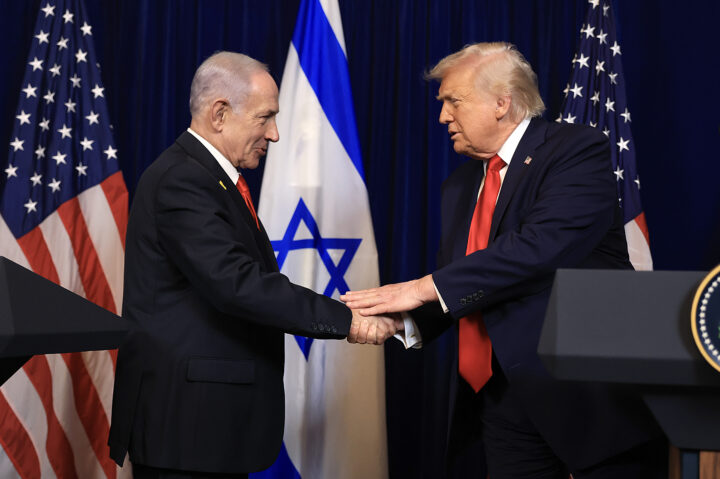
Joe Raedle/Getty Images
President Donald Trump shakes hands with Israeli Prime Minister Benjamin Netanyahu during a press conference at his Mar-a-Lago club on December 29, 2025 in Palm Beach, Florida.
President Donald Trump vowed on Monday that he would support the U.S. or Israel launching another round of strikes against Iran if Tehran is attempting to rebuild its ballistic missile program or nuclear facilities.
Trump made the comments while speaking to reporters from his Mar-a-Lago estate in Palm Beach, Fla., alongside Israeli Prime Minister Benjamin Netanyahu for the latter’s fifth visit to the United States this year.
Asked if he will support another Israeli attack on Iran if they continue their ballistic missile and nuclear programs, Trump said, “If they continue with the missiles? Yes. If the nuclear? Fast, okay? One will be yes, absolutely; the other was, we’ll do it immediately.”
He added later, “If they are [rearming], we’re going to have no choice but very quickly to eradicate that build up. … We don’t want to waste the fuel on a B-2 [bomber]. It’s a 37-hour trip, both ways, I don’t want to waste a lot of fuel,” suggesting the U.S. would again utilize its bomber jets that conducted the June strikes on Iran’s nuclear facilities.
The president repeatedly urged Tehran to return to the negotiating table with the U.S. while cautioning that the regime would face consequences for declining his offer to address the nuclear issue diplomatically. “They could have made a deal the last time before we went through the big attack on them, and they decided not to make the deal. They wish they made that deal. So I think, again, they should make a deal,” he said.
About reports that Iran is rearming, Trump said, “Iran may be behaving badly. It hasn’t been confirmed, but if it’s confirmed, look, they know the consequences.”
“This is just what we hear, but usually where there’s smoke, there’s fire,” he continued. “I’m hearing that their [efforts are] not nuclear yet, but maybe nuclear, too. The sites were obliterated, but they’re looking at other sites [than the ones the U.S. bombed in June]. That’s what I’ve heard. They’re looking. It’ll take a long time. They’re not going to go back to where they were, but they have other places they can go. And if they’re doing that, they’re making a big mistake.”
Trump repeatedly praised Turkish President Recep Tayyip Erdogan in his remarks with Netanyahu, pledging to thaw tensions between the Turkish and Israeli leaders and repeated that he was “very seriously” considering approving Turkey’s longstanding requests to purchase F-35 fighter jets from the United States. “We’re thinking about it very seriously,” Trump said about the move, which Israeli Ambassador to the U.S. Yechiel Leiter said last month that Israel opposes.
“I know President Erdogan very well, and as you all know, he’s a very good friend of mine … and I do respect him and Bibi respects him, and they’re not going to have a problem,” Trump said.
Speaking to reporters alongside Netanyahu ahead of their meeting, Trump also voiced his support for Turkey joining the proposed U.S.-led International Stabilization Force to be deployed in Gaza.
“I have a great relationship with President Erdogan, and we’ll be talking about it. And if it’s good, I think that’s good. And a lot will be having to do with Bibi, we’re going to be talking about that,” Trump said. “But Turkey has been great, and he [Erdogan] has been excellent, as far as I’m concerned. I don’t know about you [Netanyahu], but to me he’s been very good.”
Netanyahu did not comment on the suggestion at the time or during the press conference later on, though Israel, as well as several U.S. lawmakers, has said it opposes Ankara’s involvement in the proposed peacekeeping force due largely to Turkey’s ties to Hamas, despite the supportive posture from the Trump administration.
The president later used the topic of Syria to again praise Erdogan, arguing the Turkish leader deserved “a lot of credit” for ousting the Assad regime.
“Don’t forget, it was President Erdogan that helped very much get rid of a very bad ruler of Syria. That was President Erdogan, and he never wanted the credit for it, but he really gets a lot of credit. Bibi agrees with that. … I know it,” Trump told reporters.
The president went on to say that the U.S. and Israel “have an understanding regarding Syria” and that he was working to improve relations between the Jewish state and its neighbor, praising Syrian President Ahmad al-Sharaa along the way.
“We do have an understanding regarding Syria. Now with Syria, your new president. I respect him. He’s a very strong guy. That’s what you need in Syria. You can’t put a choir boy, you can’t put somebody that’s a perfect person — everything’s nice, no problems in life,” Trump said.
“I’m sure that Israel and him will get along,” he continued. “I will try and make it so that they do get along. I think they will.”
For its part, Israel has been wary of al-Sharaa and the new Syrian government, with the IDF maintaining control of the 155-square-mile buffer zone between the two countries since the fall of Syrian dictator Bashar Assad last year, against Damascus’ wishes. Israel and Syria have also continued to disagree on the contours of a potential security agreement, which the Trump administration has continuously sought, with Netanyahu maintaining that any agreement must require Syria to accept the demilitarization of territory stretching from southern Damascus to the Israeli border.
Trump was also asked about the Lebanese government’s failure thus far to disarm Hezbollah, amid reports that the terror group is rearming. The president demurred when pressed on his support of Israel striking Hezbollah targets in Lebanon again as a result, instead only acknowledging his disapproval with the terrorist organization.
“Well, we’re going to see about that. We’ll see about it,” Trump said. “The Lebanese government is at a little bit of a disadvantage, if you think of it, with Hezbollah, but Hezbollah has been behaving badly. So we’ll see what happens.”
Asked about attacks by Israeli settlers against Palestinians, Trump acknowledged that he and Netanyahu discussed the West Bank during the meeting and that they’re not in complete alignment on the issue. Still, Trump expressed confidence that all parties would reach “a conclusion” to prevent the matter from undermining the implementation of his broader peace plan, though he declined to offer specifics.
“Well, we have had a discussion, big discussion, for a long time on the West Bank. And I wouldn’t say we agree on the West Bank 100%, but we will come to a conclusion on the West Bank. … It’ll be announced at an appropriate time, but [Netanyahu] will do the right thing. I know that. I know him very well. He will do the right thing,” he said.
Trump also expressed gratitude during his remarks for being named the recipient of the Israel Prize, the Jewish state’s highest cultural honor awarded by the country’s education minister. Netanyahu said Trump will be the first non-Israeli to receive the award, which the president said “really is a great honor.”
Netanyahu invited Trump to visit Israel on Yom Ha’atzmaut, the Jewish state’s independence day, in April, which will be an election year, to receive the award in person.
Joined by Trump at his the meeting with Netanyahu were White House Chief of Staff Susie Wiles; Stephen Miller, deputy chief of staff for policy at the White House; Secretary of State Marco Rubio; Defense Secretary Pete Hegseth; Gen. Dan Caine, the chairman of the Joint Chiefs of Staff; Steve Witkoff, the White House’s Mideast envoy; and Jared Kushner, Trump’s advisor on Middle East efforts.
Netanyahu also met individually with Secretary of State Marco Rubio and Defense Secretary Pete Hegseth while at the president’s property.
From Washington, the London-based Persian-language network is expanding its footprint — connecting Iranians inside the country with global policymakers and challenging Tehran through independent, anti-regime reporting
Wikimedia Commons/ Persian Dutch Network
IRAN INTERNATIONAL - Persian-language TV in London, 2019
Walk into any think tank in Washington and you’re likely to bump into more than a few so-called “Iran watchers”: researchers whose job is to try to interpret the actions of the often-opaque Iranian regime and help policymakers figure out how to approach the Islamic Republic.
Given the adversarial relationship between Washington and Tehran, making sense of the two nations’ policy choices toward each other is big business. But according to some Iranians, something is missing.
“Most of the people who are working on Iran, they have never been to Iran. Americans, I mean. That brings with itself certain limitations,” said Mehdi Parpanchi, who was born in Iran but now lives in Washington. The U.S. does not have a diplomatic presence in Iran, and vice versa. “In my opinion, the image of Iran is not being seen properly from outside the country.”
Parpanchi is the director of U.S. news at Iran International, one of the biggest independent Persian-language news outlets in the world. Based in London, Iran International broadcasts inside of Iran via satellite — much to the chagrin of Iranian officials, who have called the network a terrorist organization. It also reaches Iranians expats and dissidents around the world. While the network mainly operates with the goal of offering independent news from an anti-regime perspective to the global Iranian diaspora, Iran International also serves as a crucial source to Iran watchers of all stripes, including those who have never set foot in the country.
“There is always a decade of delay between the reality inside Iran and how it is being seen from the West, especially from the U.S.,” Parpanchi, who moved to Washington in 2020 to launch a U.S. headquarters for Iran International, told Jewish Insider last month.
A new show from Iran International, filmed in Washington and broadcast around the world, aims to at least partly remedy that problem. “Iran International Insight,” which launched in June, pledges to put Iran International viewers who live in Iran in conversation with the political figures and diplomats across the world whose policy choices will affect their lives.
“The concept was that there’s a tremendous opportunity for policymakers and experts in D.C., but especially policymakers, to be engaging with and taking questions from the Iranian people directly,” said Aaron Lobel, a co-producer of the new show and the founder and president of America Abroad Media, an international media organization.
The growth of Iran International’s programming in Washington comes after the Trump administration slashed funding for the U.S. Agency for Global Media, which supports independent outlets such as Voice of America, Radio Free Europe/Radio Liberty (RFERL) and Middle East Broadcasting Networks that air pro-democracy content around the world. Parpanchi previously spent two years at RFERL, which has a Persian-language branch.
Iran International is not expressly trying to fill that niche, and the new program was in the works starting in 2024, before Trump even came to office. Regardless, the new program arrives at a time that America has pulled back from cultural diplomacy.
“This is in the best traditions of the United States. It advances American values and it advances American interests,” said Lobel. “The more credible media organizations outside Iran that are trying to reach the Iranian people with information and to give them some sense of hope as well — the more the better.”
So far, three interviews — hourlong conversations between one or two guests and an Iran International anchor — have been filmed, all in front of a live audience, including many Iranians who live and work in Washington. Iran International’s producers and journalists solicit questions from the network’s viewers in Iran. The interviews take place in English, but they are dubbed in Persian before being aired.
“I’ve met with groups of Iranian diaspora, who have family in Iran and who are activists with them. But I don’t think I received online questions like that,” Israeli Ambassador to the U.S. Yechiel Leiter, who was the first guest, told JI. “That was the primary agenda, to speak to the people.”
Leiter’s interview with Iran International was a journalistic gold mine for the network: scheduled in advance, it happened to come at a particularly timely moment, hours after President Donald Trump announced a cease-fire between Israel and Iran at the end of the countries’ 12-day war in June. Leiter touted Israel’s military victories in its campaign to destroy Iran’s nuclear capabilities. Yet many Iranians wondered why Israel would attack Iran, but ultimately not seek to remove the ayatollah from power. (Hundreds of questions were submitted.)

“One of the themes that came out that was so striking was, of course, many Iranians wanted Israel to continue the campaign, and they were, I think it’s fair to say, you could hear in that show, disappointed that Israel stopped the war. Or to put it differently, they were upset that the Israeli government had, in their view, raised their expectations of ‘regime change’ and then failed to deliver,” said Lobel.
Leiter offered unusually candid responses to those questions, going beyond the diplomatic language that would’ve gotten the job done even if leaving viewers unsatisfied.
“I appreciated the opportunity to explain why we weren’t going to go further and actually topple the regime by force,” Leiter explained. “I understand them. Remember when the chancellor of Germany said that Israel is doing the ‘dirty work’ for the world? I guess that the people wanted us to do the work completely for the world. But we can’t do that. And it was important for me to be able to explain that.”
Two other programs were recorded this fall. One featured Elliott Abrams, who served as Iran envoy in Trump’s first term, and Dennis Ross, a fellow at The Washington Institute for Near East Policy who previously held several high-level jobs at the State Department in Democratic and Republican administrations. Another featured former CIA official Norman Roule and Mark Dubowitz, CEO of the Foundation for Defense of Democracies. Iran International’s main Instagram account has 16 million followers, and video clips from the Roule-Dubowitz event got about 1 million views each.
Those four experts have different ideological backgrounds, but each falls closer to the hawkish end of the spectrum on Iran. So does Sen. Tom Cotton (R-AR), who was scheduled to appear in an interview in September before the congressional schedule led Cotton to cancel. (Parpanchi said they hope to reschedule.)
Parpanchi said Iran International aims to include a broad range of perspectives from Washington, noting that the program is only just beginning.
“It’s not only hawkish. There are other people who have different views about Iran, and we will reflect them all,” Parpanchi said. Iran International plans to ramp up to a more regular filming schedule in 2026.
The president spoke with Fox News host Mark Levin about his administration’s strike on Iran’s nuclear facilities

Tasos Katopodis/Getty Images
President Donald Trump
President Donald Trump said in an interview with Fox News host Mark Levin on Tuesday that at the time of the U.S. strikes on Iran’s nuclear facilities in June, he believed Tehran “would have had nuclear weapons in a period of four weeks.”
Calling in to Levin’s radio show, Trump said that, “if we didn’t [strike Iran], they would probably by this time, just about this time, have a nuclear weapon and they would have used it.”
Trump said that, despite news reports questioning his assessment of the efficacy of the strikes, “it turned out that” the impacts were “even more so than I said. It was obliteration.”
“The Atomic Energy Commission said, this place is gone. [Iran] can maybe start up, but they’re not starting up there,” Trump said of the Iranian nuclear facilities targeted in the operation. The Israel Atomic Energy Commission found that the U.S. strike on the Fordow nuclear facility “destroyed the site’s critical infrastructure” and rendered it “inoperable,” though reports differ on the extent of the damage.
The president told Levin that the U.S. Air Force pilots who conducted the strikes told him that they and their predecessors had been practicing the flight to Iranian airspace for 22 years.
Trump lauded his peacemaking abilities, saying, “I’ve settled six wars and we did the Iran night, wiped out their whole nuclear capability, which they would have used against Israel in two seconds if they had the chance.”
He called Israeli Prime Minister Benjamin Netanyahu a “war hero” and said, “I guess I am, too. … I mean, I sent those planes.”
‘If the current status quo is the same a year from now and it actually leads towards further negotiation — success,’ Warner told JI
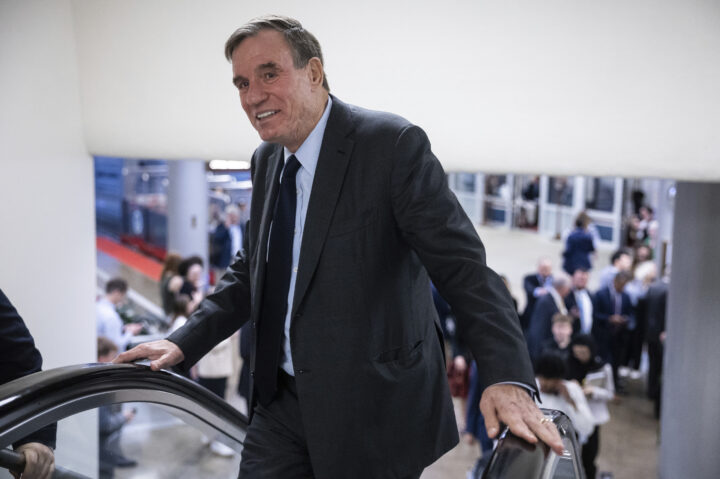
Francis Chung/POLITICO via AP Images
Sen. Mark Warner (D-VA) ascends on an escalator on his way to a vote at the U.S. Capitol on June 17, 2025.
Sen. Mark Warner (D-VA) told Jewish Insider on Friday that he’s inclined to view the Trump administration’s strikes last month on Iran’s nuclear facilities as a “success,” if negotiations with Tehran resume and barring substantial future retaliation from Iran.
His comments largely echo sentiments shared earlier in the day by Sen. Chris Coons (D-DE) at the Aspen Security Forum, suggesting an increasing willingness by moderate, national security-minded Democrats to publicly acknowledge positive outcomes of the strikes, even if they maintain other concerns about the process that produced them.
“I will acknowledge the successfulness of the Israeli attacks and how back-foot the regime was. The fact that they didn’t launch the thousands of missiles,” Warner told JI on the sidelines of the forum. “I was concerned about an attack that didn’t bring Congress along. And I do think there was a huge process foul when the Gang of Eight wasn’t notified and the Republicans [were]. Trump[’s first administration] never did that — but I have never contested the success.”
Warner, the vice chair of the Senate Intelligence Committee, said he’s been pleased that there has not been ongoing asymmetric retaliation against the U.S. by Iran, such as cyber, sleeper cell or Iraqi militia attacks.
“If the current status quo is the same a year from now and it actually leads towards further negotiation — success.”
Warner, Coons and other top Democrats had cautioned the administration against unilateral action against Iran without congressional approval just days before the attack.
“Let’s make no doubt that the Iranian regime [are] bad guys, and that is why I’ve been such a consistent supporter of Israel,” Warner told JI.
“Iran’s, at least so far, been shown to be more of a paper tiger,” Warner said. “If we could just get to the resolution in Gaza, there really could be a fresh start.”
The senator said that his ongoing concern is how President Donald Trump has responded to the attacks, declaring that Iran’s nuclear program had been completely obliterated.
“The president, within two hours of the strike, set an arbitrary, almost impossible standard to meet, in terms of ‘total obliteration,’” Warner said. “To get the enriched uranium you’re going to need troops on the ground. And there are more than three sites — the vast majority [of the activity] was [at] those three, but there was some bad stuff happening elsewhere.”
He said the intelligence community had also been pressured to “contort itself to meet” the assessment Trump put forward.
In the immediate aftermath of the strikes, Warner and other Democrats expressed frustration that the Trump administration took days to brief Congress about them. Warner said he’s received “some additional clarity” in the weeks since the strikes about their effects. But he said that without physically sending operatives into the facilities, it’s difficult to know for sure the impacts of the strikes.
“Other nations have made assessments that were more in the multiple months” of delay to Iran’s nuclear program, “but I’m not even sure that’s the right metric,” Warner said. “It was a success. So the question is, what’s next? That, I don’t have visibility on.”
Going forward, Warner emphasized the need for negotiations to bring International Atomic Energy Agency inspectors back into Iran, adding that he wants to look further into the source of the delays in resuming talks.
Warner said he’s also seeking information on the timeline on which Iran would be able to build a less sophisticated nuclear device that could be delivered in a truck, rather than via a ballistic missile.
Though he noted that U.S. intelligence had not assessed that Iran was actively constructing a nuclear weapon, he said he had heard reports about an Israeli assessment that offered a different view and that he is looking further into it.
Asked about the fluid situation in Syria, in which Israel went, in the span of just a week, from floating normalization with the new Syrian government to bombing key government facilities in response to attacks on the Druze population, Warner indicated he’s still gathering information.
He said that Israel is “appropriately … very protective of its Druze population,” adding that he does not know at this point whether the Syrian government forces attacking the Druze population are doing so at the orders of that government.
He said he’s hopeful that Israel and other parties involved will not miss an opportunity to find a peaceful resolution that could defuse a major longtime threat to Israel’s north.
Warner said he also wants to see Trump use his “enormous influence in Israel” to “[force] Bibi’s government into a return of the hostages, a ceasefire,” saying that would open up opportunities for transformational change in the region, including Saudi-Israeli normalization.
Warner said that while he’s been critical of Israeli Prime Minister Benjamin Netanyahu, Israel and the IDF deserve credit for their surprise accomplishments in taking down Iran’s proxy network and in their strikes against Iran itself.
“The [Jewish community’s] concern is real and understandable,” Warner said. He said that he has been struck by the “level of anger, animosity, vile things said” in anti-Israel protests that have targeted him — “and I’m not Jewish. And I can only imagine.”
“Iran’s, at least so far, been shown to be more of a paper tiger,” Warner said. “If we could just get to the resolution in Gaza, there really could be a fresh start.”
Asked how concerned he is about the possibility of homeland attacks against the Jewish community carried out by or in the name of Iran, Warner said that U.S. intelligence monitors potential threats fairly comprehensively, but indicated that he’s most worried about radicalized lone-wolf attacks, like those in Washington and Boulder, Colo.
“The [Jewish community’s] concern is real and understandable,” Warner said. He said that he has been struck by the “level of anger, animosity, vile things said” in anti-Israel protests that have targeted him — “and I’m not Jewish. And I can only imagine.”
Warner expressed frustration at the way that the Palestinian cause has crowded out other global issues on college campuses. He said that it “would be healthy” if young people “have the chance to get exposed to other things in the world,” offering as examples the conflict in Sudan — which he said has been more deadly than Gaza and Ukraine combined — and the military junta in Myanmar.
On the subject of the Houthis, who have ramped up attacks against commercial shipping and Israel in recent weeks, Warner called the group a “tough nut to crack,” noting that a protracted Saudi and Emirati campaign against the Iran-backed terrorist group in Yemen had failed to put the issue to bed. But he said that the U.S. can’t rule out further military action against the group.
“I hope that those plans would be kept classified and not shared … on a device that’s not secure,” he quipped, referencing the Signalgate scandal, which he said had prompted concern from the Israeli government.
******
Last week’s Aspen summit, which typically prioritizes bipartisan and nonpartisan discussion and solution-making, became particularly politicized after nearly all Trump administration speakers canceled their participation, followed by a handful of foreign and private sector leaders and former government officials disappearing from the week’s agenda.
The issue was a frequent topic of discussion both on the main stage and across the Aspen Meadows campus last week, seen by many as a sign of the ways that intense partisanship has infiltrated U.S. foreign policy, once seen as a less antagonistic space.
Warner’s own panel featured himself and Coons, but not a Republican senator, as has been tradition.
Nevertheless, Warner said that bipartisanship on foreign policy issues still lives in the Senate, noting that the Intelligence Committee had passed an Intelligence Authorization Act recently in a nearly unanimous vote.
Looking ahead, he said the “easiest place to rebuild that consensus is around China,” which he described as an unprecedented competitor. He said there has been a long and difficult journey across multiple administrations to refocus on China, but he said there has been bipartisan success in pushing back against China.
He also argued that the Trump administration’s transactional and short-sighted approach to foreign policy goes against a longtime bipartisan tradition of viewing U.S. international relationships as an effort in “mutual trust-building.”
He said that his Republican colleagues privately disagree with many of Trump’s more outlandish foreign policy efforts — like annexing Canada. “At some point, there’s got to be a break,” he responded, when pressed on the fact that some Republicans defend Trump’s policies publicly despite those private disagreements.
Warner told JI that the bill the Intelligence Committee recently passed would cut the size of the Office of the Director of National Intelligence. But, despite offering biting criticisms of DNI Tulsi Gabbard, Warner said that the reform efforts are not a reflection of or specifically prompted by concerns about her conduct in the role.
“I’m very comfortable with the idea of bringing the mission closer to what it was originally, but also making sure that people who are at the ODNI get returned to their original home agency and don’t get [fired],” Warner said.
Clarifying comments that he made on the panel about close U.S. intelligence partners in the Five Eyes group curtailing their intelligence sharing with the United States, Warner said he was not aware of specific instances in which that had happened, but said that U.S. partners are concerned about the state of the U.S. intelligence community.
“The challenge about intelligence sharing is [that] this is all based on trust,” Warner said.
Obama’s former national security advisor disagreed with David Petraeus, John Bolton over the effectiveness of the strikes

Win McNamee/Getty Images
Former National Security Advisor Susan Rice speaks at the J Street 2018 National Conference April 16, 2018 in Washington, D.C.
Susan Rice, who served as national security advisor during the Obama administration’s nuclear deal with Iran, sharply criticized President Donald Trump’s decision to strike Tehran’s nuclear program while defending the 2015 agreement during a panel discussion on Monday at the Aspen Institute’s Ideas Festival.
Rice, who was on stage with former Trump administration National Security Advisor John Bolton and former CIA director David Petraeus, disagreed with her two colleagues that Trump’s Iran strikes were largely a success.
“I think the resort to military action when diplomacy had not been exhausted was a strategic mistake,” Rice said. “And the reality is, and we’re back to this point today, only diplomacy and a negotiated settlement can ensure the sustainable and verifiable dismantling of Iran’s nuclear program. You need inspectors on the ground. You need verifiable constraints that are very significant, and you don’t achieve that by ripping up the 2015 nuclear agreement and replacing it with nothing.”
Rice joins a chorus of former Obama and Biden administration officials who have criticized Trump’s decision to strike Iran’s nuclear facilities, despite many experts concluding the damage to the program was significant. IDF Chief of Staff Eyal Zamir, for instance, said that “based on the assessments of senior officers in IDF Intelligence, the damage to [Iran’s] nuclear program is … systemic … severe, broad and deep, and pushed back by years.”
Last week, former Secretary of State Tony Blinken wrote an op-ed in The New York Times: “The strike on three of Iran’s nuclear facilities by the United States was unwise and unnecessary. Now that it’s done, I very much hope it succeeded.”
At the Aspen Ideas Festival last week, former Biden administration National Security Advisor Jake Sullivan told moderator Fareed Zakaria: “We still need a deal because Iran still has, it appears, stockpiles of enriched uranium, still has centrifuge capacity, even if the installed centrifuge capacity has been destroyed or damaged or who knows what, and still has know-how and therefore still has the possibility of reconstituting its program.”
Bolton, on the same panel as Rice, argued that the time was ripe for military action against Iran.
“I think the regime is weaker than at any point since the 1979 revolution,” Bolton said. “But I think we will never have an opportunity this good to remove not just the nuclear program but the Iranian support for terrorism, which dates back to 1979 when they seized our embassy employees and it went downhill from there.”
Bolton outlined several ways in which Iranians are dissatisfied with the regime, including economic stagnation and state of women’s rights in the country.
“The answer is regime change. But in the meantime, we want to make sure that there aren’t any even possible successful efforts by Iran to do something with what they have,” Bolton said.
Turning to Israel’s war in Gaza, all members of the panel argued that Israel needed to shift its strategy to successfully eliminate Hamas. Bolton said that, despite successfully degrading the terror group’s organizational structure, Israel had not successfully fulfilled all of its war goals, which include eliminating Hamas and securing the release of all the hostages.
Bolton argued that an additional objective of the war should be to “provide a better future for the Palestinians without Hamas in their lives. The only way you can achieve all four of these is … by going in and conducting a comprehensive civil military counterinsurgency campaign. You clear every building floor room and block all the tunnel entrances, let the people that belong there back in with biometric ID cards, and then you have an entry control point to the rest of Gaza. With security, anything is possible.”
Israel vows to ‘respond with force’; four people killed in wave of Iranian missile launches
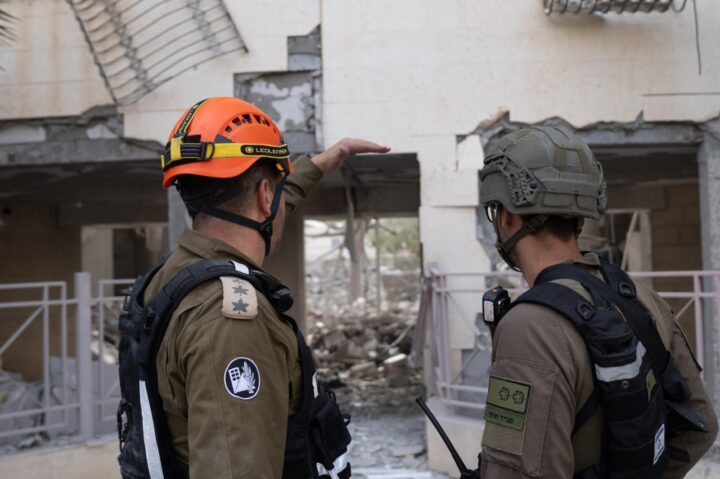
IDF
IDF Home Front Command forces operate at the impact site in Beersheva, June 24th, 2025
Iran violated a ceasefire with Israel hours after it began on Tuesday, with Israel vowing “powerful strikes” in response.
The IDF intercepted two missiles from Iran at about 10:30 a.m. No injuries were reported. Despite residents of northern Israel reporting interceptions, Iran denied firing the missiles.
Israeli Defense Minister Israel Katz said he “instructed the IDF to respond forcefully to the violation of the ceasefire by Iran with powerful strikes against regime targets in the heart of Tehran.” IDF Chief of Staff Lt.-Gen. Eyal Zamir said that “in light of the severe violation of the ceasefire carried out by the Iranian regime, we will respond with force.” A senior Israeli diplomatic source said that “Iran violated the ceasefire — and it will pay.”
In the hours before the ceasefire was meant to go into effect at 7 a.m., Iran launched 20 missiles in a series of barrages at Israel, killing four in a direct hit on a building in Beersheba.
Ahead of the deadly strike, Iranian Foreign Minister Abbas Araghchi sent mixed messages, first posting on X that “there is NO ‘agreement’ on any ceasefire … However, provided that the Israeli regime stops its illegal aggression against the Iranian people no later than 4 am Tehran time, we have no intention to continue our response afterwards.” Less than 20 minutes later, Araghchi implied on X that a ceasefire had gone into effect: “The military operations of our powerful Armed Forces to punish Israel for its aggression continued until the very last minute, at 4am.”
The Islamic Republic has repeatedly struck Beersheba since the war began 12 days ago, damaging buildings in the Soroka Medical Center, Microsoft offices and residences in the southern Israel city. The regime said it was aiming at an IDF research center in the city’s HiTech Park.
President Donald Trump announced a “Complete and Total CEASEFIRE” on Truth Social on Monday evening, saying that each “side will remain PEACEFUL and RESPECTFUL … This is a War that could have gone on for years, and destroyed the entire Middle East, but it didn’t, and never will!”
According to the president, Iran was supposed to have stopped firing at Israel at 7 a.m. local time, and Israel would stop 12 hours later.
At about 8 a.m. Israel time, Trump added: “THE CEASEFIRE IS NOW IN EFFECT. PLEASE DO NOT VIOLATE IT!”
Netanyahu and Trump spoke about the ceasefire overnight, while an American team that included Vice President JD Vance talked to Tehran, Reuters reported. Israel’s condition for the ceasefire was that Iran stop launching attacks, which they reportedly agreed to at the time. Qatar also took part in the negotiations.
The Israeli government released a statement on Tuesday morning that Prime Minister Benjamin Netanyahu reported to the Security Cabinet that “Israel has achieved all of the objectives of Operation Rising Lion, and much more. Israel has removed a double existential threat — on both the nuclear issue and regarding ballistic missiles. The IDF also achieved complete air superiority in the skies over Tehran, struck a severe blow to the military leadership and destroyed dozens of Iran’s main regime targets.”
“In Operation Rising Lion, the State of Israel made great historic achievements and placed itself in the first rank of the world’s major powers,” the government stated. “This is a great success for the people of Israel and its fighters, who removed two existential threats to our country, and ensured the eternity of Israel.”
Israel also “thank[ed] President Trump and the U.S. for their defensive support and for their participation in removing the Iranian nuclear threat.”
The ceasefire was reached “in full coordination with President Trump,” the statement reads, but “Israel will respond forcefully to any violation of the ceasefire.”
IDF Spokesperson Brig.-Gen. Effie Defrin also said in a briefing on Tuesday morning that “the IDF has fully met all the objectives defined in Operation Rising Lion.”
“The Chief of the General Staff instructed the IDF to maintain a high level of alert and readiness to deliver a powerful response to any violation of the ceasefire,” he added.
In addition, Israel’s Home Front Command maintained its restrictions on Israelis, including the continued closure of schools and non-essential businesses.
The Israeli government statement also said that the IDF killed hundreds of militants from the Basij, “the terrorist regime’s instrument of repression,” and killed a senior nuclear scientist, named Mohammad Reza Sadighi, according to Iranian reports.
Defrin said that on Monday night and early Tuesday, the Israeli Air Force “struck dozens of military targets in Tehran … deploying more than one hundred munitions.” The targets included the headquarters of SPND, where weapons systems and nuclear technology were developed, as well as military manufacturing infrastructure. The IAF also eliminated eight missile launchers that were ready to fire at Israel.
Please log in if you already have a subscription, or subscribe to access the latest updates.
 Continue with Google
 Continue with Apple