







































Susie Wiles emerges as skeptic of Iran attacks in new book
The White House chief of staff initially pushed back on U.S. military engagement against Iran, according to a new book by Maggie Haberman and Jonathan Swan
Annabelle GORDON / AFP via Getty Images
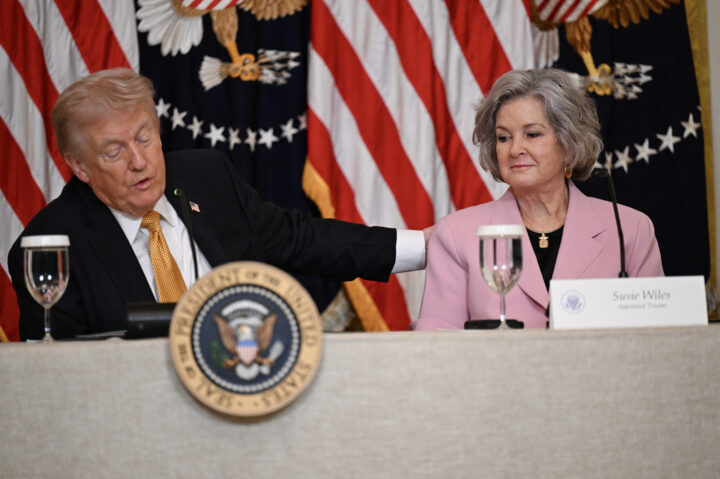
President Donald Trump hosts a lunch with the Kennedy Center Board members as chief of staff Susie Wiles looks on at the White House in Washington, DC, on March 16, 2026.


 Add JewishInsider on Google
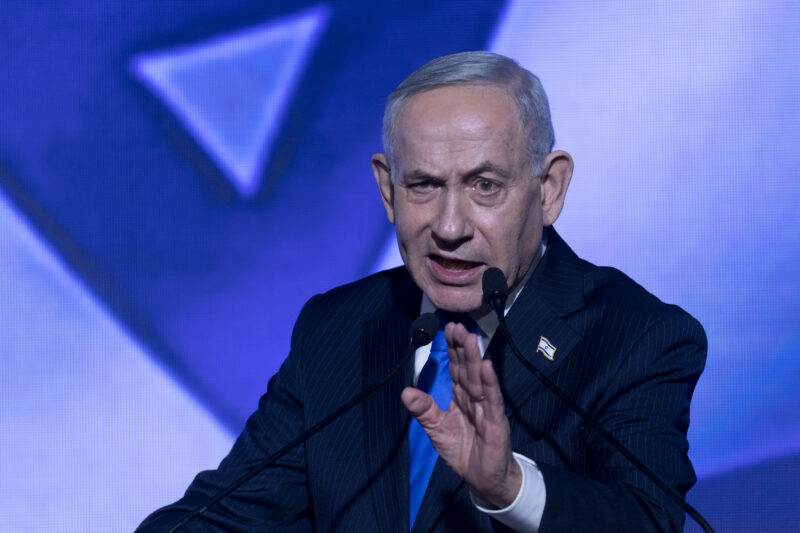
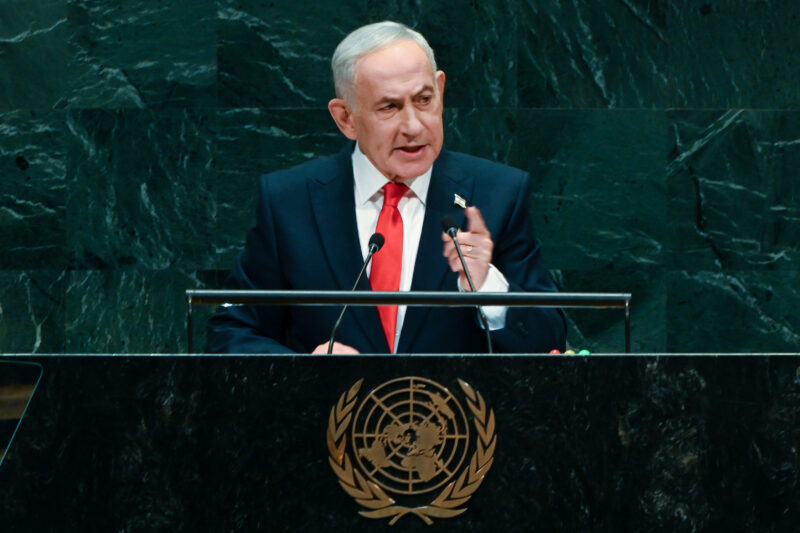
Israeli Prime Minister Benjamin Netanyahu traveled to Washington in early February 2025 with a pitch for President Donald Trump: to join Israel in a future campaign to bomb Iran’s nuclear sites. Trump did not agree at the time, though he eventually came around to the idea.
Two powerful White House figures were particularly skeptical of Netanyahu’s message.
The first was Vice President JD Vance, who has been calibrating a more isolationist worldview for years. The second, according to a new book by New York Times journalists Maggie Haberman and Jonathan Swan, was White House Chief of Staff Susie Wiles.
Their new book, Regime Change: Inside the Imperial Presidency of Donald Trump, paints a picture of Wiles as a savvy operator with sharp political instincts who, on Middle East policy matters, routinely aligned with Vance in urging Trump to reconsider major foreign policy interventions.
After that first meeting between Trump and Netanyahu, Wiles and Vance were both skeptical of Israel’s efforts to persuade the president. They feared that any involvement from the U.S. military could “spiral into an Israeli regime-change war,” according to Swan and Haberman.
Throughout the first months of Trump’s second term, Wiles and Vance both worried that former Rep. Mike Waltz (R-FL), Trump’s pick to be national security advisor, was “too hawkish” and “too sympathetic to the Israeli line,” according to the book.
Soon, after an embarrassing public scandal in which Atlantic Editor-in-Chief Jeffrey Goldberg was added to a group chat with Waltz, Defense Secretary Pete Hegseth and other top national security officials prior to U.S. strikes on Yemen last year, Waltz was removed from that position and nominated to be U.S. ambassador to the United Nations.
When Trump convened his Cabinet in early 2026 to consider whether to attack Iran again, after joining Israel in striking Iranian nuclear sites in June 2025, Wiles was once more concerned about the U.S. entering a new global conflict. She worried about “being dragged into another Middle East war,” Haberman and Swan write. Political concerns were top of mind for her — a war in Iran might lead to higher gas prices, which she feared could cost Republicans in the midterm elections this year.
Ultimately, though, Wiles got on board with the Iran war.
Wiles, Vance, Secretary of State Marco Rubio and Trump’s other top foreign policy advisors convened in the Situation Room in late February to discuss the matter.
Vance, who was known to oppose the war, spoke first. He told the president that he thought the operation was a bad idea, but he would support Trump.
Wiles was up next. She told Trump that she was on board if Trump felt the operation would protect America’s national security.
24 hours later, Trump authorized the strikes on Iran.
More Stories
PEACH STATE PUNCHES
Rep. Mike Collins ducks question about white nationalist influencer son-in-law at Senate debate
DEBATE DEBACLE
El-Sayed dodges Rogers’ attacks on terrorism ties during heated Senate debate

analysis
Could these two small parties be Israel’s kingmakers?
DIPLOMATIC PUSH
Miliband agrees to host international antisemitism meeting at urging of J7 Task Force

TOEING THE LINE
Menin, Levine call for ‘focus’ on Oct. 7 victims — but don’t condemn Mamdani

TWO JEWS, THREE OPINIONS
Jewish podcast ‘Chosen People Problems’ finds new home with Ark Media
Please log in if you already have a subscription, or subscribe to access the latest updates.
 Continue with Google
 Continue with Apple