


Ilan Fisher
The Israeli scientist at the center of Trump’s search for answers on UFOs
Harvard professor Avi Loeb believes his research, which propelled him to the White House, could usher in a ‘new messianic era’


 Add JewishInsider on Google
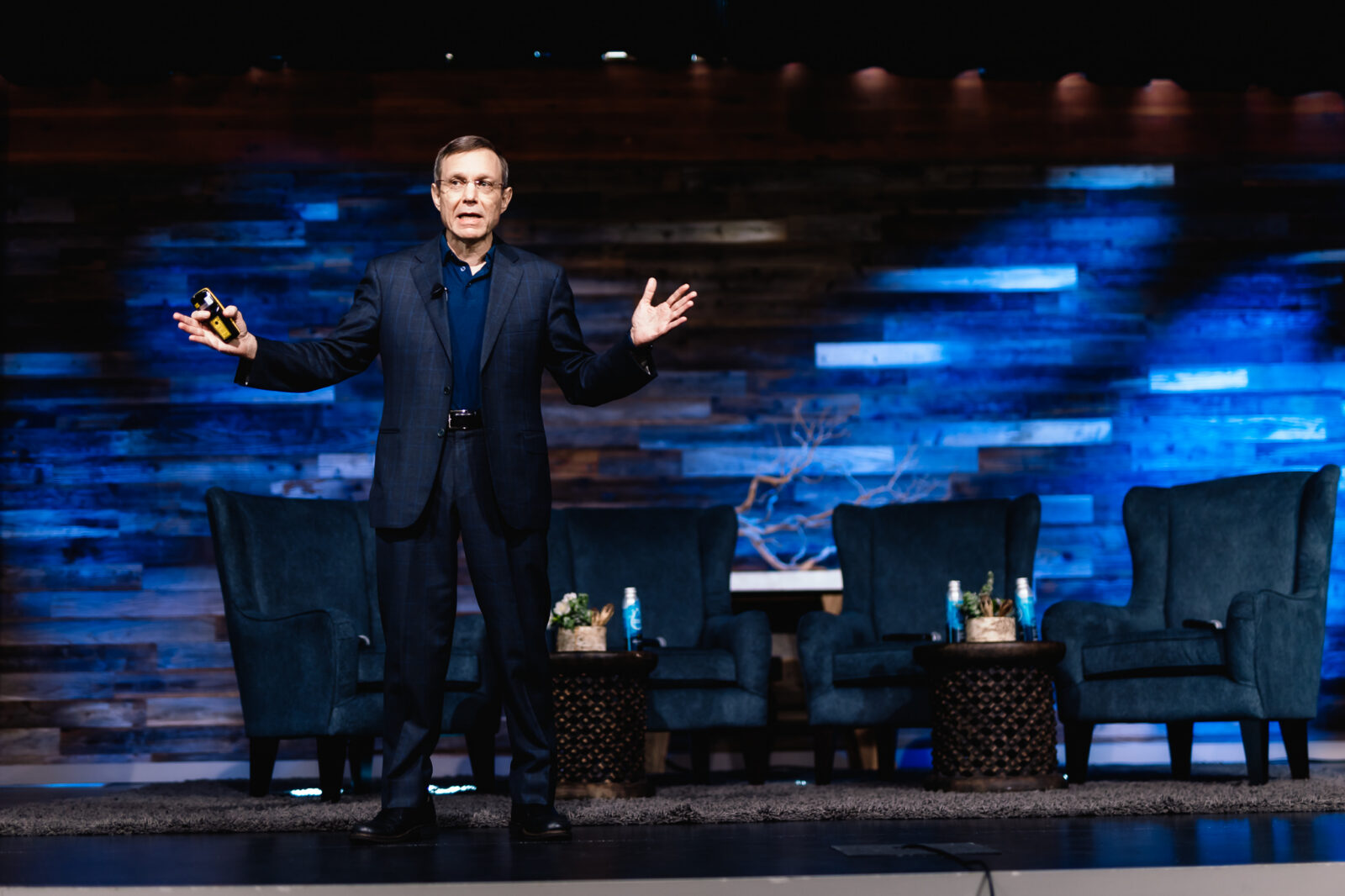
President Donald Trump has a border czar, a government official leading the crackdown on undocumented immigrants — whom the White House calls “illegal aliens” — crossing the southern border. The president, who likes to go big, now also has a UFO czar, a Harvard astrophysicist who is scanning the cosmos in search of aliens of the science-fiction variety.
It’s a stunning if improbable career highlight for Avi Loeb, the grandson of a Holocaust survivor who fled Nazi Germany and settled in a moshav, a cooperative agricultural community, in central Israel. As a child, Loeb had a lot of time alone with his thoughts — walking around to collect eggs from the chickens, or driving a tractor to the surrounding hills, where he would sit and read philosophy books.
“I was deeply interested in the most fundamental questions of our existence,” Loeb told Jewish Insider in a recent interview.
Loeb still studies life’s big questions, but from a different perspective. A series of small but ultimately life-changing pivots led him to study astronomy instead of philosophy, setting him on the path toward becoming one of America’s best known, and most controversial, scientists.
He now has a new benefactor supporting his quest to discover whether intelligent life exists elsewhere in the universe: Trump, who tapped him in June to lead the White House’s new effort on the issue.
“That’s why I’m doing astrophysics, because I was offered things that I couldn’t decline, but at the end of the process it’s like an arranged marriage, and I realized that I’m married to my true love,” Loeb said. “Because in astrophysics we can ask fundamental questions about the universe, which was pretty much what I was aiming to do in philosophy. But I can address it with the scientific method.”
Decades before Loeb would be tapped to lead the Trump administration’s unidentified aerial phenomena (UAP) science advisory council — an updated scientific term for what are colloquially known as unidentified flying objects, or UFOs — he got his start in the Israeli military.
Loeb served in the Israel Defense Forces’ elite Talpiot unit, where he pursued a doctorate in astrophysics in order to advance Israel’s scientific research and development needs. After earning his doctorate at Hebrew University, a project he pursued in the 1980s through his military service led him on a trip to Washington, where he met someone who helped him get a job at Princeton. A position at Harvard opened up a few years later. He has been there for 34 years.
At Harvard, Loeb was granted tenure after just three years and spent more than two decades researching major cosmological questions, seeking to understand the formation of the universe and early stars and galaxies. He was named to a Time magazine list of the 25 most influential people in space in 2012. Loeb chaired Harvard’s astronomy department for nine years.
The last decade of Loeb’s career has been less straightforward. His public appearances skyrocketed, even as other astronomers sought to keep him closer to earth. In 2017, an interstellar object — meaning an object that was believed to have come from another solar system — was captured on astronomers’ telescopes for the first time. It had an unusual shape and exhibited motion unlike asteroids or comets. No one seemed able to explain what the object was or where it had come from.
One year later, Loeb and a Harvard colleague argued in a scientific journal that the object was “humanity’s first contact with an artifact of extraterrestrial intelligence.”
Loeb believed the interstellar object was likely an alien craft, a UFO of the science-fiction variety. Except he argued that it was real — or, at least, it could be. The argument he has honed over the past decade, which has now launched him into the president’s orbit, is that astronomers have a duty to explore the possibility that extraterrestrial life might exist, and that scientists should not preemptively shut down the debate. Many other astronomers say he’s tilting at windmills, pursuing a quixotic quest for answers when no evidence exists for his attention-grabbing claims.
“I get attacked from both sides, from people who are skeptics who say we don’t want to look at the data, because there is nothing there. They ridicule the actual dealing with the anomalies that the government talks about,” said Loeb. “Then you have people on the other side who say, ‘We already know the answer, he’s wasting his time, and how dare he even consider other possibilities other than we are being visited by aliens.’”
After decades of silence from the federal government on extraterrestrial matters, Congress held a hearing on UAP in 2022. It came after the Office of the Director of National Intelligence released a report that found that UAP posed a risk to national security.
At the hearing, lawmakers explored whether the unidentified objects were drones or weapons from adversaries like Russia or China; whether they were the result of American pilots observing other American technology they did not know about; whether the UAP were really just glitches on radar or camera screens; and, lastly, whether the UAP were extraterrestrial in nature. Scientists have not seen any evidence of aliens.
Whether life exists outside of earth has long been one of the most energizing and heretofore unanswerable questions facing scientists. It has spurred movies and TV shows and books and Reddit rabbit holes. And it has captured Trump’s attention. Earlier this year, he directed the government to release files related to the unexplained objects that have been spotted by military craft.
Loeb thinks that the advisory body he now leads, composed mostly of his Harvard colleagues, stands the best chance of definitively identifying the UAP once and for all. He sees two options: either the group determines that the UAP are a national security threat, which would further American interests — or the body finds that UAP are evidence of an alien civilization. Loeb is not modest about the stakes.
“Altogether I think the partnership between science and government is a blessing. It will bring us to a better place: either improve national security in this context of UAP, or reveal the most important discovery ever made,” he told JI. “This may be a naive expectation, but it could bring cooperation among all humans on earth, and in that sense it will reflect the new messianic era of more peace on earth, but the messiah will not arrive from earth. It will arrive from another star.”
Loeb’s dramatic claims may put him at odds with many of his peers in academia. But he says their immediate skepticism toward his conclusions is “not in tune” with the interests of the public, which he sees as just one area of many where he believes academia is failing the American people. He has also been frustrated to see Harvard tilt towards “a particular political direction,” which he thinks is a mistake. And after the Oct. 7, 2023, terror attacks in Israel, Loeb watched the university “allow protests to disrupt scholarship,” some of which were antisemitic in nature.
“Definitely something is wrong within academia,” said Loeb.
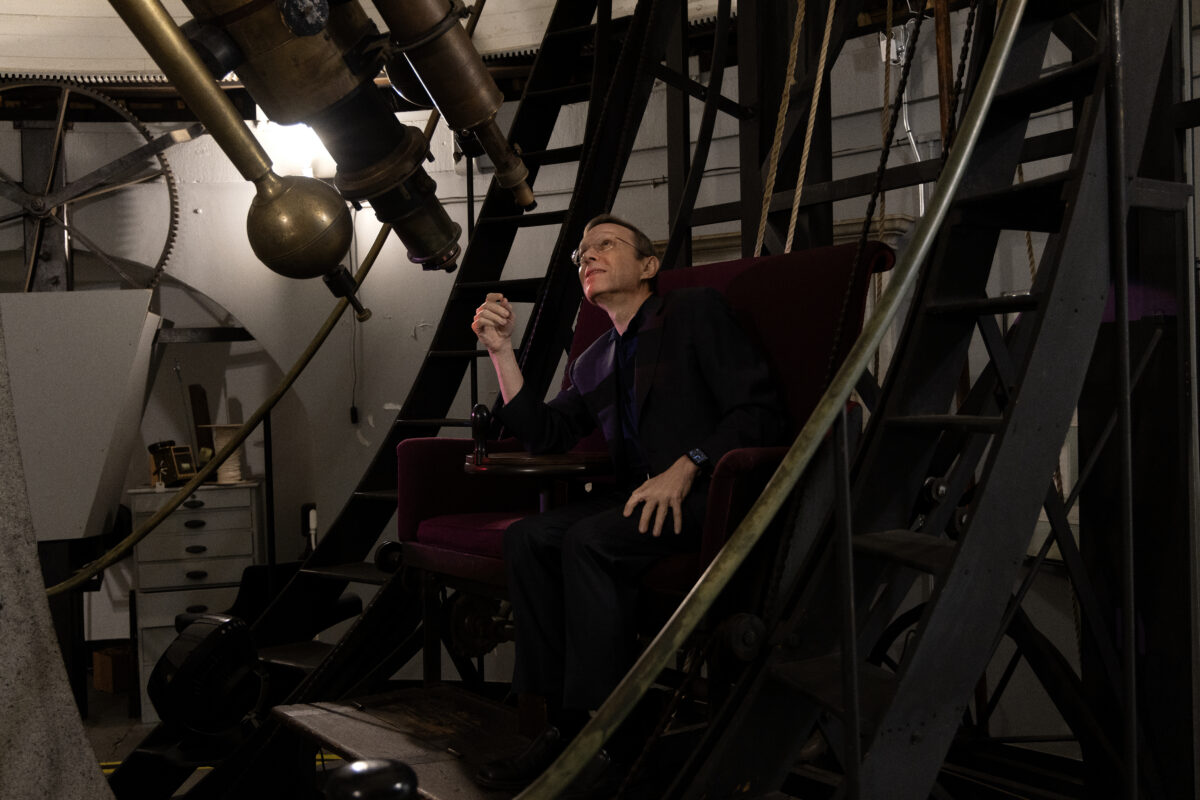
Despite his frustrations, Loeb remains at Harvard. He publishes fewer academic papers now, and focuses more on blog posts on Medium, but his research has not slowed down. He oversees the Galileo Project, which searches for evidence of extraterrestrial technology. His work has made its way to the highest reaches of the American government.
Next month, he’ll face his biggest audience yet: a Major League Baseball game. He’ll be throwing out the ceremonial first pitch at a Houston Astros game in Space City, U.S.A.
Please log in if you already have a subscription, or subscribe to access the latest updates.
 Continue with Google
 Continue with Apple