



















Iranians ‘have to have some’ ballistic missiles, Trump says, retreating from previous war aim
Speaking at the G7 summit in France, the president said he could not enforce the provision since other countries also ‘have some.’
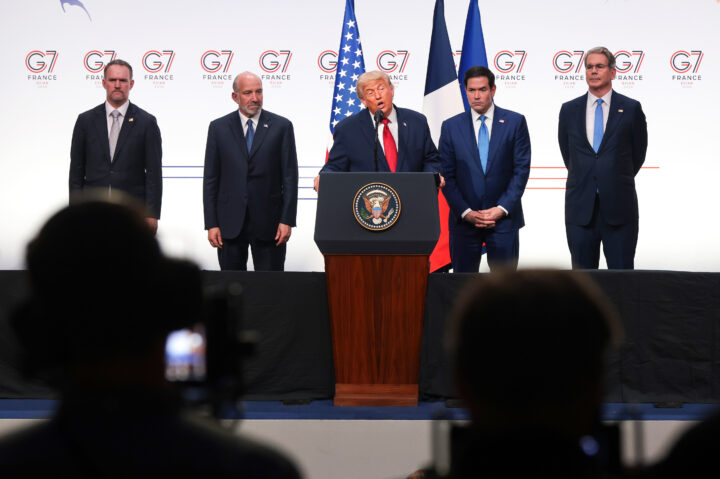
Photo by Anna Moneymaker/Getty Images
U.S. President Donald Trump is joined by (L-R) U.S. Trade Representative Jamieson Greer, U.S. Commerce Secretary Howard Lutnick, U.S. Secretary of State Marco Rubio and U.S. Treasury Secretary Scott Bessent as he speaks at a press conference during the G7 Leaders' Summit on June 17, 2026 in Evian-les-Bains, France.


 Add JewishInsider on Google
President Donald Trump on Wednesday said that the U.S. would not forbid Iran from possessing ballistic missiles, downplaying the threat despite it being a key war aim in the onset of the conflict. Speaking at the G7 summit in France, the president asserted that the majority of Iran’s missile capabilities have been destroyed and that he could not enforce the provision since other countries also “have some.”
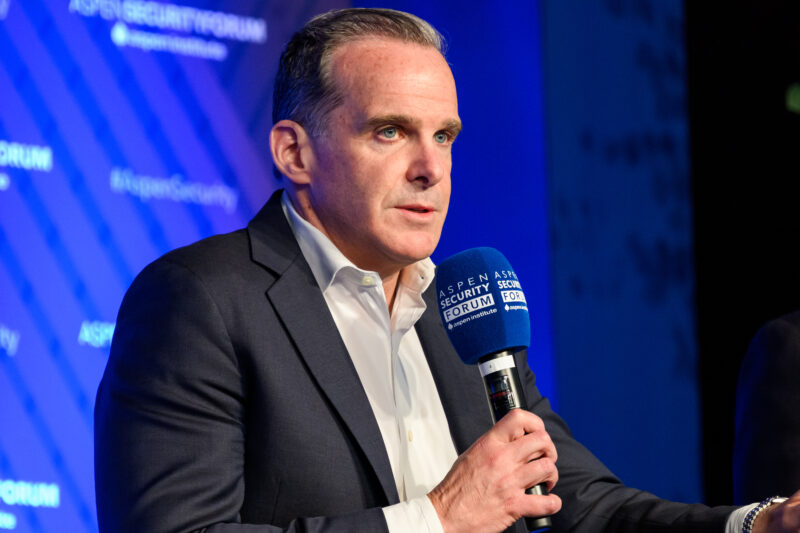
Secretary of State Marco Rubio asserted in March that a key U.S. aim in the war would be “the destruction of Iran’s ballistic missile capabilities and their ability to manufacture them.”
“I mean, they have to have some, because other people have some … It doesn’t work that way. And missiles aren’t the problem,” Trump explained. “Missiles are, they hurt a little location, but they don’t blow up the planet.”
When asked whether it would be acceptable for the administration to allow Iran to keep its ballistic missiles, Trump argued that Tehran’s capacity has been significantly depleted over the course of the conflict.
“What are they keeping?” Trump responded. “We knocked out probably 84%-85% of their missiles. The rest are underground, they can’t even get them out. On the first night we knocked out hundreds of their missiles.”
Trump also asserted that Iran does not “want to be firing missiles right now,” noting that instead Tehran is likely focused on rebuilding what has been damaged during the war.
WATCH: When asked whether it would be acceptable for the administration to allow Iran to keep its ballistic missiles, Trump argued that their capacity has been significantly depleted over the course of the conflict.
— Jewish Insider (@jewishinsider) June 17, 2026
“What are they keeping?” Trump responded. “We knocked out… pic.twitter.com/Ysu5MfiZjt
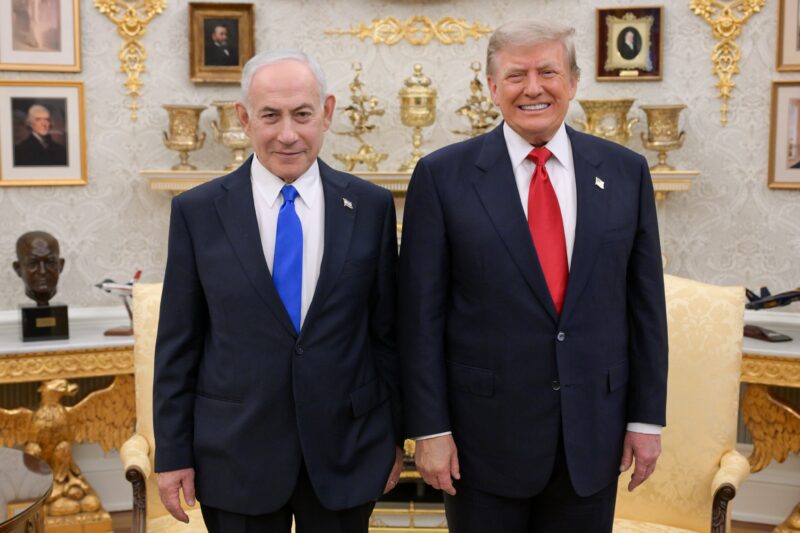
The president also praised Israel as a “good partner” in the conflict and argued that the nuclear restrictions laid out in the U.S.’ agreement with Tehran are the ultimate victory for Jerusalem. According to Trump, if Iran were to acquire a nuclear weapon, “Israel would have been blown away.”
“Look, think of what Israel’s getting, they’re not going to be nuked, very simple,” Trump said. “I told [Israeli Prime Minister Benjamin Netanyahu], ‘Your biggest risk was that they [Iran] drop a nuclear weapon into the middle of Israel. They’d only need one, and there would be no more Israel. Think of it, Bibi, you got the best, the most important thing that you were asking for is that. So, I think they’re happy.”
Regarding the technical specifics of the deal, Trump stated that Iran has agreed to work with the U.S. to “turn over” its enriched material. He noted that while the material is secured “deep in the bowels of the earth” and monitored by cameras, technical discussions to remove the stockpiles would begin immediately. He insisted that, unlike the Obama administration’s implementation of the JCPOA, any relief Iran receives under this framework would be strictly “based on merit.”
Additionally, while Trump maintained that the U.S. did not enter the conflict seeking “regime change,” he argued that the war’s casualties effectively accomplished that by wiping out multiple tiers of Iranian leadership.
“They have a new group of leaders that I think is actually very smart, I think they’re far less radicalized, and I think they’re really good. They love their country,” Trump said. “You talk about regime change, nobody will say that, but … one set of leaders is all gone, the second set of leaders is all gone, their third set of leaders a little bit gone, but for the most part, I think that’s regime change.”
Trump also returned to vocalizing his frustrations with Israel’s military approach against Hezbollah in Lebanon.
“Israel, by the way, they’ve been a good partner again. I love them as a partner. They were terrific, but they could do a much better job with Hezbollah. On that, I don’t think they’re doing well, and I feel very bad for Lebanon,” Trump said. “I’m not saying they shouldn’t protect themselves. I’m saying, when two drones are shot into the desert and drop harmlessly, you don’t have to knock down buildings in Beirut. [Israel] could behave better, and frankly, they could do a better job.”
Trump characterized the ongoing conflict between Israel and Hezbollah as a “very small piece of the puzzle” compared to the agreement with Iran, though he said it “makes a lot of noise,” adding that he has urged Netanyahu to use a “softer touch” when conducting strikes.
“He happens to be a very good man. We’ve had an amazing partnership,” Trump said of Netanyahu. “We have a little dispute over Lebanon. I say you can do a little softer touch, maybe you don’t have to knock down a building every time somebody walks into it that’s from Hezbollah … but he will say we’re the big partner, he’s the very small partner, that’s true.”
The president contrasted the situation in Lebanon with what he described as major progress in the Gaza Strip, claiming that “Hamas has been very silent” as the U.S. attempts to disarm the group.
“Look at the job we’ve done in Gaza. Look at Hamas. Hamas has been very silent. You haven’t read anything about Hamas. We’re trying to get them unarmed,” Trump remarked. “They grew up with a machine gun in their hand … but they’ve actually behaved pretty well, considering this was not the lifestyle that they were taught to have.”
More Stories
WAR WORRIES
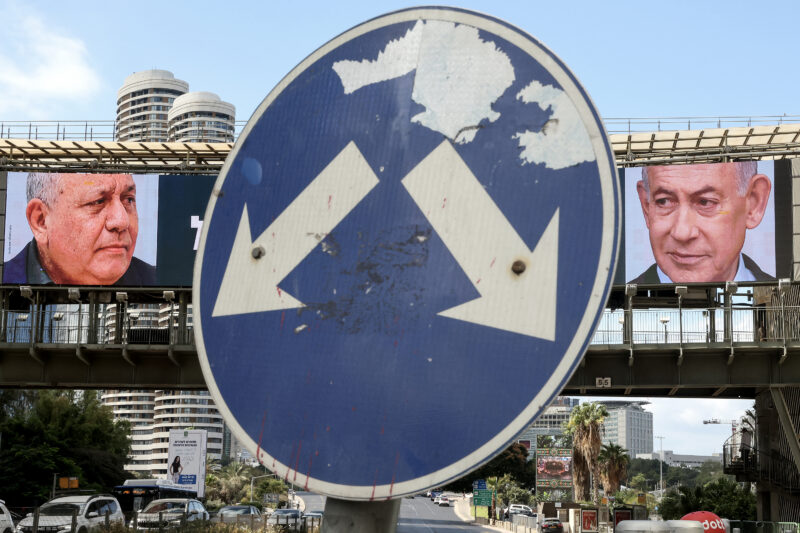
Could another war with Iran be the October surprise of the Israeli election?
UNHOLY ALLIANCE
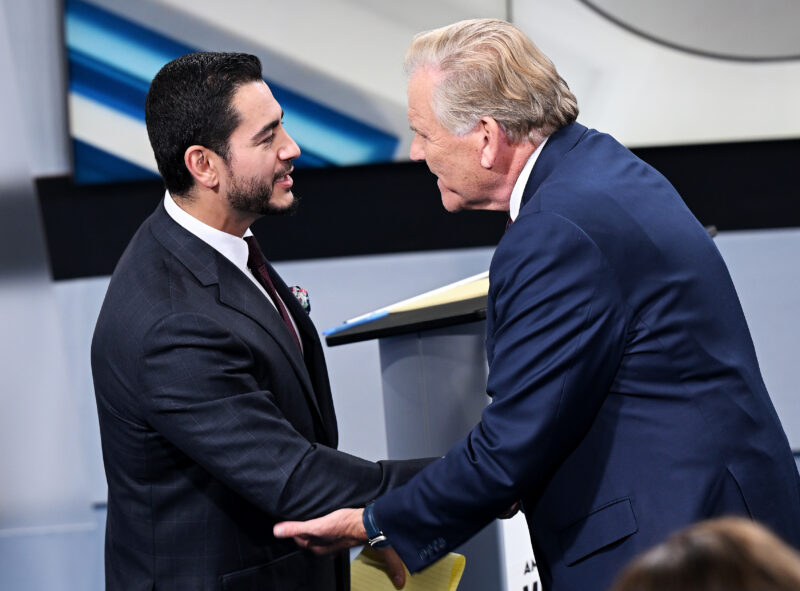
New El-Sayed ad features Tucker Carlson, far-right podcaster’s attack on Mike Rogers

FIRING FALLOUT
Hillels of Georgia claims fired Emory rabbi not ‘truthful or transparent’ during hiring process
MAIL FAIL
El-Sayed letter to Jewish community on antisemitism fails to reassure skeptics
Daily Overtime
Hillel disputes fired rabbi’s claim
RIPPLE EFFECT
New York’s suburban Dems face a Mamdani dilemma
Please log in if you already have a subscription, or subscribe to access the latest updates.
 Continue with Google
 Continue with Apple