












































Lapid blames Netanyahu for Israel’s isolation, vows reset if he returns to gov’t
In an address in Washington, the opposition leader sketched a coalition with Bennett and Eisenkot that would mend U.S. and European ties, harden Israel's line on Iran and shift tone on Gaza
Screenshot
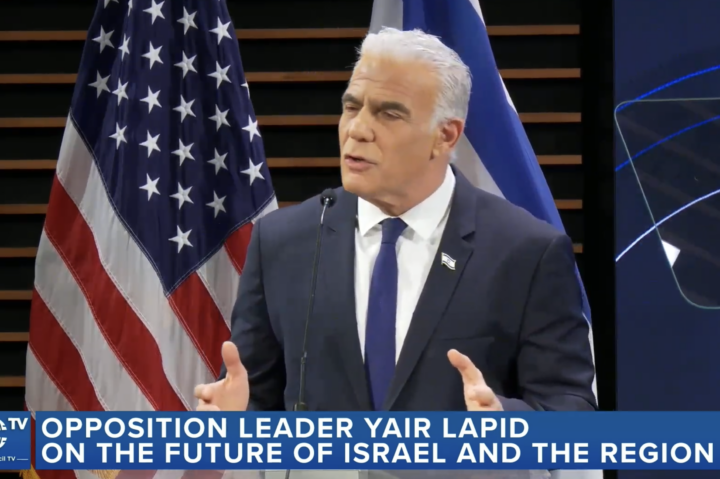
Israeli Opposition Leader Yair Lapid speaks at the Atlantic Council in Washington, July 27, 2026


 Add JewishInsider on Google
Addressing one of the leading foreign policy think tanks in the United States, former Israeli Prime Minister Yair Lapid presented his case on Monday for Israel’s diplomatic future should his opposition bloc form the country’s next government after the upcoming elections.
Speaking at the Atlantic Council in Washington, Lapid argued that Israel is increasingly isolated diplomatically and feuding with its allies — which he blamed primarily on Prime Minister Benjamin Netanyahu and his coalition — and he recommended that Jerusalem adopt a more measured and bipartisan approach going forward.
Lapid is visiting Washington this week, concurrent with Netanyahu; both of them are set to attend the funeral of Sen. Lindsey Graham (R-SC) on Tuesday.
Lapid said that a new government, primarily made up of current opposition members, would remove officials who advocate for nuking Gaza or who mock detained activists. He said the government should also apologize for the accidental deaths of children in war and express greater empathy more generally, as well as deploy police and soldiers to address what he characterized as Jewish terrorism in the West Bank.
He also said that Israel can’t act on the world stage with the same impunity that the United States can, that it needs to listen to its friends around the world instead of writing them off, should never fund digital influence operations against American leaders, should stay out of American partisan politics and must rebuild its relationships with Europe.
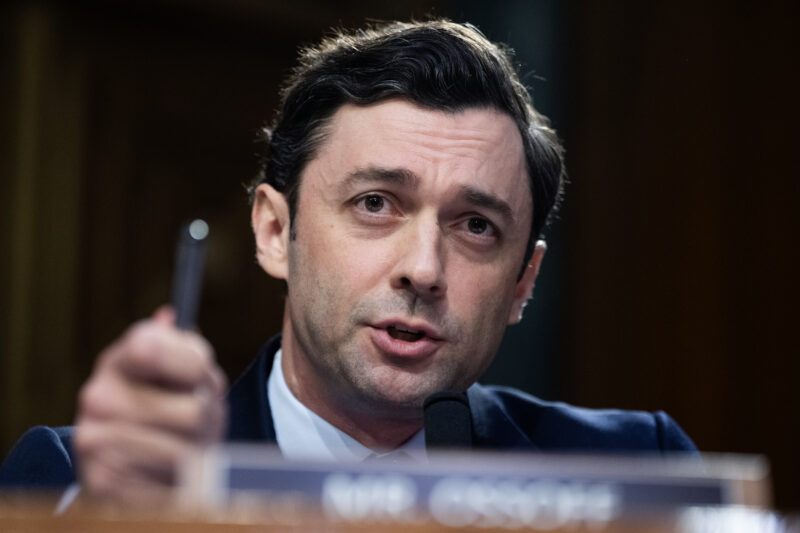
“Iran is an enemy. Hezbollah is an enemy. Hamas is an enemy,” Lapid said. “France is not the enemy. Sweden is not the enemy. [Sens.] Elizabeth Warren [D-MA], Jon Ossoff [D-GA] and Tim Kaine [D-VA] are not the enemy. The Democratic Party is not the enemy. [Vice President] JD Vance is not the enemy.”
He said that the next Israeli government should communicate to the U.S. and the world that “this was a crazy period, but it is over” and, going forward, “stay out of American politics,” as well as “firmly encourage” both AIPAC and J Street to move away from partisanship.
“To be pro-Israel is to be bipartisan to build a broad coalition of support. Do not boycott people who dislike us. Insist on meeting them and presenting our case,” Lapid said.
Military capabilities and tactics, he continued, cannot stand apart from Israel’s place in the world, its relationship with the United States and its economic situation. Military strikes must come with “a moral, legal and strategic framework that Israel can defend with confidence,” with the ultimate goal of peace, rather than perpetual conflict, he continued.
Lapid asserted that the U.S.-Israel relationship had been damaged primarily by Netanyahu, describing his government as responsible for nearly all of the issues in the relationship. He suggested that the relationship would turn around with the opening provided by a new government.
He claimed that Israelis will vote accordingly in the upcoming elections, realizing that Netanyahu is damaging Israel’s international relations.
Lapid did not substantively address how the unity party led by himself and former Prime Minister Naftali Bennett would approach an increasingly likely situation in which Gadi Eisenkot leads the largest opposition party after the election. Instead, he suggested Eisenkot would be the defense minister in a coalition government with Bennett as prime minister and Lapid as foreign minister.
Bennett and Lapid announced in April that they had decided to merge their parties and run as a joint party called “Together,” led by Bennett.
Though Lapid’s previous governing coalition included the Arab party Ra’am, he predicted that his bloc would not need the support of Arab parties to form a government after the next election and claimed that MK Mansour Abbas, who leads Ra’am, “seems to understand this better than some of my Jewish friends, the fact that maybe it’s time for a coalition that will be made only of Zionist parties.”
But he said that such a government would address the needs of Arab citizens and address “Jewish racism against peaceful Arab citizens of Israel.”
Lapid said Israel should pursue direct negotiations with as many regional states as possible, including Lebanon, Syria and Saudi Arabia and leverage various regional forums to pursue greater ties and to isolate Iran.
He also said that Israel should work with the Palestinian Authority, arguing that doing so doesn’t necessitate recognizing a Palestinian state or ignoring issues inside the PA.
“It was almost ridiculous to me the fact that the current government was … incapable to admit the fact that they’re doing business with the Palestinian Authority — as they do in the West Bank and as they do in Gaza now,” Lapid said.
He said Israel will, over time, need to work to make Gaza livable, and that the Israeli government’s failure to show empathy over the situation in Gaza had “destroyed our international stature in huge groups” as well as stymied necessary and honest conversations in Israel about the costs of the war. But he rejected the idea that the war in Gaza had been a genocide.
Lapid took a hard line toward the Haredim, saying that they should not receive financial support if they do not serve in the military, that their schools should not receive government support if they do not provide a basic education and that they should not receive public assistance if they do not work.
“When you live in a democracy, you don’t only have rights; you also have duties, and these have to do with each other,” Lapid said.
Lapid also sought to position himself in a more hawkish stance on Iran than the current government, arguing that Israel should have, as early as 2024, bombed Iranian energy facilities, including Kharg Island. He said he still supports such a course of action.
He acknowledged that such an approach would carry political and economic pain for the United States ahead of the midterms, but said that it would be the “right thing to do in the long term” and would lead the Iranian regime to collapse.
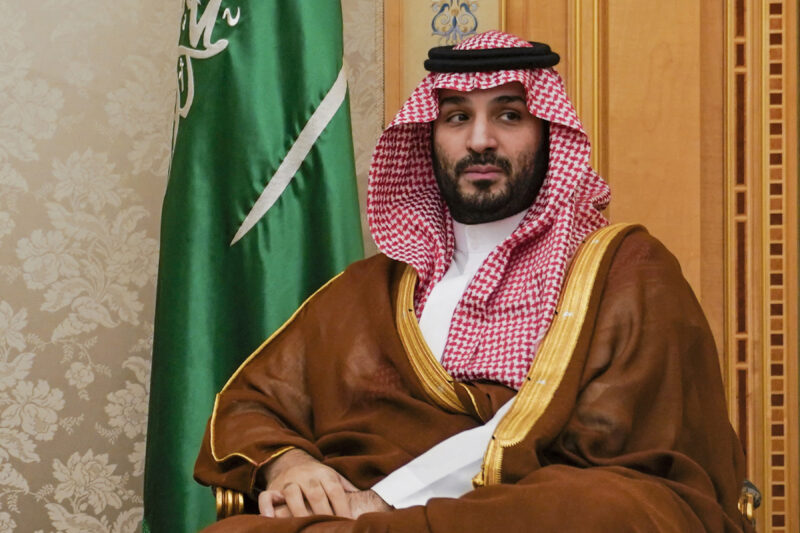
Though he praised Saudi Crown Prince Mohammed bin Salman and expressed hope for expanding the Abraham Accords, Lapid raised serious concerns over the Trump administration’s recent deal with Saudi Arabia that would allow nuclear enrichment on Saudi soil — an effort that Trump, after signing the deal, conditioned on the Gulf state joining the Abraham Accords.
Lapid said he’d clashed with Graham, who worked for years to secure normalization between Israel and Saudi Arabia, over the subject, calling it “unacceptable” and “a huge mistake.”
A Saudi enrichment program, Lapid warned, would prompt a nuclear proliferation race throughout the Middle East and beyond. And he said any Saudi-U.S. deal should include Israel as well.
Lapid, once one of the Israeli leaders more amenable to the idea of a two-state solution, said that the Hamas-led Oct. 7, 2023, attacks on Israel and the support for them in the West Bank had changed his view of the situation. He said that any Palestinian state under the current circumstances would immediately become a launching pad for Hamas.
“Politics or policies are not a zero-sum game. There are so many things we can do in order to improve the lives of everybody, of Palestinians, of Israelis, of the security of everybody,” Lapid continued.
Lapid said that the pilot effort to turn over territory in Lebanon to the Lebanese Armed Forces to disarm Hezbollah is a strong idea in concept, but requires that Hezbollah actually be disarmed. He said Israel should continue to fight Hezbollah as necessary but also pursue diplomatic efforts with the Lebanese government.
He declined to back a full Israeli withdrawal from southern Lebanon, saying that Israel should not withdraw from areas where it knows Hezbollah would immediately return to because the terrorist group had been preparing to carry out an Oct. 7-style attack on northern Israel.
He also said he was disappointed that Syrian President Ahmad al-Sharaa had begun discussing reclaiming the Golan Heights from Israel, explaining that he’d initially seen the new Syrian government as “an opportunity to solve a problem that looked unsolvable for a long time.”
More Stories
DRAWING A LINE
British PM rules out partnership with Greens over ‘Zionism is racism’ motion

Daily Overtime
Obama faults Israel’s founding in Belfast
meeting minutes
Huckabee met secretly with Netanyahu’s top rival, Gadi Eisenkot

booking bias
Irish Jewish leader says Dublin hotel canceled guest rooms for conference on fighting antisemitism
SECURITY SETBACK
Saudi Arabia postpones ‘Davos in the Desert’ until 2027 amid Houthi attacks
HISTORY LESSON
Brett McGurk’s fact check of former Harris advisor Phil Gordon on hostage negotiations
Please log in if you already have a subscription, or subscribe to access the latest updates.
 Continue with Google
 Continue with Apple