

































Senate Republicans express confidence, but say they haven’t heard plan for reopening Strait of Hormuz
Some disagree on who should claim ultimate responsibility for the strait — the U.S. or other countries in the region
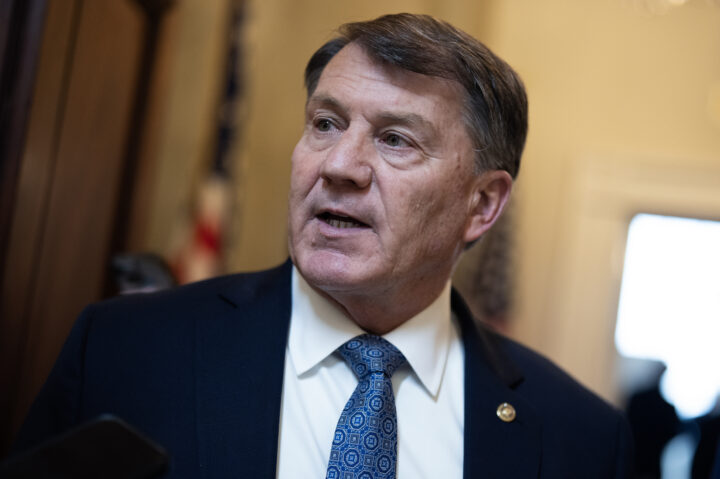
Tom Williams/CQ-Roll Call, Inc via Getty Images
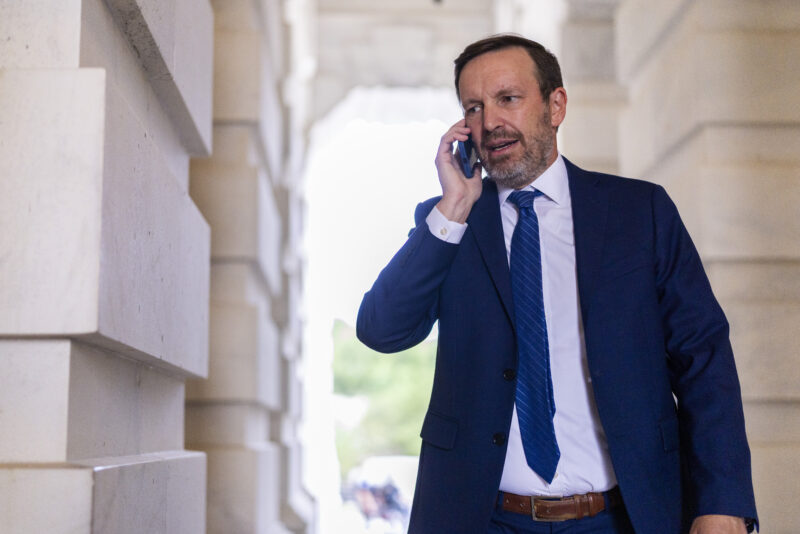
Sen. Mike Rounds (R-SD) talks with reporters in the U.S. Capitol on Tuesday, March 3, 2026.


 Add JewishInsider on Google
Multiple Senate Republicans said Tuesday that they haven’t heard from the administration specific plans for restoring free trade through the Strait of Hormuz, though most emphasized that doing so is a critical goal.
Sen. Mike Rounds (R-SD) said that the Pentagon has been planning for this contingency for years.
“I can just tell you, the Pentagon has, for years, been playing out their plans,” Rounds told Jewish Insider. “The question is which plan is next, and that’s based on conditions — the same thing with Kharg Island,” he said, referring to potential U.S. military operations against the Iranian regime’s primary petroleum export hub. “I’m sure that when the time comes, we’ll all know.”
Rounds said he’s confident the administration has “multiple plans” for Kharg Island as well. The administration has reportedly been considering invading or blockading the island to force the regime to lift its blockade of the Strait of Hormuz. President Donald Trump previously threatened to destroy the energy facilities on Kharg Island if the blockade continues.
The Strait of Hormuz “has to” be reopened, “but no, I have not heard from them on the ‘how’ and the ‘what’ — how they’re trying to be able to accomplish that,” Sen. James Lankford (R-OK) said. “This has been Iran’s trick for decades, right? When they get mad, they close the Strait of Hormuz. They just hang that over everybody’s head all the time.”
He suggested that any solution to the current blockade should also aim to prevent similar occurrences in the future.
“[However] this is resolved, you can’t have a future of terrorism in the region,” Lankford said. “You can’t have this constant on-and-off of the Strait of Hormuz, and you can’t have a nuclear weapon.”
Sen. John Cornyn (R-TX) said of the U.S. military, “they’re certainly sending a lot of assets there to do that, so I hope they’re successful.”
Cornyn also characterized the waiver of some U.S. sanctions on Iranian and Russian oil as “temporary disruptions,” which he hopes will be restored once the strait is reopened.
One Republican senator, however, argued that the onus is not on the United States to reopen the strait, despite the closure’s impact on global oil prices.
“The way I look at it, the countries that need to get it open — they’re the ones who should do it,” Sen. Rick Scott (R-FL) said. “We’re energy independent. So the countries that need [to get] product out of there — they ought to figure out how to get it open. I don’t think it’s our responsibility.” Trump has made similar comments about leaving responsibility over the strait to countries that utilize it most, which are primarily Gulf states.
Lankford and Cornyn both said they disagreed with the idea that the U.S. should leave others to handle obstacles to commerce in the strait.
Lankford said he has a “very different view” on the issue, emphasizing that there are hundreds of thousands of Americans living and working in the region.
“America stands with Americans, wherever they stand, so we’ve got to be able to fix that,” Lankford said. “Iran, for 47 years, has performed acts of terrorism on Americans that live in the area. They’ve got to stop that. And the Strait of Hormuz — they can constantly adjust oil prices … based on them opening and closing it. You can’t do that. We don’t let Somali pirates take our ships, we don’t let the Houthis stop international traffic and we don’t let the Iranians shut off the Strait of Hormuz.”
Cornyn highlighted the global economic impacts of the strait’s closure.
“It impacts, obviously, worldwide commodity prices, but it affects our country as well, given the impact on the gas prices,” Cornyn said.
Democrats, meanwhile, have accused the administration of failing to properly plan for the likelihood that Iran would close the strait in advance of the war.
“We’ve known for 80 years that that was a vulnerability to the entire [world],” Sen. Tim Kaine (D-VA) said. “Did you think about it? Did you not think about it? If you thought about it, did you just assume Iran wouldn’t do it? I mean, it’s amateur hour.”
More Stories

EVENT RESCHEDULED
State Department to hold Oct. 7 commemoration event on Wednesday
PRESIDENTIAL POV
Obama scrutinizes Israel’s founding, says Palestinians want their ‘land back’

PACKED PEWS
Scholten, Gottheimer and Bret Stephens join Dan Senor before packed Michigan crowd
ON DEFENSE
El-Sayed dismisses half-sister’s comments about family’s Muslim Brotherhood ties as ‘hearsay’

BREAKING POINT
For some Jewish Democrats, Michigan’s debate was the ‘final straw’ for El-Sayed
UNSETTLED POLICY
Trump WH sends mixed signals over response to European sanctions against Israeli settlements
Please log in if you already have a subscription, or subscribe to access the latest updates.
 Continue with Google
 Continue with Apple