























Vance warns Israeli officials against attacking ‘the only powerful ally’ they have left
The vice president said Trump is "the only head of state in the entire world who is sympathetic to the nation of Israel at this moment in time" and warned Israeli officials not to take that for granted
Ken Cedeno / AFP via Getty Images
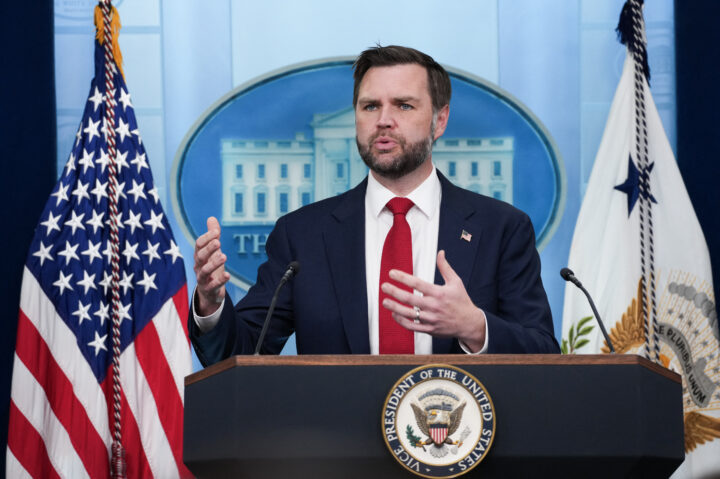
US Vice President JD Vance speaks during a press briefing in the Brady Briefing Room of the White House in Washington, DC, on June 18, 2026.


 Add JewishInsider on Google
Vice President JD Vance on Thursday issued a scathing public rebuke of Israeli officials who have criticized President Donald Trump for approving the memorandum of understanding between the U.S. and Iran, cautioning Israeli skeptics of the deal against “attacking the only powerful ally” it has left and urging them to “wake up and smell the reality of the situation that country is in.”
Vance made the comments as part of his final answer at a White House press briefing regarding the MOU, directing his ire at members of Israeli Prime Minister Benjamin Netanyahu’s Cabinet who have criticized the deal or the president himself. The vice president said he was angered by the harsh commentary, which he credited Netanyahu for not participating in.
“What I will say, and it does bother me, is that you have seen people within Bibi’s Cabinet who have come out and attacked the deal, and in some ways very personally attacked the president of the United States, and I guess my message to them would be twofold,” Vance said. “Number one, Donald J. Trump is the only head of state in the entire world who is sympathetic to the nation of Israel at this moment in time and he happens to be the head of state of the world’s superpower. If I was in the Cabinet of the Israeli government, I might not be attacking the only powerful ally that I have anywhere left in the entire world.”
“The second message I would give to some of those Cabinet members — Bibi, to his credit, has not gone down this path,” Vance continued. “But to some of these Cabinet members in Israel who are attacking the president of the United States, the other thing that I would say is that over the last three months, two-thirds of the defensive weapons that have protected your homeland have been built by American hands and paid for by American tax dollars,” he added.
Vance then said, “The problem for Israel is not Donald J. Trump, and anybody in Israel who thinks their biggest problem is the president of the United States needs to wake up and smell the reality of the situation that country is in.”
The vice president pushed back on comparisons between the MOU and the Joint Comprehensive Plan of Action that the Obama administration signed in 2015, arguing that the Arab world’s reaction to this current effort has been far more positive than its response to former President Barack Obama’s Iran deal.
“There are going to be any number of opinions about the negotiations, about where it’s ultimately going to go, but I tend to think that you should trust the people who know the Iranians the best and who have the most to lose,” Vance said. “What are the Gulf Arab states saying about this deal? What are they saying about this deal compared to the JCPOA in 2015? This is the Obama nuclear deal. Well, back then they hated that deal. They felt like it empowered the Iranians to be bad actors across the region, and of course that’s exactly what happened.”
“What are they saying about the president’s peace deal? They’re saying this is an amazingly transformative thing for the region, because either way we and the broader region win,” he continued. “Iran is weakened, their nuclear program destroyed, their economy in desperate straits, and if they change their behavior, big things are going to happen for Iran and for the world.”
Vance doubled down when asked about Trump’s comments on Wednesday that the U.S. would not forbid Iran from possessing ballistic missiles and downplaying the threat of the regime continuing to have those weapons — despite it being a key goal of the negotiations.
“All the president said yesterday is that of course, countries don’t give up the right of self-defense. Israel doesn’t give up the right of self-defense if Hezbollah fires rockets or drones at Israel,” Vance said.
“The Iranians don’t give up the right of self-defense in their country,” he added. “But we do expect that as part of the final deal, they are not going to be able to build the kind of missiles that can broadly threaten the entire world, and that’s what the president of the United States said yesterday. It’s very simple. You can’t tell a country whether Israel, Iran, they are not allowed to have any self-defense.”
Vance criticized U.S. sanctions against Iran, arguing that the effort to isolate Iran economically has been “fundamentally ineffective” despite it being a core part of Trump’s longstanding maximum-pressure campaign. The vice president said that the sanctions had forced Iran to “move the Iranian financial system to the shadow-banking system” where it was no longer subject to those penalties.
“We didn’t see that as a major concession to the Iranians, frankly,” Vance told reporters, adding that Iran “didn’t see that as a concession to them, because what prevented them from selling oil was not the sanctions.”
He argued that the lifting of sanctions would allow the U.S. to have greater oversight of Iran’s financial activities while defending the Trump administration’s decision to allow Iran to immediately resume selling oil.
“The number one thing is that we actually see where the money moves now because of what we’ve done with the financial sanctions. We actually know where the money is going to move,” he explained. “So we have great confidence that we’re going to be able to see if they try to fund terrorist organizations.”
Still, he reiterated his claim that the MOU does not involve millions in payouts to Iran despite the agreement text stating that the U.S. “undertakes to develop a definitive, mutually agreed reconstruction and economic development plan for the Islamic Republic of Iran valued at a minimum of $300 billion (USD).”
“The United States isn’t giving up a cent of money to Iran, and even the economic benefits, the sanctions relief and so forth that comes along with this bargain, only happens if the Iranians perform,” Vance said. “We have them in an economic chokehold right now that we’re not going to release until they fundamentally change their behavior.”
“I’ve seen skeptics of the deal. People say the Iranians will never change their behavior. Well, maybe that’s true, and if so, they don’t get any of the benefits of the bargain. But isn’t it worth trying?” he continued. “Isn’t it worth seeing whether this incredibly weakened position that the president of the United States has put the Iranians under, whether that motivates them to change their behavior, not just vis-à-vis the West but vis-à-vis the Middle East.”
The vice president also expressed confidence that the Trump administration would be able to lift the sanctions without congressional approval, though he said that White House Legislative Affairs Director James Braid planned “to brief Congress very soon” on the broader terms of the deal.
“There are certain things that require congressional approval. There are certain things that don’t require congressional approval,” he said. “We feel quite confident that we can temporarily lift those sanctions without going to Congress and seeking their approval on that.”
More Stories
Super Ball
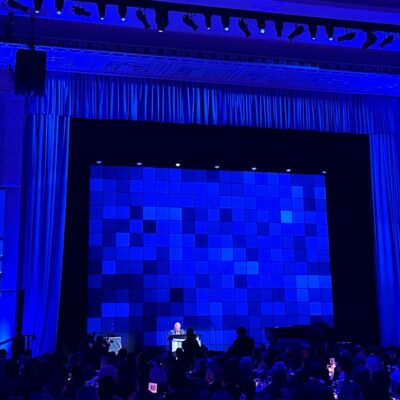
Robert Kraft’s Blue Square gala pulls in $32 million as NYC’s Waldorf glows blue
ALBANY ALLIANCE
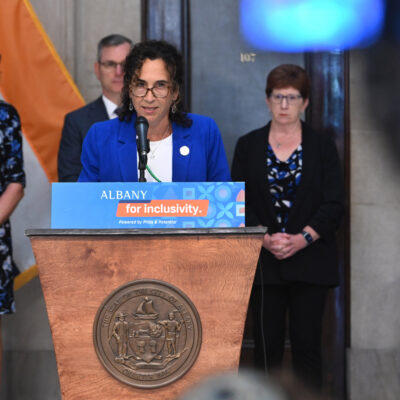
Jewish New York Dems launch PAC to counter antisemitism and anti-Zionism
MINNESOTA MIC DROP
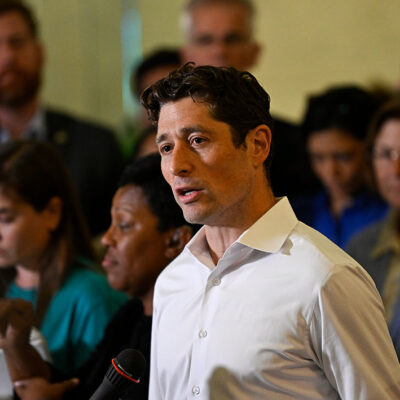
Jacob Frey, Betty McCollum join Minnesota Dem chorus condemning Piker event
SCOOP
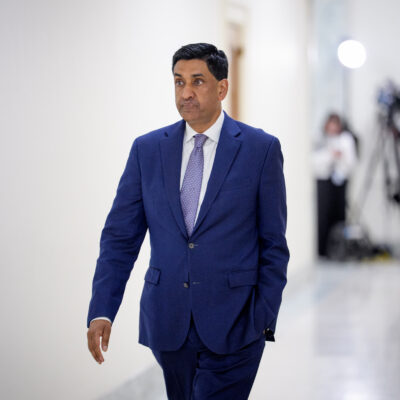
Ro Khanna to urge negotiators to pull U.S.-Israel cooperation provisions from defense bill
CAMPAIGN CALCULUS
El-Sayed focuses on attacking Israel in closing stretch of the campaign
Daily Overtime
Deadlocked dash to Israeli elections
Please log in if you already have a subscription, or subscribe to access the latest updates.
 Continue with Google
 Continue with Apple