
















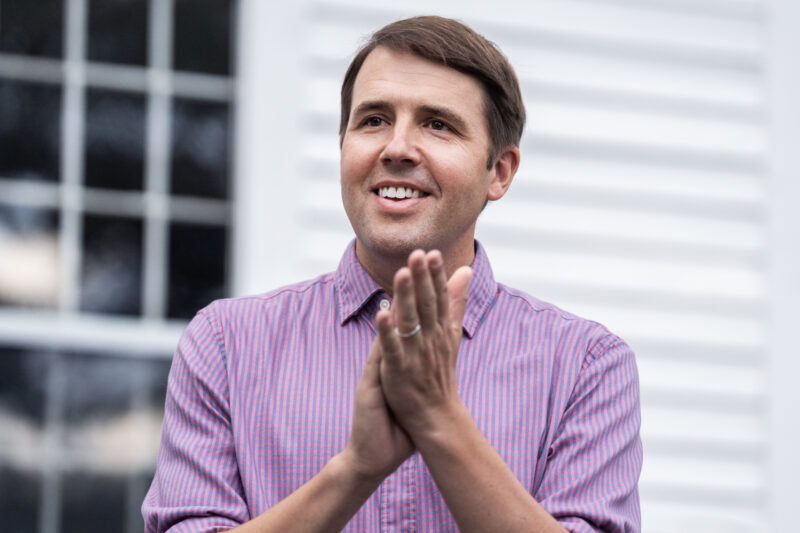














Auchincloss: Voting against aid to Israel was a vote against the Iran war
‘I represent a pro-Israel, anti-Netanyahu district and this is a pro-Israel, anti-Netanyahu vote,’ Rep. Jake Auchincloss told JI
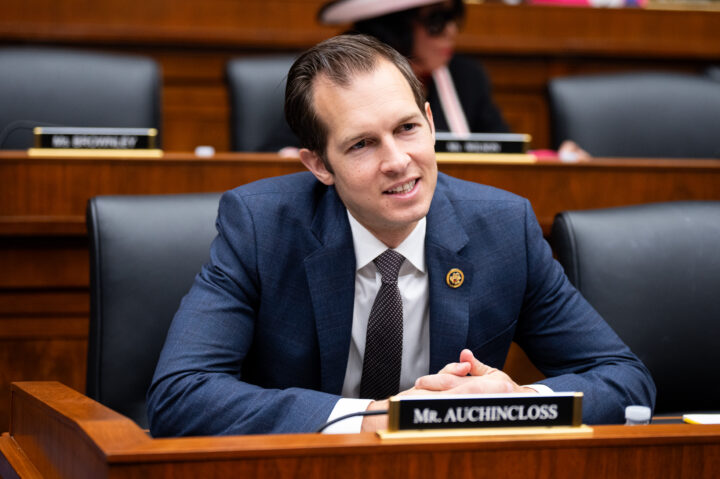
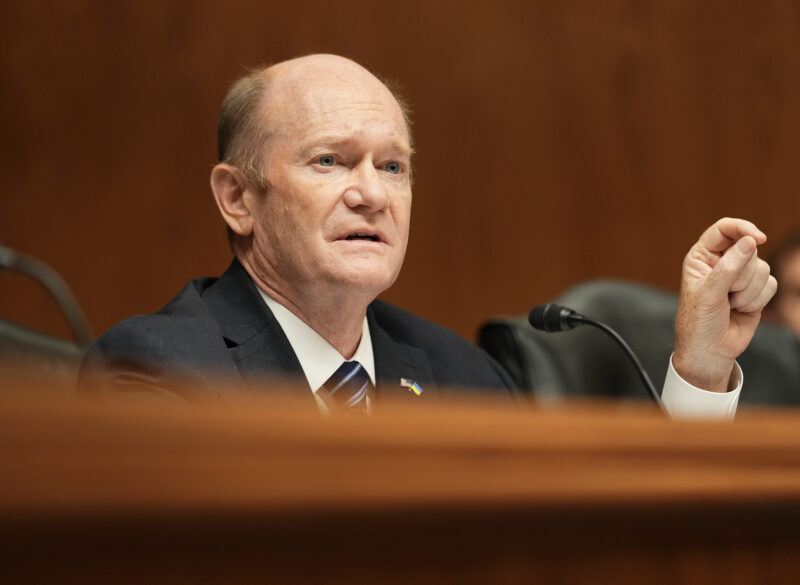
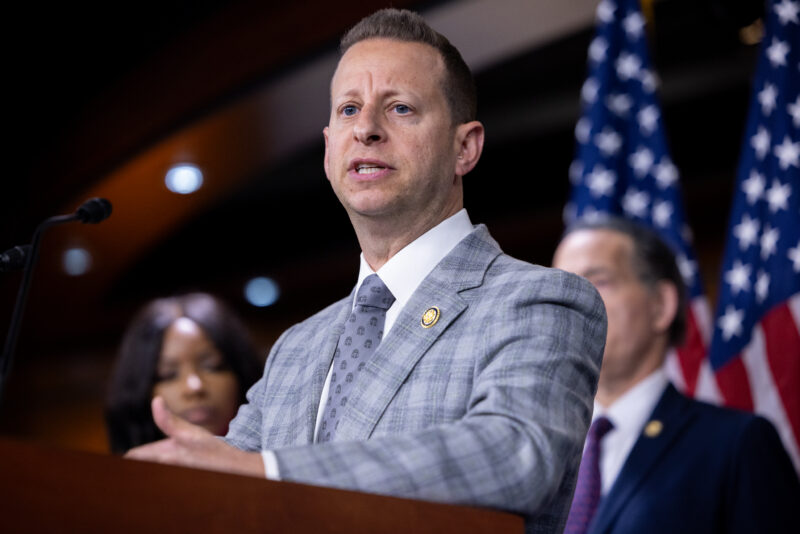
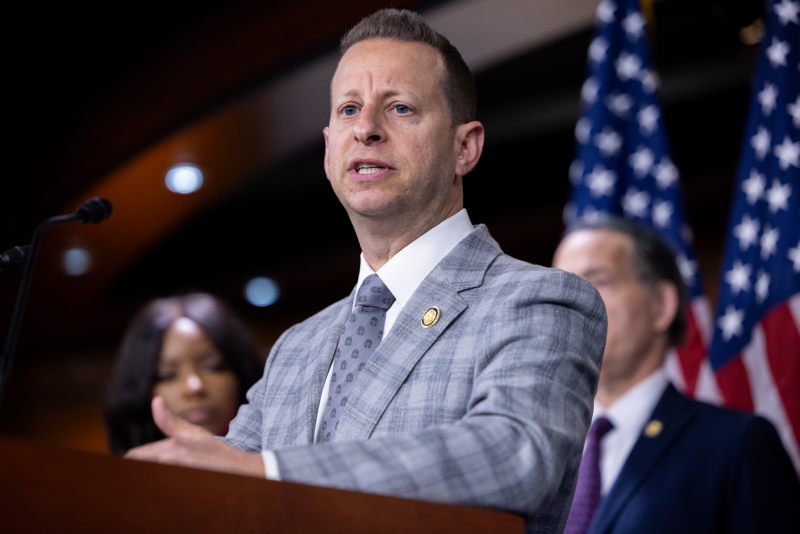
Bill Clark/CQ-Roll Call, Inc via Getty Images
Rep. Jake Auchincloss (D-MA) participates in the House Transportation Committee hearing on Thursday, June 27, 2024.


 Add JewishInsider on Google
Of the 103 House Democrats who voted to cut off the $3.3 billion in U.S. aid to Israel last week, few came as more of a surprise than Rep. Jake Auchincloss (D-MA), a Jewish Democrat who has generally been a reliable pro-Israel vote in the House.
Auchincloss, in an interview with Jewish Insider this week, said that he approached the vote as a protest of the war with Iran, and argued that the vote wasn’t anti-Israel.
“This president, in conjunction with Prime Minister Netanyahu, has launched an illegal, catastrophic war that nine out of 10 Israelis think has led to Iranian gains, and that even fewer of my constituents support,” Auchincloss said. “And foreign military financing is a form of appropriations for a war I believe to be illegal and unwise.”
He also pointed to comments by Israeli Prime Minister Benjamin Netanyahu calling for the U.S. to phase out aid to Israel over the next 10 years, arguing that Democrats can’t be expected to take a position on aid “to the right of Netanyahu” — though the Israeli prime minister hasn’t called for an immediate halt to aid.
“That grant of foreign military financing is a privilege that Congress grants annually to both our head of government and to counterparty heads of government,” Auchincloss said. “Every year, Congress has the right — Congress has the responsibility — to determine whether that privilege is warranted. Given Trump and Netanyahu’s decision-making about this debacle with Iran, I do not think it is warranted.”
He said he would evaluate his position on future FMF to Israel on a year-by-year basis depending on whether he believes such aid is deserved. “That’s not only my right as a member of Congress, that’s my responsibility — particularly when 18 Americans have died overseas.”
But he said that he continues to support the U.S-Israel relationship and said the U.S. should continue to work to preserve Israel’s qualitative military edge (QME), and suggested he would not, at this point, support a cutoff of support for Israeli missile-defense systems or an embargo on Israel buying U.S. systems with its own funds.
He said he also believes in continued U.S. support for the Abraham Accords and other efforts to bring Israel and the region closer together, including through the India-Middle East-Europe Corridor (IMEC).
Some observers have seen Auchincloss’ vote as a concession to left-wing Democrats in his suburban Massachusetts district, in light of the party’s shifting stance on Israel and primary challenges to other pro-Israel Democrats. The district includes a substantial Jewish population.
Auchincloss himself won his first primary in 2020 with 22% of the vote, scoring a narrow victory over a divided field that included several candidates to his left. Some on the left still see him as vulnerable to a one-on-one challenge in a future race — or as a potential candidate for higher office in deep-blue Massachusetts.
“I represent a pro-Israel, anti-Netanyahu district and this is a pro-Israel, anti-Netanyahu vote,” Auchincloss asserted, arguing that he’s “confident … a majority of my Jewish constituents would agree with me.”
“I hear why people see this vote through the lens of primaries and the national Democratic scene,” Auchincloss said. “I represent about 100,000 Jewish constituents. They are super smart and engaged on this issue. If I try to take political votes or symbolic votes or too-clever-by-half 4D-chess votes, it doesn’t hang together. I have to be able to defend the internal logic of each and every vote to this community, and I am confident that I can say to this community on this vote: This is a rejection of Trump and Netanyahu’s decision-making to take away the credit card.”
Asked whether the U.S.-Israel relationship can be sustained and repaired while Netanyahu continues to lead Israel — as some prominent U.S. figures have suggested that Netanyahu being ousted in the upcoming Israeli elections is necessary to continued bilateral relations — Auchincloss said that the relationship should be bigger than any one leader.
“The U.S.-Israel alliance is deeper than personalities,” he said. “Certainly, you know, Congress and our decisions about appropriations and policy need to be calibrated to the individuals who are going to be executing that policy, right? But the U.S.-Israel alliance is based on shared interests, on common values, and a long history.”
He suggested he was unconcerned by AIPAC’s decision to halt fundraising for him following the vote, explaining that his votes aren’t shaped by endorsements or contributions and that he’s taken votes both supported and opposed by AIPAC over the course of his career.
Though he diverged from House Minority Leader Hakeem Jeffries (D-NY) on the Israel aid vote, Auchincloss praised the Democratic leader’s approach to the issue and called it a model for how the party as a whole should approach Israel policy going forward.
“Hakeem is pointing the way with a steady hand, which is to say, ‘We’re a party that supports qualitative military edge for Israel, which is surrounded by terrorists and the world’s largest state sponsor of terrorism, and has a right to defend itself against those terrorists and needs QME to be able to do that, but we’re not a party that yields congressional oversight to Trump and Netanyahu as Republicans have,”’ Auchincloss said.
Asked about the possibility of conditions on further U.S. aid to Israel, Auchincloss said that the next U.S.-Israel memorandum of understanding should be crafted around supporting Israel’s QME, expanding and supporting normalization and, critically, provisions that can garner support from both chambers of Congress and both parties.
Even as he sided with progressives in the party on the Israel aid vote, Auchincloss has also found himself vocally at odds with the left over his criticisms of former Maine Senate candidate Graham Platner.
Auchincloss long opposed Platner and faced strong backlash from the party in late May for saying that Platner’s tattoo and comments about it were “disqualifying” and saying he would support another candidate in the primary if he were a Maine voter.
“Character should matter in politics,” Auchincloss told JI. “Ten years ago, Republicans decided that it doesn’t. They’ve become a cult of personality, and Platner demonstrates to Democrats the hazards of agreeing that character doesn’t matter.”
“And I think it’s a problem for the Democratic Party to wrestle with [the fact] that it would have been more politically damaging for him to have a Star of David tattoo than to have a Totenkopf tattoo,” Auchincloss continued, an apparent reference to comments from a Platner supporter on the campaign trail earlier this year.
Auchincloss also said he remains concerned about surging antisemitism globally, and continues to be involved in other efforts to combat antisemitism and anti-Israel sentiment, including as one of a handful of Democrats who signed a letter earlier this week condemning plans by Malaysia to round up and expel Israeli citizens.
He said he’s been in discussions with Jewish community groups about the role of social media in promulgating antisemitism and is working on legislation to combat it, while also arguing that it will require a “multifaceted approach.”
“Antisemitism tends to mushroom in failed societies, and social media has become a failed society as one big online toxic brew. And politics is downstream of media and information and culture,” Auchincloss said.
He said that even as political leadership is necessary to call out and reject antisemitic candidates, leaders also need to look “upstream to media and culture and information,” particularly on antisemitism.
Auchincloss is making his own efforts to steer the direction of the Democratic Party, including as the chair of Majority Democrats, a new campaign group backing moderate and liberal Democratic lawmakers and candidates around the country.
In his view, Auchincloss said that he sees himself and the group as occupying a third corner of the party, separate from the left and the establishment. “There is the opportunity for a faction that will redefine the center of American politics and be disruptive of the establishment without being socialist,” Auchincloss said.
He said he believes his faction and the party as a whole should be focused on “the new American dream” — a robust primary and secondary education, the ability to own a home by age 30 and retire by 65 — as “partners to help you achieve that economic security.” Auchincloss said the party should also be aggressive about confronting corruption across the political spectrum and should not yield “faith, family and the flag” to conservatives.
“I don’t think Americans are going to vote for Democrats to lead this country if they don’t think Democrats like this country,” Auchincloss said. “And so we have to be the party of patriotism — not of blood and soil nationalism, but of true constitutional patriotism. And then, finally, we need a cross-ideological governing platform that is willing, even self-consciously celebratory, of dragging and dropping good ideas from across factions of American life.”
He also said that Democrats should be strongly supportive of public safety, including cracking down on petty crime, and support a national wealth tax.
Auchincloss pointed to Sen. Jon Ossoff (D-GA), increasingly seen as a potential 2028 presidential candidate, as someone who he believes is a strong leader for the party, particularly on anticorruption issues.
He said that he sees an anti-establishment mood across the party — which he said will look different in deep-blue and purple seats, while emphasizing that Democratic Socialists of America members have won “about 1%” of Democratic Party primaries.” He said he believes that the extremism problem is much more severe on the GOP side, asserting that 2020 election deniers have won more than half of GOP primaries to date.
“American politics is horseshoeing, but it’s not horseshoeing symmetrically,” Auchincloss alleged.
Asked whether he’s comfortable being in the same political coalition as those DSA members, Auchincloss said that he’s “not a bouncer” and doesn’t have the capability to police who’s winning Democratic primaries.
“What I’m concerned about is less about being a bouncer at the door and more about do we have music at this party that people want to come and dance to? Like, are we filling the room? Because enrollments for Democratic Party are going down,” Auchincloss said.
He said that, as with Platner, character matters, but that Democrats also shouldn’t be fixated on a “checklist at the door” for who can and can’t be part of the party, and should instead concentrate on a “governing vision” that will attract voters.
More Stories
Daily Overtime
Dana Nessel’s ‘kapo’ concerns
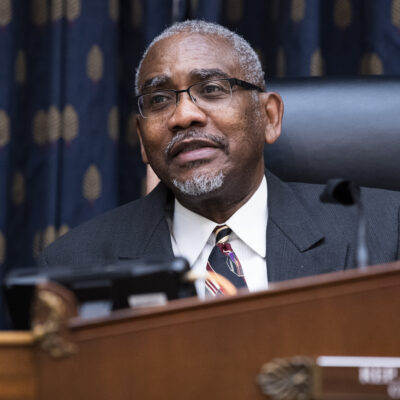
NUCLEAR NEWS
House Democrats introduce resolution to block Saudi nuclear deal
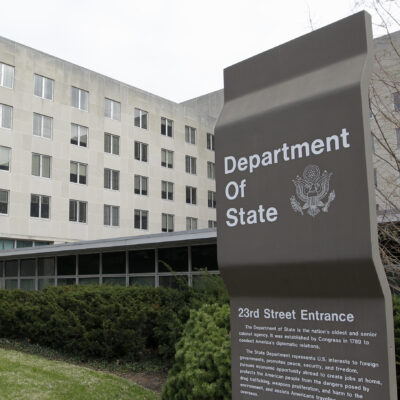
ENVOY DEBATE
Congressional Jewish Caucus opposes proposal to combine State Dept. Holocaust, antisemitism offices
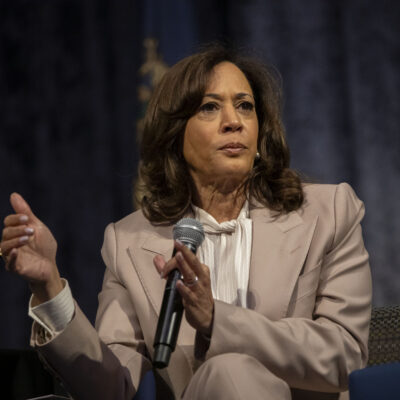
VEEP APPEAL
Michigan Jewish leaders urge Kamala Harris to appeal to El-Sayed on antisemitism, Israel

POLICY PIPELINE
Deborah Lipstadt launches Emory institute to train the next generation of policymakers fighting antisemitism
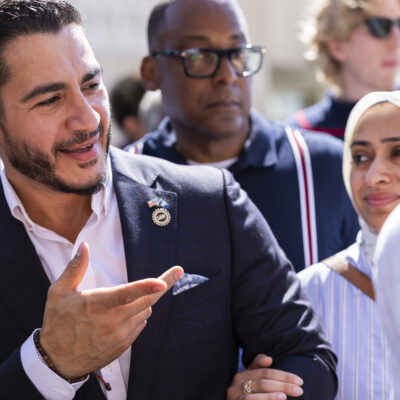
NO COMPROMISE
El-Sayed refuses to tone down Israel attacks despite prompting from Democratic podcast hosts
Please log in if you already have a subscription, or subscribe to access the latest updates.
 Continue with Google
 Continue with Apple