


















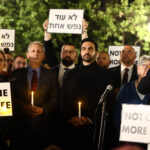

Slotkin joins Cruz, Knott, Suozzi in leading federal buffer zone bill
The bipartisan and bicameral bill would ban activity that knowingly disrupts or impedes access to scheduled religious services within 100 feet of the entrance to a house of worship
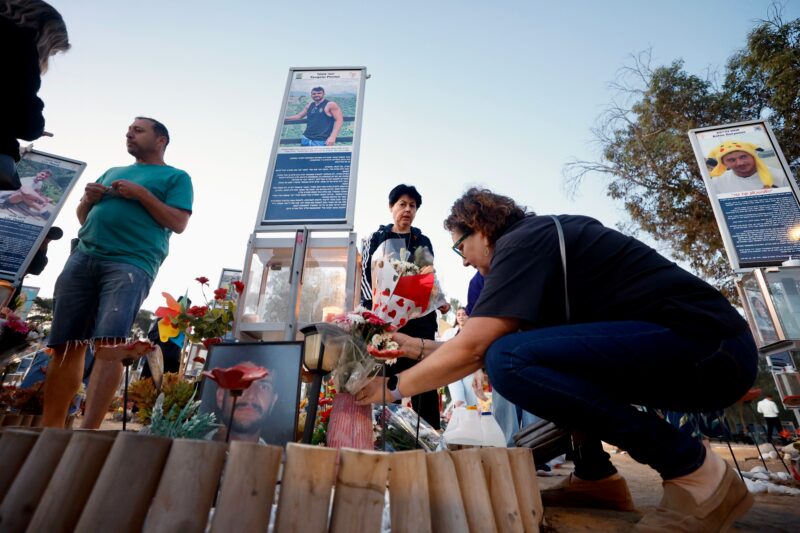
Andrew Lichtenstein/Corbis via Getty Images
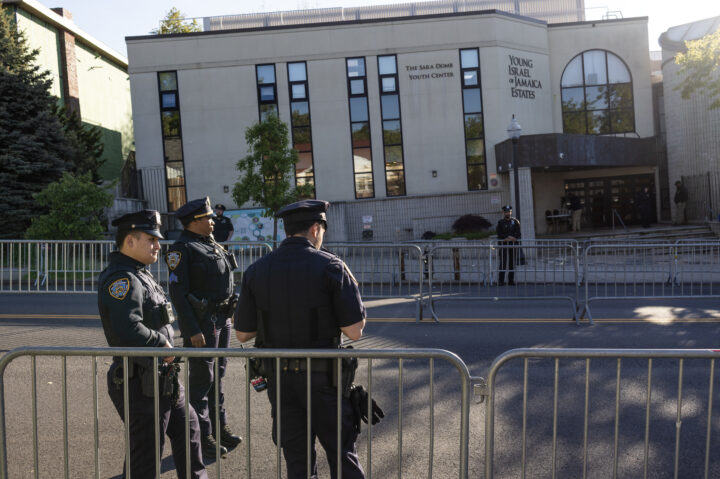
New York City police officers fence off and guard the Jewish Orthodox synagogue Young Israel of Jamaica Estates on May 12, 2026, in the borough of Queens, New York City.


 Add JewishInsider on Google
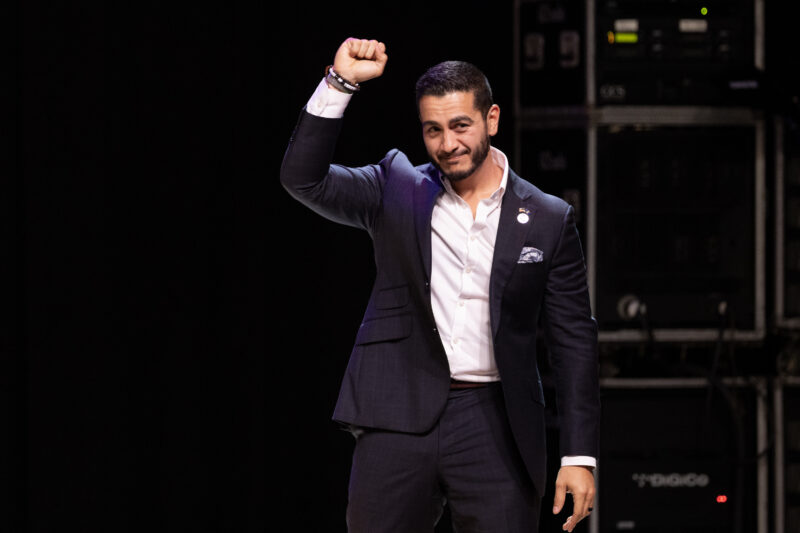
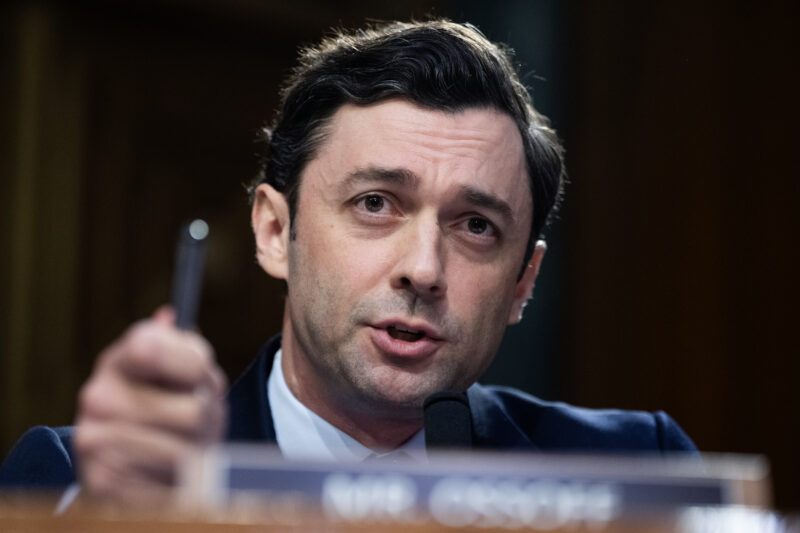
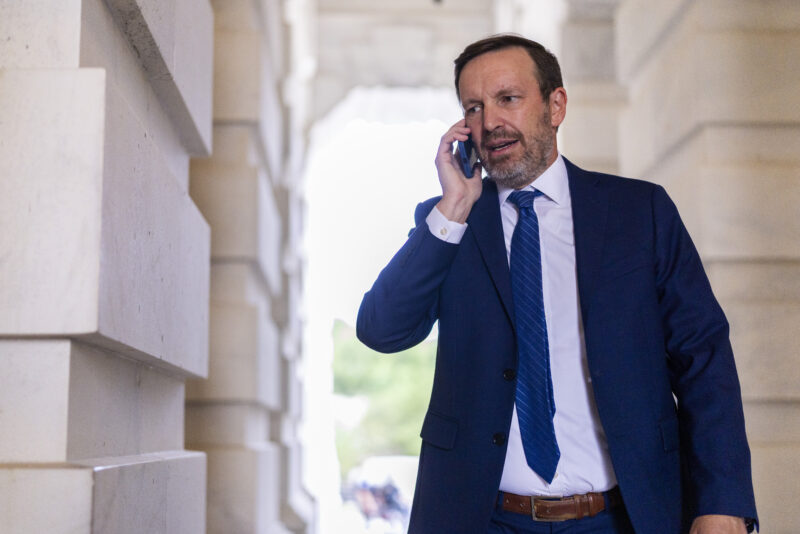
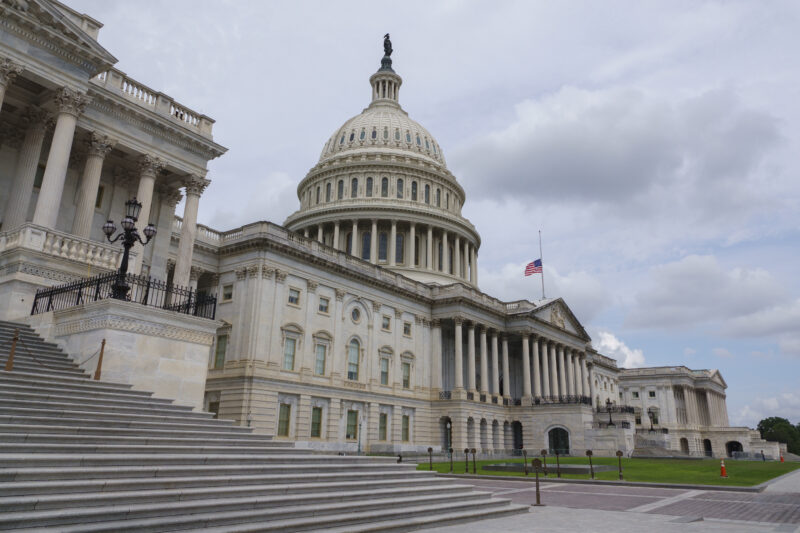
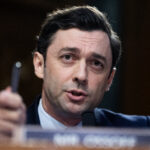
Sen. Elissa Slotkin (D-MI) joined Sen. Ted Cruz (R-TX) and Reps. Brad Knott (R-NC) and Tom Suozzi (D-NY) on Thursday in introducing the Right to Worship Act, a federal bill that would ban activity that knowingly disrupts or impedes access to scheduled religious services within 100 feet of the entrance to a house of worship during that time.
The bill is the product of months of negotiations among lawmakers and outside supporters. Cruz, Knott and Suozzi’s involvement, as well as the outlines of the bill, were first reported by Jewish Insider earlier this week. The legislation comes in part in response to a series of incidents of violence and harassment around Jewish institutions across the country.
The bill would ban activity that “meaningfully interferes with the ability of people to participate in the scheduled religious service, to the extent that the conduct causes a substantial interruption to the service’s normal operation” or “unreasonably hinders or deters a person from entering a house of worship, or threatens or intimidates a person, in a manner that prevents participation at a scheduled religious service.”
The legislation would bar such activities both during and in a one-hour period before and after any scheduled religious service.
The bill would carry escalating civil fines for repeated offenses, as well as allow impacted individuals, the U.S. attorney general or a state attorney general to commence a civil suit under the law.
It would include specific protections to permit demonstrations subject to federal, state or local permits and under reasonable time, place and manner restrictions.
Though it restricts conduct specifically during scheduled religious services, the bill does not require religious institutions to publicize their worship schedules.
It instead defines scheduled services as ones that are “observably underway or imminently beginning or concluding, as evidenced by the gathering or dispersing of congregants,” as well as any regularly occurring service “of which the defendant had actual knowledge” or any service about which the defendant was otherwise notified beforehand.
“Today, many Americans are unable to worship without fear of harassment, assault, or other forms of intimidation. The right to worship freely is foundational to our nation and was one of the motivations for its founding. No American should ever feel that their choice is between worshiping in fear and not worshiping at all,” Knott said in a statement. “The Right to Worship Act protects peaceful speech while restoring essential protections for Americans by empowering worshippers against those who seek to intimidate them.”
“I look forward to this bill becoming law and appreciate the many contributions made through bipartisan, bicameral work,” Knott, who became involved with the process at the recommendation of House Speaker Mike Johnson (R-LA), continued.
Slotkin, in a statement to JI, highlighted rising attacks on religious institutions in her state and nationwide.
“No one should ever fear going to their house of worship. Period,” Slotkin said. “The Right to Worship Act prohibits disruptive conduct, within 100 feet of a religious institution, that’s used to threaten or impede access. I look forward to working with my colleagues on getting this important piece of bipartisan legislation passed.”
Suozzi said in an interview with JI after announcing the bill, “I don’t think that a person should have to show particular courage just to pass a gauntlet to attend a religious service.”
”I don’t want to discourage protest, and I don’t want to discourage people from speaking out, but I don’t want to encourage a protest such that it makes it uncomfortable for someone to walk into their religious service or to bring their children to a religious service. It shouldn’t be that you [have to] stand up to this type of either threatening or intimidating behavior [to go to a religious institution],” he continued.
Suozzi said the bill would build upon the SACRED Act, an alternative and more limited version of a federal buffer zone bill he introduced earlier this year, as he looks to garner further bipartisan support. Suozzi engaged in extensive negotiations over the legislation, ultimately yielding a bipartisan compromise agreement.
“The First Amendment guarantees every American the right to freely exercise their faith, and Congress has a duty to ensure that guarantee is met,” Cruz said in a statement to JI earlier this week. “In recent years, we have seen organized acts of hate meant to disrupt and deny that right, which have been untenably defended as speech. That is why I am introducing the Right to Worship Act, and I urge my colleagues to support it.”
The bill is also being cosponsored by Reps. Josh Gottheimer (D-NJ) and Mike Lawler (R-NY).
The bill was developed in large part by Hudson Bay Capital CEO Sander Gerber, previously an architect of the Taylor Force Act, and Moshe Davis, who led the New York City Mayor’s Office to Combat Antisemitism under Eric Adams. Some Jewish groups — including the Orthodox Union, Combat Antisemitism Movement and Anti-Defamation League — have been working behind the scenes to support the bill and, ahead of its introduction, additional Jewish groups coalesced behind it.
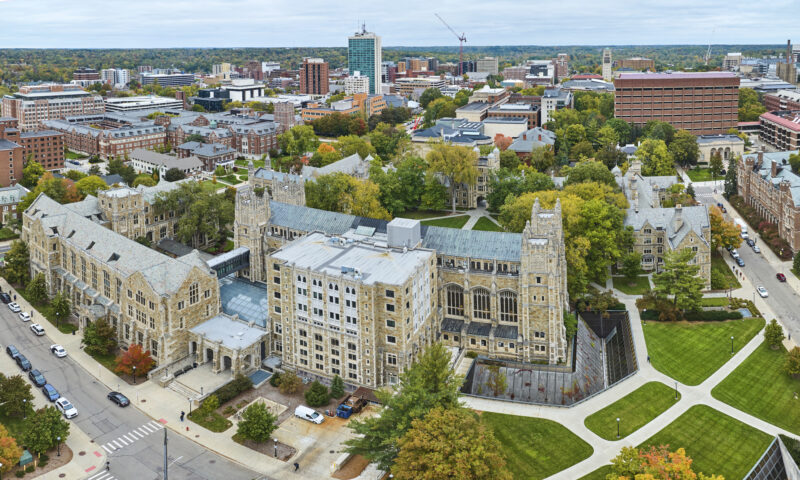
The issue is a personal one for Gerber, whose father’s Ann Arbor synagogue has for more than two decades faced weekly antisemitic demonstrations during Shabbat services. His father has pursued various legal avenues to stop the incidents, including appealing the issue to the Supreme Court, to no avail.
“This issue’s been plaguing my father and the family for many years, and it’s a start — the Congress taking action to correct problems that local municipalities don’t have the infrastructure to deal with,” Gerber told JI.
Davis, who previously worked on the issue in the New York City government, told JI, “I am proud of Senators Cruz and Slotkin and Representatives Knott and Suozzi, who stepped up today to protect the right to worship.”
“The Right to Worship Act is the product of serious thought and deliberation, and it is the right way to address the disruptions and intimidation we have seen outside houses of worship across the country,” Davis continued. “I urge everyone to join this effort. No American should be afraid to walk into their house of worship.”
Suozzi said he thought the bill strikes a compromise that protects both freedom of speech and freedom of religion. He described it as the result of “very good, fair, but hard negotiating of people who really just want to get something done.”
The legislation leans on standards of reasonableness — barring conduct that “unreasonably hinders or deters” entrance to a house of worship when the perpetrator “reasonably should be aware” that their conduct “will cause such disruption or impediment” to religious services.
“This is not about people who are standing nearby and holding a sign, standing there quietly,” Suozzi said. “This is about people yelling and screaming or people who are doing it week after week after week after week only at the religious service.”
He said the negotiations were geared toward finding a standard that would be able to hold up if challenged in court and said that various lawyers were involved in crafting the bill. He said he’s also open to amendments and other viewpoints.
Gerber said that Suozzi had been a “great partner” and “worked hard to find a text to make this truly bipartisan, at the same time ensuring that it would address the Ann Arbor synagogue situation, which was my primary concern.” He said Suozzi “really cares about this situation.”
He also praised Cruz’s “courage … to be the lead introducer” in the Senate, which required significant legal knowledge and expertise to navigate the free speech issues involved. He praised Knott for taking a leading role in the issue as well.
Despite the short time remaining in the current congressional session, Suozzi said he feels fairly confident that the legislation can pass this year, noting the bipartisan support for and significant interest in the legislation.
Gerber put the chances of passing the bill before the end of the year at an optimistic 70%.
“It’s strongly bipartisan, it makes a lot of sense. The challenge will be if people on the fringe try to slow down the procedural process, and I hope there will not be amendments that might slow down the process,” Gerber continued. He urged the Senate and House Judiciary Committees to take the bill up.
The bill is supported by the Anti-Defamation League, Agudath Israel of America, American Jewish Committee, BAPS Swaminarayan Sanstha, Coalition of Hindus of North America, Hadassah, Hindu American Foundation, Islamic Society of North America, Jewish Federations of North America, UJA-Federation of New York, Orthodox Union, United Sikhs, Combat Antisemitism Movement and the American Muslim & Multifaith Women’s Empowerment Council (AMMWEC).
In a press release, the ADL said that the bill “builds on a framework the ADL helped develop” as part of the SACRED Act, Suozzi’s previous bill. The group said it documented more than 530 incidents of harassment at synagogues last year.
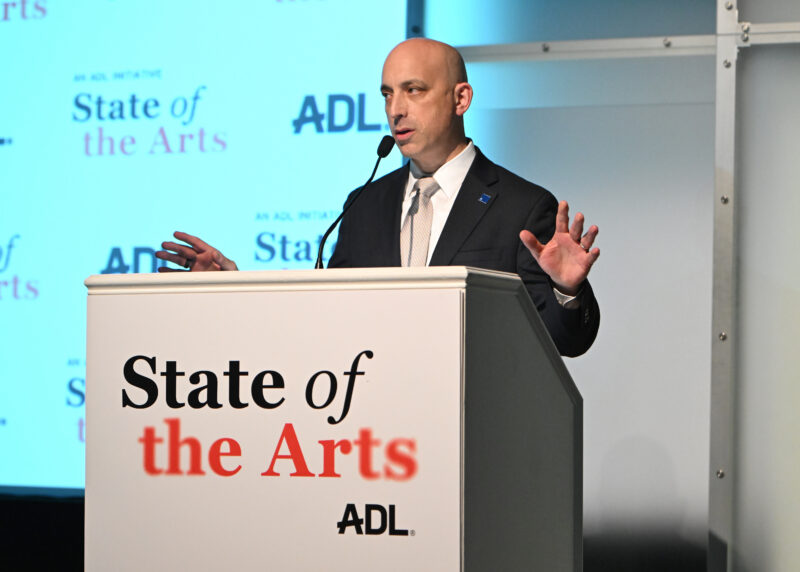
“No one should have to push through a hostile crowd or shout over a bullhorn in an attempt to pray,” ADL CEO Jonathan Greenblatt said in a statement. “ADL has championed safe worship zone legislation from the beginning, working hand in hand with lawmakers and other key stakeholders to build support and consensus around a critical bipartisan solution. The Right to Worship Act is the product of that work. We are grateful to Senators Cruz and Slotkin and Representatives Knott and Suozzi for their commitment to ensuring everyone, regardless of their faith, can worship freely and safely.”
The ADL said in the release that the bill strikes “the right balance” between protecting worship and protecting speech.
“Freedom of religion is not just the freedom to believe as your faith instructs. It must include the right to practice one’s religion without fear of harassment or violence,” said Nathan Diament, executive director of the Orthodox Union Advocacy Center, who was also deeply involved in negotiations and crafting the bill. “No one in America — be they Jewish, Christian, Muslim, or of another faith — should have to choose between their religion and their safety.”
The OU also emphasized that the bill “carefully strikes the balance” between free speech and protecting the freedom of religion.
“Every community deserves to gather safely in their house of worship,” Eric Fingerhut, CEO of JFNA, said in a statement. “Too often, we’ve seen Jewish Americans and other faith communities targeted or intimidated simply for practicing their faith. The Right to Worship Act gives law enforcement and communities the tools they need to prevent these disruptions before they escalate, while still respecting every American’s First Amendment rights. Safety and religious freedom aren’t in tension; this bill shows how we can protect both.”
AJC highlighted that more than a quarter of Jews said in an AJC survey last year that institutions with which they were affiliated had been targeted by vandalism, threats or attacks in the past five years.
“Every American should be able to gather and practice their faith without fear of intimidation, harassment, or violence,” AJC said in a statement. “Safeguarding the right to worship freely is fundamental to protecting religious liberty — one of our nation’s founding principles. We thank Senators Cruz and Slotkin and Representatives Knott and Suozzi for introducing this bipartisan bill and urge all of their colleagues to support it.”
Rabbi A.D. Motzen, the national director of government affairs at Agudath Israel of America, said that recent incidents outside synagogues nationwide demonstrate the need for the legislation.
“Houses of worship are sacred spaces. The Right to Worship Act helps protect Americans of all faiths by creating a 100-foot buffer zone around houses of worship and imposes civil penalties on those trying to disrupt or impede those gathering for religious services. Unfortunately, recent incidents in front of synagogues around the country highlight the need for additional protections,” Motzen said.
Alyza Lewin, president of U.S. affairs for CAM, said that the bill “answers the need for urgent national-level action to protect houses of prayer at a time of rising antisemitism across the United States.”
“For far too long, and particularly in the aftermath of Oct. 7, Jews have had to endure violent threats and intimidating harassment just to enter synagogues to practice their faith and gather as a community,” Lewin said. “This bill protects two First Amendment rights — to speech and the free exercise of religion. By balancing the two, the law will ensure that Jews, and members of all faiths, are able to worship and study in peace.”
Anila Ali, president of AMMWEC, said, “Every American should be able to enter a mosque, church, synagogue, temple, or any other house of worship without fear, intimidation, or harassment. Religious freedom is one of our nation’s most fundamental liberties, and protecting the right to worship peacefully strengthens — not weakens — our democracy. AMMWEC is proud to support the Right to Worship Act because every faith community deserves equal protection under the law.”
More Stories
PHONE A FRIEND
AOC launches campaign blitz for El-Sayed across Michigan
PHOTO OP
Letitia James opponent met with Black Hebrew Israelite group
analysis
Chris Murphy’s selective outrage in the Middle East
OBAMA BOOST
Obama to campaign with Abdul El-Sayed at rally with Michigan Dems
DEBATE DEBACLE
El-Sayed dodges Rogers’ attacks on terrorism ties during heated Senate debate
NOT ON BOARD
Lansing Mayor Andy Schor, a Jewish Democrat, says he’s not supporting El-Sayed
Please log in if you already have a subscription, or subscribe to access the latest updates.
 Continue with Google
 Continue with Apple