




































‘Worst foreign policy blunder in decades’: Senate Republicans break with Trump on Iran
Cassidy said the deal leaves Iran stronger and sanctions-free, while senators including Tillis, Cruz and Scott pushed back on Trump's acceptance of Iranian ballistic missiles
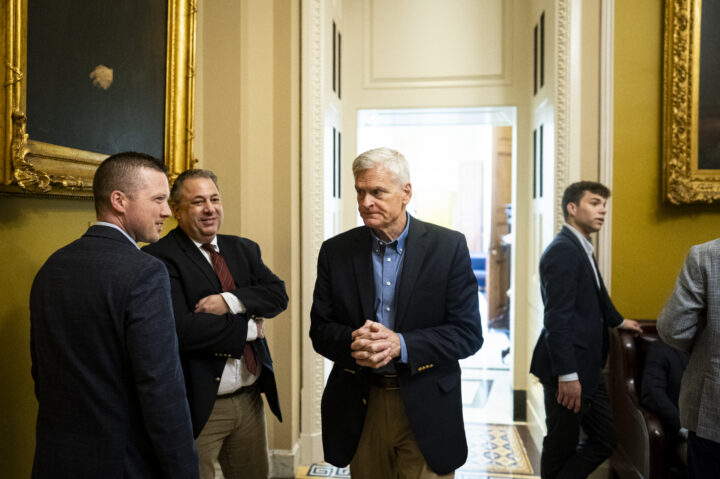
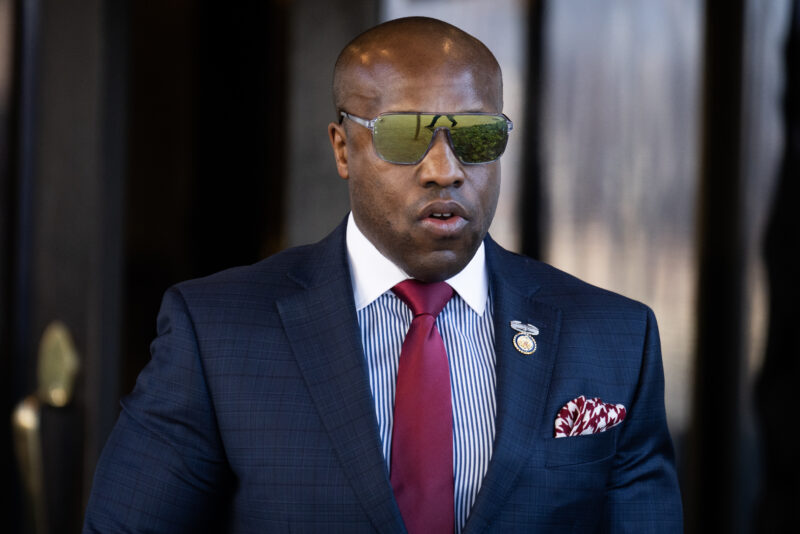
Photo by Al Drago/Getty Images)
Sen. Bill Cassidy (R-LA) departs a meeting with Senate Republicans in the U.S. Capitol on June 28, 2025 in Washington, DC.


 Add JewishInsider on Google
Some Senate Republicans are breaking with President Donald Trump over his handling of Iran, pushing back on the memorandum of understanding’s significant financial relief to the regime and Trump’s comments on Wednesday that he is willing to accept an Iranian ballistic missile program and some level of nuclear enrichment.
“Reagan is rolling over in his grave,” retiring Sen. Bill Cassidy (R-LA) said on X. “Iran’s nuclear ambitions were not curbed, and they have learned that threatening the Strait of Hormuz works and will undoubtedly leverage it in the future. Now, Iran gets to build brand-new infrastructure under this deal.”
Cassidy recently voted in favor of war powers resolutions that aimed to prevent further combat operations in Iran. He’s retiring after being defeated by a Trump-backed primary challenger.
“Before the war, the Strait [of Hormuz] was open, Iran was being crushed by sanctions and 13 service members were still alive,” Cassidy said. “Now, 13 Americans are dead, families have paid billions at the pump, sanctions will be lifted, and the bombing has stopped. This is the worst foreign policy blunder in decades.”
He subsequently explained to reporters: “Iran went from having sanctions and now is having no sanctions. Hundreds of billions of dollars [are] being paid to it. Our allies are weaker. Our opponent is stronger. You say the strait’s open — the strait was open four months ago.”
Asked whether he thought the deal was worse than the Obama-era Joint Comprehensive Plan of Action, Cassidy responded, “I didn’t like the JCPOA the first time. I don’t like it the second time.”
While Cassidy was perhaps the most strident critic, numerous Republican senators also expressed their disagreement with Trump’s comments, the deal, or both.
Given that eliminating Iran’s nuclear enrichment and ballistic missile capacity were stated objectives of the war, “$100 billion and 13 lives later, I’ll need to understand that rationalization,” Sen. Thom Tillis (R-NC) told Jewish Insider of Trump’s comments.
He added later that the $300 billion reconstruction fund laid out in the MOU is “concerning,” though he called the deal preliminary and said he needed to see more details.
“I need to see it taken as a whole. I can’t be against it because I need to see the net. I need to see, have we accomplished what the president set out to accomplish?” Tillis continued. “If you remember, we were going to obliterate their military, we were going to take all of the uranium or any weapons grade uranium out of the country — we’re equivocating on that now. I just need to see what the new deal is now.”
He said that, given the costs of the war, “there needs to be some accountability for Iran. We can’t just walk out because we’re getting a bit skittish over the economic consequences of going to war to begin with.”
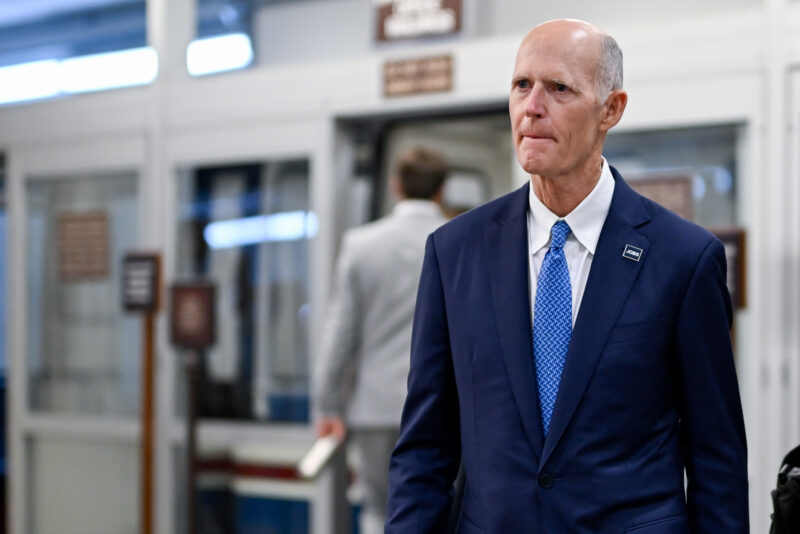
While Trump argued that Iran should be able to have ballistic missiles because others in the region do as well, Sen. Rick Scott (R-FL) said that the difference is that other countries in the region aren’t American adversaries.
“I would be fine [with them having missiles] if they didn’t want to kill Americans. I don’t care if Saudi Arabia has them, or if Israel has them because they don’t want to kill us,” Scott told JI. “But if somebody wants to kill me, I don’t want them to have a ballistic missile.”
Asked about the financial benefits Iran is set to receive under the deal, Scott said that he does not want any U.S. funding to support Iran, and that Iran should be paying the U.S. reparations instead.
“I’m not spending a dime for Iran. I want them to pay us for what we had to do,” Scott continued.
Sen. Ted Cruz (R-TX) warned against giving Iran a financial windfall, though he placed blame for the situation on those around the president, rather than Trump himself.
“History teaches that giving billions of dollars to theocratic lunatics who want to murder us is not a good idea,” Cruz said. “I think the President is receiving some very poor advice on this deal.”
Cruz said on his podcast that “if this deal is giving them $300 billion, that’s a mistake. I hope that is not the case.” But he also said that it is “absurd” to compare it to the JCPOA in light of the U.S. military action against Iran’s nuclear program.
“What I’m urging the president, what I’m saying to him, is don’t give away the victory. I don’t believe he’s doing so, I hope he’s not doing so, I hope his administration is not doing so,” Cruz said. “We have defeated their military, don’t suddenly come in with massive buckets of cash to let them rebuild and become a threat to America again.”
He added on X that the fact that Biden Iran Envoy Rob Malley supported the deal “may be the most serious criticism that can possibly be leveled against it.”
Sen. Pete Ricketts (R-NE) said that “it’s a bad idea to allow Iran to have a ballistic missile program,” though he said he was waiting to see what the text of the deal says on the issue of enrichment. Sen. Mike Rounds (R-SD) told JI, “I don’t feel the same way” as Trump on the missile and enrichment issues.
Sen. Lindsey Graham (R-SC), one of the most vocal supporters of the Iran war on Capitol Hill, offered his support for the MOU in a lengthy X post following a conversation with special envoy Steve Witkoff.
“It is my opinion that signing the MOU will be beneficial to the United States, in as much as the Strait of Hormuz will begin to open, and the hostilities with Iran will stop,” Graham said. “Whether or not the United States can reach an acceptable, verifiable deal with Iran regarding its nuclear program and other issues is yet to be determined, but I see little downside to trying.”
He added that the MOU would also be worthwhile as an “essential step” toward enabling the normalization of relations between Saudi Arabia and Israel, restoring economic stability and ending the war.
Despite that, Graham still broke with Trump on his comments on Iranian nuclear enrichment.
“I’m not OK with nuclear enrichment at all,” Graham said.
Sen. Josh Hawley (R-MO), who has been one of the most vocal GOP advocates for bringing the war to a close, said that he’s “glad the strait is reopening” and “glad that their nuclear program is under rubble and presumably will stay that way.”
“I don’t really want to give them any money,” Hawley continued. “I discourage that. I would not want to do that. But, let’s see what happens and I wish the VP all the best of luck.”
Sen. Roger Wicker (R-MS), the chairman of the Senate Armed Services Committee, told JI he would continue to withhold comment on Iran, the same response he’s been offering to reporters on the deal throughout the week.
On the Democratic side, Sen. Richard Blumenthal (D-CT) said that the deal constituted “unconditional surrender … by us, not by Iran,” referencing Trump’s demands earlier in the war.
“There seems to be no objective of this war that has been accomplished and in fact has emboldened Iran internally and strengthened their standing in the world community,” Blumenthal continued. “They’ve taken the best punch we could give them and they seem bolder than ever.”
He said that the financial benefits Iran is set to receive under the MOU “will enable them to support their malign proxies in the region, causing more instability and bloodshed.”
Blumenthal said that Iran’s objectives of “death to America and death to Israel … will only be advanced by this huge amount of money and additional freedom they have to sell their oil with lifting sanctions.”
More Stories
TEXAS TROUBLE
Ted Cruz slams Dems for not speaking out against College Dems’ Hasan Piker invitation
analysis
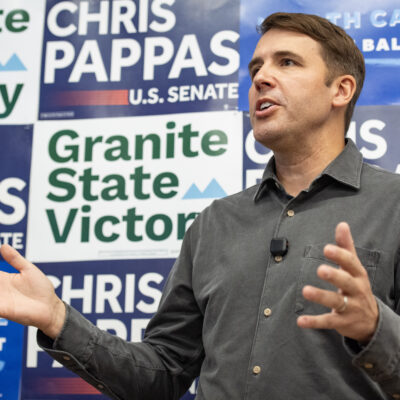
Pappas wins New Hampshire Senate nomination over anti-Israel Dem activist

PIKER PUSHBACK
University of Texas College Dems invitation to Hasan Piker sparks campus outrage, GOP fire

Norm-alizing?
Norm Eisen’s alliances with Israel critics raise eyebrows within Jewish community
SAFETY SURGE
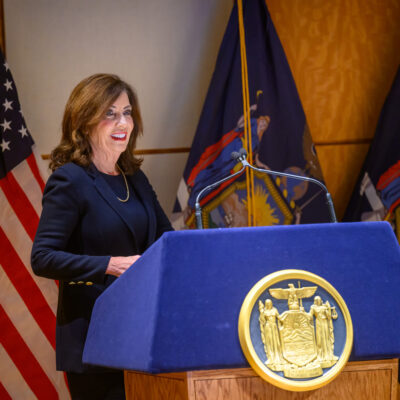
Hochul announces security funding, enhanced police presence ahead of High Holy Days
SCOOP
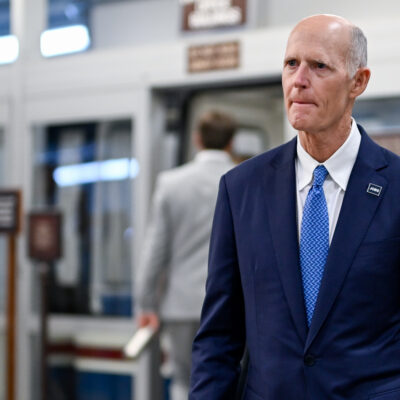
Sen. Rick Scott urges Trump to pave pathway for Canadian Jews to emigrate to U.S.
Please log in if you already have a subscription, or subscribe to access the latest updates.
 Continue with Google
 Continue with Apple