



























D.C. Jewish leaders taking wait-and-see approach to Lewis George’s expected mayoralty
JCRC CEO Ron Halber said he hopes to work with the DSA member, despite his strident criticism of the group, while remaining vigilant
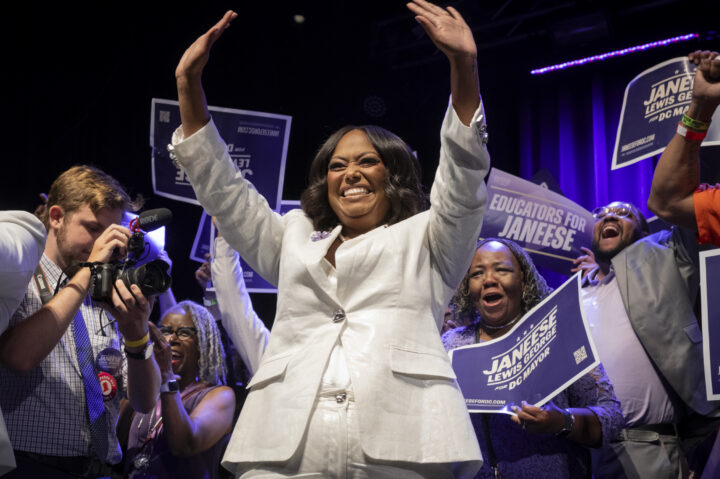
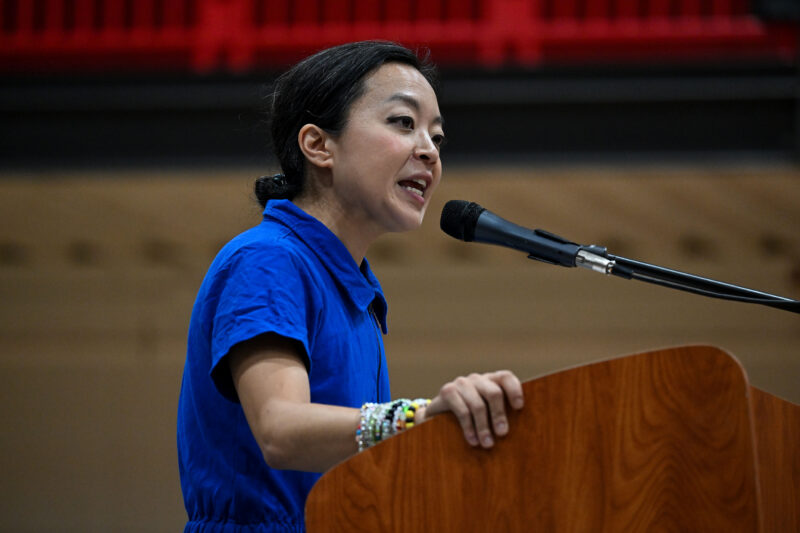
Maxine Wallace/The Washington Post via Getty Images
Mayoral candidate Janeese Lewis George celebrates her early lead at her election night party at the Howard Theatre on June 16, 2026 in Washington, DC.


 Add JewishInsider on Google
With Janeese Lewis George’s victory in last week’s Democratic primary, Washington, D.C., is expected to become the third major city in the country, after Seattle and New York, with a democratic socialist serving as mayor.
Now, Jewish Washingtonians who were unsettled by Lewis George’s stance on Zionism, as articulated in a Democratic Socialists of America endorsement questionnaire in which she said she would reject the “Zionist lobby,” are grappling with how to approach her tenure as mayor.
Mainstream Jewish organizations tasked with local lobbying and advocacy efforts appear to be taking a wait-and-see approach, while cautioning Lewis George that they will be monitoring her tenure in office to make sure she does not assume positions that exclude segments of the city — including Jewish supporters of Israel.
“We hope to work with her, and we will work with her,” Ron Halber, CEO of the Jewish Community Relations Council of Greater Washington, told Jewish Insider on Friday. “But at the same time we’re also going to be watching to make sure that she lives up to her promises to make this an inclusive city, where all feel they can participate equally, and that all people, regardless of their backgrounds, are welcomed — Zionists as well.” (In February, Halber called DSA’s requirements for backing local candidates “an antisemitic manifesto.”)
Anti-Defamation League Washington regional director Tali Cohen expressed a similar sentiment.
“We look forward to continuing our work with local leaders,” Cohen said in a post on X, “while also holding them accountable to combat antisemitism and ensure Jewish voices are included in our nation’s capital.”
Lewis George, who has served on the D.C. Council since 2020, defeated Kenyan McDuffie by a double-digit margin, 54%-36%, in last week’s primary. During the campaign, she presented a proudly progressive vision for the city, leaning into an affordability message and offering proposals for universal childcare and housing construction that were described as unrealistic by her opponent.
Lewis George’s campaign was powered largely by labor unions, but also by activists with DSA, of which Lewis George has been a member for years. The group’s endorsement questionnaire included a lengthy section on Israel. “I will refrain from going on any political junkets to Israel. I will also not attend events focused on obfuscating the realities of occupation or promoting Zionism and apartheid,” Lewis George wrote. In a candidate forum hosted by the JCRC in May, she declined to answer when asked to clarify her views on Zionism.
McDuffie’s strategy included campaigning within the Jewish community and contrasting himself to Lewis George by saying he would have shunned an endorsement from DSA and that he would be a mayor “for all D.C.” The issue of Israel never rose to a major focus for the campaign, and instead the candidates’ approaches to the city’s economic challenges — and its complicated relationship with President Donald Trump and federal oversight — proved to be driving factors in the race.
Rabbi Shmuel Herzfeld served for nearly 20 years as the rabbi at Ohev Sholom Congregation, an Orthodox synagogue in Lewis George’s ward. He now runs a small yeshiva in the area, and told JI he is concerned about her election as mayor.
“We need to be on guard. We need to be ready to challenge her, and [these are] concerning times,” said Herzfeld, who told JI he never heard back from her office when he reached out after she was elected to the D.C. Council in 2020. “She’s clearly surrounded herself with people who are anti-Zionists.”
After the Associated Press called the race for her on Thursday, Lewis George hosted a press conference at Busboys and Poets, a Washington bookstore and restaurant that regularly hosts speakers with an anti-Israel bent. (Its 14th Street location, where Lewis George spoke, has a mural painted on the wall showing a group of left-wing leaders and activists sitting at a table together; one of the legs of the table has the words “Long Live the Intifada” painted on top of it, and another says “From the River to the Sea, free Palestine.”)
Lewis George touted “the broad coalition I was able to build,” and specifically mentioned Jews United for Justice, a left-wing Jewish group that supported her campaign.
“So many different people came into the JUFJ campaign fund because they were excited about Janeese, and I think that really speaks to something special about this election,” JUFJ’s D.C. director, Yael Shafritz, told JI. Shafritz said JUFJ does not take foreign policy issues such as the Israeli-Palestinian conflict into account when supporting candidates, but that its members felt Lewis George had taken a strong position on antisemitism.
“All the candidates we endorsed actually gave incredible answers about how they would support the Jewish community around fighting antisemitism,” Shafritz said. After Lewis George met with Washington rabbis in March following the release of the DSA endorsement questionnaire, she released a statement saying it is not a conflict to support “Palestinian human rights” and to “stand firm in my commitment against antisemitism.”
Lewis George represents Ward Four, which encompasses several neighborhoods in the northernmost part of Washington, including Petworth, Brightwood, Fort Totten, Sixteenth Street Heights and Shepherd Park. The district includes two synagogues — the Orthodox Ohev Sholom and the Conservative Tifereth Israel Congregation — and Milton Gottesman Jewish Day school, a pluralistic pre-K-8 school.
“There’s a lot of very progressive Jews in Ward Four, and they seem to support her and not have antisemitism as a central campaign issue,” said one of Lewis George’s Ward Four constituents, who requested anonymity because her job does not allow her to speak to the media. “I think there’s an equal amount of Jews like me who want to support her on social policies because we think they’ll make D.C. better, but antisemitism was my number one campaign issue, and how you handle antisemitism. I don’t feel confident that she’ll do much to battle it.”
More Stories
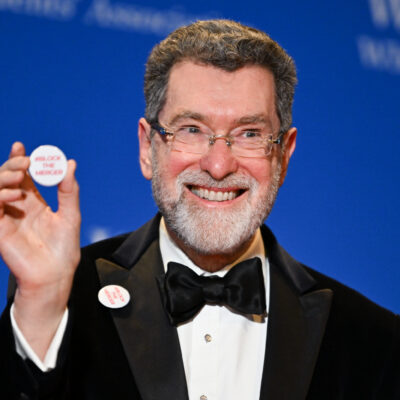
Norm-alizing?
Norm Eisen’s alliances with Israel critics raise eyebrows within Jewish community
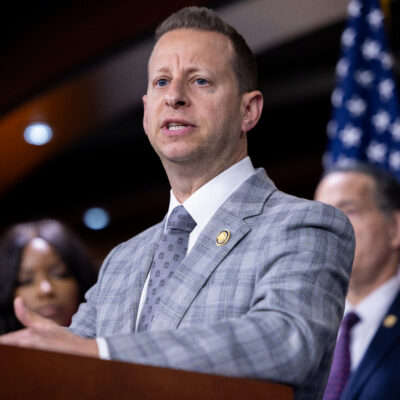
on the trail
Moskowitz leans into work combating antisemitism as he launches general election campaign

Daily Overtime
Miznon’s U.S. Open upset
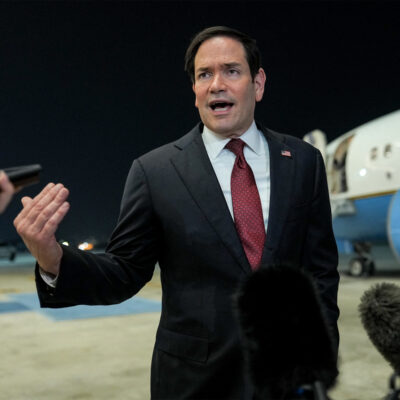
TEPID RESPONSE
Rubio holds back criticism of U.K. sanctions against Israeli settlements
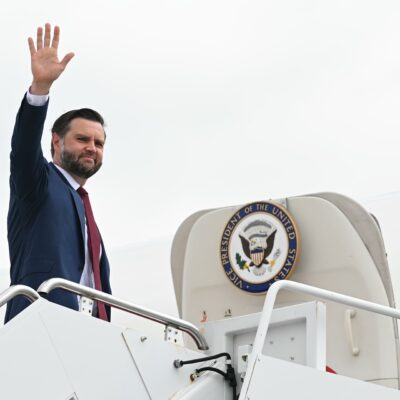
Daily Overtime
Vance’s Jewish voter problem

EXCLUSIVE
Brandeis Center urges Qatar to provide ‘complete public accounting’ of campus funding
Please log in if you already have a subscription, or subscribe to access the latest updates.
 Continue with Google
 Continue with Apple