

































Iran’s attacks on Qatar could prompt regional realignment, experts say
They said, however, it’s unlikely the rift with Tehran will engender any goodwill towards Israel
Mahmud HAMS / AFP via Getty Images
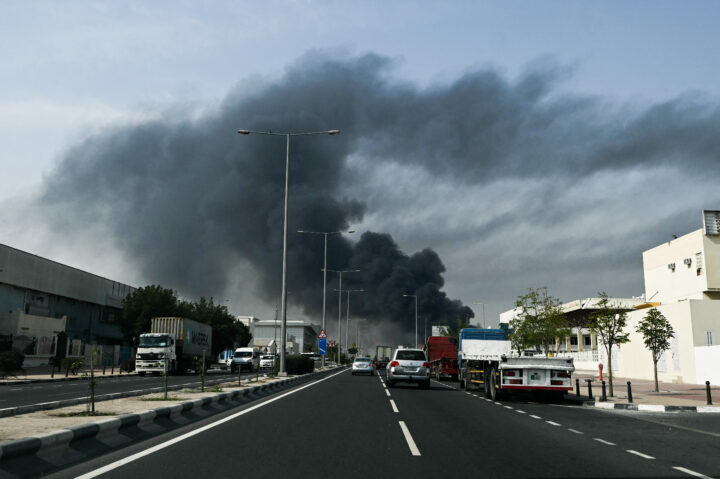
Motorists drive past a plume of smoke rising from a reported Iranian strike in the industrial district of Doha on March 1, 2026.


 Add JewishInsider on Google
Iranian attacks on Qatar could prompt Doha to reassess its regional alignment and relationship with Tehran, experts said, though they expressed skepticism that the strikes would change Qatar’s antagonistic posture toward Israel, its funding of anti-Israel media or its harboring of Muslim Brotherhood-aligned groups.
Prior to the Iran war, Doha and Tehran maintained close and pragmatic diplomatic relations centered on economic cooperation. In the leadup to hostilities, Qatar aimed to balance its ties with Iran and the U.S., however the conflict has brought to light the difficulty of this balancing act.
Qatar has suffered severe damage to its civilian, energy and military infrastructure from Iranian strikes, launched as Tehran has targeted American allies in the region amid the war with the U.S. and Israel, including over $20 billion in lost revenue caused by a strike on Qatar’s liquified natural gas facility.
“Iran’s strikes have created real fissures,” said Natalie Ecanow, a senior research analyst at the Foundation for Defense of Democracies. “For example, Qatar expelled Iran’s military and security attachés and cracked down on IRGC cells within its borders. Notably, Qatar’s prime minister called Iran’s strikes ‘a big sense of betrayal,’ which is language typically reserved for friends or partners, not foes. That tells you something about Qatar’s mindset before the war.”
Kristan Diwan, a senior resident scholar at the Arab Gulf States Institute, told Jewish Insider that the rift will likely push Doha closer to other countries in the region with aligned interests.
“I think we will see Qatar working even more closely in concert with the new ‘Sunni’ regional coalition led by Saudi Arabia with Turkey, Pakistan and perhaps Egypt and other Arab players,” Diwan said. “While not identical, their interests align,” Diwan added, on Syria, Lebanon and the Palestinian territories. “Working together will increase their impact while lessening the burden on any one state.”
But Diwan said that while Doha may distance itself from Tehran, it should not be mistaken for a more favorable posture toward Israel. She said the emerging coalition “shares a belief that the current Israeli government represents a threat to regional stability.”
“Unlike the UAE, these countries are likely to take up positions confronting both Iran and Israel,” Diwan continued. “This will allow for a more accommodating posture on Muslim Brotherhood-aligned groups and perhaps even a recalibration of hostilities toward other radical movements such as the Houthis and Hezbollah.”
Other experts warned that Qatar’s significant financial losses during the war are unlikely to alter Doha’s ideological posture toward Israel or its funding of anti-Israel antagonism.
“Frankly it’s hard to imagine Qatar ever becoming less ideological or antagonistic toward Israel,” Jonathan Ruhe, a fellow at the Jewish Institute for National Security of America, told JI. “Despite the Iran war’s economic toll, Doha still can afford to propagate anti-Israel, anti-Western extremism through Al Jazeera, the Muslim Brotherhood and other actors. And it still has every incentive to support Islamist groups and media to buttress its own credibility in the Arab and Muslim worlds.”
Additionally, Ruhe said there is little external pressure forcing Qatar to change course, pointing to the Trump administration’s favorable posture toward Doha.
“The war has not altered the Trump administration’s reliably favorable attitude toward Qatar,” Ruhe said. “Qatar’s relationship with Tehran is now severely damaged, but it can compensate through stronger ties with Turkey and Saudi Arabia, both of whom have been propagating anti-Israel rhetoric, and possibly Pakistan, too.”
But Ecanow said the prospect of a full break between Qatar and Iran remains complicated by geography and shared economic interests. Qatar’s wealth is tied to the world’s largest natural gas reservoir, which it shares with Iran.
“Qatar’s wealth flows from sitting on the world’s largest natural gas reservoir — one it shares with Iran. That ostensibly gives Doha an economic interest in the regime’s survival because a regime that’s down but not out poses little competition for Qatar’s liquefied natural gas exports. Regime change may not be an immediate U.S. objective, but this dynamic inherently puts Qatar’s interests at odds with those of the United States,” Ecanow said.
More Stories
trump talk
Trump backs Netanyahu on Oct. 7 warnings, won’t say if he deserves another term
SECURITY SHORTFALL
Nonprofit Security Grant Program fulfills less than one-quarter of 2026 applications
BREAKING
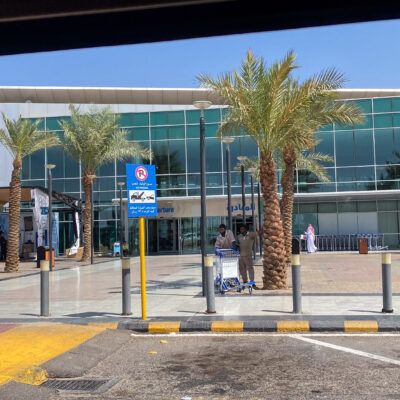
Israel-bound FlyDubai flight makes emergency landing in Saudi Arabia after suspected terror attack by co-pilot
PARTY OUTREACH
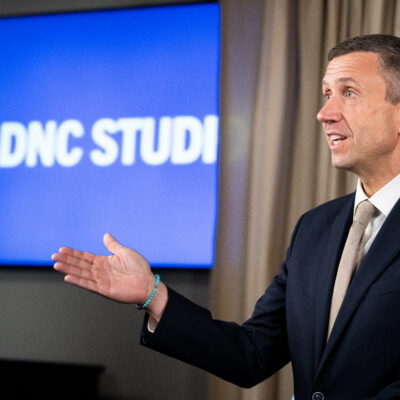
DNC bids to reengage Jewish voters with new constituency council ahead of 2028

CAMPAIGN OFFENSIVE
Rogers calls El-Sayed ‘threat to our national security’ in new ad
MILE-HIGH MIRACLE
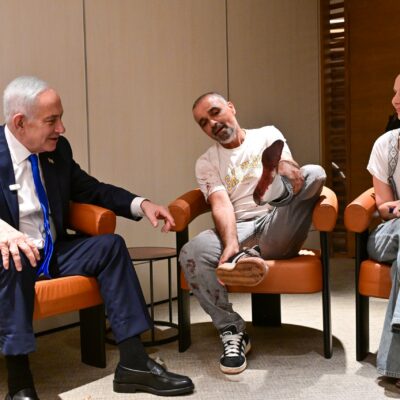
Passenger recounts dramatic effort to save Israel-bound FlyDubai flight
Please log in if you already have a subscription, or subscribe to access the latest updates.
 Continue with Google
 Continue with Apple