


Even in a fraught moment, American Jews embrace patriotism at the nation’s 250th
Rabbis, historians and communal leaders told JI that the nation’s semiquincentennial offers an opportunity to celebrate America’s promise even as they confront the antisemitism and political currents challenging Jewish life today


 Add JewishInsider on Google
In the run-up to America’s 250th anniversary, the Jewish community finds itself navigating a best-of-times, worst-of-times, head-spinning paradox — standing nervously between the promise of an ideal America and the peril of today’s America.
In conversation after conversation, Jewish thinkers who spoke to Jewish Insider about this unique moment expressed fear and concern about the increasingly precarious situation facing American Jews in one breath. In the next, they spoke glowingly about the unique gifts this country’s democracy has given to the Jews who live here.
In spite of this deep ambivalence, or perhaps because of it, the Jewish community is all-in on the 250th.
As one might expect of the city that arguably jump-started the American Revolution, no expense or antic is being spared to celebrate the country’s birthday in Boston. At the Esplanade, a park along the Charles River, comedian Jane Lynch is emceeing an evening of festivities that will feature musical performances by several Grammy winners. A revolutionary-themed drone show will be followed by a massive fireworks display with an orchestral accompaniment, all live-streamed on CNN. Revolutionary War re-enactors will, naturally, be on hand. (And playing the bugle.)
In the nearby suburb of Newton Center, Rabbi Benjamin Samuels of Congregation Shaarei Tefillah is devising a memorable July Fourth celebration, though without the theatrics that typically accompany the holiday. Independence Day falls on Shabbat this year, so the usual hubbub and pyrotechnics will be inaccessible for Orthodox Jews like Samuels who do not drive, cook or use electronics on the Jewish Sabbath.
Shaarei Tefillah congregants can expect something a little different. They will enjoy a July Fourth barbecue, though without the open flame; all the food will be grilled the day before and kept warm overnight. Brandeis professor Jonathan Sarna, the preeminent historian of American Jewish history and a member of Shaarei Tefillah, will deliver the sermon at Saturday morning services. Any kids who join their parents at synagogue will get a red, white and blue ring pop.
Samuels has lately spent a lot of time considering what it means to be a patriotic American — in particular, a patriotic American Jew — at a moment when large parts of the American Jewish community feel as though they are under attack. He recently edited an entire issue of an Orthodox journal, Tradition, on the topic.
Antisemitism is at levels not seen in generations. The future of the Jewish state has become a political lightning rod that is increasingly a decisive, and divisive, issue in major political campaigns. Eight in 10 American voters believe democracy in America is being threatened, according to a recent Georgetown University poll.
It’s a fraught time for American Jews to be throwing the country a 250th birthday party. Or, at least, it would be easy to think that.
But conversations with nearly two dozen rabbis, writers, historians and Jewish leaders from across the political and religious spectrum reveal a shared sense of hope in the American project — and a belief that this milestone semiquincentennial celebration presents a unique opportunity for American Jews to hold their heads high and reflect on what this democracy, even if flawed, has given to them.
“I think it’s the right thing to be patriotic and participate in a celebration,” Samuels told JI recently. “For all of us who put an Israeli flag, or a ‘We stand with Israel’ poster, or a blue or yellow ribbon around our light post the past few years, put an American flag on your lawn. Every synagogue should have a program on July Fourth, which is on Shabbos this year, dedicated to the American Jewish experience, and celebrate the semiquincentennial.”
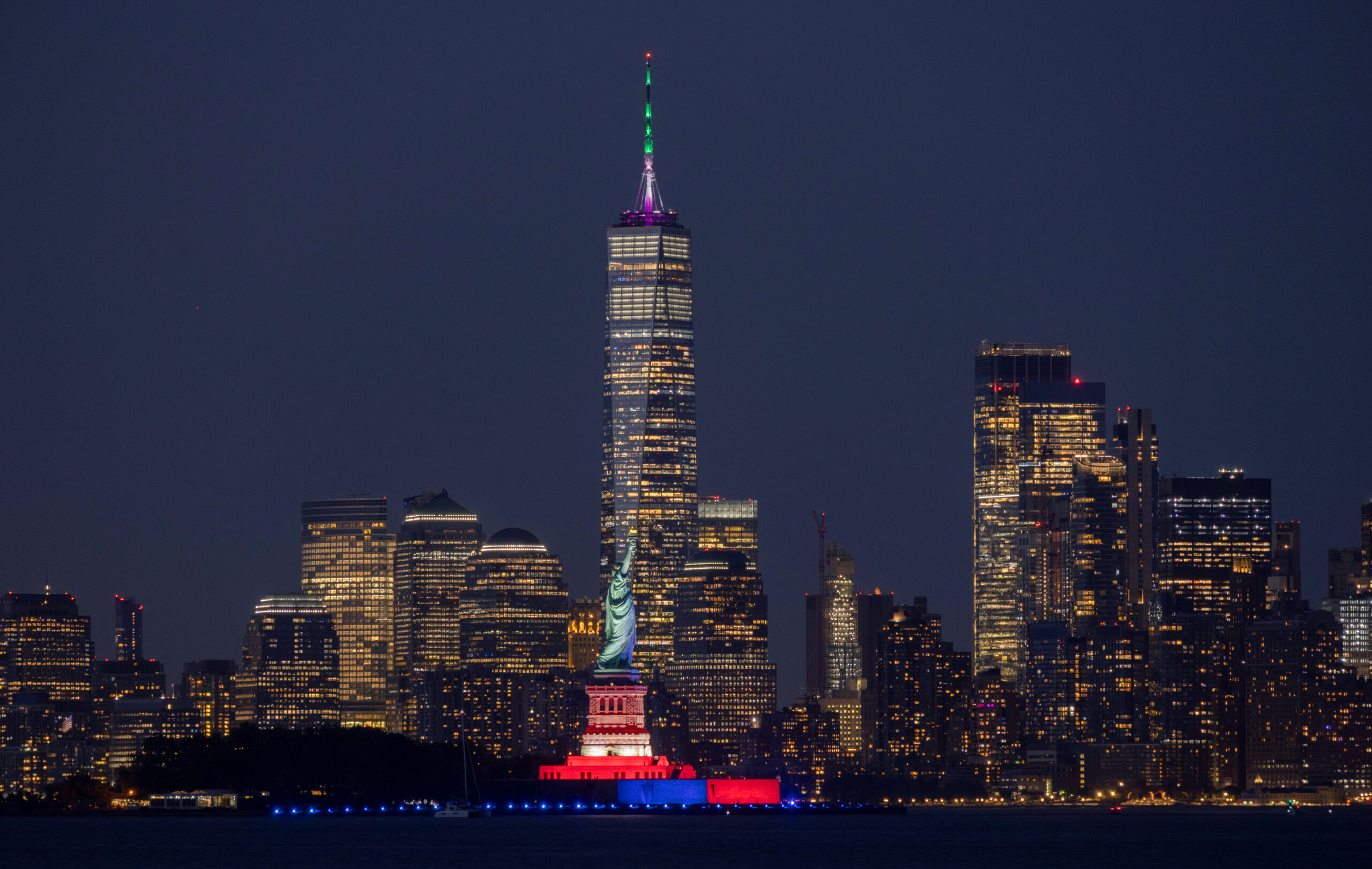
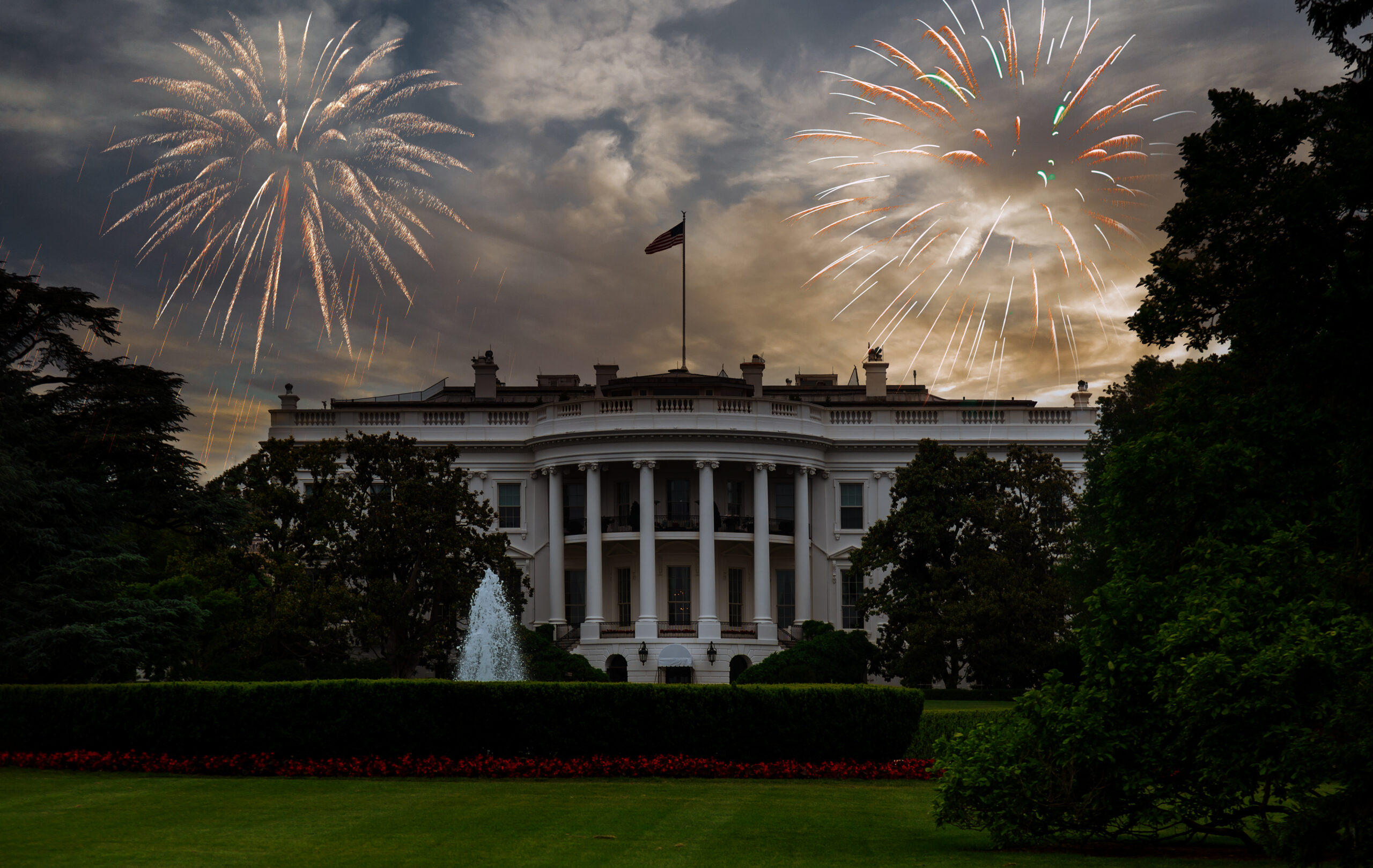
Anyone who steps outside their house on July Fourth is likely to stumble upon one of the hundreds of celebrations of America’s 250th anniversary that will take place in neighborhoods, downtowns, boardwalks, parks and military bases across the country. They’ll be hard to miss; in Washington, the annual fireworks show on the National Mall is expected to use 40 times more fireworks than in typical years.
Some Jewish thinkers believe American Jews have a particular obligation to engage with this anniversary not just as Americans, but as Jews.
“An anniversary is a good occasion to put things in historic perspective. As bad as things may feel in the moment, they’re still pretty great relative to the bulk of not even just Jewish history, but also American Jewish history,” said Franklin Foer, a journalist at The Atlantic who wrote a provocative cover story two years ago arguing that the “golden age” of American Jews is ending. “All the ways in which Jewish values and American values are not just compatible, but overlap and extend one another, is something that I think is really important to cultivate within American Jewry and within American Jewish education.”
Rabbi Rick Jacobs, the president of the Union for Reform Judaism, said he expects many Reform rabbis to address the 250th in their sermons this week.
“I think we’re renegotiating what it means to be a person of deep Jewish faith and a person of deep American patriotism. How am I going to make those not just coexist but really strengthen each other? And I think that’s the big question for this 250th,” said Jacobs. For his part, he drafted a lesson applying a Haftarah reading from the Book of Isaiah to the Fourth of July, and used it to raise questions about the legacy of slavery in this country.
Rabbi Michael Holzman, who leads Northern Virginia Hebrew Congregation, created an interfaith initiative called Faith250 that inspired dozens of synagogues to study America’s foundational texts with the rigor that Jews usually apply to Torah study. At Boca Raton Synagogue, in Florida, Rabbi Efrem Goldberg devoted the congregation’s all-night learning program on Shavuot in May to a series of classes about the past, present and future of Jews in America. (The final class, about spirituality in the U.S., did not begin until 5:00 a.m.)
Every bunk at Camp Ramah in Wisconsin will be spending Shabbat on July Fourth doing age-appropriate learning on the theme of being Jewish in America at the country’s 250th, including exercises in writing their own prayer for the country. (Only English will be used on July Fourth at the camp, which usually sprinkles in Hebrew words for summer-camp words like “cabin” and “lake.”) Members of Kesher Israel, a synagogue in Washington, D.C., will lay a wreath at the Tomb of the Unknown Soldier on July 5th.
The idea behind all of this is to get people to engage deeply with what it means to be American, an exercise they may be more used to doing in a Jewish context.
“When you ask people, ‘Tell me about your American identity,’ they have a hard time answering the question,” said Rabbi Charlie Savenor, executive director of an organization called Civic Spirit, which helps faith communities promote knowledge of civics. He visited Ramah Wisconsin to help organize the Fourth of July programs.
“If I asked you that question about your Jewish identity, would your answer come quicker? 99% of the time people are like, ‘Yes. Passover, Seder, Shabbat. My bar or bat mitzvah.’ You name it, they’ve got something to say,” Savenor continued. “Part of what’s happened is that the American Jewish community — this ranges from unaffiliated all the way to Orthodox — has really invested the energy that we have a stake in this thing that we call Jewish life. And how much you choose to participate, at least you have some sense of where you fit into that picture. But America, which has become so divided and polarized — what it means to be American today has become somewhat confusing.”
Uncertainty about what it means to be an American in 2026 is hardly just a Jewish concern. 77% of Americans say that the signers of the Declaration of Independence would be disappointed in how the country has turned out, according to a Gallup survey. 53% of American adults say they are very or extremely proud to be American — down from 81% a decade ago and 85% in 2006, Gallup found. Educators and politicians often lament the decline or even death of civics education, though Harvard professor Danielle Allen recently argued in The New York Times that, after slumping a decade ago, civics education is on the upswing.
“An anniversary is a good occasion to put things in historic perspective. As bad as things may feel in the moment, they’re still pretty great relative to the bulk of not even just Jewish history, but also American Jewish history,” said Atlantic journalist Franklin Foer.
Rising political polarization complicates Americans’ feelings about how they relate to the country and how, or whether, they feel proud of it. And on top of that, a bipartisan, congressionally funded project to celebrate America’s 250th was sidestepped by President Donald Trump in favor of a more partisan effort called Freedom250.
“I think there has been an increasing linkage between patriotism and partisanship. There’s a sense that if the president I like is in office, then I’m patriotic, and if the president I don’t like is in office, that I’m less patriotic,” said Tevi Troy, a presidential historian and former senior official in the George W. Bush administration.
Chanan Weissman, who leads the institute that publishes the journal Sapir, argued that a crucial project is to figure out how to “recreate the value of nonpartisan patriotism, as challenging as that may be.”
“A flag should not connote a party. It should connote a people. And more than any other group, the Jews should be advancing this,” said Weissman, who served in the Obama and Biden administrations. “We have to make sure that America is not just good for the Jews, as we say, but good for the type of place that a Jewish community can live and thrive and flourish in.”
At 2% of the population, Jews are not going to solve the major education-policy debates in this country, but there is a burgeoning push to help American Jews better understand the ideals and history of this country, and to do so as Jews. Organizations including A More Perfect Union, which promotes democracy as a Jewish value; the Shalom Hartman Institute of North America, a pluralistic Jewish education center; the Tikvah Fund, a right-leaning “ideas institution”; and Pardes, an English-language pluralistic yeshiva in Jerusalem, released source materials about America250, often putting Jewish texts and values in conversation with America’s founding documents.
“Civics education has declined pretty considerably, so it’s not even like this is what you learn in your civics classes,” Hartman President Yehuda Kurtzer told JI. “It has definitely declined as a notion of something I’m supposed to specifically learn as a Jew, that I’m actually responsible as a Jew for this place, for America, and I’m responsible to think about my commitments to America as a Jewish imperative.”
A collective recognition seems to be emerging that this major anniversary, coming as it does at a moment of challenge for American Jews, might actually present an opportunity for renewal, and for reclaiming a common narrative: that this country belongs to the Jews as much as it does to anyone else, but only if they don’t give up on it.
“When Benjamin Franklin was leaving the Constitutional Convention, he was asked by somebody, ‘What kind of government are we forming?’ He says, ‘A republic, if you can keep it,’” said author Dara Horn. “To me, the important word of that sentence is ‘you.’”
A republic is built on the premise that its core rights belong to every citizen equally. Religious freedom, pluralism, full citizenship in a representative democracy — these are values that, while not always fully realized for all Americans, have been the North Star that allowed Jewish life to flourish here.
“Having known the weight of persecution and exclusion, Jews recognized in America’s founding ideals something rare in human history: the possibility of belonging without surrendering our identity,” a group of Jewish leaders, including the heads of several major organizations, former U.S. ambassadors and a number of prominent academics, said in an open letter marking America’s 250th.
“This is not toleration,” said Elliott Abrams, a longtime Republican foreign policy official. “Jews have the same rights as everyone else. This goes back right to the beginning.”
In 1790, President George Washington traveled the country after the Constitution was ratified. Following his visit to Rhode Island, he received a letter from the leader of Touro Synagogue, in Newport, explaining that Jews should have the same rights as other religious groups in America. Washington was so moved that he responded immediately in a now-famous letter espousing his belief in the principle of freedom of religion, including for Jews.
“May the Children of the Stock of Abraham, who dwell in this land, continue to merit and enjoy the good will of the other Inhabitants; while every one shall sit in safety under his own vine and figtree, and there shall be none to make him afraid,” Washington wrote, referencing the Book of Micah. One year later, the Bill of Rights — cementing religious freedom as a core American right — was ratified.
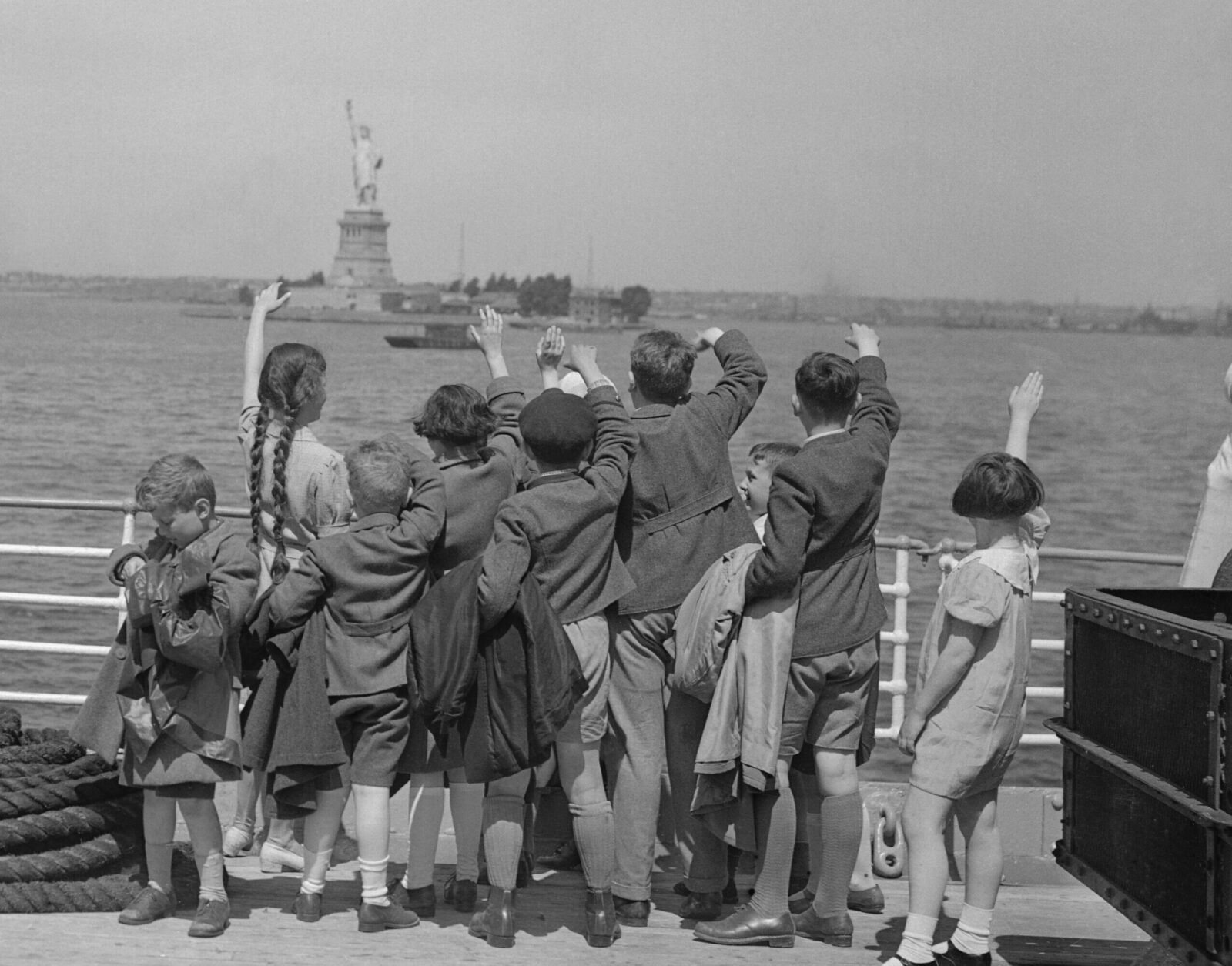
What followed was not a straight line. Slavery undermined the universal values of the Constitution and the Declaration of Independence, and Jim Crow undercut the promise of emancipation. Jewish immigrants escaping pogroms in Europe came to America in massive numbers in the late 19th and early 20th centuries, marveling at the Statue of Liberty as they arrived at Ellis Island, before a jingoistic Congress severely cut back on immigration a century ago. In the 1920s and 1930s, as Nazism progressed in Germany, public figures like Father Charles Coughlin and carmaker Henry Ford spread antisemitic messages to the American masses on the radio and in the newspaper.
“This isn’t the first time that the country has been through an era when it seems not to be living up to its principles,” said Jamie Kirchick, a journalist who has published books about democratic backsliding in Europe and state-sanctioned discrimination against gay people working in the government. “I think that it’s just important to maintain an understanding and a belief in those principles.”
Sarna, the Brandeis historian, put it simply: “In America, we have very short memories.”
“Look at the persecution of German Americans in World War I, or Japanese Americans in World War II. But they recovered. The same was true in the 19th century when Catholics were so mistreated, and now look today at the vice president. So when you look at the long term, there is a lot of reason for hope,” Sarna told JI. “I don’t know that I personally will live to see it, but looking further ahead, I could see things change pretty rapidly, and we will look back and be embarrassed at some of what’s going on.”
Still, just because antisemitism and hatred have existed in America since before its founding does not make this particular revival any more palatable.
“I do think that we have responsibility, while being grateful and feeling responsible, to participate, advocate, vote, do civic duties and so on, but also realize that the lot of the Jew in exile is to constantly sleep with one eye open,” said Rabbi Efrem Goldberg, an Orthodox rabbi in Florida, offering a skeptical rejoinder.
Horn, the author, said she is often cast as the “prophet of doom,” having warned of modern antisemitism even before the Oct. 7, 2023, attacks on Israel and the ensuing war in Gaza touched off the current wave. But she knows that title doesn’t tell the full story.
“Think about the 150th anniversary of the United States, 100 years ago. 1926. Think about the situation of the Jewish community in America then. Pretty crap,” Horn said. Congress had just, essentially, closed the borders. Ford was spreading The Protocols of the Elders of Zion. “It didn’t magically go away. It’s not because people were so good … and they rejected hate. That’s not what happened. This is the height of the [Ku Klux] Klan. What happened was American Jewish activism.”
That’s the message Horn has for the high school and college students she addresses regularly.
Lean in even further to the civic pathways on offer in this country. Run for office. Speak up. Change things. The most important attribute, she tells young people, is courage.
“I think it’s a human instinct to say, ‘Well, we should just hunker down with our people, because that’s who we feel comfortable with.’ My message is no, no, we should not do that,” said Shuly Rubin Schwartz, who retired as chancellor of the Jewish Theological Seminary this week. “Thank God we are citizens. We can use our leverage here. We have the right to protest, we have the right to vote in the people that we want, and we have the opportunity, always, to be building bridges with others.”
Rabbi Goldberg, at Boca Raton Synagogue, offered a skeptical rejoinder, citing a Talmudic teaching about being both respectful and suspicious. “I do think that we have a responsibility, while being grateful and feeling responsible, to participate, advocate, vote, do civic duties and so on, but also realize that the lot of the Jew in exile is to constantly sleep with one eye open,” said Goldberg. American University historian Pamela Nadell called this duality “the paradox of the American Jewish experience.”
In the three years since Oct. 7, the old canard of dual loyalty has come to the fore in American politics with a renewed vigor. An anti-Israel political movement that has been building for years is now making a dent in American politics, pushing the argument that supporters of the Jewish state are driven by the malign influence of a foreign nation and, thus, are insufficiently American. The vast majority of American Jews still maintain a connection to the state of Israel, so one question that Jewish leaders are considering is how to make sure that young Jews are taught to fully inhabit both identities.
Nina Cohen, a history teacher at the Frisch School, a Modern Orthodox day school in New Jersey, developed a course on citizenship and belonging to dig into that tension.
“The ‘dual loyalty’ accusation assumes a zero-sum relationship between Jewish identity and American citizenship,” Cohen wrote in an article last year in Hartman’s Sources journal. “Jewish high schools must teach students to recognize and navigate multiple loyalties — to family, faith, community, nation, and Jewish peoplehood — as a civic strength that enriches democratic participation rather than undermines it.”
The promise of America, according to Jack Lew, a former treasury secretary, U.S. ambassador to Israel and chief of staff to President Barack Obama, requires that Jews not be forced to make that choice, or even to see it as a choice.
“We should be teaching people to be proud of being Americans, and proud of being Jewish, and proud to support Israel as a Jewish democratic state,” Lew told JI. “Those things, if they become choices, undermine the 250 years of progress and success.”
Lew devoted his career to public service, a path that he recognizes was only made possible because his grandparents and his father came to this country from Europe to create a new and better life for their children.
“I think that transition in one generation, from arriving not speaking a word of English to having a son, a child, who can serve at the highest levels of government, is an American story,” said Lew, who is now a professor at Columbia University.
Anne Neuberger, who served as a deputy national security advisor in the Biden administration, argued in a Sapir essay titled “The Jewish Case for Public Service” that raising one’s hand to serve their country is the best antidote to antisemitism.
“Rather than walking away, we should be investing our hearts, our intellects, and our labor into making this nation the sanctuary it was always meant to be,” Neuberger wrote. “Every young person should be encouraged to think seriously about how he might best contribute to that sanctuary.”
For Rabbi Scott Klein, his sanctuary is wherever his soldiers are. As a U.S. Army chaplain at Fort Bragg, in North Carolina, his job is to advise soldiers, most of whom are not Jewish, on ethics and morality; when their unit has to jump out of a plane, for instance, he is right there with them, providing spiritual guidance.
As Klein prepares to celebrate 250 years of America with his soldiers and the local Jewish community in Fayetteville, N.C., he thinks the ethos of the Army offers a useful teaching for all Americans — Jewish and otherwise — at a moment that, for some, feels less celebratory than strained.
“I think that the military remains one of the very few places where Americans from every zip code, background and belief system live, train and bleed together, and it proves that pluralism isn’t a source of weakness,” Klein said. “I hope to remind the Jewish community in the nation that religious freedom is not a passive luxury. It’s actively defended.”
“Rather than walking away, we should be investing our hearts, our intellects, and our labor into making this nation the sanctuary it was always meant to be,” said Anne Neuberger, a deputy national security advisor to former President Joe Biden. “Every young person should be encouraged to think seriously about how he might best contribute to that sanctuary.”

Twelve years after the signing of the Declaration of Independence, when the gunpowder of the Revolutionary War had cleared and the American experiment was still very much an experiment, something momentous happened: the Constitution was ratified. The document that laid out the governing structure of American democracy would, at last, be implemented.
The streets of America filled with parades of citizens cheering on the occasion. The Grand Federal Procession, the country’s official celebration, took place in Philadelphia on July 4, 1788. The spiritual leader of Congregation Mikveh Israel, a Philadelphia synagogue that still operates, marched arm-in-arm at the parade alongside one of the best known ministers in the young country.
A feast was laid out after the parade. One of the tables was filled with kosher food — pickled salmon, bread, almonds, crackers and raisins. The full and enthusiastic inclusion of Jews in the festivities to ring in the ratification of the new Constitution marked a small, if meaningful, inflection point for religious minorities.
“That symbolizes it to me: We always want to be American, fully American, embracing our role as citizens, our privilege and responsibility as citizens,” said Shuly Rubin Schwartz, the former JTS chancellor. “And we want to do so proudly as Jews.”
Featured Stories
partnership pitch
Somaliland president discusses expanded military cooperation with U.S. officials
ENVOY DEBATE
Congressional Jewish Caucus opposes proposal to combine State Dept. Holocaust, antisemitism offices
FAMILY TRAGEDY
Israeli ambassador’s son seriously wounded in West Bank car-ramming attack
Please log in if you already have a subscription, or subscribe to access the latest updates.
 Continue with Google
 Continue with Apple