











































Arizona Jewish leaders regret supporting Yassamin Ansari after she turns against Israel
Ansari is now rejecting support from Democratic Majority for Israel after the group championed her 2024 candidacy
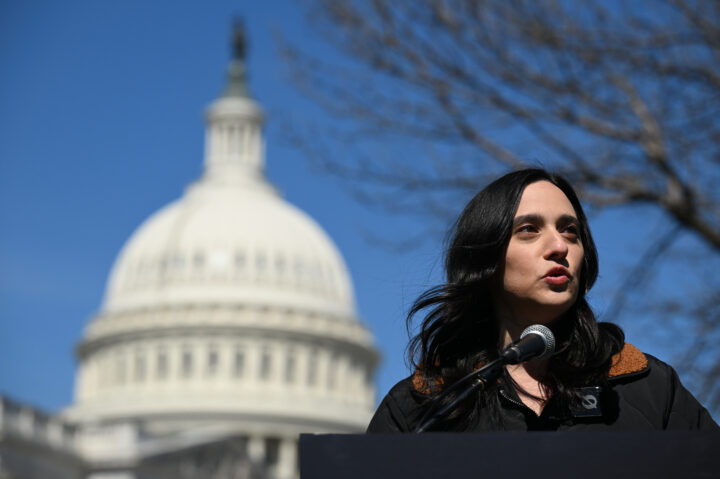
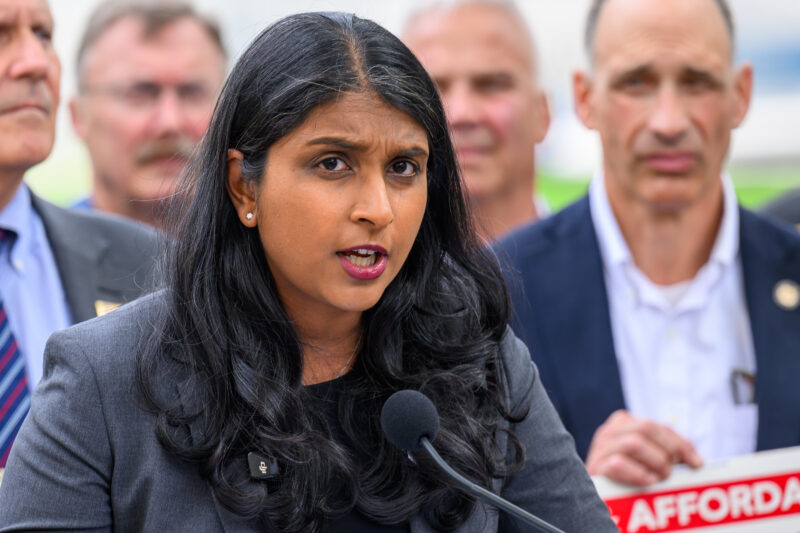
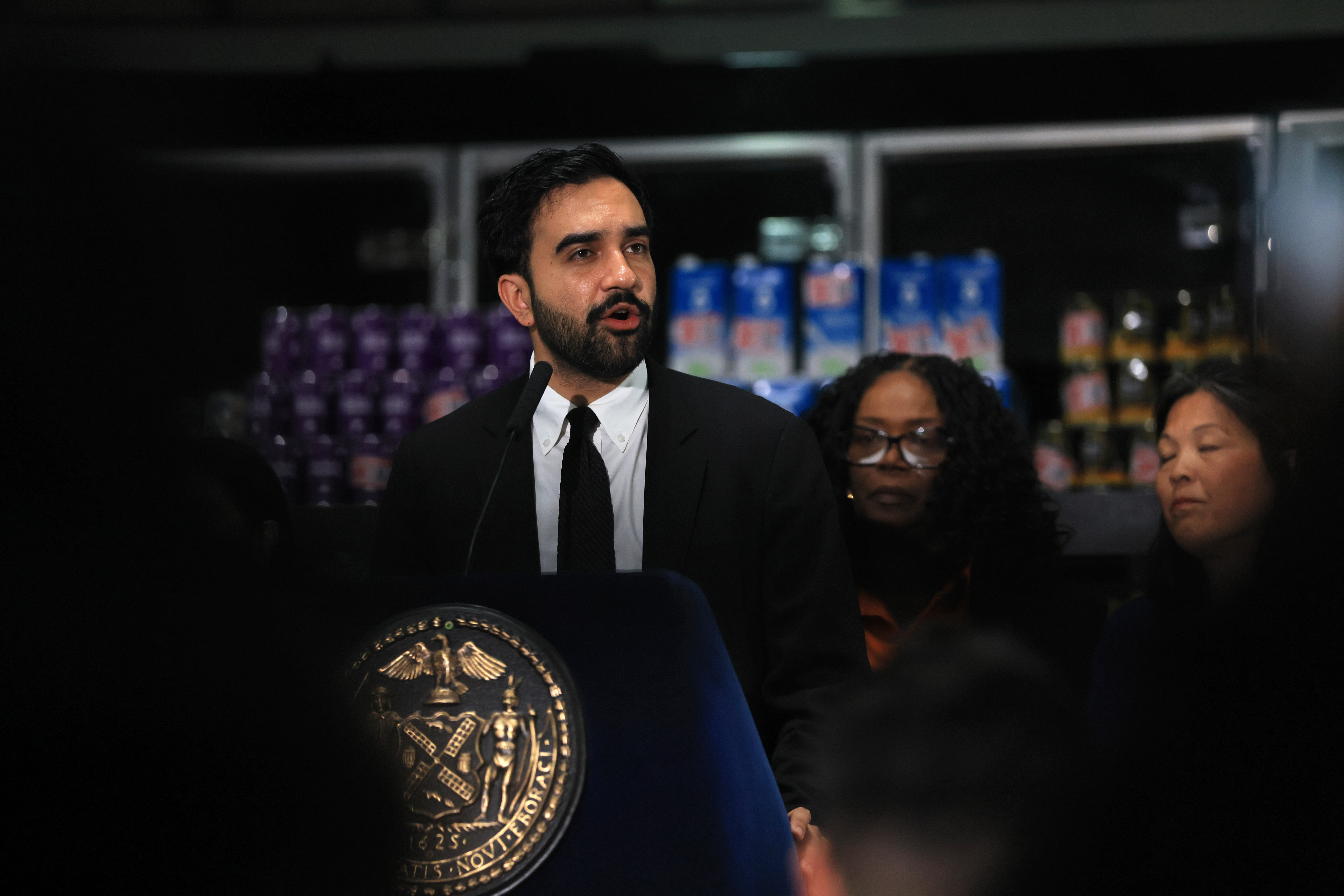
Photo by Matt McClain/Getty Images
Rep. Yassamin Ansari (D-AZ) speaks at a press conference calling for an end to the conflict in Iran outside the United States Capitol on March 18, 2026 in Washington, D.C.


 Add JewishInsider on Google
When Rep. Yassamin Ansari (D-AZ) narrowly prevailed in the Democratic primary for an open House seat in Phoenix in 2024, winning by just 39 votes in a deep-blue district, the Arizona lawmaker could attribute her success, in part, to strong backing from the local Jewish community as well as a surge of outside spending from a prominent pro-Israel group.
Many Jewish and pro-Israel leaders in the state and beyond were encouraged that Ansari, who identifies as a progressive, staked out what seemed at the time like a moderate approach to Middle East policy issues amid rising Democratic hostility toward Israel over the war in Gaza — particularly in the party’s far-left wing.
Ansari, an Iranian American and former vice mayor of Phoenix, drew a contrast with her top rival, Raquel Terán, a former state lawmaker and party chair who had raised concerns among Jewish activists over her lack of clarity on key issues, such as whether she supported aid to Israel. For her part, Ansari stressed her commitment to U.S. military funding for Israel “without additional conditions,” while saying in a position paper that the United States “must do everything in its power to stop” Iran “from acquiring a nuclear weapon,” which she argued “would pose an existential threat to Israel.”
Now, however, Ansari, 34, has largely turned away from the stances she embraced during her primary, aligning with a range of far-left policy positions that have led several Jewish and pro-Israel leaders to feel they were misled, they told Jewish Insider.
Alma Hernandez, a Democratic state representative in Tucson who had been one of Ansari’s top Jewish campaign surrogates in the 2024 primary, said she “was really excited for the idea of having someone like” Ansari in office, noting that she attended the congresswoman’s swearing-in ceremony in Washington to demonstrate her solidarity.
“I have not talked to her since,” Hernandez said last week in an interview with JI. “I think a lot of folks in the community feel they were really used in a sense,” she added, alleging that Ansari “was very careful with all her words because she wanted the support and the financial backing” in a closely contested race.
Hernandez added that she did not think she could reasonably support Ansari’s reelection or ask Jewish community members to get behind her as she had in the primary race two years ago.
In an interview with JI on Wednesday, Ansari said that she has received positive feedback from Jewish voters in her district about her position on Israel. “I do believe I still have significant support from the Jewish community in Arizona,” she added, affirming that her “relationship to Arizona’s Jewish community has always been, and will continue to be, one of deep engagement and mutual respect.”
“I’m sorry that some people may feel misled, but that’s not how I see it at all,” she said, arguing that her views on the Middle East simply underscore the extent to which “the context and the situation on the ground have changed dramatically since a couple of years ago.”
Ansari said her office keeps a log of local outreach that shows most of her constituents, “if not the vast majority, are pretty in line with the American public on this issue,” stressing voters overwhelmingly agree “that what has happened in Gaza has been atrocious, that we need to really consider using U.S. leverage on how to influence Israeli policy and deep opposition to the far-right Netanyahu government.”
Still, her erstwhile Jewish supporters said they felt betrayed by her shift and questioned her sincerity. “I still really can’t believe how she played us,” said one pro-Israel leader in the state who had enthusiastically backed Ansari’s 2024 bid and was granted anonymity to speak freely about frustrations with the freshman lawmaker. “I thought she was somebody different.”
In her first Middle East policy test as a member of Congress in January, Ansari broke with progressives in backing Republican-led legislation to sanction the International Criminal Court for issuing arrest warrants against senior Israeli officials, even as she clarified it “wasn’t an easy vote.”
But since then, Ansari has adopted a more openly hostile approach to Israel that has fueled a mounting sense of disappointment among her Jewish allies who had believed she would strike a balanced tone while in the House. She is a co-sponsor of the Block the Bombs Act, which would impose sweeping new restrictions on weapons sales or transfers to Israel, for instance, and was an early backer of a Lebanon war powers resolution, introduced by Rep. Rashida Tlaib (D-MI), aimed at blocking U.S. support for Israeli military operations against Hezbollah, an Iranian terrorist proxy.
During an interview this week with Mehdi Hasan of the media outlet Zeteo that underscored her growing ties to the far left, Ansari said for the first time she believed that Israel had committed genocide in Gaza as well as Lebanon, citing a U.N. report released this month. “I just don’t think we can continue to mince our words or deny what so many credible actors and institutions and doctors are saying,” she said of her thinking.
Ansari told JI she was “deeply sympathetic” to Jewish colleagues and constituents who “find the term genocide to be extremely hurtful,” saying that she did not “believe that a word should be used as a litmus test” in political debates over Israel that have consumed several recent Democratic primary races.
“Ultimately,” she said, “being clear about what has happened in Gaza and what continues to happen is not to minimize the horrors of either the Holocaust or the violence committed on Oct. 7 by Hamas, and I continue to condemn that forcefully and continue to believe Israelis deserve to live in peace and security in the state of Israel, and I believe we need a secure Palestinian state.”
Elsewhere in the Zeteo discussion, Ansari said that she remained uncertain about where she would land on an anticipated House vote over an amendment led by Rep. Thomas Massie (R-KY) to slash the annual $3.3 billion in military aid the U.S. is set to provide Israel in the 2027 State Department funding bill, a controversial effort that Jewish activists in Arizona have urged her to oppose, according to a recent email shared with JI.
She also vowed to reject financial assistance from pro-Israel groups including AIPAC and Democratic Majority for Israel, the latter of which endorsed her 2024 campaign and pumped more than $400,000 into the race to boost her bid, hailing her victory as proof “that being pro-Israel is not just wise policy, but also winning politics.”
“I just don’t want anyone to think that any of my decisions are influenced by any organization,” she explained to Zeteo. “They never, quite frankly, have been or should.”
Speaking with JI, Ansari said she has continued to engage with DMFI and has a “respectful relationship” with the group, even as she now disavows its support. “I really do find the villainization of the members of these organizations to be very problematic,” she said of the pro-Israel community. “That’s why I have very much not been antagonistic, because I don’t want to give in to that.”
DMFI’s super PAC declined to comment on Ansari’s remarks. A spokesperson for AIPAC did not return a request for comment.
Ansari’s lack of interest in backing from AIPAC comes as the group’s brand has become toxic in a number of Democratic primaries, particularly those in progressive-minded districts. And her shift to a more skeptical position on the U.S.-Israel alliance is reflective of broader polling trends that show eroding support for Israel in both parties — especially among younger voters.
But according to a source with first-hand knowledge of the matter who spoke with JI on the condition of anonymity to address a sensitive subject, Ansari had “worked tirelessly” in her primary to claim an AIPAC endorsement, crafting a position paper with its policy expectations in mind, meeting with AIPAC’s staff and pledging to visit Israel on an AIPAC-sponsored trip if elected to Congress.
AIPAC held off on supporting Ansari because it was unconvinced about her views and out of deference to Sen. Mark Kelly (D-AZ), who was backing Terán and asked the group to remain neutral in the primary, the source noted.
Not long after she had entered the House, Ansari privately reiterated her interest in visiting Israel on an AIPAC-led congressional delegation, according to the source. But despite her prior outreach, her team said then that she did not want an AIPAC endorsement — indicating that it was too early in her tenure and she needed more time to acquaint herself with the group.
Ansari did not dispute that account but added there were irreconcilable disagreements with AIPAC that precluded constructive conversation, not to mention an endorsement. “The truth, from my perspective, is that there was never any room for policy differences with AIPAC,” she said, while stressing that the group “continued to provide feedback on” her positions that she was “unwilling to make.”
Despite having voiced interest in visiting Israel with AIPAC, Ansari said she “could not justify taking part” in a trip last year, amid “the continuation of violence in Gaza” and “well into the Trump administration.” Her outspoken opposition to the war in Iran subsequently hardened her resistance to such a trip, she suggested.
One pro-Israel activist in Arizona said that Jewish leaders who got behind Ansari in 2024 and are now stung by her reversals should not necessarily feel surprised, noting she had no demonstrable record as a strong supporter of Israel prior to her campaign for Congress.
In some ways, Ansari’s evolution echoes that of Rep. Maxwell Frost (D-FL), a fellow progressive who was elected in 2022 after making a range of commitments to uphold support for Israel that he has since reneged on in Congress, stoking disenchantment among local Jewish leaders who were initially energized over his campaign.
But while Frost had engaged in private diplomacy with DMFI to preempt attacks as he ran against the group’s preferred candidate, Ansari actively courted and accepted support from the pro-Israel community in her primary, a key distinguishing factor of the race featuring an opponent seen as more critical of Israel.
Zachary Bell, a Jewish community activist in Phoenix who has spoken to Ansari about Israel and Gaza, said that he was “very happy with how she has responded” to the wars in the Middle East. “I am far from a super far-left, anti-Israel person,” he clarified. “I think there is a wide range of opinions on this issue in the Jewish community,” he added. “She has done a very good job seriously engaging with people across that spectrum.”
Bell volunteers with J Street, the progressive Israel advocacy group, but said he was speaking for himself. J Street endorsed Terán, Ansari’s primary rival, in 2024, and it has not backed Ansari this cycle, as she runs unopposed for a second term in Arizona’s solidly Democratic 3rd Congressional District.
A Jewish community leader in Arizona said Ansari’s shifting stances on Israel indicate that she no longer feels she needs support from former pro-Israel allies to continue holding her seat. “She’s packing her bags for reelection, and there is a weight limit,” the Jewish leader told JI. “Israel, right now, weighs too much for her.”
Adam Goodman, a Jewish activist in Phoenix who supported Ansari’s campaign in 2024, said he was aligned with the congresswoman “on many issues,” calling her “smart, pragmatic and engaging, with a long political career ahead of her.”
But while he had once praised Ansari as “unequivocal in her support for Israel,” Goodman suggested he has since grown disillusioned about the congresswoman’s current approach.
“Unfortunately,” he told JI, “she is demagoguing Israel without holding other countries to the same standard.”
Ansari, for her part, said that her views were more carefully considered than her critics speculated and dismissed accusations that she is playing politics on Israel. “I’m not somebody who jumps on any sort of bandwagon,” she insisted to JI. “I think very deeply about foreign policy.”
“We are having quite the reckoning within the Democratic caucus and Congress about all of these issues right now,” she said.
More Stories

TOEING THE LINE
Menin, Levine call for ‘focus’ on Oct. 7 victims — but don’t condemn Mamdani
EXCLUSIVE
Colorado senators introduce bill to expand federal security grant program

CONFERENCE QUOTABLES
NatCon speakers mark Oct. 7 by telling the Jews to stop complaining about antisemitism
PHONE A FRIEND
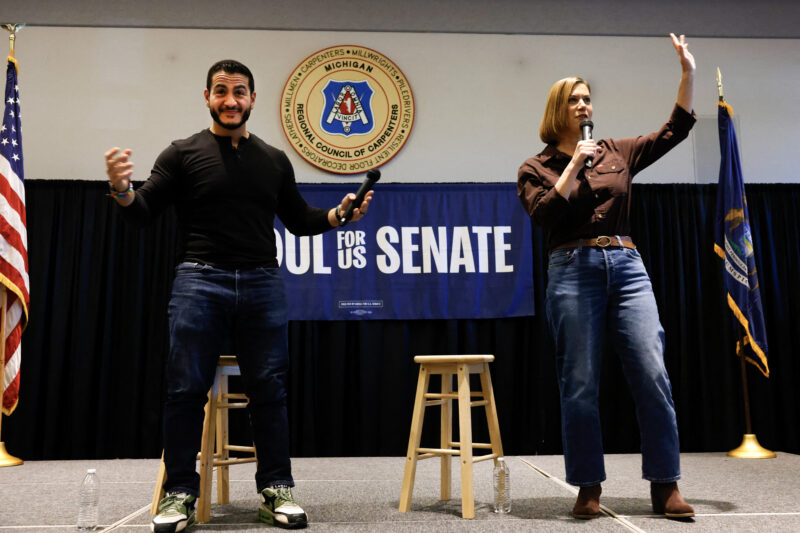
AOC launches campaign blitz for El-Sayed across Michigan

CAMPUS CHRONICLES
The freshmen on Oct. 7, 2023, who became Jewish leaders in the terror attacks’ aftermath
NOT ON BOARD
Lansing Mayor Andy Schor, a Jewish Democrat, says he’s not supporting El-Sayed
Please log in if you already have a subscription, or subscribe to access the latest updates.
 Continue with Google
 Continue with Apple