





































Analysts expect continued pro-Israel slant from new Hungarian government under Magyar
Economic ties and broader European alliances are likely to preserve the bilateral relationship, even as the expected prime minister-elect moves to rejoin the ICC and potentially pivot back towards the EU
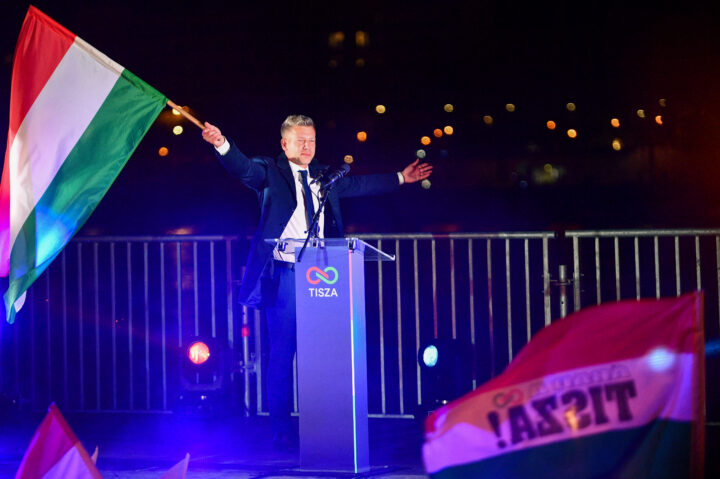
Ferenc ISZA / AFP via Getty Images
Peter Magyar, leader of the pro-European conservative TISZA party, waves the national flag during celebrations at the election night party in Budapest after the general election in Hungary, on April 12, 2026.


 Add JewishInsider on Google
The end of Hungarian Prime Minister Viktor Orbán’s 16-year tenure following his electoral defeat on Sunday to center-right rival Péter Magyar has sparked immediate questions regarding the future of one of Jerusalem’s most reliable, yet complicated, alliances in Europe.
While Orbán’s departure removes a reliable ally of Israeli Prime Minister Benjamin Netanyahu within the European Union, experts suggest Jerusalem’s standing in Europe and bilateral relationship with Budapest will not be significantly set back.
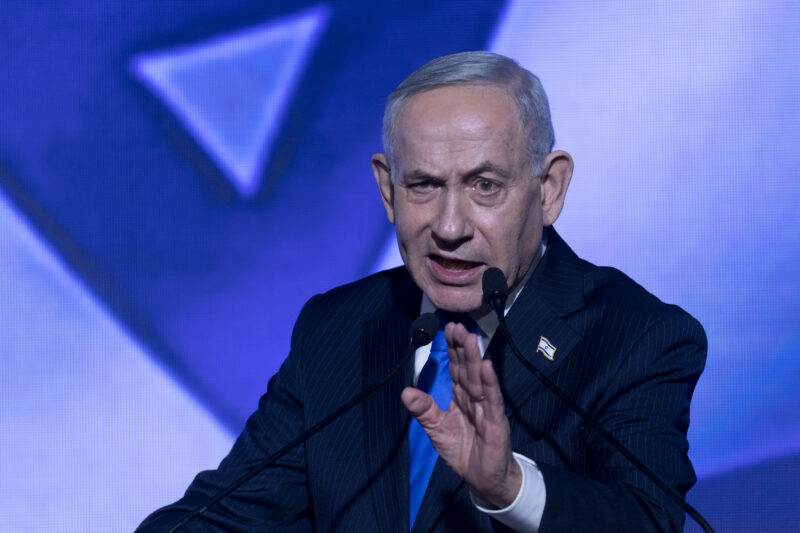
Under Orbán, Hungary frequently broke ranks to block anti-Israel statements and actions from the EU. The former leader maintained a warm posture toward Israel and voiced opposition to terror organizations. He also initiated the process to withdraw Budapest from the International Criminal Court after it issued an arrest warrant for Netanyahu. Orbán called the court “political” and defied the ruling by welcoming the Israeli prime minister for a visit.
“Israel is losing a close friend with the electoral defeat of Viktor Orbán,” David May, a senior research analyst at the Foundation for Defense of Democracies, told Jewish Insider. “His willingness to defy EU consensus shielded Israel from many hostile actions. The Central and Eastern European states are far friendlier to Israel than their Western counterparts, and that will likely continue under Peter Magyar — though to what extent remains unclear.”
Magyar has vowed to maintain Hungary’s “special relationship” with Israel, calling the Jewish state an “important economic partner.” However, he has also called for “pragmatic relations,” including returning Hungary to the ICC and suggesting that Budapest will likely move away from the reflexive veto that characterized the Orbán era, replacing it with a case-by-case approach to EU measures concerning Israel.
“We do not know much about Péter Magyar’s policy views on Israel,” said Ferenc Németh, an international relations expert and Fulbright visiting researcher at Georgetown University. “Politically speaking, I do not expect relations to worsen or for Magyar to have a cold or hostile position toward Netanyahu; rather, Hungary will align with the views of its partners on key issues concerning Israel.”
Németh added that Israel will remain “an important partner for Hungary, especially given the economic ties and the shared Jewish heritage.” He noted that Magyar’s desire to rejoin the ICC is likely aimed at strengthening “Hungary’s position among its most valuable Western partners and to achieve full alignment with their views.”
Jonathan Ruhe, a fellow at the Jewish Institute for National Security of America, also suggested that significant change in posturing is unlikely. He noted that Orbán’s defeat is “easily overstated in terms of likely impact on Israel.”
“Israel’s standing in Europe won’t be dimmed by Orbán’s departure,” Ruhe said. “Israel has reliable partners like Germany, Czechia, Greece and Cyprus. Germany in particular has been a firewall against a lot of European anti-Israeli actions, and Magyar has suggested he’ll follow Germany’s lead here.”
Experts also noted that Orbán’s actions did not carry as much weight as they appeared and expressed concern over the former Hungarian leader’s preference for Moscow in the Russia-Ukraine conflict and complex relationship with Tehran.
“Orbán blocked primarily statements critical of Israel, not concrete measures — with the exception of a sanctions package targeting violent settlers and organizations targeting Palestinians in the West Bank,” Matthew Levitt, a senior fellow at the Washington Institute for Near East Policy, said. “And Hungary did not always act in Israel’s interest under Orbán, such as when Hungary offered Iran intelligence support after the pager attack against Hezbollah in September 2024.”
May similarly noted that Orbán was “not without controversy.”
“His close ties with Russia — and sometimes strong bonds with Iran — at times placed the Hungarian leader at odds with Israeli and U.S. interests,” May said. “Orbán’s proximity to antisemites and his antidemocratic tendencies also made him a less than desirable ally.”
Ruhe said that Orbán’s actions in support of Israel should be “weighed against everything he did to whitewash Hungary’s role in the Holocaust, engage in antisemitic dog-whistling, roll back democracy and essentially serve as an agent of Moscow — Iran’s partner in crime — inside the EU.”
“Magyar has pledged to maintain his country’s ‘special relationship’ with Israel, but without Orbán’s significant baggage that far outweighed the few concrete steps he took in support of Israel,” Ruhe added.
Németh said that Hungary will remain “a country with a strong zero-tolerance policy against all forms of antisemitism,” noting that Orbán, despite his often vocal support for Israel, engaged in actions that could be perceived as triggering “antisemitic views.”
“Orbán has used coded messages to trigger antisemitic views, [such as] making George Soros, an American-Hungarian businessman of Jewish heritage, a central figure in propaganda,” Németh said. “Magyar has pledged not to do that.”
More Stories

Go Blue, but blue and white?
Michigan Hillel’s break with Israel advocacy groups raises questions about where it stands

Daily Kickoff
Mamdani meets the vigil-antis
EXCLUSIVE
Colorado senators introduce bill to expand federal security grant program
Daily Overtime
Slotkin sees no ‘Jewish vote’ in Michigan

education consternation
Department of Education accuses colleges and universities of hiding foreign funding ties

TOEING THE LINE
Menin, Levine call for ‘focus’ on Oct. 7 victims — but don’t condemn Mamdani
Please log in if you already have a subscription, or subscribe to access the latest updates.
 Continue with Google
 Continue with Apple