


Chip Somodevilla/Getty Images
Will he or won’t he? Analysts don’t rule out Iran strike despite diplomatic flurry
U.S.-Iran negotiations scheduled are ‘likely a diplomatic box-checking exercise and smokescreen,’ FDD’s Andrea Stricker said, while JINSA’s Jonathan Ruhe said U.S. military action is ‘unlikely for the moment’


 Add JewishInsider on Google
Despite the Trump administration’s willingness to diplomatically engage with Iranian officials, leading Middle East experts told Jewish Insider on Monday that military action against Tehran still remains a very real possibility.
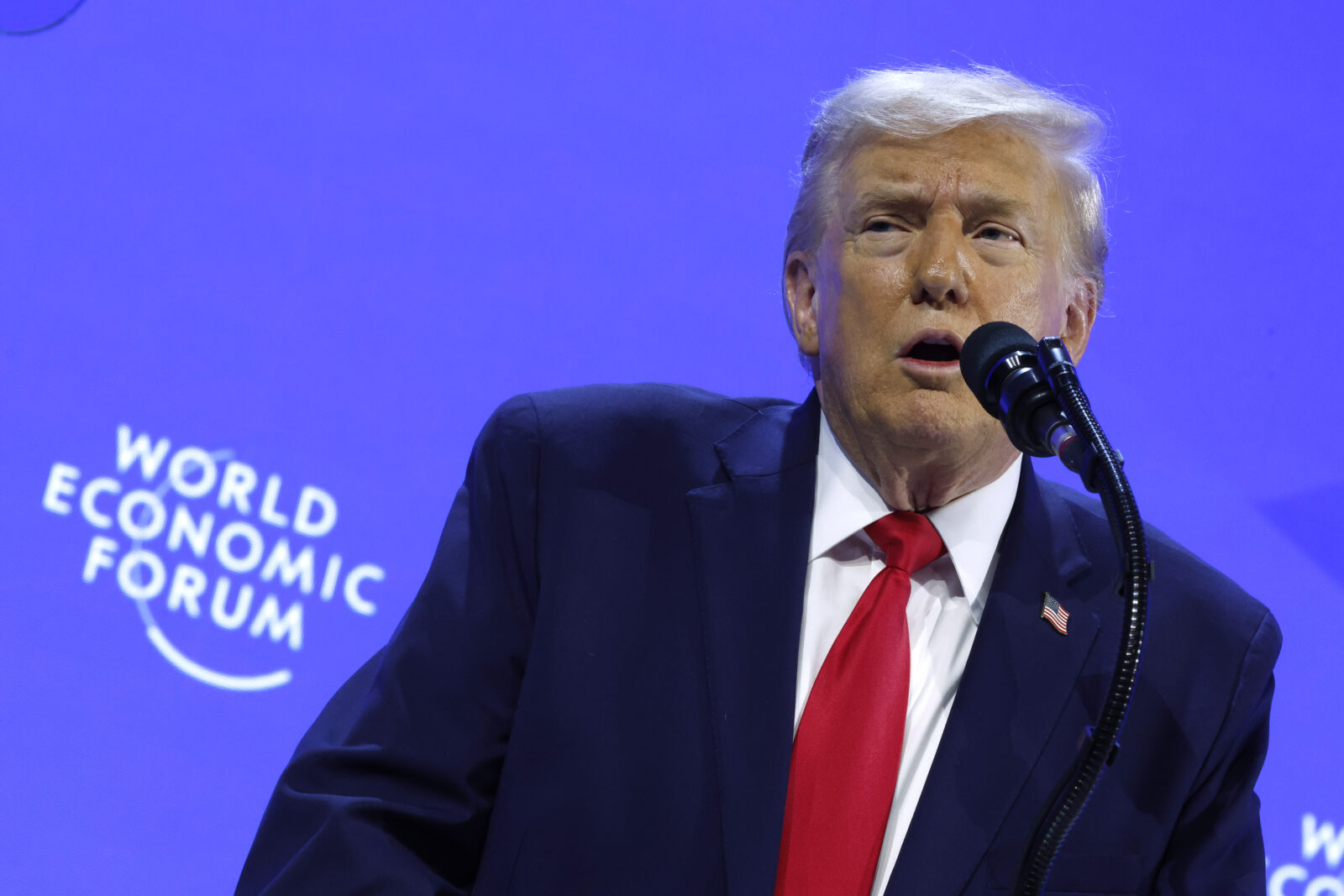
“I can’t tell you what I’m going to do,” President Donald Trump told reporters on Monday evening when asked about the threshold for an Iran strike.
“We have a tremendous force going there [to the Middle East], just like we did in Venezuela,” said Trump. “I’d like to see a deal negotiated. But right now, we’re talking to [Iran] and if we could work something out, that’d be great. If we can’t, probably bad things will happen.”
White House Special Envoy Steve Witkoff and Iranian Foreign Minister Abbas Araghchi are expected to meet in Istanbul on Friday to discuss a potential new nuclear agreement, according to reports. Jared Kushner, who has played a key role in recent high-profile diplomatic negotiations, is also expected to attend, alongside the foreign ministers of Turkey, Qatar, Egypt, Oman, Saudi Arabia and Pakistan, in the first meeting between the U.S. and Iran since U.S. strikes on Iranian nuclear facilities last June.
The planned talks come as the administration continues to exert pressure on Tehran — in response to Iran’s violent crackdown on protesters last month, Trump has publicly weighed the possibility of U.S. military intervention, ordering the movement of additional military assets into the region and issuing a series of stark warnings on social media indicating that U.S. forces are “ready, willing and able to rapidly fulfill [their] mission, with speed and violence” should a deal fail to be made.
While the administration has emphasized diplomacy as its preferred path, analysts caution that negotiations do not necessarily signal that the U.S. will not strike.
“Military intervention remains likely in light of President Trump’s demonstrated willingness to use force and the U.S. military buildup in the region,” said Michael Koplow, chief policy officer at the Israel Policy Forum. “Given the gulf between the American and Iranian positions and the general hard-line position of the Iranian regime on nuclear issues, it is hard to tag a nuclear deal as a likely outcome.”
Andrea Stricker, a research fellow at the Foundation for Defense of Democracies, told JI that a strike does remain on the table. She said that a deal could be difficult to reach and the upcoming meeting in Istanbul is unlikely to yield meaningful results or concessions from Iran.
“The planned meeting is likely a diplomatic box-checking exercise and smokescreen to enable a continued U.S. military buildup before Trump authorizes strikes,” Stricker said. “The administration’s demands that Iran abandon nuclear enrichment, cap its missile program, and halt support for regional proxies and terrorism, as well as stop executing its people, are nonstarters for the regime.”
Koplow said the administration’s “mixed signals” on whether it will seek diplomacy or take military action are likely “not a ruse or a diversion,” but instead a signal that Trump “has not actually made up his mind” and is “unsure what his end goal is.”
Jason Greenblatt, who served as White House Middle East envoy in the first Trump administration, asserted that “there’s no mixed signals,” arguing that the president’s messaging has been clear.
“President Trump has made the choice clear: a real, enforceable deal that ends Iran’s nuclear and missile threats and protects the U.S., our allies, and the Iranian people — or decisive action,” said Greenblatt, who emphasized that while Trump is reluctant to engage in war, the president will not accept an agreement he views as insufficient.
“He is not a war president,” Greenblatt said, “but he will not accept a weak deal. Iran’s leadership should understand by now that President Trump means exactly what he says.”
Stricker also noted that Trump has consistently sought to avoid prolonged conflict, but argued that Iran’s internal repression and continued nuclear advances may push the president toward decisive action. On Saturday, satellite images revealed new activity at Iranian nuclear sites, a potential sign that Tehran is aiming to salvage remaining materials from the June strikes.
“President Trump favors stability and prioritizes ending violence in global affairs,” she said. “After achieving the defanging of Tehran’s nuclear program, the regime has shown it remains a threat — the ongoing massacre is too much for Trump to tolerate as the leader of the free world.” “The president will likely ensure the regime pays a price, but whether the price is regime change remains to be seen,” she added.
When detailing what potential U.S. military intervention could look like, Koplow said that it would likely be “limited” in scope.
“Any U.S. action is likely going to fall short of what the Israelis would like to see, which is a campaign that doesn’t stop until the regime has fallen,” said Koplow. “Trump seems to favor quick strikes, and he is also facing wall-to-wall opposition from Arab states regarding the prospects of a long campaign that destabilizes the region and damages prospects for trade, investment, and growth.”
However, other analysts read the shift to negotiations as a signal that intervention is increasingly unlikely. Jonathan Ruhe, a senior fellow at the Jewish Institute for National Security of America told JI that U.S. military action is “unlikely for the moment.”
“An even bigger concern now is that military action could be off the table indefinitely, in a way it wasn’t just a day or two ago, as renewed talks now seem more likely,” said Ruhe.
Ruhe also noted that a key indicator of Trump’s intentions will be “how long he keeps the ‘armada’ within striking distance,” referring to the U.S. military assets in the region. He added that negotiating with Tehran will likely result in an unfavorable outcome for the U.S.
“Negotiating with Iran is absolutely the worst possible option for the United States now, because Iran’s regime will go from being on the ropes to thinking it prevailed,” said Ruhe, noting that Tehran is unlikely to agree to an “acceptable deal,” instead using the “prospect of talks to stave off military threats.”
“[Iran] is trying to do what it always does, playing for time and seeing what concessions it can wrangle without ever giving up anything itself,” Ruhe added. “This leaves zero upside for the U.S., since Iran is too emboldened to agree to serious concessions. There’s plenty of downside, too, since U.S. credibility would be dangerously eroded in Tehran’s eyes if Trump fails to fulfill his earlier threats.”
Koplow said Jerusalem is also concerned about a potential nuclear deal and is likely to perceive Iran’s willingness to enter talks as a way of “dragging out the process indefinitely.”
“[The Israelis] are concerned that Trump will back off his threats to take action or end up signing a deal that falls short of addressing the entire basket of issues — nuclear, missiles, and proxies,” said Koplow.
Ali Shamkhani, a senior adviser to Iranian Supreme Leader Ali Khamenei, had said Tehran would strike Israel in response to any U.S. military action, in an interview with the Lebanese-based Al Mayadeen.
Stricker warned that any agreement that falls short of dismantling the regime’s power structure and fails to address key issues would be problematic not only for the U.S. and Israel, but for the Iranian public.
“Any deal with the Islamic Republic would represent a historic betrayal of the Iranian people,” Stricker said. “The only negotiation America should entertain with Tehran is the exit of top regime officials from Iran and their relinquishing of power prior to an orderly transition to democracy.”


Please log in if you already have a subscription, or subscribe to access the latest updates.
 Continue with Google
 Continue with Apple