


Alex Brandon/AP
Generational challenge threatens Ed Case in Hawaii’s under-the-radar primary
A 42-year-old progressive state senator has quietly closed the gap on the 73-year-old pro-Israel incumbent, with internal polls showing a tightening race before Saturday's vote


 Add JewishInsider on Google
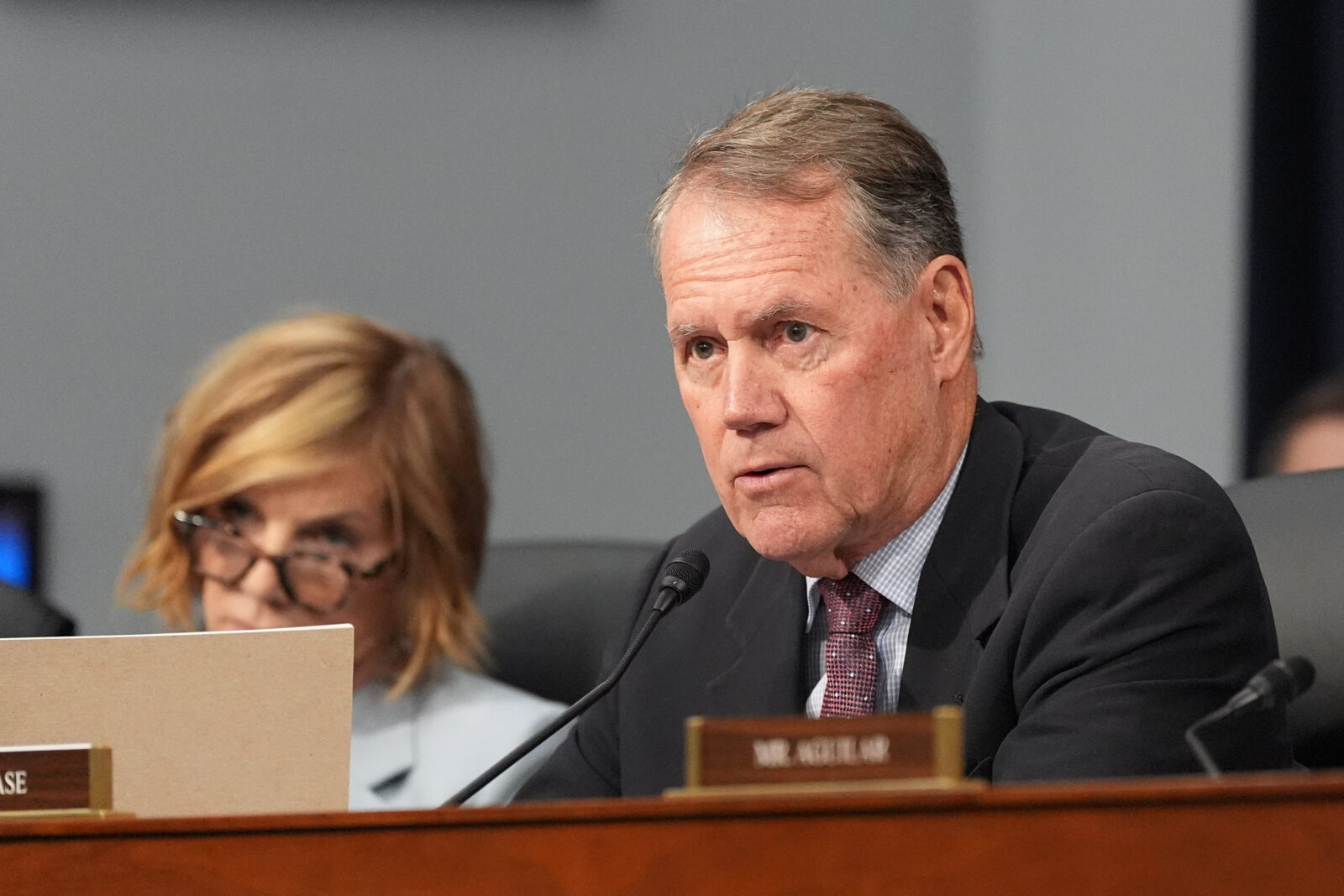
Rep. Ed Case (D-HI), a moderate pro-Israel Democrat in Hawaii who was first elected to the House in 2002, has not drawn a serious primary threat in several years.
Now, as he prepares to defend his seat in a primary on Saturday that has largely flown under the radar, some Democrats are warning that Case, 73, could be at risk of losing to a younger challenger capitalizing on a national political environment that has proven unfavorable to Democratic incumbents amid broader calls for generational change from the party’s activist base.
“It’s one of those sleeper races where there’s definitely an upset brewing,” said a Democratic operative who worked on the Case campaign until a few months ago, speaking on condition of anonymity to avoid professional reprisals. “Ed is running a poor race,” the former staffer told Jewish Insider, echoing other observers who described a sluggish approach in which Case has largely foregone campaign events and avoided debates with his opposition.
While the contest has not centered around Israel or AIPAC, which has officially endorsed Case but is not involved in the race, it reflects a trend seen in several recent Democratic primaries, where well-established pro-Israel incumbents were unseated by increasingly competitive challenges from an emboldened far left.
Jarrett Keohokalole, a 42-year-old progressive state senator, has instead argued that his opponent is not meeting “the urgency of the moment,” to which Case has countered that “seniority matters” in Congress — where he sits on the powerful House Appropriations Committee.
Keohokalole’s message is resonating, experts in the state and recent polling suggest, particularly after a separate challenger dropped out of the race in May, effectively narrowing the contest to what is viewed as a one-on-one matchup in Hawaii’s safely Democratic 1st District, anchored by the state capital of Honolulu on Oahu.
One Democratic strategist in Honolulu who is not involved in the primary told JI that Keohokalole “is making this closer than” Case “would like to see” in the final stretch of the race. “There’s really not much of any excitement around him,” he said of the veteran lawmaker.
“I think it’s going to be closer than anyone would have predicted back in the beginning and may come down to a single-digit difference,” another Honolulu strategist who is not working in the primary told JI.
“Jarrett has closed the gap” and run a “very effective campaign,” the strategist added, noting that Case had stepped up his digital advertising and texting, “which he hasn’t ever done before.”
Polling from Keohokalole’s campaign conducted in early July and obtained by JI had Case leading by eight points, 33-25%, with 42% undecided. A more recent internal tracking poll from July 24 showed Keohokalole leading Case by seven points.
Martin Hamburger, a veteran Democratic ad maker who is serving as a media consultant to Keohokalole, said he was feeling optimistic. “Our first poll showed us that there was a big name ID gap, but Case wasn’t breaking 50 percent,” he told JI, noting that he cut an introductory ad with a jingle about how to pronounce Keohokalole’s name based on a tune preschoolers in Hawaii learn.
“I think we have a very, very good shot, as good a shot as all the work I’ve done in Hawaii,” Hamburger told JI this week. “There are a lot of trade winds that are blowing in a ‘throw the bums out’ sort of mood.”
Hamburger’s firm has also been working for Future Progress, a new super PAC that recently entered the primary to boost Keohokalole and whose donors have yet to be disclosed. But he said he was not personally involved in the effort and that his firm had instituted a firewall between the campaign and the super PAC.
In contrast with other races where Middle East policy had featured prominently, “Israel has barely come up at all,” Hamburger told JI. He described Keohokalole as more closely aligned with J Street, the progressive Israel advocacy organization. Hamburger, who called himself pro-Israel and an AIPAC supporter, said that he wrote Keohokalole’s Israel position paper but was unable to share the final draft with JI.
Keohokalole, backed by groups critical of Israel such as Our Revolution and Peace Action, has appeared to avoid more divisive rhetoric on Israel used by the far left, including claims of genocide. But he has still positioned himself well to the left of Case on Middle East policy, recently confirming he would have voted in favor of an amendment to end aid to Israel that drew support from more than 100 House Democrats. Case opposed the measure.
To the extent Middle East policy has emerged as a salient issue in the primary, it has come in relation to the Iran war and rising gas prices that have provoked broader debates about affordability.
“I haven’t read or heard Ed Case say ‘I opposed the war in Iran and we need to stop the fighting now,’” Keohokalole said recently. “I haven’t heard him say, ‘Not one more taxpayer dollar’ toward extending this conflict. It needs to end now.”
He has also criticized Case for taking contributions from AIPAC and defense contractors, but the group has not been a major source of attention in the race, even as it has grown increasingly toxic in other Democratic primaries. Keohokalole has not actively sought to draw attention to Israel during the race, observers say.
A spokesperson for AIPAC declined to comment on the primary.
While experts say that Case is likely vulnerable, a low-turnout election combined with Keohokalole’s relative lack of name ID remain as obstacles in a state where it is notoriously difficult to unseat incumbents.
John Hart, a professor of communications at Hawaii Pacific University, called speculation that Case is in trouble “wishful thinking,” while also acknowledging that “the progressive end of the party and some of the Hawaii party leadership” is “not happy with some of his votes.”
“However, it is incredibly difficult if not impossible to take out an incumbent Democrat at the federal level in this state,” Hart told JI, adding that Case “simply hasn’t made the major kind of mistake either in his personal, financial or policy choices that would result in this stunning of an upset.”
Neither campaign returned requests for comment from JI.
Whatever the outcome, the former Case campaign staffer said the race more broadly demonstrates how progressive challengers to AIPAC-backed incumbents can mount an opposition without fixating on Israel.
“While Israel is obviously playing a large factor nationally,” the former campaign staffer told JI this week, the Hawaii contest “shows there is a pathway for progressives to win without making the whole race about AIPAC.”
Featured Stories

Please log in if you already have a subscription, or subscribe to access the latest updates.
 Continue with Google
 Continue with Apple