































The art of the almost deal
Trump understands optics (and markets) perhaps better than any other world leader, hence his constant claims that a major diplomatic breakthrough could be days away
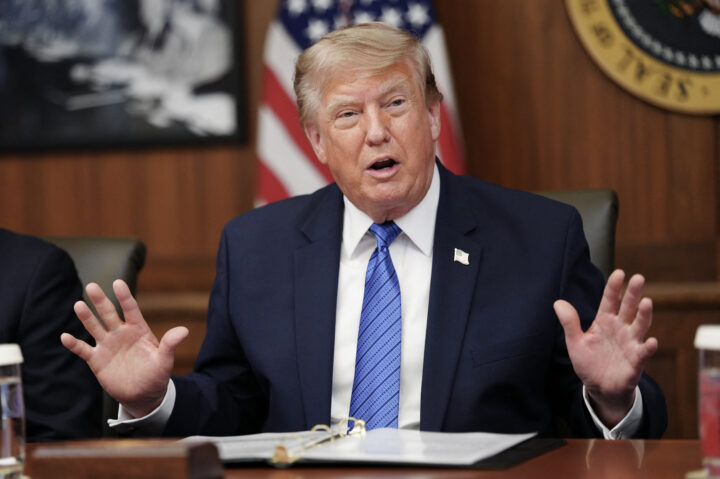
Aaron Schwartz / AFP via Getty Images
US President Donald Trump speaks during a Cabinet meeting at Camp David in Maryland, on July 31, 2026.


 Add JewishInsider on Google
A meme circulated on social media earlier this week depicting a cartoon version of President Donald Trump addressing different stages of negotiations with Iran. In it, the president cycles between “We’re going to bomb their power plants,” “They called us begging for a deal,” “They’re giving us everything we want” and “They’re scum, you can’t negotiate with these people.”
It’s perhaps the most accurate commentary on the situation that has unfolded since early July, as the U.S. and Iran have continued to exchange fire, with Iran striking Arab states around the region. Every few days, the stage resets. The endless loop of diplomacy and military strikes has thrown the countries into a situation that is equal parts “Groundhog Day” and “The Apprentice” — military strikes on loop, with a major breakthrough soon to come.
Indeed, Trump suggested on Tuesday that “a lot of progress had been made” in negotiations that would see the Strait of Hormuz reopened and signaled a deal on the strategic waterway could be announced as soon as this week.
His rhetoric echoes comments he has made in recent weeks teasing a diplomatic breakthrough that is right around the corner, while the consistent reality is that diplomacy has been cyclical, devoid of significant progress and increasingly beneficial to Tehran, which has learned that it only needs to wait out the situation — at least until the midterms, if not until 2029.
It also raises questions about the limits of American deterrence — especially when taken alongside recent reports of dwindling American weapons stockpiles.
Trump understands optics (and markets) perhaps better than any other world leader, hence his constant claims that a major diplomatic breakthrough could be days away — whereas Iran, unburdened by looming midterms and the realities that come with living in a democracy, can afford to wait it out as Washington runs through the endless narrative loop.
Almost as cyclical as Trump’s pronouncements are Iran’s near-immediate denials of the president’s claims: the regular insistence that a deal is far off and unlikely to happen without significant American and Israeli concessions.
Such a move would not be the kind of diplomatic victory to be celebrated — unless you’re Iran — which will likely now extract greater authority and stand to benefit from control of the Strait of Hormuz. A return to the status quo — largely unfettered transit through the strait — appears unlikely, as even Trump praises ongoing talks between Oman and Iran.
It’s this low-level exchange of fire that keeps the pot from bubbling over and full-scale war from again breaking out. But as the cycle refreshes itself, the U.S. is increasingly drawn into a longer war that is more persistence than persuasion — a game for which Tehran holds the cheat codes.
More Stories
CONFERENCE QUOTABLES
NatCon speakers mark Oct. 7 by telling the Jews to stop complaining about antisemitism
NOT ON BOARD
Lansing Mayor Andy Schor, a Jewish Democrat, says he’s not supporting El-Sayed

Arrivederci, Reggio
Jewish preschool educators forced to condemn Israel to attend Reggio Emilia conference
NO COMMENT
Rogers honors Oct. 7 anniversary and bashes El-Sayed, as El-Sayed remains silent

CAMPAIGN BLITZ
AIPAC’s super PAC wades into Michigan Senate race
Daily Overtime
Nessel feels the heat over El-Sayed support
Please log in if you already have a subscription, or subscribe to access the latest updates.
 Continue with Google
 Continue with Apple