





























































Iran netted nearly $5 billion in 22 days after signing MOU, report finds
The analysis by the Jewish Institute for National Security of America found that Tehran made 47% more in the three weeks following the MOU than it normally did in a month before the war
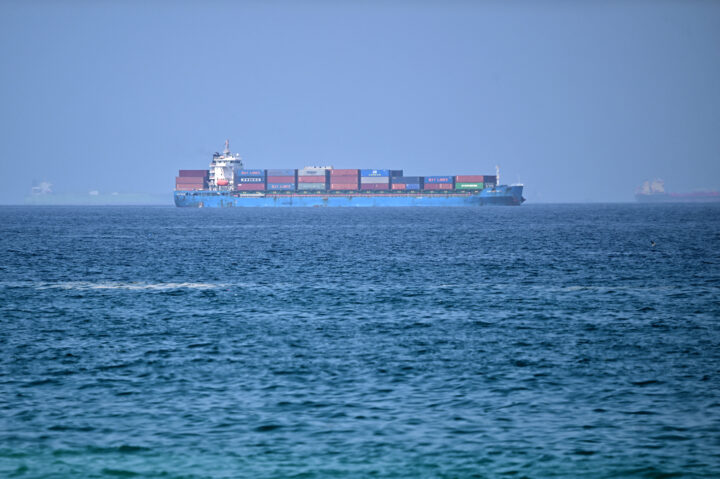
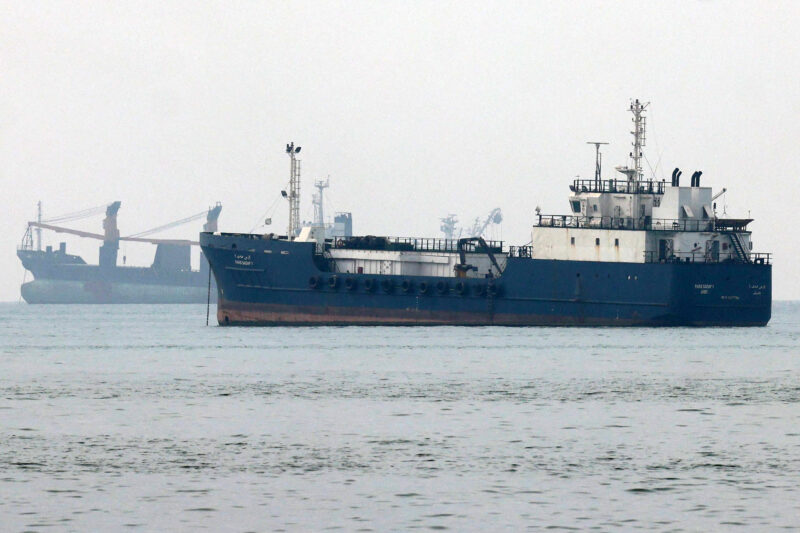
Photo by AFP via Getty Images
A cargo ship is pictured off coast of the Khor Fakkan Container Terminal, the only natural deep-sea port in the region, along the Gulf of Oman on June 28, 2026.


 Add JewishInsider on Google
Iran netted nearly $5 billion in the 22 days after Washington and Tehran signed their memorandum of understanding on June 17, according to a new report from the Jewish Institute for National Security of America.
The findings come as President Donald Trump announced on Monday that the U.S. would reimpose its naval blockade on Iranian ports effective July 14 at 4 p.m. ET, with an added 20% U.S. toll on all shipping through the strait.
The U.S. had lifted the blockade last month upon the signing of the MOU with Iran, at which time the Trump administration also issued a waiver that allowed the sale of Iranian oil. That waiver was revoked last week in response to Iranian attacks on shipping vessels in the strait, but the damage, JINSA says, was already done.
The JINSA report, published on July 8, found that once the initial maritime blockade was lifted mid-June, the Iranian regime “rushed to export its oil at the first opportunity.” Shipping data analyzed in the report indicates that Iran exported 50 million barrels of crude within the first two weeks after the blockade was lifted. By early July, total exports under the temporary truce topped 55 million barrels, netting the regime more than $4.5 billion.
Before the conflict, Iran typically exported between 47 million and 50 million barrels in a single month, averaging roughly $3.05 billion in revenue, according to the report. Because the U.S. waiver allowed Iran to sell its crude at standard market prices rather than the heavily discounted rates it usually relied on to bypass international sanctions, the regime pulled in 47% more cash in the 22 days following the MOU than it normally did in an entire month before the war.
Tehran has simultaneously maintained a tight grip on the Strait of Hormuz that has severely constrained broader global shipping, in what the report describes as a “bad omen for the future of maritime security in the Middle East — and U.S. deterrence of Iran.”
Daily global transit through the Strait of Hormuz fell from 15 million barrels of crude oil per day before the war to 4.8 million barrels per day during the first week after the MOU was reached — less than a third of normal volumes. By contrast, Iran managed to export 5 million barrels of its own crude oil per day during that same week.
Beyond standard oil sales, the report notes that Iran maintained an aggressive financial squeeze on foreign vessels transiting the region. Citing Israeli media reports, the report said Iranian authorities blocked commercial oil tankers from passing through the Strait of Hormuz unless they paid a transit fee of up to $2 million per vessel.
Tracking data from the shipping analytics firm Kpler suggests that these unauthorized checkpoints generated roughly $300 million in extra revenue for Tehran, directly violating the agreement’s terms guaranteeing free passage for international trade.
More Stories

DEBATE DEBACLE
El-Sayed dodges Rogers’ attacks on terrorism ties during heated Senate debate

Doha’s Darling
Murphy, Qatar’s ‘reliable ally’ in the Senate, huddles with emir and chief Qatari negotiator in Doha

REGIONAL SHIFT
Amb. Kaploun: More Latin American countries plan to adopt IHRA definition of antisemitism

TOEING THE LINE
Menin, Levine call for ‘focus’ on Oct. 7 victims — but don’t condemn Mamdani

CAMPAIGN OFFENSIVE
Rogers calls El-Sayed ‘threat to our national security’ in new ad

EDUCATION DELIBERATION
Democratic governors face looming deadline to opt in for educational tax credit
Please log in if you already have a subscription, or subscribe to access the latest updates.
 Continue with Google
 Continue with Apple