









































Senate Republicans take issue with administration’s effort to curb Israeli operations against Hezbollah
Lawmakers also expressed concern over the administration waiving sanctions on Iranian oil: ‘Iran has ended up stronger than they started,’ Sen. Bill Cassidy said
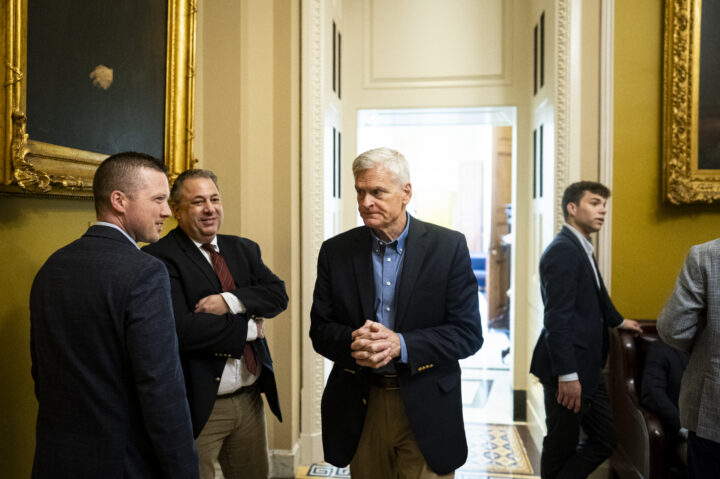
Photo by Al Drago/Getty Images)
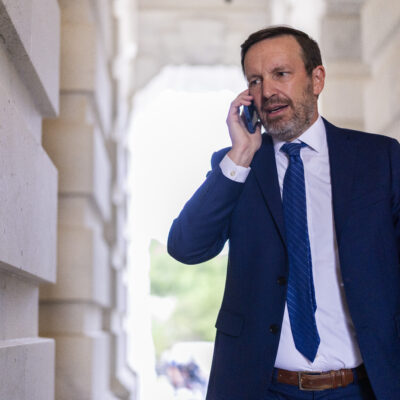
Sen. Bill Cassidy (R-LA) departs a meeting with Senate Republicans in the U.S. Capitol on June 28, 2025 in Washington, DC.


 Add JewishInsider on Google
Senate Majority Leader John Thune (R-SD) said that Israel’s right to self defense must be protected in U.S. talks with Iran, after administration officials publicly urged Israel to cease operations against Hezbollah as part of the recent memorandum of understanding — even though Israel, Hezbollah and Lebanon are not parties to that agreement.
Hezbollah has continued to attack Israel, killing Israeli soldiers last week.
“I just want to make sure that Israel is able to defend itself, and I think whatever happens as a result of these talks, that is something that needs to be maintained,” Thune said. “Hopefully the U.S.-Israeli relationship will remain such that we fully understand their need to be able to defend themselves, and right now on their northern border, they’re being attacked daily.”
Asked if he had received any word from the White House on when the administration plans to brief members of Congress, or even senior congressional leadership, on the MOU, Thune replied: “I haven’t. My assumption is because, again, all the briefers are over there [in Switzerland], but hopefully soon. We’ve asked for it, and hopefully we’ll get it.”
Senate lawmakers, including Thune, also expressed some reservations about the waiver lifting U.S. sanctions on Iranian oil sales, which was issued on Monday without any specific nuclear concessions by Iran.
Thune told reporters earlier Monday that he’d “like to see the lifting of sanctions connected to steps taken by the Iranians to shut down their nuclear program,” which he said he had not observed yet.
Sen. John Cornyn (R-TX), recently defeated in his primary election by a Trump-backed challenger, also objected to efforts to prevent Israeli operations against Hezbollah as part of the MOU.
“The whole idea that you would basically tell Israel it can’t defend itself from Hezbollah is to me a nonstarter,” Cornyn said. “The Iranians, if they were actually serious about a ceasefire and about a peace agreement, then they wouldn’t have insisted upon that in the MOU.”
The U.S. is set to host separate talks between Israel and Lebanon in Washington this week.
Asked if he thought it was a good idea to provide economic sanctions relief to Iran before a final deal is struck, the Texas senator expressed skepticism. “Not to me. This is the number one state-sponsor of terrorism. It’s just more money to fund their terror activities through their proxies and harass Israel,” he said.
Cornyn also expressed skepticism that the administration would give Congress the opportunity to review the MOU, describing it as “would be the last thing that they [the Trump administration] would do.”
“I think the president thinks he can do this on his own,” Cornyn said.
Cornyn said that “there [have] been a lot of robust discussions around” how Congress should respond if the Trump administration does not seek congressional approval on the current memorandum of understanding between the U.S. and Iran or the final deal reached through ongoing negotiations. “I don’t expect that to end,” he said of the talks on Capitol Hill.
Sen. James Lankford (R-OK) also expressed concern about the U.S. pushing for a permanent ceasefire in Lebanon as Hezbollah continues firing at Israel, which he said was placing the lives of the many Americans who live in the Jewish state at risk.
“I don’t understand how the issue with Lebanon actually affects what’s happening in the Strait of Hormuz. Those are two different issues, obviously. If Iran can’t stop attacking Israel, that’s a big issue. They continue to be able to drive weapon systems and people to go attack Israel,” Lankford told JI. “There are hundreds of thousands of Americans that also live in Israel, so it’s not just an issue of attacking Israelis, it’s also attacking Americans that live in Israel.”
Sen. Bill Cassidy (R-LA) called the sanctions relief “disappointing.”
“Iran has ended up stronger than they started. And we’ve achieved none of the objectives originally laid out,” Cassidy, who was also recently defeated by a Trump-backed challenger, said.
Sen. Ted Budd (R-NC) argued that the deal is performance-based so “they don’t get anything until they actually perform.”
Pressed on the fact that the sanctions had already been waived, Budd said, “If that helps to open the strait, that’s fine, but I am concerned what they use that money for — to support their terror proxies.”
Sen. John Kennedy (R-LA), who has argued in favor of the memorandum of understanding, said that he doesn’t want to “pick [the deal] apart” piece by piece, but instead wants to assess the net effects in 60 days. He argued that the deal was primarily a method to ensure oil flows were restored.
“I just don’t think it’s fair to take every little announcement and second guess it,” Kennedy said. “I’m very hopeful, but we’ll all know in 60 days.”
News of U.S. sanctions on Iran being lifted was also poorly received on the Democratic side of the aisle as well.
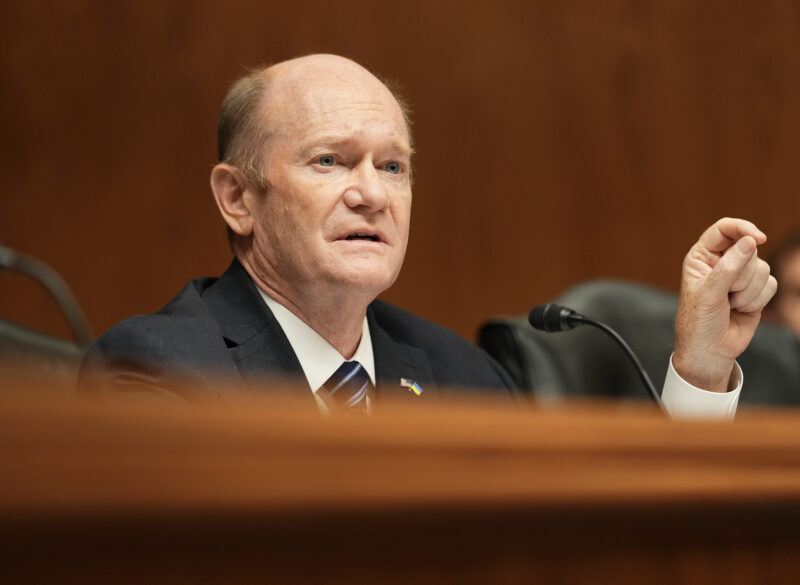
Sen. Chris Coons (D-DE) criticized the move as “such a terrible idea.”
“I don’t know if I could find a better example of unilateral disarmament. We are literally handing away what leverage we have over a regime that, if anything, is worse [than its predecessor],” Coons told JI. “Out of all the goals that Donald Trump said he had for this war: regime change, remember, ‘help is on the way’; ensuring they could never have a nuclear weapon, that’s still on hold; ending their ballistic missile program, he’s now saying, ‘Well, why shouldn’t they have ballistic missiles?’ I’m just shaking my head.”
The Senate is set to vote tomorrow on a procedural motion on an Iran war powers resolution passed by the House last month; whether the motion is approved will be largely contingent on attendance on both sides of the aisle.
Sen. Tim Kaine (D-VA), the lead sponsor of the only war powers resolution for which such a procedural motion has thus far been approved, did not tell reporters on Monday when he plans to bring up the next procedural vote to move that motion forward.
He said that “attendance generally is a factor on both sides of this.”
More Stories

EVENT RESCHEDULED
State Department to hold Oct. 7 commemoration event on Wednesday

analysis
MBS bet Saudi Arabia’s future on economic transformation. The Houthis are testing that wager

GOING GLOBAL
Israeli, Lebanese leaders expressed interest in Michigan Senate race, Sen. Lankford says
BACK FROM THE GULF
Sen. Murphy accuses admin of ‘active cover-up’ of Iran war, vows to leverage funding to end war

PACKED PEWS
Scholten, Gottheimer and Bret Stephens join Dan Senor before packed Michigan crowd

EMPIRE STATE EDUCATION
Hochul will opt New York into education tax credit that will help fund Jewish education
Please log in if you already have a subscription, or subscribe to access the latest updates.
 Continue with Google
 Continue with Apple