





































Jeffries opposes effort to cut all aid to Israel, but calls for ‘urgent change’ to relationship
The House minority leader stopped short of backing a total aid cutoff while suggesting direct military aid should end when the current MOU expires

(Photo by Drew Angerer/Getty Images)
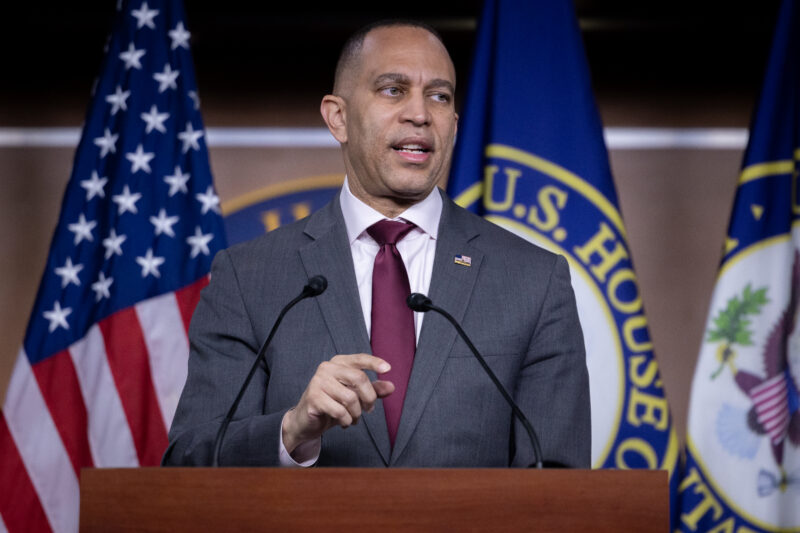
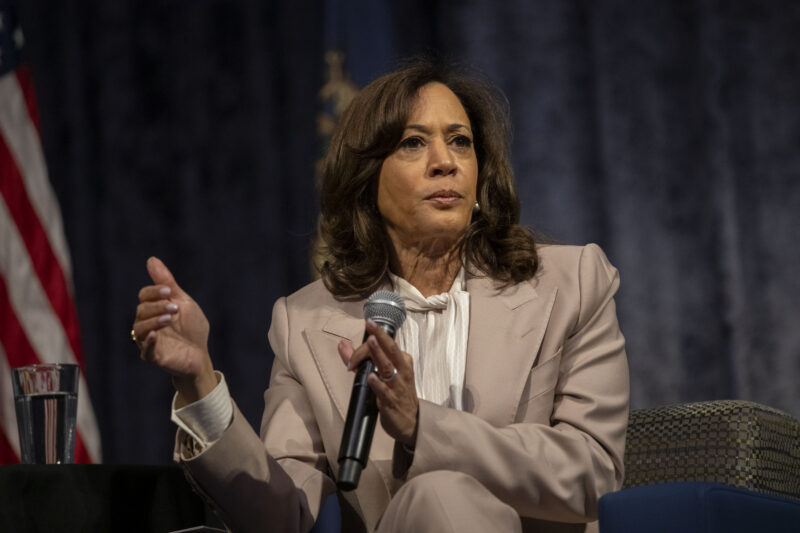
House Minority Leader Hakeem Jeffries (D-NY) speaks during the March for Israel on the National Mall November 14, 2023 in Washington, DC.


 Add JewishInsider on Google
House Minority Leader Hakeem Jeffries (D-NY) said in a “Dear Colleague” letter on Tuesday that he opposes an effort to strip all U.S. aid to Israel out of the 2027 State Department appropriations bill, but also argued for “urgent change” to the U.S.-Israel relationship, including changes to U.S. aid going forward.
Addressing the amendment led by Rep. Thomas Massie (R-KY), Jeffries cited concerns raised by Reps. Rosa DeLauro (D-CT) and Greg Meeks (D-NY), respectively the ranking members of the Appropriations and Foreign Affairs Committees, as well as J Street, calling the amendment “overly broad” and suggesting that it would impact nonmilitary aid and U.S. Embassy operations.
Jeffries also argued that the amendment would “restrict our country’s ability to confront Hamas, Hezbollah and other terrorist organizations in the region who are sworn enemies of both the United States and Israel.”
The New York Democrat accused Republicans of advancing the amendment “for nakedly partisan reasons,” but said that Democratic leadership would not whip members on the issue and that “there are good faith reasons” for lawmakers to vote either way.
He went on to argue that an “urgent change” is needed in the U.S. relationship with the “far-right Netanyahu government” and Middle East policy in general, calling for a “major reset” based on support for Israel’s right to exist as a Jewish and democratic state and strong support for a Palestinian state. He added that a “meaningful change in direction is needed” on U.S. aid to Israel at the conclusion of the current memorandum of understanding in 2028.
“Israel has an advanced economy and is capable of paying for its own sophisticated weapons, as the Prime Minister recently acknowledged,” Jeffries said, suggesting he supports an end to direct military aid at the end of the current MOU — a shorter timeline than has been advocated for by Israeli Prime Minister Benjamin Netanyahu. “Accordingly, any future security arrangement between our two countries should be structured consistently with defense agreements that exist with our other Western allies and strictly adhere to our human rights laws and values.”
He also said that the next MOU should continue to protect Israel’s qualitative military edge and advance “mutually beneficial joint technology, innovation, research and further development of defensive programs” — something that some in his party have sought to end.
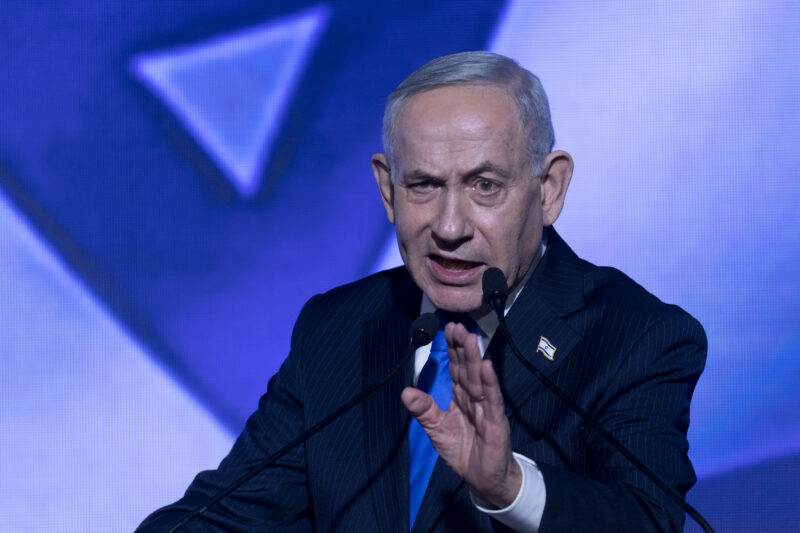
Jeffries lambasted Netanyahu, accusing him of damaging Israel’s reputation and standing in the U.S. and around the world, harming normalization efforts and undermining peace efforts. He called for sanctions and criminal liability for Israelis involved in violent activity in the West Bank.
More Stories
Daily Overtime
Nessel feels the heat over El-Sayed support

FUNDRAISER FALLOUT
Attendee at El-Sayed fundraiser bragged about beating up pro-Israel demonstrator

SURVEY SAYS
Poll finds sliding NYC Jewish support for Dems since Oct. 7, substantial concern about DSA

CAMPUS CHRONICLES
The freshmen on Oct. 7, 2023, who became Jewish leaders in the terror attacks’ aftermath

Daylight Between Them
Trump, Cotton feud over daylight saving time legislation
chesapeake challenge
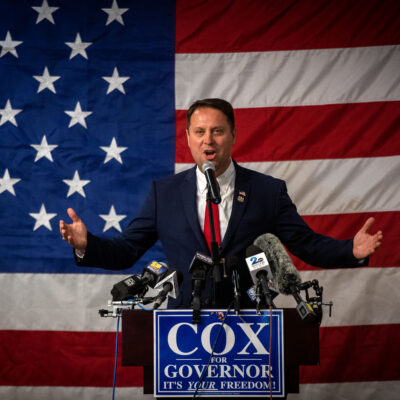
Maryland GOP gubernatorial nominee Dan Cox says he disagrees with son’s antisemitic posts
Please log in if you already have a subscription, or subscribe to access the latest updates.
 Continue with Google
 Continue with Apple