









































Iran sounds optimistic note on nuclear negotiations, while U.S. officials more reserved
The parties concluded a second round of talks with the Iranians expected to produce 'detailed proposals' in the next two weeks

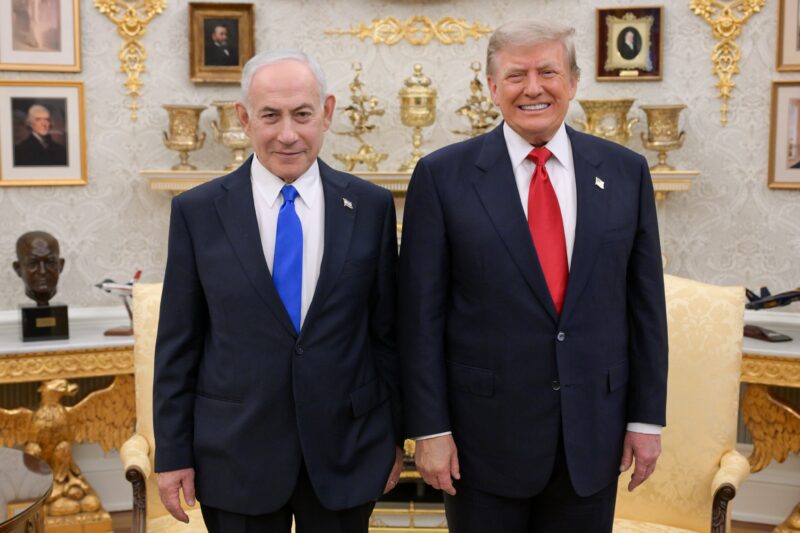
EVELYN HOCKSTEINAMER HILABI/POOL/AFP/AFP via Getty Images
US Middle East envoy Steve Witkoff after a meeting with Russian officials at Diriyah Palace, in Riyadh, Saudi Arabia, on February 18, 2025 (L)/ Iran's Foreign Minister Abbas Araghchi speaking to AFP during an interview at the Iranian consulate in Jeddah on March 7, 2025.


 Add JewishInsider on Google
Iranian Foreign Minister Abbas Araghchi indicated that the second round of negotiations between Tehran and Washington produced agreements on several “guiding principles” for a potential deal on Tuesday, though U.S. officials took a more muted position, with one describing the talks as proceeding “as expected.”
Araghchi told Iranian state media that talks with White House Special Envoy Steve Witkoff and Jared Kushner, which took place in Geneva and was mediated by Omani Foreign Minister Badr Albusaidi, were more “serious, constructive and positive” than previous discussions, but he acknowledged that major gaps remain and that an agreement will not be reached quickly.
“Progress was made in the talks with Iran, but there are still a lot of details to discuss,” the U.S. official told Axios. “The Iranians said they would come back in the next two weeks with detailed proposals to address some of the open gaps in our positions.”
Albusaidi said that the parties “left with clear next steps before the next meeting,” though no date had been set for a third round of talks. Araghchi said both sides agreed to work on draft language, exchange texts and then determine the timing of a date for the next round of negotiations.
“Today’s negotiations between Iran and the U.S. in Geneva have concluded with good progress towards identifying common goals and relevant technical issues,” Albusaidi said in a post on X on Tuesday. “The spirit of our meetings was constructive. Together we made serious efforts to define a number of guiding principles for a final deal.”
Those principles and the parameters of a potential deal remain unclear — as the talks were underway, Iranian Supreme Leader Ayatollah Ali Khamenei wrote on X, “The Americans say, ‘Let’s negotiate over your nuclear energy, and the result of the negotiation is supposed to be that you do not have this energy!’ If that’s the case, there is no room for negotiation; but if negotiations are truly to take place, determining the outcome of the negotiations in advance is a wrong and foolish act.”
Parallel to the diplomatic track, both sides are indicating that military options remain on the table: The U.S. has dispatched a second aircraft carrier strike group to the region in recent days as well as additional F-35, F-22 and F-16 fighter jets.
“The Americans constantly say that they’ve sent a warship toward Iran,” Khamenei said on Tuesday in response to the deployment. “Of course, a warship is a dangerous piece of military hardware. However, more dangerous than that warship is the weapon that can send that warship to the bottom of the sea.”
At the start of discussions Tuesday, Iran said it would close the Strait of Hormuz to conduct live-fire military exercises, and had previously threatened to retaliate against U.S. bases in the region should Washington carry out an attack.
More Stories
TEXAS TROUBLE
Ted Cruz slams Dems for not speaking out against College Dems’ Hasan Piker invitation
analysis
Pappas wins New Hampshire Senate nomination over anti-Israel Dem activist
YE SAYER
Blakeman-backed House candidate defended Ye’s antisemitic rants
TEPID RESPONSE
Rubio holds back criticism of U.K. sanctions against Israeli settlements
CAMPUS CAUCUS
Gottheimer, Stefanik launch caucus to combat antisemitism on college campuses
scoop
Tenney calls on Treasury to weigh anti-boycott penalties for U.K., countries sanctioning Israeli settlements
Please log in if you already have a subscription, or subscribe to access the latest updates.
 Continue with Google
 Continue with Apple