






























Trump official and Brookings scholar clash over campus antisemitism crackdown
The debate comes amid a yearslong campaign by the Trump administration to pressure universities to crack down on antisemitism — an effort that has included federal funding cuts affecting dozens of schools

Israel on Campus Coalition
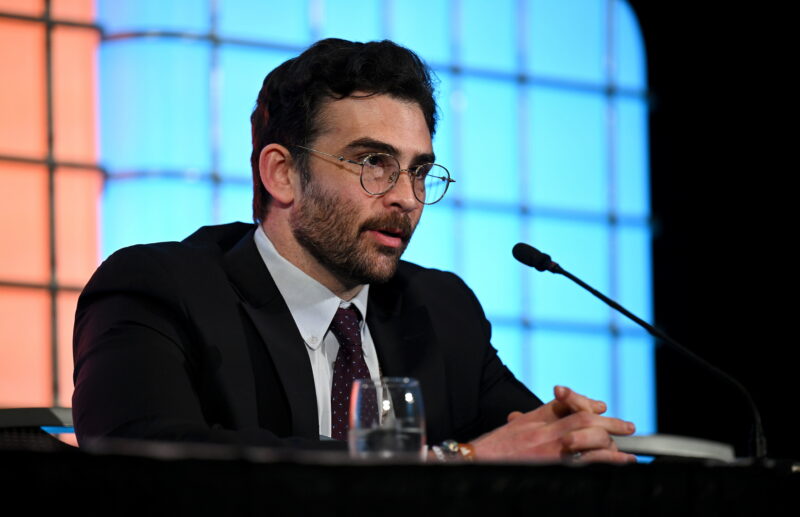
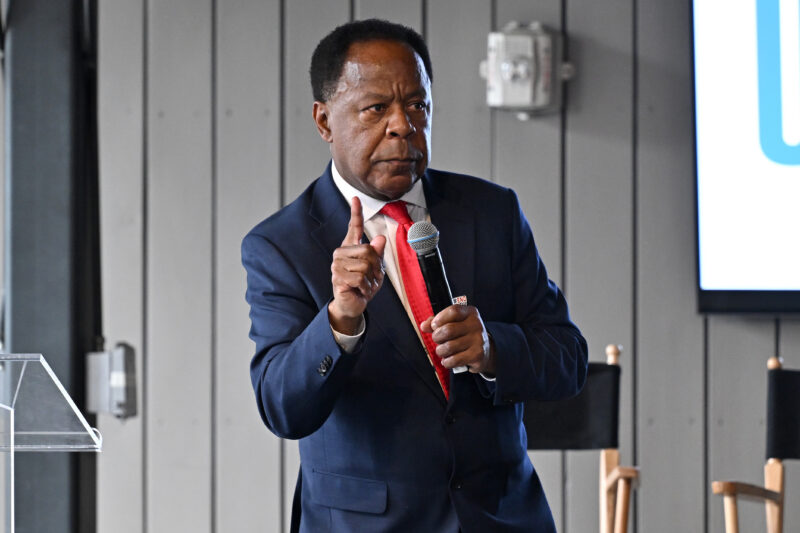
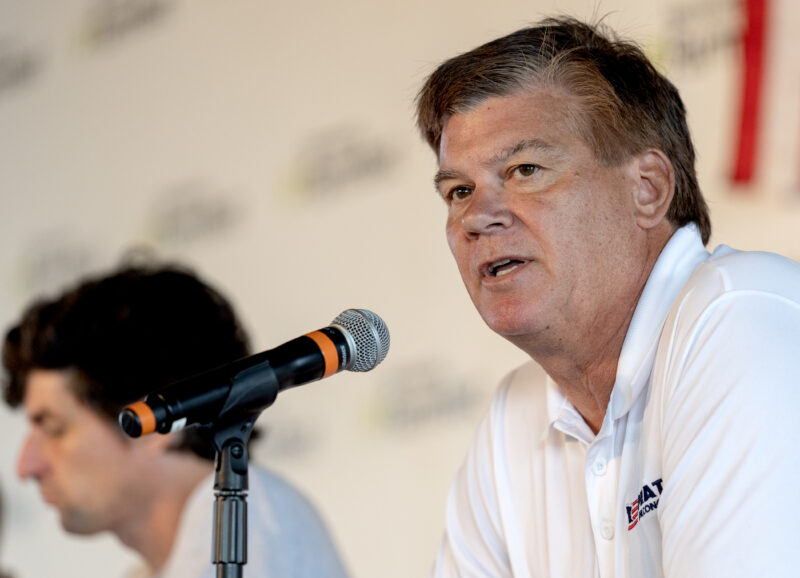
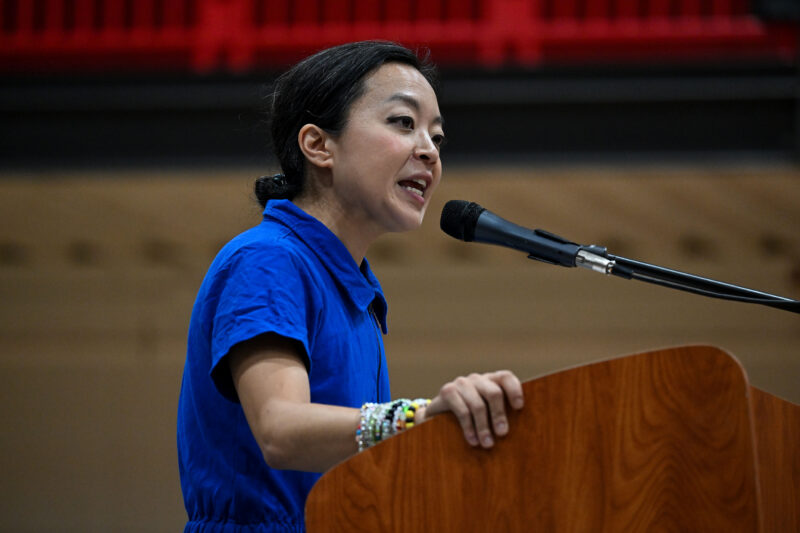
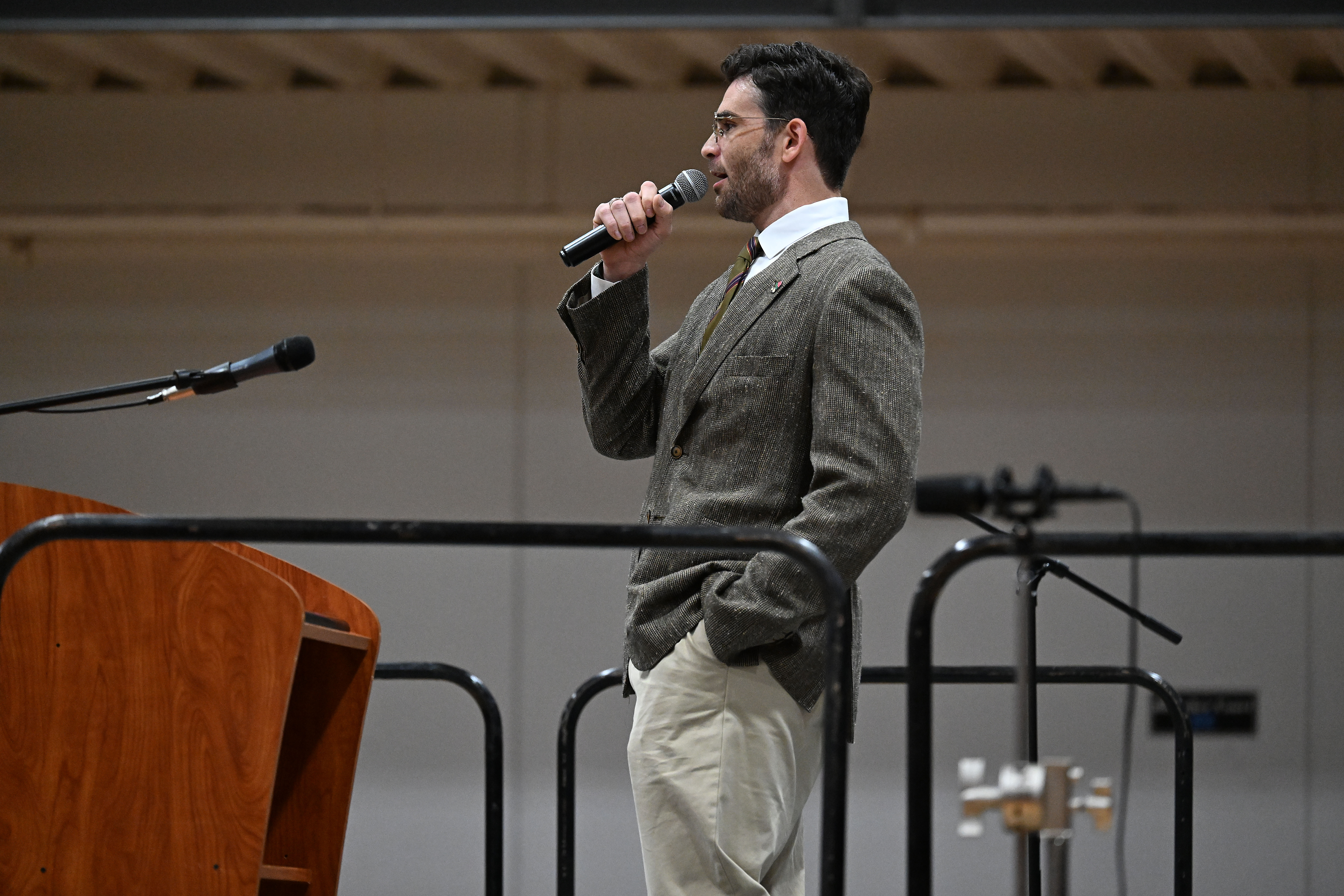
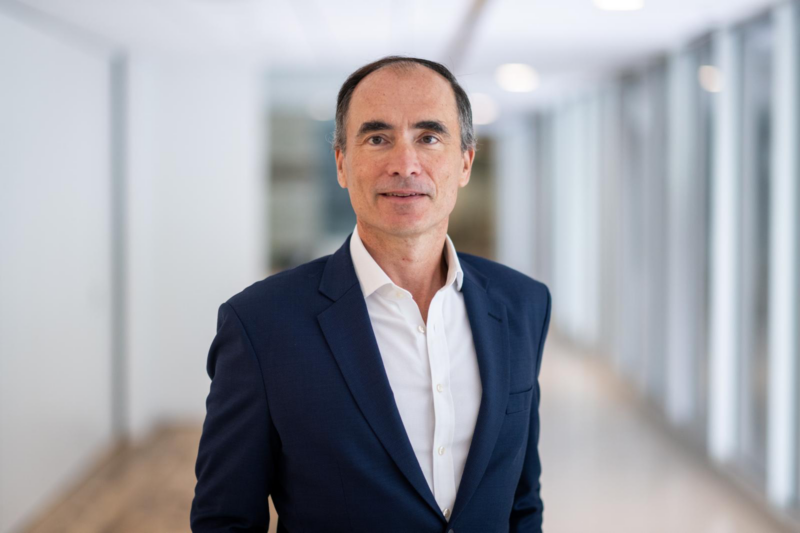
From left: Jonathan Rauch, Noah Pollak and moderator Aviva Klompas at the Israel on Campus Coalition's National Leadership Summit on Monday, Aug. 3, 2026.


 Add JewishInsider on Google
A senior Trump administration official and a journalist clashed during a Monday debate over whether the White House’s crackdown on campus antisemitism protects or threatens America’s liberal norms.
The debate — sponsored by SAPIR and held at the Israel on Campus Coalition’s National Leadership Summit in Washington — featured Noah Pollak, a senior advisor at the Education Department, who argued that the controversial crackdown is good for the country, and Jonathan Rauch, a senior fellow at the Brookings Institution and contributing writer for The Atlantic, who made the counterargument.
Some of the college students in attendance shifted their views on whether the Trump administration’s crackdown is good for America. Voting was conducted through scanning a QR code. At the start, 69% of students agreed the crackdowns were good for America and 31% disagreed; by the end, 57% of participating students said the crackdowns were good, while 43% said they were not.
After the Oct. 7, 2023, Hamas terror attacks in Israel, “university leaders chose not to enforce the rules for one group of people,” said Pollak. “As long as it was leftists and pro-Palestine people [leading protests], it was considered fine. I don’t want any special treatment for Jews or anyone … The problem is we have had a fundamental breach on the part of a lot of universities with the basic bargain that should govern how a university functions in the United States.”
“The situation was very dire so we felt our response had to be strong. The leadership of those schools have shown over and over again unwillingness to govern the institution they led,” said Pollak. “Those institutions are very intertwined with the federal government.”
The debate comes amid a yearslong campaign by the Trump administration to pressure universities to crack down on antisemitism — an effort that has included federal funding cuts affecting dozens of schools. Most of the Ivy League schools targeted by the government, including Columbia University, entered settlement negotiations with the administration last year, issuing reforms and paying millions of dollars to the government.
Federal judges have ruled that parts of the administration’s actions, including funding freezes, violated the First Amendment and federal law. However, schools have experienced much quieter semesters since the oversight began, though some attribute the calmer climate to fatigue from protesters and the Israel-Hamas war ending.
“Noah and I agree on the use of legitimate legal process by this or any administration to ensure that everyone’s civil rights are protected,” said Rauch. “Where we disagree is that the line has got to be due process. They must not go beyond that. It’s bad for Jews because we of all people know the importance of law. Second, it’s bad for America because a lawless country is first and foremost bad for Jews, but bad for everyone. Finally, I’m going to argue we Jews need to be very careful about running to the government for help, because it shows weakness … the government can never protect us from antisemitism, we must protect ourselves.”
Rauch argued that the Trump administration had crossed a line from oversight into overreach, and that while campus antisemitism is real, it has been overblown.
“It is dangerous to give this administration, or any administration, the leeway to decide that private sector institutions, like businesses, law firms and universities, are ‘out of control,’” he said. He asserted that universities, especially elite ones, have work to do to improve viewpoint diversity and get rid of “oppressive” diversity, equity and inclusion rules. But claims made by the government to describe the overall state of campuses are “a wild exaggeration,” he said.
“A lot of places are real problems, we found that out on Oct. 8. [But] most academics in most departments are still trying to do good research and it is still the case that America’s university system is the crown jewel of research in the entire world… it is advancing science at a rate that has never been seen before, and the federal government should not be used as a cajole to shut that down,” said Rauch.
“We have work to do but that work should be limited to working within the rule of law,” he continued. That includes allowing speech such as “globalize the intifada,” depending on the context, he added.
Pollak argued that the government did not overreach because if it had, there would be more significant changes on campuses following settlements.
“Other than the absence of tent encampments, most of these campuses are largely unchanged. Columbia remains largely undedicated to any substantive reforms. Their Middle East studies department is chock-full of Hamas supporters just like it was three or four years ago,” he said. “If it was true we were these big bullies dropping sledgehammers on these campuses, you would see big changes on these campuses.
Pollak lauded some “good policy reforms that will take time,” but he dismissed the notion “that we’ve set off nuclear bombs on campuses, campuses look just like they did several years ago.”
Pollak also asserted that the solution to campus antisemitism is “not speech regulation” in most cases, but “the restoration of basic liberal norms.”
“That is a bigger reform challenge that the schools themselves have to take when they consider hiring and admissions,” said Pollak. “One of the big problems with the protest climate on campus after Oct. 7 was the type of students that universities have [admitted]… far-left political activists so you had this disproportionate presence of those students.”
Addressing Harvard, the only school that chose to litigate the cuts instead of negotiating — and remains in litigation — “all Harvard needed to do to not have those grants threatened was bring itself in compliance with civil rights law,” said Pollak.
“Maintaining Harvard’s ability to continue to engage in racial discrimination, to continue allowing its radical faculty and students to harass Jews on campus, was so important to Harvard that they were willing to risk funding for cancer research in order to allow that stuff to continue. I was shocked at this,” he said.
Even after many elite universities agreed to the administration’s reforms and paid settlements, some Jewish students say that while protests have dissipated, a quieter pressure remains on campus — a lingering sense of exclusion.
The debate concluded asking what universities can do to address this.
Rauch said it’s up to student activists, including the ones in the room, to make the difference. “You guys are doing the work. The work of changing hearts and minds is the work of Jews on campus being visible, kind and outspoken. By forcing yourselves to be heard and telling our story of the Jewish people and what we stand for, you are the ones who can solve the problem.” Other than enforcing safety, he said universities can’t make the change.
Pollak said that while he appreciates that sentiment, he has a “darker view of what is going on on campuses.”
While the severity of campus antisemitism has eased — something Pollak attributes to the Trump administration — “the problem is that the system is basically rigged,” he said.
“As part of these negotiations with schools you have the opportunity to really go deep on the professors who are in different departments and administrators. The schools have made a choice. [Leaders] make a decision everyday about what kind of campus their school is going to look like, and they defer to radical faculty.”
“Where we are right now,” continued Pollak, “is at the culmination of decades of all of those small decisions, which have turned many of our campuses, especially the elite ones, into political monocultures that are incredibly radical.”
“That’s the true source of antisemitism on campus, you have intentional choices by schools to make political environments that are radical… students hear over and over again that Israel is evil, that Zionism is racist. Until the schools undergo serious reform in how they operate, the kind of people they hire, the kind of classes they teach, the kind of departments they have, this problem is not going to get better.”
More Stories

FLAGGING FICTION
Blinken denies report he delayed Hamas offer to free hostages

SELF SCRUTINY
Most Middle East scholars say U.S. academia has lost its way since 9/11, survey finds
Settlement Showdown
U.K. Foreign Secretary Ed Miliband announces sanctions against Israeli settlements

Daily Overtime
Israel hits back at U.K. sanctions
BACKUP PLAN
Buffer zone bill aims to protect worshipers when prosecutors fail to act, lead GOP sponsor says
CAMPUS CAUCUS
Gottheimer, Stefanik launch caucus to combat antisemitism on college campuses
Please log in if you already have a subscription, or subscribe to access the latest updates.
 Continue with Google
 Continue with Apple