


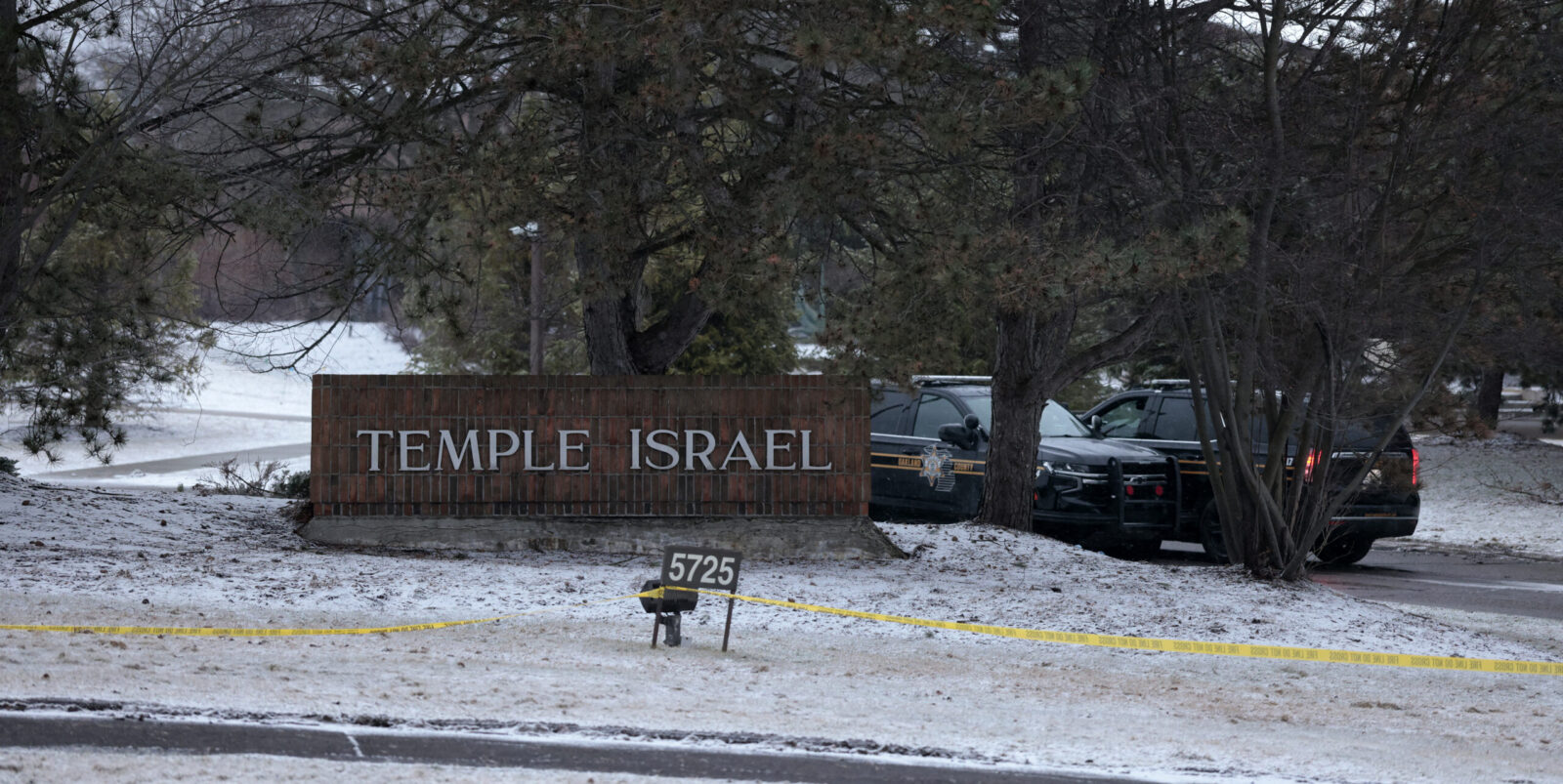
JEFF KOWALSKY / AFP via Getty Images
They survived the Temple Israel attack. They can’t escape what followed
The foiled attack at the Michigan synagogue is being called a miracle — but those who were inside now face the lasting impact of trauma and a search for safety


 Add JewishInsider on Google
WEST BLOOMFIELD, Mich. — Pop. Pop. Pop. Liz Rosenbaum heard the unmistakable sounds of a gun being fired and took a deep breath as the 4-year-old boy next to her looked her way, wide-eyed. Even in the best of times, he was an anxious kid. This was not one of those times. “Was that a gun?” he asked.
Without missing a beat, Rosenbaum reminded the boy that the classroom across the hall in the Temple Israel Early Childhood Center had a bunch of balloons set up earlier for someone’s birthday. They must’ve popped, she suggested. “Remember? You saw the balloons in their class,” she told the child.
Rosenbaum, a retired Detroit public school teacher, locked eyes with the much younger teacher across the room and whisper-yelled to her: Don’t show any emotion. Just take care of the kids. So they held the babies — to a preschool teacher, any child is a baby — and waited, not knowing anything beyond the fact that someone was shooting a gun and the smell of smoke was getting worse. Rosenbaum’s 5-year-old grandson, Theo, was in a nearby classroom, but she had already gotten word from her daughter, via Theo’s teacher, that he was OK.
Seconds or minutes or hours later — it was hard to know — police officers came to the door. Rosenbaum’s co-teacher was perched at the door’s little window, peeking through a one-way blackout shade that allowed teachers to look out but kept outsiders from seeing in.
The officers said the code word that the teachers had been trained to know would reveal the person on the other side of the door was, in fact, one of the good guys. The teachers opened the door and grabbed the kids, carrying or pulling or holding or dragging, whatever it took to obey the officers’ command to “get out of here, fast.”
“[The kids] knew something was going on. I said, ‘Remember these officers you studied? You read about them. We talked about them. Those are our helpers,’” Rosenbaum recalled telling the kids. Two days earlier, police and firefighters had visited the preschool, located in the largest Reform congregation in Michigan, as part of a lesson.
A cadre of preschool teachers carried babies and led toddlers out the back door of the synagogue, first to an ambulance that was too crowded, and ultimately onto a West Bloomfield School District bus that took them across the street to a country club for the Chaldeans, an Iraqi Christian community. Some teachers had to run with their kids to get there. You’re a dinosaur — run as fast as you can! they said, hoping to hurry the kids along without scaring them.
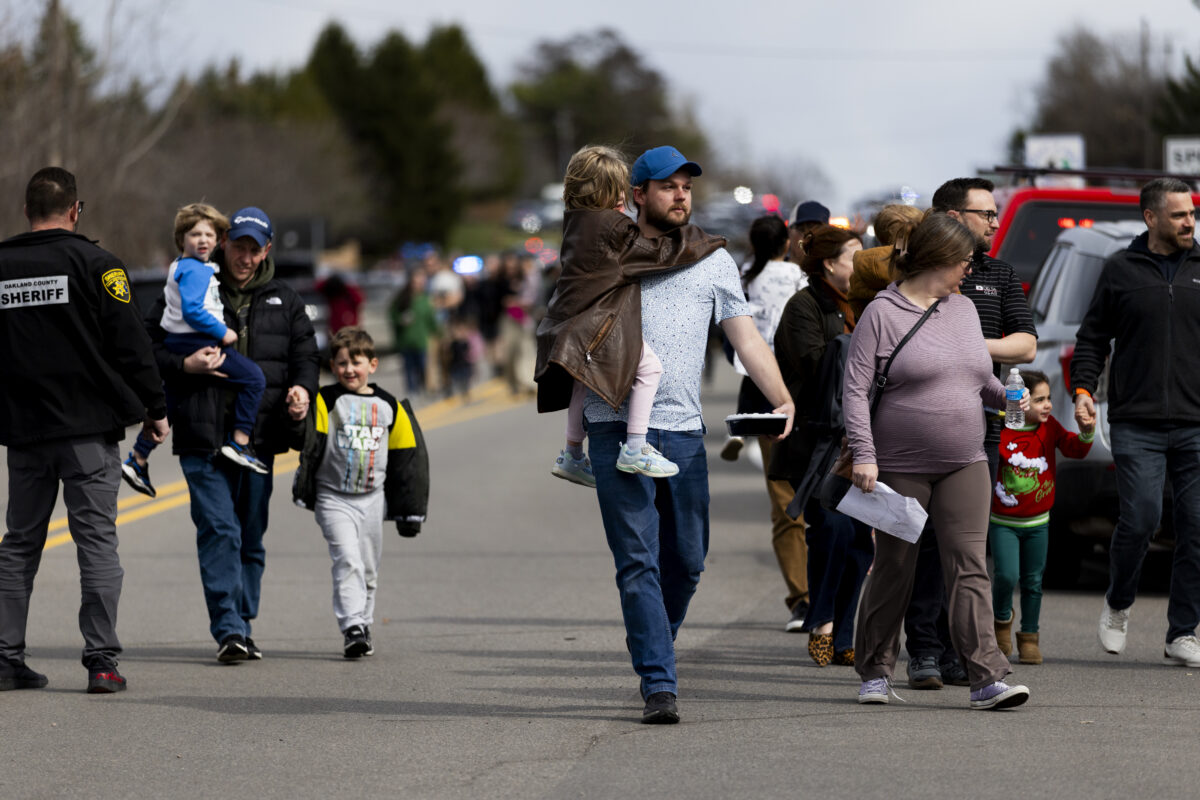
Rosenbaum and the entire world would soon learn that a Lebanese immigrant — later revealed to have ties to the terror group Hezbollah — had driven a truck packed with explosives into Temple Israel around noon that day. Cable news networks showed aerial shots of smoke billowing from the roof of the synagogue and reported in alarming chyrons that an active shooter was inside. The attacker got out of his car and started shooting before he died of a self-inflicted gunshot wound.
Every child in Rosenbaum’s classroom walked out of Temple Israel alive. In fact, every person who was already in the building survived; the only person who was injured was a security guard, hailed as a hero and already on the mend. (He was apparently quite pleased that, in his moment of need, he convinced a Temple Israel rabbi to buy him a sandwich with bacon to bring to his hospital room.)
The story of Temple Israel is one of miracles. The building’s sprinkler system turned on, soaking everything in the building except for the Torah scrolls. Miracle. The hallway where the attacker rammed his car was set aflame, burning most of the photos that lined the wall showing the synagogue’s annual confirmation classes but sparing the oldest photos, from decades ago, which were not digitized and otherwise would’ve been lost forever. Miracle. Teachers trained in active-shooter protocols acted quickly and meticulously to secure their classrooms, and security guards performed their jobs perfectly. Miracle. No children were in the hallway in the path of the truck. Miracle upon miracle upon miracle.
“Nes gadol hayah poh,” Noah Arbit, a lifelong member of Temple Israel and a Michigan state representative whose district includes the synagogue, said last week in an interview with Jewish Insider at a bakery a couple of towns over. A great miracle happened here. It was a riff on a Hebrew phrase used on Hanukkah, the holiday that celebrates the Jews’ miraculous victory over the ancient Greeks during the time of the Second Temple in Jerusalem. Usually, Jews living in the diaspora say a different version of the phrase that translates to “a great miracle happened there.” This time, the miracle was here in Michigan.
”I think if it happened anywhere else but Temple Israel, we probably could have had a massacre. Temple Israel benefits from scale and resources in a way that other synagogues around here don’t,” said Arbit, a Democrat.
But it is not accurate to say that this is only a story of miracles. For people who don’t live in West Bloomfield, once the headlines shifted from “active shooter at a synagogue” to “antisemitic attack thwarted,” many moved on. Jews in Metro Detroit did not. For them, this story of miracles was first a story of terror, of fear, of never being able to un-learn the feeling of dread that comes from not knowing whether your child is alive or dead.
“People are traumatized, and there’s no way around it,” Rabbi Josh Bennett, who has been on the pulpit at Temple Israel for 33 years, told JI last week. “And yet there’s an entirely different world out there, which is the world talking about miracles, and thank God nobody was injured. And that’s actually very dissonant, because the rest of the world has kind of moved on, and they’re just waiting for us to reopen the building.”
The path toward healing is not as straightforward as just reopening the building, and even that will be complicated and time-intensive.
“The building will be rebuilt. If you drive by there now, you’ll see there’s construction workers working on it right now, and they’re drying it out, and they’re redoing the drywall and fixing it. It will come back bigger and better,” said Steve Ingber, a Temple Israel member and CEO of the Jewish Federation of Metropolitan Detroit.
There’s also the question of where to have Temple Israel’s preschool meet for the rest of the school year. The ECC students have been holding playdates together as the school remains closed and Temple Israel looks to find an alternate place for the school to meet.
But first and foremost is the lingering emotional trauma that is only beginning to be unpacked.
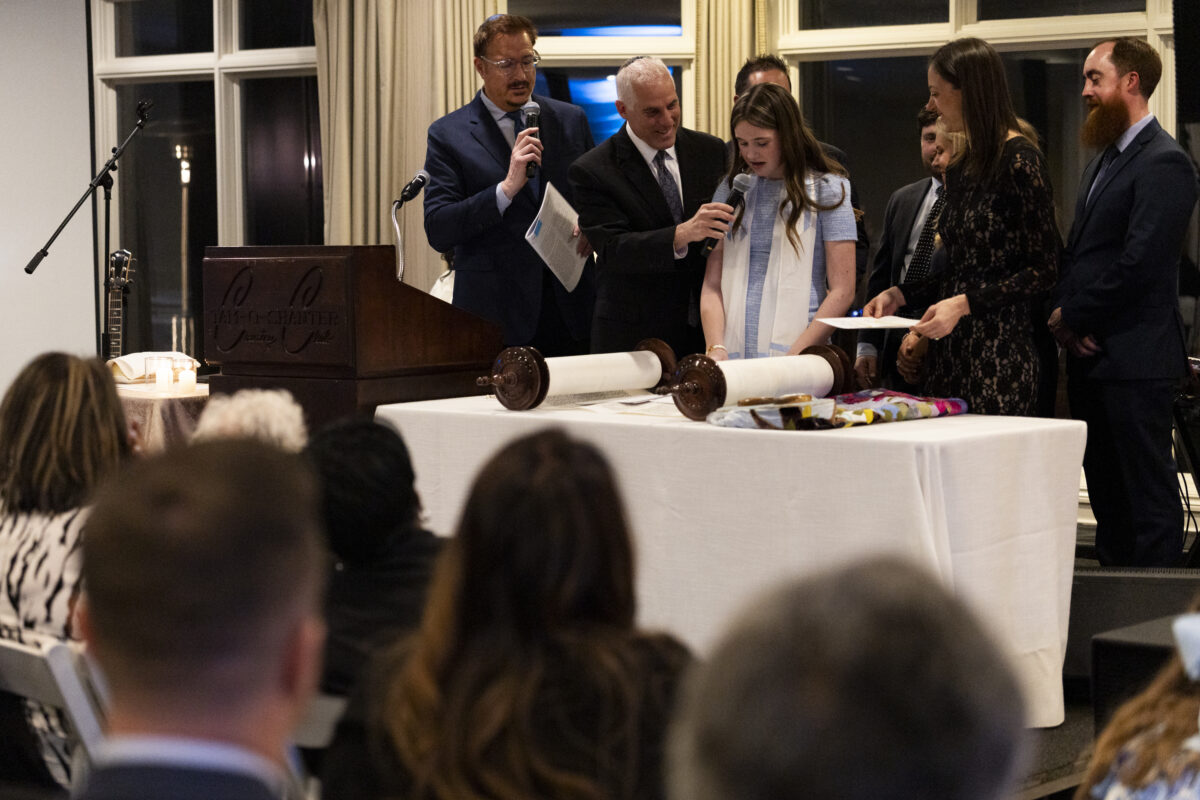
“We don’t want to leave anyone behind. We don’t want anyone to feel like they are isolated and living in a black hole, and after this traumatic moment and after a mass violence experience, that is often the case, is what I’m learning from these professionals,” said Rabbi Arianna Gordon, Temple Israel’s director of education and lifelong learning. “It’s really easy to fall into that black hole and really feel like you’re invisible, feel like you’re isolated. And we are really, really trying to make sure that everyone feels seen and feels helped and feels heard.”
On March 12, the day of the attack, Gordon heard a loud boom that she later learned came from the truck driving into the building. She opened her office door and saw a stroller overturned in a pile of broken glass. A security guard shouted to get back in the room, and she took her staff to shelter in place in a far corner of a new office they had moved into only two days earlier. She sent a message to all the teachers, telling them to implement lockdown procedures.
Her 2-year-old son was in the building. When Gordon and her colleagues were evacuated, she waited outside the building until her son came out.
“Rachel, our ECC director who ran out with me, will say that my voice screaming for my child, when we were running out, will forever haunt her,” said Gordon. She doesn’t remember making a sound.
Most of all, as social workers and rabbis work to meet community members’ emotional needs, the biggest unanswered question has to do with security: Is there enough? Even if so — and by all accounts, Temple Israel’s large security operation saved lives — how do community members make sense of the fact that their sense of safety has now been shattered? That a man from a nearby community pledged his allegiance to a foreign terrorist group and sought to bring tremendous harm to Jewish children?
“It hurts more than I ever thought that it would. I think there’s a lot of people who feel that way. It’s a beautiful building and a sacred space,” said Arbit, the state representative. He blinked back tears. “Sorry. It’s been really hard.”
The day of the attack, Ingber was getting ready to leave the federation office in nearby Bloomfield Hills for lunch when he heard the security radio crackle to life. The Jewish Federation of Detroit employs 23 security officers throughout the community’s schools and synagogues, and each of them carries a radio. The one in Ingber’s office goes off each morning around 8 a.m., a tech check to make sure it works. It sits quiet the rest of the time. Except on March 12. “SHOTS FIRED,” a voice announced over the radio.
“First, it took me a second, like, Wait, did I just hear that?” Ingber recalled during an interview in his office last week. “From there, we heard that this was real, and then we immediately started working on it, and that entailed sending every other Jewish building in town into lockdown, because we don’t know: Is this a one-off, or is this a coordinated attack?”
Security is the biggest annual line item expense for the Jewish federation, as it is for many Jewish institutions. The federation has made more than $1 million in security funds available to local organizations since the attack. Jewish activists from Detroit and around the country went to Capitol Hill the week after the attack to lobby Congress to increase the amount of money in the federal Nonprofit Security Grant Program.
But for the 75,000 or so Jews in the Detroit metropolitan area, the need still feels almost impossible to meet.
“I still feel, despite everything, that Temple Israel is incredibly safe, because what happened was our team protected us. They protected the staff and the children,” said Elyssa Schmier, the regional director of the Anti-Defamation League’s Michigan office and a Temple Israel member. Her 5-year-old son goes to another Jewish preschool in the area that is smaller, with less of a security presence.
”My son’s preschool was — the security was fine. I wouldn’t say it was great, and we’ve kind of known all along it wasn’t super great. So now they’ve had to put in full-day armed security and go with a new company. People weren’t sending their kids to school until that went into place. We’ve had a couple families pull out altogether,” Schmier said in a conversation last week in a coffee shop near West Bloomfield. “The additional cost is astronomical now of what the school’s going to have to take on.”
All of the added security means even more closed doors at a time when the Jewish community longs more than ever for allies.
“Things that are part of the strength of the Michigan Jewish community are now being looked at with an eye of concern, and the irony of that, for a community that so values community building and institutions is, I think, not lost on anybody,” Sen. Elissa Slotkin (D-MI) told JI last week.
Jeremy Moss, a Democratic state senator who attends a Conservative synagogue in the area, said over a meal of rye bread, pickles and chicken soup at a West Bloomfield deli last week that the Temple Israel attack warrants a much larger outcry from outside the Jewish community than it is getting. Moss, who is running for Congress this year, is the only Jewish member of the Michigan state Senate. He is also the only LGBTQ member of the Senate. He knows that those two parts of his identity are often treated differently.
“When I talk about LGBTQ rights, I have my Democratic colleagues rushing to be behind me, to stand in solidarity, to allow me to lead on the discussion, to allow me talk about what is homophobic and transphobic, to back me up,” he said.
“In the past several years, when I talk about antisemitism, it feels like I’m talking alone, or that I’m challenged, or that I’m lectured, not necessarily by my colleagues, but lectured about what is antisemitism from others, rather than allowing my own experience to be accredited, to be valid,” he added. “It’s a very isolating, lonely feeling, and it really makes you realize how small the Jewish community is and how difficult it is to get our lived experience heard and supported.”
The attack on Temple Israel, and the fact that no one died, offers a “second chance,” Moss said. Not just for the parents and children, he said, but “for all of us.”
“Whether you’re on the left, this is a second chance to speak out if you haven’t spoken out before. Whether you’re on the right, this was a second chance for them,” Moss said, taking aim at his Republican colleagues who did not support a major hate crimes package passed last year. “I think there’s a lot of second chances going on as a result of this incident, where every child went home healthy to their parents that day. The question is, what are we going to do with that?”
For a lot of people at Temple Israel, it’s too early to think about what all of this means. The pain is too raw. Because here’s what they know: A man was able to park in the Temple Israel parking lot, sit there for two hours listening to Arabic battle anthems while texting his sister and other family members about his plans and drive his truck head-on into the building, while teachers shushed children and sang them songs just feet away.
What could be normal after that?
“It needs to be driven home over and over again: A person who drives their vehicle with fireworks and gasoline into an early childhood center with the intent of killing children and Jews — that is antisemitism,” said Bennett, the senior rabbi. “It is impossible to be in an event like this without being forever changed. It is an indelible mark on the soul of our congregation.”
In a strange irony, many of the kids who were at Temple Israel during the attack are unfazed. Some were too young to notice anything out of the ordinary. The slightly older kids experienced the chaos, but they mostly felt lucky to get an unexpected field trip that came with chicken tenders, pizza and games. Parents whose younger children were at the ECC are struggling to describe what happened to their older kids.
“When they ask, like, why do people hate Jews, it is really hard to be a parent and to be an educator in this moment and figure out the right things to say to our children,” said Gordon, the education director. Her 2-year-old is, of course, not asking those questions; he was mostly asleep throughout the attack, which occurred during nap time. But her 7- and 9-year-old kids are.
“I say that I don’t have a good explanation. I can’t tell you why people hate Jews. But what I can tell you is that there also are people who are really incredibly helpful and wonderful and supportive of our Jewish community, and we want to focus on that,” said Gordon.
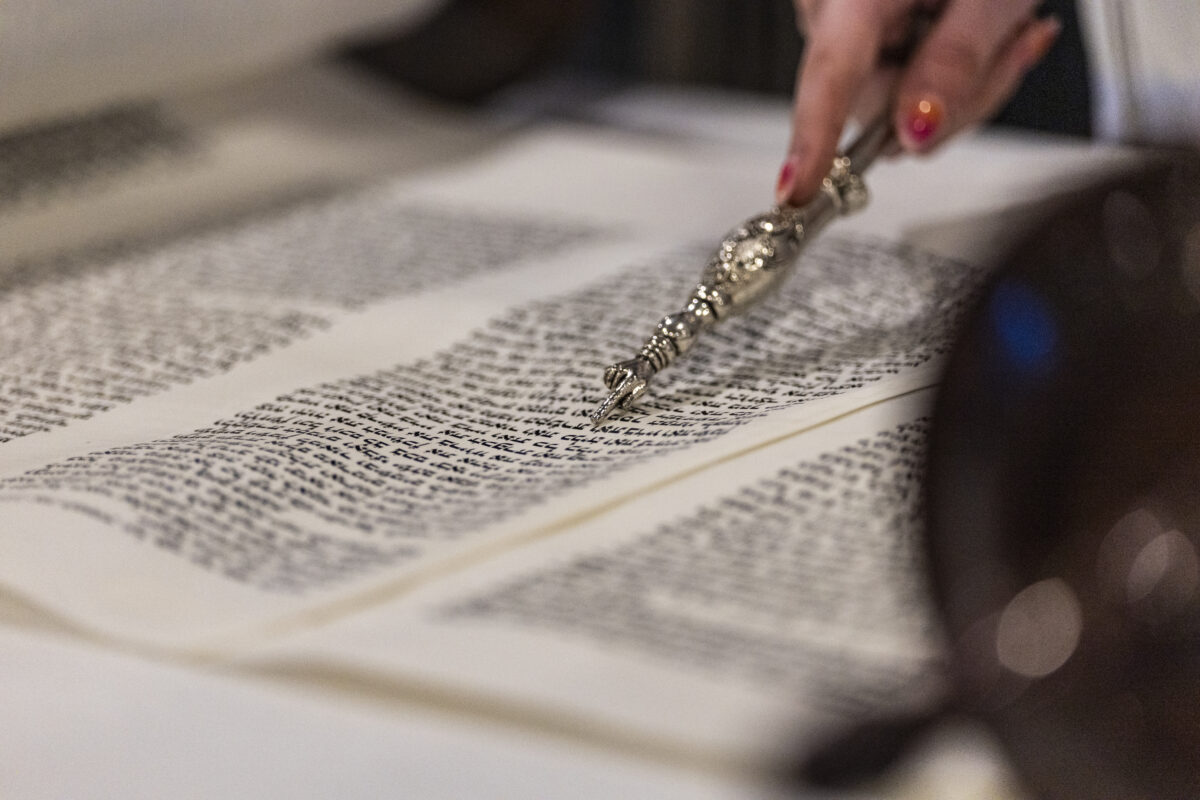
The day after the attack, Shabbat services were held at Shenandoah County Club, the Chaldean club that had opened its doors a day earlier as a reunification center during the attack. Last Friday, Temple Israel’s members met inside another West Bloomfield synagogue. At least 200 people joined the service, eager to hug each other and sing together and live out the beautiful parts of being Jewish. But they were reminded at every moment that they were living in a world transformed by ugliness.
Police cars parked out front directed traffic, and anyone coming in had to pass seven or eight security guards as they walked through a metal detector. During the service, security guards slowly walked around the room, monitoring the crowd. One guard stood like a sentry at the sanctuary’s big window, eyes fixed on whatever unknown threats might be lurking outside on the frigid early spring evening.
Indoors, Temple Israel’s rabbis and cantor joyfully ushered in Shabbat with a musical service. They told congregants about webinars being offered by mental health professionals. They shared that the synagogue’s staff were being given the entire week of Passover off so they could relax with their families.
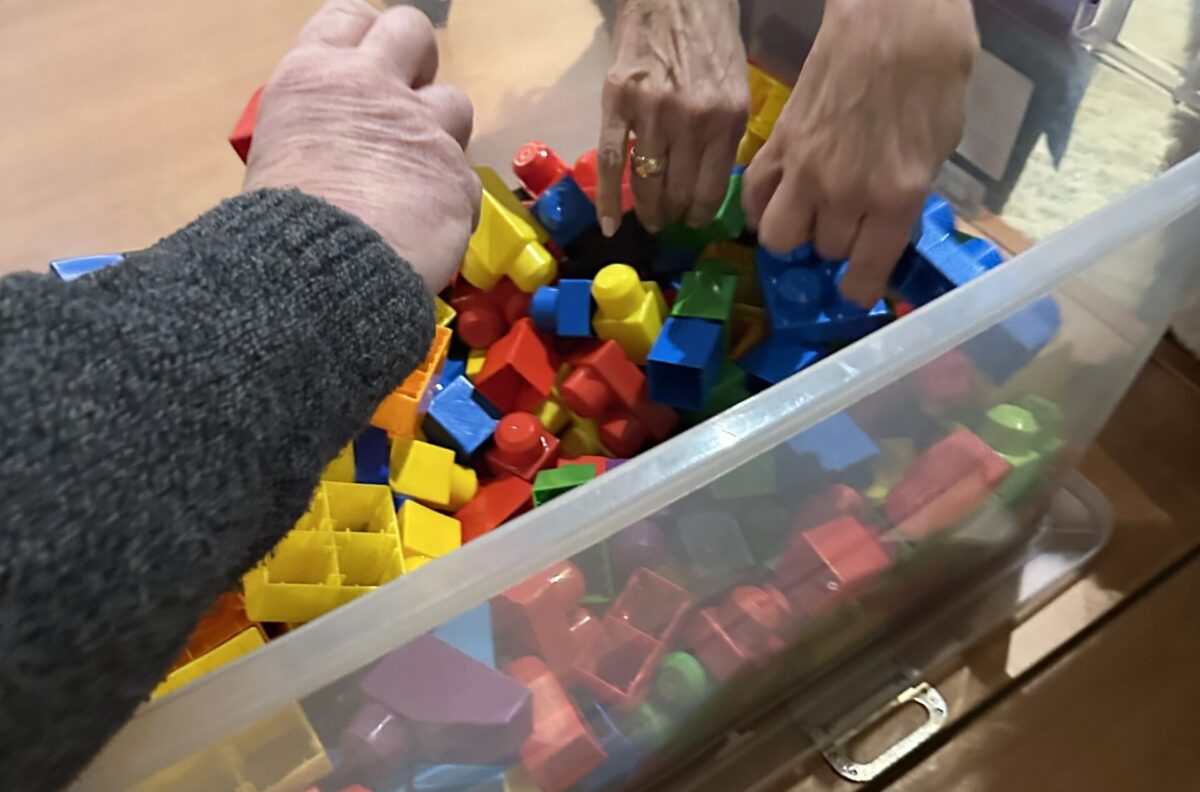
The rabbis and ECC staff had been allowed back into the synagogue briefly to be able to take items from their offices before cleanup crews disposed of the rest, most of which was waterlogged or burned. One of them grabbed a box of large, colorful plastic bricks.
As people left the service, they were invited to take one of those bricks home with them to place on their Seder plates. It would be a bitter reminder of what Temple Israel had endured. But more importantly, it would remind people that with the help of its dedicated and loving community, Temple Israel will rebuild.
For Rosenbaum, the Temple Israel preschool teacher, it’s been a challenging few weeks. She woke a few days after the attack from a nightmare. She stepped outside, breathing in the fresh air. She is in therapy. Babysitting the Temple Israel toddlers who are now out of school helps, too. She will be back teaching at Temple Israel as soon as she is allowed.
“My mother taught me, when you fall off a bicycle, you get back on and you learn to ride it. When you get in an auto accident, you get back in the car and you learn to drive it. I taught my kids that. And Temple Israel is very strong. We are going to go back. We’re going to go back as being strong and supporting and loving one another, like we do,” said Rosenbaum.
“In the grand scheme of things, Hashem was with us.”


Please log in if you already have a subscription, or subscribe to access the latest updates.
 Continue with Google
 Continue with Apple