



Getty Images
Washington state’s Jewish Democrats fight for a place in a party they no longer recognize
In one of the bluest states in the country, Jewish Democrats feel increasingly estranged from a party they helped build — but the answer, they say, is to lean in


 Add JewishInsider on Google
SEATTLE — David Kaplan has been attending Washington state Democratic conventions since he was 6 years old.
He was brought to his first convention in 1960 by his mother, who was, as Kaplan put it, a “Warren Magnuson Democrat,” while his father was a “Henry Jackson Democrat.” The two legendary former Washington senators who served from roughly the 1940s to the ‘80s differed on several issues, including Cold War and defense policy, “but one common denominator has always been support for Israel,” Kaplan said.
Six decades later, that consensus feels to him like a relic of a bygone era.
The past few years of rising tensions in the Democratic Party over Israel and antisemitism have been marked for many Jewish Democrats in Washington — one of the country’s bluest states, which has a Jewish population of about 90,000 — by disappointment, anger and a growing sense of isolation within a party they have spent decades supporting.
But the answer, they say, is not to walk away; rather, it’s to try to reclaim influence from within.
That effort begins with rebuilding the party’s own Jewish infrastructure. The Washington State Democratic Party’s Jewish caucus has gone “by the wayside, because it takes a lot of organizing and energy to keep it up,” said Linda Clifton, a longtime member of the caucus.
“It’s all volunteer [work], and people had other jobs and other things they had to pay attention to. I think we need to revive it, and there’s been some effort to do that … but I think people are so disheartened that that becomes very difficult,” she continued.
At the state party’s June convention, delegates adopted a resolution condemning “genocide and apartheid in Palestine” and calling for an arms embargo on Israel. They also adopted a plank in their party platform calling out a “dramatic resurgence in antisemitism in recent years on all sides of the political spectrum” while claiming it has risen “due in part to actions taken by the Israeli government.”
And in its foreign policy section, dedicated overwhelmingly to Israel and Palestinian issues, the platform states that the party “reject[s] racist political ideologies rooted in supremacy, including forms of Zionism,” and calls for an end to the “mass civilian casualties, destruction, displacement and starvation of Palestinians in Gaza and [the] West Bank,” among other stances critical of Israel.
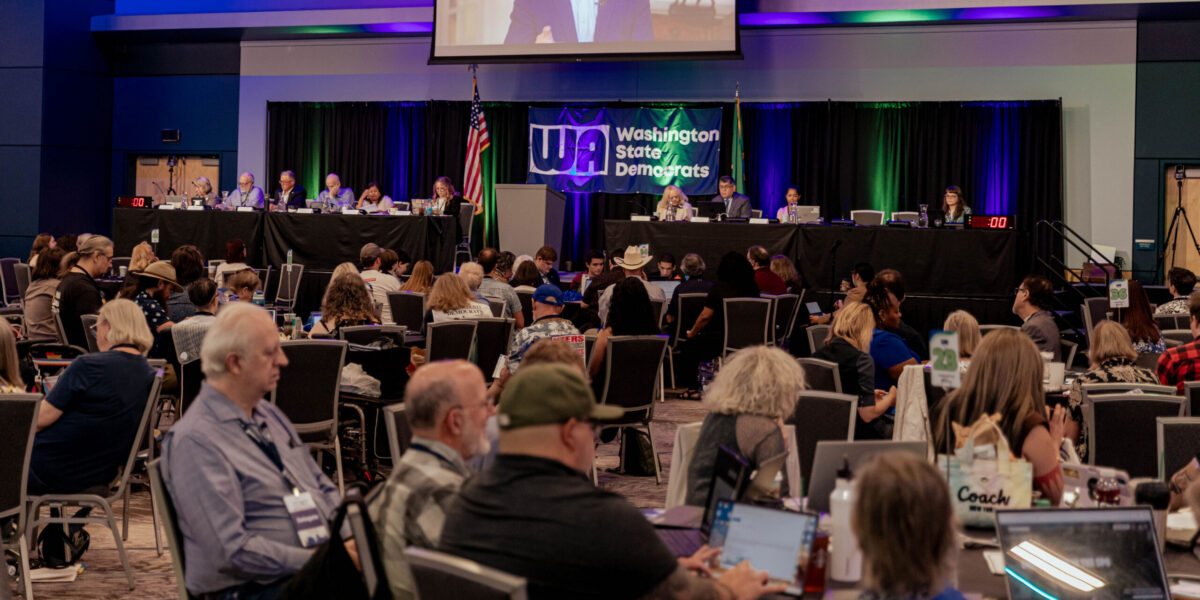
“My only issue with the platform, honestly, was that it singles one country out and that, to me, crosses the line,” said Kaplan, a founding member of the party’s Jewish caucus. “But I can tell you that I was not one of the volunteers for the platform committee, so I can’t point fingers.”
Kaplan’s deep engagement in the party has provided him a front row seat to its shift over time. These days, “I have my local Democrats piling on,” he said, referencing his representative in Congress, Rep. Pramila Jayapal (D-WA), the former chair of the Congressional Progressive Caucus. “On many levels, I admire her courage and her principles. But I get her emails where AIPAC becomes the straw man for everything that’s evil.”
Kaplan is no apologist for AIPAC, though he once served on its regional board, nor Israeli Prime Minister Benjamin Netanyahu — “I actually think he’s evil,” he said — but “in a world that contains all sorts of bad sh*t, why [Israel] is singled out … It transcends policy differences. It becomes less-than-subtle antisemitism, and I’m struggling with it mightily as a Democrat.”
“I’ve been as active as you can be in Washington Democratic politics. I never before had to worry about whether my local [representatives] harbored antisemitic beliefs or had them use AIPAC as a straw man,” he said.
Clifton, too, is dismayed by the rising hostility in a party that she’s been engaged in for decades. She said she sees it most clearly in her home 43rd Legislative District, which is based in some of the most progressive neighborhoods of Seattle, including the University of Washington campus.
“The [Democratic Socialists of America] has really organized here, and one of the main impetuses for that organization was [former] Councilwoman Kshama Sawant,” Clifton said. Sawant, a far-left socialist who promoted several anti-Israel measures during her tenure on the Seattle City Council, is now running as a long-shot independent candidate against Rep. Adam Smith (D-WA).
“She’s been very effective in building a constituency within the 43rd that is pretty young and pretty hostile to the interests of the Jewish community,” Clifton said of Sawant, “so it’s been much, much more difficult to remain an active member of the 43rd. It just hurts.”
Where she used to regularly attend the organizing meetings for the 43rd District Democrats, “I just got really tired of being the only vote on one side of an issue on a Zoom call. So I’ve really pulled back,” she said.
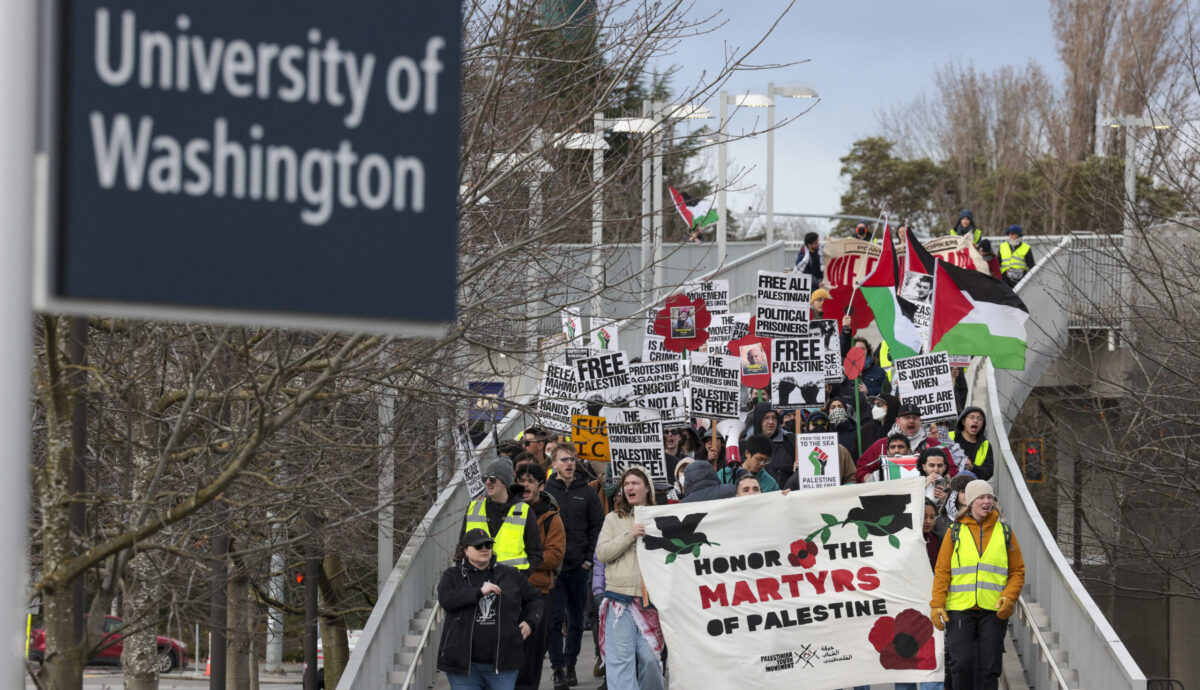
The Washington State Democratic Party begins at the most local level with precinct committee officers (PCOs), who are elected every two years — oftentimes uncontested — to represent a voting precinct. Democratic PCOs are officers of their party and vote on a wide range of party business, including endorsements, resolutions, local party leadership and convention delegates.
About organizing efforts at the state party convention, another longtime activist said the state’s Jewish Democrats “are not in the room, or not noticeably so as Jews,” instead focusing their advocacy on other policy priorities like education, healthcare and housing. “As Jews and as an organized Jewish community, we need to decide if the party platform matters, and if so, we need to be involved in the grassroots of the Democratic Party.”
“It doesn’t take many people, but it does take some,” the activist added. They emphasized the ease with which people can run for and be elected as a PCO. “If 100 Jews signed up as PCOs, that would change the party over the next two years and the next decade,” they said.
Kaplan had similar advice for his fellow Jewish activists: “In terms of getting involved, I recommend people become PCOs. It’s actually a relatively easy gig. Just join. Just show up!”
As far as the Jewish caucus goes, he said, “I wish we could be more proactive, you know, as a formally recognized constituency caucus within the Washington State Democratic Party.”
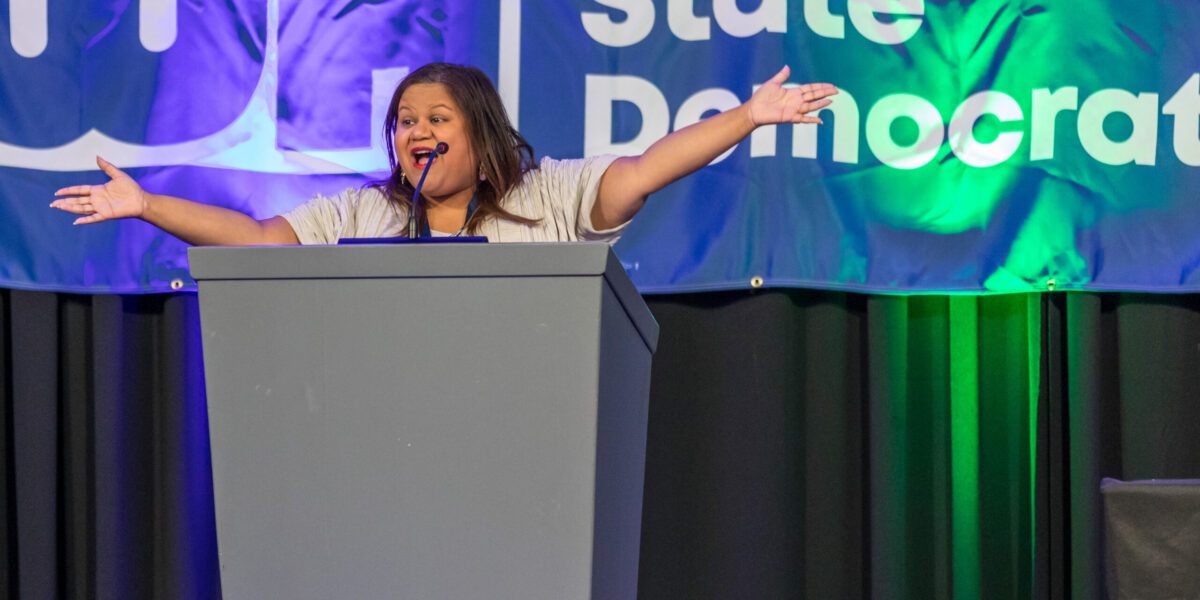
The Jewish caucus activists spoke highly of the state Democratic Party chair, Shasti Conrad, praising her outreach efforts. “She is doing the best she can to thread this needle and have differing opinions come together under a bigger tent to hash things out,” Kaplan said.
Conrad told JI in an interview, “I have always strived to try to build a party that is as inclusive as it can be, and it’s been really important to me, particularly as our first woman of color chair, that we build a party that does feel like it has people from diverse backgrounds who are able to be their full selves in the party.”
“Especially since Oct. 7, 2023, that really has focused largely on the Jewish community, alongside the Muslim community and Palestinians as well. We have really tried to sort of hold space for people that have been impacted on all sides of the conflict,” she continued.
Since she became chair in 2023, Conrad said she realized that the state party structure, which is broken into 49 legislative districts, “may have made it a little bit more challenging for particular communities” to organize and promote their priorities “because they get sort of split across geographic lines.” To help alleviate these issues, the party will look to “make sure that we are including the constituency caucuses in the drafting of the platform” for the 2028 convention.
Conrad said antisemitism is “something that I want to disavow as loudly and clearly as possible.”
“There is no room for antisemitism in our party. We have been trying to fight against it as it has really become a sort of central organizing point, I believe, for the Republican Party.”
Conrad said that at the Democratic National Committee, where she also currently serves as one of five vice chairs, she was one of the first officers to co-sponsor the creation of a DNC Jewish caucus. “I’ve done a lot of organizing alongside our Jewish caucus, and I’ve learned a lot and grown, and it’s been one of the most important parts of my learning.”
Asked about the state party’s inclusion of foreign policy in its platform, Conrad said the party is “responsive to what our delegates feel strongly about,” emphasizing that the platform is drafted before every convention by the relevant committees made of local activists and voted on by delegates. “I don’t feel like many international leaders are looking to see, you know, ‘What do the Washington state Democrats think about X, Y and Z?’ I don’t think that’s often the case, but I do think that we hear from our delegates and from our grassroots members that these are issues that are very important to them.”
Outside the party structure, some Jewish community members have turned to electoral politics to advance their priorities. Washingtonians for a Brighter Future, a PAC formed in 2024, calls itself the “political action arm of the Jewish community and its allies in Washington state.”
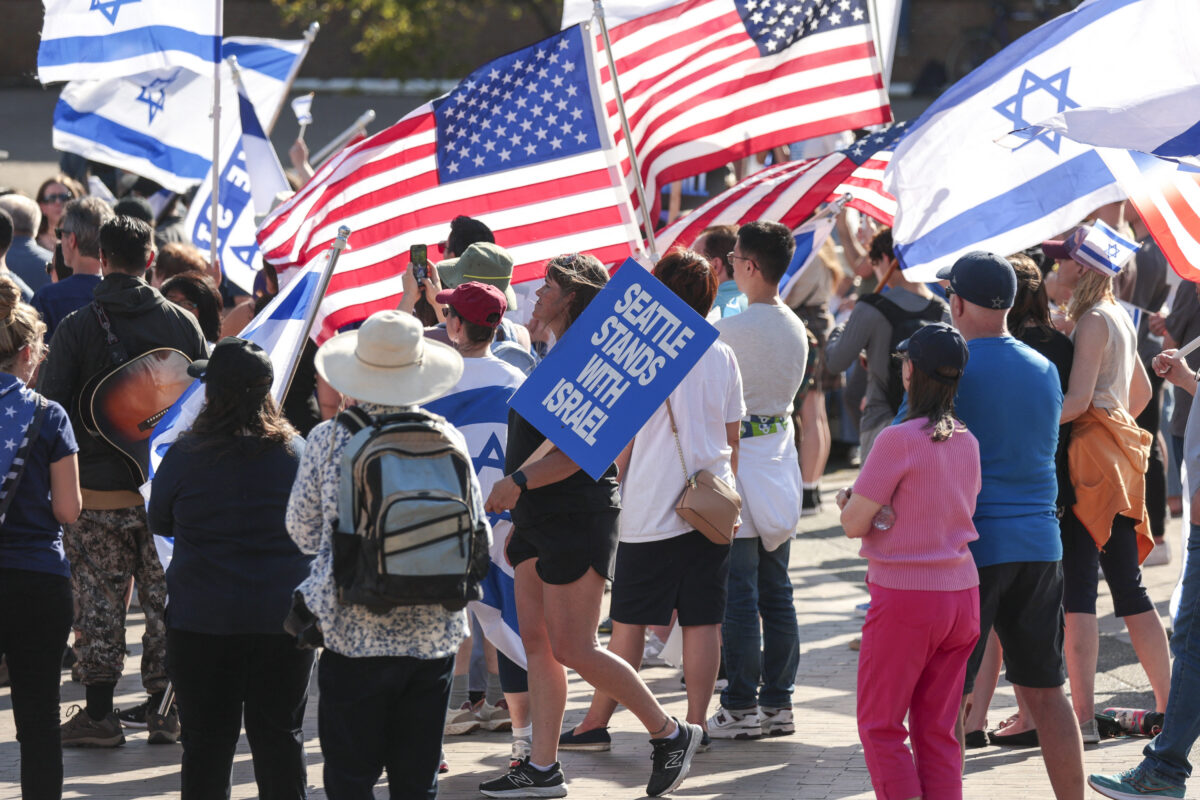
“The Jewish community in Washington state is under attack,” said Nevet Basker, one of the PAC’s co-chairs. “It’s under attack from many, many places, including by people who are hostile to Israel, but they take it out on the Jews here,” she said, referencing the November 2023 vandalism of Herzl-Ner Tamid Conservative Congregation on Mercer Island, an area that serves as a hub of Jewish life in the state.
She also raised the forthcoming 20th anniversary on July 28 of the deadly shooting at the Seattle Jewish Federation — an event that still weighs heavily on the area’s Jewish community — which was carried out by a man who reportedly shouted during the attack, “I am a Muslim American, angry at Israel.”
In order to receive WBF’s endorsement, candidates must “make a public statement supporting the Jewish community and opposing antisemitism … We have a lot of friends who are shy, who will say, ‘Oh yes, I heard about the attack in Colorado, and I called the rabbi to express my support.’ And we say, ‘That’s lovely of you. Thank you for calling the rabbi. Will you put out a public statement?’ And they will say, ‘No, that’s not my lane.’”
Basker’s message to these candidates? “We’re not interested in being the person that you are secretly dating, but won’t introduce to your friends.”
Sam Jefferies, chair of The Kids Table, a PAC created in 2025 to support “pro-Jewish” candidates in the state, told JI, “Jews helped build the Democratic Party and contributed to political and policy victories at every level of government for more than a century. At this moment of crisis, the party should be standing firmly and unequivocally with Jews across Washington state and rejecting extremism at every turn. It isn’t.”
For all their efforts to organize, reclaiming a place in the party is not simply a matter of Jewish Democrats showing up. It requires them to navigate a political environment where they often feel both committed to the process and isolated within it. Kaplan recalled the 2024 state party convention, where he said the Jewish caucus was “not prepared.”
“As we walked in, we were given pieces of paper or leaflets from, you know, white college kids in keffiyehs, and there were three resolutions” targeting Israel. As the discussion around the resolutions began, “I came to the realization, quite honestly, that half the people that I would work with and have known for years, even Jewish ones — I wouldn’t trust them to know where Anne Frank lived.”
Taking matters into his own hands, Kaplan stood to speak against one resolution calling on the Democratic Party to support restoring funding to the United Nations Relief and Works Agency — funding which the Biden administration had paused earlier that year due to findings that some UNRWA employees had participated in the Oct. 7 attacks.
“I remember it’s the first time I’ve ever been afraid to speak, so I was really nervous,” Kaplan said. “I remember not getting the reaction that I would have expected to get, not being heard, and it was very painful at that moment. I vowed I was never coming back.”
The resolution passed, but Kaplan went back for this year’s convention anyway. “I still believe the Democratic Party is the best place to be,” he said.

Please log in if you already have a subscription, or subscribe to access the latest updates.
 Continue with Google
 Continue with Apple