


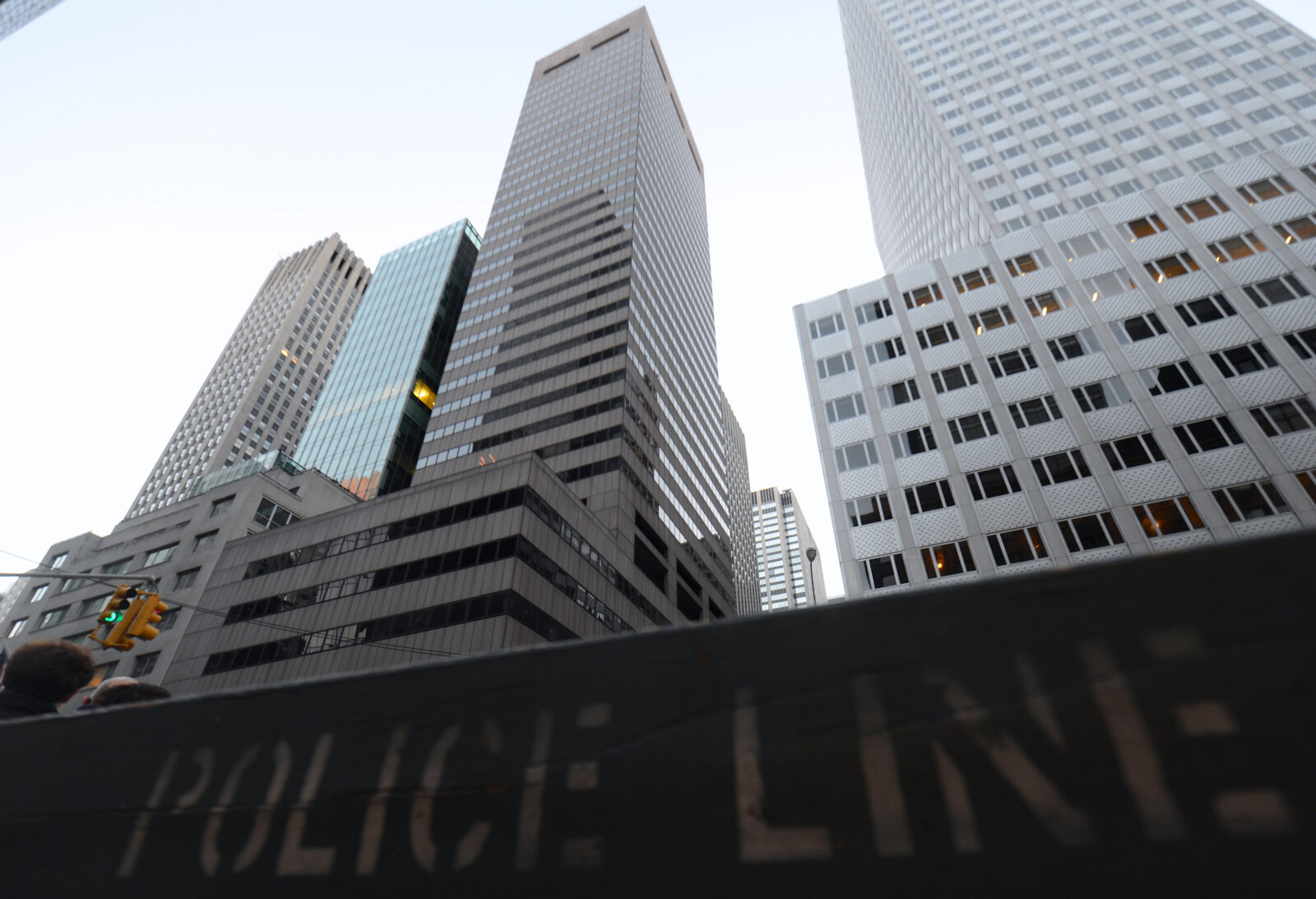
Cem Ozdel/Anadolu Agency/Getty Images
As war wages in Iran, Justice Dept. reaches ceasefire with Tehran-backed network in Manhattan
Eighteen-year legal fight over the Iran-tied Alavi Foundation ends with a new group with similar leadership taking over its assets — and NYC skyscraper


 Add JewishInsider on Google
As tensions intensified between the U.S. and Iran amid the regime’s violent repression of protesters in January, and as Tehran vowed itself “prepared for war,” a long-running battle with the Islamic Republic’s forces in Manhattan came to an end.
The final stages of the conflict between the Justice Department and the New York-based Alavi Foundation, which since 2008 has faced allegations of acting under Iranian direction, took place in secrecy — with scores of legal documents sealed and even vaulted away.
But materials filed on Jan. 12 with the New York State Charities Bureau revealed its ultimate outcome: a settlement that will provide compensation for numerous American and Israeli victims of Tehran-backed terror, but also enable a successor organization to recoup control of the foundation’s vast assets, including its 36-story crown jewel skyscraper on Fifth Avenue.
The final deal — which a filing this month shows came together confidentially in the last days of the Biden administration, and has just begun to go into effect — will officially dismantle the Alavi Foundation and strip it of hundreds of millions of dollars. Formed as the Pahlavi Foundation in 1973 during its namesake shah’s reign, Alavi was later commandeered and rechristened by figures tied to the regime of the mullahs, and the federal government accused it of conspiring with an Iranian state-owned bank to evade taxes and sanctions.
The settlement of the suit brought by the federal government compels payouts totaling $318 million to the U.S. government and a wide array of people Iran and its proxies have harmed: in the 1983 bombing of the U.S. Marine barracks in Beirut, in the 1996 Khobar Towers attack in Saudi Arabia, in multiple 1990s and 2000s suicide attacks against Israel, in the torture and murder of an Iranian dissident, and in the 1990 assassination of Rabbi Meir Kahane.
In exchange, a new non-governmental organization, the Amir Kabir Foundation, will rise in Alavi’s place. Named for a historic Persian imperial administrator, the new group will take full possession of 650 Fifth Ave., appraised at $435 million, plus bank and investment accounts holding more than $87.6 million, and properties from Queens to California worth tens of millions more and home to various Shia religious and educational facilities.
Records show that the Amir Kabir Foundation shares Alavi’s old address and even its phone number, and that three of the five members of the Alavi Foundation’s board of directors are part of the new group’s six-person leadership team. This includes Dr. Hamid Yazdi, who has served as Alavi’s president since 2013, and whose name appears on registration paperwork for the Amir Kabir Foundation. Yazdi did not respond to requests for comment.
And although by-laws for the new group require it to remain “independent from any national or international agencies,” it will continue to provide funding and support for at least one longtime Alavi affiliate: the Qoba Foundation of Carmichael, Calif., which occupies an Alavi-owned property that the feds sought to seize in the early days of the case and which bears the name of a politically significant Iranian mosque.
The news that the Amir Kabir Foundation shared much of Alavi’s leadership team and would regain access to the huge rental revenues from 650 Fifth Avenue and the network of religious facilities lodged at the old organization’s properties alarmed longtime Iran-watchers.
“This is the Iranians playing anti-sanctions, anti-accountability three-card monte. They are treating the U.S. Department of Justice and the courts as if they are fools,” asserted Dr. Michael Rubin of the American Enterprise Institute. “Iran’s only concern is maintaining the property. It’s lucrative and, in theory, can help undermine U.S. security from within. If the CIA owned a skyscraper in Tehran, would they be so willing to give it up, or would they just shuffle the acronyms around and hope no one notices?”
The news also worried Lara Burns, head of terrorism research at George Washington University’s Program on Extremism. Burns highlighted her own contributions to a report that found Alavi-backed groups had promoted anti-American, pro-ayatollah extremist rhetoric, and noted the group’s history of violating sanctions, as documented in the federal case. She suggested “government fatigue” with the lengthy and expensive litigation process may have contributed to the federal decision to settle.
A former FBI agent, Burns further argued financial penalties like those in the settlement can at times serve effective “punitive and deterrent functions” — but not in this case.
“I do not believe restitution and fines serve either purpose in the case of Alavi Foundation, who has shown a willingness to continue its behavior at all costs and the fiscal ability to maintain that agenda,” she argued to Jewish Insider. “Allowing Alavi to obfuscate their identity and basically start with a clean slate creates risks related to a continued foreign influence campaign on behalf of a regime that has called for the death of U.S. leaders and who has blatantly stated its intent to cause America harm through a variety of nefarious activities.”
But Alavi’s longtime attorney, Daniel Ruzumna, maintained that the new foundation would in no way serve as an alter ego to the old. He noted that the Alavi Foundation’s board had completely turned over during the yearslong legal fight, and stated that all members of the Amir Kabir Foundation’s leadership had submitted to interviews with the federal government and received no objection.
Further, he pointed to language in the document filed in New York subjecting the Amir Kabir Foundation to a five-year term of oversight from the state Attorney General’s office, and said that it would operate under the “close supervision” of the Justice Department.
“AKF and its board members have no relationship to the Government of Iran, no connection to the Government of Iran, and have never been accused of having a relationship with Iran — zero, nothing,” Ruzumna said. “Any suggestion otherwise is categorically false.”
The office of the U.S. Attorney for the Southern District of New York, which handled the case, declined to comment for this story.
Featured Stories


Please log in if you already have a subscription, or subscribe to access the latest updates.
 Continue with Google
 Continue with Apple