






































As Hormuz talks stall, experts see economic pressure — not war — as Trump’s likely path
Analysts say Iran and the U.S. remain too far apart on compensation demands and Washington's military posture in the region for a deal
AFPTV / AFP via Getty Images
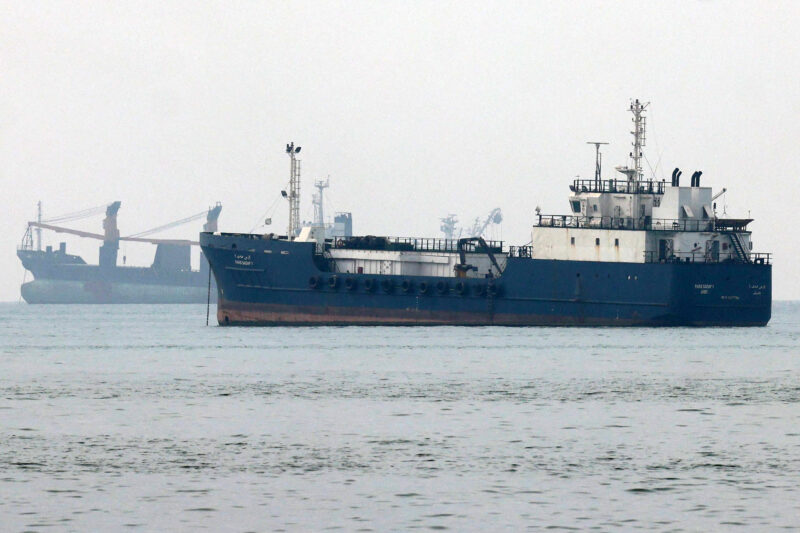
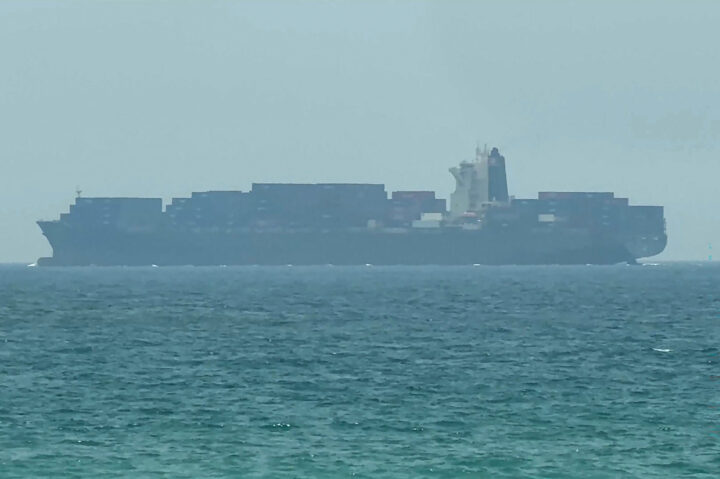
A cargo ship anchoring near the Strait of Hormuz off the eastern coast of the United Arab Emirates on July 12, 2026.


 Add JewishInsider on Google
Talks to reopen the Strait of Hormuz appear unlikely to produce an agreement, analysts told Jewish Insider this week, with little sign that Washington and Tehran can bridge their competing demands over the waterway. The Trump administration is more likely to pursue continued economic pressure than return to military confrontation, the experts suggested — but that strategy may not be enough to force Tehran to back down.
Reports indicate that an agreement between Iran and Oman on managing traffic through the strait is imminent, but a final deal has failed to materialize despite days of negotiations. Mohsen Rezaei, secretary of Iran’s Supreme National Security Council, insisted on Tuesday that any agreement reached between the two countries is separate from Tehran’s broader closure of the waterway, which will only be lifted once the U.S. accedes to Tehran’s demands, including full compensation for its war costs.
Trump has also applied conditions of his own, stating the U.S. would also seek compensation from Iran for the current conflict as well as previous ones. Experts maintained to JI that a broader agreement between Washington and Tehran over the strait appears increasingly unlikely, with both sides seeking to preserve the leverage they have gained.
“Iran is unlikely to give up control of the strait anytime soon, having spent years threatening to choke the waterway and finally proving it can with relatively few cheap missiles and drones,” Ari Cicurel, associate director of foreign policy at the Jewish Institute for National Security of America, told JI. “The mere threat of attacks remains Iran’s best leverage after a war that gutted its economy, which is why its demands for reopening [the strait] center on Washington lifting the blockade and pulling back forces, the two things that give the United States its own leverage, leaving the two sides’ positions increasingly incompatible.”
Steven Cook, a senior fellow at the Council on Foreign Relations, said his “sense is that we are going to have a long and drawn-out contest of wills over the strait.”
“The president has toggled between threatening force, using force and negotiating. He seems to like the idea of economic pressure, but of course there is no way of knowing that the resulting economic pain will dislodge the regime,” he continued.
Michael Koplow, chief policy officer at the Israel Policy Forum, similarly noted the Trump administration is more likely to continue pursuing economic pressure than return to military hostilities, citing American munitions shortages, the war’s unpopularity with the public and Congress and the approaching midterm elections.
“Given the extreme unlikelihood of any successful negotiation between the U.S. and Iran, the two plausible scenarios are either a continuation of the status quo, or Trump using an Iran-Oman agreement on Hormuz to declare victory and extricate himself from the situation altogether,” Koplow said. “Trump’s preferred option is economic pressure … The economy has priced in the Hormuz closure, so if the U.S. keeps up economic pressure without returning to war, Trump can at least count on no drastic changes on inflation or public opinion, even if neither improves before the election.”
Elliott Abrams, who served as Iran envoy in the first Trump administration, said Washington has caused “great economic damage” to Iran by maintaining its blockade on oil exports, something he called “the right policy now.” He noted that Iran’s inflation rate “is just under 90 percent and it loses hundreds of millions of dollars a day in oil revenue.”
Cicurel cautioned, however, that economic pressure may not be enough to force Tehran to surrender its leverage over the strait, pointing to the Iranian regime’s history of passing along economic hardships to the country’s citizens while continuing to direct resources toward its military. He suggested Washington could instead seek to weaken Iran’s control over the strait by establishing “protected windows of time” for commercial vessels to transit and offering financial backing to shipping companies and insurers.
“The Iranian regime has long shown it can absorb immense economic pressure at the expense of the Iranian people while funneling resources into the military programs that have now handed it this leverage,” Cicurel said. “Neither economic pressure nor the limited tit-for-tat strikes over the past few weeks have changed Tehran’s calculus on leverage it waited years to gain.”
Additionally, Abrams indicated that the decision may not be entirely up to Trump should Tehran grow impatient under increased economic pressure.
“The problem for Trump is that Iran may decide not to allow him to sit and wait. It is a vicious and brutal tyranny, but the rulers know that they risk another uprising as the economy worsens. That may lead them to attack Gulf Arab states, Israel and U.S. bases again,” Abrams said. “At some point Trump will have to hit back. The decision to return to war is really in the Ayatollah’s hands right now.”
Cook also noted that the economic pressure strategy “has costs for Americans too.”
“So far, prices at the pump have generally been manageable, but that cannot go on forever,” Cook said. “Americans have also been helped by the fact that experts undercounted how much oil is in storage around the globe. That’s a good problem to have, but it doesn’t change the fact that less oil (and other products like fertilizers and aluminum) is flowing through the strait. At some point, the laws of economics are going to catch up with us.”
More Stories
FOLLOW THE MONEY
Brandeis Center, FDD urge federal court to allow disclosure of campus foreign funding data
ACCUSATION AFTERMATH
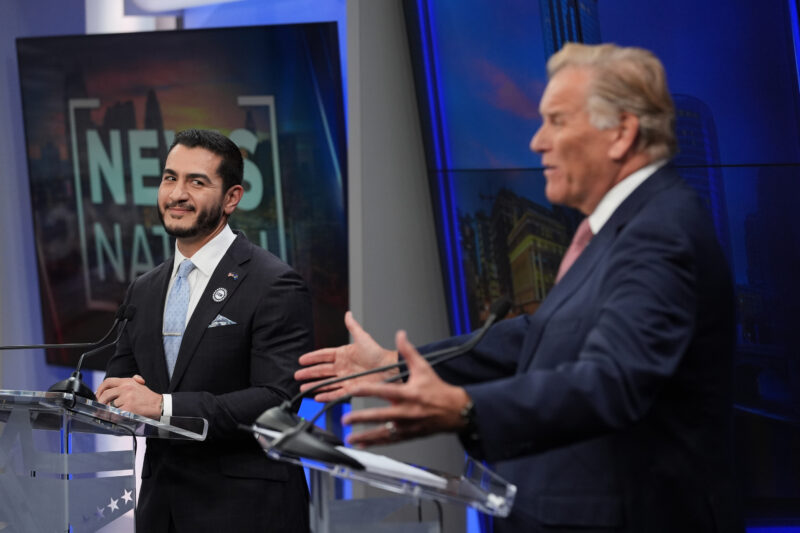
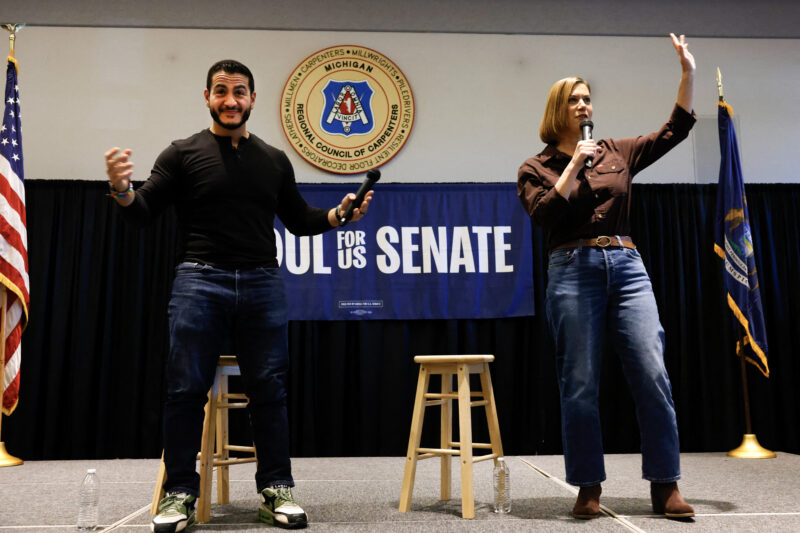
El-Sayed denies Muslim Brotherhood ties after Rogers debate claim
meeting minutes
Huckabee met secretly with Netanyahu’s top rival, Gadi Eisenkot

SEEKING ANSWERS
After State Department memorial, families of Oct. 7’s American victims call for U.S.-led probe

booking bias
Irish Jewish leader says Dublin hotel canceled guest rooms for conference on fighting antisemitism

TWO JEWS, THREE OPINIONS
Jewish podcast ‘Chosen People Problems’ finds new home with Ark Media
Please log in if you already have a subscription, or subscribe to access the latest updates.
 Continue with Google
 Continue with Apple