

































Wasserman Schultz’s reelection bid ignites tensions within Democratic Party
Black leaders in the district have failed to unite behind a single challenger, leaving the Jewish congresswoman favored in a plurality race but potentially vulnerable down the road
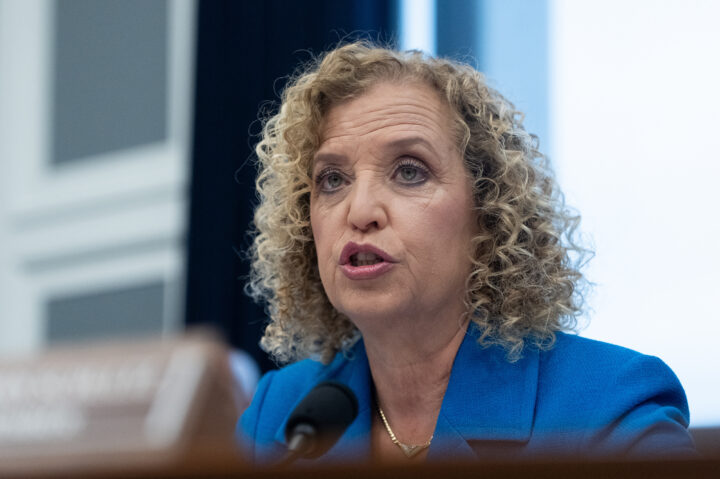
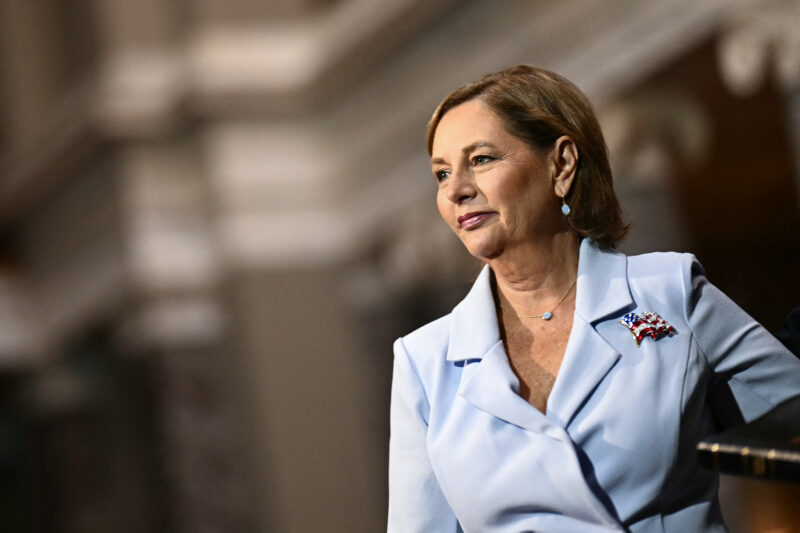
Aaron Schwartz/Bloomberg via Getty Images
Rep. Debbie Wasserman Schultz (D-FL)


 Add JewishInsider on Google
Rep. Debbie Wasserman Schultz’s (D-FL) reelection race has turned into a local and national flashpoint following the Republican-led redistricting process in Florida, and risks driving a wedge in traditional Black-Jewish alliances in the state and the party.
Wasserman Schultz is running in South Florida’s newly redrawn 20th Congressional District, a decision pitting the longtime Democratic leader and former Democratic National Committee chair against leaders who have criticized her for running in a seat historically represented by a Black lawmaker.
Yet, Wasserman Schultz also maintains dedicated supporters in the district and her home state at large, especially within the Jewish community.
“I have spent my whole adult life fighting for Broward County, and I want to continue the fight to make life more affordable for the families in CD20 who are stretched to the breaking point by the Trump MAGA agenda,” Wasserman Schultz said in a statement to Jewish Insider.
“And as I meet with voters throughout District 20, the overwhelming response is that voters know my record of standing up for them and delivering billions in local funding for Broward parks, clean water and transit and other projects and all the jobs that come with them,” she continued. “Voters also know that I’ve always spoken out for them and they want me to keep up the critical fight against Trump’s high-cost, corrupt agenda.”
Despite repeatedly expressing support for all Democratic incumbents, House Minority Leader Hakeem Jeffries (D-NY) has so far declined to endorse Wasserman Schultz for reelection.
“As I’ve indicated relative to the congresswoman, she’s had an extraordinary career,” Jeffries told reporters last week. “She’s a valuable member of the House Democratic caucus, and I’m looking forward to having more to say about that when we are closer to the Florida Democratic primary.”
Black leaders in the area brought together various candidates running against Wasserman Schultz in an effort to consolidate around a single candidate, but ultimately failed to do so, leaving a divided field opposing the longtime legislator.
Democratic leaders in and around the district lamented the situation that the redistricting process, that effectively erased Wasserman Schultz’s previous district, has created, accusing the GOP both of trying to gerrymander seats for its own gain as well as create racial divisions in the Democratic Party.
“The situation we’re in is the result of a deliberate decision by the Republican leadership in our state to target all three Jewish members of Congress from South Florida, to target the two African American members of Congress from South Florida and deliberately set something up that was going to result in, let’s say, tension between those two historically allied communities,” said Joe Geller, a former Florida House Democrat, who lives outside the district and is supporting Wasserman Schultz.
Geller argued that the redistricting explicitly violates the Florida state constitution, which bans the drawing of districts based purely on partisanship, arguing that the recent Supreme Court decision allowing for racial gerrymandering doesn’t override that provision.
“This was done deliberately by enemies of both communities to create dissension between traditional allies,” Geller continued. “It’s cynical, it’s illegal and it’s disgusting.”
He said that state courts should immediately halt the redistricting and require that the election be run under the previous lines until the issue can be litigated further, claiming that Republicans had timed the redrawing specifically in order to try to avoid judicial review.
Wasserman Schultz, throughout her time in Congress, has been a fierce and vocal advocate for Israel and for the Jewish community, breaking at times with her party on the issue. She’s currently a co-chair of the Abraham Accords caucus, was a co-founder of the Congressional Jewish Caucus and is one of the most prominent Jewish leaders inside the Democratic caucus.
Mitch Ceasar, a former chair of the Broward County Democratic Party, predicted that, given challengers’ failure to unite behind a single candidate, Wasserman Schultz should still be favored to win the seat with a plurality of the vote.
Wasserman Schultz faced pressure to run in another neighboring district, but, observers on the ground acknowledged, that seat would have been tougher for Democrats to win.
Polling released in early June showed Wasserman Schultz leading with around 39% support, followed most closely by self-described democratic socialist Elijah Manley at 21% and former Broward County Mayor Dale Holness at 15%.
The polling found Wasserman Schultz would trail either of them, or rapper and free speech activist Luther Campbell, in a head-to-head race, though it’s now too late for any candidate to withdraw from the ballot.
A poll by Wasserman Schultz’s campaign released around the same time found her leading all of the other candidates combined, at 52%, with near-universal name recognition and 80% favorability across the district.
Manley’s candidacy is causing consternation among members of the Jewish community, due to the anti-Israel stance he has staked out over the course of the campaign, which includes an endorsement from the antisemitic group TrackAIPAC. Prior to his congressional bid, he described supporters of Israel as cultish and accused pro-Israel Americans of “meddling in our country’s affairs.” He said in 2020 he was in the process of converting to Judaism.
Manley has picked up support from the Florida Democratic Progressive Caucus and the president of the Democratic Black Caucus — though the caucus as a whole did not offer an endorsement.
He has also offered other fringe views, including describing police unions as “terrorist organizations.”
Ceasar noted that, while Manley has gained attention and support, he’s also a perennial candidate for office whose past runs have been unsuccessful. He also mounted a failed bid for the Socialist Party’s presidential nomination in 2020.
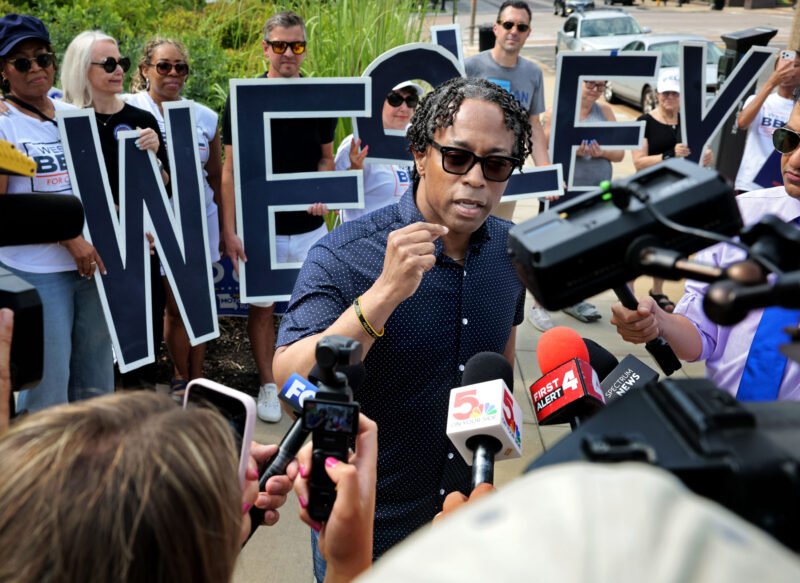
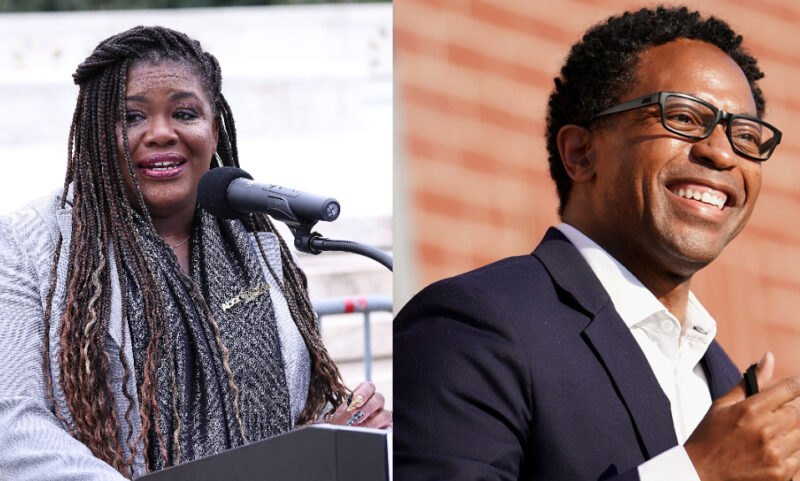
Ceasar also said that the other candidates in the race, including Holness, Campbell and former Rep. Sheila Cherfilus-McCormick (D-FL) — the latter of whom resigned from Congress earlier this year and is facing federal criminal corruption charges — have taken more pro-Israel stances.
Wasserman Schultz has long enjoyed strong support from — and spoken proudly of — the Jewish community in the district, joking at times at Jewish community events about representing the large Jewish retiree population.
Ceasar said that there is still a Jewish bloc in the district, but the demographics even in traditionally Jewish parts of the area have been changing, with a growing minority retiree population — though he said that political stances of the two communities are fairly similar.
Cherfilus-McCormick, whose corruption trial isn’t slated to begin until after the election, remains something of a wild card, Ceasar noted. Holness, he said, has posted strong performances in the district in the past. Ceasar said he was somewhat surprised by Campbell’s candidacy, given that he has stronger roots in a neighboring district, which is also an open seat.
Richard Stark, who chairs the Florida Democratic Party Jewish Caucus, which is remaining formally neutral in the race, said that Wasserman Schultz has been a strong and aggressive campaigner going back to her first campaigns for political office — “she worked hard, she campaigned, walked door to door and she got that support, and chances are she’ll do the same thing now.”
Speaking in a personal capacity, Stark said Wasserman Schultz is also popular and well-known for delivering results for various communities she represents. He speculated that, given her stature in the state, Republicans particularly hoped to see her pushed out of Congress.
“She’s a star within the Democratic Party, for the most part. It’s really a shame that we have to have a race like that,” Stark said. “She’s looking for the best that she can do for the United States of America and for the Jewish people.”
Rabbi Mark Winer, Stark’s predecessor as the Jewish Caucus chair, said that Wasserman Schultz is “the most important Democratic politician in Florida, over many, many, many years” who has had “phenomenal influence beyond her district and beyond the Congress” and is a “real force within the district.”
Winer said it’s a “real question for the future whether she’ll get reelected — it’s tough — but she is a formidable politician, she really knows how to do retail politics.”
Winer and Stark traced some of the hostility toward Wasserman Schultz, particularly among progressives, to her role as DNC chair in 2016. Progressives continue to accuse the congresswoman of putting her thumb on the scale for former Secretary of State Hillary Clinton as she campaigned against Sen. Bernie Sanders (I-VT) in the presidential campaign.
Looking further ahead, even if Wasserman Schultz ends up winning with a plurality of the vote against a divided opposition, that could signal vulnerability in a future primary election against a more unified opposition effort. But, Ceasar emphasized, “human nature always makes that difficult.”
More Stories

NEW BATTLEGROUND
Jewish leaders build up local grassroots organizing to counter radical forces in politics
INVESTIGATING THE INVESTIGATORS
Raskin claims administration’s campus antisemitism probes were ‘fake,’ schools were framed
PAC PUSH
J Street launches six-figure ad campaign to boost progressive in Swalwell’s former seat
SURVEY SAYS
Poll: Mike Rogers holds narrow lead over Abdul El-Sayed in high-stakes Michigan Senate race

Daily Overtime
Kushner’s game plan for Gaza

Daily Kickoff
Josh Kushner & Bob Iger’s new $12.5B Magic Kingdom
Please log in if you already have a subscription, or subscribe to access the latest updates.
 Continue with Google
 Continue with Apple