































The latest Senate showdown between the center and the left set in Minnesota
Left-wing Lt. Gov. Peggy Flanagan’s anti-Israel message is being complicated by her outreach to AIPAC earlier in the campaign

(AP Photo/Ellen Schmidt)
U.S. Rep. Angie Craig, D-Minn., left, and Minnesota Lt. Gov. Peggy Flanagan participate in a forum for U.S. Senate candidates at Farmfest Wednesday, Aug. 5, 2026, in Morgan, Minn.


 Add JewishInsider on Google
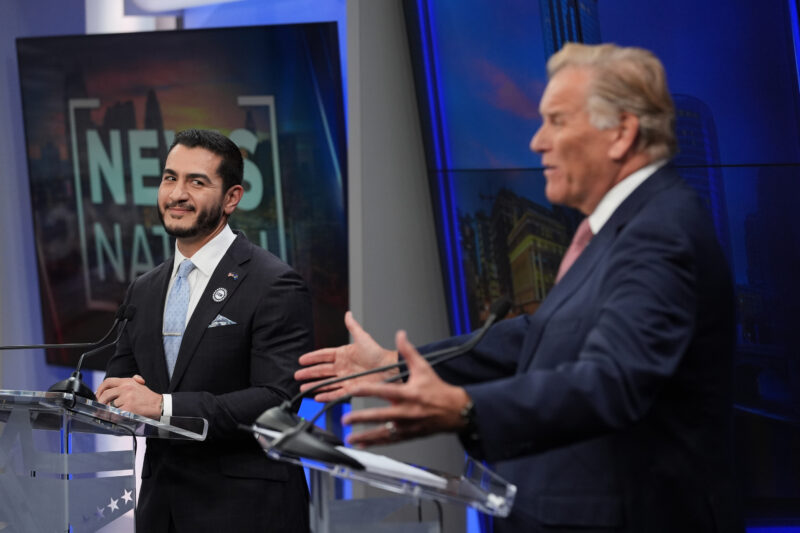
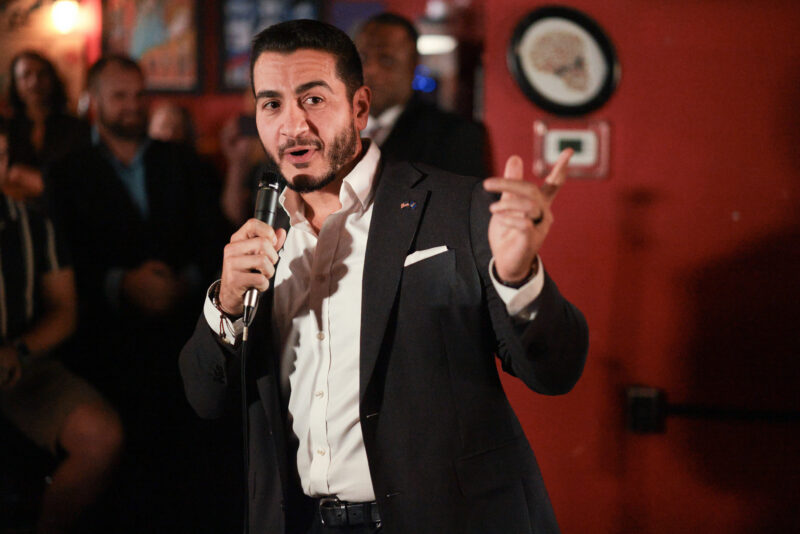
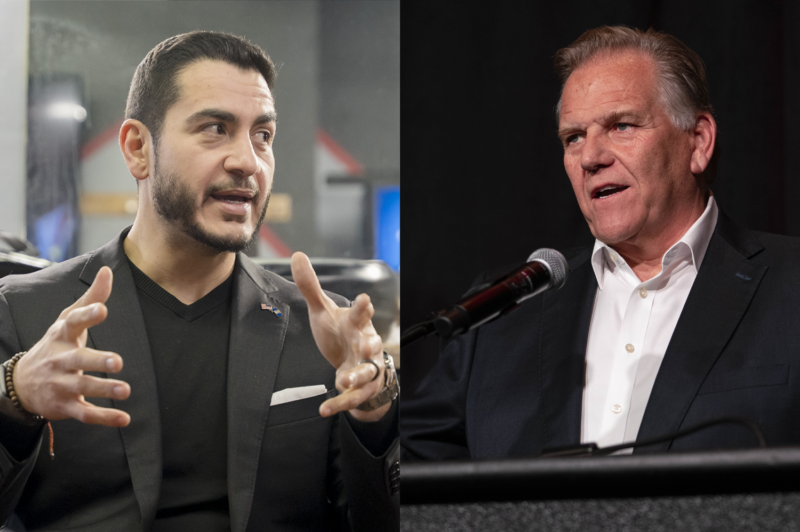
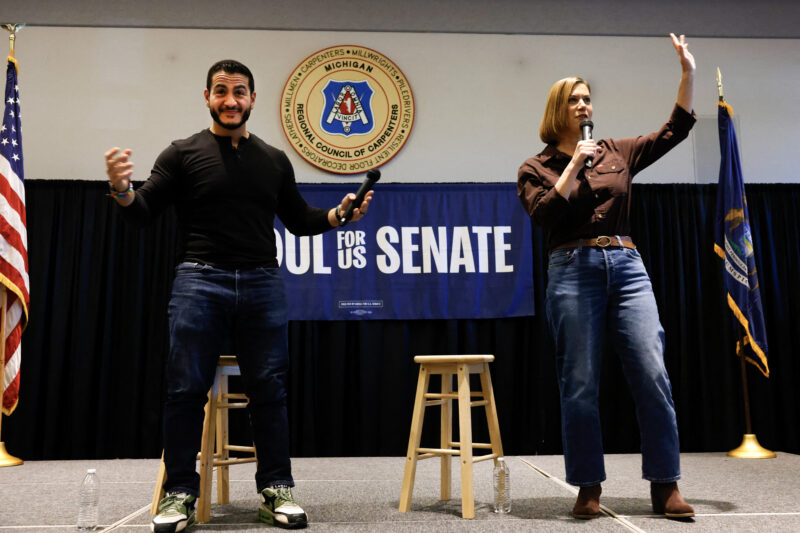
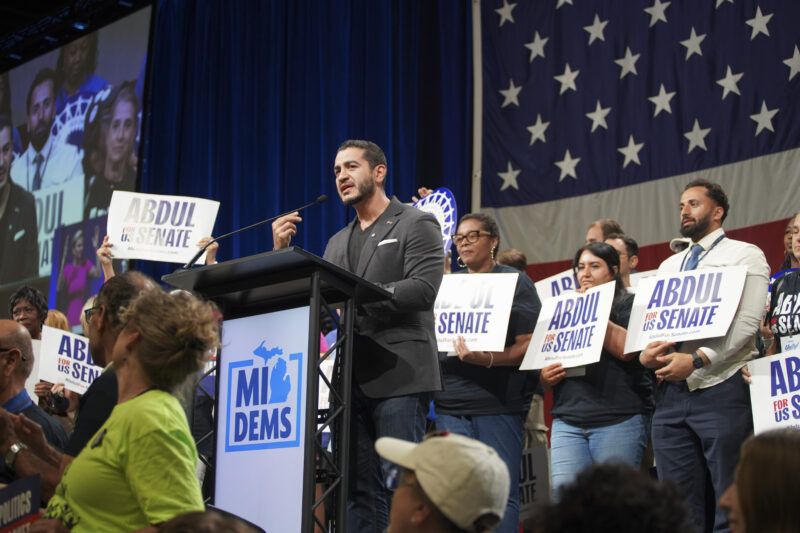
The outcome of Michigan’s bruising Democratic Senate primary last week, where Abdul El-Sayed claimed a narrow victory over Rep. Haley Stevens (D-MI) in an upset championed by the anti-Israel left, is looming over the next intraparty showdown being held in Minnesota on Tuesday — the latest in a series of proxy battles between the party’s mainstream and left-wing flanks.
In an echo of Michigan, the bitter Democratic primary for an open Senate seat in battleground Minnesota this week is pitting a moderate House member with a long-standing pro-Israel record, Rep. Angie Craig (D-MN), against an outspoken progressive, Lt. Gov. Peggy Flanagan, whose attack lines have frequently centered on AIPAC, which spent over $30 million in its unsuccessful effort to help Stevens.
The Minnesota primary is, in the closing stretch, likewise revolving around questions of electability for Democrats in the must-win November contest. Craig has pointed to controversies amid Flanagan’s tenure in government as vulnerabilities Republicans are eager to exploit — most notably including the welfare fraud scandal that prompted Democratic Gov. Tim Walz to abandon his reelection campaign for a third term earlier this year.
Flanagan, in addition to her anti-AIPAC messaging, has hammered Craig over what she has described as a “disqualifying” vote approving the Laken Riley Act — legislation requiring the detention of unauthorized migrants charged with certain crimes — the optics of which have been damaging in the wake of President Donald Trump’s protracted immigration crackdown in Minnesota. Craig has expressed regret for her vote.
But unlike Michigan, where El-Sayed claimed the nomination by less than one point after polls had suggested a double-digit blowout, the Minnesota matchup has been seen as neck-and-neck, the outcome of which is hard to predict, experts say. Recent independent surveys have shown a statistical dead heat in the final weeks of the primary, with each candidate garnering around 40% of the vote.
The candidates’ equivocations over AIPAC and individual ties to the group have also emerged as fault lines in recent weeks, complicating the ideological divisions that have shaped other primaries in which Israel and Middle East policy have featured prominently.
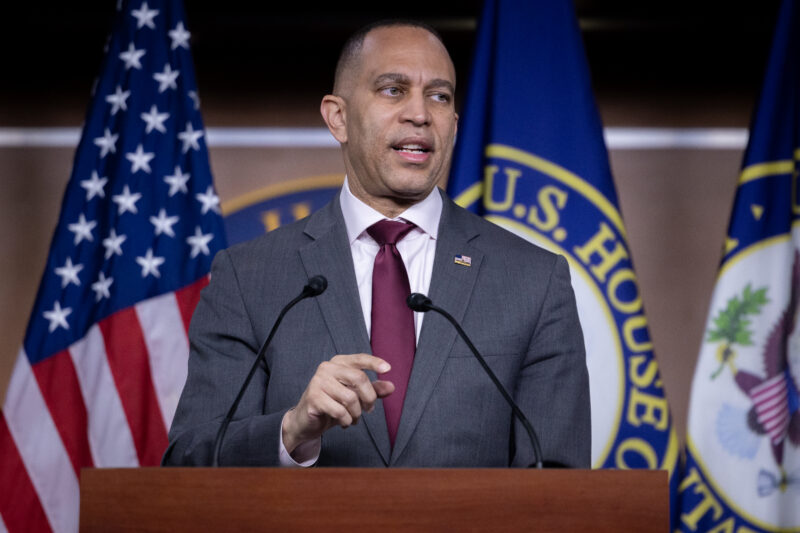
In a reflection of the extent to which AIPAC is now viewed as a liability in Democratic primaries, Craig has distanced herself from the group, which has not officially made an endorsement in the race even as its donor network has contributed to her campaign. The congresswoman, who is backed by several pro-Israel lawmakers including Sen. Elissa Slotkin (D-MI) and House Minority Leader Hakeem Jeffries (D-NY), has said she is not accepting contributions from AIPAC’s political arm in her current campaign.
During a recent debate, Flanagan said AIPAC had been Craig’s “biggest funder throughout her entire political career,” while claiming her own “values do not align with” the group. Flanagan has cast AIPAC as part of “a band of super villains” in the race now trying to “buy this election,” language some Jewish leaders say they have found unsettling amid rising antisemitism.
Flanagan, however, acknowledged last month she had met privately with AIPAC after The Minnesota Star Tribune obtained a video recording of remarks to Jewish community members — also reviewed by Jewish Insider — in which she said the outreach was “important” for her “to make sure that we’re building that relationship.”
Flanagan claims that AIPAC turned against her and came to regard her as a “threat” when she confirmed her support last year for Senate resolutions to block arms sales to Israel. She has since endorsed a House amendment to end aid to Israel, which Craig rejected, further illustrating her policy disagreements with the group.
Craig, for her part, has sharply dismissed the lieutenant governor as “completely disingenuous about her soliciting support from AIPAC,” claiming that she “has been very hypocritical” because of her efforts to demonize the group.
While Flanagan has insisted she was not seeking an endorsement in her outreach to AIPAC officials, she did write an Israel position paper that she submitted to the group as part of their discussions, according to two people familiar with the matter.
Manny Houle, a pro-Israel Democratic consultant in Minnesota, confirmed to JI that Flanagan presented a Middle East policy paper to AIPAC and said that he had personally reviewed the document. He said he no longer had a copy, which JI was unable to obtain, but he recalled that she “was open to conditioning aid” to Israel and said she “put a lot of pressure and fault on Israel and occupation,” among other “key factors” he characterized as distinguishing Flanagan from Craig.
Houle, a former director of progressive outreach for AIPAC in the Midwest, said his impression had been that Flanagan wrote the paper and sought the group’s feedback early in her campaign last year because she viewed it as part of a broader process. The lieutenant governor “would have been open to engaging within the network of donors” affiliated with AIPAC, Houle claimed, “but when she realized that wasn’t going to be the case,” she pivoted to a more hostile position.
“Many key advisors to Peggy are anti-AIPAC, so it’s hard for me to think she’d ever honestly in good faith engage with the organization,” Houle explained to JI. “I’ve had conversations with her throughout the race trying to get her to tone down her rhetoric” on Israel issues, he added, “but to no avail.”
A spokesperson for AIPAC did not return a request for comment.
Alexandra Fetisoff, a spokesperson for Flanagan’s campaign, did not directly address the AIPAC paper in a statement responding to a request for comment. “Flanagan disagrees with AIPAC’s deeply unpopular political agenda and the catastrophic actions of” the government led by Israeli Prime Minister Benjamin Netanyahu, Fetisoff told JI on Friday.
“Flanagan believes what has happened in Gaza is genocide, a position in line with the United Nations,” Fetisoff said. “Flanagan has consistently condemned antisemitism, and will continue standing with Jewish Minnesotans against hate.”
Last week, American Priorities, a new super PAC created to counter AIPAC’s influence in Democratic primaries, began spending in the race to help boost Flanagan, spending over $50,000 on an ad calling her a “fighter” who would “stand up to Trump” while touting her support from Sen. Bernie Sanders (I-VT).
Flanagan also claims backing from the state Democratic Party and retiring Sen. Tina Smith (D-MN), whom she is vying to succeed, along with leading progressive critics of Israel such as Sens. Elizabeth Warren (D-MA) and Chris Van Hollen (D-MD).
Doug Rossinow, a professor of history at Metro State University in St. Paul, who has tracked divisions over Israel in the state Democratic Party, said the “AIPAC issue flew under the radar until pretty recently” in the election. “The Flanagan-Craig contest is, compared to Michigan’s Democratic Senate primary race, a classic case of Minnesota understatement and even passive aggression,” he told JI.
“Flanagan lately has made an issue of Craig’s history of support from AIPAC,” he noted, “but Craig, unlike Haley Stevens, doesn’t want to own that or talk about Israel.” Meanwhile, Flanagan has stated “little about her own position on Israel” and the region, he added, “unlike El-Sayed in Michigan,” a fierce critic of Israel who has refused to acknowledge its right to exist as a Jewish state.
One state party activist described the race as “a little bit less black and white than Michigan,” while noting the contrasts between Craig and Flanagan are not as drastic. “I see it as a toss-up,” he said of the primary.
Joe Radinovich, a Democratic consultant based in Minneapolis, added that while the national political mood has favored populist progressives, he believes there is reason to interpret the closer-than-expected finish in Michigan as a relatively promising omen for Craig, who flipped a GOP-held swing district in 2018.
“The dominant narrative has belonged to the further left wing of the party, populist candidates and people decrying AIPAC and Israel,” Radinovich, who said he is supporting Craig but is not involved in the primary, told JI in an interview on Friday. “But if I’m on the Craig campaign and looking at the results of the election in Michigan, I’m feeling some wind in my sails.”
Mara Kunin, Craig’s campaign manager, projected confidence in a statement on Friday. “National and state Republicans are making a serious play for this Senate seat and primary voters understand that we can’t risk putting up a weak candidate in the general election,” she said, adding Craig “is positioned to win this race on Tuesday and seal the deal in November.”
The Democratic nominee is expected to face Michele Tafoya, a former NFL sideline reporter who is heavily favored to win the Republican primary, in November. The GOP’s Senate campaign arm has indicated that it views Minnesota among four pickup opportunities as the party seeks to retain its majority in the chamber.
“It is very saturated, very ugly and very negative,” another state party activist said about the primary, which has otherwise seen a flood of outside spending from opposing groups. “I think that AIPAC will have an impact in the race, but social services fraud could be more important,” he told JI. “Whoever wins, it will sort of say which issue” carries the most weight.
More Stories

Go Blue, but blue and white?
Michigan Hillel’s break with Israel advocacy groups raises questions about where it stands

TOEING THE LINE
Menin, Levine call for ‘focus’ on Oct. 7 victims — but don’t condemn Mamdani
VEEP'S VIEW
Harris says Biden should have done more to stop Israel’s ‘horrific conduct’ in Gaza

Daily Overtime
Dublin hotel dumps antisemitism conference
EMPIRE STATE FEUD
Mamdani rips Blakeman’s claims he wouldn’t protect Jews as ‘directly racist’
UNSETTLED POLICY
Trump WH sends mixed signals over response to European sanctions against Israeli settlements
Please log in if you already have a subscription, or subscribe to access the latest updates.
 Continue with Google
 Continue with Apple