



























Michigan Democrats scramble to avoid a Platner repeat
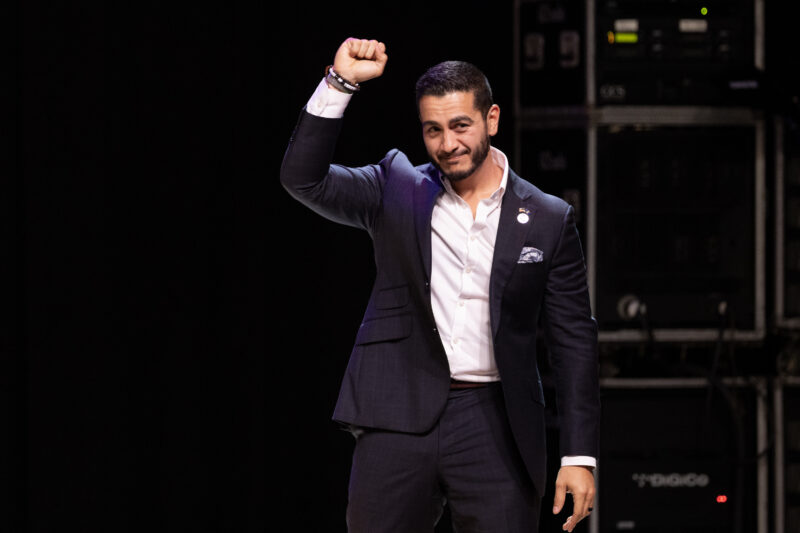
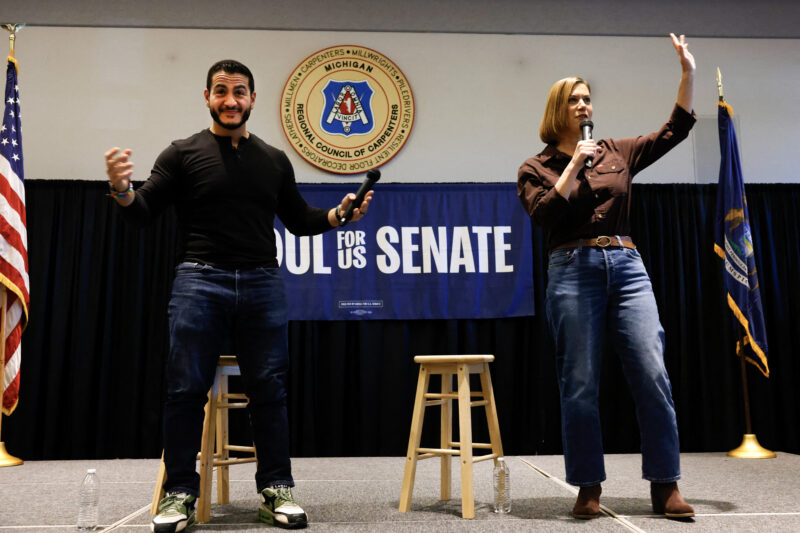
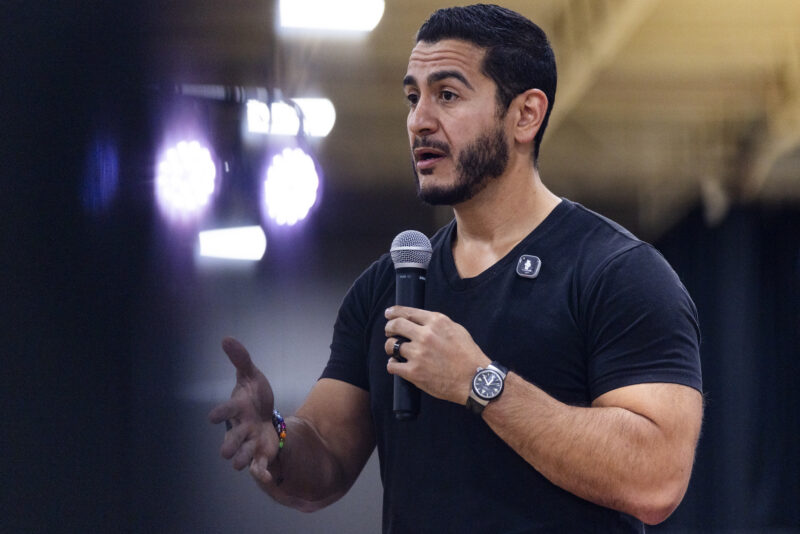
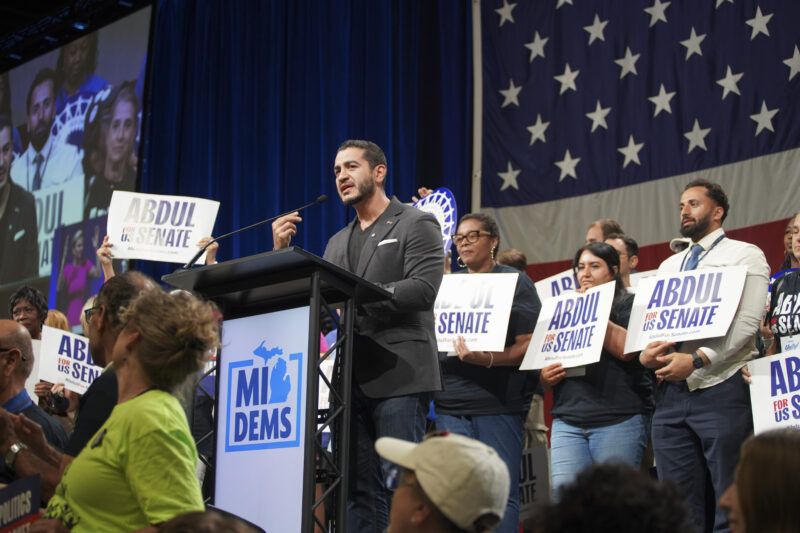
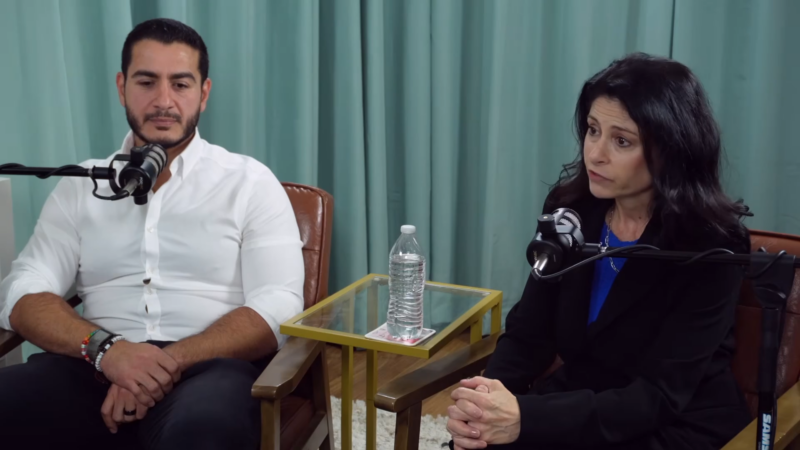
After socialist candidates scored several surprise victories, party leaders are fighting with renewed vigor to rally behind Rep. Haley Stevens (D-MI) in the primary against her left-wing challenger, Abdul El-Sayed
Kristen Norman/AP
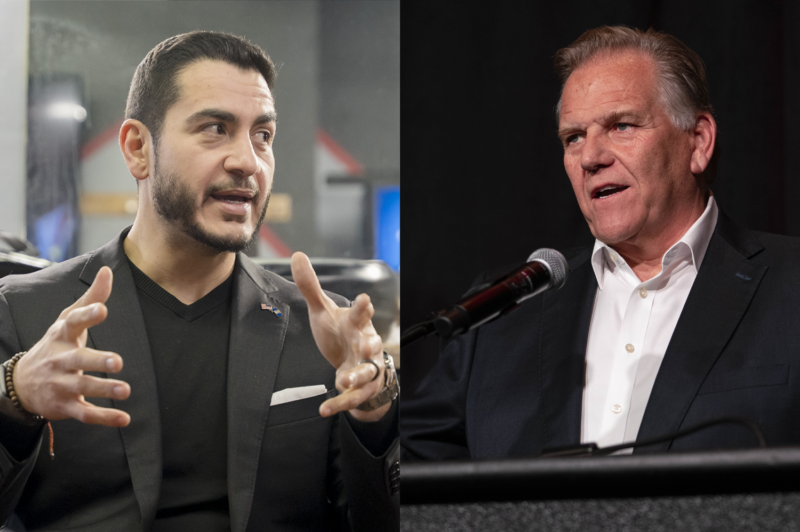
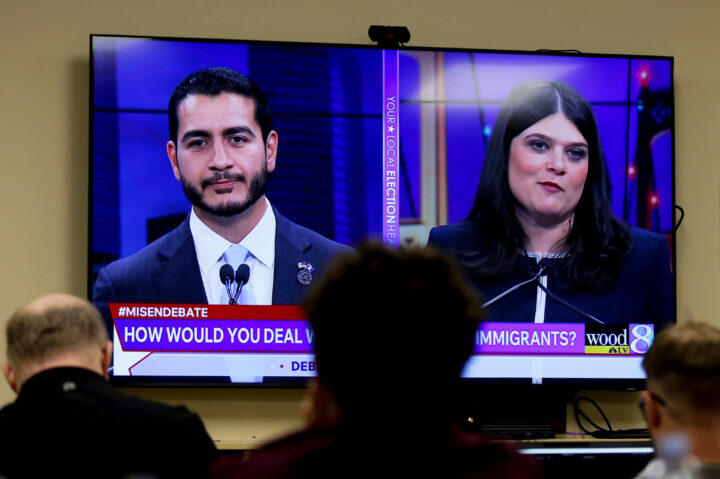
Michigan U.S. Senate candidates, Abdul El-Sayed, left, and Rep. Haley Stevens, D-Mich., are displayed on a television during a debate inside the spin room at WoodTV studios on Tuesday, July 7, 2026, in Grand Rapids, Mich.


 Add JewishInsider on Google
As Maine Democrats pick up the pieces of Graham Platner’s failed Senate campaign and quickly try to find a replacement for the scandal-tarred candidate on the ballot, moderate Democrats in Michigan, where a primary is fast approaching, are in a race against time to prevent another far-left Senate candidate from capturing a valuable nomination.
The final three weeks of the Michigan primary will be 2026’s most consequential test yet for the power the party establishment still holds, particularly in a pivotal swing state. After socialist candidates scored a number of surprise victories in heavily blue districts in New York City, Philadelphia and Denver, party leaders are fighting with renewed vigor to rally behind Rep. Haley Stevens (D-MI) in the primary against her left-wing challenger, Abdul El-Sayed.
Retiring Sen. Gary Peters (D-MI) endorsed Stevens on Monday, a pivot from his announcement in May that he planned to stay out of the race, joining Senate Minority Leader Chuck Schumer (D-NY), who had already backed the congresswoman. The party’s left flank — including Sens. Bernie Sanders (I-VT) and Chris Van Hollen (D-MD) — is backing El-Sayed.
“The change of heart is we just know that we have to hold Michigan,” Peters said on “Morning Joe” on Tuesday of his decision to endorse, with Stevens sitting beside him. “She’s an outstanding candidate and I certainly hope that folks get behind her around the country and understand that she’s the right person to be the next senator from the state of Michigan.”
There are fresh signs that the late push for Stevens from Democratic leaders — along with millions in ad spending from pro-Stevens outside groups — has given the congresswoman momentum in the closing stretch of the race. A new poll commissioned by the Detroit News found Stevens pulling ahead of El-Sayed by seven points, 48-41%, after she trailed in most public polls this year.
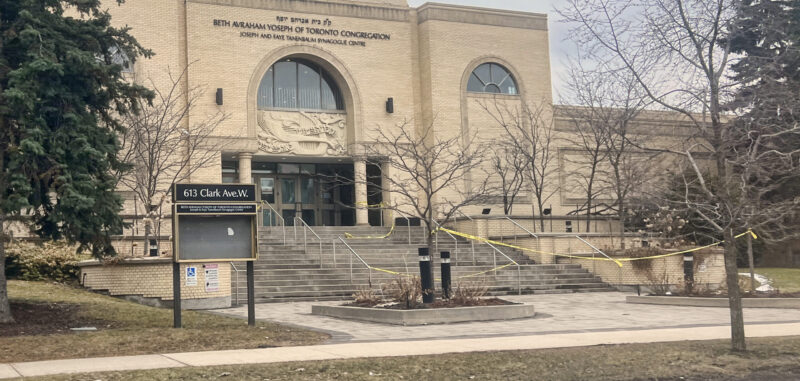
The United Democracy Project, AIPAC’s affiliated super PAC, is spending big to attack him, dropping nearly $15 million in the race so far. A new 30-second ad attacks El-Sayed as sexist, referencing criticisms he’s made against former First Lady Michelle Obama and Gov. Gretchen Whitmer. A mailer sent to Michigan voters criticized El-Sayed’s response to the attack on Temple Israel in West Bloomfield in March. El-Sayed condemned the attack but said that “hurt people hurt people,” referring to the assailant having lost his brother — a Hezbollah commander — in an Israeli airstrike in Lebanon.
“We are going to continue educating Michigan voters on El-Sayed’s track record of making disparaging and sexist comments about women,” Patrick Dorton, a UDP spokesperson, told JI on Tuesday.
Platner’s collapse in Maine has, for some Democrats, raised questions about the electability of far-left candidates in must-win Senate battlegrounds for the Democratic Party.
The centrist Democratic think tank Third Way published a memo on Tuesday underscoring that Democrats could lose other winnable races if they continue taking the advice of ideologically driven left-wing consultants who advised Platner. (Fight Agency, the political ad firm that was used by Platner and New York City Mayor Zohran Mamdani, is also consulting for El-Sayed’s campaign.)
El-Sayed has continued to play to his base, doubling down on radical rhetoric in interviews at a time when Democrats are concerned about holding onto the swing seat in November. He called Israel a “rogue state” in a recent CNN interview and said that Democrats who support Israel only do so because of money. As his rhetoric has become more extreme, and the race tightens between the two candidates, Jewish Democratic groups are planning to amp up their campaigning for Stevens ahead of the Aug. 4 primary.
“It is now a direct, high-stakes two-way race between Haley Stevens and Abdul El-Sayed,” the Michigan Democratic Jewish Caucus wrote in a recent email to members. The Jewish Caucus is hosting a canvassing event on behalf of Stevens in Farmington, a heavily Jewish suburb of Detroit, this weekend.
“With early and absentee voting already underway, to ensure Haley wins on Aug. 4, we need to leverage our deep community roots, personal relationships, and trusted voices,” Jewish Caucus Chair Decky Alexander told Jewish Insider on Tuesday.
The Jewish Democratic Council of America, a national organization, is hosting a virtual phone bank for Stevens this week. The group had previously issued a joint endorsement of Stevens and state Sen. Mallory McMorrow, who withdrew from the race earlier this month, but is now planning a five-figure digital ad buy in support of Stevens’ campaign.
“JDCA is focused on mobilizing Jewish voters across Michigan in support of Haley Stevens,” JDCA CEO Halie Soifer told JI on Tuesday. “Haley has always stood with the Jewish community, and we’re proud to support her in this critically important election. We also believe she has the best chance of beating Mike Rogers in November, and we’re committed to keeping Michigan blue.”
The Stevens campaign expects a close race but views McMorrow’s decision to drop out as a boon for Stevens. McMorrow did not endorse either candidate. A source working with the Stevens campaign, who was not authorized to speak on behalf of the congresswoman, said the campaign is particularly focused on winning over Black voters, as well as older and non-college-educated voters, many of whom remain undecided. (The Detroit News poll showed Stevens with a substantial advantage with Black voters, leading El-Sayed 67-21%.)
The Michigan Jewish community, which is centered in Stevens’ congressional district, is also a part of the campaign’s get out the vote plan.
“I think that Haley wants all Michiganders to vote, but obviously has a very special connection with the Jewish community, especially in her district in Oakland County,” said the campaign source.
El-Sayed routinely tars Stevens for receiving the backing of AIPAC. She has not said much during the primary about her ties to the group, instead highlighting her support for a two-state solution to the Israeli-Palestinian conflict, which she described as “the difference between my opponent and myself on this issue” in a debate last week. El-Sayed has said he struggles with the question of whether Israel should exist as a Jewish state.
This week, El-Sayed announced a major fundraising haul from the second quarter of the year: $4.5 million, up from $2.3 million he raised in the first quarter. A spokesperson for Stevens declined to share her latest fundraising totals, which legally must be reported by Wednesday. She took in $1.9 million in the first three months of the year.
More Stories
HATE MAIL
Son of GOP challenger to Gov. Wes Moore called Jews ‘pedophiles’ and ‘Satan worshipping scum’
DOHA DEALINGS
Moskowitz challenger visited Qatar in 2024, photographed with Qatari official
TORAH AND TAXES
First female Haredi candidate promises reform to ultra-Orthodox politics

IN THE CROSSHAIRS
Posters target University of Oregon Hillel executive director as ‘enemy of the people’
BACK FROM THE GULF
Sen. Murphy accuses admin of ‘active cover-up’ of Iran war, vows to leverage funding to end war
SURVEY SAYS
Poll finds sliding NYC Jewish support for Dems since Oct. 7, substantial concern about DSA
Please log in if you already have a subscription, or subscribe to access the latest updates.
 Continue with Google
 Continue with Apple