









































Trump’s push for a Hormuz deal alarms experts over terms ceding oversight to Iran
Analysts warn the proposed 60-day arrangement, if signed as reported, would mark the first time Iran formally directs shipping through the international waterway, setting a dangerous precedent
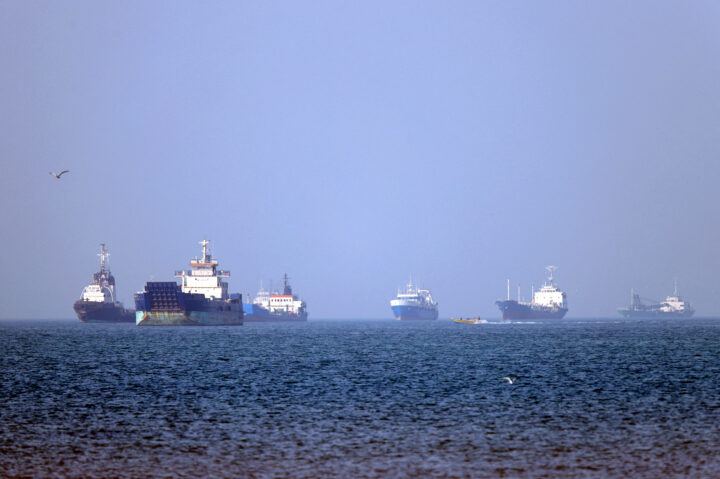
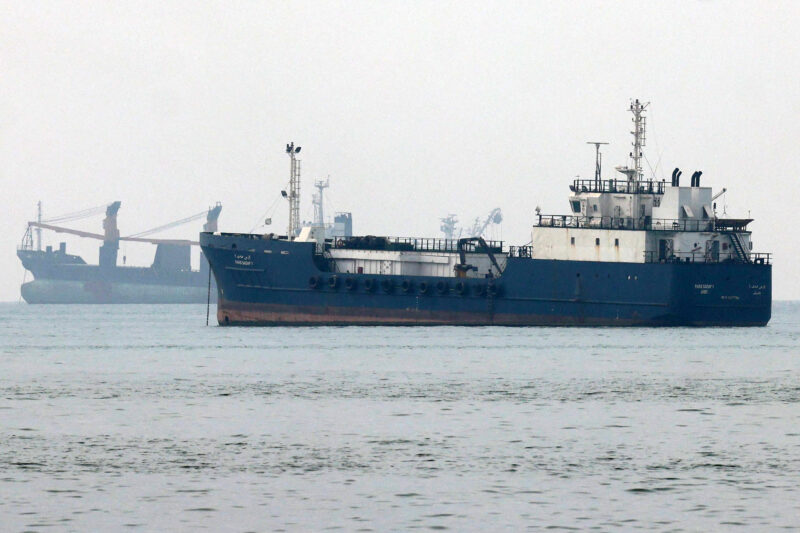
Amirhossein KHORGOOEI / ISNA / AFP via Getty Images
Vessels are pictured anchored in the Strait of Hormuz off Bandar Abbas in southern Iran on May 5, 2026.


 Add JewishInsider on Google
Experts are expressing growing concern over reports that an emerging deal between Iran and Oman to reopen the Strait of Hormuz could grant Tehran unprecedented oversight over the international shipping route, ceding control to Iran that it did not possess prior to the conflict.
The potential agreement comes as President Donald Trump suggested on Tuesday that “a lot of progress had been made” in negotiations and signaled a deal on the strategic waterway could be announced as soon as this week. Iranian Foreign Ministry spokesperson Esmail Baghaei confirmed on Wednesday that an arrangement with Oman had reached the “final stage.”
Iran’s deputy foreign minister has denied direct negotiations with the U.S. and warned that an agreement would not automatically reopen the waterway. Iranian state media also reported that, under a draft bill currently being reviewed by an Iranian parliamentary committee, U.S. and Israeli ships may also be barred from crossing the strait.
Reports indicate any agreement would likely last for 60 days and require the U.S. to lift its naval blockade on Iranian ports. A deal would potentially initiate the clearing of naval mines in the strait, a return to a broader ceasefire and resumption of talks with the U.S. on Tehran’s nuclear program.
Under the proposed terms, inbound commercial vessels would be directed through a northern route in Iranian waters, while outbound ships would traverse a southern route in Omani waters, managed in coordination with Iran. Although a U.S. official told the Associated Press that such a deal would preclude Iran from issuing formal approvals for transiting ships, tolls or service fees, regional analysts warn that formalizing Iranian oversight over the chokepoint represents a significant strategic concession.
Matthew Levitt, a senior fellow at The Washington Institute for Near East Policy, told Jewish Insider that Washington’s drive for a resolution with Iran may be driving it to agree to a less-than-ideal scenario.
“President Trump is very eager for a deal that reopens the strait, and seems inclined to accept a deal under which Iran has greater oversight of ships entering and exiting the strait,” Levitt said. “The key is denying Iran any way of monetizing the flow of traffic through this international waterway.”
Daniel Shapiro, a former U.S. ambassador to Israel under President Barack Obama who also served as President Joe Biden’s Iran liaison to Israel, told JI that “if the deal that is being described comes into effect, it is a strategic win for Iran.”
“[Iran] will emerge with effective control over the Strait of Hormuz, which was a fully open international waterway before the war,” Shapiro said. “The United States will be strategically worse off with this outcome than we were before the war, but it is almost certainly the only way to prevent an escalation that would produce even greater global economic disruption than we have already seen.”
Shapiro noted that even after a deal is made, Iran “will probably receive early sanctions relief … and they will only be expected to start negotiations on their nuclear program, which could turn out to be fruitless and endless.”
Analysts emphasized that the disconnect between Washington and Tehran regarding the scope of the agreement poses risks to maritime security.
Jonathan Ruhe, director of foreign policy at the Jewish Institute for National Security of America , pointed out that much like the June U.S.-Iran memorandum of understanding, the potential deal means vastly different things to each side. While the U.S. expects international shipping to resume unencumbered, Tehran views the arrangement as a vehicle to establish long-term authority.
“Iran expects much more, including at least de facto ability to toll and veto passage through Hormuz,” Ruhe said. “Tehran’s redline for a deal is recognition of its ‘right’ to determine and deter shipping in Hormuz, as the spoils of its victory and a key counterweight to further U.S. pressure.”
“Combined with the complications of gaining signoff from Iran’s Supreme Leader, and Iran’s predictable tendency to seek additional U.S. concessions, these differences explain the lack of a deal so far – despite U.S. anticipation of an imminent announcement,” he continued.
Ruhe said that even if the Trump administration secures a deal that reopens the strait, the precedent set by such an agreement could remain dangerous.
“It would affirm that the fate of this critical waterway is subject to Iran’s approval, and undermine America’s abiding interest in free navigation,” he said. “By cementing a key wartime gain, it would embolden Tehran to take the hardest possible line in any follow-on talks.”
Richard Goldberg, a senior advisor at the Foundation for Defense of Democracies and a former Trump administration official, cautioned that the final structure of the deal will determine whether Washington is conceding leverage or calling Tehran’s bluff.
“I find it difficult to believe we would ever cede formal control over a critical international waterway to a terrorist group, or otherwise tolerate that group collecting tolls or fees for what is already an international right to freedom of navigation,” Goldberg said.
Goldberg noted that Iran’s rhetoric may ultimately be bluster.
“Oftentimes the reality of a situation might differ from Iran’s propaganda — that is, in this case, Iran might claim it’s ‘allowing’ ships to pass through its claimed ‘territorial waters’ but in practice it could mean ships are just moving through the strait as they always used to without taking drone or missile fire,” Goldberg explained. “If we see formal control, tolls or fees, that’s a terrible outcome; if we see Iran just making claims that it’s allowing something to happen but there is no formalized control, no extortion payments being made, that could very well be a propaganda-disguised-victory for the United States.”
More Stories
SURVEY SAYS
Poll finds sliding NYC Jewish support for Dems since Oct. 7, substantial concern about DSA

NEW YORK STATE OF MIND
Hochul will opt New York into education tax credit that will help fund Jewish education

SCOOP
Rep. Lawler urges Treasury to reopen investigation into Swiss bank’s Nazi ties

IN THE CROSSHAIRS
Posters target University of Oregon Hillel executive director as ‘enemy of the people’
Daily Overtime
New York braces for Oct. 7 protests
PEACH STATE POLITICS
Ossoff defers to ICC on Israel genocide accusations, but says IDF violated int’l law
Please log in if you already have a subscription, or subscribe to access the latest updates.
 Continue with Google
 Continue with Apple