





































In the aftermath of Trump’s decision to order strikes against Iran’s nuclear sites over the weekend, the views of the institutional Jewish community and many rank-and-file Democrats couldn’t have been more divergent

Andrew Harnik/Getty Images
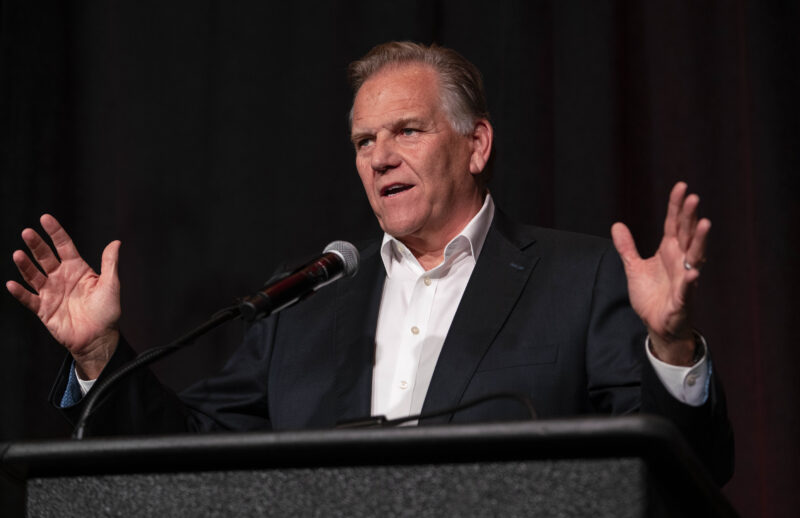
Chairman of the Joint Chiefs of Staff Air Force Gen. Dan Caine discusses the mission details of a strike on Iran during a news conference at the Pentagon on June 22, 2025 in Arlington, Virginia.


 Add JewishInsider on Google
In my years of covering politics, it’s pretty rare for mainstream Jewish organizations to be wildly out of step with the predominant views of the Democratic Party. But in the aftermath of President Donald Trump’s decision to order bunker-busting strikes against Iran’s nuclear sites over the weekend, the views of the institutional Jewish community and many rank-and-file Democrats couldn’t have been more divergent.
Consider: The American Jewish Committee’s CEO Ted Deutch, a former Democratic congressman, praised Trump’s decision and called it “an historic moment for the United States, Israel and the world.” Anti-Defamation League CEO Jonathan Greenblatt thanked Trump for “holding true to the commitment that the United States will not stand by and watch the world’s leading state sponsor of terrorism and antisemitism develop nuclear weapons.”
Even the more-partisan Democratic pro-Israel group DMFI, which normally can be counted on to criticize the president, rejected its own party’s predominant view that further congressional approval should have been received before the strikes. “Iran was unwilling to give up its nuclear program through diplomatic negotiations across three different administrations, so the United States was left with no choice but to take decisive military action,” DMFI CEO Brian Romick said.
By contrast, it was tough to find many Democratic lawmakers — even among the many who are typical allies of Israel — to offer praise of the strikes severely degrading Iran’s nuclear program.
Senate Minority Leader Chuck Schumer (D-NY), who earlier this month recorded a video taunting Trump for “folding” against Iran, criticized the president for carrying out the strikes without congressional authority. Sen. Jacky Rosen (D-NV), one of the strongest pro-Israel stalwarts in the Democratic Party, likewise withheld support for striking Iran’s nuclear facilities while also reiterating her view that Iran should never be able to obtain a nuclear weapon. Like Schumer, she called on more congressional involvement.
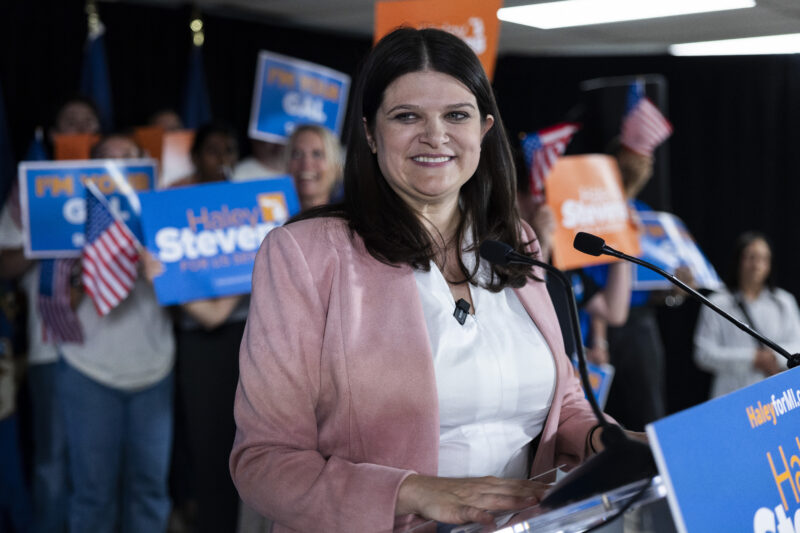
Rep. Haley Stevens (D-MI), another strong pro-Israel ally running as the moderate Democrat in a Michigan Senate primary, sounded wary about the U.S. decision to take out Iran’s nuclear facilities. “The last thing our country needs is to be involved in another foreign war,” she said, echoing rhetoric from more progressive voices in the party.
To be sure, there have been a handful of Democrats sounding like the pro-Israel lawmakers that once dominated the party. Just look at the comments from Rep. Josh Gottheimer (D-NJ), Ritchie Torres (D-NY), Sen. John Fetterman (D-PA), Rep. Jared Moskowitz (D-FL), Rep. Greg Landsman (D-OH), Rep. Debbie Wasserman Schultz (D-FL), Rep. Tom Suozzi (D-NY) and former House Majority Leader Steny Hoyer (D-MD), all of whom described the all-too-urgent threat that a nuclear Iran posed to Israel and the world.
As one pro-Israel Democrat put it to JI: There were notably more Democrats putting out statements cheering anti-Israel activist Mahmoud Khalil being released from immigration detention than those expressing solidarity with Israel in its time of great need.
The debate over dealing with Iran’s nuclear ambitions has been a fraught one within the Democratic Party, ever since former President Barack Obama cut a nuclear deal with Iran in 2015 that many pro-Israel leaders found too accommodating towards the Islamic Republic. There were very messy internal divisions in the party back then as well.
But with public support for Israel among Democratic voters waning, according to recent polling, it looks like it’s getting harder for even sympathetic Democrats to vocally support the position, as Landsman did, that preventing Iran from getting a nuclear weapon is a step towards peace. It’s possible to quibble with the administration’s lack of legislative outreach while also acknowledging the positive end result.
On national security, this is becoming a moment of truth for the Democratic Party at large, which is trying to moderate its record to win back power in Washington, but still is beholden to its activist base. The fact that Zohran Mamdani, a radical anti-Israel candidate defending the slogan “globalize the intifada” is running as competitively as he is in tomorrow’s New York City Democratic mayoral primary, is a sign of where the party could be headed without more mainstream leaders speaking out.
Rep. Hoyer: ‘The U.S. strike on Iranian nuclear facilities at Fordow, Natanz, and Isfahan yesterday was essential to preventing Iran from developing a nuclear weapon’
Nathan Posner/Anadolu via Getty Images
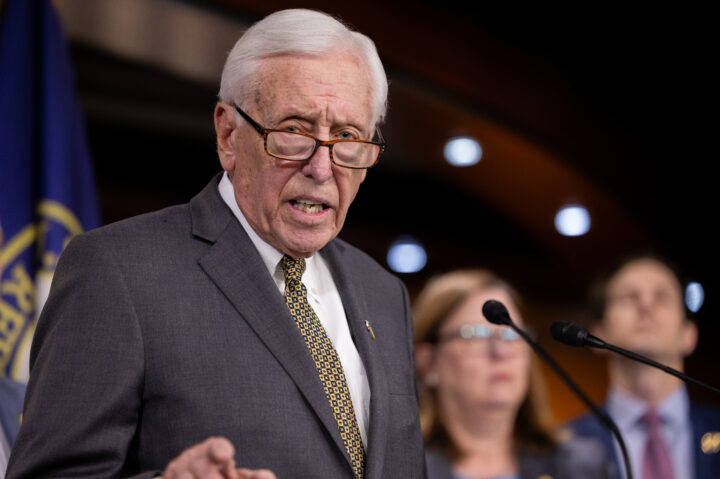
Congressman Steny Hoyer (D-MD) speaks at a press conference in Washington, DC on February 24, 2025.
Rep. Steny Hoyer (D-MD), a former House majority leader, backed the U.S. strikes on Iranian nuclear facilities, a position that puts him at odds with many other Democrats in Congress, including current Democratic leadership.
“The U.S. strike on Iranian nuclear facilities at Fordow, Natanz, and Isfahan yesterday was essential to preventing Iran from developing a nuclear weapon,” Hoyer, the longtime former No. 2 House Democrat, said in a statement released on Sunday.
He said that Iranian leaders had made clear they were not going to comply with U.S. demands to dismantle their nuclear program and had been censured by the International Atomic Energy Agency.
“Israel believed that Iran was on the verge of achieving its goal and struck Iranian nuclear sites,” Hoyer said. “Yesterday, the United States did the same, bombing Iranian nuclear facilities at Fordow, Natanz, and Isfahan. That was in keeping with our stated position against Iran’s nuclear ambitions.”
The operation, he said, “helped counter” the Iranian nuclear threat, “but America must continue working to close Iran’s path to nuclear weapons permanently.”
Hoyer characterized the strikes as a “limited, one-time operation.” Many other Democrats have raised concerns that the operation violated congressional war powers.
“These strikes were designed to dismantle Iran’s nuclear program, but neither the U.S., nor Israel, nor any other nation wants to go to war with the Iranian people, or Iran itself,” he continued.
Hoyer has long been among the most steadfast pro-Israel Democrats in Congress.
At the same time, Hoyer argued that “the threat of a nuclear-armed Iran became this dire because the Trump Administration chose to back out” of the 2015 Iran nuclear deal.
A handful of other pro-Israel congressional Democrats have come out largely in support of the strike since it took place.
Rep. Josh Gottheimer (D-NJ) described the raid as “critical and decisive action to protect America, and freedom and democracy at home and around the world.”
“The destruction of Iran’s nuclear program is essential to ultimate peace in the Middle East,” Gottheimer continued. “This is not a Democratic or Republican issue — dealing with the Iranian threat is central to America’s national security.”
Rep. Ritchie Torres (D-NY) was one of the first Democrats to support the strike against Iran Friday night. “The world can achieve peace in the Middle East, or it can accept a rogue nuclear weapons program—but it cannot have both.
The decisive destruction of the Fordow Fuel Enrichment Plant prevents the dangerous spread of nuclear weapons in the world’s most combustible region. No one truly committed to nuclear nonproliferation should mourn the fall of Fordow,” Torres wrote on X.
Sen. John Fetterman (D-PA) said “this was the correct move” by Trump and said he’s “grateful for and salute the finest military in the world.”
Rep. Jared Moskowitz (D-FL) said, “Today, the President made what appears to be a targeted strike to defend the U.S., Israel, and allies throughout the region and the world” and that he’s hopeful that Iran “no longer has the capabilities to continue its nuclear program.”
He said Iran must now commit to negotiations and make a deal. But he also warned against continued military action without congressional approval.
“I am also a firm believer in congressional authority & oversight. Any offensive action must come to Congress for a vote,” Moskowitz said. “I hope this is contained, but we are living in unprecedented times—and it’s critical our leaders work on a bipartisan basis to protect our nation.”
The top House Democrat warned that the attacks could ‘risk American entanglement in a potentially disastrous war in the Middle East’

(Photo by Drew Angerer/Getty Images)
House Minority Leader Hakeem Jeffries (D-NY) speaks during the March for Israel on the National Mall November 14, 2023 in Washington, DC.
House Minority Leader Hakeem Jeffries (D-NY) and Senate Minority Leader Chuck Schumer (D-NY) criticized President Donald Trump for carrying out strikes on Iranian nuclear facilities without congressional authorization, a voice of opposition that was echoed by many leading Democrats on Capitol Hill.
Jeffries said in a statement less than two hours after Trump announced the strikes that Trump “misled the country about his intentions, failed to seek congressional authorization for the use of military force and risks American entanglement in a potentially disastrous war in the Middle East.”
He said that the Trump administration must explain to the country why it carried out the strikes and brief Congress.
“Donald Trump shoulders complete and total responsibility for any adverse consequences that flow from his unilateral military action,” Jeffries continued.
Schumer, in a similarly critical statement, said that “no president should be allowed to unilaterally march this nation into something as consequential as war with erratic threats and no strategy” and said he would be urging all lawmakers to support war powers legislation to block further military action against Iran, and called for an immediate vote.
He said Trump must explain his actions to the American people.
“Confronting Iran’s ruthless campaign of terror, nuclear ambitions, and regional aggression demands strength, resolve, and strategic clarity,” Schumer said. “The danger of wider, longer, and more devastating war has now dramatically increased.”
Senior congressional Democrats were largely left out of the loop about the strikes before they occurred, while Republican leaders have said they were briefed.
Administration officials traditionally brief “Gang of Eight” officials — the top Republican and Democrat in each chamber and the chairs and ranking members of the Intelligence Committees — before carrying out major sensitive operations.
Sources familiar with the situation told Jewish Insider that Jeffries received a notification after the operation was likely already underway, but had not been fully briefed, and Sen. Mark Warner (D-VA), the ranking member of the Senate Intelligence Committee, was not briefed prior to the strikes.
Sources familiar with the situation told JI that House Speaker Mike Johnson (R-LA), Senate Majority Leader John Thune (R-SD) and Senate Intelligence Committee Chair Tom Cotton (R-AR) were briefed before the strikes.
Johnson pushed back on claims that the administration had illegally sidestepped Congress, saying, “Leaders in Congress were aware of the urgency of this situation and the Commander-in-Chief evaluated that the imminent danger outweighed the time it would take for Congress to act.”
“The President fully respects the Article I power of Congress, and tonight’s necessary, limited, and targeted strike follows the history and tradition of similar military actions under presidents of both parties,” Johnson continued.
Rep. Mike Lawler (R-NY) called Jeffries’ statement “an embarrassment,” saying Trump had prevented Iran from obtaining a nuclear weapon.
Many Democrats in both chambers have gone further than Jeffries in their responses, explicitly describing the strikes as unconstitutional.
“The power to declare war resides solely with Congress. Donald Trump’s unilateral decision to attack Iran is unauthorized and unconstitutional,” Rep. Katherine Clark (D-MA), the House minority whip, said. “In doing so, the President has exposed our military and diplomatic personnel in the region to the risk of further escalation. The American people, our men and women in uniform, and their families deserve answers.”
Some Democrats have also raised the prospect of impeaching Trump over the action.
“The President’s disastrous decision to bomb Iran without authorization is a grave violation of the Constitution and Congressional War Powers,” Rep. Alexandria Ocasio-Cortez (D-NY) said. “He has impulsively risked launching a war that may ensnare us for generations. It is absolutely and clearly grounds for impeachment.”
Several pro-Israel Democrats, like Sen. John Fetterman (D-PA) and Rep. Ritchie Torres (D-NY) have fully backed the strike.
“We don’t yet know what this means for the regime’s nuclear work or ambitions, but it absolutely means that the regime has been further weakened — which is good for those who want peace,” Rep. Greg Landsman (D-OH) said.
“It’s time for the Iranian regime to agree to the removal of all enriched uranium, comprehensive, around-the-clock inspections, and the full dismantling of their terror armies from Hamas to Hezbollah and the Houthis. That will end this conflict, and put the entire region on the path to a real and sustainable peace.”
“Iran is a terrorist nation, and we must do everything we can to stop it from acquiring a nuclear weapon,” Rep. Tom Suozzi (D-NY) said. “Debates will now ensue about presidential authority and the President working with Congress. The President should work with Congress, especially those of us who recognize how important it is to finally stop Iran.
Rep. Jake Auchincloss (D-MA) said that Iran should immediately end its nuclear program and stop funding terrorism, but also called for Congress to repeal the 2001 and 2002 authorizations for use of military force “so that the American public can get an open & thorough debate on war-making.”
Jewish Insider Congressional correspondent Emily Jacobs contributed to this report
‘It was just astonishing to see colleagues criticizing these things,’ Fetterman told JI

Lev Radin/Pacific Press/LightRocket via Getty Images
Senator John Fetterman speaks during the grand opening of The Altneu synagogue.
Sen. John Fetterman (D-PA) criticized his Democratic colleagues in Congress who have spoken out against Israel’s attack on Iran, calling it “astonishing” to see members of his party treat Israel’s actions as escalatory.
Fetterman spoke to Jewish Insider on Friday for an interview in the wake of Israel launching its military operation to take out Iran’s nuclear facilities and prevent the regime from acquiring a nuclear weapon.
The Pennsylvania senator said he could not fathom how some Democrats on Capitol Hill could accuse the Jewish state of launching the strikes to upend the Trump administration’s nuclear negotiations with Tehran.
Fetterman didn’t mention any of his Democratic colleagues by name, but many have been critical of the Iranian strikes. Sen. Chris Murphy (D-CT), for instance, went on MSNBC’s “Morning Joe” Friday morning and said that Israel’s strike on Iran was “pretty transparent that this was an effort to submarine, to undermine our diplomacy.”
“It was just astonishing to see colleagues criticizing these things. It’s like, do you think you can negotiate with that regime? Do you think you want to run that scenario and allow them to acquire 1,000 pounds of weapons grade uranium? I can’t understand, I can’t even begin to understand that,” Fetterman told JI.
“I can’t imagine why they would say that. Remember, Iran tries to acquire nuclear weapons. Iran has created and spent billions of dollars to build those destructive proxies like Hamas or Hezbollah or the Houthis. Why can’t we talk about that? Why can’t we talk about the absolute imperative to keep Iran accountable for what they’ve done? That’s exactly part of what Israel did last night, as well,” he continued.
The Pennsylvania Democrat praised the opening salvos of the operation as “absolutely spectacular,” citing the “precision in targeting people.”
”They eliminated the generals and those scientists in their beds at their building, and they didn’t take out the whole building. It was just their specific apartments. I mean, that is truly remarkable. … It’s like Beepers 2.0, the kind of things they’ve done. Like I said, I am constantly blown away by the sophistication and their lethality,” Fetterman said, referring to the Israeli pager operation that took out senior Hezbollah leaders.
“I think I might have been the only one openly calling for that [striking the nuclear facilities now]. I’m never going to negotiate with that regime. You can never trust them, and the only thing they’re going to respond to, that they respect, are exactly the kind of things that [Israel] did last night. … Any potential path for an enduring peace in the Middle East, these are the kind of steps that do that,” he added.
Fetterman disputed the narrative that the U.S. supporting Israel in targeting Iran’s nuclear facilities could increase the prospect of a regional war. “If Iran is going to take their big, big swing, they would have done that by now. Just imagine how exposed they are, even how [exposed] they were earlier this year after what Israel had done taking out Hezbollah,” he told JI.
“Hezbollah ain’t talking tough anymore. They’re not talking about any kinds of actions, they’re just whimpering, and that’s my point. Iran can’t fight for s**t. … They just shot their big shot, a couple junkie rockets, and it’s like, that’s what you’ve got?” Fetterman asked.
‘I have long said that Israel has a right to defend itself and that Iran cannot have a nuclear weapon.’ Schumer added

Senate Majority Leader Chuck Schumer speaks during 'March For Israel' at the National Mall on November 14, 2023 in Washington, DC. (Photo credit: Noam Galai/Getty Images)
Senate Minority Leader Chuck Schumer (D-NY) stood strongly behind Israel in his first public comments on its strikes on Iran and its nuclear program on Friday afternoon — a response that was notably more forceful in its support for Israel than those of many prominent members of the Senate Democratic Caucus.
“The United States’ commitment to Israel’s security and defense must be ironclad as they prepare for Iran’s response,” Schumer said in a statement first shared with Jewish Insider. “The Iranian regime’s stated policy has long been to destroy Israel and Jewish communities around the world. I have long said that Israel has a right to defend itself and that Iran cannot have a nuclear weapon. Ensuring they never obtain one must remain a top national security priority.”
Schumer, who has recently been critical of President Donald Trump’s negotiations with Iran, said “the preferred path to preventing a nuclear-armed Iran and for supporting security and stability in the region has always been a strong, unrelenting diplomatic effort backed by meaningful leverage, and every effort must be made to move toward the path of a diplomatic solution.”
Schumer noted that Iran was just censured by the International Atomic Energy Agency “for systematically deceiving the world about its nuclear program,” that it is “the world’s leading state sponsor of terrorism” and it “has sought to expand its influence in the Middle East, exporting terror and violence across the region.”
He said he is “praying for the safety of American citizens and servicemembers in the region and for enduring stability and security in the region.”
But a number of skeptical lawmakers — mainly congressional Democrats — expressed concern the attack could spark a wider war

Office of Sen. Lindsey Graham (R-SC)
Sen. Lindsey Graham (R-SC) and Sen. Tom Cotton (R-AR) hold a joint press conference on Iranian nuclear negotiations at the U.S. Capitol on May 8, 2025.
Many of the highest-ranking Senate Republicans, along with leading pro-Israel Democrats, expressed support for Israel’s preemptive strikes on Iran, but a number of skeptical lawmakers — mostly Democrats — expressed concern that the strikes could set off a broader war in the region.
Sen. Tom Cotton (R-AR), the chairman of the Senate Intelligence Committee said, minutes after reports of the operation began, “Proud to stand with Israel.” Sen. Lindsey Graham (R-SC) soon followed, saying, “Game on. Pray for Israel.”
Cotton later added that “We back Israel to the hilt, all the way,” adding that if “the ayatollahs harm a single American, that will be the end of the ayatollahs.”
House Speaker Mike Johnson (R-LA), said “Israel IS right—and has a right—to defend itself!”
Sen. Jim Risch (R-ID), the chair of the Senate Foreign Relations Committee said, “We stand with Israel tonight and pray for the safety of its people and the success of this unilateral, defensive action.”
“I am also praying for the brave U.S. service members in the Middle East who keep America safe — Iran would be foolish to attack the United States,” Risch continued.
Senate Majority Leader John Thune (R-SD) emphasized that Iran has been trying for years to wipe out Israel, and that it had just been found in violation of its nonproliferation obligations. He called for efforts toward peace and warned Iran against attacking American troops.
“Today, Israel has determined that it must take decisive action to defend the Israeli people,” Thune said. “The United States Senate stands ready to work with President Trump and with our allies in Israel to restore peace in the region and, first and foremost, to defend the American people from Iranian aggression, especially our troops and civilians serving overseas. Iran should heavily consider the consequences before considering any action against Americans in the region.”
Sen. Rick Scott (R-FL) said, “I ask every American to join me in praying for the safety of U.S. personnel in the Middle East and the safety and success of Israel as it takes action against a leading state sponsor of terrorism and our shared enemy, Iran.”
Rep. Mike Lawler (R-NY), the chair of the House Foreign Affairs Committee’s Middle East subcommittee, also expressed support for Israel’s preemptive strike.
“Having just visited the region two weeks ago, I support Israel’s decision to preemptively strike Iran and dismantle its nuclear program,” Lawler said. “Iran cannot have nuclear weapons — a position the US and our allies have held for decades. Peace through strength.”
House Majority Leader Steve Scalise (R-LA) said that Iran’s refusal to dismantle its nuclear program is a danger to the U.S. and an existential threat to Israel. “Tonight Israel is taking action to defend itself, and we stand with Israel. Our prayers are with them and all American personnel in the region.”
Rep. Elise Stefanik (R-NY), the administration’s former nominee to be U.S. ambassador to the United Nations, said, “The U.S. stands strongly with our ally and partner Israel.”
“May God Bless Israel & the brave IAF [Israeli Air Force] soldiers as they protect their national security and the world’s safety,” Stefanik said. “I know President Trump’s top priority is protecting the American people, our brave U.S. service members, and our national security by ensuring the full dismantlement of Iran’s nuclear program to ensure they can never develop a nuclear weapon.”
Sen. John Cornyn (R-TX) said, “Israel has an unquestionable right to defend itself” and that he is “proud to stand with Israel.”
Sen. Ted Cruz (R-TX) said that Iran had “given President Trump the middle finger” on demands to dismantle its nuclear capacity. Israel is acting to defend themselves, and we should stand with them.”
Sen. John Fetterman (D-PA) said that he supports the attack and “Our commitment to Israel must be absolute.”
“Keep wiping out Iranian leadership and the nuclear personnel,” Fetterman said. “We must provide whatever is necessary — military, intelligence, weaponry — to fully back Israel in striking Iran.”
Rep. Debbie Wasserman Schultz (D-FL) said: “If Israel’s strikes set back Iran’s nuclear program, we’ll all be safer,” adding that the U.S. must protect U.S. citizens and personnel and “must support Israel’s defense.”
Rep. Ritchie Torres (D-NY) said that “Israel is not the aggressor. It is defending itself against an existential threat that long predates the present preemptive strike. The true aggressor is the Islamic Republic and its empire of terror — an empire stained with the blood of innocent Israelis.”
Rep. Greg Landsman (D-OH), also noting that the International Atomic Energy Agency had just declared Iran to be in violation of its nonproliferation obligations, said that “Israel is justifiably defending itself and its people.”
“Diplomacy has been given every opportunity, but the Iranian regime refuses to give up their nuclear ambitions,” Landsman said. “There will be peace when Iran no longer has a nuclear program, a civil one sure, and their terror armies dismantled.”
Rep. Josh Gottheimer (D-NJ) said, “I fully stand with the people of Israel and support her right to defend herself against Iran’s nuclear and terror programs.”
Rep. Rick Crawford (R-AR), the chair of the House Intelligence Committee, emphasized that the U.S. was not involved in the strikes. He pointed blame toward Iran but also called for steps to wind down the conflict quickly.
“I will say I regret that we have come to this breaking point. However, under no circumstance can Iran get its hands on a nuclear weapon,” Crawford said. “A nuclear Iran would only embolden our adversaries and not only pose an undeniable threat to Israel, but also the United States and our Arab allies.”
“Iran pushed the world to this point through its blatant, relentless destabilizing behavior. Israel and others in the region have every right to take the actions needed to defend themselves,” Crawford continued. “I commend the Trump Administration for its tireless efforts to bring peace and stability to the region. I am hopeful a remedy is reached sooner rather than later to stabilize this situation before the stakes get any higher.”
A number of congressional Democrats — and one notable isolationist House Republican — are expressing concern that the strikes will spark a broader war in the region and several described the strikes as designed to sabotage U.S. nuclear negotiations with Tehran.
Sen. Jack Reed (D-RI), the top Democrat on the Senate Armed Services Committee, condemned the strikes as a “reckless escalation that risks igniting regional violence.”
“These strikes threaten not only the lives of innocent civilians but the stability of the entire Middle East and the safety of American citizens and forces,” Reed said. “While tensions between Israel and Iran are real and complex, military aggression of this scale is never the answer.”
He called on both Israel and Iran to “show immediate restraint” and the Trump administration to push for “diplomatic de-escalation before this crisis spirals further out of control.”
Rep. Warren Davidson (R-OH), a Republican aligned with the isolationist wing of the party, also appeared to decry the strikes.
“I’m sad to say but some members of Congress and US Senators seem giddy about the prospects of a bigger war,” Davidson said, appending an emoji of a bandaged, frowning face.
House Minority Leader Hakeem Jeffries (D-NY) stopped short of praising or criticizing the Israeli attack, while blaming President Donald Trump for failing to bring peace to the Middle East and calling for de-escalation.
“I’m hopeful that cooler heads will prevail in the Middle East and the situation is de-escalated,” Jeffries said. “We certainly believe that Iran should never be allowed to become nuclear capable. They are an enemy not just to Israel, but to the United States and to the free world. But we also want to see a reduction in hostilities.”
Sen. Andy Kim (D-NJ) said the strikes appear aimed at undermining U.S. negotiations with Iran, which were scheduled to continue this weekend in Oman.
“Iran should know that any targeting of U.S. forces and personnel stationed across the Middle East in retaliation for Israel’s actions would be a grave mistake. I urge the Trump administration to ensure that the protection of our personnel is our top priority,” Kim said.
“Conflict should always be a last resort, especially when diplomacy is ongoing. This decision by [Israeli Prime Minister Benjamin] Netanyahu to go against American efforts and go alone in strikes puts American and Israeli lives on the line. We should do everything we can to stop this moment from spiraling into a wider conflict and bring parties back to the table to ensure that Iran does not obtain a nuclear weapon.”
Sen. Chris Murphy (D-CT) also described the attack as a sabotage of the nuclear talks and said it shows that world leaders do not respect President Donald Trump. He added in a statement, “we have no obligation to follow Israel into a war we did not ask for and will make us less safe.”
Sen. Elizabeth Warren (D-MA), a progressive Israel critic, said the strikes were “deeply disturbing.”
“I don’t agree often with the Trump administration, but I think here it’s important to say we need more negotiation, we need deescalation,” Warren said. “We need to get to a deal.”
Rep. Greg Casar (D-TX), who chairs the Congressional Progressive Caucus, emphasized that the Trump administration needs congressional approval to bring U.S. troops into “Netanyahu’s war.”
“Netanyahu’s reckless strike risks provoking a wider war and pulling in the United States,” Casar said. “Trump must oppose Netanyahu’s escalation and pursue a diplomatic path to deal with Iran’s nuclear program. “
Gen. Erik Kurilla, the top U.S. commander in the Middle East, said he’d presented a ‘wide range of options’ for strikes on Iran’s nuclear program if talks fail to achieve dismantlement

Department of Defense/EJ Hersom via AP
U.S. Army Gen. Michael E. Kurilla, commander of U.S. Central Command, testifies before the House Armed Services Committee, March 21, 2024, on Capitol Hill in Washington.
Gen. Michael “Erik” Kurilla, the top U.S. military commander in the Middle East, said on Tuesday that he had provided “a wide range of options” to Secretary of Defense Pete Hegseth and President Donald Trump for carrying out U.S. military strikes on Iran’s nuclear program if negotiations with Tehran fail to achieve the dismantlement of its nuclear program.
Kurilla affirmed, under questioning from the House Armed Services Committee, that the military is prepared for a strong show of force against Iran if it refuses to give up its nuclear program. He said that Iran is continuing to increase its stockpiles of uranium enriched to 60% purity, for which he said there are no legitimate civilian uses.
Kurilla added that Iran is in a “weaker strategic position” than it was pre-Oct. 7, but still maintains “a lot of operational capabilities, in terms of their long-range weapons.”
He also emphasized that China, in purchasing the majority of Iran’s exported oil, is “effectively supporting and financing Iran’s malign behavior.” He said that the administration’s moves to sanction “teapot refineries” in China were a major step.
Kurilla said that a stand-alone Israeli strike on Iran’s nuclear program would increase the risk of attacks on U.S. forces in the region, but added that “every day, we’re making assessments of our posture and our risk to force, and we made adjustments based on those. We’re fielding new systems and new equipment and making adjustments every single day.”
Pressed by Rep. Pat Ryan (D-NY) about Michael DiMino, the deputy assistant secretary of defense for the Middle East, who had previously downplayed U.S. interests in the region and opposed action against Iran and its proxies, Katherine Thompson, the acting assistant secretary of defense for international security affairs, largely demurred, saying that she was not involved in DiMino’s hiring and could not speak to his positions.
She said that her superior, Elbridge Colby, the undersecretary of defense for policy who himself made comments opposing strikes on Iran, which he walked back during his confirmation process, is in line with the administration’s policy.
“We support the president’s objective to not only, first and foremost, defend the State of Israel but second, of course, deny Iran the ability to obtain a nuclear weapon. That is something that we are 100% committed to,” Thompson said. “I will also note that we support the president’s objectives and stand ready to provide military options should his strategy of pursuing peace with Iran through a negotiated solution [fail].”
Ryan said that he was concerned that “dissonance” and “lack of clarity” in the administration’s public statements on its willingness to allow Iran to enrich uranium as part of an agreement was signaling “division and weakness to our adversaries.”
Asked about the U.S. ceasefire with the Houthis, Kurilla and Thompson said that the U.S. bombing campaign had achieved the goal Trump had set out of restoring freedom of navigation for U.S. ships through the Red Sea. Kurilla pointed to a recent transit of U.S. and allied naval vessels through the Red Sea as evidence.
While the ceasefire made no provisions to halt Houthi attacks on Israel, which have continued, Kurilla insisted that the U.S. is continuing to defend Israel through the operation of an American THAAD missile defense system in Israel and other efforts to intercept Houthi missiles and drones fired at the Jewish state.
He acknowledged that normal commercial traffic through the region has not yet resumed, but said that it would be a “lagging indicator” that would increase over time as insurance rates for commercial ships transiting the region drop.
Thompson said that the U.S. is not fully withdrawing from the Houthi issue, noting that the group is still designated as a Foreign Terrorist Organization by the U.S., and said the administration continues to pursue a “whole of government approach” to the Iran-backed group.
She said the U.S. is working to have Gulf partners take a greater role in countering the Houthis and “develop a regional solution that empowers our Gulf partners … to tackle the long-term elements of the problem set.”
Kurilla said that permanently ending the Houthi threat will require stopping covert shipments of weapons and weapon components from Iran to Yemen.
“They would die on the vine without Iranian support,” Kurilla said, adding that Islamic Revolutionary Guard Corps personnel remain on the ground in Yemen assisting with assembling and operating those weapons.
Pressed at one point by Rep. Derek Van Orden (R-WI) on why the U.S. is not sinking ships bringing weapons to the Houthis, Kurilla responded that the key challenge has been identifying the ships and the weapons among the many ships transiting the vast area of the Red Sea. But he said that when such ships are identified, the U.S. can and has intercepted and captured them.
Thompson said that European allies have taken positive steps toward collaborating on this mission and Kurilla said that the United Nations’ inspection mechanism for Yemen had also recently taken steps to increase inspections of containers, though he said that it should require the full unloading of all containers to verify their contents.
He also noted that the Houthis have been spreading across the region their knowledge and expertise gained from upgrading Iranian drones to attack Israel. He said the group and its personnel have a presence in Iraq and are sharing technical expertise with Iranian personnel as well as members of Iranian proxy groups in Iraq and Lebanese Hezbollah.
He said that the Houthis also maintain cells in Syria and Lebanon and have conducted diplomatic outreach to Russia and China.
But, Kurilla continued, Iran’s vision of a “Shia crescent” through the Middle East has collapsed with the fall of the Syrian government — ”probably the single biggest event that has happened in the Middle East” — and the degrading of Hezbollah and other Iranian proxies.
He praised Israel’s success against Iran’s proxies, at one point describing its “disintegration” of Hezbollah as “brilliant” and saying that it should be studied by every military in the world.
He said that Iran is attempting to make inroads into Iraq, but that the Iraqi government has largely rejected them.
“I would offer there has rarely been a time with greater opportunity to protect [our] national interests [in the Middle East], but only if we have the courage to step through that window,” said Kurilla, who will soon be retiring after 37 years in military service.
According to public reporting, Kurilla has largely been seen as a hawkish voice in the Trump and Biden administrations and a close ally of Israel.
Kurilla said the U.S. is “transitioning from security guarantor to security integrator” in the Middle East, which requires the U.S. to maintain a “sufficient and a sustainable posture” in the region, as well as to improve foreign military sales to partners in the region.
Asked at multiple points about Qatar’s reliability as a U.S. ally, Kurilla defended Doha as a reliable and eager partner. He said that the U.S. is working to bring Qatar into the military supply chain to repair and manufacture shared weapons systems, noting that it had been enlisted to repair a component of a Patriot missile defense system the previous week.
“We have a phenomenal relationship with them, military-to-military,” Kurilla said. “They have been incredibly supportive of everything we do. Generally, the answer is, ‘Yes, what is the question,’ when I talk to them.”
Kurilla said that U.S. partners are also critical to anti-terrorist missions in places such as Syria and Iraq, and allow the U.S. to keep its operating force in the Middle East relatively small, even as those troops in the Middle East have repeatedly been on the front lines in the past year.
In Syria, he said that the U.S. is working with Kurdish partners, the Syrian Democratic Forces, to integrate them into the new Syrian government, and said that Turkey is playing a positive role in those efforts.
But he also warned that the current Syrian government is being run by a small group of individuals and that he is deeply concerned about its stability, saying President Ahmed al-Sharaa may also bring foreign terrorist fighters, who helped bring his government to power, into the fold.
He said that U.S. troops remain in-country for counterterrorism missions, including one carried out against ISIS forces the morning of the hearing. But he said the U.S. is currently undertaking a process to review and consolidate its forces inside Syria into a smaller number of bases.
Kurilla further said that a key obstacle for U.S. relationships and goals in the region has been delays in U.S. foreign military sales to allies, frustrating those partners and imperiling efforts to integrate U.S. and allied systems across the region. He cited obstacles in the Defense Department, Congress and the defense production industry.
For the U.S.’ own purposes, he also noted that U.S.-produced air-defense systems are significantly more expensive than systems such as the Arrow, which is co-produced with Israel.
He added that the U.S. had learned much, particularly in improving technical and software capacities for air defense systems, from its ongoing operations in the Middle East.
Multiple Democrats pressed Kurilla on what role the U.S. military could play in delivering aid to civilians in Gaza. Kurilla said that the U.S. government is currently not involved in aid delivery, but highlighted the efforts of the Gaza Humanitarian Foundation as a positive step.
“Hamas hates that because Hamas no longer has control over that distribution,” Kurilla said.
He said the military would be prepared to assist if asked to do so.
GOP Sen. John Kennedy, responding to Gabbard: ‘She obviously needs to change her meds’

Yuri Gripas for The Washington Post via Getty Images
Director of National Intelligence Tulsi Gabbard speaks during a Cabinet meeting with President Donald Trump on Wednesday April 30, 2025 at the White House in Washington, DC.
With a cryptic video that Director of National Intelligence Tulsi Gabbard posted on X on Tuesday morning, the Democratic-congresswoman-turned-America-First-advocate reignited simmering concerns about the unorthodox intelligence chief among both her longtime detractors and some Republicans who voted to confirm her earlier this year.
“She obviously needs to change her meds,” Sen. John Kennedy (R-LA) told Jewish Insider of Gabbard. Kennedy, like all Republicans except Sen. Mitch McConnell (R-KY), voted to confirm Gabbard in February.
“I only saw a post that she did, which I thought was a very strange one since many people believe that, unfortunate though it was, the nuclear bomb that was dropped in World War II at Hiroshima actually saved a lot of lives, a lot of American lives,” Sen. Susan Collins (R-ME) told JI of Gabbard’s video.
In the social media video, Gabbard describes a recent visit to Hiroshima, Japan, where she learned about the toll of the atomic bomb dropped on the city by American troops in 1945, which spurred a Japanese surrender and the end of World War II. She warned that the world faces another “nuclear holocaust” unless people “reject this path to nuclear war.”
“This is the reality of what’s at stake, what we are facing now, because as we stand here today, closer to the brink of nuclear annihilation than ever before, political elite warmongers are carelessly fomenting fear and tensions between nuclear powers,” said Gabbard, not specifying who she was referring to by “political elite warmongers” or which countries she may have been calling out.
Gabbard’s video decrying “warmongers” prompted concern from Republicans seeking a more traditionally conservative foreign policy worldview.
“She seems to be doing her best audition to be head of the Quincy Institute,” a senior employee at a pro-Israel advocacy group said of Gabbard.
One Senate Republican, speaking on condition of anonymity, questioned Gabbard’s logic in raising the human toll of Hiroshima and her “warmongers” comment.
“I’m not sure I understand why the DNI would even need to make that point,” the senator said of the Hiroshima focus, later adding: “I don’t seek nuclear war. I don’t know anyone who wants nuclear war. There’s plenty of ideological diversity here, but pretty much universal opposition to that.”
Since taking office, Gabbard, who in 2020 was a surrogate for progressive Sen. Bernie Sanders’ (I-VT) presidential campaign, has generally been aligned with the isolationist wing of the Republican Party, which is increasingly ascendant in the Trump administration. William Ruger, the official she tapped for the high-level position that prepares the president’s daily intelligence briefing, came from Koch-affiliated institutions and has called for “American restraint” on the world stage.
During her nomination battle, Gabbard faced criticism, including from some Republicans — focused in particular on a congressional trip to Syria in 2017 when she met with Syrian dictator Bashar al-Assad, her parroting of Russian propaganda about the country’s war with Ukraine and her defense of Edward Snowden, the former intelligence official who leaked classified information before fleeing the country.
“It defies belief that someone would be criticizing [President Harry] Truman’s act of winning a war. We really need to get back to winning wars when we fight,” Eric Levine, a prominent Republican fundraiser in New York who urged senators to oppose Gabbard’s confirmation, told JI on Tuesday.
Levine raised concerns about Gabbard’s ability to influence President Donald Trump’s approach to Iran, as nuclear negotiations between the U.S. and Iran are set to continue this weekend. He said that if Trump does the “right thing” — meaning he ends the Iran negotiations and supports a strike on Iran’s nuclear infrastructure — then the U.S. will “save a lot of lives, just like Harry Truman did, and will not require the dropping of a nuclear bomb.”
“I’m very concerned about the isolationist wing of the Republican Party,” Levine continued. “I don’t know who’s winning out, because we don’t know what the end result is in Iran yet.”
Several Republican senators questioned why Gabbard would make the video in the first place.
“I thought it was not appropriate,” Sen. John Cornyn (R-TX) told JI.
Sen. Lindsey Graham (R-SC) described the impact of the bomb as “horrible” but said it was necessary to end the war, in which his father had fought.
“Dropping those bombs probably saved a million servicemen’s lives. If you don’t want to get nuked, don’t start barbaric wars,” Graham told JI. “I think it’s a horrible thing to happen to people, but it was brought on by Japan, and if I were Harry Truman, I would have done the same thing because the casualty estimates were a million dead Americans invading mainland Japan.”
Alexa Henning, Gabbard’s deputy chief of staff, declined to say whether Gabbard was referring in the video to a specific nation or to specific people.
“Acknowledging the past is critical to inform the future. President Trump has repeatedly stated in the past that he recognizes the immeasurable suffering, and annihilation can be caused by nuclear war, which is why he has been unequivocal that we all need to do everything possible to work towards peace,” Henning said in a statement. “DNI Gabbard supports President Trump’s clearly stated objectives of bringing about lasting peace and stability and preventing war.”
Despite the criticism coming even from some allies, Gabbard’s views do not appear to have gone outside the realm of what Trump hopes to see from her.
Sen. Markwayne Mullin (R-OK), a personal friend of Gabbard’s from their shared time in the House, defended Gabbard’s post and her service as DNI.
“I think she’s doing a great job … She’s doing exactly what the president wanted her to do,” Mullin told JI. “People have been critical of her, and this is D.C., right? You’re going to get criticized for walking down the stairs wrong, so criticism is part of the job.”
One resolution, which praised ICE and highlighted the need for vetting visa applicants, split House Democrats

Nathan Howard/Getty Images
The U.S. Capitol is seen on June 13, 2024 in Washington, DC.
The House voted on Monday to pass two resolutions condemning recent antisemitic attacks. One, led by Republicans, which focused on the Boulder, Colo., attack and immigration issues, and split the Democratic caucus. The other, which was bipartisan and highlighted a series of antisemitic attacks, passed nearly unanimously, with just two lawmakers voting present.
The first resolution attracted controversy among Democrats ahead of the vote, but it passed by a 280-133 vote. Seventy-five Democrats, mostly moderates and pro-Israel members, ultimately voted in favor of the resolution and 113 voted against it.
Another five Democrats, Reps. Herb Conaway (D-NJ), Shomari Figures (D-AL), Sarah McBride (D-DE), Johnny Olszewski (D-MD) and Dina Titus (D-NV), and one Republican, Rep. Marjorie Taylor Greene (R-GA), voted present.
The resolution stated that the Boulder attack, perpetrated by an Egyptian national who overstayed a visa and work permit who threw a Molotov cocktail at activists raising awareness for the hostages in Gaza, “highlights the need to aggressively vet aliens who apply for visas” and “demonstrates the dangers of not removing from the country aliens who fail to comply with the terms of their visas.”
It also praised law enforcement and Immigration and Customs Enforcement and emphasized the need for “free and open communication” between state and federal law enforcement — an apparent reference to Colorado sanctuary state policies that limit such cooperation.
Prior to the vote, Republicans softened the resolution amid strident criticism from Democrats, stripping out one section that described the slogan “Free Palestine” as antisemitic and another one that explicitly condemned Colorado’s sanctuary state policies.
The second resolution, which condemns “the rise in ideologically motivated attacks on Jewish individuals in the United States,” including the attack in Boulder, the Capital Jewish Museum murders and the arson targeting Pennsylvania Gov. Josh Shapiro, passed with 400 votes in favor. Reps. Rashida Tlaib (D-MI) and Greene voted present. No members voted against the latter resolution.
“We cannot ignore these attacks or dismiss them as isolated incidents,” Rep. Jeff Van Drew (R-NJ), who led the bipartisan resolution, said in a statement. “They are part of a serious and dangerous trend that must be condemned by all of us. Today, the House stood firmly in support of respect and dignity for everyone because we know that every American deserves to live without fear in their own community.”
Greene said in an X post that “antisemitic hate crimes are wrong, but so are all hate crimes. Yet Congress never votes on hate crimes committed against white people, Christians, men, the homeless, or countless others.”
She objected to the fact that Congress has voted on “endless resolutions” on antisemitism while “Americans from every background are being murdered — even in the womb.”
“Prioritizing one group of Americans and/or one foreign country above our own people is fueling resentment and actually driving more division, including antisemitism,” Greene continued.
Ahead of the vote, a group of Jewish House Democrats had urged congressional leaders to take substantive action beyond passing nonbinding resolutions to combat antisemitism, primarily by passing the Antisemitism Awareness Act and bolstering Nonprofit Security Grant Program funding.
Sherman’s statement comes in response to a letter from Albanese to Israel Bonds, accusing the group of involvement in genocide and war crimes

Brian Lawless/PA Images via Getty Images
Francesca Albanese, United Nations special rapporteur on the Occupied Palestinian Territories, during a press conference at Buswells Hotel in Dublin on March 20, 2025.
Rep. Brad Sherman (D-CA), in a blistering statement, accused the U.N.’s special rapporteur for the Palestinian territories, Francesca Albanese, of antisemitism and said that her activity has undermined the United Nations and eroded U.S. support for the U.N. and foreign aid in general and will contribute to deaths around the world.
The statement comes in response to a letter from Albanese, who has faced ongoing accusations of antisemitism from U.S. officials and lawmakers who have described her as unfit for her role, to Israel Bonds, accusing the group of involvement in crimes against humanity, war crimes and genocide.
“Only for a demonstrated antisemite like Ms. Albanese could stabilizing Israel’s economy after the worst massacre of the Jewish people since the Holocaust be something negative,” Sherman said. “This is just the latest instance in Ms. Albanese’s long history of antisemitism – she has regularly used antisemitic terms like the ‘Jewish lobby’ and claims that Israel doesn’t have the right to defend itself or even to exist.”
He said that, “Albanese and her ilk have turned once-legitimate entities like the United Nations into kangaroo courts and clown shows, significantly undermining U.S. support for the funding of international institutions and foreign aid.”
Sherman argued that actions by officials like Albanese make it harder for U.S. supporters of foreign aid to fight the Trump administration’s cuts to U.S. foreign development assistance and to support funding to international organizations. He drew a connection between Albanese and the antisemitism at the U.N. and what he said were 3.3 million anticipated deaths as a result of cuts to U.S. foreign aid.
“There’s a substantial amount of blood on her hands – but her victims live in countries that she doesn’t care about,” Sherman continued. “In fact, it seems the only thing she cares about is justifying attacks on Israel and Jews worldwide.”
Sherman also argued that the goal of Albanese and others in the anti-Israel movement is to weaken Israel economically and militarily so that future terrorist attacks can successfully eliminate the Jewish state.
“Believe that the anti-Israel movement means it when they say they want to eradicate Israel and will use any means to do it,” Sherman said. “Ms. Albanese condemns, and seeks to prevent, every effort of the Israeli government to feed and house its poorest citizens and care for the disabled. Due to her blinding rage of antisemitism, she seeks to hurt the most vulnerable.”
Albanese, in her letter to Israel Bonds, formally known as the Development Corporation for Israel, alleged that the group is responsible for a host of crimes against humanity and human rights violations, and suggested it faces international criminal liability.
“The applicable legal framework and the gravity of the situation on the ground in the occupied Palestinian territory, particularly in Gaza, indicate that there are reasonable grounds to believe that DCI is contributing to gross human rights violations that require the immediate cessation of the concerned business activity, and the remedy of the harm done to Palestinians,” Albanese wrote in the letter, which was obtained by JI.
“The continued failure to act responsibly in line with international law risks implicating DCI in an economy of much more serious violations, and increasing the associated liability. Indeed, given the international crimes being considered by the [International Court of Justice] and the [International Criminal Court], DCI is now on notice of a serious risk of being implicated in international crimes, the disregard of which may give rise to criminal liability, both for DCI and its executives,” she continued.
Dani Naveh, the CEO of Israel Bonds, said in a statement, “We will not be deterred by our enemies driven by antisemitism. Hamas, which carried out the atrocities of October 7, and its supporters, will not prevail. Their efforts have failed time and time again, as evidenced by the billions of dollars Israel Bonds has raised globally since the horrific attacks of October 7, 2023,” and called on supporters of Israel to respond by buying more bonds.
Plus, Risch's pessimism on Iran deal

John Lamparski/Getty Images for Concordia Summit
Morgan Ortagus speaks onstage during 2024 Concordia Annual Summit at Sheraton New York Times Square on September 25, 2024 in New York City.
Good Thursday morning.
In today’s Daily Kickoff, we report on the departure of deputy Middle East envoy Morgan Ortagus from her role reporting to Middle East envoy Steve Witkoff, and cover Sen. Jim Risch’s pessimism toward a potential new nuclear deal with Iran. We also report on the Trump administration’s tapping of Defense Priorities alum Justin Overbaugh for a senior Pentagon role, and scoop a major Jewish communal endorsement for former New York Gov. Andrew Cuomo ahead of New York City’s upcoming Democratic mayoral primary. Also in today’s Daily Kickoff: Jason Isaacman, Rep. Elise Stefanik and Judith Weinstein-Haggai and Gad Haggai.
What We’re Watching
- German Chancellor Friedrich Merz is meeting with President Donald Trump today at the White House.
- Reps. Debbie Wasserman Schultz (D-FL) and Randy Fine (R-FL) are speaking at a Sephardic Heritage International DC event this evening on Capitol Hill commemorating the anniversary of the Farhud pogrom that took place in Iraq in 1941.
What You Should Know
A QUICK WORD WITH ji’s MATThEW KASSEL
With just under three weeks until New York City’s mayoral primary on June 24, former Gov. Andrew Cuomo is slowly but surely securing commitments from a range of key leaders in the Orthodox Jewish community, a large and politically influential voting base whose widespread support is seen as crucial to his pathway to the Democratic nomination.
In the coming days, Cuomo is expected to garner endorsements from several prominent Orthodox leaders in Brooklyn and Queens, including major Hasidic sects in Borough Park and Williamsburg that can traditionally turn out thousands of votes, according to people familiar with the situation who spoke on condition of anonymity to address private plans.
But as most top Orthodox leaders have not historically taken sides until relatively late in the primary season, some Jewish community activists are voicing anxiety about their continued delay in publicly backing Cuomo — as he increasingly faces competition to his far left from Zohran Mamdani, a Queens state assemblyman whose fierce opposition to Israel has drawn mounting accusations of fueling antisemitism.
“Now that the race has been essentially a two-man race for the past few months, what are they waiting for?” one Jewish leader, granted anonymity to speak candidly, told Jewish Insider. “Are they considering Mamdani?”
ORTAGUS OUT
Deputy Special Envoy Morgan Ortagus to leave post under Witkoff

Morgan Ortagus, a key member of Middle East envoy Steve Witkoff’s team, is departing his office, Jewish Insider’s Gabby Deutch and Emily Jacobs have learned. Ortagus, the deputy special envoy, has been removed from her portfolio in the special envoy’s office, two sources familiar with the matter confirmed to JI. Ortagus had been overseeing the Trump administration’s Lebanon policy and had wanted to take over the Syria file, but was unsuccessful in doing so.
Context: Ortagus’ departure comes less than two weeks after Witkoff and Secretary of State Marco Rubio oversaw a widespread purge of officials at the NSC, including those overseeing the Middle East and Israel and Iran portfolios. This followed Trump’s decision to pull former National Security Advisor Mike Waltz, another Iran hawk in the administration, from his role and instead nominate him to be his ambassador to the United Nations.
DEFENSE DYNAMICS
Another Koch-funded think tank affiliate on track for top Defense job

Justin Overbaugh is on track to be the latest affiliate of the Koch-backed Defense Priorities think tank to be placed in a top post at the Defense Department, approaching confirmation as the deputy under secretary of defense for intelligence and security, Jewish Insider’s Marc Rod reports.
About the nominee: Overbaugh lacks the extensive public record of other Defense Priorities alumni in the administration — who have called for the U.S. to curtail its role in the Middle East — and his nomination has attracted little public attention or controversy. “I believe that we do not have the resources to cover all threats simultaneously, therefore we must be deliberate and discerning about the capabilities we pursue to defend our Nation and deter, or if necessary, defeat, our adversaries,” Overbaugh said in written testimony to the Senate Armed Services Committee.
Nomination reservations: Multiple Senate Republicans on the Senate Judiciary Committee said Wednesday that they plan to scrutinize President Donald Trump’s nomination of Paul Ingrassia, a far-right figure picked last week to lead the Office of Special Counsel, charged with fighting corruption and fighting federal whistleblowers, Jewish Insider’s Marc Rod and Emily Jacobs report.
Risch’s reservations
Sen. Risch: ‘I’m not particularly optimistic’ about a deal with Iran

Sen. Jim Risch (R-ID), the top Republican on the Senate Foreign Relations Committee, said on Wednesday in remarks at the Hudson Institute that he is “not particularly optimistic” that a deal with Iran that stops it from enriching uranium can be reached, Jewish Insider’s Marc Rod reports.
Israeli threat: Risch added that if Iran does not agree to a deal, “Israel is going to do something about that.” “I’ve sat across the table from [Israeli Prime Minister Benjamin] Netanyahu, I don’t know how many times, and he has looked me in the eye and said, ‘Iran will not have a nuclear weapon,’” the top Senate Republican said. “And you know what? I believe him, and I think that’s a case for the United States to be in the exact same position.”
ACCREDIATION ESCALATION
Trump admin warns Columbia University at risk of losing accreditation

The Trump administration’s battle with higher education escalated on Wednesday with the announcement that Columbia University is at risk of losing accreditation for violation of the Title VI of the Civil Rights Act of 1964, Jewish Insider’s Haley Cohen reports.
What is said: The U.S. Department of Education’s Office for Civil Rights and the Department of Health and Human Services’ Office for Civil Rights “determined that Columbia University acted with deliberate indifference towards the harassment of Jewish students, thereby violating Title VI,” the Education Department said in a statement, noting that the Ivy League institution “no longer appears to meet the Commission’s [sic] accreditation standards.”
SCOOP
Influential Queens Orthodox coalition backs Cuomo for mayor

An influential coalition of Orthodox Jewish leaders in Far Rockaway, Queens, is endorsing former Gov. Andrew Cuomo for mayor of New York City, Jewish Insider’s Matthew Kassel has learned, the first official demonstration of support from a major Orthodox group in the race. In a lengthy statement first shared with JI on Wednesday night, leaders of the Far Rockaway Jewish Alliance wrote that the “Jewish community in New York — particularly the frum community — faces a political crisis of historic proportions,” and urged voters to move past their lingering resentment over Cuomo’s COVID policies, which community members recall as discriminatory.
Now and then: “We still feel the pain of the unfair red zones imposed by Cuomo in 2020, which targeted our communities and restricted our way of life with heavy-handed measures,” the leaders acknowledged. “That wound lingers, a reminder of how quickly our freedoms can be curtailed. Yet, despite this pain, we must look forward and consider our future as Jews in New York City, where new threats loom larger than past grievances.”
Elsewhere in Gotham: Rep. Alexandria Ocasio-Cortez (D-NY) endorsed New York Assemblyman Zohran Mamdani in the city’s Democratic mayoral primary.
COALITION CHAOS
Haredi leaders threaten to bring down Israeli government as effort to revive draft exemptions stalls

Israeli Prime Minister Benjamin Netanyahu’s governing coalition was thrown into disarray on Wednesday night after the spiritual leaders of Haredi factions threatened to bring about an early election if penalties for yeshiva students avoiding military service are not canceled, Jewish Insider’s Lahav Harkov reports.
From bad to worse: The leading rabbis of Agudat Yisrael, the Hasidic party of United Torah Judaism, told party leader Yitzchak Goldknopf on Tuesday to move forward with a vote next week on a bill to dissolve the Knesset, prompting an election, because Netanyahu did not keep a promise to pass a bill exempting young Haredi men from military service by Shavuot, a holiday that was observed on Monday in Israel. On Wednesday morning, the other part of United Torah Judaism, Degel Hatorah, received a similar directive from the senior rabbis of the “Litvak” non-Hasidic Haredi community, Dov Lando and New York native Moshe Hillel Hirsch. Still, Netanyahu’s 68-seat coalition would retain a narrow majority in the Knesset even if he lost those Haredi parties’ seven seats. The political threat became more acute on Wednesday evening, when Sephardic Haredi party Shas, which has 11 seats in the Knesset, supported UTJ’s move to call an election. Israeli media reported that Shas’ spiritual leader Rabbi Yitzhak Yosef told the party’s lead negotiator, former minister Ariel Atias, to tell Netanyahu that he will not have a government if agreements are not reached with the Haredi parties.
Worthy Reads
Full-Court Press: In the Baltimore Sun, former Maryland Gov. Larry Hogan calls for “moral clarity” in the face of rising antisemitism in the U.S. “When innocent people are attacked for their faith or identity, neutrality is not courage. It is cowardice. People are hungry for real leadership. Not performative outrage. Not partisan talking points. Real leadership, rooted in principle and courage. That is what communities expect from their elected officials, civic organizations, media institutions and universities. They want to know that when a synagogue is firebombed or a Jewish student is harassed, someone will speak up. When extremists target a faith community, there should not be silence or spin. There must be action.” [BaltSun]
Choppy Waters: The Wall Street Journal’s Stephen Kalin and Shelby Holliday look at how the maritime warfare perpetuated by the Iran-backed Houthis in Yemen has reshaped the U.S. response to threats in the region. “Officials are now dissecting how a scrappy adversary was able to test the world’s most capable surface fleet. The Houthis proved to be a surprisingly difficult foe, engaging the Navy in its fiercest battles since World War II despite fighting from primitive quarters and caves in one of the world’s poorest countries. The Houthis benefited from the proliferation of cheap missile and drone technology from Iran. They fired antiship ballistic missiles, the first-ever combat use of the Cold War-era weapon, and they innovated how they deployed their weaponry. The latest technologies have transformed maritime warfare, much the way they have rewritten the script for land wars in Ukraine — forcing militaries to adapt in real time.” [WSJ]
The Show Must Go On: The Washington Post’s Marc Fisher reflects on his recent visit to a new LGBTQ exhibition at the Capital Jewish Museum, which opened on the same day the museum reopened following an attack the week prior in which two Israeli Embassy officials were killed. “Jewish museums chronicle the centuries-long tension among Jews between insisting on belonging to the culture where they live and accepting the outsider status foisted upon them by dominant forces in their society. … The exhibit confronts contradictions, which are at the heart of Judaism. People like the shooter cannot bear such nuance; to them, it somehow makes sense to take out one’s wrath toward Israel against a Jewish American institution — one that barely mentions Israel. The museum, like all good encounters with history, cherishes clashes between past and present, but the shooter can only see the binary: us and them.” [WashPost]
Word on the Street
President Donald Trump announced last night that citizens of 12 countries will be barred entry to the United States, while citizens of seven other countries will face restrictions. The planned executive order was scooped yesterday by Jewish Insider’s Gabby Deutch…
Jason Isaacman, an ally of Elon Musk who had been the Trump administration’s pick to head NASA until his nomination was pulled last month, reportedly told associates that he believes that Musk’s departure from the White House gave the administration an opportunity to rescind the nomination; White House officials said the nod was pulled over Isaacman’s past donations to Democrats, which Isaacman disputed, saying the White House was aware of the donations…
Former White House Press Secretary Karine Jean-Pierre will release a book later this year about her time in the Biden administration and departure from the Democratic Party…
Rep. Elise Stefanik (R-NY) launched the Save New York PAC to boost GOP candidates running in local races across the state…
Reps. Pramila Jayapal (D-WA), Jamie Raskin (D-MD), Bill Keating (D-MA), Valerie Foushee (D-NC) and Becca Balint (D-VT) are leading more than 90 Democrats on a resolution calling on the administration to “urgently use all diplomatic tools” to increase humanitarian aid into Gaza, as well as release the hostages and end the war in Gaza; Sen. Peter Welch (D-VT) is leading similar legislation in the Senate with the support of nearly all Democrats…
A group of lawmakers from more than 30 countries came together on Wednesday to discuss ways that the Abraham Accords can be leveraged to address energy security issues in the Middle East, the Caspian Sea Basin and the Eastern Mediterranean, Jewish Insider’s Marc Rod has learned…
Reps. August Pfluger (R-TX) and Randy Fine (R-FL) introduced a resolution condemning the antisemitic attack on a hostage awareness march in Boulder, Colo., and calling for congressional action “to secure the border and deport migrants who overstay their visas”…
The U.S. vetoed a U.N. Security Council resolution that called for a ceasefire in the Israel-Hamas war without conditioning a ceasefire on the release of the remaining hostages; the other 14 members of the council voted in favor…
The IDF found and returned the bodies of U.S.-Israeli citizens Judith Weinstein-Haggai and Gad Haggai, who were killed in the Oct. 7, 2023, Hamas-led attacks, Jewish Insider’s Lahav Harkov reports…
The Wall Street Journal interviews victims and witnesses of the terror attack on marchers at a Boulder, Colo., walk on Sunday to call attention to the plight of the hostages in Gaza…
A federal judge issued an order barring the deportation of the wife and children of the Egyptian national accused of attacking the Boulder hostage march…
Germany’s Federal Research and Information Point for Antisemitism said that antisemitic incidents in the country had nearly doubled between 2023 and 2024, finding 8,627 incidents of violence, vandalism and threats targeting Jews last year…
The Gaza Humanitarian Foundation suspended operations for a second day, as both the foundation and Israeli officials address safety concerns tied to a series of deadly incidents near distribution sites in recent days…
Israeli officials said the country exported a record $14.8 billion in weapons in 2024, an increase of $1.8 billion from the year prior…
Stu Sandler is joining the office of Sen. Rick Scott (R-FL) as chief of staff; Sandler was previously the deputy director of the Republican Jewish Coalition…
Aaron Bandler is joining the Jewish News Syndicate as U.S. national reporter, based out of Los Angeles…
Pic of the Day
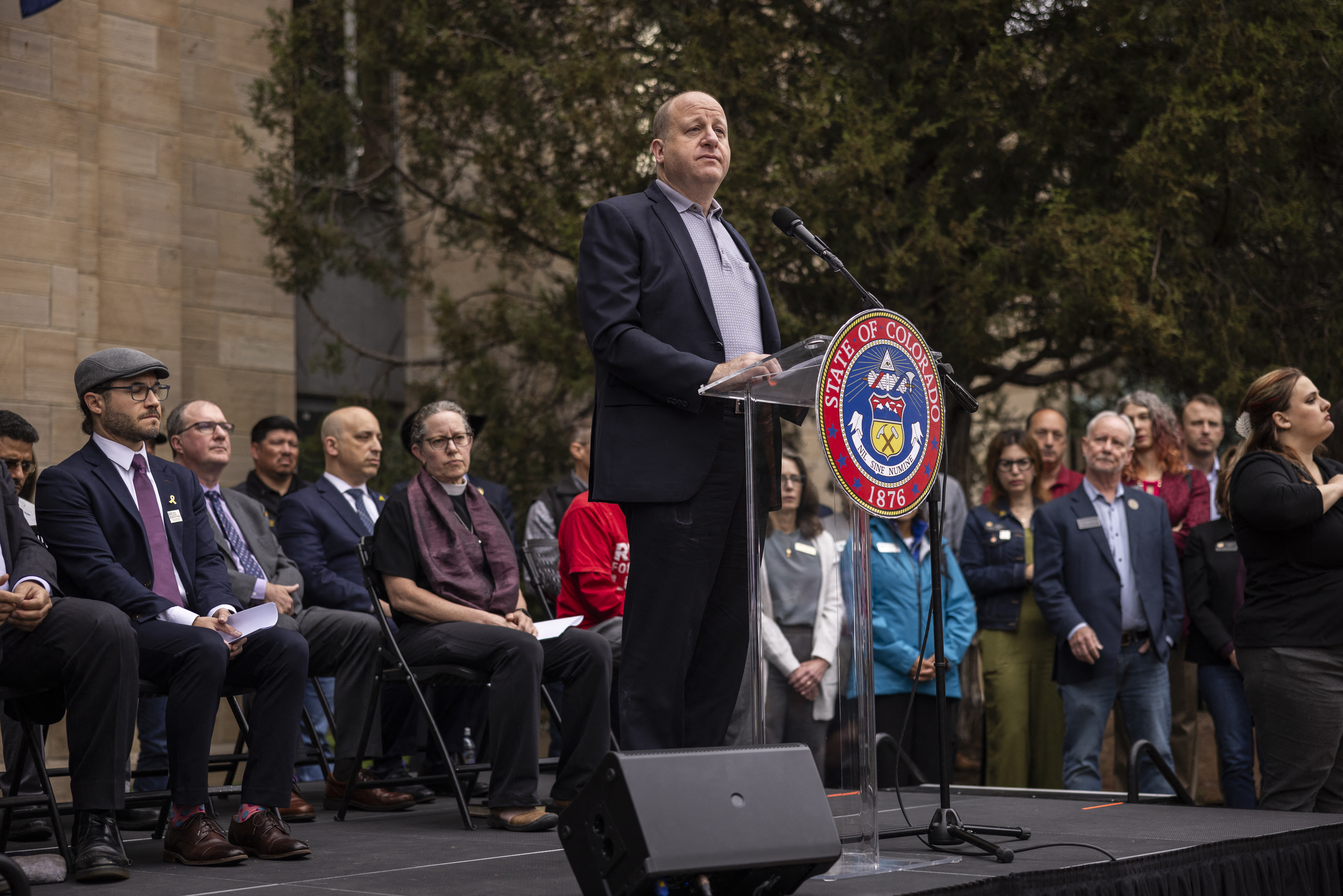
Colorado Gov. Jared Polis spoke on Wednesday at a vigil held at the site of the weekend terror attack targeting a hostage-awareness march in Boulder, Colo., in which 15 people, including a Holocaust survivor, were injured.
Birthdays

Actor, voice actor, comedian, writer and producer, Nicholas Kroll turns 47…
Lithuanian-born Holocaust survivor, co-founder of the Virginia Holocaust Museum in Richmond, Va., known for his ever-present cowboy hat, Jay M. Ipson turns 90… Training director and broker associate of the Santa Monica, Berkshire Hathaway Home Services branch, Saul Bubis… Owner of the NFL’s New England Patriots, Robert Kraft turns 84… The first woman to serve as international president of the United Synagogue of Conservative Judaism, Judy Yudof turns 81… Senior project manager in the AI field, Dan Yurman… Israeli politician, diplomat and businessperson, he served as consul general of Israel in Philadelphia from 1988 to 1992, Israel Peleg turns 76… VP of new business development at Maresco & Partners, Linda Greenfield… Author of 11 personal finance books, financial advisor, motivational speaker and television host, Susan Lynn “Suze” Orman turns 74… Staff member at Burbank Temple Emanu El, Audrey Freedman-Habush… Portrait photographer and visual anthropologist, she is the author of The Jews of Wyoming: Fringe of the Diaspora, Penny Diane Wolin turns 72… Former commissioner on the U.S. International Trade Commission, now a consultant, Dean A. Pinkert turns 69… Best-selling instrumental musician, the saxophonist “Kenny G,” Kenneth Bruce Gorelick turns 69… Columnist for the New York Post, Andrea Peyser turns 66… Senior associate general counsel at Compass real estate, Sam Kraemer… EVP and managing director at DC’s Burson Cohn & Wolfe (BCW), Michael Heimowitz… Member of the Ontario Provincial Parliament for eight years until 2022, Gila Deborah Martow turns 64… VP of government affairs at Invenergy, Mark S. Weprin turns 64… First-ever Jewish speaker of the Virginia House of Delegates, she served from 2020 until 2022, Eileen R. Filler-Corn turns 61… Manager of the Jeff Astor Legacy Fund, Beth Astor Freeman… Member of Congress (D-PA-6), her father is a Jewish Holocaust survivor from Poland, Christina Jampoler Houlahan turns 58… Member of the British House of Commons for 15 years, now a member of the House of Lords, Baron Ed Vaizey turns 57… Entrepreneur, venture capitalist and author, he holds more than 100 granted and pending patents, Nova Spivack turns 56… Professor of Israel studies at UCLA, Dov Morris Waxman turns 51… Film and television actress, she has a recurring role in the Fox series “The Cleaning Lady,” Liza Rebecca Weil turns 48… Co-founder of BlueLabs and director of analytics for the campaigns of both Hillary Clinton in 2016 and Barack Obama in 2012, his father and grandfather were both rabbis, Elan Alter Kriegel… Research fellow at the Heritage Foundation, he was previously a member of the New Hampshire state Legislature, Jason Bedrick turns 42… Humorist, novelist and screenwriter, Simon Rich turns 41… Partner relationship manager at Voyant, Arielle Levy Marschark… Account director on the corporate PR team at M Booth, Maya Bronstein… Clara Moskowitz… Susan Stein…
Plus, new UCLA chancellor calls out campus antisemitism

GETTY IMAGES
A general view of the U.S. Capitol Building from the National Mall, in Washington, D.C., on Thursday, May 29, 2025.
Good Friday morning.
In today’s Daily Kickoff, we look at how Congress has increasingly ceded its authority over foreign policy to the White House, and interview UCLA Chancellor Julio Frenk about his efforts to address antisemitism at the school. We also talk to Rep. Mike Lawler about his recent trip to the Middle East, and report on President Donald Trump’s plan to nominate far-right commentator Paul Ingrassia to a senior administration post. Also in today’s Daily Kickoff: Rep. Greg Landsman, Mia Schem and Michael Bloomberg.
Ed. note: In observance of Shavuot, the next Daily Kickoff will arrive on Wednesday, June 4. Chag sameach!
For less-distracted reading over the weekend, browse this week’s edition of The Weekly Print, a curated print-friendly PDF featuring a selection of recent Jewish Insider and eJewishPhilanthropy stories, including: Hostages’ long-lasting mental and physical scars of Gaza captivity are treated at ‘Returnees Ward’; Israel can’t compete in checkbook diplomacy. These tech leaders have other ideas; and Sen. Dave McCormick, in Israel, talks about Trump’s Iran diplomacy, Gaza aid. Print the latest edition here.
What We’re Watching
- We’re keeping an eye on ceasefire and hostage-release negotiations, amid reports yesterday that Israel and Hamas were close to reaching an agreement that would have included the release of 10 living hostages and the bodies of 18 deceased hostages. A senior Hamas official last night rejected the U.S.-proposed ceasefire deal that had already been agreed to by Israel.
- Fox News Channel will air a wide-ranging interview tomorrow night with Sara Netanyahu, in which she’ll discuss with Lara Trump how life in Israel has changed since the Oct. 7, 2023, Hamas terror attacks.
What You Should Know
A QUICK WORD WITH JOSH KRAUSHAAR
Pore over the latest round of polling in the New York City mayoral primary, and it is something of a political analyst’s Rorschach test. The question is what will be a bigger turnoff for Gotham voters: extremism or personal scandal?
Will Zohran Mamdani’s radicalism make it difficult for the DSA-affiliated assemblyman — polling in second place — to win an outright majority of the Democratic vote? Candidates from the far-left wing of the party typically have a hard ceiling of support, but the latest polls suggest he’s not yet facing the elevated negative ratings that candidates in his ideological lane typically encounter. There hasn’t yet been a barrage of attack ads reminding voters about his record, as he slowly inches closer to former Gov. Andrew Cuomo.
Will Cuomo’s personal baggage ultimately be a bigger factor for Democratic voters? Cuomo has been leading the race since jumping in, but holds elevated unfavorability ratings, predominantly stemming from the scandal over sexual misconduct allegations, which he continues to deny, that forced him to resign as governor.
The city’s ranked-choice voting system requires the winner to receive an outright majority of the vote, and build a broader coalition than would be necessary if one only needed a plurality to prevail. In theory, that would advantage Cuomo, given his high name identification, moderate message and ample fundraising resources. In nearly every contest held under a ranked-choice system across the country, moderates have gotten a significant boost, including in the 2021 NYC mayoral primary, when Eric Adams prevailed.
But if there’s a broad antipathy to Cuomo that goes beyond ideological lines, it’s plausible that any alternative to Cuomo could benefit, simply because they’re running as a candidate of change. It’s hard to overlook Cuomo’s underwater favorability rating among primary voters; a new Emerson poll found a near-majority (47%) of NYC Democrats viewing Cuomo unfavorably, with 40% viewing him favorably.
Cuomo’s lead over Mamdani in the final round of ranked-choice voting, according to the poll, stood at eight points (54-46%). It’s a lead that is outside the margin of error, but a little too close for comfort considering Cuomo’s other advantages. The poll found Mamdani winning more of the votes from the third-place finisher (Comptroller Brad Lander) in the final round, suggesting that Cuomo could be vulnerable to opponents framing their campaigns as part of an anti-Cuomo coalition.
Cuomo’s strongest support comes from the Black community (74% support over Mamdani), voters over 50 (66%) and women (58%). Mamdani’s base is among younger white progressives, leading big over Cuomo with voters under 50 (61%).
Cuomo’s margin for success could end up coming from the city’s sizable Jewish community — many of whose members view Mamdani’s virulently anti-Israel record and pro-BDS advocacy as a threat — even though he’s currently winning a fairly small plurality of Jewish votes, according to a recent Homan Strategy Group survey.
Cuomo only tallied 31% of the Jewish vote, according to the poll, but has a lot of room for growth, especially since he still has potential to make inroads with Orthodox Jewish voters, many of whom became disenchanted with him as governor due to his aggressive COVID restrictions. (For instance: A significant 37% share of Orthodox Jewish voters said they were undecided in the Homan survey; 0% supported Mamdani.)
If those Cuomo-skeptical Orthodox voters swing towards the former governor in the final stretch, especially as the threat of Mamdani becomes more real, that may be enough for Cuomo to prevail. But it’s a sign of the times — and the state of the Democratic Party — that this race is as competitive as it is, given the anti-Israel record of the insurgent.
IN THE BACK SEAT
How Congress became impotent on foreign policy

For decades, Jewish and pro-Israel groups invested significant resources in building bipartisan relationships with key members of Congress to steer legislation, while helping secure foreign aid and blocking unfavorable initiatives concerning the Middle East, Jewish Insider’s Matthew Kassel reports. But that long-standing playbook has appeared less effective and relevant in recent years as Congress has increasingly ceded its authority on foreign policy to the executive branch, a trend that has accelerated with President Donald Trump’s return to office. The dynamic is frustrating pro-Israel advocates who had long prioritized Congress as a vehicle of influence, prompting many to reassess the most effective ways to advocate for preferred policies.
‘Increasingly irrelevant’: There are any number of reasons why Congress has taken a back seat in shaping foreign affairs, experts say, including Trump’s efforts to consolidate power in the executive branch, most recently by gutting the National Security Council. And Trump’s own power in reshaping the ideological direction of his party, preferring diplomacy over military engagement, has made more-hawkish voices within the party more reluctant to speak out against administration policy. “Congress is increasingly irrelevant except on nominations and taxes,” Elliott Abrams, a senior fellow at the Council on Foreign Relations who served as a special envoy for Iran in the first Trump administration, told Jewish Insider. “It has abandoned its once-central role on tariffs, and plays little role in other foreign affairs issues. That’s a long-term trend and we saw it in previous administrations, but it is worsened by the deadlocks on Capitol Hill, the need to get 60 votes to do almost anything, and by Trump’s centralization of power in the White House.”
UNIVERSITY RECKONING
‘The challenge attracted me’: Julio Frenk brings the fight against campus antisemitism to UCLA

After Oct, 7, 2023, Julio Frenk, then-president of the University of Miami, was swift and clear in his unequivocal condemnation of the Hamas terror attacks on Israel, and in his guidance about the university’s rules around protesting, harassment and violence, and continued disavowals of antisemitism. Now, in his new role as chancellor of the University of California, Los Angeles, Frenk is attempting to bring some Florida to deep-blue California as he wraps up his first semester. “When we engage with each other, we do that respectfully and without — obviously no hatred, no harassment, no incitement to violence, but also no expressions that are deeply offensive to the other side,” Frenk told Jewish Insider’s Gabby Deutch in an interview this week.
Protest problems: During UCLA’s large anti-Israel encampment last spring, Jewish students were barred from accessing parts of campus by the protest organizers. The tents popped up just days after Frenk had accepted the offer from Michael Drake, president of the University of California system. “I had already said yes, and he said, ‘Are you going to change your mind?’ And I said, ‘No, I’m not going to change my mind. I think this is a very important challenge to face and fix if I can, and I’m going to give it my all,’” Frenk recalled. “What drew me here is just the reputation, the standing, and I know that that spring, the images of UCLA going to the world were not very enticing. But to be honest, facing that challenge was something that attracted me.”
STANDING TOGETHER
‘Keep showing up’: Capital Jewish Museum reopens after deadly shooting

As visitors entered the Capital Jewish Museum on Thursday morning, open for the first time after an antisemitic attack killed two Israeli Embassy staffers steps from its doors last week, they walked past a makeshift memorial to Sarah Lynn Milgrim and Yaron Lischinsky before security guards wanded them down and checked their bags. The museum might be reopening, but its staff — and the broader Washington Jewish community — now feel a heaviness that did not exist last week, when the museum was on the cusp of unveiling a major new exhibit about LGBTQ Jews ahead of the World Pride Festival next month. The presence of police officers and heightened security precautions in the newly reopened space were stark reminders of the violence perpetrated by a radicalized gunman who said he killed the two young people “for Gaza,” Jewish Insider’s Gabby Deutch reports.
Stop by: A brief ceremony marking the museum’s reopening began with a cantor leading the crowd in singing songs for peace. D.C. Mayor Muriel Bowser pledged to continue to support the Jewish community and called on all Washingtonians to do the same. “It is not up to the Jewish community to say, ‘Support us.’ It is up to all of us to denounce antisemitism in all forms,” Bowser told the several dozen people at the event. Bowser, who was instrumental in the creation of the museum, which opened in 2023, urged people in the local community to visit.
SEEING THE SIGNS
Rep. Landsman: Murder of Israeli Embassy staffers was the culmination of a ‘trajectory’ toward antisemitic violence

For Rep. Greg Landsman (D-OH), the murder of two Israeli Embassy employees outside the Capital Jewish Museum last week brought to life fears he has harbored for months, amid rising extremism in anti-Israel demonstrations, Landsman told Jewish Insider’s Marc Rod in an interview on Wednesday.
Worst fears: The Jewish Ohio congressman said that days before the shooting, while attending a public event in downtown Cincinnati, he had a “really vivid image of being shot in the back of the head. What I saw was myself laying on the ground in the way in which you would be if you had been shot in the head … I wasn’t alive, I was dead.” Landsman continued, “And then, literally two or three days later, that’s what happened outside the Jewish museum. That’s what happened to these two innocent people.” He said he feels the country has been on a “trajectory” toward such violence by anti-Israel agitators, and that it will continue without a change in course.
CONTOVERSIAL COMMENTATOR
Latest Trump nominee called Israel-Palestinian conflict a ‘psyop’, promoted antisemitic conspiracy theories
President Donald Trump announced his intention to nominate far-right commentator Paul Ingrassia to head the agency tasked with rooting out corruption and protecting whistleblowers in the federal government, Jewish Insider’s Danielle Cohen reports. Ingrassia, 29, currently serves as the White House liaison for the Department of Homeland Security. He briefly served as the White House liaison to the Department of Justice early in Trump’s second term, but was reassigned after clashing with the DOJ’s chief of staff after urging the president to hire only individuals who exhibited what Ingrassia called “exceptional loyalty,” according to ABC News.
Part of a pattern: Ingrassia has trafficked in a number of conspiracy theories, as have several other controversial administration appointees, including Department of Defense Press Secretary Kingsley Wilson and Acting Under Secretary for Public Diplomacy Darren Beattie. On Oct. 7, 2023, as the Hamas attacks were still underway, Ingrassia posted on X calling illegal immigration to the U.S. “comparable to the attack on Israel,” writing, “The amount of energy everyone has put into condemning Hamas (and prior to that, the Ukraine conflict) over the past 24 hours should be the same amount of energy we put into condemning our wide open border, which is a war comparable to the attack on Israel in terms of bloodshed — but made worse by the fact that it’s occurring in our very own backyard. We shouldn’t be beating the war drum, however tragic the events may be overseas, until we resolve our domestic problems first.”
TEHRAN TALK
Lawler: Regional leaders ‘cautiously optimistic’ about nuclear talks, but ‘realistic’ about Iranian bad faith
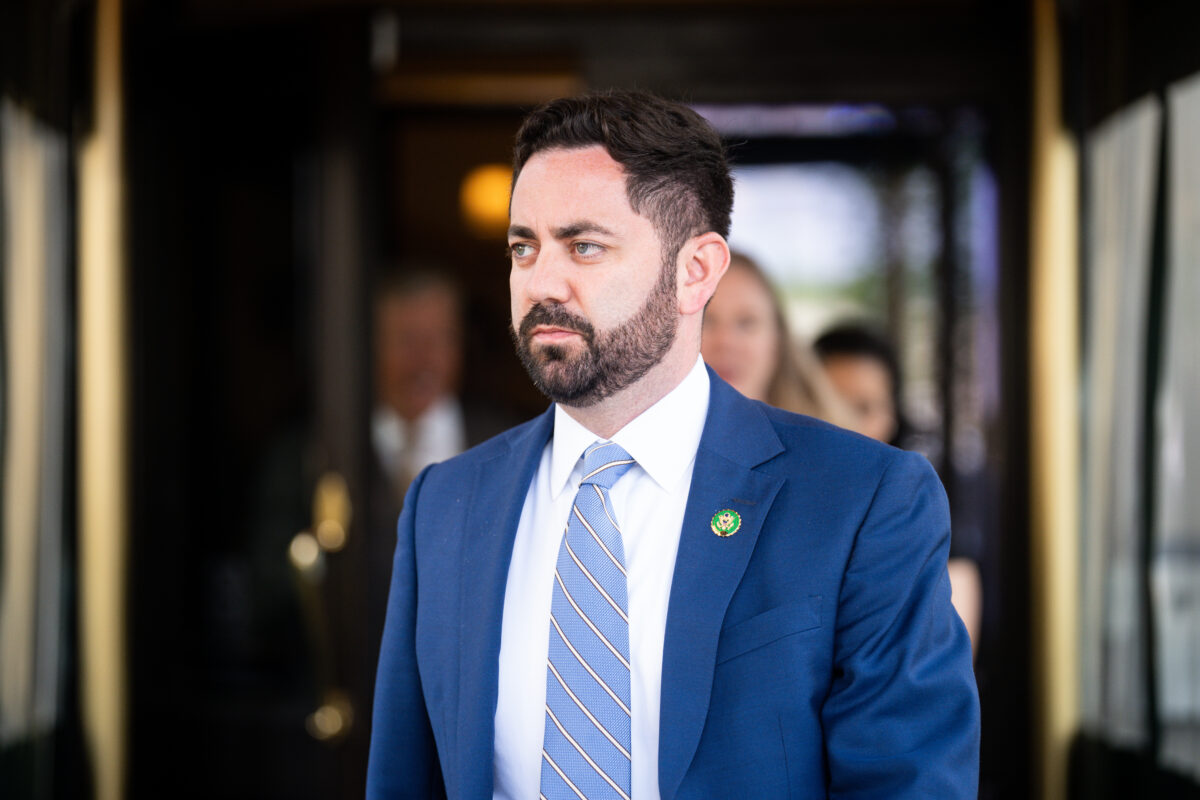
Rep. Mike Lawler (R-NY), returning from a trip to Israel, Saudi Arabia and Jordan, characterized leaders in the region as being open to the Trump administration’s efforts to reach a new nuclear deal with Iran, but also suggested that they are skeptical that Iran will actually agree to a deal that dismantles its nuclear program, Jewish Insider’s Marc Rod reports.
What he said: “I think folks are realistic about the prospects of Iran coming to an agreement, but still want to give the process a chance and try to avoid a conflict if possible,” Lawler told JI on Thursday. “But ultimately, you know, I think everybody is very clear about the fact that Iran cannot have a nuclear weapon.” Asked about the potential contours of a deal, Lawler said, “my general view is that the nuclear program, obviously, is a major threat, but so too is their continued funding of terrorism, and all of these issues are going to have to be addressed, one way or the other.”
Worthy Reads
Gaming Out the Jewish Future: eJewishPhilanthropy’s Judah Ari Gross spotlights an initiative launched by philanthropist Phil Siegel using “war games” that simulate potential future scenarios facing the American Jewish community to get leaders to think more about long-term planning. “The Jewish community may not have direct control over nuclear war, global demographic trends or international trade wars, for instance, even though these have a profound influence on the Jewish community. (Most of the scenarios include a geopolitical element as well, such as peace in the Middle East in the first one or an acute housing crisis in Israel that prevents American Jews from emigrating despite harsh conditions in the U.S. in the third scenario.) However, the Jewish community does have control over creating new organizations and initiatives or coordinating existing ones. ‘The game itself and the scenario itself were less important. It was more about how people think — What types of things influence us? Do we have more or less agency over them?’ [Israeli educator Barak] Sella said. ‘Is there an optimal scenario and does the Jewish community have a 2050 outcome that we are working toward?’” [eJP]
Delay of (End) Game: The Washington Post’s David Ignatius calls for an end to the Israel-Hamas war, positing that Israeli Prime Minister Benjamin Netanyahu has for a year rejected subordinates’ suggested strategies for winding down the conflict. “What’s agonizing is that Israeli military and intelligence leaders were ready to settle this conflict nearly a year ago. Working with U.S. and Emirati officials, they developed a plan for security ‘bubbles’ that would contain the violence, starting in northern Gaza and moving south, backed by an international peacekeeping force that would include troops from European and moderate Arab countries. … The Israeli-Palestinian dispute might seem intractable, but ending this conflict would be relatively easy. I’m told that Israeli military officials keep working on ‘day after’ plans, honing details as recently as this week. But they have had no political support from Netanyahu. ‘The “exit ramp” has been staring us in the face for a long time,’ argues Robert Satloff, director of the Washington Institute for Near East Policy. It’s a mix of Arab states and Gaza Palestinians, operating under a Palestinian Authority umbrella, he explains. “It is messy, with overlapping responsibilities and lots of dotted lines. But it checks all the boxes to enable the process of reconstruction and rehabilitation to get off the ground.’” [WashPost]
Mumbai Makeover: In The Wall Street Journal, Howard Husock interviews Rabbi Yisroel Kozlovsky of the Chabad House of Mumbai, India, about the city’s Jewish revival since the terror attack in 2008 in which Rabbi Gavriel Holtzberg and his wife and unborn child were killed. “Now in his 12th year in Mumbai, the rabbi recalls his unease upon receiving the assignment from Chabad’s headquarters in New York. He arrived in 2013 to find the building untouched since the terror attacks, its walls still bloodstained. His successor had been forced to live and hold services in rented apartments for the Jewish visitors and expats. (There are reportedly no more than 5,000 ethnic Indian ‘Bene Israel’ Jews in the country.) ‘Imagine our feelings when we walk in and see the destruction firsthand. It was still one big mess,’ Rabbi Kozlovsky says. ‘We knew immediately, though, we wanted to bring life back to the building.’ … Rabbi Kozlovsky has nevertheless decided not to shy away from the events of 26/11, as the locals refer to the attack, but to make it the basis of a mission. He has set out to build an artistic multimedia memorial to educate the hundreds of visitors, almost all non-Jewish Indians, who come here each week, mainly through class trips. ‘Restoration and resilience are not good enough responses to terror,’ he says of the project. ‘We are building a memorial and museum to teach history, to be a beacon of light.’” [WSJ]
Word on the Street
U.S. Ambassador to Turkey Thomas Barrack, who is also serving as Syria envoy, said in Damascus on Thursday that relations between Syria and Israel are a “solvable problem” that “starts with a dialogue”; Barrack also raised the U.S. flag over the ambassador’s residence in Damascus for the first time since the embassy’s closure 13 years ago…
Iranian Foreign Minister Abbas Araghchi said that any nuclear agreement with the U.S. must include the full lifting of sanctions and preservation of Tehran’s enrichment capabilities…
Saudi, Qatari and Emirati leaders reportedly told President Donald Trump during his trip to the region last week that they opposed military strikes on Iran’s nuclear program…
The Wall Street Journal reports on Israeli concerns over Washington’s ongoing nuclear talks with Iran, positing that a deal could put Israel “in a bind with its most important ally on its most pressing national security question”…
Columbia University reached a settlement with a Jewish social work student who had filed a lawsuit against the school alleging antisemitic discrimination…
California’s state Assembly unanimously advanced antisemitism legislation backed by Jewish groups in the state; AB715 would improve the process for making discrimination complaints, as well as create an antisemitism coordinator position for the state’s K-12 schools…
A Yonkers, N.Y., man was sentenced to six years in prison after pleading guilty to attacking a Jewish barber last year…
A Michigan man who in 2022 threatened parents and students at a synagogue preschool pleaded guilty to a federal gun charge…
The Wall Street Journal reports on the efforts of small wine importer and distributor Victor Owen Schwartz to challenge the Trump administration’s tariffs in court…
The board of Ben & Jerry’s issued a statement labeling Israel’s actions in Gaza a genocide, setting up another battle with parent company Unilever, which has for years clashed with the ice cream company’s independent board over its approach to social issues, including Israel…
CBS News profiles Karin Prien, the first Jewish federal cabinet member to serve in post-WWII Germany; the daughter of Holocaust survivors who was born in the Netherlands, Prien moved to Germany with her family when she was 4 and now serves as the country’s minister for education, family affairs, senior citizens, women and youth…
Former NYC Mayor Michael Bloomberg met with United Arab Emirates National Security Advisor Sheikh Tahnoon bin Zayed Al Nahyan for a conversation largely focused on the opportunities presented by AI technology…
The Associated Press reports on efforts to free Israeli-Russian Princeton researcher Elizabeth Tsurkov, who was kidnapped by an Iranian-backed militia group in Iraq in 2023…
Iran’s embassy in India said it is investigating the disappearance of three Punjabi men who went missing earlier this month in Tehran while transiting through Iran en route to Australia, where a local travel agent had promised them jobs…
An increasing number of oil tankers are turning off their transponders as they near Malaysia, an area used to transfer Iranian oil bound for China, as Tehran continues to work to evade U.S. sanctions…
Missouri philanthropist Bud Levin died at 88…
Former New York City Police Commissioner Bernie Kerik, who headed the NYPD during the 9/11 terror attacks, died at 69…
Dr. Robert Jarvik, who oversaw the design of the first artificial heart, died at 79…
Pic of the Day

Following her return to Israel, Mia Schem — who was kidnapped from the Nova music festival in southern Israel on Oct. 7, 2023, and spent 55 days in Hamas captivity — famously had the phrase “We will dance again” tattooed on her arm. On Thursday night, approximately 800 New Yorkers joined Schem in dancing again at the sold-out inaugural Tribe of Nova Foundation benefit held at Sony Hall, a concert venue in Times Square.
The event was held with the goal of raising at least $1 million to aid families of victims and survivors of Nova, where 411 festivalgoers, mostly young people, were killed and 44 were taken hostage, Jewish Insider’s Haley Cohen reports.
Birthdays

Medical director of the American Jewish Joint Distribution Committee’s Ethiopia spine and heart project, Dr. Richard Michael Hodes turns 72…
FRIDAY: Santa Monica, Calif.-based historian of Sephardic and Crypto-Jewish studies, Dolores Sloan turns 95… Real estate developer, landlord of the World Trade Center until 9/11, former chair of UJA-Federation of New York, Larry A. Silverstein turns 94… Partner in the NYC law firm of Mintz & Gold, he is also a leading supporter of Hebrew University, Ira Lee “Ike” Sorkin turns 82… Board member of the Collier County chapter of the Florida ACLU and the Naples Florida Council on World Affairs, Maureen McCully “Mo” Winograd… Cape Town, South Africa, native, she is the owner and chef at Los Angeles-based Catering by Brenda, Brenda Walt turns 74… Former professional tennis player, he competed in nine Wimbledons and 13 U.S. Opens, now the varsity tennis coach at Gilman School in Baltimore, Steve “Lightning” Krulevitz turns 74… Former chief rabbi of France, Gilles Uriel Bernheim turns 73… Encino, Calif.-based business attorney, Andrew W. Hyman… Literary critic, essayist and novelist, Daphne Miriam Merkin turns 71… Israeli physicist and philosopher, Avshalom Cyrus Elitzur turns 68… Former member of Congress for 16 years, since leaving Congress he has opened a bookstore and written two novels, Steve Israel turns 67… Former science editor for BBC News and author of six books, David Shukman turns 67… Founder of Krav Maga Global with 1,500 instructors in 60 countries, Eyal Yanilov turns 66… Editorial writer at The New York Times, Michelle Cottle… Film, stage and television actress; singer and songwriter, she sang the national anthem at Super Bowl XLIX in 2015, Idina Menzel turns 54… Writer, filmmaker, playwright and DJ, known by his pen name Ithamar Ben-Canaan, Itamar Handelman Smith turns 49… Member of Knesset who served as Israel’s minister of agriculture in the prior government, Oded Forer turns 48… Director of engagement and program at NYC’s Congregation Rodeph Sholom, Scott Hertz… Chief of staff for Sen. Brian Schatz (D-HI), Reema Dodin turns 45… Tsippy Friend… Israeli author, her debut novel has been published in more than 20 languages around the world, Shani Boianjiu turns 38… Rapper, singer, songwriter and record producer, known professionally as Hebro, Raphael Ohr Chaim Fulcher turns 38… Senior counsel at Gilead Sciences, Ashley Bender Spirn… Ice hockey defenseman, he has played for four NHL teams and is now in the Deutsche Eishockey Liga, David Matthew Warsofsky turns 35… Deputy chief of staff for U.S. Sen. Jon Ossoff (D-GA), Miryam Esther Lipper… Senior reporter for CNN, Eric Levenson… Challah baker, social entrepreneur and manager at Howard Properties, Jason Friend…
SATURDAY: Investment advisor at Wedbush Securities in Los Angeles, Alfred Phillip Stern turns 92… Businessman and philanthropist, Ira Leon Rennert turns 91… Professor at Yale University and the 2018 winner of the Nobel Prize in economics, William Dawbney Nordhaus turns 84… Food critic at Vogue magazine since 1989 and judge on “Iron Chef America,” he is the author of the 1996 award-winning book The Man Who Ate Everything, Jeffrey Steingarten turns 83… Founder and retired CEO of the Democratic Leadership Council, Alvin “Al” From turns 82… Author, political pundit and a retired correspondent for HBO’s “Real Sports with Bryant Gumbel,” he has won 14 Emmy Awards during his career, Bernie Goldberg turns 80… Comedian, actress and TV producer, Susie Essman turns 70… Founder and chairman of the Katz Group of Companies with operations in the pharmacy, sports (including the Edmonton Oilers), entertainment and real estate sectors, Daryl Katz turns 64… Reality television personality, best known for starring in and producing her own matchmaking reality series, “The Millionaire Matchmaker” on Bravo TV, Patti Stanger turns 64… Jerusalem-born inventor, serial entrepreneur and novelist; founder, chairman and CEO of CyberArk Software, one of Israel’s leading software companies, Alon Nisim Cohen turns 57… Entrepreneur, best known as the co-founder of CryptoLogic, an online casino software firm, Andrew Rivkin turns 56… Former Democratic mayor of Annapolis, Md., now head of policy at SWTCH, Joshua Jackson “Josh” Cohen turns 52… Program director of synagogue and rabbinic initiatives at the Board of Rabbis of Southern California, Melissa York… Israeli actress, singer and dancer, she played a Mossad agent in the espionage TV series “Tehran,” Liraz Charhi turns 47… Author of the “Money Stuff” column at Bloomberg Opinion, Matthew Stone Levine turns 47… Freelance writer in Brooklyn, Sara Trappler Spielman… Attorney and NYT best-selling author of the Mara Dyer and Shaw Confessions series, Michelle Hodkin turns 43… Senior advisor at the U.S. Department of Commerce until earlier this year, Bert Eli Kaufman… Senior product manager at Tel Aviv-based Forter, Zoe Goldfarb… Stephanie Oreck Weiss… Chief revenue officer at NOTUS, Brad E. Bosserman… Senior rabbi and executive director of Jewish life at D.C.’s Sixth & I, Aaron Potek… Managing editor at Allbritton Journalism Institute, Matt Berman… Medical student in the class of 2027 at the University of Nicosia Medical School, Amital Isaac… Brad Goldstein… Basketball player in Israel’s Premier League until recent years, while at Princeton he won the Ivy League Player of the Year award, Spencer Weisz turns 30… Professional golfer on the PGA Tour, Max Alexander Greyserman turns 30… Rapper, singer, songwriter and producer, known by his stage name, King Sol, Benjamin Solomon turns 27…
SUNDAY: Pulitzer Prize-winning composer, pianist and conductor, he has taught at Yale, SUNY Purchase, Cornell, Brandeis and Harvard, Yehudi Wyner turns 96… Holocaust survivor as a child, he served as the Ashkenazi chief rabbi of Israel for 10 years and twice as Chief Rabbi of Tel Aviv for 16 years, Rabbi Yisrael Meir Lau turns 88… NYC-based attorney, author of two books regarding the history and operations of El Al, owner of 40,000 plus pieces of memorabilia related to El Al, Marvin G. Goldman turns 86… Grammy Award-winning classical pianist, Richard Goode turns 82… Former member of the Knesset for the Yisrael Beiteinu party, Shimon Ohayon turns 80… Retired attorney in Berkeley, Calif., Thomas Andrew Seaton… Pediatrician in the San Francisco Bay area, Elliot Charles Lepler, MD… Former member of the Knesset for the Shinui and the Hilonit Tzionit parties, Eti Livni turns 77… Founding editor of The American Interest, Adam M. Garfinkle turns 74… Former editor-in-chief of Bloomberg News and co-author with Michael Bloomberg of Bloomberg by Bloomberg, Matthew Winkler turns 70… Contributing editor at The Free Press, Uri Paul Berliner… Founding rabbi of Congregation Aish Kodesh in Woodmere, N.Y., Rabbi Moshe Weinberger turns 68… Former IDF officer and now a London-based political scientist and journalist, Ahron “Ronnie” Bregman turns 67… Member of the Knesset for the Shas party for 16 years ending in 2015, Amnon Cohen turns 65… Owner of MLB’s Athletics (temporarily playing in Sacramento), he is the chair of Knowledge is Power Program (KIPP) Foundation, John J. Fisher turns 64… Poet, performance artist and essayist, Adeena Karasick turns 60… Founding editor and publisher of the Dayton Jewish Observer, Marshall J. Weiss… Television personality and matchmaker, Sigalit “Siggy” Flicker turns 58… Actress, voice actress and film director, Danielle Harris turns 48… Pulitzer Prize-winning journalist and writer, Spencer J. Ackerman turns 45… Comedian, writer, actress, director and producer, Amy Schumer turns 44… Partner in Oliver Wyman, a global management consulting firm, Daniel Tannebaum… President and CEO of the International Fellowship of Christians and Jews, Yael Eckstein turns 41… Musician, songwriter, author, actor and blogger, Ari Seth Herstand turns 40… CEO of The Good Food Institute, Ilya Sheyman turns 39… Political reporter for NBC News and MSNBC until earlier this year, now a newspaper editor in Maine, Alex Seitz-Wald… Senior writer at Barron’s covering the Federal Reserve, Nicole Goodkind… Former engineering lead at Palantir Technologies, now in a MPP program at Yale Jackson School of Global Affairs, Naomi S. Kadish… Executive business partner at Lyft, Isabel Keller… NYC-born Israeli pair skater, she competed for Israel at the 2022 Winter Olympics, Hailey Esther Kops turns 23…
The Ohio Democratic congressman warns that anti-Israel agitators are becoming more threatening

EMIL NICOLAI HELMS/Ritzau Scanpix/AFP via Getty Images
Congressman Greg Landsman attends a press conference during the congressional delegation's visit to Denmark, in Copenhagen on Friday, April 25, 2025.
For Rep. Greg Landsman (D-OH), the murder of two Israeli Embassy employees outside the Capital Jewish Museum last week brought to life fears he has harbored for months, amid rising extremism in anti-Israel demonstrations.
The Jewish Ohio congressman told Jewish Insider in an interview on Wednesday that days before the shooting, while attending a public event in downtown Cincinnati, he had a “really vivid image of being shot in the back of the head. What I saw was myself laying on the ground in the way in which you would be if you had been shot in the head … I wasn’t alive, I was dead.”
“And then, literally two or three days later, that’s what happened outside the Jewish museum. That’s what happened to these two innocent people,” Landsman continued. “When I saw it, I immediately thought, that’s where they are. They’re on the ground dead … It all then just felt so inevitable that this was going to happen.”
He said he feels the country has been on a “trajectory” toward such violence by anti-Israel agitators, and is worried that it will continue without a change in course. Landsman said that he and other members of the Jewish community, particularly fellow Jewish lawmakers, have had growing fears of violence akin to last week’s murders since the Oct. 7 attacks.
“It’s the way in which they get in your face and they speak to you and they’re saying these incredibly threatening things, like, ‘You’re going to pay for this,’” Landsman explained, referring to anti-Israel demonstrators. “That was a line I heard many, many times. Once in a Target parking lot with my children … This was what we were afraid of.”
A group of anti-Israel protesters also spent days camped outside Landsman’s house, including overnight, yards from his bedroom.
“This is the trajectory, incidentally, of all blood libels, when Jews are accused of murder, from the blood libel around Jesus to the blood libel around genocide,” he said.
Landsman said that, in the immediate aftermath of the Oct. 7, 2023, Hamas terror attacks, he’d been able to have meaningful conversations with large groups of constituents about the attacks and the developing war in Gaza and about their differing positions on it.
But over time, he continued, “those groups have gotten smaller, but more intense. The numbers have shrunk but the rhetoric and the vitriol has grown, has worsened.”
Landsman issued a lengthy statement earlier this week outlining his fears, the links he sees between the shooting and “blood libels” spread about Israel and the Jewish community and the path forward to counter antisemitism.
He told JI he initially wrote the statement to make sense of the shooting and his thoughts around it, and to process what he and his family have been experiencing. He said he put it out in the hopes of helping people — even those who disagree with him about Israel policy — to think about their behavior and decisions and to lay out a “better path.”
“This is an incredibly complicated set of situations. The murders on Wednesday were just horrific and maddening,” Landsman said. “We’ve got to go down a different path and I tried to lay that out, and hopefully that’ll be part of the conversation. There is a difference between protest and chaos, there’s a difference between free speech and hate speech and violent rhetoric. And the more people know where those lines are, the better.”
Landsman argued that leaders at all levels have a responsibility to educate themselves and help their communities “understand where the lines are” between criticism of Israel and antisemitism. “There’s a way to speak out on whatever side that helps people get closer to solving a problem and doesn’t ever lead anyone to believe they should go pick up a gun and go kill Jews.”
He said that political leaders who have perpetuated narratives accusing Israel of genocide or turned a blind eye to violent rhetoric from anti-Israel demonstrators have fed into the milieu of “anti-Israel outbursts — I don’t want to call them protests” that culminated in last week’s shooting.
“I don’t want to say that they contributed to what happened [last] Wednesday, although all of these roads ended up there,” Landsman said. “I think silence can be a contributing factor to something getting worse.”
He said there have also been failures to properly distinguish protected free speech from unprotected speech, and protests with proper permits adhering to relevant laws and the “chaos” that has characterized others.
Landsman emphasized that he’s a strong advocate for protest and freedom of speech, but that anti-Israel protests like those outside his home have routinely breached relevant laws governing such demonstrations.
When protests cross a line into dangerous territory, Landsman said, “you can’t just sit there and say, ‘Oh, it’s free speech.’ And I think that has happened across the board. That’s what happened at Columbia. It’s what happened outside my house.”
He offered particular condemnation for professors at schools such as Columbia University for encouraging anti-Israel protesters. The students, he noted, in some cases faced strong punishment, while many of the faculty, having tenure, remain largely unaffected.
“They took these 18-, 19-, 20-year-old kids who needed guidance, gave them none, pushed them into the lion’s den, and then walked away,” Landsman said. “If you’re in a position of leadership, you’ve got to lead, and leading means engaging, and engaging means problem-solving and working through something.”
One of Landsman’s main recommendations for addressing antisemitism and trying to prevent further violence is passing the Antisemitism Awareness Act, which was derailed in the Senate by lawmakers on both sides of the aisle. He suggested that much of the discourse claiming the bill would silence freedom of speech is driven by a lack of understanding of the legislation and its use of the International Holocaust Remembrance Alliance’s working definition of antisemitism.
Landsman said the legislation, and any issues around antisemitism and hatred, should not be politicized, noting that many lawmakers on both sides are guilty of doing so. He said that the strident opposition to the legislation from both sides shows the extent of antisemitism, and the ways that actors on the right and left are reluctant to grapple with the antisemitic nature of things they say or believe.
He added that the bill does not silence freedom of speech, but it does help clarify the ways that attacks on Israel and the Jewish community can be antisemitic and can help encourage training and education to “help everyone, not just Jewish students.”
Though the legislation focuses exclusively on campus issues, Landsman said that adopting the IHRA definition through the legislation will provide a signal and a tool for other communities and society at large to understand antisemitism, and would help tackle one of the epicenters of antisemitism nationwide.
“I do think helping college campuses do this better is a huge step in the right direction,” Landsman said. “It’s all connected … You get [the bill] passed and then you start applying that to big tech, you start applying it to … the medical field … I think it becomes a vehicle or similar bills become relevant for other spaces. But you’ve got to get this one done.”
He also encouraged individuals and institutions, like college campuses, to take the time to look at and utilize resources from nonpartisan Jewish community institutions like the American Jewish Committee and work with such groups to better understand antisemitism and the dangers of violent anti-Israel ideologies — and of ideologies seeking to eliminate Palestinians.
Landsman, characterizing the Trump administration’s rescinding of federal funds for universities and student visas as unproductive, also urged the administration to work with groups like AJC to put together plans to address the issue and work with universities to implement them.
“It’s not TV stuff, it’s not headline-grabbing stuff. It’s a real plan where, over the course of the next couple of years, we’re going to make some changes that will help dramatically improve peoples lives,” Landsman said. “And to some extent, that’s what the bill calls for.”
The statement also calls for a ‘serious and credible political and security plan’ for Gaza

Anna Moneymaker/Getty Images
Rep. Dan Goldman (D-NY) returns to a hearing with the House Committee on Homeland Security on Capitol Hill on January 30, 2024 in Washington, DC.
A group of 41 pro-Israel House Democrats released a statement on Wednesday praising the resumption of humanitarian aid to Gaza as helping to refocus international attention on releasing the hostages and calling for a comprehensive plan for postwar Gaza.
The statement, first shared with Jewish Insider, argues that the renewed delivery of aid, which began on Monday, was “essential to alleviate the humanitarian crisis in Gaza, so that the primary focus of the international community can return to releasing the hostages that remain in captivity.”
“We strongly believe that there can be no lasting peace while Hamas remains in power. Its tyrannical rule over Gaza must end. To achieve that objective, the United States, Israel, and key Arab partners must agree upon a serious and credible political and security plan to govern Gaza after the war,” the lawmakers added. “Then, with the hostages returned and Hamas removed from power, the rebuilding process can begin to ensure lasting peace and security for Israelis and Palestinians alike.”
The statement highlights that Israel has facilitated the entry of 1.78 million tons of aid into Gaza since Oct. 7, 2023, and states that aid “must be disbursed swiftly and safely to Palestinian civilians and not Hamas, which has been stealing aid since the start of the war.”
It notes that Hamas continues to hold 58 hostages, saying, “Every day that goes by without the hostages’ release is a dagger in the hearts of their families.”
“We call on President Trump and his administration to do everything within their power to secure the release of the hostages, facilitate the disbursement of aid, and bring a swift end to the war,” the statement concludes.
The statement was organized by Rep. Dan Goldman (D-NY), in cooperation with Democratic Majority for Israel.
The statement was co-signed by Reps. Haley Stevens (D-MI), Greg Landsman (D-OH), Jimmy Panetta (D-CA), Debbie Wasserman Schultz (D-FL), Jake Auchincloss (D-MA), Vicente Gonzalez (D-TX), Dina Titus (D-NV), Jared Moskowitz (D-FL) Don Davis (D-NC), Sheila Cherfilus-McCormick (D-FL), Ritchie Torres (D-NY), Lois Frankel (D-FL), Tom Suozzi (D-NY), Wesley Bell (D-MO), Brad Sherman (D-CA), Angie Craig (D-MN), Hillary Scholten (D-MI), Grace Meng (D-NY), Frank Pallone (D-NJ), Josh Gottheimer (D-NJ), Greg Stanton (D-AZ), George Latimer (D-NY), Emilia Sykes (D-OH), Sarah Elfreth (D-MD), Mike Levin (D-CA), Brad Schneider (D-IL), Steve Cohen (D-TN), Frederica Wilson (D-FL), Jim Costa (D-CA), Laura Friedman (D-CA), Laura Gillen (D-NY), Sarah McBride (D-DE), Marilyn Strickland (D-WA), Josh Riley (D-NY) and Janelle Bynum (D-OR), Adriano Espaillat (D-NY), Juan Vargas (D-CA), Marc Veasey (D-TX), Jimmy Gomez (D-CA) and Ted Lieu (D-CA).
“This statement from 41 congressional Democrats, spearheaded by DMFI, reflects a clear-eyed understanding of the moral and strategic imperatives at stake in the continuing Israel–Hamas war,” DMFI President Brian Romick said in a statement. “Hamas’s continued captivity of 58 hostages after some 600 days, including the remains of American citizens, is a humanitarian outrage that demands the world’s attention. At the same time, aid intended for Palestinian civilians must not be diverted by Hamas to fuel terror and prolong this devastating war.”
“Their voices send a powerful message: the United States must remain steadfast in its commitment to our ally Israel, to the return of the hostages — both living and dead — and to a post-conflict vision that rejects terror and embraces peace,” Romick continued.
The letter was sent the day following the murder of two Israeli Embassy employees, which prompted calls for more resources to protect Jewish institutions

Kevin Carter/Getty Images
U.S. Capitol Building on January 18, 2025 in Washington, DC.
A bipartisan group of 33 senators — mostly Democrats — sent a letter last week urging Senate Appropriations Committee leaders to provide $500 million for the Nonprofit Security Grant Program in 2026, matching the record-high request from a group of House members earlier this month.
The letter was sent the day following the murder of two Israeli Embassy employees outside the Capital Jewish Museum in Washington, an attack that led a coalition of Jewish groups to call for increasing funding for the program, which provides synagogues and nonprofits with grants to improve their security, to $1 billion. The funding request in the Senate letter likely would have been finalized prior to the attack.
It’s not clear, at this point, whether lawmakers might seek to revise their requests to come closer to the $1 billion level, or how feasible either request level might be. The Trump administration had proposed cuts to non-emergency grant programs at the Federal Emergency Management Agency and has not yet offered a specific proposal for the NSGP. The $500 million request is nearly double the NSGP’s current funding level of $274.5 million.
“The threat of violence is unfortunately increasing at places of worship across our country at alarming rates,” the Senate letter reads. “There has been an increase in hoax bomb and active shooter threats against houses of worship to interrupt services and intimidate the worshipers. There has also been an increase in antisemitic and anti-Muslim incidents across the country following the October 7 attack in Israel.”
The letter outlines a series of attacks on houses of worship across the country, including synagogues, which the signatories said “highlight the ever-increasing need for the NSGP.”
The letter also notes the significant shortfall in funding for the program last year, with just 43% of grant applications being approved, even with additional funding available through the national security supplemental bill. Applicants requested a total of nearly $1 billion in funding.
“Unfortunately, it is easy to see that the need for the NSGP is quickly outpacing the funding,” the letter reads, noting that the deficit “left most of the applicants without the funding they needed to provide security to their at-risk institution.”
“Today’s threat environment provides a compelling public interest in preventing attacks that would disrupt the vital health, human, social, cultural, religious, and other humanitarian services provided by at-risk faith-based and nonprofit institutions,” the letter continues. “Such threats terrorize the lives and well-being of millions of Americans who operate, utilize, live, and work in their communities.”
The letter was led by Sens. Kirsten Gillibrand (D-NY), James Lankford (R-OK), Gary Peters (D-MI) and Jacky Rosen (D-NV), joined by Sens. Kevin Cramer (R-ND), Tim Kaine (D-VA), Amy Klobuchar (D-MN), Tammy Baldwin (D-WI), Mark Warner (D-VA), Sheldon Whitehouse (D-RI), Mark Kelly (D-AZ), Adam Schiff (D-CA), John Hickenlooper (D-CO), Angus King (I-ME), Raphael Warnock (D-GA), Alex Padilla (D-CA), Andy Kim (D-NJ), Richard Blumenthal (D-CT), Jack Reed (D-RI), Tammy Duckworth (D-IL), Elissa Slotkin (D-MI), Chris Van Hollen (D-MD), Maria Cantwell (D-WA), Ron Wyden (D-OR), Cory Booker (D-NJ), Angela Alsobrooks (D-MD), Lisa Blunt Rochester (D-DE), Tina Smith (D-MN), Maggie Hassan (D-NH), Jon Ossoff (D-GA), Ben Ray Lujan (D-NM), Dick Durbin (D-IL) and Ed Markey (D-MA).
Though Lankford and Cramer are the only two Republicans who signed the letter, the bipartisan request marks a change in Senate advocacy on this issue — in the past, bipartisan Senate groups have not specified amounts in their lobbying for the program. Senate Democrats last year called for $400 million for the program.
The New Jersey Democratic congressman is counting on winning a significant share of the state’s 600,000 Jewish voters in next month’s primary

GETTY IMAGES
Rep. Josh Gottheimer, D-N.J., leaves the U.S. Capitol after the House passed the One Big Beautiful Bill Act on Thursday, May 22, 2025.
As Rep. Josh Gottheimer (D-NJ) works to come from behind in the closing weeks of the New Jersey Democratic gubernatorial primary, the veteran congressman is counting on support from the state’s sizable Jewish community to launch him to victory in the June 10 election.
“It’s a key part, a critical part of the coalition,” Gottheimer told Jewish Insider on Monday. “These off-year primaries are — despite what we’re all working to do — it’s always a lower turnout in the off years. And I’d say the Jewish community is very engaged, and I think they play a really important role in the election.”
He argued that he has an extensive record both in office and before his time in Congress fighting antisemitism and supporting the U.S.-Israel relationship, and has forged deep bonds with the Jewish community, particularly at a time when it has been subjected to increased antisemitism.
“I think that [the Jewish] community around the state recognizes that,” Gottheimer said. “I think I’ve made a very strong case of why I’d be an excellent governor for the Jewish community, and for all communities.”
Gottheimer recently picked up the endorsement of the Lakewood Vaad, an influential group of rabbis in one of the state’s largest Orthodox Jewish communities, which urged both Democrats and unaffiliated voters to vote for Gottheimer in the Democratic primary. The endorsement came comparatively early for the Vaad, which in the past has endorsed candidates as late as on Election Day.
As of last week, Lakewood had more than 20,000 unaffiliated Orthodox Jewish voters, in addition to nearly 3,000 Orthodox voters registered as Democrats, according to Shlomo Schorr, the director of legislative affairs for Agudath Israel of America’s New Jersey office. In surrounding communities in Ocean County where the Vaad’s sphere of influence extends, there are 3,500 Orthodox Democrats and 2,250 unaffiliated Orthodox voters, Schorr said.
“It’s a three-part punch: it’s Lakewood coming out early, it’s Lakewood saying to the Democrats they should vote for Josh and it’s them saying [to] the unaffiliated who have the ability to show up that day and declare as a Democrat that they should as well show up for Josh,” a Gottheimer-backing New Jersey strategist said.
Even as Gottheimer has lagged behind other opponents, such as Rep. Mikie Sherrill (D-NJ), the establishment favorite in the race, in the limited public polling available, one Gottheimer advisor suggested that current polling could be missing the preferences of the Orthodox community.
“Orthodox communities such as the Vaad are generally missed as a part of traditional polls because the community is not inclined to participate in traditional opinion polling,” the advisor told JI. “If you wanted to look for a hidden vote that wouldn’t be counted, there’d certainly be evidence that that is one.”
The New Jersey strategist predicted that the Lakewood endorsement would produce a “domino” effect: as the largest Jewish community in the state, Lakewood turning out for Gottheimer could drive turnout among other New Jersey Jewish communities, signaling “that Josh has a viable path to victory and to win.” Some other Jewish community leaders, including a Jersey Shore-based Sephardic Orthodox group, have also endorsed Gottheimer.
If those communities turn out in force for Gottheimer, it could total between 30,000 and 50,000 votes, the strategist said, which “is enough to — 100% — win that election.” They continued, “Josh’s path to victory is Bergen County turning out and the Jewish community turning out.”
Gottheimer also emphasized to JI that he’s been speaking to Jewish communities throughout the state for months, and has won endorsements from mayors and other local officials in areas with large Jewish communities statewide, both Orthodox and non-Orthodox.
“We have very big support — I’ve spent a lot of time — because I think the Jewish community wants somebody who’s going to stand up and fight antisemitism and hate, who’s going to make sure we teach children in K-12 about the Holocaust, about what happened on Oct. 7 [2023], actual facts, and who’s going to be a nationwide leader on these issues,” Gottheimer said.
“A lot of Jewish voters feel abandoned, and they want someone who’s going to be a champion of them and of the community,” Gottheimer said.
Schorr said the Vaad is anticipating that it can convince not only Democrats but an even more significant number of unaffiliated voters in Lakewood and beyond to pull the lever for Gottheimer in a race that is expected to be fought on the margins.
Along with its endorsement, the Vaad is spending heavily on ads and get-out-the-vote efforts to help raise awareness around the primary, for which early voting begins next Tuesday and ends on Sunday.
Schorr, who clarified that he was not involved in the endorsement discussions and that his own group is not taking sides in the race, acknowledged that the Vaad’s endorsement could “heavily tilt” the election. But he said the late push may face some logistical hurdles with just weeks remaining until the primary.
“There’s not that much time,” he told JI on Tuesday. “Their struggle will be to get people to turn out for the Democratic candidate.”
Livingston, N.J. Mayor Ed Meinhardt, a former synagogue president who has endorsed Gottheimer, said he expects the Jewish community in his town and surrounding areas — including two large Orthodox congregations — to support Gottheimer, adding that Gottheimer’s “path to victory very much goes through the Jewish population of western Essex” County.
Sherrill represents Livingston and other areas of Essex, and local observers expect her to carry a significant share of the Jewish vote in her congressional district.
“I think what Congressman Gottheimer is doing is taking the vote away from Congresswoman Sherrill,” Meinhardt said. “I believe what Congressman Gottheimer is doing is actually splitting the vote and taking the vote away from her and putting it back into his camp … That’s why he’s spent so much time in this area.”
Another local source familiar with the race said that “given the way the numbers are looking, having the Jewish community come out and vote would appear to be a boon for [Gottheimer], and if the Jewish community doesn’t come out and vote for him, it’s going to hurt.”
The source said that the Jewish community in New Jersey — totaling more than 600,000, making it the largest non-Christian religious community in the state — could be enough to swing the race if Jewish voters show up in force and if Gottheimer is able to turn out and unify Jewish voters statewide, outside of his existing Bergen County constituency.
“There’s 120,000 people in Lakewood, so let’s say they could deliver 40,000 votes, give or take, maybe less … but there’s enough there that if the entire community came out and voted for one candidate, there’s a good chance that candidate’s going to win,” the source said.
David Bercovitch, the co-founder of a new political advocacy group called Safeguard Jewish South Jersey, which has endorsed Gottheimer, said the congressman “has garnered the support of so many in the Jewish community because he embodies the values of everyday New Jerseyans.”
“He is a strong advocate on the issues of concern for the Jewish community, as his track record in Congress shows,” Bercovitch told JI. “I believe many will be surprised by the results on June 10 in large part because of his tremendous advocacy for the Jewish community.”
In the GOP primary, the Vaad also endorsed Jack Ciattarelli, a former state assemblyman who won Lakewood in his previous bid for governor in 2021, even as Gov. Phil Murphy, a term-limited Democrat, had notched the coalition’s backing at the time.
‘I’m running for my community, my congregation and my country,’ former journalist Mike Sacks, running in New York’s 17th Congressional District, said in an interview with JI

Courtesy Mike Sacks
Mike Sacks
Mike Sacks was taught as a child to fight antisemitism — literally — with left jabs and left hooks and right crosses.
His father, he said, taught him to box as an elementary schooler “because [my father] had to fight back against Jew hatred as a kid and as a young man,” having been subjected to antisemitic taunts.
Now, the former political journalist turned Democratic candidate in New York’s 17th Congressional District told Jewish Insider, rising antisemitism is a factor in his bid to unseat Rep. Mike Lawler (R-NY). But he also accused Republicans of cynically weaponizing the issue with no intent to actually address the problem.
Sacks told JI in an interview earlier this month that local and nationwide antisemitism was a major reason he decided to run, saying “I’m running for my community, my congregation and my country.”
“As a Jewish father raising my kids in the Jewish faith, this is my community. It’s not a political issue for me. It’s personal,” Sacks said. “When I go to Congress, this is not an issue I’ll take on to score political points, but for the rights of my community and my faith.”
“I was raised with an understanding that what is good for the Jews is what’s also good for the community and for the country, and to seek out and vindicate those universal values from which this country is founded,” Sacks continued, “that has helped make it a haven for Jews since we first started arriving in this country.”
“Under the guise of addressing antisemitism, [President Donald] Trump is attacking American values and violating our Constitution in the Jewish people’s name,” Sacks said. “These are values — free speech, due process — that we’ve learned from history, when turned on other people will be turned on us too. It’s un-American, and that’s not how we overcome antisemitism.”
He said that his patriotism and his sense of civic pride is deeply entwined with his Jewish identity, and said he wants to ensure that everyone, regardless of background, can share that sense of pride.
Sacks called antisemitism on college campuses a real problem that must be addressed, but argued that the Trump administration’s policies stripping research funding from universities and rescinding visas from anti-Israel demonstrators are not serious efforts to combat antisemitism.
“Under the guise of addressing antisemitism, [President Donald] Trump is attacking American values and violating our Constitution in the Jewish people’s name,” Sacks said. “These are values — free speech, due process — that we’ve learned from history, when turned on other people will be turned on us too. It’s un-American, and that’s not how we overcome antisemitism.”
If elected, he said he’d speak out against antisemitism, work to facilitate dialogue and support Nonprofit Security Grant Funding. And he said he’d support any legislation to combat antisemitism that he believed was sincere and would be effective, and was not aimed at scoring “political points off our people’s plight and peril.”
He didn’t speak specifically on whether he would support Lawler’s Antisemitism Awareness Act, but accused Republicans of trying to protect those making antisemitic accusations that Jews killed Jesus in amendments to the legislation.
Sacks also accused Republicans of weaponizing antisemitism in the 17th District race, referring to an incident in which a National Republican Congressional Committee spokesperson called out Sacks and the other 17th District candidates over the vandalism of an Albany GOP headquarters building with the word “Nazis.” The spokesperson demanded the candidates condemn the vandalism, which occurred more than 100 miles away, in another part of the state.
“What will guide my response to any threat to Israel is … where to find that solution that can lead us back to a path of peace and a path of coexistence where it all might seem bleak and dark and gone in those moments of greatest peril,” Sacks said.
Sacks called the move “cynical” and in “bad faith,” adding, “we need to confront these efforts to use our own identities against us head-on.”
He hinted toward his family’s Jewish background in his campaign launch video, which includes a shot of Sacks working on a Hebrew workbook with one of his sons at their dinner table, a scene that a campaign spokesperson described as a weekly occurrence.
Sacks described himself as a “proud Zionist guided by my belief in our need for a Jewish democratic state,” adding that he associates himself with “the 69% of Israelis who want to bring all the hostages home and have a ceasefire.”
He said he “stand[s] against those on the far left who deny the necessity of a Jewish state” as well as those on the far right who would “sacrifice Israel’s democracy to extend control over all the Palestinian territories.” Sacks said he would oppose any efforts to block weapons shipments to Israel.
Sacks associated himself with those protesting against Israeli Prime Minister Benjamin Netanyahu in Israel and Yair Golan, the leader of a left-leaning opposition party in Israel. (This interview took place before recent comments by Golan sparked widespread backlash.) He described Israeli figures like Yitzhak Rabin and author Amos Oz as his “heroes,” condemning the “racist extremism” of National Security Minister Itamar Ben-Gvir and blasting Lawler for meeting with Ben-Gvir during his trip to the U.S. last month.
He said that a two-state solution is the best path to ensure Israel’s security and existence as a Jewish state, which he emphasized must include removing Hamas from leadership in Gaza and fighting for a pathway to Palestinian statehood. “I do not believe [the two-state solution] is dead. I do not believe that it can’t be resurrected if it is dead. I believe that is the only way forward,” he said.
“What will guide my response to any threat to Israel is … where to find that solution that can lead us back to a path of peace and a path of coexistence where it all might seem bleak and dark and gone in those moments of greatest peril,” Sacks said.
Sacks argued that new leadership is needed in the U.S. to help move back toward a two-state solution, arguing “the U.S. needs to be led by a government that does not sympathize with those in Israel who would follow in the footsteps of Yitzhak Rabin’s assassin,” referring to Ben-Gvir.
Sacks traveled to Israel in December 2008, as Israel was launching Operation Cast Lead in Gaza. He said that his takeaway from those operations, after which attacks from Gaza on Israel resumed, is that “the answer is not whether to respond, but how. And the solution is political, not military.”
“What will guide my response to any threat to Israel is … where to find that solution that can lead us back to a path of peace and a path of coexistence where it all might seem bleak and dark and gone in those moments of greatest peril,” Sacks said.
Addressing the ongoing nuclear talks between the U.S. and Iran, Sacks emphasized that Tehran has “never been weaker” and described the Islamic Republic as a decaying and “sclerotic” regime. He said the U.S.’ path forward should be calibrated to protect Israel from “any rash decision by a wounded Iranian regime looking to stay relevant in the region.”
He expressed skepticism that Trump would be able to achieve an effective deal that would ensure peace and security, pointing to the president’s decision to pull out of the original 2015 nuclear deal during his first term, adding that Trump now appears to be renegotiating something along the same lines.
Sacks said that the original nuclear deal was “a great deal for the time,” but said that the state of affairs now and when he would be in Congress would be very different, and his support for any potential deal would “depend on the details of the deal in context with that geopolitical moment and the security demands of our allies in the region.”
Addressing his candidacy more broadly, Sacks said that his prior career as a reporter gave him a “front row seat to the deterioration of our democracy and billionaires profiting at our expense” and the deep issues in U.S. politics. He said rising costs and the “tepid” response from Democrats to Republican policies were other contributing factors to his run.
He framed himself as fighting to restore American democracy against a “would-be king seizing power for himself from the people to enrich his billionaire best friends at our expense.”
Plus, the NYC candidate who won't say 'Jewish state’

Andrew Harnik/Getty Images
A police officer stands at the site of a fatal shooting at the Capital Jewish Museum on May 22, 2025 in Washington, DC.
Good Friday morning.
In today’s Daily Kickoff, we cover comments by Zohran Mamdani at last night’s UJA-Federation of New York town hall with the leading Democratic candidates in New York City’s mayoral primary and report on the Trump administration’s move to strip Harvard University of its ability to enroll foreign students. In the aftermath of Wednesday’s deadly shooting outside the Capital Jewish Museum in Washington, we talk to friends of the victims, Yaron Lischinsky and Sarah Milgrim, and report on comments by pro-Israel leaders connecting the murder to anti-Israel advocacy on the political extremes and highlight a statement by 42 Jewish organizations urging additional action from the federal government to address antisemitism. Also in today’s Daily Kickoff: Sen. John Cornyn, Rep. Josh Gottheimer and Ambassador Yechiel Leiter.
Ed. note: In honor of Memorial Day on Monday, the next edition of the Daily Kickoff will arrive on Tuesday, May 27.
What We’re Watching
- The fifth round of nuclear negotiations between the U.S. and Iran will take place today in Rome. Israeli Strategic Affairs Minister Ron Dermer and Mossad Director David Barnea are also set to meet with Middle East envoy Steve Witkoff in Rome to coordinate Israel’s views with the U.S.
- Rep. Ritchie Torres (D-NY) will deliver the keynote address at the 51st commencement ceremony of Touro’s Lander Colleges on Sunday at Lincoln Center.
What You Should Know
A QUICK WORD WITH JOSH KRAUSHAAR
In a series of upcoming Democratic primaries, Jewish and pro-Israel groups are deciding whether to press their political case and go on offense behind stalwart allies — or take a more cautious approach, focused on preventing candidates that are downright hostile to Jewish concerns from emerging as nominees, Jewish Insider Editor-in-Chief Josh Kraushaar writes.
It’s an unusual place to be in. Until recently, most Democratic candidates were reliably attuned to Jewish communal interests, and there wasn’t much of a need for groups to play in primaries, except in rare situations. That changed with the emergence of the anti-Israel Squad of far-left Democrats, which led pro-Israel Democratic groups like DMFI to step up and support mainstream candidates, and pushed AIPAC to launch a super PAC to become much more involved in direct political engagement.
Now, even the issue of fighting or speaking out against antisemitism — far from the more heated debate over Israel policy — is no longer a consensus issue for Democrats. Senate Democrats (when in charge of the upper chamber) hesitated to hold hearings on campus antisemitism, a leading candidate for mayor of New York City declined to sign onto a legislative resolution commemorating the Holocaust and an increasingly credible New Jersey gubernatorial candidate has declined to distance himself from Louis Farrakhan.
What was once the extreme has now come uncomfortably close to the Democratic mainstream. The urgency of ensuring most candidates condemn antisemitism and anti-Israel radicalism wherever it rears its ugly head was made clear after the horrific murder on Wednesday night of two Israeli Embassy employees by a terrorist with a radical, anti-Israel background. Far too often, the growing number of threats to Jews along with the rise of anti-Israel sloganeering featuring antisemitic hate or adoption of terrorist symbols has been met with a benign acceptance.
That’s made the tactical decisions from outside Jewish and pro-Israel groups involved in politics a lot more significant. There are a number of Democratic primaries coming up featuring a stalwart ally of the Jewish community, an anti-Israel candidate with checkered history on antisemitism and a middle-of-the-road candidate whose record on these issues is respectable, but not always reliable.
Take next month’s New Jersey governor’s primary. Rep. Mikie Sherrill (D-NJ), seen as the front-runner, has compiled a generally pro-Israel record in Congress but hasn’t stuck her neck out as much as her Democratic colleague, Rep. Josh Gottheimer (D-NJ). Gottheimer has yet to catch momentum in the crowded primary, and one of the other credible challengers is Newark Mayor Ras Baraka, whose condemnation of Israel’s war in Gaza and praise for Farrakhan is viewed as beyond the pale.
At a certain point, do Jewish groups rally behind the center-left front-runner to block the more problematic candidate, or stick with the most supportive candidate?
The New York City mayoral primary next month provides another key test. State Assemblyman Zohran Mamdani is the favorite of the DSA base, and thanks to strong support from that far-left faction, is polling in second place. But due to his high profile and moderate pro-Israel message, former Gov. Andrew Cuomo looks like the clear front-runner — even as Jewish voters haven’t yet consolidated behind him in the crowded field.
To Cuomo’s benefit, New York City mayoral primaries have a ranked-choice system that prevents a candidate with a small but passionate base from winning a small plurality in a crowded field. In theory, that should help Cuomo. But as the leading moderate candidate in the race, he could also benefit from consolidating the centrist vote, which is still up for grabs.
Within the sizable Jewish constituency in New York City, Cuomo faces pushback from some Orthodox voters still angry about the then-governor’s lockdowns and expansive COVID-19 restrictions during the pandemic, making his pitch in support of Israel and against antisemitism far from a slam dunk in certain circles. His resignation from the governorship amid allegations of sexual misconduct is also a factor for some Jewish voters, as well.
But if pro-Israel, Jewish voters divide their support among other candidates, it could help Mamdani, whose record is the least palatable to these same constituents.
The fact that many Democrats in New Jersey and New York City, two places with among the largest concentrations of Jewish voters in the Diaspora, are not automatically stalwart allies of mainstream Jewish interests, is itself a sign of the changing political times and the evolving nature of the Democratic Party. It may also explain why there appears to be more of an effort to play defense — a focus on blocking the most objectionable candidates from winning high office — rather than hoping for the best, and seeing where the chips fall.
TYING IT TOGETHER
Pro-Israel leaders link anti-Israel advocacy to fatal shooting

Pro-Israel leaders and lawmakers in the United States on Thursday connected the killing of two Israeli Embassy employees outside the Capital Jewish Museum in Washington to the anti-Israel advocacy seen on the political extremes throughout the country since the Oct. 7, 2023, attacks, characterizing it as a culmination of such rhetoric and, in some cases, the failure of some politicians to denounce it, Jewish Insider’s Marc Rod and Emily Jacobs report.
What they’re saying: Sen. John Fetterman (D-PA) told Jewish Insider that the attack should be a signal to the left that it needs to rethink its rhetoric on Israel and Zionism. He compared the anti-Israel movement in the United States to a “cult” that has been stoked online and is using inherently violent slogans while its members “try to hide behind this idea that it’s free speech to intimidate and terrorize members of the Jewish community.” A coalition of 42 Jewish organizations, in a statement, described the murders as “the direct consequence of rising antisemitic incitement in places such as college campuses, city council meetings, and social media that has normalized hate and emboldened those who wish to do harm.”
Hill talk: Sen. John Cornyn (R-TX) called on the Justice Department and the FBI to investigate the political organizations that Elias Rodriguez, the suspect in the shooting outside the Capital Jewish Museum, claims to be an active member of, Jewish Insider’s Emily Jacobs reports.
fondly remembered
Israeli Embassy victims remembered as ‘the perfect diplomat’ and ‘committed to peace’

“The perfect diplomat.” That’s how a former colleague and friend of Yaron Lischinsky remembered him on Thursday, the day after the Israeli Embassy staff member was shot dead alongside his girlfriend, Sarah Milgrim, outside of the Capital Jewish Museum in Washington as the couple was leaving an event for young diplomats and Jewish professionals hosted by the American Jewish Committee. “He was diligent and went to D.C. to pursue his dream,” Klil, who interned with Lischinsky, 29, at the Abba Eban Institute for Diplomacy and Foreign Relations at Reichman University in Herzliya, Israel, in 2020 and requested to be identified only by her first name, told Jewish Insider’s Haley Cohen.
Cherry blossoms: The pair mostly lost touch after the internship, when Lischinsky moved to Washington to work at the Israeli Embassy after pursuing a masters’ degree at Reichman. But their interest in Japan kept the two connected via social media, where they would share cherry blossom photos — Lischinsky’s came each spring when the Japanese trees bloomed on the Tidal Basin in Washington. Klil shared her cherry blossom photos from London, where she was living after the internship. “We had a shared experience around that,” she said. Recently, Lischinsky’s Instagram posts featured more than cherry blossoms. Klil took note of the photos he had been posting, posing together with Milgrim. The couple met while both working at the embassy.
Remembering Milgrim: Milgrim, 26, was remembered by a former colleague and friend as “bright, helpful, smart and passionate.” “Sarah was committed to working towards peace,” said Jake Shapiro, who worked with Milgrim in 2022-23 at Teach2Peace, an organization dedicated to building peace between Palestinians and Israelis. “One small bright spot in all of this is seeing both Israelis and Palestinians that knew Sarah sending their condolences and remembering her together,” Shapiro told JI. That gives him hope that a “more peaceful reality is possible.”
COMMUNITY CALL
Jewish community urges additional action from federal government following D.C. shootings

A coalition of 42 Jewish organizations issued a joint statement on Thursday urging additional action from the federal government to address antisemitism in the United States following the killing of two Israeli Embassy staffers outside the Capital Jewish Museum in Washington, and particularly expanded funding for a variety of programs to protect the Jewish community, Jewish Insider’s Marc Rod reports.
What they’re asking for: The demands include a call to massively expand funding for the Nonprofit Security Grant Program to $1 billion, from its current level of $274.5 million. The groups also called for additional funding for security at Jewish institutions, for the FBI to expand its intelligence operations and counter-domestic terrorism operations and for local law enforcement to be empowered to protect Jewish establishments. And they called for the federal government to “aggressively prosecute hate crimes and extremist violence” and hold websites accountable for amplification of antisemitic hate, glorification of terrorism, extremism, disinformation, and incitement.”
UNSAID BUT UNDERSTOOD
Mamdani declines to support Israel’s right to exist as a Jewish state

Zohran Mamdani, a leading Democratic candidate in New York City’s June mayoral primary, declined to say whether he believes Israel has a right to exist as a Jewish state, when pressed to confirm his view during a town hall on Thursday night hosted by the UJA-Federation of New York in Manhattan, Jewish Insider’s Matthew Kassel reports.
Between the lines: “I believe Israel has a right to exist and it has a right to exist also with equal rights for all,” Mamdani said in his carefully worded response to a question posed by JI’s editor-in-chief, Josh Kraushaar, who co-moderated the event. Despite some initial resistance to addressing such questions earlier in his campaign, Mamdani, a Queens state assemblyman and a fierce critic of Israel, has in recent weeks acknowledged Israel has a right to exist. But his remarks on the matter have never recognized a Jewish state, an ambiguity he was forced to confront at the forum — where he avoided providing a direct answer.
DEFINITION DYNAMICS
Following shooting, Gottheimer urges New Jersey governor candidates to support IHRA bill

Rep. Josh Gottheimer (D-NJ), a candidate for governor of New Jersey, challenged his fellow candidates to pledge to sign bipartisan state legislation to codify the International Holocaust Remembrance Alliance’s working definition of antisemitism in response to the murder of two Israeli Embassy officials outside the Jewish museum in Washington, Jewish Insider’s Marc Rod reports.
Background: That legislation has become a major dividing line in the gubernatorial race — Gottheimer and Rep. Mikie Sherrill (D-NJ) support it, while Jersey City Mayor Steven Fulop opposes it, but said recently he would not veto it. Other candidates did not respond to requests for comment on the issue earlier this year. Critics of the legislation say that the IHRA definition — which identifies some criticism of Israel as antisemitic — violates free speech protections. “As Governor, I’ll immediately sign New Jersey’s IHRA bill into law, and I’ll push to dismantle antisemitism and hate in any form whenever it rears its ugly head,” Gottheimer said.
EDUCATION ESCALATION
Trump escalates war on Harvard by barring all foreign students

The Trump administration on Thursday stripped Harvard University of its ability to enroll foreign students, citing Harvard’s collaboration with the Chinese Communist Party, in what the Department of Homeland Security described as an act of accountability for the university “fostering violence, antisemitism and pro-terrorist conduct from students on its campus.” The move is an escalation in President Donald Trump’s battle with Harvard, just one front in his war with elite higher education institutions. But this is the first instance of the White House completely cutting off a university’s ability to admit international students, Jewish Insider’s Gabby Deutch reports.
Israelis on campus: Harvard currently hosts more than 10,000 international students, according to university data, 160 of whom are from Israel. Current students must transfer schools or lose their visa. Harvard Hillel’s executive director, Rabbi Jason Rubenstein, expressed concern about the impact on Israeli students at Harvard. “The current, escalating federal assault against Harvard — shuttering apolitical, life-saving research; threatening the university’s tax-exempt status; and revoking all student visas, including those of Israeli students who are proud veterans of the Israel Defense Forces and forceful advocates for Israel on campus — is neither focused nor measured, and stands to substantially harm the very Jewish students and scholars it purports to protect,” Rubenstein told JI.
Worthy Reads
Today’s Blood Libel: Bari Weiss draws a line in The Free Press between anti-Israel vitriol that has pervaded protests, universities and social media in the aftermath of the Oct. 7 attacks and the murder of two Israeli Embassy staffers on Wednesday. “Venomous, untrue statements about Israel, its supporters, and the war against Hamas in Gaza chipped away at the old taboo against open antisemitism in America. Constant demonization of American Jews and Zionists is how a democratic state and its supporters have been made into targets. It is how the ‘permission structure’ for violence against Jews in America has been erected. Growing up, learning about Simon of Trent or other medieval blood libels, I wondered how something so unnatural, so deranged, could ever happen. How lies could spread so far, transmogrify into a movement, infect culture so comprehensively, and engender deadly action. … How can anyone honest with themselves not draw a connection between a culture that says Zionists are antihumans — even Nazis themselves — and the terrorists now attacking Jews across the globe?” [TheFreePress]
Israeli Resilience: Tablet’s Armin Rosen writes about the resilience of the Israeli diplomatic corps: “In my experience the diplomats of the Jewish state are among the least Israeli of Israelis. They are restrained and secular and quiet and usually know how to dress themselves; they speak with every possible accent, and it’s hard to imagine them whacking at a matkot ball, fighting their way onto a bus, or davening during halftime of a basketball game. They are the normal and cosmopolitan faces of a rambunctious and inherently tribal country. But it is the tension between the rigors of diplomacy and the character of their homeland that also makes them deeply Israeli: whatever their religious practice and whatever their politics, Israeli diplomats are inevitably Jews among the nations, a tiny sub-tribe that serves as the official foreign representation of the world’s only Jewish state, the first in 2,000 years and one of the most hated and lied-about countries in the entire history of humankind. To carry out this mission for fairly low pay on behalf of an often-dysfunctional foreign ministry, in places far from home where spies and activists and journalists and local Jews are circling you or even actively targeting you at any given moment, requires a typically Israeli mix of creativity, resourcefulness, and optimism” [Tablet]
Yaron the Healer: Mariam Wahba, a research analyst at the Foundation for Defense of Democracies, eulogizes her friend Yaron Lischinsky, one of the victims of Wednesday night’s shooting outside the Capital Jewish Museum, in The Free Press. “He told me how his family lived in Israel before they moved to Germany, about moving back when he was 16, and knowing, early and without hesitation, that he wanted to be a diplomat and peacemaker. Language came easily to him: Hebrew, Japanese, English, and of course, his native German. He moved through the world with care and thoughtfulness, as if everyone and everything he touched might break. … Yaron was the kind of person who knew the exact year of the First Council of Nicaea and never made you feel small for getting it wrong. His murder leaves a wound in many hearts, one that may never fully heal, for he was the healer. Yaron was sharp, but more importantly, he was kind. He didn’t just want to understand the world. He wanted to mend it. Quietly and gently. Thoughtfully. Steadily.” [TheFreePress]
Bibi, the Bit Player: The Atlantic’s Yair Rosenberg argues that Israeli Prime Minister Benjamin Netanyahu put too much faith in a second Trump term and has found himself sidelined from the president’s agenda. “By revealing Netanyahu to be a bit player, rather than an elite operator, Trump has not just put the Israeli leader in his place. He has exploded Netanyahu’s carefully cultivated political persona — an act as damaging to Netanyahu’s standing as the Hamas attack on October 7. Worse than making Netanyahu look foolish, Trump has made him look irrelevant. He is not Trump’s partner, but rather his mark. In Israeli parlance, the prime minister is a freier — a sucker. The third-rate pro-government propagandists on Channel 14 might not have seen this coming, but Netanyahu should have. His dark worldview is premised on the pessimistic presumption that the world will turn on the Jews if given the chance, which is why the Israeli leader has long prized hard power over diplomatic understandings. Even if Trump wasn’t such an unreliable figure, trusting him should have gone against all of Netanyahu’s instincts.” [TheAtlantic]
Word on the Street
Elias Rodriguez, the suspected gunman in the deadly shooting of two Israeli Embassy employees in Washington on Wednesday, was charged with two counts of murder and other federal crimes. Interim U.S. Attorney in Washington Jeanine Pirro said investigators are continuing to investigate the attack as a hate crime and terrorism and additional charges may be brought…
The New York Times drew parallels between Wednesday night’s killing of two Israeli Embassy employees in Washington and another murder of an Israeli diplomat in the Washington area in 1973, a case which was never solved…
Scripps News published archive footage from 2018 from an interview it conducted with Elias Rodriguez, the suspected gunman in the Wednesday night shooting of Israeli Embassy employees, during a protest in Chicago where he identified himself as a member of ANSWER Chicago. ANSWER has held protests against the Israeli war in Gaza, which the organization calls a genocide…
The shooting has stoked safety fears among Israelis and Jews amid a spike in global antisemitism, The Wall Street Journal reports…
White House Press Secretary Karoline Leavitt said in a briefing that President Donald Trump and Israeli Prime Minister Benjamin Netanyahu “have a good relationship, one that’s built on transparency and trust.” Leavitt said the president “has made it very clear to not just Prime Minister Netanyahu, but also the world, that he wants to see a deal with Iran struck if one can be struck.”…
The Supreme Court, in a 4-4 decision, rejected an Oklahoma Catholic school‘s bid to receive public funds as a religious charter school; the deadlocked ruling lets stand an Oklahoma Supreme Court decision barring the creation of such a charter school. The Orthodox Union had filed a brief in support of the school and said that a favorable ruling would make Jewish education more accessible…
A federal judge in Massachusetts issued a preliminary injunction blocking the Trump administration and Education Secretary Linda McMahon from dismantling the Department of Education and ordering them to reinstate department employees who had been fired. The administration said it will challenge the judge’s ruling “on an emergency basis”…
The Department of Health and Human Services’ Office for Civil Rights announced on Thursday that Columbia University violated Title VI of the Civil Rights Act by “acting with deliberate indifference towards student-on-student harassment of Jewish students from October 7, 2023, through the present.” Anthony Archeval, acting director of the Office for Civil Rights at HHS, said in a statement, “We encourage Columbia University to work with us to come to an agreement that reflects meaningful changes that will truly protect Jewish students.”…
The Wall Street Journal highlights what it called the “extraordinary blurring of government negotiations and private business dealings” as Zach Witkoff, son of Middle East envoy Steve Witkoff, continues to invoke his father’s work and White House connections as he travels the world pursuing deals for his cryptocurrency venture World Liberty Financial…
Netanyahu on Thursday appointed Maj. Gen. David Zini as the next Shin Bet chief, despite a court ruling that his firing of the previous chief, Ronen Bar, and the determination of the attorney general that the move represented a conflict of interest in light of the agency’s ongoing investigation into Netanyahu’s aides’s ties to Qatar…
The Israeli airstrike that targeted Mohammed Sinwar, Hamas’ leader in Gaza, earlier this month, also reportedly killed several other high-ranking Hamas operatives as they gathered for a meeting…
Iran threatened to “implement special measures” to protect its nuclear facilities and materials if Israeli threats of a strike persist…
A failed Houthi attempt to launch a missile from the vicinity of Sana’a airport caused an explosion this morning, Muammar al-Iryani, Yemen’s information minister, said…
Globes reports that in closed meetings with Israeli officials, U.S. Ambassador to Israel Mike Huckabee conveyed concerns from Washington on several economic issues including initiatives that would affect U.S. energy giant Chevron and streaming services such as Netflix, Amazon Prime and Disney+…
Pic of the Day

Yechiel Leiter, Israel’s ambassador to the U.S. (right), on Thursday stands outside the Capital Jewish Museum in Washington, where two staff members of the Israeli Embassy were killed in a terror attack the night before. With him are (from left) Reps. Brad Schneider (D-IL), Jamie Raskin (D-MD) and Debbie Wasserman Schultz (D-FL).
Birthdays

Actor, voice actor and stand-up comedian sometimes referred to as “Yid Vicious,” Bobby Slayton turns 70 on Sunday…
FRIDAY: Emeritus professor of physics and the history of science at Harvard, Gerald James Holton turns 103… Businessman and attorney, he acquired and rebuilt The Forge restaurant in Miami Beach, Alvin Malnik turns 92… Businessman, optometrist, inventor and philanthropist, Dr. Herbert A. Wertheim turns 86… Former dean of the Yale School of Architecture and founder of an eponymous architecture firm, Robert A. M. Stern turns 86… Founder and chairman of law firm Brownstein Hyatt Farber Schreck, leading DC super-lobbyist but based in Denver and long-time proponent of the U.S.-Israel relationship, Norman Brownstein turns 82… British fashion retailer and promoter of tennis in Israel, he is the founder, chairman and CEO of three international clothing lines including the French Connection, Great Plains and Toast brands, Stephen Marks turns 79… Senior counsel at Cozen O’Connor, focused on election law, he was in the inaugural class of Yeshiva University’s Benjamin Cardozo School of Law, Jerry H. Goldfeder turns 78… Award-winning television writer and playwright, Stephanie Liss turns 75… Israeli diplomat, he served as Israel’s ambassador to Nigeria and as consul general of Israel to Philadelphia, Uriel Palti turns 71… Editor-in-chief of a book on end-of-life stories, she is a special events advisor to The Israel Project, Catherine Zacks Gildenhorn… Israeli businessman with holdings in real estate, construction, energy, hotels and media, Ofer Nimrodi turns 68… President of Newton, Mass.-based Liberty Companies, Andrew M. Cable turns 68… Best-selling author and journalist, whose works include “Tuesdays with Morrie,” he has sold over 42 million books, Mitch Albom turns 67… Resident scholar at the Foundation for Defense of Democracies, Reuel Marc Gerecht… Chairman of the board of the Irvine, Calif.-based Ayn Rand Institute, Yaron Brook turns 64… Actor, comedian, writer, producer and musician, H. Jon Benjamin turns 59… Former ski instructor, ordained by HUC-JIR in 1998, now rabbi of the Community Synagogue of Rye (N.Y.), Daniel B. Gropper… Film and television director, Nanette Burstein turns 55… Australian cosmetics entrepreneur, now living in NYC, she is known as the “Lipstick Queen,” Poppy Cybele King turns 53… Prominent NYC matrimonial law attorney, she is the daughter of TV journalist Jeff Greenfield, Casey Greenfield turns 52… Member of the Knesset for the New Hope party, she previously served as Israel’s minister of education, Yifat Shasha-Biton turns 52… Retired attorney, now a YouTuber, David Freiheit turns 46… Executive director of the Singer Family Charitable Foundation, Dylan Tatz… Tech, cyber and disinformation reporter for Haaretz, Omer Benjakob… Professional golfer on the LPGA Tour, Morgan Pressel turns 37… Senior manager of brand and product strategy at GLG, Andrea M. Hiller Tenenboym…
SATURDAY: Co-founder of the law firm Wachtell, Lipton, Rosen & Katz, he is featured in Malcolm Gladwell’s book “Outliers,” Herbert Wachtell turns 93… Professor emeritus of statistics and biomedical data science at Stanford, Bradley Efron turns 87… Biographer of religious, business and political figures, Deborah Hart Strober turns 85… Born Robert Allen Zimmerman, his Hebrew name is Shabsi Zissel, he is one of the most influential singer-songwriters of his generation, Bob Dylan turns 84… Social media and Internet marketing consultant, Israel Sushman turns 77… Member of Congress since 2007 (D-TN-9), he is Tennessee’s first Jewish congressman, Steve Cohen turns 76… Former director of planned giving at American Society for Yad Vashem, Robert Christopher Morton turns 74… Former Mexican secretary of foreign affairs, he is the author of more than a dozen books, Jorge Castañeda Gutman turns 72… President of the Israel ParaSport Center in Ramat Gan and vice chair of Birthright Israel Foundation, Lori Ann Komisar… First-ever Jewish member of the parliament in Finland, he was elected in 1979 and continues to serve, Ben Zyskowicz turns 71… Pulitzer Prize-winning novelist and short story writer, Michael Chabon turns 62… U.S. ambassador to Singapore during the Obama administration, he is now the managing director and general counsel of KraneShares, David Adelman turns 61… Senior advisor at the MIT Center for Constructive Communication, Debby Goldberg… Ukrainian businessman, patron of the Jewish community in Ukraine, collector of modern and contemporary art, Gennadii Korban turns 55… Film director, in 2019 he became the second-ever Israeli to win an Academy Award, Guy Nattiv turns 52… Swedish criminal defense lawyer, author and fashion model, Jens Jacob Lapidus turns 51… Actor, who starred in the HBO original series “How to Make It in America,” Bryan Greenberg turns 47… Emmy Award-winning host of “Serving Up Science” at PBS Digital Studios, Sheril Kirshenbaum turns 45… EVP and chief of staff at The National September 11 Memorial and Museum, Benjamin E. Milakofsky… Synchronized swimmer who represented Israel at the 2004, 2008, 2012 and 2016 Summer Olympics, Anastasia Gloushkov Leventhal turns 40… Travel blogger who has visited 197 countries, Drew “Binsky” Goldberg turns 34… Member of the Iowa House of Representatives since 2023, Adam Zabner turns 26… Social media influencer and activist, Emily Austin turns 24…
SUNDAY: Academy Award-winning film producer and director, responsible for 58 major motion pictures, Irwin Winkler turns 94… Holocaust survivor as a young child, he is a professor emeritus of physics and chemistry at Brooklyn College, Micha Tomkiewicz turns 86… Co-founder of the clothing manufacturer, Calvin Klein Inc., which he formed with his childhood friend Calvin Klein, he is also a former horse racing industry executive, Barry K. Schwartz turns 83… Judge on the U.S. Court of Appeals for the District of Columbia Circuit since 1986, he is now on senior status, Douglas H. Ginsburg turns 79… British journalist, editor and author, he is a past VP of the Board of Deputies of British Jews, Alex Brummer turns 76… Of counsel in the Chicago office of Saul Ewing, Joel M. Hurwitz turns 74… Screenwriter, producer and film director, best known for his work on the “Back to the Future” franchise, Bob Gale turns 74… Los Angeles area resident, Robin Myrne Kramer… Retired CEO of Denver’s Rose Medical Center after 21 years, he is now the CEO of Velocity Healthcare Consultants, Kenneth Feiler… Israeli actress, Rachel “Chelli” Goldenberg turns 71… Professor of history at Fordham University, Doron Ben-Atar turns 68… President of the Swiss Federation of Jewish Communities, Ralph Friedländer turns 66… U.S. senator (D-MN), Amy Klobuchar turns 65… Senior government relations counsel in the D.C. office of Kelley Drye & Warren, Laurie Rubiner… Israel’s ambassador to Lithuania from 2020 until 2022, Yossi Avni-Levy turns 63… Actor, producer, director and writer, Joseph D. Reitman turns 57… Cape Town, South Africa, native, tech entrepreneur and investor, he was the original COO of PayPal and founder/CEO of Yammer, David Oliver Sacks turns 53… Member of the Australian Parliament since 2016, Julian Leeser turns 49… Former Minister of Diaspora Affairs, she is the first Haredi woman to serve as an Israeli cabinet minister, Omer Yankelevich turns 47… Senior political reporter for the Atlanta Journal-Constitution, Greg Bluestein… COO at Maryland-based HealthSource Distributors, Marc D. Loeb… Comedian, actor and writer, Barry Rothbart turns 42… One of the U.S.’ first radiology extenders at the Hospital of the University of Pennsylvania, Orli Novick… Senior communications manager at Kaplan, Inc., Alison Kurtzman… Former MLB pitcher, he had two effective appearances for Team Israel at the 2017 World Baseball Classic qualifiers, Ryan Sherriff turns 35… Olympic Gold medalist in gymnastics at the 2012 and 2016 Summer Olympics, Alexandra Rose “Aly” Raisman turns 31… Laura Goldman…
New York mayoral candidate Zohran Mamdani said, ‘I believe Israel has a right to exist and it has a right to exist also with equal rights for all’

Screenshot
New York mayoral candidate and state Assemblyman Zohran Mamdani speaks at a candidate forum hosted by UJA AND JCRC-NY on May 22, 2025.
Zohran Mamdani, a leading Democratic candidate in New York City’s June mayoral primary, declined to say whether he believes Israel has a right to exist as a Jewish state, when pressed to confirm his view during a town hall on Thursday night hosted by the UJA-Federation of New York in Manhattan.
“I believe Israel has a right to exist and it has a right to exist also with equal rights for all,” Mamdani said in his carefully worded response to a question posed by Jewish Insider’s editor-in-chief, Josh Kraushaar, who co-moderated the event.
Despite some initial resistance to addressing such questions earlier in his campaign, Mamdani, a state assemblyman in Queens and a fierce critic of Israel, has in recent weeks acknowledged Israel has a right to exist. But his remarks on the matter have never recognized a Jewish state, an ambiguity he was forced to confront explicitly at the forum — where he notably avoided providing a direct answer to the question.
Many Jewish community members have expressed concerns about Mamdani, who is currently polling in second behind former Gov. Andrew Cuomo, and his outspoken opposition to Israel, including support for the Boycott, Divestment and Sanctions campaign targeting the Jewish state.
While some critics have dismissed BDS as antisemitic, he defended the movement as an effective tool to push Israel into “compliance with international law” that he has accused the country of violating before and after Hamas’ Oct. 7, 2023, terror attacks.
Mamdani, who has frequently alleged that Israel is committing genocide amid its ongoing war in Gaza — an argument he did not raise on Thursday night — also defended his decision last month to join the show of an antisemitic influencer, Hasan Piker, who has fueled controversy for justifying Hamas’ attacks, even as he has forcefully denied some of the group’s atrocities.
Asked if he regretted his appearance on the show in light of the shooting of two Israeli Embassy staffers in Washington on Wednesday, which he denounced at the beginning of his remarks, Mamdani refused to criticize Piker’s past comments, insisting his own “words speak for themselves.”
“I made very clear where I stood,” Mamdani said of his interview with Piker. “I think this is something that I have sought to embody throughout my career as a consistency — and I think that my actions, my words, even in that interview, spoke for themselves. But it is always helpful to hear feedback as to what I have said and how I’ve engaged.”
During the forum, which also featured Cuomo and other candidates vying for the Democratic nomination, Mamdani told the crowd he recognized “that there is no doubt disagreement at the heart of many of these questions.”
“What I strive to show is that it’s a disagreement still based on a shared sense of humanity,” he said, “not a disagreement that is based on the bigotry that is often characterized of these positions.”
Speaking on Rabbi Ammiel Hirsch’s podcast, Cuomo said he understands why Jewish voters may be dissatisfied with the Democratic Party’s response to antisemitism

Spencer Platt/Getty Images
Former New York Gov. Andrew Cuomo speaks at the West Side Institutional Synagogue on April 1, 2025, in New York City.
Former New York Gov. Andrew Cuomo, the leading Democratic candidate in New York City’s upcoming mayoral primary, predicted that Jewish voters could ultimately swing the outcome of the June election in a new podcast interview released on Thursday.
“You have 600,000 registered Jewish Democrats. The whole turnout in the primary is 800,000,” he said in a conversation with Ammiel Hirsch, senior rabbi of Stephen Wise Free Synagogue in New York. “They could decide the election. Use your voice, use your vote, get aggressive. Passivity does not work.”
A recent Marist poll showed Cuomo garnering just 26% of Jewish primary voters, though he still led the rest of the field by a wide margin.
In his campaign, Cuomo has engaged in aggressive outreach to the city’s sizable Orthodox community, called the rise of antisemitism “the most important issue” in the race and accused his rivals of failing to stand with Israel by aligning with the far left, a topic he addressed more broadly during his conversation on Hirsch’s podcast, “In These Times.”
“I understand why a lot of Jewish people don’t have the trust in the Democratic Party that they did,” the former governor said. “They watched the Squad in Washington and what they said about Israel, which was vile in many ways — and the Democrats stood by, silent, and they felt isolated and abandoned.”
He also reiterated his belief that anti-Zionism is equal to antisemitism, an argument he has made previously. “In theory, you could say, ‘I oppose the government’s policies, but I understand that is not a reflection on the people of the country,’” he stated in the interview. “So theoretically you could do it, but I don’t think that’s what’s happening here.”
“Anti-Zionism is antisemitism,” he added. “That’s where I believe we are.”
The former governor said that he continues to be “shocked” by the extremism on display at anti-Israel demonstrations, which he described as “more and more egregious.”
“You wear the masks of Hamas during protests,” he said. “What are you trying to say? You’re not saying, ‘I want peace.’ You’re not saying ‘Israel should stop bombing.’ You are wearing the mask of Hamas.”
Hirsch, a prominent Reform rabbi, clarified that he was not endorsing Cuomo’s campaign — in keeping with a tradition among congregational leaders. “We do, however, endorse policies,” he said, praising the former governor as a dependable ally of the Jewish community.
“Gov. Cuomo and his father, Mario Cuomo, before him, have been uniquely supportive of the Jewish community and the Jewish state for decades,” he said during the podcast. “We should not take this support for granted.”
The secretary of state said Israel had acknowledged publicly that U.S. pressure had contributed to Israel’s decision to begin allowing aid back into the territory

John McDonnell/Getty Images
Secretary of State Marco Rubio testifies before the House Committee on Appropriations | Subcommittee on National Security, Department of State, and Related Programs at the Rayburn House Office Building on May 21, 2025 in Washington, DC.
Secretary of State Marco Rubio, in a shift, said in a House Appropriations Committee hearing on Wednesday that Israel’s 11-week blockade of aid into Gaza was damaging Israel’s national security and international standing and that U.S. pressure had contributed to Israel’s decision to release the hold. He also said that current levels of aid entering Gaza are not sufficient.
The remarks are strikingly similar to comments made since the beginning of the war in Gaza by Democrats, particularly progressives, who have criticized Israel’s policy toward aid to Gaza, and stand in contrast with Rubio’s and other Republicans’ previous comments arguing against allowing aid to flow back into Gaza.
“In the interim period, the one thing we’ve made abundantly clear is that the humanitarian situation — and I think this was acknowledged by the prime minister in his statement — the humanitarian situation, the direction that it was headed was undermining Israel’s standing and national security,” Rubio said.
He added that the Israelis had “acknowledged in their own statement that … the intervention of the United States and others is the reason why they’ve started to allow aid, albeit … not at the levels that are necessary.”
Israeli Prime Minister Benjamin Netanyahu acknowledged in a press conference on Wednesday, his first to Israeli media in five months, that friends of Israel, including U.S. senators, have said they support Israel in its war against Hamas but they have concerns regarding the humanitarian situation in Gaza.
Rubio said that U.S. officials, including Middle East envoy Steve Witkoff, are actively working to ensure that additional aid is provided “because, as we said, we were concerned about the conditions and the directions that they were headed.”
Throughout the post-Oct. 7 period, Rubio had argued repeatedly as a member of the Senate that any additional aid provided to Gaza “would go directly to Hamas and would be controlled by them,” concerns he again acknowledged in the hearing on Wednesday and other appearances on the Hill this week.
He said repeatedly that he spoke last weekend with Cindy McCain, who leads the World Food Program, about the WFP’s aid distribution mechanisms in Gaza. Israeli and U.S. officials have been working to implement alternative aid delivery processes rather than rely on U.N. agencies.
Rubio reiterated that the administration fully supports Israel’s right to defend itself against Hamas and that there is no future for the people of Gaza as long as Hamas is in power. He said he has “some level of optimism that we may have a breakthrough” in efforts to end the war and free the hostages “pretty quickly.”
But, Rubio continued, “I have felt that way now at least four separate times in the last couple of months, and for one reason or another, at the last minute, it didn’t happen, and so I don’t want to be disappointed on it again.”
One Jewish Democratic strategist said that none of the three major candidates have deep ties to the Jewish community, leaving Jewish voters up for grabs

Pete Marovich/Getty Images
Ranking Member Lauren Underwood (D-IL) questions acting FEMA Administrator Cam Hamilton as he appears before a Homeland Security Subcommittee Hearing on Oversight on Capitol Hill on May 7, 2025 in Washington, DC. Hamilton is testifying about the administration's disaster relief efforts, including why it has frozen nearly all FEMA's grant funding.
Rep. Lauren Underwood (D-IL) said on Monday that she would pass on an anticipated run for the Illinois Senate seat being vacated by Sen. Dick Durbin (D-IL) in 2026, leaving what’s likely to be a three-way race among Lt. Gov. Juliana Stratton and Reps. Raja Krishnamoorthi (D-IL) and Robin Kelly (D-IL).
“Our work is not done, and I’ve decided the most powerful way for me to defend our values and hold Donald Trump accountable is to help Democrats win back the House,” Underwood said in a statement, highlighting her leadership roles in the House Democratic Caucus and the Democratic Congressional Campaign Committee.
Stratton is backed by billionaire Illinois Gov. JB Pritzker, as well as Sen. Tammy Duckworth (D-IL), while Krishnamoorthi has $19 million in the bank for the race and members of the Congressional Black Caucus are backing Kelly.
Pritzker could put significant funding behind Stratton’s run and reportedly worked behind the scenes to block Underwood and other candidates from entering the race. Underwood, on CNN, denied that Pritzker had forced her to stay out of the race.
A Jewish Democratic strategist, speaking on condition of anonymity to discuss the race candidly, told Jewish Insider they see the Chicagoland Jewish vote — a sizable community — as largely still up for grabs given that none of the candidates have particularly deep ties to the Jewish community coming into the race. They said Jewish voters will likely take time to evaluate each of the candidates.
“I think there’s a lot of inroads for them to make,” the strategist said. “None of these have that long history with the Jewish community … [and] don’t come from natural Jewish areas.”
Kelly and Krishnamoorthi have mixed voting records on priority legislation for the Jewish community, having both opposed several bills and resolutions to combat antisemitism, counter Iran and sanction the Houthis and the International Criminal Court, among other issues.
On the handful of occasions the two have diverged on votes, Krishnamoorthi has generally come down on the side of Jewish and pro-Israel groups — for instance, he supported the Antisemitism Awareness Act, while Kelly opposed it.
The strategist said Kelly may have a shot at gathering Jewish voters’ support given that she has some existing connections with community leaders, from her time as state party chair in 2021 and 2022.
Krishnamoorthi does not currently represent a sizable Jewish community and has not been prominently involved in Jewish issues, the strategist added.
While Pritzker, who is Jewish, has strong ties to the Jewish community, he has led most of the Jewish outreach from the governor’s office, leaving less of a role for Stratton. The strategist said that Stratton “has a lot of room to grow, especially with Pritzker backing her,” and predicted she’ll make a play for the Jewish vote. “She has a very compelling story that I think will resonate with the Jewish community also.”
Chicago also has one of the nation’s largest Palestinian communities, potentially creating competing political incentives for candidates if Israel policy becomes a prominent issue in the race.
Frank Calabrese, a Chicago-based political strategist, said he sees Stratton and Krishnamoorthi as the likely frontrunners in the race overall at this early stage, with Stratton having an advantage given her relationship with Pritzker.
He said that Underwood’s decision not to run caught many, even well-connected political figures in the state, off guard. Calabrese said Underwood likely felt she would not be able to match Stratton and Krishnamoorthi in fundraising, even though she could have been an “ideal type of candidate.”
“I believe Robin Kelly is the weakest of the three just because it’s going to come down to fundraising,” Calabrese said, adding that Pritzker and his political operation have made strong inroads with the Black community, leaving Kelly at a disadvantage with a potential base. He noted that Kelly and Pritzker have preexisting tension — Pritzker forced her out as state party chair in 2022.
But Calabrese said that Stratton’s close ties to the state’s Democratic establishment — Pritzker and Duckworth — could end up being a liability with some Democrats and progressives, particularly the wing of the party that supported Sen. Bernie Sanders’ (I-VT) presidential campaigns. That said, Krishnamoorthi is not strongly aligned with the Sanders wing of the party either, he noted.
Tom Bowen, a Democratic strategist in the Chicago area, argued that the outcome of the race will ultimately be shaped by events over the course of the coming year and that early metrics are often unreliable, especially in multi-candidate races. He predicted that Democratic voters would “take their time” in deciding.
“It’s very obvious the governor’s hand is at work in this, and that he has a preference for the woman he believes should lead the state,” Bowen said. But he argued that might not help Stratton as much in a cycle when some Democrats are looking for big changes. “I’m not sure anybody else’s opinion but their own is going to be the deciding factor here.”
He said that candidates’ backgrounds, endorsements and fundraising are “not insignificant, but voters pay pretty close attention when there’s a moment of crisis, so the one who meets the moment is going to be the one who is successful.”
The Jewish Democratic strategist said they believe the field may not yet be entirely set, noting that businessman Chris Kennedy — brother of Health and Human Services Secretary Robert F. Kennedy Jr. — may also enter the race.
The strategist said that Underwood’s decision not to run makes sense given that she would have been competing against Stratton and Kelly, two other Black women, she is gaining seniority in the House Democratic Caucus and she is young, giving her time to continue to build her national profile.
They said that it’s likely a wide-open race at this point, adding that, while Kelly may currently be the underdog, there’s plenty of runway for her to gain ground if her allies in the CBC put significant backing behind her.
“Most people have no clue who these people are,” the strategist said, “Money helps, but at the end, they have to connect with the voters. And it’s such a diverse state.”
The university organizations 'endorse[d] the Trump Administration’s priority of eradicating antisemitism' but said its tactics 'endanger' academic freedom

Cody Jackson/AP
American Jewish Committee (AJC) CEO Ted Deutch is seen during an interview, Friday, Feb. 8, 2024 in Boca Raton, Fla.
The American Jewish Committee — together with major groups representing U.S. universities — on Tuesday released a statement asking the Trump administration to reconsider its approach to combatting campus antisemitism, which it said involves steps that “endanger” academic freedom.
“America’s higher education and Jewish communities share and endorse the Trump Administration’s priority of eradicating antisemitism. We come together to ask the Administration to pursue this important goal in ways that preserve academic freedom, respect due process, and strengthen the government-campus scientific partnership,” said the joint statement, which was co-signed by American Council on Education, Association of American Universities, Association of Public and Land-grant Universities, American Association of Community Colleges, National Association of Independent Colleges and Universities and American Association of State Colleges and Universities.
The groups — which together represent more than 1,000 colleges and universities — called antisemitism “a plague on humanity” which “has found unacceptable expression on U.S. campuses in recent years, as it has elsewhere in American society, on both sides of the political spectrum.”
The statement continued, “In the name of combating antisemitism, the federal government has recently taken steps that endanger the research grants, academic freedom, and institutional autonomy of America’s higher education sector.”
It urged the U.S. government to instead address antisemitism “through the nation’s powerful anti-discrimination laws, which allow for vigorous enforcement while providing due process rights that are essential to ensure fair treatment of individuals and institutions.”
The groups pledged “continuing consequential reform and transparent action to root out antisemitism and all other forms of hate and prejudice from our campuses.”
The Trump administration has cut — or threatened to cut — more than $12 billion in research funding from elite schools including Harvard, Columbia, Cornell, Brown and Northwestern. The moves to rescind billions in federal funding from colleges and universities, as well as to detain and deport foreign students, have ignited debate in the Jewish community in recent months, with many stressing a need for due process.
“Our democratic values are not at odds with our vision for classrooms and campuses free from antisemitism – in fact, each is necessary for the other,” Ted Deutch, CEO of the AJC, said in a statement on Tuesday.
Deutch told Jewish Insider last month that the group is trying to take a nuanced approach to the White House’s response to campus antisemitism.
“There are campuses [where] so many of the challenges should have been addressed by universities, and weren’t. We’ve been clear that it’s really important that the administration, that the president, is making this a priority,” Deutch said. “At the same time, as we’ve said, due process matters and obviously our democratic principles matter as well, we have to be able to both express appreciation and, when necessary, express concern.”
“When the hammer [of funding cuts] is dropped in a way which winds up cutting life-saving cancer research, that’s when we have concern, which we’ve expressed,” Deutch warned.
Barbara Snyder, president of AAU, an organization of 69 leading research universities, said in a statement that “cutting funds for life-saving research and threatening academic freedom and constitutional rights such as freedom of speech do nothing to make students safer. Fighting discrimination and supporting due process are two sides of the same coin; you cannot have one without the other.”
After voting with Bernie Sanders to block aid to Israel, Ossoff is reaching out to Georgia’s Jewish community — with some success

Julia Beverly/Getty Images
Sen. Jon Ossoff (D-GA) appears onstage at a campaign rally for Democratic presidential candidate, U.S. Vice President Kamala Harris at the Georgia State Convocation Center on July 30, 2024 in Atlanta, Georgia.
Jewish leaders in Georgia say that Sen. Jon Ossoff’s (D-GA) reversal in early April on efforts to block U.S. aid to Israel marks an important step toward repairing relations with the Jewish community, but several said that he’ll need to do more and show he’ll remain on that track going forward to regain their trust.
Ossoff’s votes last November in favor of resolutions led by Sen. Bernie Sanders (I-VT) attempting to block arms sales to Israel shocked and frustrated Jewish Democrats in Georgia, who could help tip what might be a razor-thin margin of victory in Ossoff’s 2026 reelection campaign. The November votes prompted condemnation from a coalition of 50 Jewish organizations in Georgia and led a group of Democratic donors to offer to support Republican Gov. Brian Kemp if he runs for the seat.
Norman Radow, a major Democratic donor in Georgia, told Jewish Insider that Ossoff’s April votes against anti-Israel resolutions again brought by Sanders, are “helpful. I think we want that to continue.” But he noted that Ossoff had not apologized for his previous votes and comments. He said he appreciated Ossoff’s latest votes and comments, but said he wanted to see them become part of a consistent pattern, rather than a momentary shift.
“My fear is that that’s the real Jon, and that our political pressure and his running for reelection has temporarily moved him towards our position,” Radow continued. “I’m hoping that he recognizes the importance of the U.S.-Israel relationship, and that he will not only support us, but he’ll become a champion for the U.S.-Israel relationship and the Jewish community. That’s my hope.”
David Lubin, a former Democratic state Senate candidate, said that Ossoff’s latest votes were “exactly what we wanted to see happen.” He noted that Ossoff had also recently attended a play at a local Jewish day school, describing his attendance as an additional sign that Ossoff understands the frustration within the Jewish community and realizes that he has work to do.
“The healing process — I think it will take more for a lot of people,” Lubin continued. “I think it’s hard for people to explain why he voted that way, which makes it difficult for Democrats when you’re talking to people that are on the fence on who to vote for … The healing part is going to be tough, I think, for people that put Israel as one of their top priorities.”
Aaron Goldman, another Democratic Georgia donor, said that Ossoff had heard and responded to the widespread outcry from the Jewish community following the November votes and deserved thanks for his pivot. Goldman added that he wanted to see it followed by similar votes and actions, and called on Ossoff to remain communicative with and available to the Jewish community ahead of consequential votes on Israel, as well as to be more vocal in support of the U.S.-Israel relationship.
“Our door is open. We are here to work with him collaboratively, to support the U.S.-Israel relationship, which has historically been a strong Democratic value,” Goldman said.
Dov Wilker, the regional director of the American Jewish Committee in Atlanta, which was a lead signatory to the organizational letter, told JI, “We’re pleased with the direction of the senator’s votes and hope that his continued engagement with the Jewish community on behalf of the hostages, in support of Israel will continue.”
Cheryl Dorchinsky, the founder of Atlanta Israel Coalition, a grassroots pro-Israel nonprofit that signed the letter from local pro-Israel groups, told JI that she was “thrilled [Ossoff] changed his stance” which was “truly a sign that he was listening.” Dorchinsky declined to say whether she had supported Ossoff previously and said she does not associate with either political party.
“I think he has more to do,” Dorchinsky continued. “Now it’s about seeing how he votes and how he acts from that point moving forward. I applaud him for changing his stance … [but] it’s like if you kick someone, the pain doesn’t just go away. You wait, you heal, and you hope for the best.”
Dov Wilker, the regional director of the American Jewish Committee in Atlanta, which was a lead signatory to the organizational letter, told JI, “We’re pleased with the direction of the senator’s votes and hope that his continued engagement with the Jewish community on behalf of the hostages, in support of Israel will continue.”
Others in the community believe that Ossoff has addressed their concerns.
Lori Kagan Schwarz, a former board co-chair and current trustee of the Jewish Federation of Greater Atlanta, said she was “hugely disappointed and upset” by Ossoff’s votes in November. But she said his public advocacy against the similar resolutions in April had helped address her concerns, along with direct engagement with his staff. She said she believes that Ossoff was “surprised” by the level of outcry from Democratic Jews following the November votes.
Kagan Schwarz said that many Jewish Georgians she knows “were so upset by his vote in November, and even before he voted against the most recent resolution, they were encouraged by his outreach, by his words and actions.”
She added that supporters of Israel should and will continue to advocate to Ossoff, as they do with all elected leaders. “I’m not concerned at all, but I’m vigilant in terms of my advocacy and my deep concern for Israel.”
Both Goldman and Radow emphasized that it was not only Ossoff’s votes but also his floor speech in favor of the Sanders resolutions, in which Ossoff said Israel’s conduct of the war in Gaza had been “gratuitously brutal” and that it had shown “reckless disregard for the innocent,” that they and others had found particularly objectionable.
“Last November, Senator Ossoff was wrong to vote with Bernie Sanders to jeopardize Israel’s security as it fights a seven-front war against Iran and Iran-backed terrorists,” AIPAC spokesperson Marshall Wittmann said. “His recent vote was a notable step to rectify his previous mistake.”
Ossoff said following the April votes that he felt the new resolutions “would have been damaging” and that all focus should be on restoring a ceasefire and freeing the remaining hostages.
AIPAC was one of the lead signatories on the Jewish organizational letter. AIPAC spokesperson Marshall Wittmann told JI that the April vote had been a step to correct Ossoff’s past moves.
“Last November, Senator Ossoff was wrong to vote with Bernie Sanders to jeopardize Israel’s security as it fights a seven-front war against Iran and Iran-backed terrorists,” Wittmann said. “His recent vote was a notable step to rectify his previous mistake.”
There are some members of the Jewish community who supported Ossoff’s initial votes.
“Many of us in the Jewish community feel like it’s reasonable to want to see an end to the killing of innocent people and of course a return of the hostages,” Jodi Greenwald, a Jewish Ossoff supporter, told JI. “Jon Ossoff has supported Israel in so many ways and so many votes, and I think he’s just going with a reasonable approach to minimize the damage of loss of innocent life. I personally was not upset by that. I certainly did not interpret it as an abandonment of his support for Israel.”
Greenwald told JI that she felt the letter from 50 Jewish organizations criticizing Ossoff misrepresented the level of support for those views among the members of those institutions.
Lubin, the former state Senate candidate, said that for some in the community, frustrations with Ossoff were not limited to the Sanders votes, but rather reflected a broader sense that he was not standing with members of the Jewish community, even at a time of rampant antisemitism. Lubin said he’s concerned that Ossoff’s November votes were reflective of a larger and deeper pattern than just a few votes. Other previous Ossoff supporters echoed that view.
Kagan Schwarz disagreed that there has been a broader pattern of concern with Ossoff. “It never occurred to me that he was not hugely a proponent against antisemitism.”
She added that supporters of Israel “have to be a little accepting of people expressing concern about Israel’s leadership, especially right now.” She argued that such criticisms don’t mean that someone is not a supporter of Israel. “I love Israel and want to do everything I can to protect and preserve her. But it doesn’t mean that I love Israel’s government.
Radow said that Ossoff, after the November votes, avoided his and other longtime, major Jewish supporters’ outreach for months, until a February New York Times article highlighted Jewish donors interested in supporting a Kemp campaign.
Ossoff subsequently sat down with a group of around 50 Jewish leaders from Georgia, including Radow, at an AIPAC conference in Washington in February, where the Jewish leaders confronted him about his past votes and urged him to commit to supporting a series of three priority legislative initiatives.
Radow said that Ossoff, at the meeting, was not willing to commit to any of the three, including voting against further Sanders resolutions; however, Ossoff did so days after the meeting. He said Ossoff had tried to avoid discussing his past remarks and votes and told the leaders that they would have to agree to disagree, but the Jewish leaders pushed back.
“Jon is not out of the woodshed but he did come and meet with 50 of us. He spent an hour. He did meet with me privately for 45 minutes. He has voted for us on three important pieces of legislation since then,” Norman Radow, a major Democratic donor in Georgia, said. “I hope that that relationship can continue to build and we can reestablish trust.”
“What surprised me was, he’s coming to that audience, he was not prepared then to say he’d participate [in] or support any of the three,” Radow said. “It took him days, and all these issues were out there. He’d been contacted in advance. All this legislation was on his desk, and he hadn’t prepared for it.”
Radow also met privately with Ossoff following the AIPAC sit-down, where he said they had an “honest” and “forthright” discussion and “made progress.”
“Jon is not out of the woodshed but he did come and meet with 50 of us. He spent an hour. He did meet with me privately for 45 minutes. He has voted for us on three important pieces of legislation since then,” Radow said. “I hope that that relationship can continue to build and we can reestablish trust.”
Ossoff’s deputy chief of staff met separately with at least two groups of Jewish Democratic female leaders in Georgia, including Kagan Schwarz, in late March. The meetings were organized in collaboration with members of the Jewish Democratic Women’s Salon.
Kagan Schwarz said that Ossoff’s staffer told the group that Ossoff had heard the feedback from the Jewish community and wanted to keep an open conversation with community members. She said that the Ossoff staffer was open to discussing all of their concerns and explaining Ossoff’s November votes and why his positions had shifted since then.
She added that Ossoff’s staffer also highlighted other actions he’d taken in support of Jewish community priorities, like numerous meetings with hostage families and working with law enforcement to ensure adequate security for the Jewish community following Oct. 7 — reassuring actions Kagan Schwarz said Ossoff’s office should have better publicized.
Lubin said that, to rebuild bridges with those hurt by his past actions, Ossoff will need to continue to be present in the Jewish community, reach out to Jewish leaders and “make it clear that he is supporting Israel” and that he fully grasps the significance of the fight that Israel is facing. “It seems like there’s some disconnect with him, in regards to that,” Lubin said.
Going forward, Dorchinsky called on Ossoff to be more active in fighting antisemitism.
“Stand up for us. We are part of this community,” Dorchinsky said. “It’s not just impacting us, it impacts everyone … Our representatives are responsible for protecting their communities, regardless of religion.”
Radow, who signed the letter to Kemp encouraging him to run against Ossoff, said that he hasn’t yet made a decision on who he’ll support in 2026.
“It would be imprudent of me to say I would support Jon, not support Jon, until, A, I see how Jon continues to act in the next 18 months and, two, who the Republicans put up,” Radow said. “If it’s Marjorie Taylor Greene, I think the decision is clear.”
Goldman, who also signed onto the letter expressing support for Kemp, said that letter “reflected the frustration and the disappointment” in the community.
But Goldman noted that Kemp appears unlikely to run and that Ossoff “has shown his willingness to listen and deliberate and make a vote more reflective of not only his Jewish constituencies, but Georgia voters as a whole, and where they are on Israel … A continuation in that trend, as we’ve discussed, would be very comforting to Jewish Democrats in general.”
Lubin said he can’t yet speak firmly to how he will vote in 2026, given the many unknowns between now and the election, though he’s currently inclined to vote for Ossoff.
“There is concern to see that if we get closer, and other things do come up and he wavers too much, I think a lot of people will be looking at who to vote for,” Lubin said. “I can’t tell you where I’m going to vote in a couple of years from now.”
Lubin added that Ossoff’s April votes and outreach to the Jewish community will help some Democrats who were previously on the fence feel better about voting for him. He agreed that if Rep. Marjorie Taylor Greene (R-GA) becomes the Republican nominee, many otherwise undecided Democratic Jews will likely line up behind Ossoff.
“I think that folks who are abandoning support for a Georgia senator based on just one vote about one element of support to Israel and willing to throw everything else good that he does and supports and is for away in our representation in the Senate — I think that’s not in the interests of our lives as Georgians,” Jodi Greenwald, a Jewish Ossoff supporter, said. “He’s been a friend to the people of Georgia regardless of their faith.”
If the GOP nominee is someone like Rep. Buddy Carter (D-GA), a supporter of the Jewish community, or Insurance Commissioner John King, viewed as a moderate, that could raise a trickier dilemma for voters than an Ossoff-Greene race, one individual familiar with the situation noted. Jewish Democratic voters may also be faced with questions of how and whether to vote tactically in the primaries — to vote in next year’s Democratic gubernatorial primary or the GOP Senate primary.
Kagan Schwarz, an Ossoff supporter, said that Israel is one of her top issues, but she wants to see the candidates she supports be strong “on all my key issues, not just one,” and described Ossoff as the clear choice. She said she was “very disappointed” by the letter from Jewish donors to Kemp and would not have signed it — though she said she does not “begrudge” the signatories and said it “might have been a wake-up call” for Ossoff.
“I think that folks who are abandoning support for a Georgia senator based on just one vote about one element of support to Israel and willing to throw everything else good that he does and supports and is for away in our representation in the Senate — I think that’s not in the interests of our lives as Georgians,” Greenwald said. “He’s been a friend to the people of Georgia regardless of their faith.”
The longtime Illinois senator was first elected to Congress as a staunchly pro-Israel Democrat, but turned critical of Israel in recent years

Nathan Posner/Anadolu via Getty Images
Senator Dick Durbin (D-IL) speaks at a press conference with other members of Senate Democratic leadership following Senate policy luncheons in Washington, DC on March 4, 2025.
Sen. Dick Durbin (D-IL), the Senate Democratic whip, announced on Wednesday that he will not seek reelection to a sixth term, setting up a competitive primary contest to fill his seat and his leadership role.
Durbin, 80, the second highest ranking member of his conference and the top Democrat on the Senate Judiciary Committee, is the fifth Senate Democrat to retire this year, joining Sens. Gary Peters (D-MI), Tina Smith (D-MN), Jeanne Shaheen (D-NH) and Michael Bennet (D-CO).
“The decision of whether to run for re-election has not been easy. I truly love the job of being a United States Senator. But in my heart, I know it’s time to pass the torch. So, I am announcing today that I will not be seeking re-election at the end of my term,” Durbin said in a statement and video posted to social media.
Durbin, who was first elected to Congress in 1982 as a stalwart supporter of Israel, has grown more critical of the Jewish state in recent years. He joined the left-wing faction of his party that supported Sen. Bernie Sanders’ (I-VT) resolutions to cut off some arms sales to Israel over the last year. He also drew criticism for sidestepping the fight against antisemitism, avoiding holding Senate Judiciary Committee hearings that focused on the plight of Jewish students facing discrimination on campuses.
The news of Durbin’s decision to step aside sets up several contests to replace him, both for his Senate seat and in his several leadership positions in the Senate Democratic Conference.
Sens. Cory Booker (D-NJ) and Brian Schatz (D-HI) are among the names being floated for Durbin’s whip role. Others in leadership who could be interested include Sens. Amy Klobuchar (D-MN), Tammy Baldwin (D-WI), Catherine Cortez Masto (D-NV) and Chris Murphy (D-CT), all of whom currently serve in leadership.
Sen. Sheldon Whitehouse (D-RI) is the top contender to succeed Durbin as the ranking Democrat on the Judiciary Committee. Whitehouse is currently the No. 2 Democrat on the committee, and has previously challenged Durbin for the top spot.
While Illinois is a solidly Democratic state, the battle to succeed him is likely to expose divisions within the Democratic Party between moderates and progressives, and potentially showcase the fractures over Israel within the party.
Rep. Raja Krishnamoorthi (D-IL), a top fundraiser and pragmatic lawmaker, is viewed as a leading candidate for the seat. Rep. Lauren Underwood (D-IL), Rep. Robin Kelly (D-IL) and Illinois Lt. Gov. Juliana Stratton have also been named in news reports as potential candidates.
Sens. Mark Kelly, Elissa Slotkin and Jack Reed broke with their party on the vote

Nathan Posner/Anadolu via Getty Images
Elbridge Colby, nominee to be Under Secretary of Defense for Policy, is seen ahead of his confirmation hearing at the Senate Committee on Armed Services in Washington, DC on March 4, 2025.
The Senate voted to advance the nomination of Elbridge Colby to be undersecretary of defense for policy on Monday, teeing up a final confirmation vote for later this week, with three Democrats crossing party lines to vote in favor of advancing to a final vote on his confirmation.
Colby’s nomination advanced in a 53-39 vote on Monday evening, with no Republicans voting against him. It was unclear going into Monday’s vote what the final whip count would be, the result of Colby’s nomination being advanced in a secret vote during a classified session of the Senate Armed Services Committee last week.
A final vote on Colby’s confirmation is scheduled for Tuesday morning.
Sen. Jack Reed (D-RI), the top Democrat on Armed Services, Sen. Mark Kelly (D-AZ) and Sen. Elissa Slotkin (D-MI) voted for the procedural motion to advance Colby’s nomination to a final vote on Monday. All three serve on Armed Services, and Slotkin worked with Colby in the past. Slotkin, who has worked for the Defense Department and the Central Intelligence Agency, told Jewish Insider in February that she was familiar with Colby’s record because he “used to be my assistant.”
Sens. Ruben Gallego (D-AZ), Cory Booker (D-NJ), John Fetterman (D-PA), Kirsten Gillibrand (D-NY), Jon Ossoff (D-GA), Bernie Sanders (I-VT) and Tim Sheehy (R-MT) did not attend Monday’s vote.
The Democratic backers of Colby come as something of a surprise given the tough questioning the nominee faced from Democrats at his confirmation hearing on his skepticism of U.S. support for Ukraine and other issues.
Colby has faced pushback from some Republican lawmakers over his past support for accommodating a nuclear Iran. He walked back some of those positions, including that the U.S. could contain a nuclear armed Iran and that it should not attack Iran to stop it from obtaining a nuclear weapon, during his confirmation hearing last month.
Several Republicans could vote against Colby on the final vote on Tuesday, but none of the potential critics previewed their plans to JI on Monday.
Colby said at the hearing that a nuclear Iran would be an “existential danger” to the United States and that he would provide the administration with military options to prevent such an outcome. He also said his past comments had been intended to push back on what he viewed as an overly hawkish public consensus at the time.
Those comments, along with a private lobbying effort by Colby and his allies to assuage concerns and distance himself from other controversial Pentagon hires, had a positive impact on skeptical senators who had been hesitant about voting to confirm him.
“Speaking for me, he did answer things the way he needed to answer them, adequate at least to my satisfaction,” one GOP senator told JI last month. “He has said the things he needed to say to the satisfaction of people who like me and maybe others — I can’t speak for any of them … and he was pretty convincing.”
Jewish Insider’s senior congressional correspondent Marc Rod contributed to this report.
Committee Democrats maintained concerns about Huckabee’s stance on issues including West Bank annexation, among others

Kevin Dietsch/Getty Images
Former Arkansas Gov. Mike Huckabee, U.S. President Donald Trump's nominee to be ambassador to Israel, testifies during his Senate Foreign Relations Committee confirmation hearing at the Dirksen Senate Office Building on March 25, 2025 in Washington, DC.
The Senate Foreign Relations Committee advanced Gov. Mike Huckabee’s nomination to be U.S. ambassador to Israel on a party-line vote on Wednesday, committee chair Sen. Jim Risch (R-ID) said.
The vote, which took place about a week after Huckabee’s confirmation hearing, suggests that Huckabee is likely to see minimal Democratic support when he comes to the Senate floor in the coming weeks, although Sen. John Fetterman (D-PA) has said he’s likely to support Huckabee.
“With the passage of these three qualified nominees, the Senate Foreign Relations Committee has now approved the nomination of 10 of President Trump’s national security nominees,” Risch said in a statement. “We will do all we can to keep up this quick pace to ensure President Trump and Secretary Rubio have the support they need. I urge my colleagues to confirm these qualified nominees when they come to the Senate floor.”
Huckabee’s past comments opposing a two-state solution, supporting Israeli annexation of the West Bank and denying the existence of Palestinians, among others, have made him controversial even among some of the most pro-Israel Democrats in the Senate.
“We need an ambassador to Israel that strengthens the relationship between our two nations while making sure our support for our democratic ally remains bipartisan,” Sen. Jacky Rosen (D-NV), a member of the committee said in a statement.
“While I appreciate Governor Huckabee’s deep commitment to Israel’s security, I have grave concerns about his support for fully annexing the West Bank, and I have serious doubts about his ability to ensure that support for Israel remains bipartisan and doesn’t become a political football,” Rosen continued. “For these reasons, I opposed his nomination as U.S. Ambassador to Israel. However, if he is confirmed, I am committed to developing a relationship with Governor Huckabee and working with him to maintain a strong U.S.-Israel relationship.”
The nomination has also divided Jewish community groups.
Huckabee’s confirmation vote may be on track to echo the confirmation of the former Ambassador to Israel David Friedman, President Donald Trump’s pick in his first term, who received just two Democratic votes in support in 2017 amid similar concerns from most Democrats.
Some committee Democrats initially attempted to delay or prevent a vote on Huckabee’s nomination until Thursday, but were blocked by Republicans.
The anti-poverty advocate pushed for Holocaust education in her daughter’s school and said universities that fail to protect Jewish students should lose federal funding

Flynn Larsen
Jessica Reinmann
Jessica Reinmann, a Democratic nonprofit executive challenging Rep. Mike Lawler (R-NY) in New York’s 17th Congressional District, said, in a recent interview with Jewish Insider, that she feels a deep personal connection and dedication to the State of Israel and to the Jewish people, which she traces back to her strong relationship with her grandfather when she was young.
Her grandfather’s mother and her sister were the only children, out of 16 in their family, to survive the Holocaust, but they were separated — her great grandmother coming to the United States and her sister going to Israel.
She said that her grandfather would regularly visit his family in Israel and would tell her stories about them, teaching her that Israel is “not just a state” but “our homeland.” She said that her grandfather also instilled in her a strong sense of Jewish heritage and peoplehood, recalling that he helped her practice her haftorah for her bat mitzvah, and saw him reading it along with her as she recited it.
“For me, Israel’s right to exist, its right to defend itself, its right to be our homeland — the Jewish people’s homeland — located where it is is undeniable,” Reinmann said. “We’ve had a long-standing relationship that not only protects democracy in the Middle East, but it protects all of the Jewish citizens of the United States … and we must maintain that relationship.”
When he died, her grandfather required that some of the inheritance he left her family be used for them to visit Israel, which they did in 1994. It was Reinmann’s first time out of the country — her family could not previously afford to travel to Israel.
Reinmann recalled in detail the feeling of connection to the history of the Jewish people when she stood before the Western Wall in Jerusalem and placed a note addressed to her grandfather between the bricks.
“I remember my note that I put in the Wailing Wall was ‘Dear Grandpa, I finally made it. I love you,’” Reinmann said. “My grandfather was my person, and so being there was just a connection to him that I have never felt again.”
Reinmann said that her Jewish upbringing — strongly influenced by her grandfather — and the values of tikkun olam and tzedakah that it instilled in her have been a major influence on her desire to give back to her community, first as a nonprofit leader and now as an aspiring public servant.
The district in the New York City suburbs, once a blue bastion, has been key to Republicans’ control of the House in the past two cycles and Democrats are hoping to claw it back in the next year’s midterms. It’s also among the most Jewish districts in the country, and the incumbent Lawler has built strong support in the community.
Addressing the specifics of the war in Gaza, Reinmann emphasized that Hamas provoked the war by attacking Israel and taking hostages, and that it could have ended the war at any time by releasing the hostages.
The three priorities for the U.S. now, Reinmann said, must be returning all of the hostages, “annihilat[ing] Hamas” and finding a path forward toward peace.
“I think we really need to take back our standing in the world as the leader of the free world and as the leading democracy,” Reinmann said.
“I imagine [peace] looks like a two-state solution at some point, but until there’s less hatred, until everybody can deal with each each other with dignity and respect, there’s going to be a lot of peacekeeping that needs to be done once Hamas is gone to protect Israel and Israelis,” Reinmann said.
Asked about the regional threat from Iran, Reinmann said that the U.S. needs “do everything that we can … both diplomatically and militarily” to ensure that Iran cannot develop a nuclear weapon, as well as cut off Iran’s financing.
“I think we really need to take back our standing in the world as the leader of the free world and as the leading democracy,” Reinmann added.
On the home front, Reinmann said she’s seen the impact of campus antisemitism through her daughter, who is currently a student at Yale. Her daughter, she said, had to walk past and through antisemitic encampments with signs calling for “Intifada” and “From the River to the Sea.”
“She’ll say that it was no big deal because she could walk away from it, but I think it changed her,” Reinmann said.
“When institutions that receive a significant amount of federal funding continuously allow students on their campus to feel scared and to feel discriminated against and to not be able to get into classes — if we don’t hold places accountable under Title VI, there’s no point in having Title VI,” Reinmann said.
She said that she strongly believes in the First Amendment, even the right to express hateful views, as long as it is done in a manner that is civil and in compliance with relevant regulations. But she emphasized that speech that incites violence is not free speech.
She said that college campuses need to fulfill their legal responsibilities to protect students against discrimination, and if they fail to do so, the law is clear that their funding should be revoked, with due process.
“When institutions that receive a significant amount of federal funding continuously allow students on their campus to feel scared and to feel discriminated against and to not be able to get into classes — if we don’t hold places accountable under Title VI, there’s no point in having Title VI,” Reinmann said.
She said she had been involved locally in implementing and improving Holocaust education, work Reinmann said she began when she built a relationship with the Holocaust and Human Education Rights Center in White Plans, N.Y., through her daughter’s bat mitzvah project.
Reinmann said that her daughter told her that her school did not have any dedicated Holocaust education and subsequently, as the head of the middle school parent-teacher association, Reinmann worked with the school to bring in a Holocaust survivor to speak and launch a Holocaust education program.
Reinmann found that her daughter’s high school did not recognize International Holocaust Remembrance Day, and she joined a Jewish parents’ group which pressed the school to institute an annual day of special classes for students from second through twelfth grade on Holocaust Remembrance Day.
She said that more than 70 families from the school also came together last year for a Shabbat dinner, with the goal of “really making the Jewish religion not so obscure to people.”
Before facing Lawler — or another Republican, should he decide to run for governor of New York — in the general election, Reinmann will face Rockland County legislator Beth Davidson and likely other Democrats in the Democratic primary. The district is among House Democrats’ top targets to flip in the upcoming midterms.
Reinmann has spent the last 10 years leading 914Cares, an anti-poverty charity based in Westchester County, but said that with the return of the Trump administration, she felt she could do more to make a difference on the issues that she cares about by stepping up to run for federal office.
She said that her experience at 914Cares has exposed her to and given her experience working with a broad cross-section of the Westchester community, from affluent donors to underresourced communities. She said she also formed local networks with schools, health care centers, day cares, police and fire departments and other nonprofits to distribute assistance and meet people where they are.
Reinmann’s organization does not take federal money, but she said she has been involved in local, state and national political advocacy on poverty issues.
Her key issues in Congress, she said, would be affordability, supporting unions, poverty awareness and gun safety legislation, naming several fellow New York Democrats including Reps. Pat Ryan (D-NY), George Latimer (D-NY) and Grace Meng (D-NY) as specific members she’s hoping to work with on such issues.
She also emphasized the need to restore the U.S.’ standing globally, repair relationships with allies that Trump has damaged and restore USAID, as well as protect government services that the administration has or may attempt to cut.
The congressman’s South Florida district went from a safely Democratic seat in 2020 to one that Democrats barely won in 2024

Francis Chung/POLITICO via AP Images
Representative-elect Jared Moskowitz (D-FL) gives an interview in the Longworth House Office Building on Capitol Hill Nov. 29, 2022.
The National Republican Congressional Committee announced on Monday that it’s targeting Rep. Jared Moskowitz’s (D-FL) South Florida district as a potential opportunity to flip a Democratic-held seat in the 2026 midterms, honing in on one of the most heavily Jewish congressional districts in the country.
Moskowitz took office in January 2023 in the district that includes parts of Broward and Palm Beach counties, including some of Fort Lauderdale, Deerfield Beach, Boca Raton, Coral Springs and Parkland. The district, once safely Democratic, has been trending increasingly competitive in recent years, particularly in the wake of the Florida redistricting cycle. The Cook Political Report rates the district “Lean Democrat.”
“Out-of-touch Democrat Jared Moskowitz has repeatedly bent the knee to the most extreme wing of his party instead of putting his constituents — and common sense — first,” NRCC spokesperson Maureen O’Toole said in a statement, pointing to his votes against government funding legislation and a bill banning transgender athletes from participating in women’s sports. “Moskowitz is more interested in getting on TV than delivering for Floridians. With a strong Republican field ready to step up and challenge him, Moskowitz’s days in Congress are numbered.”
The Democratic Congressional Campaign Committee did not respond to a request for comment. Moskowitz was not on the DCCC’s initial list of endangered “frontline” incumbents.
Moskowitz has cut a unique profile in Congress: he’s often shown a willingness to reach across the aisle in policymaking and has appeared on conservative media, even as he has also enjoyed sparring with Republicans. The former state senator also has bipartisan credentials back home, having been appointed by GOP Gov. Ron DeSantis as the director of emergency management in the state, and later as a Broward County commissioner.
He has frequently worked with Republicans, and broken with many in his own party, on issues related to Israel, Iran and antisemitism, at times criticizing the Biden administration’s actions. Given that pro-Israel policy is a major priority for many voters in the district, it could become a focus on the campaign trail.
Moskowitz was briefly floated as a potential nominee for the Trump administration to lead the Federal Emergency Management Agency, and is seen as having ambitions for a statewide campaign.
Ford O’Connell, a Republican strategist in Florida, said that the district is “a jump ball,” noting that President Donald Trump and Republicans continue to gain ground in the state, but said that “the biggest issue the Republicans are going to have is that Jared is pretty skilled” as a politician.
National Republicans did not make concerted efforts to flip the seat in the 2022 or 2024 cycles.
O’Connell said that the NRCC’s early campaign will likely be focused on attacking Moskowitz’s image and popularity to make him an easier target, before looking at specific candidates to recruit or back.
“If they can do that successfully and make the case that he’s not a common-sense Democrat but in fact someone who is hook, line and sinker a Democrat, they think that they can probably knock him off,” O’Connell continued.
Former state Rep. George Moraitis, a graduate of the U.S. Naval Academy, is the most prominent Republican to enter the race on the GOP side thus far. Moraitis is centering his campaign on issues including the economy and national security.
Jewish Democratic leaders in the district largely argue that Moskowitz is popular enough locally — particularly when it comes to pro-Israel policy — that he should be relatively safe from a challenge. Moskowitz won reelection in 2024 with 52% of the vote.
But the Republican inroads in the South Florida district are significant: After President Joe Biden won Moskowitz’s district by a comfortable 13-point margin in 2020, Vice President Kamala Harris barely eked by, with less than a two-point margin of victory four years later.
“I think they’ve underestimated Jared before, and they’ll continue to do that again. I’m convinced he’ll win reelection,” Mitch Ceasar, a former chair of the Broward County Democratic Party, told Jewish Insider. “And as to folks who sometimes think he takes an approach that’s not exactly in line with the party — well, he’s voting exactly in line with his district.”
Ceasar argued that, while the margins may be close, Moskowitz is a skilled campaigner and fundraiser and is deeply in tune with his district, making it difficult for Republicans to challenge him.
Former state Rep. Joseph Geller predicted that, in the more favorable environment Democrats are likely to face in 2026, Moskowitz will expand his margin of victory.
“They can make it a fight, [but] I don’t think they’re going to beat Jared,” Geller said. “That is a function of him doing what he needs to do, but I know Jared. He’s got to raise the money, he’s got to run the campaign, he’s got to get his message out, he’s got to have people see him. But he does those things. That’s why he’s in there to begin with.”
“If he does what he needs to do, and I have every reason to think he will, he will win,” Geller reiterated. He also urged progressives in the district not to “let perfect be the enemy of the good, and [Moskowitz] is a good congressman and a good public servant and a good Democrat.”
Ceasar said he did not have hard data on the issue, but speculated that the growing Orthodox Jewish community in the district, particularly in Boca Raton, may be driving some of the rightward shift in the district.
Geller attributed that shift more to trends unfavorable to Democrats nationally and statewide in the past two election cycles, more than any factors specific to the district itself.
“I think Jared Moskowitz in ‘26 in a better environment does just fine,” Geller said.
All of the Senate minority leader’s events this week, to promote his new book ‘Antisemitism in America,’ were postponed because of security concerns

Drew Angerer/Getty Images
Senate Minority Leader Chuck Schumer (D-NY) speaks during a news conference at the U.S. Capitol on October 31, 2023 in Washington, DC.
A tour around Senate Minority Leader Chuck Schumer’s (D-NY) upcoming book, Antisemitism in America, has been postponed as the New York Democrat faces blowback over his recent vote to avert a government shutdown.
An event for Schumer moderated by Rep. Ritchie Torres (D-NY), slated for Tuesday night at New York’s Temple Emanu-El Streicker Center, was removed from the center’s events calendar over the weekend. A staffer for the Manhattan venue confirmed the event’s postponement to Jewish Insider on Monday morning.
A spokesperson for Schumer told Punchbowl News later Monday morning that the tour was postponed, citing security concerns.
The first event, originally scheduled for Monday night at the Enoch Pratt Free Library in Baltimore, was set to face protests organized by the far-left group Jewish Voice for Peace. An event at Washington’s Sixth and I synagogue on Wednesday was canceled Monday morning.
The postponement of the gatherings comes days after Schumer argued against forcing a government shutdown as a negotiating tool, saying it would further empower President Donald Trump and White House advisor Elon Musk.
Nine other Democrats joined Schumer in voting for a procedural cloture motion to break a filibuster of a GOP government funding bill and prevent a government shutdown. House Democrats vehemently opposed the move.
After the Senate vote, Torres criticized the Democrats who voted in favor of cloture, saying they “are making a strategic miscalculation that we as a party will live to regret.”
The event was removed from the Streicker Center’s website over the weekend. An archived version of the page saved on March 15 indicates that the event was posted through at least midday Saturday.
The event was also set to face protests from Jewish activists frustrated by Schumer’s failure to pass the Antisemitism Awareness Act in the last Congress.
Jewish Insider’s senior congressional correspondent Marc Rod contributed to this report.
‘It’s outrageous, and Secretary Hegseth must fire her now,’ Senate Minority Leader Chuck Schumer said in a statement

Screenshot/X
Kingsley Wilson
Congressional Democrats lambasted the Trump administration for hiring Kingsley Wilson, who has a lengthy history of posting antisemitic conspiracy theories, as a deputy press secretary at the Pentagon. Republicans have largely remained silent on the issue.
“As antisemitism continues to surge around the world since October 7th: The Trump administration hired a top Pentagon official with a history of antisemitic conspiracy theories and extremism,” Senate Minority Leader Chuck Schumer (D-NY) said in a statement. “It’s outrageous, and Secretary [Pete] Hegseth must fire her now.”
Sen. Jacky Rosen (D-NV), the co-chair of the Senate antisemitism task force, told Jewish Insider that Wilson’s “appalling comments and conspiracy theories paint a disturbing pattern of behavior.”
“No one who engages in this antisemitic rhetoric should ever hold a position in the U.S. government, and it is alarming that the Trump administration hired her in the first place,” Rosen continued.
Sen. Elissa Slotkin (D-MI), who previously served in the Pentagon, told JI, “Whether it’s her antisemitic comments, delegitimizing Kosovo or promoting conspiracy theories, this woman is unfit to serve alongside our men and women in uniform.”
Rep. Debbie Wasserman Schultz (D-FL) also described Wilson’s hiring as characteristic of the Trump administration.
“Wilson has a long history of antisemitism and her comments are egregious and disqualifying,” Wasserman Schultz said. “But Trump has always surrounded himself with extremists, conspiracy theorists, and the far-right fringe, so I can’t say I’m surprised. She is not fit to serve in any role given her bigoted views.”
Rep. Jerry Nadler (D-NY), a co-chair of the House Jewish Caucus, described Wilson as the latest in a series of problematic hires.
“It is outrageous that someone with a history of promoting antisemitic conspiracy theories is now speaking for the Pentagon,” Nadler said in a statement. “Kingsley Wilson’s extremist views have no place in our government — yet under President Trump, they are not the exception, they are the rule. She is just the latest addition to a disgraceful roster of staffers who reflect this administration’s disturbing embrace of hate and bigotry. The American people deserve better.”
Rep. Dan Goldman (D-NY), the co-chair of the House antisemitism task force, said that Wilson “must be removed immediately.”
“To stomp out antisemitism, we must do it on the extreme left & right,” Goldman said. “No one who compares Hamas’ infanticide to abortion, promotes Great Replacement Theory, or celebrates the lynching of Jews should get an important DOD appointment.”
Rep. Ritchie Torres (D-NY) wrote to Hegseth, calling Wilson’s hiring “an insult to the integrity of the Department of Defense” and that she is “unfit for any position of public trust,” and demanding she be fired immediately.
“If Kingsley Wilson is the type of person you believe should represent the Department of Defense, it raises serious questions about your judgement — and your commitment to the values that define this nation,” Torres wrote, adding that a failure to fire her would be “reasonably understood by the public as an endorsement on behalf of yourself and the Pentagon of her repugnant views.”
Sen. Tim Kaine (D-VA), who serves on the Senate Foreign Relations Committee and the Senate Armed Services Committee, said that he had not been briefed beyond the basic details about the situation, but expressed sadness at the notion of a young person being so bigoted.
The Virginia senator said that the “first thing” he asked himself upon learning of Wilson’s comments was, “I wonder how old this person is, because you should never see this from a young person.”
“How could a young person have their mind so poisoned by this? I mean, I don’t get it. There’s no excuse for antisemitism or bigotry, but I, sort of I guess naively, think that young people would be more immune to it,” Kaine told JI. “What has been your life experience that has led you to that belief?”
No congressional Republicans commented on the situation to JI on Thursday, with several saying they weren’t familiar with the situation and saying they would look into the matter. Others did not respond to requests for comment.
On Wednesday, Sen. Deb Fischer (R-NE) told Politico the comments were “horrible” and “not appropriate.” She was not the only member of her conference to speak out.
“I’m not gonna tell them who to hire, but I do know that [President Donald] Trump doesn’t believe any of the things she’s talking about, and I’ll leave it up to them to determine if they think she’s the right spokesperson,” Sen. Lindsey Graham (R-SC) told the outlet. “If what you say about these posts are true, then she’s completely off-script with President Trump.”
Sherrill and Gottheimer are backing the definition after a leading rival, Steve Fulop, said he’d veto the bill

Kyle Mazza / SOPA Images/Sipa USA via AP Images
Jersey City Mayor Steve Fulop during a press conference in Jersey City.
New Jersey legislation codifying the International Holocaust Remembrance Alliance’s working definition of antisemitism is splitting the Democratic field in the gubernatorial race, after one leading candidate said last week he’d veto the bill.
Rep. Mikie Sherrill (D-NJ) told JI this week that she supported legislation under consideration in the state that would codify the IHRA definition as New Jersey’s official definition of antisemitism for assessing cases of antisemitic discrimination. “I’ve supported the IHRA definition in the U.S. House, and would support the current state Senate bill to combat the alarming rise of antisemitism in New Jersey,” Sherrill said in a statement to JI.
Rep. Josh Gottheimer’s (D-NJ) campaign indicated in a statement that he also supports the bill. His campaign manager, Chelsea Brossard, noted that he “helped write and pass” the Antisemitism Awareness Act, which codifies the IHRA definition at the Department of Education.
“Since October 7th, antisemitic incidents have skyrocketed to an all-time high in New Jersey. This is unacceptable, and Josh will continue working tirelessly at all levels of government to protect Jewish students and families from all forms of hate,” Brossard said.
Those comments come after Jersey City Mayor Steven Fulop, who has touted his Jewish heritage on the campaign trail, said he was opposed to the legislation, arguing that it could infringe on criticism of Israel and ultimately exacerbate antisemitism.
Three other candidates in the race — Newark Mayor Ras Baraka, New Jersey Education Association President Sean Spiller and former state Sen. Steve Sweeney — did not respond to requests for comment on the IHRA issue.
Fulop and Sherrill have both recently come under scrutiny for campaigning alongside progressive leaders who’ve been outspoken against Israel.
A Jewish leader in the state told JI that Fulop’s IHRA stance, in combination to his ties to anti-Israel figures including Sadaf Jaffer, an outspoken anti-Israel former state assembly member, have generated growing frustration and a sense of betrayal among members of the Jewish community.
Fulop aggressively rejected the notion that his IHRA stance was motivated by politics, and said his comments have been misconstrued by various constituencies. “What I said was a very thoughtful, careful, deliberate answer that serves very little political benefit because I answered it honestly,” Fulop told JI.
He said that, in the same comments about IHRA, he had supported the New Jersey-Israel Commission and anti-Boycott, Divestment and Sanctions legislation and said that Gov. Phil Murphy had not been aggressive enough in response to antisemitism on college campuses.
He also said Jaffer was only a campaign volunteer and that they don’t agree on all issues. “Anybody who says that I’m antisemitic or I don’t sympathize with the Jewish community is totally misguided, and they’re purely political.”
Another Jewish leader said that many Jewish politicos see Gottheimer’s record as the strongest on antisemitism and supporting Israel, but that without an aggressive advocacy effort highlighting the differences in the candidates’ records, the Jewish vote could end up split among various candidates, with voters prioritizing other issues.
A key political dynamic in the race is becoming the fight between New Jersey’s Democratic machine and those casting themselves as outsiders opposing that machine. Institutional support has largely been divided between Sherrill and Gottheimer, but some leaders who had initially backed Gottheimer recently switched their allegiance to Sherrill.
“Party leadership in New Jersey is a little bit scared,” Dan Cassino, the executive director of the Fairleigh Dickinson University poll, told JI. “There’s a strong incentive for that group, for institutional Democrats, to unify behind one candidate and make sure that candidate gets the nomination, to preserve at least the perception that they’re able to pick the candidates and therefore maintain their power.”
If Sherrill and Gottheimer split the moderate vote, one of the other candidates could muster enough support to achieve victory. No reliable polling is available in the race at this point.
Fulop and Baraka seemed to pick up momentum from strong performances in a recent debate and have been making strides in fundraising, Cassino added. In that debate, Sherrill appeared to be “riding the fence,” he continued, and avoiding controversial policy positions, while Gottheimer was on the receiving end of criticism from several other candidates.
As they’re trying to lock down a winning coalition, some candidates are trying to balance appealing to both left-wing constituencies critical of Israel and the state’s sizable Arab and Muslim populations, as well as the state’s significant Jewish population and the moderate voters they’ll need to win the general election.
Baraka’s candidacy could raise concerns in the Jewish community given that his father, poet Amiri Baraka, claimed in a 2002 poem that Israelis knew about the 9/11 attacks in advance. A Baraka-backed initiative in Newark held an event on Oct. 7, 2023, honoring the elder Baraka, which featured multiple speakers who have been accused of antisemitism. Baraka has defended his father from accusations of antisemitism.
A Jewish leader in the state said that Baraka’s base largely coincides with anti-Israel parts of the Democratic Party.
Sweeney, a moderate Democrat and the former senate president, supported anti-Boycott, Divestment and Sanctions legislation when he was in the state Senate and led legislation to combat antisemitism in schools in 2019 which largely utilized the IHRA definition. Hailing from southern New Jersey, his base of support is expected to come largely from that part of the state, potentially including some Jewish voters in the Cherry Hill area.
The Jewish leader said that Sweeney’s record on Jewish issues has been unobjectionable.
Spiller, the former mayor of Montclair, N.J., could face issues among Jewish voters in the state over concerns about antisemitism in New Jersey’s public schools, though he has offered condemnations of antisemitism in the past. He’s leaning into education issues on the trail. The Jewish leader described the teachers’ union as having a poor record on Israel issues.
Torres’s resolution accuses Carlson and Cooper of ‘perpetuating harmful falsehoods, fostering antisemitism and undermining the fight against hate and bigotry’

Chip Somodevilla/Getty Images
Tucker Carlson speaks on stage on the fourth day of the Republican National Convention at the Fiserv Forum on July 18, 2024 in Milwaukee, Wisconsin.
Rep. Ritchie Torres (D-NY) introduced a new resolution on Friday blasting Tucker Carlson for hosting Holocaust revisionist Darryl Cooper on his online show last month.
Carlson’s interview with Cooper became a high-profile issue in the presidential race, given former President Donald Trump and Sen. J.D. Vance’s (R-OH) ongoing associations with Carlson, and their refusals to condemn Carlson. Torres’ resolution could bring new attention to the situation — which has faded from headlines — in the final weeks of the presidential race.
Torres’ resolution, which currently does not have any co-sponsors, accuses Carlson and Cooper of “perpetuating harmful falsehoods, fostering antisemitism and undermining the fight against hate and bigotry.” It offers strong condemnations of both men.
“Carlson’s platforming of these harmful views represents an endorsement of Holocaust denial, which emboldens antisemitism and undermines efforts to combat hate and misinformation,” Torres’s resolution reads. “Tucker Carlson’s failure to critically challenge or denounce these falsehoods on his platform contributes to the spread of Nazi propaganda and historical revisionism, posing a direct threat to historical truth and the dignity of Holocaust survivors.”
Torres said he introduced the resolution because he said that too many on the right have been silent about Carlson and Cooper. He condemned what he described as “selective outrage” about antisemitism only when it comes from the opposite political camp.
“Tucker Carlson has immense influence on the political right. His decision to platform the Hitler apologia of Darryl Cooper is too dangerous to be ignored.” Torres told JI. “If you refuse to condemn antisemitism in your own ideological backyard, then you’re not part of the solution. You’re part of the problem. There are many on the right who have been deafeningly silent about the antisemitism of Tucker Carlson.”
Asked whether he expects any Republicans to sponsor his resolution, which makes no explicit mention of politics, Torres said that Congress “should stand for the proposition that America should have zero tolerance for antisemitism, zero tolerance for Holocaust denial and Hitler apologia. If that is not, if that does not transcend partisanship, then I’m not sure what would.”
The resolution also ties the conversation to trends of increasing Holocaust revisionism over the past decade. It lays out, in significant detail, Cooper’s false claims about the Nazis and the Holocaust and contrasts them with specific historical facts disproving them.
Torres added that he finds it “troubling that both Donald Trump and J.D. Vance are so close to Tucker Carlson as to be co-opted by him, and neither one has condemned the profound disservice, not only to the Jewish community but also to the truth itself.”
The Trump campaign and Carlson’s media company did not immediately respond to requests for comment.
The Democrats also condemned J.D. Vance for declining to rebuke Carlson, while Republicans are privately fretting the Trump campaign’s handling of the controversy

Chip Somodevilla/Getty Images
(L-R) Tucker Carlson, Rep. Byron Donalds (R-FL), former President Donald Trump, and Sen. JD Vance (R-OH) appear on the first day of the Republican National Convention at the Fiserv Forum on July 15, 2024 in Milwaukee, Wisconsin.
Every Jewish Democrat in the House signed onto a joint statement issued Monday night condemning Tucker Carlson for amplifying the views of a Holocaust denier and blasting Sen. J.D. Vance (R-OH), the Republican vice presidential nominee, for failing to denounce the interview.
The letter comes amid growing GOP alarm at the indulgence of antisemitism within their own ranks and concern about the political implications of the Trump campaign’s continued embrace of Carlson.
Joint statements from every Jewish Democrat — ranging from some of the most conservative Democrats in the House to committed progressives — are rare. This one was organized by Rep. Seth Magaziner (D-RI).
The Democrats condemned Vance by name, for having “refused to condemn Carlson for promoting” Darryl Cooper, a self-proclaimed historian, “when given the opportunity to do so. Acceptance of hateful ideologies by people in power puts Jews and other targeted minorities across the world at great risk.”
“The normalization of Nazism is unacceptable and dangerous, and must be forcefully condemned,” they continued. “Americans deserve to know that their leaders will rebuke the cancers of antisemitism and Nazism whenever and wherever they appear.”
The lawmakers said that Cooper’s “revisionist and morally repugnant retelling of history” presented in the Carlson interview “is an insult to the six million Jews who were methodically murdered at the hands of the Nazi regime and is especially dangerous now as antisemitism is on the rise globally.”
They also criticized Carlson for praising Cooper: “Not only did Carlson provide a platform for Cooper’s ignorance and hate to millions of viewers, he also promoted Cooper by calling him ‘the most important popular historian in the United States.”
And they blasted billionaire Trump backer and X owner Elon Musk for his now-deleted post calling the interview “very interesting.”
A source familiar with the situation said the Democratic lawmakers thought it was important to call out Carlson and Cooper, as well as bring attention to Vance and Musk’s connections to the controversy.
Several high-ranking Republicans also privately expressed deep concern about the Trump campaign’s failure to distance itself from Carlson and the interview.
“They ignore this at their own peril,” one senior lawmaker told Jewish Insider of the campaign’s dismissive posture toward the situation.
“The political implications of Trump and Vance handling this Tucker thing incorrectly are huge,” another member of Congress and a supporter of the campaign, told JI. “Every respected operative in this business could recognize how problematic this could become. This election will be won on the margins by swing voters in the suburbs. It’s nonsense to think something this outrageous couldn’t swing the race by alienating just enough people.”
“This is not the behavior of a winning team,” a third GOP lawmaker said of the situation. They added that they hoped the campaign would reverse course but had little optimism that a shift would happen.
In a statement provided to JI by a Vance spokesman last week, the Ohio senator declined to distance himself from Carlson but spoke out against Cooper.
“Senator Vance doesn’t believe in guilt-by-association cancel culture but he obviously does not share the views of the guest interviewed by Tucker Carlson. There are no stronger supporters of our allies in Israel or the Jewish community in America than Senator Vance and President Trump,” a Vance spokesman said at the time.
Later at a campaign stop in Arizona, Vance told a gaggle of reporters: “Agree or disagree with anything Tucker Carlson or his guests say, we believe in free speech. We believe if you don’t like an idea and – obviously the Holocaust was a terrible tragedy and it’s something that we have to make sure doesn’t get repeated anywhere in the world — the best way to ensure that doesn’t happen is to debate and push back against bad ideas. It’s not to suppress and censor them.”
Vance is scheduled to be interviewed by Carlson during the talk show host’s nationwide tour on Sept. 21 in Hershey, Pa. Sources close to the campaign have told JI that there are no plans to cancel Vance’s appearance.
Many of the Republicans who spoke to JI for this story expressed discomfort about criticizing Carlson publicly for fear of retribution or harassment.
Meanwhile, Sen. Tom Cotton (R-AR) dismissed antisemitic elements of the right wing as a small fringe after he was asked about the subject during an interview at the MEAD Summit in Washington. Cotton said he does not “see it much from Arkansans,” who he said largely support Israel and “see the difference between right and wrong.”
“We should not truck with or tolerate that kind of Holocaust denialism or antisemitism, no matter what quarter it comes from, and whether it’s based on that kind of historical denialism, or what you see in certain quarters in America today, especially on our campuses,” Cotton said.
‘I believe the Forward Party is, in many ways, a natural response to many of the concerns of the Jewish community,’ Yang explained to Jewish Insider

Rob Kim/Getty Images
Andrew Yang, New York City mayoral candidate takes a selfie with a guest as he visits Morningside Park during the first annual Juneteenth Festival in Harlem, on June 19, 2021 in New York City.
Andrew Yang, the entrepreneur and former presidential longshot, said his experience navigating the fraught politics of the Israeli-Palestinian conflict last spring as a Democratic candidate for New York City mayor — when escalating violence between Israel and Hamas in Gaza coincided with an uptick in antisemitic incidents — informed his decision to launch a third party that he hopes will act as a moderating force in American politics.
“We’re seeing antisemitism arise in different ways now, and that’s something that I find very worrisome,” Yang said in an interview with Jewish Insider. “I believe that’s another reason why we should have a more robust, multi-polar system.”
Yang, who recently registered as an independent after decades as a Democrat, recently revealed that he was starting the Forward Party in an effort to reshape what he views as an entrenched political system in thrall to various forms of extremism and groupthink. The announcement appears in the final chapter of his eponymously titled new book, Forward: Notes on the Future of Our Democracy, published by Crown.
“I believe the Forward Party is, in many ways, a natural response to many of the concerns of the Jewish community,” Yang said.
The 46-year-old businessman turned politician, who is ultimately aiming to attract 20 million members to his new party, lays out six “key principles” in his book, touching on such procedural ambitions as “ranked-choice voting and open primaries” as well as broad policy initiatives like “human-centered capitalism” and “universal basic income.”
While guaranteed monthly payments of $1,000 for American citizens 18 and older was the central proposal of his 2020 presidential campaign — helping him garner a sizable fan base of enthusiastic young followers — Yang emphasized that he is now largely focused on ballot initiatives that will enable ranked-choice voting and open primaries in states around the country ahead of the 2022 midterms.
“There’s not a whole lot of time,” he told JI.
Yang placed fourth in the June New York City mayoral primary, which used a ranked-choice voting system. But instituting such changes more expansively, he argued, would help create the conditions for new coalitions — such as the one he forged with the Jewish community during his mayoral campaign — capable of loosening the current two-party framework that he views as “very vulnerable to authoritarianism.”

New York City mayoral candidate Andrew Yang places his hands on the shoulders of Assembly Member Simcha Eichenstein during a press conference on June 21, 2021 in the Bensonhurst neighborhood of the Brooklyn borough in New York City. (Photo by Michael M. Santiago/Getty Images)
“I think if you have certain ideas, and you only have two parties, that those ideas can become more pernicious and widespread and powerful than if you have more parties that represent different points of view,” Yang told JI. “The last thing that you’d want is certain points of view that are in a subset of the Democratic Party to become more prevalent.”
Yang was alluding, at least in part, to what he characterized as a “strong narrative” among progressive Democrats “that tries to separate everyone into either oppressor or oppressed” — a sorting mechanism that, he suggested, takes a particularly malevolent turn when coupled with growing anti-Israel sentiment on the far left.
“In this narrative, the people of Israel are the oppressors, and what’s interesting is that when you have conversations with other people in other contexts, you could make the case that Jews are actually historically the most oppressed people in the history of the world,” Yang said. “There’s this narrative that’s taking place that’s very binary that will give rise to antisemitism, and that oppressor versus oppressed narrative leaves no room for nuance.”
Yang indicated that he had “encountered people who very much held” that view when his mayoral campaign overlapped with the conflict between Israel and Hamas. As violence intensified last May, Yang weighed in with a supportive statement for the Jewish state. “I’m standing with the people of Israel who are coming under bombardment attacks,” he wrote on Twitter, “and condemn the Hamas terrorists.”
Though his pro-Israel statement echoed those of a number of leading Democratic candidates in the crowded field, Yang found himself subject to the most intense scrutiny from critics who protested that he had excluded Palestinians impacted by the conflict. Over the following days, Yang was uninvited from a Ramadan event and heckled by pro-Palestinian activists at a campaign stop in Queens.
“Utterly shameful,” Rep. Alexandria Ocasio-Cortez (D-NY) declared of Yang’s comments.
Seeking to quell the backlash, Yang released a lengthy note of contrition in which he clarified his initial remarks. “I mourn for every Palestinian life taken before its time as I do for every Israeli,” he said at the time. His statement, however, appeared to do little to appease his detractors, many of whom excoriated the follow-up on social media.
“There were very, very strong emotions and exchanges, certainly around Israel, and some of the sentiments I encountered I did disagree with very significantly,” Yang recalled. He declined to elaborate, simply remarking that he “had exchanges with people who have extreme points of view that I don’t think should be mainstream.”
“During my mayoral campaign, I became aware of just how much a rising danger antisemitism is, and it’s genuinely frightening to me,” he told JI. “I saw that antisemitism is getting stronger on a level that, I imagine, Jewish people are very aware of and sensitive to. I’m not sure other people would realize.”
“I was brought up to believe that the U.S. and Israel are the best of friends, and I was also brought up to believe that your friend can do something that you disagree with and they’re still your friend,” Yang said. “Those are some of the principles that I grew up with that I’ve taken for granted my entire adult life.”
But if Yang was disoriented by the intense pushback elicited by his social media message, he was more alarmed by the string of antisemitic attacks that had many Jews in New York on high alert during the May conflict..
“During my mayoral campaign, I became aware of just how much a rising danger antisemitism is, and it’s genuinely frightening to me,” he told JI. “I saw that antisemitism is getting stronger on a level that, I imagine, Jewish people are very aware of and sensitive to. I’m not sure other people would realize.”
Despite his newcomer’s status in the mayoral primary field, Yang, who lives in Manhattan, earned widespread support from the local Orthodox Jewish community thanks in part to his laissez-faire approach to the yeshiva education system as well as his unequivocal rejection of the Boycott, Divestment and Sanctions movement targeting Israel. Yang described the movement as “rooted in antisemitic thought” in an opinion piece at the beginning of his mayoral campaign.
Yang said his newfound relationships with Jewish leaders in Brooklyn and Queens have imbued the Forward Party with a “different urgency,” highlighting “some of the excesses” on “the Democratic side,” most recently including a House vote last month in which an outspoken cohort of progressive Democrats opposed the approval of $1 billion in supplemental funding for Israel’s Iron Dome missile-defense system. “I thought that vote was deeply troubling,” he said.
“I learned a lot from the Jewish community,” Yang told JI. “There’s an integrity to the community I just really adored and appreciated and I’m very grateful for. It’s something that’s missing in far too many parts of this country.”
As he embarks on his latest political project, Yang said he has spoken with Jewish supporters who are disenchanted by the Democratic Party. “They’ve expressed a number of concerns that have made them excited about the Forward Party,” he told JI. “Number one, they see that there is a strain within the Democratic Party that will make support for Israel more and more contentious moving forward — a strain that does, unfortunately, include antisemitism.”
“Jews and Asians are kind of in a similar boat in terms of, like, we need a functioning system of integrity to stand the test of time or else our communities are among those that will be targeted,” he said. “Truly.”
The other element, he said, “is that they see that right now the system is not designed for success, and it’s subject to very negative and authoritarian impulses.”
“I just had a call today with someone who’s the child of Holocaust survivors, and he said to me that the Forward Party is the most important thing going right now because it has a chance to preserve a stable system and that most people don’t see it,” Yang told JI. “Most people are trapped in the bipartisan back and forth. It’s like, OK, this party wins, that party wins. But then my Jewish friend who I just spoke to said, ‘No, the issue is really whether democracy itself will maintain integrity and survive.’ And that’s what the Forward Party’s laser-focused on.”
Yang, who is Taiwanese-American, believes that Jews and Asians in particular represent a natural coalition for the Forward Party amid a rise in hate crimes against both groups. “A lot of this stuff I discovered during the mayoral [campaign],” he said. “I didn’t realize how tied together the Jewish community is with my community and the survival of the system.”
“Jews and Asians are kind of in a similar boat in terms of, like, we need a functioning system of integrity to stand the test of time or else our communities are among those that will be targeted,” he said. “Truly.”

NEW YORK, NEW YORK – JUNE 22: Mayoral candidate Andrew Yang greets supporters at a Manhattan hotel as he concedes in his campaign for mayor on June 22, 2021 in New York City. Early polls showed Yang, who has never held a political office before, far behind other candidates in the Democratic primary. Ranked choice voting is being used for the first time, a system that lets voters prioritize more than one candidate on their ballot. The winner of the Democratic primary will face off against the Republican candidate in the fall (Photo by Spencer Platt/Getty Images)
Yang recalled attending an anti-Asian hate rally when he was running for mayor that helped clarify why he now believes forming a third party is necessary. “People started chanting ‘defund the police,’” he told JI. “I said to a friend at the time, ‘If someone thinks that defunding the police would be a good thing for Asians, they need to have their head examined.’”
“The Forward Party is going to build a very significant coalition of Americans who are typically more moderate, more practical, less ideological and want the system to work,” Yang claimed. “I think that will have high overlap with the Jewish communities and the Asian communities who, I think, tend to be a little bit more moderate and practical.”
More broadly, Yang speculated that his party would also appeal to business people and those who work in the tech industry. “Business people right now look at our current political system and are like, ‘Where am I supposed to fall in this?’ — in part because the two parties are hewing toward various extremes,” he said. “I have a lot of friends in the tech community, and many of them are very excited about trying to upgrade the system itself.”
“It’s going to be a really interesting, diverse coalition, and I’m super excited about it.”
Asked if he would run for office again as a member of his own party after two failed Democratic campaigns, Yang said he is currently dedicated to liberalizing electoral systems at the state level.
But he didn’t explicitly rule out the possibility either.
“Right now, I’m focused on 2022,” he said. “We have to try and make the system stronger. I’ll do whatever I think I’m called to do, but I’m genuinely laser-focused on trying to use the time we have, because we don’t have limitless time.”
An outspoken faction of the Democratic Party is openly criticizing Israel, but where does the mainstream stand?
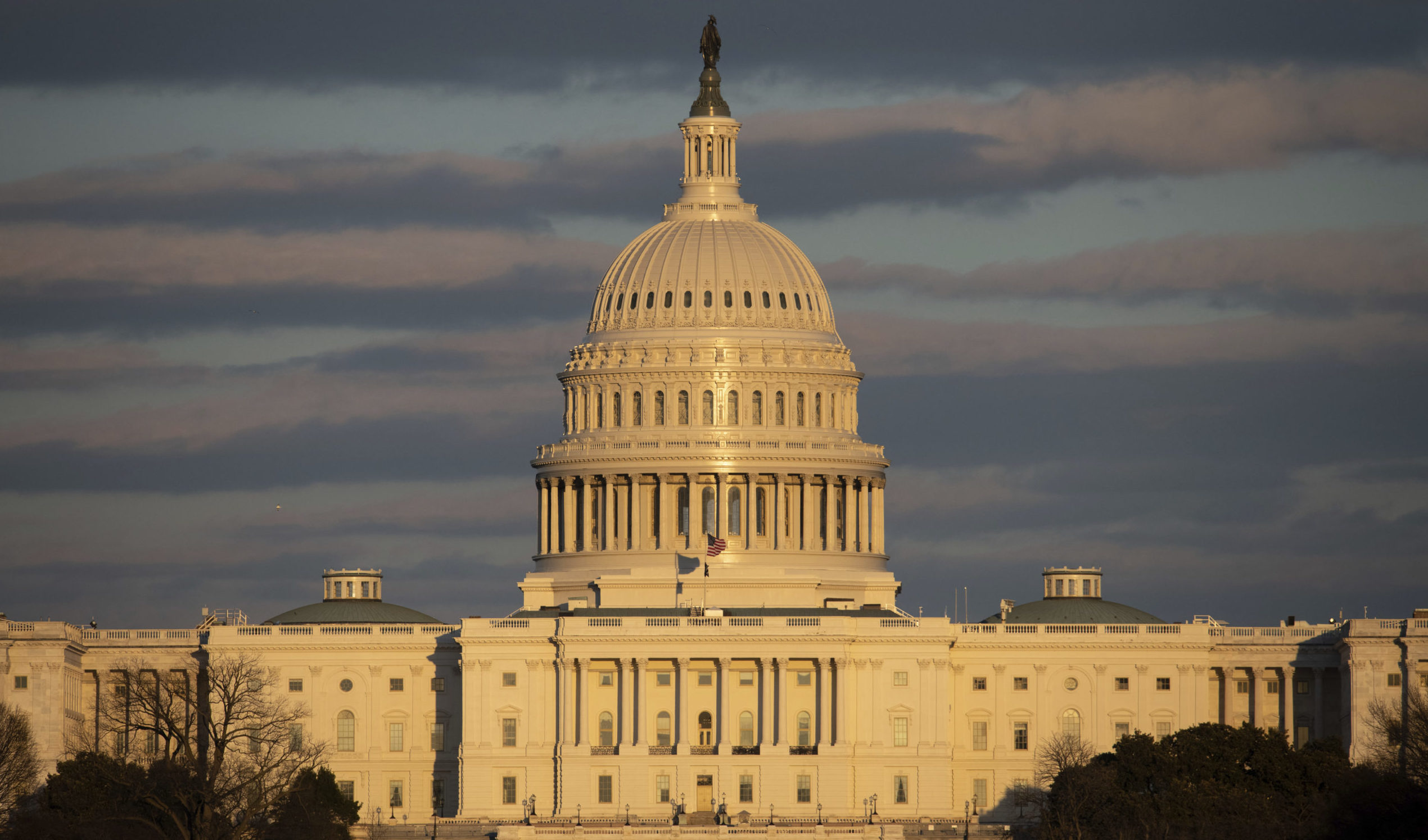
Graeme Sloan/Sipa via AP
The U.S. Capitol Building at sunset in Washington, D.C., on Saturday, March 6, 2021.(Graeme Sloan/Sipa USA)(Sipa via AP Images)
Pro-Israel Democrats are grappling with how to reconcile widespread support for the Jewish state with vocal and occasionally misleading attacks from an outspoken faction of the party amid escalating violence between Israel and Hamas. In recent weeks, a group of House members critical of Israel have amped up their rhetoric, accusing Israel of “apartheid” in sharply worded social media statements while renewing calls for conditioned U.S. military assistance and seemingly downplaying threats from Hamas.
Even a pair of well-established Israel supporters in the Senate have veered from their usual pronouncements. On Saturday, Sen. Bob Menendez (D-NJ) said he was “deeply troubled” by Israel’s recent military actions, and Senate Majority Leader Chuck Schumer (D-NY) has been conspicuously reticent on the issue.
Still, longtime pro-Israel advocates in the party argue that support for the Jewish state remains strong even as social media platforms like Twitter appear to have empowered the Democratic Party’s more extreme Israel critics. “I’m not overly concerned about where the House Democratic Caucus is on Israel,” former Rep. Steve Israel (D-NY), who chaired the Democratic Congressional Campaign Committee from 2011 to 2015, said in an interview with Jewish Insider on Wednesday. “They support U.S.-Israeli relations.”
“I do get concerned with imbalanced news coverage and social media,” Israel added, “because neither of those platforms are providing the context that’s necessary to truly understand the conflict, and how to resolve it.”
Rep. Debbie Wasserman Schultz (D-FL), a long-standing pro-Israel stalwart, echoed that view. “We have a small group of loud voices,” she said. “The overwhelming majority of Democrats in the nation, and Democrats in Congress, are strongly supportive of Israel, of the U.S.-Israel relationship, of Israel remaining a Jewish and Democratic state.”
“From the president on down, there are still many, many, many Democrats who will always have strong support for Israel,” said Rep. Kathy Manning (D-NC), the former chairwoman of the Jewish Federations of North America. “I think we’re seeing some weariness by some Democrats because if all you do is watch the news, what you see is heartbreaking,” she added. “But people need to understand that Hamas brought this up.”

Rep. Kathy Manning (D-NC) speaks in support of Israel on the House floor on May 13, 2021.
According to AIPAC spokesman Marshall Wittmann, “bipartisan congressional solidarity with Israel has been expressed in nearly 400 statements of support during the current conflict.”
Recent polling, however, has also contributed to the impression that Democratic support for Israel may be diminishing, as two separate surveys released on Wednesday appeared to suggest. While a plurality of registered Democratic voters — 36% — said they sympathized with both Israelis and Palestinians, 34% of respondents were either unfamiliar with or didn’t have an opinion on the Israeli-Palestinian conflict, according to a Morning Consult/Politico survey of 1,992 voters. Moreover, the poll revealed that 18% of Democratic respondents sympathize with Palestinians and 12% with Israelis.
Those numbers were further underscored in an Economist/YouGov poll published yesterday, indicating that 35% of Democratic voters were equally sympathetic to Israelis and Palestinians while another 23% of Democrats sympathize with Palestinians and 16% with Israelis.
Despite the variety of opinion, the new polls simply demonstrate that more Democrats now harbor positive attitudes toward both the Israeli and Palestinian causes, views that dovetail with Democratic support for a two-state solution, according to Tamara Cofman Wittes, a senior fellow in the Center for Middle East Policy at the Brookings Institution.
“Being an ally of Israel,” Wittes told JI, “doesn’t mean, based on the polling data we have, that Americans don’t care about Palestinians or their aspirations or their rights.”
A recent Gallup poll indicated that three-quarters of Americans hold a favorable view of Israel — a number that has held steady since at least 2018.
“Pro-Israel Democrats, who represent the overwhelming majority of the party, are making it clear that support of Israel’s right of self defense and support of Palestinian rights are not mutually exclusive,” said Halie Soifer, CEO of the Jewish Democratic Council of America.
The Israeli-Palestinian conflict has not been the subject of such heated debate since the 2014 war between Israel and Gaza, according to Soifer, and recent tensions in the region have cast light on what she describes as a “new pro-Israel paradigm” within the Democratic Party that may have gone undetected until now. “People no longer view being pro-Israel and pro-Palestinian as a binary choice,” she said.

In this July 15, 2019, file photo, U.S. Rep. Ilhan Omar, D-Minn, right, speaks, as U.S. Rep. Rashida Tlaib, D-Mich. listens, during a news conference at the Capitol in Washington. (J. Scott Applewhite/AP)
In that time, however, digitally savvy Israel critics such as Reps. Alexandria Ocasio-Cortez (D-NY), Rashida Tlaib (D-MI) and Ilhan Omar (D-MN) — all of whom were elected in the last few years — have also become adept at using social media to disseminate their views.
“I think the anti-Israel forces were more determined, more creative, and worked harder in getting their message out,” Ann Lewis, co-chair of Democratic Majority for Israel, told JI. “They felt they were the underdogs, and therefore, they were more committed to telling this story and telling it in some pretty loud way.”
Rep. Mark Pocan (D-WI), a leader among Democrats skeptical of Israel who organized an hour of House floor speeches criticizing Israel’s policies and behavior toward Palestinians last week, claimed that an increasing number of Democrats in Congress are siding with him on this issue.
“You’re seeing more members who are raising questions,” Pocan told reporters on Wednesday. “Last week was the first time we filled an entire hour — we had more people that wanted to speak than even could.”
But Pocan also acknowledged that left-wing Israel critics are at odds with Democratic Party leaders, telling reporters that he is unsure if House Democratic leadership will allow a vote on a resolution introduced by Ocasio-Cortez seeking to block a $735 million arms sale to Israel.
Pocan said the Israeli-Palestinian conflict represents one of the progressive caucus’s biggest areas of disagreement with President Joe Biden, who has reiterated his belief that Israel has the right to defend itself while expressing support for a cease-fire between Israel and Gaza.
“I don’t feel like Israel’s position, its security, its American diplomatic support globally, is imperiled,” said Scott Lasensky, who served as a senior policy adviser on the Middle East and Israel in the Obama administration. “But it will make some uncomfortable. If some want Americans’ support and congressional support to be zero sum and to be uncomplicated, that’s not the reality that we’re in right now.”
Joel Rubin, executive director of the American Jewish Congress who served as director of Jewish outreach for Sen. Bernie Sanders’s (I-VT) 2020 presidential campaign, said he has been concerned by some of the charged rhetoric used by progressive Democrats on social media, particularly amid rising incidents of antisemitism.
“I think we’ve kind of lost our way a little bit in the language on this,” Rubin said in an interview with JI, noting that some progressive Israel critics are “pushing away” potential allies as they rush to denounce the Jewish state. “That’s distressing.”
But while the conversation may be somewhat raw at the moment, Rubin is optimistic that Democrats can ultimately find room for productive debate as intraparty disagreement over Israel comes to a climax. “It’s always been a fascinating and intriguing tension point,” he said. “But it’s healthy in a lot of ways.”
Two longtime Louisiana Democrats — State Sens. Troy Carter and Karen Carter Peterson — will face off this Saturday in a special election

Melinda Deslatte/AP
State Sens. Karen Carter Peterson and Troy Carter
Two longtime Louisiana Democrats — State Sens. Troy Carter and Karen Carter Peterson — will face off this Saturday in a special election runoff to fill the congressional seat for Louisiana’s deep blue second district. The seat, which encompasses most of New Orleans and part of Baton Rouge, was previously held by former Rep. Cedric Richmond (D-LA), who left Congress to lead the White House Office of Public Engagement.
The two Democrats have staked out positions reflecting what’s become a familiar battle in the Democratic Party: Carter fills the mainstream/establishment lane and Carter Peterson has claimed the progressive lane. And as Carter pulled ahead in the race, progressive groups threw their support behind Carter Peterson.
In the all-candidate election on March 20, Carter led by more than 10 points, with 36.4% of the vote to Carter Peterson’s 22.9%. The third-place candidate, progressive activist Gary Chambers, who came in at 21.3% of the vote, has endorsed Carter Peterson, likely helping her narrow the gap with Carter.
The race has been shaped in part by the endorsements and outside support each candidate has received. Carter Peterson has been endorsed by former Georgia gubernatorial candidate Stacey Abrams, EMILY’s List, the Congressional Progressive Caucus, Peace Action and several other outside groups. Late-breaking endorsements have also arrived in the past week from Sen. Elizabeth Warren (D-MA) and Rep. Alexandria Ocasio-Cortez (D-NY). EMILY’s List and the League of Conservation Voters have poured money into boosting Carter Peterson — EMILY’s List had spent $600,000 as of March and the LCV spent $400,000.
Carter is endorsed by Richmond, Democratic Whip Rep. Jim Clyburn (D-SC) and Democratic Caucus Chair Hakeem Jeffries (D-NY), in addition to a score of local officials and unions.
“This is a classic race of D.C. versus the locals,” Dane Strother, a Democratic political strategist who has worked closely with officials in Louisiana, told Jewish Insider, referring to the apparent dichotomy between the high spending from outside groups on Carter Peterson’s behalf and Carter’s endorsements from local officials.
Some similar dynamics are playing out in the special election in Ohio’s 11th district, where progressive donors are boosting State Sen. Nina Turner.
Since the initial election, Carter Peterson has significantly accelerated her fundraising — at the time of the election, she had raised $450,000 to Carter’s $924,000. She now heads into Saturday’s election having raised $830,000 to Carter’s $1.1 million.
Ahead of Saturday’s election, experts generally agree that it’s anyone’s race and, without any public polling, it’s difficult to pinpoint a clear frontrunner. “My guess is it’s dead even,” said Strother.
The fact that neither candidate has released any internal polling indicates that both campaigns believe the race is neck-and-neck, added Brian Brox, a professor of political science at Tulane University in New Orleans.
Neither Carter nor Carter Peterson agreed to numerous interview requests from JI.
The election, local observers said, is likely to come down to the most committed activists and which candidate has best been able to mobilize them. Strother predicted that turnout will be 10% or less of eligible voters.
“This is a special election when you’ve just come off of having several elections. There is a bit of voter fatigue,” Robert Hogan, a professor of political science at Louisiana State University, told JI.
Even the weather this weekend in the New Orleans area — rain is forecast for Saturday — could affect the ultimate result, given the already-low expected turnout.
“If we have a bad weather day on Saturday, then… I would be worried about some rather low turnout,” Brox said. “The winner will be determined by who is best able to mobilize those absolute core supporters who will go out in bad weather and vote regardless.”
Despite the energy that progressive groups have dedicated to this race, local observers have raised questions about their ultimate impact.
“I see this as primarily a fight among factions within, or at least the results of voting will be a fight amongst factions within the New Orleans area,” Brox said. “It’s an intra-Democratic Party fight, but it’s a local Democratic Party fight. So I think that to the extent that a national group is getting involved, it’s only because they would have people in town that appreciate the help or are kind of on the same page, but I’m not sure that any of these voters are looking to either the Biden administration or to other progressive groups to take their cue; I think that this is very much inward-looking.”
Experts also say that, despite Carter Peterson’s efforts to frame herself as more progressive than her opponent, the two are not, in practice, very far apart on policy issues, and would likely vote similarly in Congress.
“There might be some subtle differences in terms of the kinds of legislation that they would author, but I would suspect that they would be… highly correlated in terms of the votes that they would cast in Congress,” Brox said. “You see this tension between establishment and the progressive wings, even though I think the actual distance isn’t that great.”
Recent debates have reflected the broad agreement between the two candidates on a range of issues, at times turning acrimonious as the two have sought to draw distinctions between themselves. Carter Peterson has attempted to tie Carter to former President Donald Trump, who is widely unpopular in the solidly blue district, and Carter has accused Carter Peterson of opportunistic faux-progressivism.
Both candidates, however, have also been in local politics since the mid-1990s, meaning they are well-known and well-established in the district, regardless of broader national political trends and the mutual attacks.
“They’re just both so well-known that the ability to change the narrative on one or the other is going to be somewhat limited,” said Robert Mann, a former Louisiana politics reporter who is now a professor at Louisiana State University.
The lopsided national spending in support of Carter Peterson also makes the outcome of the race an imperfect predictor of trends in the Democratic Party in the Biden era, suggested Strother.
“I don’t know that this is a proxy fight. There’s been no real expenditure from the moderates in support of Troy Carter… I think you’d have to have money on both sides to determine if this is a predictor for the future,” he explained. “And you don’t. You only have money on one side.”
Even so, for Louisiana’s 2nd district, the race is likely to carry significant consequences.
“The person who’s going to win is going to be an incumbent in a safe district for a long time, unless they get caught up in a scandal or decide to run for something else,” said Brox. “So the stakes are pretty high.”
The city councilmember has emerged as an unlikely yet high-profile COVID-19 public health resource as he pursues higher office

Courtesy
Mark Levine
Before the pandemic, Mark Levine, a Democratic New York City councilmember who represents Upper Manhattan, was widely viewed as an ambitious lawmaker with a strong progressive bent. Beginning in 2014, his first year in office, Levine helped revitalize the council’s Jewish caucus into an activist vessel focused on matters impacting the Jewish community and beyond, while sponsoring historic legislation guaranteeing free legal representation for low-income tenants facing eviction.
But over the past year, Levine’s profile has risen dramatically as he has become one of New York’s most trusted public health resources on all matters COVID-19 — an unlikely role for the councilmember, who chairs the city’s health committee but has no experience in medicine. When the pandemic tore through New York last March, however, Levine emerged as an early, outspoken and sobering voice of reason, urging caution, championing science and, when appropriate, dispensing nuggets of restrained optimism from his widely followed Twitter feed — earning praise from one colleague as “the Anthony Fauci of the New York City Council.”
As the vaccine rollout continues apace, Levine’s social media presence has transformed into a veritable catalogue of available appointments as he seeks to ensure that residents across communities — particularly those that are underserved — schedule a time to get the shot.
“His platform has become one of the most important to follow for up-to-date information around vaccine access,” said Dara Kass, an associate clinical professor of emergency medicine at Columbia University Medical Center, lauding the councilmember’s steadfast effort to publicize city resources while advocating for real-time change when certain approaches proved ineffective. “I have seen him absolutely shine as a leader through this pandemic.”
David Greenfield, the Met Council CEO who worked closely with Levine during his time as a city councilmember from 2010 to 2017, said his former colleague “has attracted a citywide following” thanks to his work during the pandemic. “That has made him tremendously popular even outside of Manhattan.”
That reputation will no doubt serve Levine well as he now competes in the Democratic primary for Manhattan borough president, which will be held on June 22. While there is no public polling on the race, Levine is one of the most recognizable candidates in a crowded field that includes fellow Councilmember Ben Kallos, New York State Senator Brad Hoylman and former congressional candidate Lindsey Boylan.
“I’m going to be a public health warrior for the rest of my life,” Levine said in a recent interview with Jewish Insider. “As borough president, I will fight really hard for a full and just recovery from this pandemic.”
The 51-year-old councilmember announced his candidacy in January of 2020, just before the first confirmed coronavirus case was documented in New York, and has since raked in endorsements from a number of prominent city figures, including City Comptroller Scott Stringer, who is now running for mayor, Rep. Adriano Espaillat (D-NY), former Rep. Charles Rangel (D-NY) and former City Council speaker Melissa Mark-Viverito.

Mark Levine
Though Levine was initially somewhat cavalier about the emerging pandemic, denouncing COVID-19 “fear mongering” in an early-February Twitter message featuring photos of an appearance at the crowded Lunar New Year Parade in Chinatown, his rhetoric shifted significantly when he and his wife, Ivelisse Suarez, contracted the virus. “It undoubtedly makes it more real and gives me authority to say that this is anything but just like the flu,” he said. “I see my role, as standing up for science, for equity, for compassion.”
As he takes stock of the pandemic, which has claimed tens of thousands of lives and shuttered untold numbers of small businesses in New York, Levine sees an opportunity in the wake of such devastation to advance sweeping change. Recovery, he argues, will need to address the glaring inequalities laid bare by the virus. He calls for “unprecedented investment” in universal healthcare as well as an expansion of the city’s parks system and renewed investment in mom-and-pop stores and the arts. “I’m running for borough president to take on the fight for our comeback,” he said.
Whether he will be in a position to enact such priorities as Manhattan borough president, a role that is largely viewed as ceremonial, depends on how effectively he can wield the limited number of responsibilities that fall under his purview. Levine, for his part, believes he’s up to the task. “I think the office is incredibly important, now more than ever, to lay out a bold agenda for this borough, and to use the many levers of the office to enact it,” he said, citing his ability to introduce legislation, appoint community board members and make recommendations around zoning, land use and preservation.
“I’m going to be a public health warrior for the rest of my life. As borough president, I will fight really hard for a full and just recovery from this pandemic.”
“What it really all adds up to is a very powerful platform for organizing, and this is how I’ve led in the council,” Levine asserted. “As one member in a body of 51, I don’t have absolute power, but we enacted right to counsel for tenants, really historic legislation, because I led a three-year organizing campaign. I think that my record as chair of the Jewish caucus proves that I can take on a role that has been seen as ceremonial and use it to organize for impact.”
Greenfield backed up that view. “I would say that he has tremendously impressive organizing skills,” the Met Council CEO said of Levine. “He really has a unique ability to bring people together, and his reign as the chair of the Jewish caucus was a very inclusive one where everybody, regardless of their background, felt welcome.”
Throughout his four years leading the caucus, Levine worked to address Jewish poverty, foster intergroup relations with other minority communities and raise awareness around antisemitism, which he personally experienced during his campaigns for City Council in 2013 and 2017. He also visited Israel on a delegation of council members. “We came under attack for that,” Levine recalled. “There’s a real double standard. There’s been delegation trips to Russia and Turkey and China that led to not a peep of protest. But our trip to Israel certainly, unfortunately, did.”
Over the summer, Levine spoke out against a questionnaire distributed by the New York City chapter of the Democratic Socialists of America asking that local candidates pledge not to visit Israel if elected. “I think it would be absurd to say that I couldn’t travel to visit my cousins,” said Levine, who has family in Israel and is fluent in Hebrew. He began learning the language in his 20s after visiting the Jewish state a number of times, and views it as “a central part” of his Jewish identity.

Mark Levine
Yiddish is on his to-do-list. “I wish I knew more,” he told JI. “The pandemic disrupted it.” Still, Levine said he has been working with a group of activist parents to create a dual-language Yiddish public school program as part of what he describes as his passion for dual-language education. “I fight hard for government communication to be more available in Yiddish,” Levine said, charging that the city’s failure to develop strong ties with Orthodox communities in New York “really hampered the public health effort” during the pandemic.
The Orthodox community has been “scapegoated in often ugly, vicious terms” throughout the course of the virus, Levine said. “I remember last March being asked by a reporter whether I thought there was something unique about Jewish ritual that makes us more vulnerable to the coronavirus,” he added. “So I’ve been outspoken about both the need for the city to be better about building ties to the community and pushing back against the kind of vicious scapegoating that has been an unfortunate feature of the last year.”
The Chicago-born politician, who grew up in Maryland, lives in Washington Heights with his wife and two sons, and attends Hebrew Tabernacle Congregation, a Reform synagogue. He first ran for City Council in 2001 and was long active in local Democratic politics before he assumed office seven years ago. “A phrase which motivates me every day when I get out of bed to do this work is tzedek tzedek tirdof,” Levine said, referring to a line from Deuteronomy that translates to “Justice, justice you shall pursue.”
“It’s the pursuit of justice,” he said, “which our sages have taught us is such an essential value.”
“He’s not afraid to stand up for the Jewish community and for Israel,” said Greenfield. “I think that positions him well not just for Manhattan borough president but for future citywide office.”
“A phrase which motivates me every day when I get out of bed to do this work is tzedek tzedek tirdof.”
But as Levine prepares for the June election, he swats away any speculation of that kind, even as his newfound status as a de facto public health ambassador has likely introduced him to a number of voters who were unaware of him before the pandemic. “I’ve got my hands full with this race, and being borough president would be a dream job,” he said. “So no plans beyond that.”
He is also, of course, still busy raising awareness about the virus — a job he envisions folding into the borough presidency in one form or another if he is elected. “These are going to still be urgent matters come January 2022,” said Levine, who is hopeful that the city will soon emerge from dormancy as New Yorkers get vaccinated. Still, “it will be, undoubtedly, a main focus for me as borough president for years.”
“It’s been a year-long fight, and I have seen clear communication as just a pillar of the public health response,” he told JI. “This fight is not over.”
The former assistant district attorney calls for a renewed focus on law and order

Courtesy
Liz Crotty, one of eight Democratic candidates running for Manhattan district attorney, occupies something of a rarefied lane: She is the only avowed centrist in a field crowded with progressives who have pledged to reshape the office in dramatic fashion.
While some candidates brandish do-not-prosecute lists, Crotty argues that it is not in the job description to decide which crimes should be ignored. Where many of her opponents emphasize the need for increased police accountability, Crotty calls for more cops on the subways as well as a renewed focus on law and order. And while Crotty believes that “restorative justice” is in some cases a viable alternative to incarceration, she is not nearly as gung-ho about the concept as several others in the race.
“I thought that there was a real voice missing in this race as someone who’s a 21-year practitioner on both sides of the courtroom and really standing up for the good things that the DA’s office does,” Crotty, a former assistant district attorney who now practices criminal defense law, said in a recent interview with Jewish Insider. “I really saw a lack of a voice for the everyday, ordinary New Yorker who wants to ride the train and feel safe.”
Lest she be branded as a conservative in overwhelmingly blue Manhattan, Crotty, 50, was quick to make clear that she is “a lifelong liberal Democrat” and that she wears that designation as “a badge of honor,” while cheekily adding: “The only time I voted Republican was not for [New York City Mayor Bill] de Blasio, so that’s the kind of Democrat I am.”
Whether Crotty prevails in the upcoming election will, in several respects, function as a barometer of voters’ priorities for the next district attorney, who is poised to lead one of the most high-profile prosecutors’ offices in the country. Last year’s widespread protests against systemic racism — many of them in Manhattan — sparked a nationwide reckoning over criminal justice reform at the same time that violent crime spiked across New York City.
The recent DA race in Los Angeles may function as something of an early test case for how Manhattanites will weigh such concerns. In November, George Gascón, the godfather of the so-called progressive prosecutor’s movement, unseated the incumbent Democrat, Jackie Lacey, after she was targeted by Black Lives Matter activists for her failure to prosecute police officers.
In the Manhattan race, however, candidates have no incumbent to compete against as Cyrus Vance, Jr., prepares to step down at the end of the year after more than a decade in office. Not that he has avoided criticism from many candidates in the race, thanks in part to his decision not to pursue investigations into powerful New York figures like Harvey Weinstein and former President Donald Trump’s children.
The June primary includes a diverse field of candidates, including former federal prosecutors Tali Farhadian Weinstein and Alvin Bragg, former district attorneys Diana Florence and Lucy Lang, former public defender Eliza Orlins, state Assemblyman Dan Quart and civil rights attorney Tahanie Aboushi.
Crotty, for her part, isn’t eager to praise the outgoing DA. But even as her views are, in many respects, out of step with her opponents, she believes she is walking a path Manhattanites will appreciate.
“A lot of people in this race are speaking to a national, progressive platform, and not a localized, ‘what is going on here in Manhattan’ platform,” she said. “All politics are local, and I think they should speak to the problems that we’re seeing in New York — especially, since COVID, crime has risen, and I think we have to really speak to it. Being honest about what we’re seeing and what’s going on is more important than a political point of view.”
A New York native, Crotty attended Fordham University School of Law and then went on to serve as an assistant district attorney under Robert Morgenthau, whose emphasis on prosecuting white-collar criminals she vows to revive.
After six years, she left the office to work at Kreindler & Kreindler, an aviation law firm in New York, and then started her own boutique criminal law practice, Crotty Saland PC, with Jeremy Saland, a former fellow assistant district attorney.
“There is no candidate that has done what she has, both served as a Manhattan prosecutor and been in the trenches on the other side as a defense attorney in the courts,” Saland said of his partner in an interview with JI. “I know Liz as somebody who is not just prone to getting along nor is she prone to some gimmicky slogans about justice. She’s done it, she’ll do it and she’ll believe what is right not just based on her own gut but based on facts, based on realities.”
“All politics are local, and I think they should speak to the problems that we’re seeing in New York — especially, since COVID, crime has risen, and I think we have to really speak to it. Being honest about what we’re seeing and what’s going on is more important than a political point of view.”
Crotty takes a measured approach to many of the hot topics in the race. She rejects calls to defund the police, for instance, while pointing out that it also isn’t within the district attorney’s purview to implement such changes. “The police play a vital role in the running of New York City,” she said. “Now, can the police do a better job? Sure, who couldn’t?”
“Police need to be trained longer and better and paid more, and I think that that’s what we need to be working on,” she added. “They are a stakeholder in the criminal justice system because they make arrests and then we decide what — or not — to prosecute from there. But it starts with an arrest. So I’m not willing to give up on the idea that police can do better.”
As for whether she will seek fewer prosecutions on, for example, drug possession, as some candidates have promised, Crotty was consistent.
“The legislature is the one who decides what laws there should be and should not be, and as a constituent, I’m very happy they legalized marijuana,” she said, adding her belief that misdemeanors shouldn’t always lead to a criminal record or jail time. “But I think you definitely have to hold people accountable.”
That view applies to hate crimes, which have recently seen an uptick in New York. Though Crotty sees an upside to restorative justice, which seeks a form of mediation between victim and offender, “part and parcel of restorative justice is the defendant understanding that they did something wrong,” Crotty told JI.
“I think a lot of hate crimes, some of them do come from ignorance, and I think you have to look to education,” she said. “But I think you have to really say, ‘Listen, we’re going to hold people accountable, especially in hate crimes, and especially in antisemitism.’”
“It’s not like we can’t be fair, and it’s not that the district attorney’s office can’t do better. But I understand that public safety in every neighborhood should be the priority of the next DA.”
But above all, Crotty vowed to prosecute violent crime in Manhattan, an approach she says she wouldn’t necessarily have prioritized if she were running for the office a year or two ago.
“The 2019 platform for district attorney is way different than the 2021 platform for district attorney because crime has shifted,” she said, “and I think we have to be responsive to that.”
She believes reducing crime will take a multi-faceted approach that goes beyond the DA’s jurisdiction. “What is the mayor’s next plan for homelessness, for mental health services?” she said. “These are the things that are going to drive whether or not people get arrested.”
Ultimately, Crotty is confident her message will resonate because of her status as the race’s only self-identifying moderate. “The everyday, average New Yorker wants safety, and I think that I’m the candidate who’s been talking about it from the beginning, and I’ve never wavered,” Crotty said. “It’s not like we can’t be fair, and it’s not that the district attorney’s office can’t do better. But I understand that public safety in every neighborhood should be the priority of the next DA.”
“I’m actually running to prosecute crimes.”
The speaker of the House is expected to struggle to maintain tight control over the Democratic caucus

Perry Bindelglass
Although Democrats will enter the 117th Congress in January with a significantly narrower House majority than they have enjoyed for the last two years, House staffers say they are not expecting Speaker Nancy Pelosi (D-CA) to significantly change her strategy in the next term.
Pelosi will likely continue to keep a firm grip on her caucus to manage the ongoing rift between the progressive and moderate wings of the party, three House staffers told JI.
“I think Pelosi and [House Majority Leader Steny] Hoyer continue to be effective notwithstanding their age because they are extraordinary bridge-builders,” one aide said. “They are able to coalesce and bring disparate parts of the caucus together in ways that few people can… I don’t see leadership changing their modus operandi much.”
A second aide agreed, noting that Pelosi “demands loyalty and… perfection.”
The aide predicted Pelosi will be willing to cut deals with both the progressive members in her party and moderate Republicans — when needed — to pass bills. But they also acknowledged that the Democrats’ smaller majority will create “legislative barriers.”
“I think the goal will be to pass legislation, so however that gets done,” the aide said. “Whether that’s through progressives demanding change or compromise with Republicans, I think she’ll know when to make that judgement.”
Rep. Dan Lipinski (D-IL), a conservative Chicago-area Democrat who has served in Congress since 2005 and who lost his primary race earlier this year to a progressive challenger, said Pelosi will have a tough challenge holding her caucus together during the upcoming term.
“The narrow House majority is going to make things incredibly difficult,” Lipinski said. “There will be a lot of interesting politics going on in the House as Speaker Pelosi tries to keep both the left flank and the right flank of the Democratic Party on board for any bipartisan legislation that comes out of the Senate that President Biden really wants to get passed into law.”
He predicted that the Senate will likely be the main engine of legislation in the upcoming term, and that President-elect Joe Biden will likely have a significant role to play both in helping to wrangle House Democrats and in encouraging Democrats in both chambers to moderate their stances.
“The question is going to be how does the House… pass what the Senate passes,” Lipinski said. “President Biden is going to have to step in and really ask the Democratic Caucus in the House to go along with some legislation that probably the progressives are not going to be happy with in the House. And if they don’t, [Democratic leaders will] probably have to reach out to moderate Republicans in the House.”
The House’s approach to Israel going forward will be set in large part by new House Foreign Affairs Committee Chairman Gregory Meeks (D-NY), the second aide told JI, but said prior to Meeks’s election that they “don’t anticipate that much will change on the big issues.”
The first House aide also noted that the Democratic leadership “feel a debt of gratitude towards the frontline vulnerable members who flipped the Republican seats [in 2018] upon whose backs we kept the majority” — several of whom voted against Pelosi’s speaker bid in 2019.
While Pelosi is expected to retain the gavel, her position is dependent on the support of a handful of her previous rivals — as of now, she can only afford to lose four votes in the race for speaker, Lipinski noted.
Three of the Democrats who voted against Pelosi in 2019, Reps. Kurt Schrader (D-OR), Jason Crow (D-CO) and Jim Cooper (D-TN), told JI they will vote for Pelosi, while several other members who opposed her last bid lost their seats in last month’s elections.
Two legislators — Reps. Elissa Slotkin (D-MI) and Jared Golden (D-ME) — have publicly said they will not vote for Pelosi, but others have yet to publicly commit either way.
A spokesperson for Rep. Kathleen Rice (D-NY) — who helped lead the insurgency against Pelosi in the 2019 election — did not comment when JI asked if she’d vote for Pelosi in January, and several others have declined to say how they plan to vote.
Pennsylvania Auditor General Eugene DePasquale and Rep. Scott Perry are in a close race to represent the state’s 10th congressional district

Courtesy
The Harrisburg, Penn., Jewish community was shook in early August when the Kesher Israel synagogue was vandalized with a pair of swastikas painted on its entryway.
Following the incident, community members and local officials came together to offer their support. Among those who offered their help to the synagogue were Pennsylvania Auditor General Eugene DePasquale and Rep. Scott Perry (R-PA), who are in the midst of a tight congressional race in the state’s 10th district, which includes Harrisburg.
DePasquale told Jewish Insider that he was angered by the incident, describing his reaction as a “surprise on one hand, but on the other hand not completely shocked.”
“This stuff tragically happens. And sometimes it happens in your own backyard,” DePasquale, who is not Jewish but grew up in a Jewish neighborhood in Pittsburgh, said. “We have to do our best to root it out.”
Kesher Israel’s Rabbi Elisha Friedman said that both DePasquale and Perry expressed outrage after the incident.
“That’s exactly the kinds of people that you do want to make sure that they’re very concerned about it and you want them speaking out against it, but on a practical level it was being handled by other government agencies,” he said.
Perry did not respond to JI’s request for comment.
***
DePasquale’s congressional run comes after a long career in state-level elected office. He first ran for the state legislature in 2006 on a platform of governmental reform, alternative energy and education reform — DePasquale and Perry entered the Pennsylvania House of Representatives the same year, and both concluded their terms in 2013.
DePasquale emphasized that he has pushed for government accountability throughout his career — he said he was the first legislator to post his expenses online, and, as auditor general, helped clear a backlog of untested rape kits and improved child protection services.
DePasquale is running on a moderate platform against Perry, a member of the conservative Freedom Caucus. The House Freedom Fund PAC has contributed nearly $200,000 to Perry’s campaign.
“My style of leadership [is] needed at [the] Capitol. Being tough and fair on both parties,” DePasquale said. “Certainly I’m a proud Democrat, but… I’ve looked out for what is right, not necessarily just what’s right for the Democratic Party. And I thought our nation could use some of that right now.”

Rep. Scott Perry (R-PA) (Perry for Congress)
He drew a stark contrast between himself and Perry, who he described as “an ideologue that is more focused on representing an extreme ideology as opposed to representing the district.”
Many of the issues on which DePasquale is campaigning are personal to him. His family was never able to obtain health insurance for his younger brother while he struggled with — and ultimately died of — muscular dystrophy.
“At least through all [the Affordable Care Act’s] strengths and weaknesses, that type of situation will not happen for a family member again,” he said. “[Perry] actually voted to take away those protections for people with pre-existing conditions. This fight on healthcare is personal for me.”
The devastation of his brother’s death was compounded by other family tragedies. DePasquale’s father, a Vietnam War veteran, became addicted to painkillers prescribed for gunshot wounds he suffered during the war. To finance his addiction, he sold drugs, eventually landing in prison.
“He actually had to come to my brother’s funeral in shackles,” DePasquale said. “So criminal justice reform, treating drug addiction — these are also high priorities for me.”
***
DePasquale visited Israel on a trip with the Philadelphia Jewish Coalition in 2019, while he was in the state legislature. In Israel, the group met with members of the Knesset, military and security officials, small business owners and environmental leaders, among others, in Tel Aviv and Jerusalem. The group also visited areas bordering Gaza and the West Bank.
DePasquale described the trip as “life changing” and “eye opening.”
“I don’t think you can truly appreciate Israel’s challenges until you’re there and you see how close everything is,” he said.
DePasquale added that he also took time away from the group to visit local spots. “Just talking to average everyday folks, whether they were Palestinian or Jewish or whomever else may have been there… the people there desire peace. And they’re exhausted by this and they want it to change,” he said.
DePasquale supports a two-state solution, and believes the United States has a major role to play in brokering such a deal. “The United States needs to make clear not only are we a friend of Israel, but we’ve got to be a fair negotiator among both sides to reestablish credibility,” he said, “so that we can get these sides to the table and try to negotiate.”
DePasquale expressed concern that the U.S.’s credibility as a negotiator has been undermined in recent years by “unilateral actions” that go “well beyond political parties.”
“Our friendship and alliance with Israel is non-negotiable,” he continued. “That doesn’t mean we can’t sit at the table and try to make sure that everyone is negotiating fairly.”

Pennsylvania Auditor General Eugene DePasquale. (Courtesy)
DePasquale said he works in all aspects of his life — both with his family and in his position as Auditor General — to consistently push back against hate and extremism of all kinds, including antisemitism.
As a member of Congress, he said he would continue these efforts by reiterating his support for Israel and speaking out against those who express antisemitism.
Perry voted in favor of last year’s House resolution condemning antisemitism, but also criticized it at the time, saying it had been watered down.
Members of the local Jewish community praised DePasquale’s stance on Middle East issues, and said he’s been very open to discussing these issues, as well as other topics, with members of the Jewish community.
“I came away being very impressed with his views and his knowledge of the Middle East and Israel issues,” said Arthur Hoffman — a Harrisburg, Pa., attorney who organized a fundraiser for DePasquale. “He’s willingly spoken and been open to anyone approaching him with concerns.”
Both Hoffman and Harvey Freedenberg, another Harrisburg attorney backing DePasquale, praised him as a centrist and as more representative of the district than Perry.
“He is somebody who is very much committed to representing all the people of the district, as opposed to the incumbent, who I think has a very narrow ideology… [that] I think is really out of step with a growing number of people in the district,” Freedenberg told JI.
Democratic Jewish Outreach Pennsylvania, a local PAC, also endorsed DePasquale during the primary. “We know he cares deeply about the Jewish community,” Jill Zipin, the PAC’s chair, told JI. “From our view, DePasquale is a man of integrity, he is a man of character, and he is a man who cares about the constituents of [the 10th district.]”
Eric Morrison, a longtime Perry supporter, praised DePasquale’s work as auditor general, but will be supporting Perry again this cycle.
“I’ve known [DePasquale] for a while as well… I hold him in high esteem,” Morrison told JI. “My concern is when you go to Washington, in the House or Senate, you tend to fall into the majority leader, speaker of the house platform regardless.”
Morrison praised Perry’s stance on Israel issues and said Perry has a “fantastic” relationship with the local Jewish community.
“He is very much involved in listening to AIPAC and we have meetings with him, he always avails himself, he wants to listen, he wants to learn,” he said. “He’s a tremendous advocate and ally for issues pertaining to Israel.”
Elliott Weinstein, a member of AIPAC’s national council, likewise described Perry as strong on Israel issues.
“He’s a friend of all of the things that we support,” Weinstein told JI. “He understands the issues that we bring forward to him.”
***
Recent polling indicates a tight race heading toward election day in the 10th district, which the Cook Political Report rates as a tossup.
A late August and early September York Dispatch poll of 1,100 voters showed Perry leading DePasquale 44.7% to 38.4%, but 10% of voters said they were undecided. But a poll of 500 voters by GBAO Strategies found the two in a statistical tie, with DePasquale at 50% and Perry at 46%, with a margin of error of 4.4 points.
Monetarily, the candidates are fairly evenly matched — Perry had banked $1.9 million and DePasquale had raised $1.6 million by the end of the June. Both had approximately $990,000 in the bank as of the end of June.
But DePasquale is optimistic.
“We’ve been on the air for three and a half weeks and his first ad went on the air as a negative ad, and we’ve been positive,” he said. “So that lets me know that they know they’re in trouble.”
‘I guess there are not many Jewish girls from Alabama who go to the Naval Academy and then end up in Congress,’ said the freshman Democrat

Courtesy
One of the most frequent questions Rep. Elaine Luria (D-VA) receives from constituents in Virginia’s 2nd congressional district is: “Is it as crazy in Washington as we see on TV?”
Her typical answer, Luria told Jewish Insider,,is that while it might seem like there is no real opportunity for positive change in Congress, she has managed to find common ground with members across the political spectrum to pass legislation that matters to all.
And while she is only a freshman member in Congress, Luria had the third highest number of bills signed into law by President Donald Trump among her colleagues on Capitol Hill last year. “It kind of shows that the process can work, and that there are lots of things that we can do that are not controversial where we can find common ground,” Luria told JI in a recent interview. “So when I talk to people about that, the bipartisan work I’ve done is hopefully somewhat reassuring.”
Born and raised in Birmingham, Alabama, Luria spent 20 years in the U.S. Navy, ultimately rising to the rank of commander. She served on six different ships and was deployed six times, operating nuclear reactors and on aircraft carriers.
Luria, 45, was first elected in 2018 as part of a blue wave that flipped districts that had voted for President Donald Trump in 2016, beating first-term incumbent Republican Rep. Scott Taylor with 51% of the vote. This year, her district is considered a toss-up, according to the Cook Political Report, and she will once again face Taylor.
While Luria voted for Trump’s impeachment last year, she has aligned herself with the president when it comes to his policy on Israel and — as a member of the House Bipartisan Task Force For Combating Anti-Semitism — she has been an outspoken critic of the far-left wing of the Democratic Party. Luria was one of 12 House Democrats who broke party ranks last year to vote in favor of a Republican motion to recommit on anti-BDS legislation that would allow state and local governments to adopt laws to divest public funds from entities that boycott Israel.
She is also only one of a handful of Democrats who have attended Trump White House events, including the signing of Trump’s executive order to combat antisemitism on campus, and more recently, the Abraham Accords signing ceremony between Israel and the United Arab Emirates, along with Bahrain. “I was honored to join President Trump at the signing ceremony of the Abraham Accords, marking a new era in regional security and cooperation in the Middle East,” Luria told JI after the event. “I commend President Trump on his leadership to make this milestone a reality,” she added.
While Luria claims she does not agree with everything Trump has done, she noted she is “willing to literally stand behind him on the stage while he does support an effort that I do agree with.” Luria added she would love “to see more bipartisanship and more opportunity to work together to get the things done that we all agree on.”

Rep. Elaine Luria
In an interview last year, Luria told The Washington Post that her Jewish faith inspired her to take a position on impeachment and to speak up in defense of Israel and against antisemitism.
“I did not necessarily anticipate going in to be a representative in the House that I would need to be as vocal about these things,” Luria told JI. Her debut speech on the House floor was during a debate over a resolution against hate, widely considered to be watered-down, following Rep. Ilhan Omar’s (D-MN) comments regarding lawmakers’ support for Israel. Luria quipped that her remarks, decrying the dual loyalty label by pointing to her faith and past experience, sounded like an adapted version of the Passover song “Dayenu.” While she felt “discouraged” that the measure was diluted in the process, Luria said she felt it was important for her to use that opportunity to “speak up against antisemitism.”
Luria maintained that with the retirement of longtime Democratic members like Reps. Nita Lowey and Eliot Engel of New York, and the addition of some newly successful far-left candidates, “I think that it’s much more important that I stay and come back to Congress as a strong voice to counter people who certainly speak up with different views than mine.”
Last year, Luria reached out to Omar to discuss Israel and antisemitism. And while those meetings were not “as productive as I hoped for, I will always continue to try to do that,” Luria said, adding that she will “redouble” her efforts to engage with new members about issues of importance to the Jewish community.
Luria is also one of the few House Democrats who didn’t sign on to letters expressing opposition to possible Israeli annexation of parts of the West Bank. A House letter sent to Israeli leaders, signed by 191 House Democrats and backed by House Speaker Nancy Pelosi (D-CA), warned that annexation would undermine the two-state solution. Luria told JI she “deliberately chose to not sign on to that letter,” because she believes it’s not the job of a member of Congress to be weighing in on Israeli government decisions, or to be “doing anything that would erode the very strong relationship that we have between the U.S. and Israel.”
Luria was an early supporter of Democratic presidential nominee Joe Biden, endorsing the now-Democratic nominee back in January. “I know that Joe Biden is a very strong supporter of Israel. He stood up to antisemitism during his very long career serving in the Senate and he believes in standing up against the BDS movement,” she said. The only place she differs with her party’s standard-bearer is on his commitment to rejoin the 2015 nuclear deal with Iran. “I know that that is something that I’m not 100% aligned with him on, but I think that overwhelmingly his positions, both for domestic policy and support of the U.S.-Israel relationship, [are] something I do align with.”
Luria, along with fellow freshmen Reps. Max Rose (D-NY) and Elissa Slotkin (D-MI), are part of the “Gang of Nine,” moderate Democrats with national security backgrounds.
In 2018, during a campaign stop, Sen. Tim Kaine (D-VA) introduced Luria and expressed in amazement how “this Jewish girl from Alabama,” who served 20 years in the Navy, commanding a combat unit of 400 sailors, was going to be a congresswoman. Recalling that moment, Luria laughed that she might indeed be an unusual candidate for office. “I guess there are not many Jewish girls from Alabama who go to the Naval Academy and then end up in Congress,” she said. “But I feel it’s just a continuation of my service, and I feel a great responsibility to preserve my heritage and serve my constituents well.”
A bipartisan group of congressmen are pushing back against the conspiracy theory as it gains prominence

Gage Skidmore
Denver Riggleman speaking with attendees at the 2018 Young Americans for Liberty National Convention at the Sheraton Reston Hotel in Reston, Virginia.
The QAnon conspiracy theory has seen a massive surge in public attention in the month since Marjorie Taylor Greene, a promoter of the conspiracy theory, won the Republican run-off in Georgia’s 14th congressional district, all but ensuring she will be in Washington come January. But a bipartisan group of congressmen is trying to push back.
Reps. Tom Malinowski (D-NJ) and Denver Riggleman (R-VA) have introduced a resolution, co-sponsored by Reps. Josh Gottheimer (D-NJ) and Adam Kinzinger (R-IL), condemning the conspiracy theory. The resolution enumerates a series of concerns, including the numerous violent and criminal acts which have allegedly been inspired by the conspiracy theory, as well as the antisemitic elements central to QAnon.
Both Malinowski and Riggleman told Jewish Insider that QAnon’s increasing prominence — including Greene’s primary victory and President Donald Trump’s recent approving comments — convinced them to take congressional action.
Malinowski emphasized that parts of QAnon’s central conspiracy theory — which claims, falsely, that wealthy political, financial and media elites are part of a cabal that sexually abuses and eats children — constitute “the ancient blood libel in new guise.” Riggleman noted that QAnon also echoes the “Protocols of the Elders of Zion.”
The conspiracy theory seems to have become increasingly mainstream amid the pandemic. A recent Civiqs poll found that more than half of Republican voters believe QAnon is mostly or partly true. It has also found traction in alternative health spheres.
Riggleman said he was shocked by those poll results — although he questioned their accuracy. If they are true, he added, “the Republican Party’s in trouble,” and “we need a massive education effort in the Republican Party to identify what’s ridiculous about QAnon.”
While several Republican leaders — including House Minority Leader Kevin McCarthy (R-CA) — have condemned QAnon, Riggleman and Kinzinger have been more outspoken than most of their colleagues on the issue. And many Republicans — including McCarthy — have declined to distance themselves from Greene.
“There’s gonna be people who don’t want to sign on to this, obviously, but I really don’t care about that,” Riggleman said. “There’s certainly Republicans that have jumped on this… but there certainly hasn’t been enough and I believe a lot of it has to do with — they’re scared of voters or they’re scared of the backlash that they might have going out against something like QAnon.”
Voters will not have an opportunity to punish Riggleman electorally for this resolution — he already lost his Republican primary to a religious conservative challenger in June. But he is considering running for Virginia governor in 2022, possibly as an independent.
Riggleman said the president’s recent comments about QAnon — Trump said last month: “I don’t know much about the movement other than I understand they like me very much, which I appreciate” — shocked him.
“I think a lot of that has to do with, there’s so many conspiracy groups out there,” he said. “And I would hope once the president learns more about QAnon and what they’re talking about… that he would see that and eventually come out and condemn it.”
Riggleman is also a member of the House Freedom Caucus, a strongly conservative group of House Republicans, several of whom supported Greene. The Caucus’s affiliated PAC, the House Freedom Fund, donated more than $200,000 to the Georgia congressional candidate.
Riggleman said he does not have any input on the PAC’s spending, but he would not have given Greene “a penny.”
“Maybe those endorsements are because 80% of what she believes is in line with fundamental conservative principles on spending and things like that,” he said. “But I do think we have to draw a line when you have those who espouse conspiracy theories.”
Malinowski said he’s found his Democratic colleagues are now taking the QAnon threat seriously. “We’re all catching up to the reality that this is extremely dangerous, that it’s not a fringe movement anymore,” he said. “At this point, it is easier to get Democrats to want to do something about QAnon, partly because it’s been associated with the right. The important thing is to demonstrate that there is bipartisan rejection.”
Although only two additional backers have signed onto the resolution so far, Malinowski said he expects that “the overwhelming majority of members” will support the bill if it makes it to the floor. But he acknowledged that the window for that is closing.
“I’m hoping that we will [get a vote],” he said. “If we do, I think you will see a pretty solid bipartisan vote on this.”
But Malinowski acknowledged that this resolution will do little to shake QAnon believers from their views. He plans to introduce legislation addressing social media companies’ recommendation algorithms, noting that his experience in international human rights work showed him how social media can foment violence, extremism and social strife.
“I think that they need to fundamentally change the way their algorithms work,” he said. “The algorithms are designed to keep us glued to our screens by feeding us information that engages our basest emotions. That’s a problem and the companies have been protected from any liability for the harm they cause by encouraging this kind of content to spread, and I think we need to look at them.”
Riggleman — whose background is in military intelligence — said he’s considering legislation boosting funding and information sharing for FBI and Department of Homeland Security operations to counter domestic extremism.
“We need to have a larger cyber presence. They’re using the same type of methodology that radical Islamic terrorists use,” he said. “I think we need to utilize some of the protocols that we perfected to track terrorists and actually use that to identify those who are using coded language to go after law enforcement or to go after innocents.”
Wildlife conservationist Merav Ben-David is running on a platform focused on climate change

Courtesy
In every sense of the word, Merav Ben-David is an outlier in Wyoming politics.
A Jewish Israeli immigrant who speaks with an accent, Ben-David is running for Senate as a Democrat with a platform focused on climate change in a state that has not elected a Democrat to a federal office since 1976, has a minuscule Jewish population and is heavily economically reliant on resource extraction.
But despite the hurdles in her path, Ben-David believes her message is one that will resonate with Wyoming voters, as long as she’s able to reach them.
“I think the vision that I’m offering Wyoming is much more compelling to many,” she told Jewish Insider. “I’m not saying it’s gonna be easy. We knew that when we started, but I think that a lot of people were ready to hear a different message.”
Ben-David acknowledges, however, that she needs more money in order to disseminate her message to voters. Having spent most of the $81,000 she raised during the primary, she had just $22,000 on hand at the end of July, compared to the $413,000 her Republican opponent, former Rep. Cynthia Lummis (R-WY) had in the bank at the time.
Ben-David and Lummis are competing to replace longtime Sen. Mike Enzi (R-WY), who is retiring.
In an interview with JI, Ben-David laid out her vision to help bolster Wyoming’s economy, which includes shifting miners and oil workers to other fields, creating more work opportunities for young people and attracting remote workers to the state. She also backs several progressive policy priorities, including a federal jobs guarantee and universal healthcare.
But the issue Ben-David emphasized most — which lies at the heart of her campaign — was climate change. This topic, and Ben-David’s observations and research on its impact through her work as an ecologist and zoologist, spurred her to run for office.
“It’s not enough. I need to do more. That was the main motivation. I need to do more in terms of making sure that our younger generations have a livable planet,” she said. “But also specifically to the state that has become my home, to make sure that we are not reliant on an industry that is on the way out.”
Ben-David got her start in the sciences at Tel Aviv University — after completing her IDF service amid the 1982 Lebanon War — and earned a bachelor’s degree in biology in 1984 and a master’s degree in zoology in 1988.
She went on to spend five years as a wildlife tour guide in Kenya before making a drastic shift and relocating to Fairbanks, Alaska, to pursue a PhD in wildlife management.
“I just packed a few things in my suitcase and made it from the equator to nearly the North Pole in one week,” she said.
Despite moving from one of the world’s hottest regions to one of its coldest, Ben-David said she adjusted quickly, and quickly fell in love with winter sports.
“I really enjoyed living in Alaska,” she said. “The cold is something that is really easy to deal with. You just dress warmly, and have heating in your home. It’s the short days in the winter that are difficult to deal with.”
After earning her PhD, Ben-David remained in Alaska for several years and applied for permanent residency in the U.S. Her contributions to wildlife conservation in Alaska earned her support from Sen. Lisa Murkowski (R-AL), then-Sen. Ted Stevens (R-AL) and then-Gov. Tony Knowles for her residency application.

Senate Candidate Merav Ben-David at Vedauwoo Recreation Area on March 31, 2020. (Courtesy)
Ben-David said that, once she realized that work would keep her in the U.S., it was critical to begin the process to become a U.S. citizen.
“I’ve been engaged civically since I was a teenager in Israel, when we had all kinds of changes in Israel back in the 70s. I’ve been involved as a citizen,” she said. “You can’t let other people make decisions for you. If you want to be influential, if you want to make sure that things you believe in have a voice, then you have to be engaged.”
In 2000, Ben-David accepted a faculty position at the University of Wyoming. She explained that she settled in the state in part so that she could continue to enjoy winter sports. Around this time, she applied for citizenship, and became a naturalized U.S. citizen in 2009.
Ben-David has also cemented herself within Wyoming’s Jewish community, which has one of the smallest Jewish populations of any state — just 1,150 people, or .2% of the total state population in 2019.
“I think we all know each other personally,” Ben-David said of the state’s Jewish community, remarking that she usually makes matzoh balls for the local community Seders.
***
Having grown up in Israel, with family still living in the country, Ben-David would bring a unique perspective on the Israeli-Palestinian conflict to the halls of Congress should she be elected — for one thing, she would be the only person with Israeli citizenship ever elected to the Senate. Ultimately, she would like to see a two-state solution, including a shared capital in Jerusalem, she said in responses to JI’s candidate questionnaire.
Ben-David is an outspoken critic of current Israeli policies, which she said make a peace agreement more difficult to achieve.
“Expansion of West Bank settlements, unilateral annexation of Palestinian lands, demolitions of houses, forced relocations of Palestinian families, and continued violence contribute to escalation of the conflict,” she wrote in the questionnaire. “I believe peace can only be achieved if the Palestinian people are treated with dignity, provided with financial assistance to develop a sustainable economy, and their human rights and wishes for self-governance in their own country is guaranteed.”
She added that the Trump administration has likewise undermined peace efforts, and has “made support for Israel needlessly partisan.”
(Read Ben-David’s complete answers and those of other candidates on JI’s interactive map.)
If elected, Ben-David said she would work to engage both sides to pursue a peace agreement. She predicts that the imminent global climate crisis will serve as an impetus to force parties in the Middle East to come together to form agreements, as the impacts of climate change will be devastating for the region.
“It’s not anymore a question of Palestinians versus Israelis. It’s not Saudi Arabia versus Iran. It’s not Turkey versus Egypt anymore,” she said. “If we don’t work together as a humanity to solve our climate crisis, nothing else will matter.”
“Mother Nature doesn’t care about what we think or feel,” she continued. “It is happening right now… I think a lot of people are starting to pay attention. They have no choice. We have no choice.”
In the questionnaire, Ben-David called out increasing antisemitism across the U.S., both in terms of increasing hate crimes and antisemitic political rhetoric, including in her own primary race — where one of her opponents referred to her as a “fake Jew.”
“When antisemitism is virulent and explicit, we must immediately condemn it. When it is organized and violent, we must prosecute it,” she wrote. “But when it is inadvertent, education and compassion will be more effective.”
Ben-David added that she sees antisemitism as part of the broader issue of racism in the U.S.
“Jews should also stand in solidarity with other groups facing oppression,” she said. “We can’t fight antisemitism without also fighting other forms of racism — and we can’t fight racism without also fighting antisemitism.”
Should Ben-David be elected, she would join several outspoken critics of Israel in the halls of Congress, some of whom have called to condition aid to Israel or expressed support for a one-state solution.
She told JI that she would tell those who support such measures that U.S. pressure has historically been an ineffective tool to change countries’ behavior, and that only diplomacy will be effective.
“We, the United States, have failed miserably in all attempts to force our vision on other countries. It doesn’t matter if you look at it from the war on drugs or involvement in Vietnam, Korea, Afghanistan, Iraq,” she said. “We failed because we did not use diplomacy as the main approach.”
She highlighted the 2015 nuclear deal with Iran as the government’s most prominent success in recent years.
“If we are willing and have learned how to exert influence through diplomacy with an enemy called Iran, there’s absolutely no reason why we can’t do that with our ally, Israel,” she continued.
Ben-David speculated that, if the U.S. sanctioned or conditioned aid to Israel, Israel would instead turn to the U.S.’s geopolitical opponents.
But Ben-David disputed the idea espoused by some in the American pro-Israel community that criticizing Israel is inherently antisemitic.
“I criticize the government. My family members in Israel criticize the Israeli government… That is legitimate criticism. Just like American citizens criticizing our own government. This is democracy,” she said. “I wouldn’t say there is no antisemitism. I wouldn’t say that antisemitism is not a motivating factor in some of those discussions. But you can’t take every single criticism of a government and immediately call it antisemitism. I think we need to look more deeply into the motivation for it.”
New Jewish Insider poll gives incumbent Rep. Richard Neal a nine-point advantage over his opponent with less than a week before the primary

Don Treeger/The Republican via AP
Rep. Richard E. Neal (right) bumps elbows with his challenger, Holyoke Mayor Alex B. Morse, before their debate on Aug. 17, 2020.
Rep. Richard Neal (D-MA) leads his progressive challenger, Alex Morse, by nine points ahead of the heavily contested September 1 Democratic primary in Massachusetts’s 1st congressional district, according to a new Jewish Insider poll.
The poll, based on 518 voter surveys conducted by RABA Research on August 23 and 24, puts Neal on relatively comfortable footing with 49% of the vote, placing him outside the ±4.3% margin of error. Morse pulled in 40% of the vote among those surveyed, with 12% of likely voters reporting that they were “not sure” who they would choose.
At the same time, Neal’s failure to clear the 50% threshold could be a sign of trouble for him, as incumbents polling below 50% are often considered at risk of defeat.
In recent weeks, the contentious race has gained national attention as Morse, who is gay, became embroiled in a sexual misconduct scandal that nearly ended his run. But he was vindicated after the allegations put forth in a letter by the College Democrats of Massachusetts appeared to have been part of a scheme to derail Morse’s campaign in coordination with the state’s Democratic Party. Neal has denied any knowledge of such plans.
The controversy seems to have given Morse a boost, said Robert Boatright, a professor in the department of political science at Clark University in Worcester. “A lot of people outside Massachusetts rallied to his side on that, so the story got him more visibility, and my guess would be it helped him more than it hurt him,” he told JI.
“But at the same time, the district is not really favorable to him,” Boatright added, predicting that Neal’s blue-collar base would likely give him an edge next week.
Still, Boatright speculated that left-leaning enthusiasm for another candidate in Massachusetts, Sen. Ed Markey (D-MA) — who is running against a younger challenger, Rep. Joe Kennedy (D-MA), but has been backed by progressives in and outside of the district — could perhaps buoy Morse in his own race.
According to the JI poll, Kennedy leads Markey 44% to 37% among Democratic and independent voters in Massachusetts’s 1st congressional district. Nineteen percent of respondents said they were undecided.
Morse, the 31-year-old Holyoke mayor, entered the race to unseat Neal last summer, riding a progressive grassroots wave that, this election season, has swept away a number of long-serving legislators including Reps. Eliot Engel (D-NY), Dan Lipinski (D-IL) and William Lacy Clay (D-MO).
Among the many issues demonstrating the political divide in the race, Neal and Morse have divergent views on aid to Israel. Morse, who is Jewish, believes the U.S. should condition aid to Israel in order to pressure the Israeli government to change its policies towards the Palestinians. Neal opposes conditioning security assistance to Israel.
According to the poll, a plurality of voters in the district — 48% — think aid to Israel should be conditioned, while 34% want assistance to continue without conditions. Eighteen percent — including 29% of voters who identified as “very liberal” — were not sure or expressed no opinion on the matter.
Morse said he does not support the Boycott, Divestment and Sanctions movement, but opposes efforts to legislate against BDS.
Neal is backed by a number of pro-Israel groups including Pro-Israel America and Democratic Majority for Israel (DMFI), which last week poured more than $100,000 into anti-Morse advertising.
Over the past year, Morse has built a formidable campaign operation, raising more than $1.3 million, according to the latest filings from the Federal Election Commission.
While the polling indicates Morse has been gaining momentum, he’ll still have to overcome the gap if he wants to pull off an upset in the district, which includes a large swath of western and central Massachusetts.
Morse, who is backed by Justice Democrats, picked up another key endorsement on Tuesday from Courage to Change, the political action committee founded by Rep. Alexandria Ocasio-Cortez (D-NY). The endorsement was not reflected in the poll because it occurred after the surveys were conducted.
Neal, who entered Congress in 1989 and serves as the powerful chairman of the tax-writing Ways and Means Committee, has vastly outraised his opponent, raking in nearly $3.8 million in his reelection effort.
Neal, 71, has also benefited from considerable outside spending. In addition to the money spent by DMFI, the American Working Families super PAC poured more than $500,000 in advertising into the race in an effort to boost Neal.
Even if Neal manages to defend his seat, his falling short of 50% in the poll signals a tough political environment for established longtime members of Congress.
“If this were an isolated phenomenon, it wouldn’t be a big deal, but there have been a bunch of these races,” Howard J. Gold, a professor of government at Smith College in Northampton, told JI. “This fits into a really well established and growing pattern, and the old guard, the Democratic establishment, has to be really, really, careful. They can’t rely on politics as it used to be.”
Jacob Kornbluh and Marc Rod contributed to this report.
The Minneapolis city councilman — and son of Keith Ellison — is hoping he can go back to his old job painting murals when his time in local government comes to an end

Courtesy
Ellison speaks at a Minneapolis City Council press conference
Before he was elected to the Minneapolis City Council in 2017, Jeremiah Ellison had carved out a niche for himself as a freelance muralist and aspiring comic book artist for schools and businesses in the city. The last mural he painted — a job overlapping with the tail end of a grueling campaign — was for a pediatric dental practice called Camp Smile, which, to Ellison, evoked “the name of a dentist-themed horror movie.”
Because he was so short on time, Ellison showed up to the gig without having planned out what he would draw and rendered a series of creepy vignettes, scattering a few anthropomorphic electric toothbrushes with arms, legs and wings around a giant toothpaste tube unfurling a colorful striped ribbon. “It came out really weird,” Ellison, 30, recalled in a series of interviews with Jewish Insider this summer. “I knew the client didn’t like it.”

Still, Ellison found the experience of unloading his ideas directly onto the final surface to be a refreshing change from the usual process of coming up with a design beforehand and then getting it approved. “It always feels really dynamic on the page,” he mused, “and then it loses something in translation when you get it up onto the wall.”
In a way, Ellison could also have been talking about his time as a city councilman representing Minneapolis’s Fifth Ward, where he was born and raised. The activist-turned-politician came to prominence as a public figure five years ago, when he appeared in a viral photo while protesting the police killing of a young, unarmed Black man, Jamar Clark. Though Ellison once defiantly addressed city councilmembers with his back to them, he has taken a somewhat more measured approach since joining their ranks in 2018.

Not that Ellison is new to politics by any means. As the son of Keith Ellison — Minnesota’s attorney general and a former congressman — he is attuned to the vicissitudes of governance. But it is one thing to watch from afar and quite another to do it day in and day out. When he was elected, Ellison hoped to focus on housing equality and economic development at the hyperlocal level. “That’s sort of where I really wanted to stake my claim,” he said.
But he has shifted his priorities as the pandemic has taken its toll — his grandmother died from the coronavirus — and as mass protests against George Floyd’s murder have set off a national reckoning over the role of the police. In Minneapolis, Ellison has led the charge to introduce a charter amendment that would replace the city’s police department with a new public safety system, but those plans were put on hold when the city’s charter commission blocked the proposal from appearing on the ballot until next year.
His activism notwithstanding, Ellison rejects the notion that he is seeking to eradicate the police. “Abolishing the police department is certainly the goal of activists in the community,” he said. “Not that I’m against that concept. I just don’t think it’s what the council is doing at the moment. I don’t even think it’s anywhere close to that.”
Ellison describes the effort in different terms. “We are looking to reimagine how public safety happens in our city,” he said. “But the simple fact is law enforcement, at least for the foreseeable future, is still going to be, probably, a significant part of that.”

Jeremiah Ellison speaks during the North Minneapolis City Council Candidate Forum on February 16, 2017. (Tony Webster)
Ellison talks about this issue with a fluency that suggests he was made to address the policing crisis. But in conversation with JI, he also appeared to be exasperated by some of the structural challenges ahead of him, such as qualified immunity and arbitration statutes that have protected police officers from wrongdoing.
“These are things that will drive you to a point of frustration pretty quickly when you’re realizing that you can’t hold people accountable in the way that they deserve to be held accountable,” Ellison said with a sigh, lamenting the lack of control he once possessed with a paintbrush. “I don’t necessarily feel made for this moment in any kind of way. But I do feel like it’s important that I answer the call when I’m being asked to keep my community as safe as possible.”
Despite that goal, Ellison also expressed a strong and persistent desire to give it all up and return to his old vocation, even if he is the scion of one of the most powerful politicians in Minnesota politics. In the art world, at least, his ideas would be unadulterated by the vexing challenge of legislation. “Certainly, when I’ve wrapped here, my plan, my hope,” he said matter-of-factly, “is that I can go back to drawing comics.”
***
Ellison has always defined himself as an artist, which his parents encouraged from a young age. “When he was a little kid, he used to paint and draw on the walls,” Keith Ellison told JI in a phone conversation. “We had to tape paper up on the walls so he would write on the paper and not the walls. This was when he was a tiny little boy, like two or three years old. He just kept doing it, and so we put him in an arts class.”
The class was with Juxtaposition Arts, a prominent non-profit visual arts organization in North Minneapolis. “He was our youngest student,” said Roger Cummings, a co-founder of Juxtaposition, adding that Ellison, who joined at age six, learned to develop his analytical faculties by critiquing and interpreting his classmates’ works before he had reached adolescence.
Ellison was also taught that making a mural was as much an artistic statement as it was an exercise in community engagement. “What we try to do is give different levels of responsibility to young people,” Cummings explained, mentioning such extra-artistic tasks as securing the wall, talking to the business owner and creating a design that takes into account those who live and work in the area.
Even with that civic-minded training, Ellison was not immediately moved to go into public service. “When we were younger — 16, 17 — he was really adamant that he did not want to go into politics,” said Michael Lee, who is one of Ellison’s best friends from high school, noting that Ellison’s father had been elected to Congress the year after they got to know each other. Still, Lee added that Ellison had changed his mind when they spoke years later. “His understanding of public service and politics comes out of his orientation toward art and storytelling.”
Ellison, who dropped out of college after about one semester, has brought that sensibility to the city council. “He’s not locked into convention,” his father told JI. His mother, Kim Ellison, who chairs the Minneapolis Board of Education, agreed. “If he didn’t have blank paper and pencil in front of him, he wasn’t focused — that was part of everything he did or any space he was in,” she told JI. “Even now, in his office or in his house, he’ll have a whiteboard. He’s got to write down his thoughts and be able to see them.”
Lisa Goodman, a city councilmember who sits next to Ellison on the dais whenever the council meets in person — which isn’t often these days — described Ellison as a “creative, nervous doodler” who could often be seen scribbling away on a piece of paper during council presentations. “He lets out his anxiety and energy through art,” she said.
Though Ellison and Goodman disagree on several policy issues — including the police — Goodman said that she has managed to find common ground with her young colleague despite their differences.

Jeremiah Ellison speaks with constituents in Minneapolis. (Courtesy)
In the fall of 2019, Goodman, who is Jewish, invited Ellison, a Muslim, to a Friday night service at Temple Israel, a Reform synagogue she regularly attends in Minneapolis. “In Minnesota, Jews and Muslims are not the predominant religion, and so I found commonality with him in that, and I was really honored that he agreed to come with me to synagogue,” she told JI. “He immediately accepted my invitation, showed up on time and sat with me and prayed.”
Ellison, who serves a section of Minneapolis that was once home to a sizable Jewish population, recalled the service with a sense of appreciation. “It was very social justice–centered, and there was this strong sense of solidarity that I felt, especially sitting next to Lisa Goodman, who I had been told would be an intense political enemy.”
Ellison believes Judaism and Islam are “incredibly compatible,” given, for one, that they are both Abrahamic religions. “I also think that, politically, the two religions sort of exist under a certain level of threat in America,” he said. “It can be difficult to recognize that when you have prominent sort of, quote unquote, Islamic figures who are openly antisemitic.”
He was referring, in large part, to the Nation of Islam leader Louis Farrakhan, who is widely viewed as an antisemite. But Ellison’s appraisal is complicated by the fact that his father once supported Farrakhan and defended him in law school newspaper columns.
Though Keith Ellison — who was the first Muslim to serve in Congress in 2007 — has since renounced Farrakhan, his affiliation with the controversial leader, as well as some of his past statements on Israel, have come back to haunt him, particularly when, in 2016, he ran for chair of the Democratic National Committee. While Sen. Chuck Schumer (D-NY) endorsed Ellison, Haim Saban, the powerful Democratic donor, refused to get behind him, characterizing Ellison as “an anti-Semite and anti-Israel individual.”
***
Ellison is, of course, aware of his father’s uneasy relationship with some high-profile members of the Jewish community, but he doesn’t feel constrained by it. “I think, personality-wise, my dad is a bit extroverted,” he said. “I’m more introverted, which is probably the only reason that I don’t have a bunch of controversial things that people know I said when I was in my early 20s.”
“I don’t feel any pressure because of my relationship with my dad,” he added. “I have a level of urgency to remember that I don’t know everything. At 21, I probably would have very decidedly spoken about my support for Palestine, which I still hold, without much regard for any understanding of antisemitism. Now, I’m building relationships with people in my community. I’m building relationships with my colleagues who are helping me consider things that I just quite honestly hadn’t considered before.”
Steve Fletcher, another Jewish Minneapolis city councilmember who was elected the same year as Ellison, is one of those colleagues. He described Ellison as a strong ally who was capable of detecting instances of antisemitism when they entered the public discourse.
“I’m an advocate for smart housing and density in the urban core, and every once in a while somebody who opposed adding more dense housing would say to me, ‘Go back to New York,’ and I’m not from New York,” Fletcher recalled. “It just felt a little coded. It was something that I noticed, and that Jeremiah noticed. He picked up on it right away.”
Still, Ellison acknowledged that he has approached the issue with a learning curve. “There have been points where elected leaders who I’m fond of, who I have a good relationship with, have said things that I didn’t understand to be antisemitic,” he said, “and it’s been through conversations with people like Lisa and Steve Fletcher, in particular, where I feel like I have come to understand antisemitism a lot better than I think I really did.”
“I’m Muslim, so solidarity with people in Palestine is something that has been a crucial part of my politics,” Ellison elaborated. “I think that understanding where that line is and when you do cross that line between being critical of the way a government functions versus assigning these characteristics, these caricatures, to a religion, a people, I think that I needed to grow in understanding what that line was myself. And I think that I have grown.”
Ellison declined to name names when asked which elected leaders he had in mind. But Rep. Ilhan Omar (D-MN), who inherited Keith Ellison’s seat in Minnesota’s 5th congressional district when he ran for attorney general, is a friend of the young city councilman and has been accused of making antisemitic remarks.
“Ilhan has had to learn the hard way what that line is between being, I think, appropriately critical of a government’s policies versus saying things that are antisemitic,” he said of the congresswoman, who endorsed Ellison during his run for City Council when she was a member of the Minnesota House of Representatives. “While I still unequivocally support Ilhan and her reelection, and want to support her in her growth as a young congressperson, I also think I understand that there’s probably still some learning and a little bit of remedy that needs to occur between her and a lot of folks of Jewish faith here in Minnesota.”
For his part, Ellison said he is still working out some of his beliefs when it comes to Israel. He declined to take a stand, for instance, regarding the Boycott, Divestment and Sanctions movement.
“To be fully honest, I wouldn’t condemn the BDS movement just because I understand, I think, the impulses of a lot of the people I know who are participating in it and who do believe in it,” he said, adding, “I would want to make sure that I fully understand the ways in which that movement could be interpreted as antisemitic, whereas I gotta acknowledge right now, I don’t fully understand where that line is as it pertains to BDS.”
Still, he expressed a strong desire to visit Israel as well as the Palestinian territories, if given the chance to do so. “It’s just an important part of the world to engage with,” he said, “and I think it’s important to sort of be on the ground. I think that you always learn more on the ground.”

Jeremiah Ellison speaks in front of a mural at a Minneapolis skate park.
***
For the moment, though, Ellison appears intent on staying put in his home city, where, as a member of the Minnesota Democratic-Farmer-Labor Party, his first term ends in 2022. While his tone suggested that he would most likely run for a second term, he also indicated he would be happy to pass the mantle to another public servant when he felt the time was right. He certainly has no intention of running for higher office, he said. “I don’t want to be mayor.”
Though such statements should be taken with a grain of incredulity — he is a politician, after all — Ellison appeared genuinely intent on getting back in touch with his artistic side and abandoning politics altogether when the time is right.
“Without putting a date on it, I think me deciding to wrap up this position will have less to do with whether or not I think I’m ready, and I think it’ll have more to do with how good of a job I do in fostering new political talent that centers the work more than the title, that centers the community more than their own advancement,” he said. “Those are the things I care about. I’m gonna be doing well either way. I made a living as a muralist.”
Ellison regards his muraling as separate from his political endeavors. He quotes a role model, the Chicago artist Theaster Gates, to bolster his point: “I would never make a mural to solve a social problem.”
“I think muraling is really important, but I also think that there’s a real limitation to murals that doesn’t really dishonor them,” he said. “I still think that murals are really necessary, but the thing that I always found as a mural artist was that murals are often like pins on a map. I think the best murals maybe tell a story of a neighborhood — and certainly murals that ignite that activist sort of impulse tell a story and they point to an issue.”
In his time on the city council, Ellison has nevertheless made efforts to marry his past life as an artist with his current role as an elected official, but he hasn’t yet found a spare moment to do so effectively. “I will tell you, there have been times where I’ve tried to pick up a project,” he told JI. “I’ve thought about doing almost, like, a very relatable local government explainer via comic. It gets so hard to actually sit down and write and draw when you’re in the day-to-day of this job.”
For now, Ellison is focused on the day-to-day. “I just try to do my job,” he said. “My job is to keep people safe. The police murdered George Floyd and then the police also escalated tensions with protesters until things obviously got untenable. And so that’s my focus.”
Susan Segal, who was recently appointed chief judge of the Minnesota Court of Appeals and who previously served as Minneapolis’s city attorney, told JI Ellison had been a thoughtful councilman during the brief time she worked with him. “He asked questions and wanted information, and he’s a good listener, so I really enjoyed my time working with him,” said Segal, who hosted Ellison and his father for a Passover Seder not too long ago. “He was a good client in the sense that he asked for legal advice and he followed it.”
But it remains to be seen how long being a public servant will be his focus. “A few years ago, he was happy painting, doing graphic novels, painting murals, part of the whole Minneapolis art scene,” Keith Ellison told JI. “He’s been painting murals since he was literally three years old. And it’s his passion. It’s what he really is here to do.” He added, “I think Jeremiah could do more things in politics. But the question is, does he want to? And so I think, at this point in his life, he’s happy to do public service, but I think his real heart is in the arts world.”
Ellison isn’t denying his father’s assessment. “I’ll tell you, as much as I am honored to do this job,” he said, “I do like painting murals more.”
In candidate questionnaires, the two Senate candidates offered their takes amid accusations of antisemitism against Perdue

Bill Clark/CQ Roll Call via AP Images
UNITED STATES - JUNE 18: Democratic candidate for Georgia's 6th Congressional district Jon Ossoff speaks to campaign workers and volunteers at his campaign office in Chamblee, Ga., on Sunday, June 18, 2017. Ossify is facing off against Republican Karen Handel in the special election to fill the seat vacated by current HHS Secretary Tom Price will be held on Tuesday.
Sen. David Perdue (R-GA) has strong words against antisemitism.
“Antisemitism has no place in society, period,” he told Jewish Insider in a candidate questionnaire. “It’s horrifying any time you see hate perpetrated against Jewish people in the United States or anywhere around the world.”
Despite his emphatic beliefs, Perdue’s opponent in Georgia’s upcoming Senate election, former journalist Jon Ossoff — who is Jewish — has argued that Perdue himself has recently perpetrated antisemitic hatred.
In late July, Perdue’s campaign tactics came under scrutiny when the first-term Republican senator published a Facebook ad that enlarged Ossoff’s nose — a classic antisemitic stereotype. A spokesman for Perdue told The Forward, which first reported on the image, that the edit was “accidental” and the ad would be removed from the site.
But Ossoff wasn’t buying it. “This is the oldest, most obvious, least original antisemitic trope in history,” the 33-year-old Democratic candidate wrote in a Twitter statement when the ad was publicized by national media outlets. “Senator, literally no one believes your excuses.”
(Read the complete Perdue and Ossoff questionnaires, along with many others on JI’s interactive election map.)
Perdue did not mention the ad in his responses to the JI questionnaire, which includes a question asking candidates whether they believe there is a concerning rise of antisemitism, including in their own party.
“I’ve been a friend of Israel and the Jewish community since I was very young,” the senator averred. “Since I got to the U.S. Senate, I’ve made fighting antisemitism and all forms of bigotry a top priority. Unfortunately, we saw this issue at the forefront in 2017 after a string of bomb threats at Jewish Community Centers across the country. That was unacceptable, and I worked with national security officials in the Trump administration to make sure there would be a long-term strategy to protect these JCCs and other places of worship.”
For his part, Ossoff also chose to not directly address Perdue’s controversial ad in responding to JI’s questionnaire, despite his previous caustic statement directed at the incumbent.
“Sectarianism and racism often increase at moments of great social, economic, and political stress — especially when dangerous political demagogues like Donald Trump deliberately inflame mistrust, resentment, and hatred to gain power,” Ossoff told JI. “Racism, anti-Semitism, and xenophobia have increased in America as President Trump has deliberately pitted Americans against Americans, stirring up conflict within our society rather than uniting us to move forward together as one people.”
But Ossoff’s answer could also have been regarded as an implicit critique of Perdue’s reelection tactics. “I learned about public and political leadership from my mentor, Congressman John Lewis, who taught me to focus on our shared humanity above our racial, religious and cultural differences,” Ossoff continued, referring to the Georgia representative and civil rights leader who endorsed Ossoff before his death on July 17.
“My state, our country and all humanity will only achieve our full potential and build the Beloved Community [a term coined by Lewis] by recognizing that we are all in this together, that our interests are aligned and that hatred, prejudice and discrimination only hold us back.”
Despite the tension between the two candidates, both emphasized their support for a two-state solution to the Israeli-Palestinian conflict.
“Any peace deal should protect the political freedom and human rights of all people in the region and ensure Israel’s security as a homeland for the Jewish people without threat of terrorism or invasion,” Ossoff declared. “The aim of the peace process should be secure and peaceful coexistence, political freedom and prosperity for people of all faiths and nationalities in the Middle East.”
“Obviously there is no simple fix but a two-state solution would be the best outcome for both sides,” Perdue told JI. “However, that won’t happen unless the Palestinians are willing to come to the table, negotiate in good faith and cut ties with terrorist groups like Hamas and Hezbollah. The Palestinian Authority has to end their practice of providing stipends for known terrorists. It’s ridiculous and the reason I support the Taylor Force Act. We’ve got to make sure the United States isn’t sending foreign aid until these payments end. Israel has made it clear that they are open to living in peace with the Palestinians. You’ve seen a willingness by Israel to begin negotiations. The Palestinians must do the same in order to solve this issue.”
Perdue and Ossoff also both expressed their commitment to ensuring that Israel maintains its security edge in the Middle East.
“The special relationship between the U.S. and Israel is deeply rooted and strategically important to both countries, but it cannot be taken for granted,” Ossoff told JI. “Security cooperation, trade and cultural ties enrich and strengthen both countries. The U.S. Congress, with strong bipartisan support, should play an essential role in maintaining and strengthening healthy and open relations between the U.S. and Israel.”
“The U.S.-Israel relationship is both special and strategic,” Perdue said, while noting that his first foreign trip as a senator was to Israel. “It is special because we share the common values of freedom and democracy, and it’s strategic because Israel is America’s strongest ally in the Middle East.”
“President Trump has shown that Israel is and will continue to be a priority,” Perdue added. “By moving our U.S. Embassy to Jerusalem, the president recognized the historic and modern reality that Jerusalem is the center for the Jewish people and all parts of Israeli government. Jerusalem is unquestionably Israel’s capital.”
Still, Perdue and Ossoff differ when it comes to the Iran nuclear deal, known as the Joint Comprehensive Plan of Action (JCPOA).
Perdue supports Trump’s decision to pull out of the agreement. “President Obama’s Iran deal was an unmitigated disaster,” he told JI. “It’s very clear that the Obama-Biden Administration’s weak foreign policy only emboldened Iran and made the world less safe. Trusting Iran to change was not only naive, but it also created a national security risk for our ally Israel.”
Ossoff disagrees, with qualifications. “Nuclear weapons proliferation is one of the gravest threats to U.S. and world security,” he said. “I support robust efforts to prevent the spread of nuclear weapons anywhere. An Iranian nuclear weapons capability would pose an existential threat to Israel and other U.S. allies and would pose a critical threat to U.S. national security.”
“I opposed the Trump administration’s unilateral U.S. withdrawal from the JCPOA,” he added. “In the Senate, I will support U.S. participation in an agreement that prevents Iran from developing nuclear weapons, whether based on the JCPOA, another multilateral agreement or a desperately needed new global nuclear arms reduction and nonproliferation treaty.”
Ossoff, who narrowly lost a 2017 congressional bid, is hoping he can best Perdue in November’s election as the Democrats are strategizing to flip the Senate. The Cook Political Report has rated the race a “toss-up.”
Speakers say support for Israel is incompatible with Democratic Party

AAI/Zoom
Dr. James Zogby, Arab American Institute founder and president, speaks during a panel discussion organized by AAI.
Longtime Palestinian activists expressed their disappointment at the language in the Israel plank of the 2020 Democratic National Committee platform during a webinar hosted by the Arab American Institute on Tuesday.
James Zogby, AAI’s president, who has been involved in the drafting process of the party’s platform for decades, said this year’s process was markedly more friendly to Palestinian activists and their supporters than in prior election cycles, but still expressed frustration that the 2020 platform did not reference “occupation,” condemn all Israeli settlements or support conditioning U.S. aid to Israel.
Zogby accused party leaders of caving to pressure from the pro-Israel community for political reasons. “It’s not about policy, ever. It’s really about politics,” he asserted. “And it’s sort of a power pull. It’s a question of who can make who jump through hoops… We were always on the downside of that debate. In this case, they did it again, they wouldn’t let those words in the platform just to show who’s boss.”
Zaha Hassan, a human rights lawyer and visiting fellow at the Carnegie Endowment for International Peace, called this year’s platform drafting process “difficult to understand” and “not very transparent,” adding that Palestinian-American delegates were disappointed with the results. She also decried the party for failing to explicitly support “equality” between Israelis and Palestinians, not using the word “sovereignty” in discussing Palestinian statehood and including language calling for Israel to remain a Jewish state.
Zogby praised the platform’s language regarding the Boycott, Divestment and Sanctions movement, which says the party opposes “any effort to unfairly single out and delegitimize Israel, including at the United Nations or through the Boycott, Divestment, and Sanctions Movement, while protecting the constitutional right of our citizens to free speech.” Zogby said he sees the second clause as essentially nullifying the previous anti-BDS language and as a disavowal of the state-level anti-BDS legislation that has been adopted by 30 states.
Jewish Currents editor-at-large Peter Beinart, who recently sent shockwaves through the Jewish community with a column arguing that liberal Zionists should abandon hope for a two-state solution, claimed that there is no longer a viable argument in support of Israel from a Democratic perspective.
“One of the things that I think we see more and more clearly is it’s not really possible to cordon off the Israel-Palestinian debate from all of the other debates… People have a set of values and principles,” he said. “In the Republican Party that is not such a problem because those principles fundamentally are not about equality.”
“But in the Democratic Party,” he continued, “the move that people who want the United States to support the Israeli government… is essentially to kind of cordon off, or try to defend the Israeli policies in the language of progressivism, which really doesn’t work when you have a government that’s denying millions of people basic rights because of their ethno-religious status.”
Hassan noted that the platform does not use language seen in previous platforms about “shared values” between the U.S. and Israel — recognition, she said, of this dynamic.
Beinart partly blamed Prime Minister Benjamin Netanyahu’s government for this shift.
“We’ve had an Israeli prime minister now for 11 years who is very American, and who often looks to many progressive Americans as a kind of Israeli version of the Republicans that we like least domestically,” he said. “That makes it so easy for Americans to understand why the values that he represents are so anathema to us.”
Despite his criticisms of the platform, Zogby went on to downplay its significance, noting that it often does not reflect how the party, and its members, actually behave in practice.
“I dare say most people never even read the damn thing after it’s done,” he said. “Secondly, I think it’s important to see that the platform is never adhered to even by Democratic administrations… So I’m not going to make much right now of where [Joe] Biden and [Kamala] Harris are going to be.”
The Colorado governor cited the number of presidential candidates with Jewish backgrounds

Colorado Gov. Jared Polis, who was elected in 2018 as the state’s first Jewish governor, celebrated the increasing number of Jewish Americans involved in politics, with some rising through the ranks of the Democratic Party.
“It is very heartening to see the increasing visibility of Jewish Americans throughout politics,” Polis said during a virtual event on Tuesday for Jewish Democrats hosted by the Democratic National Committee during the 2020 Democratic National Convention. “This year, several of the candidates for president of the United States were of Jewish heritage. And of course, with the selection of [Sen.] Kamala Harris, our soon-to-be second gentleman of the U.S., Douglas Emhoff, is Jewish.”
Polis noted Emhoff’s possible role is “another reason” why Joe Biden’s selection of Harris as his running mate “was not just outstanding, but, frankly, groundbreaking.”
“These are milestones and speak well of the inclusive nature of our nation and of the Democratic Party,” said the Colorado Democrat.
Los Angeles Mayor Eric Garcetti, who participated in a follow-up panel focused on American Jewish voters, said he was deeply moved to watch “a Jew named Bernie Sanders give, I think, the most enthusiastic speech about a nominee in the nomination that he competed for and came in second place, of any second-place finisher I’ve ever heard.”
On the webcast, Polis also highlighted President Donald Trump’s comments on the campaign trail on Monday, suggesting that he “moved the capital of Israel to Jerusalem… for the evangelicals.”
“For once, President Trump was honest about his motives. It wasn’t because of a belief that Jerusalem is the capital of the State of Israel. It wasn’t because of any deeply held belief in the Jewish state. It was simply what he said it was: an appeal to evangelical voters,” Polis stressed. “I have friends on both sides of when or how, or if the embassy should be moved. But it should not be moved — I think we would all agree — simply because evangelical voters in America want it. It should be situated because of where we can best support the peace process, the stability and survival of the Jewish State of Israel.”
The former head of Boston’s Jewish Federation has endorsed Joe Kennedy but is staying mum on who he’s backing in Kennedy’s congressional district

Courtesy
The Senate primary matchup in Massachusetts between Rep. Joe Kennedy (D-MA) and Sen. Ed Markey (D-MA) has made for some curious dynamics. While progressive Democrats are throwing their support behind the 74-year-old Markey, a co-author of the Green New Deal who has held elected office for nearly 50 years, the local pro-Israel community has largely rallied behind Kennedy, the 39-year-old political scion who gave up his seat in the state’s 4th congressional district to run against a member of his own party.
In a recent letter, more than 75 Jewish community leaders in Massachusetts endorsed the young congressman over Markey, though the two elected officials seem to share similar views. “At a time when some work overtime to delegitimize Israel, Joe has been unyielding in making Israel’s case to those who may be reluctant to listen to it,” read the letter, which was published earlier this month. “He has never ducked and run when it comes to support for Israel.”
Barry Shrage, a professor in the Hornstein Jewish Professional Leadership Program at Brandeis University and the former president of the Combined Jewish Philanthropies of Greater Boston, was one of those who signed onto the letter, and in a recent interview with Jewish Insider, he explained his reasons for backing Kennedy.
“I support him because I think that, at the end of this particular era of politics, after the next election, we’re going to be trying to figure out who’s going to lead the Democratic Party into the future,” Shrage said. “I’m 73 myself. I’m not against older people. They’re all great. We’re all great. Baby boomers are my favorite. But on the other hand, the future of the Democratic Party, as everyone knows, is not Joe Biden, it’s not [House Speaker Nancy] Pelosi. These are all fine people, but they’re not going to be in a position to actually lead the party. So the question is going to be, ‘Who is going to lead the party?’”
Shrage is worried that the answer to that question could be such left-wing Democrats as Rep. Alexandria Ocasio-Cortez (D-NY), a rising star who has endorsed Markey and whose political views are inhospitable to Israel. “It troubles me,” Shrage said, pointing out that Markey has also been endorsed by a local nonprofit organization, Massachusetts Peace Action, which supports the Boycott, Divestment and Sanctions movement.
Not that Shrage is implying Markey necessarily holds the same views of those who have backed him. “I’m not saying that’s Ed Markey. I’m not,” said Shrage, who added that Markey has a solid record when it comes to Israel. “But I’m saying that all that support from those places makes me concerned.”
“Whether Markey will feel beholden to them or not, I do not know,” Shrage added. “I assume that he will continue to be a supporter of Israel as he has been in the past. But I still worry about the future of the party and maintaining a bipartisan sense of support for Israel.”
“It’s a big deal for me as a Jewish person,” Shrage concluded.
Though Shrage publicly supports Kennedy, he declined to reveal who he would be voting for in the district Kennedy is leaving behind to run for Senate. (He has donated $350 to local legislator Becky Grossman, according to the Federal Election Commission.) The crowded Democratic primary contest includes nine candidates who are vying to represent a portion of southeastern Massachusetts in Congress.
Shrage believes that most of the candidates would do a fine job representing the 4th district, reserving criticism for Ihssane Leckey, a young progressive who has been endorsed by Jewish Voice for Peace and If Not Now Boston. Leckey, Shrage said, “really doesn’t understand the nature of Israel, its political systems, its strengths.”
A recent poll released by Leckey’s campaign put her in third with 11% of the vote, behind Newton City Councilor Jake Auchincloss at 16% and Grossman at 19%. The numbers suggest that some of the contenders could split the vote, giving Leckey the edge in a packed race.
“There’s no way to know how the vote is going to split,” Shrage said. “The best thing we can do is to make sure that people do come out for the candidate of their choice.”
With that in mind, Shrage said he has been doing his part to educate Jewish voters in the district about their options. He has helped distribute letters to synagogues and Jewish organizations exhorting Jewish community members to participate in online forums so they can decide for themselves who they like.
The hope, he explained, is that even if the vote splits, Leckey will fail to garner enough support to advance to the primary.
“What I want the Jewish community to know is that this is an extremely important race that deserves their time, attention and their engagement in order to make the best possible choice and avoid a situation where a district that’s always been balanced, liberal, progressive and also pro-Israel goes in a totally different direction,” Shrage averred. “It would be, what we used to say in Yiddish, a shanda.”
The Massachusetts congressional candidate is facing criticism over social media posts about the Quran and the Confederate flag

Courtesy
Jake Auchincloss Courtesy
Facing a firestorm of criticism for past social media posts, Massachusetts 4th district Democratic congressional candidate Jake Auchincloss addressed his comments in a web event hosted by the Boston Globe on Monday.
The Globe had endorsed Auchincloss — a Newton, Mass. city councilor — in the district’s crowded Democratic primary shortly before the social media posts resurfaced.
In a 2010 post, addressing Pakistani lawyers burning an American flag at a rally, Auchincloss wrote, “So we can’t burn their book, but they can burn our flag?” In the other, he said that Cambridge, Mass. was “taking P[olitical] C[orrectness] too far” by changing Columbus Day to Indigenous People’s day.
Auchincloss apologized for his comments about the Quran, characterizing them as “a stuipd remark by a snarky 22-year-old” and said that he is “surprised and embarrassed” by them now. “It’s not how I felt then and it’s certainly not how I feel now,” he said.
Auchincloss argued that he was attempting to point out difficulties inherent in the broad protections of the First Amendment.
“As a country, we have grappled with how to balance the First Amendment freedom of expression, which has been an important bulwark of liberty in our country’s history, against the portfolio of other civil liberties that we cherish, including freedom from fear and freedom from harassment — and that’s an ongoing balance that we need to strike as a country,” he said.
He went on to say that he objects to burning both scripture and the American flag, adding that he was not advocating for burning either in his post. He said he has “grown and evolved” since he posted the comment, pointing specifically to his experiences working with Afghani Muslims while deployed to the country.
When pressed by Globe editorial editor Bina Venkataraman, who moderated the event, Auchincloss said the post was a “tone deaf way to kind of make a point about mutual toleration.”
The candidate also addressed a previous statement that Newton high school students should not be punished for displaying a Confederate flag on school grounds. Auchincloss had argued that the students had the First Amendment right to display the flag, but told Venkataraman that he now regrets his response.
Auchincloss also said that he has changed his opinion on Columbus after reading more about him, and is now advocating for Newton to change the holiday to Indigenous People’s Day.
On the issue of political correctness more broadly, Auchincloss pointed to the Boycott, Divestment and Sanctions movement and broader criticism of Israel on college campuses as examples of the potential dangers of political correctness taken too far.
“I do worry that on college campuses in particular, we see an increasing reluctance to engage with different points of view, I think we’ve seen this, and this is especially close to home for me as a Jewish American,” he said. “We’ve seen this with issues related to Israel and BDS… I do think that as a country, we’ve got to be careful that we’re not putting [blinders], that we really are willing to grapple with the full suite of opinions.”
Auchincloss also addressed reader concerns over his level of engagement with communities of color in Newton.
He insisted he’s been engaged in conversations about racism and discrimination throughout his time in city government, noting that he has received the backing of local civil rights advocates.
“I’m going to continue to be there in Congress on behalf of the Black community, on behalf of other historically marginalized communities,” he said. “We have a tremendous amount of work to do as a country to be a place where everybody truly feels like they’re part of our common heritage and they’re part of the 21st century promise that we have. And I’ve been there on the City Council and I’ll be there in Congress.”
Venkataraman questioned Auchincloss’s claims that he opposes dark money in politics, noting that he has benefited from $180,000 in outside advertising from a super PAC, which received a $40,000 donation from his parents.
“We have a broken campaign finance system,” he responded. “We have to operate in the system that we have. We all have to play by the same set of rules. And right now I’m under attack by a quarter million dollars worth of dark money that is trying to paint an incredibly unfair distortion of my beliefs. And I think there are people who want to tell a positive story about me… I hope that story gets out and can counterbalance these really negative unfair attacks.”
Rep. Anthony Brindisi is facing a tough challenge against the congresswoman he unseated two years ago

Brindisi for Congress
For Rep. Anthony Brindisi (D-NY), the hardest part of his job is leaving his family behind at the beginning of each week to head to Washington. But as a public servant, the father of two has found a way to ease those departures. On the flight from New York to Washington, D.C., Brindisi — who has represented New York’s 22nd congressional district since 2019 — writes a note to his 13-year-old son and 9- year-old daughter about why he’s going to Congress that week.
“Hopefully, they can look back at that later on and understand that daddy was trying to make the world a better place,” the first-term congressman told Jewish Insider in a recent interview, “and that’s why he had to go to Washington every week.”
For Brindisi, 41, the notes don’t just add up to a collection that his kids will have to look at later in life, but also for himself, as a lawmaker, to “document and remember all the things that have been happening this last year and a half.”
Born and raised in Utica, New York, Brindisi earned his law degree from Albany Law School after graduating from Siena College. After graduation, he joined the law firm founded by his father, Brindisi, Murad, Brindisi & Pearlman. In 2011, he ran for a State Assembly seat, succeeding former Assemblywoman RoAnn Destito (D) in a special election to represent Oneida County.
In 2018, encouraged by Senate Minority Leader Chuck Schumer (D-NY), Brindisi ran for Congress and beat first-term Rep. Claudia Tenney (R-NY) by less than 2 percentage points. Now, the roles are flipped: Tenney is challenging Brindisi in November, hoping to take back the seat she lost.
“It has been a crazy time and an exciting first year and a half,” Brindisi said of his time in Washington. “There’s been so many history-making moments that have happened since 2018, and it’s interesting to have a front row seat to all of them.”
***
The 22nd district is considered a toss-up, according to The Cook Political Report. In 2016, President Donald Trump won the district by more than 15 points and it remains a top target for the GOP.
Brindisi co-chairs the whip role for the Blue Dog Coalition, a group of Democratic lawmakers who identify as fiscally responsible, and is a member of the Problem Solvers Caucus, which is made up of Democrats and Republicans looking for bipartisan solutions to Washington’s biggest challenges.
Brindisi boasts about being one of the few freshman members of Congress who has had four pieces of legislation signed by President Donald Trump, among them bills on veteran affairs and health care matters. “It was not an easy thing to do, especially when you’re in divided government right now,” he told JI. “But I believe in bipartisanship and trying to solve problems.”
Working in a bipartisan manner “has really been my recipe for success,” Brindisi said. “I spent a lot of time trying to build relationships with other members of Congress on both sides of the aisle. And when you take the time to listen to other members, sometimes you can find consensus and then work together to solve a problem.”
Brindisi believes this approach is greatly appreciated by his constituents. “The one thing I hear over and over again from constituents is, ‘We don’t care if you’re a Democrat or Republican. We just want you getting things done.’ And that’s what I focused on in my first couple of years, in addition to being visible in the district,” he stressed.
***
At the age of four, Brindisi lost his mother after a protracted battle with cancer. Brindisi told JI that his three older sisters, who he credits with raising him, instilled in him the values that he feels guide his work as a public servant.
“One of the lessons that always stuck out was, don’t be a bystander. When you see something wrong, you have to do something about it,” Brindisi said, adding that those words “were in the back of my head” when he first ran for Congress. “I didn’t like seeing what was happening in Washington and people not working together to solve big problems. I guess I could have sat back and stayed in the state legislature, but I decided to run for Congress in a seat that traditionally isn’t held by Democrats to do something to change that.”
“I’ve always enjoyed public service,” Brindisi continued. “It has its moments — it definitely has its ups and downs. But when you can help a constituent who’s trying to get health insurance or if you can pass substantive legislation that’s going to improve the lives of people in your district and across the country, to me, it makes up any of the low points.”
***
Victor Pearlman, executive director at the Jewish Community Federation of the Mohawk Valley, is married to Brindisi’s older sister Eva. “[Anthony] is an amazing young man with an innate ability who understood my Jewish upbringing and my values like I don’t even think many Jews could understand,” Pearlman told JI in a phone interview. “He has participated in Passover Seders, he has come to shul to read passages at my children’s bar and bat mitzvahs.”
Although the Jewish community is relatively small in Utica, Pearlman said that the local Jewish community “supports [Brindisi] almost to a person.”
Brindisi first visited Israel in 2016 on a delegation of New York assembly members. He described the trip as “remarkable” and said it had a significant impact on how he views the U.S.-Israel relationship as a member of Congress. “I think being able to see firsthand the strong bond between our two countries and the shared values was important and has helped shape and strengthen my view of why we need to support our ally Israel and maintain a strong bond between our two countries,” Brindisi said.
Pearlman told JI that following his brother-in-law’s trip to Israel, “one of the first things he said to me was, ‘I felt like I was in America, and I didn’t expect that because I was in the Middle East.’ And all I said to him was, ‘I told you so.’”
***
The New York Democrat supported Trump’s decision to move the U.S. Embassy from Tel Aviv to Jerusalem and the U.S. withdrawal from the 2015 nuclear deal with Iran. Brindisi was also one of 12 House Democrats who broke party ranks last year to vote in favor of a Republican motion to recommit on anti-BDS legislation that would allow state and local governments to adopt laws to divest public funds from entities that boycott Israel.
But Brindisi maintained that his record on Israel is “more in line with the long-standing principles” of the Democratic Party.
“Although there are those in my party that may not feel as strongly as I do about the relationship between the U.S. and Israel, to me, supporting Israel should not be a partisan issue,” he stressed. “It is a relationship that has existed for several decades, and we need to maintain that strong, unbreakable bond for the future.”
Brindisi is one of almost two dozen Democrats who didn’t sign onto House letters publicly expressing opposition to potential Israeli annexation of parts of the West Bank. A House letter sent to Israeli leaders, signed by 191 House Democrats and backed by House Speaker Nancy Pelosi, warned that annexation would undermine the two-state solution. Another letter, signed by 12 progressive members and addressed to Secretary of State Mike Pompeo, threatened to condition aid to Israel over annexation.
Brindisi told JI he did not sign onto the more mainstream letter against annexation because it didn’t strongly oppose conditioning military aid to Israel. “My concern with the letter is that I believe it’s important that we reiterate and make it very clear that it’s in America’s national security interests to maintain our commitment to security assistance to Israel without conditions,” he said. “That’s a red line for me.”
Brindisi added that he has “concerns” with the prospect of unilateral annexation of territory in the West Bank because he favors direct negotiations between the parties. “What is most important to me is the long-standing permanent relationship between our two countries,” he said. “The security aid that we provide is not symbolic. In my mind, it saves lives, and we need to reiterate that commitment to make sure that it’s clear.”
Pearlman told JI, “I like to hope that part of his love of Jews and Israel might have been slightly influenced by me. I can say to my Jewish friends: You won’t find a better supporter of Israel [than Brindisi].”
***
Brindisi is confident that he will win a second term in November, but acknowledged that it’s “going to be a tough race” given the challenge posed by the GOP in a presidential year. “But I feel that people in the district, by and large, don’t want to turn back the clock. They want to continue the progress we’ve made.”
And it’s his accomplishments as a freshman that Brindisi wants voters to judge him on, drawing a clear contrast with the more progressive wing of his party. “There’s a lot of members that prefer to make noise on social media, but don’t accomplish a whole lot when they come to Washington,” Brindisi told JI. “My goal is to deliver results for the people that elected me, and that means sometimes working quietly behind the scenes.”
DNC host committee finance chair and Bucks SVP Alex Lasry believes his adopted city is on its way up despite the scaled-down presidential nominating convention

Courtesy
Alex Lasry
For Alex Lasry, 2020 was supposed to be the year of Milwaukee.
The 33-year-old had high hopes for his adopted city, scheduled to host the Democratic National Convention — the bid for which he chaired — beginning August 17. On top of that, the Milwaukee Bucks clinched the playoffs in February, giving hometown pride to Milwaukeeans who haven’t celebrated a basketball championship since 1971. Lasry, who serves as the Bucks’ senior vice president, was riding high.
Then the pandemic hit, and everything changed. The NBA is now finishing out its postseason in a tightly sealed Orlando bubble, while the Bucks’ Fiserv Forum, where the DNC was set to take place, is a virtual ghost town as the downsized presidential convention has been relocated to a smaller venue.
“It sucks,” Lasry declared bluntly in an interview with Jewish Insider. “There’s no way around it, but there are bigger issues and bigger concerns.”
Despite the setbacks, Lasry is hopeful that the DNC — during which former Vice President Joe Biden is expected to accept the Democratic presidential nomination — will at least help bring attention to Milwaukee, the Rust Belt enclave that is perhaps more often associated with “Laverne & Shirley” reruns than a destination city. “I’m sure there’s a lot of really antiquated thoughts about Milwaukee, and that’s what the point of this bid was,” said Lasry.
“We wanted to reintroduce Milwaukee to the world and to show people that Milwaukee is a top-tier city,” he added, “one that can compete with cities like Houston, Miami, Chicago and New York.”
Bucks president Peter Feigin praised Lasry’s effort to lure the convention to Milwaukee. “He really spearheaded that whole campaign,” Feigin told JI, adding that Lasry’s accomplishment was “beyond an awesome feat.”
Lasry, the DNC host committee’s finance chair, previously worked in former President Barack Obama’s administration under senior advisor Valerie Jarrett. A New York native, he moved to Milwaukee six years ago when his father, the billionaire hedge fund manager and Democratic bundler Marc Lasry, became a co-owner of the Bucks.
“I didn’t know a ton about Milwaukee before I moved here, but once I got here, I fell in love with the city,” Lasry enthused. “There’s an incredible local food scene. A great local sports scene. It’s got everything you want in a city. Plus, it’s affordable, and you can’t beat the summer weather. I just think there’s so much to Milwaukee that people don’t know about. And that’s what, I think, this convention is hopefully going to start doing — which is getting the word out.”
He also found love of another sort. Lasry proposed to Lauren Markowitz, the interim chief of staff at Planned Parenthood of Wisconsin — who previously worked as a spokeswoman for former Chicago Mayor Rahm Emanuel — last May, shortly after Milwaukee was chosen to host the DNC.
They were scheduled to get married on March 28 of this year at the American Museum of Natural History in New York, but were forced to postpone their wedding until 2021 due to the pandemic.
Lasry said he found out his wedding would be postponed the same day he learned the NBA season had been suspended. “That was an especially crappy day,” he told JI.
Lasry’s love for Milwaukee, basketball and Democratic politics collided when he led the charge to host the DNC, and he has been trying to stay focused on those things as he works from home during the coronavirus crisis.
He is still trying to raise money for the DNC, he said, and would like to attend, though the four-day convention, which will still run from August 17-20, is a mostly virtual affair. “If I can go, then I’ll be there,” he said, “but I’ll listen to the security precautions and the health precautions of whatever the [Democratic National Convention Committee] wants.”
As for basketball, Lasry told JI that he plans to head down to Orlando to see his team, and that he will most likely stay there for the entirety of the playoffs.
“There’s still a lot to do,” he said, looking beyond the present moment. “There’s still an offseason we have to prepare for.” What does a potentially scaled-down arena look like, he wondered, or even an arena with no fans at all? “It’s a lot different scenario-planning.”
More than anything, Lasry wants viewers who tune into the DNC to witness the Milwaukee that he has come to appreciate over the past half-decade.
“Ever since I moved here, it’s been a city that I love, that I’ve made my home,” he said. “And I just want people to see the Milwaukee that I see, and I want the entire country to know that Milwaukee can play on the same level as, really, any city in this country.”
The letter also indirectly referenced a second communique, sent by 12 House Democrats, calling for conditioned aid to Israel

Zeevveez
A group of 41 Israeli former senior security officials have sent a letter of appreciation to Reps. Jan Schakowsky (D-IL), Brad Schneider (D-IL), Ted Deutch (D-FL) and David Price (D-NC), the authors of a letter signed by 191 House members and sent to Israeli leaders expressing opposition to annexation.
“We commend you on building such a broad coalition of Members of Congress to join you in signing this letter,” the Israeli officials wrote in a letter sent to congressional offices Monday and obtained by Jewish Insider. “We consider it a further manifestation of the broad-based support for the kind of Israel we have fought for on the battlefield and continue to strive for, one that is strong and safe, maintains a solid Jewish majority for generations to come, all while upholding the values of democracy and equality as enshrined in our Declaration of Independence.”
The signatories include former Mossad chiefs Tamir Pardo, Danny Yatom and Shabtai Shavit; former Shin Bet heads Ami Ayalon and Yaakov Peri; former Deputy Defense Minister Efraim Sneh, and former top IDF officials. Many of the signatories sent a similar letter to Congress last year expressing appreciation for the passage of H. Res. 246, which affirmed “strong support for a negotiated solution to the Israeli-Palestinian conflict resulting in two states.”
The former officials indirectly referenced a letter sent by 12 progressive Democrats threatening to condition aid to Israel if the government moves forward with a plan to annex portions of the West Bank. “Any perceived erosion, however misconstrued, in these relations and in the ironclad U.S. commitment to the durability of security assistance risks undermining our deterrence,” they wrote in the letter.
'Texas Tribune' political correspondent Patrick Svitek provides his take on the contests of note

Clockwise from top left: Mike Siegel, Pritesh Gandhi, Kathaleen Wall and Troy Nehls.
There are a number of intriguing races to watch in Texas’s primary runoffs today. Patrick Svitek, a political correspondent for the Texas Tribune, ran through some of the most noteworthy matchups in a recent interview with Jewish Insider. Here’s what he’s keeping an eye on as votes are tallied today:
Senate runoff: At the top of the ticket is the Democratic primary runoff for the United States Senate. M.J. Hegar, a veteran of the U.S. Air Force, is going up against Royce West, a veteran state politician who has served in the Texas Senate for close to three decades. Though West has trailed Hegar in the polls, he has slightly closed the gap in recent weeks as mass protests against police brutality have swept the nation. But West, who is African American, isn’t exactly an upstart progressive along the lines of Charles Booker, who came close to defeating Amy McGrath in Kentucky’s recent Senate primary race.
“I don’t think it’s an explicit moderate-versus-progressive matchup,” Svitek said of the West-Hegar contest. “And I think it may be tempting for folks from outside the state to kind of put it through that lens.” Svitek believes that Hegar — who is backed by the Democratic Senatorial Campaign Committee and has outraised her opponent — is the ultimate favorite in the race. Whether she will be able to defeat Sen. John Cornyn (R-TX) in November, however, is another story. Hegar is still something of a long shot, according to Svitek, but Trump’s sagging poll numbers may bode well for her. “I think she’s increasingly coming on the radar because of how close the presidential race is looking in the state,” Svitek said.
TX-13: In Texas’s 13th congressional district, Ronny Jackson, Trump’s former doctor, is going up against Josh Winegarner, a cattle industry lobbyist, in the open-seat race to replace outgoing Rep. Mac Thornberry (R-TX). Svitek described the race as the “most contentious” in the state. Jackson, who has been endorsed by the president, has accused his opponent of being anti-Trump, while Winegarner has attacked Jackson for only recently moving to the district. As of a week ago, Svitek said, it looked as if Jackson had the edge, but more recently, the race has tightened. “That’s one to watch, for sure,” he told JI.
TX-10: In 2018, Mike Siegel, a progressive Democrat, came within just four percentage points of beating Rep. Mike McCaul (R-TX) in the state’s 10th congressional district, a historically conservative swath between Austin and Houston. He is trying again this cycle, but first, Siegel will have to defeat Pritesh Gandhi, a well-known doctor in the district. “Gandhi is not as progressive as Siegel,” Svitek said, “but has run a pretty strong race, been the top fundraiser, brings a really interesting story as a physician here in Austin for a community health clinic, and he’s obviously benefited from being in the spotlight on the frontlines of the coronavirus.”
Still, Svitek added, Siegel has built-in name recognition from his last attempt at the seat, which may give him an advantage in the runoff. Regardless of who wins, it will be a competitive race in the general election in a district that has been trending purple in recent years. “The challenge with McCaul is that he has been able to prepare for this race since January 2019,” said Siegel, adding, “He’s also incredibly independently wealthy, and while he has been fine fundraising on his own so far, he could write himself a $5 million check tomorrow and kind of take this race off the grid.”
TX-17: Former Rep. Pete Sessions, who lost to a Democrat in 2018 in the state’s 32nd district, is trying to make his way back to the House in the open-seat contest to replace retiring Rep. Bill Flores in Texas’s 17th congressional district, which includes the city of Waco. But Sessions may have some trouble regaining entry given that Flores has endorsed the other candidate in the race local businesswoman Renee Swan.
“It’s been a unique race in that the outgoing incumbent, I think, has really played an outsized role in trying to shape the field and the battle lines,” said Svitek. “He wanted someone with stronger roots in the district than some guy who just represented Dallas for a long time.” Svitek told JI that Sessions may be the slight favorite in the district given his name recognition. “But I think it’s going to be a close race, regardless.”
TX-24: Two Democrats are running in a competitive district for the chance to succeed Rep. Kenny Marchant (R-TX), who is retiring at the end of his term. Kim Olson, a former military pilot, is something of a “mini-celebrity” in the state thanks to her run for Texas agricultural commissioner two years ago, said Svitek. “It looked like she was going to be the candidate to beat in this current race,” he said. Candace Valenzuela, a young progressive candidate of color, got into the race a little later than Olson and had a pretty slow fundraising start.
But then Valenzuela picked up the endorsement of the Congressional Hispanic Caucus and Emily’s List, as well as Sens. Kamala Harris (D-CA) and Cory Booker (D-NJ) and Rep. John Lewis (D-GA). Although Olson has been the top fundraiser in the race, Svitek said, Valenzuela has caught up with her and surpassed her in the most recent period. “Valenzuela has really built considerable momentum in this runoff,” he told JI.
TX-22: Two far-right candidates — Kathaleen Wall and Troy Nehls — are vying to succeed Republican Rep. Pete Olson, who isn’t seeking re-election, in this district in the Houston suburbs. Wall, a wealthy Repulican donor, is almost exclusively self-funding her campaign, Svitek pointed out. Nehls, a sheriff in Fort Bend County — which Svitek said contributes to about 70% of the vote in the district — has struggled to raise money, but has a solid base of support. “He just seems to cultivate loyalty among his followers,” Svitek told JI.
Wall, for her part, lost her bid for Congress last cycle in a separate district in Texas. “It was kind of an embarrassing loss for her,” Svitek said. And Nehls has some “vulnerabilities in his law enforcement background” that may put him at risk in the general election. Whoever emerges victorious will face stiff competition from Sri Kulkarni, the Democratic opponent who won his primary outright and lost to Olson by less than 5 percentage points last cycle. “If you look at the competitive districts in Texas, on paper, that one is maybe middle of the pack, but I think because of the current dynamic there, where you have a really strong candidate who’s already won his primary in Kulkarni, and you have this very messy runoff between these two candidates with unique flaws, I think that that district has kind of moved up the ranking.”
The race pits M.J. Hegar, who is white, against Royce West, an African American, amid a national reckoning over racism

In the Texas primary runoff scheduled for July 14, two Democrats — M.J. Hegar, a white, female veteran of the United States Air Force, and Royce West, an African-American state politician — are competing for the chance to go up against Sen. John Cornyn (R-TX), the powerful Republican incumbent who has held onto his seat for nearly two decades.
If that sort of matchup sounds familiar, it’s likely because it is reminiscent of Kentucky’s recent Democratic primary battle in which Amy McGrath, a white former Marine fighter pilot, narrowly defeated Charles Booker, a Black state representative who benefitted from a late-stage surge in popularity thanks in part to mass protests against systemic racism and police brutality in the wake of George Floyd’s death.
The same dynamic has altered the political landscape in Texas, as the demonstrations “have turned what would have otherwise been a pretty easy victory for Hegar into a competitive contest,” said Mark P. Jones, a professor in the department of political science at Rice University in Houston.
Still, heading into the runoff, West has struggled to harness the national mood to his benefit. The most recent polling on the race, released on Sunday and conducted by the Dallas Morning News and the University of Texas at Tyler, found that Hegar, at 32%, leads her opponent by a comfortable margin of 12 points among Democrats and Democrat-leaning independents.

Royce West
Those numbers may reflect the fact that West, the longtime 67-year-old state senator, isn’t exactly an up-and-coming progressive, despite a legislative record that includes efforts to reform the criminal justice system. “Royce West is an institutionalist,” said Cal Jillson, a political scientist at the Dedman College of Humanities and Sciences at Southern Methodist University in Dallas. “He’s an insider and longtime member of the Texas Senate, so he is more of a moderate than a progressive among Black politicians and among Democrats.”
West seemed intent on maintaining that impression in a recent conversation with Jewish Insider. Though he supports the ongoing protests, advocating for a national standard around the use of deadly force, he also made sure to note that he has had positive interactions with the police. Shortly after he got his driver’s license, he said, an officer pulled him over for speeding and gave him a stern lesson on vehicular safety. “I never have forgotten it,” the longtime state senator recalled.
Asked to name a political role model, West mentioned Lyndon B. Johnson, the former Texas-born president and senator. He cited Robert Caro’s biography of LBJ, Master of the Senate, noting that he hadn’t read the whole book, which is more than 1,000 pages. “I’ve read a few pages of it, though.”
You don’t hear a lot about LBJ these days, but Jillson said that West’s comment makes some sense. “Royce, I think, is saying there that he’s a deal-maker,” Jillson told JI, “that he’s an insider and that he’s tried to understand what the person on the other side of the table needs in order to deliver a product, in order to deliver a compromise, a bargain.”
For her part, Hegar, 44, has sought to avoid any sort of conflict with West, even as the race has become increasingly acrimonious in recent weeks. Throughout her campaign, she has focused largely on Cornyn, with the implicit assumption being that she will be the one to face him in November.
Hegar is the candidate with the most out-of-state institutional support. She is backed by the Democratic Senatorial Campaign Committee as well as Emily’s List, Sen. Elizabeth Warren (D-MA) and J Street.
Hegar, a Purple Heart recipient who completed three tours of duty in Afghanistan, ran for Congress in Texas’s 31st congressional district two years ago, attracting national attention with a viral ad. Hegar lost by less than 3 percentage points to Rep. John Carter (R-TX), but she believes she will fare better this time around.
Though the pandemic has disrupted campaigning, Hegar — who has raised more than $6.6 million, according to the Federal Election Commission — maintains that she has “planted the seeds for a grassroots movement,” having spent the first year of her Senate bid driving tens of thousands of miles around the state.

Hegar, a Purple Heart recipient, completed three tours in Afghanistan with the United States Air Force.
In an interview with JI last week, Hegar expressed concerns about “racial injustice,” but seemed more at ease discussing foreign policy.
“So much is falling by the wayside as far as not grabbing headlines that I think is very concerning,” she said, noting that the U.S. was losing its influence abroad. “We’re losing a lot of that position with this America-first kind of isolationist platform, with gutting our State Department,” she said. “Those kinds of things are really damaging our ability to operate globally.”
Hegar is also critical of Trump’s Middle East peace plan. “I’m going to advocate for policies that come from national security experts and advance the long-term goal of peace without sacrificing safety,” said Hegar, who supports a two-state solution to the Israeli-Palestinian conflict. “I don’t believe his plan does that. I don’t think anyone’s surprised because the way he develops his plans seem to be through nepotism and what’s best for his party or speaking to his base instead of what’s best for the country and what’s best for our allies.”
Hegar added that Trump’s decision to pull out of the Iran nuclear deal was a mistake. “It wasn’t perfect,” she said. “I do think it was a practical step in the right direction. The president acting unilaterally to abandon it and escalate confrontation with Iran — which he’s shown a willingness to continue to do — has really put troops and our allies at risk and has led us down a path toward what would be a very costly and destabilizing war.”
“I think that we should be partnering with the international community,” Hegar told JI. “I know some people like to shoot from the hip and be a cowboy. And I don’t believe that we should be losing any of our autonomy — I do believe we’re the leaders of the free world — but I think that that mantle is delicate and fragile, and we will lose it if we don’t act as such. And we are not acting that way now.”
West, who has brought in nearly $1.8 million in donations, was more comfortable discussing police reform than foreign policy in his interview with JI. He supports a two-state solution as it was “outlined in the Clinton Paramaters [sic],” according to a position paper, and expressed a desire to visit Israel if he is elected to the Senate. “Israel is our strongest Democratic ally in the Middle East, and so America should be supportive of Israel,” he said.
But he hesitated when asked for his opinion of the Boycott, Divestment and Sanctions movement, known as BDS. “Remind me of what the acronym stands for?” he asked. After he was reminded, he said he did not support the movement.
West also appeared to support rejoining the Iran nuclear deal, but seemed somewhat hazy on what that would involve. “The fact is, I don’t know all the details of the plan, but any type of plan that we have can always be reviewed to improve upon,” he said. “So I would not be opposed to reviewing it to see whether we can improve upon it.”
Fluency on foreign policy matters, however, is unlikely to swing the runoff in either direction. But because West has struggled to leverage the national mood in his favor, experts predict that Hegar will likely advance to the general election in the fall.
Whether she can beat Cornyn remains to be seen.
The senator will be tough to unseat, according to Brandon Rottinghaus, a professor of political science at the University of Houston. “He’s got pole position — more money, better name identification and a veteran Texas campaign operation — he can define [Hegar] early and she might not have the money to respond unless she can raise Beto money,” Rottinghaus told JI, referring to former presidential candidate Beto O’Rourke, who raised more than $80 million in his ultimately failed bid to oust Sen. Ted Cruz (R-TX).
Still, Hegar maintained that she is ready for the fight.
“The primary and the runoff feel a little bit like I’m in an aircraft flying to go pick up a wounded soldier or civilian,” Hegar told JI, “and we’re talking about the difference between having a disagreement with someone in the cockpit about tactics and how we’re going to roll in versus the guy on the ground pointing an RPG at me.”
Cornyn, she made clear, is the guy with the rocket launcher.
The veteran congresswoman has plenty on her plate for her final six months in office

Brookings Institution
Rep. Nita Lowey (D-NY)
In November 1988, a 51-year-old upstart Democratic candidate named Nita Lowey overcame the odds to defeat two-term Republican incumbent Rep. Joseph J. DioGuardi in a nail-biter of a congressional election. Lowey’s upset, all those years ago, feels reminiscent of the current political moment, as establishment players face stiff competition from progressives.
Last August, Lowey got a taste of that dynamic when Mondaire Jones, a 33-year-old attorney, announced he would challenge Lowey in the Democratic primary. Two months later, Lowey declared that she would not seek re-election. The congresswoman has said she made her decision independent of Jones, who is now poised to succeed her. But the timing may have been significant: Rep. Eliot Engel (D-NY), who serves in a neighboring district and entered Congress in Lowey’s class, appears to have fallen to a left-leaning challenger in the June 23 primary.
Lowey, for her part, is sanguine about the recent primary election in her own district, the results of which have not yet been officially called. “Whoever wins, I wish them well,” she told Jewish Insider in a phone interview. “I just would hope that they would continue a legacy that, to me, is very important: helping people.”
As she prepares to retire at the end of her term, Lowey, 83, reflected on her decades-long run serving the northern suburbs of New York City.
“It’s been an extraordinary opportunity for me,” said the congresswoman, who represents the 17th congressional district, which includes portions of Westchester and all of Rockland County.
That is, of course, an understatement. Throughout her 32 years in office, Lowey has established herself as a formidable presence in Washington, having ascended to the upper ranks of the House Appropriations Committee, which she now chairs along with its subcommittee on State, Foreign Operations, and Related Programs.
“She was a powerhouse,” said Howard Wolfson, a Democratic strategist who worked for Lowey in the early 1990s as her chief of staff and press secretary and in the early 2000s when she served as the first chairwoman of the Democratic Congressional Campaign Committee. “I learned an enormous amount from her — about how she operated, how she built coalitions, how she was able to work with people from both sides of the aisle, how she used her charisma and her energy and enthusiasm.”
“She wanted to make a difference,” Wolfson added. “She was there to legislate.”
In her conversation with JI, Lowey rattled off a number of achievements, such as her advocacy on behalf of public television, abortion rights, food allergy labeling, gender equity in preclinical research and environmental protections for the Long Island Sound.
Her work advocating for pro-Israel causes, she said, is a part of her legacy she views as particularly important. “The work that I’ve done regarding the Israel-United States relationship almost makes me feel as [though] I’m carrying on l’dor v’dor, the tradition,” said the Bronx-born Lowey, who is Jewish and has long felt a kinship with Israel.
“I think it’s very important to continue that relationship,” said Lowey, adding her concern that partisan politics have, more recently, interfered with bipartisan support for the Jewish state.
Lowey recalled the time in 2015 that Israeli Prime Minister Benjamin Netanyahu — who she refers to using his nickname, Bibi — appeared before Congress to deliver a controversial speech that was highly critical of former President Barack Obama’s support for the Iran nuclear deal.
“I called Bibi on the phone and I said, ‘Your coming here without a bipartisan invitation is a mistake,’” she said. “‘I will make sure that you get another invitation, but please, you’ve got to keep Israel a bipartisan issue.’ He came anyway. He didn’t listen to me.”
The congresswoman is also worried about possible annexation of parts of the West Bank, which Netanyahu has said could happen as soon as this month. “I have many concerns about the annexation,” she said. “This expansion would put an end to a two-state solution, in my judgement.”
Still, Lowey spoke affectionately of Netanyahu, whom she has known for decades. Earlier this year, she traveled to Israel as part of a bipartisan congressional delegation commemorating the 75th anniversary of the liberation of Auschwitz.
“It was a very emotional — a very emotional time — for me,” said Lowey, who remembers chatting with the prime minister about her first trip to Israel as a member of Congress, during which they rode a helicopter together around the country. “It was just the two of us,” she remembered, “flying over and understanding what this issue was all about.”

Rep. Charles Rangel (D-NY), U.S. Secretary of Labor Tom Perez, Rep. Nita Lowey (D-NY) and Rep. Jerrold Nadler (D-NY) appear at an event in New York in May 2014. (Gary He/ U.S. Department of Labor)
Constituents in Lowey’s district, which includes a sizable Jewish population, are more than grateful for her commitment to their needs.
“She’s always available, which is always so special,” said Elliot Forchheimer, CEO of the Westchester Jewish Council. “People appreciated being able to hear from her and being able to have a quick conversation with her, which she would take back to her office and down to Washington as needed.”
Debra Weiner, who is active in the Westchester Jewish community, said Lowey’s voice will be “sorely missed” after she steps down. “A big hole will be left both in our Westchester community here and certainly representing us in the United States Congress.”
“Many of us felt that she was very much one of us,” said Michael Miller, executive vice president and CEO of the Jewish Community Relations Council of New York, recalling that Lowey would wear a Lion of Judah pin indicating her annual support for the United Jewish Appeal.
Lowey’s decision to work on the foreign operations subcommittee, Miller added, made her their “go-to person.” Miller also noted that Lowey had helped procure federal security funding for nonprofit religious organizations as the country saw an uptick in incidents of antisemitic violence.
“We owe her a tremendous debt of gratitude,” Miller said.
Jackie Shaw, executive director of the Interfaith Council For Action in Ossining, was equally appreciative of Lowey’s service.
“Through Nita Lowey’s hard work and dedication to underserved communities, IFCA was able to receive funding to address critical housing needs,” Shaw said in an email. “With these funds, IFCA was able to continue its mission of providing safe, quality affordable housing. Nita’s leadership will be sorely missed.”
In a statement, Rep. Rosa DeLauro (D-CT), echoed that sentiment. Lowey’s “career is marked by her fierce advocacy for working families and steadfast desire to give underrepresented communities a seat at the table,” she said, adding, “I will miss seeing her in the halls of Congress.”
Lowey looks back on her tenure in Congress with a strong sense of accomplishment, but pointed out that nothing came without a fight.
“I was one of a small group of women when I got to Congress,” the 16-term congresswoman said. The number of female representatives who now serve in the House, Lowey told JI, gives her faith that the country will be well-served as she prepares to retire. “They come to me and want to learn from me, but I’m continuing to learn from them as I try to help them adjust to this important responsibility.”
More broadly, Lowey emphasized the work she has done since 1989 for constituents in need. “I’m very proud of all the casework we’ve done just helping people,” she told JI. “There are so many thousands of people who have benefited because of the great casework we do in my district office.”
Not that she has any plans of becoming complacent in her final six months in office.
Rabbi Steven Kane, who works at Congregation Sons of Israel in Briarcliff Manor, said he spoke with Lowey just last week about a $100,000 grant his synagogue had received for security upgrades. Though Lowey is in her final term, Kane marveled at the fact that she had made the decision to personally inform him of the grant.
“We were very fortunate to have her,” he said.
Lowey has also been working to pass the bipartisan Middle East Partnership for Peace Act, which, she said, creates joint economic ventures between Israelis and Palestinians as well as “people-to-people” programs — all with the intention of encouraging a “strong foundation,” as Lowey put it, for a two-state solution.
The act, she seemed to suggest, would be one of the crowning achievements of her legacy. “I want to get all these things done before I leave,” she said. “So I’m working very hard.”
The freshman congresswoman overcame the odds to flip a historically red district in 2018. Will she hold on to her seat?

Rep. Mikie Sherrill (D-NJ) has often been characterized as a moderate Democrat ever since she was elected to Congress in 2018, flipping a traditionally conservative enclave of northern New Jersey in the open-seat contest to succeed outgoing Republican congressman Rodney Frelinghuysen.
But in a recent conversation with Jewish Insider, Sherrill bristled at the notion that her politics were in any way straight down the middle. “Somehow moderate sounds sort of tepid,” she lamented. “I don’t feel in any way moderate about the need to create a different future for this country, to make sure that we’re investing in our economy so that everybody has a chance to get into the middle-class.”
However her politics may be described — she often eschews ideology in favor of more practical concerns like infrastructure and taxes — they have appealed to voters in the 11th congressional district, which includes parts of Essex, Morris, Passaic and Sussex counties.
The 48-year-old former Navy helicopter pilot and federal prosecutor now appears to be comfortably ensconced in her seat, despite a rocky start when she grappled with her decision to support the impeachment of President Donald Trump at the risk of alienating some constituents.
Sherrill, who is now running unopposed in New Jersey’s July 7 Democratic primary, will likely face Rosemary Becchi, a tax policy lawyer and the sole Republican in the race, come November. But experts say Sherrill is the frontrunner.
“It’s a pretty safe bet that she’s not going to have a rough ride to re-election,” said Krista Jenkins, a professor of political science at Fairleigh Dickinson University. “You certainly can’t paint her as a progressive firebrand, and I think that’s what a lot of voters in her district are going to want to see.”
“Mikie is safe,” Alan Steinberg, a columnist for Insider NJ, said in an email. “An excellent center-left Democrat.”
For her part, Sherrill isn’t taking anything for granted. “I don’t really feel safe,” she told JI. “I feel like this district is a district where there’s so many different opinions and certainly some people feel very supportive of different pieces of what I do, and some of those same people are very against some of the other things I do. So it feels like given any issue, there’s a wide variety of opinions.”
Regardless, Sherrill appears to have become more comfortable expressing her disapproval of Trump’s policies as she wraps up her first term in Washington, even if her criticism is somewhat restrained.
“What I think this administration has done poorly is sort of politicize some of how we respond to this,” she said of the president’s efforts to curb the spread of the coronavirus.
The freshman congresswoman also takes aim at Trump’s foreign policy approach. “Right now there’s just a lack of true strategy,” said Sherrill, adding that the targeted assassination of Iranian Gen. Qassim Soleimani in January was a strategic error. “We had seen massive protests in Iran against leadership, which — I would have loved to foment more of that,” Sherrill told JI. “Instead, we sort of consolidated support for Iran’s leadership with our actions.”

Still, Sherrill appeared hesitant to come down firmly on one side when asked if she supported rejoining the Iran nuclear deal, which Trump pulled out of two years into his presidency. In a 2017 position paper, Sherrill seemed to express half-hearted approval of the Iran nuclear deal brokered by former President Barack Obama, writing that “Congress must remain vigilant in the enforcement of the agreement and be prepared to take immediate action should violations occur.”
“U.S. foreign aid and missile defense cooperation are critical to the defense of Israel, especially as we begin to understand the broad implications of implementing the Iran nuclear agreement,” Sherrill wrote, adding: “The seeming grey area in the deal surrounding ballistic missile testing leaves underlying questions as to whether Iran can be trusted to act in good faith and observe the full terms of the deal.”
In the paper, Sherrill also worried about rising incidents of antisemitic violence in the United States.
“A major concern of mine is the increase in the antisemitic rhetoric and actions that have occurred since the 2016 election,” Sherill wrote, adding that she “will always support Israel’s right to exist as a Jewish state, will work to ensure that our long-standing relationship with Israel remains strong, and will stand up to acts of hate here at home.”
Rabbi David Levy, regional director of the American Jewish Committee in New Jersey, said Sherrill has stuck to her campaign pledges and has been responsive when it comes to addressing the concerns of Jewish community members in the district.
“When the shootings happened in Jersey City,” he said, “she was one of the people, in 24 hours, who was on the phone calling me directly, finding out how the Jewish community was doing.”
Rabbi Richard Kirsch, a faculty member at Rae Kushner Yeshiva High School in Livingston, agreed with Levy’s assessment, noting that Sherrill was receptive to engaging with students in particular and had at one point welcomed them into her office during AIPAC’s annual conference in Washington.
“The students really like her because she connects with them,” he said.
Howard Tepper, a plastic surgeon in Livingston who is heavily involved with the district’s Jewish community, said, “for me, personally, she was an unknown before she came into her position, and she was very open to meeting with us, to hearing our concerns.” He added: “We were very active in encouraging her to make her first trip to Israel.”
In November 2019, Sherrill visited Israel for the first time on a bipartisan women’s trip led by Rep. Debbie Wasserman Schultz (D-FL) and sponsored by the AIPAC-affiliated American Israel Education Foundation. “I told my district it was a priority of mine, so I wanted to go and fulfill that commitment,” Sherrill said.
During the visit, she travelled to Erez, a kibbutz on the border with Gaza that is a sister community of the Jewish Federation of Greater MetroWest NJ, which sits in Sherrill’s district. The congresswoman, who brought her mother on the trip, said the experience shifted her perception of the Jewish state.
“The changing nature of the kibbutz in Israel is fascinating to me because as a young person growing up in America, you hear about the kibbutz experience, that’s sort of part of your image of Israel,” she said, observing that a new generation of Israelis seemed to be making an effort to reinvigorate the kibbutz tradition.

Rep. Mikie Sherrill when she was a helicopter pilot in the U.S. Navy.
Sherrill, who supports a two-state solution to the Israeli-Palestinian conflict, is optimistic that a younger guard of Israelis will lead the charge in bringing stability to the region.
“You speak to the younger generation and you get the sense that they can solve anything, that this innovative culture is so cutting-edge that there is no problem they can’t solve,” she said. “So I have to say my hope is with the young people.”
She was doubtful, however, that the current Israeli and Palestinian leadership will be able to come to any sort of compromise. “That did not feel as hopeful,” said Sherrill, who met with Israeli Prime Minister Benjamin Netanyahu as well as the chief of staff to Palestinian Authority President Mahmoud Abbas during her visit. “That felt almost intractable, like the problems were too great to be solved.”
Sheri Goldberg, chair of the Community Relations Committee of the Jewish Federation of Greater MetroWest NJ, said Sherrill came back from her trip with a newfound ability to speak much more fluently on matters related to Israel and its relationship with the United States.
According to Goldberg, Sherrill has been a strong advocate for the Jewish community, noting that she was quick to denounce Rep. Ilhan Omar (D-MN) last February for invoking an antisemitic stereotype.
Omar, of course, is a de facto member of the so-called “Squad,” the quartet of progressive stalwarts including freshmen Reps. Ayanna Pressley (D-MA), Rashida Tlaib (D-MI) and Alexandria Ocasio-Cortez (D-NY) who were elected in the same election cycle as Sherrill.
The New Jersey congresswoman — who strongly believes in bipartisanship as a means of achieving legislative results for her constituents — is unlikely to be seen as a member of that left-leaning clique.
But she still thinks the dichotomy between progressives and so-called moderates, or centrists, is overblown, suggesting to JI that ideological battles are less important than getting bills passed.
“I don’t think there’s an appreciation of some of the important work that Congress is doing,” Sherrill averred.
Besides, she argued, what’s progressive in one district may not be seen as progressive in hers. “In my state,” she told JI, “getting rid of the state and local tax deduction cap is a progressive value.”
Can former Gov. John Hickenlooper emerge victorious against Andrew Romanoff in the Democratic Senate primary?

Gage Skidmore/Courtesy Romanoff for Senate
Former Gov. John Hickenlooper and Andrew Romanoff
As voters cast their ballots in Colorado today following a long primary season, there are a handful of intriguing races to watch as returns trickle in. Those include a heated Senate contest for the Democratic nomination and a House seat in which a Republican incumbent faces a challenger on his right.
Jewish Insider asked a few experts to weigh in with their thoughts ahead of the big day: Seth Masket, a political scientist at the University of Denver who regularly contributes to FiveThirtyEight; Marianne Goodland, chief statehouse reporter at Colorado Politics; and Kyle Saunders, a professor of political science at Colorado State University. Here’s what they had to say.
In the Democratic Senate primary, John Hickenlooper, the former governor of Colorado who briefly ran for president last year, is hoping he can prevail and go on to defeat Sen. Cory Gardner (R-CO) in November.
There have been some recent setbacks for Hickenlooper — including a couple of racially insensitive gaffes as well as two ethics violations — but Goodland believes the former governor will come out on top in the primary against Andrew Romanoff, a former state politician who is known for mounting somewhat quixotic campaigns against establishment players.
“This is kind of a big nothing,” Goodland told JI of Hickenlooper’s ethics violations, which only resulted in a $2,750 fine for gifts he received as governor. “His biggest mistake wasn’t the ethics violations themselves but his decision to defy a subpoena from the ethics commission and to force them to take him to court to enforce it.”
Goodland said that Romanoff has “done well at times, but the money favors Hickenlooper and so does the support.” The former governor has the backing of the Democratic Senatorial Campaign Committee and has raised $12.6 million, according to Federal Election Commission filings, while securing endorsements from party power brokers like Sens. Elizabeth Warren (D-MA), Cory Booker (D-NJ) and Kamala Harris (D-CA).
Romanoff, for his part, has raked in nearly $3 million — no pittance, but a paltry amount relative to Hickenlooper’s haul.
“That’s just a hard thing for a challenger to take on,” Masket said, “and once in a rare while you’ll see a candidate kind of take on the establishment figure and win but those cases are very rare and it’s not looking like this is going to be one of them.”
More than a week ago, Romanoff’s campaign released internal polling that suggested he was 12 points behind Hickenlooper, putting him in competitive territory. But a new SurveyUSA poll put out Friday indicated that the gap has widened, putting Hickenlooper 30 points ahead of his opponent, with 58% of likely Democratic primary voters opting for the former governor.
Saunders was skeptical that Hickenlooper would win by such a big margin. “I tend to think that it’s probably a little tighter than that,” he told JI, noting that Hickenlooper’s recent blunders had dented his reputation in the state, though most likely not enough to cost him the nomination.
If Hickenlooper advances to the general election, Goodland predicted that he will beat Gardner, who has become increasingly vulnerable in a state that has been trending blue in recent years and in which registered Democratic voters outnumber registered Republicans.
“Gardner is in the most endangered Senate seat in the country,” she told JI.
Another Republican who is facing a challenge — though in this instance from his own party — is Rep. Scott Tipton, who represents Colorado’s 3rd congressional district, encompassing most of the state’s Western Slope. In the primary, he is going up against Lauren Boebert, a gun rights activist who is running significantly to the right of her opponent.
Tipton’s race is the only contested primary in the state, as every other congressional candidate is running unopposed, Goodland said. Though she had not seen any polling on the race, she said that Tipton would probably win, observing that the Western Slope was more independent-minded than far-right.
Tipton has raised about $1.1 million, while Boebert has only pulled in $133,000, according to the FEC.
Saunders seconded Goodland’s prediction. “It’s an odd challenge,” he said. “Tipton will likely survive that on the fundraising side.”
Beyond those races, Goodland — who took a break from poring over campaign finance reports to speak with JI on Monday afternoon — is also looking at a couple of interesting races for the Colorado General Assembly. Of particular note, she said, is a “hotly contested” Republican primary for a State House seat in Jefferson County, which includes the cities of Lakewood and Golden.
“Tomorrow is going to be fun,” Goodland said.
Chemistry professor Nancy Goroff is setting her sights on flipping the district blue

Courtesy Goroff for Congress
Rep. Lee Zeldin’s (R-NY) victory in his 2018 reelection bid was not unexpected. But the narrow margin of his win over political newcomer Democrat Perry Gershon in New York’s 1st district two years ago came as more of a surprise.
Now Gershon, a real estate lender, is gearing up for a rematch against the three-term Zeldin, one of two Jewish Republicans in the House of Representatives, in a district that has trended red in recent years. But before he can take on the incumbent congressman again, Gershon must face off against three candidates in the district’s Democratic primary on Tuesday: chemistry professor Nancy Goroff, Suffolk County legislator Bridget Fleming and business consultant Greg Fisher.
Gershon is confident that, this time around, he has the experience and name recognition necessary to beat Zeldin. “I spent my time in the off year engaged in the community, meeting with people… and taking the retail politicking to a level I was unable to do the first time around because nobody knew me,” Gershon said in an interview with Jewish Insider.
Goroff, who teaches at Stony Brook University, is significantly ahead of Gershon in fundraising, with nearly $2.4 million raised and $760,000 still in the bank. Gershon has raised approximately $1.2 million and has $188,000 remaining, while Fleming raised $700,000 and has $112,000 on hand. Fisher has raised no money, according to Federal Election Commission filings.
The Democratic nominee will likely need a sizable fundraising haul to compete with Zeldin — who has raised nearly $4 million and has more than $2 million still on hand.
Goroff believes her background in science will give her an edge over her competitors and will ultimately be an asset on Capitol Hill. “I will bring unique skills and expertise to Washington, so that I can be a leader on issues that matter, like climate change and healthcare and getting us out of the COVID-19 pandemic crisis,” she told JI. She also highlighted her accomplishments at Stony Brook, including pushing to expand healthcare coverage and leading diversity, equity and inclusion initiatives.
“I think that I can hit the ground running in Washington and really lead on important issues,” she added. Goroff, who hopes to leverage her background to serve on the House Science, Space and Technology Committee and the Education and Labor Committee, said she’s intensely focused on climate change.
“I want to be a resource for other members of Congress. I want to make sure that my office is helping members have access to the best information available,” Goroff said. “This is for Republicans and Democrats, that they can get their questions answered and then hold their [colleagues’] feet to the fire to make sure that we’re really taking meaningful action on climate change.”
Fleming is also focused on the environment, touting her record in the county legislature. “On all these issues when Donald Trump and Lee Zeldin have abandoned us, I’ve been a champion and I’ve been known to stand up for our environmental resources,” she said.
Fleming pointed to her past electoral victories and experience as a lawmaker as evidence that she’s the best choice to take on Zeldin in the fall. “I have a great deal of support because of the work that I’ve done for the community over the years,” she said. “But also I know how to run a good race, and it’s going to be a tough race.”

Perry Gershon
Goroff and Gershon both told Jewish Insider that their Jewish faith has been a driving force behind their political aspirations and their decision to challenge Zeldin.
Both candidates criticized the congressman for voting against last year’s House Resolution 183 condemning antisemitism. Zeldin said he voted no on the resolution because it had been watered down, but Goroff posited that Zeldin’s preferences for the bill “didn’t match the reality of what was going on on the ground.” Gershon called Zeldin’s vote against the bill “appalling.”
“The reason that I got in is that I want to make the world a better place,” Goroff said. “It’s very much that Jewish idea of public service and improving the world around you. It means getting involved in [the] community.”
Gershon and Goroff are also largely aligned on their approaches to the U.S.-Israel relationship. They both support a two-state solution, but believe that the president and Prime Minister Benjamin Netanyahu have made the peace process more difficult, and said the potential annexation of parts of the West Bank — which could happen as soon as July 1 — would be a further obstacle to peace.
“Too often, the discussion… has been focused on whether the Israelis or the Palestinians have the right to take a certain action, as opposed to… whether it’s actually in their self-interest,” Goroff said. “There seems to be a very short-term focus. And it’s largely about Netanyahu trying to stay in power, as so much of his activity over the last years has been.”
Gershon — who has visited Israel nine times — was mostly in agreement, but noted that the Palestinians lacked a voice in conversations related to peace negotiations. “A two-state solution isn’t in the cards right now because there’s no one negotiating for the Palestinians,” he said. “But I’d like to see the settlements stop, and I think that will help bring a partner to the table.”
Fleming criticized the Trump administration’s “impulsive” foreign policy. “Policy has to be formulated and implemented that will ensure stability in the region and safety for the citizens of Israel,” Fleming weighed in. “In that respect, I think we need to ensure that financial support for Israel is maintained.”
Gershon stated that cutting U.S. aid to the Palestinian Authority was unequivocally “the wrong move.”
“I think the Palestinian Authority is a potential negotiator on the other side, and certainly a whole lot better than Hamas,” he explained. “And the more you do delegitimize the Palestinian Authority and make it harder for them to operate, the more you’re empowering the more radical elements like Hamas.”
Gershon is also a strident critic of the BDS movement, which, in a position paper, he called “little more than a new manifestation of antisemitism.”
“It is a lie to suggest that BDS seeks peace in the region or is founded on legitimate principles,” he added. “BDS is particularly threatening at the college level, as the movement tries to brainwash our youth to turn against Israel at a young age.”
Recent polling in the race has provided varied results with no clear frontrunner. A poll conducted in late May by Goroff’s campaign found her in a statistical tie with Gershon, with Fleming trailing by double digits. The May poll was a boost for Goroff, who in a poll a month earlier had trailed Gershon by 22 points. In the April poll, Fleming had a five-point lead on Goroff. Fisher took just 1% of the vote each time.
But a separate poll released by Fleming’s campaign painted a drastically different picture — it found Fleming and Goroff in a statistical tie, with Gershon trailing them.
With no clear-cut winner ahead of Tuesday’s primary, the race is anyone’s game. All three candidates have in recent weeks sought to tie Zeldin — who traveled to Tulsa, Okla., for Trump’s first campaign rally in months — to the president in the hopes that a blue wave will boost their odds with primary voters.
“The damage that Trump has done with his xenophobia, and that Zeldin has done enabling the president — Zeldin didn’t even criticize what happened in Charlottesville, and to me that is a shonda for his Judaism,” said Gershon.
“I’m a big believer in racial justice and in the need — as part of my Judaism — to establish equal treatment for brown people and white people under the law of the land.”
'We are making sure as a district that we are bringing people along so their voices are heard and that we are building bridges, not burning bridges'

Courtesy Antone Melton-Meaux
Antone Melton-Meaux protesting in front of the Minnesota State Capitol with his daughter.
The Democratic primary race to represent Minnesota’s 5th congressional district has shifted in tone since December, when Antone Melton-Meaux first announced his campaign against freshman Rep. Ilhan Omar (D-MN).
Like many parts of the country, the Minneapolis district has grappled with the coronavirus over the last several months. But in recent weeks, the mood in the district has transformed from anxiety and grieving to anger over systemic racism and racial inequality after the killing of George Floyd and the aggressive police response to the nationwide protests that followed.
Melton-Meaux, one of three Democrats challenging Omar in the August 11 primary, told Jewish Insider that although the incident served as a watershed moment in the district, his campaign strategy hasn’t changed. “We have spoken about the institutional systemic racial inequities from the beginning of our campaign,” he said. “It’s one of the reasons I decided to run for Congress. So the tragedy of George Floyd has amplified that component of our campaign, so that we can demonstrate the leadership that the people are hungry for.”
This week, Melton-Meaux’s campaign released two television ads highlighting his background as a mediator — a skill set, he says, he wants to bring to a divided Washington. “The political culture in Washington is toxic,” Melton-Meaux says in one of the ads. “We don’t need more dividers… I will bring people together and get things done for our community.” In the other ad, he discusses the hurdles he faced growing up and the current challenges of protecting his children from racial injustice.
“I would say that the tragedy of George Floyd has made it clear that leadership matters, and how our elected officials serve their residents matters,” Melton-Meaux stressed in a recent interview with JI. “We can’t wait any longer. We need leaders who will take up the mantle and do the hard work with the people to make that change happen.”
Campaign officials told JI that the campaign will launch an integrated marketing strategy in the coming weeks in an effort to deliver Melton-Meaux’s message to voters.
Since Floyd’s murder, Melton-Meaux has participated in local protests and marches across the district, engaging with constituents about the need for police reform. At one gathering, he joined his 16-year-old daughter, Ava, and thousands of high school and college students at the Minnesota State Capitol for a moment of silence in Floyd’s memory. “It was a beautiful thing,” he said of the experience, which was dubbed as a “sit and breathe” protest.
“Residents of my district are tired and frustrated by the seemingly intractable problems we have with police violence, particularly how the police interact with people of color. The inequities that have fueled this moment have existed for decades,” Melton-Meaux said. He called Minneapolis Mayor Jacob Frey’s handling of the protests “imperfect,” pointing to the jeers Frey received during a rally last week after he refused to commit to defunding the city’s police department. “The crowd booing Mayor Frey’s answer is a clear expression of that anger and frustration,” he explained.
“After decades and centuries of abuse, people will no longer accept being told to be patient or accept incremental change,” he added. “As a black man, I truly understand those feelings. More of the same is not acceptable. It’s time for massive, systemic structural change in public safety. I not only support that, I’m also encouraged by the passion and calls for action in the community.”
In recent weeks, Melton-Meaux has managed to keep his momentum going as he seeks to raise his profile, according to political observers. Nonpartisan pro-Israel groups like NORPAC and Pro-Israel America have hosted virtual fundraisers for the candidate.
“I am very pleased to have the support of the pro-Israel community, as well as many other communities that have seen the value of this campaign,” Melton-Meaux told JI. “We are doing well with our fundraising so that we can be competitive with the congresswoman [and] to make sure we’re getting our message out and connecting with residents for the upcoming primary.”
Melton-Meaux refrained from directly attacking Omar, who recently lost her father due to COVID-19 complications. He suggested that voters in the district are looking for a representative who can build relationships with other lawmakers to deliver results. “We are making sure as a district that we are bringing people along so their voices are heard and that we are building bridges, not burning bridges,” he said, “to make sure that local, elected and federal officials are working together to bring the resources that people need to address these crises that we’re dealing with right now — both with COVID-19 and with the murder of George Floyd.”
Read our previous feature of Melton-Meaux and his policy views here.
Challenger Jamaal Bowman has been raking in endorsements and donations ahead of Tuesday’s vote

AP Photo/J. Scott Applewhite
House Foreign Affairs Committee Chair Eliot Engel, D-N.Y., walks through the Hall of Columns at the Capitol as House Democratic chairs gather for a meeting with Majority Leader Steny Hoyer, D-Md., in Washington, Wednesday, March 27, 2019.
As embattled Rep. Eliot Engel (D-NY) fights for his political life, constituents and longtime supporters of the 16-term congressman are growing nervous about his chances in the Democratic primary in New York’s 16th district, where Engel will face a challenger who has been raking in endorsements — and donations — ahead of Tuesday’s vote.
Engel’s possible ouster by Jamaal Bowman, a 44-year-old Bronx middle school principal backed by Justice Democrats, has provoked angst in some parts of the district, where constituents see Engel as a friend and a staunch supporter of Israel.
Stu Loeser, a political consultant and resident of Riverdale, told JI that the primary race is — for the first time in years — a topic of conversation in the community. “People obviously aren’t seeing each other as much these days, but when we talk or run into each other, the primary almost always comes up,” said Loeser, who served as spokesperson for former New York City Mayor Mike Bloomberg.
Over the last two weeks, Bowman has picked up national endorsements from Sen. Bernie Sanders (I-VT), Sen. Elizabeth Warren (D-MA), Rep. Alexandria Ocasio-Cortez (D-NY) and Rep. Ayanna Pressley (D-MA). A poll published Wednesday showed Bowman leading Engel by 10 points.
Rabbi Avi Weiss, the founding rabbi of the Hebrew Institute of Riverdale, recently published an open letter to Bowman asking him to clarify his positions on Israel. Weiss told JI on Wednesday that he was “very disappointed” that Bowman hasn’t responded to the issues raised in the letter.
“Amongst the issues… most important to us is the well-being of the State of Israel, one of America’s greatest allies,” Weiss explained. “Dr. Bowman’s Israel policy is too questionable for me to consider sending him to Congress.”
Harry Feder, a prominent member of the Jewish community in Riverdale and a longtime friend of the congressman, told JI that community leaders are urging members to take the race seriously and vote. “I think it’s a matter of people coming out to vote and that they realize that this election is being looked at nationally,” said Feder, the former president of the Riverdale Jewish Center. “Engel is one of the strongest — if not the strongest — member of the House in support of Israel, and to lose him as chairman of the Foreign Affairs Committee would be a horrible thing for the Jewish community.”
On Wednesday evening, NORPAC, a nonpartisan political action committee that supports pro-Israel candidates, held a Zoom fundraiser for Engel with 120 Jewish leaders and activists signed on as co-chairs.
Among them is Rabbi Menachem Genack, the CEO of the Orthodox Union’s kosher division, whose son lives in the district. “We are trying to mobilize people within this district, making sure that our community is aware of [the situation] and comes out to vote,” Genack told JI, pointing to the neighboring 14th congressional district where in 2018 the incumbent, former Rep. Joe Crowley, lost his primary to Ocasio-Cortez, then a relatively unknown challenger. “In a primary, small numbers make a big difference.”
A recent mailer sent out by the Engel campaign and obtained by Jewish Insider highlights Engel’s commitment to combat growing antisemitism and his strong defense of Israel.

Halie Soifer, executive director of the Jewish Democratic Council of America, told JI that voters in the district “don’t understand or don’t appreciate” the effect of the seniority members of Congress like Engel have. “It’s really an extraordinary opportunity that New Yorkers have to be represented by a chairman of a committee like the chairman of the Foreign Relations Committee,” she said.
JDCA endorsed Engel for re-election and is now assisting his campaign with targeted digital ads, as well as phone and text banking, to reach as many Jewish voters as possible. Similarly, Democratic Majority for Israel is running TV ads, sending mailers and operating phone banks to boost Engel’s chance on Tuesday.
A local operative, who declined to be identified by name, told JI that Engel failed to learn from the Crowley episode, choosing to live most of the time in his Maryland home rather than be present in the district. Engel’s absence was a driving factor in Bowman’s rise, the operative noted, leaving Jewish constituents exasperated and concerned about losing a friend in Washington.
Feder dismissed that notion, pointing out that he and Engel live in the same building in Riverdale. “He was chairman of a committee,” he explained. “Foreign affairs doesn’t stop because of a virus.”
Jack Rosen, president of the American Jewish Congress, suggested that Engel’s challenge is part of an “instinctive drive” by the some in the progressive movement to oust pro-Israel lawmakers. “We have to understand there’s a showdown here,” he explained. “Why would any of the progressives not support someone with Eliot Engel’s record? They would agree on almost anything, with the exception of Israel. So why are they targeting him? The only differentiator is Israel.”
Soifer and Feder expressed confidence that Engel will pull off a victory next week — if his supporters turn out.
“I think he’ll be re-elected,” Soifer predicted. But if Bowman wins, she said her group will “seek to engage” with him and address the priorities of Jewish voters. “We have not said anything disparaging about Jamaal Bowman. We have noted that there’s a difference of views when it comes to Israel.”
Sen. Kamala Harris tells Trump that such a move calls into question Israel's 'commitment to shared values of democracy and self-determination'
Perry Bindelglass
A group of Democratic House members are collecting signatures for a letter cautioning Israeli leaders against unilaterally annexing portions of the West Bank. Israeli Prime Minister Benjamin Netanyahu has said that the government could begin annexing territory as early as July 1, though efforts to finalize a plan have stalled in recent days.
The letter, authored by Reps. Jan Schakowsky (D-IL), Brad Schneider (D-IL), Ted Deutch (D-FL) and David Price (D-NC), and shared with Jewish Insider, warns Netanyahu and Defense Minister Benny Gantz that annexation is likely to jeopardize Israel’s warming ties with Gulf states, put Jordan’s security at risk and complicate Israel’s relationships in European countries and around the world. “We do not see how any of these acute risks serve the long-term interest of a strong, secure Israel,” the Democratic lawmakers write.
The letter was distributed to members of the Demcoratic caucus on Monday. JTA first reported the content of the letter.
Earlier this month, House Speaker Nancy Pelosi (D-CA) warned that unilateral Israeli annexation “puts the future [of peace] at risk and undermines our national security interest and decades of bipartisan policy.”
A similar letter from Democratic Senators garnered 19 signatures. The text of the letter, which was updated several times before being sent, cautioned the new Israeli government that “unilateral annexation puts both Israel’s security and democracy at risk” and “would have a clear impact on Israel’s future and our vital bilateral and bipartisan relationship.” Sens. Dianne Feinstein (D-CA), Bob Casey (D-PA) and Tina Smith (D-MN) sent individual communiques to Netanyahu and Gantz, similarly opposing the move. Sens. Michael Bennet (D-CO), Maggie Hassan (D-NH) and Amy Klobuchar (D-MN) addressed the matter in individual letters to Pompeo.
Sen. Kamala Harris (D-CA) sent a letter echoing those sentiments to President Donald Trump on Tuesday. “In recent months, your Administration appears to have given a green light to unilateral annexation, despite the risks to peace and Israel’s security and democracy,” the California senator wrote. Harris suggested that annexation “not only risks Israel’s security, but would also call into question this Israeli Government’s commitment to shared values of democracy and self-determination.”
In the House letter, the lawmakers implore the Israeli government, “as committed partners in supporting and protecting the special U.S.-Israel relationship,” to “reconsider” annexation plans before the target date. “We have consistently endorsed the pursuit of a negotiated peace agreement between Israel and the Palestinians resulting in two states for two peoples and a brighter future for the Israeli people and the Palestinian people. In that vein, we write today to express our deep concern that the push for unilateral annexation of territory in the West Bank after July 1st will make these goals harder to achieve,” the letter reads.
Rep. Yvette Clarke (D-NY) told JI in a recent interview that she would be open to signing such a letter. “While I do not generally believe that strict red lines aid the overriding effort towards a two-state solution, I do believe that there are some issues that have become so politically polarized that they risk politicizing the overall U.S.-Israeli relationship to the detriment of both nations,” Clarke explained.
Below is the full letter:
To:
Prime Minister Netanyahu
Alternate Prime Minister and Defense Minister Gantz
Foreign Minister Ashkenazi
We write as American lawmakers who are long-time supporters, based on our shared democratic values and strategic interests, of Israel and the U.S.-Israel relationship. We firmly believe in, and advocate for, a strong and secure Jewish and democratic State of Israel, a state able to build upon current peace treaties and expand cooperation with regional players and the international community. We have consistently endorsed the pursuit of a negotiated peace agreement between Israel and the Palestinians resulting in two states for two peoples and a brighter future for the Israeli people and the Palestinian people. In that vein, we write today to express our deep concern that the push for unilateral annexation of territory in the West Bank after July 1st will make these goals harder to achieve.
Longstanding, bipartisan U.S. foreign policy supports direct negotiations to achieve a viable two-state solution that addresses the aspirations of both Israelis and Palestinians, and their desire for long-term security and a just, sustainable peace. This position was twice reconfirmed by the U.S. House of Representatives last year. Our fear is that unilateral actions, taken by either side, will push the parties further from negotiations and the possibility of a final, negotiated agreement.
We remain steadfast in our belief that pursuing two states for two peoples is essential to ensuring a secure, Jewish, democratic Israel able to live side-by-side, in peace and mutual recognition, with an independent, viable, de-militarized Palestinian state.
Unilateral annexation would likely jeopardize Israel’s significant progress on normalization with Arab states at a time when closer cooperation can contribute to countering shared threats. Unilateral annexation risks insecurity in Jordan, with serious ancillary risks to Israel. Finally, unilateral annexation could create serious problems for Israel with its European friends and other partners around the world. We do not see how any of these acute risks serve the long-term interest of a strong, secure Israel.
As committed partners in supporting and protecting the special U.S.-Israel relationship, we express our deep concern with the stated intention to move ahead with any unilateral annexation of West Bank territory, and we urge your government to reconsider plans to do so.
'The sense of purpose — to try to represent my community and make a ‘kiddush hashem’ — is very strong'

John Berry, Illinois House of Representatives
Illinois State Representative Yehiel Mark Kalish is no stranger to firsts — he is, after all, the first Orthodox rabbi to serve in the state’s lower house — and Tuesday is no exception. As voters across the state head to the polls today, Kalish hopes that Democrats in Illinois’s 16th state House district will cast their vote for him as he makes his first formal run for office.
Details: Kalish, 44, was appointed to the seat in January 2019 after former State Rep. Lou Lang announced his resignation just two days before being sworn in. On Tuesday, Kalish faces two progressive challengers — Denise Wang Stoneback, who is backed by Lang and Rep. Jan Schakowsky (D-IL), and Kevin Olickal — both of whom joined the race after Kalish voted “present” against the Reproductive Health Care Act, which established abortion as a fundamental right in the state of Illinois. The GOP is not running a candidate in the general election.
Bio: Kalish, an Orthodox rabbi and a member of Agudath Israel of America’s board of trustees, joined Agudath Israel in 2002 as head of the organization’s newly created legislative office in Chicago, eventually moving to New York to serve as national director of government affairs. In 2014, Kalish returned to Chicago to open his own lobbying and business consulting firm, the S4 Group. One of 12 Jewish members currently sitting in the state’s legislature, he also serves as the cantor of Chicago’s Congregation Shaarei Tzedek Mishkan Yair.
Establishment support: Kalish is backed by Michael Madigan, speaker of the Illinois House of Representatives and chair of the state Democratic Party, and the AFL-CIO, the largest federation of unions in the country. He received the endorsement of the Chicago Tribune, which cited Kalish’s independence and lack of endorsement from Lang as pluses.
A target of the left: Olickal, who proudly promotes himself as a supporter of Sen. Bernie Sanders (I-VT), targeted the incumbent for his views on abortion in a mailer that was criticized for featuring Kalish in religious attire. In an interview with Jewish Insider, Kalish pushed back against the critics, saying that they are targeting him because they want lawmakers who are “unequivocally supportive of a woman’s right to choose without asking questions” or having an independent mind. “They want obedience,” he said. “That’s not the way I was brought up.”
Preserving religious beliefs: While Kalish came under fire for his refusal to support the pro-abortion measure, he voted in favor of pro-LGBTQ legislation. Using talmudic terms, Kalish explained that when it comes to LGBTQ issues, the matter was about protecting them against discrimination, while abortion under certain circumstances can be a capital offense in the eyes of some Jewish legal scholars.

Yehiel Mark Kalish
First-time challenge: Kalish described his first race as a “trial by fire,” lamenting the “negativity coming towards us… it’s definitely been a challenge for me and my entire family,” he said. “But the sense of purpose — to try to represent my community and make a ‘kiddush hashem’ [sanctification of the name of God] is very strong. It’s definitely been challenging and rewarding at the same time. So I feel good.” Kalish said he hasn’t responded to his rivals in a negative manner, choosing instead to focus on his record of accomplishments as a legislator. “In politics, you don’t swing down, you only swing up,” he explained.
Legislative record: Kalish pointed out that as a member of the education committee that reviews policies and procedures in public schools and charter schools, “my record was 100% in accordance with the public school community,” despite his personal support of parochial and private school education. He also highlighted his efforts last year to pass legislation to help sexual assault victims. “I’m very proud that [the victims] can count on me specifically to be there for them, because it’s a community that needs protection,” he stressed. Other areas of focus for him are mental health and education tax credits, he said.
Diverse district: Kalish told JI that he represents about 2,600 families who are members of the Orthodox Jewish community, out of 108,000 people in the district in the northside of Chicago and Skokie, which includes a large Hispanic and Indian population. “It has been incredible to be able to serve my community at this level, forming policies that are important to me, to the district and my community,” he said.
Campaigning during coronavirus: Kalish acknowledged that the current crisis could result in lower turnout, but maintained that the numbers of early voting and absentee ballots are encouraging. Over the weekend, instead of going door-knocking around the district, Kalish said he set up a phone bank in his house and had volunteers going around placing literature on door handles. “We have a whole effort going, but it’s definitely different,” he said. “I mean, this is my first campaign so I don’t know what normal is, but this doesn’t seem normal.”
Incumbent Democratic Rep. Dan Lipinski faces two progressive challengers in a solidly blue district

J. Scott Applewhite/AP Photo
Rep. Dan Lipinski, D-Ill., is met by reporters as he leaves the Democratic Caucus leadership elections at the Capitol in Washington, Wednesday, Nov. 28, 2018.
A close Illinois primary race — marked by an unusual focus on policy towards Israel among Democrats and a Holocaust-denying Nazi on the Republican side — may end up being determined by something else altogether: a virus that has yet to be contained.
The race for Illinois’s 3rd congressional district drew attention when Israel became a voting issue in a primary otherwise focused on health care, abortion rights and domestic social issues. Challengers to incumbent Rep. Dan Lipinski (D-IL) — including Marie Newman, who lost to Lipinski by a small margin in 2018, and Rush Darwish, who hopes to be the first Palestinian-American from Illinois in Congress — went after the eight-term congressman for his support of the Jewish state.
However, the issues are being overshadowed by the growing threat of COVID-19. “The story that’s shaking up Illinois politics and U.S. politics is the coronavirus scare,” said Sean Tenner, a Chicago-based Democratic political consultant. “Nobody is quite sure how it will impact results on Election Day, but a few things are clear. Turnout is absolutely going to be lower than it would be if we were not in the middle of a pandemic.”
Tenner pointed out that it’s “no secret that Congressman Lipinski tends to do better with senior voters,” which could hurt his chances today. “Many senior voters are very concerned about the risk of exposure and there will be seniors who will not come out who certainly otherwise would vote for the congressman,” he said.
On the flipside, he said, younger voters — who are more likely to vote for Lipinski’s challengers — tend to support Sen. Bernie Sanders (I-VT), and will likely be less enthusiastic to go to the polls now that the risk of catching the virus is coupled with the decline of the Vermont senator’s chances in the presidential race.
When Israelis voted for a third time earlier this month, special arrangements were made for those deemed at risk, with some workers donning full hazmat gear. No provisions on that scale appear to be in place for Tuesday’s primary in Illinois.
“We completely had to tear up the tried-and-true playbook of ‘get out the vote,’ and between Saturday and Sunday instead of knocking on 25,000 doors we made 100,000 phone calls,” Ben Hardin, a spokesman for Newman, told JI. He said it was a tough decision to make, but it was an important measure to protect voters and staff.

Marie Newman
In an email to JI, Rush Darwish said that the campaign “changed dramatically in the last couple of days due to the spread of COVID-19.” He said “vote efforts have become primarily remote and we have had to cancel our election night party.” Team members now “only bump elbows instead of shaking hands,” he said.
John Mark Hansen, a professor of political science at the University of Chicago, pointed out that early voting and absentee ballots have been available for a while, and those concerned by the virus could have utilized those options. He said while the pandemic may have some impact, the decisive factor likely comes from within the party itself, as it throws its support behind incumbents over challengers.
“The conditions are a little more difficult for [Newman] this time around, in part because the national party, the DCCC, has basically gone all-in for its incumbents and so they have kind of frozen her out,” Hansen said. “She still has plenty of support, particularly from abortion rights groups. But my instinct is that her best shot was in 2018, and she didn’t get it done then, and it will be harder this time around.”
Darwish’s candidacy also poses a challenge for Newman. “Given that she came so close last time around, I think Newman was the main alternative and it’s another negative for her having him in the race,” Hansen said. “[Darwish] is not taking votes away from Lipinski.”
The battle is shaping up as a traditional Democrat facing a challenge to the old guard from modern progressives. Newman and Darwish contend that Lipinski, who assumed office in 2005 after replacing his father, is out of touch with the district, citing his voting record that is often out of step with the mainstream Democrat party, including his opposition to abortion.
Lipinski, who brands himself as “the commonsense Democrat,” dismisses the allegations, pointing to voting trends in the area.
But the pandemic has hammered home in a very tangible way the main issue at the heart of the election here: healthcare.
Hardin, Newman’s spokesman, chastised Lipinski for his handling of the crisis. “It is reprehensible that two days ago, both Democrats and Republicans came together in the House to pass the coronavirus relief bill, and Dan Lipinski was here in the district at a campaign potluck dinner — and didn’t feel the need to go back to DC to work with his colleagues to provide a relief for families here,” Hardin said.
He drew a stark contrast to how he said Newman would deal with the situation. “She is an advocate for a system of healthcare that will cover everybody, that will refocus the way that we approach healthcare to patient care and not to profits,” Hardin said. “That’s a pretty winning message, particularly now [when] people are worried about being able to afford, or have access to, a vaccine or even testing.”

Rush Darwish
Lipinski’s camp repeatedly denied requests for an interview. However, things seem to be looking up for him as the general election heats up.
“Events nationally over the past couple of weeks have shown that the Democratic Party is in no mood to take a gamble,” Hansen explained. ”Part of that is ‘let’s go with the tried-and-true Joe Biden’ and part of that is ‘we’re not going to be very finicky about what peoples’ positions are, were going to support incumbents so that we maintain control of the House and try to get a bunch of Senate candidates nominated who will be competitive.’” In the debate between “ideological purity and anticipated electability, electability is winning out in a big way right now,” Hansen added.
Tenner pointed out that many of the issues people have been discussing ahead of the election — including “abortion and Israeli-Palestinian issues” — have been eclipsed by concerns over the coronavirus.
The winner of Tuesday’s Democratic primary is expected to win the general election in November in this deeply blue district. In the past, the make-up of the district has left it largely ignored by the Republican Party.
It’s these mechanics that enabled Arthur Jones, a Holocaust denier and former leader of the American Nazi movement, to run unopposed as the Republican candidate in 2018 and win some 56,000 votes. Many of those votes, analysts say, came from Republicans who voted for the party’s nominee automatically without knowledge of Jones’ beliefs.
Republicans were embarrassed by Jones’ 2018 primary victory and vowed to prevent it happening again. This year Mike Fricilone, the Republican minority leader of the Will County Board, is running against Jones, and has been endorsed by the party’s leadership. “The Republican Party has taken quite an active stand against [Jones], sending out advertisements making sure that people know that he is a Nazi,” Tenner said. “There is a sensible candidate running for the nomination now.”

AP
Democratic frontrunner Sen. Bernie Sanders (I-VT) would beat President Donald Trump 65-30% among Jewish voters, according to a new poll of 1,001 American Jews conducted by Garin-Hart-Yang Research Associates for the non-partisan Jewish Electorate Institute (JEI).
Not close: While Trump hits 30% against the remaining candidates, the poll shows he would receive only 28% of the Jewish vote in a hypothetical match-up against Michael Bloomberg, who — like Joe Biden — would receive 67%.
Not well liked: 52% of American Jews have a favorable view of Sanders, compared to 45% who view him as unfavorable, the survey shows. Sanders enjoys higher support among young Jews, ages 18-39. Sen. Elizabeth Warren (D-MA) is not far off with a 54/40% favorable/unfavorable rating.
Rating Trump: The poll, conducted February 18-24, showed that 68% of American Jews disapprove of Trump’s job performance. Nonetheless on issues related to Israel, more Jews approve of Trump’s handling of the issue than disapprove. Of those polled, 51% approve of his handling of U.S.-Israel relations, compared to 39% who disapprove. Surprisingly, a plurality — 44-40% — back Trump’s decision to support Israel annexing the West Bank, following a mapping process.
Firing up the base: Among Jewish Republicans, Trump received 81% approval.
Gold medal: Former South Bend Mayor Pete Buttigieg received the highest favorability rating (60%-28%) of all of the Democratic 2020 hopefuls. The survey projects he would receive the highest support among Jewish voters in a general election against Trump (69%-31%).
Read the full polling data here.
Conclusions: Pollster Frederick Yang said in a statement, “While Jewish voters have differing opinions about the major Democratic candidates, the poll demonstrates that they will overwhelmingly support any of the current Democratic candidates over President Trump at nearly equal levels, and that Israel is not driving the Jewish vote.”
Spin: Halie Soifer, executive director of the Jewish Democratic Council of America, said in a statement, “This non-partisan poll makes it clear that the top priority of Jewish American voters is defeating Donald Trump and electing Democrats who share our values. Jews will support any of the Democratic candidates by a two-to-one margin over Donald Trump because Jews want to elect a president who shares our values in November.”
Matt Brooks, executive director of the Republican Jewish Coalition, tells JI, “These results are consistent with what we’ve been saying since the start of this campaign that President Trump will significantly increase the share of the Jewish vote from where he was in 2016. It was only a few months ago when many pundits in the Jewish community were projecting that Trump would get the lowest share of the Jewish vote of any president in history, and now multiple polls are showing that he’s going to get one of the highest percentages of the Jewish vote in modern elections.”
Kathy Manning was the first ever female chair of the board of the Jewish Federations of North America

Kathy Manning
When voters in North Carolina’s newly redrawn sixth district head to the polls on Tuesday, local Democratic Jewish activist Kathy Manning is hoping to win their votes. Manning, who ran unsuccessfully in 2018, launched her campaign in December following a state-wide redistricting that captured national attention and reshaped the state’s political landscape.
Manning’s prolific career includes serving as the first female chair of the board at the Jewish Federations of North America, sitting on the Jewish Agency’s board of governors, and working as an immigration attorney and a community activist in the district — which includes Greensboro and its suburbs. She is a current board member of the American Jewish Joint Distribution Committee.
Background: North Carolina’s electoral map was redrawn last year after state courts ruled that the former map was illegally drawn. Manning told Jewish Insider that the redistricting, which created a more heavily Democratic district, was a major factor in her choice to mount another run. “I think I have a much better chance of winning in this district,” Manning said. “Although I enjoyed running in the last district, only 45% of the voters were in Guilford County where I live. The rest of the voters — 55% — were in four rural areas that are very, very conservative and have much different issues than… the people in Guilford County.” In 2018, Manning handily won her Democratic primary, but lost to incumbent Rep. Ted Budd (R-NC), 51-45%.
Manning’s competition: Four other candidates are vying for the Democratic nomination. Manning has raised more than $870,000, over six times the amount brought in by her next closest Democratic competitor. Republican Rep. Mark Walker, who has held the seat since 2015, announced in December that he would not seek re-election.
Why she’s running: Manning has lived in the district for more than three decades and has established deep roots in the community. “I think I’m the one with the experience and leadership skills to be a great representative for this district.”
Focus on healthcare: She said her top priority in Congress would be healthcare and prescription drug pricing, a personal issue for Manning, who has battled with her insurance company over medication for her daughter’s chronic illness. “I was just astonished at how hard I had to fight to get the medication approved, and it really started me thinking about what people go through every day to get the healthcare they need and to get the the prescription drugs that they need,” she said. Manning wants to build on the Affordable Care Act, including adding a “robust” public option, permitting people to buy into Medicare at a younger age and allowing the government to negotiate with pharmaceutical companies.
Immigration reform: Manning said the country needs to update its immigration policies because the last major reforms, from 1986, are severely outdated. “The world has changed,” Manning said. “And our immigration laws need to change to meet the current dynamics of our economy. She added that the U.S. should establish a pathway to citizenship for children in the Deferred Action for Childhood Arrivals program, as well as their parents, and called for an end to the policy of separating families at the border. “That is the kind of horrific thing I never thought I would see in this country,” she said.
Israel: Manning, who has traveled extensively in Israel, expressed strong support for the U.S.-Israel alliance. “It is critically important for the state of Israel to have secure borders. It is critically important for the state of Israel to always maintain a qualitative military edge,” Manning said. “And I strongly believe that Israel is the best ally the United States could ever have in that region, because we share values.”
Trump’s Mideast peace proposal: The congressional hopeful is critical of the peace plan announced by the White House last month, calling it “an aspirational goal that represents what many Israelis would like.” Manning told JI that she doesn’t “quite understand how it will get the Palestinians to the table.” Manning was wary of a proposal that is not a result of direct talks between Israeli and Palestinian leaders. “I think that we need a plan that is negotiated by the parties themselves and not imposed from an outside country or organization,” she said.
Jewish upbringing: Manning said the lessons she learned growing up have helped shape her life and priorities. “I think it all goes in part to what I learned growing up Jewish, both in our history and in the teachings, those things that impacted me from the beginning,” she said, listing among her inspirations Hillel the Elder’s statement, “What is hateful to you, do not to your neighbor”; teachings about justice in Deuteronomy, and the lessons of the Exodus and Passover.

Some politicians are driven by ego and ambition to seek higher office. Others are driven by a mission to shake up the establishment and challenge the status quo. But for Allison Fine, it was the moment itself that called for her to step up and enter the race to succeed longtime Rep. Nita Lowey (D-NY).
Bio: Fine, 55, has a diverse resume. She is the past president of Temple Beth Abraham in Tarrytown, N.Y., a former chairwoman of the national board of NARAL Pro-Choice America Foundation, and a member of the advisory board of the Weschester branch of UJA-Federation of New York.
District details: Fine is one of seven Democrats — including State Senator David Carlucci, former Obama administration official Eveln Farkas, and Mondaire Jones, one of a few progressive candidates seeking to make history as the first black, gay member of Congress — who have announced their candidacy in New York’s 17th district. Lowey, whose district includes Westchester and Rockland counties, announced last month that she would retire next year after serving 32 years in Congress.
Now is the time: “This is not a business-as-usual moment in our country’s history,” Fine explained in an interview with Jewish Insider. “In every government that has more women at the table, they generally have fewer extreme partisan splits and they get more stuff done for people and for their families. I bring a really deep knowledge [of] technology and community service, and I bring both a passion [for] and a deep knowledge [of] women’s equality. This is a woman’s seat and I think it should stay a woman’s seat.” Fine didn’t plan to run for Congress, but, citing women’s equality and economics as key issues in the race, told JI, “This moment and time is too important to be sitting on the sidelines.”
Big shoes to fill: Fine said that she “can’t replace” Lowey, the current chair of the powerful House Committee on Appropriations and head of the subcommittee on State, Foreign Operations, and Related Programs. “But I do want to build on her legacy, in particular on her strong support for Israel, on her deep desire to want to reduce hate in all of its forms, and to support women’s equality and women’s health.”
Frequent traveler: “I have been to Israel five times,” Fine tells JI. “I’m hoping to go on the sixth time next year. I did my junior year in Tel Aviv, I have family there, and it is always such a moving experience to be in Israel.”
From shul to the halls of Congress: Fine pointed to her past role as president of her synagogue as something the may have prepared her to walk the halls of Congress and deal with partisan politics. “I think anybody who can do a good job as president of a synagogue is well-qualified to go to Congress,” she said. “People are really passionate about their congregations and they’re very vocal. It’s not an easy job at all.” Fine suggested that her ability to adapt to meet the demands of a changing environment has prepared her for Washington, noting that during her tenure as synagogue president, “We were the first synagogue to move from dues to a donation model — he idea of remaking communities without the barriers that came last century, in terms of what it meant to be a member in our community. We tried very hard to take down the walls of our synagogue to make sure everyone felt that they were a full member of the community regardless of their financial means, and made it a much more inviting place.”
Fine with The Squad: The newly declared candidate was reluctant to express her opinion on some of the outspoken freshmen members in the Democratic party, in particular Reps. Rashida Tlaib (D-MI), Ilhan Omar (D-MN) and Alexandria Ocasio-Cortez (D-NY). “I’ll just say this: I am delighted that we have so many women and so many women of color who are stepping up to run for office, and I think it is a huge benefit to the country to have this happen,” she said. “I think we need to support women once they are in office because the level of harassment that elected women receive is far larger than what men receive. And it’s a very difficult job to be a woman in public life. The amount of abuse and hate and harassment aimed at all women in public life is outrageous and they are at risk. And it certainly doesn’t help when people like the president aim their hate at such members.”
Democratic hopeful praised the Iran deal as an example of American diplomacy

Credit: Senate Democrats

