























Vance speaks out against antisemitism, avoids controversy in RJC remarks
Confronting a skeptical crowd, the vice president expressed support for Israel and the Jewish community; he wasn’t pressed directly on his past comments and affiliations that have most concerned Jewish Republicans
Nic Antaya/Getty Images
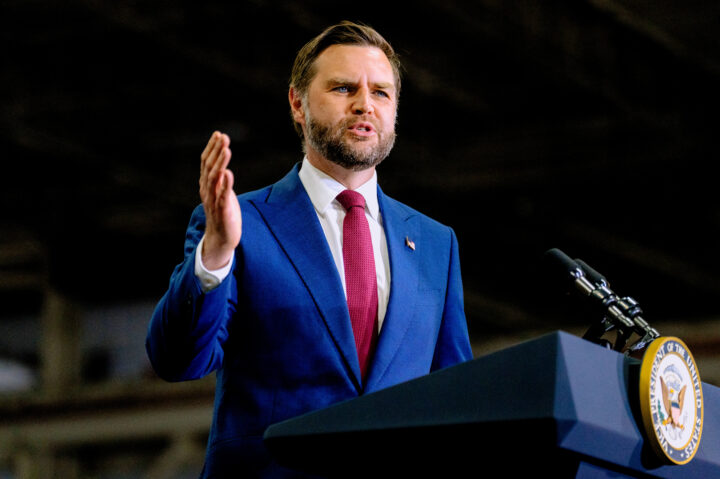
Vice President JD Vance speaks during a rally at Universal Contracting and Urban Tree Trimming on August 31, 2026 in Sterling Heights, Michigan.


 Add JewishInsider on Google
LAS VEGAS — Vice President JD Vance stuck to a pro-Israel line and rejected antisemitism in remarks on Monday to the Republican Jewish Coalition, avoiding any new controversies while not being pressed directly about some of his past comments and affiliations, including with Tucker Carlson, that have most concerned Jewish Republicans.
Attendees, with some exceptions, largely said that the speech helped Vance reassure skeptical Jewish and pro-Israel Republicans and boost his support with the RJC crowd ahead of a potential 2028 presidential bid.
Vance, in an off-record conversation with RJC Chairman Norm Coleman, audio and a transcript of which were leaked shortly after his remarks, was asked about a list of antisemitic influencers including Carlson and Nick Fuentes and his decisions about how to engage with those figures. He didn’t directly address Carlson — who he has previously defended as a friend — in his response, instead highlighting differences he sees between figures like Fuentes (who he tagged as antisemitic) and Rogan (who he said wasn’t).
“One area where I really do draw the line is on people who engage in what I call this blood libel attitude. I recognize a lot of people in this room might disagree with things that Tucker Carlson or Megyn Kelly or Joe Rogan has said, but — just to hone in on Fuentes and Rogan, I think these are two very, very different categories of people, both with their reach, but also within the ideas that are in their actual head,” Vance said.
Regarding Rogan, he said that he thinks the best approach is to engage and make his case and try to reach his audience. Fuentes, he said, is a substantively different case who is not worth engaging with given both his neo-Nazi views and his personal attacks on Vance and his family.
“But outside of some pretty bright lines, I try to talk to as many people as I can,” Vance continued.
Vance also highlighted a “growing suspicion” among the under-40 generation of the U.S.-Israel relationship and said that he believes that the best way to make the case for the relationship is to “actually get out there and talk about the ways in which it is in the best interest of the United States of America,” highlighting advanced missile defense technology as one example.
He said that other arguments that may have “made a lot of sense rhetorically 30 or 40 years ago” may not have the same appeal to young people today.
Asked about his past comments that Israeli and U.S. interests don’t always align, the vice president said that Israel is important to U.S. national security and among the U.S.’s most critical alliances, as well as undergirded by a “deeper cultural symbiosis and harmony.”
Vance was not directly asked about his recent comments accusing the Israeli government of conducting influence operations in the U.S. to undermine negotiations with Iran.
Vance suggested that Israel’s focus on the Middle East and the U.S.’s desire to shift away from a two-decade focus on that region is “a natural place in which Israel is going to look at these things slightly differently than the United States of America. … The most important thing is to say that there are alignments of interest across a whole host of issues.”
Towards the end of his remarks, Vance said that he sees antisemitism as having increased primarily as a result of immigration and the “importation of large groups of people who bring their ethnic rivalries” rather than changing sentiments in the American populace.
The vice president emphasized that he and the entire administration “love” the Jewish community and “you will very much always be on the team so long as I have any say in it.”
He argued that antisemitism — or the idea of punishing anyone for their genetics or ancestry, which he referred to as “blood libel” or “blood guilt”— is anathema to his Christian faith. He also highlighted past conversations with conservative activist Charlie Kirk about how antisemitism is “corrosive to the soul.”
“I think the antidote to antisemitism is the rejection of this idea of blood guilt,” Vance continued. “And I would tell any young man who claims to be a Christian that this is super corrosive for the soul.”
Vance said he feels a personal affinity and connection between the Catholic and Jewish religions and sees similarities between the two faiths — noting that he participated in a reading at the Orthodox Jewish wedding of his former chief of staff, Jacob Reses.
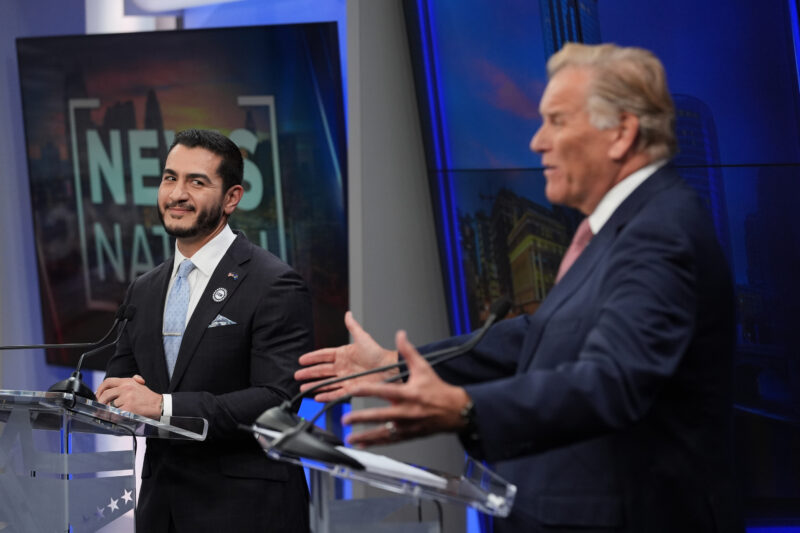
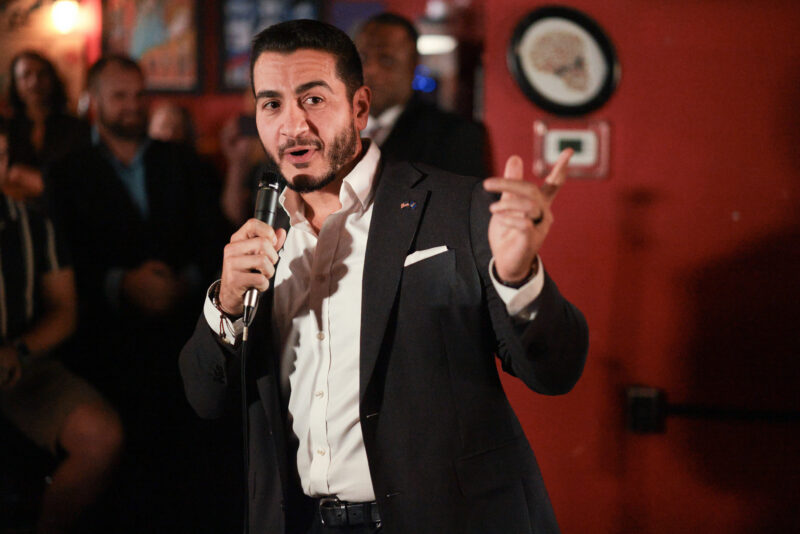
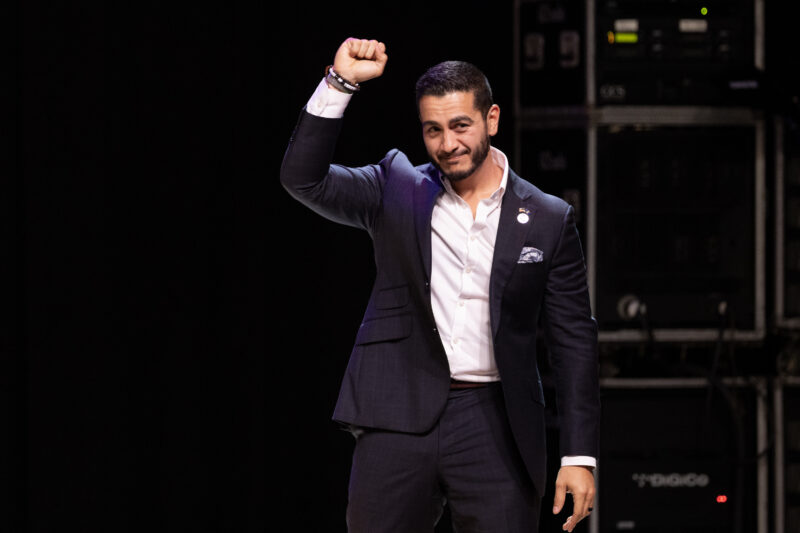
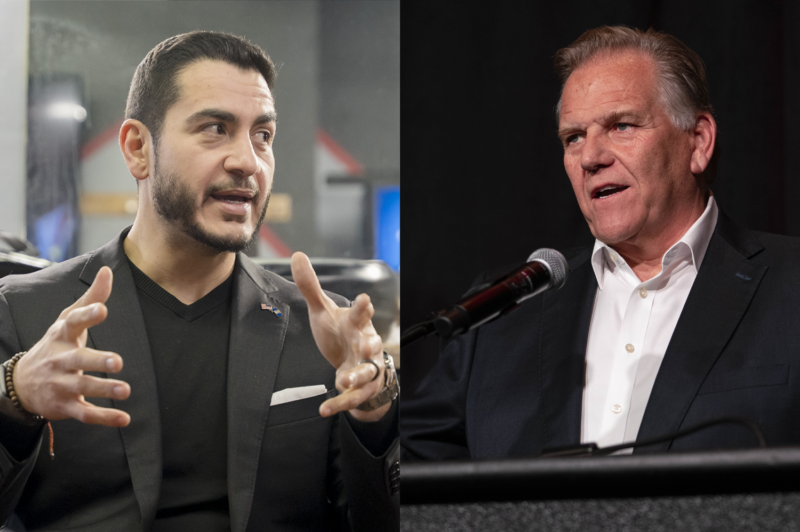
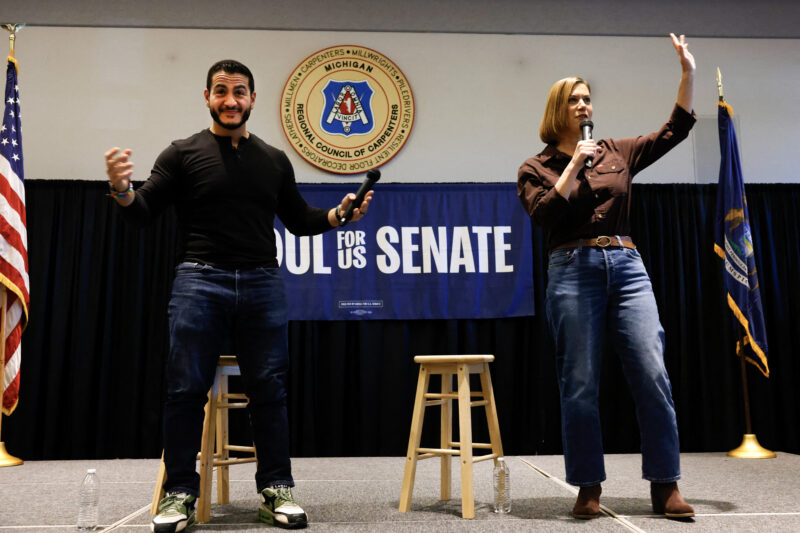
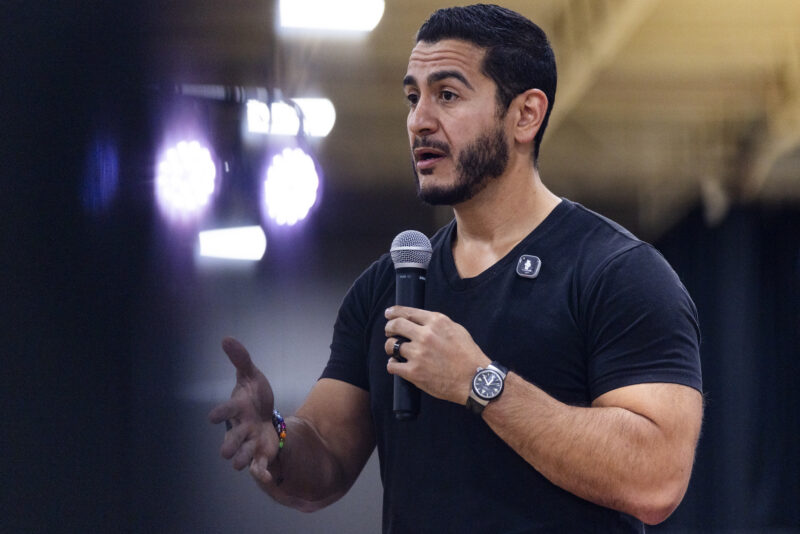
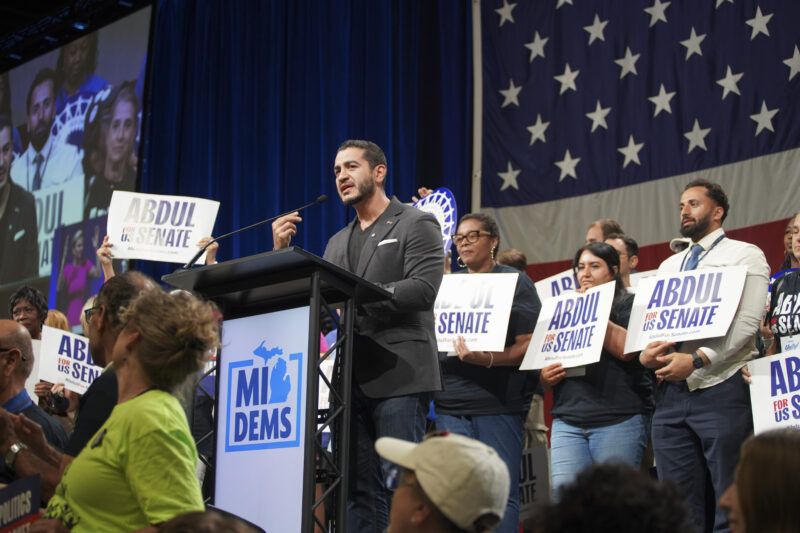
Vance, who spent the day on the campaign trail in Michigan with former Rep. Mike Rogers (R-MI), called Rogers “the single most important candidate right now in this midterm election” and El-Sayed “one of the worst disgraces running in the history of the American political process.”
“You don’t see a bunch of innocent Jewish kids who almost lose their lives and empathize with the killer unless you see those people as less than human,” Vance said, referring to El-Sayed’s response to the attack on Temple Israel in West Bloomfield, Mich., in March.
Several RJC board members, all speaking in their personal capacities, and other attendees largely said that Vance’s remarks had helped his case with the Jewish community.
“His sincerity was appreciated, and his comment that the under-40 generation doesn’t have the same emotional or historical attachment to Israel so must be met where they are was correct,” Joshua Katzen, an RJC board member told Jewish Insider. “The audience was relieved.”
Katzen told JI prior to Vance’s speech that the remarks would be an opportunity to alleviate concerns from RJC members, and his remarks earned repeated standing ovations from the crowd.
“I am going to support him,” Yitz Applbaum, another RJC board member, told JI. “He is definitely strong on the U.S.-Israel relationship and totally understands the issues, especially with the youth and how we need to work to do away with antisemitism with people under 40. [That was] a very key part of what he talked about.”
Sander Gerber, also an RJC board member, told JI, “Vice President Vance spoke to an enthusiastic room who understands that the American Jewish community is a core part of the political future of our country. I applaud the VPs statements repudiating antisemitism on the right.”
Bobby Schostak, an RJC board member and former Michigan Republican Party chairman, said that the RJC is “honored to have [Vance] here” and that Vance “made clear his positions … there was nothing concerning to me overall.”
“I think he needs to continue to reach out to us and us to him,” Schostak continued. “We have a good understanding going forward, but I didn’t find anything there, you know, alarming or concerning.”
Stuart Weil, an RJC member from California, told reporters that Vance’s remarks confirmed to him that any potential issues were a result of media distortion of Vance’s record.
“I will gladly support JD Vance as president of the United States,” Weil said. “As a big supporter of Israel, I believe that JD Vance will make a wonderful president. … He just reinforced what I already know.”
Not everyone was won over by Vance’s comments, however, with one attendee expressing disappointment with his failure to repudiate Carlson directly. “He was given the opportunity to call out and separate himself from Tucker. To the disappointment of many, he ducked the Tucker issue altogether,” the attendee told JI.
Schostak also acknowledged that others in the room might not have been satisfied with Vance’s answer.
“He addressed it as the elephant in the room. … I think the way he responded was, ‘It was important to not ignore all factions of opinion,’” Schostak said. “I don’t know how well that was received.”
Radio host Sid Rosenberg, who in remarks before the RJC earlier in the day urged the audience to “give Vance a chance,” said that he was disappointed by Vance’s remarks.
“He was not strong enough on Israel. In fact he referred to Israel as ONE of our best allies. One of?” Rosenberg said on X. “He had a chance to hammer [Carlson] and [Kelly] but instead spent all his time defending [Rogan] over Nick Fuentes. He also blamed immigration for a lot of the antisemitism in our country today. Silly. Look, he’s still better than any Democrat candidate but I don’t think he wowed the STRONG Jews in the room tonight.”
RJC CEO Matt Brooks and other members of the group’s leadership offered strong praise and support for Vance during a press conference following the session.
“Coming into a room that many would say had not necessarily known who JD was and what was in in his heart, or would be coming in skeptical to learn more — I think he really connected very very well with the audience tonight,” Brooks said.
Ari Fleischer, an RJC board member and former White House press secretary, told reporters that Vance “really helped himself tonight” and “answered a lot of the questions that people had about where his heart is.” He added that repeated appearances will help the crowd grow more comfortable.
“Today was not primary day, but I think today was progress day for JD Vance with the Jewish community,” he said.
Vance entered the room facing a divided crowd — with some in the audience skeptical of the vice president given his ties to Carlson, his public criticisms of Israel, his approach to negotiations with Iran and a host of other issues.
Uniformly, RJC board members and Jewish Republican elected officials said that Vance’s appearance at the RJC was a positive sign for him and for the Jewish community and that they were grateful that Vance was coming to address the crowd.
“I was surprised yet pleased to see that he’s coming,” Katzen said ahead of the speech. “I doubt that the vice president is coming to tell us that he thinks that Tucker Carlson’s view of Judaism is correct. He’s not here to tell us that. I have to think that he’s here to build bridges. I wonder how explicit he’ll be in rejecting the antisemites associated with Tucker Carlson.”
He said that Vance “must understand that he’s walking into 750 people who are very skeptical about his support” — largely because he “failed to respond when offered the opportunity” to people who have made antisemitic comments — so RJC members want him to address those concerns.
“I think his remarks can make all the difference,” Katzen said, noting that Secretary of State Marco Rubio’s name received loud applause from the RJC audience, while the same was not true of Vance.
“He can fix that tonight, and I hope he will. I would much rather have the Republican Party choosing between two excellent candidates [in 2028], especially the Jews in the Republican Party,” Katzen said. “I don’t want the Jews to feel like there’s only part of the Republican Party that is a home for them, because the Jews have no home in the Democratic Party.”
He said he would still prefer Vance to any Democrat.
RJC board members who spoke to JI otherwise generally declined to speculate about Vance’s potential presidential ambitions or the 2028 race, arguing that it’s too early to consider that election. Vance was the only anticipated 2028 hopeful who attended the conference.
Board member Eric Levine said ahead of the speech that it’s an “affirmatively good thing” that Vance is speaking to the RJC because it shows that the Jewish community and the U.S.-Israel relationship matter to him — particularly when juxtaposed with the increasing hostility toward Israel on the Democratic side.
Levine said that Vance has been helping President Donald Trump advance his Middle East policy — “and there has been no more pro-Israel president in the history of our country than Donald Trump.”
“Having said that, it’s a fool’s errand to just deny reality,” Levine continued, referring to Vance’s “relationship and association with Tucker Carlson,” who he said is indistinguishable from Nick Fuentes, former Rep. Marjorie Taylor Greene (R-GA), Hasan Piker, New York City Mayor Zohran Mamdani and Democratic Senate candidate Abdul El-Sayed. “So it’s unhelpful to have a relationship with Tucker Carlson, but that’s up for the vice president to navigate.”
He said he didn’t expect a sweeping statement from Vance either in defense or denunciation of Carlson.
Others said they had fewer concerns about the vice president going into the speech, but saw it as an opportunity for the vice president to mend fences with those in the RJC crowd who were concerned.
Schostak said before the event that it was “terrific” and an honor for Vance to appear, and said that it was an opportunity to start a process of strengthening his relationships with members of the RJC and reassuring those who do have concerns.
“This is a process. You’re not going to do everything in 45 minutes, but I think he’s going to show us, honoring us by being here and showing us that he cares about the American Jewish community and its fight against antisemitism and its support and his support for Israel’s right to defend itself and its self-determination,” Schostak said.
He said that the appearance was a “starting point to have those discussions for people that have any doubts or concerns” but he also argued that those concerns are largely based on incomplete comments.
“I think people are hearing things out of context. They’re getting three-hour podcast sections sliced and diced and put into a digital feed,” he said. “And I just think that unless you are hearing in its entirety, it’s hard to draw an honest conclusion.”
Applbaum before the event said he didn’t share the concerns of some other RJC members, but that he hoped the speech would provide an opportunity for Vance to assuage their concerns.
Applbaum emphasized that Vance’s association with Trump and his policies gives him strong credibility and credentials — ”they’re great for Israel, they’re great friends with the Jewish people in Israel.”
Brooks said that the RJC, not Vance’s team, decided to close the event to the press, so that Vance could “talk to the people in the front of the room in a way that wasn’t through the filter of the people on the press risers in the back of the room.”
Brooks and Fleischer downplayed the event’s significance as a stop on the 2028 presidential election trail, emphasizing that the speaker list had been selected with an eye toward the upcoming midterm elections, rather than the next presidential race.
Disclaimer: Yitz Applbaum serves as Jewish Insider’s wine columnist.
More Stories
EMPIRE STATE FEUD
Mamdani rips Blakeman’s claims he wouldn’t protect Jews as ‘directly racist’

Presidential Prelude
Josh Shapiro launches federal PAC in potential signal of 2028 plans
SEEKING ANSWERS
After State Department memorial, families of Oct. 7’s American victims call for U.S.-led probe

analysis
Could these two small parties be Israel’s kingmakers?
PEACH STATE PUNCHES
Rep. Mike Collins ducks question about white nationalist influencer son-in-law at Senate debate

Daily Overtime
Obama faults Israel’s founding in Belfast
Please log in if you already have a subscription, or subscribe to access the latest updates.
 Continue with Google
 Continue with Apple