


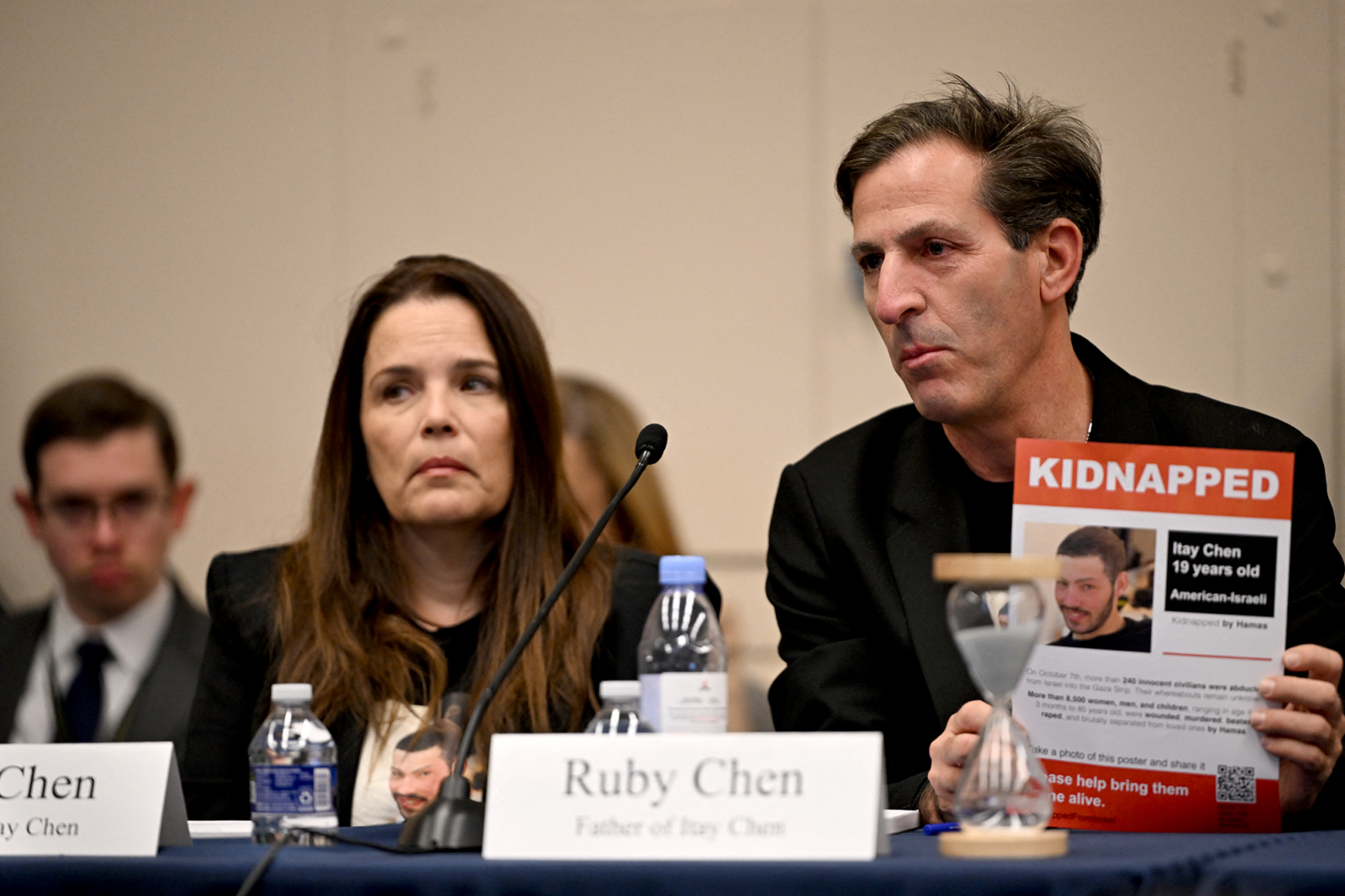
JIM WATSON/AFP via Getty Images
After son’s remains returned from Gaza, Ruby Chen continues his fight in Washington and beyond
Chen — father of Itay Chen, whose body was held by Hamas for more than two years — is continuing to advocate to ensure that American victims of Oct. 7 are remembered, and that his son’s ‘sacrifice was not in vain’


 Add JewishInsider on Google
LAS VEGAS — In November 2025, Itay Chen’s remains were returned to his family, more than two years after he was killed in his tank during the Oct. 7, 2023, Hamas attacks on Israel, during which terrorists took Chen’s remains to Gaza. Chen was the last American held hostage by the terrorist group to be released.
His father, Ruby Chen, spent those two years flying to Washington and around the world advocating for his son’s freedom. But even though his son has been laid to rest, Chen’s fight isn’t over. Now, he’s working to ensure that the American victims of Oct. 7 are remembered, that his son’s “sacrifice was not in vain” and to ensure that other families don’t have to go through the same pain, Chen told Jewish Insider on the sidelines of the Republican Jewish Coalition conference last week in Las Vegas.
Chen said that he sees his continuing advocacy, through meetings with lawmakers, administration officials and others, as part of his “rehabilitation” to help him cope with the loss of his son. “At least that’s what helps me get out of bed,” Chen said.
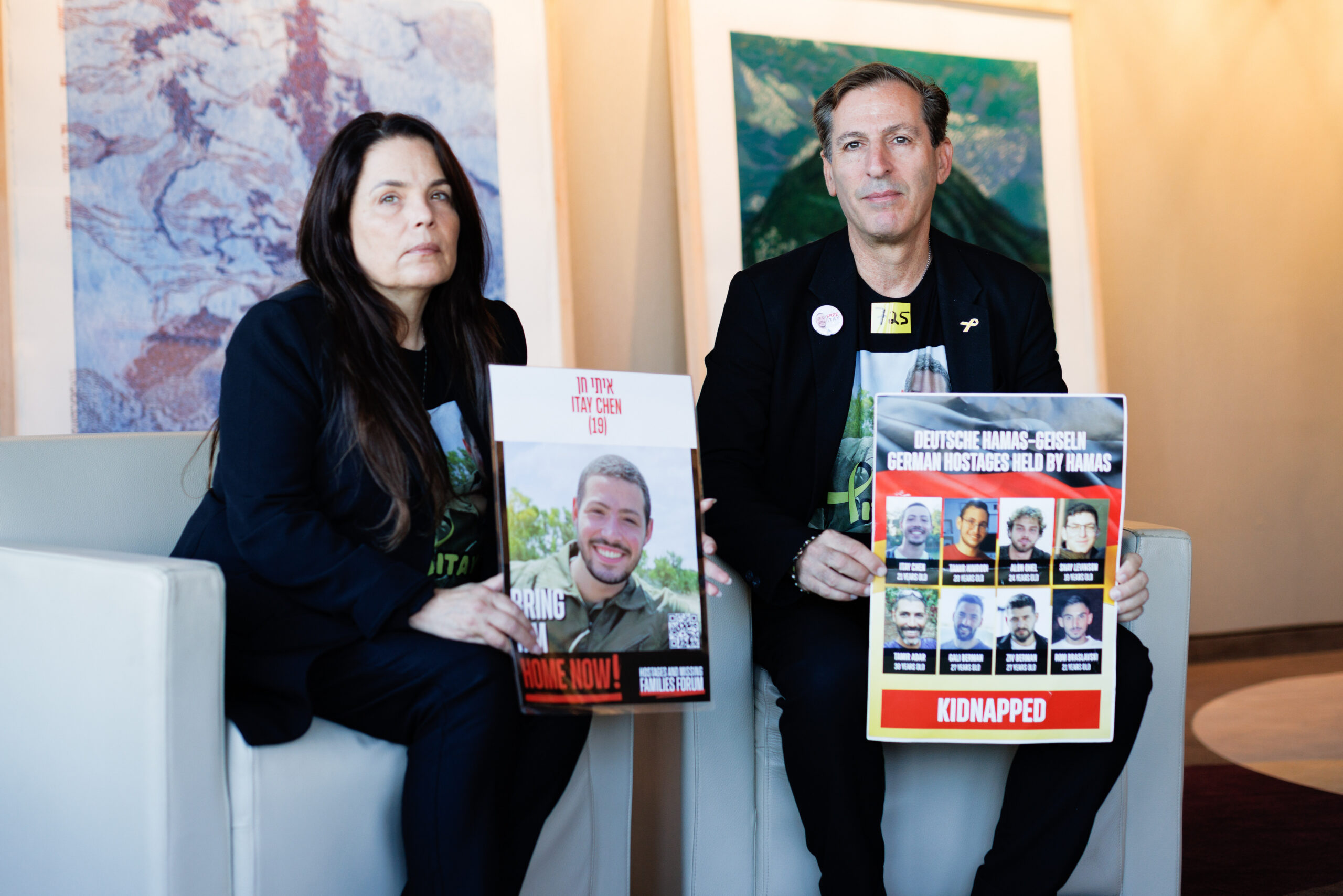
Chen is working to elevate the memory of the 46 American citizens killed on and after Oct. 7 while being held by Hamas — emphasizing that many in the American public at large and even the Jewish community are ill-aware of them — pushing for a State Department-backed memorial event in Washington next month alongside other families of the bereaved.
He said he’s in touch with senior members of the administration about the memorial event, who have been supportive, and he’s “positively optimistic” that it will come to fruition.
On Capitol Hill, Chen is pushing for an investigative committee to probe the Oct. 7 attacks, with a focus on the American casualties and how Hamas’ preparations went unnoticed — particularly in light of the Israeli government’s failure to launch its own investigation.
He said that the pre-midterm election season is a difficult time for such conversations, but that there are lawmakers on both sides of the aisle willing to consider the prospect. “I think that people recognize that we deserve some basic answers,” Chen said.
Such a committee, he added, could also help provide ongoing support and monitoring for the families of the bereaved, in the same way that Congress did for the families of victims of the 9/11 attacks.
Chen is pushing for further sanctions on Hamas, Iran and its proxies by both the U.S. and European countries, offering strong criticism for what he said was the Biden administration’s failure to adequately utilize sanctions, as well as difficulties in bringing European allies along, particularly as a result of EU bureaucracy and opposition from some EU member states.
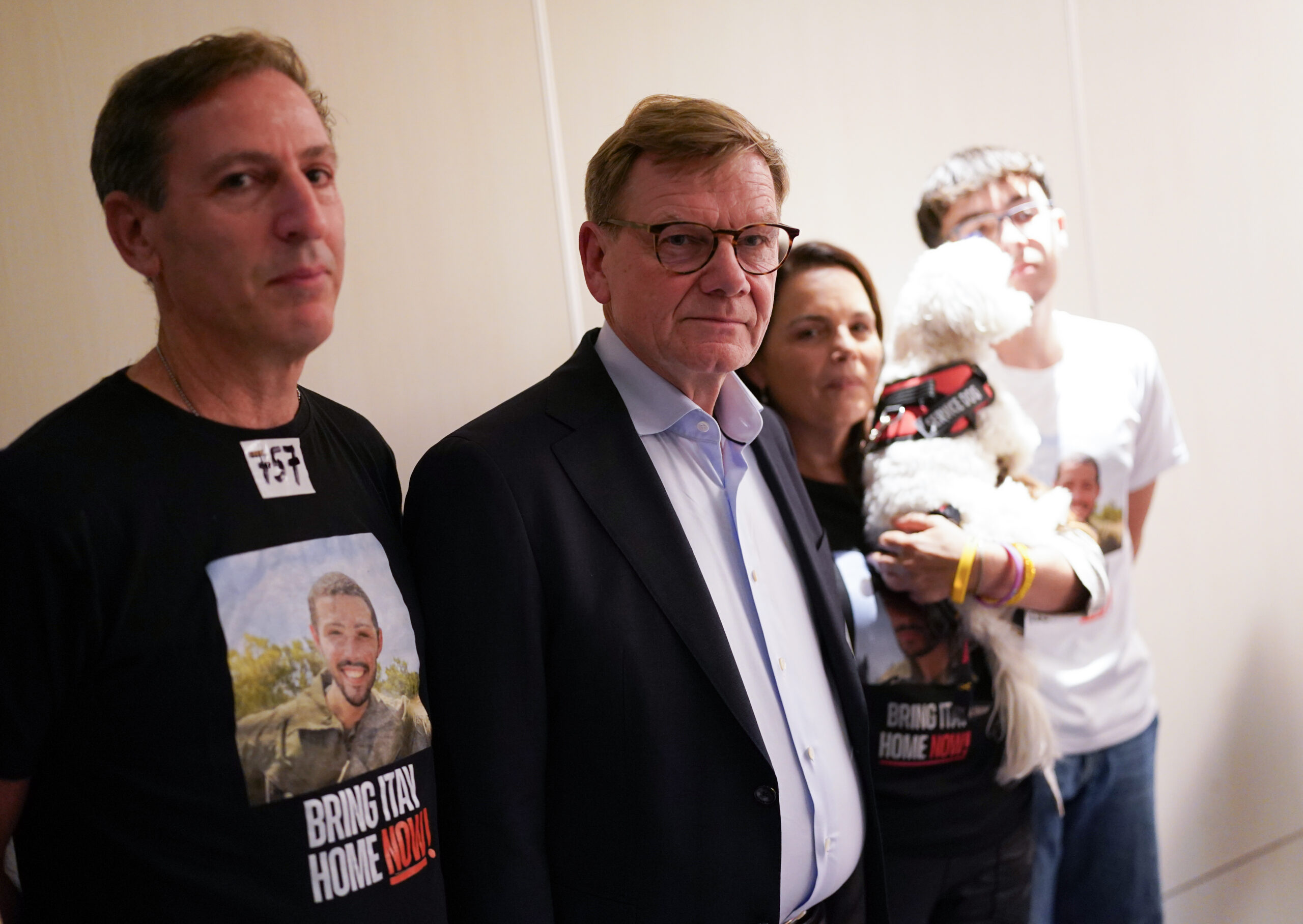
Chen highlighted Turkey’s role as a financial hub for Hamas and other Iranian proxies. “For the love of God, I do not understand why the president, [who] is so close to Turkey and [its president, Recep Tayyip] Erdoğan, is not demanding” that terrorist-linked bank accounts in Turkey are not shut down, Chen said.
“There are always other interests that are on the table, and things get compromised,” he continued. “It’s unfortunate, but that is the case.”
Chen also is pursuing civil penalties against individuals who have backed and facilitated Hamas’ activities in U.S. courts, with open suits against Palestinian American businessman Bashar Masri, accused of working with Hamas, and the cryptocurrency platform Binance, whose CEO was pardoned by President Donald Trump for other crimes last year.
He urged the Department of Justice to take a more active role and provide evidence that can bolster those cases, explaining that then-Attorney General Pam Bondi had seemed supportive at the start of the administration and launched an interagency task force focused on Oct. 7, but that there have yet to be any results from that task force.
Additionally, Chen is pushing to resume normalization efforts between Israel and its Arab neighbors, arguing that Trump “could definitely realign the Middle East for decades ahead” given his singular “political capital” in the region.
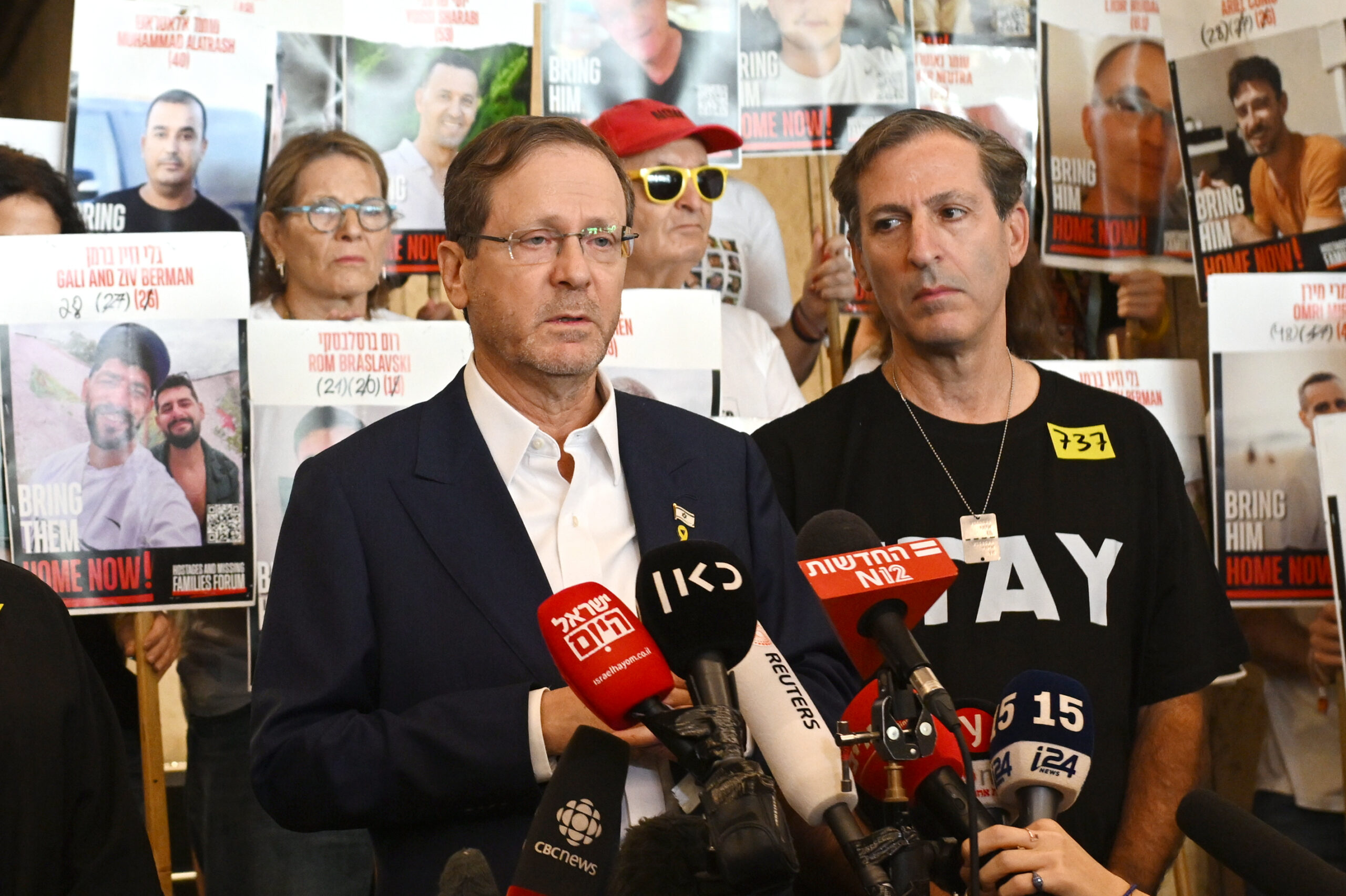
Chen offered praise for the U.S. negotiating team, including White House Special Envoy Steve Witkoff and Jared Kushner. Chen said that he first connected with Kushner in January 2024, a year before Trump took office, when Kushner began to educate him on Middle East political dynamics.
He said his family and Witkoff had connected over Witkoff’s loss of his own son. In their first conversation, they explained to Witkoff that, while he was able to visit his son’s grave, the Chens had nowhere they could go to honor Itay as long as he remained in Gaza.
Though he offered criticisms of the Biden administration and its handling of Middle East policy in general, Chen said that he and the other hostage families built a “unique relationship” with senior administration officials including former National Security Advisor Jake Sullivan and CIA Director Bill Burns, who he said they could trust to be honest and comprehensive with them.
That relationship continued with Trump administration officials once they took office.
Meanwhile, Chen was deeply critical of the Israeli government led by Prime Minister Benjamin Netanyahu, and said the other hostage families often struggled to get straight answers from Israeli leaders.
He blasted former Israeli Strategic Affairs Minister Ron Dermer, who spoke at the RJC conference hours before Chen sat down with JI.
“I did not hear an individual that showed any type of remorse or accountability, but actually he looked at it as a win by stating, ‘Oh, we had all the hostages out,’” Chen said of Dermer’s remarks. “You don’t get points when 45 hostages were killed in captivity.”

He accused Dermer and other Israeli officials of trying to hide their own missteps, and emphasized that Dermer “has no accountability and no responsibility” and “was never elected by anyone,” yet rose to a top position in the Israeli government with significant influence over the U.S.-Israel relationship.
Dermer’s appearance came around the two-year anniversary of the day that Hamas executed six hostages in a tunnel in Rafah, including American Hersh Goldberg-Polin, and Chen criticized him for not making any mention of that grim milestone.
Chen argued that it would be a positive step for Israel to elect a new leader in its upcoming elections, to provide an opportunity for “unity” and a “new chapter,” arguing that Netanyahu should step aside as Prime Minister Golda Meir did after the Yom Kippur War.
“After Oct. 7, the thing that was most needed for the people of Israel was a leader that could provide unity,” he said. “It’s very unfortunate because Netanyahu is a very unique individual that has done a lot of great things, but he is not capable of uniting the people and the polarization in the State of Israel is no less than it was before Oct. 7.”
He said that Meir, in her time, “understood that she couldn’t be part of the solution going forward. That the new chapter that needed to begin … so she stepped down and allowed the next generation of leaders to come about. I think that’s what the majority of the people in Israel wish to see as well.”
Chen characterized Netanyahu as “incapable” of thinking or planning in the long-term, something that is necessary at the current “inflection point” in the Middle East.
“The president has done a fabulous job in creating that political capital,” Chen said. “The opponents of the State of Israel and the United States [are] at the weakest level. Now is the time to cement that with a political structure that would enable a new chapter to begin for Israel and its neighbors, but also for the benefit of the United States and its economy. “
Chen urged the U.S. administration to “place its bets” and prepare for a scenario in which a new government is elected in Israel, arguing that that could provide an opening for normalization and progress in regional integration.
“I hope that there are some good people in the White House that are thinking about that scenario,” he said.
Featured Stories
Please log in if you already have a subscription, or subscribe to access the latest updates.
 Continue with Google
 Continue with Apple