











Coalition of Michigan Jewish leaders sets out ‘nonnegotiable’ demands for El-Sayed, Democrats
The group called for Democratic candidates to affirm principles including Jewish safety, the Jewish right to sovereignty in Israel and the right of all Jews to participate in the political process
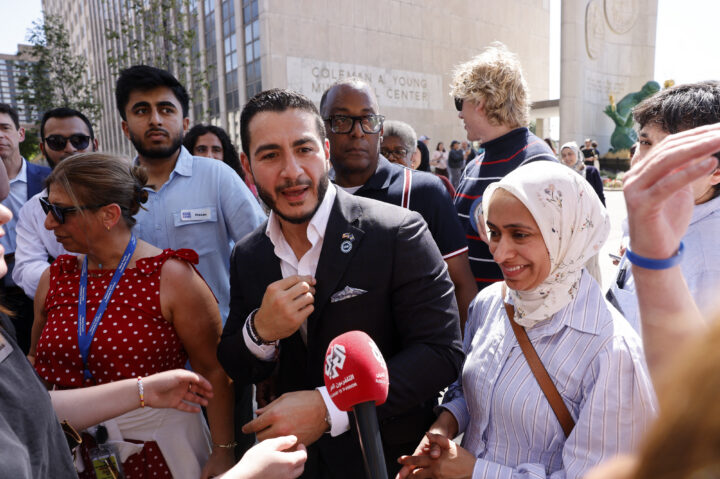
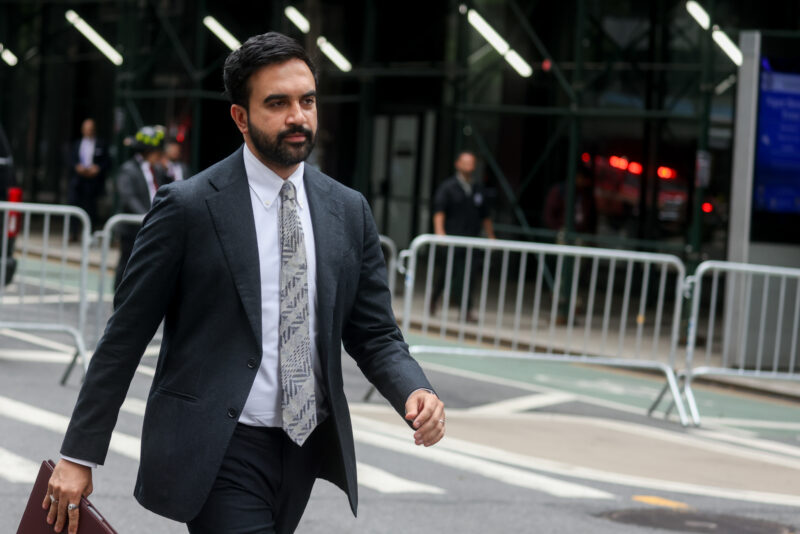
JEFF KOWALSKY / AFP via Getty Images
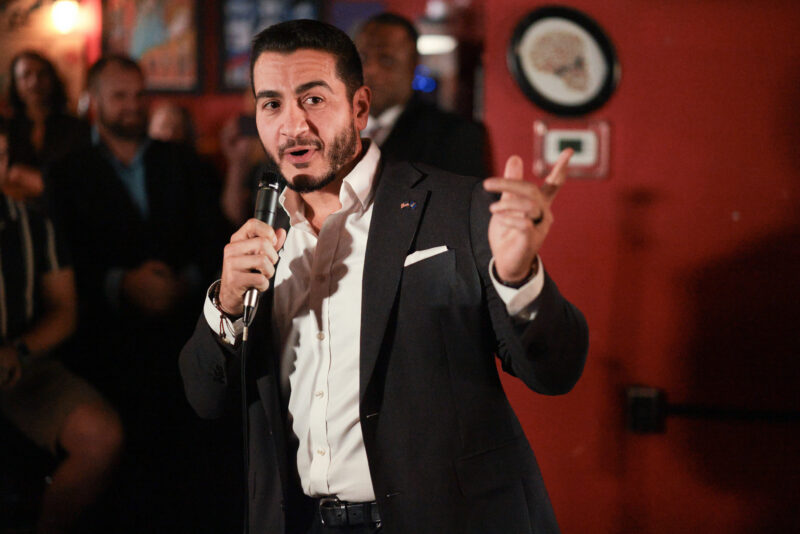
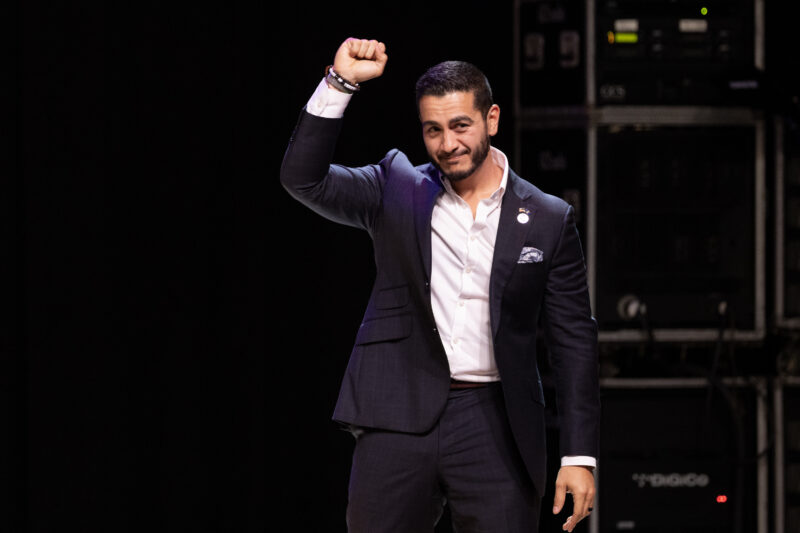
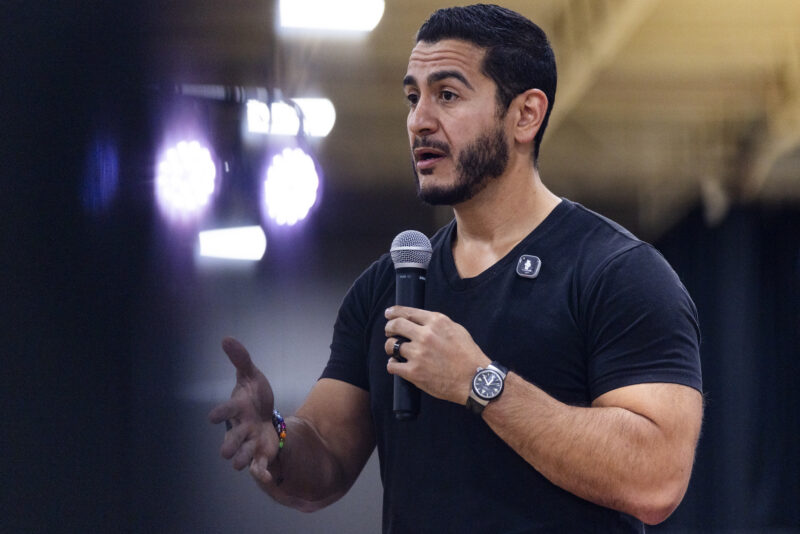
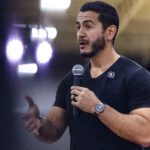
Michigan Democratic Senate candidate Abdul El-Sayed departs with his wife, Sarah Jukaku (R) after a press conference on August 5, 2026.


 Add JewishInsider on Google
A group of more than a dozen Michigan rabbis, cantors and Jewish lay leaders from across the state launched a new petition campaign on Tuesday to pressure Abdul El-Sayed, the Democratic Senate nominee, to affirm a series of “nonnegotiable” commitments to the Jewish community, arguing that failing to do so would jeopardize Jewish support for Democrats.
The Nonnegotiable Michigan campaign, created in cooperation with the liberal Jewish group Zioness Action Fund, calls out El-Sayed for a “sustained pattern” of comments by himself and surrogates that organizers say crosses the line into antisemitism, including downplaying, justifying or potentially inciting violence against Jews.
The petition itself does not explicitly mention El-Sayed but leading signatories and organizers made clear in interviews and a press release that his rhetoric and actions were a principal driving force behind the effort and that he is a primary target — while they also would like to see other Democrats and the party embrace the effort as well.
The faith leaders leading the effort did so in their personal capacity.
“So much damage is already done — what remains to be seen is whether it deepens or reverses,” a press release from the coalition states. “The choice is [El-Sayed’s]. He can continue normalizing rhetoric that stigmatizes and excludes Jews, and continue sharing platforms with those who glorify or excuse violence against them — until Jewish participation in the Democratic coalition becomes impossible. Or he can engage with us and consistently draw a clear, public line against all forms of antisemitism –– as defined and experienced by Jews.”
The campaign demanded that El-Sayed and other Democratic leaders affirm five commitments: to Jewish safety, including that of Zionist Jews; to the right of Jews to define their own identities; to the Jewish right to sovereignty in Israel; to the right of all Jews, including Zionists, to full participation in the American political process; and to “an affirmative vision for a better future for the Middle East.”
El-Sayed did not immediately respond to a request for comment.
The petition and its organizers highlight that Jews have long been strongly supportive of the Democratic Party and backed Democratic political priorities, but now “now feel forced to fight for the party they long claimed as their political home.”
“Every constituency must occasionally remind its party that support is earned, not owed. This is a good faith effort to make our needs unmistakably clear, and to invite any candidate seeking public office — now or in the future — to engage, listen, learn, and grow,” the petition states. “We no longer have the luxury of pretending our coalition can hold while our identities are under attack and our own safety is treated as negotiable.”
It calls the five commitments “our terms for engaging” in a conversation with El-Sayed or other leaders and “the floor” of such requirements, “not a policy debate.”
Rabbi Josh Whinston of Temple Beth Emeth in Ann Arbor, one of the petition organizers, said during a virtual press conference that he’s spoken directly to El-Sayed and that the nominee is “trying to figure out a way” to move forward and that Whinston wants to be helpful and “continue to move the needle in ways that will be meaningful for the Jewish community and would have real effect on any potential policy that he’s part of when he’s elected to the Senate.”
But he said that El-Sayed’s recent walkback of previous comments on the Temple Israel attack, which many in the Jewish community saw as justifying or downplaying the attack, “did not go far enough.”
He explained in a subsequent interview with Jewish Insider that the tenor of the conversation among pro-Israel Jewish Americans in the Democratic Party has become “very negative and fearful for a lot of folks,” that many in the community feel political “homelessness” and that rhetoric used during the primary caused concern in the community.
“You can’t use language that’s being used and act as though it doesn’t affect the Jewish community and put us potentially in harm’s way,” he said.
Whinston said he specifically wants to see El-Sayed change his position on Iron Dome funding and say he would support allowing Israel to continue to purchase the missile-defense system from the United States — outside of any conversation about U.S. financial aid.
“He’s a medical doctor, I just don’t understand how he could say no to that, to people’s safety,” he said.
Asked what he would need to see to believe that El-Sayed believes in and would stick to any altered stance consistent with the “nonnegotiables,” Whinston said that he would want to see specific policy commitments and public press releases by the campaign on key issues.
“I’m not so concerned about the past at this point,” he said. “I want the future to be better. I want his campaign to be better. I want his campaign to be more inclusive. I want his campaign to be more visionary.”
Whinston emphasized on the press call that the problem is “bigger” than El-Sayed’s relationship with antisemitic streamer Hasan Piker, though he said he wants to see El-Sayed disavow Piker.
He told JI he wants to see deeper and stronger communication and “understanding” between El-Sayed and the Jewish community, explaining that he doesn’t believe El-Sayed understands “the fear in the Jewish community right now.”
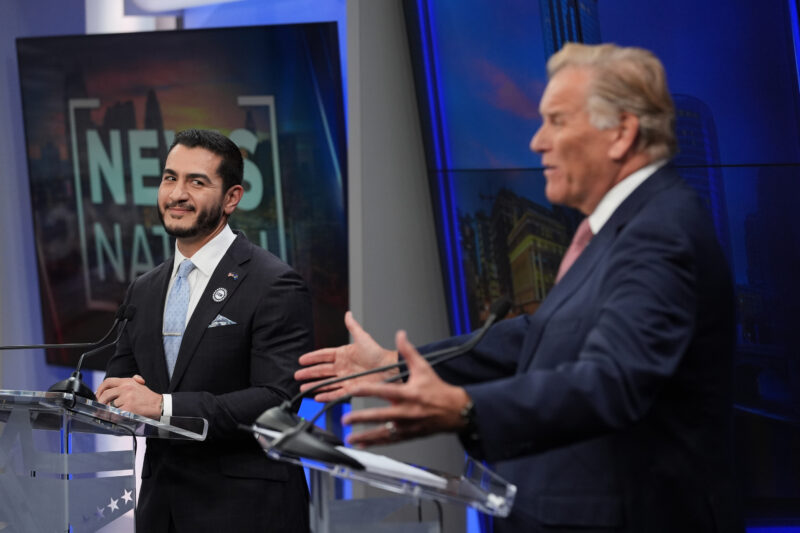
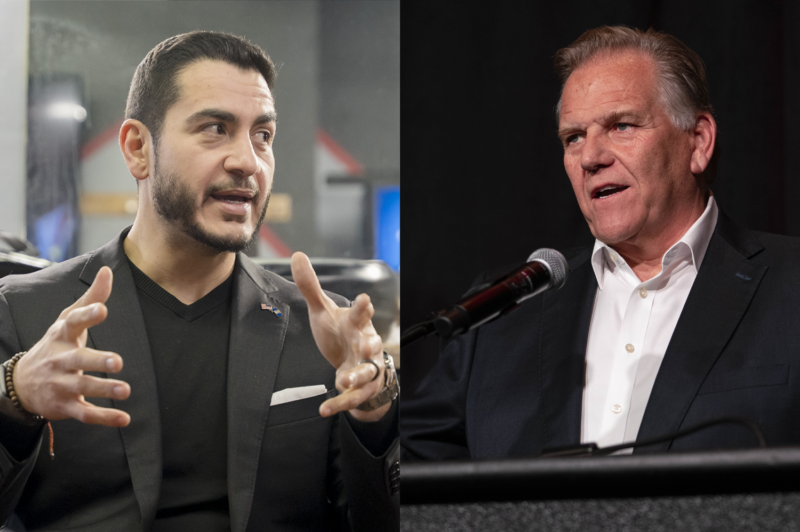
Some Jewish Democrats, including some community leaders, have come out in support of El-Sayed’s Republican opponent, former Rep. Mike Rogers (R-MI), or said that they are open to voting for him. Whinston, at least, seems to represent a different category of Jewish voters.
Asked by JI what he would do in November if the “nonnegotiables” aren’t fulfilled, he hesitated for a long moment.
“I’m speaking here as an individual. I do not support the rhetoric that comes from Mike Rogers, the vast majority of it. … I think it is also dangerous for the Jewish community,” he said. “I’m holding out hope that Dr. El-Sayed can broaden his coalition in a visionary and meaningful way. … I think he can do it. I think he’s big enough. I think he’s smart enough. I think he’s tactful enough. I think he can do it. And if he does, I would enthusiastically vote for him.”
Whinston indicated that El-Sayed’s comment immediately after the primary describing Israeli Prime Minister Benjamin Netanyahu as “bloodthirsty” was particularly disturbing.
“The accusation of being bloodthirsty against Jews is a long-standing antisemitic trope. It was shocking to me to hear him say that,” Whinston said.
Whinston said that he has “very strong feelings” about the war in Gaza and condemned the “Jewish terror” in the West Bank but said that “using inflammatory language, antisemitic rhetoric to make your point about what’s happening is not helpful. … All it does is activate radical people to do harm to Jews.”
During the press call, Rabbi Aaron Starr of Congregation Shaarey Zedek in Southfield, Mich., said that Jewish leaders are looking for El-Sayed to sit down, offer a “sincere apology” and to change his rhetoric going forward.
He added that El-Sayed sounds “like he’s talking out of both sides of his mouth.”
Starr called El-Sayed’s past rhetoric “frightening” and said it echoes that which has brought violence against the Jewish community for a millenium. He said he doesn’t feel that El-Sayed has actually moderated his past comments on Israel, but rather “decided not to address the issue and reframed” past remarks.
More Stories
IN THEIR MEMORY
Administration officials join bereaved families for Oct. 7 commemoration event
EMPIRE STATE FEUD
Mamdani rips Blakeman’s claims he wouldn’t protect Jews as ‘directly racist’
FOLLOW THE MONEY
Brandeis Center, FDD urge federal court to allow disclosure of campus foreign funding data
ON DEFENSE
El-Sayed dismisses half-sister’s comments about family’s Muslim Brotherhood ties as ‘hearsay’
SHOW OF SOLIDARITY
Jewish leaders offer support to Hindus amid rising threats to faith communities
ALBANY ALLIANCE
Jewish New York Dems launch PAC to counter antisemitism and anti-Zionism
Please log in if you already have a subscription, or subscribe to access the latest updates.
 Continue with Google
 Continue with Apple