



























El-Sayed’s apology to Jewish Democrats draws mixed response
One member of the Michigan Democrats’ Jewish Caucus said Jewish Democrats ‘remain divided’ on El-Sayed after his outreach
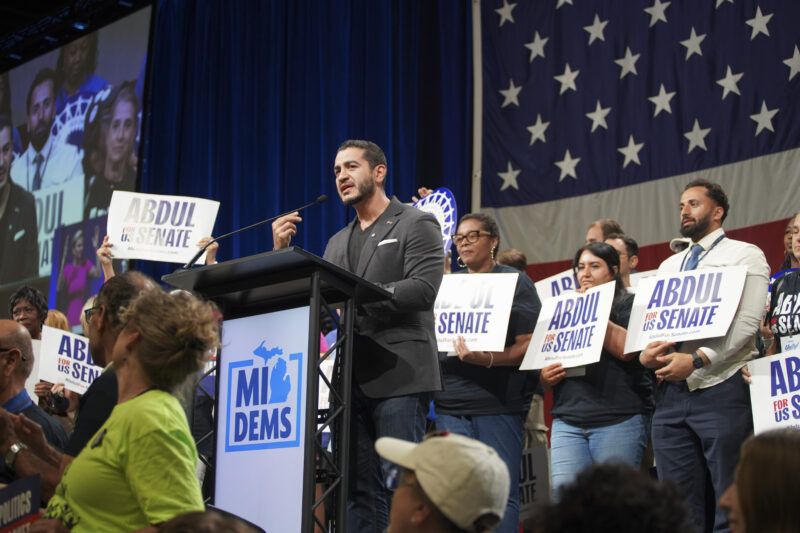
Katie McTiernan/Anadolu via Getty Images
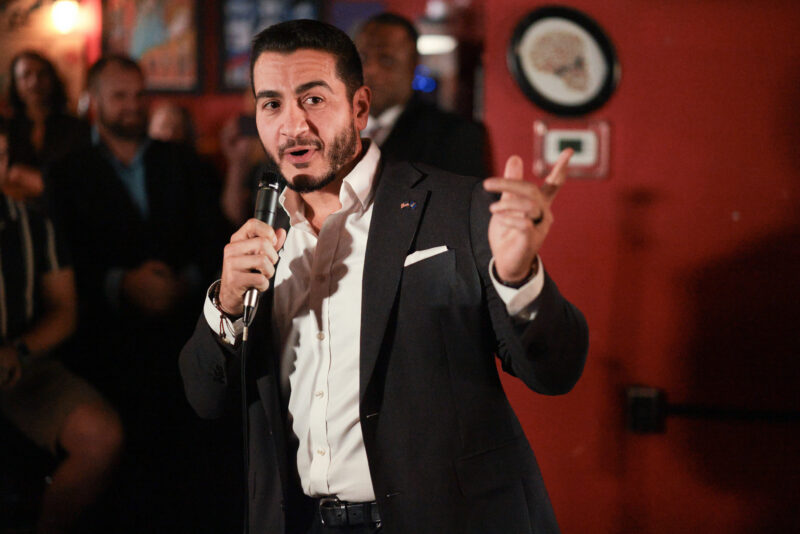
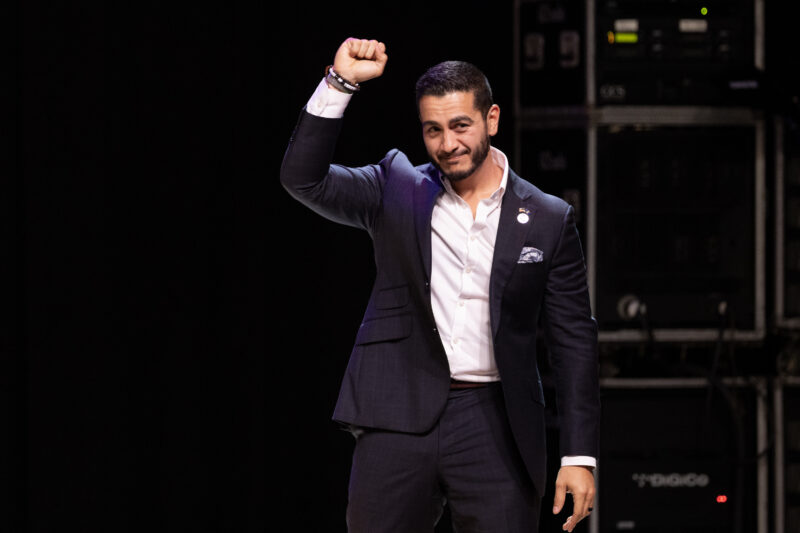
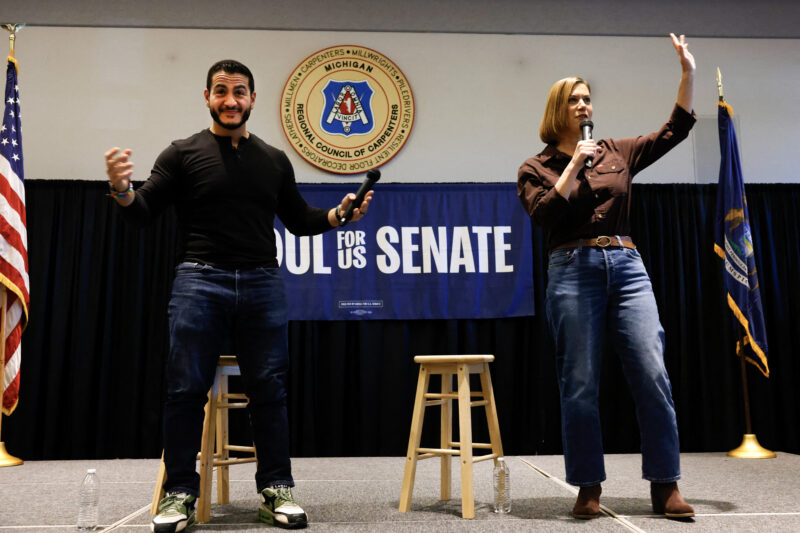
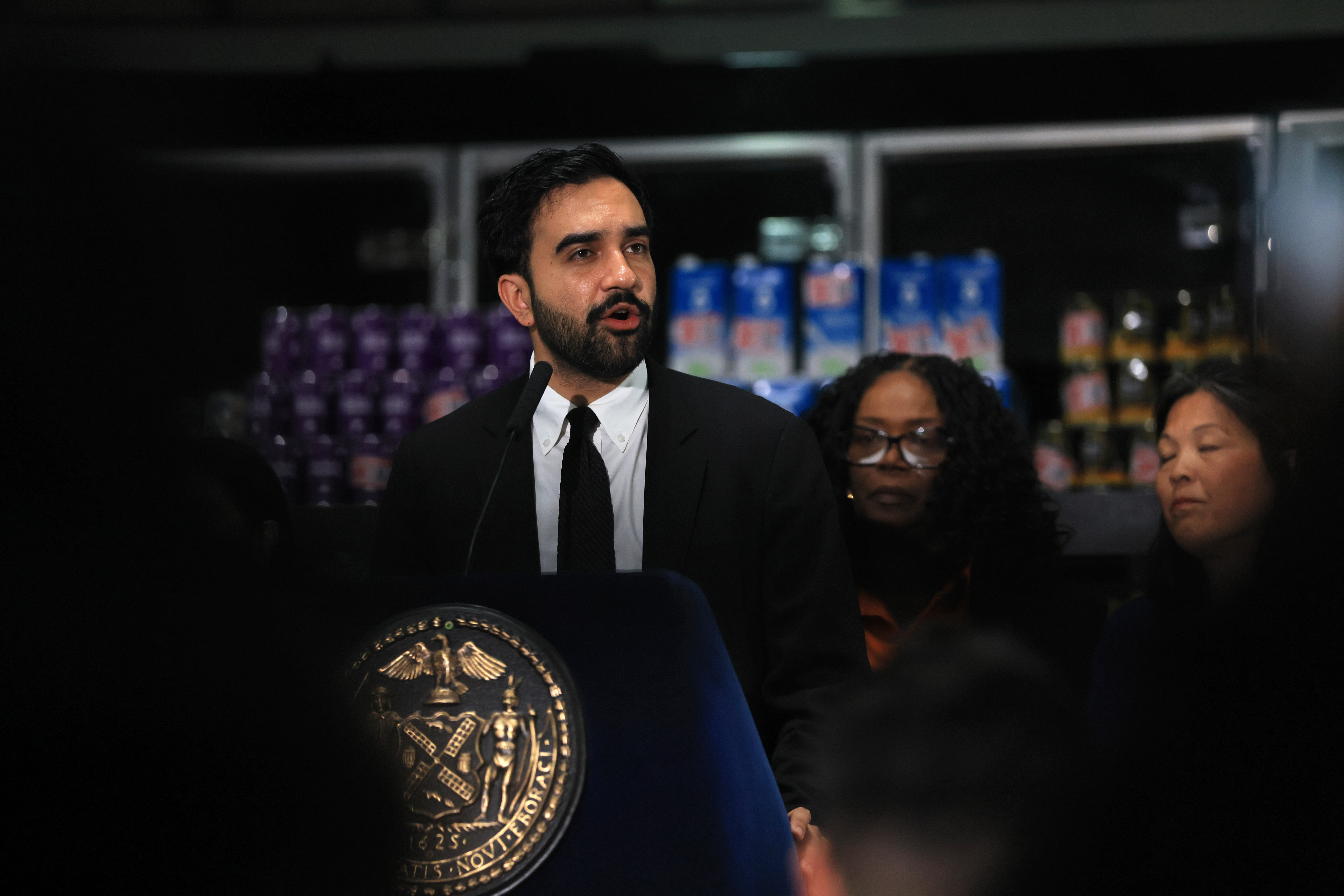
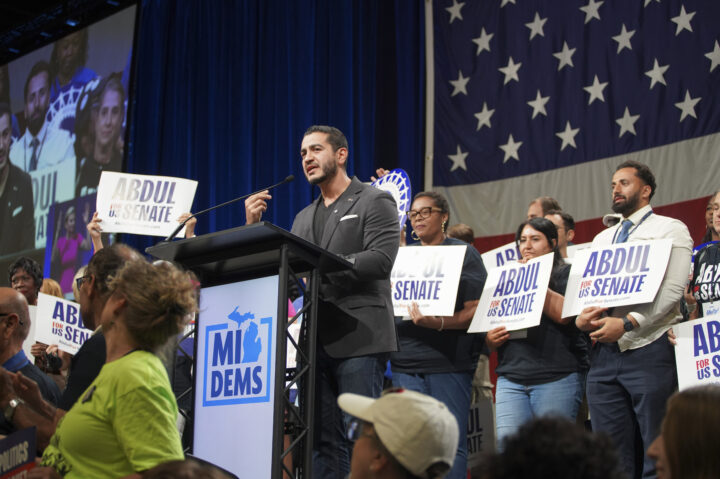
Abdul El-Sayed, Democratic nominee for the U.S. Senate, speaks at the Michgan Democratic Nominating Convention in Lansing, Mich. on Aug. 29, 2026.


 Add JewishInsider on Google
Abdul El-Sayed, the Democratic Senate nominee in Michigan, expressed regret over the weekend for equivocating in response to a terrorist attack against a synagogue outside Detroit in March, a key source of tension among skeptical Jewish voters ahead of the fall election.
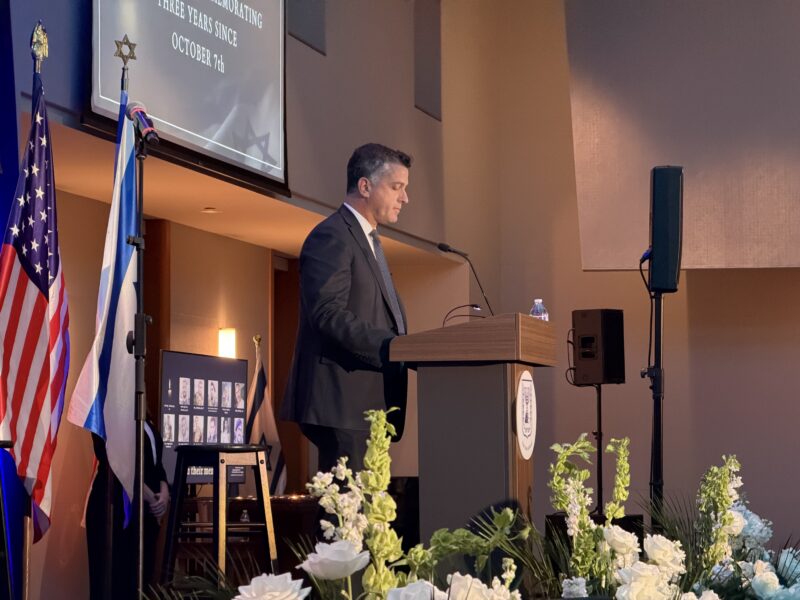
Speaking at the Michigan Democratic Jewish Caucus’ annual “Summer Simcha” event on Sunday, El-Sayed reiterated his recent comments in which he said he had “made a mistake” in his initial statement on the violent attack targeting Temple Israel, a Reform synagogue in West Bloomfield.
The armed assailant, who had rammed his car into the synagogue, was a Lebanese American man whose family members — including his brother, a Hezbollah commander — were killed in Israeli airstrikes in Lebanon, leading El-Sayed to comment in a video statement that “hurt people hurt people” and “violence is a cycle.”
His comments on Sunday, according to attendees, echoed his remarks to members of the Jewish caucus a day before at a party convention in Lansing, where he said he had been seeking to “offer broader context” on the attack but “should have issued a statement, of course condemning it, and it just should have been the full stop.”
“I’m asking for forgiveness and a moment of grace,” El-Sayed told the caucus on Sunday, adding that “there’s opportunity for context later on.”
Jessica Alexander, the Jewish caucus chair, said in a statement to Jewish Insider after the event on Sunday that “Abdul’s remarks were sincere and reflected his dedication to serving all those he seeks to represent.”
In contrast with the party convention, the Jewish caucus event “was more intimate,” according to Alexander, “and thus the comments felt more personal and intimate.”
David Kramer, the caucus’ vice chair and the former Senate campaign chair of Rep. Haley Stevens (D-MI), who narrowly lost the primary, said attendees “were certainly polite” when El-Sayed gave his remarks on Sunday.
“There was absolutely nobody jeering him” and “nobody who interrupted him,” Kramer told JI in an interview after the event. “There were several people in the room who were pretty vocally applauding him and many in the room who were just being courteous and maybe lightly applauding him.”
Broadly speaking, El-Sayed’s comments were “well-received” on Sunday “in the sense that people appreciated he was willing to come into that space and talk and that he’s been willing to at least turn down some of the negative rhetoric,” Kramer added.
While El-Sayed acknowledged his initial comments were received as insensitive, Kramer echoed Jewish leaders in Michigan who remain skeptical about the sincerity of his new statements and have questioned their timing as politically calculated.
“For me personally, and I know for a lot of Michigan Democratic Jews, there are still some incredibly core, fundamental differences we have with him that are going to be nearly impossible to bridge,” Kramer told JI, citing El-Sayed’s refusal to recognize Israel’s right to exist as a Jewish state, his criticism of Zionism and opposition to continuing America’s close relationship with Israel, among other major points of tension.
“It will make the decision for quite a lot of us either very difficult to vote for him or impossible to vote for him,” Kramer explained.
He suggested that El-Sayed’s apology left room for improvement. “If you parse his words, he definitely talked about apologizing if people were offended and saying there’s a time for context but still leaving open the ability to add context,” he observed to JI. “I don’t think that there’s ever context for targeting 100-plus preschoolers.”
Joan Lowenstein, a caucus member, said that Jewish Democrats remain divided after the event. “No one I spoke to had changed their mind as a result of his speech yesterday or today,” she told JI. “I think we are evenly divided.”
“Everyone agrees we’re in a bad position that we haven’t had to face before,” she added.
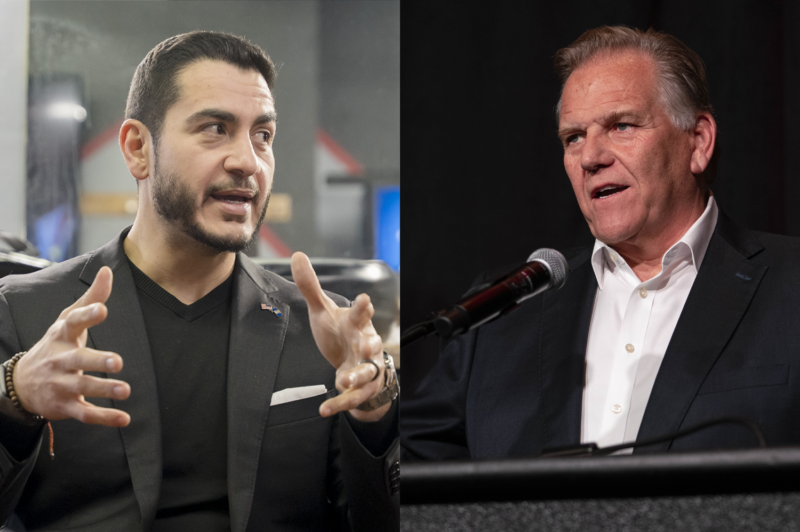
Michael Horowitz, a Jewish Democratic leader who recently decided to vote for former Rep. Mike Rogers (R-MI), El-Sayed’s opponent in the November election, said he felt El-Sayed’s weekend apology was “insufficient.”
“I think he’s doing exactly what a skilled politician would do, which is saying exactly what he needs to say to get other people on board,” Horowitz, who did not attend the caucus event, told JI. “There is plenty he could have said and should have said to sincerely apologize.”
One politically connected Jewish leader in Michigan, speaking on the condition of anonymity to address a sensitive issue, said many Jewish leaders are hesitant about El-Sayed’s apology. “People want him to say, ‘I was wrong for not coming forward to explain this six months ago,’” he told JI on Sunday. “There is a ton of skepticism.”
A spokesperson for El-Sayed’s campaign did not respond to a request for comment.
The caucus event on Sunday also honored Dana Nessel, Michigan’s first Jewish attorney general, who is stepping down after eight years at the end of her current term.
Last week, Nessel — whose son, Zach, is secretary of the Michigan Democratic Jewish Caucus — expressed concern that El-Sayed had at that point not publicly shown contrition for his response to the synagogue attack, saying she felt he was “making excuses” for domestic terrorism.
More Stories
CAMPAIGN BLITZ
AIPAC’s super PAC wades into Michigan Senate race
Daily Overtime
Mamdani resists DSA over Tisch tensions

GOING GLOBAL
Israeli, Lebanese leaders expressed interest in Michigan Senate race, Sen. Lankford says
TISCH TENSIONS
Mamdani stands by NYPD’s Tisch as his allies demand her removal
BREAKING POINT
For some Jewish Democrats, Michigan’s debate was the ‘final straw’ for El-Sayed

Daily Overtime
Dublin hotel dumps antisemitism conference
Please log in if you already have a subscription, or subscribe to access the latest updates.
 Continue with Google
 Continue with Apple