






























Plus, Ro Khanna defends Hasan Piker amid Mich. attack

Emily Elconin/Getty Images
Law enforcement respond near Temple Israel following reports of an active shooter on March 12, 2026 in West Bloomfield, Mich.


 Add JewishInsider on Google
This P.M. edition is reserved for our premium subscribers — offering a forward-focused read on what we’re tracking now and what’s coming next. Please don’t hesitate to share your thoughts and feedback by replying to this email.
📡On Our Radar
Notable developments and interesting tidbits we’re tracking
A suspect was killed during an active shooter and car ramming incident at Temple Israel in the heavily Jewish Detroit suburb of West Bloomfield Township, Mich., this afternoon, Jewish Insider’s Haley Cohen reports.
Armed synagogue security engaged the suspect with gunfire, and a security guard who was knocked unconscious is expected to recover. A preschool that was in session at the time of the incident was evacuated safely. Authorities are continuing to investigate the suspect’s identity and motive.
“Everyone is safe. All 140 students in our Susan and Harold Loss Early Childhood Center, our amazing staff, our courageous teachers, and our heroic security personnel are all accounted for and safe,” the synagogue wrote on social media. “This note is coming to you before we know anything about our future programming or services, or any investigation. We wanted you to know we are safe, and we love you all”…
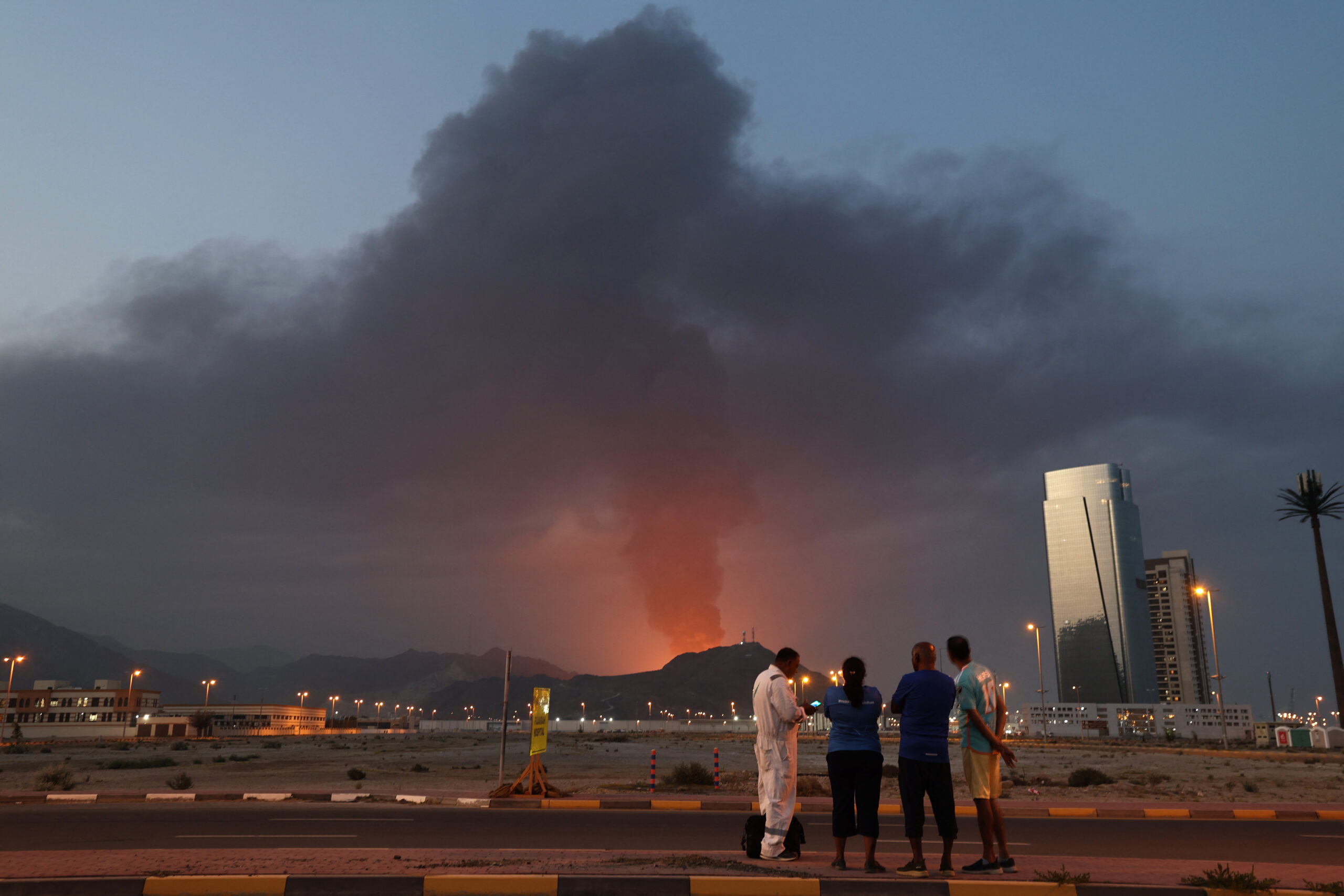
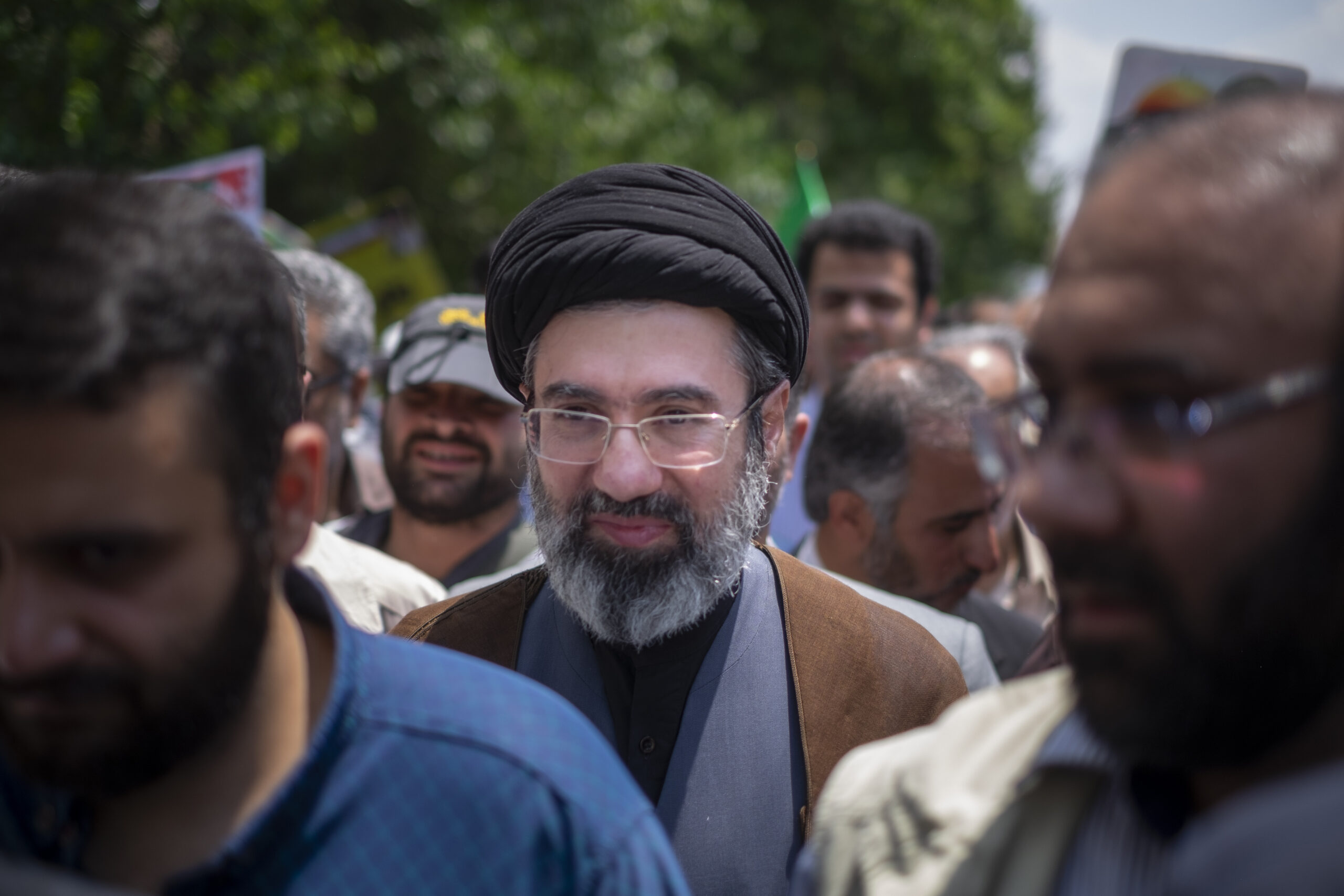
Mojtaba Khamenei, Iran’s new supreme leader, issued his first public statement today that indicates he’s as hard-line as his late father: Khamenei demanded the U.S. shut all its military bases in the Gulf immediately and said he’ll continue to target the Strait of Hormuz in order to “pressure the enemy.” His statement was read on state media indirectly by a presenter, as reports indicate the 56-year-old was injured in an Israeli strike and he has not been seen in public since.
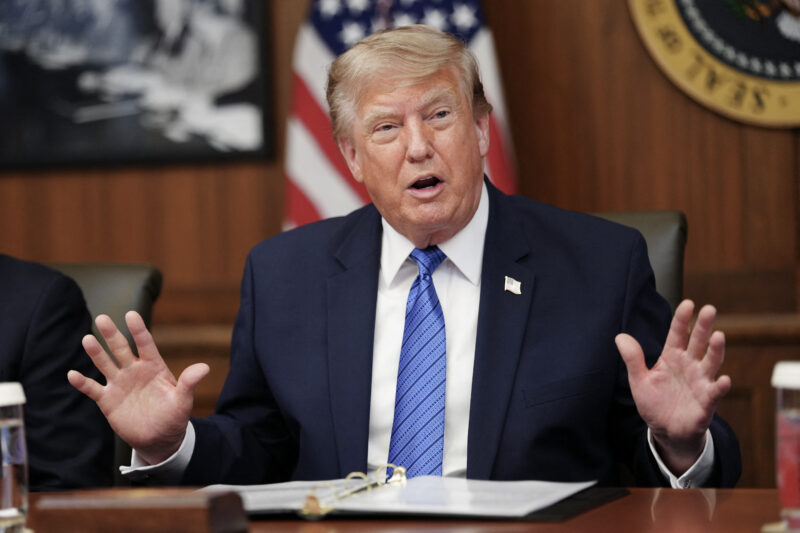
President Donald Trump did not seem dissuaded — he posted on Truth Social, “when oil prices go up” the U.S. makes “a lot of money,” but “of far greater importance to me, as President, is stopping an evil Empire, Iran, from having Nuclear Weapons”…
Following a Republican convening this week focused on combating right-wing antisemitism, the center-left think tank Third Way urged fellow Democrats to follow the lead of Sen. Ted Cruz (R-TX) in calling out antisemitism within their own party.
“We certainly believe that Cruz was right and our side has a real antisemitism problem too that too many Democrats are failing to face squarely,” Matt Bennett, the group’s executive vice president for public affairs, told JI’s Gabby Deutch.
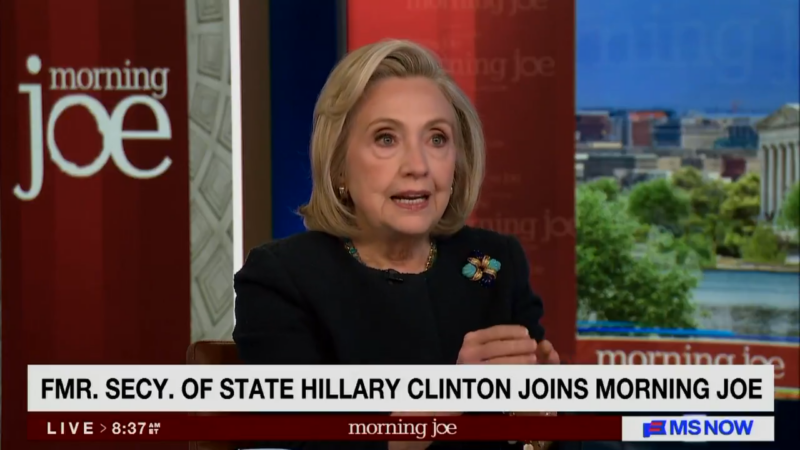
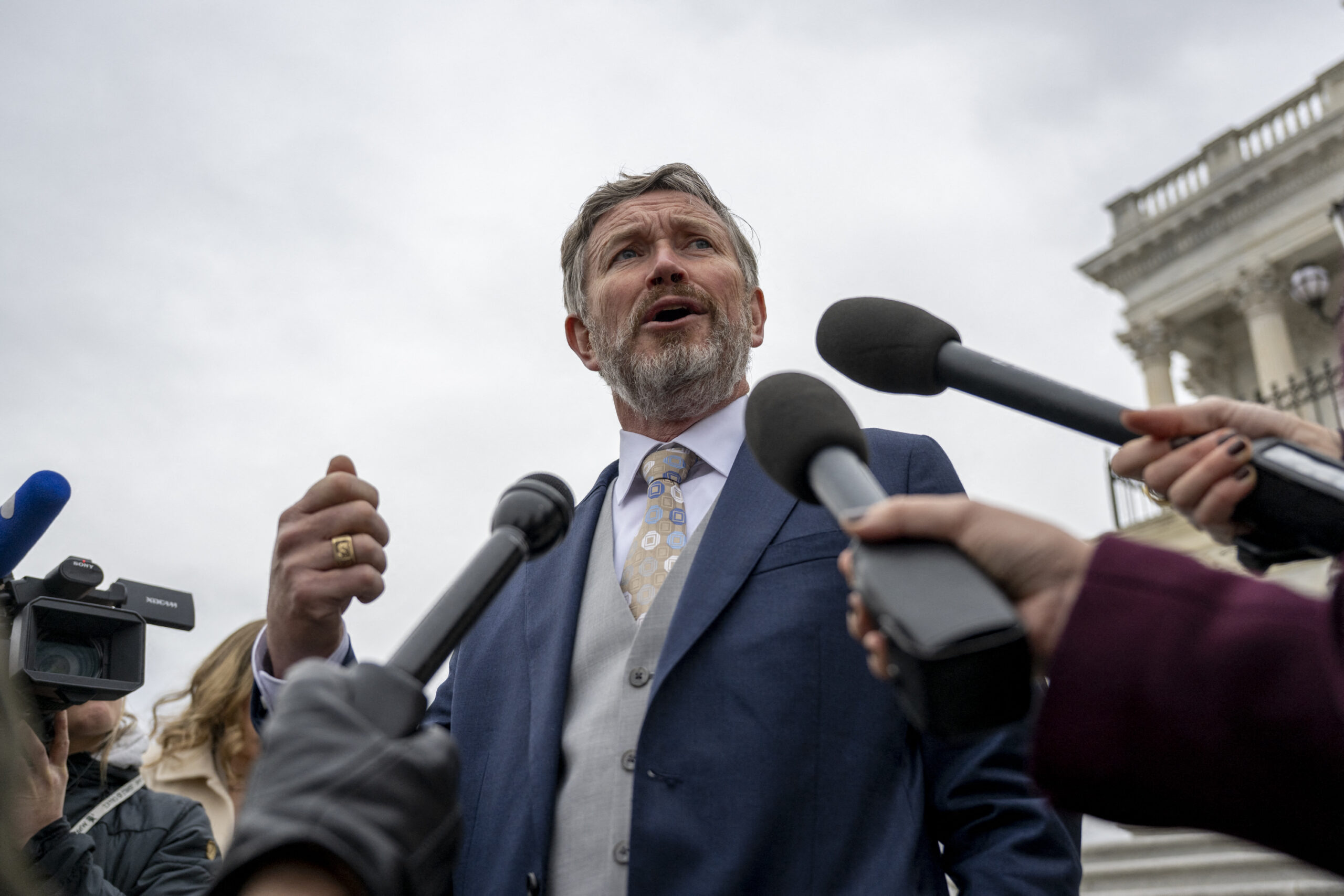
Similar comments from Third Way staff sparked a public clash with Rep. Ro Khanna (D-CA), who defended controversial left-wing figures including antisemitic streamer Hasan Piker and said the true issue lies with the “neocons” in the party…
Less than a week until primary election day in Illinois’ 9th Congressional District, outside spending in the race is approaching $9 million, the majority of which is aimed at boosting state Sen. Laura Fine, a pro-Israel Democrat. Nearly half of all outside spending has come from the Elect Chicago Women super PAC, widely rumored to be connected to pro-Israel groups.
Another PAC rumored to be connected to AIPAC, Chicago Progressive Partnership, has spent over $1 million attacking anti-Israel social media influencer Kat Abughazaleh, including a new ad that spotlights her support from James “Fergie” Cox Chambers Jr., a communist political activist and scion of the billionaire Cox family often involved in radical-left causes…
A new poll commissioned by the far-left advocacy group Justice Democrats finds Rep. Steve Cohen (D-TN) in a competitive race for his seat — he’s now neck-and-neck with his primary opponent, state Rep. Justin Pearson. Pearson, a progressive legislator, gained public attention for being expelled from the Statehouse in 2023 for participating in a gun control protest on the floor…
Former New York City Mayor Michael Bloomberg endorsed Assemblyman Micah Lasher, his former staffer, in the hotly contested primary race for New York’s 12th Congressional District today, calling him “a key part of our team in City Hall.” Bloomberg plans to spend “millions of dollars” on a super PAC and ad campaign to boost Lasher, The New York Times reports, a notable effort by the popular former mayor to elevate Lasher among the pack…
Trump has delayed endorsing Sen. John Cornyn (R-TX) in the Texas Senate runoff against Attorney General Ken Paxton, which Trump implied last week he would do imminently, instead using the potential endorsement to pressure Senate Republicans to change filibuster rules and pass his voter-ID bill. Paxton raised the stakes by saying he might drop out if the bill passes, a move that forced Cornyn to shift his stance on the filibuster…
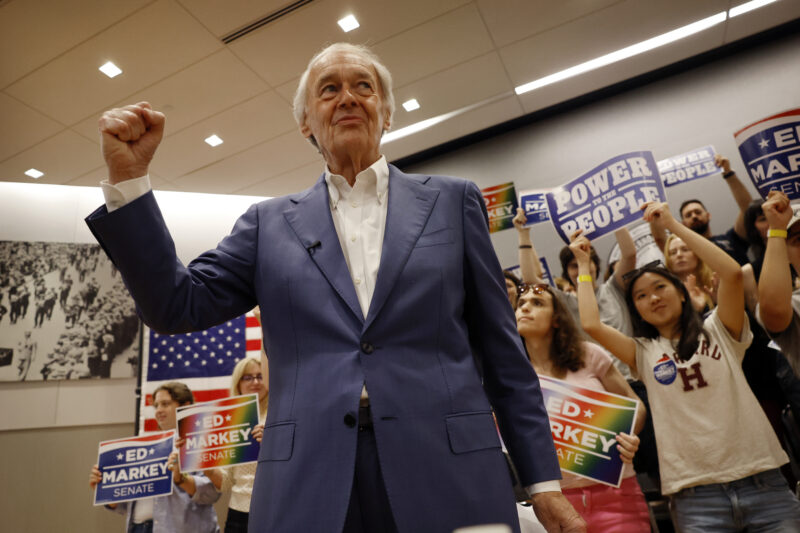
The Boston Globe looks at Rep. Seth Moulton’s (D-MA) efforts to get on the Democratic primary ballot in his race against Sen. Ed Markey (D-MA), which will require him to receive support from 15% of delegates at the state Democratic Party’s upcoming convention. Moulton is attempting to recruit unregistered voters to become delegates in order to boost his chances, which observers are split on…
Politico uncovers the past political stances and writings of Morris Katz, the Democratic operative and anti-Israel whisperer now behind several high-profile progressive campaigns, when he lauded former New York Gov. Andrew Cuomo and derided progressive icon Sen. Bernie Sanders (I-VT)…
Shortly after the organization elevated a new political director who is closely tied to neo-Nazi Nick Fuentes, College Republicans of America’s chapter at Georgetown University came under investigation by the school for a social media post in which it claimed “Muslims have no place in American society”…
The Wall Street Journal spotlights Adm. Brad Cooper, commander of CENTCOM, as he “stay[s] out of the politics of the war” in Iran “and remains focused on waging it”…
The Treasury Department issued sanctions against four “sham charity” groups in Turkey and Indonesia that it said are funneling money and resources to Hamas’ military wing, JI’s Marc Rod reports…
⏩ Tomorrow’s Agenda, Today
An early look at tomorrow’s storylines and schedule to keep you a step ahead
Keep an eye out in Jewish Insider for reaction to today’s attack on Michigan’s Temple Israel from Jewish leaders and leading lawmakers.
The South by Southwest festival will hold its annual #openShabbat experience for Jews in tech, film and music tomorrow in Austin, Texas.
A Saturday fundraiser for Rep. Zach Nunn (R-IA) with an appearance by Defense Secretary Pete Hegseth in Nunn’s home district in Iowa has been canceled; the event, called “Top Nunn” in reference to the “Top Gun” movies, had drawn scrutiny after several soldiers who had been stationed in Nunn’s district were killed in the course of the war with Iran.
The Jewish Funders Network international conference starts Sunday in San Diego.
HaZamir: The International Jewish Teen Choir performs at Lincoln Center in New York City on Sunday evening.
The Zionist Organization of America will host its Florida Superstar Gala Sunday evening, where it will honor Pastor John Hagee, founder of Christians United for Israel; Justice Department official Leo Terrell; and Rep. Randy Fine (R-FL), among others.
We’ll be back in your inbox with the Daily Overtime on Monday. Shabbat Shalom!
Stories You May Have Missed
POLITICAL TIGHTROPE
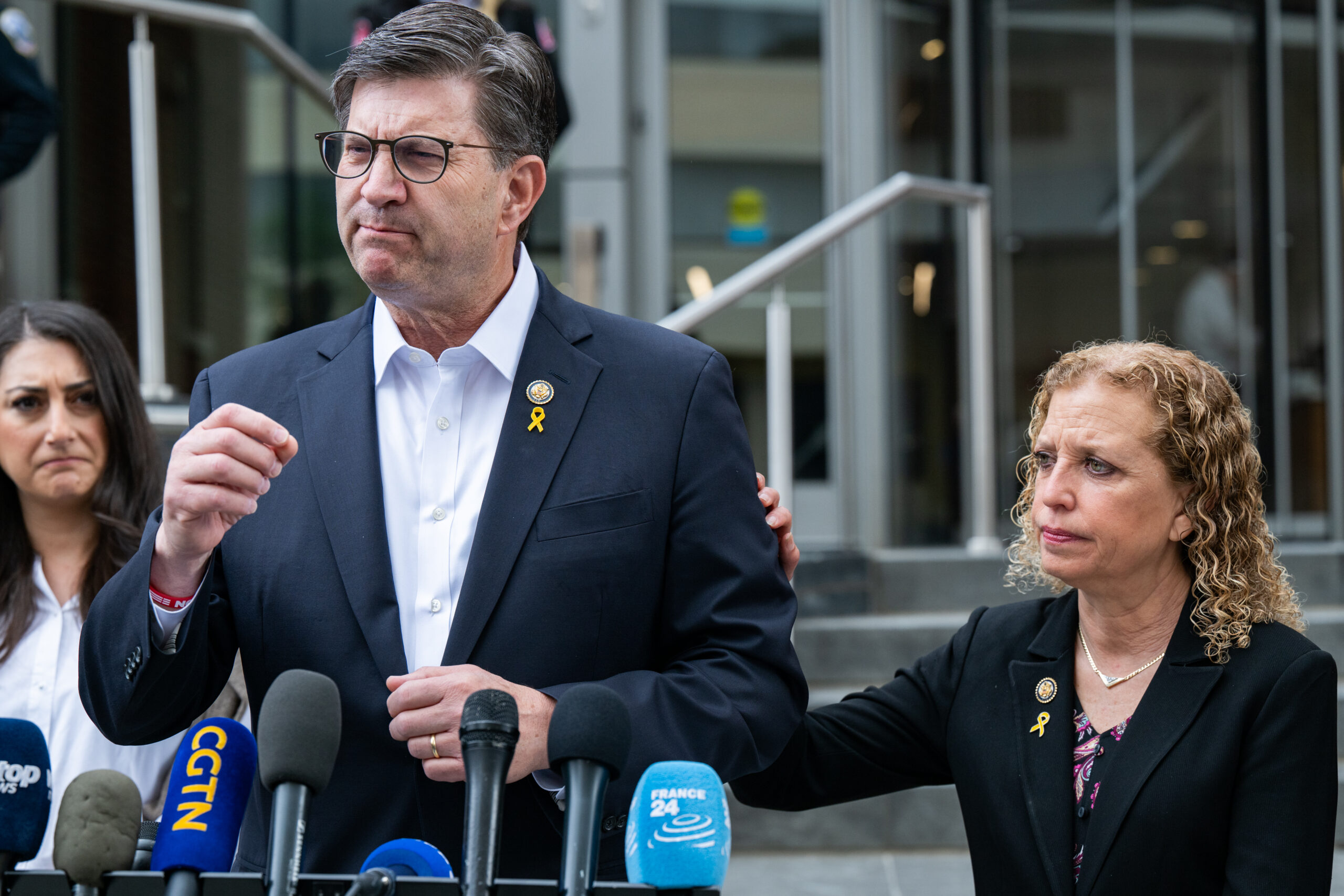
Rep. Debbie Wasserman Schultz said she would likely have voted to authorize force against Iran if the administration had approached Congress properly before launching the war
FEELING THE HEAT
Republican senators argued to JI that the war will ultimately be to the Gulf’s benefit, even if they’re feeling the pain now
About 120 of the rockets and missiles crossed from Lebanon into Israel during the Wednesday night barrage, with those not intercepted mostly striking Israel’s north
FADEL itani/AFP via Getty Images
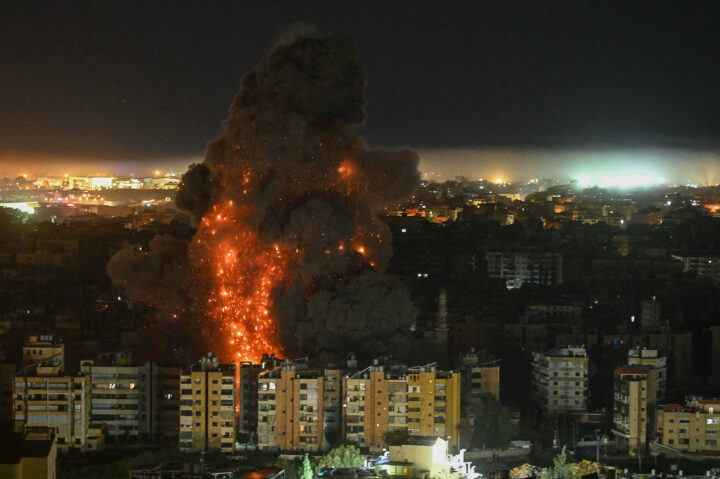
A fireball rises from the site of an Israeli airstrike that targeted an area in Beirut's southern suburbs overnight March 10 to 11, 2026.
Israel continued extensive strikes on Lebanon on Thursday morning, after Hezbollah shot about 200 projectiles at northern Israel the night before.
About 120 of the rockets and missiles crossed from Lebanon into Israel during the Wednesday night barrage, with those not intercepted mostly striking Israel’s north.
The Magen David Adom emergency service treated two individuals with mild injuries following the missile fire from Lebanon.
A home, with the exception of its safe room, was destroyed, and two others were damaged in Moshav Haniel in Emek Hefer, a region of Israel 70 miles from the Lebanon border.
Soon after, Iran launched missiles at Israel, a move officials said likely indicated that the two Wednesday night barrages were coordinated between Tehran and Beirut.
A senior Israeli official briefed the media on Thursday morning that a significant expansion of operations in Lebanon would soon take place, but did not say whether that would include a broad ground invasion.
Shortly after Wednesday night’s barrage began, the IDF announced “a large-scale wave of strikes on Hezbollah infrastructure in the Dahieh area of Beirut” while “interception efforts [were] ongoing.”
As part of that wave, the IDF struck 10 Hezbollah sites within 30 minutes, including an intelligence base and headquarters of the elite Radwan unit. On Thursday morning, the IDF reported launching 200 munitions from air and sea at 70 Hezbollah targets in Beirut.
“The Hezbollah terrorist organization has embedded its terrorist infrastructure in the heart of Beirut under the cover of the civilian population,” the IDF Spokesperson’s Office said.
IDF Spokesperson in Arabic Avichay Adraee posted evacuation warnings on social media throughout the night and morning. Over half a million residents of Lebanon have evacuated since Hezbollah joined the war on Iran’s side last week.
In addition, troops of the IDF’s Mountain Brigade operated in Lebanon near the border with Israel to locate and destroy rocket launchers and weapons storage facilities.
The IDF reported “a wide-scale wave of strikes in Iran” on Thursday. In addition, according to Israeli and other Middle Eastern media, Israeli drones have been striking checkpoints manned by Iranian paramilitary militia Basij. The checkpoints had been set up on central arteries throughout Iran to try to suppress an uprising and limit movement.
The IDF intercepted Iranian missiles headed for Jerusalem on Thursday.
In addition to the two mild injuries from Lebanese missiles, Magen David Adom treated 45 people who were injured on their way to shelters or suffered from anxiety on Wednesday.
Since the start of Operation Lion’s Roar, MDA reported 759 physical casualties, of which 169 were caused by missile fire, including 12 fatalities.
Iran struck an oil tanker off the coast of the United Arab Emirates on Thursday, the sixth such ship targeted in the Gulf over two days, after attacking two vessels in Iraqi waters overnight, killing one. Iranian drones struck an oil facility in Bahrain, an airport in Kuwait, an Italian military base in Iraqi Kurdistan and a tower in Dubai on Thursday morning. The Saudi Defense Ministry said it intercepted a UAV targeting an oil field.
Also Thursday, Israeli Education Minister Yoav Kisch said that schools in northern Israel and the coastal strip, including Tel Aviv, are not expected to reopen in the coming days, while in other areas, school may reopen gradually, starting Monday.
Plus, Israel considers building Somaliland base
Cheriss May/NurPhoto via Getty Images
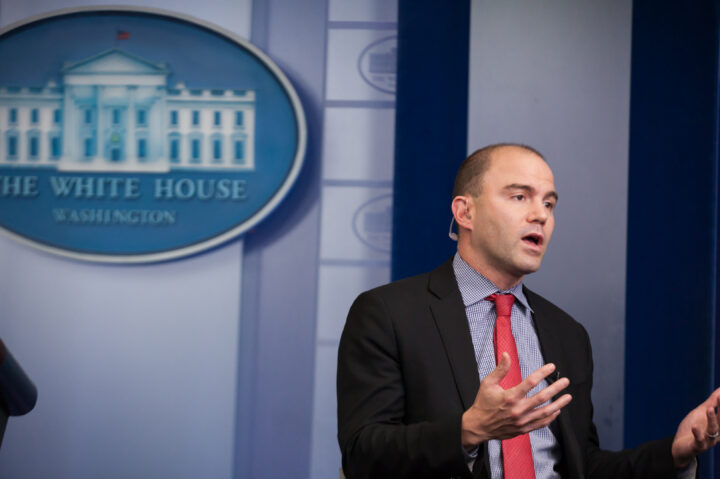
Ben Rhodes, then-deputy national security advisor to President Barack Obama, participates in an interview with press at the White House in on Wednesday, December 14, 2016.
This P.M. edition is reserved for our premium subscribers — offering a forward-focused read on what we’re tracking now and what’s coming next. Please don’t hesitate to share your thoughts and feedback by replying to this email.
📡On Our Radar
Notable developments and interesting tidbits we’re tracking
The Strait of Hormuz continues to be a key site of conflict in the U.S. and Israeli war against Iran — a spokesperson for the Iranian Armed Forces said in a video statement that the regime “will never allow even a single liter of oil to pass through the Strait of Hormuz for the benefit of America, the Zionists or their partners,” shortly after several ships were struck by missiles while passing through or near the strait…
The International Energy Agency announced its member countries will release 400 million barrels of oil from their emergency reserves in order to blunt the impacts of the war, the largest emergency release in history…
President Donald Trump told Axios that the war will end “soon” because there’s “practically nothing left to target” in Iran. U.S. and Israeli officials are reportedly preparing for at least two more weeks of hostilities…
Jewish Insider’s Matthew Shea speaks to experts and former Trump administration officials about Qatar’s potentially changing calculus on hosting Iranian-backed Hamas leaders as Tehran continues to attack the Gulf state…
A preliminary U.S. military investigation has found the deadly strike on a school in Iran was caused by the U.S. as it was targeting a nearby Iranian base, sources told The New York Times…
The FBI recently warned California police departments that Iran may launch a drone attack in the state, ABC News reports. As of last month, “Iran allegedly aspired to conduct a surprise attack using unmanned aerial vehicles from an unidentified vessel off the coast of the United State Homeland, specifically against unspecified targets in California, in the event that the U.S. conducted strikes against Iran,” the bureau’s alert read…
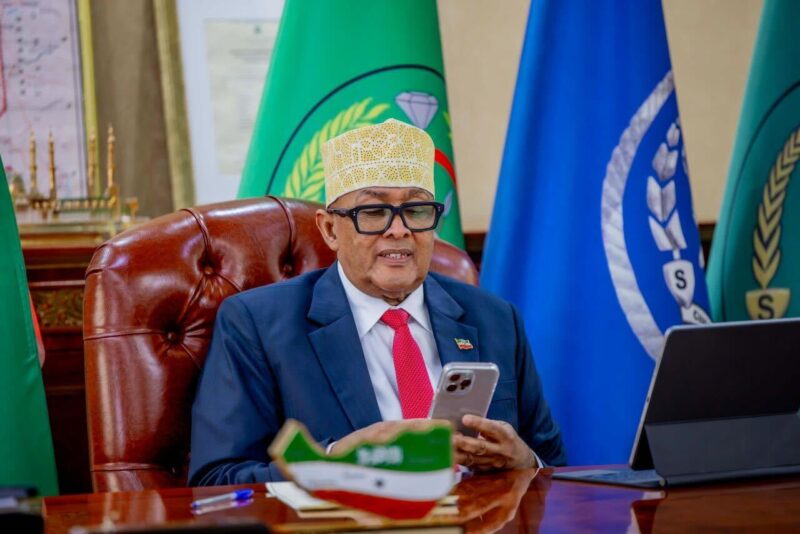
Israel is considering building a base in Somaliland, which it recently recognized as an independent country, in order to combat the threat of the Houthis, which are based in Yemen just across the Gulf of Aden…
Iran will not participate in the 2026 World Cup after the U.S. “assassinated our leader,” Iran’s sports minister told state media, shortly after Trump said he would still “welcome” the team’s participation. Iran’s national men’s soccer team was set to compete in June in Los Angeles and Seattle; several athletes from the country’s women’s team recently defected to Australia after playing in a match there…
Spain permanently withdrew its ambassador to Israel, as the countries’ already tense relations worsen over Madrid’s opposition to the war in Iran…
House Republican leadership discussed ways to incorporate an expected emergency supplemental for the U.S. military into the budget reconciliation process, Politico reports, rather than attempting to rally support from Senate Democrats for the 60-vote threshold that would otherwise be required in the Senate on a stand-alone vote. The move would also sidestep a vote that could be politically challenging for some House Republicans…
Former Obama administration official Ben Rhodes, a leading Israel critic on the left, said on an episode of his “Pod Save the World” podcast that Democrats who vote in favor of funding for the war with Iran “should be primaried. I don’t want you in the Democratic Party.”
Rhodes and co-host Tommy Vietor referenced the four Democrats who voted against a war powers resolution in the House as ripe for primary challenges. Left unsaid: Three of the four — Reps. Greg Landsman (D-OH), Henry Cuellar (D-TX) and Jared Golden (D-ME) — represent GOP-leaning seats that would likely flip with a more progressive Democratic candidate…
In a sign of the political gulfs between the Israeli and American left, Yair Zivan, who is an advisor to Israeli Opposition Leader Yair Lapid, pushed back on Sen. Bernie Sanders (I-VT) after the senator criticized Israeli operations in Lebanon.
“Senator, I work for the Leader of the Opposition in Israel and I’m writing this from a bomb shelter with my children. Israel is under attack by fanatical terrorists who want to murder us. It never ceases to amaze that your humanity never seems to extend to Israeli lives,” Zivan wrote on X…
Pennsylvania Gov. Josh Shapiro said he called New York City Mayor Zohran Mamdani to “check in on him and his wife to make sure they’re doing okay” after the attempted terror attack outside Mamdani’s official residence over the weekend. “As someone who’s had to deal with political violence, I know it can take a toll,” Shapiro said. The governor previously spoke with Mamdani after his win in November to express concerns over his rhetoric about Israel…
⏩ Tomorrow’s Agenda, Today
An early look at tomorrow’s storylines and schedule to keep you a step ahead
Keep an eye out in Jewish Insider for a look at the far-right ties of the new political director of College Republicans of America.
The Senate Health, Education, Labor and Pensions Committee will hold a hearing on foreign influence in American higher education, including testimony from the Foundation for Defense of Democracies’ Craig Singleton.
The annual weeklong South by Southwest festival kicks off tomorrow in Austin, Texas. Appearing at the summit, whose 300,000 attendees include many film and media professionals, is anti-Israel protest leader Mahmoud Khalil, who will speak about “the system that tried to silence him, and the personal and political stakes of resistance.”
Stories You May Have Missed
PRIMARY PRESSURE

The pro-Israel Democratic group warns that nominating far-left candidates will cost the party winnable seats against GOP incumbents
DEMOCRATIC DIVIDE

The Pennsylvania senator told JI about the U.S. military operation’s successes: ‘Why can’t a single Democrat agree that this is a good thing for the world and the region?’
Plus, CNN walks back coverage downplaying NYC terror attempt

JULIEN DE ROSA / AFP via Getty Images
A person points at a page on the Marinetraffic website that shows commercial boats traffic on the edge of the Strait of Hormuz near the Iranian coast, in Paris on March 4, 2026.
This P.M. edition is reserved for our premium subscribers — offering a forward-focused read on what we’re tracking now and what’s coming next. Please don’t hesitate to share your thoughts and feedback by replying to this email.
📡On Our Radar
Notable developments and interesting tidbits we’re tracking
President Donald Trump denied reports that U.S. intelligence has found Iran is taking steps to deploy mines in the Strait of Hormuz, but said if it has been done, “we want them removed, IMMEDIATELY!” If not, he warned, “the Military consequences to Iran will be at a level never seen before,” and if they are removed, “it will be a giant step in the right direction.”
Shortly after, Trump confirmed the U.S. has “hit, and completely destroyed, 10 inactive mine laying boats and/or ships.”
Aramco, the world’s top oil exporter out of Saudi Arabia, warned oil markets will face “catastrophic consequences” if the strait continues to be impacted by the war. “While we have faced disruptions in the past, this one by far is the biggest crisis the region’s oil and gas industry has faced,” CEO Amin Nasser told reporters…
The White House asked Israel not to target any more Iranian energy facilities, Axios reports, citing harm to Iranian civilians, the hope to cooperate with the Iranian oil industry after the war and potential for Tehran to retaliate against Gulf states…
Around 140 U.S. servicemembers have been injured in the course of the campaign against Iran, Defense Department spokesperson Sean Parnell said today, the majority of whom have already returned to service…
After receiving a classified briefing in the Senate Armed Services Committee, Sen. Richard Blumenthal (D-CT) told reporters, “I emerged from this briefing as dissatisfied and angry, frankly, as I have from any past briefing in my 15 years in the Senate. … We seem to be on a path toward deploying American troops on the ground in Iran.”
Blumenthal continued, “There is also, as disturbingly as anything else, the specter of active Russian aid to Iran … with intelligence and perhaps with other means, and China also may be assisting”…
The U.S. ordered the departure of its diplomats and their families from southern Turkey after two attempted Iranian missile strikes in the area; it’s the first mandated departure of U.S. officials outside of the Gulf and Lebanon since the start of the war…
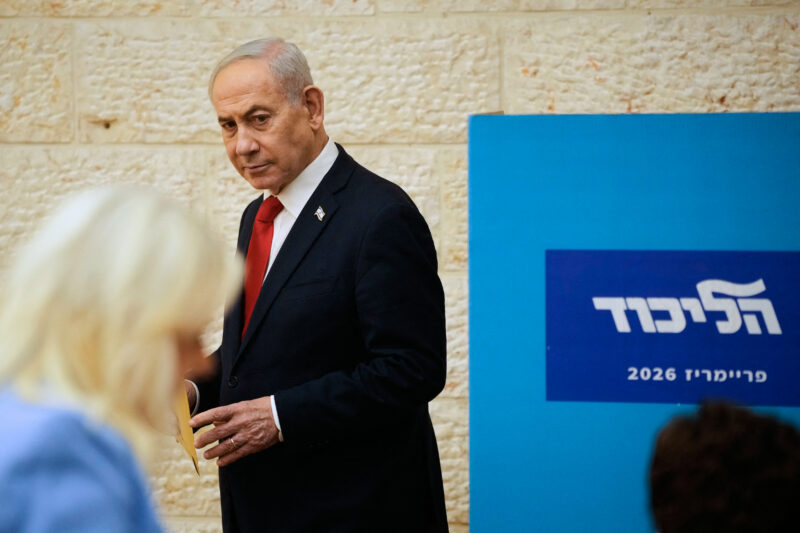
Israeli Prime Minister Benjamin Netanyahu issued a statement to the “people of Iran” hinting at a coming opportunity for a popular uprising. He wrote on X, “We are waging a historic war for liberty. This is a once in a lifetime opportunity for you to remove the Ayatollah regime and gain your freedom. … In the coming days we will create the conditions for you to grasp your destiny. … When the time is right, and that time is fast approaching, we will pass the torch to you”…
CNN significantly changed a story and removed a social media post today that downplayed the attempted terror attack outside Gracie Mansion, New York City Mayor Zohran Mamdani’s official residence, over the weekend, initially writing that the suspects traveled from Pennsylvania for “what could’ve been a normal day” during the city’s “abnormally warm weather.”
CNN later deleted its post on X and added an editor’s note to its story, saying that the language “failed to reflect the gravity of the incident thereby breaching the editorial standards we require for all our reporting”…
The NYPD evacuated Carl Schurz Park near the mayor’s mansion today after a suspicious device was found in the vicinity; it was determined to be “non-threatening”…
Secure Community Network said there was no known threat to the Jewish community following an active shooter incident Tuesday afternoon near the Agudath Israel of Baltimore synagogue, during which a Baltimore Police officer and a suspect were shot in what appeared to be a domestic incident…
A week ahead of Illinois’ primary election, a new poll conducted by an outside group backing Rep. Raja Krishnamoorthi (D-IL) shows the congressman with a double-digit lead in the race for Senate, up 11 points over his next closest competitor, Lt. Gov. Juliana Stratton. Over 87,000 early votes have already been cast in the race, 40,000 votes more than had been cast at the same point in early voting during the 2022 primaries…
Morris Katz, the Democratic strategist who has shaped the campaigns of progressive politicians hostile to Israel including Mamdani and Maine Senate candidate Graham Platner, is now behind the campaign of another populist Democrat: Allison Ziogas, a first-time candidate attempting to unseat Rep. Nicole Malliotakis (R-NY). Trump won 61% of the vote in Malliotakis’ Staten Island–based district in 2024, making it difficult for any Democrat to prevail…
The Anti-Defamation League released its 2026 Campus Antisemitism Report Card, which showed a “clear upward trend” in universities taking steps to address antisemitism, the organization said. Almost two dozen schools received A grades.
UCLA Chancellor Julio Frenk celebrated his university’s improvement from a D to a B, but said in a statement, “a grade is a waypoint, not a destination. … While we have made clear progress in addressing antisemitism, we have more to do in our shared goal of eradicating it in its entirety”…
⏩ Tomorrow’s Agenda, Today
An early look at tomorrow’s storylines and schedule to keep you a step ahead
Keep an eye out in Jewish Insider for a look at a late flurry of spending against far-left social media influencer Kat Abughazaleh in Illinois’ 9th Congressional District, as pro-Israel groups indicate concern that the virulently anti-Israel Democrat could win the seat.
President Donald Trump will host an event in Hebron, Ky., tomorrow, with Republican congressional candidate Ed Gallrein in attendance. Gallrein is challenging Rep. Thomas Massie (R-KY) with Trump’s endorsement — Massie will not be attending the event, which is taking place in his district.
Fox News’ Bret Baier will speak in conversation with journalist Gary Rosenblatt at Temple Emanu-El’s Streicker Center in New York City.
Stories You May Have Missed
SCOOP

Local DSA chair Justin Yuan wrote on social media, ‘Love Hamas. Simple as’
BLUEGRASS BATTLE
President Trump is set to rally with Massie’s opponent this week
The president also predicted the operation would be a ‘short-term excursion’

Roberto Schmidt/Getty Images
Special Envoy to the Middle East Steve Witkoff listens as U.S. President Donald Trump speaks to reporters during a news conference at Trump National Doral Miami on March 9, 2026 in Doral, Florida.
President Donald Trump said repeatedly on Monday that he believed the Iranian regime was going to “take over the Middle East” and would have obtained a nuclear weapon “within weeks” had he not ordered the U.S. military operation against Iran.
Trump made the comments from his Doral, Fla., golf club at a press conference while defending his decision to have the U.S. launch its military operation in Iran, noting that Iran had a “number of missiles they were able to buy and make over the last six months, and those missiles were aimed at various countries.”
“When you look at over 1,000 missiles shot at, like the UAE, they were looking to take over the Middle East,” Trump said. “We got there first. We’re lucky.”
“If I didn’t hit them first, they were going to hit our allies first,” he continued. Had the U.S. not struck Iranian nuclear sites last June, “that was definite, because they would’ve had a nuclear weapon within a matter of weeks.”
Trump said that negotiations between the U.S. and Iran on the latter’s nuclear ambitions had reached a stalemate last year because the Iranians told Special Envoy Steve Witkoff “essentially, in a real nutshell, we want to continue to build nuclear weapons.”
“The situation was very quickly approaching the point of no return, and the United States found it intolerable. In my opinion, based on what Steve and Jared [Kushner] and [Secretary of Defense] Pete [Hegseth] and others were telling me, [Secretary of State] Marco [Rubio] was so involved, I thought that they were going to attack us,” Trump said. “If we didn’t do this at the time we did it, I think they had a mind to attack us.”
Trump, who is in Doral for the House Republicans’ retreat, made similar comments while discussing the ongoing U.S. military operation in Iran earlier Monday in a speech to Republican lawmakers and donors.
“Within a week, they [Iran] were going to attack us,” he told the crowd at the Republican Members Issues Conference.
In comments at the retreat and the presser, Trump touted the progress made in the nine days since the U.S. first struck Iran as evidence that the operation had been a “tremendous success” thus far.
“We’re achieving major strides toward completing our military objective, and some people could say they’re pretty well complete. We’ve wiped every single force in Iran out very completely,” Trump told reporters, adding that “most of Iran’s naval power has been sunk” and the regime’s “drones are way down.”
“We continue to target Iran’s drone and missile capability,” he continued. “We’ve struck over 5,000 targets to date, some of them very major targets, and we’ve left some of the most important targets for later, in case we need to do it. If we hit them, it’s going to take many years for them to be rebuilt, having to do with electricity production and many other things. So we’re not looking to do that if we don’t have to.””
About the future of Iran’s leadership, Trump said, “We want to be involved. We don’t want another president that maybe wouldn’t be willing to do what I’m willing to do, for the good of the world, for the good of our nation, to be stuck with a situation in five years or 10 years.”
Speaking to attendees at the GOP retreat, the president described the U.S. attacks on Iran as a “little excursion” that he expected would “be a short-term” operation.
“We took a little excursion because we felt we had to do that to get rid of some evil,” Trump said. “And I think it’s going to be a short-term excursion.”
Trump also acknowledged the broader differences between himself and Vice President JD Vance on foreign policy matters at the presser, but said that Vance was supportive of his decision to strike Iran.
“We get along very well on this. He was, I would say, philosophically a little bit different than me. I think he was maybe less enthusiastic about going, but he was quite enthusiastic.”
Plus, Trump says Iran operation 'very complete'

Sean Gallup/Getty Images
Sen. Lindsey Graham (R-SC) speaks at the 62nd Munich Security Conference on February 13, 2026 in Munich, Germany.
This P.M. edition is reserved for our premium subscribers — offering a forward-focused read on what we’re tracking now and what’s coming next. Please don’t hesitate to share your thoughts and feedback by replying to this email.
📡On Our Radar
Notable developments and interesting tidbits we’re tracking
President Donald Trump praised Australian Prime Minister Anthony Albanese for assisting the members of Iran’s women’s soccer team, who are in Australia competing in the Women’s Asian Cup, amid fears for their persecution should they be forced to return home.
The president had called for Albanese to grant the athletes political asylum, saying they would “most likely be killed” if they were repatriated to Iran, and later commended him for “doing a very good job having to do with this rather delicate situation,” with five athletes “already taken care of, and the rest are on their way”…
Trump disputed reports that the U.S. is preparing to deploy ground troops to secure nuclear material at the Isfahan enrichment site in Iran, telling the New York Post, “We haven’t made any decision on that. We’re nowhere near it.” He also told CBS News that “the war is very complete, pretty much,” and the U.S. is “very far” ahead of his initial four-to-five-week timeline…
Trump has communicated to aides that he would support the assassination of Mojtaba Khamenei, Iran’s new supreme leader, if Khamenei does not acquiesce to U.S. demands, including ending Iran’s nuclear program, U.S. officials told The Wall Street Journal…
The Lebanese government has requested direct negotiations with Israel, sending the message through U.S. Ambassador to Turkey Tom Barrack, Axios reports. Washington and Jerusalem were reportedly skeptical about the idea, with Beirut thus far failing to disarm or rein in Hezbollah activities as the terror group continues to launch missiles into Israel…
NATO missile defense systems intercepted another Iranian missile heading for Turkey, a spokesperson announced today, the second time Iran has attempted to strike the NATO country’s territory…
Sen. Lindsey Graham (R-SC) threatened to impose “consequences” on Saudi Arabia for its unwillingness to join the U.S. campaign against Iran, as the U.S. evacuates its embassy in Riyadh and the kingdom continues to endure Iranian attacks, which have so far resulted in the deaths of two civilians and one U.S. servicemember. “Question — why should America do a defense agreement with a country like the Kingdom of Saudi Arabia that is unwilling to join a fight of mutual interest?” Graham wrote on X…
Talks to advance Trump’s 20-point peace plan in Gaza, including the issue of Hamas’ disarmament, have been at a standstill during the campaign against Iran, Reuters reports, as Gulf countries that pledged funds to help rebuild the enclave have come under fire and flight disruptions have prevented mediators from traveling…
The criminal complaint filed in the Southern District of New York today against the two Pennsylvania men who allegedly hurled improvised explosive devices toward a protest against New York City Mayor Zohran Mamdani on Saturday stated that both men explicitly identified ISIS as their inspiration, Jewish Insider’s Will Bredderman reports.
“This isn’t a religion that just stands when people talk about the blessed name of the Prophet [Muhammad],” Emir Balat, 18, told police, according to the charging documents. He also said he had hoped to pull off something “even bigger” than the 2013 Boston Marathon bombing, which he noted had caused “only three deaths”…
The White House moved today to designate the Sudanese Muslim Brotherhood as a Specially Designated Global Terrorist entity and announced plans to impose a Foreign Terrorist Organization designation on March 16, JI’s Matthew Shea reports, in the Trump administration’s latest crackdown against Muslim Brotherhood affiliates…
A new poll from the campaign of Rushern Baker, former executive of Maryland’s Prince George’s County, found him leading the crowded Democratic field seeking to succeed retiring Rep. Steny Hoyer (D-MD). Though a plurality of likely primary voters (28%) said they’re still undecided, Baker polled at 22% compared to former U.S. Capitol Police officer Harry Dunn’s 15% and Hoyer-endorsed state Del. Adrian Boafo’s 3%…
Rep. Kevin Kiley of California officially switched his party affiliation from Republican to independent — he had filed for reelection as an independent, but said today he would leave the party for the rest of his term as well. The move narrows the GOP majority even further, 217-214, but Kiley said he’ll continue to caucus with Republicans, blunting the impact…
Politico looks at the flurry of independent candidates seeking to unseat congressional Republicans in GOP-leaning districts, clashing with local Democratic establishments in the process…
⏩ Tomorrow’s Agenda, Today
An early look at tomorrow’s storylines and schedule to keep you a step ahead
Keep an eye out in Jewish Insider — we’ll have a profile of Dario Amodei, the Jewish CEO of Anthropic, which sued the Pentagon today over its decision to label the AI company a “supply chain risk.”
The Senate Armed Services Committee is expected to receive a classified briefing on the status of the U.S. and Israeli campaign against Iran.
The Republican Jewish Coalition and conservative magazine National Review will hold a daylong symposium on antisemitism, with remarks from Sens. Jim Banks (R-IN), Tom Cotton (R-AR) and Ted Cruz (R-TX); Noah Pollak, senior advisor at the Department of Education; Kenneth Marcus, founder of the Louis D. Brandeis Center for Human Rights Under Law; Rabbi Yehuda Kaploun, the State Department’s antisemitism envoy; Leo Terrell, senior counsel to the assistant attorney general for civil rights; and Texas Lt. Gov. Dan Patrick.
Georgia’s 14th Congressional District will hold its special election to fill the seat vacated by Rep. Marjorie Taylor Greene (R-GA), with more than a dozen candidates on the all-party ballot. The district leans strongly Republican but the GOP field is split among nine candidates, raising the possibility that the Democratic front-runner — retired Army Brig. Gen. Shawn Harris — could slip into the April runoff.
Stories You May Have Missed
SCOOP

NYC First Lady Rama Duwaji showed support for far-left orgs applauding Hamas rampage
POWER PLAYER

Ad maker Morris Katz has been instrumental in elevating Israel antagonists into office as part of a move to reshape the Democratic Party
Plus, Kristi Noem gets the boot
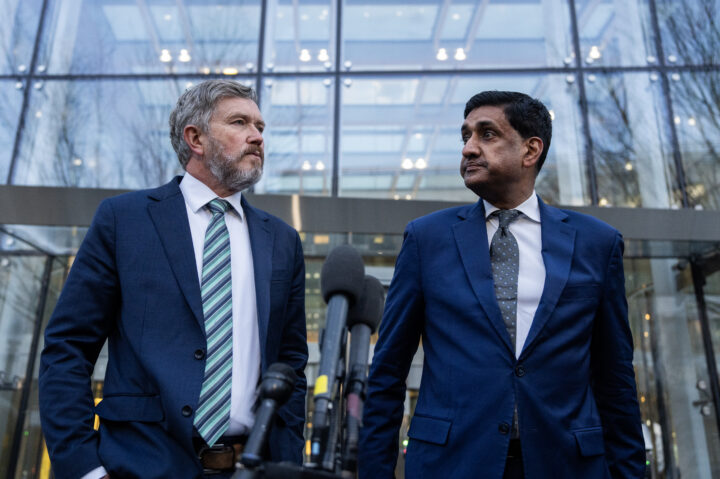
Tom Williams/CQ-Roll Call, Inc via Getty Images
Reps. Thomas Massie, (R-KY), left, and Ro Khanna, (D-CA), conduct a news conference outside a Department of Justice office in NoMa on Monday, February 9, 2026.
Good Thursday afternoon,
This P.M. edition is reserved for our premium subscribers — offering a forward-focused read on what we’re tracking now and what’s coming next.
It’s me again — Danielle Cohen-Kanik, U.S. editor at Jewish Insider and curator, along with assists from my colleagues, of the Daily Overtime. Please don’t hesitate to share your thoughts and feedback by replying to this email.
📡On Our Radar
Notable developments and interesting tidbits we’re tracking
President Donald Trump announced he’s replacing Kristi Noem as homeland security secretary with Sen. Markwayne Mullin (R-OK), after Noem had rankled the president and some Republican members of Congress with her oversight of widespread turmoil at the agency, among other issues. Mullin still needs to be confirmed by the Senate to assume the post.
Mullin, if confirmed, would take the helm of DHS amid its continued partial shutdown, and as it has repeatedly come under fire for its handling of issues related to antisemitism from lawmakers and Jewish community groups. Noem, meanwhile, will become special envoy to a new security initiative for the Western Hemisphere being launched by Trump this weekend…
House Speaker Mike Johnson (R-LA) and other GOP leadership called on Rep. Tony Gonzales (R-TX) to drop out of his reelection race, after the lawmaker admitted yesterday to having an affair with a staffer who later committed suicide. Gonzales is headed to a May runoff with his primary opponent, social media influencer Brandon Herrera; if Gonzales does step aside, Herrera, who has a history of antisemitic posts about the Holocaust, is all but guaranteed the GOP nomination in a solidly Republican district…
Trump said he “[has] to be involved in the appointment” of the next Iranian leader, in an interview with Axios, “like with Delcy [Rodriguez] in Venezuela.” He called Mojtaba Khamenei, son of the late Supreme Leader Ayatollah Ali Khamenei who has emerged as his father’s likely successor, “unacceptable.” The president’s comments seem to widen the administration’s stated war aims, which have thus far focused on eliminating Iran’s naval, air and nuclear assets.
Trump also insisted in the interview that Israeli President Isaac Herzog issue a pardon for Prime Minister Benjamin Netanyahu “today,” as he wants Netanyahu “to focus on the war and not on the f**king court case. I want the only pressure on Bibi to be the fighting against Iran”…
Some Democratic lawmakers — including Sens. Jack Reed (D-RI), Gary Peters (D-MI), Tim Kaine (D-VA) and Elissa Slotkin (D-MI) — told Politico they won’t “rule out” voting in favor of an emergency supplemental funding request to shore up the military should one come from the administration amid the campaign against Iran, despite widespread Democratic condemnation of the White House’s failure to consult Congress beforehand…
A vote on a war powers resolution to stop the military campaign in Iran failed in the House this afternoon 219-212, with two Republicans — Reps. Thomas Massie (R-KY) and Warren Davison (R-OH) — crossing the aisle in support and four Democrats — Reps. Greg Landsman (D-OH), Henry Cuellar (D-TX), Jared Golden (D-ME) and Juan Vargas (D-CA) — breaking with their party to oppose it.
Reps. Josh Gottheimer (D-NJ) and Jared Moskowitz (D-FL) both changed their positions and voted in favor of the resolution, weeks after Moskowitz told Jewish Insider — before the campaign began — that its sponsors “should just rename [the resolution] the Ayatollah Protection Act because that’s what it does.” Asked by JI about the shift in his stance today, Moskowitz answered, “I didn’t flip at all. Circumstances have changed since my first statement”…
Antisemitic podcaster Tucker Carlson’s latest extreme rhetoric took aim at the Chabad Lubavitch movement, with sweeping conspiratorial language accusing the Hasidic sect of seeking to start a “religious war” amid the U.S. and Israeli strikes on Iran, JI’s Gabby Deutch reports.
Carlson argued in an episode of his show that dropped last night that Jews see the war against Iran as an opportunity to feud with Islam and to target Christians. Carlson’s remarks prompted outrage among Chabad’s backers, who pointed out that Chabad emissaries have for decades played a crucial role in connecting American Jews to their faith and to each other…
In a conversation with ABC News, Trump said this afternoon that Tucker “has lost his way. I knew that a long time ago, and he’s not MAGA. MAGA is saving our country. … Tucker is really not smart enough to understand that”…
In a discussion with the New York Post, Trump railed against European countries which have continued to oppose the campaign against Iran, calling Spain “a loser” and the U.K. “very disappointing.” Canadian Prime Minister Mark Carney, meanwhile, said today that the Iran war is a “failure” of the international order, but would not “categorically rule out” Canada’s participation…
Iran’s indiscriminate attacks are bringing allies together worldwide: Ukrainian President Volodymyr Zelensky said he’s deploying specialists to assist the U.S. after Washington requested “specific support in protection” against Iranian Shahed drones, which Ukraine has been battling for several years as Russia has regularly deployed them, and the European Union and Gulf Cooperation Council held a joint meeting to discuss Iran’s “unjustifiable, unprovoked, and unlawful attacks”…
The New York Times profiles Lt.-Gen. Eyal Zamir, the IDF’s chief of staff, as he helps lead Israel’s efforts in the campaign against Iran…
⏩ Tomorrow’s Agenda, Today
An early look at tomorrow’s storylines and schedule to keep you a step ahead
Keep an eye out in Jewish Insider for a look at Jack Cocchiarella, the progressive Gen Z podcaster who has made a name for himself hosting high-profile Democratic candidates — including California Gov. Gavin Newsom in New Hampshire tonight — and who has recently taken a turn towards bashing Israel.
Team Israel will play its first games of the 2026 World Baseball Classic on Saturday against Venezuela and on Sunday against Nicaragua.
Also Sunday, AJ Edelman, the Israeli Olympic bobsled team pilot, will speak in conversation with Neil Goldman at Chabad of West Village in New York.
Birthright Israel’s Excelerate26 summit is also taking place in New York this weekend, with keynote speeches on Sunday from Robert Kraft, owner of the New England Patriots; Anne Neuberger, former deputy national security advisor during the Biden administration; and Sheryl Sandberg, former COO of Meta.
We’ll be back in your inbox with the Daily Overtime on Monday. Shabbat Shalom!
Stories You May Have Missed
MILITARY UPDATE

Tehran also attacked Azerbaijan for the first time, launching drones that injured two at Nakhchivan International Airport
ABOUT-FACE

The Arizona senator’s outspoken commentary has repeatedly placed blame for the military operation on Israel, leading one Jewish Democrat to pull her support
JINSA’s Hussein Mansour: ‘During the 12-day war, Qatar called Iran the sisterly Islamic Republic. Nine months later, Qatar is shooting down Iranian jets’

Fadel SENNA / AFP via Getty Images
A yacht sails past a plume of smoke rising from the port of Jebel Ali following a reported Iranian strike in Dubai on March 1, 2026.
Leading Middle East foreign policy experts warned that Iran’s decision to expand its response to the U.S.-Israeli bombing campaign by striking neighboring Arab states could prove to be a major strategic miscalculation — one that risks isolating Tehran further and potentially drawing Gulf countries to take action.
In the days following the launch of the campaign, Iran carried out widespread drone and missile strikes at multiple Arab nations, striking all members of the Gulf Cooperation Council — Bahrain, Kuwait, Oman, Qatar, Saudi Arabia and the UAE — as well as Jordan, Syria, Iraq and Oman.
Some Iranian strikes hit U.S. military installations in those countries, as well as the U.S. consulate in Dubai and the U.S. Embassy in Saudi Arabia, in what analysts said was an apparent attempt to raise the costs for Washington and lead allies to pressure it to halt the campaign.
But Iran also indiscriminately struck civilian targets — including airports, hotels and major oil and gas infrastructure — causing damage that is sending oil prices soaring and could have lasting economic consequences for the region. Prior to the attacks, several of the affected Arab governments had publicly stated they would not allow their territory to be used to launch strikes on Iran.
On Sunday, the U.S. issued a joint statement along with Saudi Arabia, Qatar, the UAE, Jordan, Bahrain and Kuwait, strongly condemning Iran’s “indiscriminate and reckless missile and drone attacks against sovereign territories across the region.”
The attacks have only continued and expanded since then: On Wednesday, Turkey’s Defense Ministry said that Iran had launched a ballistic missile towards its airspace that was intercepted by NATO defense systems. NATO spokeswoman Allison Hart condemned the incident, adding that NATO “stands firmly with all allies.”
While Arab officials have sought to distance their countries from the conflict and have largely remained silent as they weigh their options, experts said Iranian attacks are a significant error from Tehran that risks pushing Arab states toward direct involvement.
Alexander Gray, a former National Security Council chief of staff under President Donald Trump and a senior fellow at the Atlantic Council, told Jewish Insider that Iran’s decision to attack Arab countries was an “extraordinary strategic miscalculation.”
“Not only has Iran forced the region’s Arab states to openly support the U.S. and Israeli operation, but it has encircled itself far more effectively than any American diplomacy could have accomplished,” Gray said. “Over the long term, this unifying force may offer the U.S. a unique opportunity to return to the economic and diplomatic track of the Abraham Accords on a broader, regional basis after the conclusion of the military operation.”
Michael Koplow, chief policy officer at Israel Policy Forum, echoed those sentiments, calling the action a “risky move at best.”
“Iran’s decision to attack neighboring Arab states was intended to impose escalating costs that would theoretically put pressure on the U.S. to bring the war to a halt,” Koplow said. “So far it has backfired as the U.S. and Israel show no signs of backing down, while there are reports that the UAE, Saudi Arabia and Qatar are contemplating taking their own action against Iranian missiles and launchers.”
He added that the latest missile fired toward Turkey is “a sign of Iranian regime desperation,” and follows a similar pattern. Koplow also noted that Gulf states are likely to have a “much lower tolerance threshold for Iranian attacks and provocations” going forward, warning that the result could be “an even more isolated Iran facing a regional coalition that takes a more aggressive posture toward its own defense.”
Hussein Mansour, a fellow at the Jewish Institute for National Security of America, also said that Iran “catastrophically” miscalculated. “Iran created the conditions for the Gulf states to join the operation,” said Mansour. He added that Tehran’s decision to strike Arab neighbors destroyed “every diplomatic off-ramp it [Iranian leadership] had spent years cultivating.”
Dana Stroul, director of research at the Washington Institute for Near East Policy, said “there is no question that Iran’s strategy of punishing U.S. allies and partners backfired.”
“Gulf leaders are also making clear they maintain the right to defend themselves and are likely considering the proposition that, given Iran’s willingness to unleash its missile and drone arsenal, the best defense is a strong offense,” Stroul said. “It should not be a surprise if in the coming hours or days we see an expanded role for Gulf countries under attack.”
Amb. Dan Shapiro, a former official in both the Obama and Biden administrations, also told JI that the recent Iranian attacks increases the potential for Arab partners to get involved, noting that the situation underscores the value for Arab countries in “being part of a regional air defense network that includes the United States, but also includes Israel.”
“The Gulf states mostly wanted to stay out of this conflict,” Shapiro said. Now, ”there’s at least some possibility you see the UAE and possibly other Gulf states participate in some measure in operations against Iran.”
Mansour said the strikes have pushed the Gulf states further away from Iran and towards the West.
“Last June, during the 12-day war, Qatar called Iran ‘the sisterly Islamic Republic,’ Kuwait accused the U.S. of violating international law, and Saudi Arabia called for ‘restraint,’” said Mansour. “Nine months later, Qatar is shooting down Iranian jets. Saudi Arabia has authorized retaliation and offered to place ‘all its capabilities’ at the region’s disposal. The UAE has shuttered its embassy in Tehran.”
Richard Goldberg, a senior advisor at the Foundation for Defense of Democracies and former Trump administration official, told JI that he views Iran’s decision to attack Arab neighbors as more of a “reality of who the regime is” rather than a miscalculation.
“The regime is fighting for its survival, it sees all of these countries hosting U.S. bases or otherwise aligning with the U.S. in strategic ways. It knows one of their only cards to play is both to drain air defense assets and spike energy prices, so it wildly attacks civilian and critical infrastructure across the region,” said Goldberg. “The regime sees most of these countries as complicit in the attack simply by enabling the U.S. to operate in the Middle East, and it knows that if it can hit enough energy targets hard enough it can increase the pain point for the West.”
Kristin Diwan, a senior resident scholar at the Arab Gulf States Institute, said that while Arab Gulf states are “furious with Iran,” there are reasons for them to refrain from entering direct conflict.
“I suspect that [Arab states] not becoming a party to the war will be essential to negotiating workarounds with the Iranians,” said Diwan. “These will be necessary to get the breathing space in shipping and transport necessary to endure a long war.”
“This same logic will apply if Iran emerges from the war depleted but still dangerous,” Diwan added. “While America may depart the region, Iran will remain, and its Arab neighbors must find a way to live with it.”
Goldberg said that while there is “political benefit” for the U.S. in having Arab governments “endorse offensive military action against the regime,” he noted that “absent a major offensive military contribution to the war [from Arab states], the regime inflicts more costs on the region than it endures for doing so.”
“The GCC states are now on an escalation ladder they did not choose and cannot easily descend,” said Mansour. “If Iran continues to target energy infrastructure, I imagine the Gulf will retaliate severely. The bigger question is what happens after the war stops, and this will largely depend on how the war stops.”
Plus, Qatar rebuffs Iranian diplomacy

Kayla Bartkowski/Getty Images
Sen. John Cornyn (R-TX) speaks with press in the Hart Senate Office Building on April 07, 2025 in Washington, DC.
Good Wednesday afternoon,
This P.M. edition is reserved for our premium subscribers — offering a forward-focused read on what we’re tracking now and what’s coming next.
It’s me again — Danielle Cohen-Kanik, U.S. editor at Jewish Insider and curator, along with assists from my colleagues, of the Daily Overtime. Please don’t hesitate to share your thoughts and feedback by replying to this email.
📡On Our Radar
Notable developments and interesting tidbits we’re tracking
On the fifth day of the joint U.S.-Israeli military campaign against Iran, Secretary of Defense Pete Hegseth announced the accomplishment of several key objectives, Jewish Insider’s Matthew Shea reports, including that “the leader of the unit” responsible for the assassination attempt on President Donald Trump in November 2024 “has been hunted down and killed.”
Hegseth also revealed that an American submarine sank an Iranian warship by torpedo, the first time such a thing has been accomplished since World War II. Responding to concerns over whether the U.S. will be able to maintain enough munitions throughout the conflict, Hegseth dismissed “stories and speculation,” instead asserting: “Iran cannot outlast us”…
Iranian Foreign Minister Abbas Araghchi called Qatar’s foreign minister, Sheikh Mohammed bin Abdulrahman Al Thani, to insist that Iranian drones and missiles attacking Qatar are really directed at U.S. assets and “not intended to target the Gulf state.”
Al Thani “categorically rejected” that claim, according to Qatar’s foreign ministry, “citing the civilian and residential areas inside the country struck by the attacks.” He told Araghchi that Iran’s actions do not “indicate any genuine desire for de-escalation or resolution” and are trying to drag Qatar into a war “that is not theirs”…
Israeli Prime Minister Benjamin Netanyahu called the White House Monday to ask about intelligence that indicated the U.S. might be communicating with Iran, Axios reports, which administration officials told him was false. A New York Times report found that Iran’s Ministry of Intelligence had indirectly sent a message to the CIA attempting to start negotiations to end hostilities…
NATO air defense systems shot down an Iranian missile that was flying through Iraq and Syria on its way toward Turkey, the Turkish defense ministry said this morning. It’s the first attack by Iran on a NATO country’s territory. The U.K. and France, also NATO countries, are sending additional planes and warships to the region after Iran targeted a British base in Cyprus…
White House Press Secretary Karoline Leavitt, asked about reports of the U.S. arming Kurdish militias to assist in regime change in Iran, told reporters that Trump has spoken to Kurdish leaders in recent days about the U.S. military base in northern Iraq, but “any report suggesting that the president has agreed to any such plan” about arming the Kurds “is completely false and should not be written”…
Leavitt also said that the U.S. is now coordinating with Spain on the military operation in Iran, after Trump threatened yesterday to cut off all trade with Madrid over its refusal to let the U.S. use military bases on its soil and its lack of defense spending. Spain categorically denied that it is cooperating with the U.S. or has changed its position at all…
Secretary of State Marco Rubio held phone calls with Turkish Foreign Minister Hakan Fidan, Cypriot Foreign Minister Constantinos Kombos and Italian Foreign Minister Antonio Tajani about the campaign against Iran. Turkey and Cyprus have both faced attacks by Iranian projectiles, while Italy summoned its Iranian ambassador to protest the attack on Cyprus…
Trump indicated he’s close to offering his endorsement to Sen. John Cornyn (R-TX), who beat expectations by finishing ahead of right-wing Texas Attorney General Ken Paxton in yesterday’s primary. While both Republicans are headed to a May runoff, a Trump endorsement would make Cornyn the clear favorite to win the Republican nomination — and alleviate a lot of GOP anxiety over the possibility that a scandal-plagued Paxton could lose to state Rep. James Talarico, the newly minted Democratic nominee…
In North Carolina, Rep. Valerie Foushee (D-NC) holds a narrow lead over her far-left opponent, Durham County Commissioner Nida Allam, who has indicated she will seek a recount. Foushee said in a statement that she would “welcome the opportunity” for a recount and is “confident that the Democratic voters of North Carolina will have nominated me to serve a third term”…
Hegseth will headline a fundraiser next week for Rep. Zach Nunn (R-IA), after four servicemembers who were previously stationed in his district were killed by an Iranian drone in Kuwait on Sunday. Nunn, who has been a staunch ally of Israel in the House, is facing a competitive reelection race as Democrats target his seat in their attempt to take back the chamber…
⏩ Tomorrow’s Agenda, Today
An early look at tomorrow’s storylines and schedule to keep you a step ahead
Keep an eye out in Jewish Insider for a breakdown of the Senate’s consideration of the Iranian war powers resolution, led by Sens. Tim Kaine (D-VA) and Rand Paul (R-KY), which is currently on track to fail on a procedural vote.
The House Foreign Affairs Committee will hold a hearing on “advancing national security through diplomacy” with Sarah Rogers, the under secretary of state for public diplomacy.
The Muslim World League will host an interfaith iftar gathering on Capitol Hill.
Stories You May Have Missed
IN THE CROSSHAIRS
Also Wednesday, an Israeli F-35I fighter jet shot down an Iranian YAK-130 fighter jet over Tehran, marking the first time an F-35 jet shot down a manned fighter aircraft, IDF says
PUSHING BACK
Republicans and some Democrats insisted Trump made the decision, while other Democrats said that the timing of the onset of hostilities was impacted by Israel’s plans
Plus, Alex Soros boosts antisemitic conspiracy theorist
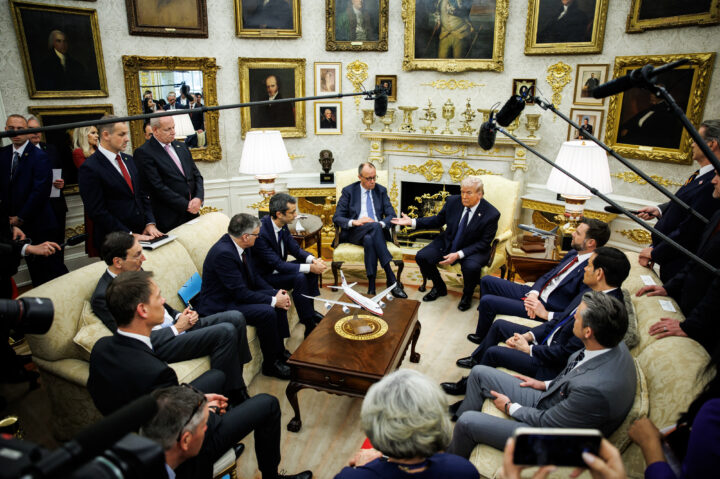
Samuel Corum/Sipa/Bloomberg via Getty Images
Friedrich Merz, Germany's chancellor, center left, and US President Donald Trump during a meeting in the Oval Office of the White House in Washington, DC, US, on Tuesday, March 3, 2026.
Good Tuesday afternoon,
This P.M. edition is reserved for our premium subscribers — offering a forward-focused read on what we’re tracking now and what’s coming next.
It’s me again — Danielle Cohen-Kanik, U.S. editor at Jewish Insider and curator, along with assists from my colleagues, of the Daily Overtime. Please don’t hesitate to share your thoughts and feedback by replying to this email.
📡On Our Radar
Notable developments and interesting tidbits we’re tracking
The Trump administration emphatically denied reports, based on partial comments made by Secretary of State Marco Rubio yesterday, that Israel forced the U.S. to launch the operation against Iran.
“If anything, I might’ve forced Israel’s hand,” President Donald Trump told reporters while meeting with German Chancellor Friedrich Merz in the Oval Office today. “You see, we were having negotiations with these lunatics, and it was my opinion that they [Iran] were going to attack first.”
Defense Secretary Pete Hegseth boosted the president’s comments, saying, “This is 100% correct,” while Rubio insisted his original remarks were misrepresented…
Trump continues to share optimistic assessments of the war’s progress: he told Politico that Iran is running out of missile launchers while claiming the U.S. has “a virtually unlimited supply” of weapons, saying, “wars can be fought ‘forever,’ and very successfully, using just these supplies”…
The Israeli Air Force struck a building where senior clerics had gathered to elect Iran’s next supreme leader, Israeli Ambassador to the U.S. Yechiel Leiter told CNN, “and there’s a very good chance that the electors won’t be readily available for any further meetings”…
Trump is open to backing militias in Iran who will work to mount regime change, U.S. officials told The Wall Street Journal, after he held phone calls with Kurdish leaders who maintain armed groups along the Iran-Iraq border.
Trump has wavered in recent comments on his vision for the future of Iran, saying today that “somebody from within” might be the best option to lead, rather than individuals like exiled former crown prince, Reza Pahlavi. At the same time, Trump told reporters, “Most of the people we had in mind are dead. And now we have another group, they may be dead also. Pretty soon we’re not gonna know anybody”…
Trump ordered the U.S. Development Finance Corporation to provide political risk insurance for all maritime trade traveling through the Gulf, as oil traffic has essentially halted and energy prices have soared. The U.S. Navy will also, if necessary, begin physically escorting tankers through the Strait of Hormuz, Trump said…
Ukrainian President Volodymyr Zelensky offered his country’s assistance to the UAE, as the Gulf country has been targeted by over 1,000 Iranian drones and missiles since the operation began Saturday. Ukraine has become particularly skilled in combating Iranian Shahed drones, something the UAE has little experience with, as Russia has regularly used them in its attacks on Ukraine…
The U.S. Embassy in Saudi Arabia was struck with two Iranian drones, with no casualties reported; the embassy was closed, along with U.S. embassies in Kuwait and Beirut. The State Department ordered the mandatory departure of all non-emergency personnel in several countries and has begun “actively securing military aircraft and charter flights for American citizens who wish to leave” the region…
The International Atomic Energy Agency confirmed that Iran’s underground Natanz nuclear enrichment plant was struck in the course of hostilities in recent days. Trump has claimed the site was rendered inoperable during the U.S.’ June 2025 strikes…
Alex Soros, one of the progressive movement’s most influential donors, boosted a social media post today about U.S. casualties in the war with Iran from Max Blumenthal, a prominent anti-Israel conspiracy theorist, Jewish Insider‘s Matthew Kassel reports.
Soros also praised Spain for its refusal to allow the U.S. to use joint bases on its soil, calling Madrid the “leader of the free world” and reprimanding other European countries for not doing the same…
After issuing a statement solely attacking the U.S. and Israel over the campaign against Iran — which provoked backlash from members of the Iranian dissident and diaspora communities — New York City Mayor Zohran Mamdani acknowledged the “systematic repression” of the Iranian people by the regime, while declining to criticize the late Supreme Leader Ayatollah Ali Khamenei, JI’s Will Bredderman reports.
Even as he acknowledged Tehran’s bloody suppression of protesters, Mamdani did not directly answer a reporter’s question at a press conference today about whether the Middle Eastern nation was better off without the radical cleric who ruled for nearly 37 years…
Amazon Web Services operations are “significantly impaired” after three of its data centers in the Middle East were struck by Iranian drones — two directly hit in the UAE and one sustaining damage in Bahrain. The strikes “caused structural damage, disrupted power delivery to our infrastructure, and in some cases required fire suppression activities that resulted in additional water damage,” AWS said…
⏩ Tomorrow’s Agenda, Today
An early look at tomorrow’s storylines and schedule to keep you a step ahead
Keep an eye out in Jewish Insider for a look at the results of today’s high-stakes primary elections in North Carolina and Texas and their implications for pro-Israel voters.
The Heritage Foundation will hold an event to launch its 2026 “Index of U.S. Military Strength” with remarks from Sen. Jim Banks (R-IN) and Reps. August Pfluger (R-TX), Pat Harrigan (R-TX) and Matt Van Epps (R-TN).
The U.S. Commission on International Religious Freedom will release its annual report tomorrow on Capitol Hill.
Stories You May Have Missed
SQUARING OFF
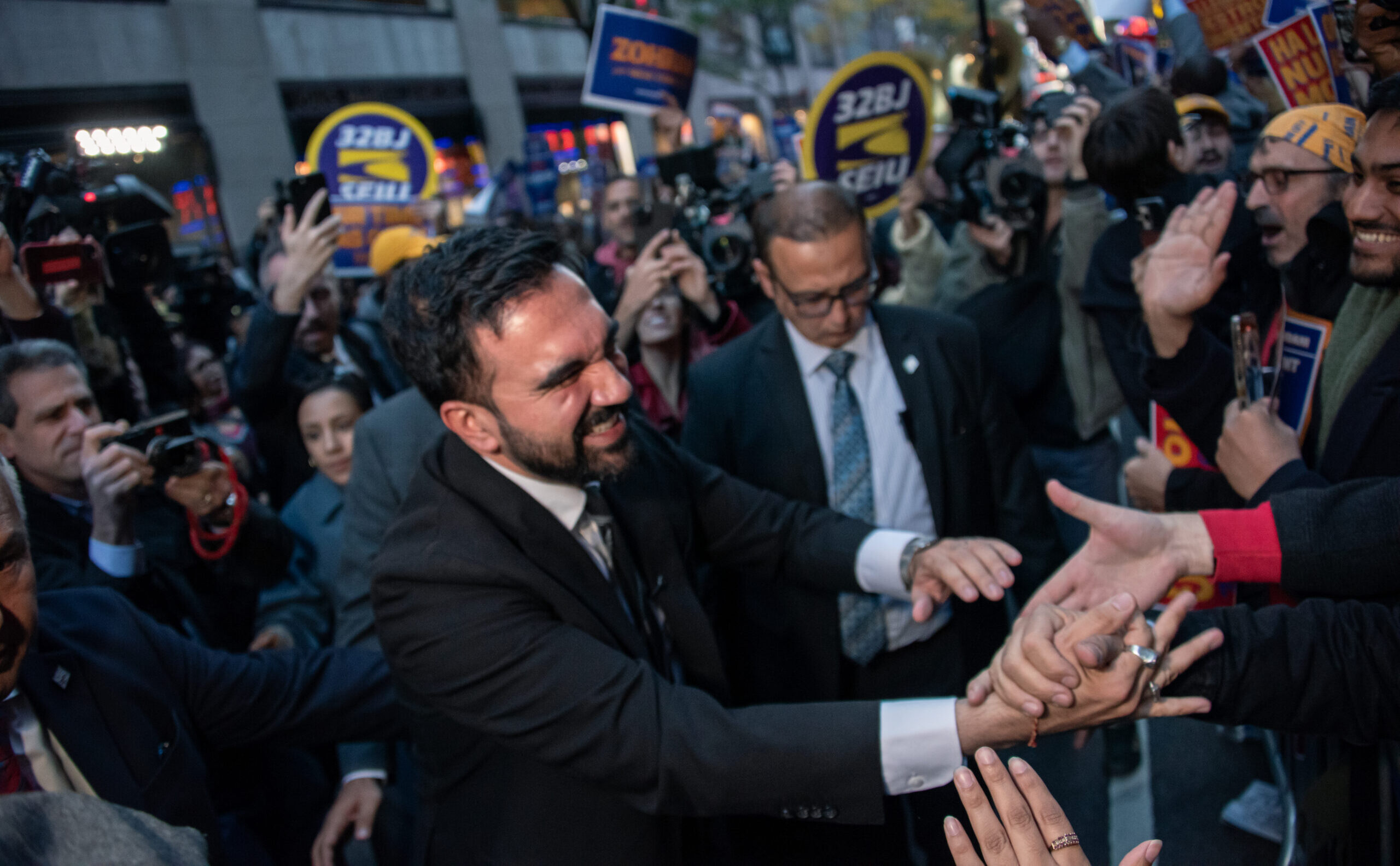
A trio of Mamdani backers united with tech and real estate investors to boost anti-Israel candidates
PARTY PERSPECTIVE

Speaking at J Street’s national summit, Sen. Tim Kaine also said ‘virtually all’ Democratic senators now seek the group’s endorsement
Plus, Mamdani allies bankroll a $10M anti-AIPAC effort
Fatemeh Bahrami/Anadolu via Getty Images
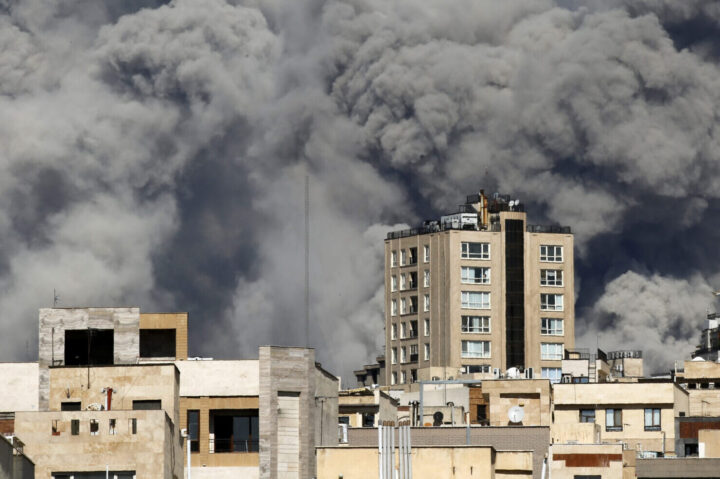
Smoke rises from the area after it was targeted in attacks as a series of explosions are heard in Tehran, Iran on March 01, 2026.
👋 Good Tuesday morning, and happy Purim 🎭
In today’s Daily Kickoff, we report on the latest developments in the Middle East as the conflict with Iran enters its fourth day, and preview the primaries taking place today in Texas and North Carolina. We report on the split on Capitol Hill over the Trump administration’s military moves against Iran, and spotlight the backers of the newly created American Priorities PAC, which has ties to allies of New York City Mayor Zohran Mamdani and is opposing pro-Israel candidates. Also in today’s Daily Kickoff: the Yeshiva University men’s basketball team, Zach Yadegari and Kate Schmier.
Today’s Daily Kickoff was curated by JI Executive Editor Melissa Weiss and Israel Editor Tamara Zieve, with an assist from Danielle Cohen-Kanik. Have a tip? Email us here.
What We’re Watching
- We are monitoring developments across the Middle East as the U.S. and Israel continue to strike Iranian targets, Iran launches attacks against population centers in Israel and Israel strikes Hezbollah targets in Lebanon. Multiple sirens have sounded across central Israel, including Tel Aviv and Jerusalem, throughout the morning as the IDF intercepted the barrages being fired from Iran.
- German Chancellor Friedrich Merz is in Washington today. He’ll meet with President Donald Trump at 11 a.m.
- On Capitol Hill, Secretary of State Marco Rubio, Defense Secretary Pete Hegseth, CIA Director John Ratcliffe, and Gen. Dan Caine, chairman of the Joint Chiefs of Staff, are expected to brief members of the Senate and House on the war in Iran.
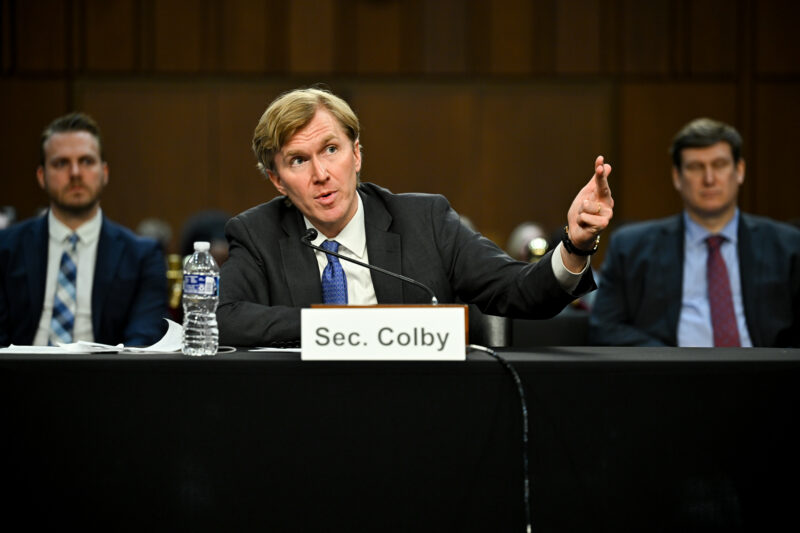
- Elsewhere on the Hill, Elbridge Colby, the Pentagon’s under secretary of defense for policy, is testifying before the Senate Armed Services Committee on the Trump administration’s national defense strategy.
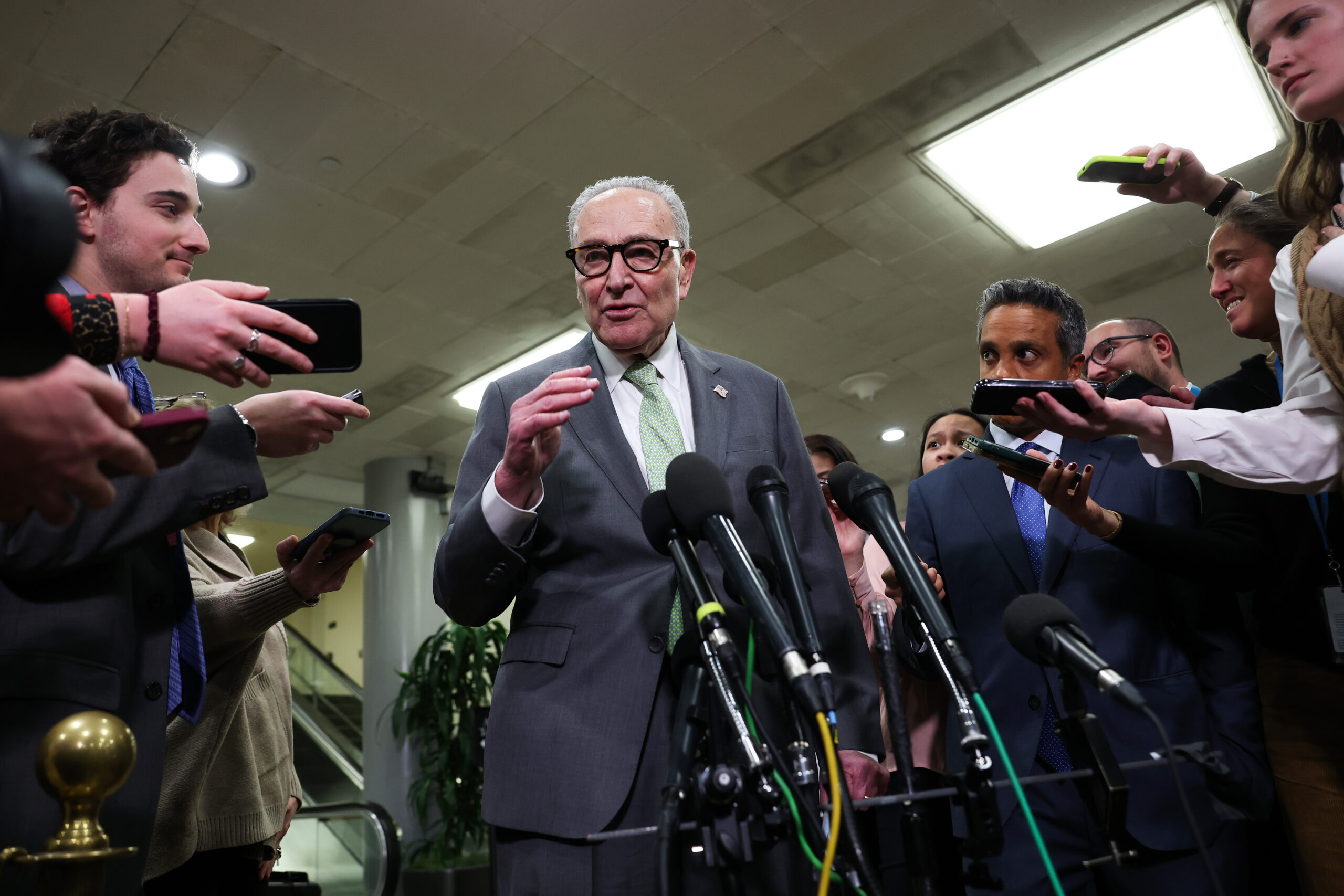
- The Capitol Jewish Forum is hosting its annual Purim celebration on the Hill this afternoon, with more than a dozen Jewish legislators, including Senate Minority Leader Chuck Schumer (D-NY), slated to attend.
- The first primaries of the 2026 election cycle are also taking place today. In North Carolina, Rep. Valerie Foushee (D-NC) is facing far-left anti-Israel activist Nida Allam. Read more below.
- In the Texas Senate primary, Rep. Jasmine Crockett (D-TX) faces state Sen. James Talarico; On the Republican side, Sen. John Cornyn (R-TX) faces primary challenges from Rep. Wesley Hunt (R-TX) and scandal-plagued right-wing Texas Attorney General Ken Paxton. Read more here and here.
- In the state’s 23rd Congressional District, Rep. Tony Gonzales (R-TX), also plagued by scandal amid allegations he had an affair with a staffer who later died by suicide, faces his second primary challenge from right-wing social media influencer Brandon Herrera. Read more here.
- Rep. Al Green (D-TX), who has become a consistent detractor of Israel in the House, faces newly elected Rep. Christian Menefee (D-TX), who has built solid relationships with the Houston-area Jewish community. Read more here.
- Rep. Dan Crenshaw (R-TX), a Republican hawk, faces a serious challenge from state Rep. Steve Toth, who is running to his right. Both candidates have been supportive of Israel.
- And Rep. Julie Johnson (D-TX) faces a difficult renomination fight against former Rep. Colin Allred (D-TX), who vacated the seat to run unsuccessfully for the Senate in 2024.
- It’s also primary day in Arkansas and Mississippi — but there are no major congressional primaries of note in either state.
What You Should Know
A QUICK WORD WITH JI’S MARC ROD
In the closing message of her campaign ahead of the North Carolina Democratic primary today, Durham County Commissioner Nida Allam, a far-left antagonist of Israel, is leaning into criticism of the war against Iran.
“President Trump just used our taxpayer dollars to bomb a school in Iran, killing over 100 elementary school children and starting another endless war abroad. This is reprehensible, and I strongly condemn it, as should every elected official,” Allam said in a direct-to-camera video ad posted on social media on Monday — despite no evidence that the U.S. or Israel were responsible for the strike.
Allam, who is Muslim, vowed that she would never accept support from defense contractors or pro-Israel groups, and said she “opposed these ‘forever wars’ my entire career, and I hope to earn your vote to be your proudly uncompromised pro-peace leader in Washington.”
By contrast, Rep. Valerie Foushee (D-NC), aiming to fend off a primary challenge from Allam, offered a condemnation of the “brutal and repressive” Iranian regime in a statement on Monday, while arguing that its “abuses do not give the president the authority to launch military strikes without Congressional approval.” She said Congress must vote to bring the war to an end.
In an initial statement on X over the weekend, Foushee issued an unequivocal condemnation of the operation, calling it “an unconstitutional escalation that risks dragging the United States into another catastrophic and endless war in the Middle East” that “ignores the will of the American people and recklessly puts our servicemembers in harm’s way” — without making mention of the Iranian regime.
Political observers said the Iran conflict could give late momentum to Allam. Given the leftward lean of the 4th Congressional District and Allam’s positioning to the left of Foushee — particularly on Middle East policy — it could very well make a difference,” Chris Cooper, a political scientist at Western Carolina University, told JI’s Matthew Kassel on Monday. “Thousands of votes have already been cast, but for late deciders, this is exactly the kind of issue that could help tilt a voter to one side or the other. It’s hard to get more salient than war.”
In 2022, Foushee won the seat in the 4th Congressional District against Allam with significant backing from the AIPAC-linked United Democracy Project super PAC, but Foushee has taken a more critical posture towards Israel over the last year. This year, significant outside spending has flowed into the race on both sides.
STATE OF PLAY

A notable decrease in the number and frequency of Iranian missile strikes at Israel is the result of a focused strategy of hunting and taking out its launchers, Lt.-Col. Nadav Shoshani, the IDF’s spokesperson for international media, said on Tuesday, Jewish Insider’s Lahav Harkov reports. “The missile and launcher hunt is happening in real time,” Shoshani told reporters. “We have been able to narrow [Iran’s] capability to fire missiles toward us. … We are putting our focus on continuing to do so in the coming days.”
Military update: “We were able to take out dozens of launchers,” since the operation began on Saturday, Shoshani said, adding that Iran currently has “a lack of capability to fire in large amounts” and that there is a diminished rate of fire. At the same time, he noted that part of the reduction in missile launchers may be attributed to Iran trying to ensure it can keep the war going over the coming weeks.
SUSTAINED CAMPAIGN
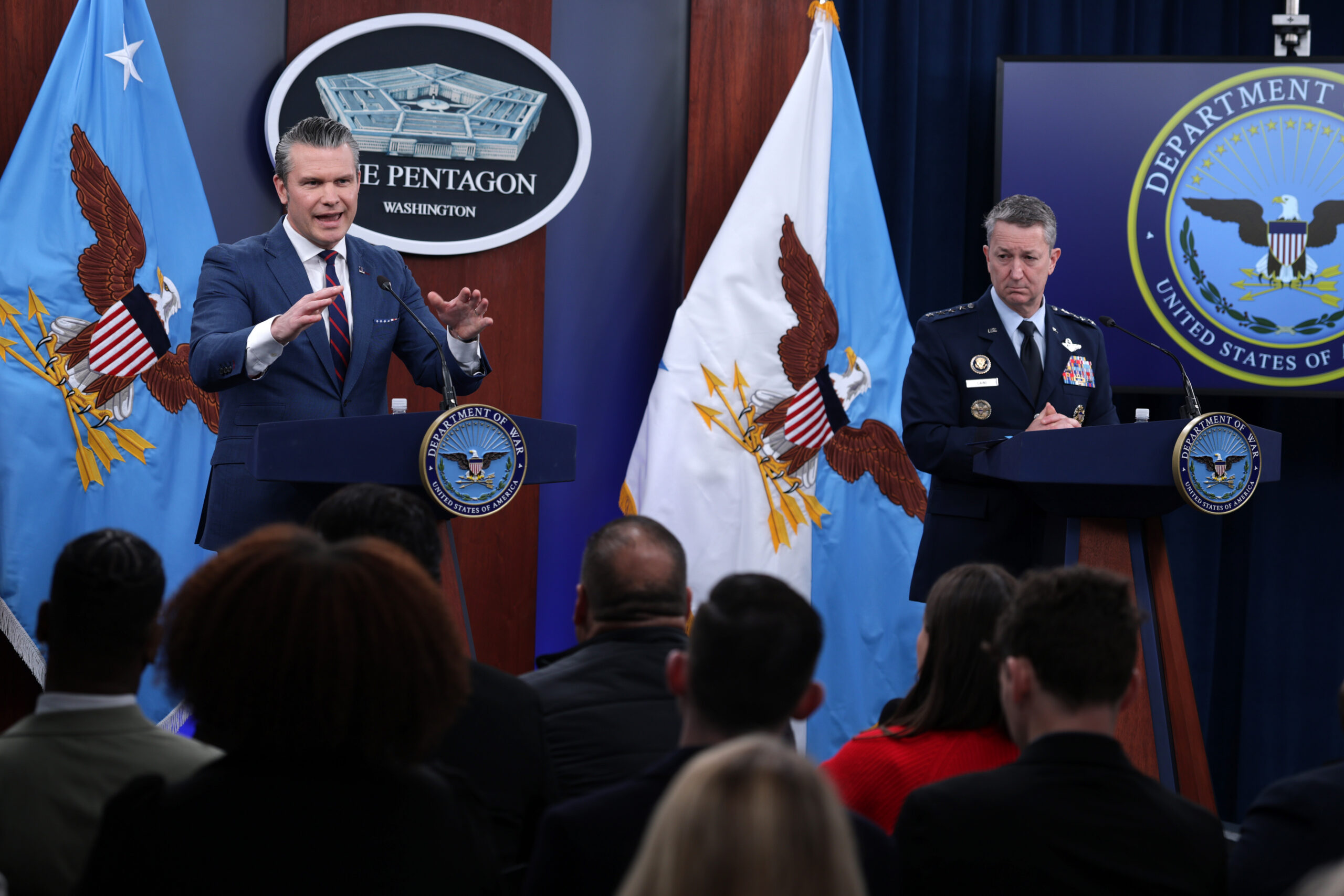
President Donald Trump and senior U.S. defense officials laid out an open-ended timeline for the ongoing operation against Iran on Monday, announcing more U.S. forces are headed to the region to carry out the American and Israeli campaign aimed at dismantling Tehran’s long-range strike capabilities and nuclear ambitions, Jewish Insider’s Matthew Shea and Emily Jacobs report.
Trump talk: Speaking to reporters at the White House on Monday morning, Trump said that U.S. forces were “already substantially ahead of our time projections” with their mission in Iran, but added that the American military was prepared to continue the operation beyond his initial four-to-five week timeline. “Whatever the time is, it’s OK. Whatever it takes,” Trump said at a Medal of Honor ceremony. “Right from the beginning, we projected four to five weeks, but we have capability to go far longer than that. We’ll do it.”
Caine’s comments: Adm. Brad Cooper, head of CENTCOM, “will receive additional forces even today,” said Gen. Dan Caine, chairman of the Joint Chiefs of Staff, during a separate press briefing alongside Defense Secretary Pete Hegseth. “This rapid buildup of forces demonstrated the joint forces ability to adapt and project power at the time and place of our nation’s choosing.” Caine also made clear the weekend barrage was only the beginning.
Team effort: In his first interview since the U.S. and Israel launched their joint military campaign against Iran, Israeli Prime Minister Benjamin Netanyahu defended the timing of the operation’s launch and rebuffed the notion that he decisively pushed Trump to take action, JI’s Matthew Shea reports.
DUELING NARRATIVES
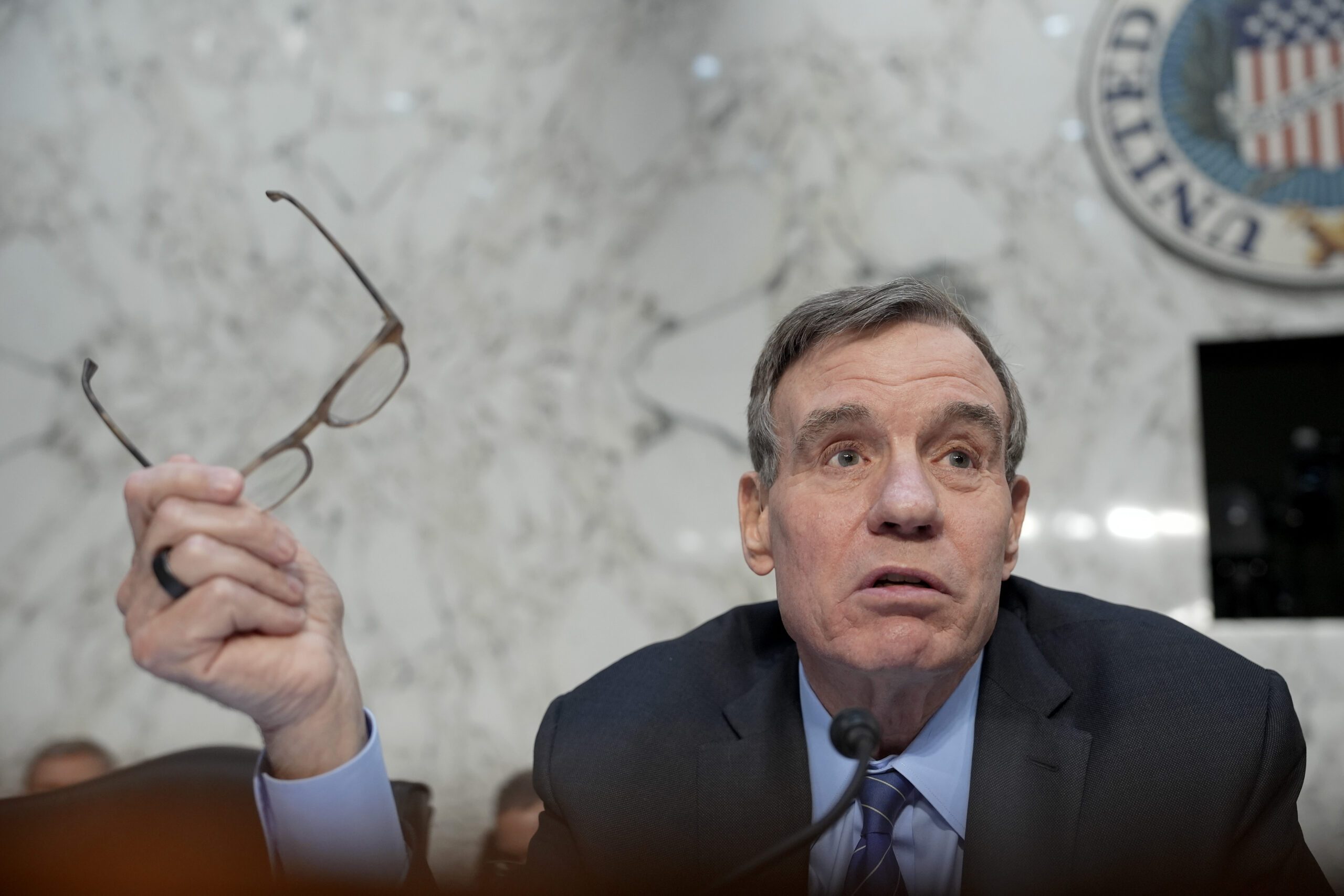
House Speaker Mike Johnson (R-LA) and Senate Intelligence Committee Vice Chairman Sen. Mark Warner (D-VA) emerged from a classified briefing with Cabinet officials on Monday split over whether the U.S. faced an imminent threat from Iran that necessitated and permitted the president to take military action under U.S. statute and the Constitution, Jewish Insider’s Marc Rod reports.
Johnson’s takeaway: “The most critical point is that this was a defensive measure, a defensive operation,” Johnson said. “Israel was determined to act in their own defense here, with or without American support. Why? Because Israel faced what they deemed to be an existential threat. Iran was building missiles at a radical, rapid clip, to the point where our allies in the region do not keep up.”
Warner’s worry: Warner said that the war is “a war of choice that has been acknowledged by others [that] was dictated by Israel’s goals and timelines. Israel is a great ally of America. I stand firmly with Israel, but I believe at the end of the day, when we are talking about putting American soldiers in harm’s way, when we have American casualties and expectations of more, there needs to be the proof of an imminent threat to American interests. I still don’t think that standard has been met.”
SQUARING OFF
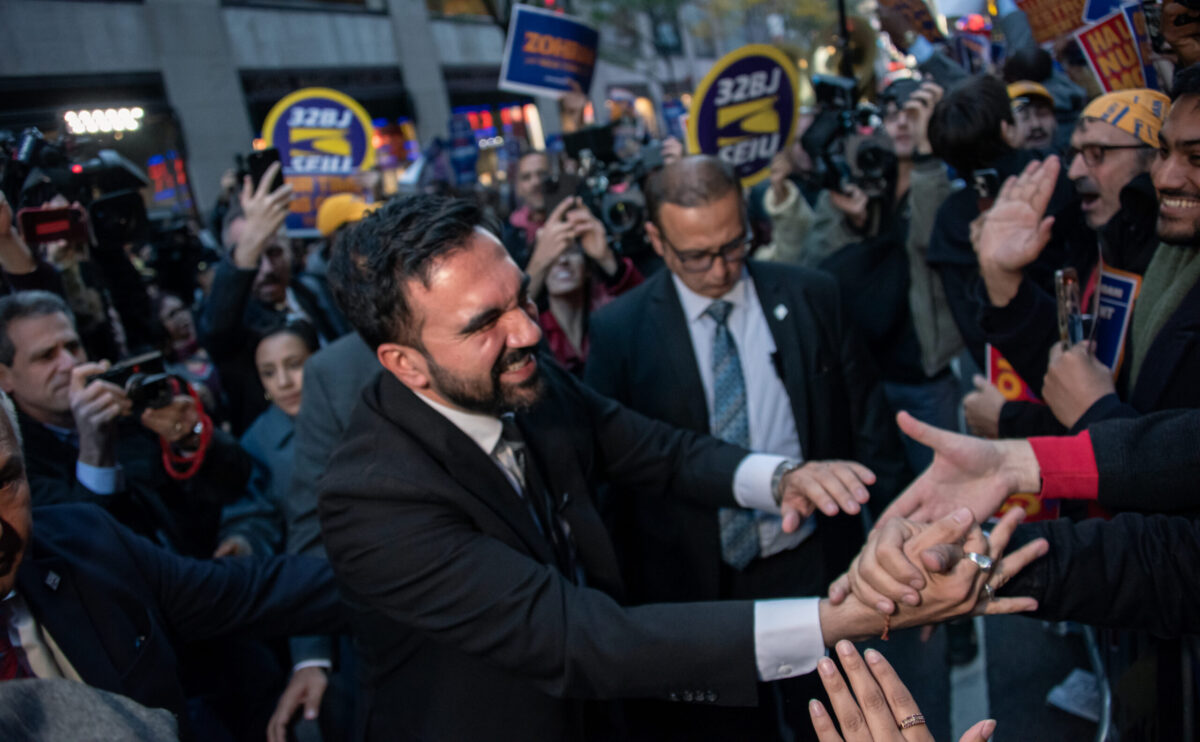
Three figures linked to New York City Mayor Zohran Mamdani — two Silicon Valley entrepreneurs and a Brooklyn political operative — have joined forces with a bevy of wealthy business leaders to pump millions into a new political action committee dedicated to battling AIPAC, Jewish Insider’s Will Bredderman reports.
Follow the money: American Priorities PAC has raised $2,050,000 to date and spent a quarter of it so far boosting Democrat Nida Allam, a vocal detractor of Israel, in her bid to oust Rep. Valerie Foushee (D-NC) in North Carolina’s 4th Congressional District. Filings with the Federal Election Commission show another $67,000 has gone toward promoting the candidacy of the Rev. Frederick Haynes III, the pastor of Rep. Jasmine Crockett (D-TX), who is running for her House seat as she seeks the Senate. It’s all part of a plan to spend a minimum of $10 million countering candidates who have received past support from AIPAC, as NBC News previously reported. A spokesperson for the PAC refused to answer questions about its fundraising and decision-making practices, though they denied Mamdani was in any way involved.
Bonus: Politico talks to government watchdogs about Mamdani’s continued use of the messaging app Signal for official business, despite the platform’s encryption protocols and self-deleting capabilities being incompatible with freedom of information laws.
DEMS DEMAND

Democratic members of Congress addressing J Street’s national convention in Washington on Monday used the occasion to rally support for long-shot resolutions coming before the House and Senate this week that will attempt to end U.S. military strikes against Iran, Jewish Insider’s Gabby Deutch reports.
On the record: “The president’s refusal to pursue consent from Congress, as required by the Constitution, is perhaps his most grievous assault on democracy, and we should not let it stand,” Sen. Chris Murphy (D-CT) said to the 1,500 activists gathered at J Street’s morning plenary. Rep. Sean Casten (D-IL) told the crowd that he expects to see “very robust, possibly unanimous support” from congressional Democrats on the measures, which would put an immediate end to U.S. operations against Iran.
Read the full story here with additional comments from Rep. Madeleine Dean (D-PA) and Sen. Brian Schatz (D-HI).
More from Murphy: Addressing the conference, Murphy leaned on Jewish history to tailor his case to fight President Donald Trump specifically to American Jews. “The answer to thousands of years of the Jewish people’s faith being decided by emperors and queens and czars is not and cannot simply be the State of Israel. No, the rest of the answer is simple. It’s democracy,” he said.
Also spotted at the conference: Former New York City Comptroller Brad Lander, who is mounting a primary challenge against Rep. Dan Goldman (D-NY), and leaning into sharp criticism of Israel as part of his campaign.
Worthy Reads
Theory of Regime Change: In The Washington Post, Rob Satloff, the executive director of The Washington Institute for Near East Policy, considers the history of failed regime-change efforts in the Middle East as President Donald Trump calls for Iranians to rise up against their government. “On one end of the spectrum, will he, like [Franklin] Roosevelt, find an Iranian Delcy Rodríguez, leaving the structure of the regime intact under a new, more pliant leader? Or will he, like the first Bush, content himself with inflicting massive damage to Iran’s offensive military capability and choose an expedient path to end the war? Or, on the other end of the spectrum, will he, like the second Bush, get stuck in the muck of Iranian nation-building, triggering problems that we can’t even imagine today?” [WashPost]
The Warrior Prime Minister: The Atlantic’s Yair Rosenberg posits that Israeli Prime Minister Benjamin Netanyahu’s long-standing reluctance to pursue military options against adversaries ended with the Oct. 7, 2023, Hamas terror attacks, as Israel began to more aggressively pursue its enemies. “Before this seismic shift, Netanyahu’s longevity as prime minister was built on a foundation of conflict avoidance. That posture appealed to a risk-averse electorate. Under his premiership, Israeli voters who were comfortable with the status quo could rest easy knowing that their leader would be unlikely to upset it. … With each successful escalation, Netanyahu’s willingness to use force to settle Israel’s scores increased.” [TheAtlantic]
Remembering 1979: The Wall Street Journal’s Matthew Hennessey suggests that support for U.S. military action in Iran is generational, noting that young Americans have little memory of Iran’s years of targeting American interests. “But I was born in the 1970s. I remember the shocking barbarism of the fatwa against Mr. Rushdie. I remember the Iranian-backed Hezbollah terrorism of the 1980s, the 1994 suicide attack on the Jewish community center in Buenos Aires, the 1996 Khobar Towers bombing. … The livestreamers will say this war is about oil. The Substackers will say it started with Mosaddegh. To them, this is an academic debate, something they heard about on a podcast once. Any American over 50 knows who started it.” [WSJ]
Drive for Democracy: In The New York Times, the Hoover Institution’s Abbas Milani considers Iran’s leadership quagmire, arguing that former Iranian Supreme Leader Ayatollah Ruhollah Khomeini’s 1979 takeover of the country was done under a “bait-and-switch” that rallied Iranians around the cause of democracy while establishing a radical theocratic regime. “The right question today is: What are the ideas for democratic governance, for fixing the economy, for keeping centrifugal forces at bay and for maintaining sovereignty and good relations with the world around which Iranians (inside the country and out) can unite, and how can they do so in a way that will deliver Iran out of political paralysis and economic morass?” [NYTimes]
Word on the Street
President Donald Trump slammed commentators Tucker Carlson and Megyn Kelly, who have criticized the administration’s military strikes targeting Iran; Trump told journalist Rachael Bade that Carlson “can say whatever he wants; it has no impact on me” and that “MAGA is Trump — MAGA’s not the other two,” referring to Carlson and Kelly…
The Financial Times does a deep dive into the yearslong effort by Israel to track the movements of Iranian Supreme Leader Ayatollah Ali Khamenei, who was killed on Saturday, and other senior members of the Iranian regime; among the tactics used by Israel was the hacking of traffic cameras around Tehran, which allowed Israeli intelligence officials access to regime movements around the capital…
The Supreme Court blocked an effort to redraw Rep. Nicole Malliotakis’ (R-NY) 11th Congressional District — the sole Republican-leaning district in New York City — that encompasses Staten Island and parts of Brooklyn; the move preserves the existing districts in the city, including NY-10, where Rep. Dan Goldman (D-NY) is facing a primary challenge from former New York City Comptroller Brad Lander…
Federal prosecutors are filing an additional charge of damaging religious property against the man accused of ramming a car into the headquarters of Chabad-Lubavitch in Brooklyn in January…
The FBI is investigating recent antisemitic emails that were sent to members of Stanford University’s Jewish community, including more than half a dozen Jewish student leaders…
The Yeshiva University Maccabees are again heading to the Division III NCAA Men’s Basketball Tournament after the team’s 79-72 win over the Farmingdale State Rams over the weekend secured their position as Skyline Conference champions…
MyFitnessPal acquired calorie-counting app Cal Al, including 19-year-old CEO and co-founder Zach Yadegari and the startup’s six additional employees…
The Wall Street Journal spotlights Blue Owl Capital co-founders Doug Ostrover and Marc Lipschultz as the firm faces financial challenges tied to upheaval in the broader credit market…
Meta’s Mark Zuckerberg and his wife, Priscilla Chan, bought an under-construction mansion in South Florida’s Indian Creek for $170 million, setting a new record in Miami-Dade County…
A new report from the Jewish Representative Council of Ireland found that Irish Jews self-reported 146 incidents involving antisemitism between July 2025 and January 2026…
Kate Schmier is joining the Jewish Book Council as director of publishing relations…
London retailer and fashion designer Bernard Lewis, the founder of Little Island, died at 100…
Pic of the Day
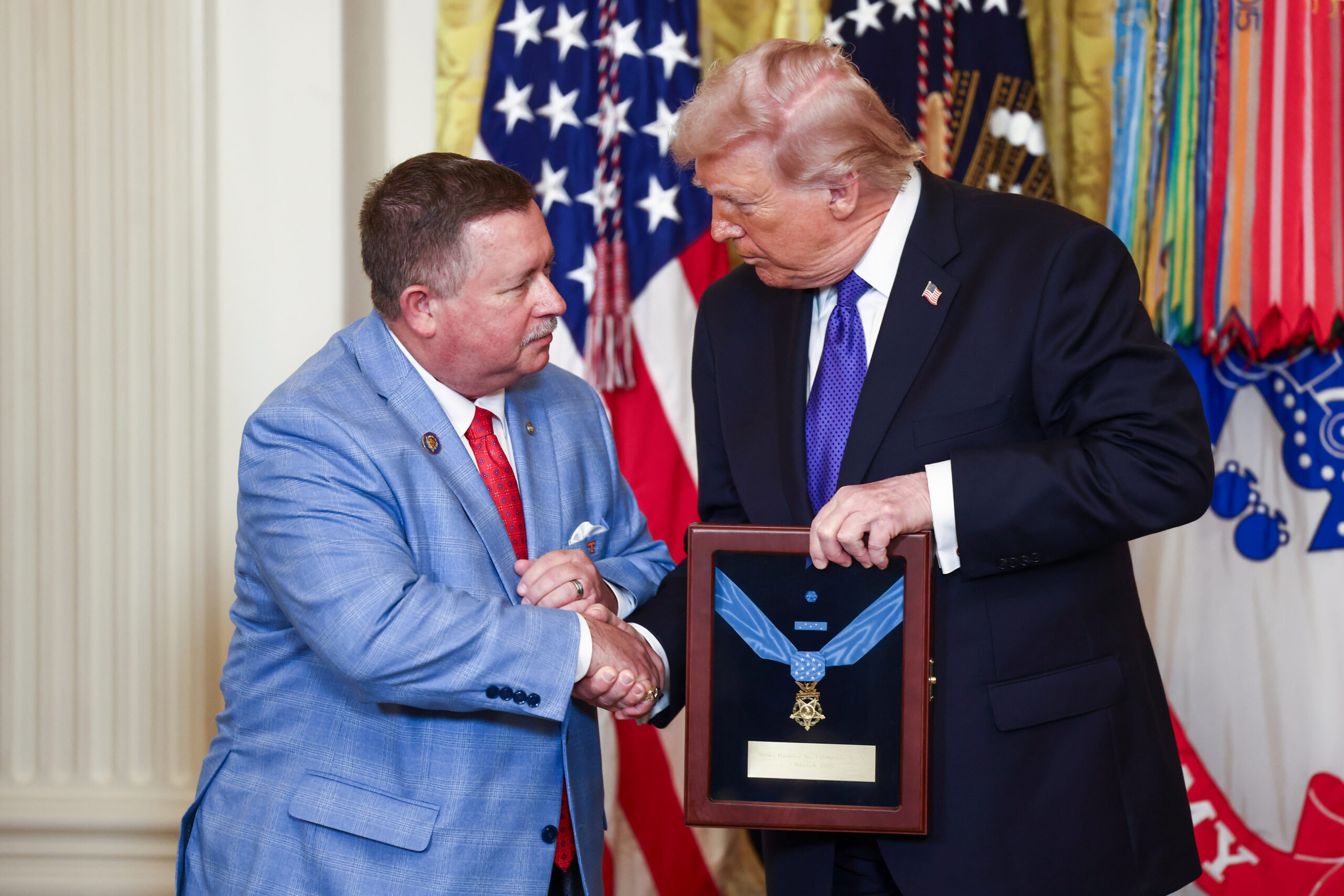
President Donald Trump posthumously awarded the Medal of Honor on Monday to Army Master Sgt. Roderick “Roddie” W. Edmonds, a World War II soldier whose defiance of a Nazi order saved more than 200 Jewish American prisoners of war, Jewish Insider’s Matthew Shea reports. Edmonds’ son, Chris Edmonds, accepted the award on his father’s behalf.
Birthdays

Vocalist for indie-pop band Lucius, Jess Wolfe turns 40…
Australian residential property developer, colloquially known as “High-Rise Harry,” Harry Triguboff turns 93… Former justice of the Supreme Court of Israel, Dalia Dorner turns 92… Author of 32 books and the editor emeritus of Dissent magazine, Michael Laban Walzer turns 91… Researcher in Yiddish language at Sweden’s Lund University’s Centre for Languages and Literature, Henrik Lewis-Guttermann turns 77… Best-selling and Pulitzer Prize-winning biographer of financiers and politicians, Ron Chernow turns 77… President of CBS News until 2021, now president of See It Now Studios, Susan Zirinsky turns 74… Retired chief investment officer of Neuberger Berman, he served as president of AIPAC, Michael Kassen… Fashion designer and businessman, he is the founder and former CEO of an eponymous company, Steve Madden turns 68… NPR personality and the host and producer of the radio and television show “This American Life,” Ira Jeffrey Glass turns 67… Former director of policy for New York state under Gov. Andrew Cuomo, David Yassky turns 62… Israeli economist and diplomat, he served as Israel’s first ambassador to the UAE, Amir Hayek turns 62… MLB pitcher until 2001, his 557 appearances rank second in career games pitched by a Jewish pitcher, Scott David Radinsky turns 58… Co-founder and co-president of Clarity Capital, David Steinhardt turns 57… EVP and general counsel at Eli Lilly and Company, Anat Hakim… Founder of Bunk1, a provider of parent-engagement software for summer camps, he is a co-owner of the Miami Marlins, Ari Jack Ackerman… President and founder of Heppin Biosciences, Brett S. Abrahams, Ph.D. turns 53… Screenwriter and columnist in the Israeli newspaper Globes, Efrat Abramov turns 46… British rabbi who has run for mayor of London and of Manchester, Shneur Zalman Odze turns 45… Acting U.S. attorney for the Southern District of New York for the first 24 days of the Trump 47 administration, Danielle R. Sassoon turns 40… Senior communications manager for Uber, she was the press secretary for former New York City Mayor Bill de Blasio, Freddi Goldstein… Manager of public policy for hate speech at TikTok, Erica H. Mindel… Member of AJR, an indie pop multi-instrumentalist trio, together with his two brothers, Ryan Metzger turns 32…
Plus, Tehran takes aim at global energy
Fatemeh Bahrami/Anadolu via Getty Images
Smoke rises from the area after it was targeted in attacks as a series of explosions are heard in Tehran, Iran on March 01, 2026.
Good Monday afternoon,
This P.M. edition is reserved for our premium subscribers — offering a forward-focused read on what we’re tracking now and what’s coming next.
It’s me again — Danielle Cohen-Kanik, U.S. editor at Jewish Insider and curator, along with assists from my colleagues, of the Daily Overtime. Please don’t hesitate to share your thoughts and feedback by replying to this email.
📡On Our Radar
Notable developments and interesting tidbits we’re tracking
President Donald Trump and senior U.S. defense officials laid out an open-ended timeline for the ongoing bombing campaign against Iran in several press briefings and interviews today, Jewish Insider’s Matthew Shea and Emily Jacobs report.
Trump and Defense Secretary Pete Hegseth both declined to rule out a U.S. ground invasion of Iran, while Joint Chiefs Chairman Gen. Dan Caine announced more American troops are en route to the region. “Every president says, ‘There will be no boots on the ground.’ I don’t say it. I say ‘probably don’t need them,’ [or] ‘if they were necessary,’” Trump told the New York Post.
The president repeatedly said the operation is “ahead of schedule,” but added that the U.S. military is prepared to continue the campaign beyond his initial four-to-five-week timeline. Trump also told CNN that the “big wave” of strikes on Iran “hasn’t even happened. The big one is coming soon”…
On the American public’s perception of the strikes, Trump said, “I think that the polling is very good, but I don’t care about polling. I have to do the right thing. This should have been done a long time ago.” A new CNN poll found that 41% of Americans support the strikes against Iran, while 59% disapprove…
After Hezbollah jumped into the conflict by launching strikes on Israel overnight, prompting Israeli fire on Hezbollah targets in Lebanon in return, Lebanese Prime Minister Nawaf Salam banned the terror group’s “military activities,” restricting it “to the political sphere.”
Salam said the group’s actions are now “illegal” and called on the Lebanese Armed Forces to “prevent any attacks originating from Lebanese territory,” a long-awaited show of resolve from Beirut. The LAF has struggled to disarm Hezbollah forces since the signing of a ceasefire agreement with Israel in November 2024…
On a ground invasion of Lebanon, IDF spokesperson Brig. Gen. Effie Defrin said, similarly to the U.S. position on Iran, “all options are on the table”…
U.S. casualties in the course of the operation increased today to six servicemembers…
Qatar’s Ministry of Defense condemned attacks by Iran on a power plant and an oil facility in the country, further indicating Tehran is setting its sights on civilian and energy infrastructure. The targeted energy plant, Ras Laffan, is responsible for around a fifth of all global natural gas production — Qatar halted production after the strike which, along with decreased passage through the vital Strait of Hormuz, sent oil prices soaring…
Iran continues to sustain heavy losses: The U.S. said it has sunk all 11 of Iran’s warships in the Gulf of Oman while Qatar shot down two Iranian SU-24 tactical bombers, which were developed by Russia; the UAE also intercepted around 150 Iranian drones and 15 missiles today in addition to hundreds over the weekend…
U.K. Prime Minister Keir Starmer reiterated in an address to parliament today that Britain will not be joining the strikes on Iran but will allow the U.S. to use its bases for “defensive actions,” noting that Iran has already struck a military base in Bahrain that houses around 300 British troops. “France and Germany are also prepared to enable U.S. action to destroy Iran’s capability to fire missiles and drones from the source,” Starmer added.
Trump said he was “very disappointed” with Starmer in an interview with The Telegraph, saying the prime minister “took far too long” in deciding to allow U.S. forces to utilize its bases…
NATO Secretary-General Mark Rutte praised the campaign, calling it “really important … because it is taking out, degrading the capacity of Iran to get its hands on nuclear capability, the ballistic missile capability.” But, he said, “there are absolutely no plans whatsoever for NATO to get dragged into this”…
GOP lawmakers are pushing Democrats to agree to a funding deal for the still-shuttered Department of Homeland Security, as hostilities with Iran raise concerns about domestic terror threats…
The war is also making its way into some of the most heated primary races unfolding across the country: In North Carolina’s 4th Congressional District, anti-Israel activist Nida Allam, who is challenging Rep. Valerie Foushee (D-NC), put out a new campaign ad just before tomorrow’s primary slamming “Trump and Netanyahu’s reckless war.”
Allam accused the administration of using “our taxpayer dollars to bomb a school in Iran, killing over 100 elementary school children,” even though there has been no proof that the U.S. was responsible for the strike…
Some pro-Israel Democratic candidates in Illinois also took harsh stances against the Iran operation: state Sen. Laura Fine, running in Illinois’ 9th Congressional District, called for Trump’s impeachment, while Cook County Commissioner Donna Miller, running in the 2nd District, and Chicago Treasurer Melissa Conyears-Ervin, running in the 7th District, called the strikes “reckless” and “immoral,” respectively…
⏩ Tomorrow’s Agenda, Today
An early look at tomorrow’s storylines and schedule to keep you a step ahead
Keep an eye out in Jewish Insider for a rundown of the high-profile primaries on the ballot tomorrow in North Carolina and Texas.
German Chancellor Friedrich Merz will meet with President Donald Trump at the White House for a conversation that was set to focus on negotiations between Russia and Ukraine but will likely be overshadowed by the ongoing operation against Iran. Germany joined the U.K. and France over the weekend in offering a supportive but cautious stance on the hostilities.
It will be a busy day on the Hill, where administration officials including Secretary of State Marco Rubio, Defense Secretary Pete Hegseth, CIA Director John Ratcliffe and Joint Chiefs Chairman Gen. Dan Caine will hold all-member briefings on Iran for the House and Senate. Rubio is briefing the Gang of Eight again this afternoon, and national security committees in both chambers were briefed over the weekend.
Elbridge Colby, the under secretary of defense for policy, will brief the Senate Armed Services Committee on the Pentagon’s National Defense Strategy; Colby has previously drawn bipartisan ire from the committee over a lack of consultation by his team and alleged rogue decision-making on a range of issues by his office.
The Senate Judiciary Committee will hold a hearing on oversight of the Department of Homeland Security with testimony from Homeland Security Secretary Kristi Noem.
The Capitol Jewish Forum will host its annual Capitol Hill Purim celebration, attended by a number of Jewish lawmakers.
Stories You May Have Missed
WEIGHING IN

The resolutions are unlikely to pass; if they do, they will need two-thirds support to override an inevitable presidential veto
CLOSING RANKS

UAE and Saudi leaders spoke by phone; the GCC affirmed its ‘right to respond’
All parties are planning for what could be a conflict that stretches across weeks, despite the decapitation of nearly all of Iran’s senior-most officials in the opening salvos of the war
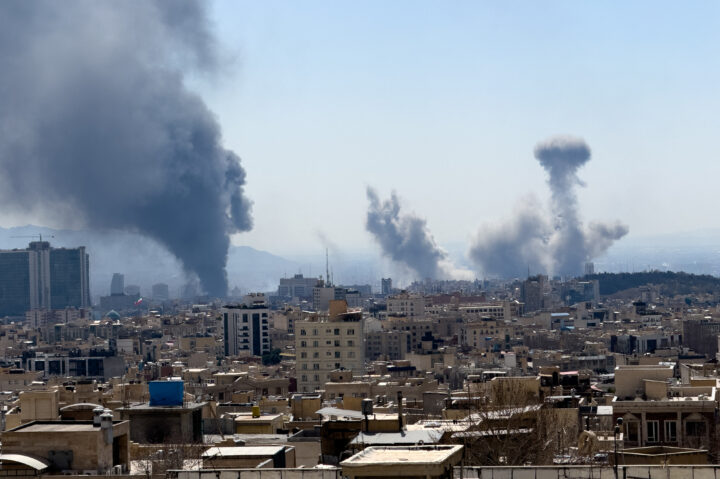
Mahsa / Middle East Images / AFP via Getty Images
Plumes of smoke rise following reported explosions in Tehran on March 1, 2026, after Iran's supreme leader, Ayatollah Ali Khamenei, was killed a day earlier in a large U.S. and Israeli attack, prompting a new wave of retaliatory missile strikes from Iran.
As joint U.S.-Israeli operations against Iran and the Islamic Republic’s ballistic missile and drone attacks continue into a third day, all parties are planning for what could be a conflict that stretches across weeks, despite the decapitation of nearly all of Iran’s senior-most officials in the opening salvos of the war.
On his Truth Social site, Trump doubled down on his push for Iranian protesters to take action, calling on “all Iranian patriots who yearn for freedom to seize this moment, to be brave, be bold, be heroic and take back your country. America is with you. I made a promise to you, and I fulfilled that promise. The rest will be up to you, but we’ll be there to help.”
Trump said on Sunday that the U.S. had sunk nine Iranian warships and destroyed its naval headquarters as it works to dismantle the country’s entire naval fleet.
The president told numerous media outlets over the weekend that the time frame for operations would take four to five weeks, but said that Iranian officials “want to talk, and I have agreed to talk, so I will be talking to them.” Read more here.
Ali Larijani, the head of Iran’s National Security Council, refuted the claim, saying, “We will not negotiate with the United States.”
With the status of talks and any potential off-ramps in question, strikes continue in Israel and Iran, with Iranian proxy Hezbollah entering the hostilities early this morning with missile barrages targeting northern Israel.
The last 48 hours have scrambled and deepened alliances across the Middle East as a number of Arab states coalesced behind the U.S. In a joint statement released Sunday night, the U.S., Bahrain, Jordan, Kuwait, Qatar, Saudi Arabia and the United Arab Emirates slammed Iran’s “indiscriminate and reckless missile and drone attacks against sovereign territories across the region” and said the countries “stand united in defense of our citizens, sovereignty, and territory, and reaffirm our right to self-defense in the face of these attacks.”
Canada and Australia — both led by left-leaning governments that have clashed with the Trump administration — quickly announced their support for the U.S.- and Israel-led operation — though neither country’s official statement mentioned Israel. British, French and German leaders called on Saturday for the resumption of nuclear negotiations, pivoting a day later to calling on Iran to cease its “indiscriminate and disproportionate missile attacks.” Fox News reported that the U.K. is providing air policing and sharing intelligence, and Prime Minister Keir Starmer said Sunday that the U.K. is giving the Pentagon access to British bases in the region.
Israel and the U.S. prepared for the operation over the last two months. The Washington Post reported on Sunday that Trump’s decision to move forward with the operation came amid a “weeks-long lobbying effort” by Israel and Saudi Arabia — which was denied by a Saudi spokesperson in Washington. Israeli officials have for the last several months traveled back and forth between Jerusalem and Washington for White House meetings, while Saudi Defense Minister Prince Khalid bin Salman was in Washington last month for meetings with administration officials as well as Jewish communal leaders.
In Washington, Congress is set to resume later this week and vote on two war powers resolutions being led by Sens. Tim Kaine (D-VA) and Rand Paul (R-KY) and Reps. Ro Khanna (D-CA) and Thomas Massie (R-KY) that, if passed and able to override an inevitable presidential veto, would force the Trump administration to end its operations against Iran.
The assassination of Iran’s supreme leader, Ayatollah Ali Khamenei, has put officials and figures who are critical of the Trump administration in the awkward position of praising the killing of the supreme leader, who has directed attacks that have killed tens of thousands over decades and overseen the expansion of Tehran’s vast proxy network, while continuing to criticize Trump. Rep. Steny Hoyer (D-MD), previously a member of House Democratic leadership, called the strikes “an act of war” and the goal — “to stop Khamenei’s fanatical regime from committing further acts of terror — “defensible,” while blasting what he called Trump’s “unilateral, unconstitutional decision to go to war without congressional approval.”
Sen. Chris Coons (D-DE) called Khamenei a “brutal dictator with the blood of Americans and Iranian civilians on his hands,” before stating that “his death does not mean regime change is imminent, and the potential consequences of these strikes are unpredictable, dangerous, and global.”
URJ’s Rabbi Rick Jacobs: ‘America’s Jewish congregations are diverse, filled with good, moral people who differ on complex issues’

Michael Brochstein/Sipa via AP Images
J Street President Jeremy Ben-Ami speak at the 2022 J Street National Conference held at the Omni Shoreham Hotel in Washington, D.C.
When more than 1,500 people gathered in Washington this weekend for J Street’s national conference, the progressive Israel advocacy group’s first major convening in four years, the gathering was billed as an opportunity to reflect on building regional peace in the Middle East in the aftermath of the Gaza war.
Instead, a major U.S. and Israeli military operation against Iran that began Saturday undercut the group’s pledge to focus on peace between Israelis and Palestinians and came to dominate the discussion. J Street quickly came out against the attacks.
The first speaker on the conference’s main stage on Sunday took an unusual departure from J Street’s dogma on diplomacy by noting that the organization’s positions are not the only ones that should be taken seriously in the Jewish community.
Rabbi Rick Jacobs, the president of the Union for Reform Judaism, kicked off the conference program by noting that J Street’s position, one of stark opposition to the attacks, sits alongside the views of others in the Jewish community who have cheered U.S. and Israeli military strikes seeking to bring about regime change in Iran.
“I’m certain that many in this gathering agree, as a matter of principle and foreign policy, with the J Street statement,” Jacobs said. “Many in our congregations might also agree. But America’s Jewish congregations are diverse, filled with good, moral people who differ on complex issues, as those raised by the Iran attacks.”
J Street’s leaders often make the case that greater nuance and complexity is required within the U.S. Jewish community, particularly making space for left-wing views on Israel within mainstream Jewish groups. Jacobs was making the argument in reverse: that people could also support the attacks in good conscience, and that neither view is superior.
“There are many in our congregations, in the Jewish community at large and in the broader American public who want to seek regime change for the sake of the people of Iran, for eliminating threats to America’s and Israel’s security, and to enhance stability in the region, who may well recognize that war is surely not the remedy for every global conflict, but feel there are times when military force is justified and believe a case can be made,” Jacobs continued.
Later, J Street President Jeremy Ben-Ami clarified where the group stands but said there is room in the organization for people who disagree.
“I made very clear J Street’s adamant and clear opposition to this war. It is a war of choice. It is a war without clear objectives. It is a war without a plan to achieve those unclear objectives. It is a war without constitutionally required congressional approval, and it is a war without public consent,” Ben-Ami said. “It is clear that in this room there is a mix of opinions. Not everyone in J Street would agree with the clear, articulated opposition to the war that I laid out.”
Sen. Chris Van Hollen (D-MD) called the war “dangerous” and said it would make Americans less safe. British human rights lawyer Phillippe Sands compared the attack on Iran to Russia’s invasion of Ukraine. On the other hand, former Israeli Prime Minister Ehud Olmert said Iran “needs to be punished.” In a video message recorded before the attacks began, Yair Golan, the leader of Israel’s liberal Democrats party, said that if war with Iran starts, “let us defeat those who seek our destruction.” Both Olmert and Golan are fierce opponents of Israeli Prime Minister Benjamin Netanyahu.
But while the convention main stage offered some room for nuance on Iran, most speakers were otherwise aligned on J Street’s messaging — that Israel’s government, led by Netanyahu, is not doing enough to make peace with Palestinians or to rein in violent settlers in the West Bank, and that the U.S., meanwhile, is not doing enough to safeguard Palestinians or provide oversight of Israel’s use of its military aid.
“There can’t be a continuing blank check when the Netanyahu government is operating in violation of American law, which they have repeatedly, or in violation of international law,” Van Hollen said.
Later in his speech, Jacobs, the URJ president, said the U.S. Jewish community must also learn to accept diverging opinions on Israel.
“It does not make one love Israel any less to be pained by the loss of life and suffering among innocents, and we must learn how to work amidst difference. Our Jewish community will not be safe only with more cameras and security protocols. Does anti-Zionism spill over into antisemitism? Yes. But not always,” Jacobs said.
J Street also plans to use the conference to spotlight its growing political influence in the Democratic Party, with a fundraiser on Sunday evening for North Carolina Senate candidate Roy Cooper, the former governor. Attendees will also be able to join a phone bank for Evanston, Ill., Mayor Daniel Biss, who is running for Congress in a contentious Democratic primary in Illinois where Israel has become a key issue.
Other congressional speakers slated to address the conference on Monday include Sens. Brian Schatz (D-HI), Chris Murphy (D-CT), Adam Schiff (D-CA) and Tim Kaine (D-VA), as well as Reps. Nancy Pelosi (D-CA), Sean Casten (D-IL), Madeleine Dean (D-PA) and Sara Jacobs (D-CA). The executive director of the House Majority PAC, a Super PAC that supports Democratic congressional candidates, will be at the conference meeting with top J Street donors.
‘AIPAC may call itself pro-American. They may call themselves pro-Israel. But they are neither,’ the Maryland senator said

Eric Lee for The Washington Post via Getty Images
Sen. Chris Van Hollen (D-MD) speaks during an Election Night party at in Baltimore, Maryland on November 8, 2022.
Sen. Chris Van Hollen (D-MD) took aim at the pro-Israel advocacy group AIPAC during an address on Sunday morning at the opening plenary of J Street’s convention in Washington and accused it of being un-American.
Van Hollen elicited a loud chorus of boos in response to his description of AIPAC’s opposition to legislation he had sponsored seeking to place conditions on U.S. military assistance to Israel.
“I put forward months and months ago a proposal that said, with respect to any country, any country that receives U.S. military assistance — has to agree to, No. 1, comply by American law and by international law. You know who came out against that? AIPAC came out against that,” Van Hollen said.
“AIPAC came out against a proposal that says American taxpayer dollars that are used for military assistance — it’s OK to give them to any country in the world, even if that country doesn’t agree to abide by American law or international law,” said Van Hollen. “I will tell you that AIPAC may call itself pro-American. They may call themselves pro-Israel. But they are neither.”
Van Hollen accused Israel of violating American and international law during its war against Hamas in Gaza, and earned cheers for saying Israeli Prime Minister Benjamin Netanyahu’s actions should be reined in.
“There can’t be a continuing blank check when the Netanyahu government is operating in violation of American law, which they have repeatedly, or in violation of international law,” he said.
Van Hollen has emerged as one of Israel’s staunchest critics in Congress over the course of Israel’s war against Hamas in Gaza in response to the terror group’s Oct. 7, 2023, attacks. In his speech, he gave a shout-out to his wife, Katherine Wilkens, a longtime liberal analyst on the Middle East at think tanks in Washington.
“I’m also very pleased to be joined here today by the real expert in the Van Hollen family on the Middle East, and that’s my wife and partner, Katherine,” he said.
Van Hollen used his speech to tie the U.S. strikes against Iran that began early Saturday morning to President Donald Trump’s “lawless” actions domestically.
“What we see is this lawlessness and attack on freedoms here at home also infecting our foreign policy,” said Van Hollen. “It is a gross violation of international law just to go all off and attack another country. It’s not a preemptive strike … It also is a gross violation of your constitution. This isn’t a close call.”
Van Hollen criticized Trump’s stated goal of regime change in Iran, and said the president’s actions will harm civilians in Iran.
“Yes, we hate the Iranian regime. It’s been brutal against its own people,” said Van Hollen. “But I don’t think you’re going to help the Iranian people by watching bombs that kill civilians. We’ve seen over 140 school kids killed in one of the very first attacks of the war. That is not a way to bring solidarity and support from the people of Iran.”
Iranian forces said more than 150 people were killed after a strike hit a school in the county’s south, but the Israeli military said it was “not aware” of any IDF operations in that area. A CENTCOM spokesperson told The New York Times it is “aware of reports concerning civilian harm resulting from ongoing military operations. We take these reports seriously and are looking into them.”
Van Hollen was the only member of Congress to speak at J Street’s opening session. Other congressional speakers slated to address the conference on Monday include Sens. Brian Schatz (D-HI), Chris Murphy (D-CT), Adam Schiff (D-CA) and Tim Kaine (D-VA), as well as Reps. Nancy Pelosi (D-CA), Sean Casten (D-IL), Madeleine Dean (D-PA) and Sara Jacobs (D-CA).
Plus, Mamdani makes surprise WH visit

Umman Foreign Ministry/Handout/Anadolu via Getty Images
Special Envoy Steve Witkoff (C) advisor Jared Kushner (L) meet with Omani Foreign Minister Badr bin Hamad Al Busaidi (R), who is mediating between the parties in the third round of Iran-U.S. negotiations held in Geneva, Switzerland, on February 26, 2026.
Good Thursday afternoon!
This P.M. edition is reserved for our premium subscribers — offering a forward-focused read on what we’re tracking now and what’s coming next.
It’s me again — Danielle Cohen-Kanik, U.S. editor at Jewish Insider and curator, along with assists from my colleagues, of the Daily Overtime. Please don’t hesitate to share your thoughts and feedback by replying to this email.
📡On Our Radar
Notable developments and interesting tidbits we’re tracking
U.S.-Iran negotiations wrapped up for the day in Geneva without a decisive result: Omani Foreign Minister Badr Albusaidi said the sides had made “significant progress” while Iranian Foreign Minister Abbas Araghchi told state media they negotiated “very seriously,” but no agreement was reached.
Araghchi said technical experts will meet on Monday in Vienna at the International Atomic Energy Agency and fourth round negotiations will take place later next week, after consultations in both capitals…
Secretary of State Marco Rubio told reporters yesterday that Iran “poses a very grave threat to the United States” and is trying to reconstitute its nuclear program. “After their nuclear program was obliterated, they were told not to try to restart it, and here they are. You can see them always trying to rebuild elements of it. They’re not enriching right now, but they’re trying to get to the point where they ultimately can.”
Beyond the nuclear issue, Rubio said, Iran also has “conventional weapons that are solely designed to attack America and attack Americans. … These things have to be addressed.” While the current talks are focused solely on Tehran’s nuclear program, “it’s also important to remember that Iran refuses to talk about ballistic missiles to us or to anyone, and that’s a big problem”…
House Democratic leaders said in a joint statement today that they plan to force a vote “as soon as Congress reconvenes next week” on a resolution blocking military action against Iran without congressional authorization, Jewish Insider’s Marc Rod reports. Three Democrats have already indicated they will oppose the resolution, with other defections likely to follow…
U.S. forces raided a ship last month and seized cargo heading from China to Iran, officials told The Wall Street Journal, part of a broader effort to head off Iran’s covert arms purchases after the 12-day war last June. The cargo was reportedly intended for Iranian companies that procure weapons for the regime’s missile program…
The Journal interviews fighter pilots involved in the U.S. bombing campaign against the Houthis last spring, as military assets are once again amassing in the Middle East for a potential operation against Iran…
Maine Senate candidate Graham Platner amplified a social media post today from a far-right conspiracy theorist well-known for viciously antisemitic commentary — before quickly deleting the statement, JI’s Matthew Kassel reports. In a comment on X, Platner approvingly boosted a remark opposing war with Iran from Stew Peters, who has said Judaism is “satanic” and a “death cult,” promoted blood libels and called for a “final solution” to mass-deport American Jews…
The issue is particularly sensitive for Platner, who earlier in his campaign faced scrutiny over a Nazi tattoo on his chest, which he has since had covered. He was pressed today on a YouTube call-in show about his knowledge of the tattoo’s symbolism because of his self-identification as a WWII history enthusiast.
“I was well aware that they [Nazis] used a similar-looking thing,” Platner said. “You have to admit it’s not a ‘similar-looking thing,’ it’s the same thing. … Anyone who’s remotely a WWII buff knows what that is,” the caller replied. Platner answered, “I’m not going to apologize for something that I didn’t know about or do”…
New York City Mayor Zohran Mamdani made an unannounced visit to the White House to meet with President Donald Trump today. Among other issues, the two discussed housing and immigration activities…
The family of Francesca Albanese, the U.N. special rapporteur for Israel and the Palestinian territories, sued Trump and other administration officials yesterday in district court, alleging that the sanctions imposed on Albanese by the U.S. violate her First, Fourth and Fifth Amendment rights…
Israeli President Isaac Herzog and Foreign Minister Gideon Sa’ar attended an iftar meal to break the Ramadan fast hosted by UAE Ambassador to Israel Mohamed Al Khaja in Tel Aviv, where Herzog said that the “members of the Abraham Accords should be treated in an upgraded manner as they pursue the noble cause of peace.”
“And this I say especially,” Herzog continued, “when there are nations who are spreading hate, spreading blasphemy against nations who seek peace — against the Emiratis, against the Israelis,” ostensibly referring to Saudi Arabia…
As Indian Prime Minister Narendra Modi wrapped up his trip to Israel today, the two countries signed 16 memorandums of understanding to expand cooperation in fields including agriculture and AI. Modi also met with the cast of “Fauda”…
⏩ Tomorrow’s Agenda, Today
An early look at tomorrow’s storylines and schedule to keep you a step ahead
Keep an eye out in Jewish Insider for a profile of Sam Bregman, the Jewish cowboy-hat wearing former district attorney running for governor of New Mexico.
ADL’s Desert Region will hold its annual conference at Arizona State University, with speakers including ADL CEO Jonathan Greenblatt, Arizona Gov. Katie Hobbs, Phoenix Mayor Kate Gallego and state Rep. Alma Hernandez.
J Street’s annual conference will kick off Saturday in Washington. Speakers will include former Israeli Prime Minister Ehud Olmert, Sens. Chris Van Hollen (D-MD), Brian Schatz (D-HI), Adam Schiff (D-CA), Tim Kaine (D-VA) and Chris Murphy (D-CT) and Reps. Nancy Pelosi (D-CA), Sara Jacobs (D-CA), Sean Casten (D-IL) and Madeleine Dean (D-PA). J Street’s PAC will hold an event with Roy Cooper, the former governor of North Carolina now running for Senate, and phone banking sessions for Evanston, Ill., Mayor Daniel Biss, running for the House.
We’ll be back in your inbox with the Daily Overtime on Monday. Shabbat Shalom!
Stories You May Have Missed
EDUCATION CONSTERNATION
The suit highlights several complaints from Jewish parents and children statewide, in school districts including Berkeley, Los Angeles, Santa Clara, San Francisco, Campbell Union, Fremont, Etiwanda and Oakland
PRAIRIE STATE DEBATE

The far-left influencer, running competitively in a Chicago-area district with a sizable Jewish constituency, debated primary rivals Laura Fine and Daniel Biss on Wednesday
Plus, Witkoff calls for indefinite Iran nuclear deal

Mario Tama/Getty Images
An attendee wears a jacket at an Iowa caucus watch party organized by Metro D.C. Democratic Socialists of America, on February 3, 2020 in Washington, DC.
Good Wednesday afternoon!
This P.M. edition is reserved for our premium subscribers — offering a forward-focused read on what we’re tracking now and what’s coming next.
It’s me again — Danielle Cohen-Kanik, U.S. editor at Jewish Insider and curator, along with assists from my colleagues, of the Daily Overtime. Please don’t hesitate to share your thoughts and feedback by replying to this email.
📡On Our Radar
Notable developments and interesting tidbits we’re tracking
Ahead of the third round of U.S.-Iran negotiations taking place in Geneva tomorrow, Vice President JD Vance told Fox News that President Donald Trump “has a number of other tools at his disposal” besides diplomacy to ensure “the craziest and worst regime in the world” does not obtain nuclear weapons, following on the president’s remarks during last night’s State of the Union calling Iran “the world’s No. 1 sponsor of terror”…
In response to Trump’s comments, where he also said Iran was developing advanced ballistic missiles and had killed 32,000 protesters, Iranian Foreign Ministry spokesperson Esmail Baghaei tied Trump to the “law of propaganda coined by Nazi [chief propagandist] Joseph Goebbels.”
“This is now systematically used by the U.S. administration and the war profiteers encircling it, particularly the genocidal Israeli regime … Whatever they’re alleging in regards to Iran’s nuclear program, Iran’s ballistic missiles, and the number of casualties during January’s unrest is simply the repetition of ‘big lies,’” Baghaei wrote on X…
White House Special Envoy Steve Witkoff, who is leading Iran negotiations alongside Jared Kushner, reportedly told AIPAC members at the group’s summit in Washington yesterday that any deal reached with Iran should not have a “sunset clause,” as the 2015 Joint Comprehensive Plan of Action was criticized for.
“We start with the Iranians with the premise that there is no sunset provision. Whether we get a deal or not, our premise is: you have to behave for the rest of your lives,” Witkoff told the group, according to Axios. He said talks are currently focused only on the nuclear issue, but if they are successful, the administration would look to hold additional talks on Tehran’s missile program and support for terror proxies…
Satellite photos analyzed by the Associated Press appear to show U.S. ships that typically dock in Bahrain as part of the U.S. Navy’s 5th Fleet have moved out to sea. The 5th Fleet similarly scattered its ships during the U.S. strikes in Iran last June…
Dutch airline KLM announced a suspension of flights between its hub in Amsterdam and Israel’s Ben Gurion Airport starting March 1 until further notice, saying in a statement that it is currently “not commercially or operationally feasible for KLM to operate flights to Tel Aviv.” It’s the first airline to pause flights amid the current unrest with Iran…
On the campaign trail, Washington, D.C., mayoral candidate Janeese Lewis George vowed to reject the “Zionist lobby” in a questionnaire seeking the endorsement of the Metro D.C. chapter of the Democratic Socialists of America, Jewish Insider’s Gabby Deutch reports, a category that the DSA said includes AIPAC, Democratic Majority for Israel, Christians United for Israel and J Street.
Referencing her appearance at an event with the Jewish Community Relations Council of Greater Washington in December, Lewis George assured the DSA she “disagree[s] with the JCRC on a number of issues,” including its opposition to describing Israel’s actions in Gaza as a genocide and its “definition of antisemitism that criminalizes dissent, and their attacks on activists.”
Ron Halber, CEO of the JCRC, told JI, “As far as I’m concerned, [the DSA’s questionnaire] is an antisemitic manifesto. They are making the price of their endorsement the social exclusion of Jews”…
Illinois state Sen. Laura Fine, a Democrat running for an open Illinois House seat, unapologetically championed her backing for Israel in a position paper obtained by JI’s Marc Rod, amid attacks from anti-Israel activists and groups over her support for the Jewish state and backing from pro-Israel supporters.
Fine described Israel in the paper as “more than just a strategic ally, it is a beacon of democracy in one of the world’s most volatile regions,” as she and some of her primary opponents, including Evanston Mayor Daniel Biss and far-left activist Kat Abughazaleh, are set to participate in a televised debate tonight…
The U.S.-led Board of Peace released a video today laying out its vision for Gaza. The board’s goal by Year 3 is to fully rebuild the southern Gazan city of Rafah and have Gaza “connected to the world through an Abrahamic gateway, linking it with Egypt, Israel, Jordan, Saudi Arabia, the UAE and extending to India and Europe.” By the board’s 10th year, it said, Gaza will be “self-governed,” without specifying who will oversee the enclave and how Hamas will be removed from power…
Knesset Speaker Amir Ohana awarded Indian Prime Minister Narendra Modi the newly established Medal of the Knesset, the highest honor of the body, after Modi’s address there today. His remarks were warmly received by members of Knesset and Israeli Prime Minister Benjamin Netanyahu, who was also in the chamber…
Following Israel’s recognition of Somaliland’s independence in December, Jerusalem accepted the appointment of Mohamed Hagi as the first Somaliland ambassador to the Jewish state (and its first fully accredited ambassador anywhere in the world). Hagi “was a member of the inner circle of officials who promoted the establishment of relations between Israel and Somaliland,” the Israeli Foreign Ministry said, and vowed that a reciprocal Israeli ambassador “will soon be appointed”…
Former Harvard President Larry Summers will remain on leave from his teaching position at the Ivy League school for the duration of the academic year, at which point he will retire, Harvard announced today, after files released by the Department of Justice showed Summers maintained a relationship with sex trafficker Jeffrey Epstein after the financier had been convicted of prostitution involving a minor…
⏩ Tomorrow’s Agenda, Today
An early look at tomorrow’s storylines and schedule to keep you a step ahead
Keep an eye out in Jewish Insider for a preview of Fox Nation’s new docudrama on King David, offering a dramatic reenactment of the biblical coming-of-age story of the Jewish leader.
White House Special Envoy Steve Witkoff and Jared Kushner will hold discussions with Iranian Foreign Minister Abbas Araghchi in Geneva, mediated by Omani Foreign Minister Badr Albusaidi.
California Jewish groups including the JCRC Bay Area, the Jewish Federation of Los Angeles and Jewish California, which rebranded today from its previous name of JPAC, are hosting a forum for candidates running for governor, as Gov. Gavin Newsom reaches his term limit. Participating candidates include former presidential contender Tom Steyer, Rep. Eric Swalwell (D-CA), San Jose Mayor Matt Mahan and former Los Angeles Mayor Antonio Villaraigosa, all of whom are Democrats, as well as Republican commentator Steve Hilton.
Stories You May Have Missed
PUSHING BACK
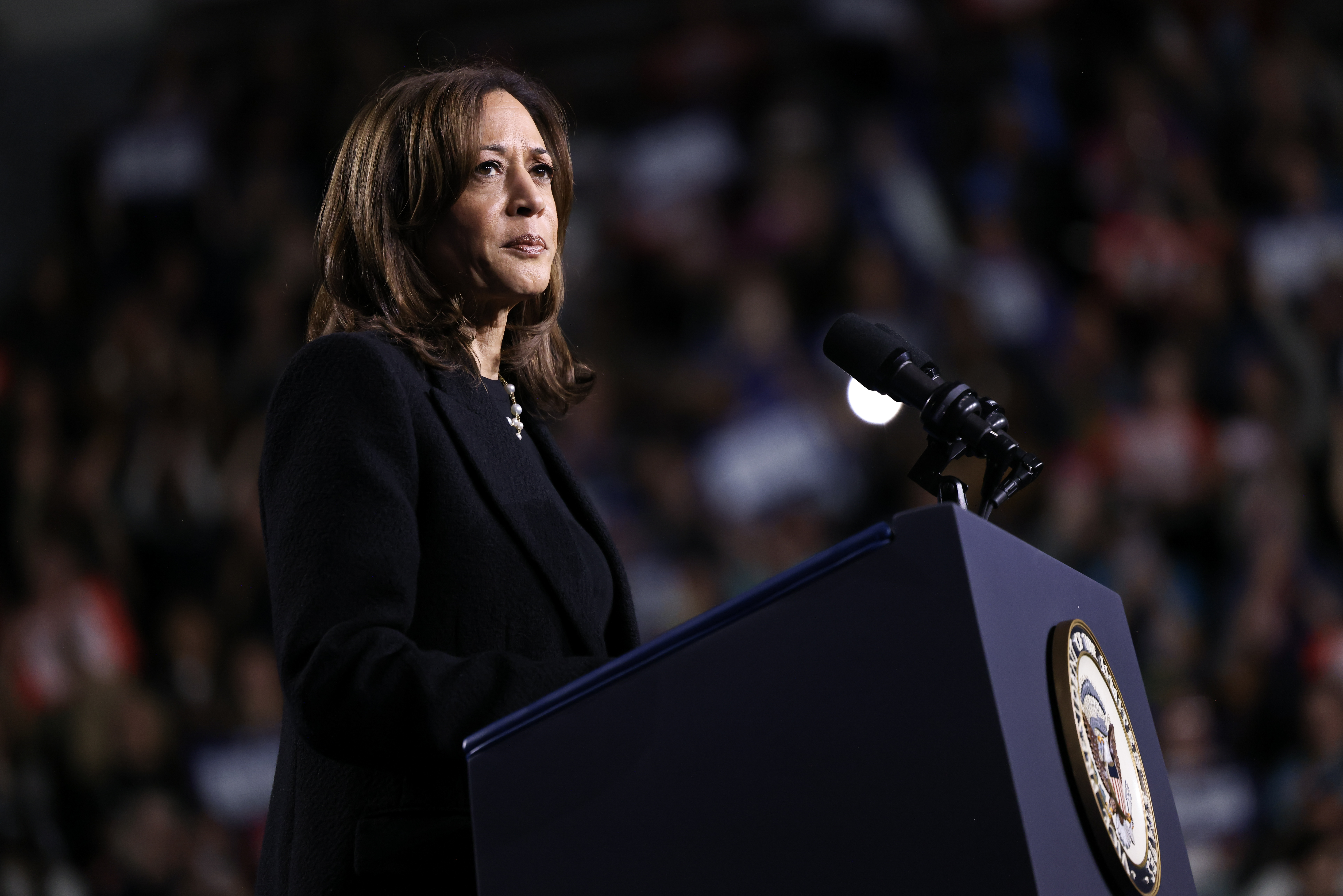
Rep. Jared Moskowitz, representing a swing district: ‘The idea that the vice president lost every swing state because she wasn’t more extreme on this issue is laughable’
CAPPELLO’S CAMPAIGN
The Air Force veteran, who served for six years at the U.S. Embassy in Israel, said Israel should continue to make efforts toward peace
Plus, Trump says Iran won't rule out nuclear weapons
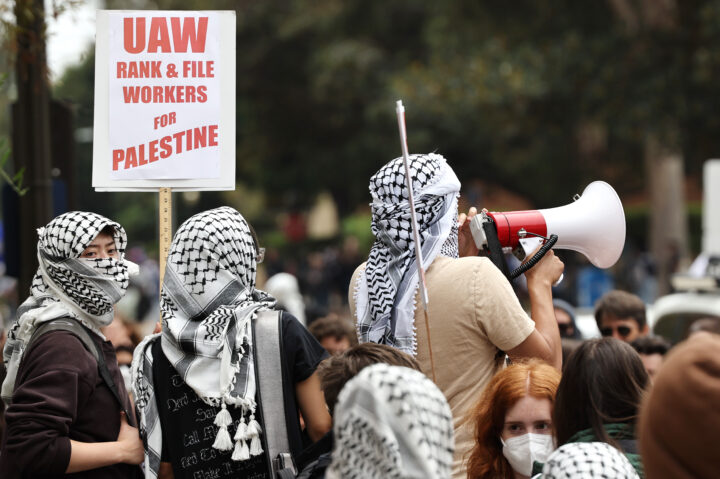
Mario Tama/Getty Images
Protestors gather after police cleared a new encampment on the UCLA campus on May 23, 2024 in Los Angeles, California.
Good Tuesday afternoon!
This P.M. edition is reserved for our premium subscribers — offering a forward-focused read on what we’re tracking now and what’s coming next.
It’s me again — Danielle Cohen-Kanik, U.S. editor at Jewish Insider and curator, along with assists from my colleagues, of the Daily Overtime. Please don’t hesitate to share your thoughts and feedback by replying to this email.
📡On Our Radar
Notable developments and interesting tidbits we’re tracking
Previewing his State of the Union address tonight, where it remains to be seen if he will make any announcements on Iran, President Donald Trump told reporters, “Iran wants to make a deal more than I do, but they just won’t say the sacred phrase: ‘We won’t build nuclear weapons,’” signaling that the two sides are still at an impasse ahead of the third round of negotiations scheduled for Thursday…
Secretary of State Marco Rubio briefed the congressional Gang of Eight, the bipartisan set of leaders advised on classified matters by the executive branch, this afternoon to provide an update on Iran, with CIA Director John Ratcliffe reportedly joining the discussion. The White House did not brief the group before striking Iran last June, drawing ire from Democrats…
Ahead of the meeting, Senate Minority Leader Chuck Schumer (D-NY) told C-SPAN about potential Iran strikes, “Closed-door briefings are fine, but the administration has to make its case to the American people on something as important as this”…
Around a dozen U.S. F-22 stealth fighter jets departed from the U.K. today to be deployed at an Israeli Air Force base in the south of the country, as over 150 aircraft are being moved to the region. Military experts told The Washington Post that the “assets being assembled are indicative of a multiday campaign without a ground invasion”…
The Coast Guard is investigating a swastika drawn at its primary recruit training center in New Jersey, where Coast Guard commandant Adm. Kevin Lunday quickly flew to address recruits and staff about the incident. Lunday recently came under fire from Congress, and had his confirmation delayed, over a change in Coast Guard policy that downgraded the swastika from a prohibited hate symbol to “potentially divisive,” which was eventually walked back.
Regarding the recent incident, Lunday said in a statement to The Washington Post, “Anyone who adheres to or advances hate or extremist ideology — get out. Leave. You don’t belong in the United States Coast Guard and we reject you”…
Rep. Brad Sherman (D-CA) is pushing for legislation to require an affirmative congressional vote prior to the U.S. reaching any nuclear deal with Saudi Arabia, Jewish Insider’s Marc Rod reports, following a notification from the administration to Congress indicating that it is moving toward a deal that could allow Riyadh to enrich uranium for civilian purposes.
The notification procedures, which do not include specific terms of a potential deal, suggest that Saudi Arabia will not be required to agree to more intrusive International Atomic Energy Agency inspections or “gold standard” safeguards — which would require Saudi Arabia to agree not to enrich or reprocess nuclear material — used for the U.S. nuclear cooperation agreement with the United Arab Emirates…
The Justice Department sued the University of California today under Title VII of the Civil Rights Act, which prohibits employment discrimination, alleging that the UCLA campus created a “hostile work environment against Jewish and Israeli faculty and staff.”
During campus anti-Israel protests in 2024, the DOJ said, “the University allowed antisemitic harassment to continue unabated for days” and “has ignored, and continues to ignore, gross and repeated violations” of time, place and manner restrictions on student protest. The department further claimed Jewish and Israeli faculty at the school have been physically threatened, ostracized, harassed, forced to take leave and assaulted…
The New York Times details efforts by New York’s business community and Democratic establishment to organize and promote the moderate wing of the party in response to New York City Mayor Zohran Mamdani’s rise to power. Some of the individuals involved, including former Gov. Andrew Cuomo allies Phil Singer and Steven Cohen, are considering forming PACs, watchdog groups, lobbying campaigns and more…
New York’s Working Families Party endorsed Brooklyn Borough President Antonio Reynoso to replace retiring Rep. Nydia Velázquez (D-NY) yesterday over Mamdani’s objections. The mayor has been backing Assemblymember Claire Valdez, who, like Mamdani, is a member of the Democratic Socialists of America and a vocal critic of Israel, and he had lobbied the WFP to endorse her or to stay out of the race. WFP’s director, Jasmine Gripper, told the Times, “At the end of the day, Zohran is an individual who gets to weigh in as an individual”…
A new poll from the University of New Hampshire found oyster farmer Graham Platner with a commanding lead among likely Senate Democratic primary voters, outdistancing Gov. Janet Mills by 34 points, with the primary less than four months away. In a general election matchup with incumbent Sen. Susan Collins (R-ME), Platner leads Collins by 11 points, while Mills and Collins are neck-and-neck…
Khalid Turaani, executive director of the Ohio branch of the Council on American-Islamic Relations (CAIR), testified at the Ohio Senate Judiciary Committee last week against a bill to codify the International Holocaust Remembrance Alliance’s working definition of antisemitism, where he claimed that Israel operates the world’s largest human skin bank and harvests the skin from deceased Palestinians. “And if I call them Nazis,” Turaani continued, “your law is going to punish me.”
The Anti-Defamation League’s Ohio River Valley office condemned Turaani’s speech, saying that the “antisemitic organ harvesting myth plays on the blood libel trope, which has spurred the torture, murder, and expulsion of Jews for centuries”…
The U.S. Embassy in Israel announced that, as part of the government’s “efforts to reach all Americans,” the embassy will be providing consular services for one day only at several locations across Israel and the West Bank, including Ramallah and the Jewish settlement of Efrat…
⏩ Tomorrow’s Agenda, Today
An early look at tomorrow’s storylines and schedule to keep you a step ahead
Keep an eye out in Jewish Insider for the highlights from President Donald Trump’s State of the Union address, taking place at 9 p.m. ET tonight, as all eyes are on possible U.S. military action against Iran.
Indian Prime Minister Narendra Modi arrives in Israel tomorrow, where he will be greeted by Prime Minister Benjamin Netanyahu before addressing the Knesset. In the evening, the two leaders will have dinner at Jerusalem’s King David Hotel. Read JI’s interview on Modi’s visit with Israeli Ambassador to India Reuven Azar.
The New York City Council will hold its first hearing on Council Speaker Julie Menin’s bill aiming to create “buffer zones” around houses of worship to protect from disruptive protests. The bill’s language was updated last night to remove the original 100-foot figure, which had reportedly emerged as a point of concern for the NYPD.
Congressional candidates from Illinois’ 9th District, where pro-Israel spending is boosting state Sen. Laura Fine and attacking Evanston Mayor Daniel Biss, will hold a debate on local news.
Stories You May Have Missed
SHIFTING STANCE

The progressive activist ran as a pro-Israel candidate in a neighboring swing district, but is now walking back her support as she runs to succeed Rep. Bonnie Watson Coleman
PRAIRIE STATE OF PLAY
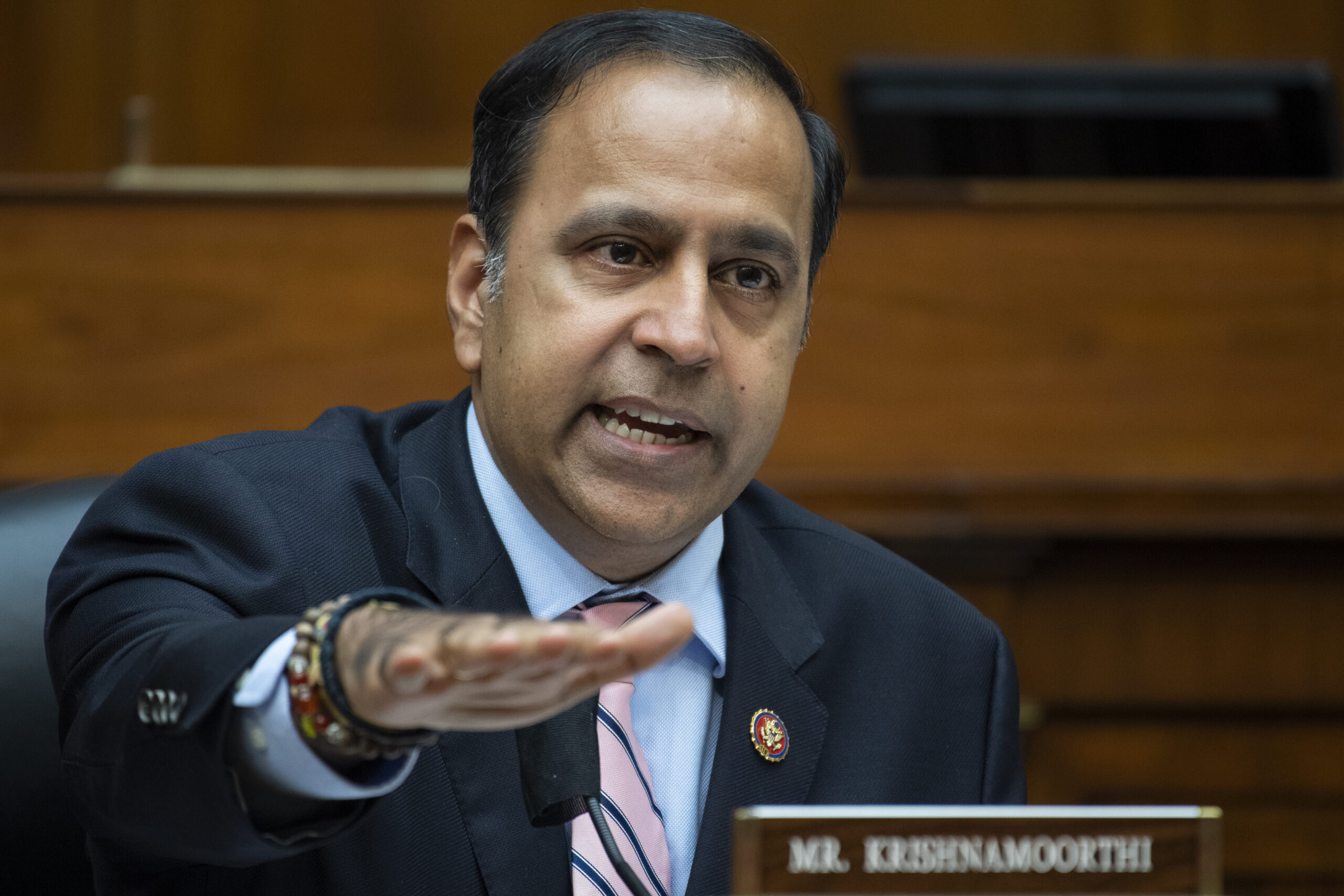
Lt. Gov. Juliana Stratton seems to be running to the congressman’s left on Israel, even as Rep. Robin Kelly is the most outspoken critic of Israel in the race
We’ll be watching for how Trump will address the situation with Iran in his speech, if at all
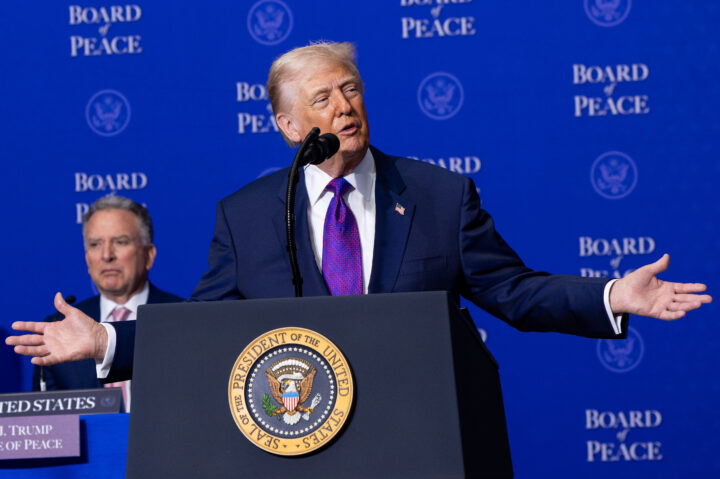
Murat Gok/Anadolu via Getty Images
President Donald Trump makes a speech during the inaugural meeting of the 'Board of Peace' at the US Institute of Peace in Washington, DC, United States on February 19, 2026.
President Donald Trump is set to address Congress for his State of the Union speech tonight, with U.S. forces amassing in the Middle East and administration officials engaged in an ongoing flurry of diplomacy with the Iranian regime.
We’ll be watching for how Trump will address the situation with Iran in his speech, if at all. Will he set red lines or negotiate demands for the regime? Will he lay out his plan or goals for a potential military attack? The White House, as of now, isn’t previewing his remarks.
Trump took to Truth Social yesterday afternoon with a post rejecting as “fake news” reporting from a series of outlets that Gen. Dan Caine, chairman of the Joint Chiefs of Staff, had raised concerns about a sustained military campaign against Iran.
The president said that Caine “like all of us, would not like to see War” but also believes that a military conflict would be “easily won.” Although talks have reportedly centered around limits on Iran’s nuclear program, Trump continued to insist that the regime’s nuclear development is “no longer, but rather, was blown to smithereens.” He called reports that the administration is considering limited strikes on Iran “fake.”
It’s not out of the question that Trump, who loves a made-for-TV moment, breaks major news on Iran during the speech — last year, he announced in the middle of his speech that the U.S. had apprehended a terrorist allegedly involved in the bombing that killed 13 U.S. servicemembers during the pullout from Afghanistan.
On the other hand, Trump might steer clear of the topic entirely as he focuses on domestic issues dominating the headlines, such as tariffs and immigration.
We’ll also be keeping an ear out for whether Trump tries to draw any boundaries for the conservative movement on Israel policy and antisemitism in his speech. The president has largely stayed out of the ongoing fight over Israel roiling the right, but the GOP’s most prominent Israel critic, Tucker Carlson, visited the White House on Monday after an interview with U.S. Ambassador to Israel Mike Huckabee that grabbed headlines.
Gov. Abigail Spanberger of Virginia is set to deliver the Democratic rebuttal to Trump’s speech — making her the second of a class of female Democrats with national security backgrounds to deliver the response in two years, following Sen. Elissa Slotkin’s (D-MI) remarks last year.
Despite Slotkin’s expertise, her speech last year was fairly light on foreign policy, and it remains to be seen whether Spanberger will follow that approach.
Rep. Summer Lee (D-PA), among the most strident Israel critics in the House, is set to deliver a response on behalf of the progressive Working Families Party.
On the Democratic side of the chamber, don’t expect to see a repeat of last year’s rowdy response from the crowd — Democratic leaders are urging members to avoid disruptive protests during the speech, such as attempting to interrupt Trump.
And a growing number of Democrats, mostly progressives, including several Senate Democrats with potential presidential ambitions,are set to skip the speech entirely, in some cases attending or speaking at counter-programming events being hosted by liberal groups.
Plus, major Dem donor calls out 'Jew hate' in party
Andrew Harnik/Getty Images
President Donald Trump in the Oval Office at the White House on September 25, 2025 in Washington, DC.
Good Monday afternoon!
This P.M. edition is reserved for our premium subscribers — offering a forward-focused read on what we’re tracking now and what’s coming next.
It’s me again — Danielle Cohen-Kanik, U.S. editor at Jewish Insider and curator, along with assists from my colleagues, of the Daily Overtime. Please don’t hesitate to share your thoughts and feedback by replying to this email.
📡On Our Radar
Notable developments and interesting tidbits we’re tracking
As rumors abound about the possibility and timing of U.S. strikes on Iran, the State Department ordered the evacuation of non-essential personnel and their families from the U.S. Embassy in Beirut. “Based on our latest review, we determined it prudent to reduce our footprint,” a State official told Fox News…
Nearby, amid the buildup of U.S. military assets in the region, American refueling and cargo planes were spotted at Ben Gurion Airport…
President Donald Trump denied reports that Pentagon officials, namely Joint Chiefs of Staff Chairman Gen. Dan Caine, are raising concerns about striking Iran, writing on Truth Social this afternoon, “General Caine, like all of us, would like not to see War but, if a decision is made on going against Iran at a Military level, it is his opinion that it will be something easily won.”
“He has not spoken of not doing Iran, or even the fake limited strikes that I have been reading about, he only knows one thing, how to WIN and, if he is told to do so, he will be leading the pack,” Trump said of Caine, while alluding to the potential breadth of military action against Iran…
Secretary of State Marco Rubio pushed back his visit to Israel, originally scheduled for this weekend, to March 2, The Jerusalem Post reports, days after the next round of U.S.-Iran negotiations in Geneva on Thursday…
Sen. Chris Coons (D-DE), a leader on foreign policy among Democrats in Congress, told Jewish Insider’s Emily Jacobs that he heard “pretty stark early warning signs of some challenges where core allies do not share our priorities” on a potential Iran strike during his recent trip t0 Europe, which included stops at the Munich Security Conference, along with meetings in Ukraine and Moldova with top European diplomats.
Coons laid out what he hopes to see from the president: “A) Consult Congress. B) Make a case to the American people about why this is in our national security interest. C) Clarify what on earth he’s planning with this Board of Peace … And D) If he’s going to work with close allies to ramp up pressure to try and achieve something at the negotiating table, he should work with close allies”…
Anthony Driver Jr., a union organizer and candidate in Illinois’ 7th Congressional District, doubled down on his recent repudiation of AIPAC, despite previously having little public record on Israel policy issues. Following a press conference last week where Driver, who is running against AIPAC-backed Chicago Treasurer Melissa Conyears-Ervin, denounced the pro-Israel group, he returned donations from major Democratic Party donor Michael Sacks over the finance executive’s ties to AIPAC.
Sacks, who was a major backer of former President Barack Obama and former Chicago Mayor Rahm Emanuel, said in his reply, “It is truly sad there is so much anti Israel sentiment and outright Jew hate that Anthony found himself in this position. I can only hope that the electorate rejects hate in all forms”…
As more details emerge about Rep. Tony Gonzales’ (R-TX) alleged affair with a staffer who later committed suicide, a poll commissioned by the campaign of Brandon Herrera, Gonzales’ opponent, shows the congressman trailing Herrera by a whopping 24 points among likely GOP primary voters. The story, which entered the news cycle right as early voting kicked off, could catapult Herrera, a social media influencer with a history of antisemitism, to the Republican nomination and on to Congress…
Investigators at the cryptocurrency giant Binance found last year that about $1.7 billion had been sent from two accounts to Iranian entities with links to terror groups, The New York Times reports, even after Binance pleaded guilty to violating anti-money laundering laws in 2023 and vowed to prevent sanctioned actors from accessing its platform. Trump pardoned Binance founder Changpeng Zhao, who was jailed for his role in the saga, in October 2025…
The Atlanta Jewish Film Festival backtracked in its defense of a juror selected for a judging panel who had posted antisemitic and anti-Israel content online, whom it had stood behind even after the Israeli Consulate in Atlanta announced it was withdrawing its funding and support of the event over the pick.
The festival changed its tune yesterday, saying it is “first and foremost, a Jewish institution” and has “a responsibility, particularly at this fraught time, to stand firmly against antisemitism and to affirm the Jewish people’s right to self-determination.” It said it would review its “organizational processes and policies, including those related to antisemitism, BDS, and cultural boycotts”…
The French Foreign Ministry has moved to block U.S. Ambassador to France Charles Kushner’s access to government officials after he declined to appear for a summons by Foreign Minister Jean-Noël Barrot today, which was issued after the U.S. Embassy reposted comments by Trump about a far-right French activist who was killed in a clash with far-left protesters. It was Kushner’s second summons, after his first last year when he accused the French government of not adequately combating antisemitism…
⏩ Tomorrow’s Agenda, Today
An early look at tomorrow’s storylines and schedule to keep you a step ahead
Keep an eye out in Jewish Insider for a look at Sue Altman’s shifting views on Israel as the formerly pro-Israel congressional candidate is now running in New Jersey’s more heavily Democratic 12th Congressional District.
We’ll be watching for mention of President Donald Trump’s thinking on Iran as he delivers the annual State of the Union address tomorrow night. Virginia Gov. Abigail Spanberger will deliver the Democratic response.
The House Foreign Affairs Committee will hold a hearing on “advancing national security through commercial diplomacy” with Jacob Helberg, under secretary of state for economic affairs, who recently told JI that he hopes the Pax Silica initiative, which he leads, “will pave the way for peace and economic integration” in the Middle East.
Australia’s royal commission on antisemitism, formed after the Hanukkah terror attack at Sydney’s Bondi Beach, will hold its first public hearing, though no testimony or evidence will be heard.
Stories You May Have Missed
OVERTON WINDOW
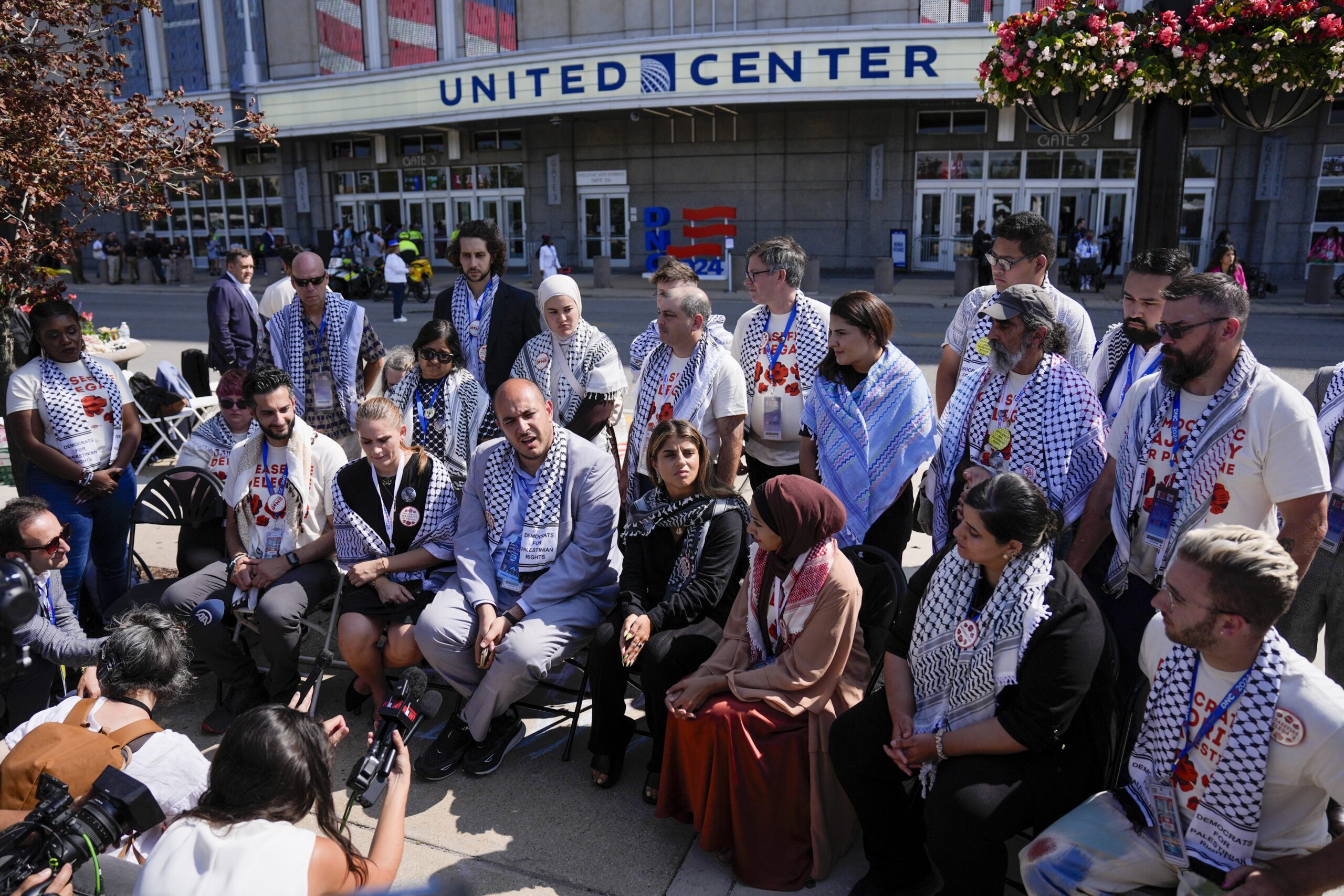
Former Democratic Rep. Kathy Manning: ‘There is no doubt that we are living through very difficult times for American Jews’
BIG TENT SHABBAT
The dinner was hosted by Rabbi Yehuda Kaploun, the U.S. antisemitism special envoy
The bipartisan legislation would seize and repurpose assets of Iranian government officials and support efforts to create and disseminate technology to Iranian citizens to help evade internet blackouts
Bill Clark/CQ-Roll Call, Inc via Getty Images
Rep. Mike Lawler (R-NY) leaves the House Republicans' caucus meeting at the Capitol Hill Club in Washington on Tuesday, May 23, 2023.
Reps. Mike Lawler (R-NY) and Rep. Brad Sherman (D-CA), the chair and ranking member of the House Foreign Affairs Committee’s Middle East and North Africa Subcommittee, are set to introduce a bill on Monday to disrupt the finances of the Iranian regime and its allies and expand internet access in Iran.
The Iran Human Rights, Internet Freedom and Accountability Act would create a dedicated “Iran Kleptocracy Initiative” unit within the Financial Crimes Enforcement Network, a bureau within the Treasury Department.
The office would be charged with identifying assets of Iranian government officials and their family members; coordinating with the Department of State to freeze and confiscate those assets; to “repurpose” seized assets to support Iranian dissidents where possible; to coordinate with various federal agencies to pursue civil and criminal prosecutions of individuals connected to these financial networks; and to create a reward system for those who assist in identifying such assets and prosecuting related individuals.
The bill would allow congressional leaders to demand that the administration assess whether specific Iranian individuals meet the standards to be sanctioned for supporting the regime’s human rights abuses, censorship and repression.
To expand internet access, it directs the Defense Innovation Unit and the Defense Acquisition University to “support the development of of low-cost, easily scalable, and rapidly deployable technologies to counter internet shutdowns or limitations in Iran,” including seeking out and backing existing or developing technologies that can evade internet blackouts by the Iranian government and working with industry and academia to quickly develop, deploy and test those technologies,
The bill proposes providing $2 million annually for those efforts through 2030. It also proposes increased funding for the internet freedom grants for Iran from to $30 million annually through 2030, doubling the proposed funding levels currently laid out in federal statute.
The legislation urges the administration to utilize U.S. international broadcasting systems — which some lawmakers have criticized for staying on the sidelines during the latest protests — to provide accurate information to Iranian civilians and support independent Iranian journalists.
It further directs the administration to assemble a report on senior “foreign political figures and oligarchs in Iran” and parastatal entities in Iran, the various business ties and assets held by those individuals, entities and their family members and the impacts of imposing sanctions and other restrictions on them.
And it instructs the administration to report to Congress on the feasibility of certain technologies to expand internet access, an analysis of potential obstacles and a summary of telecommunications providers active in Iran and their ownership.
“The Iranian regime fears one thing above all else: a connected, informed population. That’s why it shuts down the internet, censors dissent, and jails journalists,” Lawler said in a statement. “Comprehensive legislation is needed to expand internet freedom and target the financial networks of corrupt officials. We must increase pressure where it belongs and support with all of our might those fighting for freedom and democracy.”
“Despite the absolute brutality they continue to endure at the hands of this murderous regime, the Iranian people are bravely continuing to fight for their freedom,” Sherman said in a statement. “I’m proud to join my colleague Congressman Lawler in introducing legislation to stand with these brave protesters by creating a new, whole-of-government strategy to take down this regime. The Islamic Republic is weaker than it ever has been, and we must seize the moment. I know in our lifetimes, we will see a free Iran.”
The legislation is being supported by AIPAC, which is hosting a conference for activists in Washington next week and has meetings set with more than 400 congressional offices.
“This critical legislation expresses support for the fundamental freedoms of the Iranian people, promotes secure access to the internet, and advances efforts to hold oppressors accountable for human rights abuses,” AIPAC spokesperson Deryn Sousa said in a statement. “AIPAC urges Congress to pass this bipartisan measure to stand with the people of Iran and reinforce America’s commitment to human rights and digital freedom.”
Plus, Trump's kind words for Qatari PM
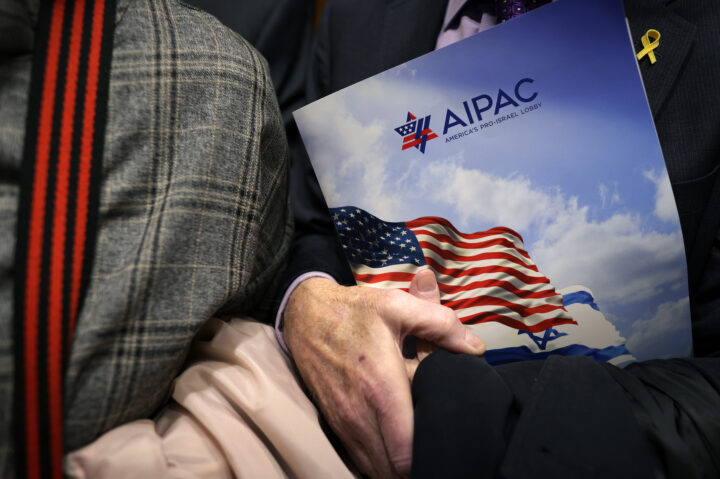
Alex Wong/Getty Images
A visitor holds an AIPAC folder in an elevator in Rayburn House Office Building on March 12, 2024 on Capitol Hill in Washington, DC.
Good Thursday afternoon!
This P.M. edition is reserved for our premium subscribers — offering a forward-focused read on what we’re tracking now and what’s coming next.
It’s me again — Danielle Cohen-Kanik, U.S. editor at Jewish Insider and curator, along with assists from my colleagues, of the Daily Overtime. Please don’t hesitate to share your thoughts and feedback by replying to this email.
📡On Our Radar
Notable developments and interesting tidbits we’re tracking
President Donald Trump used the occasion of the first meeting of the Board of Peace in Washington today to announce significant monetary and troop commitments from the U.S. and other countries to stabilize Gaza, as well as lay out a timeline for military action against Iran, Jewish Insider’s Matthew Shea reports.
The pledges included $10 billion from the U.S. and $7 billion from several Middle Eastern countries for Gaza’s reconstruction, as well as commitments to provide troops and police to the U.S.-led International Stabilization Force. (The Guardian reports the White House is currently exploring plans to build a 5,000-person military base to house the ISF in southern Gaza.)
On Iran negotiations, Trump said in his remarks, “Now we may have to take it a step further or we may not. Maybe we are going to make a deal [with Iran]. You are going to be finding out over the next probably 10 days.”
He later told reporters on Air Force One, “Ten, 15 days, pretty much maximum.” Remember: Last June, Trump said he would decide whether to take action against Iran within two weeks, and carried out strikes on Iranian nuclear facilities two days later…
U.K. Prime Minister Keir Starmer has reportedly not given approval to Washington to use the joint U.S.-U.K. base on Diego Garcia island for a strike on Iran, as Trump said yesterday he is considering. London is concerned that a U.S. strike from the shared base, which the U.K. must grant permission to use, could implicate it in violating international law…
Trump also offered praise for Qatar’s prime minister, Sheikh Mohammed bin Abdulrahman Al Thani, during his Board of Peace remarks, despite widespread criticism of Doha’s backing of Hamas and platforming of anti-Israel actors.
“His excellency, Prime Minister Al Thani of Qatar, just a great and highly respected man,” Trump said. “I always say he needs a public relations agency because you do so much good, and they have you down as evil, and you’re not evil. You help us so much and you’re such a good ally”…
Meanwhile, Hamas is entrenching itself further in Gaza, repositioning its loyalists in government and paying salaries across the enclave, according to Reuters. Hamas has said it is willing to hand power over to the Palestinian technocratic committee established by the U.S. and led by former Palestinian Authority official Ali Shaath, but as one Palestinian source told the outlet, “Shaath may have the key to the car, and he may even be allowed to drive, but it is a Hamas car”…
Former Rep. Tom Malinowski (D-NJ), who recently lost the Democratic primary for New Jersey’s 11th Congressional District, called AIPAC’s attacks against him in the race “bizarre in several ways,” writing in an op-ed today that he has “no problem identifying as a Zionist” and calling on Democratic leaders to collectively “refuse [AIPAC’s] support, instead of letting it pick off candidates one by one”…
Rep. Jan Schakowsky (D-IL) withdrew her endorsement of Cook County Commissioner Donna Miller, the front-runner in Illinois’ 2nd District Democratic primary, over Miller’s backing by groups that are reported to be affiliated with AIPAC, though the pro-Israel group hasn’t endorsed her and neither AIPAC nor its super PAC are publicly spending any money in the district.
“Illinois deserves leaders who put voters first, not AIPAC or out-of-state Trump donors,” Schakowsky told the Chicago Sun-Times. “I cannot support any candidate running for Congress who is funded by these outside interests”…
Ahead of a hearing next week on New York City Council Speaker Julie Menin’s proposed 100-foot ban on protests around houses of worship, Mayor Zohran Mamdani said today that he had the NYPD review the legality of the measure, “and I can tell you, my police commissioner has expressed concerns about that proposal”…
Three officials appointed by Mamdani to administration posts are co-founders of a group that blamed Israel for the Oct. 7 Hamas attacks two days after they took place, the Washington Free Beacon reports.
The group, the Muslim Democratic Club of New York (MDCNY), was founded by Faiza Ali, now commissioner of the Mayor’s Office of Immigrant Affairs; Aliya Latif, now executive director of the mayor’s Office of Faith-Based Partnerships; Ali Najmi, tapped as chair of the mayor’s Advisory Committee on the Judiciary; and anti-Israel activist Linda Sarsour.
On Oct. 9, 2023, the MDCNY posted on X, “Many NYers are feeling pain, fear, and anger after the horrific events in the Holy Land this weekend. Especially as the Israeli apartheid regime have forced millions of Palestinians in Gaza to live under occupation for decades and an open air prison since 2007.” The group went on to condemn “elected officials offering support for Israeli occupation’s rampant violence as it openly declares & enacts its intent to engage in mass violence and genocide against Palestinians,” well before Israel’s ground invasion of Gaza had begun…
The Forward profiles Los Angeles City Councilmember Nithya Raman as she runs for mayor with a unique ideology: Raman is a member of the Democratic Socialists of America, but has also been vocally supportive of Israel. She called DSA’s statement blaming Israel for the Oct. 7 attacks “unacceptably devoid of sympathy” and rejects the BDS movement, but was also condemned by the local Jewish community for introducing a ceasefire resolution in June 2023…
⏩ Tomorrow’s Agenda, Today
An early look at tomorrow’s storylines and schedule to keep you a step ahead
Keep an eye out in Jewish Insider for a preview of the AIPAC Congressional Summit, which is kicking off Sunday amid the group’s increasing involvement in midterm election races.
President Donald Trump is expected to meet with governors at the White House tomorrow, though the meeting will no longer be held under the auspices of the National Governors Association, as is done annually, after the White House declined to invite Democratic Govs. Jared Polis of Colorado and Wes Moore of Maryland to a black-tie dinner on Saturday.
We’ll be back in your inbox with the Daily Overtime on Monday. Shabbat Shalom!
Stories You May Have Missed
FULOP’S FIGHT
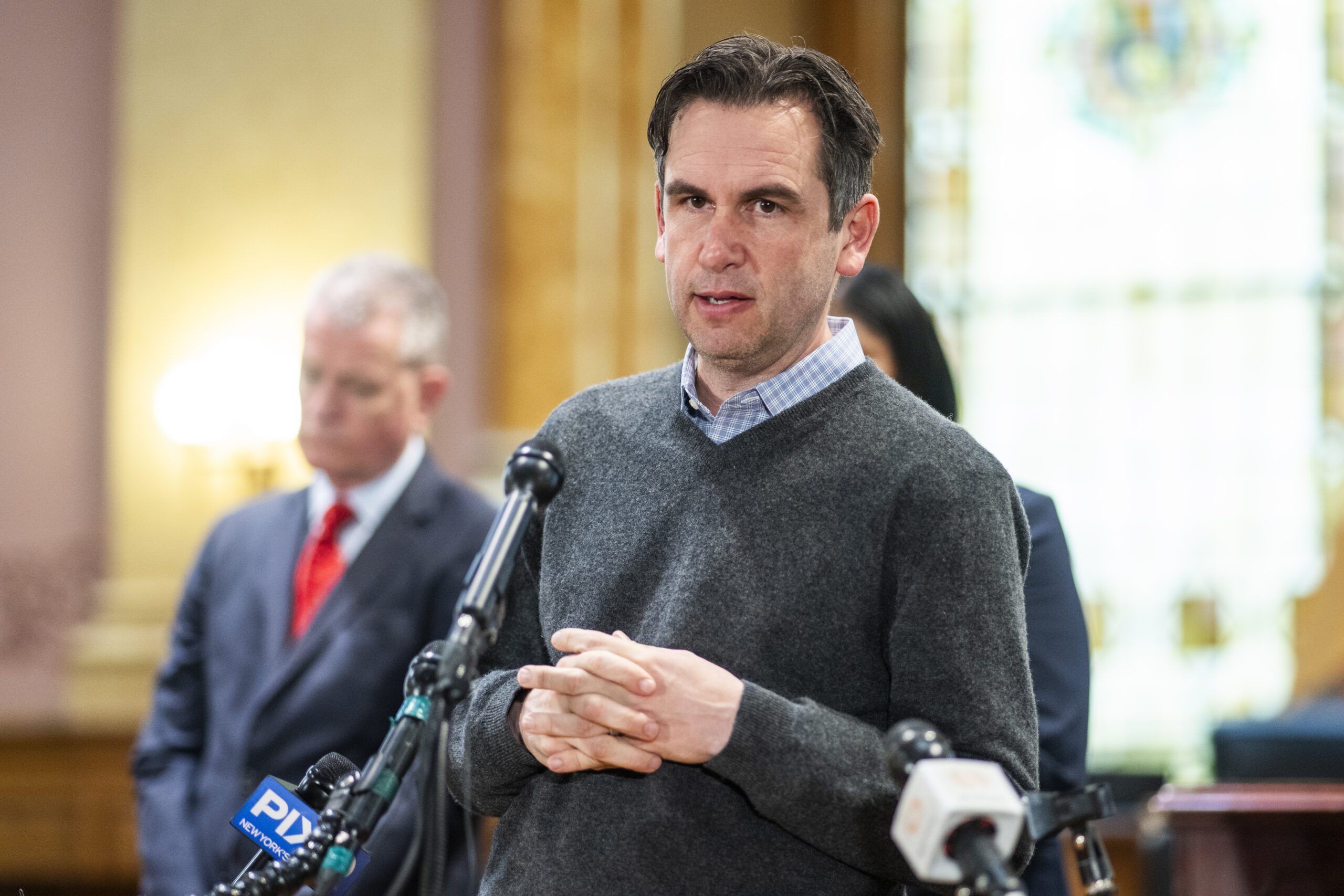
As the new head of NYC’s leading business advocacy group, Fulop said he’s preparing for ‘this experiment of what it means to be an executive in a DSA world’
TEXAS TROUBLE

An unfolding scandal involving Rep. Tony Gonzales could cost him his seat at the hands of a far-right social media influencer
The gathering, ostensibly focused on the disarmament of Hamas and the establishment of a peace-aligned administration in the Gaza Strip, comes as the U.S. moves dozens of fighter jets and support aircraft to the region

Chip Somodevilla/Getty Images
U.S. President Donald Trump gives a speech at the World Economic Forum (WEF) on January 21, 2026 in Davos, Switzerland.
High-level foreign officials, top diplomats and heads of state will gather in Washington today for the first in-person convening of the Trump administration’s Board of Peace — as U.S. military assets flow into the Middle East and President Donald Trump mulls a potentially weekslong sustained military campaign in Iran.
The gathering, ostensibly focused on the disarmament of Hamas and the establishment of a peace-aligned administration in the Gaza Strip, comes as the U.S. moves dozens of fighter jets and support aircraft to the region — reportedly the largest buildup in military air power since the 2003 invasion of Iraq.
It’s a split screen befitting the president — who said at his inauguration last year that his “proudest legacy will be that of a peacemaker,” and who has claimed success in negotiating an end to numerous conflicts, as well as the release of the remaining Israeli hostages from Gaza last year — even as the U.S. has used force to enact political change, such as in Venezuela.
But a U.S. operation in Iran would differ significantly from what took place in Venezuela last month. In the place of ousted President Nicolás Maduro is Delcy Rodríguez, the former vice president who is now working with the Trump administration. No such natural successor to Iranian Supreme Leader Ayatollah Ali Khamenei exists. Behind the supreme leader is a laundry list of equally — if not more — radical hard-liners eager to take the ailing Khamenei’s place. Reza Pahlavi, the son of the deposed shah of Iran, who has spent most of his life living in exile, has sought to return to Iran to usher the Islamic Republic into a new democratic era — but does not appear to have the on-the-ground support as well as enough legitimacy among Iran’s vast diaspora community.
The Trump administration continues to signal publicly that it wants to find a diplomatic resolution to the situation in Iran, with White House Press Secretary Karoline Leavitt saying as much at yesterday’s press briefing.
But the White House is continuing to move forward with preparations for a military confrontation, which could include anything from targeted strikes on Iran’s nuclear facilities to a move toward regime change. Trump met on Wednesday with Secretary of State Marco Rubio, White House Special Envoy Steve Witkoff and Jared Kushner to discuss options for Iran.
Rubio is set to travel to Israel on Feb. 28, an announcement that could signal that strikes are not imminent — or that could be a ruse by the administration.
Recall that in June, Trump gave Iran a two-week deadline to resume talks, choosing to strike the country’s nuclear facilities just three days later.
Meanwhile, Russian Foreign Minister Sergey Lavrov — whose country is participating in military exercises with Iran’s Islamic Revolutionary Guard Corps today in the Strait of Hormuz — warned against renewed strikes targeting Iran.
Iran is also preparing for a potential military conflict, fortifying its nuclear sites and reviving a chain of command that empowers lower-level military officials.
A month ago, as the world teetered on the edge of another U.S.-Iran military confrontation, diplomacy won out, and the parties agreed to talks. Now, Washington and Tehran — as well as Jerusalem — find themselves again on the brink. The next big decision belongs to Trump.
Plus, Sen. Graham reports MBZ is alive and well

Mass Communication Specialist 3rd Class Amber Smalley/U.S. Navy via Getty Images
Flight deck of the Nimitz-class aircraft carrier USS Abraham Lincoln (CVN 72) May 10, 2019 in the Red Sea.
Good Wednesday afternoon!
This P.M. edition is reserved for our premium subscribers — offering a forward-focused read on what we’re tracking now and what’s coming next.
It’s me again — Danielle Cohen-Kanik, U.S. editor at Jewish Insider and curator, along with assists from my colleagues, of the Daily Overtime. Please don’t hesitate to share your thoughts and feedback by replying to this email.
📡On Our Radar
Notable developments and interesting tidbits we’re tracking
President Donald Trump warned U.K. Prime Minister Keir Starmer not to relinquish control over Diego Garcia — an island in the Indian Ocean that hosts a joint U.S.-U.K. base, as the U.K. plans to transfer sovereignty of the larger island chain to Mauritius, while maintaining a 99-year lease on the base — because it may act as the launching pad for a U.S. strike on Iran.
“Should Iran decide not to make a Deal, it may be necessary for the United States to use Diego Garcia, and the Airfield located in Fairford, in order to eradicate a potential attack by a highly unstable and dangerous Regime — An attack that would potentially be made on the United Kingdom, as well as other friendly countries,” Trump wrote on Truth Social…
Iran is also signaling its readiness for military conflict, The Wall Street Journal reports, including deploying Islamic Revolutionary Guard Corps naval units to the Strait of Hormuz, launching cruise missiles along the coast, conducting a military exercise with a Russian warship near the USS Abraham Lincoln, testing air defense systems, hardening nuclear sites and cracking down once more on dissidents…
Israel, meanwhile, is preparing for its civilian infrastructure to be “a central arena” in a potential U.S.-Iran conflict, Jewish Insider’s Lahav Harkov reports, as Home Front Command chief Maj.-Gen. Shay Klapper told the Knesset Foreign Affairs and Defense Committee today. Committee Chairman Boaz Bismuth said, “There is not one [Israeli] who doesn’t ask himself several times a day when there will be a campaign against Iran. The entire population and home front are preparing”…
Sen. Lindsey Graham (R-SC) dispelled rumors, seemingly spread by Saudi media, that UAE President Sheikh Mohamed bin Zayed was ill or even dying after meeting with him in Abu Dhabi today: “Not only is he alive, but he is also well and as sharp as I’ve ever seen him. To those powers that feel the need to attack MbZ and the UAE for doing the right thing — you do so at your own peril,” Graham said on X.
He also called MBZ’s decision to join the Abraham Accords and “to try to integrate the region with the whole world … one of the most consequential decisions any Middle Eastern leader has made.” Graham is now headed to Saudi Arabia where he will meet with Crown Prince Mohammed bin Salman, whom he recently told publicly to “knock it off” regarding the kingdom’s destabilizing activities in the region…
Democratic Texas state Rep. James Talarico raised $2.5 million in donations for his Senate campaign in the 24 hours after his interview on Stephen Colbert’s late-night show was reportedly quashed by CBS, Politico reports, as early voting in Texas kicked off yesterday ahead of the March 3 primary.
CBS denied it had banned the interview, saying Colbert’s show “was provided legal guidance that the broadcast could trigger the FCC equal-time rule for two other candidates, including Rep. Jasmine Crockett, and presented options for how the equal time for other candidates could be fulfilled,” which Colbert derided as a statement “written by — and I’m guessing for — lawyers”…
On the GOP side of the Texas Senate ballot, Attorney General Ken Paxton looks like the front-runner in his hotly contested primary against incumbent Sen. John Cornyn (R-TX) and Rep. Wesley Hunt (R-TX), despite the GOP establishment spending more than $60 million in attack ads against Paxton, Punchbowl News reports. (And the infighting goes further: Hunt said yesterday he filed criminal charges against a senior member of Cornyn’s campaign team for allegedly doxxing a member of his family.)
Trump told reporters last night that he still hadn’t decided which of the GOP candidates, if any, to endorse, saying, “I like all three of them actually. Those are the toughest races. They’ve all supported me. They’re all good. You’re supposed to pick one, so we’ll see what happens. But I support all three”…
Democratic Virginia state Del. Dan Helmer, a key architect of the state’s current redistricting effort, plans to enter the race for the 7th Congressional District that will be created if state voters approve a constitutional amendment to allow redistricting to proceed.
Helmer, who is Jewish and the son of an Israeli immigrant, ran for the state’s 10th District in 2024 on a staunchly pro-Israel platform, telling JI at the time that calls for conditions on U.S. aid to Israel are “incredibly frustrating.” He became the target of late-stage ad campaigns, which their backers insisted to JI were unrelated to his support for Israel, and ultimately came in second in the Democratic primary…
Humain, Saudi Arabia’s state-sponsored AI company, invested $3 billion in Elon Musk’s xAI, the company announced today. The investment came just before Musk combined xAI with his SpaceX aerospace company, giving the Saudi firm a significant stake in the major U.S. government contractor…
⏩ Tomorrow’s Agenda, Today
An early look at tomorrow’s storylines and schedule to keep you a step ahead
Keep an eye out in Jewish Insider for a look at how the emerging scandal involving Rep. Tony Gonzales (R-TX) — whom the San Antonio Express News confirmed yesterday was engaged in an extramarital affair with a staffer who committed suicide — could catapult an anti-Israel Republican, who has posted videos featuring Nazi imagery, to Congress.
Our focus tomorrow will be the first meeting of the Board of Peace, which will bring several heads of state and senior ministers, including Israeli Foreign Minister Gideon Sa’ar, to Washington. Read JI’s preview of the meeting.
Jewish Federations of North America CEO Eric Fingerhut will deliver what JFNA is calling the first “State of the Jewish Union Address,” ahead of the president’s State of the Union next week, from the organization’s Washington headquarters.
The U.S. Commission on Civil Rights will hold a daylong hearing on antisemitism on college campuses, featuring legal experts, former administration officials, students and Jewish communal leaders, which include Amy Spitalnick, CEO of the Jewish Council for Public Affairs; Kenneth Marcus, founder and CEO of the Louis D. Brandeis Center; Erin Beiner, J Street U director; and Kevin Rachlin, Washington director of The Nexus Project.
Stories You May Have Missed
MONIKER MEANING

Follow the language to its most extreme end, and what emerges is undiluted antisemitism
ROCK AND A HARD PLACE
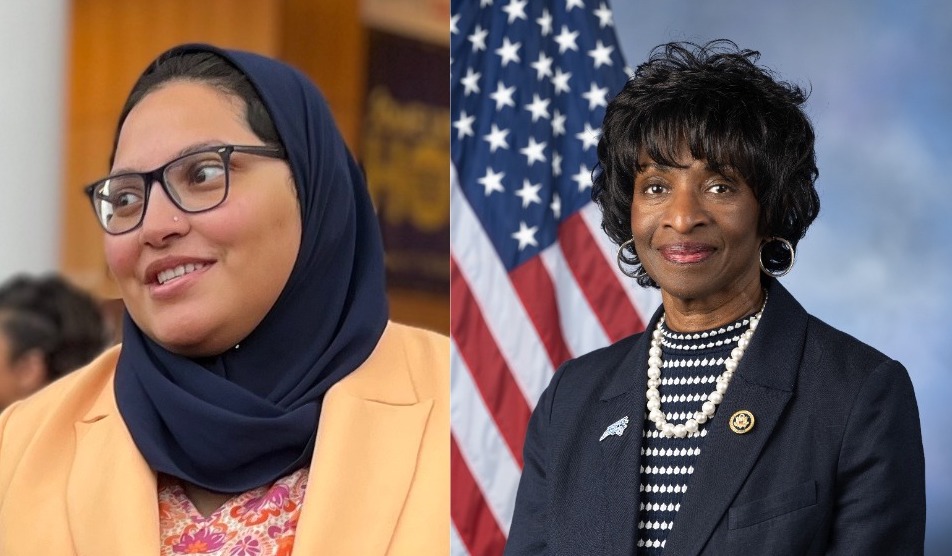
Rep. Valerie Foushee was backed by AIPAC, but has since turned against supporting Israel. Her Democratic opponent is a virulently anti-Israel activist
Plus, Belgium's mohel madness
Jim Watson - Pool/Getty Images
U.S. Vice President JD Vance gives remarks following a roundtable discussion with local leaders and community members amid a surge of federal immigration authorities in the area, at Royalston Square on January 22, 2026 in Minneapolis, Minnesota.
Good Tuesday afternoon!
This P.M. edition is reserved for our premium subscribers — offering a forward-focused read on what we’re tracking now and what’s coming next.
It’s me again — Danielle Cohen-Kanik, U.S. editor at Jewish Insider and curator, along with assists from my colleagues, of the Daily Overtime. Please don’t hesitate to share your thoughts and feedback by replying to this email.
📡On Our Radar
Notable developments and interesting tidbits we’re tracking
As the second round of U.S.-Iran negotiations wrapped up in Geneva this morning, Iranian Foreign Minister Abbas Araghchi told state media that the parties reached a “general understanding on a set of guiding principles” and will “begin working on the text of a potential agreement.”
A U.S. official sounded a more reserved note, telling Axios the talks “made progress” but “there are still a lot of details to discuss.” Iranian officials are expected to present proposals in the next two weeks “to address some of the open gaps in our positions,” the official said.
Vice President JD Vance said on Fox News this afternoon that “the United States has certain red lines. Our primary interest here is we don’t want Iran to get a nuclear weapon. We don’t want nuclear proliferation.”
On today’s negotiations, Vance explained, “in some ways it went well — they agreed to meet afterwards — but in some ways it was very clear that the president has set some red lines that the Iranians are not yet willing to actually acknowledge and work through.”
Ayatollah Ali Khamenei, Iran’s supreme leader, demonstrated that unwillingness, posting on X as talks were underway that if the U.S. insists on prohibiting Iran from enriching uranium “there is no room for negotiation.” As the U.S. sends more military assets to the region, he also threatened to “send that [U.S.] warship to the bottom of the sea”…
New York City Mayor Zohran Mamdani tapped Faiza Ali as commissioner of the Mayor’s Office of Immigrant Affairs today, elevating the longtime activist with ties to the Council on American-Islamic Relations and anti-Israel activist Linda Sarsour. Ali previously served as the community affairs director for CAIR’s New York chapter, and she and Sarsour have co-led Muslim advocacy efforts, including being arrested together in 2017…
Several Chicago-era endorsees of the Congressional Progressive Caucus PAC — Evanston Mayor Daniel Biss, union organizer Anthony Driver Jr., state Sen. Robert Peters and activist Junaid Ahmed — held a joint press conference today slamming AIPAC as a “pro-Trump, right-wing aligned organization” that “is rooted and based in lobbying for this right-wing Israeli government.”
Driver, a candidate in the 7th District who was just endorsed by the CPC PAC today and has not previously spoken at length about his position on Israel, said, “AIPAC is not your friend. … They are in the business of buying elections”…
U.S. Ambassador to Belgium Bill White was summoned to a meeting with Belgian Foreign Minister Maxime Prévot today after White accused the country in a series of heated social media posts of a “RIDICULOUS AND ANTI SEMITIC ‘PROSECUTION’” of three mohels who are being charged with practicing medicine without a license.
Prévot said White’s posts “and interference in judicial matters violate basic diplomatic norms” and denied accusations of antisemitism, while Ambassador Yehuda Kaploun, the State Department’s antisemitism envoy, concurred with White…
Sen. Mark Kelly (D-AZ) told BBC “Newsnight” yesterday that he will “seriously consider” a presidential run in 2028 “because we’re in some seriously challenging times.” The former astronaut, who has recently been the target of the White House’s ire over a video in which he and fellow veterans urged servicemembers to refuse illegal orders, touted his military experience and engineering certifications as part of his pitch…
Texas state Rep. James Talarico, running in a competitive primary for U.S. Senate against Rep. Jasmine Crockett (D-TX), shared an interview he conducted with late-night host Stephen Colbert that CBS declined to run.
Colbert said in his show’s opening remarks last night that the clip would not be broadcast because “we were told in no uncertain terms by our network’s lawyers, who called us directly, that we could not have [Talarico] on the broadcast,” claiming the network was threatened by the Federal Communications Commission…
Eric Trump has invested in Israeli drone maker Xtend as part of a $1.5 billion deal in which the company, which already has a multimillion-dollar contract with the Pentagon, is merging with a Florida construction firm. Xtend was also selected this month by the Department of Defense as one of 25 companies participating in its “Drone Dominance Program”…
Tricia McLaughlin, Homeland Security Secretary Kristi Noem’s spokesperson, is leaving her post next week, Politico reports, after becoming one of the most vocal defenders of the Trump administration’s deportation efforts…
Warner Bros. Discovery announced today it will restart talks with Paramount after initially rejecting the company’s hostile takeover bid in favor of its current agreement with Netflix. Paramount has since increased its nearly $78 billion all-cash offer, including paying the $2.8 billion termination fee Warner will owe Netflix if their deal falls through…
⏩ Tomorrow’s Agenda, Today
An early look at tomorrow’s storylines and schedule to keep you a step ahead
Keep an eye out in Jewish Insider for an interview with Steven Fulop, the former Jersey City mayor who is making a priority of countering antisemitism in his new role as the head of New York City’s business advocacy group.
The International Federation of Social Workers will hold a vote on a contentious effort to expel the Israeli Union of Social Workers, after some European members complained that Israeli social workers had served in combat roles during Israel’s war against Hamas in Gaza — a move that the U.S.-based National Association of Social Workers unexpectedly said today it resoundingly opposes.
U.S. Ambassador to Israel Mike Huckabee will sit down with Tucker Carlson in Jerusalem for an episode of the commentator’s podcast, as the two have been at loggerheads over Carlson’s repeated criticisms of Israel.
The Kigali Forum, a conference bringing together policy leaders and think tanks from the United States, Africa and Israel to discuss “the new Middle East,” will take place in Kigali, Rwanda.
The trial of the man accused of killing Paul Kessler, a Jewish man who was beaten and died during rival pro- and anti-Israel protests in the Los Angeles area in November 2023, is set to begin in Ventura County Superior Court.
Stories You May Have Missed
ENVOY ISSUES
Barrack, the U.S. ambassador to Turkey, plays an outsized role in setting foreign policy in the region, lawmakers and experts say
SENATOR SAYS

The senator addressed Saudi and Emirati leadership directly about escalating tensions in the region in his remarks at the Munich Security Conference
Barrack, the U.S. ambassador to Turkey, plays an outsized role in setting foreign policy in the region, lawmakers and experts say
Leigh Vogel/Getty Images for Concordia Annual Summit
U.S. Ambassador to Turkey Tom Barrack speaks during the 2025 Concordia Annual Summit on September 24, 2025 in New York City.
Simmering frustrations among lawmakers with U.S. Ambassador to Turkey Tom Barrack — who also serves as special envoy to Syria and manages a wide remit in America’s Middle East policy — have recently emerged with force, as multiple lawmakers tell Jewish Insider they have concerns about the U.S. envoy’s expansive role.
Barrack’s critics see the envoy pushing U.S. policy in concerning directions, toward an overly close relationship with Turkey despite the country’s overt anti-Israel posture and regional ambitions and, most recently, as a key enabler of the Turkish-backed Syrian government’s offensive against U.S.’ longtime Kurdish allies in the Syrian Democratic Forces.
Over the course of months, the envoy has also made comments that have concerned lawmakers, including questioning Israel’s status as a democracy, downplaying the threat from Hezbollah and supporting a Turkish role in the International Stabilization Force in Gaza, despite Turkey’s long record of hostility to Israel.
A Republican senator, granted anonymity to speak candidly, told JI last week that Barrack’s role in U.S. policy in the region makes them “nervous.”
“He’s running a Turkish line, and there are very legit[imate] concerns” about his role and influence, the senator said.
A senior Senate Democrat involved in foreign policy issues also said he had concerns about Barrack, suggesting the envoy was pursuing personal business interests through his post.
“Barrack is clearly knowledgeable about the region, he’s clearly energetic and engaged. But that’s the only good I can say. I have real concerns about his motives and the consequences of his actions,” the Democratic senator said.
“That’s something I really worry about. When the president himself is among the most corrupt in American history, we can’t be surprised when the people he puts in positions of power conduct themselves in the same way, but it’s really dangerous,” the lawmaker added. “We’re losing our reputation as a good partner, a reliable ally and a country committed to supporting anti-corruption efforts.”
Asked about Barrack’s role in the administration, Sen. Richard Blumenthal (D-CT) told JI, “I’m hopeful that the interests of the Kurds will be protected. America needs to stand up to the Turks where necessary and insist that those rights be adequately represented.”
Lawmakers’ concerns have become public at a series of hearings on the Hill in recent weeks.
At a House Foreign Affairs Committee hearing on Syria last week, Rep. Josh Brecheen (R-OK), a leading skeptic among House Republicans of repealing U.S. sanctions on Syria, said he feels that Barrack’s dual role as ambassador to Turkey and Syria special envoy is hampering the U.S.’ ability to take a tougher stance with Syria.
“[Barrack] has to maintain a good relationship with Turkey. Would we not be well-served for someone to be specific to Syria, whether it be an envoy specific to Syria or an ambassador — how would that not help us to make sure that Tom Barrack can maintain a good relationship with Turkey but we’d have somebody to play hardball with Syria?” Brecheen said.
Brecheen said he’s worried that Turkish President Recep Tayyip Erdoğan seeks to reestablish the Ottoman Empire and that Syrian President Ahmed al-Sharaa is deceiving the U.S. and still maintains a jihadist ideology. He said current U.S. policy appears to be facilitating Turkish and Russian interests.
Nadine Maenza, the former chair of the U.S. Commission on International Religious Freedom, who testified before the committee, responded that she shares Brecheen’s concerns.
“It’s been very difficult to have him have both hats on, and I think we’ve seen that with the State Department not having a role to play in Syria policy and waiting for Barrack to make decisions,” Maenza said. “I don’t think that serves the president well, if his goal is peace and stability in the Middle East.”
At another House Foreign Affairs Committee hearing earlier this month, Rep. Brad Sherman (D-CA) highlighted Barrack’s past comments on Hezbollah, which he said “have often sent the wrong signals.” David Schenker, a senior fellow at The Washington Institute for Near East Policy who served in the first Trump administration, also repudiated Barrack’s comments.
Barrack has faced criticism off the Hill in conservative circles as well: a Wall Street Journal editorial last month blasted his “not-so-excellent Syrian adventure,” characterizing the ambassador as overly close with Turkey and pushing an anti-SDF policy in the administration.
Responding to the editorial, former Sen. Rick Santorum (R-PA) blasted Barrack for having “betrayed [the Kurds], Christians in Syria and our country for Turkey.” “His behavior is a disgrace. He should be recalled,” Santorum added.
Former National Security Advisor John Bolton — who has since come under fire by President Donald Trump — said last year that Barrack has been “publicly making excuses for al-Sharaa’s reluctance to open full diplomatic relations with Israel. It is not generally a U.S. ambassador’s job to justify another country’s actions. He should be warned about the symptoms he is displaying.”
Conservative commentator Mark Levin similarly criticized Barrack last summer for rebuking Israel’s attacks on Syrian government-aligned forces carrying out massacres of Druze and other minority groups.
His concerns were echoed by right-wing influencer Laura Loomer, who said that Barrack’s “delusions that he can play nice with [al-Sharaa], who is literally ISIS, is going to continue to destabilize the Middle East and get more innocent non-Muslims killed,” describing Barrack’s approach to Syria as completely wrong-headed.
“I have heard from different sources that [the Turks] perceive Tom Barrack to be their man, and this is the first time in a long time they feel that they have a U.S. envoy that’s essentially on their side, if you want to use that terminology, and is basically positioning Ankara to really realize a lot of their policy goals, their geostrategic goals,” Sinan Ciddi, the director of the Turkey program at the Foundation for Defense of Democracies, told JI.
Barrack, while being “a problematic actor,” is also “deeply influential,” Ciddi said, characterizing him as one of the two most influential figures in the U.S.’ regional policy alongside White House Special Envoy Steve Witkoff. Like Witkoff, Barrack is a longtime friend and business associate of Trump.
“He is making moves, he’s implementing policies as special envoy and as ambassador that I think present deep risks and and could have potentially detrimental consequences, because it’s going to alienate the United States at the least, but at worst, they could really inflame a considerable number of situations that we’re active looking at,” Ciddi said.
He raised concerns about three particular policies that Barrack has appeared to promote: providing Turkey with advanced F-35 fighter jets despite U.S. sanctions, bringing Turkey into the International Stabilization Force in Gaza and pushing for an influential role for Turkey in Syria and a favorable stance toward the new Syrian government.
He said that Barrack and the Trump administration more broadly appear to view Turkey as a partner that they can cooperate with on goals including stabilizing Syria and Gaza.
Israeli officials, however, view the situation in a very different light, and “feel that through Barrack’s adventurism, what we are seeing are dangerous moves to position Turkey in the Levant and the Middle East as an aggressive actor,” Ciddi said. “They feel that Turkey is, through Barrack, finding a means and opportunity to weaken Israel.”
Ciddi warned that Turkey having any role in the stabilization force in Gaza would be “fundamentally very, very dangerous” given Turkey’s friendliness with Hamas and hostility toward Israel. And he said that providing Turkey with the advanced F-35 jets would be “deeply problematic” given its close relationship with Russia, along with various other issues, a dynamic that has troubled lawmakers and European allies.
Ciddi also said that Barrack’s public comments, or lack thereof, about Turkey’s closeness with Hamas and Iran, about Hezbollah and about Israel’s status as a democracy should be concerning for “all the countries that have signed up to the Abraham Accords, or any country in the region that’s taking a position against jihadist movements and Salafist movements.”
Michael Makovsky, the CEO of the Jewish Institute for National Security of America, told JI that, “half the things the guy says I can’t understand, and the other half I don’t agree with.” Makovsky said he’s been particularly troubled by Barrack’s influence on Syria policy, seemingly pushing the U.S. toward support for al-Sharaa.
“I think that’s been a big mistake,” Makovsky said, criticizing the “betrayal of the Syrian Kurds, which I found rather obscene” and emphasizing that the Kurds had been a critical ally of the U.S. in the fight against ISIS. He noted that al-Sharaa remains aligned with jihadists who have carried out massacres of Syrian minority groups.
“We’re all in on [al-]Sharaa, and I think that’s partly because Trump met him and likes him, but even before that, it’s because this is what Barrack wants,” Makovsky continued. “He seems to often reflect exactly the Turkish view, and I don’t think the Turkish view on Syria aligns with our own interests at all.”
He said that he was also troubled by Barrack’s claim that Israel is not a democracy, saying that it was a poor message from a U.S. official and suggested that he does not properly understand the region.
Congressional correspondent Emily Jacobs contributed reporting.
The senator addressed Saudi and Emirati leadership directly about escalating tensions in the region in his remarks at the Munich Security Conference
Sean Gallup/Getty Images
Sen. Lindsey Graham (R-SC) speaks at the 62nd Munich Security Conference on February 13, 2026 in Munich, Germany.
Sen. Lindsey Graham (R-SC) warned Saudi Arabia that the escalating tensions with the United Arab Emirates risk benefiting Iran at a critical moment in the Middle East, addressing the nations’ leaders directly in remarks at the Munich Security Conference on Saturday.
“As to MBS [Saudi Crown Prince Mohammed bin Salman] and MBZ [UAE President Sheikh Mohamed bin Zayed al-Nahyan] — knock it off, Saudi Arabia, knock it off,” Graham said from the stage. “I’m tired of this crap.”
Graham also urged “anybody who will listen in the Middle East — don’t let this moment pass,” and warned that the rift between the UAE and Saudi Arabia is “emboldening Iran.” He added that “MBZ is not a Zionist,” pushing back against criticism in Saudi Arabia of the Emirati leader’s ties to Israel. Among other escalatory rhetoric out of the kingdom, a prominent Saudi academic publicly accused Abu Dhabi last month of aligning itself too closely with Jerusalem and acting as “Israel’s Trojan horse in the Arab world.”
Saudi Arabia and the UAE have increasingly been at odds in recent months as the two U.S. allies have backed different sides in several regional conflicts and Riyadh continues to pivot away from its role as a moderating force in the region.
“Be smart, but don’t be locked down with fear,” said Graham. “I know they [the UAE and Saudi Arabia] got differences in Yemen and they got differences in Sudan, but we got to think big picture,” he said. “To any leader in the region that doesn’t understand you’re on the verge of history, history would judge you poorly.”
In Yemen, Saudi Arabia conducted an airstrike in late December 2025 against what Riyadh said was an Emirati arms shipment linked to the UAE-backed Southern Transitional Council (STC). Hours after the strike, the Emirati government announced it would withdraw its remaining troops from the country.
The two countries have also diverged in Sudan, where Riyadh has embraced Islamist-aligned factions while the UAE has aligned with rival forces. The Gulf states have also taken opposite sides in Somalia, with the UAE quietly supportive of Somaliland, while Saudi Arabia condemned Israel for recognizing the region’s independence.
Graham’s remarks in Munich come as the South Carolina senator remains an outspoken advocate of expanded cooperation between Israel and Arab states and has repeatedly emphasized countering Iran as a central U.S. objective in the region. On Monday, Graham met with Israeli Prime Minister Benjamin Netanyahu in his Jerusalem office during a trip to Israel.
The annual confab, which kicks off today, will focus more on Europe’s shifting relations with the U.S.

THOMAS KIENZLE / AFP via Getty Images
People with umbrellas walk past a pedestrian bridge with the logo of the Munich Security Conference leading to the venue of the 62nd Munich Security Conference (MSC) the hotel "Bayrischer Hof" in Munich, southern Germany on February 12, 2026.
A who’s who of the world’s major political leaders, past and present, are descending on Munich for the annual Munich Security Conference. After last year’s forum, in which Vice President JD Vance, who was leading the U.S. delegation, took an abrasive tone against Europe in his keynote address that rankled some attendees, Secretary of State Marco Rubio will lead this year’s delegation.
Unlike last year, when the Israel-Hamas war featured prominently on the agenda, this year’s MSC schedule has relatively little time dedicated to talking about the conflict, with just two sessions expected to touch on Gaza. And while last year’s attendee list included a number of Israelis, including President Isaac Herzog and Defense Minister Israel Katz, there are no current Israeli officials slated to speak. (Former Foreign Minister Tzipi Livni will join one of the panels on Gaza reconstruction.)
Also absent this year is a Qatari presence. Qatari Prime Minister and Foreign Minister Mohammed bin Abdulrahman Al-Thani, who spoke last year about de-escalating tensions in the Middle East, is not on this year’s schedule, nor are any other Qatari officials.
Sens. Lindsey Graham (R-SC) — back this year after skipping the 2025 MSC to travel to the U.S.-Mexico border — and Sheldon Whitehouse (D-RI) will lead a bipartisan congressional delegation that includes Sens. Lisa Murkowski (R-AK), Mark Warner (D-VA), Chris Coons (D-DE), Richard Blumenthal (D-CT), Steve Daines (R-MT), Jacky Rosen (D-NV), Peter Welch (D-VT), Andy Kim (D-NJ) and Elissa Slotkin (D-MI).
Rep. Alexandria Ocasio-Cortez (D-NY) is slated to speak on two panels today, one on the “rise of populism,” and another on the “future of U.S. foreign policy,” the latter in conversation with Michigan Gov. Gretchen Whitmer and Matthew Whitaker, the U.S.’ representative to NATO. Matt Duss, a former foreign policy advisor to Sen. Bernie Sanders (I-VT) who has been critical of the U.S.-Israel relationship and is now advising the New York Democrat, said that she will use her perch in Munich to give the “working-class perspective” on the intersection of domestic politics and foreign policy.
AOC isn’t the only millennial member of Congress to be addressing the MSC this year. Rep. Yassamin Ansari (D-AZ), the first Iranian American Democrat elected to Congress, will be speaking on Sunday on a panel titled “Under Reconstruction: A World Order for the Next Generation.”
The conference kicks off this afternoon with a sit-down with German Chancellor Friedrich Merz, followed by a panel discussion on “The International Order Between Reform and Destruction,” which will feature U.S. Ambassador to the U.N. Michael Waltz, the EU’s Kaja Kallas, Saudi Foreign Minister Prince Faisal bin Farhan Al Saud and Colombian Defense Minister Pedro Arnulfo Sánchez Suárez.
A town hall session focused on Gaza rebuilding efforts will take place later this afternoon. Speakers include Nickolay Mladenov, the Bulgarian diplomat serving as the head of the Gaza Board of Peace, Sen. Chris Murphy (D-CT), Livni and Palestinian Authority Foreign Affairs Minister Varsen Aghabekian. Concurrent to that panel is a session focused on maritime security, with Yemeni President Rashad al-Alimi, whose country has been used by the Iran-backed Houthis as a launching pad for attacks on ships transiting through the Gulf, set to speak.
Later in the day, CNN’s Christiane Amanpour will moderate back-to-back sessions on the future of Iran: the first with exiled Iranian Crown Prince Reza Pahlavi and British-Iranian actress and activist Nazanin Boniadi; and the second with Graham, the Carnegie Endowment for International Peace’s Karim Sadjadpour, European Parliament President Roberta Metsola and Manal Radwan, a senior advisor in Saudi Arabia’s Foreign Ministry.
Rubio will kick off Saturday’s sessions with a mainstage conversation with MSC Chairman Wolfgang Ischinger, followed by Chinese Foreign Minister Wang Yi. Also on Saturday morning, former U.K. Prime Minister Tony Blair and the International Committee for the Red Cross’ Mirjana Spoljaric Egger will speak on a panel about peace deals.
Later in the day, Elbridge Colby, the Defense Department’s under secretary of war for policy will speak in conversation with Foreign Policy’s Ravi Agrawal before joining a larger panel focused on security in the Indo-Pacific.
The Middle East will take center stage again on Saturday evening, during a session titled “Building on Momentum in the Middle East: From Promise to Progress?” that will feature another appearance by Saudi Foreign Minister Prince Faisal bin Farhan Al Saud, joined by Norwegian Foreign Minister Espen Barth Eide and Sigrid Kaag, who now sits on the executive board of the Board of Peace.
Prince Faisal will also speak alongside U.K. Foreign Minister Yvette Cooper and White House senior advisor Massad Boulos in a session Saturday focused on ending the war in Sudan.
Plus, Trump sets monthlong timeline for Iran deal
DOMINIC GWINN/Middle East Images/AFP via Getty Images
Jeremy Carl speaks at the National Conservatism Conference in Washington D.C., Sept. 3, 2025.
Good Thursday afternoon!
This P.M. edition is reserved for our premium subscribers — offering a forward-focused read on what we’re tracking now and what’s coming next.
It’s me again — Danielle Cohen-Kanik, U.S. editor at Jewish Insider and curator, along with assists from my colleagues, of the Daily Overtime. Please don’t hesitate to share your thoughts and feedback by replying to this email.
📡On Our Radar
Notable developments and interesting tidbits we’re tracking
Israeli Prime Minister Benjamin Netanyahu again voiced skepticism about the U.S.’ ability to reach an agreement with Iran as he departed Joint Base Andrews today, reports Jewish Insider’s Lahav Harkov, who is traveling with the prime minister’s delegation.
A day after his White House meeting with President Donald Trump, Netanyahu told reporters, “The president thinks the Iranians understand who they’re dealing with. He thinks the conditions he is setting, combined with their understanding that they made a mistake last time not reaching a deal, could bring them to agree to conditions that will allow a good deal to be reached.”
The prime minister’s view was more reserved: “I do not hide my general skepticism about the possibility of any deal with Iran.” Netanyahu said he told Trump that if a deal is indeed reached, “it must include the components that are important to us, the State of Israel, and, I think, the entire international community: not just the nuclear matter, but also ballistic missiles and Iranian proxies in the region.”
The Prime Minister’s Office also said Netanyahu will not be returning to Washington next week as scheduled, in order to speak at an AIPAC conference, and will instead appear virtually…
At a press conference this afternoon, Trump said the timeline for a potential deal with Iran is “over the next month … should happen quickly.” Asked why Netanyahu wants him to stop negotiating, Trump said, “He didn’t say that, we didn’t discuss that. I’ll talk to [Iran] as long as I like.” Trump additionally said Israeli President Isaac Herzog “should be ashamed of himself” and called him “disgraceful” for not issuing a pardon to Netanyahu…
The Trump administration smuggled around 6,000 Starlink terminals, used to establish internet connection, to activists in Iran during the regime’s violent suppression of nationwide protests, which included internet blackouts, U.S. officials told The Wall Street Journal…
New York City Mayor Zohran Mamdani and his team refused to condemn antisemitic and pro-Hamas social media posts from the co-founder of the group ‘Hot Girls for Zohran’ when pressed by JI’s Will Bredderman and other reporters today.
Speaking from City Hall, Mamdani would only stress that Gilani’s organization operated independently of his official election effort: “This was an individual leading an outside group and was never paid for by our campaign,” said Mamdani. “If New Yorkers want to know my views then they can hear it directly from me.
But when JI pressed the mayor directly whether he condemned the content of Gilani’s posts, he refused to respond and left the room, similar to how he fled questions on the matter from Politico on Wednesday…
Rep. Elise Stefanik (R-NY) urged the Trump administration today to investigate reports that a clique of radical staffers at the New York City Department of Health and Mental Hygiene had launched an anti-Israel “working group” inside the agency, JI’s Will Bredderman reports.
In a letter addressed to Health and Human Services Secretary Robert F. Kennedy Jr., Stefanik decried reports that employees had met during work hours at the city bureaucracy’s Queens headquarters. She raised the possibility that the department’s federal funding might have gone toward a prohibited political purpose — or that the gathering may have violated civil rights protections by creating a discriminatory environment for Jewish New Yorkers…
The nomination of Jeremy Carl, tapped to be the assistant secretary of state for international organizations, appears bound to fail after Sen. John Curtis (R-UT) announced his opposition to Carl’s confirmation following his contentious hearing in the Senate Foreign Relations Committee this morning, JI’s Marc Rod reports.
Curtis and a series of Democrats questioned Carl over past antisemitic, anti-Israel and otherwise inflammatory comments that the nominee had made online and in a series of podcast appearances, including his assertion that the U.S. spends too much time and energy on Israel “often to the detriment of our own national interest” and that “the Jews love to see themselves as oppressed”…
CENTCOM announced today it had completed a “deliberate and conditions-based” withdrawal of U.S. forces from al-Tanf Garrison in Syria, handing control of the site on the country’s border with Iraq and Jordan to forces aligned with the Syrian government. The U.S. has had a presence at the base since 2016 as part of its fight against ISIS; over 7,000 ISIS detainees are also being transitioned out of Syria into Iraq, while the U.S. troops were relocated to Jordan…
Germany joined the growing calls today for U.N. Special Rapporteur Francesca Albanese to resign, after France did the same yesterday, over her recent speech at the Al Jazeera Forum where she called Israel humanity’s “common enemy.” German Foreign Minister Johann Wadephul wrote on X, “I respect the system of independent rapporteurs of the UN. However, Ms. Albanese has already repeatedly failed in the past. I condemn her recent statements about Israel. She is untenable in her position”…
Israeli authorities arrested several people, and indicted one army reservist and one civilian, for allegedly using classified information to place bets on the popular prediction market Polymarket around the timing of Israel’s war with Iran last June, the Shin Bet announced today. The bets all correctly predicted the timeline of the strikes, raking in more than $150,000, Israeli media reported…
⏩ Tomorrow’s Agenda, Today
An early look at tomorrow’s storylines and schedule to keep you a step ahead
Keep an eye out in Jewish Insider for reporting on the race to succeed Rep. Bonnie Watson Coleman (D-NJ) in New Jersey’s 12th Congressional District, where the congresswoman is coming out forcefully against the lone Jewish candidate in the race — for being too supportive of Netanyahu.
The Munich Security Conference kicks off tomorrow, with Secretary of State Marco Rubio leading the U.S. delegation and speaking from the main stage on Saturday. Dozens of members of Congress were also expected to attend — official travel was canceled due to the impending shutdown of the Department of Homeland Security tomorrow, but members still may attend on their own. One member making a foray into foreign policy is Rep. Alexandria Ocasio-Cortez (D-NY), who will be speaking on two panels at the high-level summit. Other Democrats in attendance will be California Gov. Gavin Newsom, Michigan Gov. Gretchen Whitmer and Boston Mayor Michelle Wu.
In observance of President’s Day, we’ll be back in your inbox with the Daily Overtime on Tuesday. Shabbat Shalom!
Stories You May Have Missed
DOUBLING DOWN

Activist Sameerah Munshi was appointed by the White House to the commission’s advisory board; the two women have jointly posted antisemitic content online
DOHA DEALINGS

Budd says Qatar should hand over Khaled Mashaal because he has the ‘blood of Americans on his hands’
Plus, France calls for resignation of U.N.'s Albanese
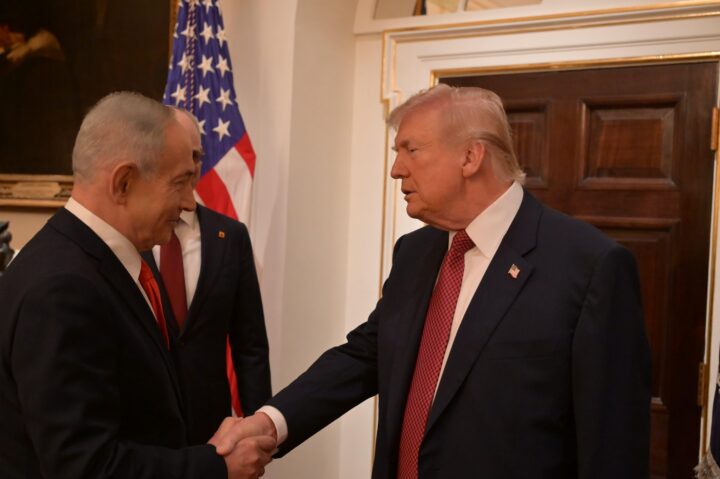
GPO
President Donald Trump greets Israeli Prime Minister Benjamin Netanyahu at the White House on Feb. 11, 2026.
Good Wednesday afternoon!
This P.M. edition is reserved for our premium subscribers — offering a forward-focused read on what we’re tracking now and what’s coming next.
It’s me again — Danielle Cohen-Kanik, U.S. editor at Jewish Insider and curator, along with assists from my colleagues, of the Daily Overtime. Please don’t hesitate to share your thoughts and feedback by replying to this email.
📡On Our Radar
Notable developments and interesting tidbits we’re tracking
The U.S. will continue pursuing diplomacy with Iran, President Donald Trump said following his White House meeting with Israeli Prime Minister Benjamin Netanyahu earlier today, Jewish Insider’s Lahav Harkov reports.
“There was nothing definitive reached” in the meeting “other than I insisted that negotiations with Iran continue, to see whether or not a deal can be consummated,” Trump wrote on Truth Social. “If it can, I let the Prime Minister know that will be a preference.”
If negotiations do not lead to a deal, the president added, “we will just have to see what the outcome will be. Last time, Iran decided they were better off not making a deal, and they were hit with [Operation] Midnight Hammer. That did not work out well for them. Hopefully, this time, they will be more reasonable and responsible.”
Netanyahu’s office said about the meeting, “The prime minister stood up for the State of Israel’s security needs in the context of the negotiations, and the two agreed to continue to coordinate closely”…
Even as Trump insists diplomacy will continue, the Pentagon has told a second aircraft carrier strike group to prepare for deployment to the Middle East, The Wall Street Journal reports, to join the USS Abraham Lincoln along with dozens of U.S. aircraft and other warships…
Meanwhile, a bipartisan group of 23 senators, spanning the political and ideological spectrums, introduced a resolution today condemning the Iranian government for its crackdown on protesters and attempts to cut off internet access across the country, JI’s Marc Rod reports.
“Iranian civilians’ unprecedented nationwide protests and bravery, confronted with the regime’s unprecedented widespread extrajudicial killing of thousands and disruption of all electronic communication, have profoundly destabilized the country and constitute changed conditions in Iran,” the resolution reads, highlighting that the regime’s suppression and killing of protesters continues…
The Trump administration expects to be able to announce several billion dollars in donations for Gaza reconstruction at the Board of Peace’s inaugural meeting in Washington next week, The Times of Israel reports, even as it is still working on a proposal to disarm Hamas. That plan so far reportedly envisions Hamas relinquishing its heavy weapons and destroying manufacturing sites, without fully addressing lighter arms…
Conservative activist Carrie Prejean Boller was removed from the White House’s Religious Liberty Commission today, JI’s Gabby Deutch reports, two days after the commission held its first public hearing on antisemitism, which turned contentious when Prejean Boller pressed Jewish witnesses about whether they would consider her antisemitic for not being a Zionist and for believing Jews killed Jesus.
“No member of the Commission has the right to hijack a hearing for their own personal and political agenda on any issue,” Texas Lt. Gov. Dan Patrick, who chairs the commission, wrote in a post on X. “This is clearly, without question, what happened Monday in our hearing on antisemitism in America. This was my decision”…
France is calling for the resignation of U.N. Special Rapporteur Francesca Albanese, French Foreign Minister Jean-Noël Barrot announced today, after Albanese called Israel humanity’s “common enemy” in a speech at the Al Jazeera Forum in Qatar over the weekend.
“France unreservedly condemns the outrageous and reprehensible remarks made by Francesca Albanese, which are directed not at the Israeli government, whose policies may be criticized, but at Israel as a people and as a nation, which is absolutely unacceptable,” Barrot said in remarks to lawmakers. Her latest comments add “to a long list of scandalous positions,” including “justifying” the Oct. 7 attacks and “comparing Israel to the Third Reich,” he said…
Senate Minority Leader Chuck Schumer (D-NY) and Sen. Adam Schiff (D-CA) introduced legislation seeking oversight into the hundreds of millions of dollars in Venezuelan oil proceeds that the U.S. has acquired, some of which officials have said is being held in an account in Qatar…
New York City’s only Ethiopian-Israeli restaurant is closing its doors to diners, Jewish Telegraphic Agency reports, and turning only to private events over rising anti-Israel harassment, which the owner, Beejhy Barhany, said escalated after the restaurant became kosher in February 2024…
The Department of Homeland Security hired a social media manager who had raised red flags at his previous position at the Department of Labor posting messaging that echoed white nationalist sentiments on official social media accounts, The New York Times reports.
Those posts “used evocative imagery, some reminiscent of the 1920s and 1930s, with phrases like ‘Restore American Greatness’ and ‘the globalist status quo is OVER.’ … Colleagues warned superiors that the department’s accounts could be seen as promoting white-supremacist rhetoric, Nazi imagery and QAnon conspiracy theories”…
⏩ Tomorrow’s Agenda, Today
An early look at tomorrow’s storylines and schedule to keep you a step ahead
Keep an eye out in Jewish Insider for an interview with Jason Friedman, a longtime Chicago Jewish federation leader making a bid for Illinois’ open 7th Congressional District.
The Senate Foreign Relations Committee will hold a nomination hearing for conservative commentator Jeremy Carl to serve as assistant secretary of state for international organizations. Schumer denounced Carl and his nomination on the Senate floor this week, “citing Carl’s long history of racist, white supremacist, and antisemitic views.”
Sinai Temple in Los Angeles will host a summit tomorrow on faith and sports, ahead of NBA All-Star weekend taking place in the city. The convening will feature several NBA athletes, coaches and faith and civic leaders.
Stories You May Have Missed
BASEBALL DIARIES

The team is anchored by its pitching ace Dean Kremer of the Orioles, while Harrison Bader and Spencer Horwitz are among its best known hitters
SYRIA SPOTLIGHT
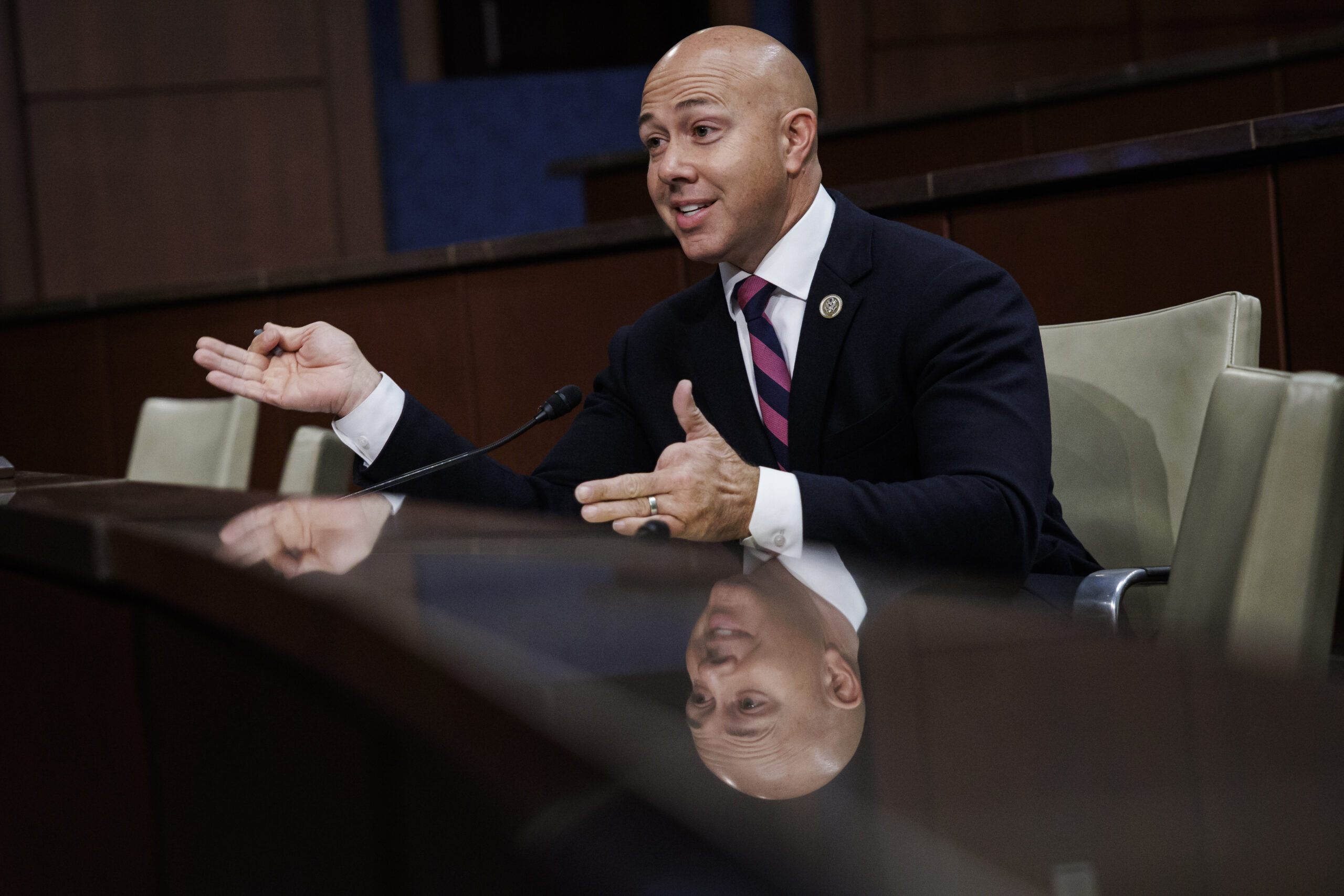
Speaking at a House Foreign Affairs Committee hearing, Republican and Democratic lawmakers highlighted ongoing abuses by the Syrian government
Plus, N.C. Dems condemn antisemitism from Muslim caucus chair
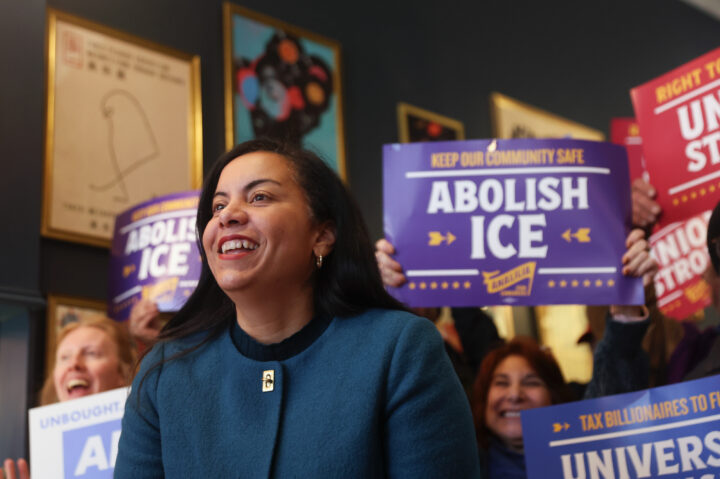
Heather Khalifa/Bloomberg via Getty Images
Analilia Mejia, Democratic House candidate for New Jersey, speaks to supporters and members of the media at Paper Plane Coffee Co. in Montclair, N.J., on Jan. 29, 2026.
Good Tuesday afternoon!
This P.M. edition is reserved for our premium subscribers — offering a forward-focused read on what we’re tracking now and what’s coming next.
It’s me again — Danielle Cohen-Kanik, U.S. editor at Jewish Insider and curator, along with assists from my colleagues, of the Daily Overtime. Please don’t hesitate to share your thoughts and feedback by replying to this email.
📡On Our Radar
Notable developments and interesting tidbits we’re tracking
President Donald Trump is considering sending a second aircraft carrier group to the Middle East as a contingency if negotiations with Iran fail, he told Axios today. “Either we will make a deal or we will have to do something very tough like last time,” the president said, adding, “We have an armada that is heading there and another one might be going.”
Still, Trump expressed optimism that Tehran “wants to make a deal very badly” and said the negotiations are “very different” since he authorized strikes last June on Iran’s nuclear facilities. He also said he doesn’t think Israeli Prime Minister Benjamin Netanyahu, who is en route to Washington for his Wednesday meeting with Trump, is nervous about the negotiations, stating Netanyahu “also wants a deal. He wants a good deal”…
Trump also reiterated his opposition to West Bank annexation, days after Israel’s Security Cabinet voted to expand Israeli authorities in the area. “I am against annexation. We have enough things to think about now. We don’t need to be dealing with the West Bank,” he told Axios. While Trump’s meeting with Netanyahu tomorrow will ostensibly focus on Iran, the latest Israeli moves could drive a wedge between the two leaders…
On the campaign trail, former Rep. Tom Malinowski (D-NJ) conceded the race for New Jersey’s 11th Congressional District to far-left activist Analilia Mejia today, after outstanding ballots broke decisively in her favor over the weekend.
In his statement, Malinowski, the presumed favorite who was the target of over $2 million of ads by the AIPAC-linked United Democracy Project super PAC, claimed that “the outcome of this race cannot be understood without also taking into account the massive flood of dark money that AIPAC spent on dishonest ads” attacking him. He warned, “If AIPAC backs a candidate — openly or surreptitiously — in the June NJ-11 Congressional primary, I will oppose that candidate and urge my supporters to do so as well.”
Mejia was congratulated by New Jersey Democratic leaders including Sens. Andy Kim and Cory Booker and Gov. Mikie Sherrill, though it remains to be seen if she will retain their support in the June primary when she must run for the Democratic nomination again if she hopes to retain the office for a full term…
Sen. Susan Collins (R-ME) officially launched her reelection campaign today for her seat which Democrats likely need to flip if they hope to take back the chamber. Collins, who has been targeted by Trump due to her occasional votes across the aisle, will likely face either Maine Gov. Janet Mills or oyster farmer Graham Platner in the general, after they battle it out in a hotly contested primary…
New York Lt. Gov. Antonio Delgado dropped his primary challenge to Gov. Kathy Hochul today, whom he had hoped to beat out in her reelection race from the left. The move comes after several progressive leaders, including New York City Mayor Zohran Mamdani, endorsed Hochul, which Delgado alluded to in his statement: “After much consideration, I’ve concluded that there simply is no viable path forward. And though my campaign has come to an end, I fully intend to do all I can in our effort to build a more humane, affordable, and equitable state that serves all New Yorkers”…
The Washington Free Beacon details several Mamdani administration staffers with a history of comments defaming Israel, including one who called Israel a “modern-day Nazi Germany” and one who called people ripping down posters of Israeli hostages “heroes”…
North Carolina Gov. Josh Stein, a Democrat, condemned rhetoric from the leader of the state Democratic Party’s Muslim Caucus, Elyas Mohammed, in a statement shared exclusively with JI’s Matthew Kassel. Mohammed recently described Zionists as “modern day Nazis” and as a “threat to humanity,” among other incendiary social media posts.
“Antisemitic comments and conspiracy theories have no place anywhere, including in the North Carolina Democratic Party,” the governor said, after the leaders of several prominent Jewish groups in the state sent a joint letter urging Democratic officials and lawmakers to publicly denounce Mohammed’s statements…
Columbia University is considering expanding and refocusing how its Middle Eastern studies department teaches about Israel, JI’s Haley Cohen reports. The provost’s regional review committee announced a set of recommendations this week for the department, including a stronger partnership with the school’s Institute for Israel and Jewish Studies, marking a pivot in a field and at a school that have come under immense scrutiny from the federal government and Jewish leaders following the Oct. 7, 2023, Hamas attacks…
Shaare Tefila, a Conservative congregation in Olney, Md., in the Washington suburbs, was defaced with antisemitic graffiti today, JI’s Haley Cohen reports. A swastika, the word “genocide” and the phrase “AZAB,” an acronym standing for “All Zionists Are Bastards,” were spray-painted on street signs and banners outside the synagogue.
Ron Halber, CEO of the Jewish Community Relations Council of Greater Washington, called the act “outrageous. While it is fortunate that no one was physically hurt, it is yet another sad reminder that antisemitic incidents have become common occurrences throughout our region,” he said…
Harmeet Dhillon, the assistant attorney general for civil rights, said the Justice Department intends to pursue and ultimately shut down groups that have engaged in disruptive protests at synagogues and other antisemitic activities, as well as those supporting those groups, JI’s Marc Rod reports.
Speaking today at a conference on antisemitism organized by The George Washington University Program on Extremism, Dhillon said her division’s work includes pursuing those funding, training and supporting groups such as American Muslims for Palestine and the Party for Socialism and Liberation, which she said are engaging in “acts of domestic terrorism”…
⏩ Tomorrow’s Agenda, Today
An early look at tomorrow’s storylines and schedule to keep you a step ahead
Keep an eye out in Jewish Insider for a preview of Israeli Prime Minister Benjamin Netanyahu’s bilateral meeting with President Donald Trump tomorrow at the White House, as the Israeli PM seeks to provide input on U.S. negotiations with Iran.
The House Appropriations Committee will hold a hearing on the potential impacts of a Department of Homeland Security shutdown, which looks likely as lawmakers struggle to reach a deal before its funding runs out on Friday.
The House Judiciary Committee will hold a hearing on oversight of the Department of Justice with Attorney General Pam Bondi.
American Jewish Committee CEO Ted Deutch will speak at New York City’s Temple Emanu-El on the organization’s annual State of Antisemitism in America survey, released today.
Stories You May Have Missed
POSTWAR PROBLEMS
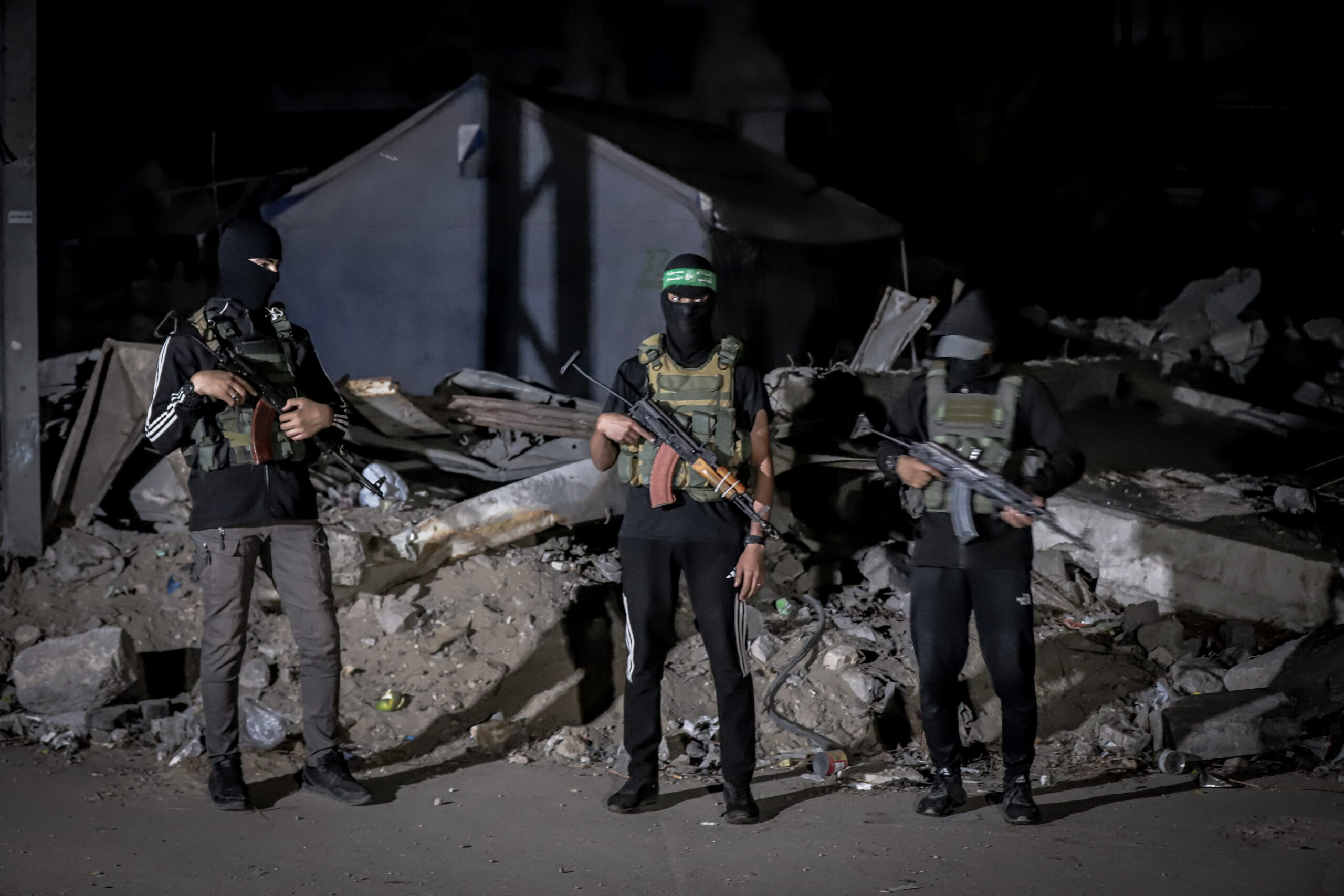
The options for demilitarization ‘strike me as not feasible from a military point of view and certainly not practical from a political point of view,’ says the Carnegie Endowment’s Aaron David Miller
POST-TRAUMA ACTIVISM

The couple, once held captive by Hamas, channel their trauma into humanitarian work, volunteering in Kenya’s Kakuma refugee settlement with IsraAid and amplifying the stories of those suffering in silence
Plus, report finds DSA may be acting as unregistered foreign agent
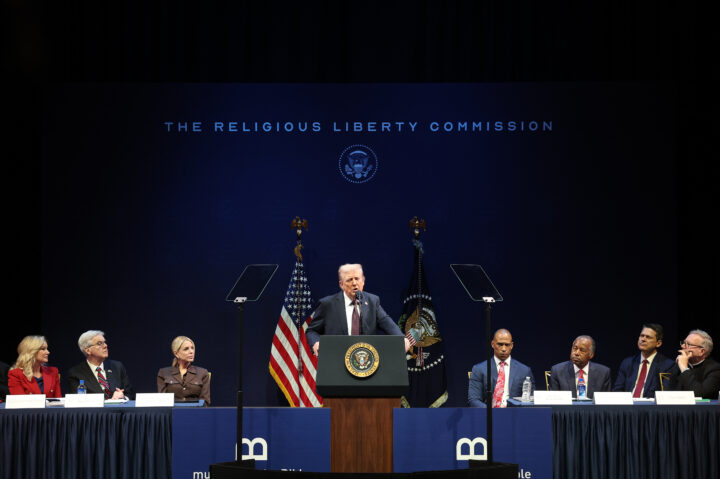
Win McNamee/Getty Images
President Donald Trump speaks at the Museum of the Bible September 8, 2025 in Washington, DC.
Good Monday afternoon!
This P.M. edition is reserved for our premium subscribers — offering a forward-focused read on what we’re tracking now and what’s coming next.
It’s me again — Danielle Cohen-Kanik, U.S. editor at Jewish Insider and curator, along with assists from my colleagues, of the Daily Overtime. Please don’t hesitate to share your thoughts and feedback by replying to this email.
📡On Our Radar
Notable developments and interesting tidbits we’re tracking
The Trump administration’s Religious Liberty Commission’s first hearing on antisemitism, which took place in Washington this morning, turned contentious as one commissioner declared herself an anti-Zionist and defended Candace Owens, Jewish Insider’s Gabby Deutch reports.
Amid testimony from Jewish witnesses about their experiences with antisemitism, Carrie Prejean Boller, a Catholic conservative activist and former Miss California, said about Owens, “I listen to her daily. I haven’t heard one thing out of her mouth that I would say is antisemitic.”
“Catholics do not embrace Zionism, just so you know. So are all Catholics antisemites?” Prejean Boller later asked the panel, earning some boos from the audience, a mix of Jewish professionals, Christian activists and members of the Washington Jewish community. “I want to be clear on what the definition of antisemitism is. If I don’t support the political State of Israel, am I an antisemite, yes or no?”…
The Network Contagion Research Institute accused the Democratic Socialists of America, in a report released in late January, of activities that may run afoul of the Foreign Agents Registration Act — alleging that the far-left group may be acting as an unregistered agent of various U.S. adversaries, JI’s Marc Rod reports.
The report points to foreign trips by DSA members to Venezuela, Cuba and China which have included access to top-level officials and, the report alleges, lodging, transportation and other services provided by the host governments “that may constitute in-kind benefits from foreign government-linked entities” and “participation in quasi-official functions.”
The report claims that the DSA’s foreign engagements are followed by brief upticks in the group’s promotion of U.S. adversaries’ priority issues, such as removing sanctions on Cuba and Venezuela, “consistent with campaign-style political activity rather than incidental commentary”…
Anti-Defamation League CEO Jonathan Greenblatt defended his organization’s approach to combating antisemitism in eJewishPhilanthropy today, after New York Times columnist Bret Stephens called for the ADL to be dismantled and for the organized Jewish community to reallocate its resources to focus on building Jewish identity rather than combating antisemitism.
“Stephens’ framing risks replacing one error with another,” Greenblatt wrote. “The choice is not ‘fight antisemitism’ or ‘build Jewish life.’ Security and identity aren’t competing priorities; they’re inseparable preconditions for Jewish flourishing in an open society. Shutting down the Anti-Defamation League or other Jewish organizations is not some magic formula that promises self-reliance; it’s a disastrous prescription for unilateral disarmament”…
Guy Christensen, an anti-Israel influencer who defended the Capital Jewish Museum shooting in which two Israeli Embassy employees were killed, spoke at the Al Jazeera Forum wrapping up in Doha, Qatar, today. As a last-minute addition to the event, which has already seen Hamas leader Khaled Mashaal defend the Oct. 7 attacks, Christensen spoke on a panel about content creation and influence.
The forum’s website touts Christensen, who was expelled from The Ohio State University over his defense of the alleged Capital Jewish Museum shooter, as “a political activist, commentator, and content creator who dedicates his efforts to advancing social justice and educating the masses. Over the past two years, he has proven himself to be one of the most prominent Gen Z voices supporting Palestinian liberation”…
Rep. Jerry Nadler (D-NY) endorsed state Assemblyman Micah Lasher today as his successor in New York’s 12th Congressional District, an expected move to boost his protege for the hotly contested seat. The endorsement comes shortly after reports emerged that one of Lasher’s opponents, Kennedy scion Jack Schlossberg, is set to receive his own prized endorsement from Rep. Nancy Pelosi (D-CA), who is also retiring after this term.
About Schlossberg, Nadler told The New York Times, “He’s a nice guy, and he comes from a nice family, but what’s his experience for this job? No, I don’t think people ought to support him. I don’t think they will support him”…
Adm. Brad Cooper, commander of CENTCOM, congratulated the Lebanese Armed Forces today for “recently finding a massive underground Hizbollah tunnel for the second time in the past two months.” He commended a “job well done by the LAF and U.S.-led Mechanism team that is helping enforce commitments made by Israel and Lebanon.”
The appreciative comments come as experts, lawmakers and Israeli officials have cast doubt on efforts by the Lebanese government to disarm Hezbollah, as required in the Israel-Lebanon November 2024 ceasefire agreement.
At the same time, Lebanese Prime Minister Nawaf Salam visited southern Lebanon today for the first time since the LAF said it had disarmed Hezbollah south of the Litani River, where he claimed that continuous Israeli “attacks” — strikes which Israel says it is carrying out due to Hezbollah’s rearmament and continued terror efforts in the area — are a “blow to our dignity”…
Indonesia is preparing to send a delegation of several thousand troops into Gaza, Israeli media reports. The timing, size and mandate of the deployment remains unknown, though the Indonesian defense minister said in November that the country had trained 20,000 troops to conduct health and construction-related efforts for the U.S.-led International Stabilization Force. The troops are expected to be stationed between the cities of Rafah and Khan Yunis in the southern Gaza Strip…
Arab states and the EU condemned the Israeli Security Cabinet’s approval of a series of measures that will allow Israeli authorities to exert more control in the West Bank, with the foreign ministers of Jordan, the UAE, Pakistan, Turkey, Saudi Arabia, Qatar and Egypt rejecting the “expansionist Israeli policies and illegal measures” in a joint statement.
EU spokesperson Anouar El Anouni called it “another step in the wrong direction, while the whole international community is making an effort to implement Phase 2 of the comprehensive plan for Gaza.” President Donald Trump, whom Israeli Prime Minister Benjamin Netanyahu is meeting with this week, has also voiced his opposition to annexation efforts, saying in October that “Israel would lose all of its support from the United States if that happened”…
⏩ Tomorrow’s Agenda, Today
An early look at tomorrow’s storylines and schedule to keep you a step ahead
Keep an eye out in Jewish Insider for an interview with former hostages Keith and Aviva Siegel, as they pivot from hostage advocacy efforts to engaging in humanitarian work abroad.
On the Hill, the House Ways and Means Committee will hold a hearing on foreign influence in American nonprofits, including testimony from Adam Sohn, the co-founder of the Network Contagion Research Institute, which authored the recent study on the Democratic Socialists of America.
The House Foreign Affairs Committee will hold a hearing on Syria and U.S. policy challenges in a post-Assad world. Witnesses will include James Jeffrey and Andrew Tabler of the Washington Institute for Near East Policy and Nadine Maenza, the former chair of the U.S. Commission on International Religious Freedom.
The Jewish Community Relations Council of Greater Washington will host its Virginia Jewish Advocacy Day, featuring remarks from newly sworn in Gov. Abigail Spanberger.
Stories You May Have Missed
MEJIA’S MOMENTUM

Already several members of the state’s congressional delegation have begun to coalesce around Mejia’s campaign
STICKING BY THE STICKY NOTE

The head of the Blue Square Alliance Against Hate emphasized the ad was intended to persuade all Americans — not just Jews — and survey research proved its effectiveness
Plus, Massie challenger gets strong GOP backing

Julie Menin, speaker of the New York City Council and Zohran Mamdani, mayor of New York, arrive for an announcement in the Brooklyn borough of New York, US, on Monday, Jan. 12, 2026 (Photographer: John Lamparski/Bloomberg via Getty Images)
Good Thursday afternoon!
This P.M. edition is reserved for our premium subscribers — offering a forward-focused read on what we’re tracking now and what’s coming next.
It’s me again — Danielle Cohen-Kanik, U.S. editor at Jewish Insider and curator, along with assists from my colleagues, of the Daily Overtime. Please don’t hesitate to share your thoughts and feedback by replying to this email.
📡On Our Radar
Notable developments and interesting tidbits we’re tracking
Sen. Bill Cassidy (R-LA), the chairman of the Senate Health, Education, Labor and Pensions Committee, wrote to New York Mayor Zohran Mamdani today voicing “serious concerns” about Mamdani’s “rescission of executive orders related to antisemitism and boycotts of Israel.”
Cassidy said the New York City Department of Education’s $2.2 billion in federal funding could be rescinded “contingent on compliance with federal civil rights laws and applicable executive orders designed to protect students”…
New York City councilmembers on both sides of the aisle denounced a new working group established by employees of the city’s Department of Health on “global oppression,” Jewish Insider’s Will Bredderman reports, which a presenter at its first meeting on Tuesday acknowledged was “really developed in response to the ongoing genocide in Palestine.”
City Council Speaker Julie Menin called for a probe into the working group at DOH, which operates under Mamdani’s administration, telling the New York Post, “Our health care officials should be fighting infectious diseases and addressing skyrocketing health care costs instead of spending public time debating geopolitics”…
Moshe Davis, the former executive director of the Mayor’s Office to Combat Antisemitism in New York City, told The Free Press upon being ousted from the role by Mamdani, “I don’t think the priority of the administration has been to combat antisemitism.”
Davis, who was a political appointee of former Mayor Eric Adams, said a Mamdani staffer told him they were “looking to go in a different direction” in replacing him with Phylisa Wisdom, a progressive Jewish activist. “Look, I’m a loud, proud Jewish person with a kippah on my head, a proud Zionist. This administration maybe felt that was too much for them,” Davis said. He noted that his requests to meet with the mayor and the memos he produced on rising antisemitism in the city had gone ignored…
Mamdani officially endorsed New York Gov. Kathy Hochul in an anticipated move, boosting her reelection prospects while also dealing a blow to her lieutenant governor, Antonio Delgado, who is running to oust Hochul from her left…
Rep. Andy Barr (R-KY) and businessman Nate Morris, two of the leading Republican candidates for Kentucky’s Senate seat, today endorsed Ed Gallrein, the GOP challenger to Rep. Thomas Massie (R-KY), one of the leading Republican critics of Israel in Congress, JI’s Marc Rod reports.
“Ed will never side with AOC or the radical-left against President Trump. He is exactly the kind of conservative warrior we need in Congress, and I’m proud to endorse him,” Barr said in a statement, referencing Massie’s pattern of breaking with various elements of Trump’s agenda, which has included voting against support for Israel.
The endorsements came amid an ongoing series of attacks by Trump on Massie, which included calling Massie a “moron” in remarks at the National Prayer Breakfast this morning, as well as attacks on Truth Social this week targeting Massie’s wife…
Daniel Flesch, a senior policy analyst at the Heritage Foundation who led the drafting of the organization’s Project Esther report on combating left-wing antisemitism, has parted ways with the conservative think tank, according to Heritage’s website.
Flesch had raised the alarm on right-wing antisemitism after Heritage President Kevin Roberts released a video defending Tucker Carlson for hosting neo-Nazi Nick Fuentes on his podcast, telling the Young Jewish Conservatives in December that, “Now, in some ways, the call is coming from inside the house.” Flesch had also been Heritage’s point person for the National Task Force to Combat Antisemitism, a coalition of conservative groups that disaffiliated from the think tank after the incident…
White House Press Secretary Karoline Leavitt confirmed today that Special Envoy Steve Witkoff and Jared Kushner will be traveling to Oman for negotiations with Iran tomorrow, saying at a press conference this afternoon that the president is “standing by for an update from them.”
“The president has obviously been quite clear in his demands of the Iranian regime — zero nuclear capability is something he’s been very explicit about and he wants to see if a deal can be struck. And while these negotiations are taking place, I would remind the Iranian regime that the president has many options at his disposal aside from diplomacy as the commander-in-chief of the most powerful military in the history of the world,” Leavitt added…
Israeli Prime Minister Benjamin Netanyahu told lawmakers at a closed-door meeting of the Knesset Foreign Affairs and Defense Committee that U.S.-Israel coordination is “as high and as close as possible” ahead of the nuclear talks tomorrow, Israeli media reports, but that he still doesn’t know if President Donald Trump will choose to take military action…
Middle East countries that were originally meant to participate in the talks, including Saudi Arabia, Qatar, Egypt, Oman, the UAE and Pakistan, drafted a potential agreement for the U.S. and Iran, including a nonaggression pact, diplomats told The Times of Israel…
Iran’s Islamic Revolutionary Guard Corps seized two foreign oil tankers in the Persian Gulf today, Iranian state media reported, days after attempting to stop and board a U.S.-flagged oil tanker. Reports did not provide the country of origin of the tankers seized today…
Sen. Lindsey Graham (R-SC) expressed frustration with the Lebanese government’s stance toward Hezbollah amid struggling disarmament efforts, describing on X a meeting he’d had with Gen. Rodolphe Haykal, the commander of the Lebanese Armed Forces. “I asked him point blank if he believes Hezbollah is a terrorist organization. He said, ‘No, not in the context of Lebanon.’ With that, I ended the meeting.”
“They have been designated as a foreign terrorist organization by both Republican and Democrat administrations since 1997 — for good reason. As long as this attitude exists from the Lebanese Armed Forces, I don’t think we have a reliable partner in them,” Graham continued. The U.S. has provided over $3 billion to shore up the LAF in the last 20 years, including $230 million approved by the Trump administration as recently as October…
⏩ Tomorrow’s Agenda, Today
An early look at tomorrow’s storylines and schedule to keep you a step ahead
Keep an eye out in Jewish Insider for whether AIPAC’s active role in the New Jersey 11th Congressional District Democratic primary — opposing former Rep. Tom Malinowski (D-NJ) — paid off. Polls in the district close at 8 p.m.
We’ll be watching for readouts from the meeting between White House Special Envoy Steve Witkoff, advisor Jared Kushner and Iranian Foreign Minister Abbas Araghchi in Oman at 10 a.m. local time tomorrow, including whether issues beyond Tehran’s nuclear program are discussed.
We’ll be back in your inbox with the Daily Overtime on Monday. Shabbat Shalom!
Stories You May Have Missed
AI AMBITION
The Israeli-American CFO first fueled Eli Lilly’s success, and is now turning her attention to the tech sector
SURVEY SAYS
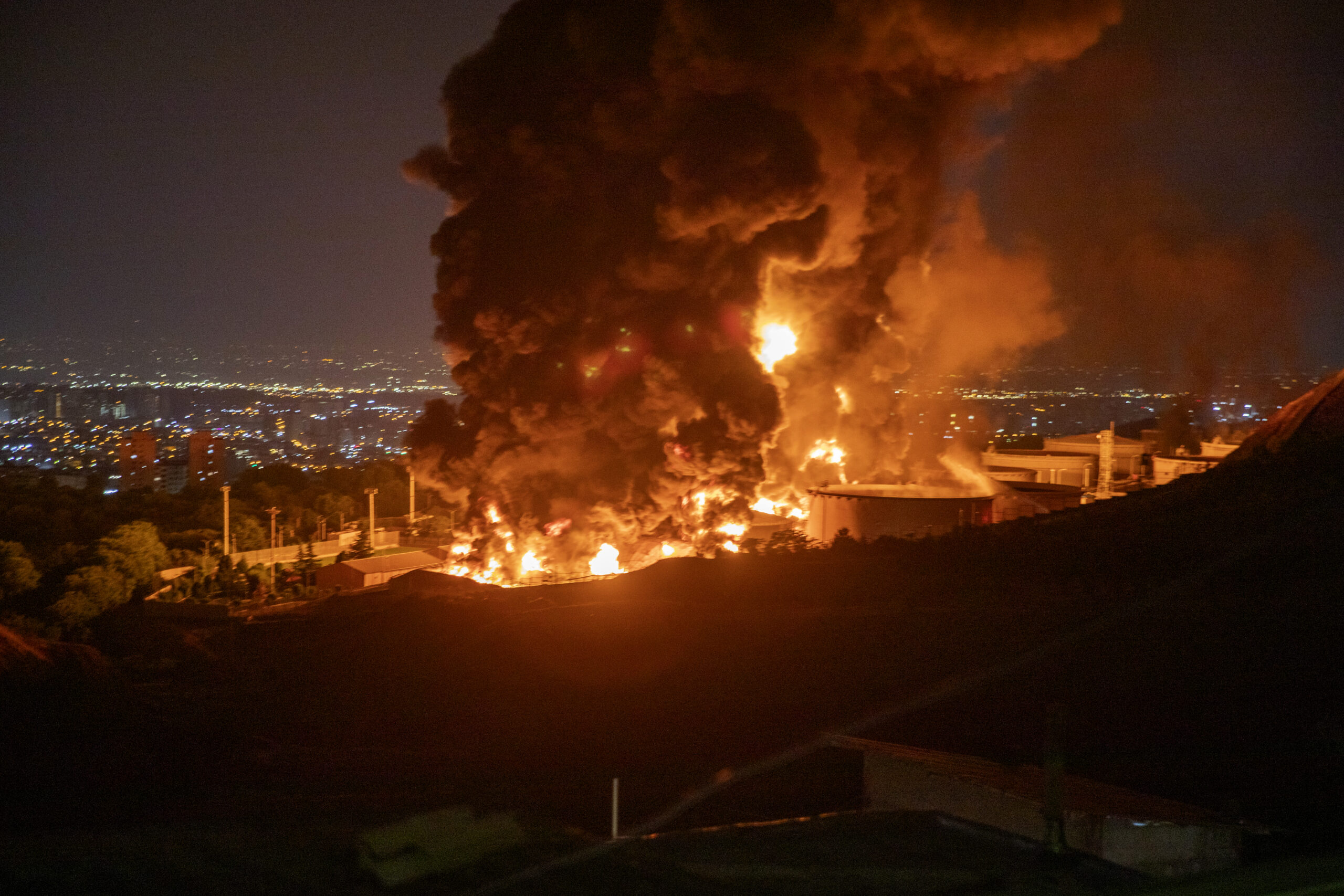
Right-wing Israelis support a strike even if Iran does not attack, while other political camps prefer to wait and see if Iran strikes Israel first, IDI poll finds
Plus, Israel continues to cast doubt over Iran talks
Angelina Katsanis-Pool/Getty Images
Democratic mayoral nominee Zohran Mamdani speaks during a mayoral debate at Rockefeller Center on October 16, 2025 in New York City.
Good Wednesday afternoon!
This P.M. edition is reserved for our premium subscribers — offering a forward-focused read on what we’re tracking now and what’s coming next.
It’s me again — Danielle Cohen-Kanik, U.S. editor at Jewish Insider and curator, along with assists from my colleagues, of the Daily Overtime. Please don’t hesitate to share your thoughts and feedback by replying to this email.
📡On Our Radar
Notable developments and interesting tidbits we’re tracking
U.S. officials reportedly backtracked on their rejection of Iranian demands to change the format and venue of nuclear negotiations, set for Friday, after several Middle East leaders intervened to keep the U.S. from walking away, according to Axios. “They asked us to keep the meeting and listen to what the Iranians have to say. We have told the Arabs that we will do the meeting if they insist. But we are very skeptical,” one U.S. official told the outlet.
Iranian Foreign Minister Abbas Araghchi confirmed on X that “nuclear talks … are scheduled to be held in Muscat” at 10 a.m. on Friday, indicating the U.S. agreed to move the venue from Turkey to Oman…
But Secretary of State Marco Rubio reiterated today that the Trump administration is seeking a comprehensive deal with Iran to address more than just its pursuit of nuclear weapons — including its ballistic missiles program, support for terror proxies and internal repression as well. Iran has traditionally been resistant to discussing anything beyond its nuclear program.
Asked if Iranian Supreme Leader Ayatollah Ali Khamenei should be worried right now, President Donald Trump told NBC News today, “I would say he should be very worried, yeah, he should be.” Trump said he was interested in negotiations again as he understood Iranian officials were considering restarting their nuclear program, “and if they do, we’re going to send” B-2 bombers “right back to do their job again,” referencing the U.S.’ June strikes…
Israeli officials have voiced skepticism over the prudence of negotiating with Iran at all, Jewish Insider’s Lahav Harkov reports. After Israeli Prime Minister Benjamin Netanyahu told White House Special Envoy Steve Witkoff yesterday that Iran’s “promises cannot be trusted,” Energy Minister Eli Cohen told Israeli radio, “Our message to the U.S. is that negotiations with Iran are a waste of time”…
Sam Brownback, the former U.S. ambassador at large for international religious freedom and a former GOP senator from Kansas, warned at a House Foreign Affairs Committee hearing today that, unless Syrian minority groups are allowed to maintain their own security forces, they face a likely genocide by government-aligned forces, JI’s Marc Rod reports.
“The new administration in Syria is purging religious minorities, threatening and killing them,” Brownback said. “These groups must be allowed to maintain their own security forces, or I guarantee you today, a genocide will happen in Syria like happened in Iraq to the Yazidis and Christians.”
The Trump administration has remained largely supportive of the al-Sharaa government, and critics have accused the White House of essentially abandoning the U.S.’ longtime Kurdish allies to the Syrian government onslaught…
First Lady Melania Trump welcomed freed Israeli hostages Aviva and Keith Siegel to the White House today, JI’s Gabby Deutch reports, one year after Aviva met the first lady for the first time and pleaded for help in securing her husband’s release.
“Aviva is a warrior. She’s a warrior. She was fighting very hard for Keith, and I know he suffered a lot,” Trump said at the meeting. “I’m happy to see you healthy at home with your children, with your grandchildren, with your family, and I know you’re giving back your time, your energy, to other people”…
New York City Mayor Zohran Mamdani tapped Phylisa Wisdom, the executive director of the progressive group New York Jewish Agenda, to lead the Mayor’s Office to Combat Antisemitism, the Forward reports.
Wisdom told JI last month that tackling the “scourge of antisemitism” in the city will require a comprehensive strategy,” noting that the office she will now lead “can play a key role, coordinating between long-standing offices and agencies tasked with combating hate, and input from the diversity of New York’s Jewish community.”
The appointment of the left-wing activist indicates Mamdani’s administration isn’t looking to placate the mainstream Jewish community. Wisdom, while well-known in the New York Jewish community, has traditionally opposed the International Holocaust Remembrance Alliance’s working definition of antisemitism and at times vocally opposed Israel’s war in Gaza after the Oct. 7 attacks…
Meanwhile, New York Gov. Kathy Hochul selected former New York City Council Speaker Adrienne Adams as her running mate in her reelection race this year — a pick that provoked both applause and consternation among leaders of the state’s Jewish community, JI’s Will Bredderman reports.
Adams was the first council speaker not to lead a delegation to Israel — although she denied that she was boycotting the country, she raised concerns in 2024 when her office drafted an ultimately abandoned resolution urging a ceasefire between Israel and Hamas that one Jewish community leader described to JI as “one-sided” and “inflammatory”…
A pair of well-financed groups, whose origin is currently unknown, is set to begin running ads boosting moderate pro-Israel candidates in a series of open House seats in Chicago, each of whom is facing off against vocal anti-Israel opponents, JI’s Marc Rod reports.
The ads — being run by newly formed super PACs Elect Chicago Women and Affordable Chicago Now — boost state Sen. Laura Fine, running in the 9th Congressional District, former Rep. Melissa Bean (D-IL), running in the 8th District and Cook County Commissioner Donna Miller, running in the 2nd District.
The ad buys for the two groups add up to millions of dollars across the three races. Given that the groups were just launched, FEC filing policies will not require them to disclose their donors until close to Election Day. But the ads, which do not focus on Israel policy, are widely rumored to be connected to United Democracy Project, the AIPAC-affiliated super PAC…
PEN America, an organization promoting free expression for artists and journalists, said today it would retract its Jan. 29 statement expressing concern about the abrupt cancellation of Israeli comedian Guy Hochman’s shows in New York and Los Angeles. The organization, which alleged Hochman “has been accused by advocacy organizations of incitement to genocide in Gaza,” said it would “remain committed to open and respectful dialogue about the divisions that arise in the course of defending free expression”…
The Washington Post announced mass layoffs of one-third of its staff today, including closing its sports section, reducing its local coverage and letting go all of its Middle East correspondents. The outlet has faced repeated criticism for major factual errors and alleged institutional and reporter bias related to its coverage of Israel and the war in Gaza…
⏩ Tomorrow’s Agenda, Today
An early look at tomorrow’s storylines and schedule to keep you a step ahead
Keep an eye out in Jewish Insider for a profile of Alphabet’s Israeli-American chief financial officer, Anat Ashkenazi, who got her start at Israel’s Bank Hapoalim more than two decades ago.
It’s primary day in New Jersey’s 11th Congressional District, as candidates vie for the Democratic nomination to fill Gov. Mikie Sherrill’s House seat. The race has attracted attention for the more than $2 million the AIPAC-linked super PAC United Democracy Project has spent targeting former Rep. Tom Malinowski (D-NJ), who is attempting to beat out others including Lt. Gov. Tahesha Way, far-left activist Analilia Mejia and Essex County Commissioner Brendan Gill.
The Hudson Institute will host Rabbi Yehuda Kaploun, the special envoy to monitor and combat antisemitism, for a conversation on the Trump administration’s strategy in confronting the rise of antisemitism.
Stories You May Have Missed
UNDER SCRUTINY

‘Just because someone is a hateful antisemitic looney-tune doesn’t mean they can’t win office,’ one Jewish community activist said of Shelly Arnoldi
SCHOOL OF THOUGHT

Ben Shuldiner, who is Jewish, is bringing his progressive politics to a school district facing a spike in antisemitism
Plus, Fine lands key endorsement, polling bump in key IL-9 primary

Tajh Payne/US Navy via Getty Images
U.S. Navy's Gerald R. Ford Carrier Strike Group on Nov. 13, 2025.
Good Tuesday afternoon!
This P.M. edition is reserved for our premium subscribers — offering a forward-focused read on what we’re tracking now and what’s coming next.
It’s me again — Danielle Cohen-Kanik, U.S. editor at Jewish Insider and curator, along with assists from my colleagues, of the Daily Overtime. Please don’t hesitate to share your thoughts and feedback by replying to this email.
📡On Our Radar
Notable developments and interesting tidbits we’re tracking
Despite negotiations between the U.S. and Iran set for Friday, Tehran is still behaving belligerently — the U.S. military shot down an Iranian drone today as it was flying toward the USS Abraham Lincoln aircraft carrier in the Arabian Sea, and Iranian gunboats attempted to stop and board a U.S. oil tanker in the Strait of Hormuz.
Iranian officials are also pushing to alter the talks dramatically, including changing the venue from Turkey to Oman, disinviting the foreign ministers of several Middle Eastern countries who were set to participate and limiting discussions only to the nuclear issue and not Tehran’s other malign activities, Axios reports.
Amid these developments, White House Press Secretary Karoline Leavitt said the talks “are still scheduled as of right now, but of course the president has always a range of options on the table and that includes the use of military force. The Iranians know that better than anyone”…
President Donald Trump does have plenty of firepower at his disposal should talks with Iran not pan out — The Washington Post lays out which military assets are in the region, as the U.S. recently deployed “dozens of aircraft to bases operating near Iran and assembled about 12 warships in or near the Middle East”…
White House Special Envoy Steve Witkoff, before heading to the talks, wherever they may be held, met with Israeli Prime Minister Benjamin Netanyahu in Jerusalem today. The prime minister “clarified his position that Iran has proven time and again that its promises cannot be relied upon,” according to a readout, signaling lingering skepticism in Israel that the U.S. will extract any meaningful concessions from Tehran…
Netanyahu also made clear Israel’s expectations for postwar Gaza as the U.S. presses ahead with Phase 2 of the ceasefire deal: that Hamas disarm and the enclave be demilitarized, that Israel be allowed to fulfill its “war objectives prior to the reconstruction of the Strip” and that the Palestinian Authority “not be part of the administration of the Gaza Strip in any way.” The latter demand comes after the technocratic committee set up by the U.S. to oversee reconstruction changed its logo to replicate a PA symbol…
The House of Representatives passed a spending bill to end the partial government shutdown, which Trump signed this afternoon. While the package includes several provisions providing funding to Israel and for joint U.S.-Israel cooperative programs, it only funds the Department of Homeland Security through next week, setting up another battle as the parties spar over funding for Immigration and Customs Enforcement…
State Sen. Laura Fine secured the endorsement of the Chicago Tribune editorial board in the competitive race for Illinois’ 9th Congressional District, over her competitors Daniel Biss, the mayor of Evanston, and social media influencer Kat Abughazaleh.
While Fine’s opponents have been outspoken about their criticisms of Israel on the campaign trail, the editorial board noted Fine said she “had left the progressive caucus in Springfield after she was made to feel uncomfortable for her belief in Israel’s right to defend itself or even to exist,” which it called a “principled position for a principled Democrat.”
Fine’s fundraising figures for the final quarter of 2025 showed she pulled in a whopping $1.2 million, and a new internal poll for Fine’s campaign shows her tied with Biss in first place, holding the momentum in the crowded primary…
New Jersey’s 7th Congressional District’s Democratic primary gained another prominent candidate today: Sue Altman, the state director for Sen. Andy Kim (D-NJ) and the 2024 Democratic nominee for the neighboring 12th District, jumped into the race to succeed retiring Rep. Bonnie Watson Coleman (D-NJ).
Altman has been a member of the progressive left as the former state director for the New Jersey Working Families Party, but took pro-Israel stances during her prior congressional run. Attempting to gain traction in the 7th, though, where the progressive Watson Coleman has said her endorsement will hinge on a candidate’s stance on Israel, Altman said she is now “reevaluating” her position…
Michael Blake, the former New York state assemblyman now mounting a primary challenge to Rep. Ritchie Torres (D-NY), was endorsed today by the longtime mayor of Newark, N.J., Ras Baraka, further solidifying Blake’s departure from his pro-Israel past.
Baraka’s support for violent rhetoric by the controversial Nation of Islam leader Louis Farrakhan and his condemnation of Israel’s war in Gaza are among several positions that have alarmed Jewish leaders in the state; Baraka’s support boosts Blake as he attempts to establish himself as the candidate hostile to Israel in his race, even as he once engaged extensively with AIPAC…
The two Human Rights Watch employees who comprised the organization’s “Israel and Palestine” team both resigned after HRW leadership postponed the publication of their report calling Israel’s refusal to recognize Palestinians’ “right of return” a “crime against humanity,” Jewish Currents reports.
Among other concerns, the organization’s chief advocacy officer had voiced hesitation that the findings were overbroad and “will be misread by many, our detractors first and foremost, as a call to demographically extinguish the Jewishness of the Israeli state”…
⏩ Tomorrow’s Agenda, Today
An early look at tomorrow’s storylines and schedule to keep you a step ahead
Keep an eye out in Jewish Insider for a profile of Seattle Public Schools’ new Jewish superintendent, as the district grapples with rising antisemitism in the aftermath of the Oct. 7 attacks.
First Lady Melania Trump will host former hostages Keith and Aviva Siegel for a private discussion at the White House.
Israeli Foreign Minister Gideon Sa’ar is also in Washington today and tomorrow to attend Secretary of State Marco Rubio’s inaugural Critical Minerals Ministerial, with over 50 countries participating to “strengthen and diversify critical minerals supply chains.”
The House Foreign Affairs Committee will hold a hearing on “defending religious freedom around the world.” Among those testifying is Sam Brownback, the former ambassador-at-large for international religious freedom; the ambassador role is currently empty after former Rep. Mark Walker (R-NC), who was tapped by Trump last April for the position, failed to be confirmed (he now holds a similar advisory role at the State Department, which did not require Senate confirmation).
Also taking place on the Hill, the Muslim World League will host a gathering highlighting “faith, leadership, and global coexistence.” Among those speaking are Ambassador Yehuda Kaploun, the special envoy to monitor and combat antisemitism; Sheikh Mohammed Al-Issa, a prominent Saudi scholar and former justice minister; Imam Talib Shareef, the president of The Nation’s Mosque; and members of Congress.
In the evening, the University of Nebraska–Lincoln’s student government will vote on a Boycott, Divestment and Sanctions resolution.
Stories You May Have Missed
TEHRAN TALK

U.S.-Iran negotiations scheduled are ‘likely a diplomatic box-checking exercise and smokescreen,’ FDD’s Andrea Stricker said, while JINSA’s Jonathan Ruhe said U.S. military action is ‘unlikely for the moment’
DEM DIVIDE
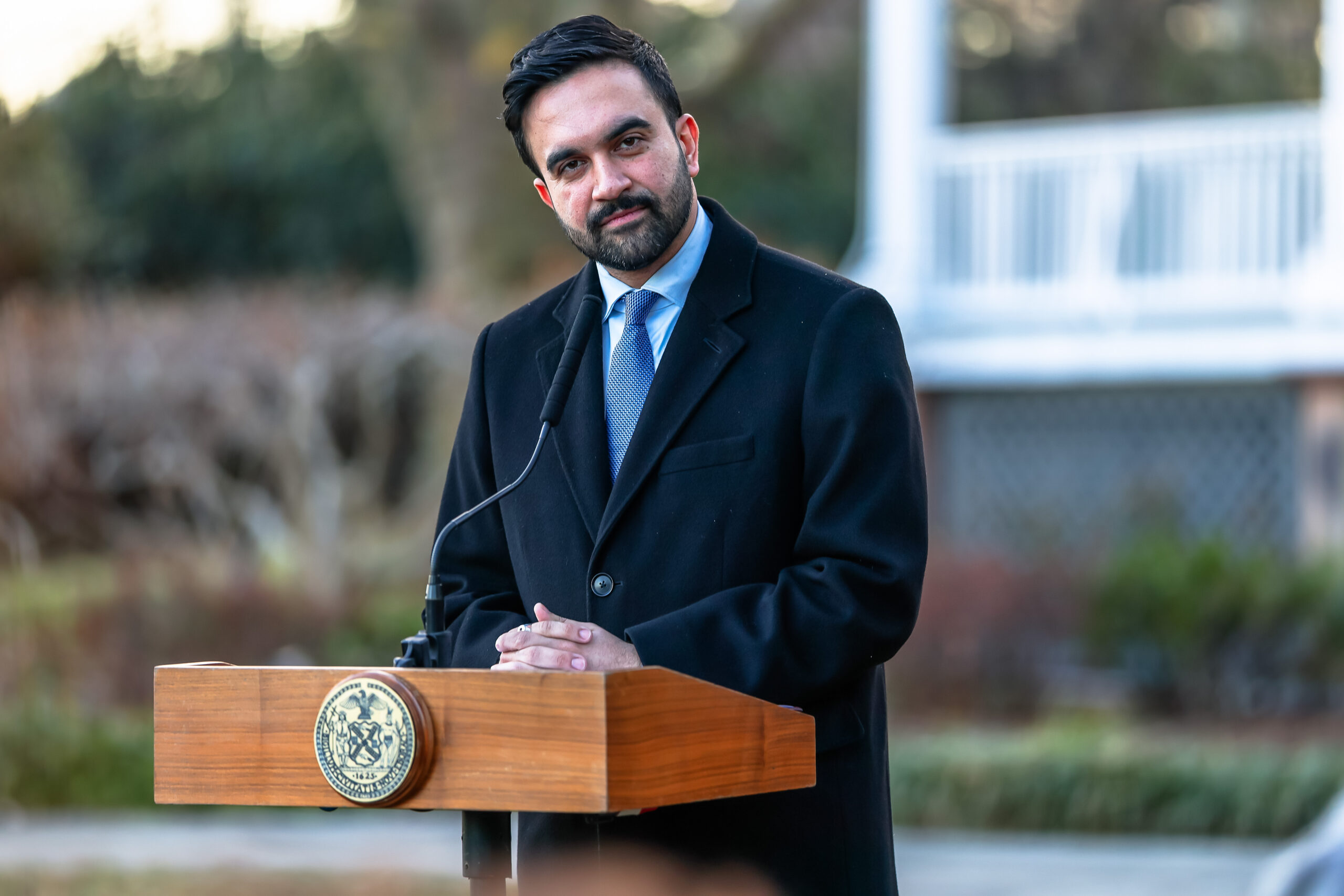
The fight to succeed Rep. Nydia Velazquez pits Mamdani and the DSA faithful against the congresswoman and her protege
U.S.-Iran negotiations scheduled are ‘likely a diplomatic box-checking exercise and smokescreen,’ FDD’s Andrea Stricker said, while JINSA’s Jonathan Ruhe said U.S. military action is ‘unlikely for the moment’
Chip Somodevilla/Getty Images
U.S. President Donald Trump gives a speech at the World Economic Forum (WEF) on January 21, 2026 in Davos, Switzerland.
Despite the Trump administration’s willingness to diplomatically engage with Iranian officials, leading Middle East experts told Jewish Insider on Monday that military action against Tehran still remains a very real possibility.
“I can’t tell you what I’m going to do,” President Donald Trump told reporters on Monday evening when asked about the threshold for an Iran strike.
“We have a tremendous force going there [to the Middle East], just like we did in Venezuela,” said Trump. “I’d like to see a deal negotiated. But right now, we’re talking to [Iran] and if we could work something out, that’d be great. If we can’t, probably bad things will happen.”
White House Special Envoy Steve Witkoff and Iranian Foreign Minister Abbas Araghchi are expected to meet in Istanbul on Friday to discuss a potential new nuclear agreement, according to reports. Jared Kushner, who has played a key role in recent high-profile diplomatic negotiations, is also expected to attend, alongside the foreign ministers of Turkey, Qatar, Egypt, Oman, Saudi Arabia and Pakistan, in the first meeting between the U.S. and Iran since U.S. strikes on Iranian nuclear facilities last June.
The planned talks come as the administration continues to exert pressure on Tehran — in response to Iran’s violent crackdown on protesters last month, Trump has publicly weighed the possibility of U.S. military intervention, ordering the movement of additional military assets into the region and issuing a series of stark warnings on social media indicating that U.S. forces are “ready, willing and able to rapidly fulfill [their] mission, with speed and violence” should a deal fail to be made.
While the administration has emphasized diplomacy as its preferred path, analysts caution that negotiations do not necessarily signal that the U.S. will not strike.
“Military intervention remains likely in light of President Trump’s demonstrated willingness to use force and the U.S. military buildup in the region,” said Michael Koplow, chief policy officer at the Israel Policy Forum. “Given the gulf between the American and Iranian positions and the general hard-line position of the Iranian regime on nuclear issues, it is hard to tag a nuclear deal as a likely outcome.”
Andrea Stricker, a research fellow at the Foundation for Defense of Democracies, told JI that a strike does remain on the table. She said that a deal could be difficult to reach and the upcoming meeting in Istanbul is unlikely to yield meaningful results or concessions from Iran.
“The planned meeting is likely a diplomatic box-checking exercise and smokescreen to enable a continued U.S. military buildup before Trump authorizes strikes,” Stricker said. “The administration’s demands that Iran abandon nuclear enrichment, cap its missile program, and halt support for regional proxies and terrorism, as well as stop executing its people, are nonstarters for the regime.”
Koplow said the administration’s “mixed signals” on whether it will seek diplomacy or take military action are likely “not a ruse or a diversion,” but instead a signal that Trump “has not actually made up his mind” and is “unsure what his end goal is.”
Jason Greenblatt, who served as White House Middle East envoy in the first Trump administration, asserted that “there’s no mixed signals,” arguing that the president’s messaging has been clear.
“President Trump has made the choice clear: a real, enforceable deal that ends Iran’s nuclear and missile threats and protects the U.S., our allies, and the Iranian people — or decisive action,” said Greenblatt, who emphasized that while Trump is reluctant to engage in war, the president will not accept an agreement he views as insufficient.
“He is not a war president,” Greenblatt said, “but he will not accept a weak deal. Iran’s leadership should understand by now that President Trump means exactly what he says.”
Stricker also noted that Trump has consistently sought to avoid prolonged conflict, but argued that Iran’s internal repression and continued nuclear advances may push the president toward decisive action. On Saturday, satellite images revealed new activity at Iranian nuclear sites, a potential sign that Tehran is aiming to salvage remaining materials from the June strikes.
“President Trump favors stability and prioritizes ending violence in global affairs,” she said. “After achieving the defanging of Tehran’s nuclear program, the regime has shown it remains a threat — the ongoing massacre is too much for Trump to tolerate as the leader of the free world.” “The president will likely ensure the regime pays a price, but whether the price is regime change remains to be seen,” she added.
When detailing what potential U.S. military intervention could look like, Koplow said that it would likely be “limited” in scope.
“Any U.S. action is likely going to fall short of what the Israelis would like to see, which is a campaign that doesn’t stop until the regime has fallen,” said Koplow. “Trump seems to favor quick strikes, and he is also facing wall-to-wall opposition from Arab states regarding the prospects of a long campaign that destabilizes the region and damages prospects for trade, investment, and growth.”
However, other analysts read the shift to negotiations as a signal that intervention is increasingly unlikely. Jonathan Ruhe, a senior fellow at the Jewish Institute for National Security of America told JI that U.S. military action is “unlikely for the moment.”
“An even bigger concern now is that military action could be off the table indefinitely, in a way it wasn’t just a day or two ago, as renewed talks now seem more likely,” said Ruhe.
Ruhe also noted that a key indicator of Trump’s intentions will be “how long he keeps the ‘armada’ within striking distance,” referring to the U.S. military assets in the region. He added that negotiating with Tehran will likely result in an unfavorable outcome for the U.S.
“Negotiating with Iran is absolutely the worst possible option for the United States now, because Iran’s regime will go from being on the ropes to thinking it prevailed,” said Ruhe, noting that Tehran is unlikely to agree to an “acceptable deal,” instead using the “prospect of talks to stave off military threats.”
“[Iran] is trying to do what it always does, playing for time and seeing what concessions it can wrangle without ever giving up anything itself,” Ruhe added. “This leaves zero upside for the U.S., since Iran is too emboldened to agree to serious concessions. There’s plenty of downside, too, since U.S. credibility would be dangerously eroded in Tehran’s eyes if Trump fails to fulfill his earlier threats.”
Koplow said Jerusalem is also concerned about a potential nuclear deal and is likely to perceive Iran’s willingness to enter talks as a way of “dragging out the process indefinitely.”
“[The Israelis] are concerned that Trump will back off his threats to take action or end up signing a deal that falls short of addressing the entire basket of issues — nuclear, missiles, and proxies,” said Koplow.
Ali Shamkhani, a senior adviser to Iranian Supreme Leader Ali Khamenei, had said Tehran would strike Israel in response to any U.S. military action, in an interview with the Lebanese-based Al Mayadeen.
Stricker warned that any agreement that falls short of dismantling the regime’s power structure and fails to address key issues would be problematic not only for the U.S. and Israel, but for the Iranian public.
“Any deal with the Islamic Republic would represent a historic betrayal of the Iranian people,” Stricker said. “The only negotiation America should entertain with Tehran is the exit of top regime officials from Iran and their relinquishing of power prior to an orderly transition to democracy.”
Plus, White House press corps welcomes Hamas-friendly outlet
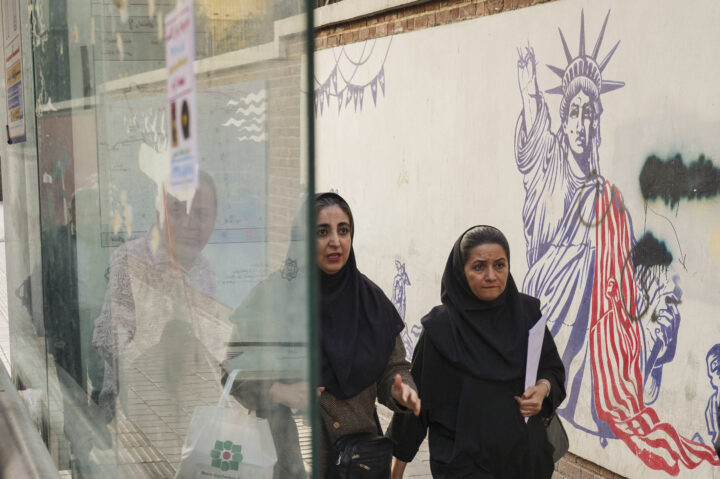
YAR/Middle East Images/AFP via Getty Images
Pedestrians walk past a mural bearing anti-American symbols on the outer wall of the former U.S. Embassy, now called the "U.S. Den of Espionage Museum," in Tehran, Iran, on October 26, 2025.
Good Monday afternoon!
This P.M. edition is reserved for our premium subscribers — offering a forward-focused read on what we’re tracking now and what’s coming next.
It’s me again — Danielle Cohen-Kanik, U.S. editor at Jewish Insider and curator, along with assists from my colleagues, of the Daily Overtime. Please don’t hesitate to share your thoughts and feedback by replying to this email.
📡On Our Radar
Notable developments and interesting tidbits we’re tracking
After weeks of rising tensions, the U.S. and Iran are back on the diplomatic track: White House Special Envoy Steve Witkoff is expected to meet with Iranian Foreign Minister Abbas Araghchi in Istanbul, Turkey, on Friday, Axios reports, possibly alongside Jared Kushner and the foreign ministers of several countries including Turkey, Qatar, Egypt, Oman, the UAE, Saudi Arabia and Pakistan.
What exactly will be up for discussion in the first meeting between the U.S. and Iran since the 12-day war last June is unclear — Iranian officials have said only nuclear activity is on the table, while the U.S. has traditionally maintained support for a comprehensive deal covering nuclear, missile and terror activity…
Before the dialogue in Turkey, Witkoff is slated to stop in Israel tomorrow to consult with Prime Minister Benjamin Netanyahu and Lt. Gen. Eyal Zamir, the IDF chief of staff, and hold meetings in the UAE and Qatar…
The parties are still covering all their bases: The U.S. and Israeli navies conducted a joint “routine maritime exercise” in the Red Sea today, after CENTCOM warned Iran’s Islamic Revolutionary Guard Corps on Friday to “avoid escalatory behavior at sea”…
Back in Washington, the White House tapped Drop Site News, a publication founded in 2024 to offer reporting explicitly hostile to Israel over the war in Gaza and the U.S. response to it, for the press corps’ new media seat on Sunday, Jewish Insider’s Gabby Deutch reports.
Drop Site has credulously interviewed several Hamas leaders, vigorously denied claims that Hamas terrorists raped anyone during the Oct. 7 attacks in Israel and supported the Iranian regime during the anti-government protests last month. Its inclusion among the outlets in Sunday’s press rotation (when no press briefing was held, so its reporter did not get the opportunity to ask a question) was a marked contrast to the mostly right-wing outlets that are usually selected…
And on the campaign trail, Sen. Tina Smith (D-MN) came out today in support of Minnesota Lt. Gov. Peggy Flanagan in the closely fought Democratic primary to replace her, joining fellow progressives Sens. Bernie Sanders (I-VT) and Elizabeth Warren (D-MA) in supporting Flanagan over the more moderate Rep. Angie Craig (D-MN). The endorsement comes days after fundraising reports for the final quarter of 2025 showed Craig raised double what Flanagan brought in ($2 million and $1 million, respectively)…
In New York City, Comptroller Mark Levine endorsed Rep. Dan Goldman (D-NY) in his primary against former Comptroller Brad Lander. Lander, challenging Goldman from the left on issues including his support for Israel, is endorsed by Mayor Zohran Mamdani, further highlighting divisions between Levine and the mayor as the two have sparred over issues including city investment in Israel bonds…
Jacobin profiles Diana Moreno, the democratic socialist running to fill Mamdani’s Queens seat in the state Assembly on a platform highlighting her progressive credentials as an organizer and immigrant.
“Moreno, wearing a keffiyeh, is featured in Mamdani’s launch video, pushing a stroller carrying her newborn son, saying ‘I want to raise my kid in New York.’ ‘I got pregnant one month after the genocide in Gaza started. My relationship to motherhood cannot be divorced from witnessing the world dehumanize children in Palestine,’” she said…
In New York’s 7th Congressional District, Councilmember Julie Won filed paperwork today to join the competitive race to replace retiring Rep. Nydia Velázquez (D-NY). All three candidates for the highly progressive district — which include Assemblymember Claire Valdez, who has the backing of Mamdani and the DSA, and Brooklyn Borough President Antonio Reynoso, who has been endorsed by Velázquez — have made comments critical of Israel.
On the one-year anniversary of the Oct. 7 attacks, Won expressed hope for a ceasefire and return of the hostages, mourning the 1,200 people “brutally killed” by Hamas in Israel and the “over 40,000 brutally killed in Palestine,” a figure Israel disputed at the time.
When a campaign last summer opposing a neighborhood development plan in her district invoked antisemitic rhetoric, Won denounced the move while maintaining her support for the “free Palestine” movement, saying in a statement, “It’s extremely alarming to me that someone would go so low to co-opt a movement of free Palestine for their own purpose — to incite anger and potentially violence … It’s shameful to compare Long Island City to Gaza — where people are literally losing their lives, land and starving to death — to this rezoning and blaming it on a local Jewish landlord who isn’t even part of the rezoning”…
Former Rep. Colin Allred (D-TX), who switched his candidacy from running for the open Texas Senate seat to its 33rd Congressional District, endorsed Rep. Jasmine Crockett (D-TX) for the Senate over his former primary rival, state Sen. James Talarico. Allred alleged that Talarico had called him a “mediocre Black man” and took aim at Talarico’s platform as a devout Christian: “You are not saving religion for the Democratic Party or the left,” Allred said…
⏩ Tomorrow’s Agenda, Today
An early look at tomorrow’s storylines and schedule to keep you a step ahead
Keep an eye out in Jewish Insider for the view from Washington on the continued possibility of U.S. strikes on Iran, even as diplomatic efforts unfold.
We’ll be watching for indications out of White House Special Envoy Steve Witkoff’s meetings in Israel on where the parties stand on engaging with Tehran.
It will be a busy day on the Hill, amid ongoing efforts to end the partial government shutdown: The House Foreign Affairs Committee will hold a hearing on U.S. policy towards Lebanon and “obstacles to dismantling Hezbollah’s grip on power” with testimony from several Washington Institute experts; the Senate Judiciary Committee will hold a hearing on the Nazis’ use of Swiss banks; the Helsinki Commission will hold a hearing on Russia’s influence in post-Assad Syria; and the Senate Foreign Relations Committee will hold a hearing on terrorism in North Africa.
The Jewish Community Relations Council of Greater Washington will host its Maryland advocacy day with Gov. Wes Moore as keynote speaker.
The World Governments Summit will kick off in Dubai, United Arab Emirates, with speakers including former Secretary of State Mike Pompeo, Lebanese Prime Minister Nawaf Salam, Spanish President Pedro Sánchez, Israeli philanthropist and Mobileye CEO Amnon Shashua and several other world leaders.
Stories You May Have Missed
DIPLOMATIC SPAT

Pretoria angered after Israel offers parched region water management aid; Jerusalem declares South African diplomat serving Palestinians persona non grata
RHOADES’ RUN
Crystal Rhoades, the clerk of the District Court in Douglas County, is running on an unapologetically pro-Israel platform
The South Carolina senator also said that he expects action against Iran is still forthcoming, and that U.S. credibility is now on the line after Trump promised to help protesters
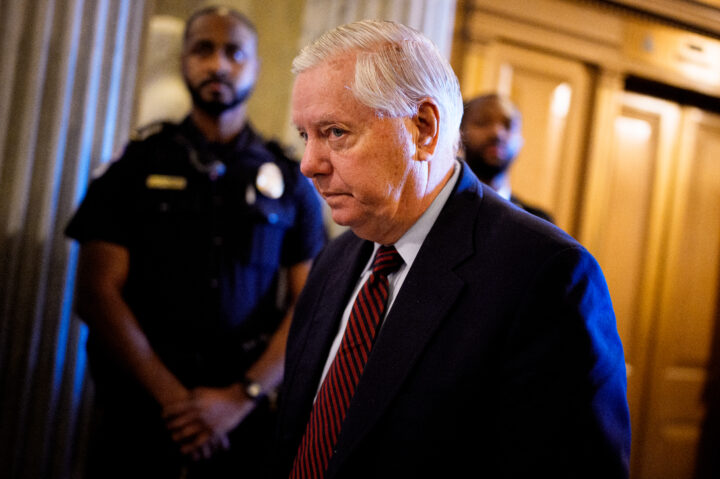
Andrew Harnik/Getty Images
Sen. Lindsey Graham (R-SC) walks into the Senate Chamber on December 11, 2025 in Washington, DC.
Sen. Lindsey Graham (R-SC) expressed confidence on Thursday that Saudi Arabia is intent on maintaining its status as a moderating force in the Middle East amid growing concerns that Riyadh is entertaining more hardline Islamism.
Graham met on Thursday morning with Saudi Defense Minister Khalid bin Salman Al Saud in Washington and spoke by phone on Wednesday with Saudi Foreign Minister Faisal bin Farhan Al Saud. The South Carolina senator sat down with Jewish Insider on Thursday afternoon for a wide-ranging discussion, where he said that, despite feeling unsettled by some Saudi conduct, he is not concerned that the kingdom is making a pivot toward a more extremist posture, as some in the region and the Jewish community have worried.
Graham had earlier this week publicly criticized the kingdom for its growing conflict with the United Arab Emirates and what he described as a failure to act to protect the Syrian Kurds against Syrian government advances.
“After having met with the Saudis today, I understand their concerns better. I don’t agree with everything they’ve done, but I fundamentally believe that the vision is still the same,” Graham told JI. “To all those who think like me and have been upset by what you’ve heard, I understand why you’re upset, but I would just say this: If I feel good, you should feel good.”
Once a vocal critic of Saudi Arabia and Crown Prince Mohamed Bin Salman — particularly in the aftermath of the 2018 murder of Washington Post contributor Jamal Khashoggi — Graham said that MBS’ grand economic and development plan, Vision 2030, convinced him that the Saudi government is interested in development, peace and deradicalization, because those factors would be incompatible with MBS’ plan.
“If the man is willing to spend a trillion dollars to make Saudi Arabia a destination of choice, he’s got to be smart enough to know that the old model of the Mideast has to be replaced,” he said of the crown prince.
Graham said claims that Vision 2030 had stalled were “overstated” and dismissed the notion that the Saudis were struggling financially, despite flagging oil prices. The kingdom recently announced plans to significantly scale back the flagship Vision 2030 project and the futuristic megacity Neom.
“They’ve had 97 projects, 94 are on target,” Graham said of Vision 2030. “This idea that Saudi Arabia is running out of money is bulls**t. Every time you fill up your car, they appreciate it. … They’re not abandoning their 2030 model. Has anybody in Turkey talked about a 2030 model?”
The South Carolina senator, a leading advocate for U.S. strikes against the Iranian regime, also said he expects that action against the Islamic Republic is still forthcoming, arguing that the United States’ credibility is on the line after President Donald Trump promised protesters that the U.S. would assist them.
Graham framed the protests and their ultimate outcome as a tipping point for the region and the world.
“[Trump] said, ‘Keep protesting. Help is on the way.’ That is his Ronald Reagan moment. You have to follow through,” Graham said, referring to Reagan’s demand for the Berlin Wall to be torn down, and arguing that there is now a clock running for the U.S. to take action.
“Regime change is being led by the people. The question is: Are you for the ayatollah or the people? Donald Trump said, ‘I’ll be with the people.’ Well, that means you’ve got to be with the people,” he added. “I’d like to find a solution without conflict. I don’t know what that would be, but I am confident that it can’t go on forever. There’ll come a point where the people lose hope. We’re not there yet, but the sooner we can demonstrate help is on the way, the better.”
If the U.S. fails to follow through, Graham warned, “It’s going to make Afghanistan look like a cakewalk.”
“Everybody’s gonna hedge their bets. Nobody will follow America. Nobody will trust the idea that, you know, making peace is good. It will set the region back 100 years,” he continued.
And, Graham argued, the fall of the Iranian regime is a precondition for any further progress toward regional normalization.
“Nobody in their right mind can talk about normalization in the Mideast until we know how the protests end in Iran,” Graham said. “If, in fact, the ayatollah is still standing after all this bluster and rhetoric, normalization is lost for decades.”
But if the regime falls, bringing its proxies Hamas, Hezbollah and the Houthis down with it, Graham asserted that normalization would be easy to achieve, adding, “If you could sink the mothership, the ripple effect changes Lebanon and Syria.”
Graham said that, from everything he knows about Trump, he expects the president to follow through on his promise to the protesters. He added that he expects the U.S., and potentially Israel, to deliver a “bigger” hit to the regime now than they might have if they struck several weeks ago when the protests began.
“I will judge the president by what he says and what he does. I have no reason to believe that he will not fulfill the promises he’s made. His track record is pretty good. He doesn’t want conflict, but he won’t be trifled with,” Graham said.
Trump’s vacillating threats to the regime, and the lack of U.S. action following a crackdown that officials said has quelled the recent protests, have created uncertainty about how the U.S. plans to proceed. Media reports and public comments by Trump indicated that the administration was interested in reopening negotiations with Tehran, but over the last week, Trump has gradually amped up threats of a military strike against Iran amid continued intransigence from Tehran.
Graham said that the Islamic Republic should accept any offers of diplomacy from the U.S., but that he’s not surprised the regime hasn’t been amenable, describing Supreme Leader Ayatollah Ali Khamenei as a “religious Nazi.”
He expects that a U.S. campaign would involve “enough lethality to make the people who live without fear live with fear, to make those who are killing the people … wonder if maybe they’ll wake up dead tomorrow.” He said the U.S. would also maintain economic pressure on Iran.
“If whatever we do doesn’t inspire the people and put some fear in the regime, we’ve made a mistake,” he continued.
Still, he emphasized that he does not expect a U.S. invasion of Iran.
Graham rejected concerns that Khamenei could be replaced by someone equally radical if removed from power.
“Most likely, the day after in Iran, if the ayatollah falls, is a long road back to a more accommodating Iran that wants to be prosperous,” Graham said. “Why would you double down on the things that got you in this? … Now, it won’t be Jeffersonian democracy, but it’ll be something we can live with.”
The GOP senator also said that he supports the approach in a post-regime Iran outlined Wednesday by Secretary of State Marco Rubio, which would likely involve a transfer of power to others inside the Iranian government, potentially within its military, if the ayatollah falls — akin to the approach the U.S. took in Venezuela.
“We’re not going to do the Iraq thing where we fire everybody,” Graham said. “We’re going to trust the people taking over to understand that the old ways have got to go. If you want to perpetuate the old ways, you’re not going to make it. … To the people taking over in Iran, if you act like the ayatollah, we’ll bomb you too.”
Graham, together with Sen. Richard Blumenthal (D-CT), introduced legislation on Thursday, the Save the Kurds Act, that aims to largely re-implement the Caesar Act sanctions on Syria, repealed by Congress in December amid pressure from the Trump administration.
Graham was a longstanding skeptic of unconditional sanctions relief, without snapback measures, for the Syrian regime, and the new legislation comes in response to advances on territory run by the Kurdish-led Syrian Democratic Forces (SDF), the U.S.’ primary allies in Syria in the war against ISIS.
In a reversal of current U.S. policy, the bill would sanction Syrian government officials and financial institutions, and any foreign individuals who engage in any transaction with the Syrian government, as well as re-designating Hay’at Tahrir al-Sham (HTS), the faction that Syrian President Ahmad al-Sharaa led, as a terrorist organization.
The administration would be able to suspend the sanctions if the Syrian government stops all attacks on the SDF, but would be required to immediately reimpose them if attacks resume.
Softening his rhetoric from earlier in the week, Graham told JI he’s optimistic that Saudi Arabia wants to deal as an honest broker to decrease tensions between al-Sharaa’s government and the Kurds — something he said was not the case with Turkey — and urged Saudi officials to maintain that approach.
He said that he’s very concerned about al-Sharaa, after he “gave him a chance,” warning that failing to protect the Kurds would ultimately lead to a situation in Syria as bad or worse than under the former Assad regime.
“If we let radical Arab groups and [Turkish President Recep Tayyip] Erdoğan eliminate the Kurds, nobody would ever follow America again,” Graham warned. “‘One Syria’ cannot be accomplished through the threat of the gun.”
Graham made waves in Washington and Jerusalem earlier this month with comments that he wanted to quickly wind down U.S. aid to Israel, after Israeli Prime Minister Benjamin Netanyahu said that he wants to wean the Jewish state off of U.S. financial assistance in the next decade.
He promptly traveled to Israel to discuss the matter of future U.S. aid and Israel’s plans for Iran with Netanyahu and top Israeli defense officials. Following a meeting with Netanyahu in Jerusalem, tensions seem to have cooled, with Graham saying he “understand[s] better what he’s saying” despite the two not being totally aligned.
He said that his concern has been that U.S. aid to Israel has been a strong investment that has paid dividends for the U.S., while Netanyahu is concerned with being perceived as a burden on the U.S. — though Graham maintained that ending aid will do nothing to placate anti-Israel voices in the U.S.
Graham said that Netanyahu had a “very, I think, clever way of modernizing the weapons systems to our mutual benefit that’s different than aid, so I was impressed,” adding, “I’d like to be a partner with” Israel’s technological developments.
Many analysts believe that the future of U.S.-Israel cooperation lies more in co-produced and jointly developed programs than in direct financial assistance from the U.S. to Israel, and such programs have been growing in recent years.
Plus, car ramming suspect charged with multiple hate crimes

John Lamparski/Bloomberg via Getty Images
Julie Menin, speaker of the New York City Council, and Mayor Zohran Mamdani on Jan. 12, 2026.
Good Thursday afternoon!
This P.M. edition is reserved for our premium subscribers — offering a forward-focused read on what we’re tracking now and what’s coming next.
It’s me again — Danielle Cohen-Kanik, U.S. editor at Jewish Insider and curator, along with assists from my colleagues, of the Daily Overtime. Please don’t hesitate to share your thoughts and feedback by replying to this email.
📡On Our Radar
Notable developments and interesting tidbits we’re tracking
After a car repeatedly drove into Chabad Lubavitch world headquarters in Brooklyn last night, New York City Council Speaker Julie Menin announced today she is creating a council task force to combat antisemitism, even as Mayor Zohran Mamdani has said he plans to retain the mayor’s Office to Combat Antisemitism (and told local news today he’s “in the final stages” of hiring someone to lead it). The council task force’s co-chair is Councilwoman Inna Vernikov, an outspoken critic of Mamdani…
The suspect arrested in the car ramming has been charged with attempted assault, reckless endangerment, criminal mischief and aggravated harassment, all enhanced as hate crimes, the NYPD announced this afternoon…
And in the wake of several protests that have disrupted New York Jewish communities in recent months, Menin also introduced a bill that would ban protests within 100 feet of a house of worship — more stringent than Gov. Kathy Hochul’s proposal of a 25-foot ban.
“The First Amendment right to peacefully protest is sacrosanct. What’s not sacrosanct is inciting violence, intimidation and harassment,” Menin told The New York Times, though some experts cast doubt on the constitutionality of the measure…
Rep. Tim Walberg (R-MI), the chair of the House Committee on Education & Workforce, sent a letter to Evanston, Ill., Mayor Daniel Biss — who is running for Congress to replace retiring Rep. Jan Schakowsky (D-IL) — requesting a briefing on Biss’ role in the 2024 anti-Israel encampment at Northwestern University.
Walberg alleged that Biss had failed “to protect Jewish students” at Northwestern “by refusing to give the university the police support it desperately needed to clear its violent and antisemitic encampment,” which resulted in a failure to arrest protesters who had harassed Jewish students. Biss has also drawn condemnation for allegedly walking back his pro-Israel positions once he was denied the support of AIPAC in his congressional campaign…
Rep. Haley Stevens (D-MI) raised $2.1 million for her Senate campaign in the final quarter of 2025, she announced today, bringing her total raised to $6.8 million. But a new Emerson College poll of the race to replace Sen. Gary Peters (D-MI) shows that haul may not be making an impact among primary voters just yet — Stevens polled at 17% to state Sen. Mallory McMorrow’s 22%, with 38% still undecided.
In a general election matchup against presumptive GOP nominee former Rep. Mike Rogers (R-MI), both McMorrow and Stevens poll ahead of Rogers, 46-43% and 47-42% respectively, with 15% undecided. In all cases, physician Abdul El-Sayed, a progressive Democrat who has made his hostility to Israel a central component of his campaign, polls behind his opponents…
The Democratic primary in New York’s 17th Congressional District got a little less crowded today: Former FBI agent John Sullivan, who served as the top bureau intelligence official in Israel from 2017-2020, dropped out of the race to challenge Rep. Mike Lawler (R-NY).
“While my congressional campaign is coming to an end, my dedication to our community is not,” Sullivan wrote, telling supporters to “stay tuned.” He did not endorse any of the remaining Democratic candidates, which include front-runner Beth Davidson, a Rockland County legislator, and national security veteran Cait Conley…
The U.S. Navy dispatched an additional warship, the USS Delbert D. Black, to the Middle East in the past two days amid heightened tensions with Iran, Reuters reports, bringing the total number of destroyers in the region to six, in addition to an aircraft carrier…
The European Union voted unanimously to designate Iran’s Islamic Revolutionary Guard Corps as a terrorist organization today, Jewish Insider’s Matthew Shea reports, in a move anticipated after several countries including Italy and France rescinded their long-held objections to the move.
“Repression cannot go unanswered,” Kaja Kallas, the EU’s high representative for foreign affairs and security policy, wrote on X following the decision. “Any regime that kills thousands of its own people is working toward its own demise”…
Sens. Lindsey Graham (R-SC) and Richard Blumenthal (D-CT) introduced the “Save the Kurds Act” in response to the Syrian government’s campaign against the Kurdish-led and U.S.-backed Syrian Democratic Forces. The legislation would impose sanctions on “Syrian government officials and financial institutions, and any foreign individual who engages in any transaction, including military or financial support, with the Syrian government,” according to a press release.
The bill would also redesignate as a terror organization Hayat Tahrir al-Sham (HTS), the al-Qaida offshoot that Syrian President Ahmad al-Sharaa led before ousting dictator Bashar al-Assad. The Trump administration removed HTS’ terror designation and U.S. sanctions on Syria after al-Sharaa assumed the presidency…
A draft resolution from the Board of Peace dictating the powers of the bodies overseeing postwar Gaza seems to relegate the Gaza Executive Board — whose inclusion of Turkey and Qatar had concerned Israel — to an advisory role for another committee largely made up of White House advisors, The Times of Israel reports. The resolution, which also increases the Trump administration’s role in managing that body, still must be signed by the president…
A man was tried in federal court today for attempting to assassinate former President Joe Biden over anti-Israel animus, traveling to Georgia with a firearm in June 2024 to sneak into a presidential debate hosted by CNN so he could reach Biden, according to the Justice Department.
The man’s manifesto was addressed to “all the Palestinian journalists … and in remembrance of the ones who lost their lives along the way” and said, “It’s time we overthrow these bastards and threaten to pull a f**king D-Day on Tel Aviv,” concluding with “Free Palestine”…
A bipartisan delegation of lawmakers organized by the AIPAC-affiliated American Israel Education Foundation met with Israeli Prime Minister Benjamin Netanyahu in Jerusalem today, including Reps. Ryan Zinke (R-MT), Jen Kiggans (R-VA), Jake Ellzey (R-TX), Mike Bost (R-IL) and Don Davis (D-NC)…
⏩ Tomorrow’s Agenda, Today
An early look at tomorrow’s storylines and schedule to keep you a step ahead
Keep an eye out in Jewish Insider for a look at the legacy of constitutional lawyer and Jewish activist Nat Lewin, who turns 90 this weekend.
Several Jewish and pro-Israel organizations were invited to a meeting with Saudi Defense Minister Khalid bin Salman, who is in Washington meeting with Trump administration officials, tomorrow afternoon, JI’s Danielle Cohen-Kanik has learned, amid a sharp rise in antisemitic and anti-Israel rhetoric from the kingdom. It’s not clear which organizations will be attending, though the Foundation for Defense of Democracies confirmed it will sit down with KBS separately in the morning.
We’ll be back in your inbox with the Daily Overtime on Monday. Shabbat Shalom!
Stories You May Have Missed
PASTOR’S POLEMIC
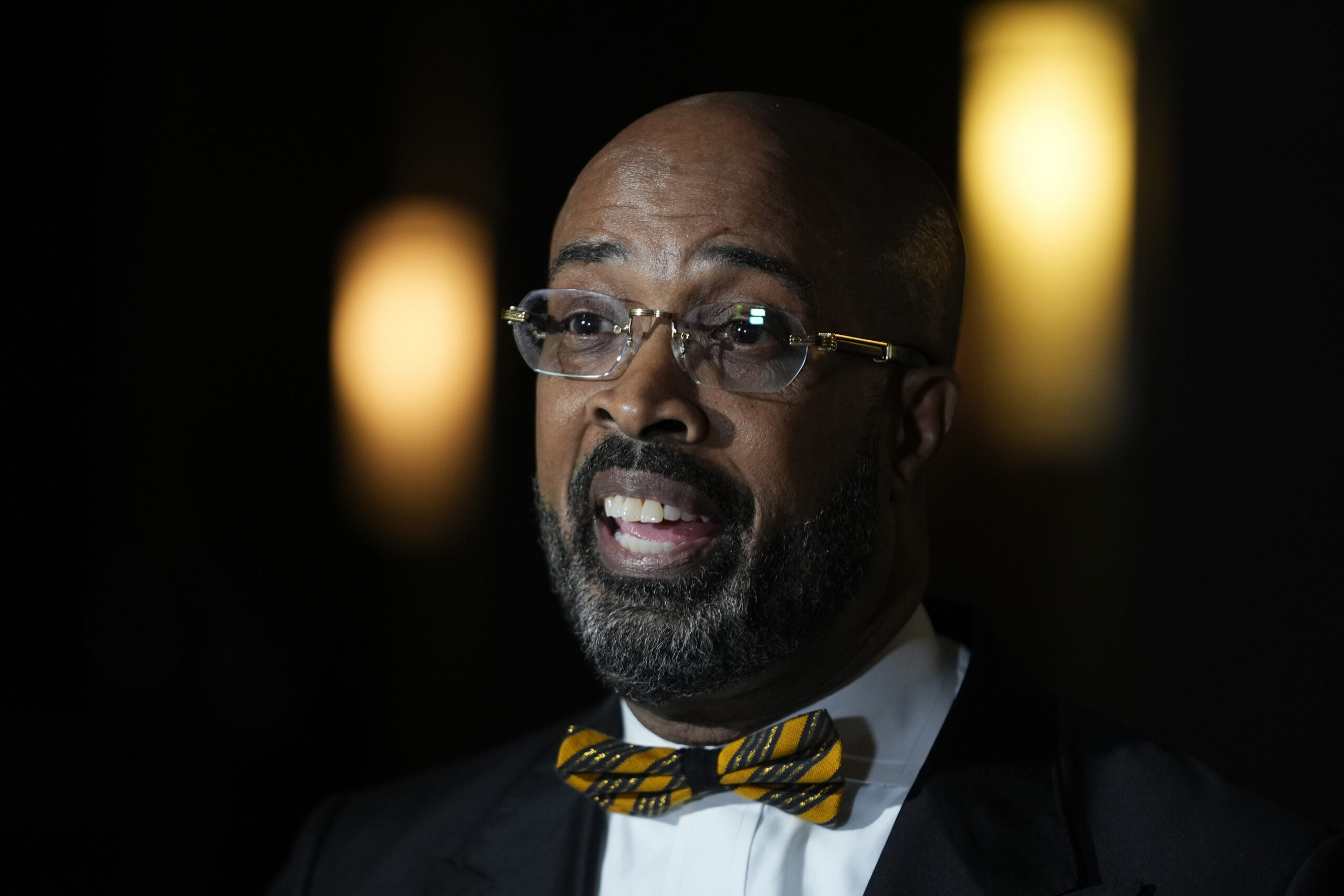
Singer told JI that his alignment with Rev. Frederick D. Haynes III delivered an anti-Israel polemic from the pulpit on Oct. 8, 2023, the day after Hamas’ attack on Israel
COMEBACK BID

The former congresswoman told JI, ‘Anything that needs to be done to stop Iran from acquiring a nuclear weapon needs to be done’
Plus, Biden officials don't hold back on criticism of Bibi
Mass Communication Specialist 3rd Class Amber Smalley/U.S. Navy via Getty Images
Flight deck of the Nimitz-class aircraft carrier USS Abraham Lincoln (CVN 72) May 10, 2019 in the Red Sea.
Good Wednesday afternoon!
This P.M. edition is reserved for our premium subscribers — offering a forward-focused read on what we’re tracking now and what’s coming next.
It’s me again — Danielle Cohen-Kanik, U.S. editor at Jewish Insider and curator, along with assists from my colleagues, of the Daily Overtime. Please don’t hesitate to share your thoughts and feedback by replying to this email.
📡On Our Radar
Notable developments and interesting tidbits we’re tracking
President Donald Trump indicated he’s losing patience with Iran: He posted a stark warning on Truth Social this morning that a “massive Armada is heading to Iran” and “it is ready, willing, and able to rapidly fulfill its mission, with speed and violence, if necessary.”
Trump encouraged Tehran to come back to the negotiating table where he demanded it have “no nuclear weapons” — a position that differs from Israel’s, which has said Iran must not be allowed to enrich uranium at all — but made no mention of the protesters Trump had pledged to protect…
Despite Trump’s threat, Secretary of State Marco Rubio told lawmakers at a Senate Foreign Relations Committee hearing today that the “armada” of military assets being moved to the Middle East is primarily defensive, Jewish Insider’s Marc Rod reports.
Rubio noted that 30,000-40,000 U.S. troops in the region are “within the reach of an array of thousands of Iranian” drones and missiles. “We have to have enough force and power in the region, just on a baseline, to defend against that possibility,” he explained.
In addition, “the president always reserves the preemptive defensive option — in essence, if we have indications that, in fact, they’re going to attack our troops in the region,” Rubio continued, as well as security agreements to defend allies such as Israel “that require us to have a force posture in the region.”
Rubio admitted the U.S. has little clarity on who would govern Iran if the regime collapses: “I don’t think anyone can give you a simple answer as to what happens next in Iran if the supreme leader and the regime were to fall, other than the hope that there would be some ability to have somebody within their systems you could work towards a similar transition” as the U.S. has supported in Venezuela…
Rubio was also questioned by senators about the Board of Peace: He clarified that “the primary and sole focus of that board right now is to administer Phase 2 and Phase 3 of the plan in Gaza,” despite broad language in the body’s charter, and acknowledged that some European allies have declined to join over their concern that the board is competing with the U.N. “This is not a replacement for the U.N. But the U.N. has served very little purpose in the case of Gaza,” Rubio said…
As their own response to Iran’s violent suppression of protests, several European countries changed their position to support the EU designating the Islamic Revolutionary Guard Corps as a terror organization, a move they have historically opposed over fears of irreparably severing ties with Tehran.
Ahead of a Thursday meeting of EU foreign ministers in Brussels — where the bloc was already expected to approve additional sanctions on Iran — Italy, Germany and earlier today France announced they would support the designation, teeing up its approval, which must be unanimous, at tomorrow’s meeting…
The State Department found that the Palestinian Authority paid more than $200 million to terrorists and their families in 2025, the Washington Free Beacon reports, despite the PA claiming it had ended its “pay-to-slay” program last February.
The PA merely “transferred responsibility” for the payments to a new body “under the guise of social welfare,” a report provided to Congress laid out, with evidence from post offices, social media and Telegram “indicating clearly that the compensation in support of terrorism has continued”…
Biden administration officials jumped to the defense of the former president’s Israel policy after Israeli Prime Minister Benjamin Netanyahu alleged in a press conference yesterday that some IDF soldiers had been killed in Gaza due to a U.S. arms embargo that caused Israel to run out of ammunition during the Biden presidency.
Brett McGurk, Biden’s senior Middle East advisor, told Axios that Netanyahu’s comments were “categorically false” and that Biden’s “commitment to Israel’s security to include U.S. military assistance was unwavering”; diplomat Amos Hochstein slammed Netanyahu as “ungrateful to a president that literally saved Israel at its most vulnerable moment”; and former State Department antisemitism envoy Deborah Lipstadt said that to ignore Biden’s support for Israel “is to ignore history”…
Syrian President Ahmad al-Sharaa visited Moscow today where he and Russian President Vladimir Putin discussed Russia’s continued military presence in the country, Syrian state media reported. Despite its historic backing of longtime Syrian leader Bashar al-Assad, Moscow did not oppose al-Sharaa’s ouster of the dictator, though Russia has sheltered Assad and his family since they fled Damascus.
Russia has begun pulling out from its position in northeast Syria in an area still controlled by the Kurdish-led Syrian Democratic Forces, as Damascus mounts a campaign to oust them, though Moscow reportedly hopes to keep its naval and air bases on the Syrian coast…
⏩ Tomorrow’s Agenda, Today
An early look at tomorrow’s storylines and schedule to keep you a step ahead
Keep an eye out in Jewish Insider for an interview with former Rep. Elaine Luria (D-VA), as she seeks to reclaim her former seat and shore up support for Israel among her Democratic colleagues.
Pennsylvania Gov. Josh Shapiro will speak at Washington’s Sixth & I synagogue in conversation with Sen. Raphael Warnock (D-GA) about the governor’s new memoir, Where We Keep the Light.
The Hudson Institute will host a conversation with Jacob Helberg, the under secretary of state for economic affairs, as he returns from a trip around the Middle East where he brought Qatar and the United Arab Emirates into the Pax Silica initiative and signed a joint AI strategic framework in Israel.
Stories You May Have Missed
FLORIDA FIGHT
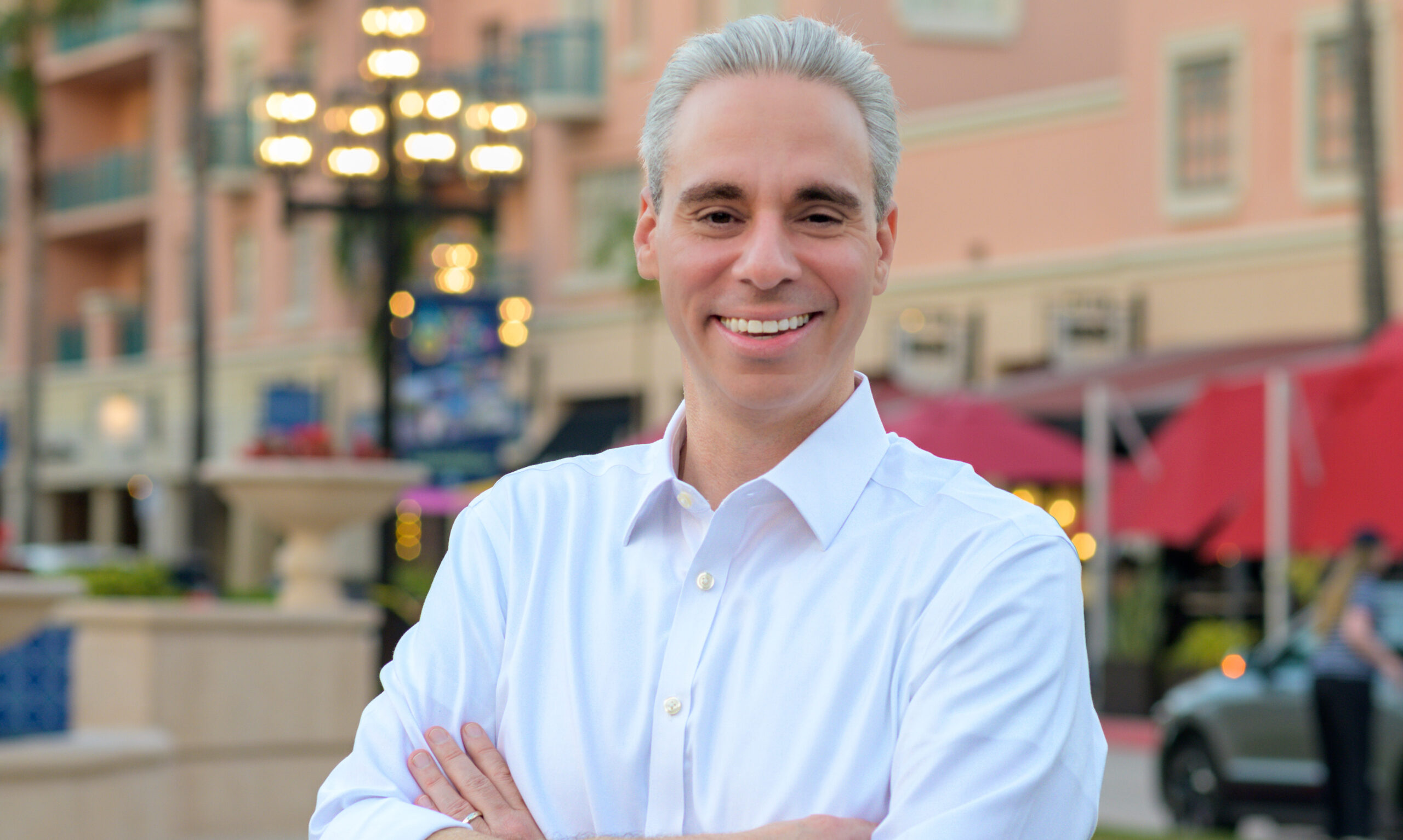
Singer told JI that his alignment with the GOP has been shaped by his Jewish faith
FOLLOW THE MONEY

The group behind the pro-Hamas chants in Queens has a nationwide network and links to pro-terror organizations and individuals
Plus, Emory faculty revolt in defense of Iran official's daughter

MONEY SHARMA/AFP via Getty Images
Saudi Arabia's Crown Prince and Prime Minister Mohammed bin Salman (C) inspects a guard of honor during a ceremonial reception at the President House a day after the G20 summit in New Delhi on September 11, 2023.
Good Tuesday afternoon!
This P.M. edition is reserved for our premium subscribers — offering a forward-focused read on what we’re tracking now and what’s coming next.
It’s me again — Danielle Cohen-Kanik, U.S. editor at Jewish Insider and curator, along with assists from my colleagues, of the Daily Overtime. Please don’t hesitate to share your thoughts and feedback by replying to this email.
📡On Our Radar
Notable developments and interesting tidbits we’re tracking
Saudi Arabia’s shift away from its traditional alliances and towards Islamism is evoking more backlash: Asked about Riyadh’s growing rapprochement with Qatar and Turkey, Israeli Prime Minister Benjamin Netanyahu said at a press conference this afternoon that he’s following the developments and that Israel “expect[s] from anybody who wants normalization or peace with us that they not participate in efforts steered by forces or ideologies that want the opposite of peace”…
Netanyahu’s comments came shortly after Saudi Crown Prince Mohammed bin Salman held a phone call with Iranian President Masoud Pezeshkian, where MBS conveyed that “the Kingdom considers any threat or tension against Iran unacceptable”…
That’s not stopping the U.S. from hinting at the continued possibility of strikes on Iran: U.S. Central Command announced it will be conducting a “multi-day readiness exercise” in order to “demonstrate the ability to deploy, disperse, and sustain combat airpower” across its area of responsibility, which includes Iran…
And Sen. Lindsey Graham (R-SC) slammed Riyadh for other nefarious actions in the region, Jewish Insider’s Emily Jacobs reports, including its “attack” on the UAE and silence regarding the Syrian government’s campaign against the Kurds, demanding the kingdom use its influence to “keep the region from falling further into chaos.”
“Please understand that I am smart enough to know that Saudi Arabia has influence on the Syrian government, and I expect them to use it,” Graham said, adding that he is “trying to work with the administration and regional partners to prevent a bloodbath in Syria against our Kurdish allies”…
(President Donald Trump, meanwhile, had a markedly different take on Syria: He told reporters today that he had a “great conversation” with the “highly respected president of Syria” and that “all of the things having to do with Syria and that area are working out very, very well, so we’re very happy about it”…)
The U.S. Embassy in Riyadh also held its first-ever International Holocaust Remembrance Day event, writing that “Today’s modest but meaningful commemoration reflects a universal duty: protecting our shared humanity across cultures, faiths, and nations”…
With Graham eyeing Damascus and Riyadh, Sen. Ted Cruz (R-TX) took aim elsewhere, calling for the U.S. to arm protesters in Iran “NOW.” “For the Iranian people to overthrow the Ayatollah — a tyrant who routinely chants ‘death to America’ — would make America much, much safer,” he said…
Authorities in Azerbaijan arrested three people allegedly preparing an attack on the Israeli Embassy in Baku today; the men were affiliated with ISIS-K, the Afghani branch of the terror group…
The Board of Peace is attempting to formalize its processes and responsibilities, according to a draft resolution from the board obtained by The New York Times, which bestows expansive powers to its chairman — Trump — including naming the commander of the International Stabilization Force, which still has yet to be established.
The document also names White House Chief of Staff Susie Wiles and attorney Martin Edelman as members of the board, the first time they have been identified as such…
After a doctor who is the daughter of a senior Iranian government official departed from Emory University’s medical school, the professor who serves as head of Emory’s faculty leadership council criticized the school for letting her go, JI’s Haley Cohen has learned.
Noelle McAfee, a professor in Emory’s philosophy department, sent a scathing email to the university expressing concern that the school’s dismissal of Fatemeh Ardeshir-Larijani, the daughter of the secretary of Iran’s Supreme Council for National Security, was a politically motivated firing.
“It’s extremely disappointing to see that our leadership here at Emory are consistently caving to political pressure and never taking the side of faculty,” McAfee wrote, quoting an anonymous faculty member, expressing concern that Ardeshir-Larijani, whose father is responsible for the Islamic Republic’s national security, didn’t receive due process…
In the Garden State, Mussab Ali, the former Jersey City Board of Education president and champion of anti-Israel college encampments, officially launched his primary challenge to Rep. Rob Menendez (D-NJ) today, hitting Menendez on day one for supporting Israel and being endorsed by AIPAC.
“Democrats need to step up and become the party where we abandon corporate PACs, we won’t take money from groups like AIPAC, and we need to be accountable to everyday people,” Ali told the New Jersey Globe. He also enters the race with the endorsement of former Rep. Jamaal Bowman (D-NY), who was unseated in part due to his sharp criticisms of Israel…
Marking International Holocaust Remembrance Day, Chicago’s City Council voted unanimously to adopt the International Holocaust Remembrance Alliance’s working definition of antisemitism into its municipal code…
⏩ Tomorrow’s Agenda, Today
An early look at tomorrow’s storylines and schedule to keep you a step ahead
Keep an eye out in Jewish Insider for an interview with Republican Boca Raton Mayor Scott Singer, who’s hoping for a conservative shift among Jewish voters in South Florida to help him unseat Rep. Jared Moskowitz (D-FL).
“October 7: In Their Own Words,” a play drawn directly from testimonies of survivors of the Oct. 7, 2023, Hamas terror attacks, will premiere at the Kennedy Center. Read JI’s interview with the show’s playwrights here.
Secretary of State Marco Rubio will be on the Hill, testifying at a Senate Foreign Relations Committee hearing on U.S. policy towards Venezuela in the aftermath of the ouster of former President Nicolás Maduro.
Stories You May Have Missed
PROBLEMATIC POST

Kelly Neumann is serving as the fundraising co-chair for gubernatorial candidate Jocelyn Benson and Senate candidate Mallory McMorrow and has fundraised for several other Michigan Democrats
SABRA SLAM

The Portland Trail Blazers forward has emerged as one of Israel’s all-time top athletes
Trump, true to form, has been unpredictable and inconsistent in his approach to Tehran — alternating between threatening force and teasing diplomacy
Chip Somodevilla/Getty Images
U.S. President Donald Trump gives a speech at the World Economic Forum (WEF) on January 21, 2026 in Davos, Switzerland.
Tensions are running high across the Middle East after a week in which the U.S. and Iran lobbed threats at each other, dominating headlines, destabilizing markets and leaving many in the region unnerved at the prospect of renewed military action seven months after the 12-day war between Israel and Iran that included U.S. strikes on Iranian nuclear facilities.
On the sidelines of the World Economic Forum in Davos, Switzerland, yesterday, Trump warned that an “armada” was on its way to the Gulf — a reference to the aircraft carrier and fleet of fighter jets being redeployed from the South China Sea.
In response, Gen. Mohammad Pakpour, the head of Iran’s Islamic Revolutionary Guard Corps, warned that Iran had its “finger on the trigger, more prepared than ever, ready to carry out the orders and measures of the supreme commander-in-chief.”
Trump, true to form, has been unpredictable and inconsistent in his approach to Tehran — alternating between threatening force and teasing diplomacy. “Iran does want to talk, and we’ll talk,” Trump said at a signing ceremony in Davos on Thursday, just hours before he told reporters on Air Force One about the naval deployment to the Gulf. “We have a massive fleet heading in that direction, and maybe we won’t have to use it,” he said on AF1, managing in one whiplash-inducing sentence to lob a threat at Iran while also offering it a theoretical off-ramp.
The president has proven that he is willing to engage in bold action — especially when it comes to Iran. One has only to look to the 2020 killing of Quds Force head Gen. Qassem Soleimani or the U.S. strikes on Iranian nuclear facilities last June to see that the Trump administration is willing to engage militarily with Iran in ways prior administrations may have not. (Case in point: former President Joe Biden’s issuance in April 2024 of a one-word warning to Iran — “Don’t” — a day before Tehran launched hundreds of missiles and drones at Israel.)
More recently, the capture of Venezuela’s Nicolás Maduro demonstrates that the Trump administration isn’t opposed to regime change. And indeed, that was a possibility the president has mulled vis-a-vis Tehran, telling Politico last weekend that it was “time to look for new leadership in Iran.”
Meanwhile, Trump’s inner circle and key allies are split over how to approach Iran. White House Special Envoy Steve Witkoff has been a vocal backer of using diplomacy to quell tensions with Tehran.
“Iran needs to change its ways,” Witkoff told Bloomberg on Wednesday in Davos. “They need to do that. And if they do, if they indicate that they’re willing to do that, I think we can diplomatically settle this.”
Witkoff additionally expressed disappointment that Iranian Foreign Minister Abbas Araghchi had been removed from the agenda at Davos after quietly being added last week, saying he had been “looking forward to meeting [Araghchi], because we have to build that communication channel, because the alternative to that is not a good alternative.”
Hours after Witkoff’s comments, Sen. Lindsey Graham (R-SC) posted a thinly veiled reference to the White House envoy, saying he was “unnerved by statements being made by people involved in the Iran file suggesting that if the ayatollah could change his ways, we might be able to reach an agreement with the regime.”
“Anyone who believes that the ayatollah is remotely interested in changing his ways does not understand the history of the ayatollah and the murderous regime,” Graham continued. “That’s the same as believing someone could have done a deal with Hitler.”
Within Iran, there are still hopes that U.S. action will topple Supreme Leader Ayatollah Ali Khamenei. The Economist notes a joke making the rounds among Iranian civil servants: “We used to worry we’d become Venezuela. Now we worry we won’t.”
Heading into the weekend with tensions still high, those who have to live with the consequences of the continuation of the Iranian regime — from the Iranians who have faced years of repression to the Israelis preparing their bomb shelters for the next war to people across the region whose lives have been upended by Iran’s proxies in Lebanon, Syria, Iraq and Gaza — will be watching closely for any signal from Trump and his top advisors about Washington’s next moves, and their reverberations around the world.
But, the president noted, the regime is ‘shooting people indiscriminately in the streets’

Fabrice COFFRINI / AFP via Getty Images
President Donald Trump as he leaves the World Economic Forum (WEF) annual meeting in Davos on January 21, 2026.
President Donald Trump said Wednesday that he hopes no military action will be needed in Iran, but stopped short of ruling it out as the U.S. continues to move military assets to the Middle East.
“We hope there’s not going to be further [military] action,” Trump said during an interview with CNBC on the sidelines of the World Economic Forum in Davos, Switzerland, while alluding to the fact that it still might be a possibility given Tehran’s conduct in suppressing nationwide demonstrations. “But you know, [the regime is] shooting people indiscriminately in the streets.”
The president has previously called the Iranian regime’s killing of protesters a “red line” and vowed to protesters that “help is on its way.” Trump repeated his claim on Wednesday that Iranian authorities had planned to hang 837 protesters last week, but “canceled it” after he warned them not to.
Trump has thus far refrained from authorizing military action against Iran — even as the U.S. has continued to move military assets to the Middle East in preparation for potential escalation, with reports indicating that the Pentagon has relocated more F-15 fighter jets to the region in recent days.
When asked by CNBC’s Joe Kernen whether people should “stay tuned” on Iran, Trump was noncommittal: “I guess — I mean, look, it’s a rough place,” he said.
White House Special Envoy Steve Witkoff, also at Davos, told Bloomberg News that diplomatic engagement remains possible if Tehran changes course.
“Iran needs to change its ways,” Witkoff said. “If they indicate that they’re willing to do that, I think we can diplomatically settle this.” But asked if he believes Iran wants to take the diplomatic path, Witkoff said, “We don’t have that sense yet.”
Still, the president noted that if Tehran were to continue pursuing nuclear capabilities, an attack similar to the U.S. strikes on Iranian nuclear sites last June is “going to happen again.”
“They keep experimenting with nuclear, and, you know, at some point they’re going to get the idea that they can’t do that,” he said.
Joel Rayburn, a former Trump admin nominee, said the U.S. should carry out a sustained ‘campaign’ of pressure
Matthew Shea
Iran International event, Jan 14th. 2025
Middle East policy experts argued on Wednesday that the United States should actively intervene in Iran’s unrest — including through cyber measures, economic pressure and potentially military strikes — amid the regime’s crackdown on nationwide protests. The comments were made during a program hosted by Iran International, one of the largest independent Persian-language news outlets in the world.
President Donald Trump has for days issued repeated warnings to the regime that the U.S. is “watching closely” and that Iran would “pay hell” for killing protesters. On Wednesday afternoon, however, the president said he had been notified that the “killing in Iran is stopping” and that Iran would not be conducting executions of protesters, as was expected, and downplayed the severity of protester deaths.
“The first thing I would recommend is that we use our very impressive capabilities to shut down the communication system for the government,” said Robert Satloff, executive director of The Washington Institute for Near East Policy, speaking of a potential retaliation for the regime’s decision to cut internet access to the public. “This will be a huge step.”
Satloff said if that did not work, he would then support subsequent U.S. strikes on Iranian military infrastructure.
“If that first act does not bring about a substantial change in Iranian behavior, then I would target very specifically the barracks and the facilities of the IRGC [Iranian Revolutionary Guard Corps],” said Satloff.
Joel Rayburn, a senior fellow at the Hudson Institute and a former diplomat in the Middle East, argued that any U.S. intervention in Iran should not be a “one-off military strike,” but rather a sustained “campaign” of economic and political pressure.
Rayburn was tapped by the White House to be assistant secretary of state for Near Eastern affairs in February 2025, however, his nomination was ultimately pulled last October.
“We have to use all of the tools at our disposal,” Rayburn said Wednesday. “There’s no reason not to be fully implementing maximum pressure to pressure the Iranian regime in order to change its behavior.”
Responding to questions about whether a weak Iranian regime — in the midst of dire economic and political challenges — can survive the protests, Rayburn suggested it is bound to fall, stating that there will be a “day after this Khamenei regime,” referring to Iran’s supreme leader, and that he believes that day will come “sooner rather than later.”
“The Iranian regime is going to collapse at some point in the not-too-distant future,” said Rayburn. “[It] can no longer function as a state. The last function they can perform is to use violence against their own people. That means they are not a sustainable regime.”
Tehran has threatened to respond to any military action with retaliation against the U.S. and Israel. Satloff said the fall of the regime would be “an enormous strategic gain for Israel,” but noted that Jerusalem is “playing it quiet.”
“The Israelis have made at least the tactical decision, that since Donald Trump has been out front, that Donald Trump has drawn a line in the sand, let Donald Trump be the key actor right now,” said Satloff. “There is no comparative advantage for Israel to be out in front in any military fashion. Let the United States play this role, the president seems to have embraced it.”
He also cast doubt on the likelihood that Tehran would strike Israel in response to U.S. action. Reports have indicated that Iran and Israel have conveyed reassurances through Russian intermediaries that neither side intends to carry out a preemptive strike.
“If the Iranians make the mistake of retaliating against Israel or Israeli assets, or Jewish assets around the world, there will be a very high price to pay,” said Satloff.
Analysts also weighed in on reports that Gulf allies have been lobbying the Trump administration to refrain from striking or intervening in Iran, warning that a U.S. intervention could be ineffective and expose them to retaliation. While the analysts acknowledged those concerns, they argued that regional governments would ultimately like to see the regime fall.
“I don’t think there are any major frontline countries in the Gulf region that believe that the Iranian regime is a regime that they can live with indefinitely,” said Rayburn. “We have not seen real restraint from the Arab capitals to either U.S. or Israeli pressure against the Iranian regime. All of those capitals would be better off without the regime.”
Regardless of whether the U.S. intervenes, Satloff emphasized that any outcome is “ultimately an Iranian process and an Iranian decision.”
“This will be their [the Iranian people’s] revolution, if it happens,” said Satloff. “It will not be something that we trigger or engineer, but to help them to be able to assert their own wishes and desires for the future.”
As Israel signals restraint and Iran faces mounting internal pressures, both sides are increasingly wary of miscalculating
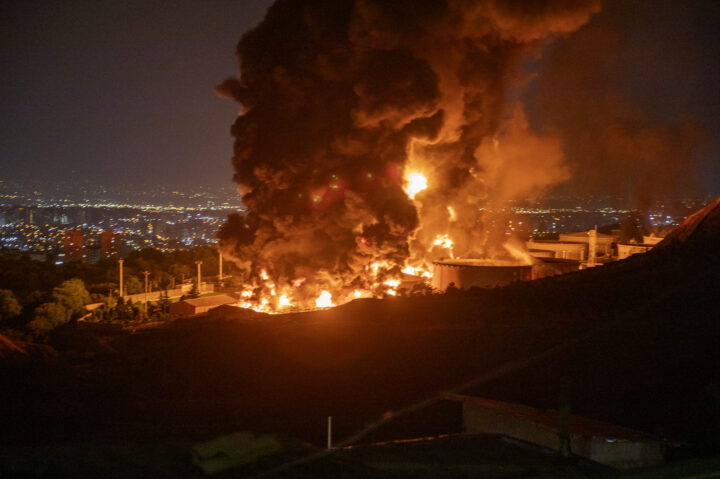
Stringer/Getty Images
Fire and smoke rise into the sky after an Israeli attack on the Shahran oil depot on June 15, 2025 in Tehran, Iran.
At the conclusion of the 12-day war in June of last year, both Israel and Iran suspected that the ceasefire brokered by the U.S. would be a pause, not a final cessation of hostilities. That truce has lasted for more than six months, with both sides wary of entering another military conflict — one likely to be more deadly and destructive than the first.
But now, amid destabilizing world events from Venezuela to the Middle East — compounded by growing domestic pressure on the Islamic Republic amid nationwide protests — that ceasefire is even more tenuous, with officials in Tehran and Jerusalem closely watching the other’s every move, careful not to make a potentially disastrous miscalculation — even as both sides make overtures at de-escalation.
Speaking at the Knesset on Monday, Israeli Prime Minister Benjamin Netanyahu said, “President [Donald] Trump and I have expressed a firm stance — we won’t allow Iran to rebuild its ballistic missile industry or to renew the nuclear program, which we damaged severely in Operation Rising Lion.”
In response, Iran’s newly formed Defense Council warned on Tuesday that the country could act preemptively if it detects clear signs of a threat. “The long-standing enemies of this land … are pursuing a targeted approach by repeating and intensifying threatening language and interventionist statements in clear conflict with the accepted principles of international law, which is aimed at dismembering our beloved Iran and harming the country’s identity,” the council said.
Recent reports suggest that Israel, in an attempt to de-escalate tensions, has used Moscow as an intermediary, communicating through Russian President Vladimir Putin that it has no intention of launching a preemptive strike on Iranian soil. Iranian leaders, including Supreme Leader Ayatollah Ali Khamenei, are unconvinced.
In a post on X, Khamenei accused Israel of deception: “What makes the enemy first request a ceasefire during [12-day] war with the Iranian nation, then send messages saying he doesn’t want to fight us?”
“Now if he doesn’t believe the messaging and thinks that Israel is about to attack then you can understand why Israel is worried Iran is about to miscalculate and attack. Very tense days/weeks ahead of us,” Nadav Pollak, a lecturer on the Middle East at Reichman University, commented on Khamenei’s post.
Pollak told Jewish Insider that he sees the perception gaps between Israel and Iran as the “No. 1 risk for miscalculation. As we’ve seen from Khamenei’s tweet, he doesn’t believe the messages that came from Jerusalem about Israel not planning to attack. In his mind, Bibi just came back from Washington with Trump supporting action against Iran if some red lines are crossed. Bibi also continues to talk about the Iranian ballistic missile threat every week and that Israel will need to do something.”
Israeli commentator Nadav Eyal noted on Dan Senor’s “Call Me Back” podcast that “Israeli security officials are extremely worried about what’s happening vis-a-vis Iran, first and foremost because the Iranians are so tense and they are constantly fearing an Israeli attack themselves. So their first worry is miscalculation … If Iran senses that Israel might attack, it wants to preempt that. If Israel thinks that Iran is going to do that, it would want to preempt that.”
Tehran is also facing trouble at home, amid protests that have spread across the country over the last two weeks. The growing unrest, coupled with the Islamic Republic’s economic and climate woes, has put added pressure on the ayatollahs.
Aaron David Miller, a senior fellow at the Carnegie Endowment for International Peace, told JI that due to the Iranian regime’s vulnerable position amid nationwide protests over a severe economic crisis, “hardliners” within the IRGC could be weighing using a strike to “divert the public” and create national unity. However, he expressed that the decision would be a “strategic mistake,” suggesting that an Iranian strike this year is “highly unlikely.”
“It’s hard to see what the Iranians would gain,” said Miller. “A strike is simply going to wreak additional havoc on what the vast majority of the Iranian public is protesting against, which is inflation, a devaluation of the Iranian currency.”
Blaise Misztal, vice president for policy at the Jewish Institute for National Security of America, echoed those sentiments, adding that any Iranian strike now while the regime in Tehran is “on the ropes” would be “suicidal.”
“It seems unlikely that Iran would choose this moment to attack Israel,” said Misztal. “While it certainly might be looking for some way to distract its citizens from their grievances, all the evidence suggests that external aggression would have the opposite effect.”
Misztal said the Iranian regime is facing skyrocketing inflation and crumbling infrastructure “because it has chosen guns over butter and Iranians know it.”
“To once again pick up guns would only further inflame Iranians’ rightful anger,” said Misztal. “Not to mention that a direct Iranian attack against Israel would surely invite a devastating Israeli, if not also American, response.”
The lingering question is whether the fear of miscalculation will push either side toward action.
Recent Saudi moves across Yemen, Sudan and the Horn of Africa — including a widening rift with the UAE and closer alignment with Qatar — are challenging long-held assumptions about Riyadh's regional posture

BRENDAN SMIALOWSKI/AFP via Getty Images
Saudi Arabia Crown Prince Mohammad bin Salman Al Saud walks to his seat after speaking during the US-Saudi Investment Forum at the Kennedy Center November 19, 2025, in Washington, DC.
Saudi Arabia is recalibrating its regional posture in ways that are challenging long-held assumptions about Riyadh’s role as a moderating force in the Middle East, as recent moves across Yemen, Sudan and the Horn of Africa expose the country’s widening rift with the United Arab Emirates and a growing alignment with Qatar and Turkey — two countries with openly hostile positions toward Israel.
The realignment has been most stark on the issue of Yemen, where Saudi Arabia led an airstrike on an Emirati shipment of vehicles on Tuesday which Riyadh claimed was intended for the UAE-backed Southern Transitional Council (STC), which has consolidated power in the country’s south as Saudi-backed efforts to stabilize the war-torn nation have stalled. Hours after the strike, the Emirati government announced it would withdraw its remaining troops from the country.
The Saudis’ decision to embrace Islamist-aligned factions in Sudan, where the UAE is aligned with rival forces, has caused additional fissures with the Emiratis, putting the two U.S. allies and Gulf power players at odds.
The Gulf states have also taken opposite sides on Somalia, with the UAE quietly supportive of Somaliland, while Saudi Arabia condemned Israel for recognizing its independence and Israel’s Channel 12 reported that the move threatened the chances of Riyadh and Jerusalem establishing diplomatic relations.
These actions, taken together, have raised questions about Riyadh’s role as a moderating force in the region and potential partner for normalization with Israel.
“Yes, Saudi Arabia is moving away from its position of recent years,” Hussain Abdul-Hussain, a research fellow at the Foundation for Defense of Democracies, told Jewish Insider on Tuesday. “Since [Crown Prince Mohammed bin Salman] came to power, he promised drastic change under the banner of ‘Saudi First.’”
Abdul-Hussain said that Saudi Arabia is “abandoning its past policy and distancing itself from the UAE and the moderate capitals and getting closer to Islamist Qatar and Turkey. … How far on the scale of Islamism the Saudis decide to go remains to be seen.”
“There have been two alliances competing in the region: A radical Islamist one led by Turkey and Qatar and allied with Iran and Pakistan and a moderate one led by Israel and UAE and allied with India, Greece and Cyprus,” Abdul-Hussain said. “While America has friends on both sides, it is clear that American national interests are served by taking the side of Israel, the UAE, India and Greece coalition against the rival axis.”
Nervana Mahmoud, a political commentator based in the U.K., told JI that while “it’s very difficult to read the strategic decisions within the kingdom because they don’t announce plans … I noticed a shift in the Saudi [posture] from mid-2024.”
Mahmoud said that the Saudi-UAE divergence has also expanded because of the Saudi’s softened stance on Qatar, something she argued reflects the kingdom’s acknowledgement of Doha’s growing influence both in the region and globally, specifically pointing to Qatar’s positive standing with the Trump administration.
“I see the Saudis saying, ‘We cannot defeat the Islamists, but we can influence [them], using them for strategic influence,’” Nervana Mahmoud, a political commentator based in the U.K., told JI. “They think they can influence Islamists rather than be fooled by them. Before Islamists were infiltrating Saudi, now Saudi thinks [they’re] powerful enough to influence and tame them to serve strategic interests. I see that as wishful thinking.”
Saudi Arabia has improved ties with Qatar, ending a blockade on Doha in 2021 and signing a deal earlier this month to link Riyadh and Doha with a high-speed rail.
The UAE, meanwhile, has expressed concerns over Doha’s influence in Trump’s Gaza peace plan, including its potential role in post-war Gaza, as well as Qatar’s Islamist ties.
“I see the Saudis saying, ‘We cannot defeat the Islamists, but we can influence [them], using them for strategic influence,’” Mahmoud told JI. “They think they can influence Islamists rather than be fooled by them. Before Islamists were infiltrating Saudi, now Saudi thinks [they’re] powerful enough to influence and tame them to serve strategic interests. I see that as wishful thinking.”
Mahmoud pointed to Saudi Arabia’s engagement in Syria where Riyadh has supported efforts to rehabilitate Syrian President Ahmad al-Sharaa and encourage engagement with the Trump administration, despite Al-Sharaa’s Islamist background. Israel, meanwhile, has taken a more suspicious view of al-Sharaa and has thus far failed to secure a security agreement with Damascus.
Another cause for concern has been the Saudis’ reticence to engage on joining the Abraham Accords, despite publicly expressing willingness to normalize relations with Israel on condition of the establishment of a pathway to Palestinian statehood and a ceasefire in Gaza.
“Since 9/11, and especially since MBS came to power in 2015, Saudi Arabia made enormous effort to distance itself away from Muslim Brotherhood and Islamism,” Hussain Abdul-Hussain, a research fellow at the Foundation for Defense of Democracies said. Now, “Saudi is getting closer to all Islamist, anti-Israel, anti-West governments, whether it’s Iran and Pakistan or Qatar and Turkey.”
Mahmoud accused Riyadh of “playing the game” on the normalization issue, saying that the kingdom had continued to signal interest in joining the Abraham Accords while “always [having] an excuse not to.”
“The excuses will never end,” Mahmoud told JI of the Saudis, adding that the kingdom was “trying to be on the good side of [President Donald] Trump.”
Riyadh’s shift away from moderate Gulf states has also been marked by diverging views on how to approach the Muslim Brotherhood. While Qatar has long sponsored the Islamist movement’s actions, Saudi Arabia and the UAE have historically taken a harsher stance against the group, proscribing it as a terrorist organization, aligned with the Trump administration’s recent moves to do the same.
“There was a period from 2017 to 2021 where the Saudis, Emiratis and Bahrainis completely isolated Qatar because they considered the Qataris as sponsoring the Muslim Brotherhood, and the Muslim Brotherhood meant harm to the political systems in Saudi and UAE and Bahrain,” Edmun Fitton-Brown, a senior fellow at the Foundation for Defense of Democracies and a former British diplomat who served in Kuwait, told JI.
Abdul-Hussain argued that there has been “some reversal” on Saudi Arabia’s reputation as a moderate actor on the brotherhood, creating a potentially concerning landscape for Israel and dampening efforts toward normalization.
“Since 9/11, and especially since MBS came to power in 2015, Saudi Arabia made enormous effort to distance itself away from Muslim Brotherhood and Islamism,” Abdul-Hussain said. Now, “Saudi is getting closer to all Islamist, anti-Israel, anti-West governments, whether it’s Iran and Pakistan or Qatar and Turkey.”
Shifting U.S. resources out of the Middle East could impact the U.S.’ ability to counter Iran and send allies towards Russia or China, JINSA’s Blaise Misztal said

Tom Brenner/Getty Images
Birds fly near the Pentagon
Senior Pentagon officials are reportedly weighing a sweeping proposal to reorganize the U.S. military that would shift authorities and resources away from the Middle East, a move experts warn could undermine U.S.-Israel security cooperation and destabilize the region.
The plan, driven by Defense Secretary Pete Hegseth, would reduce the number of U.S. combatant commands from 11 to eight, cut the number of four-star generals and consolidate regional commands into broader organizations. Most notably, U.S. Central Command (CENTCOM) — which oversees the Middle East and parts of South Asia — would be placed under a newly created U.S. International Command.
CENTCOM has long served as the backbone of U.S. military operations in the Middle East, overseeing operations ranging from efforts to stabilize Gaza to the recent U.S. strikes in Syria and June strikes on Iran’s nuclear facilities.
In January 2021, Israel was moved into CENTCOM’s area of responsibility, placing the Jewish state within a U.S.-led regional framework aimed at countering Iran and deepening military integration with Arab partners. Senior commanders have maintained frequent engagement with Israeli defense officials on regional threats, including this past weekend, when reports indicated that Israeli officials notified the head of U.S. Central Command that an Islamic Revolutionary Guard Corps missile exercise could signal preparations for a strike on Israel.
But despite looming threats in the region, the Trump administration’s strategy would shift military focus and resources toward the Western Hemisphere.
“The reported shift in U.S. combatant command organization reflects the Trump administration’s priorities as laid out in the 2025 National Security Strategy,” said Alexander Gray, a senior fellow at the Atlantic Council. “With the administration’s focus on the Indo-Pacific and the Western Hemisphere, it is fitting that it would similarly align combatant commands to reflect its priorities: While Africa, Europe, and Central Command could be combined, Indo-Pacific Command and Southern Command would remain standalone, reflecting the NSS’ regions of focus.”
Gray said that despite a potential reorganization, U.S. defense cooperation with Israel is “unlikely to be impacted,” noting that the structure places an emphasis on “bilateral relationships most essential to U.S. interests,” which he says would benefit Israel.
However, other experts warned that dismantling or downgrading CENTCOM will not only impact U.S. interests and alignment with Israel in the region, but risks unraveling years of progress.
“Significantly downsizing resources and personnel from the region in an effort to withdraw from the Middle East is only going to cause problems down the road,” said Michael Koplow, chief policy officer at the Israel Policy Forum. “Ensuring that the Middle East builds upon the integration stemming from the Abraham Accords and efforts to realize initiatives requires a focused and well-helmed regional command.”
“If the reorganization happens, it will have detrimental effects on Israel and the wider region,” said Michael Koplow, chief policy officer at the Israel Policy Forum. “The Middle East presents unique challenges stemming from Iranian efforts to upend the regional order and the importance of protecting sea lanes and trade routes. Treating the region as one component of a larger command risks harming U.S. goals.”
Koplow warned that such a move would mean “less high-level interaction with regional partners” which would put cooperation between the U.S. and Israel “at risk.” He also cautioned that a U.S. exit would provide “an opening to Iran, or China, capitalizing on the vacuum” in the Middle East.
“Significantly downsizing resources and personnel from the region in an effort to withdraw from the Middle East is only going to cause problems down the road,” said Koplow. “Ensuring that the Middle East builds upon the integration stemming from the Abraham Accords and efforts to realize initiatives requires a focused and well-helmed regional command.”
Blaise Misztal, vice president for policy at the Jewish Institute for National Security of America, echoed these concerns, saying that such a plan would have reverberations beyond shared cooperation. He noted that CENTCOM plays an important role in leveraging regional partnerships and putting together a defensive coalition of Middle Eastern countries — key to countering Iranian aggression.
“If we assume that the proposals go into effect, and we get rid of CENTCOM, or subsume it into some sort of larger combating command, it’s entirely feasible that a lot of those benefits will be lost, and a lot of the progress that has been made over the past five years will be reversed,” said Misztal, referring to the timeframe in which Israel joined CENTCOM’s area of responsibility.
Misztal raised concerns about the proposal’s objective to decrease the number of four-star generals and admirals who report directly to Hegseth, which would see CENTCOM’s command status downgraded and remove its four-star authority.
“Whoever would be responsible for the Middle East would no longer be a four-star general. A lot of what has been accomplished by CENTCOM has been accomplished by the fact that it is commanded by a four-star general,” Misztal said, noting that such leaders bring prestige and influence into the region. “If you do not have a four-star [general] in charge of a combat and command with the resources and authorities that come along with that, even if you have the same level of coordination and cooperation, they might not be able to allocate the resources that would be needed to achieve those same policy objectives.”
Misztal added that such a move would also “take away the perception of the U.S. caring about the Middle East,” which he said would hurt U.S. posture in the region and benefit Iran.
“A lot of the U.S.-Israel relationship is being managed personally between President [Donald] Trump and Prime Minister [Benjamin] Netanyahu, or by [White House Special Envoy] Steve Witkoff or Jared Kushner, and presumably that part of the relationship would not change, regardless of what happens on the security side,” said Blaise Misztal, vice president for policy at the Jewish Institute for National Security of America. “But affecting policies where it comes to bringing U.S. military power to bear might be more challenging.”
“When [Arab partners] perceive that there’s a flagging of U.S. interest or involvement in the region, they turn away, they strike deals with Iran, they reach out to Russia or China, or make their own security arrangements,” said Misztal. “It sets in motion the possibility for a lot of our partners to walk away from the cooperative security arrangements that have been built both with the United States and with Israel.”
Experts emphasized that any proposed change to CENTCOM would not necessarily signal a shift in U.S. policy toward Israel. However, Misztal said it could become more difficult for the U.S. to execute military policy in the region and provide the same level of support moving forward.
“A lot of the U.S.-Israel relationship is being managed personally between President [Donald] Trump and Prime Minister [Benjamin] Netanyahu, or by [White House Special Envoy] Steve Witkoff or Jared Kushner, and presumably that part of the relationship would not change, regardless of what happens on the security side,” said Misztal. “But affecting policies where it comes to bringing U.S. military power to bear might be more challenging.”
Specifics of the proposal remain limited and few details have been shared with Congress, according to reports. The changes would require approval from both Hegseth and Trump. In the event the plan were to move forward, Misztal said he could envision a scenario in which a smaller Middle East-focused structure remains within a broader command.
“Without more detail as to what is being planned, it’s hard to know entirely what will happen,” said Misztal. “It is possible that in some new combatant command there will remain a sub-command that is focused on the Middle East, that can continue to try to focus on the threats, like we’ve seen with ISIS and Syria over the past week, or focus on Iran more broadly, or continued cooperation with Israel on ceasefires in Lebanon and Gaza.”
The report calls for more ideological diversity among faculty, while recommending a balance between free expression and preventing discrimination

Spencer Platt/Getty Images
Columbia students participate in a rally and vigil in support of Israel in response to a neighboring student rally in support of the Palestinians at the university on October 12, 2023 in New York City.
The Columbia University task force overseeing efforts to combat antisemitism on campus released its fourth and final report on Tuesday, spotlighting Columbia’s lack of full-time Middle East faculty who are not explicitly anti-Zionist.
According to the report, “Columbia lacks full-time tenure line faculty expertise in Middle East history, politics, political economy and policy that is not explicitly anti-Zionist.” The absence of ideological diversity is having an impact on course offerings — in listening sessions, the task force said it heard from students that classes at the university more often than not treat Zionism as entirely illegitimate.
The report calls on the university to “work quickly to add more intellectual diversity to these offerings” and to “establish new chairs at a senior level in Middle East history, politics, political economy and policy.”
Furthermore, it claims that “academic resources available for teaching and research on Jewish and Israeli topics at Columbia are insufficient, especially in comparison to the resources available for teaching and research on other parts of the Middle East. The University should work quickly and energetically to build up its capabilities here, through academically first-rate full time tenure line additions to the faculty and the curriculum.”
The report also cites numerous instances in which the academic freedom of Jewish and Israeli students was not protected in classrooms and suggests remedies — while trying to find a delicate balance between allowing for free expression and cracking down on discrimination.
“We urge the University to protect freedom of expression to the maximum extent possible while also complying with antidiscrimination laws,” states the report, titled The Classroom Experience at Columbia: Protecting the Academic Freedom of Faculty and Students. “Censorship has no place at Columbia. Neither does discrimination.”
Columbia University Acting President Claire Shipman said in a statement on Tuesday that the university will “continue to work on implementing the recommendations of the task force and addressing antisemitism on our campus.”
“We have also been working this semester to focus on discrimination and hate more broadly on our campuses — which has long been a strong recommendation of the task force. All of this work must become part of our DNA,” said Shipman.
Columbia’s Task Force to Combat Antisemitism was formed in November 2023 as a response to a surge of antisemitism on campus that began as an immediate response to the Oct. 7, 2023, terrorist attacks in Israel. Throughout the following two years of war in Gaza, scenes of masked anti-Israel protesters barging into classrooms and hourslong demonstrations in the center of campus calling for an “intifada revolution” became commonplace at Columbia, which has faced some of the worst antisemitic incidents of any college campus since Oct. 7.
The new report is the first one released since Columbia reached a deal with the Trump administration in July to restore some $400 million in federal funding.
The funding was frozen by the government in March due to the university’s record dealing with antisemitism. The campus has seen less turbulence since the deal was struck and reforms aimed at combating antisemitism — some based on the task force’s earlier recommendations — were announced over the summer.
The 13-member task force, which is led by by Ester Fuchs, professor of international and public affairs and political science; Nicholas Lemann, professor of journalism and dean emeritus of Columbia Journalism School; and David Schizer, professor of law and economics and dean emeritus of Columbia Law School, suggested a range of free expression and anti-discrimination policies that Columbia could adopt.
Among the recommendations are that the university disclose, before students enroll in a course, if the material has the potential to cause students to feel excluded or silenced. If students are not aware in advance, or if it is a required course, and a controversial topic — such as the Middle East — is not the stated topic, “it’s not appropriate to make it a central part of the course,” the report states.
The authors write that academic freedom “entails openness to scholars and students from other countries.” As such, the report states that boycotts of faculty, students, researchers or scholars from other countries “are not consistent with academic freedom.” The academic boycott movement consistently targets Israel, “proposing to restrict the research, teaching, and studying opportunities available to a cohort whose members are overwhelmingly Jewish,” the report continues. Student protesters at Columbia have frequently demanded that the university end its partnership with Tel Aviv University.
In addition, the task force calls for consistency across all university anti-discrimination policies to include Jewish and Israeli students and for applying anti-discrimination policies in regards to classroom disruptions targeting students or instructors for their identity in a protected class.
The latest report builds upon a series of earlier ones released by the antisemitism task force in March 2024, August 2024 and June 2025, each offering solutions to a different key issue impacting Jewish students at the Ivy League university. Each report was based in part on two dozen listening sessions the task force conducted with hundreds of Jewish and Israeli students at Columbia.
The 70-page fourth and final report includes recommendations from the three prior reports and recaps several of the most egregious incidents of antisemitism in the classroom at Columbia since Oct. 7. Those include reports of several instructors encouraging their students, during class, to participate in the 2023-24 academic year’s anti-Israel protests. Some professors held their classes or office hours within anti-Israel encampments (where in several cases it was indicated Zionists were not welcome).
Editor’s note: After publication, Columbia’s Task Force to Combat Antisemitism updated language in the report to read: “Columbia would benefit from full-time tenure line faculty expertise in Middle East history, politics, political economy and policy that is not explicitly anti-Zionist.”
Pope Leo XIV’s remarks come after a three-day visit to Turkey, where he met with leaders of the Catholic and Orthodox Christian churches
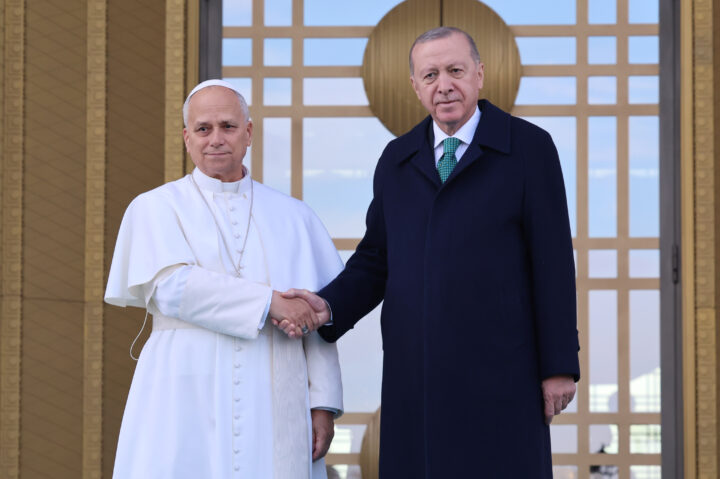
Yavuz Ozden/ dia images via Getty Images
President Recep Tayyip Erdoğan greets Pope Leo XIV at the Presidential Complex during an official welcoming ceremony on November 27, 2025 in Ankara, Türkiye.
Following a visit to Turkey on his inaugural international trip last week, Pope Leo XIV lauded Turkish President Recep Tayyip Erdogan on his peacemaking abilities and said Turkey has “an important role that it could play” in advancing peace in the Middle East and effectuating a two-state solution.
“I spoke about this with President Erdogan,” Leo said, referring to a two-state solution, which he called the “only” solution to resolving the Israeli-Palestinian conflict, reaffirming the Holy See’s longstanding position on the issue.
“Unfortunately we still haven’t seen a solution,” Leo told reporters upon departing from Istanbul. “We know that in this moment, Israel doesn’t accept [a two-state] solution, but we see it as the only one that can offer a solution to the conflict that they are living in.”
Erdogan “is certainly in agreement with this proposal,” Leo said.
The pope’s comments and decision to share pleasantries with the Turkish leader have struck some in the pro-Israel community as out of touch and are part a pattern of recent remarks from the Vatican that have been critical of Israel, most notably in its handling of the war against Hamas in Gaza.
In October, Cardinal Pietro Parolin, the Holy See’s secretary of state, described Israel’s conduct in Gaza as an “inhuman massacre” — language Leo later endorsed. In November 2024, the late Pope Francis called for an investigation into whether Israel’s actions in Gaza amounted to genocide.
Leo’s remarks came after the pope spent three days in Turkey, meeting with leaders of Catholic and Orthodox Christian churches to commemorate the 1,700th anniversary of a gathering of bishops in A.D. 325 in present-day Iznik, Turkey. He arrived in Beirut on Sunday for the second leg of his trip, and addressed politicians and religious leaders, including Lebanese President Joseph Aoun and Prime Minister Nawaf Salam at the presidential palace.
Steven Cook, a senior fellow at the Council on Foreign Relations, called the pontiff’s comments on Turkey “odd,” adding that his intentions were likely to “flatter his hosts but have little connection to reality.”
“At the outset of the war in Gaza, the Turkish government could have used its good offices with Hamas and Israel to play a constructive role helping to bring hostages home and bringing about an end to hostilities.” said Cook. “Erdogan chose an entirely different approach that offered significant political and diplomatic support to Hamas, demonized Israel, and [Turkey] was the first country to impose an economic boycott on Israel over the war.”
Sinan Ciddi, a senior fellow at the Foundation for Defense of Democracies, echoed those sentiments, calling the pope’s comments “flawed” and “fantasy.” However, he noted that popes have a “record of being idealists.”
“One thing that Leo is probably trying to do is he seems to be much more interested in promoting the potential to pursue any avenue towards establishing peace where he sees conflict,” said Ciddi. “[The pope has] probably been advised that the Turks have sort of demonstrated ability to be a mediator in the Ukraine-Russia conflict … and Turkey is a Muslim country that is able to speak to Hamas and is an ally of the United States … so why not essentially go after that, as opposed to labeling it as a supporter of terrorism.”
The Vatican has long advocated for a two-state framework, formally recognizing a Palestinian state in 2015. But the pope’s renewed push comes as the Israel-Hamas war intensified international pressure on Jerusalem to accept such a model. Earlier this year, several countries — including France, Saudi Arabia, the United Kingdom, Australia and Canada — formally recognized a Palestinian state at the United Nations General Assembly.
Israeli Prime Minister Benjamin Netanyahu has maintained his opposition to a Palestinian state, a position that’s shared by a significant majority of the Israeli public in the aftermath of Oct. 7.
The pontiff noted to reporters that the Vatican is “friends with Israel” and seeks to “be a mediating voice that can help bring them closer to a solution with justice for all.”
Ciddi told Jewish Insider that while Erdogan has been “relentless” in calling upon the pope to condemn Israel, Leo “has ignored that.”
After his inauguration in May, Leo said that dialogue with the Jewish community is “close to my heart.”
“Because of the Jewish roots of Christianity, all Christians have a special relationship with Judaism,” the pope said in May. “Theological dialogue between Christians and Jews remains always important and is very close to my heart.”
During his recent trip, Leo indicated a willingness to commemorate the 2,000th anniversary of Christ’s crucifixion in Jerusalem in 2033.
He will succeed Rep. Sheila Cherfilus-McCormick following her indictment this week
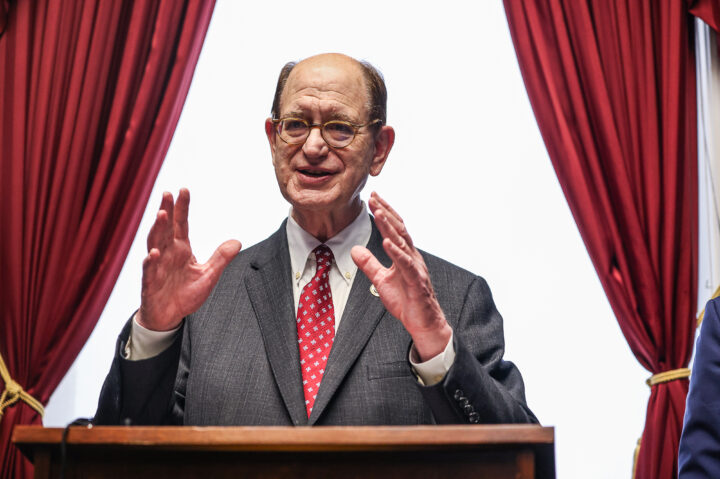
Valerie Plesch/Bloomberg via Getty Images
Rep. Brad Sherman, a Democrat from California, during a news conference.
Rep. Brad Sherman (D-CA), who is among the most vocal Democratic supporters of Israel in the House, will serve as the top Democrat on the House Foreign Affairs Committee’s Middle East and North Africa subcommittee beginning Friday, replacing Rep. Sheila Cherfilus-McCormick (D-FL) following her indictment earlier this week.
As per House Democratic rules, Cherfilus-McCormick surrendered her subcommittee leadership role after being indicted by the Justice Department this week, on allegations that she used misallocated federal disaster funds for personal expenses and to support her campaign.
Sherman was the most senior Democrat on the subcommittee. He had previously declined to pursue leadership of the subcommittee given that he is also the top Democrat on a House Financial Services subcommittee, and would have needed to surrender that post.
But Democratic rules now allow him to temporarily hold both leadership posts concurrently; Cherfilus-McCormick will resume the Foreign Affairs role if she is acquitted or charges are dropped.
“My views on the Middle East are well known to the readers of Jewish Insider,” Sherman told JI. “I am pleased to serve as the chief Democrat on the House-Knesset Parliamentary Friendship Group and as a Co-Chair of the House Israel Allies Caucus. I particularly want to focus on making sure that any Saudi nuclear program does not lead to a Saudi nuclear weapon. Likewise, I’m concerned about the possibility of transferring F-35 jets to Saudi Arabia.”
Democratic leadership on the subcommittee has been through repeated changes in recent years. Sherman is the fifth Democrat to lead it since 2022: former Rep. Ted Deutch (D-FL) stepped down when he retired from Congress to lead the American Jewish Committee, former Rep. David Cicilline (D-RI) also stepped down when he left Congress in 2023 and Rep. Dean Phillips (D-MN) declined to run for re-election in 2024.
Plus, Texas labels CAIR, Muslim Brotherhood as terror orgs
WASHINGTON, D.C. - Elon Musk attends a dinner hosted by President Donald Trump for Saudi Crown Prince Mohammed bin Salman on Tuesday, Nov. 18, 2025 at the White House in Washington, D.C. (Photo by Salwan Georges/The Washington Post via Getty Images)
Good Wednesday morning.
In today’s Daily Kickoff, we report on yesterday’s meeting between President Donald Trump and Saudi Crown Prince Mohammed bin Salman, and preview the Saudi leader’s schedule today in Washington. We talk to Sens. Richard Blumenthal and Mark Kelly about the Islamic Revolutionary Guard Corps’ seizure last weekend of a tanker that originated in the United Arab Emirates, and cover Texas’ designation of the Muslim Brotherhood as a terrorist group. Also in today’s Daily Kickoff: Rep. Mike Lawler, Ambassador Charles Kushner and Noam Tibon.
Today’s Daily Kickoff was curated by Jewish Insider Executive Editor Melissa Weiss and Israel Editor Tamara Zieve with assists from Marc Rod, Emily Jacobs and Danielle Cohen-Kanik. Have a tip? Email us here.
What We’re Watching
- President Donald Trump is slated to deliver remarks at today’s U.S.-Saudi investment summit in Washington, being hosted by Saudi Arabia during Crown Prince Mohammed bin Salman’s visit to the capital. Commerce Secretary Howard Lutnick and Saudi Investment Minister Khalid bin Abdulaziz Al-Falih will kick off the daylong summit at this morning’s plenary. Others slated to speak today include Elon Musk, Blackstone’s Stephen Schwarzman, Salesforce’s Marc Benioff, IBM’s Gary Cohn, Alphabet and Google’s Ruth Porat, Andreessen Horowitz’s Benjamin Horowitz, Pfizer’s Albert Bourla, Palantir’s Alex Karp and Anduril’s Matthew Steckman.
- Following his White House sitdown and dinner yesterday (more below), MBS is slated to meet with House members today on Capitol Hill.
- Elsewhere on Capitol Hill, the Senate Foreign Relations Committee is holding confirmation hearings this morning for Rabbi Yehuda Kaploun, the Trump administration’s nominee to be antisemitism envoy, and former State Department spokesperson Tammy Bruce to be deputy U.N. ambassador. Kaploun was a last-minute addition to the SFRC’s schedule, first appearing yesterday afternoon, Jewish Insider’s Marc Rod reports.
- Tonight in Washington, the Endowment for Middle East Truth is hosting its 16th annual Rays of Light in the Darkness awards dinner. This year’s honorees include Sen. John Fetterman (D-PA), the Justice Department’s Leo Terrell, Israeli Ambassador to the U.S. Yechiel Leiter, Hungarian Ambassador to the U.S. Szabolcs Takacs and Pakistani American journalist Anila Ali.
What You Should Know
A QUICK WORD WITH JI’S GABBY DEUTCH
As 2,000 Jewish philanthropists, activists and professionals prepared to leave Washington on Tuesday as the Jewish Federations of North America’s General Assembly wrapped up, they heard a stern warning from Sen. Ted Cruz (R-TX): Americans must confront antisemitism on both sides, including the right; if they don’t, the nation will face an “existential crisis.”
“I do not want to wake up in five years and find that both major parties in America have embraced hatred of Israel and have tolerated, if not embraced, antisemitism,” Cruz said. Read JI’s coverage of his remarks here.
Cruz has become the most prominent Republican elected official speaking out against a rising tide of right-wing antisemitism. But the weeks following podcaster Tucker Carlson’s interview with neo-Nazi provocateur Nick Fuentes have sparked a reckoning for Republicans, including some who until recently considered antisemitism to be primarily a left-wing phenomenon.
That internal tension was on full display at a Tuesday afternoon conference hosted by the conservative National Task Force to Combat Antisemitism. The group was until recently affiliated with the Heritage Foundation, until the conservative think tank’s president came to Carlson’s defense. Earlier this month the task force members voted to cut ties with Heritage.
The NTFCA gathering, arranged in less than two weeks after the group’s split from Heritage, took place in a basement ballroom at The Line Hotel in Washington. About 100 people were in attendance, among them representatives from Jewish advocacy groups including the Anti-Defamation League, Jewish Federations of North America and Combat Antisemitism Movement.
The event’s organizers — NTFCA co-chairs Ellie Cohanim, who served as deputy antisemitism special envoy in the first Trump administration; Mario Bramnick, a Florida pastor and president of the Latino Coalition for Israel; and Luke Moon, a pastor and executive director of the Philos Project — took the opportunity to forcefully reject Carlson and other far-right media figures who are gaining clout among conservatives by attacking Israel and its backers, and to issue a call for conservatives to join them in calling out growing animosity toward Jews. They don’t think enough people are doing so.
“I remember Luke, early on, said, ‘Mario, keep your eye on the right.’ I said, ‘Well, look, that’s a fringe. It’s not really important,’” Bramnick said. “But now we’re seeing a very troubling development during President Trump’s second administration within the MAGA movement: antisemitic acts coming from MAGA movement leaders.” The Project Esther report that the task force developed with Heritage last year was focused solely on left-wing antisemitism.
BEST OF FRIENDS
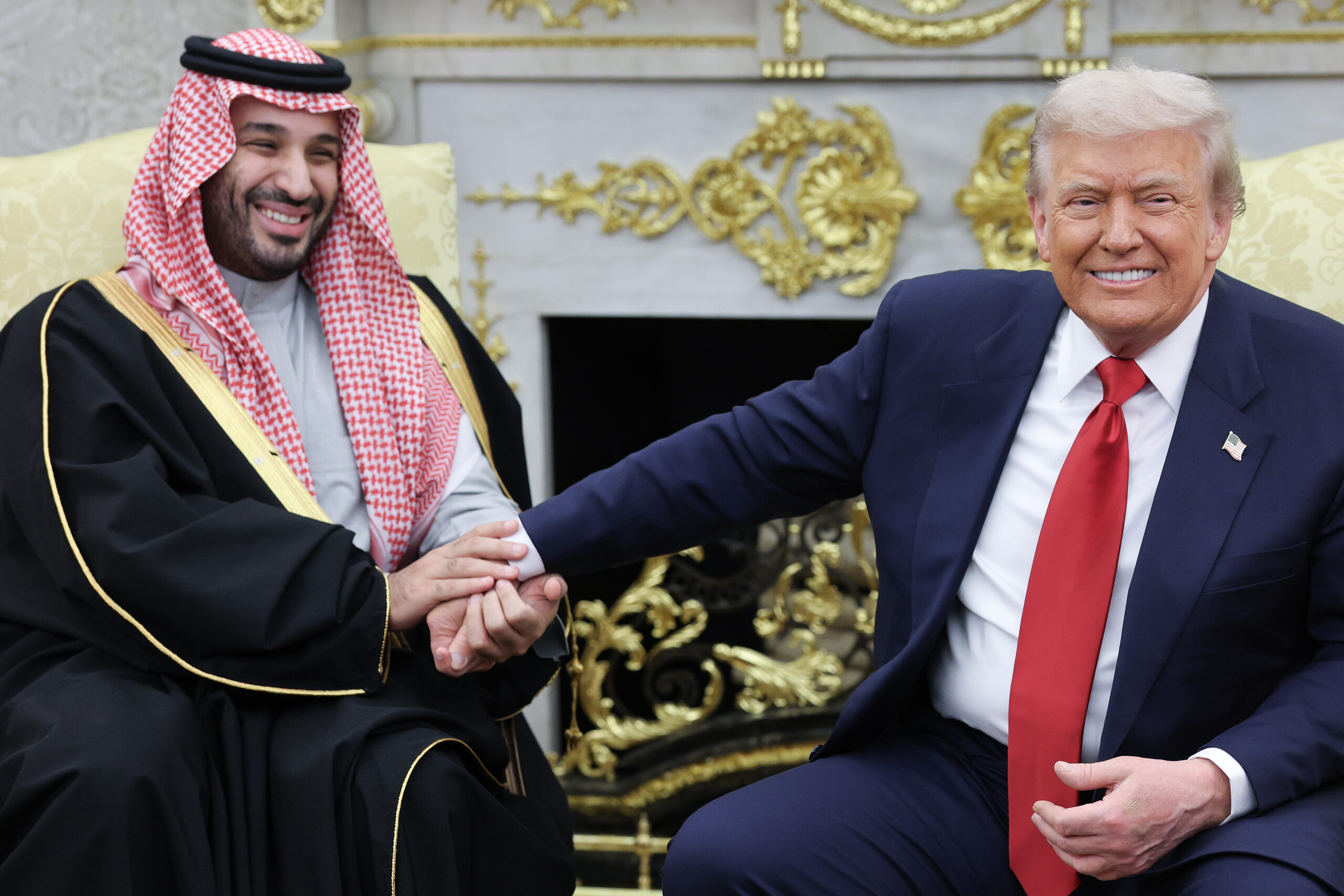
In an Oval Office appearance following their meeting on Tuesday, President Donald Trump and Saudi Crown Prince Mohammed bin Salman announced progress on multiple bilateral initiatives, including a U.S.-Saudi defense pact and Riyadh’s purchase of F-35 fighter jets, Jewish Insider’s Matthew Shea reports.
What Trump said: Trump indicated Riyadh may receive a similar jet to Israel’s advanced F-35I Adir model: “When you look at the F-35 and you’re asking me ‘Is it the same [as Israel’s]?’ I think it’s going to be pretty similar,” said Trump. “This [Saudi Arabia] is a great ally, and Israel’s a great ally. I know they’d like you [MBS] to get planes of reduced caliber, but I don’t think that makes you too happy. … We’re looking at that exactly right now but as far as I’m concerned, [both countries are] at a level where they should get top of the line.”
Dinner guests: The White House dinner with MBS included, from the business world, Apple CEO Tim Cook; Tesla CEO Elon Musk; Palantir CEO Alex Karp; Blackstone CEO Stephen Schwarzman and wife, Christine; Pershing Square founder Bill Ackman and his wife, former MIT professor Neri Oxman; Salesforce CEO Marc Benioff; Pfizer CEO Albert Bourla; BDT & MSD Partners Vice Chair Dina Powell McCormick; Paramount CEO David Ellison; and Washington Commanders owners Josh and Marjorie Harris. Vice President JD Vance and Second Lady Usha Vance; Donald Trump Jr.; and Tiffany Trump were also in attendance, as were Attorney General Pam Bondi and longtime partner John Wakefield; Defense Secretary Pete Hegseth; Commerce Secretary Howard Lutnick and his wife, Allison Lutnick; Treasury Secretary Scott Bessent; EPA Director Lee Zeldin; Interior Secretary Doug Burgum; Agriculture Secretary Brooke Rollins and Chairman of Joint Chiefs Gen. Dan Caine. From Capitol Hill, House Speaker Mike Johnson (R-LA); Sens. Jim Risch (R-ID) and Dave McCormick (R-PA); and Rep. Brian Mast (R-FL), chairman of the House Foreign Affairs Committee made the trip up Pennsylvania Avenue for the dinner. Fox News’ Bret Baier and Maria Bartiromo were also spotted at the dinner.
WEAPONS SALES SCRUTINY

Senate Democrats echoed their House counterparts on Tuesday in expressing concern about President Donald Trump’s announcement of a deal to sell advanced F-35 fighter jets to Saudi Arabia, Jewish Insider’s Emily Jacobs and Marc Rod report.
Shaheen’s statement: Sen. Jeanne Shaheen (D-NH), the ranking member of the Senate Foreign Relations Committee who will have some ability to obstruct or slow the deal, was deeply critical of multiple announcements made by Trump during his White House summit with MBS. Shaheen said in a statement that the F-35 deal “raises major concerns about protecting U.S. military technology and the military edge America shares with our allies” and demanded the administration “fully explain to the Senate Foreign Relations Committee why this sale is in the vital national interest of the United States.”
Read the full story with additional comments from Sens. Richard Blumenthal (D-CT), Mark Kelly (D-AZ) and Markwayne Mullin (R-OK).
MARITIME SECURITY
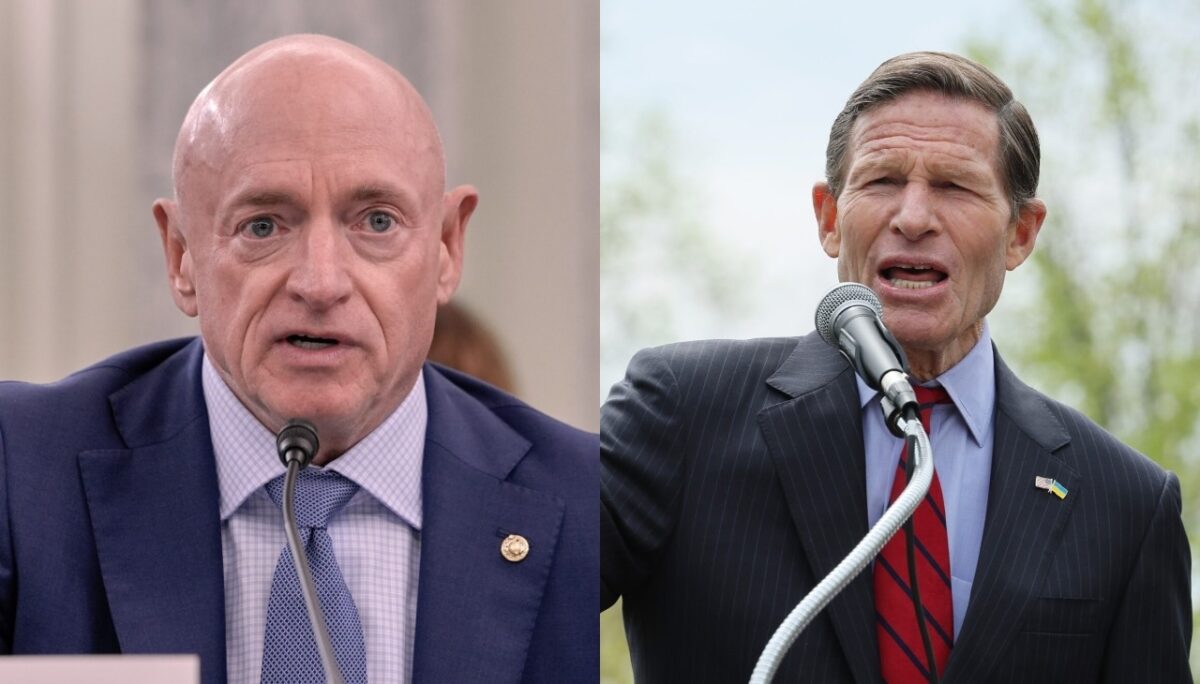
Two Democratic senators expressed concern on Tuesday about the Islamic Revolutionary Guard Corps’ seizure of an commercial oil tanker in the Strait of Hormuz, a critical international shipping route, Jewish Insider’s Emily Jacobs and Marc Rod report. The IRGC took credit on Friday for the seizure of the Talara, a Marshall Islands-flagged tanker, for what state media described as alleged cargo violations. The tanker, which began its journey in the United Arab Emirates, was carrying petrochemicals through the Strait of Hormuz to Singapore when it was diverted by the IRGC into Iranian territorial waters.
On alert: “It’s like the 1980s all over again,” Sen. Mark Kelly (D-AZ), a former fighter pilot, said. “The first time I was there was 1989, in the Strait of Hormuz, with the Iranians doing that same old shit, where they would harass shipping. A couple times, I felt like we were on the edge of getting in the conflict.” Sen. Richard Blumenthal (D-CT) said that the U.S. needs to remain vigilant against Iran’s other malign activities in spite of the setbacks to its nuclear program. “Iran is Iran. They are the toxic element in the Middle East. We have no reason for complacency. Just because we set them back in their nuclear program, they remain a malevolent force, and the seizure of that tanker is just one indication of that,” Blumenthal said.
TEXAS TAKEDOWN
Texas Gov. Greg Abbott issued a declaration on Tuesday designating the Muslim Brotherhood and Council on American-Islamic Relations as foreign terrorist groups and transnational criminal organizations — a move that some lawmakers are pushing on the federal level, Jewish Insider’s Marc Rod reports.
What it does: Abbott’s proclamation notes the Muslim Brotherhood’s support to groups, including Hamas, that conduct terrorism in various countries, some of which have already been designated as terrorist groups, and that a series of countries have already imposed restrictions on their local Muslim Brotherhood branches. The proclamation describes CAIR as a “successor organization” to the Muslim Brotherhood and an effective front group for Hamas in the United States and accuses the group of seeking to spread Sharia law in the country by infiltrating public office and other areas of public life.
EXCLUSIVE
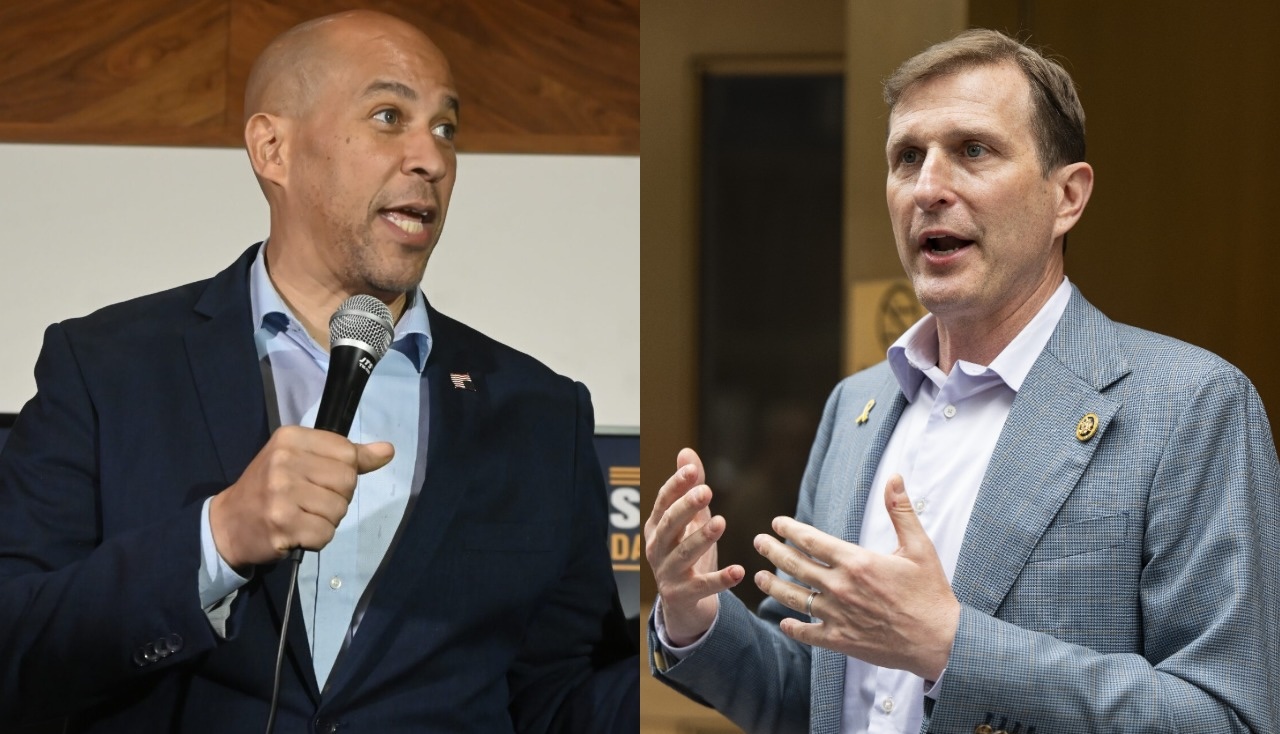
Sen. Cory Booker (D-NJ) and Rep. Dan Goldman (D-NY) wrote a letter to President Donald Trump on Wednesday urging him to pressure the Israeli government to intervene to stop attacks on Palestinians by Israeli settlers in the West Bank and to oppose settlement expansion. The clear-cut criticism of Israel is notable coming from two lawmakers generally seen as strong supporters of the Jewish state. The two urged Trump to reimpose Biden-era sanctions — withdrawn by the Trump administration — on those involved in the settler attacks if the Israeli government does not act, Jewish Insider’s Marc Rod reports.
What they wrote: “The Netanyahu government’s lack of action to address extreme settler violence emboldens Hamas, Palestinian Islamic Jihad, and other terrorist groups, and builds resentment in the West Bank, while putting increased pressure on the fragile ceasefire agreement in Gaza that your Administration secured,” the two lawmakers wrote. “More must be done to stop settler violence and ensure that those who perpetrate acts of violence against civilians in the West Bank are not allowed to operate with impunity.”
SUIT SETTLED

A private K-8 school in Northern Virginia reached a settlement on Tuesday with the parents of an 11-year-old Jewish student who say their daughter faced months of antisemitic harassment that went unaddressed by school officials, Jewish Insider’s Haley Cohen reports. According to the complaint, filed in July with the Office for Civil Rights in the Virginia Attorney General’s Office by the Louis D. Brandeis Center for Human Rights under Law and Washington-based firm Dillon PLLC, the student faced several antisemitic incidents while a student at Nysmith School for the Gifted in Herndon, Va., including a history class in which students collaborated on a large artistic rendering featuring Adolf Hitler’s face. The student was also told that Jews are “baby killers” and that they deserved to die because of the Israel-Hamas war. Kenneth Nysmith, the headmaster and owner of Nysmith, told the parents to tell their daughter to “toughen up” when they asked the school to take steps to address the bullying, according to the complaint. Two days later, the headmaster sent the parents an email stating all three of their children were expelled effective that same day.
Terms and conditions: Under the terms of the settlement, in addition to monetary relief to the family, Nysmith School agreed to establish a committee to review and investigate discrimination complaints — with an independent monitor evaluating the committee’s work. It also agreed to adopt the International Holocaust Remembrance Alliance’s working definition of antisemitism and to provide staff with annual antisemitism training and students with annual education on antisemitism and the Holocaust for the next five years. The training will be led by the Jewish Community Relations Council of Greater Washington. Nysmith also agreed to issue a public statement apologizing for expelling the children and making them feel unwelcome based on religious identity.
Worthy Reads
Heritage’s Right Turn: The editorial board of The Wall Street Journal weighs in on the departure of Robert George from the Heritage Foundation’s board of trustees over the think tank’s relationship with Tucker Carlson and approach to far-right antisemitism. “Mr. George’s departure from the Heritage board means that the institution may be less likely to heed his call to be ‘unbending and unflinching’ in its fidelity to these principles. But a decision this serious may be owed in some part to his sense that Heritage’s commitments were already deteriorating during Mr. Roberts’s tenure. Others in the institution are confronting this same dilemma. Some of Mr. Roberts’s defenders are celebrating Mr. George’s departure as a victory for their form of conservatism. For them, it may be. But that is a reflection of a worldview that doesn’t resemble the conservatism for which Heritage has long stood. A ‘conservatism’ that plays footsie — or worse — with antisemitism and white identity politics, and those who traffic them, doesn’t merit the name.” [WSJ]
The GOP’s ‘Corroded’ Soul: In the Washington Reporter, Pastor John Hagee, the founder of Christians United for Israel, warns of the rise of right-wing antisemitism. “Regardless of who the bigot may be, and whether they are declaring hatred for millions of Christian Zionists, blaming Prime Minister Benjamin Netanyahu for ‘duping’ President Donald Trump into bombing Iran, accusing Israel of killing J.F.K., and/or Charlie Kirk, and/or implying that Hitler wasn’t as bad as we think — there are evil elements on the right who’ve discovered what many Democrats on the formerly fringe left have known for some time: there is both cash and cache in attacking Israel and her people. … People of faith and conscience cannot allow the same spirit that flowed through Haman and Hitler to corrupt and corrode the soul of the GOP. Whether it is in our communities, in our churches, on college campuses, or in Congress, antisemitism in our society must be confronted at every turn.” [WashingtonReporter]
Taking on the Brotherhood: The Washington Institute for Near East Policy’s Matthew Levitt and Michael Jacobson consider the ways in which the Trump administration can counter the Muslim Brotherhood’s global influence. “The evidence validates U.S. concerns about the Muslim Brotherhood, particularly as the Trump administration aims to move beyond the Gaza ceasefire to build a more stable, peaceful Middle East. But taking sweeping action against the entire group will be both counterproductive and ineffective. Instead, the administration should look closely at Brotherhood entities that provide financial support for Hamas as potential SDGT targets. It should also designate those branches that are tied to violence as FTOs. At the same time, it should provide a strong legal framework to go after Brotherhood organizations using both sanctions and law enforcement tools.” [WashingtonInstitute]
Word on the Street
The Department of Education is moving several of its offices to other departments within the administration as part of President Donald Trump’s effort to dismantle the agency altogether; the Office for Civil Rights will remain within the DoE, but could be moved elsewhere in the future…
Rep. Mike Lawler (R-NY) introduced legislation to provide diplomatic privileges to the Gulf Cooperation Council, allowing it to establish a de-facto embassy in Washington; the legislation was previously approved by the House Foreign Affairs Committee as an amendment to its State Department reform package in September…
U.S. Ambassador to France Charles Kushner presented his credentials to Prince Albert II of Monaco this week…
The Free Press explores antisemitic conspiracy theorist Nick Fuentes’ efforts to get involved in the 2026 midterms through his America First Foundation…
A Gustav Klimt painting from the collection of the late philanthropist Leonard Lauder was sold for $236.4 million, becoming the most expensive work of modern art to be sold at auction…
The Equal Employment Opportunity Commission is accusing the University of Pennsylvania of obstructing efforts to identify complainants and victims of campus antisemitism as part of the EEOC’s probe into the school’s handling of antisemitism…
Harvard’s undergraduate student population is voting this week on three Israel divestment proposals…
A Maryland man is facing up to 169 years in prison after pleading guilty to dozens of federal charges in connection with more than 40 threatening letters and postcards sent to 25 Jewish institutions spanning multiple states…
The Council on American-Islamic Relations has given tens of thousands of dollars in interest-free loans to students who lost “scholarships, housing or other support” due to their anti-Israel campus advocacy…
The Canada Revenue Agency revoked the tax-exempt status of Herut Canada, 15 months after revoking the statuses of the Canadian arm of the Jewish National Fund and the Ne’eman Foundation of Canada…
France posthumously promoted Alfred Dreyfus to the rank of brigadier general, 130 years after the French army captain was wrongly convicted on charges of treason…
The Wall Street Journal reports on the ongoing discovery of hundreds of mass graves across Syria and the efforts to identify the bodies discovered in them…
Nvidia joined the Lightspeed-led $200 million funding round for AI startup AA-I Technologies, founded by Mobileye’s Amnon Shashua…
One person was killed and three others injured in a car-ramming terror attack in the West Bank…
Maj. Gen. (res.) Noam Tibon, who rose to international prominence after he rescued of his son’s family and others during the Oct. 7, 2023, Hamas terror attacks, is joining Yair Lapid’s Yesh Atid party ahead of next year’s elections…
The New York Times reports from the southern Israeli facility from which U.S. and Israeli military personnel, diplomats and Arab interlocutors are overseeing the ceasefire between Israel and Hamas and are working to prepare the Gaza Strip for post-Hamas administration…
The U.S., France, Germany and the U.K. submitted a draft resolution to the board of the International Atomic Energy Agency calling on Iran to provide “precise information on nuclear material accountancy and safeguarded nuclear facilities” and allow nuclear inspectors access to those facilities…
The Wall Street Journal spotlights the Ukrainian corruption probe targeting former business associates of President Volodymyr Zelensky…
Combat Antisemitism Movement appointed former U.S. Deputy Special Envoy to Monitor and Combat Antisemitism Aaron Keyak, Republican Jewish Coalition board member Barbara Feingold and former Democratic Governors Association Executive Director Noam Lee to the organization’s advisory board, whose new chair will be Arie Lipnick, senior advisor to Rep. Elise Stefanik (R-NY)…
Pic of the Day

The Conference of Presidents of Major American Jewish Organizations hosted a roundtable in New York on Tuesday with recently released hostages, including Omri Miran (pictured with microphone).
Birthdays

Professional golfer who plays on the PGA Tour, John Maxwell Homa turns 35…
Retired New York state Supreme Court judge, his tenure on “The People’s Court” was shorter than that of his wife “Judge Judy,” Jerry Sheindlin turns 92… Attorney, investment banker and former U.S. ambassador to the U.K., Louis B. Susman turns 88… Professor of chemistry at Stanford University, Richard Neil Zare turns 86… Fifteen-term member in the U.S. House of Representatives (D-NY) until 2013, he is now a partner in Gotham Government Relations, Gary Ackerman turns 83… Fashion designer whose name appears on clothing, perfumes, watches and jewelry, Calvin Klein turns 83… Founder and president of the Washington-based Arab American Institute, James J. Zogby turns 80… U.S. ambassador to Germany from 2022 untilJuly 2024, following 18 years as president of the University of Pennsylvania, Amy Gutmann turns 76… Los Angeles-based real estate investor, Sydney Ilene Cetner… Owner of Patty’s Piano Studio in Santa Monica, Calif., Patricia Fiden… Cosmetic dentist and chairman of pharma company Akelos, Inc., Steven Fox, DDS… California state senator until 2022, Robert Myles “Bob” Hertzberg turns 71… Dean and professor of Jewish history, literature and law at Yeshiva University, Rabbi Dr. Ephraim Kanarfogel turns 70… Past chairman of the Illinois chapter of the Friends of the Israel Defense Forces and president of Millennium Properties R/E Inc., Daniel Hyman turns 70… Academy Award-winning screenwriter, producer, director and lyricist, best known as the writer of “Being John Malkovich,” Charlie Kaufman turns 67… Angel investor, investment banker and president of Sunrise Financial Group, Nathan Low… Retired member of the Knesset for the Kulanu party, he served as Israel’s minister of finance for five years, Moshe Kahlon turns 65… Officer of NORPAC New York and a partner in a New York law firm, Trudy Stern… Co-president of the Charles and Lynn Schusterman Family Philanthropies, Lisa Eisen… Director of state and local government affairs for SAIC, Eric Finkbeiner… Co-founder of Optimistic Labs, Seth Cohen… Member of the New York state Assembly since 2005, Andrew D. Hevesi turns 52… New York Times best-selling novelist, she is also a professor at Rutgers University-Camden, Lauren Grodstein turns 50… Gymnast, she was a member of the Magnificent Seven, the women’s U.S. gymnastics team at the 1996 Summer Olympics, Kerri Allyson Strug turns 48… Editor-in-chief of Time magazine, Samuel P. Jacobs… Senior program director at M²: The Institute for Experiential Jewish Education, Rachel Hillman… Former congressional staffer, Michael Dale-Stein turns 38… Managing director at Climate Power, John D. Axelrod… European deals reporter at the Financial Times based in London, Ivan Levingston…
Sen. Roger Wicker (R-MS): ‘I’ve noticed an unsettling trend this year at times, that Pentagon officials have pursued policies that are not in accord with President Trump’s orders’

Nathan Posner/Anadolu via Getty Images
Elbridge Colby, nominee to be Under Secretary of Defense for Policy, is seen ahead of his confirmation hearing at the Senate Committee on Armed Services in Washington, DC on March 4, 2025.
Senate lawmakers from both parties on the Armed Services Committee excoriated the Department of Defense policy office run by Under Secretary of Defense for Policy Elbridge Colby at a Tuesday hearing. They criticized the office for a lack of communication with lawmakers as well as a series of controversial decisions seemingly at odds with White House policy.
Lawmakers expressed frustration that they had not received sufficient communication from the Pentagon’s policy office and criticized Colby and his team for making controversial decisions like pausing U.S. aid to Ukraine, opposing the deployment of additional U.S. forces to the Middle East during Israel’s war against Iran, withdrawing U.S. forces from Romania and re-assessing the AUKUS submarine agreement with the U.K. and Australia.
Democrats have publicly voiced frustration with Colby’s alleged rogue decision-making in the past, but the committee meeting — a confirmation hearing for several civilian Pentagon officials — constituted an unusual public airing of grievances from Republicans and Democrats alike about their concerns with Colby and his office.
“It just seems like there’s this pig-pen like mess coming out of the policy shop that you don’t see from [other departments of the Pentagon]. Why do you think it is that there’s so many controversies emanating out of the policy shop and not these other offices in the department?” Sen. Tom Cotton (R-AR) asked Austin Dahmer, the nominee to be assistant secretary of defense for strategy, plans and capabilities — a top position in Colby’s department — who is currently serving in an acting capacity as one of Colby’s chief deputies.
Cotton also serves as the chair of the Senate Intelligence Committee.
“I’ve noticed an unsettling trend this year at times, that Pentagon officials have pursued policies that are not in accord with President Trump’s orders, or seem uncoordinated within the administration,” Sen. Roger Wicker (R-MS), the chairman of the Armed Services Committee, said, adding that the members of the committee have found out about such moves from press reports rather than the Defense Department.
“There are strong foreign policy debates in my political party. We do not have consensus on every issue and I welcome healthy discussion on America’s role in the world. I think the president does too,” Wicker continued. “Amid these debates, I think everyone would expect the president’s national security strategy staff to follow his lead and implement his vision.”
He added that committee members “have struggled to receive information from the policy office and have not been able to consult in a meaningful way with [the policy office] either on the national defense strategy or the global posture review. … The situation needs to improve if we are to craft the best defense policy.”
A frustrated Sen. Dan Sullivan (R-AK) described Colby as “the hardest guy to get a hold of in the Trump administration.”
“He came to this committee and said, ‘Hey, I’m going to work with the Congress.’ He hasn’t, on big issues,” Sullivan continued. “I can’t even get a response and we’re on your team.”
Sullivan and other lawmakers expressed particular frustration with the lack of consultation from the administration on the forthcoming national defense strategy and global posture review, which news reports indicate will prioritize the Western hemisphere and domestic missions at the expense of other threats and theaters including China.
Dahmer, a former staffer for Sen. Josh Hawley (R-MO), pleaded ignorance about the controversial moves and lack of communication or claimed that such moves had not happened and that public reporting about them was false.
Regarding the recent drawdown of troops from Romania, Dahmer claimed that lawmakers had been briefed three times prior to the move — but Wicker said that neither the majority nor minority staff had been notified ahead of time about the plans.
“I think all of us would like to have more information on how the decision was made” and communicated to Romania, Sen. Rick Scott (R-FL) said, adding that he had more questions for Dahmer about “what the policy office has been doing as compared to the president’s and secretary’s directives and stated policy objectives” and “confusion between what the president and secretary called for versus what the policy office has been doing, from weapons sales and deliveries to troop draw-downs.”
Sen. Jack Reed (D-RI), the committee’s ranking member, said that Dahmer had “cloaked your testimony in a veil of ignorance, when in fact you were basically the stand in and the surrogate for [Under] Secretary Colby. … You’re clearly avoiding answers to questions that you should have been acutely aware of in your position.”
“I think you’ve essentially indicated to us that you won’t cooperate with us,” Reed continued.
Wicker also criticized the administration for providing notification to Congress on Sunday — days before the confirmation hearing — that it had renamed and changed the duties of the position for which Dahmer is nominated. Reed said that those changes were apparently made a month ago, without notifying Congress.
Alex Velez-Green, another former Hawley staffer nominated for a top Pentagon post under Colby, is scheduled to appear for his own confirmation hearing later this week.
Even as multiple speakers at the three-day summit alluded to antisemitism in their ranks, many talked in broad strokes

(AP Photo/Thomas Beaumont)
Attendees watch a recorded video address by President Donald Trump during the Republican Jewish Coalition's annual summit at the Venetian Resort in Las Vegas, Saturday, Nov. 1, 2025.
LAS VEGAS — Until last week, the Republican Jewish Coalition’s annual leadership summit was expected to be a triumphant gathering to celebrate President Donald Trump’s accomplishments in the Middle East, chief among them his administration’s recently brokered ceasefire deal between Israel and Hamas.
That all changed after Tucker Carlson hosted the neo-Nazi influencer Nick Fuentes on his podcast for a sympathetic interview, provoking fierce backlash. By the time that Kevin Roberts, the president of the Heritage Foundation, came to Carlson’s defense on Thursday, the RJC recognized its conference would require a thematic update to more forcefully emphasize the urgency of confronting rising antisemitism — and its enablers — within the GOP.
“If there was ever a time for the RJC, this is our time,” Norm Coleman, the organization’s national chairman, said in opening remarks on Friday. “We have been called to this moment to fight the scourge of antisemitism.”
But even as multiple speakers at the three-day summit held at the Venetian Resort — including congressional leaders, conservative activists and media personalities — alluded to antisemitism in their ranks, many talked in broad strokes, didn’t mention Carlson by name or downplayed the issue as confined to the fringes, despite Carlson and Fuentes each commanding a significant number of dedicated followers on the far right.
The speakers also argued that anti-Jewish hatred had become an endemic problem for Democrats — especially in the wake of Hamas’ Oct. 7, 2023, terror attacks. And in a preview of GOP messaging ahead of the midterms next year, many took aim at Zohran Mamdani, the far-left Democratic nominee for New York City mayor and fierce critic of Israel favored to win the election on Tuesday.
Rep. Byron Donalds (R-FL), who is now running for governor of Florida, relied on euphemism to refer to right-wing antisemitism, declaring that the GOP would “not stand idly by” as “some in other parts of politics try to demonize Jewish Americans” and “try to weaken or destroy the relationship between the United States of America and the nation of Israel.”
“I will always call out and confront antisemitism wherever it is and whoever spreads it,” Rep. Lisa McClain (R-MI), the House Republican conference chair, said on Saturday, but shared no examples of such prejudice in her own party.
Some, including Sens. Ted Cruz (R-TX), Dave McCormick (R-PA) and Lindsey Graham (R-SC), more forcefully addressed growing antisemitism on their side of the aisle.
In an interview with Jewish Insider shortly before he took the stage on Friday, Graham described Carlson’s interview with Fuentes as a “wake-up call” for the Republican Party. “How many times does he have to play footsie with this antisemitic view of the Jewish people and Israel until you figure out that’s what he believes?” Graham said of the former Fox News host.
But in his speech later, the South Carolina senator adopted a more sanguine attitude, speaking more like a stand-up comedian as he sought to lighten the mood. “I just want to make it really clear: I’m in the ‘Hitler sucks’ wing of the Republican Party,” he said to applause. “What is this Hitler shit?”
“I feel good about the Republican Party,” he added, saying the GOP “has figured it out when it comes to Israel.”
Cruz also criticized Republicans who refuse to disavow right-wing antisemites in the conservative coalition, though he ultimately didn’t mention any of the offending individuals by name in his RJC speech.
McCormick, in his fireside chat with conservative author Douglas Murray, directly confronted the lack of right-wing voices challenging virulent antisemitism. “This very week, you had an avowed antisemite, Fuentes, given a platform. This is a guy that says Hitler is cool, says Jews should be terminated…and those views went unchallenged,” McCormick said.
In his own speech at the summit, McCormick said: “Let’s face it, antisemitism is running wild on the progressive left and the leaders of the Democratic Party are not confronting it with their new star Mamdani,” McCormick said. “But I’m also sad to say we see that ugliness on the right too, and we must confront it. Jews can’t be slandered, antisemites can’t be given platforms.”
Their comments sidestepped a more deeply rooted challenge for mainstream Republicans following recent controversies in which young party leaders were caught sharing pro-Nazi messages in leaked group chats, and Paul Ingrassia, the controversial Trump ally, withdrew his nomination to lead the Office of Special Counsel after text messages were unearthed where he allegedly made antisemitic and racist remarks.
Vice President JD Vance also faced criticism from Jewish Republicans last week over his recent appearance at a conservative campus event, where he chose not to confront some students who asked questions that invoked antisemitic tropes. While some attendees at the RJC summit told JI that they had been troubled by Vance’s performance, it was not a topic of discussion on the main stage.
Taking the floor on Saturday, however, Rep. Randy Fine (R-FL), a freshman congressman from Florida who is one of four Jewish Republicans in the House, criticized those who focus only on left-wing antisemitism or just broadly talk about anti-Jewish prejudice on the right.
“It’s easy to talk about antisemitism on the left,” Fine said in his remarks. “I want to talk about the dark force rising on our side. Multiple speakers have talked about the rise of antisemitism on the right. But it is not enough to speak in platitudes or generalities about the fight. We must call evil by its name.”
He called Carlson “the most dangerous antisemite in America” and said he did not belong in Trump’s movement — a message that was amplified by a line of student attendees who stood before him holding up posters declaring “Tucker is not MAGA.”
Fine also said that he was canceling a scheduled event with the Heritage Foundation, adding that the group had “no future” in his office. “I will be calling on all of my colleagues on the Republican side to do the same,” he confirmed.
Matt Brooks, the RJC’s CEO, told JI last week that his group would be reassessing its relationship with Heritage, noting that he was “disgusted” by Roberts’ decision to stand with Carlson. The RJC has not yet further clarified how it plans to move forward with regard to Heritage.
As the summit neared its conclusion on Saturday, one RJC member, Jon Tucker of Chicago, voiced optimism that Trump, set to deliver a prerecorded message later that evening, would choose to speak out against what he termed the “ultra-right wing, isolationist” and “anti-Christian Zionist” voices in the Republican Party.
“I would hope the president comes out and has something to say about it, just like Ronald Reagan did back in the ’80s when he, famously, kicked the right wing out of the Republican Party,” he told JI, expressing concern that — in the absence of direct condemnation from the top — “we could lose” the GOP to “radicals.”
When he finally appeared on screen, Trump made no mention of antisemitism’s ascendance within the GOP, instead touting his administration’s efforts to target universities for their alleged failure to address antisemitism while listing his achievements in the Middle East, including the ceasefire deal.
He also credited the RJC with helping him to perform particularly well among Jewish voters in 2024, even as he reiterated his complaint that he should have received more support in light of his pro-Israel policies.
“I can’t imagine we didn’t do better than that after all I’ve done for the Jewish vote, I must be honest with you,” Trump said. “But that’s OK.”
This story was updated on Monday to reflect Sen. Dave McCormick’s comments regarding Nick Fuentes.
The former Trump deputy national security advisor made the comments at the FII Summit
Screenshot
Former Deputy National Security Advisor Dina Powell McCormick speaks at the Future Investment Initiative Summit in Riyadh, Saudi Arabia, Oct. 28, 2025
Former Deputy National Security Advisor Dina Powell McCormick said on Tuesday that recent regional reforms and alliances, including the 2020 Abraham Accords, have been instrumental in the Middle East’s development and its response to the Oct. 7, 2023, Hamas terror attacks and ensuing war in Gaza.
“I think we are moving too fast sometimes, and don’t pause on how critical it is that even after October 7, not one of the signatories of that peace treaty got out,” Powell McCormick said in comments made at the Future Investment Initiative Summit in Riyadh, Saudi Arabia. “And I believe it’s thanks to President [Donald] Trump, thanks to Jared Kushner, thanks to [Special Envoy] Steve Witkoff, the reason that we saw the ceasefire happen, the release of the hostages and Inshallah, God-willing, a more stable Gaza so the humanitarian suffering can end.”
“I think it’s because, in many ways, the seeds were planted to have last week that announcement not just by the United States, but over 50 countries, again, from Egypt and Jordan, the Emiratis, the Qataris, the Turks, the Pakistanis,” Powell McCormick continued. “This is remarkable.”
Powell McCormick, who served in the first Trump administration and is now vice chairman and president of global client services at BDT-MSD, reflected on a trip to the region nearly a decade ago while working for the White House. “I think if you had told us then that nine years later, you would have seen the economic, social and political gains and transformation that we have seen,” she said, “it would have been hard to believe economically … it would have been hard to imagine that this kingdom and this region of the world is now the dominant source of capital for innovation, the dominant source of capital for the change that we’re witnessing in every industry, artificial intelligence, biotech, robotics, longevity.”
The Trump advisors said the president felt the Israelis were ‘out of control' and it was 'time to be very strong' with them

Alexi Rosenfeld/Getty Images
U.S. Middle East envoy Steve Witkoff (C), flanked by Jared Kushner (L), speaks at the weekly 'Bring Them Home' rally in Hostage Square Hostages Square on October 11, 2025 in Tel Aviv, Israel.
Two clashing narratives have emerged about Israel’s strike on a meeting of senior Hamas terrorists in Doha, Qatar, in September, following the release of a preview of an interview with U.S. Middle East envoy Steve Witkoff and Jared Kushner on CBS’ “60 Minutes” program that aired on Sunday evening.
Both narratives posit that the strike hastened the arrival of President Donald Trump’s 20-point plan to free the hostages and end the war. Figures close to Israeli Prime Minister Benjamin Netanyahu said that the attack pushed an anxious Qatar, Hamas’ patron and host of its senior officials, to do more to get the terrorist organization across the finish line.
Trump’s negotiators, however, presented a scenario in which the president, unhappy about the strike, pressured Israel to end the war.
Of the Israeli strike on Doha, Witkoff said that he and Kushner, who in recent months has also played a key role in the administration’s Middle East efforts, “felt a little bit betrayed.”
Kushner added, “I think [Trump] felt like the Israelis were getting a little bit out of control in what they were doing, and it was time to be very strong and stop them from doing things he thought were not in their long-term interest.”
Witkoff said that Qatar, which served as a key mediator between Hamas and Israel for much of the negotiations, said that, following the strike, “we had lost the confidence of the Qataris, so Hamas went underground. It was very difficult to get to them … and it became very, very evident as to how important, how critical [Qatar’s] role was.”
Jerusalem, however, had a different version of the events, as told by Israeli Strategic Affairs Minister Ron Dermer, Netanyahu’s closest confidante, in an Israel Hayom column by journalist Amit Segal.
Israelis involved in the negotiations viewed Qatar as a “spoiler,” such as when they talked Hamas out of accepting a deal proposed by Egypt earlier in the year, according to Segal.
Dermer, Segal wrote, “links the strike to the agreement … The Qataris, it turns out, were convinced that by agreeing to host the negotiations, they had obtained immunity from Israeli strikes on their soil. From their perspective, the strike was a blatant, offensive breach of the commitment. … The Americans’ genius was to convert that negative energy into fuel to propel negotiations to their goal. ‘You want Israel to stop? Then let’s end the war.'”
Netanyahu’s office and the White House closely coordinated throughout subsequent talks to end the war, Segal reported. Then came an agreement backed by several Arab states calling for Hamas to disarm and without the immediate involvement of the Palestinian Authority.
Reactions in Israel to the “60 minutes” preview fell on predictable lines. Netanyahu’s critics said that the U.S. officials’ comments demonstrated that the prime minister did not want to enter the agreement, but instead was pushed into it by Trump.
Israeli Opposition Leader Yair Lapid argued that Witkoff and Kushner’s comments made clear that “after the failed attack on Doha, Trump thought that Netanyahu lost control and forced an agreement on Netanyahu that he didn’t want. … An American administration has never described an Israeli government like this.”
Ha’aretz journalist Amir Tibon, who lived in one of the kibbutzim attacked by Hamas on Oct. 7, 2023, posted on X: “Witkoff and Kushner say in their own voices: Trump understood that Netanyahu was not on the right track and acted aggressively against him to reach a ceasefire and free the hostages.”
Nava Rozolyo, a prominent figure in the protests against Netanyahu years before the Gaza war began, wrote: “Thank you … for forcing Hamas and Netanyahu to reach an agreement on the return of all hostages and ending the war. Thank you for saving us from our own government and for saving lives.”
On the Israeli right, many took issue with Witkoff and Kushner’s retelling of events.
Jerusalem Center for Security and Foreign Affairs President Dan Diker posted on X that “the Israelis ‘getting out of control’ is what helped bring the hostage deal to the table, scaring the Qataris out of their minds.”
Some highlighted Kushner and Witkoff’s business dealings in Qatar. Kushner’s investment company, Affinity Partners, manages billions of dollars in investments from Qatar’s sovereign wealth fund. Witkoff’s son sought Qatari investments in commercial real estate projects earlier this year, and in 2023, Qatar bought the Park Lane Hotel in Manhattan from Witkoff and his partners.
Yishai Fleisher, spokesman for the Jewish community in Hebron and an informal advisor to Israeli National Security Minister Itamar Ben-Gvir, who opposes the ceasefire deal, posted on X in response to the video: “Two American Jews, with no blood on the line in Israel (their wife and kids don’t drive on the roads with Jihadis), but lots of money on the line and business with Qatar, wag their finger at the Jewish State as they cut an awful deal that is certain to bring war.”
Other moments in the interview courted further controversy in Israel, such as when Witkoff described an Israeli cabinet meeting that he attended, in which Ben-Gvir talked about “all the death and all the carnage” from the Oct. 7, 2023, Hamas attacks and was “emotional.” In response, Witkoff described his son Andrew’s death from an overdose and told the Israeli cabinet minister to “let it go, you just can’t play the victim all the time.”
Witkoff also brought up his son’s death in the interview in relation to his meeting with Hamas lead negotiator Khalil al-Haya, whose son was killed in the Doha strike.
“We expressed our condolences to him for the loss of his son, and I told him that I had lost my son and we are both members of a really bad club, parents who had buried children,” he said.
Kushner said of Witkoff and the senior Hamas terrorist: “When Steve and him talked about their sons, it turned from a negotiation with a terrorist group to seeing two human beings kind of showing a vulnerability with each other.”
Kushner also said that he sought to relay a message to Israel’s leadership that “now that the war is over, if you want to integrate Israel with the broader Middle East, you have to find a way to help the Palestinian people thrive and do better.”
“How are you doing with that message?” Leslie Stahl asked.
Kushner smiled and replied: “We’re just getting started.”
This report was updated on Oct. 20, 2025, after the CBS “60 Minutes” interview aired in full.
Hamas has launched several attacks on Israeli soldiers in recent days

Elke Scholiers/Getty Images
IDF soldiers prepare tanks on August 18, 2025 near the Gaza Strip's northern borders, Israel.
U.S. Middle East envoy Steve Witkoff and Jared Kushner arrived in Israel on Monday morning to discuss the next phase of the Gaza ceasefire, a day after Hamas killed two IDF soldiers and the Israeli Air Force struck in Rafah in response.
Hamas terrorists shot an anti-tank missile at heavy machinery used by the IDF to destroy the terrorist organization’s tunnels in Rafah, killing two soldiers on Sunday. Hamas claimed that the explosion was due to the machinery driving over an IED, but the IDF suspected the attack was part of an attempt to capture soldiers, Walla! News reported.
There have been several other recent attacks by Hamas, including two on Friday in which terrorists emerged from tunnels and shot at IDF soldiers.
Israeli Prime Minister Benjamin Netanyahu instructed the heads of Israel’s defense establishment to “take strong action against terrorist targets in the Gaza Strip,” his office stated soon after the Israeli strikes on Sunday. The Israeli army, however, announced on Sunday night, “In accordance with the directive of the political echelon, and following a series of significant strikes in response to Hamas’ violations, the IDF has begun the renewed enforcement of the ceasefire. The IDF will continue to uphold the ceasefire agreement and will respond firmly to any violation of it.”
The Rafah strikes came nearly a week after the ceasefire between Israel and Hamas came into effect. Hamas was supposed to free all 48 hostages that remained in Gaza at the time within 72 hours, according to the summary of the 20-point plan released by the White House. However, it only released the 20 living ones, and has been gradually handing over the bodies of deceased hostages; 16 bodies remain in Gaza.
In addition, Hamas terrorists have repeatedly launched attacks on Israeli soldiers, and Palestinians have crossed into areas in which IDF troops are deployed, in accordance with the ceasefire deal, leading the soldiers to shoot and kill several of them.
National Security Minister Itamar Ben-Gvir, leader of the far-right Otzma Yehudit party, called for “a full renewal of the fighting in the [Gaza] Strip, at full force. False imaginings that Hamas will change its skin or will even fulfill the agreement it signed have turned out, as expected, to be dangerous to our security. The Nazi terrorist organization must be fully destroyed, as soon as possible.” Israeli Finance Minister Bezalel Smotrich simply posted: “War!”
The first phase of President Donald Trump’s deal had Israel withdraw to the “yellow line,” moving out of Gaza City and other areas, but remaining in control of 53% of Gaza, including Rafah. The IDF began posting concrete blocks painted yellow along that line on Sunday morning, as a warning to “Hamas terrorists and Gaza residents that any violation or attempt to cross the line will be met with fire,” Israeli Defense Minister Israel Katz said when he announced the erection of the physical boundary on Friday.
Hamas has also been clashing with and executing members of rival gangs and Gaza residents it has accused of collaborating with Israel. The State Department released a statement on Saturday warning that a Hamas “attack against Palestinian civilians would constitute a direct and grave violation of the ceasefire agreement” and, should they continue, “measures will be taken to protect the people of Gaza and preserve the integrity of the ceasefire.”
Netanyahu’s office announced on Saturday night that the Rafah crossing, the main entrance for goods into Gaza, would remain closed as long as Hamas does not release the hostages’ bodies. However, IDF soldiers posted videos to social media of trucks of fuel entering Gaza on Sunday.
Witkoff and Kushner, who has a key role in the administration’s Middle East efforts, are expected to start talks with Jerusalem about the second phase of the ceasefire deal, in which Hamas would be disarmed, Gaza would be demilitarized, the IDF would withdraw further and be replaced by an international stabilization force, and a technocratic government would be installed in Gaza, under the supervision of a Peace Board led by Trump and including former U.K. Prime Minister Tony Blair.
This story was updated on Oct. 20, 2025, at 04:20 a.m. ET.
Zamaswazi (Swati) Dlamini-Mandela and Zaziwe Dlamini-Manaway traveled to the region earlier this month, ahead of an announced ceasefire between Israel and Hamas
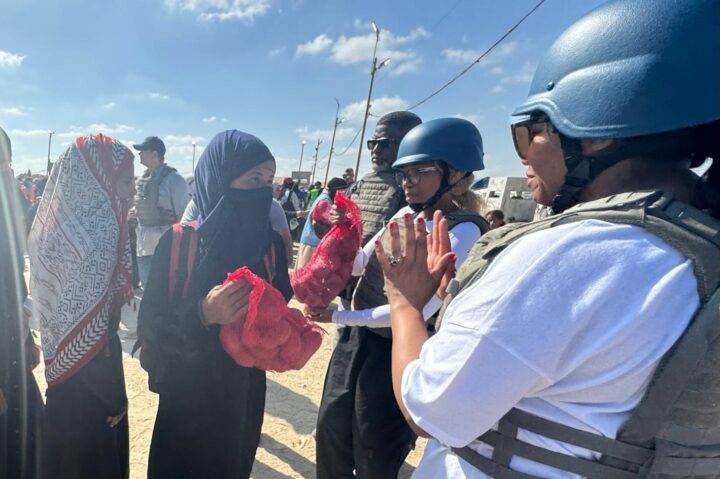
Courtesy
Zamaswazi (Swati) Dlamini-Mandela and Zaziwe Dlamini-Manaway assist the Gaza Humanitarian Foundation in its efforts to distribute aid in the Gaza Strip, Oct. 2025
“What has emerged from all my conversations is that the yearning for peace is very intense,” former South African President Nelson Mandela, visiting Israel in 1999 as part of a broader Middle East trip, said as he reflected on his meetings with leaders across the region. The trip came four months after Mandela, who built his legacy working to dismantle South Africa’s decades-long apartheid system and begin a process of national reconciliation, retired from politics.
More than a quarter century later — despite the ceasefire between Israel and Hamas, the degradation of Iran and its proxy network and numerous wars between Israel and its neighbors — that peace remains elusive. It was against that backdrop that two of Mandela’s granddaughters, Zamaswazi (Swati) Dlamini-Mandela and Zaziwe Dlamini-Manaway, traveled to Israel and the Gaza Strip earlier this month.
Their trip came amid strained relations between Pretoria and Jerusalem, whose leaders and senior officials have been increasingly at odds in recent years. The country’s Jewish community has raised concerns over South Africa’s deepening relations with Iran and aggressive posture toward Israel, which it accused of genocide in a December 2023 International Court of Justice filing.
Dlamini-Manaway and Dlamini-Mandela’s trip to Israel, organized by the National Black Empowerment Council, included meetings with Israeli hostage families and survivors of the Oct. 7, 2023, Hamas terror attacks, visits to Israel’s holy sites and a day on the ground in Gaza where Mandela’s granddaughters assisted the Gaza Humanitarian Foundation in its efforts to distribute aid in the enclave. They left the region days before a ceasefire between Israel and Hamas was announced and the remaining 20 living hostages were released.
The Mandela granddaughters “thought that this could be a unique opportunity to bring necessary attention to what’s being done, while at the same time, as mothers, being able to say that they did something that was in the humanitarian tradition of their grandparents,” Darius Jones, the founder and executive director of the NBEC, told JI.
During the women’s trip, a flotilla, led by anti-Israel activists including Greta Thunberg, made its way through the Mediterranean Sea in an effort to reach the Gaza Strip. Aboard one of the ships was their cousin Nkosi Zwelivelile “Mandla” Mandela, another grandchild of Nelson Mandela. The ships attempting to illegally reach Gaza were intercepted by Israel, and participants were deported to their countries of origin.
The approach taken by Dlamini-Manaway and Dlamini-Mandela was, Jones explained, to “really be a part of something that can have meaningful impact, rather than just try to do a performative stunt, which is not about the people, but more about self-aggrandizement.”
This interview has been edited and condensed for clarity.
Jewish Insider: What made you come to Israel now, in this moment? It’s obviously a very interesting point in time, and not necessarily one that would invite a lot of visitors.
Zamaswazi (Swati) Dlamini-Mandela: Coming to Israel has always been a lifelong dream. Both of our grandparents, Nelson and Winnie, visited Israel. And my grandmother, I remember when she came back, she was like, it’s a trip that we have to take whenever we can, in our own time.
I would have never imagined that I would be going in the middle of a war. When we were telling our families, they were literally shocked. Our kids were horrified, because they have this picture painted in their mind that there’s literally going to be missiles flying over our heads and all kinds of stuff. So it was scary for our family, but I think for us, we were like, what an opportune time to go.
For us, it’s important to actually go and actually experience the story for yourself. Coming from a high-profile family like ours, and also living in the media for years, all our lives have been pretty much lived in public, it’s very interesting what type of bias or viewpoints the news can take. So we always felt like, ‘Let’s go and see for ourselves. Let’s experience for ourselves, and let’s actually go on humanitarian missions to try and understand and really get to know what’s going on.’ For me, there’s no better way than actually physically being in a place to actually experience it. We’ve lived through wars here in South Africa, so that didn’t even scare me. It really wasn’t a thing that deterred me at all.
Zaziwe Dlamini-Manaway: I just knew that if my grandmother was alive, she would have said, ‘You definitely have to go, and make it as balanced as possible, and learn and don’t always take one side, because there’s always different sides to a story.’ So for me, I wanted it to be an experience where I could get both sides — the Israeli side and the Palestinian side. The first thing that I said when this trip came up was, ‘We have to go to Gaza.’ It was instinctive to me. It’s like, I have to go to Gaza, because that’s all we see in South Africa. We only see Gaza. We only see women and children. We only see Gaza flattened. So that was very important for me to see and witness for myself. Our grandmother and our family [have] been ridiculed in the media. So we are very, very cognizant of what we hear and what we take in, because we’ve lived it, and we know that the media can distort things tremendously.
JI: What did you know about Israel and about the region before this trip?
SDM: There’s the obvious history and the long-term conflict between Israel and Palestinians. I think for the most part, for me, I’ve consumed the history on a very high level. I didn’t have the same experiences that my grandparents had, because we were so much younger then, when my grandfather visited. At the time, you know, [Palestinian Authority President] Yasser Arafat was still alive. We were so much younger then. I know it as much as I think the average person knows it. But certainly this was a deep dive into a layered, complicated, complex, difficult history between a few nations.
So I would say before this, I almost didn’t know enough, but I certainly learned a lot, and I’ve come away so much more enriched by my time there. There’s words that you hear, like checkpoints, right? ‘Controlled movements,’ ‘apartheid states,’ those are the things that you always heard and because it’s similar to our history. So in a sense, I was like, ‘Oh, OK, this resonates with our history because of what we went through in apartheid.’ So I think those are the things that you always heard and you always knew about, and you always obviously read about, but when it comes to the actual details of the history, I can’t say I really knew it, but I certainly have come away way more enriched.
ZDM: It was a war. Our kids were terrified for us to go there. It’s a totally different country when you’re actually on the ground. Completely. It’s not what is perceived to us at home, I would say.
JI: You came at a time when we in Israel were approaching, now it’s past, the anniversary of the Oct. 7 attacks.
ZDM: [On Oct. 7, 2023,] I remember all I heard on the news was there was an attack in Israel, and there were hundreds of people killed. But I didn’t actually understand the magnitude and the gravity of what actually happened on Oct. 7. We went to a kibbutz that was literally at arm’s length … to Gaza. It was a complete massacre, a complete massacre of innocent children, parents, people who survived the Holocaust. That was completely horrifying to me, I couldn’t even imagine … the [Nova music] festival. I think Swati cried the whole day at the site.
I did not understand the magnitude of what actually happened on that day. It wasn’t portrayed to me. I was completely horrified by what happened. It was a massacre, it was deliberate, it was calculated. It was a complete obliteration of innocent women and children on one day. It pains me to think that this happened.
But the people that I met — the mothers, the survivors — are still so hopeful, are still so resilient. It’s really something to look up to, because even through so much pain and agony and anguish, they are still hopeful that there could be a place where they can both — both nations, both people, Jewish and Palestinians — can live in a place peacefully, even in their differences. But Oct. 7, for me, was horrific. It was horrific, and it wasn’t told to us South Africans, I can safely say.
SDM: Hearing firsthand accounts of people who actually survived that day and what they experienced and their loss of loved ones, families whose loved ones were kidnapped, dead and alive, children who were kidnapped, and how children were used as pawns to negotiate with the government.
Going into Gaza on that specific day [with the Gaza Humanitarian Foundation] was also incredible, because you heard so many stories about aid not being delivered, aid not getting to the people and malnutrition. And it’s not perfect, right? In any war, nothing is going to be perfect. Aid delivery is never going to be perfect. What we were a part of, what we experienced, was an organization that certainly is trying to make their impact. There were 10,000 or so women and children that we saw that were able to be fed, that, if [they] needed medical care, there was medical care that was available to them.
On the flip side of that, you have [Israeli] families that are still grieving the loss of loved ones who have not even returned, the hostages that still have not returned. The sheer devastation on both sides was very apparent that day. I think that was my biggest takeaway, that there’s suffering on both sides. Like Zaziwe said, to talk to and hear the stories of people who survived and who still have so much hope for the country and who still want peace. They’re desperate for peace.
And I think the fact that we were also there on the day when [President Donald] Trump and [Israeli Prime Minister Benjamin] Netanyahu met to talk about a peace deal and a peace agreement, to us, was a turning point, the fact that there can be peace, and there’s a potential peace that can come to the region. But the healing still needs to come. So we pray for peace. We really pray for peace. We’ve seen what the devastation is firsthand with our own eyes, we’ve seen it, and so we pray that the peace deal will come through, and it will hold.
JI: I saw that you met with Rachel Goldberg-Polin. Swati, before you got on the call, Zaziwe was telling me about her son, and she said he was 25 — he was basically the same age as Rachel’s son, Hersh. What was that meeting like?
ZDM: First of all, this woman is so strong. She is such a strong, strong lady. And what she went through with her only son, I can’t even imagine. She held on for over 300 days knowing that her son was alive, and then literally, right before the IDF was going to rescue him, [Hamas] killed him. Hearing her story was so profound, and really was a moment that I’ll never forget in my life. She literally took me into the day of what happened on Oct. 7. She had a smile on her face the whole time. When she was telling us a story, she was sad, but she had a smile on her face. She was so hopeful, and she was the perfect example of resilience, the perfect example of a person who wants peace, the perfect example of someone who said, ‘I really hope there’s an Israel where Palestinians and Israelis and Jews can live side by side.’ And she even said, ‘I really hope that one day we can have a TRC [Truth and Reconciliation Commission] like you guys.’ She’s like, ‘That’s my wish. I want us to have a TRC in Israel.’
I was in awe of this woman. My son is 25 in two weeks, so I completely resonated with her. I completely connected with her, and she was so loving, and just wanted peace for her country that she loves, and I will never forget that experience. She literally described that day to me, from morning to end, from the moment when she found out that her son was actually held captive, and the message that he sent to her was, ‘Mommy. I’m sorry.’ Can you imagine? I mean, can you imagine knowing that your son has been injured, has been taken captive? Living in agony that your son is in captivity and is injured over 300 days? I can’t even imagine. I can’t even imagine. She is resilience to me, she really is.
SDM: She was so strong, she was so kind, she was so determined to still ensure that the rest of the hostages get home. She gave us so much hope, because she’s like, ‘I want peace.’ It’s not something that you would expect. She’s an advocate for the families who probably don’t have the strength to be able to tell the story or to be able to push and fight. We were just in awe of her. She has hope, and she wants healing for the nations. She really wants healing for the nations. And she spoke about the women and children of Gaza. She spoke about what that means to her and the impact of that. So she spoke about everything. It wasn’t just a one-sided view for her. The human spirit’s ability to be able to live through such trauma and tragedy and still come out and still be so hopeful, for me, she was the epitome of that.
JI: You went to a Gaza Humanitarian Foundation site. What was that experience like? What did you do? What were your interactions like?
ZDM: It was a very hot day, very, very hot. And I think they said that they had about, I think about 4,000-5,000 people before? So on that day they were expecting the biggest crowd. It was about 10,000 people that they were expecting. So, I mean, TV doesn’t do justice. It really doesn’t. When you’re actually on the ground and you actually see people running, literally running for food, it’s something that you can’t even explain.
The men arrive first, they get their supplies, which is pretty chaotic for about 15, 20 minutes, because they’re literally fighting for their aid. So it’s very, very chaotic. And then after that, the women are so organized. The women and children are so organized. They stand in a line, unprovoked, very simple. They just know the order of things. So Swati and I and our team literally spent the whole day giving food, potatoes and eggs to the women, and there were lots of children as well. And I must say, everyone was just so grateful. They were so grateful. They were happy that we were there. There was no interruption. There was nothing untoward. All they came to do was to get food, nourishment and go home. And this happens every single day for these people. You saw the repercussions of what a war entails. Women and children are the biggest casualties, literally, because there were more women and children there.
JI: What was their physical condition?
ZDM: I don’t know what they looked like before. I mean, obviously you could see the desperation. You could definitely see the desperation in them. They definitely do need aid and food, they definitely do. But I’ve seen what the hostages look like when they leave [Gaza], when they’ve been released, and they literally are people who are starving. They’re people who haven’t had anything for months on end. So for me, I compared what I’ve seen to the people, the women and children of Gaza. It’s a totally different image, for me, from what I saw. Obviously they want nourishment. Obviously they would like three meals a day. Obviously. But for me, there’s a difference between what I’ve seen between the hostages who were released and what I saw firsthand in Gaza, I’ll leave it at that.
SDM: It was nice to see that the organization works with Palestinians to facilitate the aid to the community. It’s obviously going to grow over time, which is what was explained to us, because 750,000 people had moved down to that area. GHF is building a bigger facility to actually give more aid, medical care in a way in which it’s safe for the people, as safe as it can be, for the Palestinians who need the aid, as well as the people who are working on the ground. I think from what you heard and what you saw, they’re really doing their best to try and see that they can bring aid to as many people as they can as an organization. I kept saying, ‘Is the food going to run out?’ But they kept bringing trucks. They just kept bringing trucks with potatoes and food packs for the families and nutritional snacks.
And I think seeing firsthand what, like Zaziwe just said, women and children are always the biggest casualties of war, children that are not in school. It was incredibly insightful for us to be able to at least be there and participate and see it and be able to help GHF on that day, because they do so much.
JI: So talking about being in Gaza distributing aid, the irony of the both of you being there distributing aid last week, was that at the same time that was happening, a cousin of yours was on a flotilla headed to Gaza. It’s the irony of ironies that there was a grandchild of Nelson Mandela delivering aid — actually, there were two — and it wasn’t the one who was making splashy headlines.
SDM: We’re a big family, first and foremost. Our grandparents have always, always taught us to carve out our own paths and walk our own journeys. My grandfather, he went to Israel and he went to Gaza. My grandmother didn’t have the opportunity to do the same. So for me, at the end of the day, we’re grateful that he’s back home and he’s safe, he’s fine. We were on a humanitarian mission for ourselves. We are a family that has different ways in which we want to contribute to society and to humanity, and we allow each other room to do that in ways which are befitting to the individual.
So we were on our own mission, and we respect his mission and what he was doing. Ultimately, at the end of the day, the goal is about the people, right? That’s what the goal is, and that’s what the goal should always be. It should be about the people.
ZDM: I think that Swati said it perfectly. We’re a big family, and we all have our own ways of doing things, but the ultimate goal is peace to the region, and we want this war to end. We want all the hostages to come home, and we want the innocent people of Gaza and the Palestinians to also get the aid and food that they need. And we just want this war to end so we all have different ways of doing it, and we’re thankful that he’s home, but for us, we were there as granddaughters of Nelson and Winnie Mandela.
JI: People like to take your grandfather’s words and legacy to shape specific narratives around current events, and this has been going on for many, many years all around the world. When it comes to Israel, the term apartheid gets thrown around a lot. You’ve now been on the ground. You have experienced Israel for yourselves. How do you feel about the politicization of your grandfather’s words when it comes to Israel?
SDM: I’m not a politician. I have been asked many times in my life if I’m going to follow in their footsteps, and I always say, given my personal experience, I don’t really have the desire to. I think that we have a great example to follow in a leader like my grandfather. I’m not here to be a global activist like our grandparents were. I’m just here to make my little, little, little impact in whichever small way that I can, and I think just to be educated. The world has changed so much. Like Zaziwe said, if my grandmother was alive, my grandmother would have come to the region, without a shadow of a doubt, she would have been there because she was — both our grandparents were — those people. But I’m my own person, and I’m here to walk my own path. And people, I think it’s time for us to just walk our own paths.
ZDM: I would say, I think our grandfather’s legacy quotes, what is lived up to is so powerful and so profound, and people can distort it and make it their own. Educate yourself, really educate yourself and really listen, really listen to the words that he spoke, maybe listen to what he said and just do your homework. I just don’t think that you should take and hear everything that you hear from the media, or take what somebody says on a stage and take it for what it really, really is.
This trip was so important to us now, because I thought we have to go there ourselves and see it. And I know most people won’t have the opportunity, but it’s really important to invest time into what you actually believe in, what your conviction tells you about yourself. You need to actually invest. I mean, just not take it at face value, because it can be so distorted, and you can be so deceived, completely deceived, about a situation or about a person.
What I took away was, for me, I literally, if I’m passionate about something, and I can sit there and say, I believe in this, or A, B, C or D, I need to actually put in the time to actually understand what I actually am investing my time and what I’m putting my name behind. Grandad’s name is used and said all over the world, but I find that people don’t really, don’t listen to what he actually really said, both him and my grandmother. You just have to put in time and really invest and educate yourself about what you believe in.

Good Thursday morning.
In today’s Daily Kickoff, we report the latest out of Sharm el-Sheikh, Egypt, following the announcement overnight that Israel and Hamas had reached a hostage-release and ceasefire agreement as part of the first phase of a broader deal to end the war in Gaza. We talk to Noam Tibon about the Toronto International Film Festival’s decision to cancel and then reinstate the screening of a documentary about his efforts to rescue his family during the Oct. 7 attacks, and look at how the Pentagon’s new rules regarding grooming standards could impact Orthodox Jewish servicemembers. Also in today’s Daily Kickoff: Rep. Josh Gottheimer, Anne Dreazen and Maine Gov. Janet Mills.
Today’s Daily Kickoff was curated by Jewish Insider Executive Editor Melissa Weiss, with assists from Danielle Cohen-Kanik and Marc Rod. Have a tip? Email us here.
What We’re Watching
- We’re closely tracking the ongoing talks to secure the release of the remaining 48 living and dead hostages and reach an end to the war, following last night’s breakthrough in Sharm el-Sheikh, Egypt. White House Special Envoy Steve Witkoff and former White House senior advisor Jared Kushner are expected to travel to Jerusalem tonight for the continuation of talks. More below.
- We expect to hear more about the agreement over the course of the day, first in a televised White House Cabinet meeting scheduled for 11 a.m. ET, followed hours later by a press conference at 3 p.m. ET with Finnish President Alexander Stubb. Become a premium subscriber and sign up for the Daily Overtime to get our afternoon update on the latest in the talks.
- Negotiations between the Trump administration and Harvard aimed at releasing billions of dollars in frozen grant funding are set to resume today, with Blackstone CEO Stephen Schwarzman, who chaired the Strategic and Policy Forum during the first Trump administration, is playing a central role in the talks.
- In Paris, French President Emmanuel Macron is expected to name a new prime minister by the end of the week, following the resignation earlier this week of Sébastien Lecornu, who held the position for less than a month.
What You Should Know
A QUICK WORD WITH JI’S LAHAV HARKOV
It’s a “morning of historic and momentous news,” as Israeli President Isaac Herzog put it on Thursday, when Israelis woke up to learn that a deal had been reached to free the remaining hostages in the coming days and halt the fighting in Gaza.
The sides are expected to officially sign the deal in Egypt today, and Israel’s Cabinet is set to vote at 11 a.m. ET on the exchange of the 48 hostages, 20 of whom are thought to be alive, for close to 2,000 Palestinian prisoners. The IDF said it began preparing to withdraw from parts of Gaza as part of the deal.
Hamas is expected to release the Israeli hostages first. Only when Israel is satisfied that the terrorist group has freed everyone it can find — including the remains of about 28 Israelis who were killed — will Palestinian prisoners be released. The swap comes with caveats: Hamas says it is unable to locate some of the bodies, and about 250 of the Palestinian prisoners set to be released are serving life sentences for terrorist offenses, though Israel insisted that high-profile detainees — such as Second Intifada mastermind Marwan Barghouti — will not be part of the deal.
The deal is expected to pass easily in the Cabinet, with Israeli Prime Minister Benjamin Netanyahu’s Likud party holding the majority of the seats. National Security Minister Itamar Ben-Gvir, who expressed opposition earlier this week to President Donald Trump’s plan to end the war, was unusually quiet on Thursday morning, while Finance Minister Bezalel Smotrich said he would not vote in favor.
Trump said in an interview with Fox News that all of the hostages “will be coming back on Monday. … As we speak, so much is happening to get the hostages freed.”
communal reactions

Jewish organizations and leaders from around the world and across most of the ideological spectrum cheered the acceptance last night of the first phase of a Gaza peace plan, which will see the release of all living hostages in the coming days and the eventual release of slain ones as well, eJewishPhilanthropy’s Judah Ari Gross reports.
Communal response: Jewish Federations of North America said in a statement that it “celebrate[s] the exciting news of the deal between Israel and Hamas to return all the remaining hostages home and end the war. Both AIPAC and J Street issued statements in support of the agreement, as did the American Jewish Committee, Israel Policy Forum, the Israeli-American Coalition, Jewish Council for Public Affairs, National Council of Jewish Women, Anti-Defamation League, the Conservative movement, Yeshiva University, Board of Deputies of British Jews and World Jewish Congress, among many others.
Read the full story here and sign up for eJewishPhilanthropy’s Your Daily Phil newsletter here.
Bonus: Jewish communal leaders and a bipartisan group of political officials gathered somberly on Tuesday at the “Sukkah of Hope” hosted by the Hostages Families Forum at the Kennedy Center to mark two years since the Hamas terror attacks, Jewish Insider’s Gabby Deutch reports from Washington.
book shelf
Freed hostage Eli Sharabi’s new memoir, Hostage, ends with him visiting the graves of his wife, Lianne, and his daughters, Noiya and Yahel, for the first time after being released from nearly a year and a half of captivity in Gaza, during which he had hoped they were still alive following the Hamas attack on their home in Kibbutz Be’eri on Oct. 7, 2023. “This here is rock bottom. I’ve seen it. I’ve touched it,” Sharabi writes. “Now, life.” That final sentence of Sharabi’s memoir could sum up his post-captivity self. In a recent interview with Jewish Insider’s Lahav Harkov, Sharabi said he was determined to reassert his agency, take action on hostage advocacy and move forward in his life.
In the belly of the beast: “I recognize that even within Hamas, after spending 24/7 with them for many months and having different conversations with them, I understand who is ideological and who stumbled into it because Hamas controls the financial faucets in Gaza,” Sharabi told JI. “Does that make them innocent? Of course not. The moment they got the order, I was shackled around my legs. If they were told to shoot me, they would have shot me.”
FILM IN FOCUS

The most important victory of Israeli Maj. Gen. (res.) Noam Tibon’s life was rescuing his son, daughter-in-law and two granddaughters from their home in Kibbutz Nahal Oz during the Oct. 7, 2023, Hamas terror attacks. But the premiere of a new documentary telling that story almost didn’t happen, after “The Road Between Us: The Ultimate Rescue” was removed from the Toronto International Film Festival’s schedule last month, where it was set to make its debut. The film’s reinstatement after widespread pushback was “a victory for the movie and a victory for the truth of what happened on Oct. 7,” Tibon, the film’s protagonist, told Jewish Insider’s Haley Cohen in an interview alongside documentarian Barry Avrich.
Global effort: “What was extraordinarily amazing to me — because I just didn’t think we had the wind to our back — was that the global pressure and reaction to the withdrawal of this film was so enormous and validating. We received emails from Jewish people as far as Shanghai” who were outraged over the film’s cancellation, Avrich recalled. “It was one of the great moments in my film career, when the Hollywood community and Jewish community globally said, ‘We will not be erased.’ I kept telling Noam, ‘You will not cancel your ticket, you’re coming to Toronto. We will show this film.’” Tibon said he dedicated the film to “all of the people who fought with me on Oct. 7 — the brave soldiers and border patrol and the brave squad of [Kibbutz Nahal Oz]. I hope many people will watch this around the world because it’s a story about family. What would you do in such a situation?”
exclusive

Rep. Josh Gottheimer (D-NJ) and a group of Republican House lawmakers warned the Irish government on Monday that pending legislation to criminalize the importation of Israeli goods from the West Bank and east Jerusalem into Ireland risks damaging the country’s economic relationship with the United States, Jewish Insider’s Marc Rod reports. The lawmakers also criticized Dublin’s efforts to support a genocide case against Israel at the International Court of Justice.
Message to Dublin: “This legislation threatens to inflict real harm on American companies operating in Ireland. If enacted, it would put U.S. firms in direct conflict with federal and state-level anti-boycott laws in the U.S., forcing them into an impossible legal position and jeopardizing their ability to do business in Ireland,” reads the letter, addressed to Taoiseach Micheál Martin. “Therefore, were it to pass this bill, Ireland would risk causing significant damage to its own economic credibility and partnerships with American commerce.” The letter states that Dublin’s moves are “fueling rising antisemitic and anti-Zionist sentiment in Ireland and beyond,” and urges the country to cease both efforts in order to “preserve the economic and diplomatic ties between our two nations.”
grooming guidelines
The military grooming rules announced last week and circulated in a memo to military members would end most existing religious exemptions allowing troops to maintain beards. The regulations would present a potential obstacle to Orthodox Jewish servicemen who maintain beards. The policy, which would return the military to pre-2010 standards — when the Pentagon first granted an exemption to a Sikh soldier to maintain a beard in uniform — also prohibits sideburns below the ear openings, potentially impacting servicemen who wear peyot, Jewish Insider’s Marc Rod reports.
Waiver crackdown: Religious facial hair waivers will be “generally not authorized” under the new policy, and will require “individualized reviews” with “documentation demonstrating the sincerity of the religious or sincerely held belief … sufficient to support a good faith determination by the approving authority,” according to the Pentagon memo. “The military obviously has its need for discipline and uniform adherence,” Rabbi Levi Shemtov, the executive vice president of American Friends of Lubavitch (Chabad), told JI. “At the same time, it has been, and we hope it will continue to be, cognizant that certain individuals, for them to serve and accommodation will be necessary, and as in the past, if everything else about that particular person adheres to military standards, then they should get the dispensation they need.”
transitions
The American Jewish Committee tapped Middle East policy official Anne Dreazen on Thursday as vice president and director of its Center for a New Middle East, Jewish Insider’s Haley Cohen has learned. The center launched in June 2024 to advance the organization’s existing work in Israel and the Gulf, with the goal of hosting conferences and business programs in the U.S., Israel and the Gulf, and working with emerging leaders in Israel and the Arab world.
Background: Dreazen, whose career spanned 15 years at the Department of Defense in a variety of roles — most recently as principal director for Middle East policy — is slated to begin the Washington DC-based position on Oct. 20. She oversaw U.S. defense cooperation with partners including Israel, Egypt, Jordan, Iraq, Saudi Arabia, the UAE and Qatar while serving as the Pentagon’s principal director for Middle East Policy, under both Democratic and Republican administrations. She also served as a national security fellow in the Senate. Prior to that, Dreazen spent seven months on the ground in Iraq’s Anbar Province, facilitating U.S. reconstruction efforts following Operation Iraqi Freedom.
Worthy Reads
Bearing Witness: In Politico, Axel Springer CEO Mathias Döpfner reflects on the rise of antisemitism globally following the Oct. 7, 2023, Hamas attacks and his meeting with Nova music festival cofounder and producer Ofir Amir. “Since this conversation about the events of Oct. 7, I keep asking myself how Ofir Amir can bear what happened after Oct. 7. How he can bear that victims are turned into perpetrators and perpetrators into victims. That more and more often, it is concealed who started this war, what is action and what is reaction. How he can bear it that justified criticism of decisions made by an Israeli government is mixed with deep-rooted hatred of Jews and that, as a result, instead of an obvious global wave of compassion and solidarity, a global wave of cold-heartedness and increasingly aggressive anti-Semitism has emerged. How he can bear what I can hardly bear, even though I am neither a victim nor a relative of victims.” [Politico]
A Family’s Torment: The Financial Times’ Mehul Srivastava interviews Ilay David, whose brother, Evyatar, has appeared in multiple Hamas hostage videos in a continuous state of decline since his capture two years ago. “But in this litany of broadcast suffering, few have suffered more than the family of Evyatar David, a 24-year-old guitar player who loved AC/DC and Queen and was kidnapped from the Nova Music Festival alongside 40 others. … Ilay has watched the video of him waiting many times, his brother breathing fresh air and begging for his freedom. ‘Of course, Hamas terrorists told him to beg for their life,’ he said. ‘But I saw my brother’s eyes. I saw that he really begged for his life — I saw that he wants to cry.’ Ilay says he lies awake wondering why his brother was chosen for this public form of torture — so many other hostages had suffered in private, while others were filmed but their videos never released. ‘Why Evyatar? Why does he have to suffer so much more?’ he said.” [FT]
Problems Across the Pond: Jewish News Editor Richard Ferrer considers the increasing isolation and antisemitism faced by the U.K.’s Jewish community. “Since Hamas’s massacre in Israel, Jews in Britain have been pushed, slowly — and ever so politely — out of public life. Jewish actors have been dropped from shows. Jewish comedians told their Edinburgh Fringe gigs are off under the pretext of ‘staff safety.’ Venues have quietly cancelled Jewish musicians. Holocaust survivor visits to schools have been pulled ‘for security reasons.’ Every time a theatre has cancelled a Jewish performer, every time a company has decided it’s ‘uncomfortable’ working with Jews, the line between silent and savage antisemitism has blurred just a little more. Now that line no longer exists. On Thursday, Britain became a place where a knife-wielding man called Jihad can convince himself that driving a car into Jews outside a synagogue isn’t an atrocity but a statement. Tonight, I’m off to a bat mitzvah party hoping there’s enough security on the door. That’s life for British Jews now. And death.” [JewishNews]
Iran’s Next Move: The Atlantic’s Arash Azizi and Graeme Wood weigh Iran’s military and diplomatic options following its defeat during the 12-day war with Israel in June. “Iran could surrender its nuclear ambitions. Call this the Libya option, after Muammar Qaddafi’s renunciation of his nuclear program in 2003. The limits of the Libyan option’s appeal are evident when one considers Qaddafi’s fate, which was to be deposed, poked in the backside with a piece of steel, and shot in the head. More appealing is the relative calm of North Korea, whose combined nuclear and conventional deterrent shows no sign of weakness. States that go nuclear tend to survive. … Another option would be to go short of nuclear — to go ballistic.” [TheAtlantic]
Word on the Street
The Department of Commerce sanctioned more than two dozen companies in China, Turkey and the United Arab Emirates for acting as conduits for Iran to purchase American technology…
California Gov. Gavin Newsom signed into law legislation taking aim at antisemitism in K-12 schools, which passed last month over the opposition of the state’s largest teachers union…
Rep. Josh Gottheimer (D-NJ) called on the New Jersey Education Association to fire its recently hired magazine editor, citing since-deleted social media posts promoting violent and antisemitic content, including a post that said that the president of Egypt was “filthier than the Jews”…
Maine Gov. Janet Mills, a Democrat, is expected to announce her entry into the state’s 2026 Senate race in the coming days; Mills will face a crowded primary field that includes Israel critic Graham Platner as she seeks to challenge Sen. Susan Collins (R-ME) next year…
On the second anniversary of the Oct. 7, 2023, Hamas attacks on Israel, Democrat Abdul El-Sayed, who is running for Senate in Michigan, sent a fundraising email to supporters that criticized Israel’s ground invasion of Gaza while ignoring the Hamas attack that precipitated it, Jewish Insider’s Marc Rod reports…
Several key Minnesota political leaders across the ideological spectrum, including Minneapolis Mayor Jacob Frey, Rep. Angie Craig (D-MN) and Sens. Amy Klobuchar (D-MN) and Tina Smith (D-MN), condemned the vandalism of a synagogue in Minneapolis on Wednesday as an act of antisemitism, Jewish Insider’s Marc Rod reports…
The New York Times explores how New York City Democratic mayoral candidate Zohran Mamdani’s views on Israel were shaped by his upbringing and college activism; during his time at Bowdoin College, where he founded the campus’ chapter of Students for Justice in Palestine, Mamdani refused efforts to collaborate with the campus’ J Street U chapter, citing SJP’s “antinormalization” policy against working with groups that support Israel’s right to exist…
Federal prosecutors in Maryland are expected to charge former National Security Advisor John Bolton in the coming days with mishandling classified documents…
A Pennsylvania couple is pursuing legal action against the previous owner of their home, who hid a tiled swastika and German war eagle, installed in the 1970s, under carpet during the property sale…
A U.K. court began proceedings against two men accused of planning a terror attack against the Jewish community in Manchester in late 2023 and early 2024; the trial is taking place days after two people were killed in an unrelated terror attack on a Manchester synagogue on Yom Kippur…
The Wall Street Journal looks at how 10 Downing Street under Prime Minister Keir Starmer and the ruling Labour party has struggled to quell daily anti-Israel protests around the country amid concerns that the rallies are fueling antisemitism in the U.K.…
The family of Bipin Joshi, a Nepali citizen taken hostage by Hamas on Oct. 7, 2023, released a recently discovered video of Joshi filmed shortly after his abduction to Gaza…
Iran released a 19-year-old French-German cyclist who had been detained since June…
Longtime Zabar’s owner Saul Zabar, who oversaw the appetizing shop’s operations for seven decades, died at 97…
Attorney Bruce Cutler, who secured multiple acquittals for his client, mob boss John Gotti, died at 77…
Pic of the Day

Former U.S. Ambassador to Israel David Friedman and Jerusalem Mayor Moshe Lion prayed at the Western Wall during the Priestly Blessing on Thursday in Jerusalem. Also in attendance during the Chol Hamoed prayers were the Sephardic and Ashkenazi chief rabbis of Israel and former hostage Sasha Trufanov.
Birthdays

U.S. ambassador to Canada during the Obama administration, then vice chair of BMO until 2024, David Jacobson turns 74…
Founder, executive chairman and now retired CEO of C-SPAN, known for his unique interview style, Brian Lamb turns 84… Retired federal government manager and analyst, Charles “Chuck” Miller… Associate professor of Jewish history at the University of Maryland, Bernard Dov Cooperman turns 79… Burbank, Calif., resident, Richard Marpet… Commissioner of Major League Soccer since 1999, Don Garber turns 68… VNOC engineer at Avaya until a few months ago, David Gerstman… Attorney at Wilkes Artis, Eric S. Kassoff turns 65… Retired director of Jewish learning at the Brandeis School of San Francisco, Debby Arzt-Mor… Managing director and financial advisor at Morgan Stanley Private Wealth Management and chair emeritus of DMFI, Todd Richman… Best-selling author and motivational speaker, Simon Sinek turns 52… Rosh yeshiva at Yeshivas Elimelech following 17 years as rabbi at Ohev Shalom Synagogue in Washington, D.C., Rabbi Shmuel Herzfeld turns 51… Musician and singer, Neshama Carlebach turns 51… Member of the Knesset for Yesh Atid, Karin Elharar Hartstein turns 48… SVP for Jewish education, community and culture at Hillel International, Rabbi Benjamin Berger… Partner at Left Hook Strategy, Justin Barasky… CEO at Denver-based energy firm Nexus Energy Partners, he was the national board chair of Moishe House (now known as Mem Global) until 2022, Ben Lusher… Senior director of state and international affairs at the U.S. Chamber of Commerce Institute for Legal Reform, David Meyerson… Stand-up comedian and two-time Emmy Award-winning television writer, Ian Karmel turns 41… VP of portfolio management for LEO Impact Capital, Lily Goldstein… Counsel in O’Melveny’s NYC office, he was an executive assistant and advance associate in the Obama White House, David Cohen… Physical therapist in Montreal, Chaya Notik… VP at L’Oréal, Jason Kaplan turns 35… Senior manager of policy communications at Snap, Julia Schechter… Israel-based senior associate at JP Morgan Payments, Daniel Rubin… Manager of in-stock management at Amazon in NYC, Kayla Levinson Segal… Security coordinator of Kibbutz Nir Am on Oct. 7, 2023, now an Israeli heroine after her team killed 25 terrorists and the kibbutz suffered no casualties, Inbal Rabin-Lieberman turns 27… Foil fencer, he won a team bronze medal at the 2020 Olympics (Tokyo) and an individual bronze medal at the 2024 Olympics (Paris), Nick Itkin turns 26…
Dreazen spent 15 years at the Pentagon, most recently as principal director for Middle East policy
Courtesy
Anne Dreazen
The American Jewish Committee tapped Middle East policy official Anne Dreazen on Thursday as vice president and director of its Center for a New Middle East, Jewish Insider has learned.
Dreazen, whose career spanned 15 years at the Department of Defense in a variety of roles — most recently as principal director for Middle East policy — is slated to begin the Washington DC-based position on Oct. 20.
The Center for a New Middle East launched in June 2024 to advance the organization’s existing work in Israel and the Gulf. At the time, AJC CEO Ted Deutch told eJewishPhilanthropy that the center will host conferences and business programs in the U.S., Israel and the Gulf, as well as work with emerging leaders in Israel and the Arab world.
“At a time when the Middle East is undergoing profound challenges and transformations, the work of AJC’s Center for a New Middle East has never been more vital,” Dreazen told JI. “I’m honored and excited to join this extraordinary team working to advance the peace and security of Israel and its neighbors, to strengthen diplomatic, economic and civil society partnerships, and to shape a more hopeful future for the region.”
Dreazen oversaw U.S. defense cooperation with partners including Israel, Egypt, Jordan, Iraq, Saudi Arabia, the UAE and Qatar while serving as the Pentagon’s principal director for Middle East Policy, under both Democratic and Republican administrations.
She also served as a national security fellow in the Senate. Prior to that, Dreazen spent seven months on the ground in Iraq’s Anbar Province, facilitating U.S. reconstruction efforts following Operation Iraqi Freedom.
“Anne brings a wealth of experience in national security and defense policy to this position, and deep familiarity with the priorities and principals guiding regional strategic affairs,” said Jason Isaacson, AJC chief policy and political affairs officer, who was the center’s first director. “After her distinguished career in the U.S. national security establishment, AJC looks forward to her guidance in shaping our efforts to widen the circle of Arab-Israeli peace.”
Five reflections on how Oct. 7 reshaped politics, diplomacy, advocacy, higher ed, and Jewish life

RE’EIM, ISRAEL — Visitors pay tribute at the site of the Nova music festival massacre.
But even as the Israeli prime minister embraced the deal, he indicated some disagreements with the specifics of the agreement
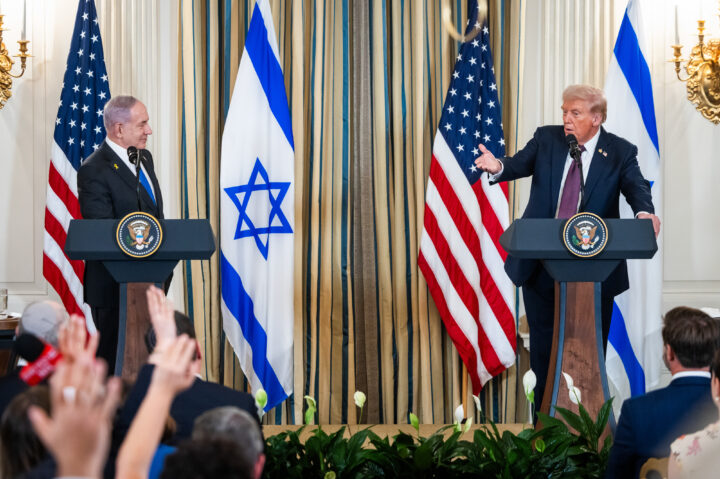
Jim Lo Scalzo/EPA/Bloomberg via Getty Images
President Donald Trump, right, and Benjamin Netanyahu, Israel's prime minister, during a news conference in the State Dining Room of the White House in Washington, DC, US, on Monday, Sept. 29, 2025.
President Donald Trump and Israeli Prime Minister Benjamin Netanyahu announced on Monday that Israel had agreed to sign onto the White House’s 20-point peace plan to end the war in Gaza, with Trump calling the development “one of the great days ever in civilization.”
Both leaders described the deal, which would release all of the remaining Israeli hostages in exchange for an immediate end of the war, as the starting point for greater regional integration, a goal that Trump described as “eternal peace in the Middle East.”
Senior Trump administration officials first introduced the plan last week in a meeting with Arab and Muslim leaders in New York, and Trump said he had buy-in from the Qataris, who have been a go-between in negotiations with Israel and Hamas, and that he had discussed the matter with the leaders of the United Arab Emirates and Saudi Arabia.
But the deal is not yet final: Hamas has not yet agreed to it, though Trump expressed hope that the terror group will do so. Trump said he would allow Netanyahu to continue the war with his “full backing” if Hamas does not agree to it.
“This can be done the easy way, or it can be done the hard way. But it has to be done,” Netanyahu said at the press conference. “All these goals must be achieved because we didn’t fight this horrible fight, sacrifice the finest of our young men, for Hamas to stay in Gaza.”
The plan would require the release of all the hostages still held by Hamas back to Israel within 72 hours, and an immediate end to the war, according to a copy of the plan published by the White House. In exchange, Israel would release 250 Palestinians serving life sentences in Israeli jails, along with nearly 2,000 Gazans detained since the Oct. 7 attacks in 2023.
The first principle of the plan is that Gaza would be deradicalized, with Hamas out of power and transitional mechanisms in place to take over governance of the beleaguered territory. Amnesty would be offered to Hamas members “who commit to peaceful co-existence and to decommission their weapons” once the hostages are returned. Hamas members who wish to leave would have safe passage to do so, although the plan does not explicitly state that they will be required to leave. The plan would also surge aid to Gaza through the United Nations and other international mechanisms as soon as the hostages are released.
An international transitional body, with Trump as chair and former U.K. Prime Minister Tony Blair heavily involved, would oversee the redevelopment of Gaza until the Palestinian Authority has been reformed and is able to take over leadership of the Gaza Strip. The U.S. and other Arab and international partners would develop a temporary stabilization force to deploy in Gaza, and Trump would oversee the creation of an economic development plan to facilitate investments in the seaside territory.
“I believe that today we are taking a critical step towards both ending the war in Gaza and setting the stage for dramatically advancing peace in the Middle East, and I think beyond the Middle East, with very important Muslim countries,” Netanyahu said. “We’re giving everybody a chance to have this done peacefully, something that will achieve all our war objectives without any further bloodshed.”
Several Muslim leaders announced their support for the deal, including the prime minister of Pakistan and the Emirati foreign minister.
As Trump and Netanyahu stood side by side, each heaping praise upon the other, they were not entirely on the same page about all aspects of the deal — in particular the role of the Palestinian Authority in the future governance of Gaza, which Netanyahu has all but written off, despite that goal listed as an objective in the White House’s plan.
“Gaza will have a peaceful civilian administration that is run neither by Hamas nor by the Palestinian Authority,” Netanyahu said, a contrast to the plan’s language that the PA — once it is reformed, an objective that could take years — will control Gaza.
The White House deal also recognizes “Palestinian self-determination and statehood” as “the aspiration of the Palestinian people.” Netanyahu, however, has said repeatedly that a Palestinian state is out of the question.
Trump did not refer to the plan’s language about Palestinian statehood in his remarks, instead offering leeway to Netanyahu. “Prime Minister Netanyahu is very clear about his opposition to a Palestinian state,” Trump said. “Several countries have foolishly recognized the Palestinian state.”
The leaders’ comments followed a three-hour meeting between Trump and Netanyahu. During the meeting, Trump orchestrated a phone call between Netanyahu and the Qatari emir, which Trump said afterward was a “a heart-to-heart conversation” in which Netanyahu apologized for Israel’s attack on Doha last month that targeted Hamas leaders and killed a Qatari security guard. The three nations agreed to launch a “formal trilateral mechanism” to “enhance mutual security, correct misperceptions and avoid future misgivings.”
The full text of the plan says that even if Hamas rejects the plan, the scaled-up humanitarian aid operation will continue, and terror-free areas will be handed over from the Israel Defense Forces to the international stabilization force. But Trump said that Israel will have the “full backing” of the U.S. to resume fighting in Gaza if Hamas does not accept the plan.
“If Hamas rejects the deal — which is always possible, they’re the only one left. Everyone else has accepted it. But I have a feeling that we’re going to have a positive answer. But if not, as you know, Bibi, you’d have our full backing,” said Trump.
The journalist talked to JI about his new book, While Israel Slept, describing the failures leading up to the Oct. 7 attacks and what Israel can do to ensure they don’t happen again
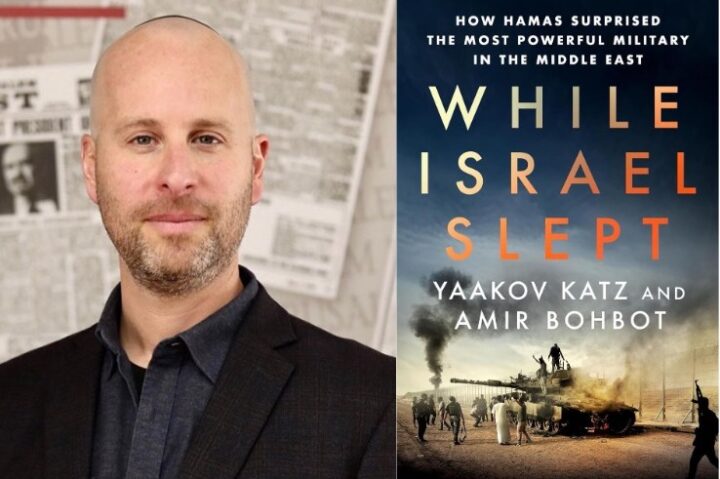
Courtesy
Yaakov Katz/book cover
In the two years since the Oct. 7, 2023, attacks on Israel, there have been many books in multiple languages published on the topic — personal accounts, tales of heroism, a hostage memoir — but While Israel Slept: How Hamas Surprised the Most Powerful Military in the Middle East by Yaakov Katz and Amir Bohbot may be the most comprehensive.
In the book, Katz, the founder of the MEAD (Middle East-America Dialogue) and former editor-in-chief of The Jerusalem Post, and Bohbot, a veteran Israeli defense reporter, answer the biggest questions about that day, going through the events leading up to the attacks, including the fateful night before.
The book also dedicates chapters to stark warnings that an Oct. 7-style attack could happen again if Israel does not make necessary changes.
In an interview with Jewish Insider’s Lahav Harkov and Asher Fredman, the executive director of the Misgav Institute for National Security and Zionist Strategy, on the “Misgav Mideast Horizons” podcast last week, Katz said that his “deepest fear is that this could happen again.”
“Eventually, quiet will set in,” Katz said. “And I fear that Israel will fall back in love with the quiet and will neglect, to some extent, the vigilance that it will require to prevent Hamas from being able to … reconstitute itself.”
While Katz said he is skeptical Hamas could again launch attacks at the scale of Oct. 7, “to prevent them from rebuilding and reconstituting … will require a major effort that Israel has never really done.”
“Israel fought wars, we walked away and threw away the key, but we’ve never maintained the success … [except] in the West Bank, after Operation Defensive Shield in 2002. … Israel created operational freedom, and then it retained the operational freedom, so in the almost 24 years since, Israel goes in and out of the West Bank as it sees fit,” he said.
Katz noted that Israeli Prime Minister Benjamin Netanyahu has talked about creating a similar situation in Gaza.
“The proof will be in the pudding … If [the IDF] doesn’t do that and just says, ‘We’ll jot down the target, we’ll build up the target bank,’ that’s falling right back into the trap that led to Oct. 7,” he stated.
The IDF has also made structural changes to how it gathers intelligence, Katz said, and there is more coordination between intelligence bodies than before and a better flow of information to the decision-makers.
“I think there’s more vigilance today by the IDF in the way it watches the borders along Israel,” he said. “That preemptive policy, if you see just a rocket being moved or you see a bad guy driving in a car or you see a tunnel being dug — we’re now applying it very much in Lebanon … Israel continues to operate pretty freely in Lebanon. This is part of that new policy. I think that in the aftermath of however this war does end, that will be integral to keep Hamas from reconstituting itself in a way that it could pose another major strategic threat to Israel.”
While Israel Slept is meant to provide “a look at the entirety of what happened,” Katz said.
“What were the different alarm bells that we now know were sounding … in IDF headquarters and Shin Bet headquarters? What were the earlier signs that we know about?” Katz said. “How did Israel fall into a state of complacency? … How was the policy of containment created?”
Katz said both former Israeli Prime Minister Ehud Olmert and Netanyahu should have “refuse[d] to accept a reality that a genocidal terrorist group is living alongside our border.”
“If you look at the way Israel approached Hamas and approached Gaza, it was as if we’re stuck,” he said. “We don’t have an alternative … [to] this game of whack-a-mole every two years or so, where we hit them on the head.”
Israel viewed Hamas as “the bottom of the totem pole” of threats, far below Iran and Hezbollah, Katz said.
Another entrenched — and incorrect — belief in Israel’s political and military establishments was that helping Gaza economically would make Hamas less likely to attack Israel, Katz argued.
“When Naftali Bennett became prime minister in the summer of 2021, he was announcing to the whole world with great pride how he allowed in 10,000 [Gazan] workers” to Israel, said Katz, who was an advisor to Bennett from 2013-2016. “We now know that during his period as prime minister, they were preparing for this invasion and he just got lucky that it didn’t happen on his watch.”
In addition, Katz said that Israel’s general defense doctrine was not to launch preemptive wars in response to conventional military buildups, pointing to Hezbollah’s amassment of 150,000 missiles.
“That has changed,” he said. “The issue of preemption now seems like it’s setting in as the new policy for Israel, which is … the only way forward.”
Katz is also the author of Weapons Wizards, about Israel’s defense industry, and had been working on a follow-up book before Oct. 7. He now views the Israeli military’s reliance on technology as part of what allowed it to remain complacent for so long.
One such kind of technology was defensive. With the Iron Dome, Israel “was able to swat missiles out of the sky like they were mosquitoes. It made it seem like the missile threat is nothing … not a strategic threat.”
When Hamas fighters crossed into Israel via tunnels during 2014’s Operation Protective Edge, Israel sought to address that problem with technology as well, building a border fence with a deep underground element.
“They put these teams of the smartest soldiers and scientists together with sonar experts, seismic experts, geologists … They come up with a system that can detect where a tunnel is being dug, when it’s being dug. They’re so sensitive that they can tell what tool is being used to dig the tunnel: a jackhammer, a shovel, a bulldozer,” Katz said.
“How many people crossed into Israel on Oct. 7 in a tunnel? Zero.” he added. “They blew about 60 different points of entry in the border [fence] and that’s where they came in. … The technology created a false sense of security that we are impenetrable.”
Israel was also overreliant on intelligence technology, Katz said.
“There were hundreds of Hamas [terrorists] in the initial wave [into Israel on Oct. 7] and there wasn’t a single one who could call up his Israeli handler and say, ‘We’re coming,’” Katz said. “We had no agents or informants on the ground in Gaza. We thought we knew everything by listening to them, by watching them. We had neglected the basics of intelligence collection, which is human intelligence.”
Katz said the IDF and Shin Bet have invested in building up greater resources on that front since Oct. 7.
“Contrast Gaza with Lebanon, with the amazing pager attack, with what Israel did in Iran, taking out nuclear scientists and the top military leadership. You see that when Israel allocates the resources, the attention and the focus, it can do incredible things,” he said.
Katz also spoke out against the “huge distraction” of the government’s planned judicial reform that consumed the country in 2023, as well as the outsized public protests against it.
“The right will say that the left and the protesters, and especially those who were the reservists who threatened to not follow orders … weakened the military and the left, or the anti-judicial reform protesters would say the government, in its refusal to stop … and be willing to understand that dividing ourselves made us vulnerable, made us exposed. However you look at it, in the end, the responsibility is upon the government,” he said.
When Israel Slept includes several stories of senior defense officials warning the government that the deep divisions in Israel posed a security threat and Israel’s enemies would take advantage of the discord; though, Katz noted, no one specifically warned that Hamas was planning an invasion.
Katz said the weakening effect on Israel by the extremely tense political atmosphere should have been obvious to the country’s leaders: “We’re at each other’s throats. We’re ripping ourselves apart on the streets. … If we saw this division on the streets of Tehran or Damascus, would we not try to fan the flames just a bit to achieve our objectives in those countries and among our adversaries? Why would we think they would not do the same to us?”
In addition, Katz said, Hamas chose to launch its attack in October 2023 because Israel-Saudi normalization talks seemed to be coming to fruition, and because Hamas leader Yahya Sinwar believed “the alliance between Israel and the U.S. had been weakened and that the Americans under then-President [Joe] Biden would not stand with Israel. … He was wrong.”
In general, though, Katz pointed out, “they’re a genocidal terrorist group. They don’t need an excuse to want to kill us and attack us. It’s something they wake up to every single day. Terrorists like Hamas and Islamic Jihad seek our destruction.”
Hamas’ understanding of the Israeli psyche went beyond taking advantage of the divisions of early 2023, and was a part of its hostage-taking strategy.
“From day one … I could have said, ‘We’re going to win this war, because we’re going to bring down Hamas … but the hostages, we won’t get them back.’ And you would have looked at me and said ‘You’re crazy, that’s not a victory.’ And I could have said the opposite, we’ll win the war because we get the hostages back, but Hamas will remain in power, and you also would have said, legitimately, ‘What are you talking about? That’s not victory,’” Katz said.
“If there weren’t hostages, the war would have ended much earlier,” he said. “Part of this is because we the Israeli people — and I think this is something that the world does not recognize — are still very much hurting, are still very much in our trauma. And as long as the hostages remain in Gaza … the Israeli people will not be able to recover, rehabilitate and heal, and this will make this conflict, unfortunately, continue.”
Senior Hamas figure, Bassem Naim, said on Monday that the group will not accept disarmament, one of Israel's requirements for ending the war
OZAN KOSE/AFP via Getty Images
Senior Hamas official Basem Naim speaks during an interview with AFP in Istanbul on February 8, 2025.
A senior Hamas official publicly rejected any deal requiring the terrorist organization to lay down its arms, after Israel said it would support such a deal proposed by the Trump administration.
In response to the Trump deal, Bassem Naim, a Turkey-based senior Hamas official, released a statement on his Telegram channel on Monday calling the proposal a “humiliating surrender document” and not a serious offer to end the war.
Naim told Middle East Monitor, a pro-Hamas, Qatar-funded site, that the terrorist group would agree to a long-term ceasefire and would release all of the hostages in exchange for Palestinian prisoners, but the Palestinians “right” to weapons and to fight Israel “cannot be relinquished.” He also said the terrorist group would only agree to a full IDF withdrawal from Gaza.
The Trump administration’s deal, according to Israel’s Channel 12, would require Israel to stop its military operation in Gaza City and start a 60-day ceasefire. In the first 48 hours, Hamas would release all 48 remaining hostages, 20 of whom are believed to be alive, in exchange for hundreds of Palestinian prisoners. Then, the sides would negotiate the end to the war.
The proposal does not get into the details of an Israeli withdrawal from Gaza, which is supposed to take place gradually as other elements enter to administer the enclave. Israel has said it will maintain a security perimeter around the Gaza Strip, including the Philadelphi Corridor along the border with Egypt.
According to Kan, peace activist Gershon Baskin, at the request of U.S. Middle East envoy Steve Wikoff, passed the offer to Hamas official Ghazi Hamad, with whom he reached the 2011 deal to release captured IDF soldier Gilad Shalit. Baskin told Al-Monitor that the plan includes incentives for Hamas, though he did not specify what they are.
President Donald Trump wrote on Truth Social on Sunday that “everyone wants the Hostages HOME. Everyone wants this War to end! The Israelis have accepted my Terms. It is time for Hamas to accept them as well. I have warned Hamas about the consequences of not accepting. This is my last warning, there will not be another one!”
A source close to Israeli Prime Minister Benjamin Netanyahu said earlier this week that while Israel is “seriously considering” the proposal, “it seems that Hamas will continue its refusal.”
A Qatari official briefed media that the country’s prime minister, Sheikh Mohammed bin Abdulrahman bin Jassim Al-Thani, met with Hamas negotiator Khalil Al-Hayya on Monday and pressed him to “respond positively” to the proposal.
Israel has said its conditions to end the war are “the release of all hostages, Hamas’ disarmament, demilitarization of the [Gaza] strip, Israeli security control of the [Gaza] Strip, the establishment of an alternative civilian government that does not educate to terror, does not promote terror and will not threaten Israel,” as the Prime Minister’s Office stated last week.
Israeli Defense Minister Israel Katz threatened on Monday that “a great hurricane will strike today in the skies of Gaza City and the roofs of the terror towers will shake.”
“This is the last warning to the Hamas murderers and rapists in Gaza and in luxury hotels abroad: Free the hostages and lay down your weapons or Gaza will be destroyed and you will be destroyed,” he wrote on X.
Hours later, Netanyahu said that the Israeli Air Force bombed 50 “terrorist high-rises” in Gaza City.
“All of this is only the introduction, only the beginning of the main intensive operation, the ground incursion of our forces, that are now getting organized and gathering, into Gaza City,” he added during a visit to Air Force Command. “To the residents of Gaza, listen to me carefully: You have been warned. Get out of there.”
At the start of Sunday’s cabinet meeting, Netanyahu acknowledged “the price that we are paying in the diplomatic and public diplomacy fields.”
“The best way to get out of this, of course, is to … end the war as fast as possible with the victory that we have defined: Eliminating Hamas, the return of all the hostages and ensuring that Gaza never again threatens Israel,” he said.
However, he added: “If I need to choose between victory over our enemies and malicious propaganda against us, I choose victory over our enemies.”
The Florida Democrat has shifted away from commitments he made to Jewish leaders during his first run for Congress, fueling frustration among former supporters

Courtesy
Maxwell Frost
When Rep. Maxwell Frost (D-FL) won his first election to the House in 2022, Jewish leaders in his Orlando, Fla., district who had been encouraged by his personal outreach were optimistic he would follow through on a range of commitments he had made vowing to uphold support for Israel.
Despite some initial concerns about his history of involvement in pro-Palestinian demonstrations as well as relationships with anti-Israel activists, Frost had circulated a lengthy Middle East position paper in consultation, in part, with a top pro-Israel group that largely assuaged lingering reservations among Jewish community leaders over the sincerity of his views.
In the paper as well as a candidate questionnaire solicited by Jewish Insider during his first primary, the young progressive organizer, describing himself as both “pro-Israel” and “pro-Palestinian,” voiced opposition to conditioning aid to Israel — arguing that the security threats facing the Jewish state are “far too grave” to enact such measures. In backing a two-state solution, he clarified that any agreement should require “the basic recognition that Israel has a right to exist” as well as “an end to the antisemitic rhetoric and positions of Hamas.” And if elected, he pledged to visit Israel — which he called “one of the United States’ most important allies and strategic partners.”
Now, almost midway into his second term, Jewish and pro-Israel leaders are expressing some buyer’s remorse as Frost, 28, has embraced positions that put him at odds with his past commitments, fueling frustration among those who had believed he would be a more dependable ally on key issues concerning Israel.
Frost, for his part, insists that the humanitarian conditions in Israel’s war with Hamas in Gaza have deteriorated so drastically during his tenure that he had no choice but to change his views, though that has not quelled discontent among his former allies.
“He has broken a lot of promises,” said one Jewish leader, echoing others who expressed dismay with Frost’s turn in Congress.
The most recent move to draw scrutiny from Jewish and pro-Israel leaders is a letter Frost signed urging the Trump administration to recognize a Palestinian state over growing concerns with the humanitarian crisis in Gaza.
The letter, signed by several prominent House progressives and led by Rep. Ro Khanna (D-CA) — who plans to introduce a similar resolution — said such a state “will need to fully recognize Israel” and guarantee “the disarmament of and relinquishing of power by Hamas.” But pro-Israel activists broadly see the renewed effort as a misguided concession to Hamas amid the ongoing war — as the terror group seeks to leverage international outrage over Israel’s military conduct.
Democratic Majority for Israel, whose political arm had provided input on Frost’s position paper during his primary, took issue with his decision to join the letter. While the group felt sufficiently comfortable with Frost’s Middle East policy views when he first ran for Congress, opting not to intervene on behalf of a top primary rival who had won an endorsement from its super PAC, it has become dissatisfied with his approach as he has continued to stake out more adversarial stances toward Israel during his time in the House.
“We strongly support a two-state solution that ensures Israel’s future as a Jewish and democratic state with recognized borders and upholds the right of Palestinians to live in freedom and security in a viable state of their own,” Brian Romick, DMFI’s president, said in a statement to JI on Tuesday. “But unilateral recognition of a Palestinian state at this time — as the terrorist group Hamas still governs parts of Gaza and continues to hold Israeli hostages — would not advance peace. It will instead prolong the war by incentivizing Hamas to reject any ceasefire deal, and reward the terrorism we saw on Oct. 7 while making future acts of terror more likely.”
In addition to the letter — which followed a similar resolution he co-sponsored in 2023 during his first term — Frost in May joined legislation to place unprecedented new conditions on aid to Israel by withholding offensive weapons over its alleged violations of international law.
Last year, he also voted against a widely approved bill to provide supplemental aid to Israel six months after Hamas’ attacks. In a statement explaining his thinking at the time, Frost wrote that he was “only able to justify aid for defense, not offense, and this legislation did not allow me to separate the two,” as the war “has claimed the lives of countless innocent Palestinian civilians and brought us no closer to the return of innocent Israeli hostages held by Hamas.”
“For me, the North Star here is having a two-state solution, and everything, all the decisions we make, have to point to that,” Frost said, arguing that he has remained consistent in upholding his core beliefs on the conflict even as his positions on specific policies have changed since he launched his initial campaign for Congress. “The thing I have in mind is the safety and security of everybody, of Israel, of Palestinians — of everybody.”
Meanwhile, Frost has yet to fulfill his campaign vow to travel to Israel, and has declined invitations to do so while in Congress, according to a person familiar with the matter.
In an interview on Wednesday, Frost acknowledged that his approach has changed since he entered the House, attributing his new positions to his revulsion at Israel’s behavior in Gaza — which he described as “completely unacceptable” and “abhorrent” in light of the civilian death toll. “In terms of specific policy points, things have changed,” Frost told JI. “Things have changed a lot — and unfortunately, not for the better.”
“For me, the North Star here is having a two-state solution, and everything, all the decisions we make, have to point to that,” he added, arguing that he has remained consistent in upholding his core beliefs on the conflict even as his positions on specific policies have changed since he launched his initial campaign for Congress. “The thing I have in mind is the safety and security of everybody, of Israel, of Palestinians — of everybody.”
Even as he condemned Hamas and said the terror group should have no role in rebuilding postwar Gaza, Frost said the conflict has evolved into what he regards as a “war on innocent people,” resulting in “massive loss of innocent life” that has fueled his decision to speak up against the Israeli government and its ongoing military campaign.
In the Middle East position paper he wrote in his first primary, Frost had rejected placing additional conditions on aid to Israel because, he wrote at the time, it would “undermine Israel’s ability to defend itself against the very serious threats it faces.” But he explained on Wednesday he had also felt such measures were “already written into the law” and “we didn’t really need to go further” in enforcing it at the time.
Now, however, “I do believe that the law is being violated,” he told JI, clarifying his recent support for legislation that seeks to withhold transfers of offensive weapons to Israel. “Because of that, we have to look at the way that we are both complicit but also encouraging the current behavior of the Netanyahu government,” he said.
Unlike a handful of his far-left House colleagues who have accused Israel of carrying out a genocide in Gaza, Frost hesitated to use the term himself, calling it a “difficult” word because of its historical connection to the Holocaust. Still, he said he would not seek to discourage others from such charges. “I’m not going to sit here and defend what is going on right now in any way, shape or form,” he said. “I understand why people use that word. But when we see what’s going on, it’s hard to find the words for it.”
“There’s a lot of things to hold, but the main thing is, yes, there are many things that have changed,” he reiterated. “But for me, what has not changed is the main goal, which is making sure that everyone’s safe and everyone’s secure.”
Frost is hardly alone among Democratic lawmakers who in recent months have become more critical of Israel’s behavior, with even some of the staunchest supporters of the Jewish state struggling to defend the Israeli government as the humanitarian situation in Gaza has continued to worsen nearly two years into the war.
“It’s a radical shift,” one community activist told JI, voicing frustration with Frost’s positions, even as he described their ongoing conversations as “very open and honest.”
His vacillating stances also illustrate some of the cross-pressures facing progressive Democrats who are not completely aligned with the party’s far left on its hostility toward Israel. Pro-Israel Democrats have recently voiced their concerns that anti-Israel policies could become a litmus test for the left in the midterms, particularly amid Israeli Prime Minister Benjamin Netanyahu‘s moves to occupy the enclave.
But Jewish community leaders in Frost’s district, who spoke on condition of anonymity to address what they characterize as an increasingly delicate relationship with the congressman, explained they are particularly disappointed with his evolution on Middle East policy, given their initial hopes that he would be among a dwindling number of progressive allies committed to defending Israel in the House.
“It’s a radical shift,” one community activist told JI, voicing frustration with Frost’s positions, even as he described their ongoing conversations as “very open and honest.”
The activist noted that Frost, who had been a prominent gun control advocate before he was elected to Congress, has “a good heart and doesn’t want to see people dying.” But “as a result,” he said, Frost has “a lot of blind spots” in his assessment of the conflict. The activist argued that Frost’s critique of Israel’s conduct in Gaza has ignored Hamas’ role in perpetuating the crisis as it refuses to surrender.
“At the end of the day, he very much comes from the ‘oppressor-oppressed’ worldview and sees Israel as the oppressor,” the activist said.
Frost, for his part, said his statements have been misconstrued by a wide range of critics across the spectrum, including pro-Palestinian activists who allege that he made separate commitments during his first primary bid that he has failed to uphold in Congress.
He stressed that he does not “do tit-for-tat stuff” while addressing the war. “Whenever I post about the hostages, I’ll have people sending me messages. ‘What about this?’ No,” he said. “Whenever I post about Palestinians, I’ll have people saying, ‘What about this?’ No, I will post about it all. I will talk about it all. I will say how I feel about everything.”
“I’m very firm in that, just coming from a place of, since I was 15 years old, being involved in the fight to end gun violence, and have grown up through a movement of death,” he told JI. “I just don’t think that’s the way to live as a human, quite frankly.”
“We’ve been disappointed that he has not met the commitments he gave to us,” one DMFI source told JI. “At the same time, we’re grateful that he has come to realize he made a mistake in at least one case, but members of Congress should think through their votes fully and discuss them with knowledgeable people before casting them.”
Even as Jewish and pro-Israel leaders say their relationships with Frost have worsened in recent months, frustration over his approach to Israel has been mounting since his first term, when he called for an “immediate ceasefire” in Gaza just days after Hamas’ terror attacks. As a freshman, he also voted against a resolution condemning rising antisemitic activity on college campuses, but he later said that vote had been a mistake after meeting with Jewish students in his district.
While Frost had shown contrition for his vote on the resolution in November 2023, DMFI still expressed dissatisfaction with his initial decision at the time — alleging he had not performed proper due diligence beforehand. “We’ve been disappointed that he has not met the commitments he gave to us,” one DMFI source told JI not long after the vote.
“At the same time, we’re grateful that he has come to realize he made a mistake in at least one case, but members of Congress should think through their votes fully and discuss them with knowledgeable people before casting them,” the source stated.
A spokesperson for Frost told JI at the time that the congressman “is trying to hold multiple truths all at once” as he receives input from constituents pushing opposing interests.
“I’m very comfortable with the decisions I’ve made,” Frost said of his approach to Israel. “As I walk the streets of my district, as I speak with the people in my district, this is where I find most people are at. They’re not really at the extremes that I’ve heard from.”
Speaking with JI on Wednesday, Frost said he has appreciated his ongoing discussions with pro-Israel leaders in his district — even if they have not been aligned on major policy questions in recent months. “Hearing their perspective is really important,” he confirmed. “What I always tell people is I might not always come to the conclusion that you agree with,” he said, “but I hope you’ll always feel I’ve engaged in good faith.”
He suggested that Jewish community activists who have been irked by his approach to the Middle East have not fully reckoned with his belief that Israel’s military actions have damaged its reputation in the United States. “It’s palpable across the country, and I think a lot of this has to do with the decisions that are being made by Netanyahu,” he argued.
“I’m very comfortable with the decisions I’ve made,” Frost said of his approach to Israel. “As I walk the streets of my district, as I speak with the people in my district, this is where I find most people are at. They’re not really at the extremes that I’ve heard from.”
When he assumed office in 2023, Frost had sought guidance from pro-Israel Democrats including Rep. Ritchie Torres (D-NY), who enthusiastically backed his campaign, and House Minority Leader Hakeem Jeffries (D-NY), one person familiar with the matter told JI. But the congressman has since drifted away from the two lawmakers on Israel while staking out positions that have put him more in line with the far left.
More recently, Frost has built closer relationships with such leading Israel critics as Rep. Alexandria Ocasio-Cortez (D-NY), the source told JI, even if he has resisted identifying as an official member of the so-called Squad of progressive House Democrats.
Owing in part to his network in Congress, Jewish community leaders are doubtful Frost will change his views on Israel. “It may be the best that we can hope is that he doesn’t become an actual member of the Squad,” said one activist, while noting that Frost is “totally safe” in his deeply blue district as he seeks a third term next year.
Still, the activist said, “his refusal to actually go and see” Israel “first-hand is a problem,” particularly in light of his primary vow to visit the Jewish state as a congressman.
Frost, who acknowledged the commitment that he had made, said he hopes to see the region “at some point,” but added that it has “been difficult to figure out the timing.”
After the interview, Frost asked his spokesperson to clarify that he would “like to travel to the region at a point where he’d be able to visit both Israel and the Gaza Strip,” indicating a potential visit is unlikely to occur in the foreseeable future.
Plus, Trump warns of MAGA shift on Israel
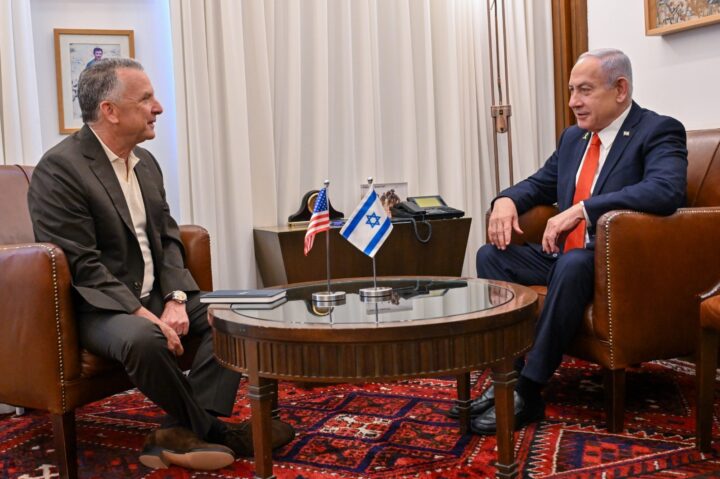
Kobi Gideon (GPO)
Prime Minister Benjamin Netanyahu, meeting in his office with US Special Presidential Envoy to the Middle East Steve Witkoff (Kobi Gideon (GPO)
Good Thursday afternoon.
This P.M. briefing is reserved for our premium subscribers like you — offering a forward-focused read on what we’re tracking now and what’s coming next.
I’m Danielle Cohen-Kanik, U.S. editor at Jewish Insider. I’ll be curating the Daily Overtime for you, along with assists from my colleagues. Please don’t hesitate to share your thoughts and feedback by replying to this email.
📡On Our Radar
Notable developments and interesting tidbits we’re tracking
All eyes were on Jerusalem today, where Middle East envoy Steve Witkoff and U.S. Ambassador to Israel Mike Huckabee met with Israeli Prime Minister Benjamin Netanyahu amid a growing humanitarian crisis in Gaza and stalled ceasefire talks with Hamas. An Israeli official told Axios’ Barak Ravid that the men discussed moving from an “incremental and partial” ceasefire to a comprehensive one, meaning a final deal that would see the release of all the remaining 50 hostages, the disarmament of Hamas and the demilitarization of the Gaza Strip.
Witkoff and Huckabee will travel into Gaza tomorrow to visit humanitarian aid sites and “meet with local Gazans to hear firsthand about this dire situation on the ground,” White House Press Secretary Karoline Leavitt announced in a briefing this afternoon. After their visit, President Donald Trump will approve a “final plan” for food and aid distribution in Gaza.
Trump placed blame for the situation squarely with Hamas this morning, posting on Truth Social, “The fastest way to end the Humanitarian Crises in Gaza is for Hamas to SURRENDER AND RELEASE THE HOSTAGES!!!” That goodwill may not last, though, with one source telling the Financial Times that Trump recently warned a “prominent Jewish donor” that “my people are starting to hate Israel”…
In the same FT article, Amos Hochstein, the former advisor to President Joe Biden and negotiator between Israel and Lebanon during his term, is quoted saying, “Part of being a pro-Israel U.S. president meant stepping in when necessary to save Israel from itself.” On Israel’s wars in the region, Hochstein said, “Israel looks like it’s out of control and needs an American intervention and stop button”…
The State Department announced “sanctions that deny visas” to members of the Palestine Liberation Organization and officials from the Palestinian Authority this morning, over the PLO and PA’s continued “pay-for-slay” policy, glorification of violence “especially in textbooks” and initiation of or support for proceedings against Israel at the International Criminal Court and International Court of Justice.
The move comes in the midst of a spate of Western countries announcing their intent to recognize a Palestinian state in the coming months, signaling Washington is of a very different mind. Israeli Foreign Minister Gideon Sa’ar said the measure by the U.S. “exposes the moral delusion of certain countries that were quick to recognize a virtual Palestinian state while simultaneously turning a blind eye to its support for terror and incitement.” We’re keeping watch to see if the Trump administration moves to pressure countries like France, the U.K. and Canada to reverse course…
One U.S. ally waiting to jump into the fray is Germany, whose foreign minister, Johann Wadephul, just before an official visit in Israel today, said Berlin is not currently considering joining its neighbors in recognizing a Palestinian state, but that the process towards a two-state solution “must begin now.” “If that process continues to be blocked,” he warned, “Germany must consider reacting accordingly”…
The State Department also released a statement today — alongside 13 Western countries including France, the U.K. and Canada — condemning the “growing number of state threats from Iranian intelligence services in our respective territories,” specifically Iran’s attempts to “kill, kidnap and harass” Westerners and “target journalists, dissidents, Jewish citizens, and current and former officials”…
Relatedly, Israel’s National Security Council issued a warning to its citizens in the United Arab Emirates and is reportedly evacuating its diplomats due to increased terror threats targeting Israeli nationals there, in retaliation for Israel’s war with Iran…
The Washington Post today profiled Rachel Accurso, also known as Ms. Rachel, a popular children’s content creator and outspoken critic of Israel, without detailing the anti-Israel activism she’s incorporated into her children’s show and social media content. This month, she drew criticism from Jewish leaders for publishing a video with former UNRWA photographer Motaz Azaiza — who she called her “friend” — who has made numerous social media posts defending Palestinian terrorism, according to Ha’aretz…
The Free Press scooped a potential new lawsuit against Harvard by the Trump administration after the Department of Health and Human Services, which had been investigating the university for antisemitism, found the school in violation of the Title VI of the Civil Rights Act and that it would not “voluntarily comply with its obligations.” HHS referred the case to the Department of Justice, which will decide how to proceed…
In a Thursday afternoon speech at the Heritage Foundation, the Gaza Humanitarian Foundation‘s chair, Rev. Dr. Johnnie Moore, delivered a forceful defense of the beleaguered U.S.-backed aid organization, which nearly all Senate Democrats recently argued has “failed” in its mission and “contributed to an unacceptable and mounting civilian death toll.” Moore contended that GHF’s work shows the Trump doctrine of “peace through strength” in action, as opposed to the efforts of the United Nations, which he called “the press secretary for Hamas.” “American strength serves American values,” Moore said, “not a corrupt international system”…
⏩ Tomorrow’s Agenda, Today
An early look at tomorrow’s storylines and schedule to keep you a step ahead
Keep an eye on Jewish Insider for reporting on the connection between an anti-Israel group at the University of Washington and the proscribed terror group Popular Front for the Liberation of Palestine, and for an interview with James Walkinshaw, longtime aide to the late Rep. Gerry Connolly (D-VA), who’s running for his former boss’ seat. We’ll also continue to cover the fallout from last night’s vote on resolutions led by Sen. Bernie Sanders (I-VT) blocking arms sales to Israel, particularly for Democratic senators with large Jewish constituencies.
We’ll be watching the Witkoff-Huckabee visit to Gaza tomorrow and how their takeaways on the aid crisis translate into a new U.S. plan for food distribution, including involvement from Israel.
We’ll be back in your inbox with the next Daily Overtime on Monday. Shabbat shalom!
Stories You May Have Missed
CULTURE CHIEF
A former French culture minister, Azoulay is the first Jewish leader of the controversial U.N. agency
CHANGING OF THE GUARD

Liam Elkind, 26, leads a nonprofit organization to deliver food and medicine to vulnerable New Yorkers
In an interview with JI, Sen. Lindsey Graham said Israel is ‘the most tolerant place in the region’ but must be careful to ‘maintain support’ in the U.S.

Amir Levy/Getty Images
Senator Lindsey Graham (R-SC) speaks at a press conference on US-Israel relations on February 17, 2025 at the Kempinski Hotel in Tel Aviv, Israel.
Sen. Lindsey Graham (R-SC) said that future military actions by Israel must be “conducted in a way to maintain support here at home” amid GOP backlash to the Jewish state’s most recent operations in Syria and the strike that killed three at a Catholic church in Gaza.
Speaking to Jewish Insider from the Capitol on Tuesday, Graham warned that Christians in the West Bank must not face the same fate as other Middle Eastern Christian communities, including in Syria, where as many as 1,000 Christians were killed between the fall of former Syrian leader Bashar al-Assad in November and March of this year under the new Syrian government.
“Support for Christians throughout the region is eroded, and we need to make sure that doesn’t happen in the West Bank,” Graham told JI when asked how Israel had handled the backlash against its recent military actions in Gaza, last week’s fatal strike on the Holy Family Catholic Church, the only Catholic church in Gaza, and reports of an arson attack in the area of the fifth-century Church of St. George in the West Bank town of Taybeh — which an Israeli police probe found to be unfounded, stating that the fire had been “in an adjacent open area, with no buildings, no crops, and no infrastructure of the site damaged.”
“I think it’s very important for us to stand up for Americans wherever they’re at, minority faiths, particularly the Christian faith. As to Israel, it is the most tolerant place in the region for minorities. They’re in a war for their lives, but we’ve got to make sure that the war is conducted in a way to maintain support here at home,” he continued.
His comments reflect recent unease within the Trump administration over Israel’s latest military actions. U.S. Ambassador to Israel Mike Huckabee visited the Church of St. George on Saturday, where he decried the attack as an “act of terror” and demanded “harsh consequences” for the perpetrators, while White House Press Secretary Karoline Leavitt said on Monday that President Donald Trump was “caught off guard” by the moves.
The strike on the church in Gaza killed three and injured 10, including a priest. Following a conversation between Trump and Israeli Prime Minister Benjamin Netanyahu, the latter publicly apologized and vowed to investigate what his office described in a statement as “stray ammunition” hitting the house of worship.
The South Carolina senator added that the Taybeh fire and the killing of 20-year-old Palestinian American Saifullah Musallet in the West Bank earlier this month, which the IDF is investigating as possibly being perpetrated by Israeli settlers, should be prosecuted to the fullest extent of the law.
“The attempted arson, whatever you want to call it, I don’t know who did it but I’m glad the church was saved. The Israeli police said that no damage was done. Just keep looking. The 20-year-old Palestinian American, keep investigating,” Graham said, going on to praise Netanyahu’s decision to call Pope Leo XIV after the church attack in Gaza.
Graham emphasized his continued support for Israel, which he argued should be differentiated as a state and a people from individual or small groups of Israelis committing acts of violence in the West Bank.
“There may be some rogue settlers, but they are not Israel. I think Israel, through its very founding, has demonstrated religious tolerance better than any country in the region, and, quite frankly, Israel is about as good as any place in the world. Do you have some aggressive settlers? Maybe so, I don’t know, but I’m not going to judge an entire country by some people,” Graham said.
“The issue is not whether Israel has abandoned Christians. It’s whether or not the damage that’s been done to the Christian community, will those responsible be held accountable?” he asked.
Graham said he hoped to be helpful to both sides as daylight between the White House and Netanyahu over Israel’s actions in Syria entered public view, explaining that he was amenable to the points of view of the Trump administration and the Israelis.
“As to Israel, their security concerns in Syria are legitimate. They’re very important to me, but I also want to help the president with his efforts to integrate the country. So there’s some tension, and I hope we can clear it up,” he said.
He explained that finding out which parties were responsible for the recent attacks on Druze minorities in the war-torn country was a critical next step, and would help establish whether the U.S. needs to reimpose sanctions on Syria.
“It has been the policy of the Trump administration to lift sanctions and give [Syrian leader Abu Mohammed al] Jolani a chance. This fight between the Druze and the Bedouins, what role did the Syrian army play? I don’t know. Israel has been making the argument that the Syrian regular army forces were part of the massacre, that’s very important to me. If that proves to be the case, we’ll reimpose sanctions. If it proves not to be the case, then I want to know that also,” Graham said.
“What role did the Syrian army regime forces play in all this and how much control do they have of this coalition that they formed? That, to me, is the most important question. Is Syria under the command and control of the government? If it’s not, what factions are outside their control? And let’s try to fix it,” he continued.
The former Biden administration official said that the Israel-Hamas war 'could have stopped multiple times if Hamas stopped the war and released hostages — multiple, multiple times'
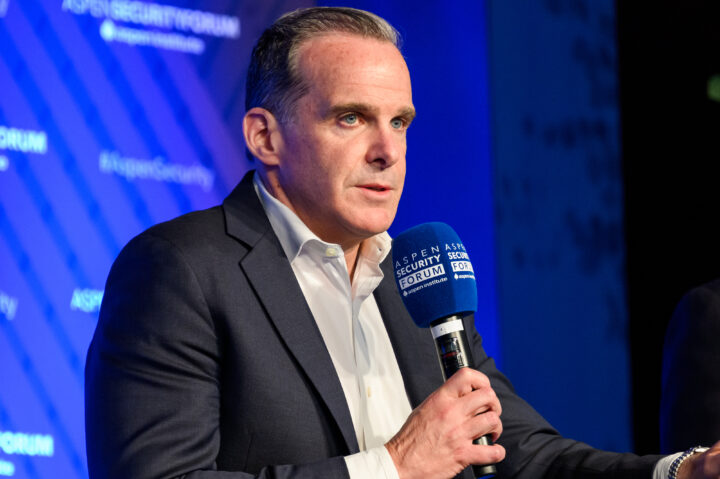
Aspen Security Forum
Former national security official Brett McGurk speaks at the Aspen Security Forum on July 16, 2025.
ASPEN, Colo. – Former U.S. and Israeli officials speaking at the Aspen Security Forum on Wednesday emphasized that Hamas bears responsibility for the failure of hostage release and ceasefire talks, and discussed the possible paths to ending the war in Gaza.
Brett McGurk, the top National Security Council official responsible for the Middle East under the Biden administration, argued on Wednesday that the history of ceasefire talks between Israel and Hamas “is being rewritten by people that weren’t involved in this.”
He emphasized that Hamas repeatedly ignored and rejected proposals that fulfilled many of its demands over the course of the last year, arguing that Israel’s attacks on Hezbollah had helped force Hamas’ hand to a temporary ceasefire deal that went into effect in early 2025.
“The moral toll of this awful situation tears at the soul of anyone who’s worked on this, anyone,” McGurk said. “But this war could have stopped multiple times if Hamas stopped the war and released hostages — multiple, multiple times.”
He said that, to this day, the “fundamental issue” is that the pressure for the deal has been on Israel, with “no pressure on Hamas.” He said the group has “not budged” on its demand to be allowed to remain in power in exchange for the release of hostages.
“Hamas started the war on Oct. 7, this panel is about Israel, but the enemies of Israel have agency,” McGurk said, emphasizing that Hamas made a choice to start the war, joined by Hezbollah and various Iranian proxies, in addition to Iran itself.
McGurk said he believes that if both sides accept the current U.S.-sponsored proposal to pause the war for 60 days while negotiating a permanent ceasefire, the war would end.
Former Israeli Ambassador to the U.S. Michael Herzog said that Israel “never developed a coherent plan [of] alternatives to Hamas.”
Herzog argued that Israel needs to propose an end to the war in exchange for the release of hostages, and that Hamas can be dealt with again at a later point while Israel focuses in the short term on Iran, normalization with Arab countries in the region and beginning to heal its own people and society.
Herzog framed the ceasefire deal with Hezbollah as a potentially successful model.
Former IDF Intelligence Directorate head Amos Yadlin said that the Gaza war is the “most justified war ever; however, at this moment, continuing the war is not serving Israeli interests.”
He said Israel should agree to end the war in exchange for a one-time release of all remaining hostages and the exile of some Hamas leaders, and work to bring in Arab partners to demilitarize the territory, with the understanding that Israel will continue to attack Hamas forces that reemerge as it has done with Hezbollah in Lebanon. Even if some Hamas forces remain, he said, they will not have the strength or capabilities they did before the war.
Yadlin also emphasized that Hamas leaders are to blame for the civilian casualties in Gaza, since they could have ended the war by releasing the hostages at any time.
Author and “Call Me Back” podcast host Dan Senor noted that Israel’s military was ill-prepared for the kind of extended, grinding, close-to-home war it is fighting in Gaza, and described the challenges of Hamas’ diversion of humanitarian aid and hostage-taking as unprecedented. And, he said, fear of Hamas has hampered efforts to cultivate alternative civilian leadership in Gaza.
“I think the idea that we could have a permanent ceasefire would only work if Israel would agree for Hamas to stay in Gaza and … in terms of the objectives of war, there is no world in which Israel can agree to Hamas staying in power in Gaza,” Senor said.
Pushing back on the comparisons between a potential Hamas deal and the Hezbollah ceasefire, Senor noted that in Lebanon, the Lebanese government and Lebanese Armed Forces provide a domestic counterweight to Hezbollah able to enforce demilitarization. In Gaza, no Arab states have stepped forward to carry out governance and demilitarization.
At the same time, Senor said that President Donald Trump’s proposal of mass relocation of the Palestinian population is not a realistic solution. He added that Israel will need a substantial buffer zone between its population in the south and the population in Gaza to feel safe in returning people to communities close to the Gaza border.
Yadlin pushed back, arguing that the relocation threat would provide Arab states the necessary motivation to become directly involved.
Yadlin added that Trump’s work to cultivate investments from the Gulf in combination with the strikes on Iran have shown the American people that the Middle East does not have to only be a region of loss and suffering, but one that has real promise.
Asked if Israel and the United States’ quick and devastating military campaign against Iran was a signal that the world had overestimated the threat from Iran, the panelists argued that was not the case. Instead, they said, many had underestimated Israel’s own capabilities and preparations, and the destruction of Iran’s proxies significantly undermined Iran’s ability to threaten Israel.
“You have to remember that Israel has prepared this war for decades, for many, many years, especially the last few months, but for decades,” he said.
McGurk added that the U.S. and Israeli interceptions of missiles fired during Iran’s October 2024 attack on Israel and Israel’s subsequent destruction of Iran’s air defense systems under the Biden administration set the stage for last month’s strikes, which he characterized as the result of close coordination across multiple administrations for years.
Looking ahead, Herzog said that there are not yet clear answers on the extent to which Iran maintains nuclear capabilities, but said that the strikes’ impact on Iran’s decision-making is also critical: whether it will race to a nuclear device to protect itself or — as Herzog said he believes — it is deterred and will move slowly and carefully if it attempts to resume its nuclear program.
He said there are two paths ahead: a new nuclear deal, including no enrichment and with intrusive inspections, which is nevertheless controversial in Israel because it would provide Iran with sanctions relief to rebuild its capabilities, or Israel’s continued use of force, which brings its own set of questions and challenges.
Herzog also said he’s hopeful that the strikes have deepened the divide between the Iranian regime and the Iranian people.
Yadlin similarly argued that the timetable for Iran’s nuclear program is less important than what kind of agreement can now be reached.
He said that the attacks had disproven Iran’s key calculus about its nuclear program: that Israel had the will but not the capabilities to do significant damage to the program, and that the U.S. had the capabilities but not the will.
McGurk and Herzog both spoke about the initial hours of the Oct. 7, 2023, attacks on Israel and their perspectives as the situation developed. Herzog, who was serving as the Israeli envoy in Washington at the time, said he received a call shortly after the onset of the attacks on Israel from a senior general shouting, “Mike, this is war, it’s not another round. It’s a war.”
McGurk said that Herzog had informed him about the attack, relaying along that same message: “It’s a massive attack, this is war.”
Herzog described McGurk, who has remained one of the most vocally pro-Israel members of President Joe Biden’s team since leaving office, as “the best partner that I could wish for,” adding that the then-White House official immediately offered full U.S. support for Israel.
McGurk emphasized that, early in the war, there were significant fears that Hezbollah and other Iranian proxies, or even Iran itself, would also mobilize against Israel, which would constitute an “existential threat.”
He recounted a call between Biden and Israeli Prime Minister Benjamin Netanyahu in the first days of the war. “Netanyahu said, ‘Joe, we’re in the Middle East, and in the Middle East, if you’re weak, you’re roadkill.’ Everybody sharpened their knives, and that’s what was happening,” McGurk said.
He said that intelligence showed early signs Hezbollah was preparing a ground invasion, and that Israeli and American officials had intensively discussed the possibility of a preemptive, Israeli attack in Lebanon, ultimately deciding against it due to Hezbollah’s strength at the time and Israel’s need to focus on Gaza. McGurk said he still believes that was the right decision.
McGurk, seen as one of the strongest champions in the Biden administration for the expansion of the Abraham Accords to include Saudi Arabia, said he’d been in discussion on Oct. 6 with visiting Saudi and other Middle Eastern leaders about “some things that were potentially going to be quite positive over the coming six months a year.”
He also pushed back on narratives from critics that the normalization efforts were a “white whale” that the U.S. chased in spite of reality. Instead, he said, the talks began because the Israelis and Saudis both approached the U.S. and asked them to mediate. He said the constant media leaks about the talks had hampered the process, and that they should have been conducted more privately.
“I think ultimately it will happen,” McGurk said. “What knocked it off was Hamas.”
Addressing the global spread of antisemitism and anti-Israel sentiment, Herzog said that “we [Israel] should do a better job” of pushing back on anti-Israel narratives, describing the public and diplomatic debate as an additional front in the war Israel is fighting.
Senor added that the Oct. 7 attack “brought something to the surface that was not about the way Israel should operate in Gaza,” appearing to be a “trigger moment for trying to drive Jews underground” in a way he had not expected.
Looking particularly at college campuses, Senor urged Jews to turn to alternative schools than the higher education institutions where they have faced harassment and discrimination, and to invest in those institutions rather than the ones that have not served them well in recent years.
The co-chair of the Aspen Security Forum, a member of Biden’s national security team, noted Israel’s ‘extraordinary’ military successes

Aspen Security Forum
Former U.S. Ambassador to China Nicholas Burns speaks at the Aspen Security Forum on July 15, 2025.
Former U.S. Ambassador to China Nicholas Burns said at the Aspen Security Forum on Wednesday that Israel is now in the strongest geopolitical position in its history following the seismic changes throughout the Middle East that have taken place in the past two years.
Burns is a co-chair of the Aspen Security Forum and was a top member of President Joe Biden’s national security team.
“Israel is in such an extraordinary position. … Think about Israel being born, created May 14, 1948, besieged over decades by attacks and enmity from all of its Arab neighbors, now the strongest country in the Middle East,” Burns said as he opened the forum’s second day of events. “Israel’s in the strongest geopolitical position it’s ever been in, after the extraordinary events in Lebanon, in Gaza, in Iran, in Syria over the last two years.”
In his opening remarks at the conference the day prior, Burns said that Iran is “in its weakest strategic position since the Iranian revolution.”
“Consider the impact these turbulent series of events of the last few years have had on Yemen and on poor Lebanon, which is searching for true stability and independence, on the people of Syria. Consider the impact on the people of Gaza and the desperate situation that the people in Gaza are suffering right now,” Burns added.
The amendment, led by Sen. Joni Ernst, highlights the ‘serious and growing’ missile threats from Iran and its proxies

Kevin Carter/Getty Images
U.S. Capitol Building on January 18, 2025 in Washington, DC.
The Senate Armed Services Committee’s draft of the 2026 National Defense Authorization Act, passed out of committee this week, includes provisions aimed at furthering coordinated air and missile defense efforts in the Middle East.
Moves to strengthen military cooperation among the U.S., Israel and Arab countries have been part of several recent NDAAs, starting with the DEFEND Act, which first pushed for coordinated air and missile defense efforts in 2022, as an outgrowth of the Abraham Accords.
The new amendment, led by Sen. Joni Ernst (R-IA), a co-chair of the Abraham Accords Caucus, instructs the Defense Department to submit to Congress a new report on implementing integrated air and missile defense infrastructure in the Middle East, including an assessment of threats; a summary of U.S. priorities and capabilities; and lessons learned from the Iranian ballistic missile attacks on Israel and the Houthi attacks in the Red Sea.
The amendment highlights the “serious and growing” missile threats from Iran and its proxies, which puts U.S. forces and allies in danger, and states that the U.S. has an “obligation” to protect its own forces and its partners.
“My DEFEND Act created unprecedented cooperation between Israel and its Abraham Accords allies and has played an intricate role in defending against missile attacks from Iran and its network of terrorist proxies,” Ernst said in a statement regarding the amendment. “October 7th was a reminder that our enemies are constantly evolving and scheming new ways to carry out their malign ‘Death to America’ mission. We must stay one step ahead and ensure that America and our partners are fully equipped and prepared to defend themselves in the post-October 7th world.”
The bill would also require the Defense Department to lay out for Congress its plans for assisting the Jordanian and Lebanese militaries, would extend U.S.-Israel anti-tunnelling cooperative programs and would authorize increased funding for U.S.-Israel counter-drone and missile cooperative efforts, according to a summary released by the Armed Services Committee.
Please log in if you already have a subscription, or subscribe to access the latest updates.
 Continue with Google
 Continue with Apple