





























South Africa banishes Israeli diplomat days before vote in Congress on trade benefits
Pretoria angered after Israel offers parched region water management aid; Jerusalem declares South African diplomat serving Palestinians persona non grata
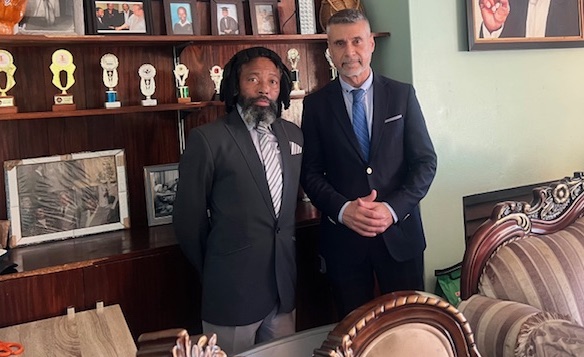
Amb. David Saranga/X
King Buyelekhaya Zwelibanzi Dalindyebo, the monarch of the AbaThembu people, and Amb. David Saranga.


 Add JewishInsider on Google
South Africa and Israel banished each other’s highest-ranking diplomat serving in each country, after a video of Israel offering water technology and medical aid to minority tribes angered Pretoria last week.
The diplomatic row took place days before Congress is expected to vote on renewing the African Growth and Opportunity Act, which would allow many products from the continent to enter the U.S. duty-free. The Trump administration has considered removing South Africa from the program because it is a “unique problem,” as U.S. Trade Representative Jamieson Greer described it in December. Removal from AGOA would adversely affect about half of South Africa’s exports to the U.S., its second-largest trading partner, Bloomberg reported.
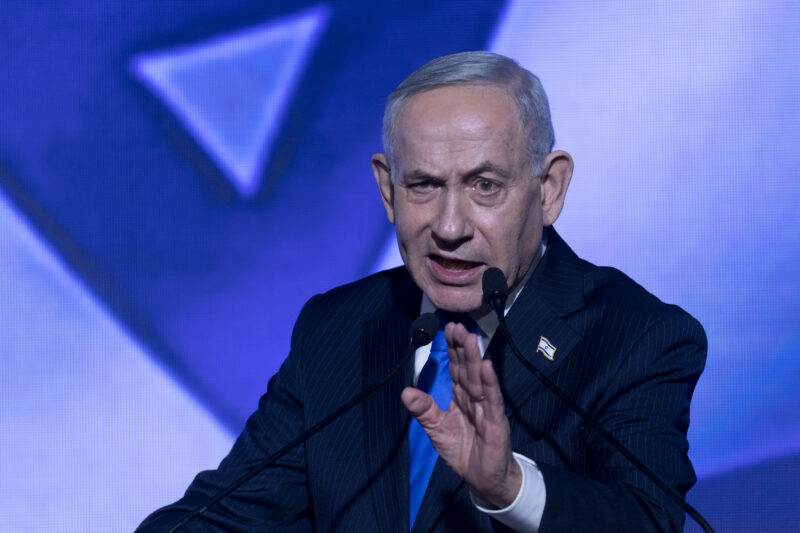
Pretoria declared Israel’s chargé d’affaires, Ariel Seidman, persona non grata on Friday, and hours later, Israeli Prime Minister Benjamin Netanyahu and Foreign Minister Gideon Sa’ar expelled South African envoy Shaun Edward Byneveldt, whom they called “the senior diplomatic representative of South Africa.” Byneveldt is South Africa’s “ambassador to Palestine,” but he was based in Tel Aviv, and diplomats serving the Palestinians are accredited by Israel.
Israel and South Africa have not exchanged ambassadors in recent years. South Africa announced in 2019 that it had downgraded its embassy in Tel Aviv to a liaison office. Israel maintained an ambassador in Pretoria until South Africa petitioned the International Criminal Court to arrest Netanyahu and then-Defense Minister Yoav Gallant in 2023.
However, with an active Jewish community of over 50,000, Israel has dispatched Amb. David Saranga, the Foreign Ministry’s director of digital diplomacy and a former ambassador to Romania, to be a kind of ambassador-at-large, visiting South Africa for specific meetings and projects.
Saranga visited South Africa’s Eastern Cape last Sunday, as a guest of King Buyelekhaya Zwelibanzi Dalindyebo, the monarch of the AbaThembu people. The group is part of the Xhosa nation, the second-largest tribe in the country. Dalindyebo had visited Israel weeks earlier. The largest tribe, the Zulu, dominates South African politics through the African National Congress, the largest party in the country’s parliament.
In a post on X, Saranga characterized the Eastern Cape as “a region rich in heritage, poor in infrastructure,” noting that in some areas, “access to clean drinking water remains a luxury rather than a given” and “healthcare challenges are equally severe.” Saranga helped arrange partnerships between Innovation:Africa, Israel’s Sheba Hospital, Dalindyebo and other traditional leaders in the region.
Saranga and Dalindyebo held a joint press conference with other traditional leaders outside the tribal leader’s home during the Israeli diplomat’s visit last week, videos of which were posted to social media by the Israeli embassy. In one of them, Dalindyebo said of the South African government’s opposition to cooperation with Israel: “They can go to hell if they wish.” Saranga can be seen chuckling next to him.
“As a king, I am a bona fide head and owner of the land. If any government, if any constitution disputes that, someone must educate me afresh,” Dalindyebo said, asserting his authority to accept aid from Israel if he so chooses.
Days later, the Eastern Cape province’s premier, Lubabalo Oscar Mabuyane, expressed “shock and concern” that Israel acted without consulting his office, calling it “a clear breach of diplomatic protocol.” Israel argued to the South African Jewish Report that it was acting within diplomatic norms.
On Friday, South Africa’s Department of International Relations and Cooperation (DIRCO) gave Seidman a 72-hour deadline to leave the country following what it called “unacceptable violations of diplomatic norms and practice which pose a direct challenge to South Africa’s sovereignty.” According to DIRCO, the violations included a failure to inform the department of visits by “senior Israeli officials” and insults to South African President Cyril Ramaphosa on official Israeli social media accounts.
South African political news site The Common Sense reported that the ANC, of which Mabuyane is a member, was “panicked by an Israeli effort to expand a service delivery programme in the Eastern Cape and the positive reception to that programme by communities,” and “feared that positive imagery of ordinary South Africans cooperating with Israelis would be very damaging to the government’s hostile foreign policy towards Israel.”
The South African Jewish Board of Deputies contrasted DIRCO’s actions against Israel with its “willful blindness toward ongoing international atrocities [in Sudan and Iran] … This glaring inconsistency exposes the hypocrisy at the heart of DIRCO’s actions.”
“Given the dire lack of basic services for countless South Africans, it is striking that just days after Israel offered water solutions to a desperate community in the Eastern Cape, DIRCO expelled the Israeli charge d’affairs, diverting attention from real domestic issues,” the SAJBD added.
The South African Zionist Federation said that the expulsion of Seidman “is an act of staggering moral bankruptcy — a choice that exposes a ruling party more committed to ideological hostility than to the welfare of the people it has so profoundly failed.”
SAZF argued that DIRCO’s actions were “never truly about process, protocol, or sovereignty.”
“A diplomat was declared persona non grata not for espionage, not for misconduct, not for breaching protocol — but for the unforgivable crime of helping South Africans get water. Clean water,” the organization stated. “In a country where taps run dry, where children walk kilometers with buckets, where elderly women queue for hours at communal pumps, and where the state has normalised collapse, neglect, and decay, the ANC chose to punish the one party actually delivering solutions. … When water flowed where excuses had ruled, the ANC did not respond with humility or gratitude. It responded with expulsion.”
SAZF also accused the government of corruption: “What the ANC cannot tolerate is … aid that bypasses the patronage machine. Help that cannot be claimed, captured, or corrupted. … The message sent by this government is as obscene as it is clear: if assistance cannot be politically owned, it must be destroyed, even if people suffer.”
More Stories
HISTORY LESSON
Brett McGurk’s fact check of former Harris advisor Phil Gordon on hostage negotiations
FINAL SPRINT
DMFI to spend $7 million to support Reps. Don Davis, Shomari Figures
DFL DISCORD
Amy Klobuchar, Angie Craig condemn Hasan Piker ahead of Minneapolis event with Ilhan Omar
SHOW OF SOLIDARITY
Jewish leaders offer support to Hindus amid rising threats to faith communities
HILLTOP FORECAST
Democratic foreign policy veterans preview party’s shifts on Middle East policy
DEBATE DIGS
Rogers describes El-Sayed as a national security threat in final Michigan Senate debate
Please log in if you already have a subscription, or subscribe to access the latest updates.
 Continue with Google
 Continue with Apple