






































In North Carolina’s Research Triangle, pro-Israel voters at a loss
Rep. Valerie Foushee was backed by AIPAC, but has since turned against supporting Israel. Her Democratic opponent is a virulently anti-Israel activist
Wikimedia Commons
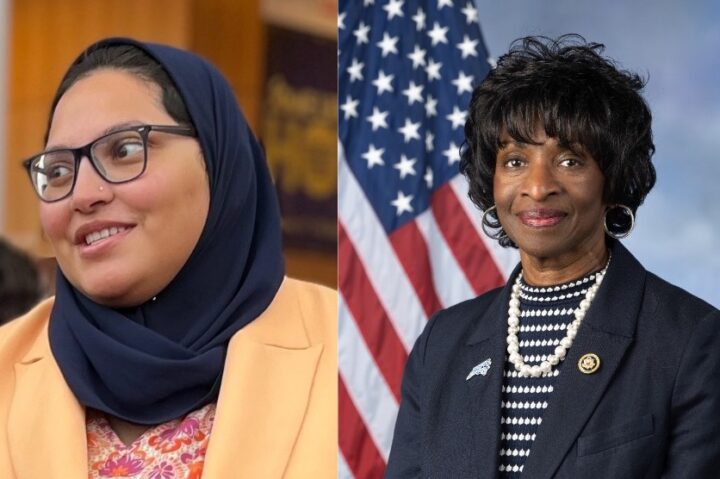
Nida Allam and Rep. Valerie Foushee (D-NC)


 Add JewishInsider on Google
Four years after their first showdown, progressive anti-Israel activist Nida Allam and Rep. Valerie Foushee (D-NC) are facing off for a second time in the Durham, N.C.-based 4th Congressional District — but under very different circumstances.
While the pro-Israel community stepped in to back Foushee against the stridently anti-Israel Allam in 2022, Foushee has since shifted significantly to the left on Israel policy, leaving pro-Israel backers with no clear choice in the race between an incumbent who has abandoned her support of Israel and a challenger with a deeper hostility to the Jewish state.
In their first primary race against each other four years ago, Foushee beat Allam 46%-35%, with a third candidate, “American Idol” finalist Clay Aiken, claiming 7% of the vote.
Foushee, in that race, was backed by more than $2 million in outside spending by the United Democracy Project, marking one of the AIPAC-aligned super PAC’s early, defining victories. But this time, that pro-Israel support for Foushee is unlikely to materalize in what has become a sprint to the left.
Last year, Foushee, who had been inching left on Israel policy since taking office, sponsored the “Block the Bombs Act,” with the goal, she said, of “prevent[ing] the sale of offensive weapons to Israel,” accusing Israel of violating international law. She also said she would not accept any further support from AIPAC.
Even before her first run in 2022, and well before Democrats shifted left on Israel policy during the war in Gaza, Allam had assembled an extensive record as an anti-Israel activist.
In May 2021, during the previous war in Gaza, Allam participated in a rally where demonstrators accused Israel of apartheid and chanted, “From the river to the sea, Palestine will be free,” and where Nazi imagery was displayed. Speaking to a reporter at the event, she denounced the “ethnic cleansing of Palestinians and murder of children.”
Allam, as early as 2021, called for the U.S. to cut off aid to Israel — at the time a fringe stance.
And dating back to 2018, she signed onto a petition demanding Durham’s police department halt all partnerships with Israel, and describing the U.S. as “the United States of Israel.” She also condemned anti-Boycott, Divestment and Sanctions legislation and said she tries to “refrain from buying products from Israel.”
Allam has described the war in Gaza as a genocide, a term Foushee has not yet used.
But with no aligned candidate to support, pro-Israel groups look likely to throw in the towel on the race. AIPAC spokesperson Deryn Sousa confirmed that the group has no plans to be involved in the race this cycle. UDP and Democratic Majority for Israel did not respond to requests for comment.
This time, Allam is the candidate benefiting from outside spending: A new super PAC, whose backers are currently unknown, called American Priorities, has spent more than $500,000 boosting Allam in the primary race in recent weeks.
The group is also backing Rev. Frederick D. Haynes III, a Texas primary candidate who also has a strongly anti-Israel record, to the tune of $72,000 thus far.
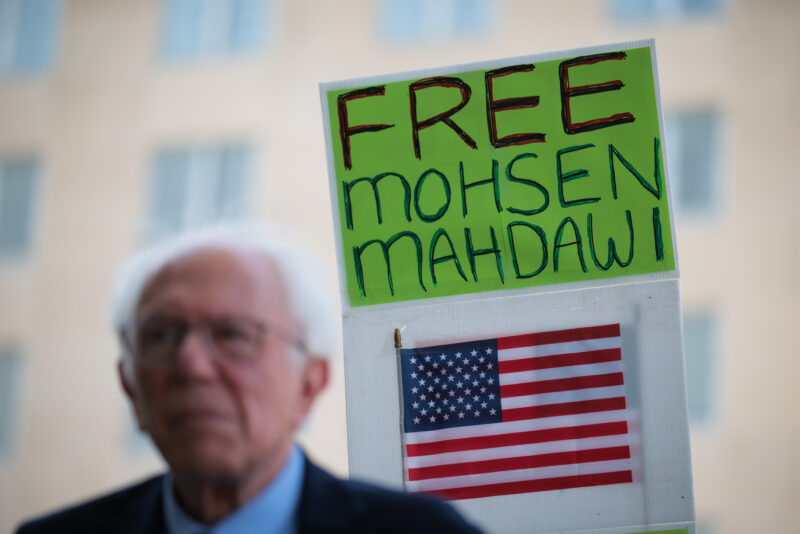
Allam has the support of Sen. Bernie Sanders (I-VT), who held a rally with her last weekend, the Justice Democrats, Sunrise and the Working Families Party, while state Democratic leaders including Gov. Josh Stein and former Gov. Roy Cooper are supporting Foushee.
Though the candidates’ positions on Israel are now more similar than they were in 2022, the issue has still come up on the campaign trail. At a candidate forum last month, Foushee said that she only wants to see the U.S. provide humanitarian aid, not military support, in both the Middle East and South America.
“I, for one, do not approve my taxpayer dollars being used to fund a genocide,” Allam said. “And I’m proud to say… that I have never accepted corporate PAC checks and right-wing super PAC money from institutions that want the United States to continue to fund genocide,” she continued.
As of the end of 2025, the two candidates were essentially neck-and-neck in fundraising — Foushee having raised $362,000 to Allam’s $335,000 — but Allam had $306,000 remaining on hand compared to Foushee’s $194,000.
Christopher Cooper, a professor of political science at Western Carolina University, called the race a “black box,” noting that no polling — independent or from either campaign — has been released, a signal that the campaigns’ internal polling is finding the race too close to call.
But Cooper emphasized that the race is largely identical to 2022 — “it’s not as if these are new fights or new fractures. It’s not even old wine in new bottles. It’s old wine in old bottles.”
He said that a lack of AIPAC support this time around would likely not be a “death knell” for Foushee, given her name recognition from two terms in office, adding that Foushee does not seem to have any major vulnerabilities or baggage from her time as an incumbent.
“This is a race that is about a primary electorate in Durham County, which is about as left-leaning as you get in the state of North Carolina,” Cooper said. “It’s progressive versus more progressive.”
He said that Allam has been trying to hit Foushee over Israel policy issues, as well as characterize her as “too moderate to fit the district.”
More Stories
supper club
AI, tech execs to attend White House state dinner for Xi Jinping
SANCTIONS PUSH
Coons, Senate Democrats introduce sanctions bill aiming to block E1 settlement construction

Daily Kickoff
Politico’s Yom Kippur schmear job
DIPLOMACY DIARIES
AJC plans ‘diplomatic marathon’ amid U.N. General Assembly in New York
Daily Overtime
Dana Nessel’s ‘kapo’ concerns
UNGA UNFILTERED
Trump talks tough on Iran, even as he predicts diplomatic deal after midterms
Please log in if you already have a subscription, or subscribe to access the latest updates.
 Continue with Google
 Continue with Apple