


Jonah and Ronald Kaplan
A rabbi answered the call at Ground Zero. Two decades later, it cost him his voice
Rabbi Ronald Kaplan, who volunteered as a spiritual first responder after 9/11, was diagnosed with laryngeal cancer traced to his time on the pile — a battle he’s still fighting on the 25th anniversary of the attacks


 Add JewishInsider on Google
For more than four decades, Rabbi Ronald Kaplan’s primary tool for his work was his voice. It was the instrument he relied on every Shabbat and holiday on the bimah, in the classroom, under the chuppah, at the cemetery and in the hospital — guiding congregants through both moments of celebration and grief. As he puts it, a rabbi’s task is to “pray, to teach, to inspire, to counsel and to lead” — and the voice is the means to do it.
But this year, as the nation marks the 25th anniversary of the 9/11 attacks — a commemoration that falls as the major Jewish holiday of Rosh Hashanah begins on Friday night — that work of speaking and remembering holds particular resonance for Kaplan, whose service as a spiritual first responder at Ground Zero during the aftermath of the attacks ultimately cost him his “greatest sacrifice” — his voice.
In the late 1990s, the American Red Cross and the National Association of Jewish Chaplains sought to prepare clergy for disasters that were not acts of nature. In the wake of the 1997 crash of TWA Flight 800 off Long Island, they piloted a program for “spiritual first responders” to support survivors, bereaved families and recovery workers. Kaplan, then a congregational rabbi living in northern New Jersey, enrolled in what became known as the Spiritual Air Disaster Intervention Response (SAIR) program in the fall of 2000.
“When the program was offered, I was energized by its content and thought it would add to my chaplaincy skills,” Kaplan wrote in a recollection to Jewish Insider. “I never assumed nor expected to be mobilized so quickly.”
Kaplan said the call to serve at Ground Zero came just days after the attacks. “It was nearly as startling as the attacks themselves, for I felt so ill-prepared and inadequate with any experience,” he said. His instructor’s chilling hypothetical — what if a plane hit the World Trade Center? — “immediately came to mind.”
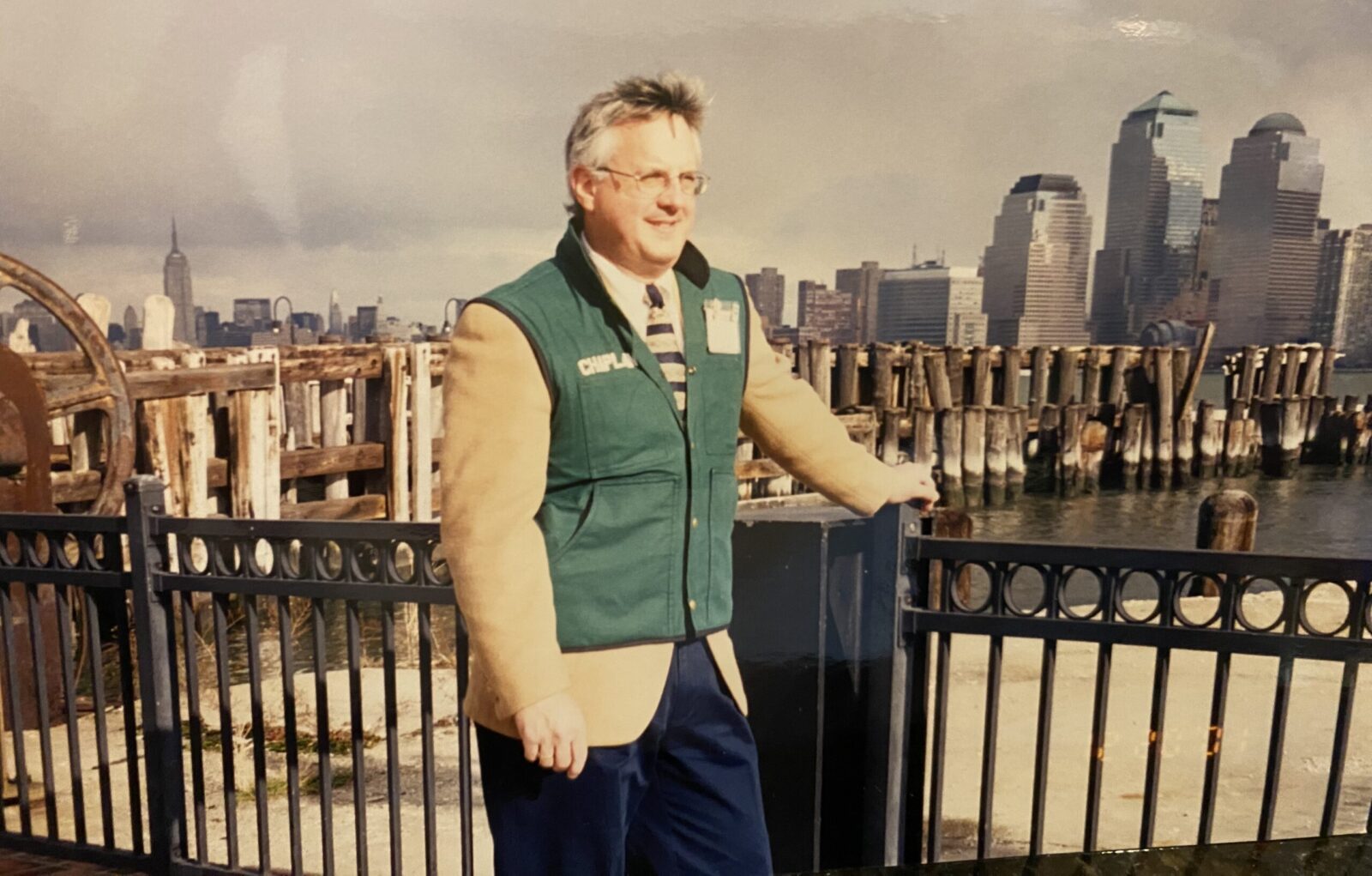
Starting on Sept. 19, 2001, Kaplan began making regular journeys from New Jersey to Lower Manhattan, returning weekly through the spring of 2002. At the staging area at Liberty State Park, he donned a green vest emblazoned with the word “CHAPLAIN” and introduced himself to grieving families and exhausted rescue workers.
“Who would I meet? Who or what would be recovered? What will I say, what will I learn, and where could we see any source of light in this darkness,” Kaplan recalled in a personal reflection he wrote this week titled “Pain in the Neck: Speaking Up Without the Voice 9/11 Took From Me.”
“I was tasked with meeting with many of the grieving family members and rescue workers, identifying myself as a chaplain,” Kaplan told JI. “I explained what they would witness, encouraged them to hold on to each other and gain strength as a group.”
From there, he joined New Jersey state troopers and families on the ferry across the Hudson, heading toward an elevated wooden platform overlooking the ruins that recovery workers called simply “The Pile.”
Kaplan describes the scene as “ancient liturgy for modern horror”: the acrid air, pulverized concrete, twisted steel and battered office furniture strewn amid the rubble, punctuated by sudden cries when recovery teams found human remains or fragments of clothing.
“I can vividly picture the walk to the pile, seeing the flames, feeling the intense heat and hearing the deafening noise from the machinery,” Kaplan said. “The horrific scene was incomprehensible. I could not process what my eyes were seeing and my ears were hearing.”
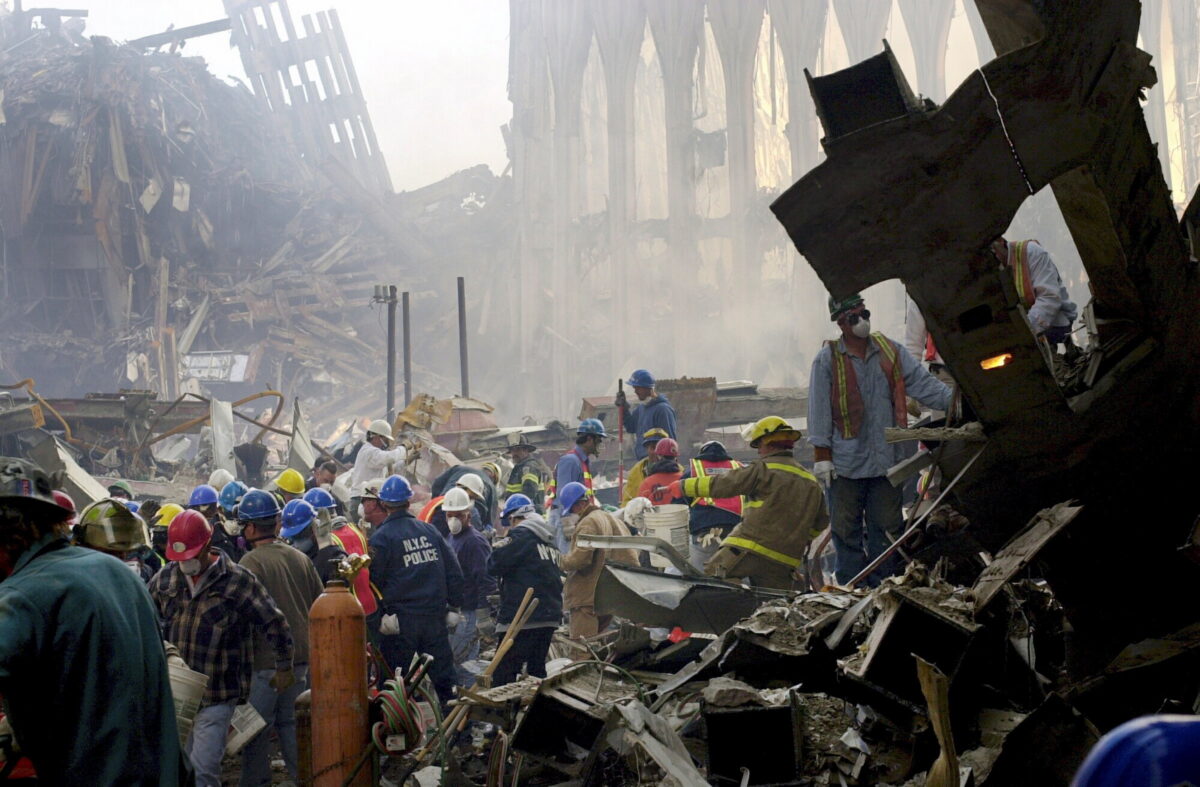
Many of those he accompanied instinctively covered their mouths and noses because “it was so difficult to breathe,” he added. “There were no masks, nor equipment for protection. There were no hard hats and no protective gear. Just my kippah served as my protection.”
Kaplan’s training as a congregational rabbi and chaplain — decades spent at hospital bedsides, cemeteries and shiva houses — shaped how he approached those walks to the platform and the moments of stunned silence that followed.
“As a congregational rabbi, a chaplain and a spiritual leader, I learned how to listen, knowing that I was there to reflect their stories and focus on others,” he said. “My personal feelings needed to be bracketed. I needed to be directed and focused on those who needed my presence.”
Many of the people who poured out their grief to him “spoke to me not wanting nor waiting for an answer,” he added. “My presence was their support. This is a lesson I carry to this day. What I represented to them as a clergy with a connection to God and faith was more important than any words I could offer.”
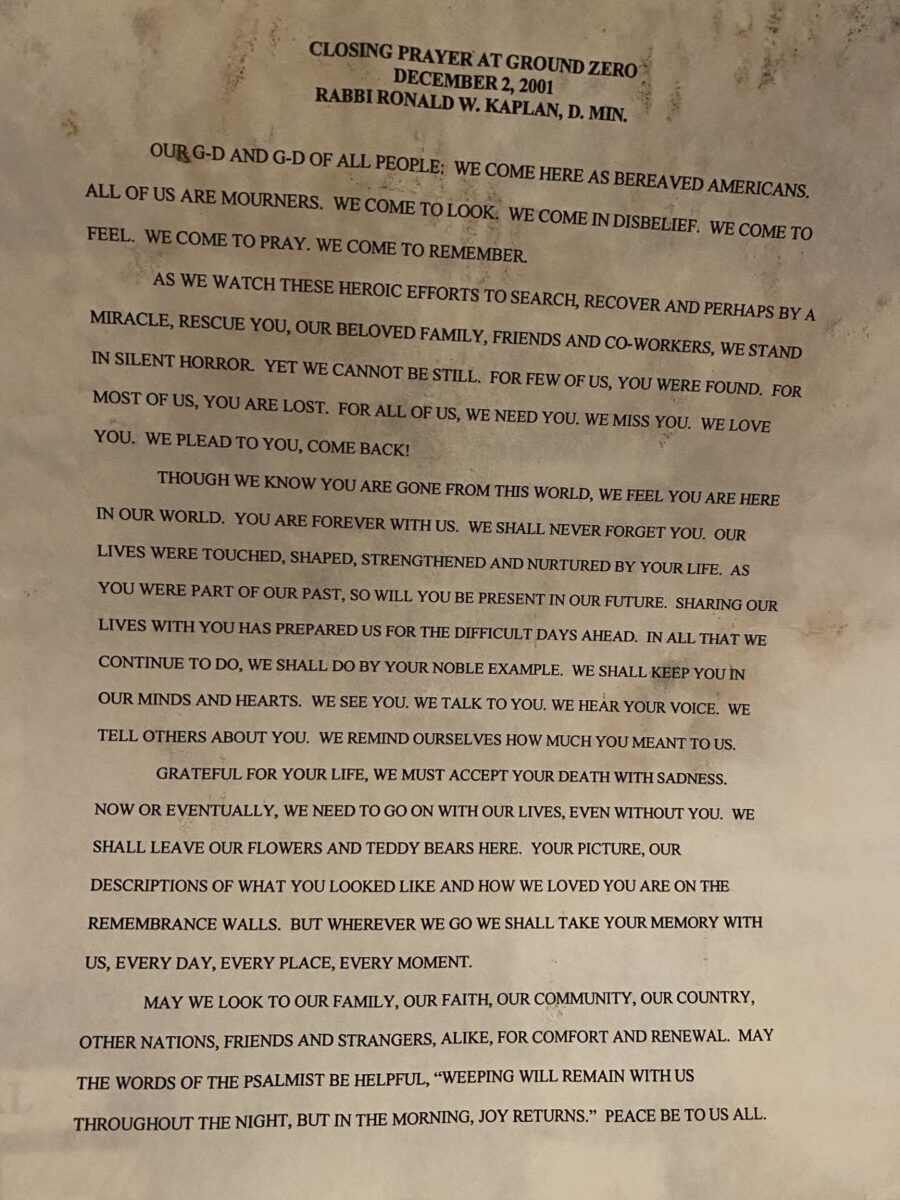
When recovery operations abruptly halted upon the discovery of human remains, Kaplan broke the stillness with an ecumenical prayer in English and Hebrew — “a tribute to the loss of one life, nearly three thousand times,” as he wrote. In his files from that period, he still keeps a sheet of paper he used on Dec. 2, 2001, titled “Closing Prayer at Ground Zero,” still stained with World Trade Center soot. When he rubs his thumb along the page, the dust still smudges his skin — “the same dust of history,” he writes, “and the dust of my voice’s demise.”
For years after 9/11, Kaplan did not directly connect his Ground Zero service to his health. He first began experiencing symptoms — “a persistent deep cough and hoarse voice” — in late 2019. He was diagnosed with laryngeal cancer in 2020.
“I never made the connection,” he said. During an early consultation, Kaplan’s physician ran through the usual risk factors — smoking, heavy drinking and HPV. “When my answers were all in the negative, he looked at me and asked: ‘Did you ever work at Ground Zero?’” Kaplan recalled. “He immediately connected my rare cancer to my exposure on the pile.”
New York City Mayor Zohran Mamdani this week released more than 170,000 pages of previously undisclosed documents indicating that city officials misled the public about air quality at Ground Zero — assuring people the fallout was harmless even as they knew it was unsafe to inhale. Asked whether these efforts to hold the city accountable distract from the terrorists’ responsibility for his suffering, Kaplan said both “can be done simultaneously, and both need the attention.”
“At first I did not fully comprehend [the cancer’s] ramifications and only wanted to know if [it] was treatable and curable,” he said. What followed was a long journey back to health “as chaotic and unpredictable as my work on the pile”: nine full rounds of chemotherapy, 35 sessions of radiation and, in 2023, a 12-hour throat reconstruction surgery, along with a total laryngectomy.
“My greatest challenge is my frustration and difficulty in communicating verbally with people since my laryngectomy,” Kaplan said. “This has isolated me from my family and community in deep and profound ways.” Yet even so, he insists, “it has not lessened my faith and I do not question why.”
Today, a quarter-century after his weekly journeys to Lower Manhattan, Kaplan’s sacrifice remains an active, daily reality. Following his diagnosis and years of treatment, the cancer has returned and he is once again undergoing treatment at Memorial Sloan Kettering’s satellite clinic in Basking Ridge, with another major surgery scheduled for next month.
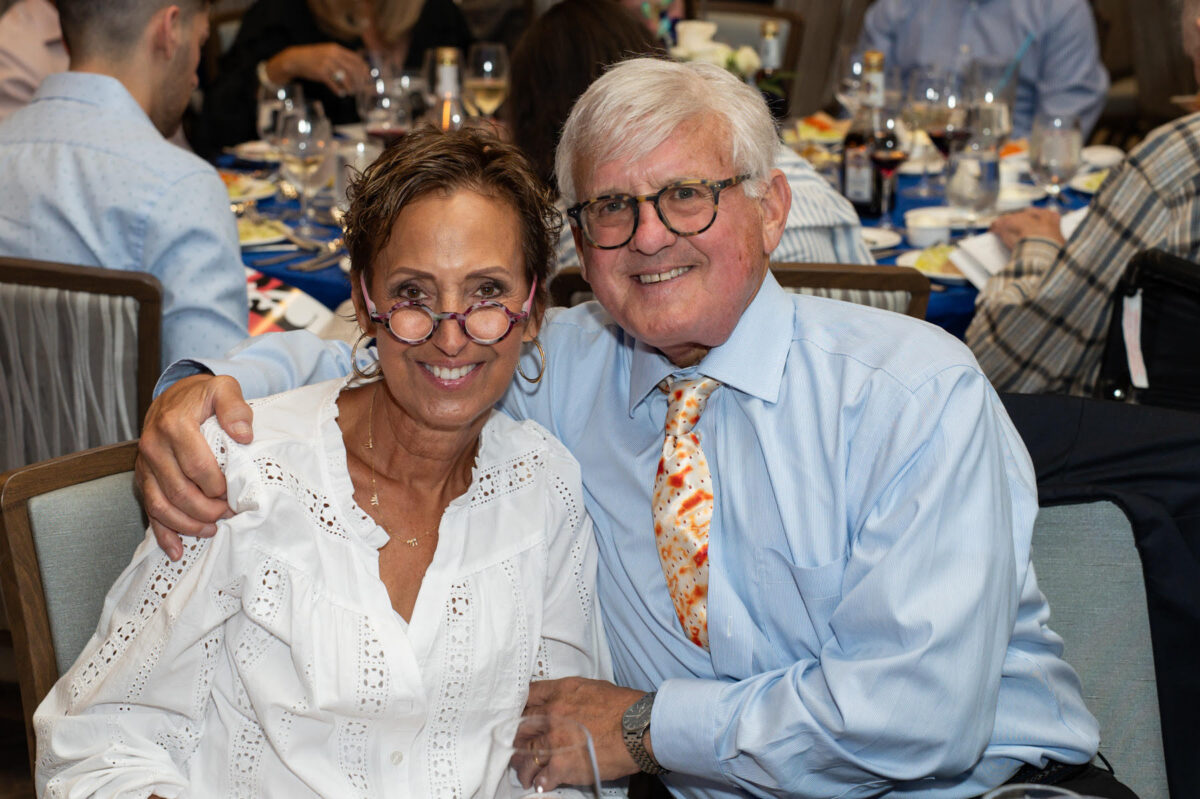
“I don’t ask why,” Kaplan wrote. “I just say thank you — for my wife, for my sons and daughter-in-law, for my grandchildren, and to my Creator, for the ultimate gift of life.”
As the 9/11 generation ages, Kaplan worries about how the story of that day — and the moral obligations it created — will be remembered by those who were not yet born.
“Fortunately, the annual memorial commemoration at the reflecting pools and in large and small communities throughout the nation help us all to remember,” Kaplan said. “But with each passing year the crowds diminish and a new generation has not yet been taught the story and the ramifications of this singular event. Our world is as broken today as it was on 9/11.”
This year, as the anniversary of the 9/11 attacks coincides with erev Rosh Hashanah, Kaplan said he hopes synagogues and Jewish communities will lean into the calendar convergence.
“I deeply hope that congregations will add appropriate mention through liturgy and ritual in marking 9/11 on erev Rosh Hashanah,” he said. “After all, Rosh Hashanah is also known as Yom Hazikaron, the day of Remembrance. The kesher (the bond) is too obvious to ignore!”
Featured Stories
Please log in if you already have a subscription, or subscribe to access the latest updates.
 Continue with Google
 Continue with Apple